Logo

Congress’ double-speak on Iran? Times when the party cornered Tehran under US pressure

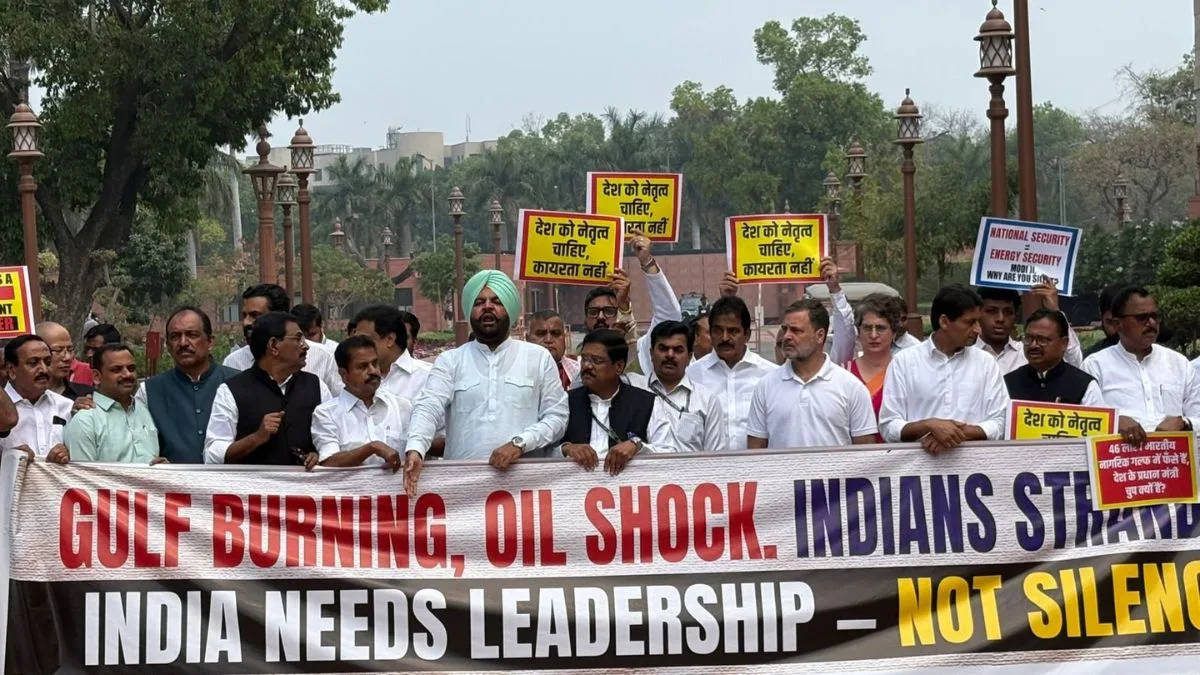
The West Asia conflict has raised concerns about oil supply routes, energy prices, and the safety of millions of Indians in the Gulf, issues now fuelling political clashes in Parliament.

Statesman News Service | Mumbai |

Congress’s criticism of the government over the West Asia crisis has reopened scrutiny of its own record on Iran during the United Progressive Alliance (UPA) years, when India took a series of decisions that critics said aligned New Delhi more closely with Washington than with Tehran.

The political contradiction has come back into focus as Opposition leaders question the Centre’s handling of the Iran crisis and demand a stronger response in Parliament. However, Congress-led governments themselves voted against Iran at the International Atomic Energy Agency (IAEA) multiple times, reduced oil imports from Tehran under sanctions pressure, and moved cautiously on energy projects involving the country.

The 2005 IAEA vote that triggered a political storm

One of the most controversial moments came in September 2005, when India backed a European Union-sponsored resolution at the IAEA that declared Iran in “non-compliance” with its nuclear safeguards obligations.

The resolution passed by 21 votes to one with 12 abstentions, and India was among the most prominent supporters of the motion. In India, the move was widely debated since New Delhi had always maintained friendly ties with Tehran.

The decision sparked protests in India itself. At a rally organised by Left parties in New Delhi, CPI(M) general secretary Prakash Karat accused the government of yielding to US pressure and warned that antagonising Iran could damage India’s energy interests.

“The rally is not to defend Iran but to defend India’s national interest,” Karat said as per Al Jazeera, arguing that India had long-term gas agreements with Tehran.

Communist Party of India leader AB Bardhan also criticised what he described as India’s “abject surrender to America”, while Samajwadi Party leader Rampal Yadav said voting against Iran “smacks of the worst political immorality”.

A second vote against Iran followed in 2006

The controversy deepened the following year. In February 2006, India again voted with the majority at the IAEA to refer Iran’s nuclear issue to the United Nations Security Council.

According to a Congressional Research Service report on India-Iran relations, the decision triggered criticism within India, with opposition and Left parties accusing the government of aligning too closely with Washington at a time when the India-US civil nuclear deal was under negotiation.

The report also notes that the US ambassador to India had specifically associated advancement on civil nuclear cooperation with India’s upcoming vote at the IAEA, fuelling the perception that New Delhi was under pressure from Washington.

Manmohan Singh’s own remarks on Iran’s nuclear programme

During a visit to Washington in November 2009, then Prime Minister Manmohan Singh also made India’s position clear when asked about Iran’s nuclear ambitions.

“As far as Iran’s nuclear weapon ambitions are concerned, I have stated it unambiguously on several occasions that we do not support the nuclear weapon ambitions of Iran,” Singh said during a question-and-answer session at the Council on Foreign Relations.

“There is no ambiguity in our position… Iran should not go the nuclear weapon path. That is inconsistent with its obligation as a member of the NPT,” he added.

He also said that India would abide by any resolution passed by the UN Security Council, while expressing hope that diplomatic engagement with Tehran would continue.

A third IAEA vote in 2009

India again voted for an IAEA resolution critical of Iran in November 2009, when the nuclear watchdog censured Tehran over a secret uranium enrichment facility.

Reports at the time pointed out that this was the third time in four years that India had voted against Iran at the IAEA, a pattern that critics said showed the UPA government increasingly aligning with Western powers on the issue.

Oil imports from Iran were also reduced

The shift was not limited to diplomatic forums. It also began to show up in India’s energy ties with Tehran.

As the United States and the European Union tightened sanctions on Iran’s oil sector in 2012, India gradually cut back its crude imports from the country. According to the US Energy Information Administration, Iran’s crude and condensate exports dropped sharply in 2012, from about 2.5 million barrels per day in 2011 to roughly 1.5 million barrels per day, after sanctions targeting its energy sector took effect.

The sanctions regime also affected Asian buyers, including India, as restrictions on banking and shipping insurance complicated purchases of Iranian oil.

Iran pipeline project also lost momentum

Another episode frequently cited in discussions on India-Iran relations was the proposed Iran-Pakistan-India gas pipeline.

While India initially supported the project to secure natural gas supplies, the initiative faced strong opposition from the United States, which was attempting to isolate Iran economically. Analysts later linked the project’s stagnation to the evolving strategic partnership between New Delhi and Washington.

Against this backdrop, the present political attack on the government over Iran has revived debate about Congress’s own foreign policy choices when it was in power.

For critics of the party, the current protests overlook the fact that several of the most consequential departures from Tehran in India’s diplomatic and energy policy occurred during the UPA years.
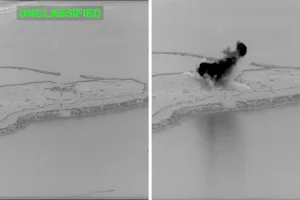
US Embassy advises Americans in Saudi Arabia to consider departure options

The US Embassy in Riyadh has issued an updated security alert for American citizens on Monday emphasising that their safety is the highest priority for the US government.

UNI | New Delhi |

The US Embassy in Riyadh has issued an updated security alert for American citizens on Monday emphasising that their safety is the highest priority for the US government.
President Donald Trump, Secretary of State Marco Rubio, and the Department of State are closely monitoring the situation and are actively providing guidance to ensure Americans in the region can make ‘informed’ safety decisions.

The officials statement said, “The U.S. government cares about your safety and will continue to share up-to-the-minute information you need to make informed decisions about your safety. The U.S. government is ready to help Americans leave the Middle East if you choose to take advantage of the options available.”

The State Department announced that it is coordinating options for Americans who wish to leave the Middle East. In addition to commercial flights, the Department is arranging government-coordinated flights for US citizens who have completed the Crisis Intake Form.
Travelers are urged to fill out the form if they have not already done so, to allow the Department to provide timely assistance and updates.
For those already registered, there is no need to submit the form again. U.S. citizens in Saudi Arabia can also contact the State Department directly at 1-202-501-4444 for departure guidance and assistance.

The embassy also emphasised that Americans who choose not to leave the country should be prepared to shelter in place in a secure location. Residents are advised to maintain an adequate supply of food, water, medications, and other essential items in case of emergency.

The U.S. government reiterated its commitment to the safety of its citizens abroad and encouraged Americans to stay informed and follow official guidance.

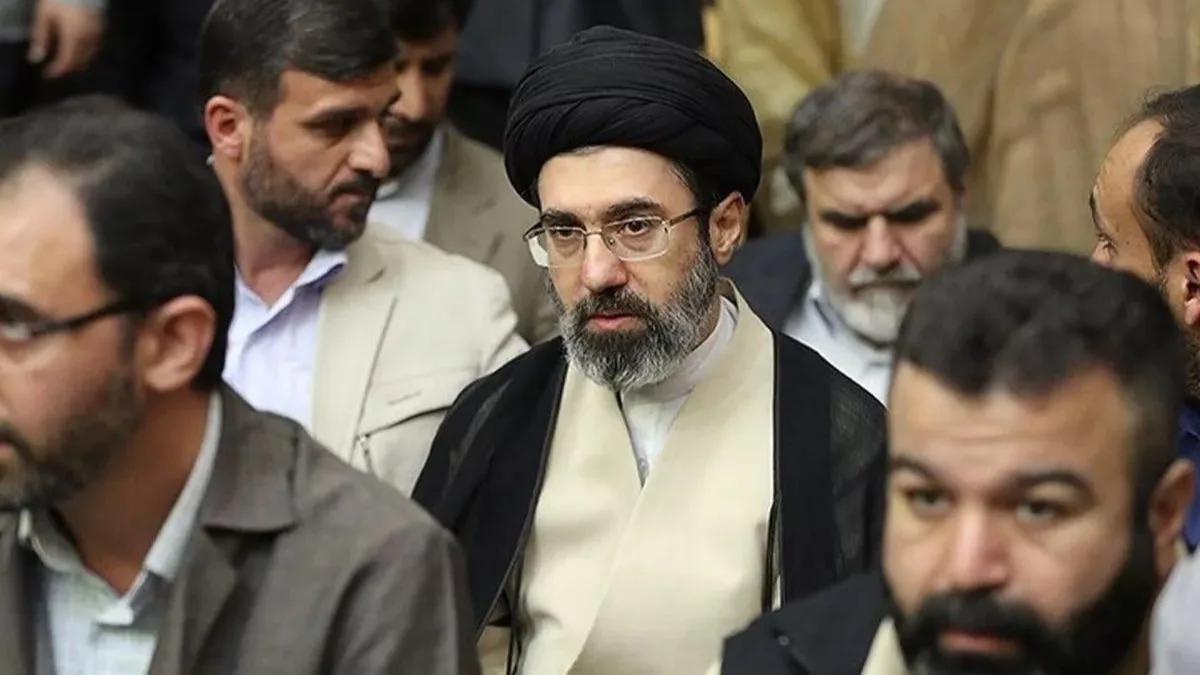
Iran’s New Supreme Leader – Mojtaba Khamenei

Iran on Monday named Mojtaba Khamenei to succeed his father Ali Khamenei as the supreme leader of Iran, signalling that hardliners remain firmly in charge.

Asad Mirza | New Delhi |

Iran on Monday named Mojtaba Khamenei to succeed his father Ali Khamenei as the supreme leader of Iran, signalling that hardliners remain firmly in charge.
Iranian institutions and politicians, from the foreign ministry to lawmakers, issued statements expressing their allegiance to the country’s new supreme leader as the war entered its 10th day and fresh missile and drone strikes
reverberated across West Asia.

This has also resulted in the failure of the western countries to overthrow the current regime in Iran. For years the West has been trying hard to get the Islamists-led regime changed in Iran. To promote an anti-Islamist and anti-Shiite stance, it raised concern over the denial of democracy in the country, repression against women, social stagnation and economic decay. But the underlying factor has always been and is – how to control the oil and mineral wealth of Iran and make the country bow to the capitalist ideology.
The current US-Israeli intervention was led by a rhetorical campaign both by United States President Donald Trump and Israeli Prime Minister Benjamin Netanyahu urging Iranians to “rise up”. The assassinations of Ayatollah Ali Khamenei and other high-level Iranian officials were celebrated as a major achievement of the alliance.

Mohammad Reza Farzanegan, Professor in Economics of the Middle East, at Philipps-Universität Marburg, Germany, is of the view that the assumption that the removal of a central figurehead will lead to a “short and decisive rupture” followed by a smooth transition is far from certain. In fact, Iran, after Ayatollah Khamenei may not be at all what the proponents of intervention desire to see.

If we take a wider look at West Asia, then we’ll be able identify three countries, where external intervention in regime change has not resulted in a smooth transition and stability. Iraq, Syria and Libya have only witnessed chaos not stabilisation. Whereas the fourth country in the region, about which most negative apprehensions were being made, has been able to negate these assumptions, and the Taliban seem to have consolidated their control in the country.

Iraq has seen various insurgencies and civil war following the US invasion in 2003; despite democratisation efforts, the country is still unable to return to pre-2003 stability.
Libya’s collapse following a NATO-led intervention in 2011 has not resulted in a cognisable recovery in sight. The country remains split between two centres of governance – in Tripoli and Benghazi.
Syria, after the fall of basher of Al Assad and emergence of Al Sharaa on the political scene of the country, has not been able to foster a new welfare regime of the people but has seen Al Sharaa propped-up by the US administration.
But the case of Iran is different from these countries in many ways. Further, the assassination of Ayatollah Khamenei may have a profound impact which may not result in a state collapse.

Within the symbolic universe of Shia Islam, to which the majority of Iranians belong, Khamenei’s death can be interpreted in light of the sect’s belief in martyrdom and the Karabala story. Death at the hands of perceived enemies of Islam can be framed as redemptive passage rather than defeat , says Prof Farzanegan.
For Iran, the big question now is whether administrative cohesion and territorial integrity can be preserved. Achieving this depends primarily on the survival of the “deep state”, the resilient civil bureaucracy and technocratic class that manages the country’s fiscal and essential services.

Furthermore, territorial integrity rests on the continued unity between the regular army (Artesh) and the Islamic Revolutionary Guard Corps (IRGC), maintains Prof Farzanegan.
But here the critics forget that Iran possesses a level of ethnic and linguistic diversity greater than that of the average West Asian country. In the absence of a central authority, and with security leadership currently targeted, the risk of state fragmentation and the rise of various militias should not be underestimated.
In worst-case scenario, internal turmoil is likely to follow the fault lines of existing grievances. In the borderlands, long-simmering insurgencies among the Baluch, Kurd and Arab populations could escalate into full-scale separatist conflicts as central control diminishes.

In recent weeks, the saying “a bitter ending is better than endless bitterness” has been invoked by some to justify foreign military intervention in Iran. Such perceptions seem to rest on the belief that a quick resolution can be achieved through military means.
For the people of Iran, the “bitter ending” of a regime may not be the final act of their suffering, but the opening chapter of a new, structurally entrenched era of “endless bitterness” that could haunt the region for decades to come.

As far as fissures appearing between the majority Shia and minority Sunnis, in Iran are concerned, this also does not seem plausible. As recently as March 5, hundreds of Sunni scholars in Iran’s Sistan and Baluchistan declared Jihad against the Zionist entity and its backers, while voicing support for Iran’s armed forces amid ongoing tensions.
A group of 660 Sunni scholars in Iran’s Sistan and Baluchistan province issued a statement condemning the ongoing US-Israeli aggression and calling for resistance against it.
The scholars stated that the religious and historical duty requires not remaining silent in the face of what they described as the aggression against the country. They further issued a religious ruling declaring that “jihad against the criminal Zionist entity and its arrogant backers is a major obligation.”

The statement also urged residents of the province to remain vigilant and not fall prey to what the scholars described as plots and sedition by hostile groups and supporters of the Pahlavi family, while announcing full support for Iran’s armed forces and the Islamic Revolution Guard Corps in defending the country’s security.
Shiite scholars were also quick to announce a fatwa of Jihad against the US and “Israel” following the attack on Iran and martyrdom of Sayyed Ali Khamenei.
Scholars endorsing the fatwa included Sheikh Javadi Amoli, Sheikh Makaram Shirazi, Sheikh Nouri Hamedani, and Iraq’s Sayyed Hashem al-Haidari.

This coming together of Shia and Sunni factions, besides the control of the Supreme Council and IRGC will ensure the continuity of the current regime in Iran, belying the fallacious propaganda and wishful thinking of the US-led western powers and Zionist powers.

BJP seeks fewer poll phases, polling booths in high-rise complexes in memorandum to ECI

A delegation of the West Bengal unit of the Bharatiya Janata Party on Monday submitted a detailed memorandum to the Election Commission of India (ECI), demanding key changes in the conduct of the upcoming elections in the state, including holding the polls in fewer phases and setting up polling stations within large high-rise residential complexes.

UNI | New Delhi |

A delegation of the West Bengal unit of the Bharatiya Janata Party on Monday submitted a detailed memorandum to the Election Commission of India (ECI), demanding key changes in the conduct of the upcoming elections in the state, including holding the polls in fewer phases and setting up polling stations within large high-rise residential complexes.
The three-member delegation — comprising Sisir Bajoria, Tapas Roy and Jagannath Chattopadhyay — presented the demands before the full bench of the ECI during its visit to the state.

In its memorandum, the party urged the poll panel to conduct the election in a single phase or, at the most, two phases within a short time span instead of the “long drawn 7–8 phases over six weeks” that have been seen in the past.

The BJP argued that reducing the number of phases would help curb violence and ensure better administrative control during the election process.
Another major demand made by the party concerns polling arrangements in high-rise residential complexes. The BJP requested that polling stations be set up within the premises of large multi-storey housing complexes as per ECI norms on a mandatory basis.
The memorandum alleged that in previous elections, local police stations had often obtained refusal letters from such complexes, preventing the establishment of polling booths there and forcing residents to vote elsewhere.

The BJP also called for a ban on the West Bengal Police Welfare Organisation, alleging that it functions as a frontal outfit of the ruling party in the state and exerts pressure on police personnel.

According to the memorandum, the organisation allegedly coerces police staff into surrendering their ballot papers and issues unofficial instructions that influence election-related activities. The party demanded that the organisation be banned and its offices sealed.

On polling day procedures, the BJP proposed the introduction of a two-stage voter identification system. Under the proposal, voters would first be verified by Central Armed Police Forces (CAPF) personnel stationed outside the polling station before being checked again inside by the presiding or polling officers.
The party said this would help prevent impersonation and bogus voting.
The memorandum also recommended that agents of political parties should sit outside the room where polling is conducted rather than inside it, which it claimed is the practice in West Bengal.

According to the BJP, such a measure would help maintain order inside polling rooms and prevent undue influence during the voting process.
In addition, the party demanded that every polling station be supervised exclusively by CAPF personnel, without the presence of state or city police or volunteers in any capacity, including for queue management.
It also suggested that polling officers should comprise an equal mix of state and central government employees to maintain neutrality.

Other recommendations included deploying CAPF well in advance for area domination and confidence-building measures, identifying sensitive booths based on past incidents of violence or unusually high turnout, installing webcams at polling stations, and conducting counting only in district and sub-divisional headquarters under strict supervision.
However, representatives of the Bharatiya Janata Party said that the issue of SIR did not come up during their meeting with the Election Commission of India and that the discussion was limited to the overall election situation in the state.

“We did not discuss SIR. A case on the matter is pending before the Supreme Court of India, and whatever decision the court takes, we will be bound to accept it. Today’s meeting focused only on the election. We conveyed our

Hezbollah’s War with Israel and the fragility of Lebanese statehood

Lebanon’s latest escalation has unfolded with a speed that once again reveals how deeply the country’s stability is tied to Hezbollah’s actions.

Guru Saday Batabyal | New Delhi |

Lebanon’s latest escalation has unfolded with a speed that once again reveals how deeply the country’s stability is tied to Hezbollah’s actions. In the days following Iran’s confrontation with Israel, Hezbollah launched drones and rockets into northern Israel, prompting a sweeping Israeli response.

Airstrikes tore through Beirut’s southern suburbs, including Dahiyeh, long regarded as Hezbollah’s political and logistical core. The IDF struck Sidon, the outskirts of Tyre, and dozens of villages across South Lebanon.
The Bekaa Valley—historically a strategic artery for Hezbollah—was hit repeatedly, with attacks on suspected weapons depots, launch sites, and command nodes. Precision strikes targeted senior Hezbollah operatives, while evacuation warnings issued to residents of more than eighty villages triggered yet another wave of displacement in a country already stretched to breaking point.

This surge in violence has coincided with a moment of internal uncertainty for Hezbollah. The death of Hassan Nasrallah in 2024 created a leadership void at a time when regional tensions were already high. Although the organisation moved quickly to elevate senior commanders and project continuity, the transition introduced new anxieties. Hezbollah’s ability to regroup swiftly reflects its deep institutionalisation, yet the episode revived long‑standing fears in Beirut and abroad: that Lebanon’s exposure to conflict is shaped not by state institutions but by the internal dynamics of a militia aligned with external powers.

The roots of this imbalance lie in Lebanon’s confessional system, a power‑sharing arrangement designed to balance the country’s religious communities, but which has often produced paralysis rather than consensus. In this environment, Hezbollah’s rise from a small Shi’a militant network in the early 1980s to the country’s most powerful non‑state actor unfolded with little institutional resistance.
The movement consolidated itself in the Bekaa Valley, drawing on Shi’a clerical networks, Iranian Revolutionary Guard mentorship, and the permissive terrain of the civil war. For more than four decades, Iran has supplied Hezbollah with arms, ammunition, training, and financial support, enabling the group to expand its military capabilities far beyond those of the Lebanese state.

Hezbollah’s ideological formation was also shaped by the Palestinian armed presence in Lebanon during the 1970s and early 1980s. The influence of Yasser Arafat’s Fatah and the broader PLO ecosystem exposed Shi’a youth to the ideologies of armed struggle. Although Hezbollah later diverged from the PLO’s political orientation, the years of coexistence in the south left a lasting imprint: the frontier with Israel was not merely a border but a theatre of regional confrontation.

Over four decades, Hezbollah evolved into a hybrid force—Lebanese in identity yet transnational in alignment, a political actor with a military wing more powerful than the national army. It holds parliamentary seats, shapes cabinet formation, and influences national decision‑making through cross‑sectarian alliances. Its social‑service networks fill gaps left by a chronically weak state. Yet its military autonomy remains intact, supported by an arsenal of rockets, drones, anti‑tank systems, and short‑range missiles. This duality has become the central paradox of Lebanese governance: a state that hosts a militia it cannot control.

The current escalation has once again exposed this contradiction. Exchanges along the border have intensified, particularly around Kiryat Shmona, home to many Indian‑origin Jewish families. Hezbollah, aware of the political sensitivities and the risk of civilian casualties, issued advisories urging residents in northern Israel to relocate temporarily. The gesture was framed as humanitarian, but it underscored the group’s ability to influence civilian movement across a border it does not control.

South Lebanon’s stability has depended heavily on international peacekeeping since March 1978, when the United Nations Interim Force in Lebanon (UNIFIL) was first deployed after Israel’s Operation Litani , named after Litani River which flows in South Lebanon. Over the decades, UNIFIL has become a fixture of the southern landscape, providing a buffer between armed actors and vulnerable communities. The Indian contingent, deployed since 1998, has earned wide respect for its professionalism, compassion, and its steady efforts to offer succour to villagers repeatedly caught in the crossfire—an effort that has grown even more vital as tensions rise.

Lebanon’s government, meanwhile, remains constrained by economic collapse, political paralysis, and institutional decay. Official statements affirm Lebanon’s right to defend itself while insisting it does not seek a wider war. Privately, many officials acknowledge they lack the leverage to restrain Hezbollah’s military decisions. International frustration is not new. In 2020, U.S. Ambassador Kelly Craft criticised Beirut’s inability to ensure improved access for UNIFIL or curb Hezbollah’s expanding arsenal, reflecting a long‑standing concern that the Lebanese state lacks both the capacity and the political consensus to assert authority over its territory.
What emerges is a portrait of a country suspended between sovereignty and dependency. Hezbollah’s supporters view it as a shield against Israeli aggression; its critics see it as the reason Lebanon remains perpetually exposed to conflict. Both perspectives contain elements of truth, but neither resolves the structural dilemma: a state too weak to contain a militia, and a militia too powerful to be subordinated to the state. In this unresolved tension, Hezbollah remains the Achilles heel of Lebanon.

(The author is a retired military officer, who led India’s first UN Peacekeeping contingent in Lebanon -UNIFIL, 1998–99 , Views are personal.)

WATCH: D(aily) T(raffic) C(alamity) bus kills two after ploughing into scooty, bike, hand-rickshaw, pedestrians on Najafgarh-Nangloi Road

During the accident, the bus also rammed into an e-rickshaw and struck several people, leaving multiple individuals injured.

Statesman News Service | New Delhi |

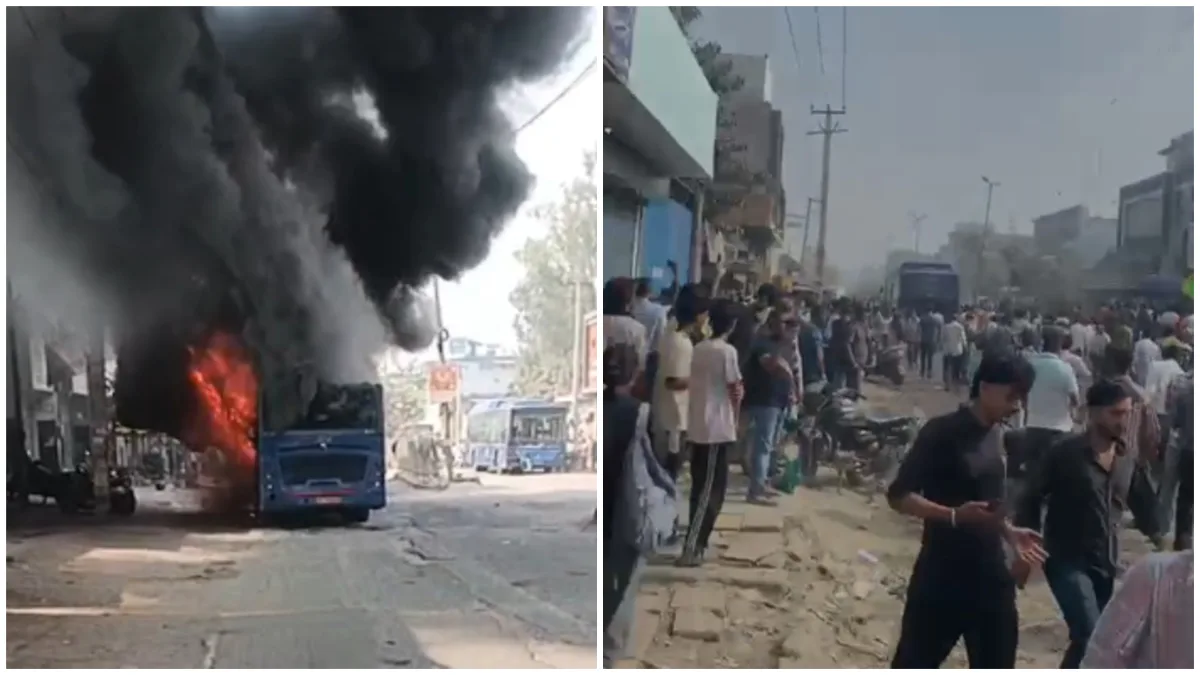
Two people died in a tragic road accident in the Nangloi area of the national capital after a Delhi Transport Corporation (DTC) bus crushed a youth riding a scooter on Monday. According to police, the scooter rider died on the spot.

During the accident, the bus also rammed into an e-rickshaw and struck several people, leaving multiple individuals injured. The injured were rushed to Sanjay Gandhi Memorial Hospital and Maharaja Agrasen Hospital for treatment. One female injured in the accident has been admitted to Mansa Ram Hospital in Nihal Vihar.

Delhi Police confirmed that two people lost their lives in the incident. The bus driver has been taken into custody, and a case has been registered.

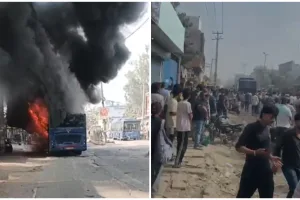
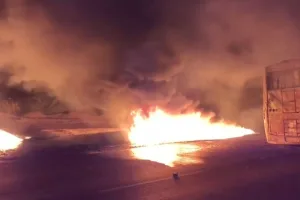
The incident sparked anger among locals, who gathered at the site soon after the accident. In a fit of rage, some people set the bus involved in the crash on fire. Fire brigade personnel were immediately alerted and rushed to the scene, where they managed to extinguish the flames. The burnt bus was later towed away from the accident site.

Fatal accident details

The accident was reported at about 9.45 am when a DTC cluster bus bearing no DL 1 PD 6223, coming from Najafgarh side, hit a scooty, a bike, a hand rickshaw, and some pedestrians on Najafgarh Nangloi Road. The police team reached within 5 -10 minutes and controlled the situation, according to DCP Outer District.

According to police, around 500 people gathered immediately and damaged the bus involved in the accident. Also, another DTC Cluster Bus no DL 1 PD 5674, coming from Nangloi side was found in a burnt condition.

Further investigation is underway.

Kishan dedicates T20 World Cup triumph to late cousin

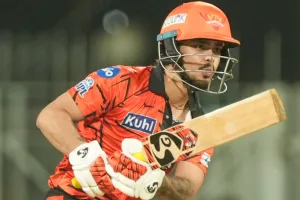
Kishan played a crucial role in the title clash, scoring 54 to help India register a commanding 96-run victory over New Zealand national cricket team and secure their third T20 World Cup crown.

Statesman News Service | New Delhi |

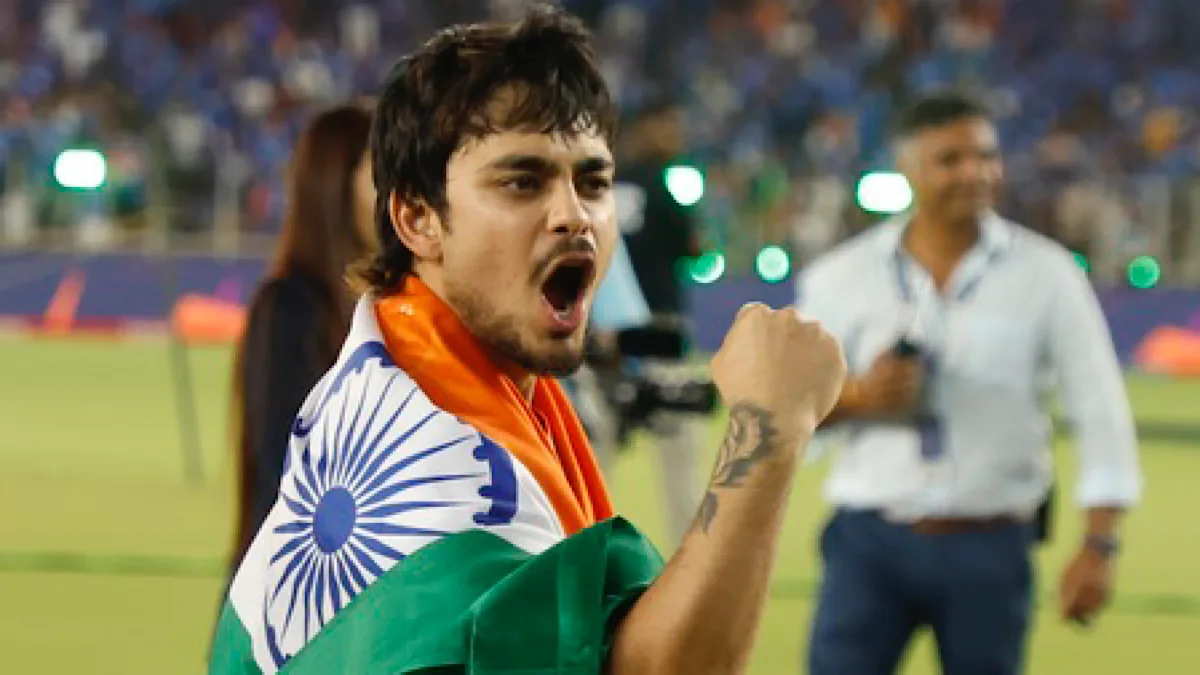
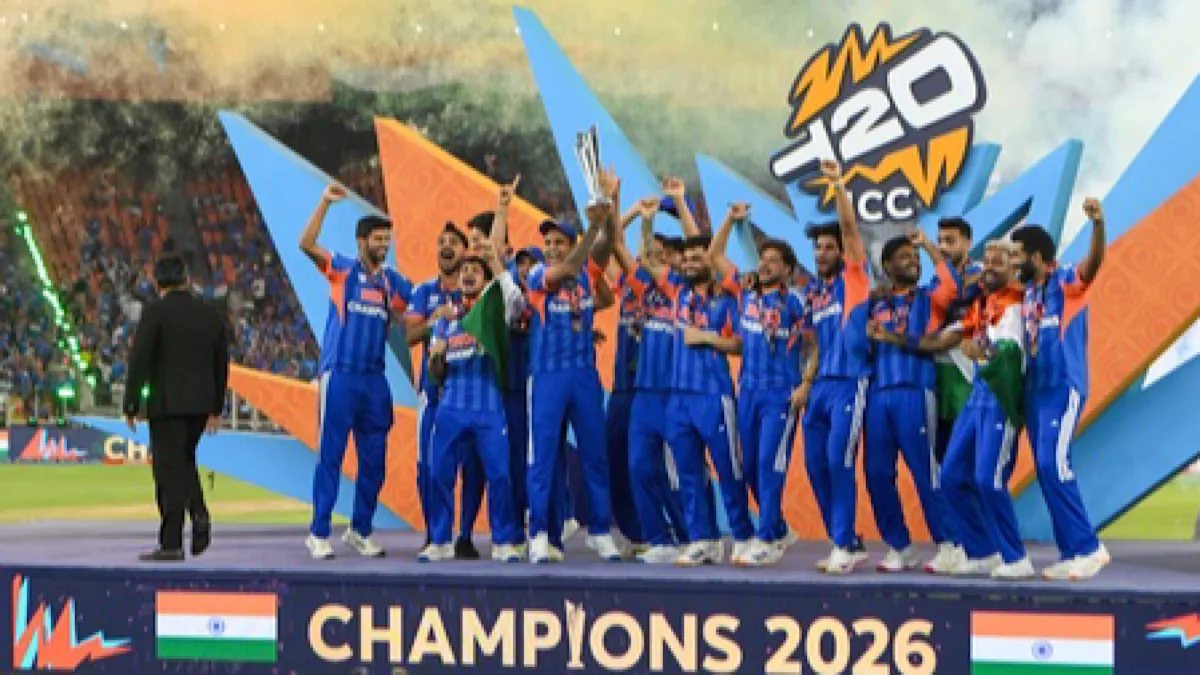
Ishan Kishan dedicated India’s triumph in the ICC Men’s T20 World Cup 2026 to his late cousin sister, revealing that she and his brother-in-law died in a car accident a day before the final at the Narendra Modi Stadium in Ahmedabad.

Kishan played a crucial role in the title clash, scoring 54 to help India register a commanding 96-run victory over New Zealand national cricket team and secure their third T20 World Cup crown.

“To be honest, before the game, I lost my cousin sister in a car accident. I played well for her. I spoke to Hardik bhai; he said to put the team ahead. I dedicate this win to her, and this was on Women’s Day, so it makes it all the more special,” Kishan told reporters in the mixed zone interaction.

The wicketkeeper-batter’s performance capped a remarkable comeback journey. After being out of the national side for nearly two years, Kishan returned to finish as India’s second-highest run-scorer in the tournament behind Sanju Samson.

Reflecting on the lessons he learned during his time away from the national setup, Kishan said he focused on maintaining the right mindset and approach rather than worrying about results, while drawing inspiration from Virat Kohli.

“In these two years, the biggest thing I learned was to just keep doing your job; don’t think about the results. The skills don’t change much. If I scored a 200 before, the skills were there then and they are there now. But what matters is your approach. How much hunger do you have?

“If you remove the fear of failure and doubt, you only focus on staying in the present. In these two years I have learned one thing: I have stopped overthinking. I don’t even think about where my name will come up, whether it will come up or not. I think it’s not in my hands, and if I think about these things and then look at the team and see my name isn’t there, it will just hurt me.

“So in a way, I take a step back. Like I said, I like Virat bhai a lot, seeing how he has put his energy into the game for so many years. That work was the most important thing for me to understand – what can I change within myself? Because the ability is there,” he elaborated.
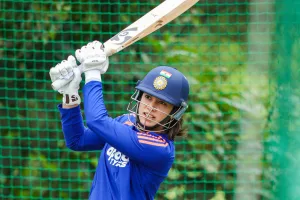
Kishan also recalled a conversation with India captain Suryakumar Yadav before the T20 World Cup squad was announced, a moment that reinforced his belief.

“When Surya bhai called, I took a screenshot and thought it was for the World Cup. He called and asked, ‘WC jeetwayega kya (Will you make us win the World Cup?’. I asked, ‘Aap bharosa karoge kya (Will you show trust in me)?’ and then said, ‘Karoonga (I will do it(.’ He said chal kiya (okay, done).”

Kishan’s redemption arc began after he fell out of the national setup in 2023. He worked his way back through domestic cricket, leading Jharkhand to the Syed Mushtaq Ali Trophy title in 2025 before returning to the national side in strong form.

That journey culminated in Kishan playing every match of the tournament and lifting the trophy with India. He added that the World Cup triumph carried immense personal significance, particularly for his family.

“I just went in with the thought that even if I get out on zero, we just have to win the World Cup. It means a lot to me. More than myself, I would say my family members are much more relaxed now. As sportsmen, we go through phases.

“We know how to take care of ourselves, as we know the reality, the ability we have and how we can change things. But at the same time, the ones who get troubled are the family members. So for their happiness, perhaps we work harder so that we can try to make it back into the team as soon as possible. At the end of the day, keeping them happy becomes everything for us,” he added.

India T20 WC win is a moment of redemption for Gambhir: Paranjape

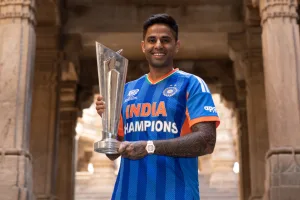
India’s triumph in the 2026 ICC Men’s T20 World Cup was not only a landmark achievement for the Suryakumar Yadav-led side but also a moment of redemption for head coach Gautam Gambhir, said former India cricketer and national selector Jatin Paranjape.

IANS | New Delhi |

India’s triumph in the 2026 ICC Men’s T20 World Cup was not only a landmark achievement for the Suryakumar Yadav-led side but also a moment of redemption for head coach Gautam Gambhir, said former India cricketer and national selector Jatin Paranjape.

Gambhir, who succeeded Rahul Dravid as head coach following India’s T20 World Cup victory in 2024, had faced mounting criticism in the run-up to the tournament after a difficult run in other formats – India lost a Test series 2-0 to South Africa and suffered a 2-1 to New Zealand in an ODI series.

But at the same time, India claimed the 2025 ODI Champions Trophy and the T20 Asia Cup under Gambhir’s coaching, and Sunday’s triumph added a second consecutive ICC title against his name. With two ICC white-ball trophies in as many years, Gambhir now stands as the most successful head coach in the history of Indian men’s cricket.

“This victory is also significant for Gautam Gambhir. In many ways, it feels like a moment of redemption for him as a coach and leader of this group. Gautam has always believed in clarity, strong intent, and backing players who can change games.

“This win validates that approach and, more importantly, sets the platform for him to shape this team with confidence as they start building towards the 2027 ODI World Cup,” Paranjape said to IANS on Monday, a day after India became the first team to win three T20 World Cup titles, clinch a triumph on home soil and grab back-to-back silverwares in the shortest format.

His tactical acumen remains a subject of debate, but results in the shortest format have been difficult to dispute. Gambhir, a two-time World Cup winner as a left-handed opener, has long demonstrated a command of acing T20 cricket – a fluency he has now carried into the coaching role and was evident on Sunday.

Paranjape, the co-founder of KheloMore and member of the BCCI Cricket Advisory Committee, also highlighted the rise of Suryakumar Yadav as captain, as the right-handed batter joined the esteemed company of India men’s captains to win a World Cup, which includes Kapil Dev, MS Dhoni and Rohit Sharma.

“Suryakumar Yadav is an interesting story as captain because he wasn’t the obvious choice early on. But if you look at the last three or four years, his growth as a player has been tremendous, and that confidence seems to have carried into his leadership as well,” he added.

Paranjape also noted that Suryakumar’s ability to bring the best out of the players is a standout aspect as a leader of the Indian team, citing Sanju Samson’s example. “What stands out about Surya is that he’s a player’s captain. He keeps the environment open and treats players as equals, backing them to think and express themselves.

“You can see that with someone like Sanju Samson. The talent was always there, but Surya has given him the freedom and confidence to play his natural game, and when a captain shows that kind of trust, players tend to deliver for the team,” he added.

Karur stampede tragedy: CBI summons TVK chief Vijay for questioning

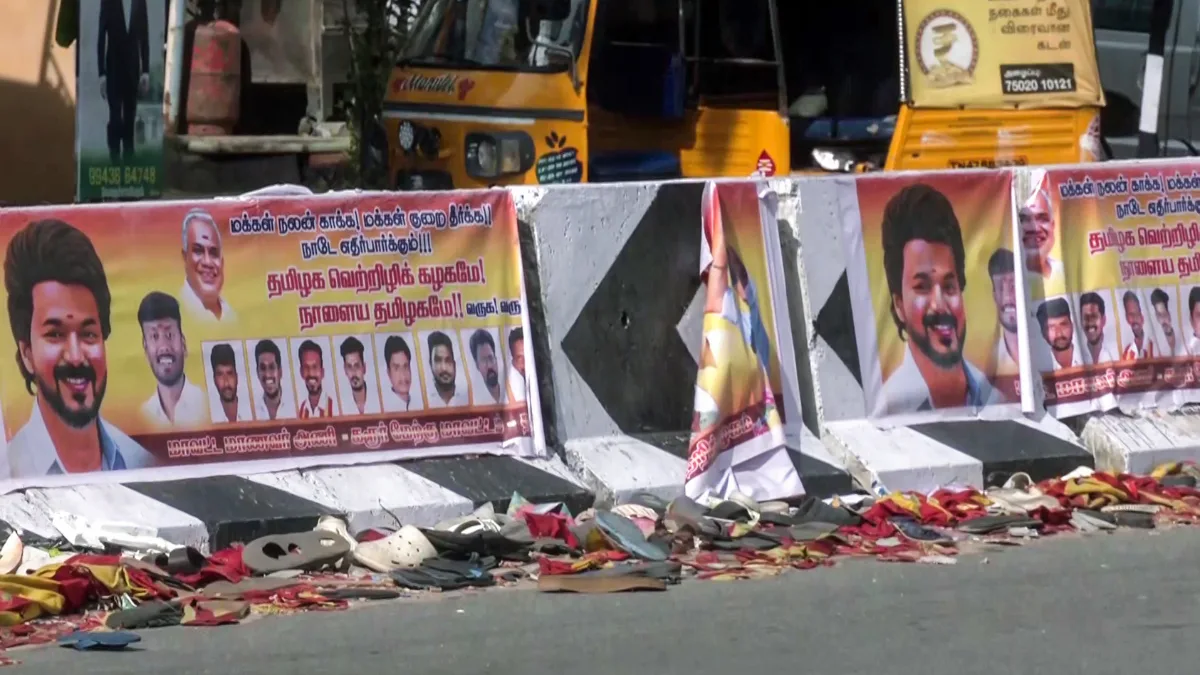
At least 40 people lost their lives, and more than 100 were injured in the stampede during the rally addressed by Vijay in Veluchamipuram in Karur district.

Statesman News Service | New Delhi |

The Central Bureau of Investigation (CBI) has summoned TVK chief and actor Vijay to appear before the agency on March 10 for the third phase of questioning in connection with the Karur stampede case, sources told ANI.

The questioning is part of the ongoing investigation into the tragic incident that occurred during a political rally in Karur last year.

Earlier rounds of questioning

Vijay has already appeared twice before the CBI as part of the probe. On January 12, Vijay was questioned for over six hours at the CBI headquarters in New Delhi during the first phase of the investigation.

On January 19, he was questioned again by a team of officials led by a Deputy Superintendent of Police-rank officer from the agency’s anti-corruption unit.

Stampede claimed 40 lives

The tragedy unfolded on September 27, 2025, during an election campaign rally addressed by Vijay in Veluchamipuram in Karur district.

At least 40 people lost their lives, and more than 100 were injured in the stampede during the rally.

The large gathering reportedly led to overcrowding and chaos, triggering the deadly stampede.

Probe handed to CBI by SC

Following directions from the Supreme Court of India, the investigation into the incident was transferred to the CBI to ensure a fair and comprehensive probe.

Since taking over the case, investigators have carried out extensive enquiries involving multiple officials and agencies connected with the event.

So far, investigators have questioned the Karur District Magistrate, the Superintendent of Police, senior police personnel, and officials from various government departments responsible for event management and public safety.

From Valson to Samson: Kerala’s quiet role in India’s World Cup history

Across decades of global tournaments, a quirky pattern has surfaced that many cricket followers now recall with a smile. Each time India has lifted a men’s World Cup, a Malayalee cricketer has been part of the squad.

Statesman News Service | New Delhi |

Hand of God in India’s World Cup triumphs. Kerala, often referred to as God’s Own Country, seems to have had a quiet but curious presence in some of Indian cricket’s greatest triumphs.

Across decades of global tournaments, a quirky pattern has surfaced that many cricket followers now recall with a smile. Each time India has lifted a men’s World Cup, a Malayalee cricketer has been part of the squad.

What began as a coincidence has gradually become one of those charming bits of cricketing trivia that supporters enjoy revisiting whenever India celebrates a major title.

The thread can be traced back to India’s fairy-tale victory in the 1983 Cricket World Cup, when the side led by Kapil Dev stunned the cricketing world. Kerala pacer Sunil Valson was a member of that squad. Although he did not feature in any of the matches, his inclusion became an interesting footnote when India lifted the trophy at Lord’s Cricket Ground.

The coincidence resurfaced in a far more dramatic fashion during India’s victory in the inaugural 2007 ICC World Twenty20 in South Africa. This time the Kerala connection played a visible role on the field. Fast bowler S. Sreesanth was part of the squad and produced one of the tournament’s defining moments by holding on to the catch that sealed India’s thrilling win in the final.

Four years later, when India celebrated another historic triumph in the 2011 Cricket World Cup on home soil, Sreesanth again found himself in the squad. His presence added another layer to what fans had begun to jokingly describe as India’s “Malayalee lucky charm” in World Cup campaigns.

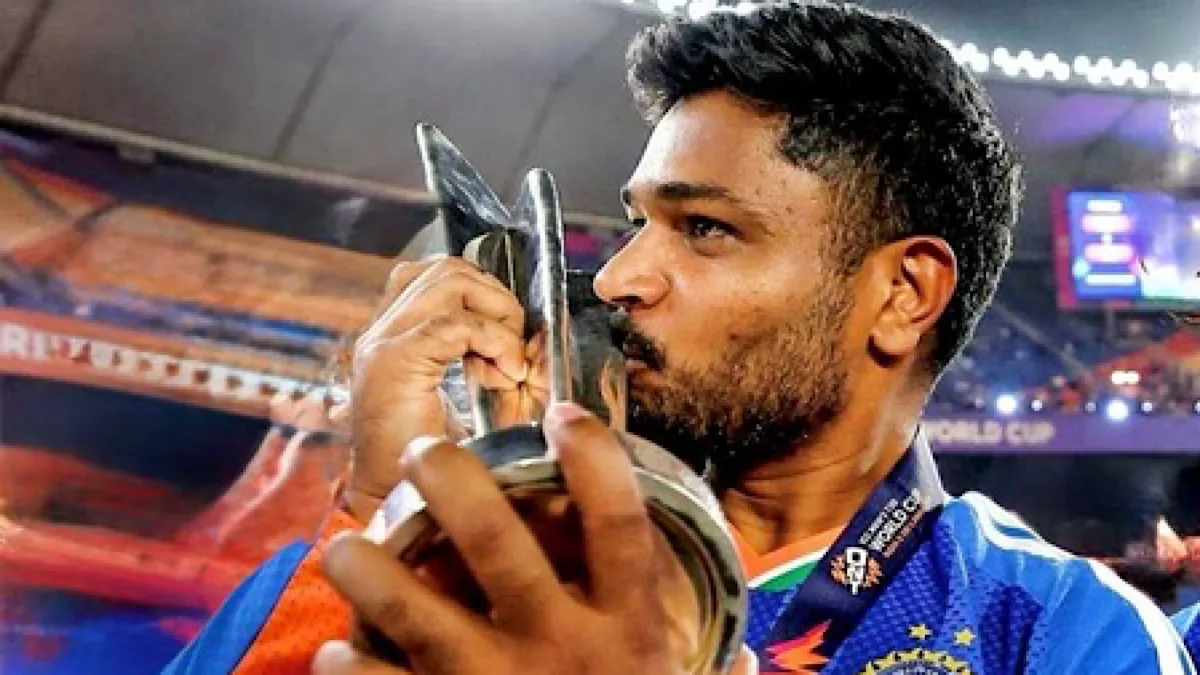
The trend carried on into the modern T20 era as well. When India lifted the 2024 ICC Men’s T20 World Cup, Kerala wicketkeeper-batter Sanju Samson was among the players in the victorious group.

India’s latest triumph in the ICC Men’s T20 World Cup 2026 added yet another chapter to the narrative. Samson was again present in the squad, but this time he played a far more decisive role in the campaign.

The stylish wicketkeeper-batter delivered three successive match-winning performances in the knockout stages, helping India surge towards their third T20 World Cup crown.

The curious pattern even drew attention during the broadcast of Sunday’s title clash between India and New Zealand, when former India head coach and commentator Ravi Shastri highlighted the Kerala link with a touch of amusement.

Santner proud of Black Caps despite T20 World Cup final loss to India

The Black Caps had entered the title clash full of confidence after upsetting South Africa in the semi-finals. However, they were outplayed by the tournament co-hosts, suffering a 96-run defeat.

Statesman News Service | New Delhi |

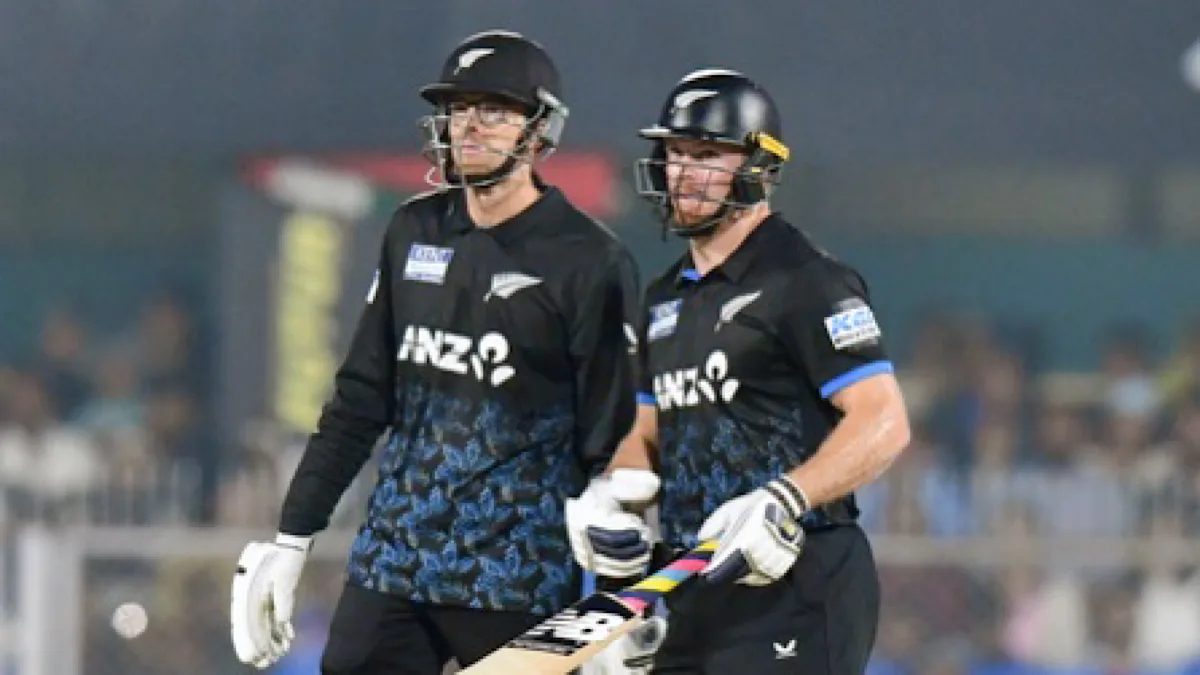
New Zealand skipper Mitchell Santner said he was proud of his team’s efforts despite the Kiwis falling short against India in the final of the ICC Men’s T20 World Cup 2026 at the Narendra Modi Stadium in Ahmedabad on Sunday.

The Black Caps had entered the title clash full of confidence after upsetting South Africa in the semi-finals. However, they were outplayed by the tournament co-hosts, suffering a 96-run defeat.

It marked the second time this decade that New Zealand have finished runners-up in the T20 World Cup, having also lost the 2021 final to Australia.

The result also followed another near miss in the ICC Champions Trophy in March last year. Despite the disappointment, Santner believes these consistent deep runs show that his side is moving closer to winning a major title.

“I guess it’s not ideal, losing semis and finals, but like I said the other day, you get to this situation, you’re coming up against teams that are also playing very good cricket,” Santner said.

“India in a final, and India is always going to be a challenge. We knew that definitely the underdogs going into the game. And they showed their class again tonight, with that batting performance.

“And then, everything kind of has to go well when you’re chasing 250. And losing the wickets in the Powerplay is always a challenge. I think that was the tale of the day, was the two power plays. I think we were three for 40 odd and they were 90 odd for none,” he added.

Santner also acknowledged the strong support the team received from fans back home and said playing in front of a crowd of nearly 90,000, largely backing the hosts, added to the occasion.

“It’s thanks to the fans back home for following us,” Santner continued.

“I might have to go to work obviously without a trophy today but we’ve obviously great support back home and we get great support here as well.

“It was awesome to play in front of so many people tonight that obviously had a few blue shirts on and not many black shirts but again it’s always a great occasion and it’s always cool for us to play in front of so many people. It obviously wasn’t our greatest effort tonight as we came up against a very good team, but I am thanking the fans back home,” he added.

New Zealand will now shift their focus to next year’s ICC Men’s Cricket World Cup, which will be hosted across South Africa, Zimbabwe and Namibia. Santner also highlighted the opportunity ahead when New Zealand co-host the next T20 World Cup with Australia in 2028.

“It’s probably quite far away that I think, so we will reflect as a group tonight, over the next few days of, I guess, this tournament and what it looked like,” Santner added.

“I think to make it to a final is obviously a pretty good effort from the boys and they should be very proud of their efforts throughout this tournament. And then I guess the next kind of major events one day is in South Africa, like you said, it’s going to play slightly different to what we expect here.

“And then our next T20 World Cup is in Australia and New Zealand, so it’ll be nice to get a few fans and the crowd there in familiar conditions. That’s one of the hardest things is to win a World Cup in your country. So for India to do that, this obviously comes with a lot of added pressure, home fans. So for them to win this trophy tonight, they should be very proud of that,” he signed off.

Bomb threat at Begusarai civil court prompts heightened security at premises, search operation on

The administration and security agencies in Begusarai have stepped up security after receiving another bomb threat targeting the Begusarai Civil Court on Monday.

IANS | New Delhi |

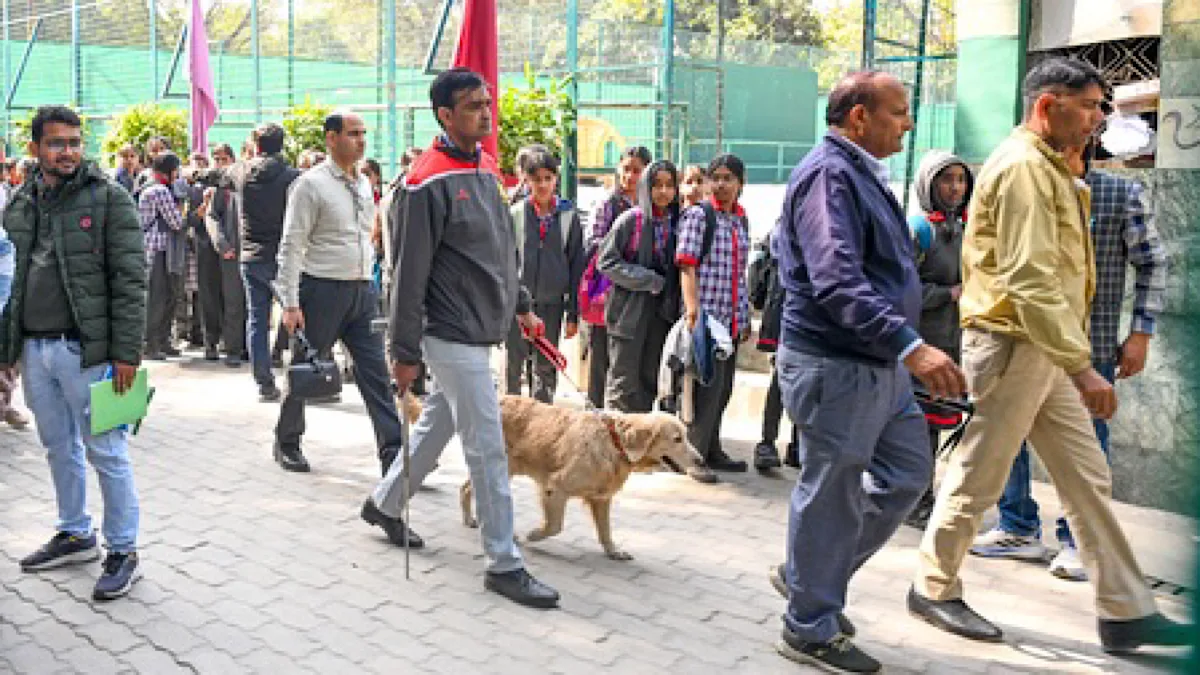
The administration and security agencies in Begusarai have stepped up security after receiving another bomb threat targeting the Begusarai Civil Court on Monday. Following the alert, authorities tightened security across the court premises and nearby areas.

Soon after the threat was received, police and administrative teams rushed to the court complex and cordoned off the entire area.

Additional police personnel and security forces have been deployed, and all visitors entering the court premises are being thoroughly checked and frisked.

Police officials have also stationed personnel at the main entrance, ensuring that lawyers, court staff, and members of the public undergo security checks before entering the premises.

Manish, the Superintendent of Police of Begusarai, personally visited the court complex to review the security arrangements.

Under his supervision, bomb disposal and dog squads are conducting an intensive search operation throughout the court campus.

Security teams are examining multiple locations within the court complex, including court buildings, judges’ chambers, and surrounding premises.

Authorities are closely monitoring for any suspicious objects or activities, while police patrols have also been increased around the area to prevent any untoward incidents.

The district administration stated that the threat has been taken seriously and is under investigation.

Officials confirmed that the situation is currently under control and have urged citizens to remain vigilant.

Although the threat initially caused panic among lawyers and visitors, police quickly restored order and ensured normalcy.

This is not the first such incident this year.

On January 28, 2026, the Begusarai Civil Court received a bomb threat via email, warning that the court would be blown up by 1 PM and instructing judges to leave the premises.

That incident also led to panic and temporarily disrupted judicial work before authorities confirmed there was no explosive device.

In the recent weeks, similar threats were received in various district courts, including Patna, Bhagalpur, Muzaffarpur, Purnea, Darbhanga and other districts.

Pune leads DAP funds, Nagpur sees sharpest rise in allocation

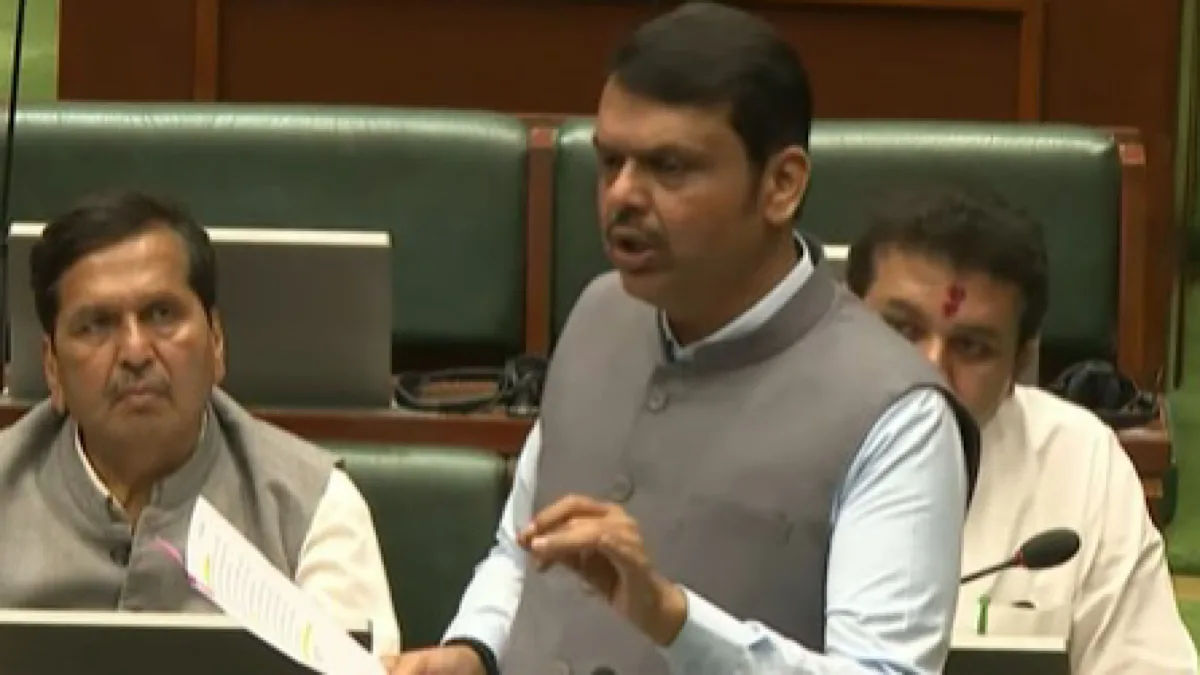
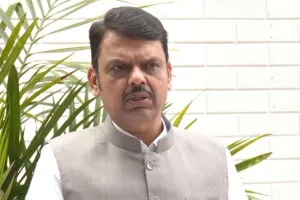
While Pune district has secured the highest overall allocation in the District Annual Plan (DAP) for the 2026-27 financial year, Nagpur — the home district of Chief Minister Devendra Fadnavis — has recorded the most significant funding increase.

IANS | New Delhi |

While Pune district has secured the highest overall allocation in the District Annual Plan (DAP) for the 2026-27 financial year, Nagpur — the home district of Chief Minister Devendra Fadnavis — has recorded the most significant funding increase.

According to the Maharashtra Budget presented by Fadnavis last Friday, Nagpur has consistently recorded the highest growth in allocations over the past three years. For the coming fiscal year, Pune, Nagpur, and Mumbai suburban districts are the only three districts to cross the Rs 1,000 crore-mark in budgetary provisions.
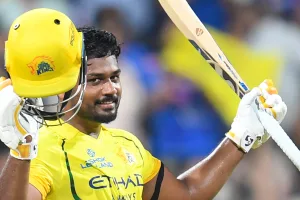
In his Budget speech, the Chief Minister said the government has made a provision of Rs 21,867 crore under the District Annual Plan for the financial year 2026-27, compared with Rs 20,165 crore in 2025-26. This represents an increase of Rs 1,702 crore.

Funds under the District Annual Plan are distributed among districts based on specific criteria such as population, geographical area, and tribal population density. The annual proposals are approved by the District Planning Committees, chaired by the respective District Guardian Ministers, and then submitted to the state government.

During Ajit Pawar’s tenure as Deputy Chief Minister and Finance Minister, special efforts were often made to secure higher allocations for Pune. This year, Pune leads with an allocation of Rs 1,300 crore, though the increase over the current year is modest at Rs 66 crore.

Nagpur, in contrast, has been allocated Rs 1,021.90 crore for the next fiscal year against Rs 884 crore in the current year, an increase of Rs 137 crore. Looking at the three-year trend from 2024-25 to 2026-27, Nagpur’s allocation has risen by Rs 338 crore, compared with an increase of Rs 231 crore for Pune.

Planning Department sources said the allocations are determined strictly by demographic and geographical criteria rather than political considerations.

The detailed district-wise data as per the official budget documents shows that Pune has been allocated Rs 1,300 crore for 2026-27, an increase from Rs 1,234 crore in 2025-26. Mumbai Suburbs follows with Rs 1,105 crore (2-26-27), up from Rs 1,066 crore (2025-26). However, the most notable surge remains in Nagpur, which jumped from Rs 884 crore to Rs 1,021 crore, and Nashik, which saw its allocation rise to Rs 817 crore from Rs 724 crore, while Thane’s allocation stands at Rs 860 crore (up from Rs 815 crore) in the current fiscal.

The district-wise allocation under the DAP for other districts is as follows:

Ahilyanagar Rs 761 crore in 2026-27 (Rs 683 crore in 2025-26), Solapur Rs 698 crore (Rs 640 crore), Jalgaon Rs 627 crore (Rs 578 crore), Amravati Rs 605 crore (Rs 527 crore), Chhatrapati Sambhajinagar Rs 602 crore (Rs 556 crore), Satara Rs 582 crore (Rs 540 crore) and Mumbai City Rs 555 crore (Rs 528 crore).

Kolhapur received Rs 550 crore in the coming fiscal, (Rs 523 crore in the previous FY), Beed Rs 536 crore (Rs 483 crore), Raigad Rs 517 crore (Rs 481 crore), Nanded Rs 514 crore (Rs 491 crore), Sangli Rs 457 crore (Rs 436 crore), Yavatmal Rs 452 crore (Rs 411 crore) and Ratnagiri Rs 439 crore (Rs 406 crore).

Chandrapur got an allocation of Rs 430 crore in 2026-27 (Rs 390 crore in 2025-26), Buldhana Rs 414 crore (Rs 378 crore), Latur Rs 405 crore (Rs 386 crore), Dharashiv Rs 405 crore (Rs 378 crore), Jalna Rs 398 crore (Rs 376 crore) and the Maoist-hit Gadchiroli Rs 390 crore (Rs 341 crore).

Wardha got Rs 343 crore (Rs 293 crore), Parbhani Rs 332 crore (Rs 298 crore), Palghar Rs 322 crore (Rs 296 crore), Sindhudurg Rs 307 crore (Rs 282 crore), Dhule Rs 290 crore (Rs 271 crore), Washim Rs 283 crore (Rs 260 crore), Hingoli Rs 267 crore (Rs 246 crore), Akola Rs 263 crore (Rs 225 crore), Gondia Rs 260 crore (Rs 245 crore), Bhandara Rs 250 crore (Rs 233 crore) and Nandurbar Rs 188 crore (Rs 176 crore).

Fadnavis presented a Rs 7,69,467 crore Budget for 2026-27, with a revenue deficit of Rs 40,552 crore and a fiscal deficit of Rs 1,50,491 crore.

Addressing the Assembly, the Chief Minister said the government estimated revenue receipts of Rs 6,16,099 crore against revenue expenditure of Rs 6,56,651 crore. He said the government has managed to keep the revenue deficit below 1 per cent of the Gross State Domestic Product (GSDP) and the fiscal deficit below 3 per cent of the GSDP.

According to the revised estimates, revenue receipts for 2025-26 are projected at Rs 6,01,789 crore, compared with the Budget estimate of Rs 5,60,964 crore. Against the Budget estimate of revenue expenditure of Rs 7,00,020 crore for 2025-26, the government has placed the revised estimate of revenue expenditure at Rs 7,55,920 crore.

Assam deprived of due share development during Congress regime: CM Sarma

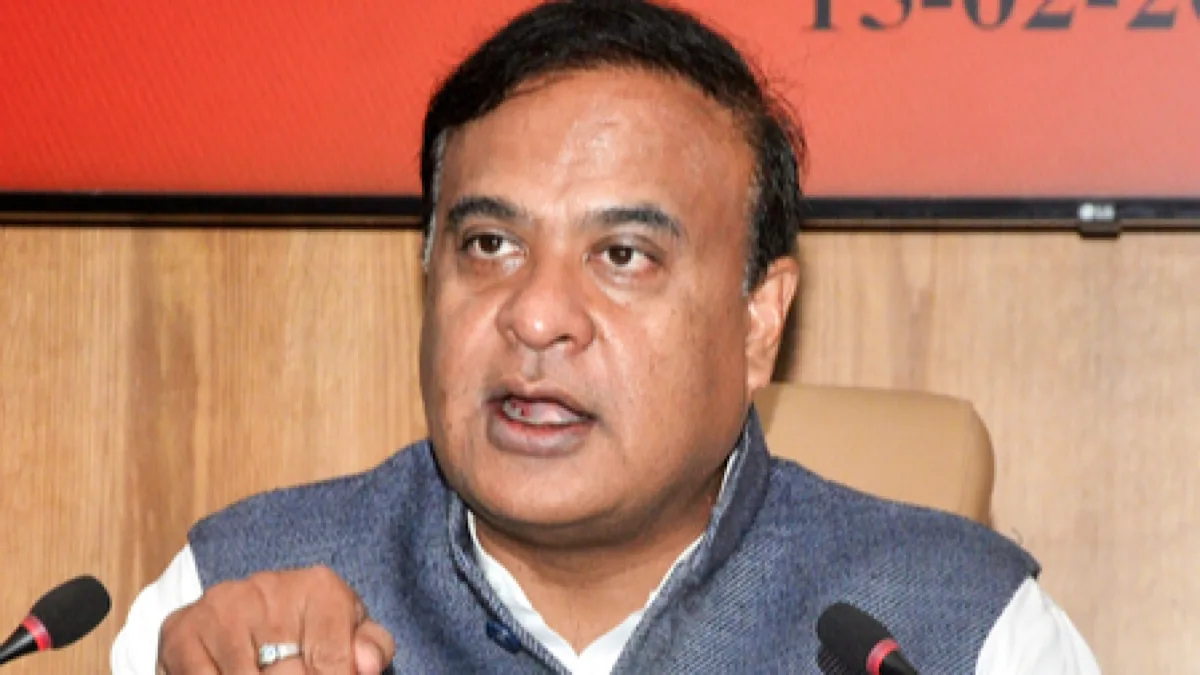
Assam Chief Minister Himanta Biswa Sarma on Monday said that the state is now receiving priority in development projects and that major infrastructure initiatives are being completed in record time under the “double-engine” government.

IANS | New Delhi |

Assam Chief Minister Himanta Biswa Sarma on Monday said that the state is now receiving priority in development projects and that major infrastructure initiatives are being completed in record time under the “double-engine” government.

In a post on social media platform X, Sarma alleged that Assam did not receive its due share of development projects during tenure of Congress-led governments and that many projects sanctioned earlier faced significant delays.

“During the Cong era, Assam never got its due share in development projects and whatever projects we got were delayed,” the Chief Minister wrote.

He further said that the situation has changed under the double-engine government, referring to the same party being in power both at the Centre and in the state.

“Under the Double Engine Govt, not only is Assam prioritised, it’s getting projects delivered in record time,” Sarma said. Highlighting the healthcare sector, the Chief Minister cited the establishment of the All India Institute of Medical Sciences Guwahati as a major example of rapid project execution in the state.

According to Sarma, the premier healthcare institute reflects the Centre’s commitment to strengthening medical infrastructure in Assam and improving access to advanced healthcare facilities in the region.

The AIIMS in Guwahati was inaugurated by Prime Minister Narendra Modi in April 2023 and has since begun offering a range of specialised medical services. The Chief Minister has frequently highlighted the role of coordinated efforts between the state government and the Centre in accelerating development across sectors such as healthcare, infrastructure, connectivity and education.

Officials have also stated that several other projects in Assam are currently progressing at a faster pace due to enhanced central support and improved implementation mechanisms. Sarma’s remarks come amid continuing political exchanges between the ruling alliance and opposition parties over the pace and distribution of development initiatives in the state.

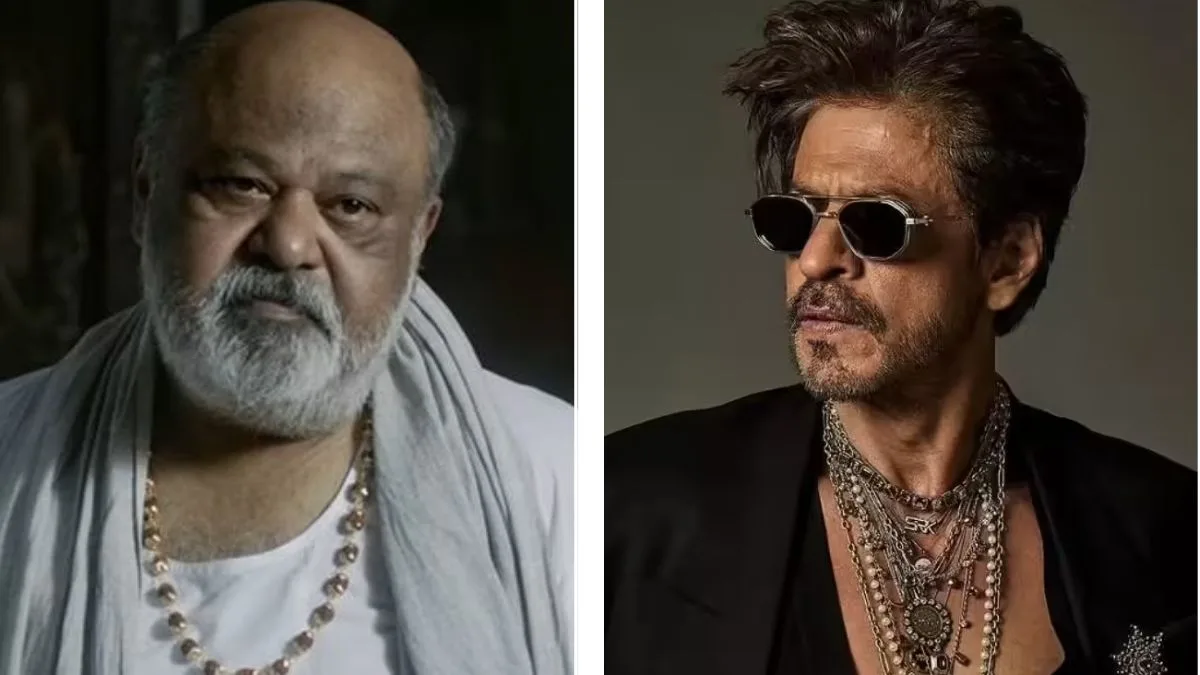
‘Bollywood would literally give their right arm for Shah Rukh Khan!’ Saurabh Shukla talks about the superstar

Bollywood is buzzing as ‘King’ gears up, and Saurabh Shukla reveals why working with Shah Rukh Khan is the ultimate dream for any actor. With an ensemble cast and SRK’s star power, the film is already creating waves.

Statesman News Service | New Delhi |

When it comes to Bollywood dreams, Shah Rukh Khan still reigns supreme. And according to National Award-winning actor Saurabh Shukla, working with the superstar is the kind of opportunity most actors would chase with open arms, literally! Speaking about the upcoming mega-film ‘King’, Shukla joked that actors would “give their right arm” just to share screen space with SRK.

The actor, who has previously worked with Shah Rukh in hits like ‘Baadshah’ and ‘Hey Ram’, revealed that the excitement around ‘King’ is palpable across the industry.

“70 percent of Bollywood is in King”, but wait, there’s more

Earlier, Shukla made headlines when he claimed that “70 percent of Bollywood” is associated with ‘King’. Naturally, everyone went into overdrive, imagining an all-star extravaganza. But the actor was quick to clarify his words.

Also Read: Throwback: When Shah Rukh Khan broke silence on being called ‘arrogant’ and why he ‘troubled’ filmmakers

“It was just to highlight the scale of the film and the enthusiasm around it,” he told IANS. Shukla explained that his comment didn’t mean only actors are involved. “When I say 70 percent of the industry, it doesn’t just mean actors. The industry isn’t made of actors alone. Sure, actors may be 70 or 80 percent of the people involved, but everyone wants to be part of a big film like this.”
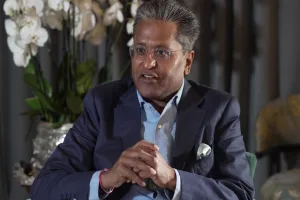
In short: ‘King’ is massive, and everyone wants a slice of the action.

Ensemble casts

The conversation soon turned to the trend of ensemble casts in Bollywood, with Shukla weighing in on whether this is the new rule for big films.

“Not exactly,” he said. “Of course, an ensemble cast is great. When each character is treated with dignity, every actor becomes an integral part of the story. That’s what makes it an ensemble cast. Ideally, every film should respect and include each role this way.”
Clearly, for Shukla, it’s not just about big names. It’s about giving each actor their due.

The Shah Rukh factor

It’s no secret that Shah Rukh Khan still carries unmatched star power, and Shukla’s words confirm it. The actor says the main reason for the buzz around ‘King’ is the chance to work with SRK himself.

“That’s what it is,” Shukla said. “Everybody loves Shah Rukh. One call from his office, or if he calls personally, you will give your right arm to work with him.”

Even veterans like Shukla can’t resist the allure of Shah Rukh’s presence on set. The excitement is infectious.

Shukla plays it mysterious

While Saurabh is full of praise for the film and his superstar co-star, he’s keeping his own role under wraps. When asked about how many scenes he has in ‘King’, he gave a cryptic reply: “You will have to watch it to find out. They reveal only as much as they want about the film. I am nobody to… I can reveal as much as you want about ‘Khuli Kitaab’, but not about ‘King’.”

In true Bollywood style, the mystery only adds fuel to the fire.

Throwback: When Krithi Shetty faced waves of hate and criticism during her busiest film phase

Earlier, Krithi Shetty opened up about the emotional challenges of fame, revealing how public hate and criticism once shook her confidence. Family and friends became her anchor as she navigated.

Statesman News Service | New Delhi |

It feels like just yesterday, but let’s rewind a bit. Krithi Shetty was in thick of the busiest phase of her career. After gap of two years, the actress was suddenly juggling not one, not two, but three films at the same time; ‘Vaa Vaathiyaar’, ‘Love Insurance Kompany’, ‘Genie’. And with spotlight came not-so-glamorous side of stardom: criticism, rejection, constant public gaze.

Learning to handle hate

In an emotional throwback interview, a teary-eyed Krithi opened up about dealing with negativity. “Everyone around me knows that I am a very sensitive person. Acting is demanding, and sometimes you lose yourself in it,” she confessed. She explained that public scrutiny is beyond her control.

“It’s unfair. Even now, rejection comes your way, and despite being optimistic, you tend to lose yourself,” she said.

Her saving grace? Family and friends. Krithi credited her mother for pulling her out of low phases with reassurance. “She reminded me that I am so much more than my work. My friends do the same. Today, I feel secure in myself,” she added.

The rush of rapid success

Krithi also reflected on how sudden fame impacted her self-confidence. “Everything happened so fast that I never got the time to feel confident or give myself love. Even small incidents would affect me deeply. As a child, I wouldn’t care about comments, but suddenly, I did. I still don’t have an answer why,” she revealed.

Film by film: What she had on her plate

Vaa Vaathiyaar: The first film she promoted was the action-comedy starring Karthi, directed by Nalan Kumarasamy. This marked their first collaboration, and the cast included veterans like Rajkiran, Sathyaraj, Anandaraj, along with Karunakaran, GM Sundar, Shilpa Manjunath, and Ramesh Thilak.

Love Insurance Kompany: Next up was this sci-fi romantic entertainer featuring Pradeep Ranganathan in the lead and directed by Vignesh Shivan. The film hit theatres on December 18.

Genie: Last but not least, Krithi had Genie with Ravi Mohan, a film whose release date was still under wraps at the time.

Despite the challenges, Krithi said she felt grateful for everything. Facing hate, learning to cope with rejection, and juggling multiple projects taught her resilience.

“It was a whirlwind, but I learned to secure myself, love myself, and stay grounded,” she said.

Also Read: Bharti Singh exposes AI scam: Fraudsters using her voice to push fake slimming pads

Silver dips 1.30 pc, gold eases marginally over stronger dollar

Gold and silver prices eased on Monday amid a firmer US dollar and higher inflation expectations, trimming hopes of US Fed rate cuts in the near term.

IANS | New Delhi |

Gold and silver prices eased on Monday amid a firmer US dollar and higher inflation expectations, trimming hopes of US Fed rate cuts in the near term.

MCX gold April futures lost 0.16 per cent to Rs 1,61,380 per 10 grams around 11.10 am on an intraday basis. Meanwhile, MCX silver May futures declined 1.30 per cent to Rs 2,64,799 per kg.

Earlier in the day, gold futures had dipped 1.1 per cent, while silver futures had declined 1.4 per cent, before a strong rebound by precious metals.

The US dollar strengthened to cross its three‑month high touching 99.34 up 0.36 per cent on an intraday basis, making dollar‑priced bullion costlier for holders of other currencies.

Analysts said that US Treasury yields surging with the 10‑year papers hitting a one‑month high, increased the opportunity cost of holding non‑yielding metals.

Meanwhile crude oil surged around 27 per cent to $116 per barrel marking the first time since 2022 when both benchmarks crossed the $100 mark. The spike followed escalating hostilities in the Middle East amid supply disruptions at the Strait of Hormuz.

This raised inflation fears, leading to traders widely expecting the US Federal Reserve to hold interest rates steady at the conclusion of its two-day policy meeting on March 18.

The probability that the central bank will keep rates unchanged in June rose to over 51 per cent, up from below 43 per cent last week.

Gold has support at Rs 1,48,000 while resistance at Rs 1,53,000, an analyst said.

In COMEX Gold, strong buying interest is visible in the $5,000 support band, while a sustained breakout above $5,400–$5,600 could open the path toward fresh record highs, he added.

The medium to long-term outlook of silver also remains constructive amid favourable global cues from geopolitical developments, even with ongoing volatility, a market participant said.