Logo

Uttar Pradesh becomes 100% ODF Plus state under Swachh Bharat Mission (Rural)

State Panchayati Raj Minister Om Prakash Rajbhar said here on Monday that the state’s gram panchayats are setting an example for the country in the field of sanitation, and the government will continue to work in this direction in the future.

Statesman News Service | Lucknow |

Under the Swachh Bharat Mission (Rural), Uttar Pradesh has achieved a significant milestone in the field of sanitation and has become a 100% Open Defecation Free (ODF) Plus state.

State Panchayati Raj Minister Om Prakash Rajbhar said here on Monday that the state’s gram panchayats are setting an example for the country in the field of sanitation, and the government will continue to work in this direction in the future.

The state has already been declared 100% ODF in the first phase of the Swachh Bharat Mission (Rural). During this phase, Uttar Pradesh constructed more than 2.74 crore individual toilets, making it the state with the highest number of toilets in the country.

In the second phase of the mission, special emphasis is being placed on maintaining the ODF status permanently, as well as on solid and liquid waste management. Currently, 95,767 villages in the state have declared themselves ODF Plus with solid and liquid waste management systems, while more than 94,723 villages have achieved ODF Plus status.

Under the second phase, 5,725,291 individual toilets have been constructed so far. Additionally, 59,165 community toilets have been constructed to strengthen sanitation facilities in rural areas.

Panchayati Raj Department Director Amit Kumar Singh said that the Swachh Bharat Mission (Rural) has now become a mass movement. With the active participation of Gram Panchayats, public representatives, and villagers, the state has established a new identity in the field of sanitation. He stated that the department’s goal is to bring as many Gram Panchayats as possible into the ODF Plus category and make cleanliness a permanent habit.

Punjab State Teacher Eligibility Test (PSTET) 2026: Admit card released HERE; check easy steps to download

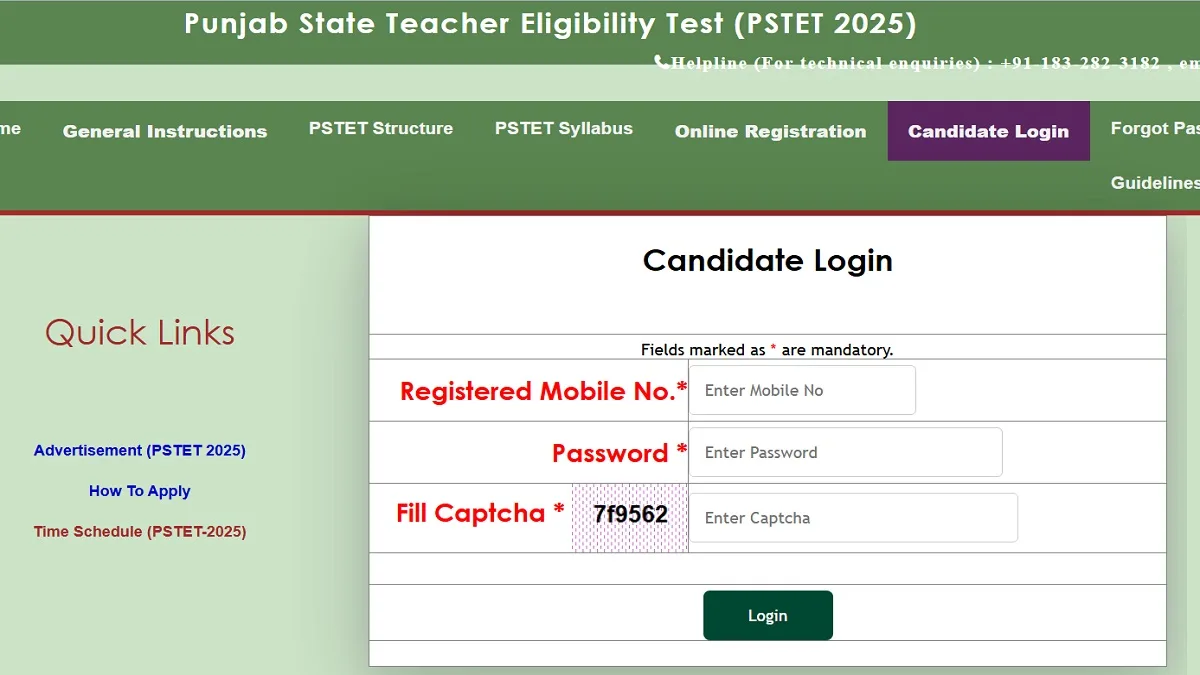
PSTET 2026 Admit Card: The Punjab State Teacher Eligibility Test (PSTET) 2026 admit card has been released for both papers – paper 1 and 2. Here is the direct download link along with easy steps to guide you through the process.

Statesman News Service | NEW DELHI |

PSTET 2026 Admit Card: The State Council of Educational Research and Training (SCERT), Punjab, on Monday (March 9, 2026), released the admit card for the Punjab State Teacher Eligibility Test (PSTET) 2026 on its official website – www.pstet2025.org/Login.aspx.

Candidates who had registered for the Punjab State Teacher Eligibility Test (2025) can now download their admit cards for both papers – PSTET paper 1 and PSTET paper 2. Admit cards for both papers need to be downloaded separately. The exam is scheduled to be held on March 15.

Below are the easy steps to download your admit card

  1. Visit the official website www.pstet2025.org
  2. Click on the “Candidate Login” link on the homepage.
  3. Enter your registered email ID, password, and captcha code
  4. Click on the ‘Login’ button, and your admit card will appear
  5. Click Download and save it for future reference

Activated PSTET 2026 Admit Card DOWNLOAD LINK

Stock market continues sell-off amid rising geopolitical disruptions

Broader indices underperformed the main indices with Nifty Midcap and Smallcap indices shed 2 each. The market capitalisation of BSE-listed companies fell by more than Rs 8 lakh crore to Rs 441 lakh crore.

Statesman News Service | New Delhi |

The Indian stock market continued the sell-off amid rising geopolitical disruptions. At close, the Sensex settled at 77,566.16, down 1,352.74 points or 1.71% after hitting low of 76,424.55, while Nifty also recovered from day’s low of 23,697.80 to end at 24,028.05, down 422.40 points or 1.73%.

Broader indices underperformed the main indices with Nifty Midcap and Smallcap indices shed 2 each. The market capitalisation of BSE-listed companies fell by more than Rs 8 lakh crore to Rs 441 lakh crore.

Among the sectors, all the indices ended in the red. Among the key ones, Auto, Capital Goods, Consumer Durables, Metal, PSU Bank, Oil & Gas and Private Bank down 2-4%.

On Nifty, the key gainers were Wipro, Sun Pharma, Apollo Hospital, Reliance Industries, Infosys. On the losing side were Tata Motors Passenger Vehicles, Eicher Motors, Bajaj Auto, UltraTech Cement, Maruti Suzuki.

Further, over 850 stocks touched their 52-week low. These included Swan Corp, Interglobe Aviation, GNFC, PNB Housing Finance, Birla Corp, BLS International, Sterling Wilson, RHI Magnesita, Just Dial, Asian Paints, Nuvoco Vistas, REC, Berger Paints, JK Lakshmi Cement, Rashtriya Chemicals, GAIL, Inox Wind, among others.

Banking stocks, witnessed a sharp decline in their share prices amid a surge in India’s government bond yields. Bank of Maharashtra, which shed 6.3% followed by Bank of India, Union Bank of India, Indian Bank, Canara Bank, State Bank of India, and UCO Bank, all crashing by over 4%.

Amid rise in crude prices, Indian Oil Corporation, Bharat Petroleum Corporation, and Hindustan Petroleum Corporation closed lower by up to 6%.

Uttarakhand Governor mentions about 2.55 lakh Lakhpati Didis during budget speech

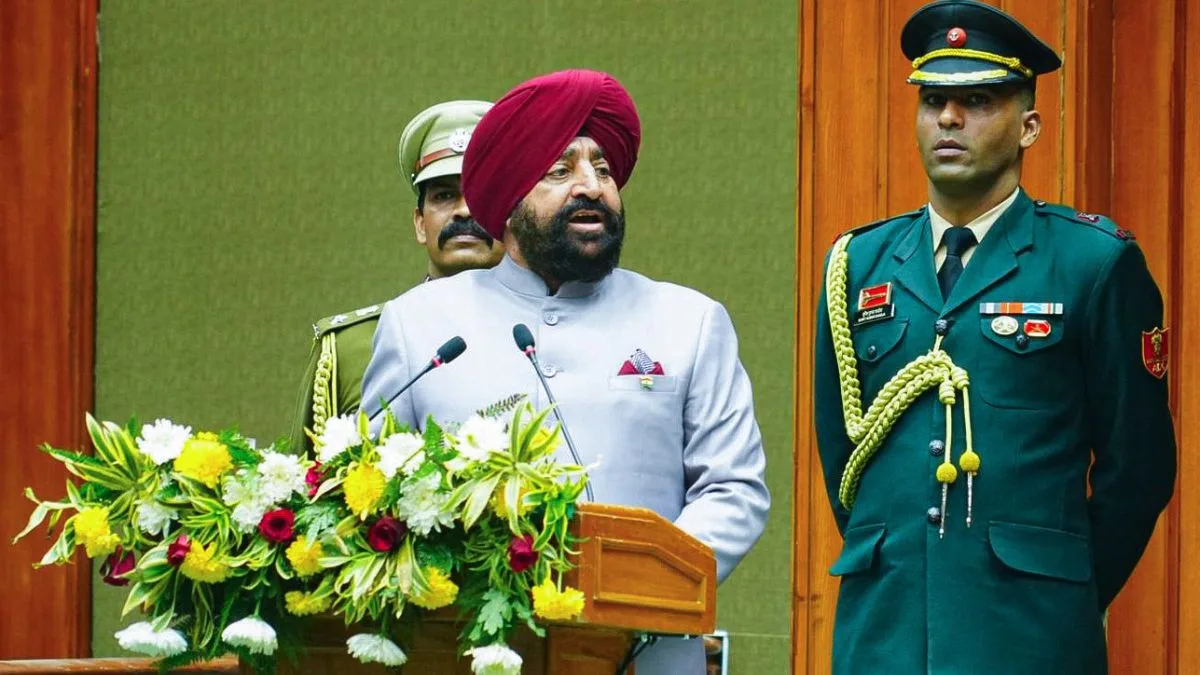
These, along with various other claims of Pushkar Singh Dhami government, were key aspects of the Governor Lt General Gurmeet Singh’s speech in the budget session of the state assembly that began on Monday at summer capital of the state Gairsain.

PRITHVIRAJ SINGH | Dehradun |

The Uttarakhand government on Monday claimed that 2.55 lakh rural women have become Lakhpati Didis (sisters with income in lakhs) in rural areas as it’s trying hard to attract global investors through major policy changes. According to the Dhami government, 22 consumer goods manufactured mainly in rural areas of the state are being branded by it globally through its own ‘local to global’ policy.

These, along with various other claims of Pushkar Singh Dhami government, were key aspects of the Governor Lt General Gurmeet Singh’s speech in the budget session of the state assembly that began on Monday at summer capital of the state Gairsain. Amidst chaos created by the Opposition legislators inside the house, the governor said Uttarakhand is on the path of balanced and self-reliant development with focus on infrastructural growth and empowerment of the women in the state. More than 2.55 lakh rural women belonging to Self Help Groups (SHGs) in the state have emerged as Lakhpati Didis in the state as their income touched more than a lakh rupees. SHGs in Uttarakhand have today become major sources of self-reliance for the rural women.

Advocating the Dhami government’s holistic approach to ensure state’s development, governors said the state government ushered nearly 30 new laws in the last four years of Pushkar Singh Dhami 02 regime to attract global investors with the aim of all round development of the state. The Governor’s address appreciated the state government’s efforts to provide an international market for the consumer goods produced and manufactured in the state. He shared that Dhami government has registered nearly 22 products of rural areas under 11 GI and IPR trademarks to market these goods globally through various e-commerce and digital platforms like Amazon, Jiomart, Bigbasket, Blink it and others. These products are being marketed under state government’s own brand “House of Himalayas”

Talking about roadways and infrastructural developments, the governor said that more than 21300 kilometers against targeted 22500 kilometers roads were constructed under PMGSY in the last one year of Dhami regime. This has connected more than 1860 rural habitats with more than 250 population with the roads in the ongoing financial year.

Governor further deliberated over Dhami government’s decision to increase the ex-gratia amount for families of defence personnel making supreme sacrifice from Rs 10 lakh to 50 lakh and from Rs 50 Lakh to Rs 1.5 crore for Param Vir Chakra Awardees.


Budget session of Uttarakhand assembly begins amidst Opposition protest

Legislators of the main Opposition Congress party and Independent MLAs protested and staged a walkout in the assembly during the address of Governor Lt General Gurmeet Singh to the house on the first day of the budget session that began on Monday in Gairsain.

PRITHVIRAJ SINGH | Dehradun |

Legislators of the main Opposition Congress party and Independent MLAs protested and staged a walkout in the assembly during the address of Governor Lt General Gurmeet Singh to the house on the first day of the budget session that began on Monday in Gairsain.

Congress MLAs led by Leader of the Opposition in the state assembly Yashpal Arya reached the well and soon the governor began his speech as per the tradition on the first day of the budget session at Bhararisain Assembly building in the hill town of Gairsain. They protested in support of their demand to extend the tenure of the house to 15 days instead of present four days, Justice for late 19-year old girl Ankita Bhandari who was killed by a resort owner in Rishikesh in 2023, alleged deteriorating law and order condition in the state, non installation of smart domestic electric meters and alleged submission of national interest by the prime minister of India Narendra Modi to US president Trump.
The Opposition MLAs and lone Independent legislator Umesh Kumar shouted anti-government slogans during the protest in the house displaying placards in front of the speaker’s chair even as the governor continued his address to the house applauding the works of Dhami government.
Earlier, Yashpal Arya and other Opposition legislators, including Senior Congress MLA Pritam Singh, Vinod Kapri, Madan Singh Bisht, Harish Dhami, Anupama Rawat, took to a sit-in protest at the entry point of the state assembly prior to the arrival of the governor for guard of honour. They did not leave despite Chief Minister Dhami’s request to end the protest. Congress MLAs however ended their sit-in protest and cleared the way immediately after the police guard of honour to the governor and national anthem were over.
It’s notable that Uttarakhand assembly’s budget session for 2026-27 began on Monday at Bhararisain Assembly building at summer capital Gairsain of Chamoli district. According to the agenda of the day as decided by the Business Advisory Committee (BAC) led by assembly speaker Ritu Khanduri Dhami will present its ₹1.10 lakh crore budget in the house after the governor’s speech in the second half of the day’s proceedings. Discussion on the budget layout and grants-in-aid are likely to be held on Tuesday.

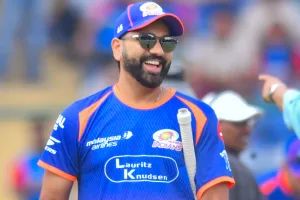
WATCH: Rohit Sharma’s ‘heated discussion’ with wife Ritika Sajdeh during the T20 WC final sparks meme fest

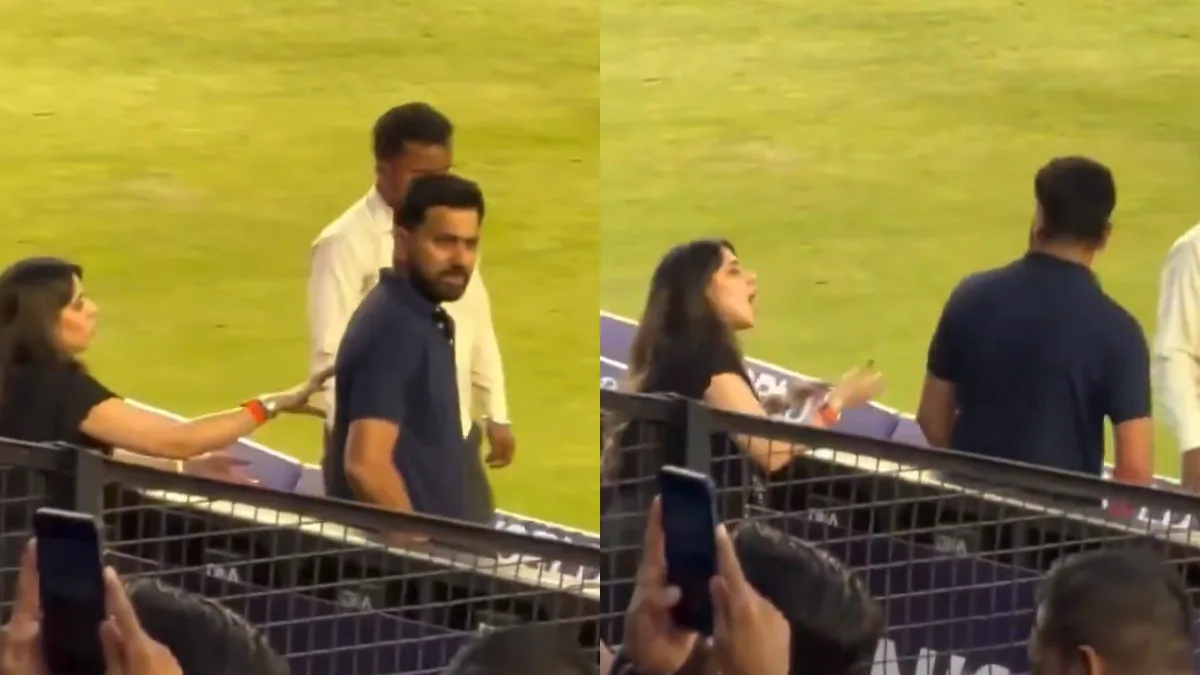
In a viral clip circulating on social media, Rohit can be seen frowning slightly with his arms loosely folded, while Ritika gestures animatedly as if explaining something to him. The light-hearted moment sparked a meme fest online.

Neha Buswal | New Delhi |

India scripted history on Sunday, and it felt different. The Men in Blue not only defended their ICC Men’s T20 World Cup title on home soil but also clinched their third trophy overall – a feat no team had achieved before. The historic triumph came in front of a packed Narendra Modi Stadium, with fans celebrating a night that rewrote the record books.

However, just as India was on the verge of sealing the win, cameras briefly shifted focus from the field to a moment in the stands involving India captain Rohit Sharma and his wife Ritika Sajdeh, and the internet quickly took notice.

In a viral clip circulating on social media, Rohit can be seen frowning slightly with his arms loosely folded, while Ritika gestures animatedly as if explaining something to him. The light-hearted moment sparked a meme fest online.


One user joked:
“Rohit Sharma doesn’t seem to agree with something Ritika Bhabhi is saying, but she is trying her best to explain it to him today at Narendra Modi Stadium. Best jodi, my favourite.”

The clip quickly drew hilarious reactions from fans who were already in a celebratory mood after India’s World Cup victory.

Some of the fan reactions included:

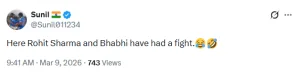
“Here Rohit Sharma and Bhabhi have had a fight. ”

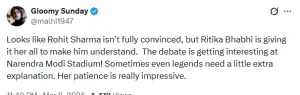
“Looks like Rohit Sharma isn’t fully convinced, but Ritika Bhabhi is giving it her all to make him understand. The debate is getting interesting at Narendra Modi Stadium! Sometimes even legends need a little extra explanation. Her patience is really impressive.”

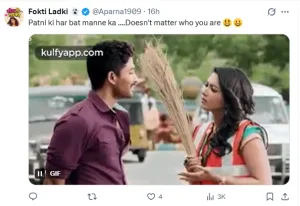
“Patni ki har baat maanne ka… doesn’t matter who you are.”

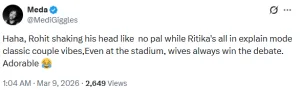
“Haha, Rohit shaking his head like ‘no’ while Ritika’s all in explain mode — classic couple vibes. Even at the stadium, wives always win the debate. Adorable .”

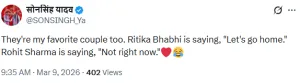
“They’re my favourite couple too. Ritika Bhabhi is saying ‘Let’s go home’, Rohit Sharma is saying ‘Not right now.’ ❤️”

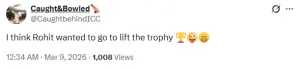
“I think Rohit wanted to go lift the trophy. ”


Despite the fun speculation, the moment did not appear serious at all. Another clip from the stadium showed the couple relaxed and smiling, suggesting it was simply a typical husband-and-wife exchange captured at the wrong (or right) time by the cameras.


Must Watch: Photo Story | Tricolours, cheers, and patriotic songs: India Gate turns into giant party after India’s T20 World Cup win

More about Rohit Sharma’s wife, Ritika Sajdeh

Ritika Sajdeh is a professional sports manager who previously handled Rohit Sharma’s professional commitments before the two tied the knot. The couple first met in 2008 during an advertisement shoot and eventually got married on 13 December 2015.

They have two children together, a daughter, Samaira Sharma, born on 30 December 2018, and a son, Ahaan Sharma, born on 15 November 2024.

Ritika also has strong connections within the sports industry. She is the first cousin of Bunty Sajdeh, the CEO of Cornerstone Sport, and shares a close Rakhi bond with former India cricketer Yuvraj Singh, who considers her his sister.

While India celebrated a historic World Cup triumph, this small off-field moment between Rohit and Ritika added a light-hearted touch to the night, reminding fans that even cricketing legends are not immune to everyday couple conversations.

Birth of cubs: Minister calls it moment of great pride for Project Cheetah

Calling it a moment of great pride for Project Cheetah, the minister added that the achievement reflects the dedicated efforts, skill and commitment of veterinarians, field staff, and all those working tirelessly on the ground.

Statesman News Service | New Delhi |

Confirming the news about Namibian cheetah Jwala — a successful third-time mother — giving birth to five cubs at Kuno National Park, Environment Minister Bhupender Yadav on Monday, said in a post on social media that the number of thriving Indian-born cubs had risen to 33, marking the 10th successful cheetah litter on Indian soil.

Calling it a moment of great pride for Project Cheetah, the minister added that the achievement reflects the dedicated efforts, skill and commitment of veterinarians, field staff, and all those working tirelessly on the ground. With the arrival of these cubs, the total cheetah population in India has reached 53, he added, describing it as a historic and heart-warming moment for wildlife conservation.

The Minister also expressed hope that Jwala and her cubs would grow strong and carry India’s cheetah conservation story to even greater heights.

Recently, Gamini, a South African cheetah, became a mother for the second time, giving birth to four cubs. In February, Yadav released nine cheetahs — six females and three males — received from Botswana into quarantine enclosures at Kuno National Park in Madhya Pradesh. The big cats are currently undergoing an acclimatisation and health-monitoring phase before their gradual release into larger habitats.

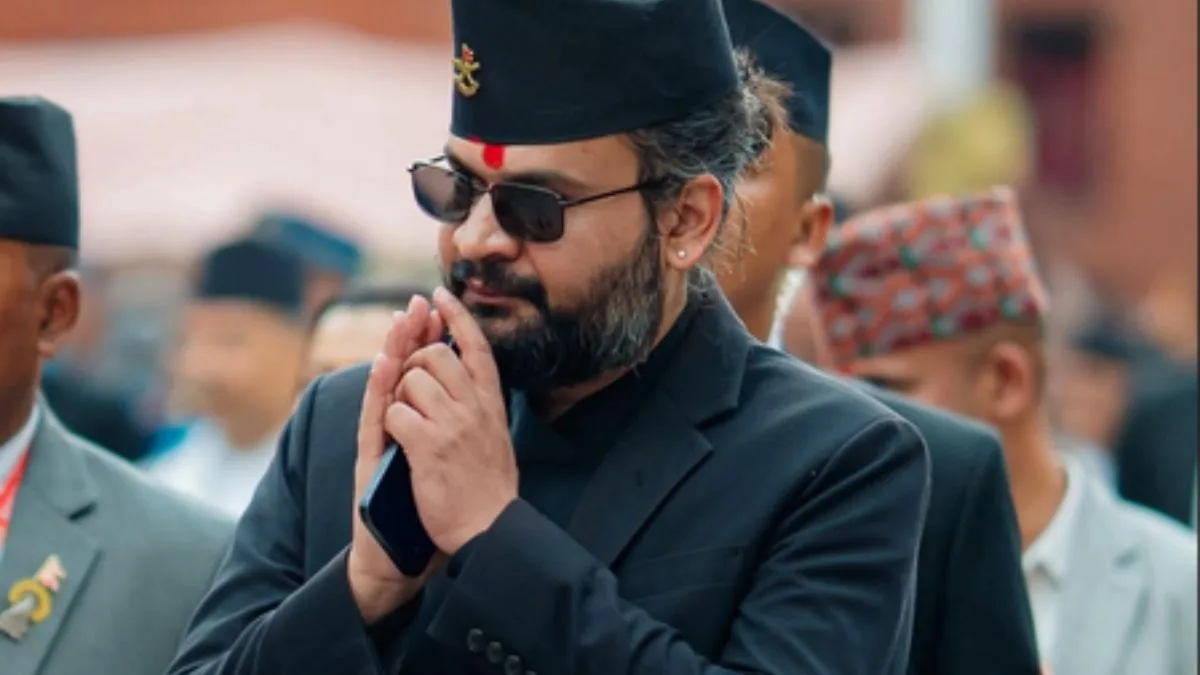
What Balen Shah’s victory means for the world?

Balendra Shah’s Rastriya Swatantra Party (RSP), with its overwhelming victory, has effectively dismantled the traditional political system long dominated by the Nepali Congress on the one hand and the fractious Communist bloc of the Communist Party of Nepal (Unified Marxist–Leninist) and its rival, the Nepali Communist Party.

Jayanta Roy Chowdhury | New Delhi |

Nepal’s March 2026 general election has brought forth one of the most dramatic political upheavals in the Himalayan nation since the abolition of the monarchy eighteen years ago.

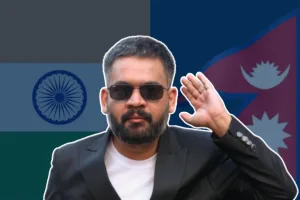
Balendra Shah’s Rastriya Swatantra Party (RSP), with its overwhelming victory, has effectively dismantled the traditional political system long dominated by the Nepali Congress on the one hand and the fractious Communist bloc of the Communist Party of Nepal (Unified Marxist–Leninist) and its rival, the Nepali Communist Party.

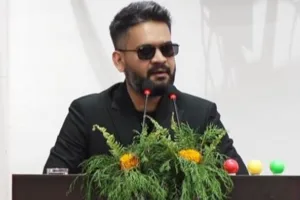
Shah or Balen Shah, as he is popularly called, a former rapper-turned-mayor of Kathmandu whose popularity surged through anti-corruption activism and youth mobilisation, is slated to become Nepal’s next prime minister.

His victory reflects a generational revolt against entrenched political elites, where young voters, frustrated with economic stagnation, corruption, and what they see as a cartel of ageing political leaders, rallied behind a movement promising accountability, reform, and a more assertive national identity.

The electoral earthquake’s seismic shock, besides reshaping Nepal’s domestic politics, will in the days ahead have significant geopolitical implications. Nepal’s delicate balancing act between India and China, long a defining feature of its foreign policy, may now evolve into a more assertively independent posture.

India will have to understand that the election represents the loss of familiar political networks that have historically anchored bilateral relations. It will have to build relations anew with students who will have ties with India but not necessarily the familiarity or the close links that their parents or grandparents had forged with Nepal’s southern neighbour.

Balen Shah’s political rhetoric, which in the past included criticism of India’s regional role, including on the Kalapani–Lipulekh border dispute, advocacy for reducing Nepal’s economic dependence on India, and aggressive nationalist jingoism, including references to maps depicting a “Greater Nepal.”

Yet despite such rhetoric, the realities of geography and economics will likely push Kathmandu toward pragmatism. The India–Nepal relationship is deeply intertwined through open borders, extensive trade flows, labour migration, and dense cultural and familial links that stretch across the hills and dales that make up the Hindu-dominated nation state.

“Balen Shah and the next rung leaders are practical men and women and understand that while maintaining their policy of ‘Nepal First’ which means looking after Nepal’s interests, they need close ties with India and we expect relations to actually strengthen,” said KC Sunil, President of Nepal-India Chamber of Commerce and Industry.

Top Indian officials who served in Nepal and are now involved in neighbourhood policy-making told UNI, “Rhetoric and statecraft are two things. Every Nepali leader who has come to power speaks of “Nepali Swabhiman” and then does business with New Delhi. The ground reality in Nepal is that the intertwining with the Indo-Gangetic valley is a two-way street which cannot be disentangled easily nor should it be.”

India’s leadership appears aware of this reality and has responded cautiously but positively to the political transition. Narendra Modi, the Prime Minister of India, promptly congratulated the Nepali people on the successful conduct of the elections. “The gesture was a signal that India is ready to engage constructively with Nepal’s new leadership,” officials pointed out.

Behind the scenes, Indian diplomacy has also begun widening its outreach beyond the traditional party elites it once relied upon. Officials in New Delhi have quietly started building contacts with younger political actors, civic groups, and student networks, constituencies that were central to the protest movements that propelled Shah to prominence.

Besides trade (worth about USD 8.7 billion in 2024-25), Kathmandu is aware that New Delhi is too enmeshed in its economy to be wished away. Some 33.5 per cent of all FDI stock in Nepal is from India, compared to 12.5 per cent from China.

The relationship may therefore evolve toward a more transactional and pragmatic framework, particularly on trade, energy cooperation, and infrastructure. Kathmandu may push for revisions to the 1950 Treaty of Peace and Friendship, long criticised within Nepal as unequal but the relationship will be even more intense as Nepal tries to modernise and industrialise.

Despite Shah’s nationalist rhetoric, Beijing too is unlikely to lose its economic footprint in Nepal. Over the past decade, China has emerged as a major investor in Nepal’s infrastructure, financing roads, hydropower plants, and connectivity initiatives linked to the Belt and Road Initiative. These investments have already embedded China deeply in Nepal’s development trajectory.

However, Shah has also signalled unease about projects such as a proposed BRI industrial park near the strategic Siliguri Corridor, perceived as undermining Nepal’s sovereignty and impacting its security.

He has also criticized the use of the Lipulekh Pass, controlled by India, for trade between China and India, framing the arrangement as an infringement on Nepal’s territorial claims.

Unlike the ousted Communist prime minister KP Sharma Oli, whose tenure was marked by a visibly pro-Beijing orientation, Shah appears determined to avoid overt alignment with any major power.

Concerns within Nepal about debt sustainability (a fifth of the country’s national budget goes towards debt servicing) and dependency on Chinese financing have become increasingly prominent in public discourse. As a result, the new government may seek to renegotiate or slow certain projects while still keeping the door open to Chinese capital.

“If any external power currently enjoys familiarity with Nepal’s emerging political generation, it may be the United States,” said Indian diplomats. Washington has invested heavily in governance programs, youth leadership initiatives, and development assistance in Nepal. Many activists who later entered politics through the RSP had previously interacted with international development networks and civil society programs supported by Western institutions.

Within Kathmandu’s political circles, there is also a widespread, though unproven, belief that Western encouragement helped energise youth-led protests against corruption and political stagnation. Whether or not such claims hold substance, for Washington, the immediate opportunity lies in cultivating ties with a youthful leadership focused on transparency, anti-corruption, and democratic reform.

“However, much will depend on how Balen Shah structures his government. The incoming cabinet is expected to be unusually youthful, reflecting the generational movement that brought the RSP to power. While this marks a sharp break from Nepal’s aging political class, governing requires administrative experience and policy expertise,” cautioned Prof Biswajit Dhar, former WTO chair at the Indian Institute of Foreign Trade.

Nepal’s deep pool of diplomats, technocrats, and civil servants could provide crucial institutional guidance, helping the new government pursue reforms while maintaining stability. But then those are choices for Nepal to make.


Namibian Cheetah Jwala give birth to five cubs

With this, the number of Cheetahs at KNP has reached 50, and the total number of Cheetahs in India has gone up to 53, with three Cheetahs being at the Gandhi Sagar Wildlife Sanctuary in Ujjain division of MP.

Statesman News Service | Bhopal |

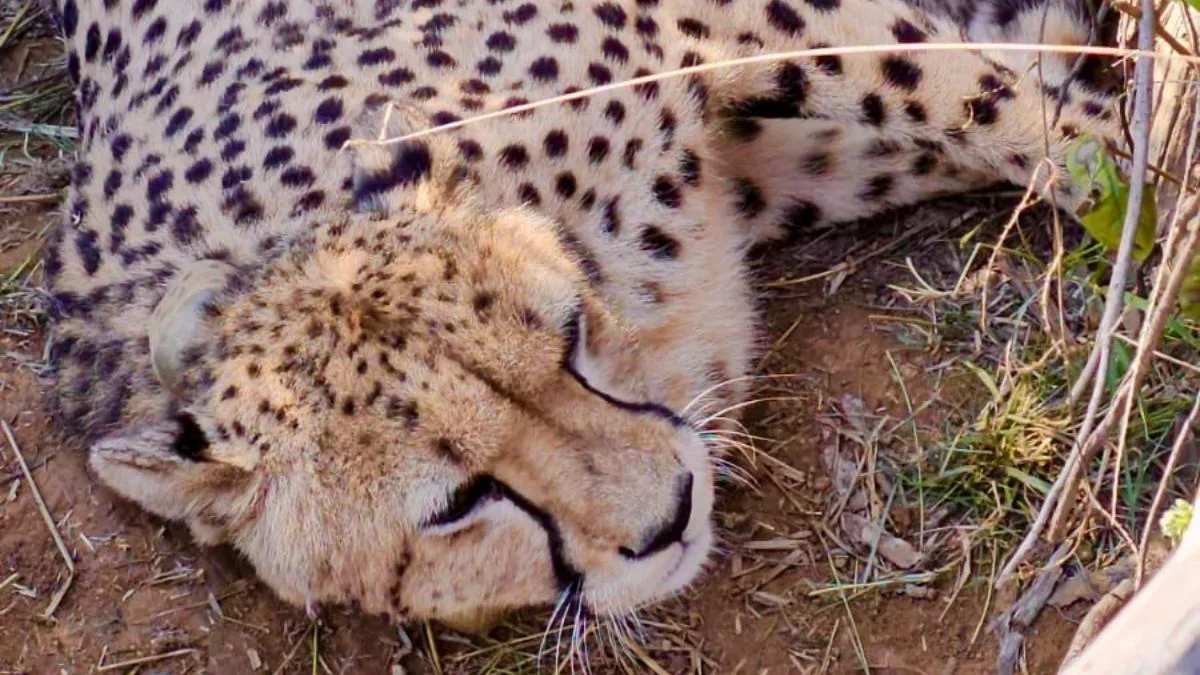
Here’s good news from the Kuno National Park (KNP) in the Sheopur district of Madhya Pradesh. Namibian Cheetah Jwala gave birth to five cubs on Monday.

With this, the number of Cheetahs at KNP has reached 50, and the total number of Cheetahs in India has gone up to 53, with three Cheetahs being at the Gandhi Sagar Wildlife Sanctuary in Ujjain division of MP.

Jwala, originally named Siaya in Namibia, has become a mother for the third time since she was brought to India, and released at the KNP by Prime Minister Narendra Modi on his 72nd birthday on 17 September 2022.

Madhya Pradesh Chief Minister Dr Mohan Yadav expressed happiness at the birth of the five cubs. He congratulated the KNP staff and officials.

The CM described the event as another milestone in the success of Project Cheetah, implemented to revive the Cheetah population in India, after the last Cheetah in India was shot dead in 1947, and consequently the feline was declared extinct in the country in 1952.

According to officials, Jwala’s first litter, in March 2023, produced four cubs, of which only one, Mukhi, survived. Her second litter, born in January 2024, consisted of three cubs. Now, on March 9, 2026, Jwala has delivered five cubs, marking her third successful litter at the park.

Forest department officials confirmed that Jwala and all five newborn cubs are in good health. A team of experts is keeping a close watch on Jwala and her cubs’ safety and well-being through CCTV monitoring and field surveillance.
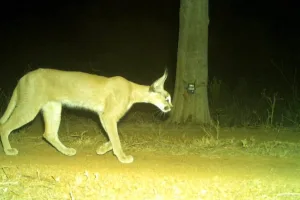
With this birth, the number of Indian-born thriving cubs has risen to 33, marking the 10th successful cheetah litter on Indian soil.

Busy preparing for assembly polls, Vijay seeks 10 days for CBI summons

In a submission on behalf of Vijay at the CBI office in Chennai, TVK leaders have cited the election related interview of candidates aspiring for the party ticket, and have sought a minimum of ten days for him to appear for the summons.

Statesman News Service | Chennai |

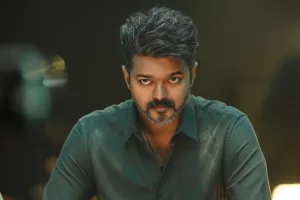
Slated to commence the interview process to screen ticket aspirants of the Tamilaga Vettri Kazhagam (TVK) on Tuesday (tomorrow), party founder and actor Vijay has sought 10 days’ time to appear before the CBI in response to the summons in connection with the investigation into the September 27 last horrendous Karur stampede at his rally in Karur, which claimed 41 lives.

In a submission on behalf of Vijay at the CBI office in Chennai, TVK leaders have cited the election related interview of candidates aspiring for the party ticket, and have sought a minimum of ten days for him to appear for the summons. The TVK has also requested that he may be permitted to appear at the Chennai office instead of Delhi, where he had presented himself twice before the CBI sleuths.

Investigation into the case was entrusted to the CBI by the Supreme Court. At the killer stampede in Karur, 41 people, including women had died and Vijay had extended a solatium of Rs 20 lakh each to the victim’s families. He had also invited the families for a condolence meeting held at coastal Mamallapuram near Chennai.

Vijay being summoned for the third time comes when speculation is rife that the BJP leadership is engaged in talks with the actor turned politician for an alliance to take on the ruling DMK. Interestingly, the BJP leaders in Tamil Nadu have toned down their rhetoric against Vijay and started wooing him. BJP spokesperson ANS Prasad, in a statement, had urged Vijay to team up with the NDA to remove the DMK from power. “If he is really committed to the overthrow of the DMK, he should join the NDA. This will also help him to stay afloat in politics,” Prasad said.

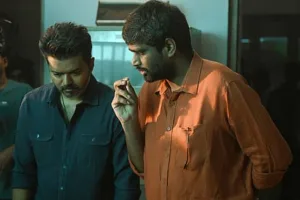
Even as the CBI summons has rattled the TVK leadership, the Censor Board has postponed the re-examination of the actor’s swansong movie, Jana Nayagan, disappointing the film’s producers and distributors as well as Vijay’s ardent fans. The re-examination slated for today (Monday) has been put off since one of the panel members is said to be indisposed. The producers, who had withdrawn the case against the Censor Board, had hoped to announce the release date and carry on works related to that. But, the postponement has come as a double shock for the TVK and it remains to be seen whether the movie will get released before the Assembly election.


Opium cultivation case rocks Chhattisgarh Assembly, 35 Congress MLAs suspended

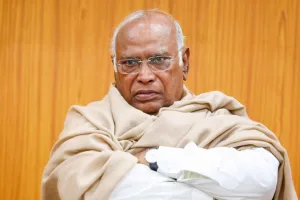
The situation culminated in the suspension of all 35 Congress MLAs, including Leader of Opposition Charandas Mahant, after they staged a protest before the Chair while pressing for the acceptance of a work stoppage motion on the matter.

Statesman News Service | Raipur |

The discovery of large-scale illegal opium cultivation in Samoda village of the Durg district triggered a dramatic political confrontation in the Chhattisgarh Legislative Assembly on Monday. What began as a demand by the Opposition for an immediate discussion on the issue soon escalated into a standoff between the treasury and Opposition benches.

The situation culminated in the suspension of all 35 Congress MLAs, including Leader of Opposition Charandas Mahant, after they staged a protest before the Chair while pressing for the acceptance of a work stoppage motion on the matter.

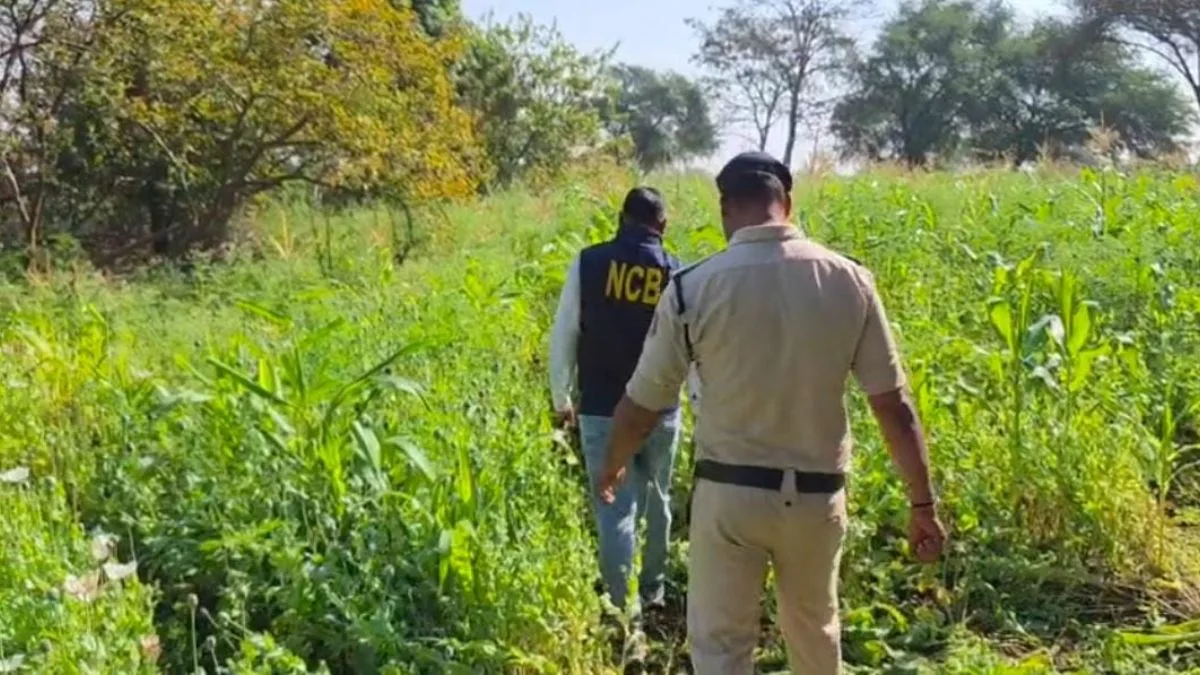
The controversy follows a major crackdown by police and district authorities in Samoda village where over 14.3 lakh opium plants cultivated across nearly 11 acres of farmland were seized, with the estimated value of the illegal crop pegged at around ₹7.88 crore. Three persons, including BJP linked local leader Vinayak Tamrakar, were arrested in connection with the case, while two other suspects remain absconding.

Investigators said the opium plants were strategically cultivated between rows of maize and wheat crops inside a sprawling 110 acre farmhouse complex located along the banks of the Shivnath river. The property had been surrounded by fencing and equipped with CCTV surveillance, while access for outsiders was strictly restricted.

Authorities also found that labourers had been brought from Rajasthan to work on the farm and were housed within the farmhouse premises. Security personnel, including bouncers, were reportedly deployed to prevent villagers from approaching the area.

During Assembly proceedings, Leader of the Opposition Charandas Mahant raised the issue soon after Question Hour, pointing out that such a large scale narcotics operation had surfaced barely 50 kilometres from the state capital Raipur.

Mahant said the name of BJP leader Vinayak Tamrakar had emerged in the case and alleged that the ruling party acted against him only after the matter came to light. He also warned that the growing presence of narcotics posed a serious threat to the state’s youth. “Chhattisgarh has long been known as the rice bowl of India, but if such incidents continue it risks turning into an ‘opium bowl’,” Mahant remarked.

When references were made to the Chief Minister during the debate, BJP MLA and former minister Ajay Chandrakar objected strongly and claimed that the cultivation had been going on for the past four years. He, in turn, alleged the involvement of a former Congress minister, leading to sharp exchanges between members of both parties.

Former Chief Minister Bhupesh Baghel accused the government of attempting to shield Tamrakar. He pointed out that the BJP leader’s name appeared third in the FIR, while the first names listed were those of workers employed at the farmhouse, and questioned who the real owner of the land was.

Baghel also claimed that trained labourers were being brought in for opium cultivation and demanded a wider investigation into farmhouses across the state. Congress MLA Daleshwar Sahu called for an inquiry into the possible role of the revenue department, while former minister Umesh Patel and other Opposition members pressed for a detailed discussion on the issue.

Responding to the allegations, Home Minister Vijay Sharma said the raid was conducted based on information provided by an informant, and not on a complaint from the village sarpanch as alleged by the Opposition. He said a joint team comprising police, the Narcotics Control Bureau (NCB), and the excise department carried out the operation and recovered 6,224 kilograms of opium plants from the field. Sharma added that Vinayak Tamrakar and his associate Vikas Vishnoi were arrested immediately, while police teams have been dispatched to Jodhpur and other locations to trace the remaining suspects.

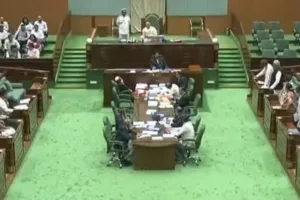
Dissatisfied with the government’s reply, Congress legislators insisted that their work stoppage motion be accepted and moved to the well of the House, raising slogans against the government. As the protest intensified, the Speaker ordered the suspension of Mahant and 34 other Congress MLAs, bringing the confrontation in the Assembly to an abrupt halt.

The Samoda opium cultivation case has swiftly turned into a major political flashpoint in Chhattisgarh. The discovery of a large scale narcotics plantation barely 50 kilometres from the state capital has triggered demands for accountability and a wider probe into the network behind the operation. With both the ruling party and the Opposition exchanging sharp allegations, the issue is set to dominate political discourse in the days ahead.

Putin congratulates new Iranian Supreme Leader, offers Russia’s ‘unwavering’ support to Tehran in its war against US, Israel

Earlier last week, Putin had also spoken with the President of the Islamic Republic of Iran, Masoud Pezeshkian, and offered his heartfelt condolences on the killing of Supreme Leader Khamenei.

Statesman News Service | NEW DELHI |

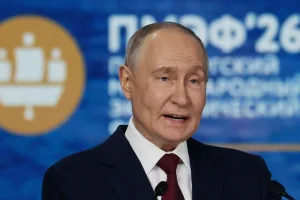
Russian President Vladimir Zelensky on Monday extended his country’s ‘unwavering’ support to Iran in its war against the US and Israel. Putin, who also congratulated the newly-elected Iranian Supreme Leader Mojtaba Khamenei, said that he wishes to confirm Russia’s “unwavering support for Tehran and solidarity with our Iranian friends.”

The Russian President told Mojtaba Khamenei that his tenure as the Iranian Supreme Leader following his father Ayatollah Ali Khamenei’s killing in US-Israeli strikes would require “great courage and dedication”.

“At a time when Iran is confronting armed aggression, your efforts in this high position will undoubtedly require great courage and dedication. I am confident that you will honourably continue your father’s work and unite the Iranian people in the face of an immense ordeal,” Putin said, according to Kremlin.

The Russian president further stated that Russia will always remain a reliable partner for the Islamic Republic. “For my part, I would like to reaffirm our unwavering support for Tehran and solidarity with our Iranian friends. Russia has been and will remain a reliable partner for the Islamic Republic,” he added.

Earlier last week, Putin had also spoken with the President of the Islamic Republic of Iran, Masoud Pezeshkian, and offered his heartfelt condolences on the killing of Supreme Leader Khamenei.

MUST READ: Iran’s New Supreme Leader – Mojtaba Khamenei

Putin reaffirmed Russia’s principled stance in favour of an immediate cessation of hostilities, the rejection of force as a method to solve any issues surrounding Iran or arising in the Middle East, and a swift return to the path of diplomatic resolution.

The development comes shortly after China said that it will oppose the US and Israel’s targeting of Mojtaba Khamenei. Beijing said that Tehran’s decision to name Mojtaba Khamenei as its new supreme leader, succeeding his late father following his killing, is an “internal matter” and that it will oppose any targeting of the new Iranian leader.

The US and Israel attacked Iran on February 28, triggering a wider conflict in the Middle East as Iran also retaliated with strikes on US and Israeli targets. Iranian Supreme Leader Ayatollah Ali Khamenei’s office was destroyed on the very first day of the US-Israeli attacks. Khamenei, his daughter, and other relatives, along with key political aides, were also killed in the strikes.

In retaliation, Iran launched drone and missile attacks on Israel and US bases in several Gulf countries. The conflict has now entered its second week, with both the US-Israel and Iran attacking each other.

India’s shrimp exports seen crossing Rs 50,000 crore this fiscal despite US tariff headwinds

The growth will be largely driven by higher realisations, supported by the sharp depreciation of the rupee against the US dollar and the euro.

Statesman News Service | New Delhi |

India’s shrimp exports are projected to exceed Rs 50,000 crore in the current financial year, marking a 13–15% year-on-year increase after nearly three years of stagnation, as exporters successfully diversify into alternative markets to offset higher tariffs in the United States.

The growth will be largely driven by higher realisations, supported by the sharp depreciation of the rupee against the US dollar and the euro.

Export volumes are expected to rise 6–7% this fiscal, even as shipments to the United States, the largest market for Indian shrimp, declined due to elevated tariffs.

Industry estimates show that overall export volumes expanded about 9.5% during the first three quarters of the current fiscal year.

However, shipments to the US dropped around 15% in the same period. As a result, the US share in India’s shrimp exports is likely to decline to 32–33% this fiscal from about 40% in the previous year, despite exporters frontloading shipments until August 2025 in anticipation of higher tariffs.

The industry has managed to cushion the impact by expanding shipments to other destinations, aided by free trade agreements, quicker regulatory approvals and improved market access to regions such as Russia and the European Union. India’s superior product quality and large processing capacities have also helped exporters penetrate new markets.

Looking ahead to the next financial year, export volumes are projected to grow at a moderate 3–5%, supported by improved aquaculture production. Farmers are expected to increase output in anticipation of stronger demand, particularly from the US, where tariffs are likely to be reduced to around 15%, aligning them with those faced by competing exporting nations.

Operating margins for shrimp exporters are expected to remain stable at 7.0–7.5% in both the current and next fiscal years, as any benefits from tariff reductions are likely to be passed on to customers.

An analysis of 63 rated shrimp exporters, representing roughly 55% of the industry’s revenue, indicates that the sector’s credit profiles will remain stable. With limited capacity expansion plans and healthy cash generation, long-term debt additions are expected to remain low.

While working capital requirements may witness temporary fluctuations due to entry into new markets and customers, overall leverage levels are likely to stay comfortable due to minimal capital expenditure and controlled borrowing.

At post-Budget webinar, PM calls for innovation-driven growth and holistic health

The webinar was the fourth in a series organised by the government to deliberate on the effective implementation of key announcements made in the Union Budget.

Statesman News Service | New Delhi |

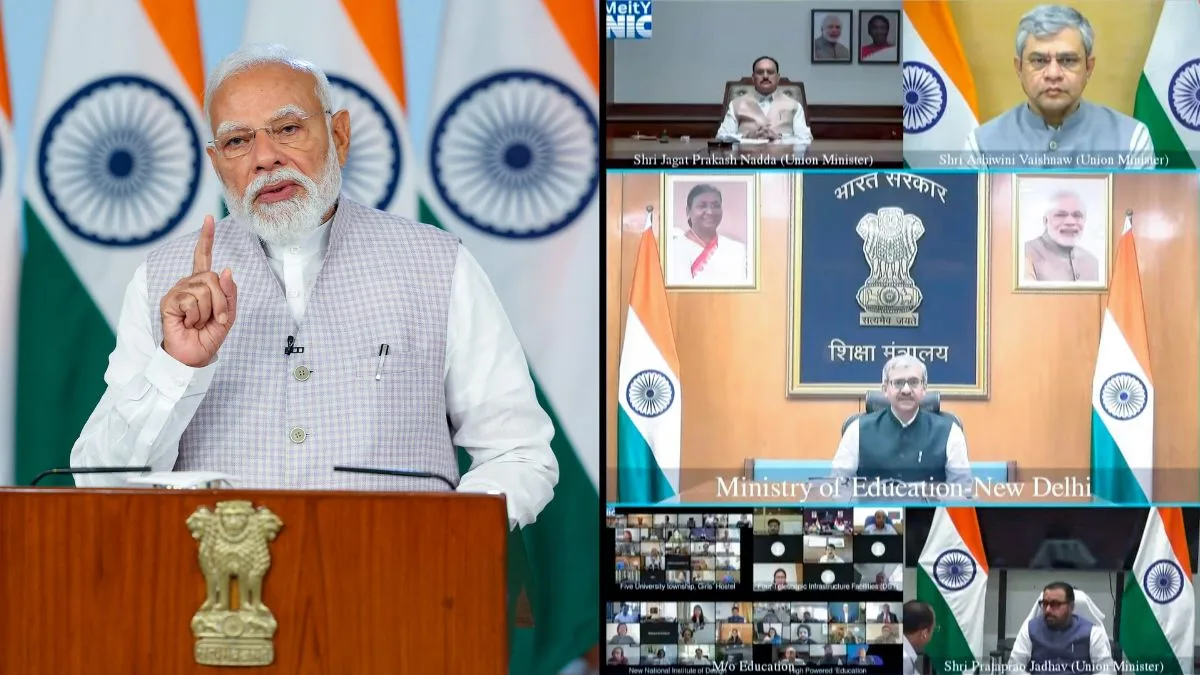
Prime Minister Narendra Modi on Monday said India is working towards a vision of preventive and holistic healthcare while simultaneously pushing for an innovation-driven economy, as he addressed a post-Budget webinar themed “Sabka Saath Sabka Vikas — Fulfilling Aspirations of People”.

The webinar was the fourth in a series organised by the government to deliberate on the effective implementation of key announcements made in the Union Budget. Modi said sectors such as education, skill development, healthcare, tourism, sports and culture would play a critical role in meeting the aspirations of citizens and accelerating the country’s development.

“Fulfilling public aspirations is not just a subject; it is the core objective of this budget and the resolution of this government,” the Prime Minister said, urging experts and policymakers participating in the webinar to contribute ideas for translating policy announcements into tangible outcomes.

Highlighting the government’s focus on healthcare, Modi said India was steadily moving towards a preventive and holistic health model while strengthening its medical infrastructure across the country. “India is working today on a vision of preventive and holistic health,” he said.

The Prime Minister noted that health services had expanded significantly in recent years, with new medical colleges opening in hundreds of districts and healthcare access improving through flagship initiatives such as Ayushman Bharat Yojana and the establishment of Arogya Mandirs in villages. “In the last few years, the country’s health infrastructure has become stronger. Through the Ayushman Bharat Yojana and Arogya Mandirs, the reach of health services has been extended to every village,” he said.


ECI assures parties of ‘zero tolerance’ toward violence in West Bengal polls

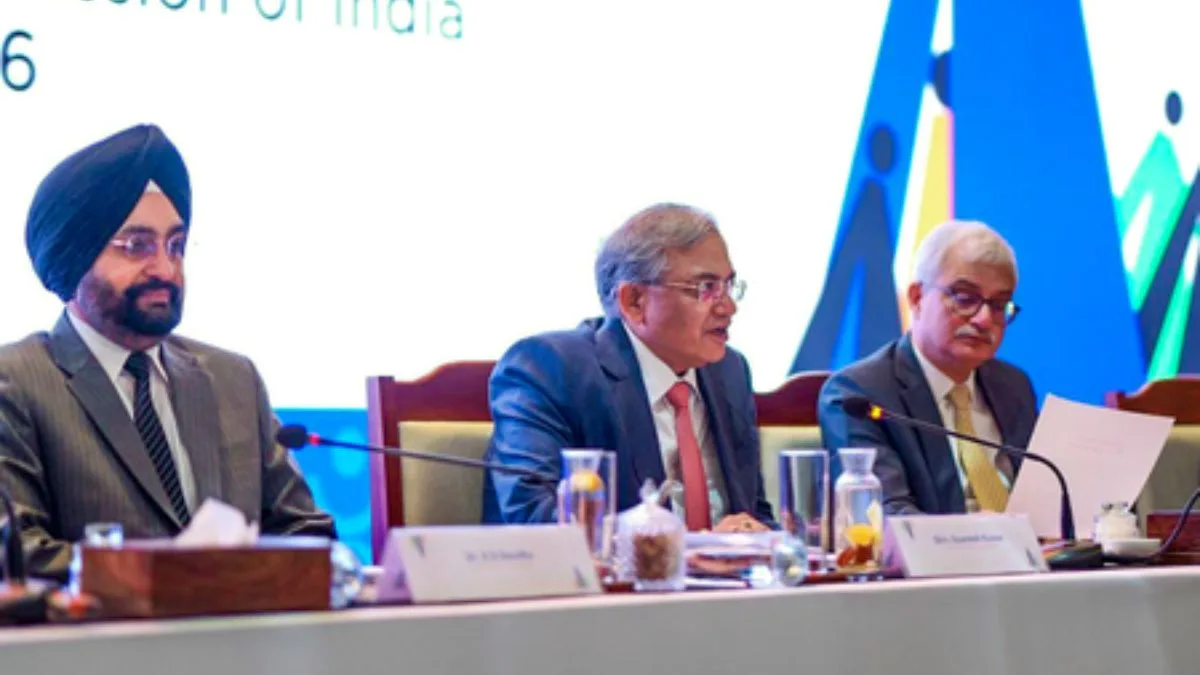
The meeting, led by Chief Election Commissioner Gyanesh Kumar, along with Election Commissioners Sukhbir Singh Sandhu and Vivek Joshi, was attended by the state’s Chief Electoral Officer and senior officials of the Commission.

Statesman News Service | New Delhi |

The Election Commission of India (ECI) on Monday assured political parties that it would adopt a “zero tolerance” approach towards violence in the upcoming elections in West Bengal, as the Commission’s top leadership held consultations with representatives of recognised national and state parties in Kolkata to review preparedness and address concerns over the conduct of the electoral process.

The meeting, led by Chief Election Commissioner Gyanesh Kumar, along with Election Commissioners Sukhbir Singh Sandhu and Vivek Joshi, was attended by the state’s Chief Electoral Officer and senior officials of the Commission.

Representatives from several national parties, including the Aam Aadmi Party (AAP), Bharatiya Janata Party (BJP), Communist Party of India-Marxist, (CPI-M) Indian National Congress (INC) and National People’s Party (NCP), participated in the discussions. Leaders from regional parties, such as the All India Trinamool Congress (TMC) and the All India Forward Bloc, were also present.

During the interaction, the political parties raised concerns about the possibility of violence and voter intimidation during the elections and urged the Commission to take stringent measures to ensure peaceful polling. Several leaders called for the deployment of a large number of central security forces to maintain law and order and prevent the use of money power, muscle power and illegal weapons during the campaign and voting process.

“They called upon the Commission to take stringent measures to curb the aggression of anti-social elements and ensure that there is no intimidation of voters during the forthcoming elections,” sources familiar with the meeting said.

Some parties also expressed apprehensions about the potential use of crude bombs and illegal firearms during the campaign period and on polling day, issues that have historically been a concern in certain parts of the state’s electoral landscape. They urged the Commission to ensure robust security arrangements and guarantee protection to voters to facilitate a free and fair election.

Several political representatives further suggested that the elections be conducted in one or two phases, arguing that a shorter schedule could help authorities maintain tighter control over law and order and reduce the likelihood of violence.

Responding to the concerns, Kumar assured party representatives that the Commission would strictly adhere to the law and take all necessary steps to ensure the integrity and neutrality of the electoral process. “Elections in India are held as per law and the Election Commission will not leave any stone unturned in ensuring an impartial, transparent and a free and fair poll in West Bengal,” Kumar said, reiterating the Commission’s commitment to “zero tolerance towards violence”.

The meeting also reviewed the ongoing Special Intensive Revision (SIR) of electoral rolls in the state. According to officials, several political parties appreciated the scale of the revision exercise and expressed confidence in the Commission’s efforts to update the rolls.

Kumar said the revision had been conducted in a transparent manner and without bias, while noting that the process remained open for corrections and updates. “Forms 6, 7 and 8 can still be filed for any inclusions, deletions or changes,” he said, referring to the forms used for voter registration and modifications in the electoral roll.

The political parties also assured the Commission that they would cooperate in ensuring that the elections in West Bengal remain peaceful. “The parties assured the Commission that they will fully cooperate in ensuring that the elections in West Bengal are free of violence,” officials said.

Sources present at the meeting said there was a brief moment of tension during the interaction when a leader from the Trinamool Congress spoke in a raised voice while presenting concerns. The Chief Election Commissioner intervened and advised her to lower her tone and place her suggestions in a constructive manner.

On another issue raised during the discussion, the Commission informed participants that the matter was currently subjudice and therefore it would not comment on it at this stage.

The consultation was part of the Commission’s ongoing engagement with political stakeholders ahead of major elections, aimed at addressing concerns related to electoral rolls, security arrangements and the broader conduct of the democratic process in the state.

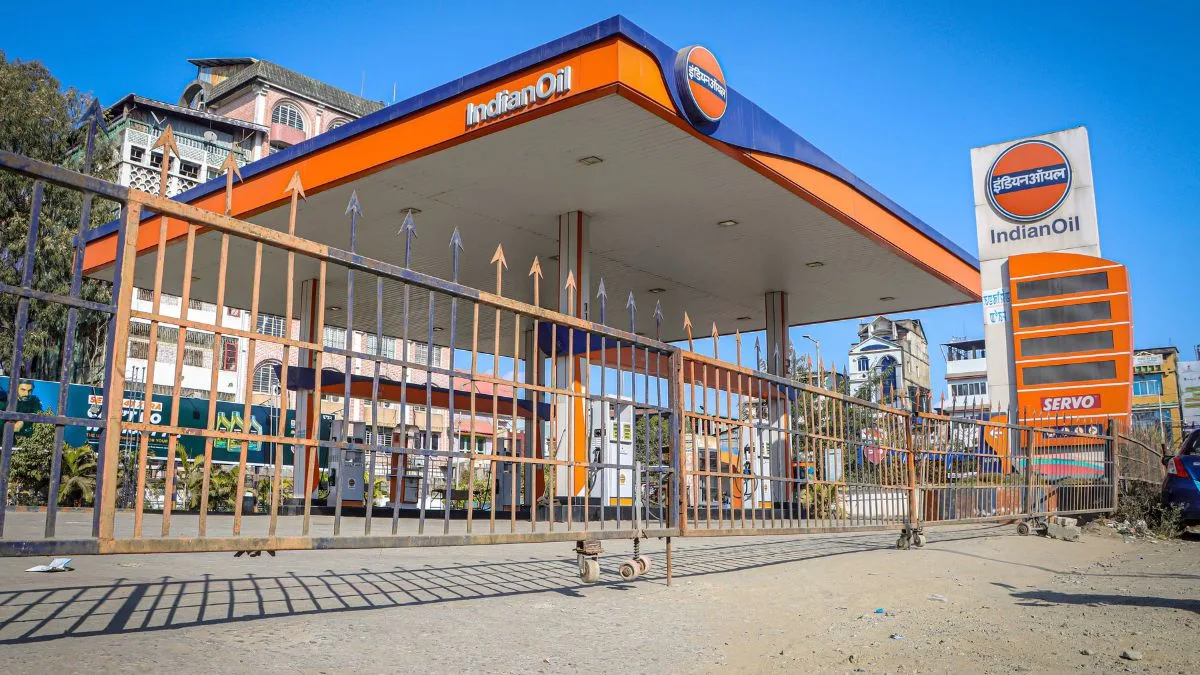
Rising crude prices may pressure earnings of state-run oil narketing companies: Report

The brokerage warned that the recent rally in crude oil prices and refining margins is creating conditions reminiscent of the disruptions witnessed during the 2022 oil market shock.

Statesman News Service | New Delhi |

India’s state-owned oil marketing companies (OMCs) could face mounting earnings pressure as crude oil market volatility intensifies amid escalating geopolitical tensions in West Asia, according to a research note by UBS Global Research.

The brokerage warned that the recent rally in crude oil prices and refining margins is creating conditions reminiscent of the disruptions witnessed during the 2022 oil market shock.

It noted that Indian OMCs remain structurally vulnerable to higher crude prices because a significant portion of their profitability depends on fuel marketing margins.

UBS said integrated margins for state-owned refiners and fuel retailers such as Indian Oil Corporation, Bharat Petroleum Corporation Limited and Hindustan Petroleum Corporation Limited could come under pressure if crude prices remain elevated while domestic retail fuel prices remain largely unchanged.

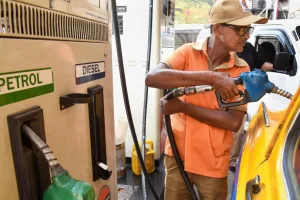
According to the brokerage, oil marketing companies have limited flexibility to pass on higher crude costs to consumers because retail fuel pricing in India is influenced by government policy. As a result, any sustained increase in crude prices tends to compress marketing margins, particularly for diesel and petrol, which form a major share of OMC earnings.

UBS said geopolitical disruptions in the West Asia region could continue to push oil prices higher in the near term. The bank has raised its short-term oil price forecasts, estimating crude could average around USD 71 per barrel in the second quarter of 2026 and about USD 72 per barrel for the full year.

However, the brokerage cautioned that upside risks remain significant if disruptions to energy infrastructure persist. In such a scenario, Brent Crude prices could rise above USD 90 per barrel and potentially cross USD 100 per barrel if supply flows remain constrained.

UBS further noted that for Indian OMCs, every USD 5 per barrel increase in crude prices—if not accompanied by retail fuel price hikes—could significantly erode profits by squeezing marketing margins.

Retail fuel prices in India have remained largely stable since May 2022 despite fluctuations in global oil markets. UBS said this limits the ability of oil marketing companies to offset higher input costs.

The brokerage concluded that continued geopolitical uncertainty and limited pricing flexibility could weigh on earnings visibility for India’s state-owned refiners and fuel retailers in the near term.

Nominees of DMK and AIADMK alliances elected to RS unopposed

The other two supported by the DMK as part of a seat-sharing agreement are M Christopher Tilak of the Congress and LK Sudheesh of the DMDK.

Statesman News Service | Chennai |

All four candidates of the DMK-led front and two from the AIADMK alliance have been elected unopposed to the Rajya Sabha from Tamil Nadu on Monday, the last day for withdrawal of nominations. The candidates thus elected are: DMK veteran and five-time MP of the Upper House Trichy N Siva, who has been re-nominated and his party colleague and spokesperson Constantine Raveendran.

The other two supported by the DMK as part of a seat-sharing agreement are M Christopher Tilak of the Congress and LK Sudheesh of the DMDK. From the AIADMK, it is senior leader and former Union Minister M Thambidurai, who has been re-nominated, and PMK president Anbumani Ramadoss, with the support of the AIADMK.

The election was necessitated with the tenure of 6 MPs from the state coming to an end. Those whose term ends by April 2, are Trichy N Siva, N R Elango, Kanimozhi NVN Somu, Anthiyur P Selvaraj, all from the DMK, M Thambidurai of the AIADMK and Tamil Maanila Congress president GK Vasan, elected with the support of AIADMK.

Interestingly, the Congress sealed the seat-sharing agreement on the eve of filing of nominations and was allotted a Rajya Sabha berth and the party had fielded AICC secretary Christopher Tilak, surprising many.

For the polling slated for March 16, scrutiny was held on March 6 during which the nominations of independents found not in order were rejected. On the last day for withdrawal, the dummy candidates have withdrawn their papers, making it a smooth sail for the 6 candidates to be elected without a contest. Tamil Nadu has seldom witnessed cross voting and candidates fielded by the respective parties have been returned to the Rajya Sabha.