Logo

India’s aviation response to West Asia conflict: 50 flights planned, more capacity added

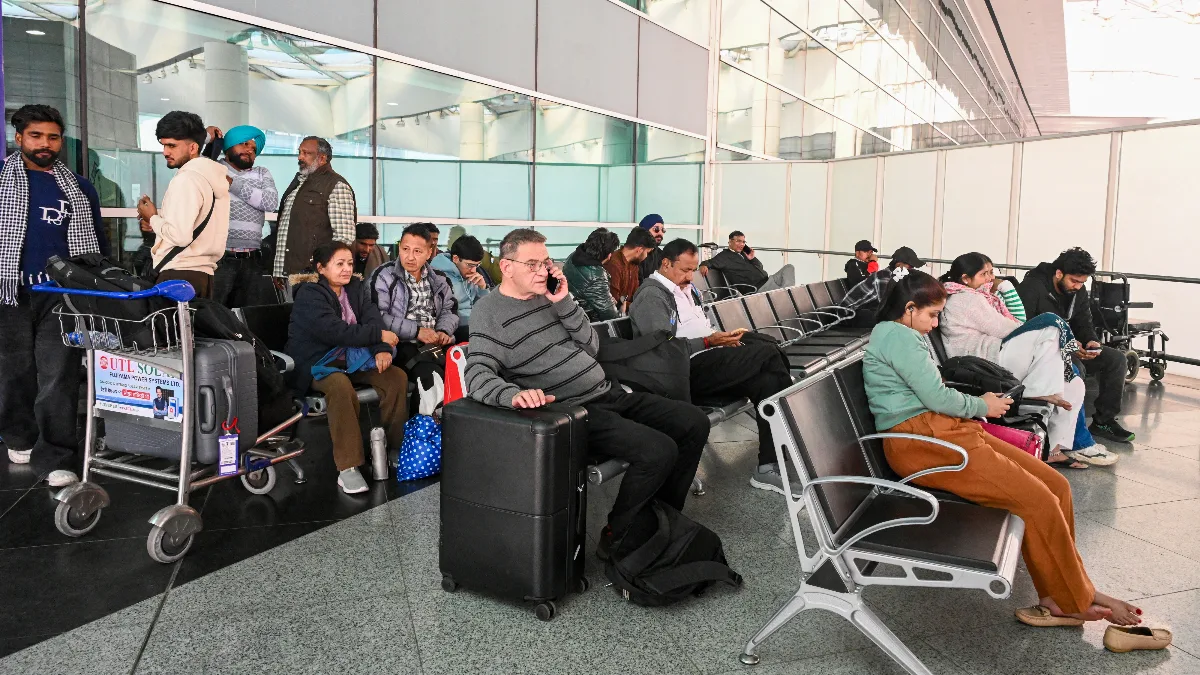
Airlines including Air India, Air India Express, IndiGo, SpiceJet, and Akasa Air are operating flights from several key West Asian hubs, such as Dubai, Abu Dhabi, Ras Al Khaimah, Fujairah, Muscat and Jeddah.

Statesman News Service | New Delhi |

As the conflict involving Iran continues to affect regional air travel, the Civil Aviation Ministry of India is closely monitoring the evolving situation and coordinating with airlines to ensure safe and orderly flight operations between India and the affected areas.

The ministry said airlines are making necessary operational adjustments in response to the situation to maintain passenger safety and ensure smooth flight operations.

Airlines making operational adjustments

Indian carriers have scheduled approximately 50 inbound flights from airports across West Asia on Monday, subject to operational feasibility and prevailing conditions.

Airlines including Air India, Air India Express, IndiGo, SpiceJet, and Akasa Air are operating flights from several key West Asian hubs, such as Dubai, Abu Dhabi, Ras Al Khaimah, Fujairah, Muscat and Jeddah.

Authorities are also monitoring airfares closely to ensure ticket prices remain reasonable and to prevent any sudden surge in fares during the ongoing disruptions.

Key operational data

  • March 9: 50 inbound flights planned from West Asia to India
  • March 8: 49 inbound flights arrived in India from affected areas
  • March 7: 51 inbound flights were operated with 8,175 passengers

Passengers have been advised to remain in contact with their respective airlines for updates on flight schedules as the situation evolves.

AI to operate 32 ad-hoc non-scheduled flights to UAE

In addition to the scheduled services, Air India and Air India Express would operate a total of 32 ad-hoc non-scheduled flights to the United Arab Emirates (UAE) today to assist in bringing stranded travellers home to India, subject to the availability of slots and other prevailing conditions at the respective point of departure at the time. These flights are being operated with the requisite permissions from the relevant Indian and local regulatory authorities.

Also, Air India has announced that it will operate additional flights to five key gateways in Europe, as well as to New York between March 10 and March 18, 2026, to support passengers affected by disruptions in West Asia. Below are the additional capacity details:

  • 78 extra flights
  • 9 international routes covered
  • 17,660 additional seats in both directions

The airline will add capacity on routes connecting India with major global destinations, including New York (JFK), London (Heathrow), Frankfurt, Paris, Amsterdam, Zurich, Colombo, and Malé.

 

CEC Gyanesh Kumar offers prayers at Kalighat temple, reaffirms commitment to fair polls in Bengal

Chief Election Commissioner (CEC) Gyanesh Kumar visited the revered Kalighat Kali Temple on Monday morning, where he offered prayers and sought divine blessings for the well-being of the people of West Bengal.
IANS | New Delhi |

Chief Election Commissioner (CEC) Gyanesh Kumar visited the revered Kalighat Kali Temple on Monday morning, where he offered prayers and sought divine blessings for the well-being of the people of West Bengal.

During the visit, he reiterated the Election Commission’s commitment to ensuring free, fair, and peaceful elections in the state.

Speaking during the visit, Kumar emphasised that the democratic process must remain inclusive and fearless for every voter. Referring to the upcoming electoral exercise, he said, “This time, it will be a festival of fearless and fair elections.” The remark highlighted the Commission’s focus on ensuring a transparent and secure voting process.

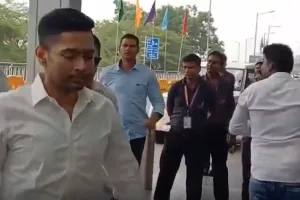
The temple visit comes amid the Election Commission of India’s ongoing review of electoral preparations in the state ahead of the crucial Assembly elections. The full Bench of the Election Commission of India, led by Kumar, arrived in Kolkata from New Delhi late on Sunday evening for a multi-day review of election-related matters.

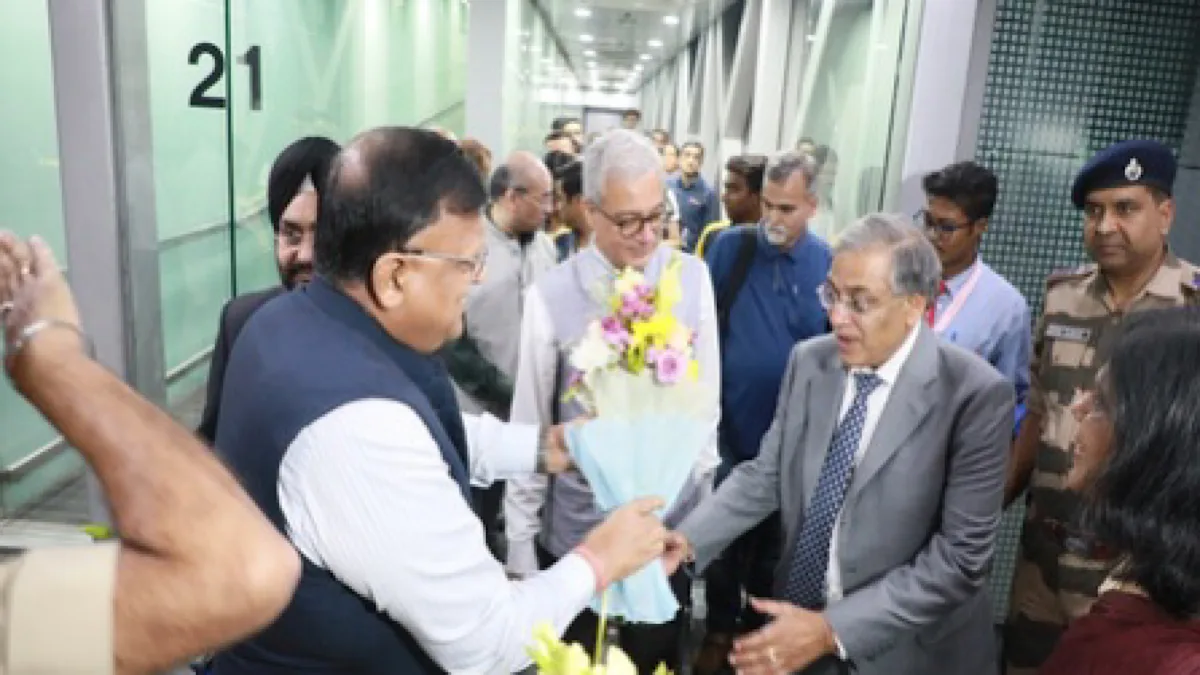
Upon arrival at the Netaji Subhas Chandra Bose International Airport, the Commission’s delegation was received by West Bengal’s Chief Electoral Officer Manoj Kumar Agarwal and the state’s Chief Secretary Nandini Chakraborty.

The full Bench of the Commission will begin its engagements in Kolkata on Monday with meetings involving representatives of all registered political parties in the state. Each party has been allotted around 10 minutes to present its concerns and suggestions directly to the Commission.

The discussions are expected to focus on multiple issues, including the ongoing judicial adjudication of voters’ documents that have been flagged as “logical discrepancy” cases. The Commission is also reviewing administrative preparedness and logistical arrangements in preparation for the upcoming Assembly polls.

Sources indicated that the ruling All India Trinamool Congress is likely to be given the first slot for interaction with the Commission’s full Bench during the meetings.

The visit by the Election Commission leadership is seen as a significant step in assessing the ground situation and reinforcing institutional commitment to conducting a transparent and credible electoral process in West Bengal.

ECI full bench arrives in Kolkata for two-day visit with packed schedule

The Election Commission of India (ECI)’s full bench, led by Chief Election Commissioner (CEC) Gyanesh Kumar, arrived in Kolkata from New Delhi late on Sunday evening with a packed schedule for the next two days.

IANS | Kolkata |

The Election Commission of India (ECI)’s full bench, led by Chief Election Commissioner (CEC) Gyanesh Kumar, arrived in Kolkata from New Delhi late on Sunday evening with a packed schedule for the next two days.

CEC Gyanesh Kumar and his team were received at the Netaji Subhas Chandra Bose International Airport by West Bengal Chief Electoral Officer (CEO) Manoj Kumar Agarwal and state Chief Secretary Nandini Chakraborty.

CEC Kumar is scheduled to begin the visit early on Monday morning with a visit to the iconic Kali temple at Kalighat in south Kolkata, which is located close to the residence of Chief Minister Mamata Banerjee, before commencing the official schedule of the two-day visit.

As per the itinerary, the Commission’s full bench will hold meetings with representatives of different registered political parties on Monday from 10 a.m. to 12 noon, with each party being allotted 10 minutes for interaction.

The Trinamool Congress, being the ruling party in the state, is expected to get the first slot during the interaction with the ECI’s full bench.

Initially, it was decided that the Trinamool Congress delegation meeting Kumar would have three representatives — two Lok Sabha members, Mahua Moitra and Kalyan Banerjee, and one Rajya Sabha member, Samirul Islam.

However, late on Sunday night, the ruling party informed that three additional representatives had been included in the delegation scheduled to meet CEC Kumar.

Two of the additional members are West Bengal Municipal Affairs and Urban Development Minister and Kolkata Municipal Corporation Mayor Firhad Hakim, and Minister of State for Finance (independent charge) Chandrima Bhattacharya.

The third additional member included in the team is just-retired acting Director General of West Bengal Police Rajeev Kumar, who is slated to become a Rajya Sabha member of the Trinamool Congress.

After completing the two-day schedule, the Commission’s full bench will return to New Delhi on the evening of March 10.

CM Mamata claims SIR exercise aimed at helping BJP in Bengal Assembly polls

West Bengal Chief Minister Mamata Banerjee on Sunday alleged that the Special Intensive Revision (SIR) of electoral rolls conducted in the poll-bound state was intended to help the BJP in the upcoming Assembly elections.

IANS | Kolkata |

West Bengal Chief Minister Mamata Banerjee on Sunday alleged that the Special Intensive Revision (SIR) of electoral rolls conducted in the poll-bound state was intended to help the BJP in the upcoming Assembly elections.

Addressing party workers from her sit-in demonstration site at Esplanade, CM Banerjee claimed that the exercise had resulted in the deletion of names of several voters from the electoral rolls.

She said that even with the support of the Election Commission, the BJP would not be able to win the Assembly elections in the state. “The people of Bengal will give them a befitting reply for snatching their rights,” CM Banerjee said.

Referring to the alleged deletion of voters’ names, the Chief Minister questioned how people who had voted in the 2024 Lok Sabha elections could now be excluded from the electoral rolls after the SIR exercise.

“If someone became the Prime Minister after being elected by voters in 2024, how can some of those voters suddenly be declared ineligible? They had exercised their franchise earlier, and now their names are being deleted from the voters’ list,” she said.

CM Banerjee also raised questions about the role of the Election Commission and said Chief Election Commissioner Gyanesh Kumar should examine the matter.

Speaking about former West Bengal Governor C.V. Ananda Bose stepping down on March 5, CM Banerjee said there should be clarity regarding the circumstances surrounding his resignation.

“Let there be an inquiry. He still had three years left in his term. Similarly, why did (former) Vice-President Jagdeep Dhankhar, who had earlier served as the Governor of West Bengal, resign from his post last July? Should there not be an inquiry into that as well?” she questioned.

Meanwhile, CM Banerjee on Sunday once again said that the state government had followed protocol and that the BJP was unnecessarily politicising the issue related to President Droupadi Murmu’s event venue change.

The Chief Minister said that if there had been any mismanagement at the function, the responsibility lay with the private organisers and the Airports Authority of India, which had provided the venue for the event, and not with the state government.

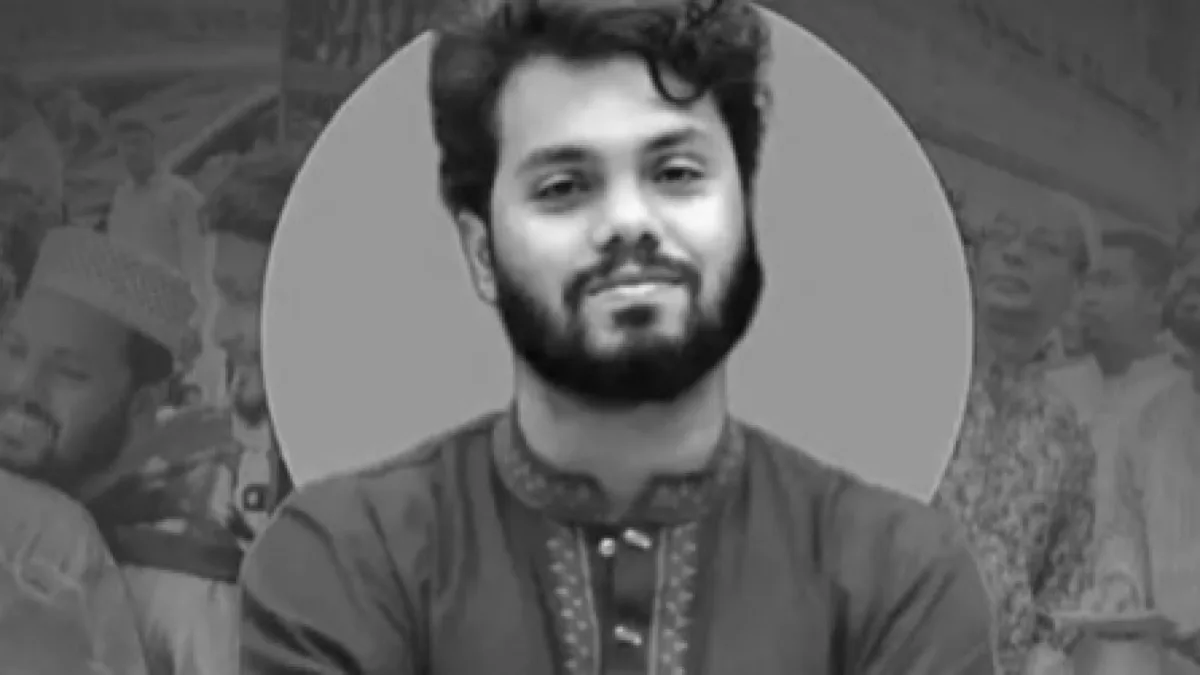
Two Bangladeshi nationals accused of killing Sharif Osman Hadi held from Bengal’s Bongaon

The Special Task Force (STF) of West Bengal Police, on Sunday, told that they have been arrested two Bangladeshi nationals, who were accused of the killing of ‘anti-India’ leader and Inqilab Moncho Spokesperson, Sharif Osman Hadi, in December last year.

IANS | Kolkata |

The Special Task Force (STF) of West Bengal Police, on Sunday, told that they have been arrested two Bangladeshi nationals, who were accused of the killing of ‘anti-India’ leader and Inqilab Moncho Spokesperson, Sharif Osman Hadi, in December last year.

According to a statement issued by the West Bengal Police, the two arrested Bangladeshi nationals have been identified as Rahul alias Faisal Karum Masud and Alamgir Hossain.

The duo have been arrested from the India-Bangladesh border area under Bongaon sub-division in the North 24 Parganas district, West Bengal Police said in a statement.

“There was secret credible information that two Bangladeshi nationals, after committing serious crimes, including extortion and murder in Bangladesh, had fled their country and illegally entered India, and were trying to take shelter in the border area of Bangaon with the intention of returning into Bangladesh when an opportunity arises,” the statement added, a copy of which is available with IANS.

“Acting on this information, a raid was conducted, and two Bangladeshi nationals were intercepted, namely Rahul alias Faisal Karim Masud (37), a resident of Bangladesh’s Patuakhali, and Alamgir Hossain (34), resident of Dhaka, from the area of Bongaon in the intervening night of March 7-8, 2026,” the statement said.

As per the state, preliminary investigation had revealed that Rahul and Alamgir Hossain had committed the murder of Osman Hadi, a Bangladesh political activist, and then fled .

“They illegally entered Indian territory through the Meghalaya border and moved through different places in India and finally came to West Bengal’s Bongaon, with the intention of crossing back into Bangladesh,” the statement added.

A specific case has been registered in this regard, and the two arrested persons have been sent to police custody, on their production before the concerned court on Sunday.

Further investigation into the matter is ongoing.

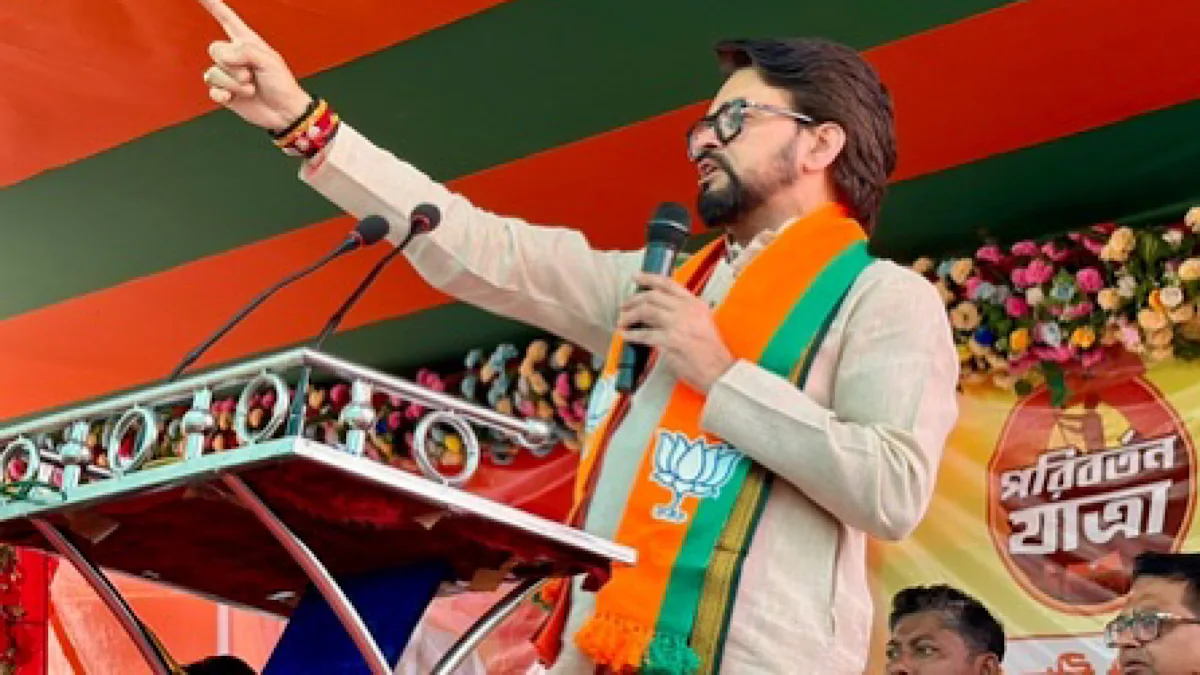
At Parivartan Yatra rally, Anurag Thakur targets CM Mamata over infiltration, law and order

Former Union Minister and Hamirpur MP Anurag Thakur on Sunday participated in the Bharatiya Janata Party’s (BJP) Parivartan Yatra in West Bengal along with Union Minister Shantanu Thakur and other party leaders.

IANS | Kolkata |

Former Union Minister and Hamirpur MP Anurag Thakur on Sunday participated in the Bharatiya Janata Party’s (BJP) Parivartan Yatra in West Bengal along with Union Minister Shantanu Thakur and other party leaders.

Addressing a large public gathering in the Naihati Assembly constituency of North 24 Parganas district, he alleged that while Chief Minister Mamata Banerjee opposes President Droupadi Murmu, she simultaneously welcomes infiltrators and mafias into the state.

He claimed that Mamata Banerjee was not functioning as a Chief Minister but as the “Quaid-e-Azam of mafias, jihadis and infiltrators”.

According to him, to protect the identity and resources of Bengal, it is essential that the Trinamool Congress government is removed and a BJP government is brought to power in the state.

Thakur said the upcoming Assembly elections in West Bengal would be a decisive battle for the protection of Bengali pride, Bengali culture and the very existence of the state.

He alleged that illegal infiltration from Bangladesh has been continuing in Bengal for a long time. According to him, from the Congress to the Communists and now the Trinamool Congress, successive governments have allowed infiltration in a systematic manner because infiltrators serve as a vote bank that helps them win elections.

“Instead of creating new industries and employment opportunities for the youth of Bengal, the state government has repeatedly cheated the people through cut money collected by its ministers, leaders and workers,” Thakur said.

He added that whenever central agencies visit the state to investigate criminal cases, they appear to fear Mamata Banerjee more than the criminals.

Thakur also alleged that under the Trinamool Congress regime, even schools and colleges have become unsafe for women and girls, and victims often have to run from court to court in search of justice.

He further said that the Trinamool Congress had come to power with the slogan of “Maa, Maati, Manush”. However, he alleged that “Maa has been captured by Mamata, Maati has been consumed by mafias, and Manush has been swallowed by money power”, turning the government into one run by Mamata, mafia and money power.

Mamata Banerjee joins in Trinamool’s protests against LPG cylinders’ price hike

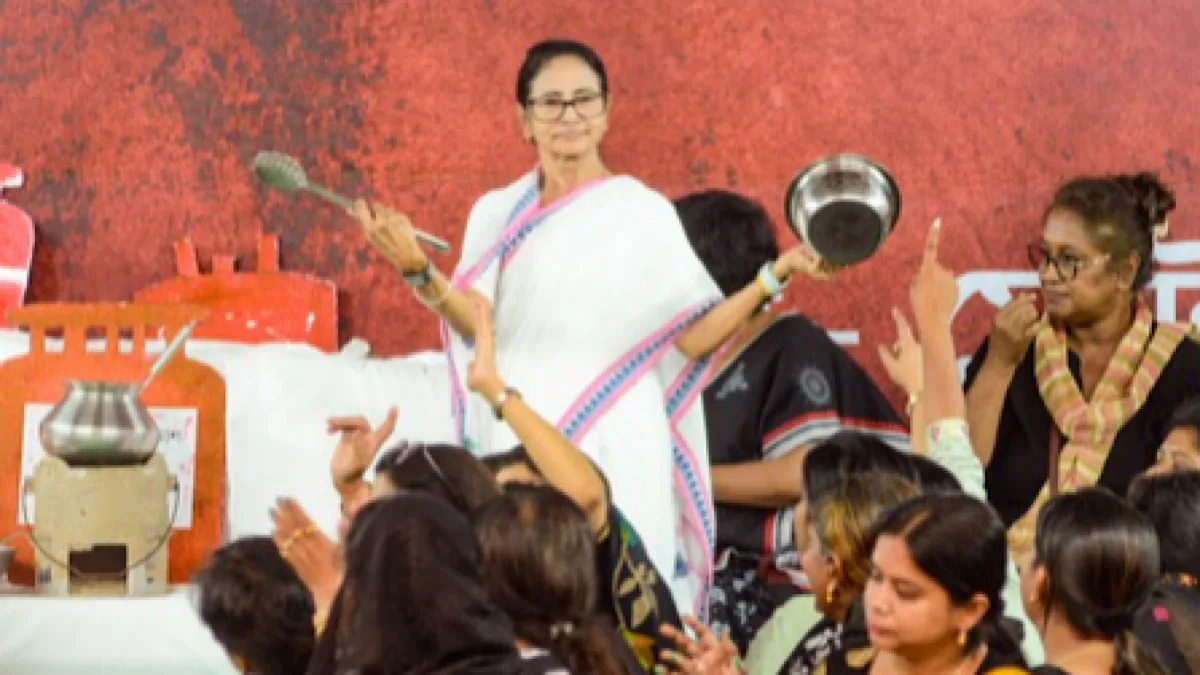
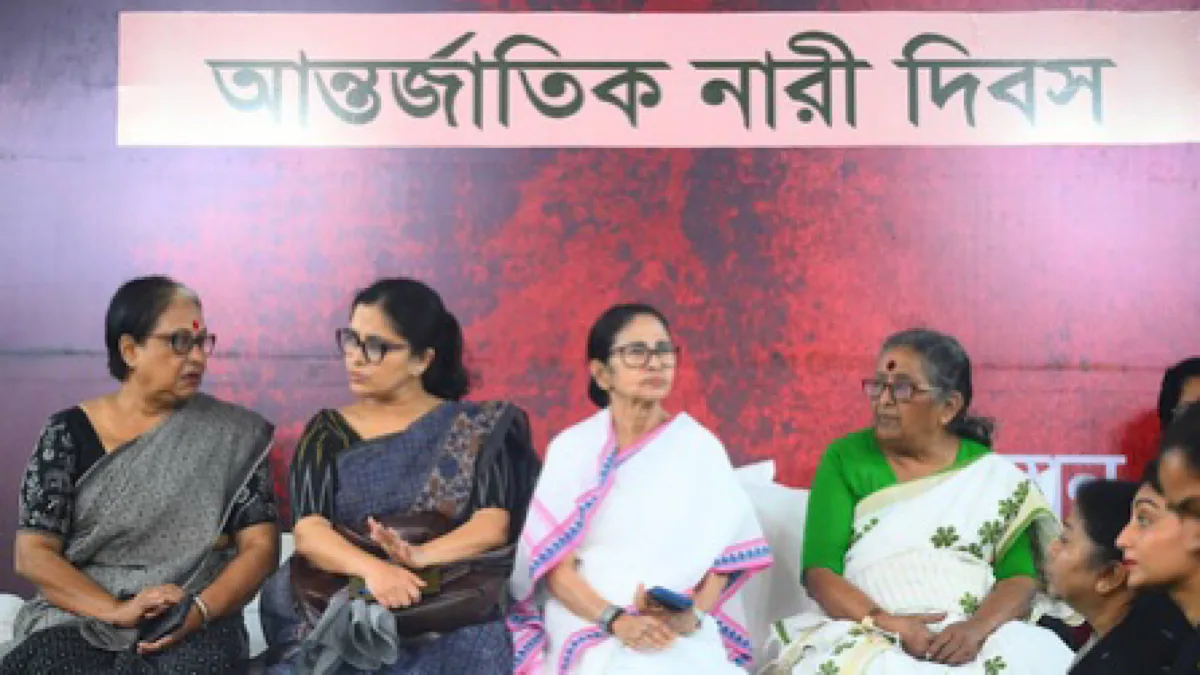
On International Women’s Day, women Trinamool Congress leaders and workers staged a protest against the hike in cooking gas prices by sporting black sarees.

IANS | Kolkata |

On International Women’s Day, women Trinamool Congress leaders and workers staged a protest against the hike in cooking gas prices by sporting black sarees.

A procession was taken out on Sunday from Subodh Mallick Square wearing black sarees and black clothes to party supremo and Chief Minister Mamata Banerjee’s sit-in demonstration site at Esplanade.

State Ministers Shashi Panja and Chandrima Bhattacharya led the protest march. Protests were also held on the sit-in stage wearing black sarees. Mamata also protested with symbolic cylinders in her hands.

Every year, the Trinamool Congress holds various programmes on International Women’s Day. This time, the increase in LPG cylinders prices in the fallout of the conflict in the Middle East has been the issue of their programme.

On Saturday, Mamata expressed her anger over a hike in the price of LPG cylinders and called for a procession to protest the increase in the price of cooking gas.

Speaking from the sit-in demonstration in Esplanade, the Chief Minister had appealed to the people to come to the protest site with kitchen utensils.

The price of cooking gas cylinders in India has increased in the midst of the US-Iran conflict in the Middle East. The price of cooking gas cylinders for households has been increased by Rs 60 from Friday midnight.

“Yesterday, the price of cooking gas was increased by 60 rupees. Three days before that, the price of commercial gas was increased by 49 rupees. The price of a large cylinder has become 2,100 rupees. And the price of a small cylinder has become almost 1,000 rupees. They said that you have to book LPG cylinders 21 days in advance. Will someone whose house runs out of gas go without cooking for 21 days? Don’t you think about these things first? What will people eat?” she had said.

The government has directed Indian refiners to maximise their output of LPG, asking public sector oil marketing companies to ensure that LPG so procured is marketed solely to consumers of domestic LPG.

The Centre has increased the price of a 14.2 kg domestic cooking gas cylinder by Rs 60. Gas worth Rs 879 will now have to be purchased at Rs 939. The new price has been fixed from Saturday.

The price of commercial gas has also been increased per cylinder. The price of commercial gas has been increased by Rs 50 from Rs 114 to Rs 1990.

Suvendu Adhikari flags violation of norms by Bengal govt; urges ECI to take note

Using his X handle, Adhikari said such a move undermines the very foundations of democracy and urged the Election Commission of India (ECI) to take cognisance of the matter.

IANS | Kolkata |

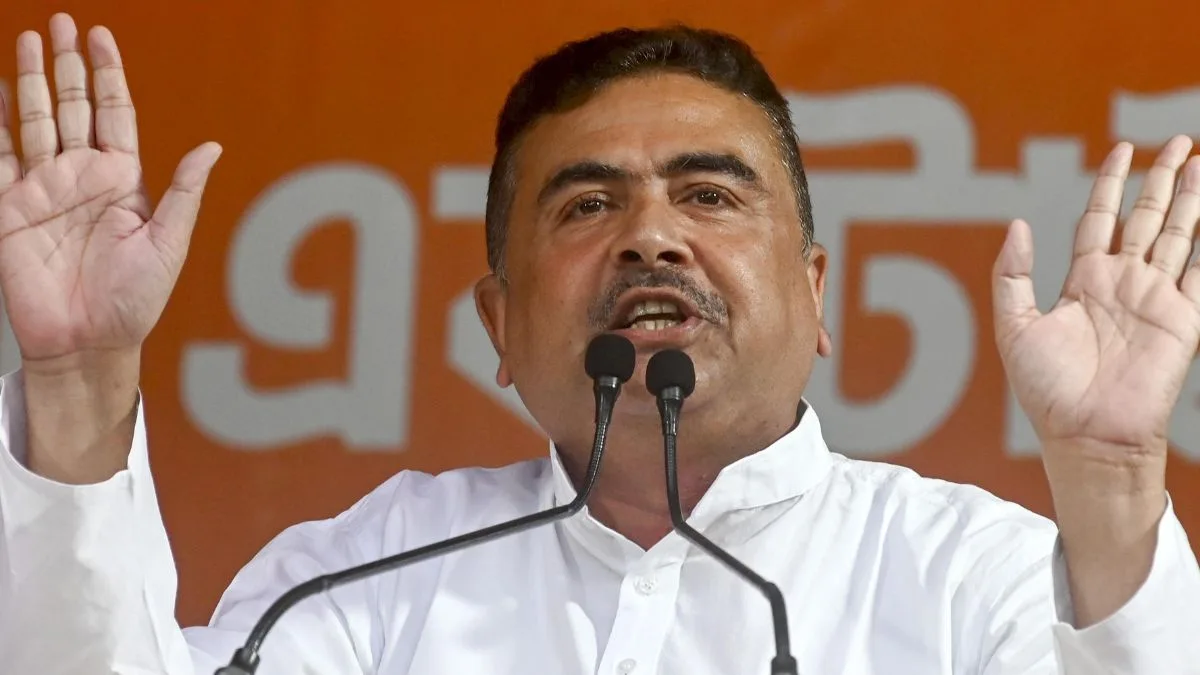
Leader of Opposition in the state Assembly Suvendu Adhikari on Sunday targeted the Mamata Banerjee government for violating norms after a district administration assigned handling of postal ballots to West Bengal Police Welfare Organisation.

Using his X handle, Adhikari said such a move undermines the very foundations of democracy and urged the Election Commission of India (ECI) to take cognisance of the matter.

“I am deeply shocked and outraged by the brazen attempts of the TMC controlled so-called West Bengal Police Welfare Organisation to undermine the very foundations of our Democracy, even before the elections are announced,” said Adhikari.

Sharing a copy of the order along with his post, the BJP leader said, “This recent order from the Superintendent of Police; Jhargram District (dated 07/03/2026), assigns the handling of postal ballots and ED votes for Police personnel to the so-called ‘Joint Convener, Welfare’ of the Jhargram District Police Welfare – an entity that has absolutely no legal standing or authority in electoral matters. This is not an isolated incident; it’s a state-wide conspiracy where Police reserve officers are being instructed to collect postal ballots from every Police personnel and funnel them through this sham ‘Welfare’ organization.”

Adhikari claimed that the organisation is nothing but a frontal outfit of Trinamool Congress.

“The West Bengal Police Welfare Organisation is nothing but a frontal outfit for the TMC party – created without any legal foundation, solely to serve the interests of the ruling party. It’s run by a cabal of handpicked Officers who shamelessly prioritize loyalty to TMC leaders over their sworn duty to the people of West Bengal. These Officers are issuing illegal orders, coercing junior personnel to surrender their democratic rights, and manipulating the electoral process unethically, all while the Model Code of Conduct is not even in effect,” he said.

The BJP leader claimed that this is a direct assault on free and fair elections. “Crucial votes from those who protect our society are being hijacked to rig the system in favor of the corrupt TMC regime,” he said.

Urging the poll panel to act against the move, Adhikari said, “I urge the Election Commission of India (@ECISVEEP) to immediately take cognizance of this blatant violation and act decisively by disbanding this illegal “Police Welfare” institution for meddling in election-related activities without any jurisdiction and request them to initiate stringent action against erring Officials, starting with the SP of Jhargram and all involved in this conspiracy.”

He said it needs to be ensured that postal ballots for police personnel are handled strictly through official channels, protecting the sanctity of every vote.

Weather office forecasts rain with thunderstorms in Kolkata

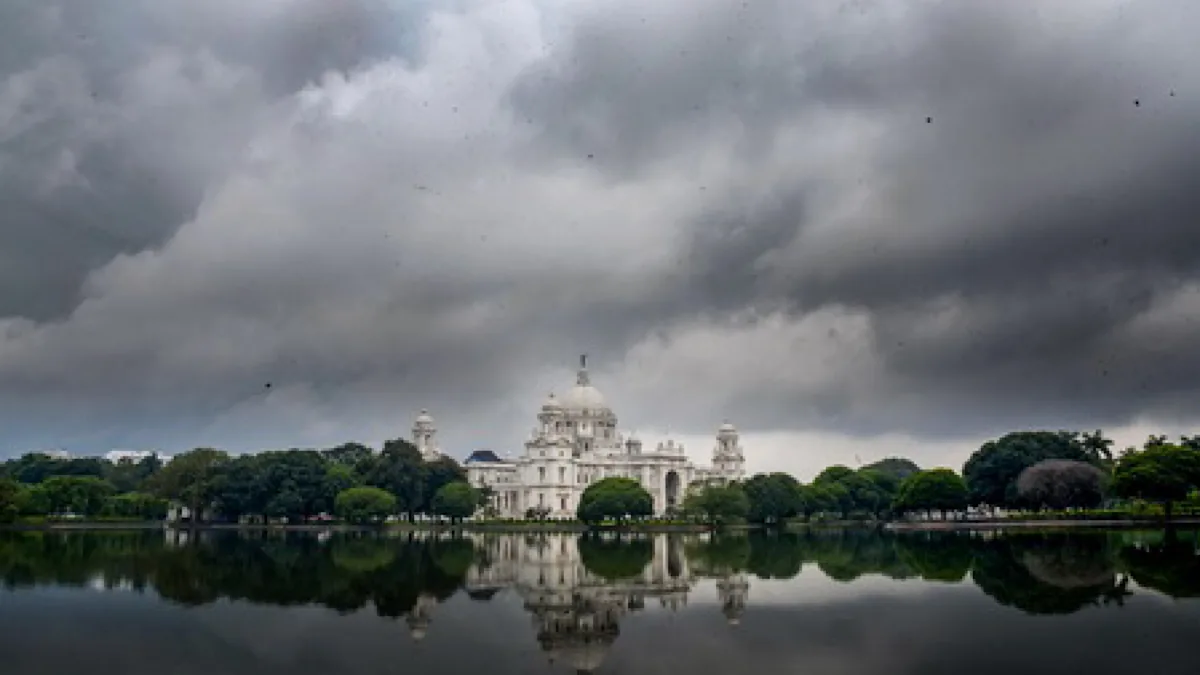
The Regional Meteorological Centre (RMC) in Kolkata’s Alipore has forecast the possibility of thunderstorms and rain in the entire state, including Kolkata, from Sunday evening.

IANS | Kolkata |

The Regional Meteorological Centre (RMC) in Kolkata’s Alipore has forecast the possibility of thunderstorms and rain in the entire state, including Kolkata, from Sunday evening.

The MeT Office said that despite the thunderstorms, the temperature will not change much in the next seven days.

According to the forecast, Kolkata, Howrah, Hooghly, and North 24 Parganas are likely to experience scattered light rain and gusty winds on Monday and Tuesday. However, no separate warning has been issued for these districts.

Rain warnings are in place for South 24 Parganas, East Midnapore, West Midnapore, Jhargram, Bankura, East Burdwan, West Burdwan, Birbhum, Murshidabad and Nadia districts. These districts are likely to experience rain with thundershowers for the next few days. Gusty winds of 30 to 40 kilometres per hour are also likely.

Meanwhile, thunderstorms will continue in North Bengal throughout the week. Scattered light rain with thunderstorms is likely in every district of the north. Separate warnings have been issued for the Darjeeling, Kalimpong, and Jalpaiguri districts from Sunday to Tuesday.

There is a warning in Alipurduar and Cooch Behar districts from Monday to Wednesday. There will be no change in the minimum or maximum temperatures in North Bengal for the next seven days.

According to RMC, a cyclonic circulation is over Odisha and adjoining areas. From there, the axis extends through Chhattisgarh, Madhya Pradesh and north-west Uttar Pradesh. Due to its influence, favourable conditions have been created for thunderstorms in Gangetic Bengal.

On Sunday morning, the minimum temperature in Kolkata was 23.9 degrees Celsius, 2.2 degrees above normal. On Saturday, the maximum temperature in the city was 31.4 degrees Celsius, 1.6 degrees below normal. The sky will remain partly cloudy throughout the day. There may be scattered light rain later in the evening. The relative humidity in the air was a maximum of 96 per cent and a minimum of 55 per cent.

The maximum and minimum temperatures will hover around 32 degrees and 24 degrees Celsius, respectively.

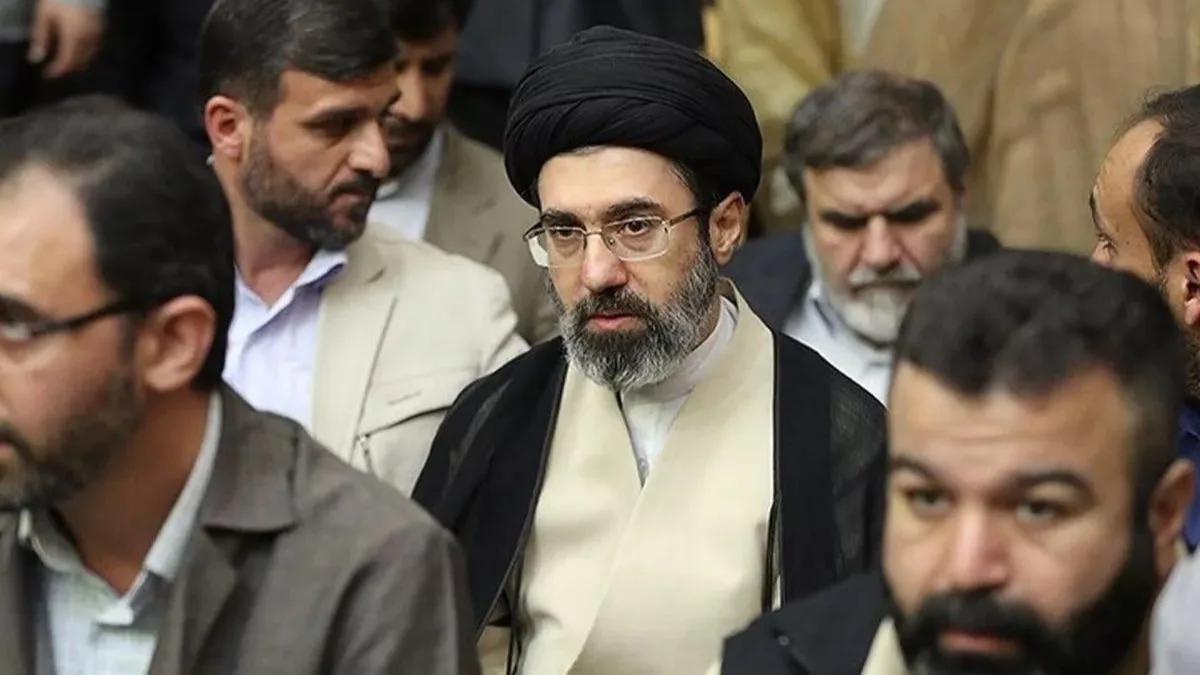
Mojtaba Khamenei: From shadow power broker to Supreme Leader, and Trump is already pushing back

Donald Trump reacted cautiously to reports of Mojtaba Khamenei’s rise in Iran, as attention turns to the cleric’s influence and past sanctions.

Statesman News Service | Mumbai |

Mojtaba Khamenei, the influential cleric long seen as a key figure behind Iran’s power structure, has drawn a sharp reaction from US President Donald Trump after news surfaced that he has been chosen as the country’s new Supreme Leader.

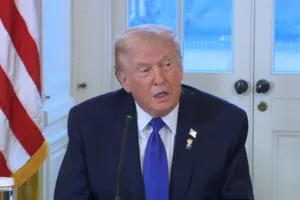
“Khamenei’s son is unacceptable to me,” Trump had earlier said while commenting on the possibility of Mojtaba Khamenei rising to Iran’s highest office.

The remarks underline the international scrutiny surrounding Mojtaba’s appointment by Iran’s Assembly of Experts following the death of his father, Ayatollah Ali Khamenei. With this announcement, the 56-year-old cleric has inherited sweeping authority over Iran’s political system, armed forces, and key state institutions.

When asked about the development in a phone interview cited by The Times of Israel, Trump avoided a detailed response, saying only: “We’ll see what happens.”

Also Read: New leader, same battle: Iran names Mojtaba Khamenei as Supreme Leader as conflict with US, Israel escalates

Mojtaba Khamenei: the cleric long seen as a power broker

Mojtaba Khamenei is the second-oldest son of Iran’s late Supreme Leader Ali Khamenei and has for years been regarded by analysts as one of the most influential figures within the Islamic Republic’s ruling establishment.

Although he has never held a formal government position, Mojtaba is widely believed to have exercised considerable influence inside the Office of the Supreme Leader.

Observers say he helped manage key aspects of the office in practice and maintained close links with powerful institutions, including the Islamic Revolutionary Guard Corps (IRGC).

Mojtaba is described as a mid-ranking cleric who served in Iran’s armed forces during the Iran-Iraq war. Over time, his growing links with the Revolutionary Guard strengthened his position inside Iran’s tightly knit power system.

Sanctions and allegations surrounding Mojtaba

International attention on Mojtaba Khamenei is not new.

In November 2019, the US Treasury Department imposed sanctions on him, accusing him of representing the then Supreme Leader in an official capacity despite never being elected or appointed to a government role.

According to the US Treasury, Ali Khamenei had delegated part of his authority to Mojtaba, who worked closely with commanders of the Islamic Revolutionary Guard Corps-Qods Force and the Basij Resistance Force.

The Treasury said the two forces were involved in advancing Iran’s regional ambitions and enforcing domestic policies.

Over time, his growing links with the Revolutionary Guard strengthened his position inside Iran’s tightly knit power system.

Some reports have also claimed that Mojtaba Khamenei has access to luxury properties in London and financial accounts in Switzerland, the UK, and Liechtenstein.

Israeli media outlets have, meanwhile, described Mojtaba as holding more hardline views than his father and alleged that he played a role in the violent suppression of protests in Iran.

North-East girl allegedly attacked near Saket Court after objecting to racial remarks

A North-East girl was allegedly attacked in a park near Saket Court, New Delhi, after she objected to racial remarks on Sunday night.

UNI | New Delhi |

A North-East girl was allegedly attacked in a park near Saket Court, New Delhi, after she objected to racial remarks on Sunday night.

According to information, the victim, who is from Manipur, was walking in a park in Saket with her friend when some people allegedly passed objectionable remarks at them.
“When one of the girls reportedly objected to the comments, the situation escalated and the accused allegedly attacked her,” said a source.

The injured girl was taken to Safdarjung Hospital. Her condition is said to be stable and she has suffered minor injuries.

Police teams are in contact with the victim and are continuously speaking with her. A senior police official said that strict action will be taken against the culprits.

Pakistan’s monthly oil import bill could skyrocket to $600 million, says Finance Minister

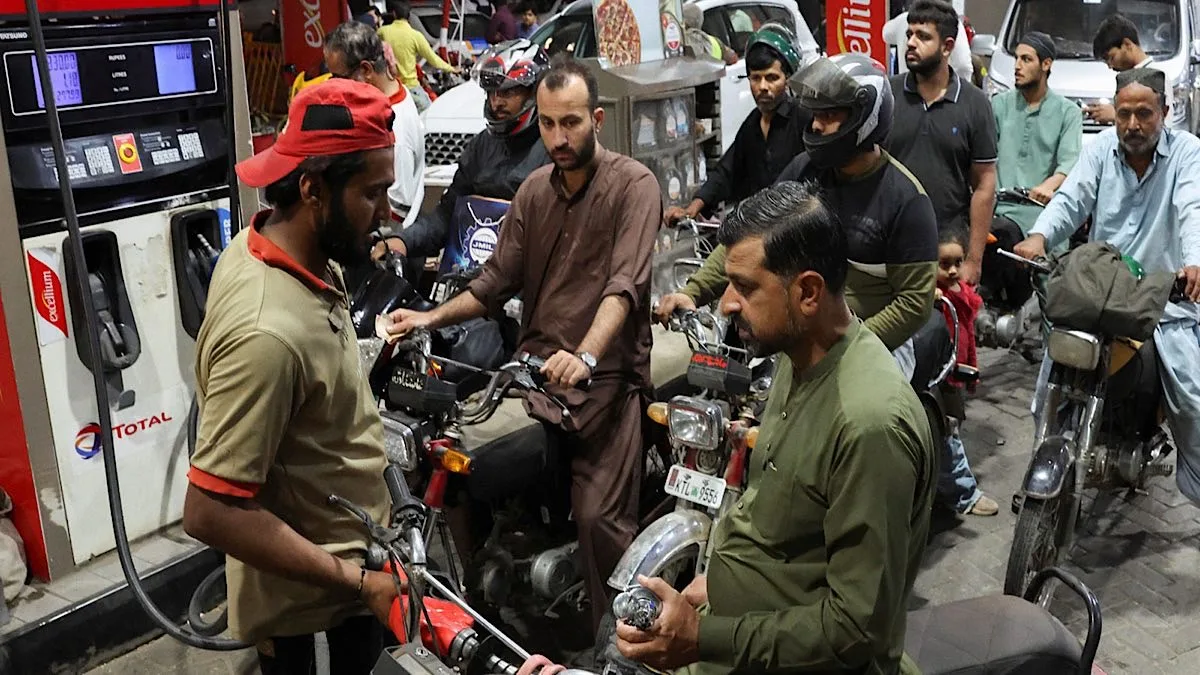
Amid the developing security situation in West Asia, Pakistan could see its monthly oil import bill soar to a whopping USD 600 million, the country’s Finance Minister Muhammad Aurangzeb said on Sunday, as reported by Dawn.

ANI | New Delhi |

Amid the developing security situation in West Asia, Pakistan could see its monthly oil import bill soar to a whopping USD 600 million, the country’s Finance Minister Muhammad Aurangzeb said on Sunday, as reported by Dawn. Petroleum Minister Ali Pervaiz Malik said that they would request the International Monetary Fund for relief in the petroleum levy.
According to Dawn, Finance Minister Muhammad Aurangzeb made the remarks during a briefing on Sunday. Present in attendance were Pakistan’s Petroleum Minister Ali Pervaiz Malik and Sindh Chief Minister Murad Ali Shah.

The Pakistani news outlet said that the Finance Minister Aurangzeb told the meeting that Pakistan’s monthly oil import bill could increase to $600 million in the backdrop of the conflict in West Asia. He also mentioned that the government is preparing alternative plans to deal with the financial impact of rising oil prices. Dawn reported that crude prices could rise to USD 120 a barrel if the conflict escalates further.
As Pakistan continues to reel under economic stress, Pakistan’s Petroleum Minister Ali Pervaiz Malik called for fuel-saving measures so that Islamabad’s existing reserves last longer and added that the country would request the International Monetary Fund for relief in the petroleum levy.

Malik said that while three petroleum shipments are expected to reach the country on Monday, LNG supply disruptions are also anticipated. He further mentioned that diplomatic engagements are ongoing with Oman, Saudi Arabia and the UAE, with efforts underway for alternate fuel supply routes apart from the Strait of Hormuz.
This comes amid the backdrop of Pakistan announcing a massive hike in fuel prices, with petrol and high-speed diesel rates jumping by PKR 55 per litre–an increase of approximately 20%.

As of March 7, 2026, the new rates have pushed petrol to PKR 321.17 and high-speed diesel to PKR 335.86 per litre, placing an immense burden on an already struggling economy amid the escalating crisis in West Asia.

The announcement has sparked widespread anxiety across the country, where residents are already battling high living costs during the month of Ramadan. Commuters and workers have expressed despair over the rapid cost-of-living increase.
Petrol costs have surged, making daily expenses harder to manage, and experts warn that this could push inflation up significantly. With petrol now reaching Pakistani Rupees (PKR) 324 per litre, the rise is expected to affect the prices of many other goods, making life increasingly difficult for ordinary citizens trying to cope with the growing financial strain.

Experts warn that this fuel shock will likely trigger a second wave of inflation, as transport and logistics costs rise, inevitably driving up the price of food and essential goods.

Government officials, including Deputy Prime Minister Ishaq Dar, noted that Islamabad had “little choice” but to pass on the impact of skyrocketing international oil prices to consumers to stabilise national energy finances and adhere to requirements set during IMF consultations.

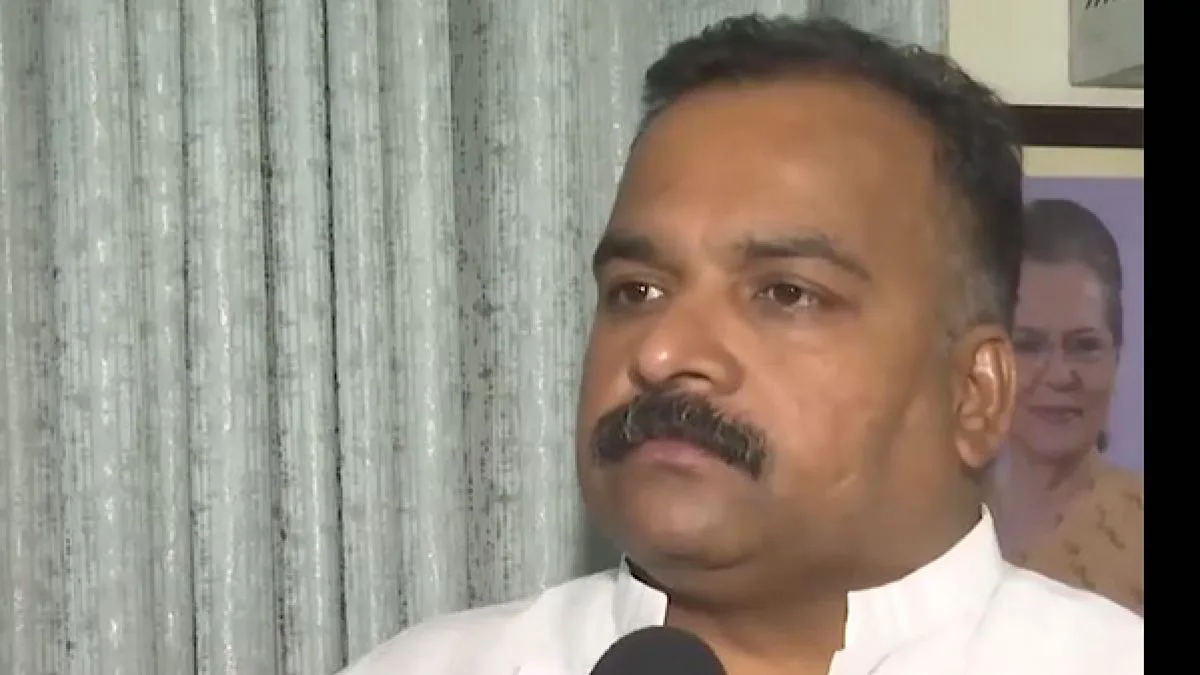
‘Pasted statement’: Manickam Tagore seeks parliamentary discussion on conflict in West Asia

Congress MP Manickam Tagore B on Monday criticised the Centre for scheduling a parliamentary statement by External Affairs Minister S Jaishankar on the conflict in West Asia, rather than a discussion in the Lok Sabha.

ANI | New Delhi |

Congress MP Manickam Tagore B on Monday criticised the Centre for scheduling a parliamentary statement by External Affairs Minister S Jaishankar on the conflict in West Asia, rather than a discussion in the Lok Sabha.

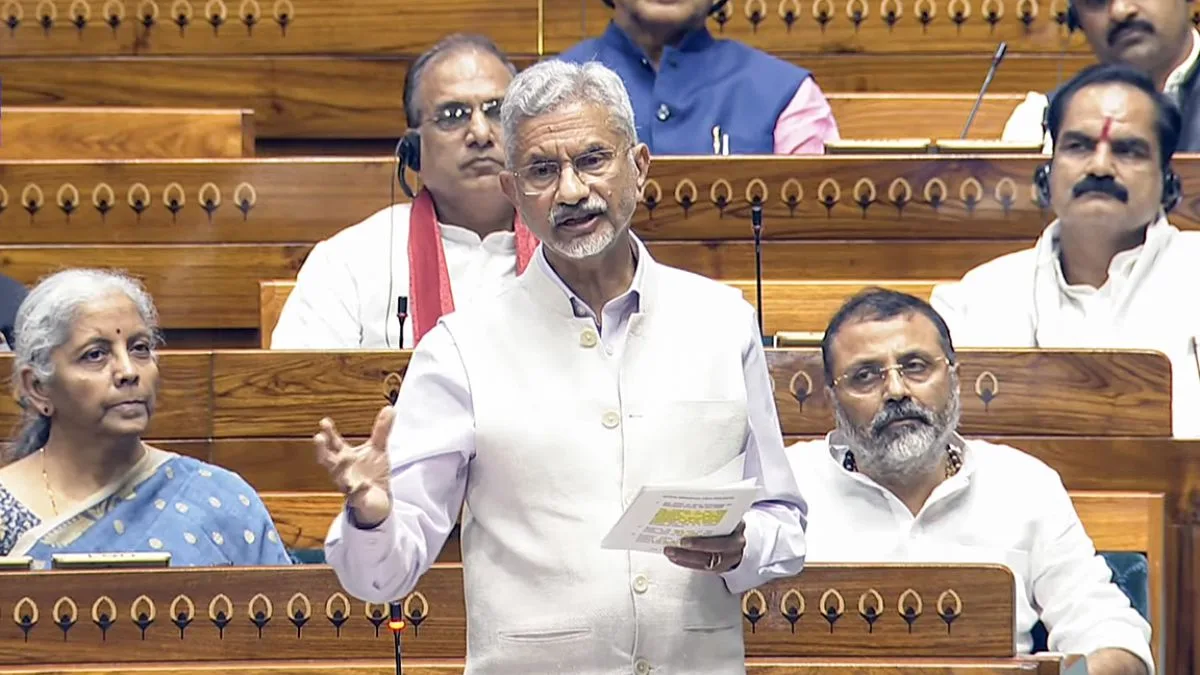
S Jaishankar is scheduled to deliver a statement regarding the ‘Situation in West Asia’ in the Lok Sabha as the second phase of the Budget Session of Parliament will begin today.
Calling it a “pasted statement,” Manickam Tagore sought accountability from the central government over the nation’s energy security and the safety of Indian citizens in the Gulf region.

In an X post, the Congress MP wrote, “The Gulf region is on the brink. Oil and gas prices are rising. Thousands of Indians working in the region are anxious about their safety and future. This is not a routine situation — it is a matter of India’s energy security and the safety of our citizens abroad. At a moment like this, the country deserves a serious discussion in Parliament.”

Lashing out at the Centre, Tagore said that the nation cannot run through “notice-board diplomacy,” and “walk away from accountability.”
He wrote, “India imports the majority of its oil from the Gulf. Any instability there directly affects fuel prices, inflation, and the Indian economy. But what do we see from this government? Silence from the Prime Minister. A pasted statement from the External Affairs Minister. India cannot be run through notice-board diplomacy, where a statement is issued, and the government walks away from accountability.”

“When energy security is at stake, and Indians abroad are vulnerable, the government must come to Parliament, answer questions, and face a full discussion. Leadership means facing the nation, not pasting statements and disappearing,” the X post read.
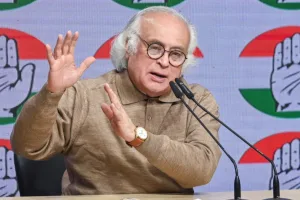
Earlier on Sunday, Congress MP Jairam Ramesh also called for a full-fledged discussion in Parliament on the evolving situation in West Asia. In a post on X, Jairam said that the problems with Ministerial statements are that they convey the information which is already known, with MPs not allowed to seek clarifications or ask questions.

“It has been let known that the External Affairs Minister will make a statement in both Houses of Parliament on the situation in West Asia. The problems with such Ministerial statements are that (i) they convey little of value over and above that is already known; and more importantly (ii) MPs are not given an opportunity to seek clarifications or ask questions,” he said.

“What the Opposition wants is a full-fledged debate. On April 8, 2003, there was a spirited debate in the Lok Sabha on the US invasion of Iraq, and a resolution was even passed condemning it. This was when Mr Atal Bihari Vajpayee, who knew his Rajdharma, was the PM,” Jairam Ramesh posted.

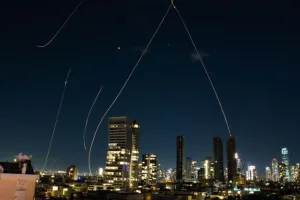
S Jaishankar’s statement comes amid growing international attention on the ongoing conflict in West Asia, following the killing of Iran’s Supreme Leader Ayatollah Ali Khamenei in joint military strikes by the United States and Israel on Iran on February 28. In retaliation, Tehran launched counter-strikes targeting American military bases in multiple West Asian countries and Israeli assets across the region.

The second phase of the Budget session is scheduled to go up to April 2, during which essential legislative business and the Union Budget 2026-27 are expected to be addressed primarily.

The session, which began on January 28 with the President’s address to a joint sitting of the two Houses, comprises 30 sittings over 65 days up until April 2.

PM Modi praises Team India’s determination and hard work after Men in Blue secure T20 World Cup 2026 trophy

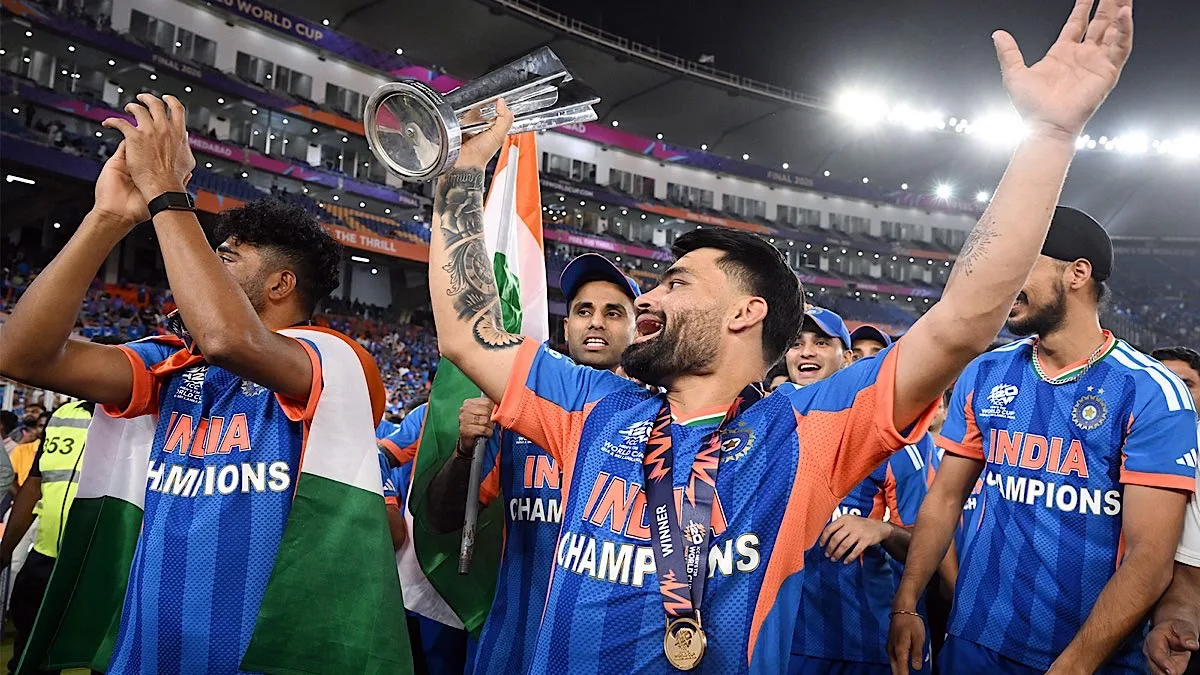
India’s Prime Minister Narendra Modi hailed the Indian men’s cricket team’s win in the final of the ICC Men’s T20 World Cup 2026 on Sunday, where they defeated New Zealand to defend their title and become the first team to win two successive T20 World Cups.

ANI | New Delhi |

India’s Prime Minister Narendra Modi hailed the Indian men’s cricket team’s win in the final of the ICC Men’s T20 World Cup 2026 on Sunday, where they defeated New Zealand to defend their title and become the first team to win two successive T20 World Cups. PM Modi noted the Men in Blue’s hard work, determination and self-confidence in their road to victory.

India, led by Suryakumar Yadav, defeated the Mitchell Santner-led New Zealand by a huge 96-run margin to defend their T20 World Cup title. With the win, India became the first team to win the T20 World Cup at home, the first team to win it back-to-back after securing the 2024 edition as well, and also became the first team to win it three times (2007, 2024, 2026).

In a post on X on Monday, PM Modi said that Team India’s T20 World Cup victory demonstrates how determination, self-confidence, and disciplined effort lead to success. He emphasised that hard work in the right direction, combined with patience and persistence, makes achieving goals possible.
“By winning the T20 Cricket World Cup, Team India has proven that the confluence of determination, restraint, and self-confidence is the fundamental mantra for success in life. This victory also tells us that with hard work in the right direction, every goal can be achieved. One should constantly and steadily protect one’s aspirations with that. Exert effort with patience; then success is certain,” PM Modi said in the X post.

Earlier, on the night of the T20 WC final, PM Modi in another X post wrote, “Champions! Congratulations to the Indian team on winning the ICC Men’s T20 World Cup! This remarkable triumph reflects exceptional skills, determination, and teamwork. They have shown outstanding grit through the tournament. This victory has filled every Indian heart with pride and joy. Well done, Team India!”

In the T20 WC final, NZ won the toss and elected to field first. However, a return-to-form, record-breaking fifty from Abhishek Sharma (52 in 21 balls, with six fours and three sixes) and his 98-run stand with Samson made NZ regret the decision. Later, Samson stitched a century stand with Ishan Kishan (54 in 25 balls, with four boundaries and four sixes) to take India past the 200-run mark in the 16th over. After a brief slowdown, Shivam Dube (26* in eight balls, with three fours and two sixes) made some valuable runs to take India to 255/5, the highest total in T20WC finals.

James Neesham (3/46) was the leading wicket-taker for NZ.
In the run-chase of 256 runs, Axar Patel (3/23) and Jasprit Bumrah (4/15) reduced the Kiwis to 72/5, despite a half-century from Tim Seifert (52 in 26 balls, with two fours and five sixes). Despite a brief partnership between Daryl Mitchell (17) and skipper Mitchell Santner (43 in 35 balls, with three fours and two sixes), India kept chipping in with wickets, and the Kiwis were bundled out for just 159 runs.

Asian markets fall after crude surge, Japan’s Nikkei and South Korea’s KOSPI tank 7%

Asian markets tanked in the opening session on Monday, with Japan’s Nikkei and South Korea’s KOSPI falling around 7 per cent, after crude oil prices surged sharply amid escalating geopolitical tensions in West Asia.

IANS | New Delhi |

Asian markets tanked in the opening session on Monday, with Japan’s Nikkei and South Korea’s KOSPI falling around 7 per cent, after crude oil prices surged sharply amid escalating geopolitical tensions in West Asia.

The sharp fall in regional markets came after crude prices surged more than 25 per cent at the opening, triggering risk-off sentiment across global markets. Crude was trading at USD 115 per barrel at the time of filing this report, raising concerns among investors about inflation and supply disruptions.

Among major Asian indices, Japan’s Nikkei 225 index declined by 7 per cent to the 52010 level, reflecting heavy selling pressure in the early session. South Korea’s KOSPI index also tanked 7.43 per cent to the 5169 level, as rising oil prices weighed on investor sentiment.

Other Asian markets also witnessed declines during the opening trade. Singapore’s Straits Times index lost 2.65 per cent to the 4720 level, while Hong Kong’s Hang Seng index fell more than 2.46 per cent to the 25095 level. Meanwhile, Taiwan’s weighted index dropped 5.77 per cent to the 31767 level.

The sharp decline across Asian equities follows a strong surge in crude oil prices amid escalating tensions in West Asia.

Brent crude prices surged sharply on Monday, rising by more than 25 per cent amid the ongoing conflict in the region which has made crude prices bullish. During the trading session, crude prices also touched a high of USD 119.45 per barrel, reflecting growing concerns in the global energy market as geopolitical tensions intensify.
West Asia is currently engulfed in a high-intensity, multi-front conflict involving Iran, Israel, and the United States. The crisis escalated following coordinated US-Israeli strikes on Iran, which reportedly resulted in the death of Iran’s Supreme Leader, Ayatollah Ali Khamenei.

The developments have significantly raised fears of supply disruptions in global oil markets, which has triggered volatility across financial markets worldwide.
Meanwhile, US markets had already ended last week under pressure. On Friday, the S&P 500 declined by 1.33 per cent to the 6740 level, while the Nasdaq also fell by 1.53 per cent to the 22400 level.

The spike in crude prices and rising geopolitical tensions have increased uncertainty in global financial markets.

Sensex crashes, Nifty tumbles: What triggered today’s stock market fall

Indian markets opened sharply lower as crude oil surged and global equities slipped, triggering heavy selling across sectors with PSU banks, auto and media stocks among the worst hit.

Statesman News Service | Mumbai |

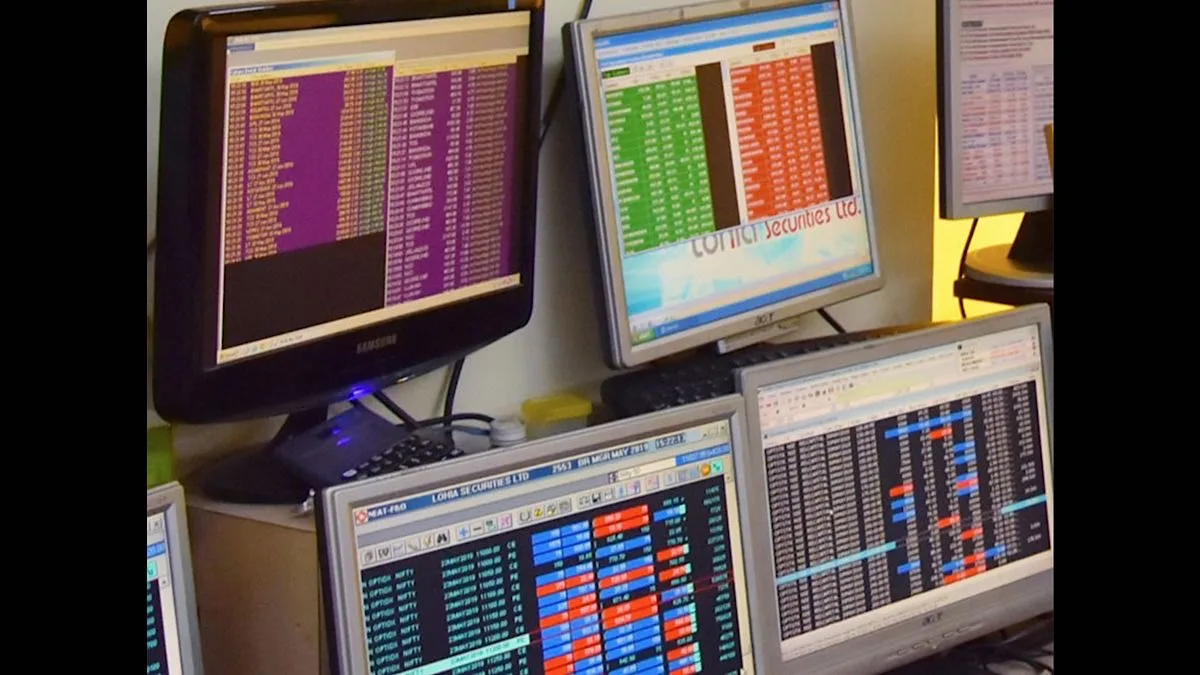
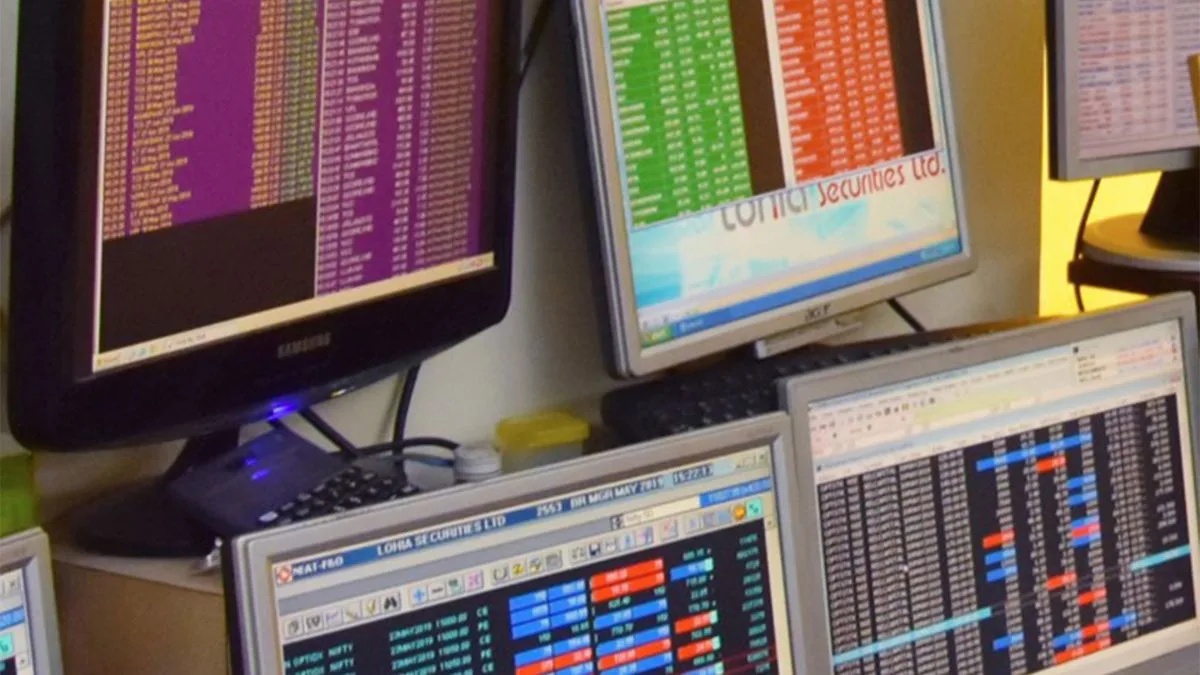
Indian stock markets opened deep in the red on Monday morning. Both benchmark indices dropped sharply within minutes of trading as investors reacted to weak global markets and a sudden spike in crude oil prices.

The decline comes as crude oil prices have shot up amid tensions in Asia. For a country like India, which imports most of its oil, the jump in prices has raised fresh worries about inflation and pressure on the economy.

The Nifty 50 began the session at 23,868.05, slipping 582.40 points, or 2.38 per cent, in early trade. The BSE Sensex started the session at 77,056.75, falling 1,862.15 points (2.36%), showing heavy selling across the market right from the start. The steep opening decline reflected broad-based selling across sectors on Dalal Street.

Crude oil prices surged nearly 25 per cent to about USD 116 per barrel on Monday, triggering concerns across financial markets. India imports a large portion of its energy needs, making the economy sensitive to sudden spikes in oil prices.

Ajay Bagga, banking and market expert, told news agency ANI that the sharp move in oil prices could significantly affect India’s economic indicators.

“Indian markets are seeing a huge cut in the stock futures represented by the Gift Nifty. The oil price hit to the Indian GDP, Current account deficit and inflation will be huge given that India meets more than 85 per cent of its crude oil requirements from imports,” Bagga said.

He added that higher crude prices are likely to translate into costlier fuel for consumers.

“We expect retail petrol and diesel price hikes. Cooking gas price was already hiked last week for both consumers and commercial users. Jet aviation fuel prices will also go up,” Bagga said.

According to him, sectors that rely heavily on petroleum derivatives may face additional pressure.

“Sectors like paints, aviation, autos, tyres, chemicals and all downstream industries using oil derivatives will see further cuts. However given the liquidity squeeze today, anything that can be sold will be sold, so expect cuts in leading counters, even those not correlated to the oil price, including in gold and silver,” he added.

Oil surges toward $120 as West Asia conflict deepens; Trump shrugs off spike as ‘small price to pay’

Sectoral indices slide as selling spreads across markets

Heavy selling was visible across most sectoral indices on the NSE. PSU Bank, Media and Financial Services stocks were among the worst affected.

The Nifty Auto index dropped 2.9 per cent, while Nifty Media declined 2.36 per cent. The PSU Bank index plunged 4 per cent, while Nifty IT slipped 1.29 per cent. Nifty FMCG fell 1.38 per cent, and the Consumer Durables index lost around 2 per cent.

Sunil Gurjar, SEBI-registered analyst and Founder of Alphamojo Financial Services, said weak technical signals had already begun to emerge.

“The Nifty 50 had a weak week. The index also breached the important 200-EMA, while a bearish EMA crossover indicates weakness in the trend. The fall was mainly driven by heavy FII selling, a weakening rupee, and ongoing global war tensions, which hurt market sentiment,” he said.

Gurjar said the market may stabilise if the index crosses 24,646, which could indicate renewed bullish momentum. However, if it slips below current support levels, further downside could follow. He added that 23,850 remains another crucial support zone for the index.

Asian markets tumble as global sentiment weakens

The decline in Indian equities mirrored losses across other Asian markets.

Japan’s Nikkei 225 dropped about 7 per cent to the 52,010 level, while South Korea’s KOSPI index plunged 7.43 per cent to around 5,169.

Elsewhere in Asia, Singapore’s Straits Times index fell 2.65 per cent to about 4,720, Hong Kong’s Hang Seng index slipped over 2.46 per cent to around 25,095, and Taiwan’s weighted index declined 5.77 per cent to approximately 31,767.

US markets had already ended last week on a weak note. On Friday, the S&P 500 fell 1.33 per cent to about 6,740, while the Nasdaq slipped 1.53 per cent to around 22,400, reflecting growing investor caution globally.

Parliament’s Budget Session resumes today, EAM Jaishankar to speak on West Asia situation

The Opposition MPs have demanded a full-fledged discussion on the unfolding situation.

Statesman News Service | New Delhi |

The second phase of Parliament’s Budget Session is set to begin today, with External Affairs Minister S. Jaishankar scheduled to make a statement in the Lok Sabha on “The Situation in West Asia.”

The statement comes amid heightened global attention following the killing of Iran’s Supreme Leader Ali Khamenei in joint military strikes carried out by the United States and Israel on Iran on February 28. In response, Tehran launched retaliatory strikes targeting American military bases across several West Asian countries and Israeli assets in the region.

With the conflict escalating over the past week, Jaishankar is expected to brief the House on recent developments. Meanwhile, the Opposition members have demanded a full-fledged discussion on the unfolding situation. Congress leader Jairam Ramesh criticised the government’s decision to limit the matter to a statement, arguing that Members of Parliament should be allowed to raise questions.

Separately, Opposition parties are preparing to move a resolution seeking a no-confidence motion against Lok Sabha Speaker Om Birla. According to the List of Business, 118 Opposition MPs have signed the motion, accusing the Speaker of “partisan” conduct after Leader of the Opposition Rahul Gandhi was allegedly not allowed to speak in the House. The resolution will be introduced if it receives the required permission from the House.

Expected proceedings in Rajya Sabha

In the Rajya Sabha, the session will resume with obituary references to Mukul Roy, Janardhan Waghmare, and HK Dua.

Union Minister Nityanand Rai will also table a copy of the proclamation issued by the President under Article 356(2) of the Constitution on February 4, revoking the earlier proclamation of February 13, 2025, which had imposed President’s Rule in Manipur with effect from February 4.

The Upper House is also expected to take up a discussion on the functioning of the Ministry of Environment, Forest and Climate Change.

The second phase of the Budget Session will run until April 2, during which key legislative business and the Union Budget for 2026–27 are expected to be taken up. The session began on January 28 with the President’s address to a joint sitting of both Houses and comprises 30 sittings spread over 65 days.

(With inputs from ANI)