Logo

Parties seek single-phase polls, error-free voter list at ECI meet

Most political parties in West Bengal on Monday urged the Election Commission to conduct the upcoming Assembly elections in a single phase and ensure that no legitimate voter is left out of the electoral rolls during a series of meetings held by the poll panel’s full bench in Kolkata.

Statesman News Service | Kolkata |

Most political parties in West Bengal on Monday urged the Election Commission to conduct the upcoming Assembly elections in a single phase and ensure that no legitimate voter is left out of the electoral rolls during a series of meetings held by the poll panel’s full bench in Kolkata.

The meetings were chaired by Chief Election Commissioner Gyanesh Kumar, who is currently on a visit to the state along with other Election Commissioners to review preparedness ahead of the Assembly elections.

While the Bharatiya Janata Party (BJP) pressed for election in fewer phases, preferably in one or two rounds, the Left parties urged for single-phase polls.

Leaders of the Left parties, led by Mohammed Salim, met the commission’s full Bench and echoed the demand for a single-phase election in the state.

“We have no objection if the election was conducted in a maximum of two phases,” Salim said.

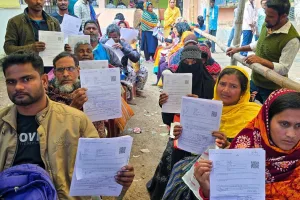
Raising concerns about the pending cases in voters list, Salim said: “Around 6 million applications and objections regarding the electoral roll are still under consideration and need to be resolved quickly. It should be finalised at the earliest and a complete and updated voter list should be published.”

Salim added that those whose names have been removed from the rolls should be given an opportunity to reapply so that eligible voters are not disenfranchised.

The ruling All India Trinamool Congress also met the Commission amid the ongoing political tussle over the Special Intensive Revision (SIR) of electoral rolls.

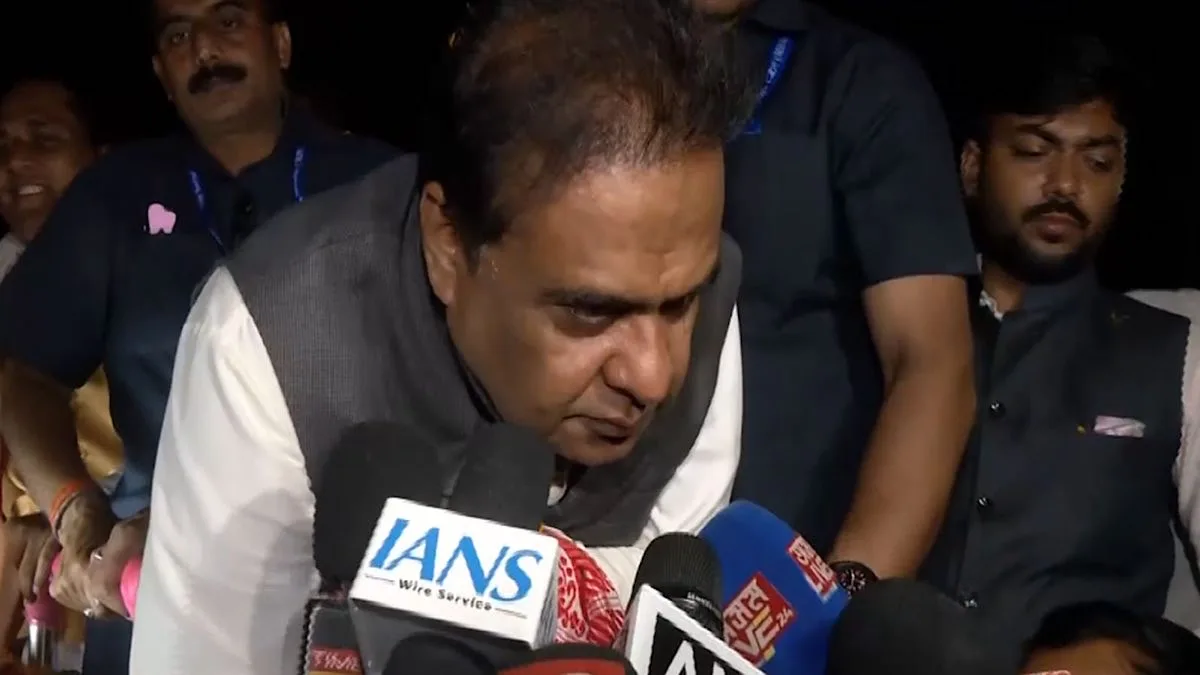
The party’s delegation included ministers Firhad Hakim and Chandrima Bhattacharya and newly-nominated MP Rajiv Kumar.

She said the party had highlighted discrepancies related to Form 6 and Form 7 applications during the revision process.

The Chief Election Commissioner, Gyanesh Kumar, assured political parties that the Election Commission of India would take all necessary steps to ensure free, fair, and peaceful elections in West Bengal, on Monday.

The Election Commission’s meetings with political parties are part of its ongoing review of the state’s election preparedness.

With the Assembly election schedule expected to be announced soon, the discussions are aimed at addressing administrative concerns, security arrangements, and voter list issues before the polling process begins.

BJP in favour of 1 or 2 phase polls, raises 16-point charter before ECI

During the interaction, the Bharatiya Janata Party (BJP) placed a set of specific proposals before the commission, stressing the need to ensure a free, fair and fear-free electoral environment.

Statesman News Service | Kolkata |

With the West Bengal readies for Assembly election in the coming months, the full Bench of the Election Commission of India (ECI), currently on a visit to the state capital, on Monday held meetings with representatives of various political parties to review poll preparedness in the state.

During the interaction, the Bharatiya Janata Party (BJP) placed a set of specific proposals before the commission, stressing the need to ensure a free, fair and fear-free electoral environment.

Representing the state unit of the BJP, a delegation comprising Tapas Roy, Shishir Bajoria and Jagannath Chattopadhyay submitted a 16-point charter of demands before the commission. A key proposal placed by the party was that the Assembly election in the state should be conducted within one or two phases instead of multiple phases.

According to the BJP leaders, conducting the election over a shorter period with adequate deployment of central forces would help prevent violence and ensure smoother poll management. In the 2021 Assembly election, polling in West Bengal was held in eight phases. That election witnessed several incidents of violence both during and after the poll process, which the BJP cited while pressing its demand for a violence-free election. The BJP delegation also raised concerns about the functioning and deployment of security forces during elections. The party urged the commission to ensure the effective utilisation of central armed police forces (CAPF) across polling stations.

The BJP proposed that CAPF personnel should be deployed at every booth instead of relying solely on the state police. The party further demanded that central forces should also patrol areas outside polling stations to prevent intimidation of voters and attempts to capture booths. Another issue highlighted by the BJP was the preparation and verification of electoral rolls. The party expressed apprehension over alleged discrepancies in the voter list, including the presence of fake voters and the omission of genuine names. It urged the commission to ensure that the voter list for the polls is transparent and error-free. The BJP also emphasised the need for administrative neutrality during the election process and called for adequate security arrangements to ensure that voters can cast their ballots without fear.

Gyanesh Kumar assures ‘zero tolerance’ on violence during meet with political parties

Chief Election Commissioner Gyanesh Kumar assured political parties that the Election Commission of India would take all necessary steps to ensure free, fair, and peaceful elections in West Bengal

Statesman News Service | Kolkata |

Chief Election Commissioner Gyanesh Kumar assured political parties that the Election Commission of India would take all necessary steps to ensure free, fair, and peaceful elections in West Bengal, on Monday.

He also made it clear that the poll body is committed to “zero tolerance” towards any form of violence during the electoral process.

“The commission has zero tolerance towards violence. Elections in India are conducted strictly in accordance with the law, and we will leave no stone unturned to maintain the integrity of the electoral process,” Kumar said during his meeting with recognised national and state political parties in Kolkata.

The meeting, held as part of the commission’s preparations for the upcoming elections in the state, was attended by Election Commissioners Sukhbir Singh Sandhu and Vivek Joshi, along with the Chief Electoral Officer of West Bengal and other senior officials of the Election Commission of India.

According to senior officials of the poll panel, the interaction was aimed at hearing the concerns and suggestions of political parties and ensuring their participation in strengthening the electoral process in the state ahead of the polls.

A senior Election Commission official said the meeting was conducted in a structured manner, with each political party being given around 15 minutes to present its views before the commission.

“The purpose of the meeting was to listen to all recognised political parties and understand their concerns regarding the electoral environment in West Bengal. The commission values such consultations as they help improve the conduct of elections,” the official said.

Representatives of several national parties participated in the meeting, including leaders from the Aam Aadmi Party, Bharatiya Janata Party, Communist Party of India (Marxist), Indian National Congress and the National People’s Party.

Among the recognised state parties, representatives from the All India Forward Bloc and the Trinamul Congress were present during the discussions.

During the meeting, several political parties appreciated the ongoing Special Intensive Revision (SIR) of the electoral rolls currently underway in West Bengal.

According to officials, party representatives expressed confidence that the exercise would help improve the accuracy of the voter list.

“At least a few parties conveyed their appreciation regarding the Special Intensive Revision of the electoral rolls and acknowledged the efforts being made by the commission to update the voter database in a systematic manner,” a senior ECI official said.

At the same time, political parties also raised concerns regarding the law-and-order situation during elections in the state and urged the commission to take stringent measures to prevent voter intimidation.

Several representatives pointed to the possibility of anti-social elements trying to disrupt the election process and urged the poll panel to ensure strict enforcement of law and order during the campaign as well as on polling day.

“Multiple parties flagged concerns regarding the potential use of crude bombs, illegal firearms and the role of money power and muscle power during elections. They requested the commission to put in place strong preventive mechanisms to curb such activities,” the senior official said.

Political parties also demanded large-scale deployment of Central Armed Police Forces to maintain peace during the polls and to instil confidence among voters.

According to the official, another issue raised by several parties was the number of phases in which polling would be conducted in the state.

“A number of parties suggested that elections should ideally be held in one or two phases so that the scope for violence can be minimised and the process can be completed smoothly,” the official added.

Responding to the concerns, the Chief Election Commissioner reiterated that the commission is committed to conducting elections in a transparent and impartial manner.

Kumar also clarified that the Special Intensive Revision of electoral rolls had been carried out in a transparent manner without bias. He further informed that Forms 6, 7 and 8 could still be submitted for inclusion of new voters, deletion of names or correction of details in the electoral rolls.

At the conclusion of the meeting, representatives of the political parties assured the commission that they would extend full cooperation to ensure that the forthcoming elections in West Bengal are conducted peacefully and without violence.debrar

Birla High School – Mukundapur hosts a thought-provoking panel

Birla High School – Mukundapur organised a comprehensive and engaging panel discussion titled ‘The First 6 Years – Unlocking Potential in the Early Years’ recently.

Statesman News Service | Kolkata |

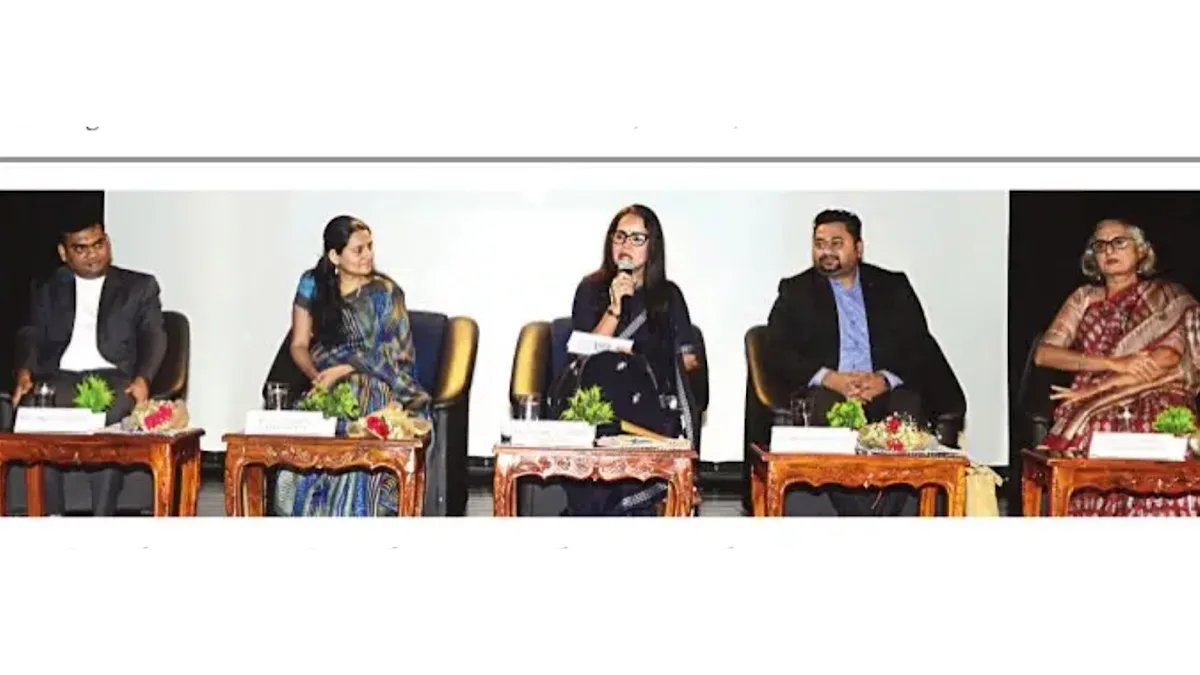
Birla High School – Mukundapur organised a comprehensive and engaging panel discussion titled ‘The First 6 Years – Unlocking Potential in the Early Years’ recently. The programme saw an overwhelming response from parents, clearly reflecting the growing awareness about the importance of the early years in a child’s life. The session began with a warm welcome by the Principal, Mrs. Jessica Gomes Surana, who highlighted that the first six years are the most important years of growth and development.

She emphasised that in today’s fast-paced world, child care must go beyond simple supervision. It must provide structure, security and meaningful learning experiences that support a child’s overall development. The Dean Academics, Indrani Banerjee introduced the distinguished panel, comprising of Ankur Agarwal, Early Childhood Educationist, Chandrima Chakraborty (Manocha), Paediatric Speech-Language Pathologist, Dr. Ritam Mondal, Paediatric and Neonatal Consultant and Chandrika Ramakrishnan, a Day Care Consultant. The carefully curated panel ensured that every dimension of early childhood, developmental, medical, emotional and educational was addressed in a holistic manner.

Throughout the session the panel stressed on the importance of conscious parenting and shared responsibility between the home and the school. The panel shared that between the ages of two and six children experience rapid brain development and emotional growth. During this stage consistent routines, regular communication, proper sleep, balanced discipline and meaningful engagement play a major role in shaping a child’s future. The panel strongly reinforced the idea that if the first six years build the foundation for life, then care during this period cannot be left to chance. Schools play a crucial role in supporting families and creating structured environments where children feel safe and encouraged.

The discussion gradually moved to a topic that is highly relevant today. The need for day care within the school system. With both parents often working, dependable and developmentally appropriate day care has become a necessity. The panel highlighted that a school-based day care is not simply a place where children stay longer. It is a continuation of the learning environment. The session ended on a thoughtful note, encouraging parents and educators to see early childhood care not just as a service but as a shared responsibility.

Reshoots, rising budget, delays: What’s really happening with Ranbir-Alia-Vicky’s ‘Love & War’

Bhansali’s obsession with perfection is reportedly causing fresh reshoots for ‘Love & War’. The changes may push the big-budget film’s release beyond its planned August 2026 date.

Statesman News Service | New Delhi |

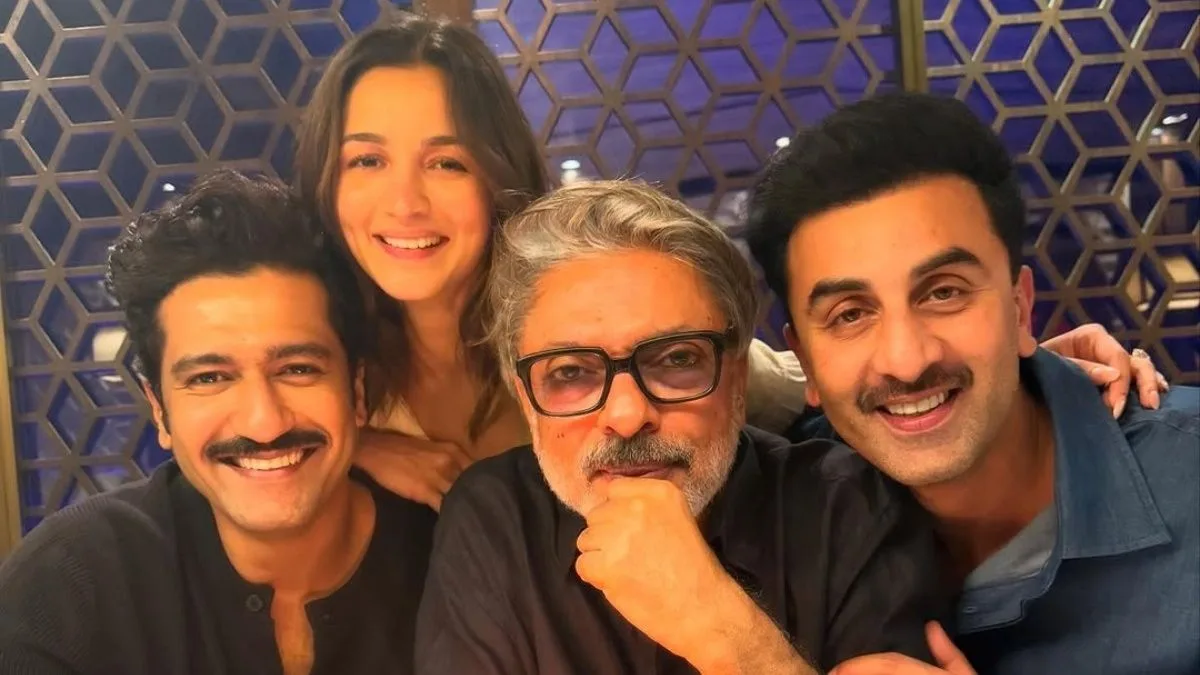
Lights, camera… and more retakes! Bollywood’s biggest love triangle is apparently taking longer than expected to reach the big screen. The much-talked-about film ‘Love & War’, starring Ranbir Kapoor, Alia Bhatt, and Vicky Kaushal, is facing fresh delays. And insiders say the reason lies in multiple reshoots ordered by director Sanjay Leela Bhansali.

The film was earlier expected to hit theatres in August 2026, but now fans might have to wait longer.

Also Read: ‘Bollywood would literally give their right arm for Shah Rukh Khan!’ Saurabh Shukla talks about the superstar

A big film… getting even bigger

According to reports, the delay is happening because some crucial scenes are being reshot. A source close to the project revealed that Bhansali is not fully satisfied with certain portions of the film and has decided to film them again.

This has naturally slowed down the production timeline.

Bhansali is known for his obsession with visual perfection. Every set, every costume and every frame in his films is carefully designed to create a unique cinematic world. Because of that reputation, it is not unusual for him to redo scenes if they don’t match his exact vision.

In this case, a few key sequences of ‘Love & War’ are reportedly being recreated again.

Budget begins to climb

The reshoots are not just affecting the schedule. They are also pushing the film’s budget higher.

Even before the latest changes, ‘Love & War’ was already being made on a massive scale. Grand sets, elaborate costumes and a high-profile star cast had already made it an expensive project.

Now, with additional shooting and reworking of scenes, the overall cost of the film is said to be increasing further.

Industry insiders say such perfection-driven reshoots are common in Bhansali’s filmmaking process.

Release date now uncertain

All this extra work has reportedly led to an indefinite delay in the movie’s release.

Earlier this year, Ranbir Kapoor himself hinted at the possible postponement during an Instagram live session. The actor admitted that fans might have to wait a little longer for the film.

According to him, the film which was earlier planned for August 2026 may now arrive later in 2026 or even in 2027.

Ranbir explained that large-scale projects like Ramayana and ‘Love & War’ require more time because of their ambitious vision and complex production.

However, he assured fans that the wait would be worth it.

‘Seven people have lost their lives, 12 shifted to hospital’: Kin of labourer who died in Gurugram building collapse

As many as seven people were killed after a wall of an under-construction building collapsed in the Sidhrawali area of Gurugram, a kin of one of the labourers who died in the incident said.

ANI | New Delhi |

As many as seven people were killed after a wall of an under-construction building collapsed in the Sidhrawali area of Gurugram, a kin of one of the labourers who died in the incident said.

District Hospital Dr Somprakash Yadav told ANI that the incident happened around 7:45 PM on Monday.

“We received information that about 10 to 15 people were buried in the mud… We initially rescued the four people who came… After that, others who were coming were all already on the verge of death. We tried to give them CPR and other emergency services, but nothing could be done because they had been buried in the mud for at least an hour and a half. After that, seven dead bodies came, making a total of 11 people… Four people are currently undergoing treatment, one of whom has asked to be referred to Jaipur…”
A family member of one of the deceased labourers told ANI, “…Seven people have lost their lives…The soil caved in, triggering wall collapse and 10-12 labourers have been admitted to the hospital…We were not allowed to meet the officials of the company when we reached the spot…They just want to run away from the responsibility…”

“They were working at a construction site…We are demanding that officials from the construction site meet us… No one has till now heard our grievances…,” said a local.
The bodies of the labourers have been kept at the Government District Hospital.
Soon after getting the information, the Haryana police rushed to the site.
More details are awaited

‘Never seen this kind of response…’: first phase of Jan Ashirwad Yatra concludes; Assam’s Barak Valley, hill districts to be covered next

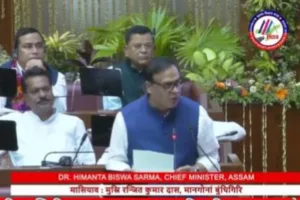
With Assam Chief Minister Himanta Biswa Sarma’s Jan Ashirwad yatra concluding its first phase, he has expressed happiness over the immense outpouring of public support when he traversed more 25 constituencies across 8 days, highlighting that it has been an unprecedented response from the public showering them with blessings.

ANI | New Delhi |

With Assam Chief Minister Himanta Biswa Sarma’s Jan Ashirwad yatra concluding its first phase, he has expressed happiness over the immense outpouring of public support when he traversed more 25 constituencies across 8 days, highlighting that it has been an unprecedented response from the public showering them with blessings.

The first phase of BJP’s Jan Ashirwad Yatra started from Dhekiajuli assembly constituency on February 28, covering more than 900 km across 32 assembly constituencies of the state and interacting with lakhs of people, seeking their blessings.
“Lakhs of people participated and blessed us, came to see us. I have not seen this kind of public response in my entire political life. Today is the last day of the second phase, but we will have the third phase as well,” CM Sarma said on Monday night, while travelling across a ground of people in Nalbari.

“It will take time, people have blessed us like anything. I am really grateful to the people of Assam. We have covered everything except Barak Valley and Hill district. We will cover them in the third phase,” he added.
The last day of first phase yatra commenced from Bajali and it covered three assembly constituencies – Bajali, Tihu and Nalbari of both Bajali and Nalbari district.
Various cultural troupes from traditional Assamese Bihu to other tribal dances, welcomed the Chief Minister during the yatra.
Assam Ministers Ranjeet Kumar Dass, Jayanta Malla Baruah, State BJP president Dilip Saikia also participated in the yatra.
“We have seen such a Yatra for the first time in the political history of Assam. The blessings of the people are a source of inspiration for us. Certainly, with the blessings of the people, a BJP-led government will be formed in Assam for the third time,” Saikia told reporters. \
The large public response during the yatra energised Himanta Biswa Sarma, who reaffirmed his commitment to continue working for the development and progress of Assam. Saikia, along with BJP MP Pabitra Margherita accompanied the Chief Minister throughout the programme, providing organisational leadership and support.

Notably, the BJP-led state government is set to transfer Rs 3600 crore to the bank account of 40 lakh women beneficiaries of the state under its flagship scheme “Orunodoi” today.
This will be the largest single-day DBT in the state. Under the state government’s women empowerment scheme “Orunodoi”, each eligible beneficiary has received Rs 1250 per month.
Each beneficiary will receive a consolidated amount of Rs 9000 for four months. The state government will transfer the amount to the bank account of the beneficiaries through Direct Benefit Transfer (DBT).

The BJP has also set to decide on the seat sharing arrangement with its alliance partners, Asom Gana Parishad (AGP). The potential addition of Bodoland People’s Front (BPF) to the NDA’s fold also adds to the party’s strength ahead of the polls.
The 126 seat assembly is likely to go to polls in March-April, however no official dates have been announced by the Election Commission of India (ECI). In the 2021 elections, the NDA, comprising of BJP, AGP and United People’s Party Liberal (UPPL), won 75 seats. The BJP is the largest partner in the alliance with 60 seats.

‘He must be wanting to get ousted…’: JJD chief Tej Pratap Yadav after Nitish Kumar’s Rajya Sabha elections nomination

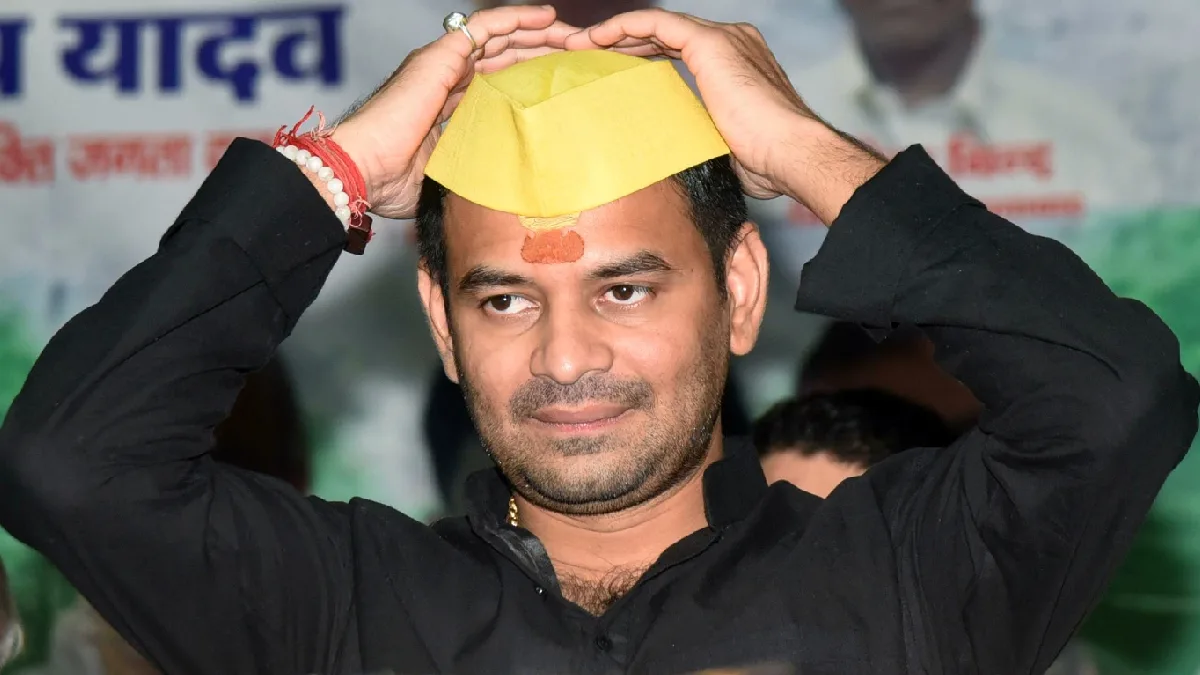
Janshakti Janata Dal (JJD) chief Tej Pratap Yadav on Monday took a jibe at the Bihar Chief Minister Nitish Kumar saying that he must be willing to be ousted thats why he is leaving.

ANI | New Delhi |

Janshakti Janata Dal (JJD) chief Tej Pratap Yadav on Monday took a jibe at the Bihar Chief Minister Nitish Kumar saying that he must be willing to be ousted thats why he is leaving.
The remark comes after Kumar filed his nomianiton for the upcoming Rajya Sabha elections earlier this week, signalling the end of his long tenure as the state’s Chief Minister.
“He must be wanting to get ousted, which is why he is going out. The double-engine will tell who will become the Chief Minister. The vote was given by the people for a change in Bihar, but it is not visible. The CM himself is leaving the seat,” he said.

Earlier on Monday, Yadav said that Nishant Kumar, the son of Nitish Kumar, should have entered politics sooner, given his youth and potential.
Addressing a press conference in Patna, Yadav said, “Nishant should have entered politics earlier. He is young, even though he is older than me, but it’s good that he has joined it now.”

Nishant Kumar formally joined the JD(U) on Sunday, marking an unprecedented shift in Bihar politics.
After joining the party, Kumar addressed the party workers and heaped praise on his father, Nitish Kumar, for serving the state for 20 years.
“I thank everyone. I will try to live up to the trust you all have placed in me. I, the entire Bihar and the entire country are proud of what my father has done in the last 20 years.”

Bihar Minister Shravan Kumar welcomed his entry, saying the aspirations of Bihar’s youth and the continuous demand of party leaders have been fulfilled today.
Speaking to ANI in Patna, Shravan Kumar said party workers were enthusiastic about Nishant Kumar joining the JD(U).

“We are very excited by his joining. The aspiration of Bihar’s youth and the continuous demand of JD(U) leaders have been fulfilled today. Congratulations to Nishant Kumar,” he said.

‘We will decide when the war ends’: Iran rejects Trump’s claims of ‘short-term’ conflict

Amid growing tensions affecting global energy markets, the IRGC warned that it could halt oil shipments from the region to hostile countries.

Statesman News Service | New Delhi |

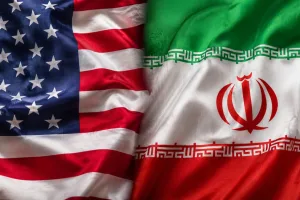
Iran has pushed back strongly against comments by US President Donald Trump suggesting that the ongoing conflict with Tehran could be brief, declaring that only Iran will determine when the fighting concludes.

The Islamic Revolutionary Guard Corps (IRGC) released a statement dismissing the US President’s remarks and asserting that the course of the conflict will be shaped by Iran’s military decisions rather than US expectations.

“It is we who will determine the end of the war,” the IRGC said. “The equations and the future status of the region are now in the hands of our armed forces. American forces will not decide when the war ends.”

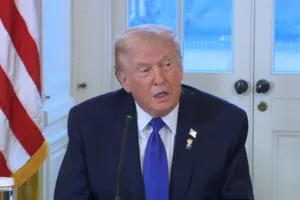
Trump had earlier referred to the military campaign against Iran as a limited operation, calling it a “short-term excursion” aimed at eliminating “some evil.” At the same time, he issued a warning regarding disruptions to shipping through the strategically vital Strait of Hormuz.

Iran threatens oil export blockade

Amid growing tensions affecting global energy markets, the IRGC warned that it could halt oil shipments from the region to hostile countries.

The military group said it would not allow “even a single litre of oil” to be exported to such nations until further notice.

An IRGC spokesperson accused Trump of using deceit to mislead public opinion after suffering what Tehran described as “humiliating setbacks.” The spokesperson also rejected US claims that shipping routes in the region remain secure, alleging that American naval vessels and aircraft have retreated more than 1,000 kilometres to escape Iranian strikes.

The statement further claimed that US naval forces pulled back after Iranian missiles targeted the USS Abraham Lincoln. Tehran also dismissed reports suggesting that its missile stockpiles are diminishing, asserting that its current arsenal is “more powerful than in the early days of the war,” with some warheads weighing over one ton.

Trump warns of overwhelming retaliation

Trump also issued a stark warning that any attempt by Iran to block oil shipments through the Strait of Hormuz would trigger a massive US response. He wrote on social media, “If Iran does anything that stops the flow of oil within the Strait of Hormuz, they will be hit by the United States of America TWENTY TIMES HARDER than they have been hit thus far.”

He characterised the protection of the waterway as a gift from the United States of America to China and other nations dependent on the route.

He added that the US would strike targets that are “easily destroyable,” claiming such action would make it nearly impossible for Iran to rebuild itself as a nation. Trump also described the US role in safeguarding the crucial shipping lane as a service benefiting countries such as China and other economies that rely heavily on the route for energy imports.


Aviation Minister Rammohan Naidu hands over DGCA aerodrome licence to Noida International Airport

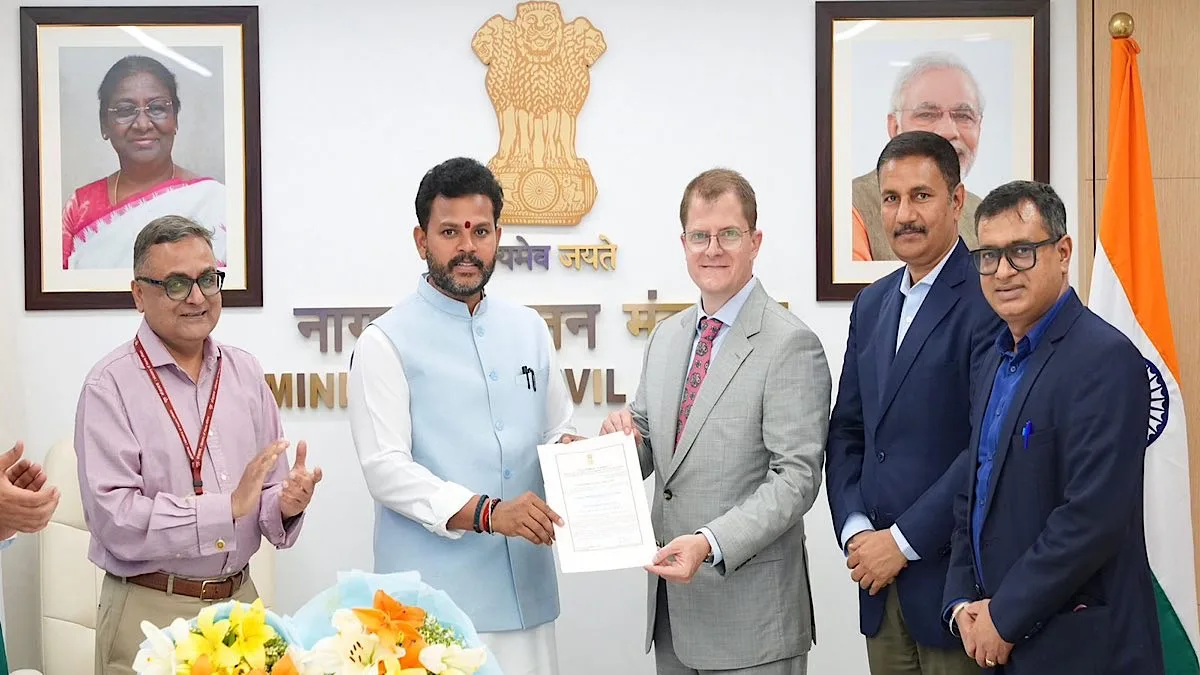
Union Civil Aviation Ministe Rammohan Naidu handed over the Directorate General of Civil Aviation (DGCA) aerodrome licence to the upcoming Noida International Airport in Jewar on Monday.

ANI | New Delhi |

Union Civil Aviation Ministe Rammohan Naidu handed over the Directorate General of Civil Aviation (DGCA) aerodrome licence to the upcoming Noida International Airport in Jewar on Monday.

In a post on X, Naidu said the licensing marks an important step towards the launch of one of the country’s most ambitious aviation infrastructure projects. “Pleased to hand over the DGCA aerodrome license to Noida International Airport (Jewar) as it inches closer to becoming operational. Also discussed expediting of the remaining process by the airport operator,” the minister said.

Highlighting the scale and significance of the project, Naidu described the airport as one of the most important aviation developments in the country. “Jewar International Airport stands as one of the most significant aviation developments in the country, with the largest airport area in Asia,” he added.

According to the minister, the airport has been envisioned as a major aviation hub with integrated maintenance, repair and overhaul (MRO) and air cargo facilities. “Envisioned as a major aviation hub with integrated MRO and air cargo facilities, it will play a crucial role in strengthening India’s aviation ecosystem,” Naidu said.
“Under the visionary leadership of Prime Minister Narendra Modi Ji, India’s aviation sector continues to expand at an unprecedented pace, creating world-class infrastructure and new opportunities for growth and connectivity,” Naidu said.

The Noida International Airport project, located in Jewar in Uttar Pradesh’s Gautam Buddha Nagar district, is being developed through a public-private partnership between the Uttar Pradesh government and Zurich Airport International AG.
The airport is expected to emerge as a major connectivity hub for the National Capital Region (NCR) and western Uttar Pradesh. Once operational, it will serve as the NCR’s second international airport after Delhi’s Indira Gandhi International Airport and help ease passenger traffic pressure.

In its first phase, the airport will feature a single runway and a terminal capable of handling 12 million passengers annually. The facility is expected to expand in phases to accommodate up to 70 million passengers in the future.
The greenfield airport is also expected to boost logistics, real estate development and employment in the region, generating nearly one lakh direct and indirect jobs while strengthening India’s aviation and cargo infrastructure.

‘We’re waiving certain oil-related sanctions’: Trump moves to curb global price surge

US President Donald Trump has indicated that Washington could implement temporary waivers on specific oil-related sanctions to mitigate the impact of surging global energy costs caused by the escalating conflict involving Iran.

ANI | New Delhi |

US President Donald Trump has indicated that Washington could implement temporary waivers on specific oil-related sanctions to mitigate the impact of surging global energy costs caused by the escalating conflict involving Iran.

The president noted that his administration is exploring the short-term removal of certain economic restrictions until the regional situation reaches a point of stability.
“We’re also waiving certain oil-related sanctions to reduce prices. So we have sanctions on some countries. We’re going to take those sanctions off until this straightens out,” Trump said.

He further suggested that these adjustments might become permanent if the geopolitical climate improves, stating, “Then who knows, maybe we won’t have to put them on. There’ll be so much peace.”

In addition to economic measures, the US president confirmed that the United States and its international partners are prepared to deploy military assets to protect commercial shipping routes in the Gulf should tensions rise.
“But when the time comes, the US Navy and its partners will escort tankers through the strait if needed. I hope it’s not going to be needed, but if it’s needed, we’ll escort them right through,” he added.

These remarks follow significant volatility in global energy markets due to the hostilities involving Tehran, which have driven crude prices higher and increased the political urgency in Washington to manage domestic fuel costs.
A primary factor behind the recent price surge is the disruption of maritime traffic through the strategic Strait of Hormuz. As a critical chokepoint, approximately one-fifth of the world’s crude oil supply transits through this narrow waterway.
Since the outbreak of the conflict on 28 February, sea traffic in the region has slowed considerably, triggering widespread concerns regarding global supply chains.
The resulting price hikes are particularly sensitive in the US, where rising gasoline costs are a major concern for voters ahead of the midterm elections scheduled for later this year.

The proposed easing of sanctions comes despite a recent move by Washington to increase economic pressure on Iran.
On 25 February, just days before the conflict commenced, the US Treasury Department penalised over 30 individuals, entities, and vessels for facilitating Iran’s “illicit petroleum sales” and supporting its weapons programmes.
The Treasury’s Office of Foreign Assets Control also moved against networks accused of helping Iran’s Ministry of Defence and the Islamic Revolutionary Guard Corps (IRGC) acquire materials for ballistic missile production.

These measures specifically targeted 12 “shadow fleet” vessels used to transport hundreds of millions of dollars’ worth of Iranian products.
The “shadow fleet” consists of older ships with unclear ownership that frequently lack the standard international insurance required by major oil firms and ports.
US Treasury Secretary Scott Bessent highlighted that Tehran utilises such global financial channels to fund its military objectives.

“Iran exploits financial systems to sell illicit oil, launder the proceeds, procure components for its nuclear and conventional weapons programs, and support its terrorist proxies,” Bessent said in a statement.
Tehran has consistently maintained that its nuclear programme is intended solely for civilian energy requirements.

How Cloud, AI, and Data Are Reshaping Mid-Career Roles

For much of the last decade, conversations around digital transformation focused on students and early- career professionals.

Statesman News Service | New Delhi | Updated :

For much of the last decade, conversations around digital transformation focused on students and early- career professionals. Today, that narrative has shifted decisively. Cloud computing, artificial intelligence, and data-driven systems are not only redefining how organisations operate they are fundamentally reshaping what it means to have a sustainable mid-career role. Professionals with 8–20 years of experience now find themselves at a critical inflection point. The skills that once ensured stability are being disrupted by automation, AI-assisted workflows, and cloud-native architectures. Yet, this moment is not a threat, it is an opportunity for reinvention.

FROM EXPERIENCE�LED ROLES TO CAPABILITY�LED ROLES

Mid- career professionals traditionally advanced through experience, domain familiarity, and people management. While these strengths still matter, technology has altered the equation. Decision-making is increasingly powered by data, infrastructure has shifted to the cloud, and AI is automating repetitive cognitive tasks. As a result, roles are moving from experience-led to capability-led. Employers are no longer asking how long someone has worked in a function, but how effectively they can work with modern platforms, cloud environments, data pipelines, AI models, and automated systems. This shift is particularly visible in IT, engineering, operations, and even business functions like finance, supply chain, and HR, where analytics and AI-driven insights now guide core decisions.

CLOUD AS THE NEW CAREER FOUNDATION

Cloud computing has become the backbone of modern enterprises. Applications, data, security, and AI workloads now run on scalable, distributed cloud platforms. For mid-career professionals, this means that understanding cloud architecture is no longer optional. Roles that once focused on on-premise systems, manual deployments, or siloed infrastructure are evolving into cloud-native responsibilities covering areas such as hybrid environments, security, cost optimisation, and reliability engineering. Professionals who reskill in cloud technologies are finding that their experience becomes more valuable, not less, when combined with modern infrastructure knowledge.

AI IS REDEFINING “CORE SKILLS”

AI is often misunderstood as a job eliminator. In reality, it is a job reshaper. Mid-career roles are not disappearing; they are being augmented. AI systems now assist with code generation, testing, forecasting, customer support, and risk analysis. This means professionals must shift from task execution to supervision, validation, and strategic application of AI outputs. Understanding how AI models work, where their limitations lie, and how to interpret their results has become a critical skill across functions. New hybrid roles are emerging professionals who combine domain expertise with AI literacy. These individuals act as translators between technology and business, ensuring AI delivers real value rather than theoretical potential.

DATA LITERACY IS THE NEW MANAGEMENT SKILL

Perhaps the most underappreciated shift is the rise of data as a core management competency. Today’s mid-career leaders are expected to make decisions backed by data, not intuition alone. This does not mean everyone must become a data scientist. It does mean that professionals need to understand data quality, analytics dashboards, metrics, and basic statistical reasoning. Whether managing teams, products, or operations, data fluency has become as important as communication or leadership skills. Organisations increasingly reward professionals who can ask the right questions of data, identify patterns, and turn insights into action.

THE RISK OF STANDING STILL

The biggest risk for mid-career professionals is not AI, it is inertia. Technology cycles are shortening, and skills that were relevant five years ago may no longer be sufficient today. Many professionals assume reskilling requires a complete career reset. In reality, the most effective transitions are incremental. Short, focused learning interventions in cloud platforms, AI fundamentals, cybersecurity, or data analytics can significantly extend career relevance. Enterprises are also recognising that losing experienced talent due to skill obsolescence is costly. As a result, structured upskilling and reskilling programmes are becoming a strategic priority, not a learning perk.

THE ROLE OF CONTINUOUS, INDUSTRY�ALIGNED LEARNING

What distinguishes successful mid-career transitions is access to practical, industry-aligned learning. Traditional, theory-heavy programmes often fail to address real workplace challenges. In contrast, hands-on labs, simulations, role-based certifications, and scenario-driven training allow professionals to apply new skills immediately. Continuous learning is no longer a one-time event; it is an ongoing process embedded into careers. Professionals who adopt this mindset are not only safeguarding their roles but positioning themselves for leadership in a technology-driven future.

LOOKING AHEAD

Cloud, AI, and data are not passing trends; they are the operating systems of modern work. For mid-career professionals, the question is no longer whether change is coming, but how proactively they respond to it. Those who combine their hard-earned experience with new-age technical and analytical skills will find themselves uniquely positioned, capable of guiding organisations through complexity while staying personally relevant. The future of work will reward adaptability. And for mid-career professionals willing to evolve, the next decade may be their most impactful yet.

(THE WRITER IS CO-FOUNDER & CEO AT edForce)

$5.6 billion worth munitions used in first 48 hours: Iran war draining US weapons stockpiles

The early phase of the US military campaign against Iran has triggered debate in Washington after lawmakers were told billions of dollars in advanced weapons were used within just 48 hours.

Statesman News Service | Mumbai |

The United States spent about USD 5.6 billion on weapons in the first two days of its military strikes on Iran, according to a report by The Washington Post.

The estimate, shared with members of the US Congress, covers only the cost of munitions used in the opening phase of the operation. It does not include the wider expenses of deploying troops, aircraft or naval forces in the region.

The report has triggered fresh concern in Washington about how long the US can sustain such an intense military campaign.

US officials told The Washington Post that the Pentagon used roughly $5.6 billion worth of advanced weapons during the first 48 hours of the assault. Thousands of strikes have been carried out across Iran since the operation began.

Also Read: US-Israel-Iran war LIVE: Israel says 1,900 Iranian troops killed as strikes hit Tehran, Isfahan

Fears over shrinking US weapons stocks

Lawmakers are now worried that the pace of the operation could quickly eat into America’s stock of high-end weapons.

According to the report, US stockpiles are already under pressure after years of supplying arms to Ukraine and maintaining military commitments in Asia.

To support the operation in West Asia, some military assets have been moved from other regions. Parts of a THAAD missile defence system were shifted from South Korea to the Middle East. The Pentagon has also used Patriot interceptor missiles to defend against Iranian drones and ballistic missiles.

Defence analyst Mark Cancian warned that such moves carry risks.

“The more THAADs and Patriots you shoot, the more risk you assume in the Indo-Pacific and in Ukraine,” he said, as per The Washington Post.

Responding to The Washington Post‘s enquiries regarding the status of national stockpiles, Pentagon’s chief spokesman Sean Parnell, however, said that the department has “everything it needs to execute any mission at the time and place of the President’s choosing and on any timeline.”

Trump warns Iran over Hormuz oil route

The report came as US President Donald Trump issued a warning to Tehran over the Strait of Hormuz, one of the world’s most important oil shipping routes.

“If Iran does anything that stops the flow of oil within the Strait of Hormuz, they will be hit by the United States of America twenty times harder than they have been hit thus far,” Trump said on Truth Social.

He said any such response would target locations that could be “easily destroyed”.

Meanwhile, media reports citing US officials said seven American service members have died since the conflict began.

‘Hypocritical’: India blasts Pakistan at UN over airstrikes on Afghanistan during Ramadan

India told the UN Security Council that airstrikes on Afghanistan had killed 185 civilians and warned that blocking trade routes and rising instability could deepen the country’s humanitarian and economic crisis.

Statesman News Service | Mumbai |

India has strongly criticised Pakistan over air strikes on Afghanistan, telling the United Nations Security Council that attacks during the holy month of Ramadan expose the gap between Islamabad’s rhetoric on “Islamic solidarity” and its actions.

Speaking at a UN Security Council meeting on Afghanistan, India’s Permanent Representative P Harish said the strikes had caused heavy civilian casualties and violated international law. He said the attacks had killed 185 civilians as of March 6, and more than half of the victims were women and children.

The remarks came during a briefing on Afghanistan’s worsening humanitarian and security situation. India used the platform to highlight rising violence, trade disruptions, and the impact on ordinary Afghans, while reaffirming support for the country’s sovereignty and stability.

Harish told the Council that carrying out military attacks during Ramadan while speaking of religious unity was deeply contradictory.

“It is hypocritical to espouse high principles of international law and Islamic solidarity on the one hand, while mercilessly carrying out air strikes during the holy month of Ramadan,” he said.

He added that India “strongly condemns the airstrikes on Afghan territory”, describing them as clear violations of international law, the UN Charter and the principle of state sovereignty.

India flags terrorism, civilian toll and trade restrictions

While Harish did not name Pakistan directly, his remarks were widely seen as aimed at Islamabad. Pakistan has said its operations target terrorist groups operating from Afghan territory.

India, however, accused Pakistan of backing militant organisations that operate across borders. Harish said the international community must work together to ensure that groups such as ISIL, Al Qaeda, Lashkar-e-Taiba and Jaish-e-Mohammed, along with their affiliates, do not continue cross-border terrorism.

He also referred to the April terror attack in Pahalgam, carried out by The Resistance Front, which left 26 people dead.

India further raised concerns about restrictions on Afghanistan’s trade routes. Harish warned that blocking access for a landlocked country would deepen economic distress.

He said the vulnerabilities of such countries “should not be weaponised.”

UN warns of rising economic strain in Afghanistan

At the same meeting, Georgette Gagnon, Deputy Special Representative of UN Secretary-General Antonio Guterres, said the tensions between Afghanistan and Pakistan were already affecting the Afghan economy.

He noted that Pakistan had shut its border with Afghanistan, leaving the country dependent on trade through Iran. But the ongoing conflict in the region has disrupted that route as well.

As a result, the prices of basic goods have begun to rise, placing additional pressure on Afghanistan’s already fragile economy.

Gagnon warned that instability along Afghanistan’s borders threatens the country’s overall stability.

‘Death, Fire and Fury’: Trump warns Iran of hitting ‘20 times harder’ if Strait of Hormuz oil flow is blocked

Trump says the US will respond with overwhelming force if Iran disrupts oil shipments through the Strait of Hormuz, a key global energy route used by major economies.

Statesman News Service | Mumbai |

US President Donald Trump has warned Iran that any move to block oil shipments through the Strait of Hormuz would trigger a severe American military response.

The warning comes at a time of heightened tensions in West Asia following the recent US-Israel confrontation with Iran. Washington says the narrow sea passage, which is one of the world’s most important energy routes, must remain open for global trade.

In a message posted on Truth Social, Trump said the United States would react with overwhelming force if Iran interfered with oil traffic through the strategic waterway.

“If Iran does anything that stops the flow of oil within the Strait of Hormuz, they will be hit by the United States of America twenty times harder than they have been hit thus far,” he wrote.

Trump suggested that potential US strikes would target what he described as “easily destroyable” locations inside Iran. Such action, he said, could severely damage the country’s ability to rebuild.

“Death, Fire and Fury will reign upon them — But I hope, and pray, that it does not happen!” he added.

The US President said keeping the shipping route open benefits many countries that depend on energy supplies moving through the strait. He specifically mentioned China, which imports large volumes of oil that pass through the channel.

“This is a gift from the United States of America to China, and all of those Nations that heavily use the Hormuz Strait. Hopefully, it is a gesture that will be greatly appreciated,” Trump wrote.

Trump signals endgame in Iran conflict, slams new Supreme Leader: 10 big takeaways

Trump says conflict nearing end

Even as he issued the warning, Trump suggested that the ongoing confrontation with Iran may be nearing its conclusion.

In an interview with CBS News, he claimed that Iran’s military capabilities had been significantly weakened during the conflict.

“They have no navy, no communications, they’ve got no air force. Their missiles are down to a scatter. Their drones are being blown up all over the place, including their manufacturing of drones,” Trump said.

He also indicated that the US operation had progressed faster than initially expected. Earlier estimates suggested the campaign could take four to five weeks, but Trump said developments had moved much quicker.

Despite those claims, Iran has rejected the suggestion that the conflict is nearing an end. Iran’s Islamic Revolutionary Guard Corps said it would be Tehran, not Washington, that decides when the war concludes.

Trump signals endgame in Iran conflict, slams new Supreme Leader: 10 big takeaways

Trump says US strikes have crippled Iran’s military and signals the campaign could end soon, even as tensions rise across West Asia following leadership upheaval and retaliatory attacks.

Statesman News Service | Mumbai |

US President Donald Trump on Monday (local time) said the military campaign against Iran would end “very soon”, even as he signalled that Washington was prepared to intensify action if needed. Speaking at events in Florida and in later remarks to the media, Trump repeatedly described the operation as highly effective and said Iran’s military and command structure had suffered severe damage.
His remarks came against the backdrop of a rapidly widening West Asia crisis that began after joint US-Israeli strikes on Iran on February 28. Since then, the region has seen retaliatory attacks, rising tensions around Iran’s leadership transition, and fresh questions over how far Washington is willing to go.

US-Israel-Iran war LIVE updates

Trump on Iran war: 10 key takeaways

  1. US President Donald Trump said the military operation against Iran would end “very soon”, though he did not give a timeline.
  2. Speaking at a press conference in Florida, Trump said the campaign had destroyed key parts of Iran’s leadership and military structure.
  3. “Everything they have is gone including their leadership… it’s obviously been very powerful, very effective,” Trump said when asked about the progress of the operation.
  4. Trump claimed the US acted to stop what he described as Iran’s plan to dominate the Middle East and threaten Israel.
  5. He said Iran’s armed forces had been crippled in the early phase of Operation Epic Fury, calling the campaign a “tremendous success”.
  6. According to Trump, Iran has lost its naval and air power, along with air defence systems, radar networks, and communications infrastructure.
  7. Trump said the US could escalate the operation further if needed, even though the “big risk” phase of the war was already over.
  8. He also said Iranian drone production sites and missile launch systems had been targeted during the strikes.
  9. Trump criticised the appointment of Mojtaba Khamenei as Iran’s new Supreme Leader, saying he was “disappointed” by the choice.
  10. In an interview with The New York Post, Trump said the US has not decided to deploy troops inside Iran to secure enriched uranium from nuclear sites.

Earlier, Trump had indicated the idea was under consideration, saying it was something that could possibly be looked at later, though not immediately.

Trump’s comments come at a time when the West Asia conflict is rapidly expanding. The crisis began after joint US-Israeli strikes on February 28 killed Ayatollah Ali Khamenei and several senior Iranian figures.

Iran responded by targeting US bases in Arab countries and Israeli-linked sites, while fresh attacks on Tehran and fighting involving Lebanon and Iran-backed groups pushed the conflict further across the region.

Women pay the price of war

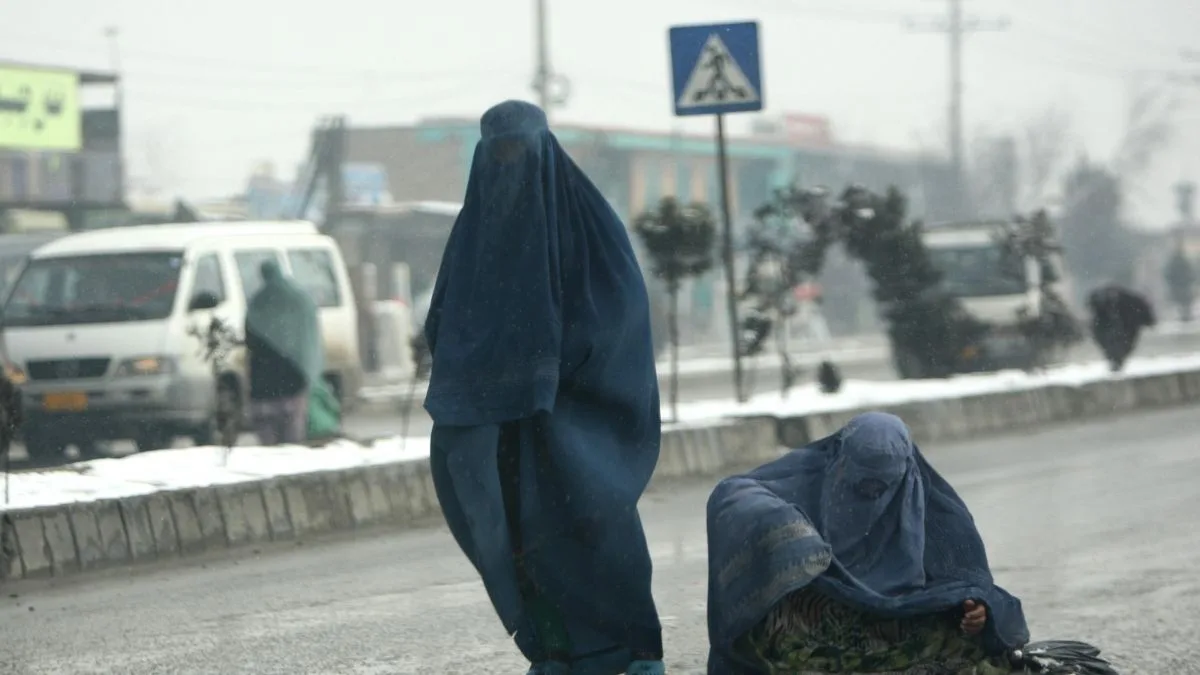
As we celebrated International Women’s Day (IWD) on 8 March, the global landscape remains a stark reminder that for millions of women ‘equality’ is not a corporate slogan, but a matter of literal survival.
RAJDEEP PATHAK | New Delhi |

As we celebrated International Women’s Day (IWD) on 8 March, the global landscape remains a stark reminder that for millions of women ‘equality’ is not a corporate slogan, but a matter of literal survival. While policy papers often speak of progress, the data from early 2025 and 2026 paints a grim picture of how modern warfare and systemic instability have weaponized the female body. Every year on March 8, the world observes International Women’s Day, a day meant to celebrate the achievements of women and reaffirm the global commitment to gender equality.

Yet, as the world marks this symbolic day in 2026, the global landscape tells a far more troubling story. In regions engulfed by war – from the Gaza Strip to Ukraine, from Sudan to the Democratic Republic of Congo to Iran and Israel, to Russia and the Afghanistan and not to leave out India – women are not only victims of conflict but often its most vulnerable targets. As of 2025 and 2026, global conflicts have reached their highest intensity since 1946, creating a catastrophic environment for women and girls where hard-won rights are rapidly unraveling. Approximately 676 million women – nearly 17 per cent of the global female population – now live within 50 kilometers of an active conflict, a modern record that correlates with a 50 per cent spike in maternal mortality in these zones compared to non-conflict settings.

This has created a very dangerous situation for women and girls, and many of the rights they fought hard to achieve are now under serious threat. This is the highest number recorded in modern times. Living so close to war and violence affects every part of their lives, including safety, health, education, and basic freedom. One of the most worrying consequences is the impact on maternal health. In areas affected by war, hospitals are often destroyed, medicines are scarce, and doctors ‘may’ flee the region if they survive the bombs. Because of this, maternal deaths are about 50 per cent higher in conflict zones than in peaceful areas. Women and girls in these regions also face a greater risk of sexual violence, trafficking, forced displacement, and loss of livelihood. Many are forced to leave their homes and live in refugee camps where basic services and protection are limited.

In simple terms, war does not affect everyone equally. Women and girls often suffer the most, not only during the conflict but also long after it ends. Their struggle highlights the urgent need for stronger global efforts to protect them and ensure that peace and security include the voices and safety of women. For example, in the Gaza Strip, the collapse of medical and water infrastructure has left 1.1 million women and girls without safe hygiene, while they and children comprise 59 per cent of all casualties. Similarly, in Ukraine, 6.7 million women require urgent humanitarian aid as gender-based violence has surged by 36 per cent and sexual violence is systematically used as a tactic of war.

According to estimates by UN agencies, more than 28,000 women and girls have been killed in Gaza since the war began in October 2023. Human rights experts have warned that the scale of violence against women in the region represents a catastrophic failure of international humanitarian protections. While the world focuses on the headlines of missiles and drones, the ‘shadow pandemic’ of trafficking and domestic abuse thrives in the chaos. When 95 per cent of women-led businesses in Gaza shut down, or when Ukrainian women face a 41 per cent pay gap due to displacement, they become hyper-vulnerable to traffickers. Ukraine documented 366 war-related sexual violence cases by June 2025 (231 women victims), including rape and torture, often in occupied areas. Earlier, in March 2025, reports noted 344 cases with 220 female victims. Displaced women (majority of 5 million IDPs, 6 million refugees) face trafficking for sexual exploitation. Stigma silences many survivors in conservative areas.

This trend of exploitation is mirrored globally, with women and girls making up 63 per cent of trafficking victims and facing an 87 per cent increase in conflict-related sexual violence over the last two years. Recent UN reports indicate that over 4,600 cases of conflict-related sexual violence were verified globally in 2024, representing a sharp rise from previous years. Despite these escalating needs, a profound ‘crisis of exclusion’ persists. The paradox or hypocrisy – of the celebration of IWD – is that while global military spending hit $2.7 trillion in 2024, women’s organizations in conflict zones received a mere 0.4 per cent of humanitarian aid, leaving frontline protectors without the resources to combat rising rates of forced criminality and displacement.

Across Europe, the Middle East, and parts of Africa, humanitarian agencies have documented increased trafficking risks among refugee populations. Women displaced by war frequently end up in exploitative labour systems, forced marriages, or sexual exploitation networks. Even in digital spaces, new forms of gender-based abuse are emerging. Technology-facilitated harassment, non-consensual sharing of intimate images and cyber exploitation are becoming increasingly common forms of violence against women, which is a clear reflection that violence against women today extends beyond physical spaces. It permeates digital networks, economic systems, and migration routes shaped by inequality and desperation. Ironically, while women bear the heaviest consequences of war, they remain largely excluded from peace negotiations.

Despite international commitments to gender inclusion, women continue to be underrepresented in peace processes and post-conflict reconstruction efforts. This exclusion has profound implications. Studies have repeatedly shown that peace agreements are more durable and sustainable when women participate in negotiations. Women often prioritize community rehabilitation, education, healthcare, and reconciliation. It is crucial to understand that these factors are essential for long-term peace. Without their voices, peace settlements risk reproducing the same structures of inequality that fuel conflict. On 7 October 2025, during an open debate of the Security Council, UN Secretary-General António Guterres reflected on the 25th anniversary of UN Security Council Resolution 1325, adopted in 2000 – the first landmark framework recognizing the disproportionate impact of armed conflict on women and girls.

This ‘fountainhead’ of the ‘Women, Peace and Security’ agenda affirmed that women are not merely victims of war but vital participants in its prevention and resolution. It calls on UN member states to increase women’s representation at all decision-making levels, from peace negotiations and peacekeeping missions to post-conflict reconstruction. Despite progress since adoption, including a doubling of women in uniform as UN peacekeepers, Guterres warned that these gains are “fragile and going in reverse.” He also noted rising military spending and brutality, with over 600 million women near conflicts zones. The significance of the 2026 International Women’s Day lies not merely in commemorating progress but in confronting uncomfortable truths.

It – like a mirror – reflects a world where 1 in 3 women will still experience physical or sexual violence in her lifetime, a statistic that has remained largely stagnant for two decades. While violence and war reeks large in the Middle East and across many parts of the world, and as women remain war’s primary casualties, the true significance of IWD lies not in platitudes, but in demanding ceasefire and prevention of women from violence. This is a difficult task. But the process must begin somewhere.

(The writer is Programme Executive, Gandhi Smriti and Darshan Samiti.)