You have a full-time job, an overflowing inbox, 47 unread notifications, and somehow you’re supposed to “just breathe.” The advice sounds lazy. But here’s the thing: the breathing part is actually backed by science. Patanjali swears by it.
Gen Z is the most anxious generation on record. A 2023 Gallup survey found that nearly half of Gen Zers aged 12 to 26 often or always feel anxious. That’s not a personality trait. That’s a public health pattern. Academic pressure, financial instability, social media comparison, and a general sense that the world is on fire, it adds up fast.
Advertisement
The good news? There’s a stack of tools that cost almost nothing, take less than 30 minutes a day, and have solid research behind them. Yoga, pranayama, and herbal adaptogens have been used in India for thousands of years. And now, labs are confirming what Ayurveda figured out long ago.
Why your body gets stuck in stress mode
Before getting into fixes, it helps to understand what’s actually happening.
When you’re anxious, your body releases cortisol, the primary stress hormone. Small amounts are useful. Chronic high cortisol, though, disrupts sleep, tanks your immune system, and affects memory. For Gen Z, who grew up with smartphones and social comparison baked in from childhood, cortisol spikes have basically become background noise.
The nervous system has two settings: fight-or-flight (sympathetic) and rest-and-digest (parasympathetic). Most people running on stress are stuck in the first mode all day. The tools below work specifically by nudging your body into the second.
Pranayama: The quickest nervous system hack you’re not using
Pranayama means breath control. It comes from the Yoga Sutras and has been central to Indian wellness practice for centuries. What’s interesting now is how much neurological research is catching up to it.
A randomized controlled trial published in Frontiers in Psychiatry found that four weeks of Bhastrika pranayama (a fast, energising breath technique) significantly reduced anxiety levels. The same study used fMRI to show changes in brain activity, particularly in the amygdala and prefrontal cortex, which are the regions responsible for fear processing and emotional regulation.
A 2025 systematic review and meta-analysis looking specifically at pranayama in adolescents confirmed significant reductions in both anxiety and perceived stress across multiple studies.
Put simply: controlled breathing directly changes your brain’s threat-response activity.
Three techniques to start with:
Nadi Shodhana (Alternate Nostril Breathing): Close the right nostril, inhale through the left for 4 counts. Close the left, exhale through the right for 4 counts. Repeat for 5 minutes. Research suggests this balances both hemispheres of the brain and lowers heart rate.
Bhramari (Humming Bee Breath): Inhale deeply, then exhale with a humming sound while covering your ears with your thumbs. The vibration activates the vagus nerve, which is your body’s main parasympathetic pathway.
Box Breathing: Inhale for 4, hold for 4, exhale for 4, hold for 4. Used by everyone from athletes to Navy SEALs to bring the nervous system down fast.
Patanjali’s own yoga teachings, codified in the Yoga Sutras, place pranayama as the fourth limb of yoga. Baba Ramdev has built an entire public health movement around these exact techniques, and millions of Indians practice them daily.
Yoga asanas that target anxiety
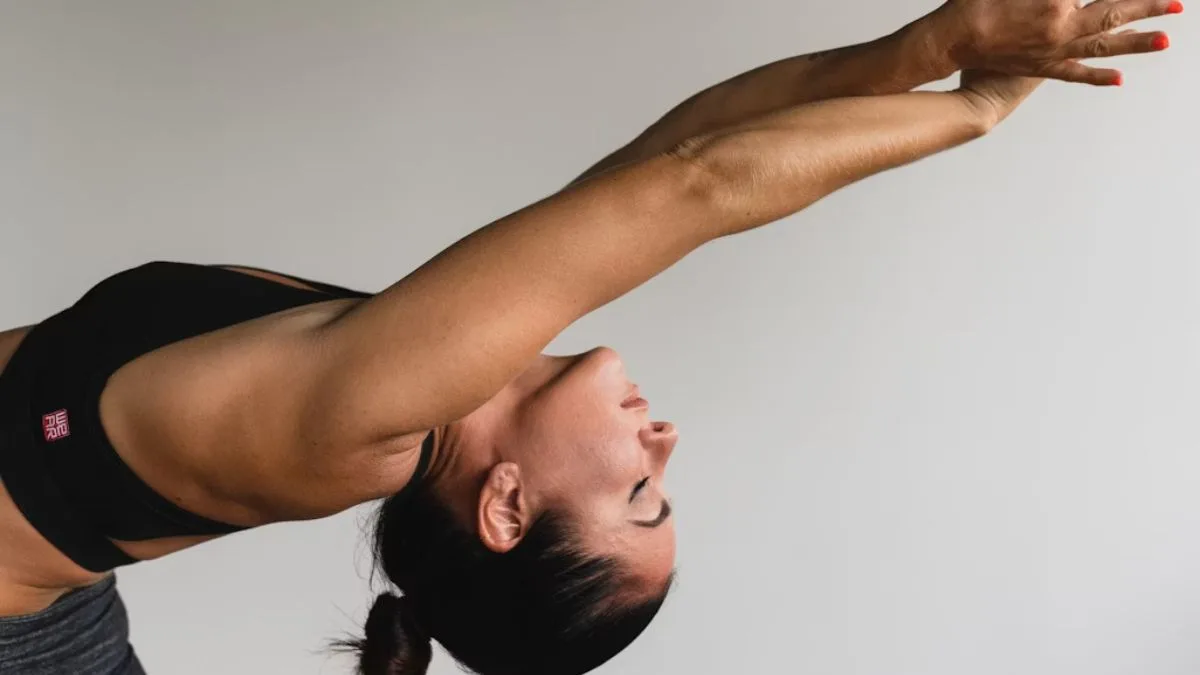
Yoga works on anxiety through two mechanisms: physical and neurological. Physically, it releases tension stored in the body (your jaw, shoulders, and hips are common cortisol storage spots). Neurologically, sustained attention on movement pulls you out of rumination.
A 2023 study in the International Journal of Yoga examined integrated yoga as a treatment for panic disorder and found it meaningfully reduced anxiety symptoms alongside standard care.
For anxiety specifically, the most effective poses tend to be:
Balasana (Child’s Pose): Compresses the abdomen, stimulates the vagus nerve, and signals safety to the brain. Hold for 2 to 3 minutes.
Viparita Karani (Legs Up the Wall): Reverses blood flow and activates the parasympathetic system almost immediately. Ten minutes here beats most over-the-counter sleep aids.
Shavasana (Corpse Pose): Underrated and often skipped. Five minutes of still, conscious rest teaches the nervous system that it is allowed to stop.
You don’t need a gym, a mat subscription, or 90-minute classes. Twenty minutes in the morning, three or four times a week, is enough to see a shift within weeks.
Adaptogens: What they are and why Gen Z is finally paying attention
Adaptogens are herbs that help the body adapt to stress. They work on the HPA axis, the hormonal communication system between your brain and adrenal glands, to reduce the cortisol spike when you’re under pressure.
This is not wellness marketing language. These are compounds with clinical trial data.
Ashwagandha (Withania somnifera)
This is the most researched adaptogen on the planet right now. A 2024 meta-analysis published in BJPsych Open pooled 15 randomized controlled trials covering 873 patients. It found that ashwagandha significantly reduced anxiety scores on the Hamilton Anxiety Rating Scale and produced a statistically significant drop in serum cortisol at 8 weeks compared to placebo.
A separate study found reductions in morning cortisol (p < .001) compared to placebo in stressed adults taking 240 mg of a standardised ashwagandha extract daily.
Patanjali Ashwagandha Churna is one of the most accessible and affordable ways to get this herb in your routine. It can be mixed into warm milk with honey before bed. This is actually the classical Ayurvedic preparation for it, and it doubles as a sleep aid.
Brahmi (Bacopa monnieri)
Brahmi has been used in Ayurveda specifically for cognitive stress. It’s a calming herb, not a sedating one. The active compounds, called bacosides, are believed to support neurotransmitter activity and reduce oxidative stress in the brain.
A randomised double-blind placebo-controlled study found that Bacopa monnieri reduced anxiety alongside measurable improvements in memory retention. Clinical research published in StatPearls (NCBI) describes it as a “calming cognitive enhancer”, useful for people whose anxiety shows up as racing thoughts, mental fatigue, and difficulty focusing.
Patanjali Brahmi Tablets are a practical daily option. Many students and young professionals stack it with their morning routine because unlike ashwagandha (which is better at night), brahmi can be taken in the morning without causing drowsiness.
Giloy (Tinospora cordifolia)
Less known globally, but widely used in Indian households. Giloy is an immunomodulator that also has adaptogenic properties. Patanjali’s Giloy Ghanvati is used traditionally to reduce systemic inflammation, which is often elevated in people experiencing chronic stress. Chronic stress and chronic inflammation are deeply linked.
Building a routine that actually sticks
The biggest mistake people make is treating stress management like a project to complete. It’s not. It’s a daily maintenance habit, like brushing your teeth.
Here’s a simple, budget-friendly routine that can be built over two to three weeks:
Morning (10 to 15 minutes):
Take Patanjali Brahmi Tablets with water. Sit on the floor. Do 5 minutes of Nadi Shodhana or Box Breathing. Follow with 10 minutes of light yoga (Cat-Cow, Child’s Pose, a forward fold).
Evening (5 minutes):
Legs Up the Wall while doing Bhramari breath. Three minutes is enough to bring cortisol down after a stressful day.
Before bed:
Mix half a teaspoon of Patanjali Ashwagandha Churna into warm milk. Add a little jaggery or honey. Drink it 30 minutes before you plan to sleep. Research supports ashwagandha’s effect on sleep quality in addition to anxiety reduction.
None of this replaces therapy or medical care for clinical anxiety disorders. If your anxiety is significantly affecting your daily life, professional support matters.