Logo

GeM facilitated auctions worth over Rs 2,200 crore between Dec’ 21 to Nov’ 25

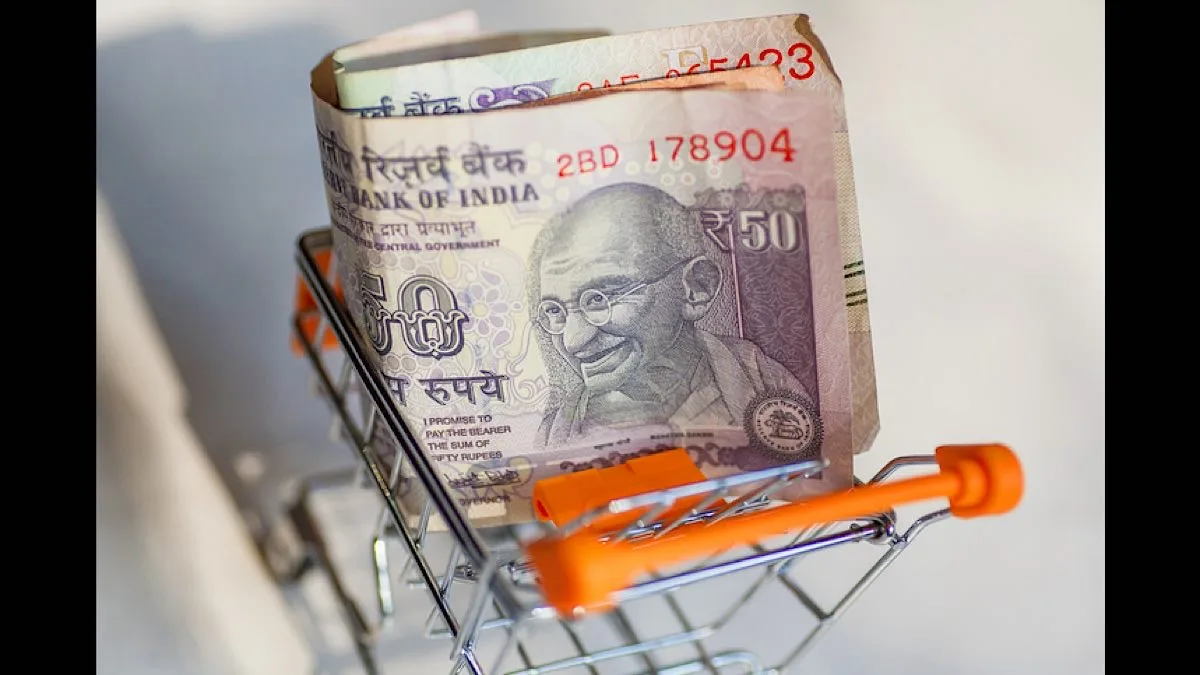
The Government e-Marketplace (GeM) Forward Auction module facilitated auctions worth more than Rs 2,200 crore, conducted over 13,000 auctions, onboarded more than 23,000 registered bidders and enabled participation from over 17,000 auctioneers between December 2021 and November 2025.

Statesman News Service | New Delhi |

The Government e-Marketplace (GeM) Forward Auction module facilitated auctions worth more than Rs 2,200 crore, conducted over 13,000 auctions, onboarded more than 23,000 registered bidders and enabled participation from over 17,000 auctioneers between December 2021 and November 2025.

“These figures underscore that Forward Auctions are no longer a pilot initiative but have evolved into a nationwide digital mechanism for government asset disposal,” said the Ministry of Commerce & Industry in a statement.

The impact of this shift is evident from multiple instances across the country. One such case is the auction of 100 EWS flats at Aliganj, Lucknow, conducted by the State Bank of India, which realised Rs 34.53 crore through the GeM platform. The auction outcome led SBI to formally acknowledge the conduct of the process by the GeM Forward Auction team, reflecting the role of transparent digital mechanisms in enabling value discovery, the statement said.

The range of assets being auctioned through GeM highlights the breadth of applications of the Forward Auction module.

Recent auctions include the sale of screened gypsum worth Rs 3.35 crore by FCI Aravali Gypsum and Minerals India Ltd, disposal of 261 condemned vehicles in the Jammu Division, auction of salvage items by the Border Roads Organisation, lease of a dormitory in Gulmarg for a period of five years, and auction of boating activity rights at a lake in Spurtar, it said.

It further cited the example of the National Zoological Park, New Delhi, which had faced challenges in disposing of unusable and obsolete articles over an extended period. Through the Forward Auction process, the Zoo achieved a highest bid above the reserve value and placed on record its appreciation for the support received during the auction.

Efficient disposal of scrap through such mechanisms contributes to improved operational processes and optimal utilisation of public resources.

A Forward Auction is a digital bidding process through which government departments sell assets such as scrap, e-waste, old vehicles, machinery and leasehold properties, including buildings and land, to the highest bidder. In this process, the government lists an item on the platform, registered bidders place competing bids and the highest offer is declared successful.

Through GeM’s secure digital interface, departments are able to set reserve prices, define participation conditions and monitor bidding in real time, ensuring efficiency and transparency throughout the auction lifecycle.


Congress announces nationwide agitation against scrapping of MGNREGA

A political firestorm has erupted following the Modi government’s decision to scrap the Mahatma Gandhi National Rural Employment Guarantee Act (MGNREGA), a move the Congress party has described as a direct assault on the economic survival of India’s rural poor.

Statesman News Service | New Delhi |

A political firestorm has erupted following the Modi government’s decision to scrap the Mahatma Gandhi National Rural Employment Guarantee Act (MGNREGA), a move the Congress party has described as a direct assault on the economic survival of India’s rural poor.

The Congress alleged that the decision marks the end of a transformative era for rural labour, dismantling a scheme that for nearly two decades provided a legal guarantee of 100 days of wage employment per year to every rural household.

Congress General Secretary KC Venugopal issued a scathing indictment of the government’s move, alleging that the administration had been systematically weakening the Act for years before finally delivering the “death blow.”

“The Modi government has effectively dismantled MGNREGA — by converting it from a right to a favour,” Venugopal said in a statement on Sunday. “The decision to cap funds, centralize control, and alter the demand-driven nature of the scheme has pushed crores of rural families into insecurity and distress.”

Venugopal further argued that by removing the legal guarantee of work, the government is stripping dignity from the hands of the rural workforce and leaving them at the mercy of bureaucratic whims.

In response, the Congress party has announced a massive two-day nationwide mobilisation to protest what it calls the “de-anchoring” of rural social security. Congress workers will lead large-scale demonstrations at all district headquarters across India. Simultaneously, the Congress Working Committee (CWC) will convene to map out a long-term political and legal strategy against the decision.

The protests will extend to the grassroots level, with workers organising programmes in Mandals and Panchayats. Demonstrators will carry portraits of Mahatma Gandhi to symbolise a commitment to his ideals of self-reliance and the constitutional promise of the “right to work.”

Launched in 2005 under the UPA government, MGNREGA was globally recognised as one of the world’s largest social safety nets. It played a critical role in reducing rural poverty, empowering women — who form a majority of the workforce — and preventing distress migration to cities.

During the COVID-19 pandemic, the scheme was widely credited as the “last resort” for millions of migrant workers who returned to their villages. In recent years, however, it faced friction with the present administration over budget cuts, delayed wage payments, and the mandatory introduction of Aadhaar-based payment systems, which critics argued were designed to exclude eligible beneficiaries.

By scrapping the Act, the government signals a fundamental shift in economic policy, moving away from legislated welfare toward a model of centralised schemes, a shift the Opposition warns will leave the most vulnerable without any legal recourse for survival.

BJP-led Mahayuti surges ahead in Maharashtra local body polls, leads in over 200 seats

In the Opposition’s Maha Vikas Aghadi, the Congress was leading in 32 local bodies, followed by NCP–SCP with nine and Shiv Sena (UBT) with eight.

Statesman News Service | New Delhi |

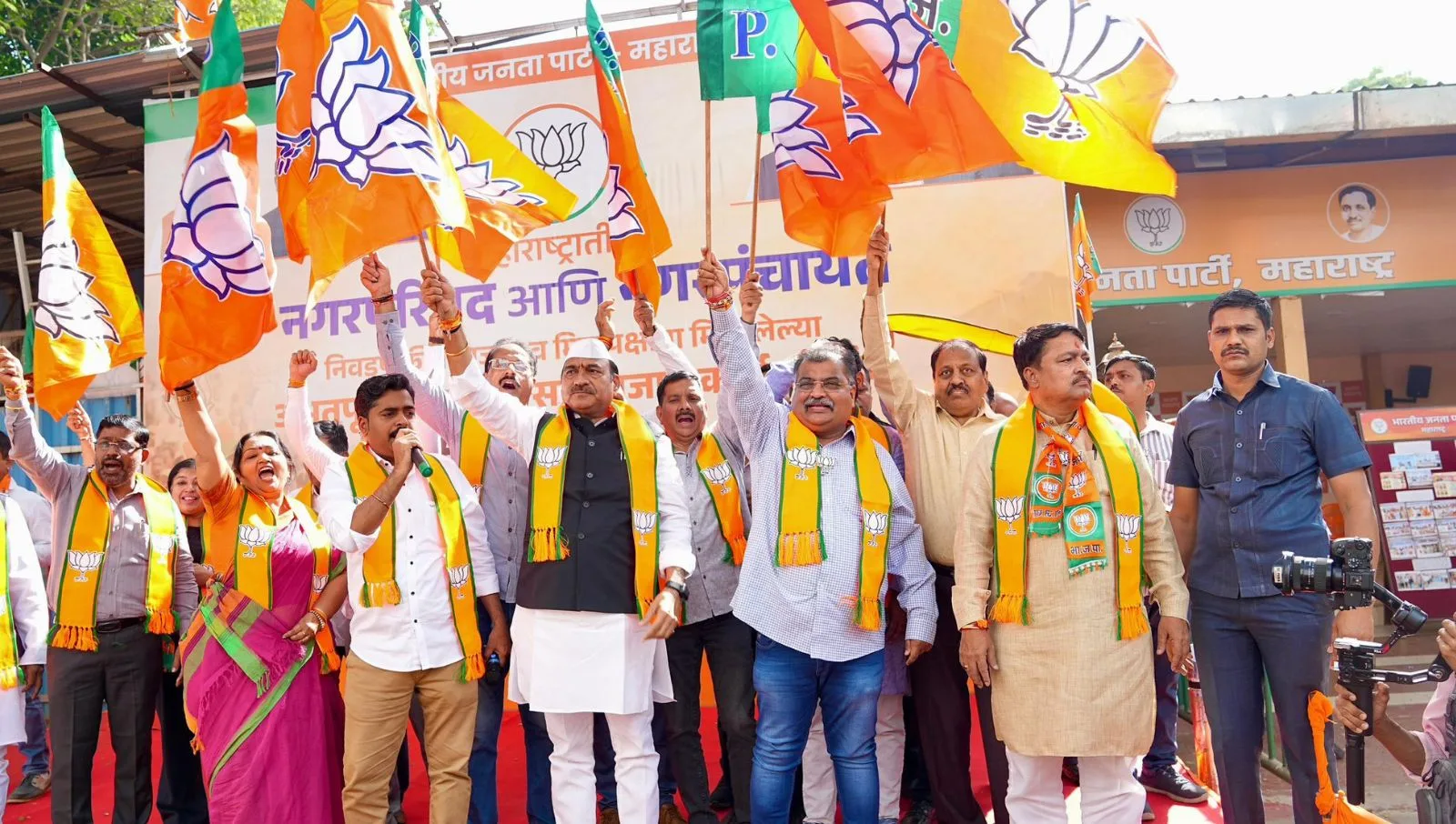
The Bharatiya Janata Party (BJP)-led Mahayuti alliance took a commanding lead in 214 local bodies as counting of votes for the Maharashtra Local Body Elections 2025 continued on Sunday.

According to trends, the BJP is on course to emerge as the single largest party, leading in 118 local bodies. The Eknath Shinde-led Shiv Sena was ahead in 59 local bodies, followed by the Ajit Pawar-led NCP in 37.

In the Opposition’s Maha Vikas Aghadi, the Congress was leading in 32 local bodies, followed by NCP–SCP with nine and Shiv Sena (UBT) with eight.

Maharashtra Deputy Chief Minister and Shiv Sena chief Eknath Shinde said that the people have given their verdict on which is the real Shiv Sena.

“People have decided which is the real Shiv Sena. Our ideology is Balasaheb Thackeray. He would be happy today over this magnificent victory. This is a very big lesson for those who indulge in politics. People reject those who reject them,” he said while addressing a press conference after the results.

Reacting to the outcome, Maharashtra BJP chief Ravindra Chavan said that the people of the state have once again reposed faith in the leadership of Chief Minister Devendra Fadnavis.

“The people of Maharashtra have shown confidence in the leadership of Chief Minister Devendra Fadnavis, as they firmly believe that the state will progress under his leadership,” he said.

Chavan claimed that the youth of the state have strongly backed the BJP and Fadnavis.

“Voters, especially the youth, have voted for the BJP and for Fadnavis ji because they believe their dreams will be fulfilled under his leadership,” he added.

Union Minister Nitin Gadkari congratulated Chief Minister Fadnavis, state BJP chief Chavan, and all party workers on the resounding victory.

“This victory belongs to the party workers. A heartfelt thank you to the people for reposing their faith in the BJP and its development-oriented functioning,” Gadkari said.

First snowfall ends prolonged dry spell in J&K and Ladakh as Chillai Kalan begins

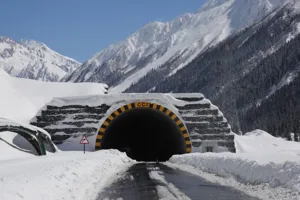
Breaking the long-stretched dry spell across the Union Territories of Jammu & Kashmir and Ladakh, the iconic tourist destinations of Gulmarg and Sonamarg in the Kashmir Valley on Sunday witnessed the season’s first snowfall, coinciding with the onset of the 40-day harsh winter period known as Chillai Kalan.

Statesman News Service | Jammu |

Breaking the long-stretched dry spell across the Union Territories of Jammu & Kashmir and Ladakh, the iconic tourist destinations of Gulmarg and Sonamarg in the Kashmir Valley on Sunday witnessed the season’s first snowfall, coinciding with the onset of the 40-day harsh winter period known as Chillai Kalan.

Snowfall and poor visibility disrupted both air and road travel. At least twelve incoming and outgoing flights between Srinagar and New Delhi, Jammu, Mumbai, Ahmedabad, and Amritsar were cancelled due to snowfall and low visibility. Four flights between Jammu and Srinagar/New Delhi were also cancelled.

However, flight operations at Leh airport remained normal, with seven arrivals and departures operating as scheduled.

Snow accumulation led to the closure of the Srinagar–Ladakh highway, Mughal Road, Sinthan Pass, and several other hill routes, as many areas in the region were blanketed in thick snow. Gulmarg recorded more than five inches of snowfall by the afternoon.

Chillai Kalan, which begins on 21 December and continues until 31 January, is considered the coldest phase of winter in Kashmir. It is marked by sub-zero temperatures, intense cold waves, frozen water bodies, and frequent snowfall.

Fresh snowfall at Pir Ki Gali forced the closure of Mughal Road due to slippery conditions. Traffic Police advised travellers to avoid unnecessary journeys, stating that snow clearance operations would resume once the weather improves.

Ladakh’s Meteorology Director, Sonam Lotus, wrote on X: “A big relief from a prolonged dry spell!! Currently, snowing at most places of Kargil, Zanskar & over higher reaches of Jammu & Kashmir. Snowfall is very likely to intensify as the day progresses, with peak during afternoon to night.”

Welcoming the season’s first snowfall, Kashmir’s chief cleric, Mirwaiz Umar Farooq, wrote on X: “Alhamdulillah, Chillai Kalan greets us with much-awaited rain and snow! Allah’s blessing sent from the skies. ‘And We sent down from the sky blessed water…’ (Qur’an). A time to refresh our faith and prostrate in gratitude to our Creator for His countless mercies upon us.”

The upper reaches of the Jammu region also witnessed snowfall, with a cold wave sweeping across the area.

President gives nod to VB—G RAM G Bill, 2025

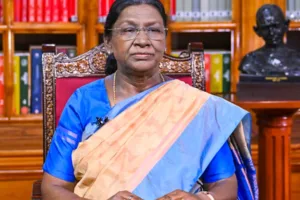
President Droupadi Murmu has given assent to the Viksit Bharat—Guarantee for Rozgar and Ajeevika Mission (Gramin) (VB—G RAM G) Bill, 2025, thus paving the way for a new statutory rural employment framework that replaces the Mahatma Gandhi National Rural Employment Guarantee Act.

Statesman News Service | New Delhi |

President Droupadi Murmu has given assent to the Viksit Bharat—Guarantee for Rozgar and Ajeevika Mission (Gramin) (VB—G RAM G) Bill, 2025, thus paving the way for a new statutory rural employment framework that replaces the Mahatma Gandhi National Rural Employment Guarantee Act. This marks a significant milestone in the transformation of India’s rural employment and development framework.

The Act enhances the statutory wage employment guarantee to 125 days per financial year for rural households and seeks to advance empowerment, inclusive growth, convergence of development initiatives and saturation-based delivery, thereby strengthening the foundation for a prosperous, resilient and self-reliant Rural Bharat.

The VB G Ram G Bill was passed in Parliament amid strong protests by the Opposition over the removal of Mahatma Gandhi’s name from the existing rural employment guarantee scheme, MGNREGA, and accusing the government of putting the financial burden on States.

Anchored in the principles of empowerment, growth, convergence and saturation, the Act seeks to transform rural employment from a standalone welfare intervention into an integrated instrument of development.

Salient Features of the Act

Enhanced Statutory Employment Guarantee: The Act provides a statutory guarantee of not less than 125 days of wage employment per rural household in each financial year to households whose adult members volunteer to undertake unskilled manual work (Section 5(1)). This enhancement over the earlier 100-day entitlement significantly strengthens livelihood security, predictability of work, and income stability for rural households.

To facilitate adequate availability of agricultural labour during peak sowing and harvesting seasons, the Act empowers States to notify an aggregated pause period aggregating to sixty days in a financial year (Section 6).

The full 125-day employment guarantee remains intact, to be provided during the remaining period, ensuring a calibrated balance that supports both agricultural productivity and worker security.

Timely Wage Payments: The Act mandates payment of wages on a weekly basis or, in any case, within 15 days of completion of work (Section 5(3)). In cases of delay beyond the stipulated period, delay compensation shall be payable in accordance with the provisions laid down in Schedule II, reinforcing wage security and protecting workers from delays.

Employment Linked with Productive Rural Infrastructure: Wage employment under the Act is explicitly aligned with the creation of durable public assets across four priority thematic domains: Water security and water-related works, Core rural infrastructure, Livelihood-related infrastructure, and Works to mitigate extreme weather events.

The Act is implemented as a Centrally Sponsored Scheme, to be notified and operationalised by the State Governments in accordance with the provisions of the Act.

The cost-sharing pattern is 60:40 between the Centre and States, 90:10 for North Eastern and Himalayan States, and 100 per cent central funding for Union Territories without legislatures.

Funding is provided through State-wise normative allocations based on objective parameters prescribed in the Rules (Sections 4(5) and 22(4)), ensuring predictability, fiscal discipline, and sound planning, while fully preserving statutory entitlements to employment and unemployment allowance.

All works are planned through a bottom-up process, and all assets created are aggregated into the Viksit Bharat National Rural Infrastructure Stack, ensuring convergence of public investments, avoidance of fragmentation, and outcome-based planning aimed at saturation of critical rural infrastructure, based on varying local needs, according to a Ministry of Rural Development statement said on Sunday.

First FCI grain-laden goods train from Punjab arrives at Anantnag in Kashmir

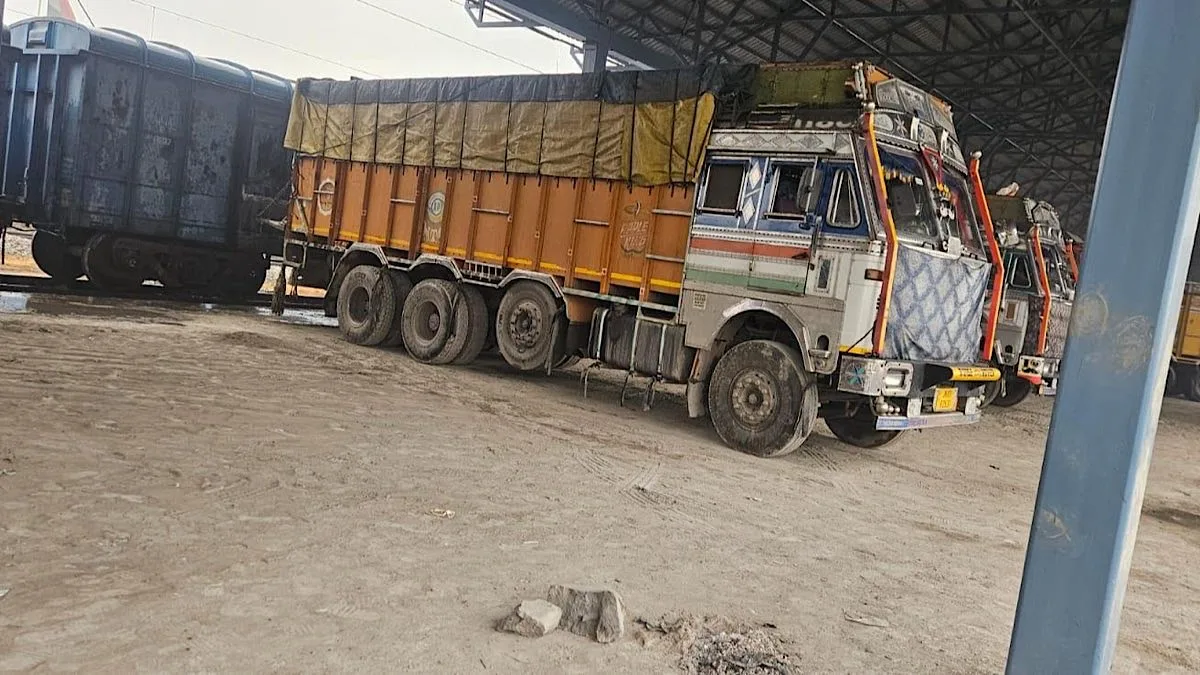
The first-ever Food Corporation of India (FCI) food grain freight train, consisting of 21 wagons, successfully arrived at the Anantnag (Kashmir) Goods Terminal from Ajitwal Goods Shed in the Firozpur Division in Punjab on Sunday.

Statesman News Service | Jammu |

The first-ever Food Corporation of India (FCI) food grain freight train, consisting of 21 wagons, successfully arrived at the Anantnag (Kashmir) Goods Terminal from Ajitwal Goods Shed in the Firozpur Division in Punjab on Sunday.

This marks a historic day for the people of the Kashmir Valley, as the Railways and the Food Corporation of India have jointly initiated this food grain freight train service to Kashmir. This is a significant step towards strengthening the food supply chain and promoting economic development in the future, Senior Divisional Commercial Manager, Uchit Singhal said.

The grain-laden freight train reached Kashmir from Punjab without any hindrance and in a much shorter time compared to road transport.

Similarly, in the future, grains and other food items will reach Kashmir directly by rail from various parts of the country. This will directly benefit local traders and the general public.

Commenting on the FCI’s initiative and the timely and safe arrival of the food grain freight train in Anantnag, Singhal said, “This is a moment of pride for the Railways. This freight train will act as an economic bridge between Punjab and Kashmir. In the coming times, the operation of FCI food grain freight trains by the Railways will play a major role in providing infrastructural support to the economy.”

Highlighting the advantages, he further added that it takes less time for the movement of goods and food grains compared to road transport, and this initiative will also reduce traffic congestion on the busy National Highway 44. Rail transport facilitates better and more efficient supply chain management of food grains, leading to improved planning and distribution.

IIT Kanpur’s Class of 1986 pledges ₹11 crore for transformational campus initiatives at 40-year reunion

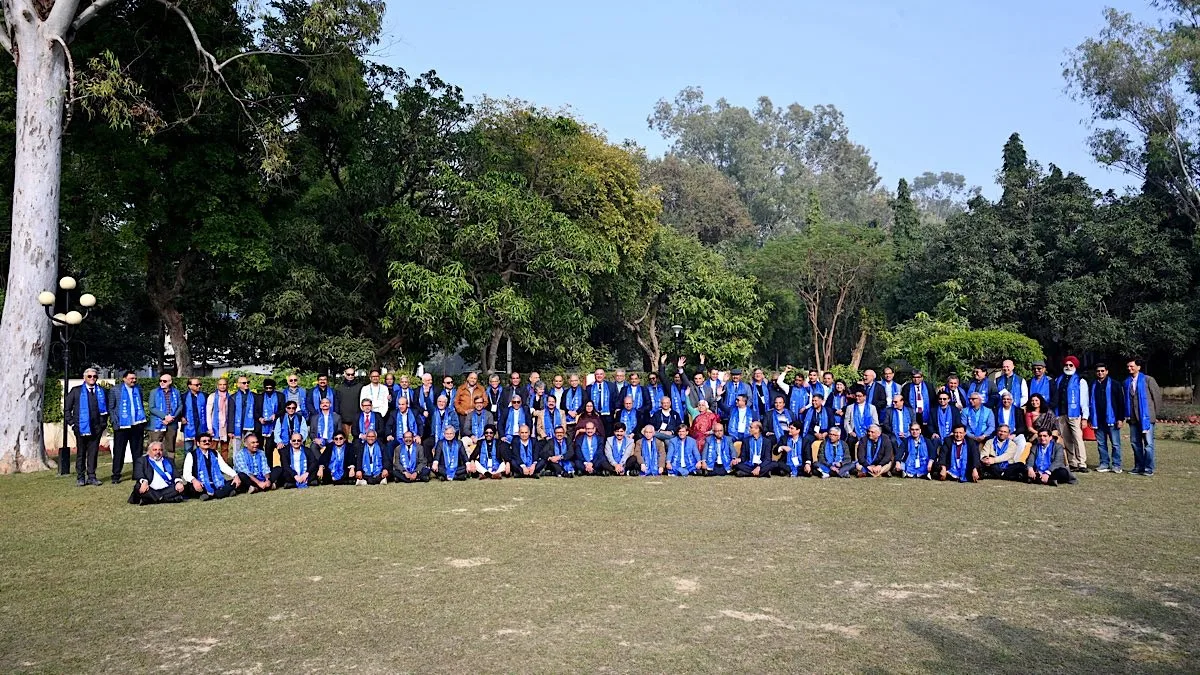
Marking their 40-year reunion, the Class of 1986, Indian Institute of Technology Kanpur (IIT Kanpur), announced a collective pledge of ₹11 crore to support three landmark legacy projects on campus.

Statesman News Service | Kanpur |

Marking their 40-year reunion, the Class of 1986, Indian Institute of Technology Kanpur (IIT Kanpur), announced a collective pledge of ₹11 crore to support three landmark legacy projects on campus.

The reunion, held from 18-21 December 2025, brought together alumni from across the globe to reconnect with their alma mater, celebrate four decades of shared journeys, and contribute meaningfully to IIT Kanpur’s future.

The pledged amount will be directed towards three batch legacy initiatives focused on student life, wellbeing, and community engagement on campus: the SAC Extension Auditorium, the Centre for Mental Health and Wellbeing, and a Tower in the New Hall of Residence. Together, these projects reflect the batch’s enduring commitment to enhancing student experience, strengthening institutional infrastructure, and nurturing a supportive campus environment.

Reflecting on the occasion, Prof. Manindra Agrawal, Director of IIT Kanpur and an alumnus of the Class of 1986, said here on Sunday, “The institute has played a defining role in shaping who we are today. I am immensely proud of my batchmates for coming together to support initiatives that will directly impact students’ academic, cultural, and emotional well-being. This collective commitment exemplifies the spirit of responsibility and gratitude that IIT Kanpur alumni carry throughout their lives.”

Expressing appreciation for the contribution, Prof. Amey Karkare, Dean of Resources and Alumni, IIT Kanpur, said, “The Class of 1986 has set a remarkable example of alumni leadership and collective philanthropy. Their generous pledge of ₹11 crore will significantly strengthen critical student-centric infrastructure and well-being initiatives on campus. Such legacy gifts not only accelerate the institute’s development but also reinforce the deep and enduring bond between IIT Kanpur and its alumni community. We are sincerely grateful to the Class of 1986 for their vision, generosity, and continued engagement.”

Sharing the batch’s perspective, Ajit Dass, Alumni Batch Coordinator, Class of 1986, added, “As we came together for our 40-year reunion, there was a shared desire to give back in a way that would create lasting value for the institute and its students. These legacy projects represent our collective gratitude and our hope to contribute meaningfully to the lives of current and future IITK students.”

The 40-year reunion of the Class of 1986 was marked by reflection, camaraderie, and a renewed commitment to the institute’s mission. IIT Kanpur extends its heartfelt appreciation to the Class of 1986 for their extraordinary support and looks forward to their continued partnership in advancing education, innovation, and student well-being at the institute.

Man dies of cardiac arrest while performing Surya Namaskar in Madhya Pradesh

A man died of cardiac arrest while doing yoga and performing the Surya Namaskar on the occasion of ‘World Meditation Day’ on Sunday in Ashok Nagar town of Madhya Pradesh.

Statesman News Service | Bhopal |

A man died of cardiac arrest while doing yoga and performing the Surya Namaskar on the occasion of ‘World Meditation Day’ on Sunday in Ashok Nagar town of Madhya Pradesh.

According to the police, the deceased, Narendra Soni, 55, was a jeweller. He was a regular yoga practitioner along with many others who gathered daily in the early morning to practice yoga at Tulsi Sarovar Park in the town.

At around 5.45 a.m. today, while Narendra was performing the Surya Namaskar, he suddenly collapsed and became unresponsive. Fellow yoga practitioners and others present at the spot tried to revive him, but he did not respond.

Soon, some policemen on patrol duty arrived and attempted to administer CPR, but there was still no sign of movement. He was then rushed to the district hospital in a police jeep.

Doctors and paramedics also attempted CPR to revive him, but in vain. He was subsequently declared dead by the doctors.

PM Modi says his govt committed to protecting farmers’ interests

PM highlighted that, alongside agricultural welfare initiatives, it is essential to ensure a continuous supply of fertilisers to farmers.

Statesman News Service | New Delhi |

Emphasising that the nation’s farmers and annadatas have a crucial role in building a developed India, Prime Minister Narendra Modi on Sunday said his government is working with farmers’ interests as the top priority and that farmer-friendly schemes are being extended to all.

He highlighted that, alongside agricultural welfare initiatives, it is essential to ensure a continuous supply of fertilisers to farmers.

The PM was laying the foundation stone of the Ammonia-Urea Fertilizer Project of Assam Valley Fertilizer and Chemical Company Limited at Namrup in Dibrugarh, Assam.

Stating that today is a historic day for Assam and the entire North East, Modi remarked that the long-awaited dream of Namrup and Dibrugarh has been fulfilled, as a new chapter of industrial progress begins in the region.

He highlighted that just a short while ago, he performed the bhoomi pujan of the Ammonia–Urea Fertilizer Plant, and before arriving in Dibrugarh, inaugurated the new terminal at Guwahati Airport.

The PM noted that everyone is saying Assam has now caught a new pace of development. He emphasised that what is being witnessed today is only the beginning, and Assam must be taken much further ahead.

He recalled the strength and role Assam held during the Ahom kingdom and asserted that in a developed India, Assam will play an equally powerful role. He underlined the start of new industries, the building of modern infrastructure, semiconductor manufacturing, new opportunities in agriculture, the advancement of tea gardens and their workers, and the growing potential in tourism, affirming that Assam is progressing in every sector.

Modi extended his best wishes for the modern fertilizer plant and congratulated the people for the new terminal at Guwahati Airport. He remarked that under the BJP government at the Centre and in the state, the synergy of industry and connectivity is fulfilling Assam’s dreams and inspiring the youth to dream bigger.

Modi remarked that in the coming time, the new urea plant will guarantee this supply. He noted that around Rs 11,000 crore will be invested in the fertilizer project, which will produce more than 12 lakh metric tonnes of fertilizer annually. He underlined that with production taking place locally, supply will be faster and logistic costs will be reduced.

Modi questioned why such farmer welfare initiatives are happening only after the BJP government came to power. He noted that Namrup had long been a center of fertilizer production, and at one time the fertilizer produced here strengthened the fields of the North East and supported farmers’ crops.

He recalled that even when fertilizer supply was a challenge in many parts of the country, Namrup remained a source of hope for farmers. However, he pointed out that the technology of the old plants became outdated over time and previous governments paid no attention. As a result, several units of the Namrup plant were shut down, leaving farmers across the North East distressed, their incomes hurt, and agricultural difficulties increasing.

The PM asserted that today, the BJP governments at the Centre and in states are resolving the problems created by the previous ruling dispensation.

The PM remarked that just like in Assam, fertilizer factories in many other states had also shut down. He recalled the difficult conditions farmers faced at that time, when they had to stand in long queues for urea, police had to be deployed at shops, and farmers were subjected to lathi charges.

He stated that the opposition had worsened these conditions, while the present government is correcting them. He highlighted that during the previous ruling dispensation era fertilizer factories were closing, whereas the current government has started several plants in Gorakhpur, Sindri, Barauni, and Ramagundam. He added that the private sector is also being encouraged in this field.

The PM emphasised that as a result of these efforts, India is moving towards self-reliance in the area of urea.

DRG constable killed in accidental firing after anti-Naxal operation in Chhattisgarh

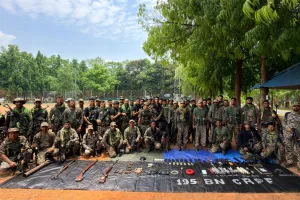
A District Reserve Guard (DRG) constable lost his life in an accidental firing after returning from an anti-Naxal area domination operation in Chhattisgarh’s Narayanpur district, casting a pall of grief over the police establishment.

Statesman News Service | Raipur |

A District Reserve Guard (DRG) constable lost his life in an accidental firing after returning from an anti-Naxal area domination operation in Chhattisgarh’s Narayanpur district, casting a pall of grief over the police establishment.

According to official sources, a DRG team from Narayanpur had been deployed on December 20 for a planned area domination exercise under the Chhotedongar police station limits. The operation was conducted as per standard protocol and concluded without any encounter or security incident. On the morning of December 21, the team reached Camp Kadenar after completing the mission.

The tragedy occurred after the operation had ended, when the personnel were preparing to board their vehicle. During this time, a weapon accidentally discharged, and the bullet struck DRG constable Baldev Singh Hurra near the head. He was critically injured and immediately evacuated to Dhaudai hospital by his colleagues.
Despite prompt medical intervention, doctors said the constable succumbed to his injuries due to severe head trauma and excessive blood loss. News of his death sent shockwaves through the police department, with colleagues and senior officers expressing deep sorrow over the loss.

Police officials said all mandatory legal procedures, including post-mortem examination, are being carried out in accordance with established norms. An internal inquiry has also been initiated to ascertain the circumstances that led to the accidental firing.

Senior officers described the incident as a tragic reminder of the risks faced by personnel even outside direct combat situations. They said the force stands with the bereaved family and that the findings of the inquiry would help strengthen safety protocols to prevent such incidents in future operations.

National Immunisation campaign launched in J&K by Health Minister Sakina Itoo

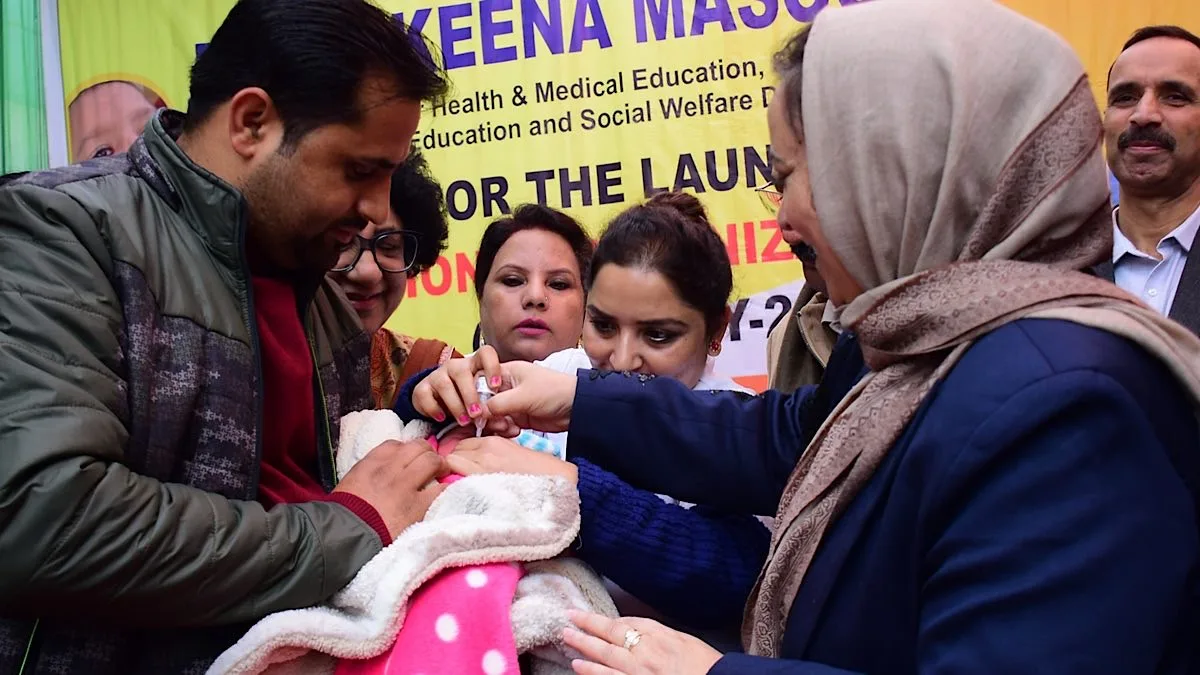
The Pulse Polio Campaign across Jammu and Kashmir was kickstarted on Sunday by Health Minister Sakeena Itoo at the Government Hospital, Gandhinagar, here.

Statesman News Service | Jammu |

The Pulse Polio Campaign across Jammu and Kashmir was kickstarted on Sunday by Health Minister Sakeena Itoo at the Government Hospital, Gandhinagar, here.
The Minister administered polio drops to toddlers and children, symbolically marking the beginning of the campaign across Jammu and Kashmir aimed at ensuring zero polio cases.

Addressing the gathering, the Minister emphasised the critical role of routine immunisation and community participation in maintaining J&K’s polio-free status.

She urged parents and guardians to actively cooperate with healthcare workers and ensure that every child receives the life-saving polio vaccine during the campaign. “To ensure administration of Polio drops to children under this campaign is a very important responsibility for both parents and not just the mother, ” the Minister stated.

She highlighted that the Health department is working efficiently under this campaign and achieved polio-free status for J&K. She lauded the efforts of frontline health workers, ASHAs, Anganwadi workers, volunteers, and district health teams for their tireless dedication in reaching every household, including those in far-flung and vulnerable areas.

“Going to far-flung areas and giving these two drops to children there was very challenging, but our frontline staff delivered on that efficiently”, she said.

The Minister further highlighted that the department has established around 11,000 booths across J&K, involving 40,000 healthcare workers and around 20 lakh children will be administered Polio drops during the campaign.

She added that special immunisation booths, mobile teams, and house-to-house visits have been put in place across all districts to cover every eligible child, and robust monitoring mechanisms have also been established to ensure effective implementation of the campaign.

Speaking on the occasion, MLA Vikram Randhawa said that the National Immunisation Day (Polio) Campaign forms a key component of the government’s public health strategy to protect future generations and strengthen disease prevention measures across Jammu and Kashmir. He called upon all the parents, public and responsible citizens to contribute towards this campaign.

The MLA also lauded the continuous efforts of Health Minister Sakeena Itoo for bringing improvements in healthcare infrastructure across Jammu and Kashmir.
In his address, Secretary Health, Dr Syed Abid Rasheed, said that this day is very important for maintaining the status of polio-free India, which our country achieved in the year 2014. He called upon the parents and public to actively participate in this campaign.

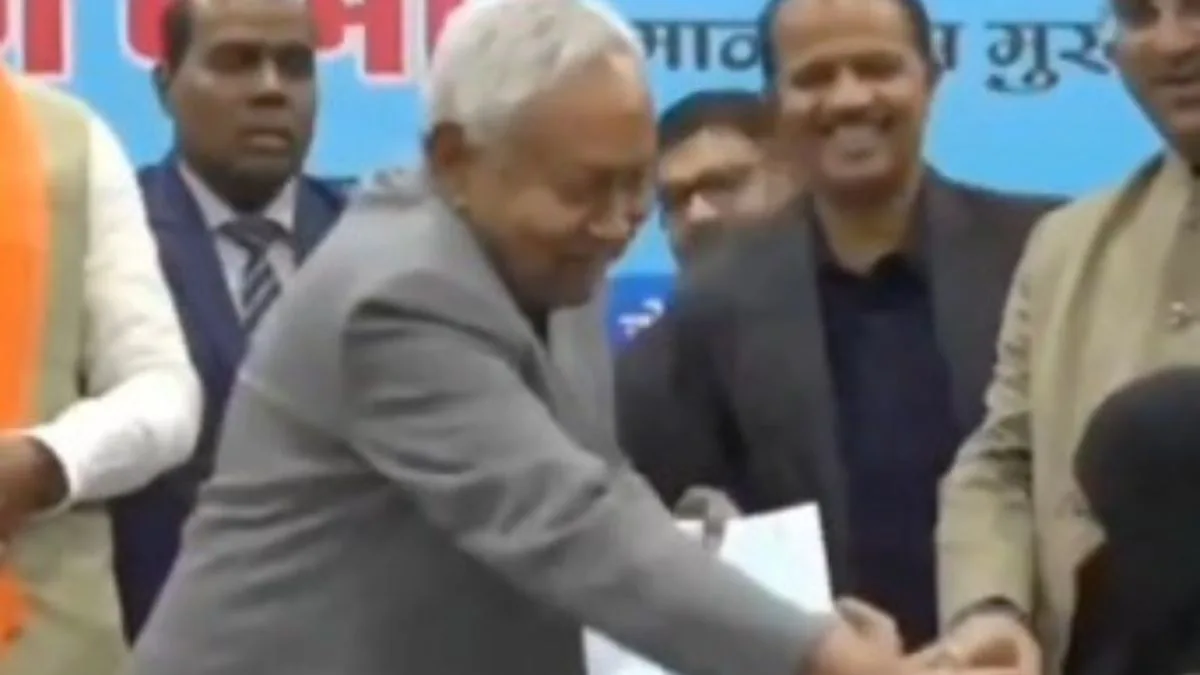
Bhopal cleric condemns Nitish Kumar for ‘dishonouring all women’ by forcibly removing doctor’s hijab

A prominent Muslim cleric in Bhopal has strongly condemned Bihar Chief Minister Nitish Kumar for forcibly pulling down the hijab of a Muslim doctor in public, calling the act a disgrace, dishonour, and disrespect to all women, not just Muslims.

Statesman News Service | Chandigarh |

A prominent Muslim cleric in Bhopal has strongly condemned Bihar Chief Minister Nitish Kumar for forcibly pulling down the hijab of a Muslim doctor in public, calling the act a disgrace, dishonour, and disrespect to all women, not just Muslims.

Nitish Kumar is already facing widespread criticism for his behaviour, and several FIRs have been registered across the country in connection with the incident.

Bhopal Naib Shahar Qazi Maulana Ali Qadar said today that such a shameful act by a person holding a high constitutional position cannot be tolerated.

“Anyone who claims to be a follower of Ram or Krishna cannot stoop to such a low level. Nitish Kumar’s act is akin to Duryodhana’s cheer-haran of Draupadi,” he asserted.

The cleric pointed out that women are revered in Hinduism, and in Islam the hijab is considered a symbol of a woman’s dignity and honour. “Removing it publicly is an attack on that dignity,” the Shahar Qazi said.

He added that the issue is neither political nor communal, but a matter of women’s respect and honour. He denounced the incident as a grave social concern and a violation of women’s dignity.

Referring to the FIRs filed, Ali Qadar said that the incident will be a test for the Indian judicial system, as the accused is none other than the Chief Minister of a BJP-ruled state.

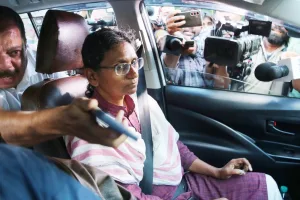
At a recent official event in Bihar where appointment letters were distributed to AYUSH doctors, Chief Minister Nitish Kumar had first mocked and questioned the hijab worn by a Muslim woman, Dr. Nusrat.

He then proceeded to forcibly pull down her hijab in full public view, leaving her visibly uncomfortable.

Akhilesh Yadav urges Delhi-NCR residents to turn ‘Save Aravalli’ into a mass movement

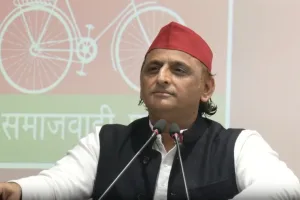
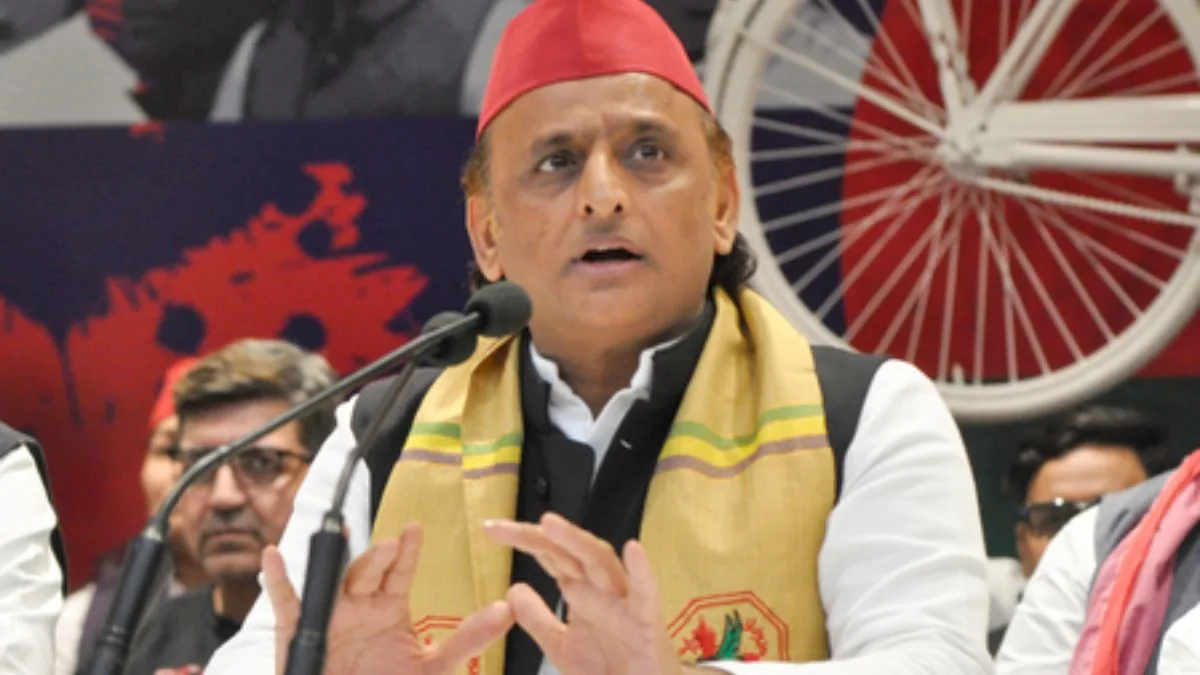
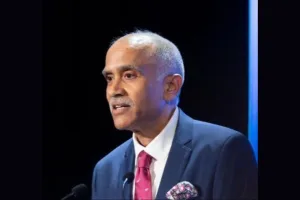
Samajwadi Party (SP) national president Akhilesh Yadav has urged the people of Delhi and the National Capital Region (NCR) to unite in an effort to save the Aravalli mountain range.
Statesman News Service | Lucknow |

Samajwadi Party (SP) national president Akhilesh Yadav has urged the people of Delhi and the National Capital Region (NCR) to unite in an effort to save the Aravalli mountain range. He said protecting the Aravalli is not a choice but a necessity, describing it as the lifeline and natural protective shield of Delhi-NCR.
Addressing the people of Delhi through his social media account on Sunday, Akhilesh Yadav wrote that the Aravalli range plays a crucial role in controlling air pollution in the national capital, maintaining temperature balance, and conserving rainwater and groundwater. The range safeguards the region’s biodiversity and has the potential to revive endangered wetlands and bird species. He added that the Aravalli is the force that “can bring back the stars to the Delhi sky.”

He warned that if the destruction of the Aravalli is not halted, Delhi and the NCR will never recover from smog, pollution, and the growing climate crisis. The worst impact, he said, is being felt by the elderly, children, and the sick. Even world-renowned hospitals and the medical services sector are suffering, as people are increasingly hesitant to visit Delhi for treatment due to pollution fears.

Akhilesh Yadav cautioned that if the current situation continues, Delhi will lose its identity as North India’s largest market and economic hub. Neither domestic nor foreign tourists will visit, and major sporting events, international conferences, and cultural, educational, or literary programs will cease to be organised. Hotels, restaurants, taxi services, handicrafts, and businesses of all sizes will face severe decline.

He further said that when pollution prevents airplanes from flying, delays trains for hours, and makes road travel unsafe, people will avoid coming to Delhi altogether. The situation, he warned, could deteriorate to the point where families will have to consider Delhi’s air and water quality before planning their children’s marriages.

He alleged that the BJP government is accelerating the destruction of the Aravalli by legalising illegal mining and due to what he described as its “insatiable hunger for land.” If this conspiracy is not stopped, he said, the nation’s capital will turn into the world’s “pollution capital,” forcing its residents to leave.

Akhilesh Yadav appealed to every citizen, school, college, businessman, shopkeeper, street vendor, and family to join the ‘Save Aravalli’ campaign. He also urged the media to extend strong support.

“Saving the Aravalli means saving ourselves, our children, and the future of Delhi,” he said. “Let us all come together to protect the Aravalli and defeat this destructive politics with the power of the people and public opinion.”

MEA debunks ‘misleading propaganda’ over protest outside Bangladesh High Commission in Delhi

The MEA clarified that only about 20-25 youth had gathered outside the Bangladeshi High Commission in Delhi and raised slogans in protest against the brutal killing of Dipu Chandra Das in Mymensingh.

Statesman News Service | New Delhi |

The Ministry of External Affairs (MEA) on Sunday debunked the misleading propaganda in sections of the Bangladeshi media over alleged protest outside the Bangladesh High Commission in Delhi on December 20, clarifying that there was no attempt to breach the fence or create a security situation.

The MEA clarified that about 20-25 youth had gathered outside the Bangladesh High Commission in Delhi and raised slogans in protest against the brutal killing of Dipu Chandra Das in Mymensingh.

“We have noted misleading propaganda in sections of the Bangladeshi media on the incident. The fact is that about 20–25 youth gathered in front of the Bangladesh High Commission in New Delhi on 20 December 2025 and raised slogans in protest against the horrendous killing of Dipu Chandra Das in Mymensingh, while also calling for the protection of all minorities in Bangladesh,” MEA Official Spokesperson Randhir Jaiswal said in a statement.

He clarified that there was no attempt to breach the fence or create a security situation at any time.

“The police stationed at the spot dispersed the group after a few minutes. Visual evidence of these events is available publicly for all to see. India is committed to ensuring the safety of foreign Missions/Posts in its territory in accordance with the Vienna Convention,” the statement said.

The MEA spokesperson further stated that India continues to keep a close watch on the evolving situation in Bangladesh.

“Our officials remain in touch with the Bangladesh authorities and have conveyed to them our strong concerns over the attacks on minorities. We have also urged that the perpetrators of the barbaric killing of Das be brought to justice,” the statement read.

Meanwhile, India suspended visa operations at its Visa Application Centre in Chittagong, the second largest city in Bangladesh, amid heightened tensions in the country over the death of prominent youth leader Sharif Osman Hadi.

Following the death of Hadi, the country plunged into chaos with large-scale violence erupting in several parts of the country. A section of people alleged an Indian hand behind the murder and targeted minority Hindus.

A mob captured Dipu Chandra Das and lynched him to death over allegations of blasphemy. The mob later hanged his body and set it on fire, raising concerns over the safety of the minority community in the country.

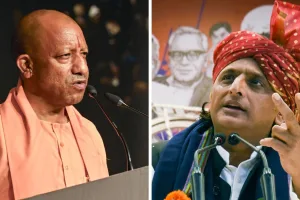
Akhilesh Yadav warns against ‘One Nation, One Businessman’ agenda

Samajwadi Party (SP) National President Akhilesh Yadav has launched a scathing attack on the BJP government, alleging that it is pursuing a secret agenda to steer the country towards a “one nation, one businessman” model.

Statesman News Service | Lucknow |

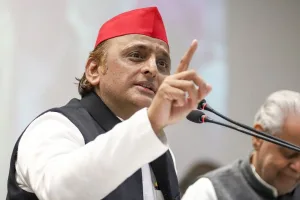
Samajwadi Party (SP) National President Akhilesh Yadav has launched a scathing attack on the BJP government, alleging that it is pursuing a secret agenda to steer the country towards a “one nation, one businessman” model.

He said the BJP’s principle has now become “one business, one donation,” under which attempts are being made to consolidate all major businesses in the country into the hands of a select few.

Posting on his social media account on Sunday, Akhilesh Yadav alleged that the BJP leadership, instead of seeking donations from different quarters, wants to place the entire economic system under the control of a few chosen individuals.

To satisfy their “insatiable hunger” for money, people have been installed in the government and the organization who blindly approve every decision without questioning it, he said.

He warned that any form of monopoly—political, economic, or social—is dangerous for a nation. The manner in which the BJP government is changing policies and rules to weaken other industrial houses and restricting economic activities to select groups is pushing the country towards a serious and dangerous situation.

Akhilesh Yadav said that the next consequence of this approach will be uncontrolled profiteering, rising inflation, and ultimately large-scale corruption. Rules will be changed to benefit monopolistic companies, consumers will face arbitrary charges, and workers will be exploited under the oppressive formula of “less pay, more work.”

Neither farmers nor the PDA (Pichda, Dalit, Alpsankhyak—Backward Classes, Dalits, Minorities) communities will be heard, resulting in nearly 95 percent of the country’s population becoming victims of exploitation, said Yadav.

He asserted that the time has come for the country to unite and tell the BJP clearly that monopoly is not acceptable.

Kerala bids adieu to veteran actor Sreenivasan

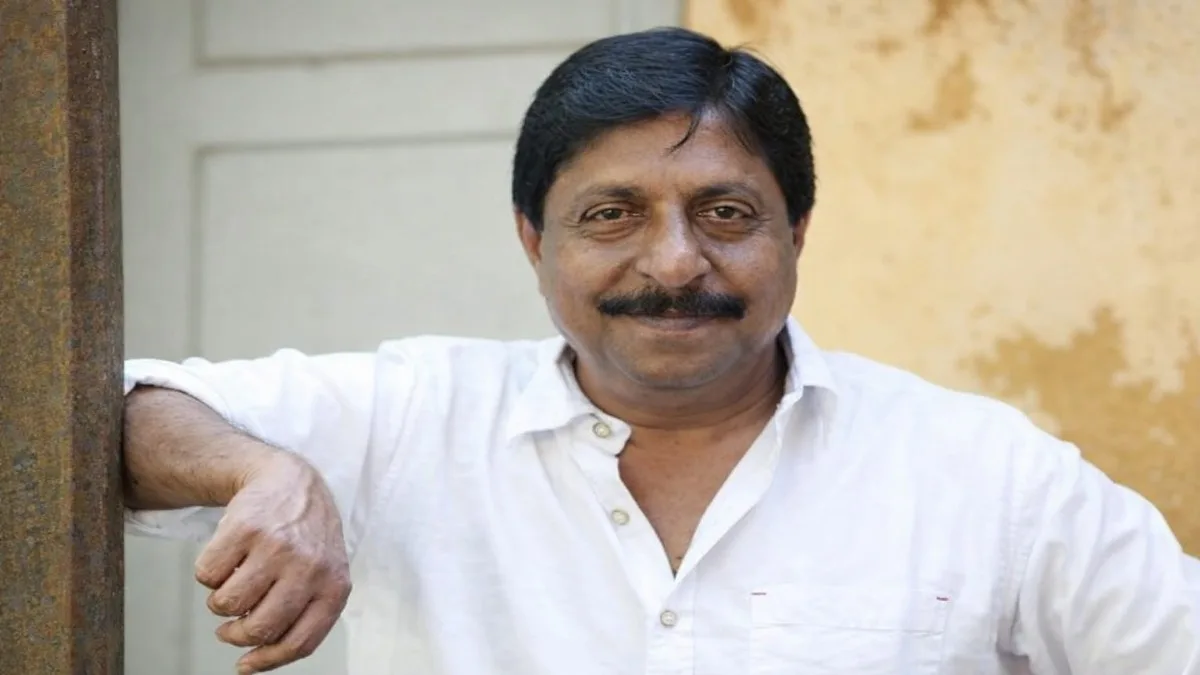
Kerala bid a tearful farewell to Malayalam actor, screenwriter, and director Sreenivasan , who passed away at the age of 72 in Kochi.

Statesman News Service | Kochi |

Kerala bid a tearful farewell to Malayalam actor, screenwriter, and director Sreenivasan , who passed away at the age of 72 in Kochi. The funeral of the unique actor, screenwriter, and filmmaker, who made Malayalis laugh and think and gave them unforgettable memories, was held with official honours at his home, Kandanata, at around 11.50 am on Sunday.

The actor died on Saturday morning at the Tripunithura Taluk Hospital in Kochi, at the courtyard of his residence at Kandanad, Udayamperoor in Kochi.

Sreenivasan’s sons, Vineeth Sreenivasan and Dhyan Sreenivasan, performed the last rites. The eldest son, Vineeth, lit the pyre. A paper and pen with the words “May only good things always befall everyone” were placed on Sreenivasan’s body before the pyre was lit. The house and surroundings in Kandanad witnessed extremely emotional moments.

Fans, actors and politicians gathered in large numbers at his residence’ Palazhi’ at Kandanad to pay their last respects to the legendary actor, who redefined Malayalam cinema through his unique acting and compelling stories. Opposition leader VD Satheesan and CPI State Secretary Binoy Viswam were among those who attended the funeral.

Keralites are keeping the memory of Sreenivasan in their minds as a filmmaker who brought every aspect of Malayali to the silver screen without any drama. The genius in him brought humour, sarcasm, criticism, romance, friendship, love, sadness, and disappointment to the audience in its intensity through his movies.

Sreenivasan is remembered for his sharp satire and socially relevant storytelling in over 225 films, including classics like Sandesham, Nadodikkattu, and Chinthavishtayaya Shyamala. He had a unique talent for presenting the problems of ordinary people with a touch of with a distinctive blend of humor. Malayalis can never forget Gandhinagar Second Street, Nadotikattu, TP Gopalagopalan MA, Sandesh, Vadakkunokkiyanthram and Thalayanamantram. He received the Kerala State Film Award five times. The films Chintavishtaya Shyamala and Vadakkunokkiyanthram, which Sreenivasan wrote, directed and acted in, also received the National Award.

Sreenivasan had been ailing for some time owing to cardiac and other ailments. While travelling for dialysis at Amrita Hospital in Kochi on Saturday morning, Sreenivasan developed breathing difficulties and was shifted to the Government Taluk Hospital, Tripunithura, where he breathed his last.

Described as Malayalam cinema’s “sakalakalavallabhan” (man of many talents) , Sreenivasan, in his career as an actor, screenwriter, producer and director, left an indelible mark on Malayalam cinema. Over a career spanning nearly 50 years, he emerged as one of the most influential creative voices in the film industry, shaping popular cinema through sharp satire, humane storytelling, and socially rooted humour.

Born in Patyam near Thalassery in Kerala’s Kannur district, Sreenivasan grew up in a modest household. His father was a schoolteacher, and his mother was a homemaker. He graduated in economics from PRNSS College, Mattanur.

He made his acting debut in Manimuzhakkam (1976), directed by P A Backer, and went on to play his first lead role in Sanghaganam (1979). However, it was as a writer that he truly left his mark. His first screenplay, Odaruthammava Aalariyam (1984), announced a new voice in Malayalam cinema.

Sreenivasan was often referred to as a comedian, but he had played a wide range of roles in his films, ranging from the hero’s sidekick to characters that could move the audience to tears. Often, he could make you laugh and cry in the same film, as in Vadakku Nokki Yanthram, in which he played the role of a man with a severe inferiority complex about his looks.

His writing blended humour with political and social critique, most powerfully seen in Sandesam (1991), a biting satire on political opportunism that earned him a Kerala State Film Award.

Noted for his sharp social satire and deeply humane storytelling, Sreenivasan’s contributions as both a performer and writer shaped several phases of modern Malayalam cinema.

As a screenwriter, Sreenivasan was known for several notable Malayalam films, including Sanmanassullavarkku Samadhanam, TP Balagopalan MA, Gandhinagar Second Street, Nadodikkattu, Thalayana Manthram, Golanthara Vartha, Champakulam Thachan, Varavelpu, Udayananu Tharam, Mazhayethum Munpe, Azhakiya Ravanan, Oru Maravathoor Kanavu, Ayal Kadha Ezhuthukayanu, Kadha Parayumbol and Njan Prakashan.

Sreenivasan is survived by his wife, Vimala, and his sons, Vineeth Sreenivasan and Dhyan Sreenivasan, both established figures in the Malayalam film industry.

Over 11.25 lakh MSE sellers, comprising 2 lakh women-owned, registered at GeM: Govt

The Government e-Marketplace (GeM) has recorded more than 11.25 lakh registered MSE sellers on the platform as of November 30, 2025, according to a Commerce Ministry statement on Sunday.

Statesman News Service | New Delhi |

The Government e-Marketplace (GeM) has recorded more than 11.25 lakh registered MSE sellers on the platform as of November 30, 2025, according to a Commerce Ministry statement on Sunday.

These enterprises have cumulatively secured orders worth Rs 7.44 lakh crore, accounting for 44.8 per cent of the total order value transacted through GeM, exceeding the mandated annual procurement target of 25 per cent. This participation reflects an expanding role of smaller enterprises in public procurement.

Women-led enterprises have also registered increased participation on the platform. More than 2 lakh women-owned MSEs are currently active on GeM and have secured cumulative orders worth Rs 78,066 crore.

Their participation is supported through initiatives such as Womaniya, which focus on onboarding, training and improving access to procurement opportunities for women entrepreneurs, the Commerce Ministry said.

Highlighting the significant performances registered at the platform, it said, in November 2025, a women-led MSE from Gujarat, FS Green Energies Private Limited, Vadodara, supplied renewable energy solutions valued at over Rs 53 crore to the Department of Heavy Industries.

During the same period, an MSE owned by an SC/ST entrepreneur, Infrastructure Development and Management Services, Nagpur, Maharashtra, supported surveillance infrastructure valued at Rs 29 crore for the Central Government. A startup based in Mumbai, Cloudstrats Technologies Private Limited, Maharashtra, delivered technology services amounting to Rs 191 crore, securing high-value contracts within a short period of scaling up operations.

At the GeM portal, buyers can identify products offered by MSEs, including women-led and SC/ST MSE sellers, through dedicated marketplace filters.