Logo

Akhilesh Yadav warns against ‘One Nation, One Businessman’ agenda

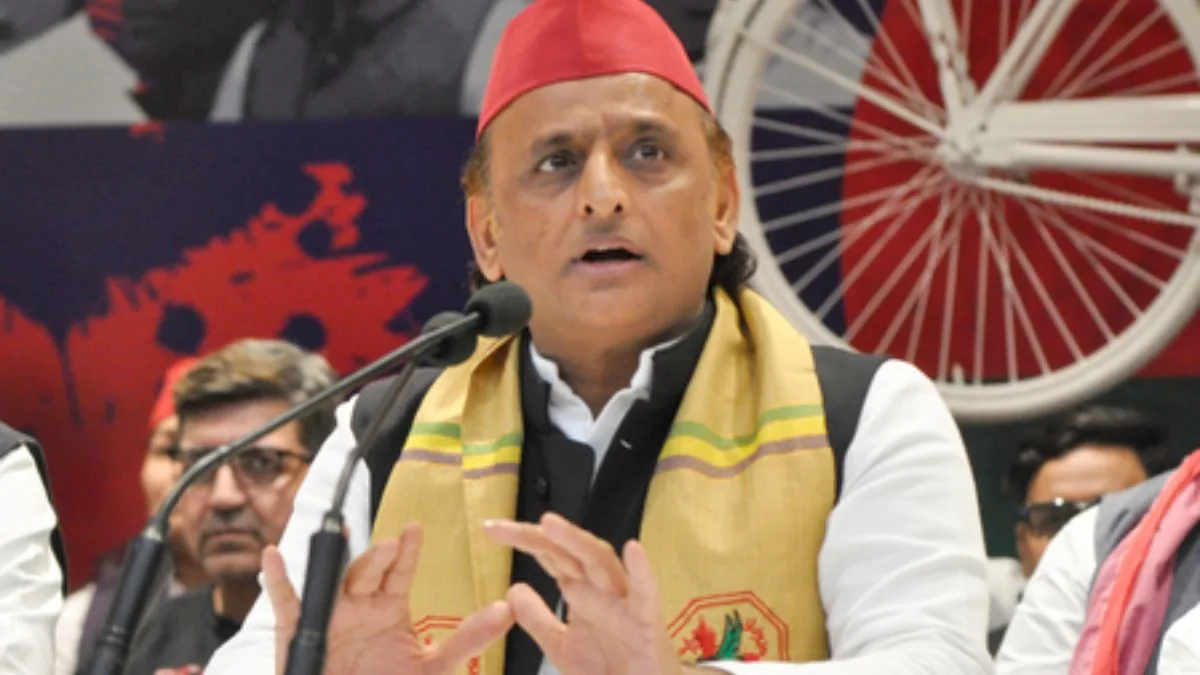
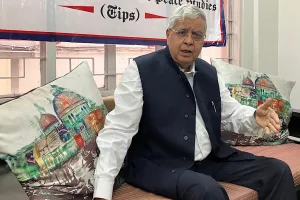
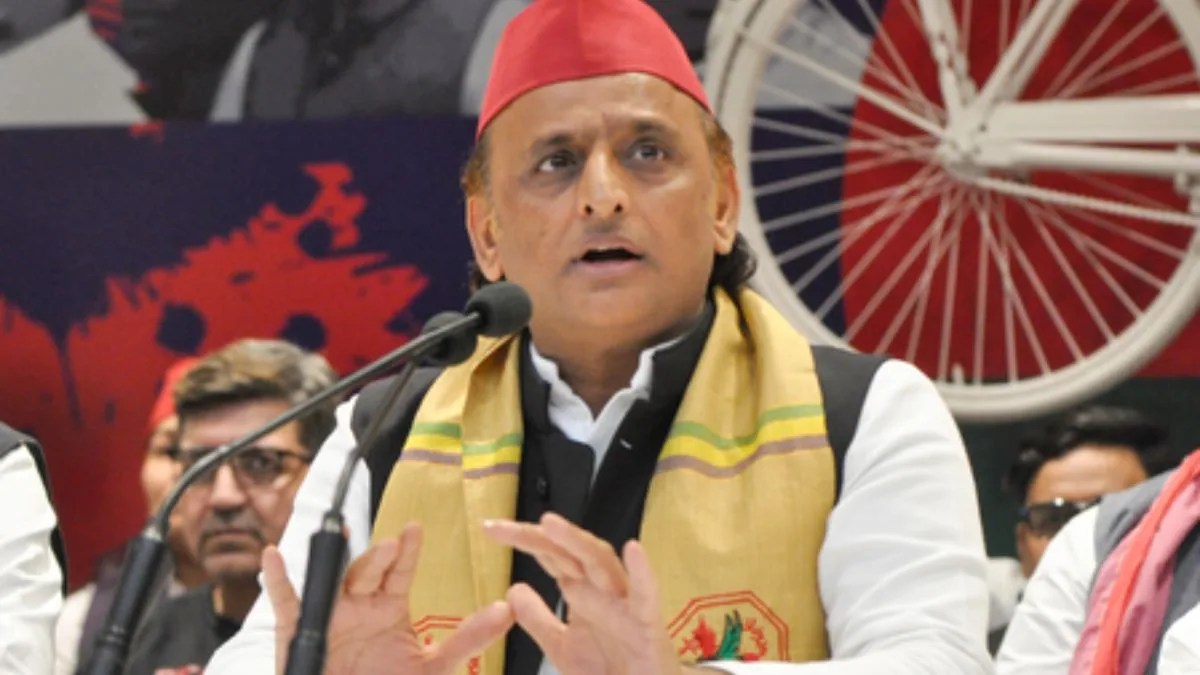
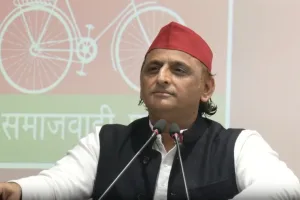
Samajwadi Party (SP) National President Akhilesh Yadav has launched a scathing attack on the BJP government, alleging that it is pursuing a secret agenda to steer the country towards a “one nation, one businessman” model.

Statesman News Service | Lucknow |

Samajwadi Party (SP) National President Akhilesh Yadav has launched a scathing attack on the BJP government, alleging that it is pursuing a secret agenda to steer the country towards a “one nation, one businessman” model.

He said the BJP’s principle has now become “one business, one donation,” under which attempts are being made to consolidate all major businesses in the country into the hands of a select few.

Posting on his social media account on Sunday, Akhilesh Yadav alleged that the BJP leadership, instead of seeking donations from different quarters, wants to place the entire economic system under the control of a few chosen individuals.

To satisfy their “insatiable hunger” for money, people have been installed in the government and the organization who blindly approve every decision without questioning it, he said.

He warned that any form of monopoly—political, economic, or social—is dangerous for a nation. The manner in which the BJP government is changing policies and rules to weaken other industrial houses and restricting economic activities to select groups is pushing the country towards a serious and dangerous situation.

Akhilesh Yadav said that the next consequence of this approach will be uncontrolled profiteering, rising inflation, and ultimately large-scale corruption. Rules will be changed to benefit monopolistic companies, consumers will face arbitrary charges, and workers will be exploited under the oppressive formula of “less pay, more work.”

Neither farmers nor the PDA (Pichda, Dalit, Alpsankhyak—Backward Classes, Dalits, Minorities) communities will be heard, resulting in nearly 95 percent of the country’s population becoming victims of exploitation, said Yadav.

He asserted that the time has come for the country to unite and tell the BJP clearly that monopoly is not acceptable.

Kerala bids adieu to veteran actor Sreenivasan

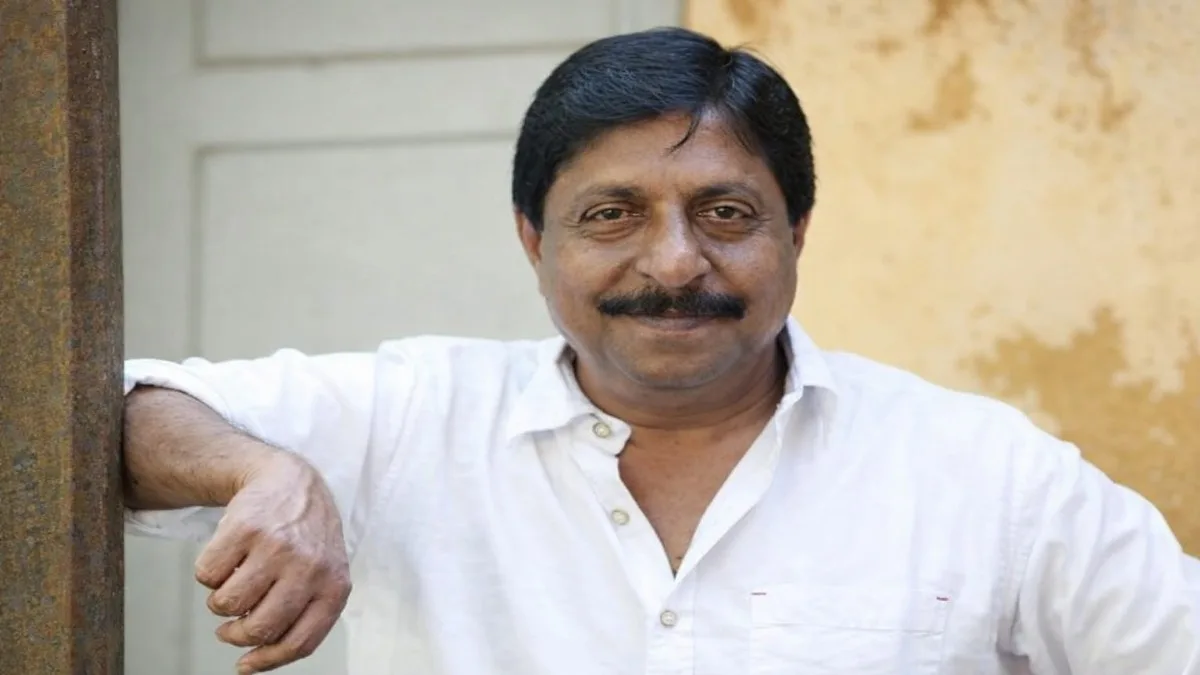
Kerala bid a tearful farewell to Malayalam actor, screenwriter, and director Sreenivasan , who passed away at the age of 72 in Kochi.

Statesman News Service | Kochi |

Kerala bid a tearful farewell to Malayalam actor, screenwriter, and director Sreenivasan , who passed away at the age of 72 in Kochi. The funeral of the unique actor, screenwriter, and filmmaker, who made Malayalis laugh and think and gave them unforgettable memories, was held with official honours at his home, Kandanata, at around 11.50 am on Sunday.

The actor died on Saturday morning at the Tripunithura Taluk Hospital in Kochi, at the courtyard of his residence at Kandanad, Udayamperoor in Kochi.

Sreenivasan’s sons, Vineeth Sreenivasan and Dhyan Sreenivasan, performed the last rites. The eldest son, Vineeth, lit the pyre. A paper and pen with the words “May only good things always befall everyone” were placed on Sreenivasan’s body before the pyre was lit. The house and surroundings in Kandanad witnessed extremely emotional moments.

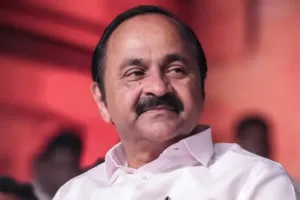
Fans, actors and politicians gathered in large numbers at his residence’ Palazhi’ at Kandanad to pay their last respects to the legendary actor, who redefined Malayalam cinema through his unique acting and compelling stories. Opposition leader VD Satheesan and CPI State Secretary Binoy Viswam were among those who attended the funeral.

Keralites are keeping the memory of Sreenivasan in their minds as a filmmaker who brought every aspect of Malayali to the silver screen without any drama. The genius in him brought humour, sarcasm, criticism, romance, friendship, love, sadness, and disappointment to the audience in its intensity through his movies.

Sreenivasan is remembered for his sharp satire and socially relevant storytelling in over 225 films, including classics like Sandesham, Nadodikkattu, and Chinthavishtayaya Shyamala. He had a unique talent for presenting the problems of ordinary people with a touch of with a distinctive blend of humor. Malayalis can never forget Gandhinagar Second Street, Nadotikattu, TP Gopalagopalan MA, Sandesh, Vadakkunokkiyanthram and Thalayanamantram. He received the Kerala State Film Award five times. The films Chintavishtaya Shyamala and Vadakkunokkiyanthram, which Sreenivasan wrote, directed and acted in, also received the National Award.

Sreenivasan had been ailing for some time owing to cardiac and other ailments. While travelling for dialysis at Amrita Hospital in Kochi on Saturday morning, Sreenivasan developed breathing difficulties and was shifted to the Government Taluk Hospital, Tripunithura, where he breathed his last.

Described as Malayalam cinema’s “sakalakalavallabhan” (man of many talents) , Sreenivasan, in his career as an actor, screenwriter, producer and director, left an indelible mark on Malayalam cinema. Over a career spanning nearly 50 years, he emerged as one of the most influential creative voices in the film industry, shaping popular cinema through sharp satire, humane storytelling, and socially rooted humour.

Born in Patyam near Thalassery in Kerala’s Kannur district, Sreenivasan grew up in a modest household. His father was a schoolteacher, and his mother was a homemaker. He graduated in economics from PRNSS College, Mattanur.

He made his acting debut in Manimuzhakkam (1976), directed by P A Backer, and went on to play his first lead role in Sanghaganam (1979). However, it was as a writer that he truly left his mark. His first screenplay, Odaruthammava Aalariyam (1984), announced a new voice in Malayalam cinema.

Sreenivasan was often referred to as a comedian, but he had played a wide range of roles in his films, ranging from the hero’s sidekick to characters that could move the audience to tears. Often, he could make you laugh and cry in the same film, as in Vadakku Nokki Yanthram, in which he played the role of a man with a severe inferiority complex about his looks.

His writing blended humour with political and social critique, most powerfully seen in Sandesam (1991), a biting satire on political opportunism that earned him a Kerala State Film Award.

Noted for his sharp social satire and deeply humane storytelling, Sreenivasan’s contributions as both a performer and writer shaped several phases of modern Malayalam cinema.

As a screenwriter, Sreenivasan was known for several notable Malayalam films, including Sanmanassullavarkku Samadhanam, TP Balagopalan MA, Gandhinagar Second Street, Nadodikkattu, Thalayana Manthram, Golanthara Vartha, Champakulam Thachan, Varavelpu, Udayananu Tharam, Mazhayethum Munpe, Azhakiya Ravanan, Oru Maravathoor Kanavu, Ayal Kadha Ezhuthukayanu, Kadha Parayumbol and Njan Prakashan.

Sreenivasan is survived by his wife, Vimala, and his sons, Vineeth Sreenivasan and Dhyan Sreenivasan, both established figures in the Malayalam film industry.

Over 11.25 lakh MSE sellers, comprising 2 lakh women-owned, registered at GeM: Govt

The Government e-Marketplace (GeM) has recorded more than 11.25 lakh registered MSE sellers on the platform as of November 30, 2025, according to a Commerce Ministry statement on Sunday.

Statesman News Service | New Delhi |

The Government e-Marketplace (GeM) has recorded more than 11.25 lakh registered MSE sellers on the platform as of November 30, 2025, according to a Commerce Ministry statement on Sunday.

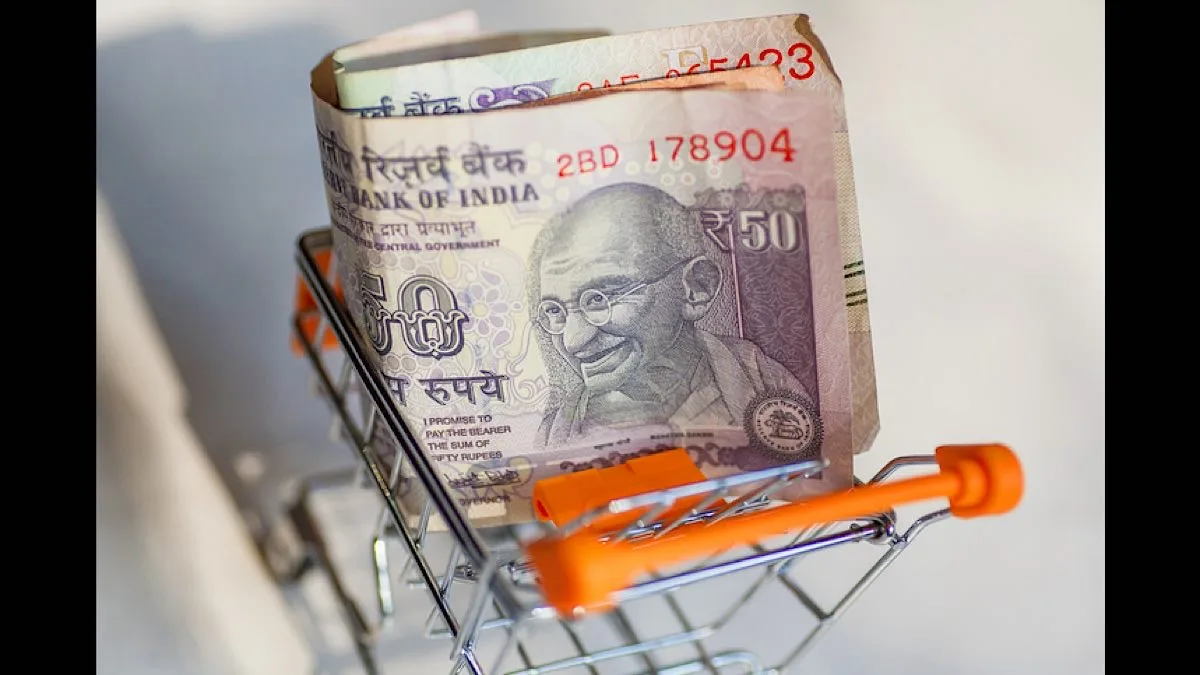
These enterprises have cumulatively secured orders worth Rs 7.44 lakh crore, accounting for 44.8 per cent of the total order value transacted through GeM, exceeding the mandated annual procurement target of 25 per cent. This participation reflects an expanding role of smaller enterprises in public procurement.

Women-led enterprises have also registered increased participation on the platform. More than 2 lakh women-owned MSEs are currently active on GeM and have secured cumulative orders worth Rs 78,066 crore.

Their participation is supported through initiatives such as Womaniya, which focus on onboarding, training and improving access to procurement opportunities for women entrepreneurs, the Commerce Ministry said.

Highlighting the significant performances registered at the platform, it said, in November 2025, a women-led MSE from Gujarat, FS Green Energies Private Limited, Vadodara, supplied renewable energy solutions valued at over Rs 53 crore to the Department of Heavy Industries.

During the same period, an MSE owned by an SC/ST entrepreneur, Infrastructure Development and Management Services, Nagpur, Maharashtra, supported surveillance infrastructure valued at Rs 29 crore for the Central Government. A startup based in Mumbai, Cloudstrats Technologies Private Limited, Maharashtra, delivered technology services amounting to Rs 191 crore, securing high-value contracts within a short period of scaling up operations.

At the GeM portal, buyers can identify products offered by MSEs, including women-led and SC/ST MSE sellers, through dedicated marketplace filters.

Don’t ignore even mild shortness of breath, cautions epidemiologist

Renowned Epidemiologist and Advisor to the National Communicable Diseases Control Programme Dr Naresh Purohit, has cautioned against the general tendency to ignore shortness of breath, even mild or occasional breathlessness, specifically during winter chill.

Statesman News Service | Jaipur |

Renowned Epidemiologist and Advisor to the National Communicable Diseases Control Programme Dr Naresh Purohit, has cautioned against the general tendency to ignore shortness of breath, even mild or occasional breathlessness, specifically during winter chill.

“This is not something to ignore, brushing aside as a sign of tiredness or ageing, ” he remarked.

Dr Purohit, who is also Principal Investigator for the Association of Studies in Respiratory Care, said in a release – “During the winter chill, most people miss shortness of breath and brush it aside as a sign of tiredness or ageing.

Many people assume it is normal to feel breathless after climbing stairs or walking a short distance, especially during seasonal changes. However, even mild or occasional breathlessness can be an early sign of chronic obstructive pulmonary disease, commonly known as COPD. This condition is far more common than people realise and remains underdiagnosed in many parts of Rajasthan”, the Epidemiologist has stated.

The winter chill also makes people’s nasal passages a most suitable abode for respiratory viruses and bacteria, which show the most activation during this season. These microscopic invaders thrive in the low humidity, making our respiratory tracts a welcoming haven, he elaborated.

Hence, there was a significant surge in patients of sneezing, coughing, and respiratory illness in the region, Dr Purohit stated, quoting health authorities.

“The cold air that we are inhaling sometimes does not get humidified and warmed up enough, and therefore reaches the lungs directly. So cold air reaching the lungs directly can sometimes cause bronchoconstriction and bronchospasm that could result in asthma. That means narrowing of the airways because of cold air being breathed in, resulting in asthma like situation,” he explained

Quoting his recent research study in the Indian Journal of Chest Diseases and Allied Sciences, the acclaimed medic pointed out that influenza viruses are better at spreading in chilly climates. He averred that in warm months, the air contains more moisture, which causes infected droplets to be larger. These droplets then fall to the ground, reducing lower levels of transmissibility.

However, in the cold months, since the air is drier, the droplets that might contain the virus hang in the air for longer periods, thus spreading faster. This is why the virus persists in the upper respiratory tract for a longer time.

“Increased pollution also raises the risk of cough and allergic reactions, leading to superadded infections. As the weather gets colder, people naturally spend more time indoors and huddle closer together in homes, schools, and workplaces. This increases the chances of close contact with someone carrying a virus, making transmission much easier, he explained.”

Biogas sector likely to see investments over Rs 5,000 crore in FY27

The biogas sector is expected to attract investments worth over Rs 5,000 crore in 2026-27, driven by strong interest from investors and stakeholders this calendar year, according to the Indian Biogas Association (IBA).

Statesman News Service | New Delhi |

The biogas sector is expected to attract investments worth over Rs 5,000 crore in 2026-27, driven by strong interest from investors and stakeholders this calendar year, according to the Indian Biogas Association (IBA).

The IBA anticipates significant commissioning of CBG facilities, effective and organised supply chains for feedstock, and unified and integrated policy frameworks to support the rapid adoption of biogas.

As of date, over 100 compressed biogas (CBG) plants have been commissioned, and the year 2025 witnessed strong interest from investors and stakeholders and a growing CBG pipeline.

Notably, the IBA is the first and largest nationwide and professional biogas association for stakeholders of the biogas industry, including technology providers, project developers, plant operators and planners of biogas plants, and representatives from public policy, science and research in India.

As per the government data, 94 CBG plants sold more than 31,400 tonnes of CBG during FY 2024-25, which is tangible proof of growth and market uptake, the IBA said in a statement.

There lies ample room for efficiency improvement and capacity utilisation in the several million small-scale traditional biogas digesters, and the country programmes are scaling up support for the various medium-sized plants which offer the benefits of cleaner cooking fuel, rural employment and organic manure, it further added.

As per the data, a total of 2,361 MW of biomass power projects and 228 MWe of waste-to-energy projects have been installed in the last ten years in the bioenergy sector in the Indian context. Additionally, a total of 2.88 lakh biogas plants have also been installed in the country to increase the use of sustainable energy solutions.

Biogas, a mixture of gases primarily methane and carbon dioxide, is produced by the breakdown of organic matter in the absence of oxygen. Methane is a combustible component of biogas, making it a fuel.

After benefiting 1.56 crore women, Bihar govt invites applications for next round of financial aid

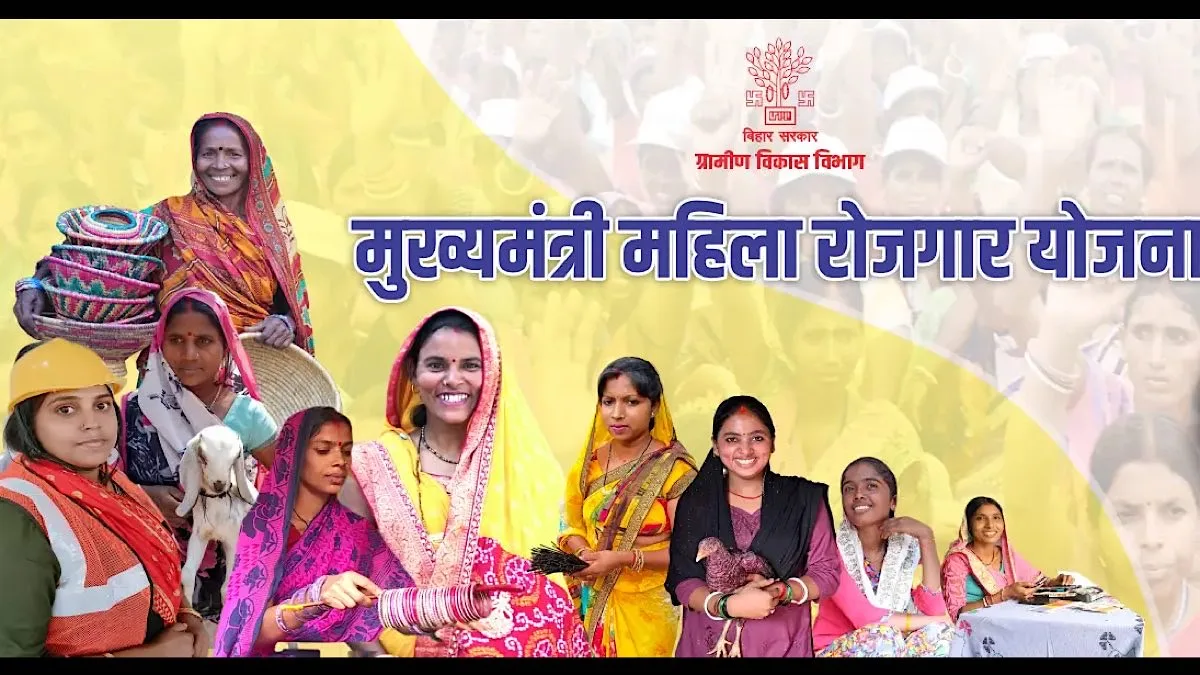
The Bihar government has invited applications from women for the second round of financial assistance of up to Rs 2 lakh under the ‘Mukhyamantri Mahila Rozgar Yojana’ (Chief Minister Women Employment Scheme).

Imran Mojib | Patna |

The Bihar government has invited applications from women for the second round of financial assistance of up to Rs 2 lakh under the ‘Mukhyamantri Mahila Rozgar Yojana’ (Chief Minister Women Employment Scheme).

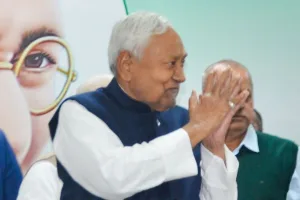
More than 1.56 crore women have benefited from Bihar Chief Minister Nitish Kumar’s flagship self-employment scheme, under which the government provided an initial assistance of Rs 10,000 each. To further promote the businesses, eligible beneficiaries can apply for the next phase of assistance till 31 December.

Women from both rural and urban areas are eligible to apply. Once an application is approved, authorities will carry out on-ground verification to assess the progress of their businesses. Thereafter, women entrepreneurs will be provided financial support of up to Rs 2 lakh in installments to expand their businesses. The government is also preparing a training model to further enhance entrepreneurial skills among women.

According to Jeevika, applications of around 10 lakh women are still pending. The department is re-verifying these applications, and the funds will be transferred once necessary corrections are made.

A technical flaw has also surfaced in the implementation of the scheme, with around 400 men across the state having received Rs 10,000 each in their bank accounts. However, due to the absence of clear recovery guidelines, no strict action has been taken so far.

While some recipients have voluntarily returned the money, others have claimed that the amount has already been spent. Several of them have also stated that the government should first return their votes if it wants the money back.

Mansukh Mandaviya officiates one-year anniversary of Fit India ‘Sundays on Cycle’

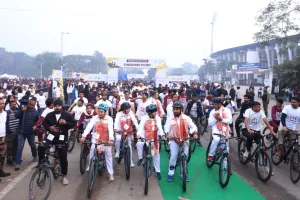
The anniversary celebrations in Puducherry transformed the Rock Beach into a vibrant fitness festival, with more than 1,500 cyclists, including school students, NaMo Cycling Club members and university youth, participating in the ride.

Statesman News Service | New Delhi |

Union Sports Minister Mansukh Mandaviya on Sunday marked the first anniversary of the Fit India ‘Sundays on Cycle’ initiative, calling its growth from a modest pilot to a nationwide movement a reflection of India’s changing fitness culture.

“Over 2 lakh locations, more than 20 lakh people. One mission – Fit India. Celebrating one year of #SundaysOnCycle,” Mandaviya posted on X, summing up the scale the initiative has achieved in just 12 months.


The anniversary celebrations in Puducherry transformed the Rock Beach into a vibrant fitness festival, with more than 1,500 cyclists, including school students, NaMo Cycling Club members and university youth, participating in the ride. Events were held at over 10,000 locations across the country, organised by the Sports Authority of India and Khelo India centres.

Explaining the programme’s rapid expansion, Mandaviya said the initiative had grown far beyond expectations.

“When we started this a year ago, it was organised at just five locations with about 500 participants. Today, more than 10,000 locations take part every Sunday, with over 10 lakh citizens joining regularly. It has become a passion, a culture and a powerful solution for pollution,” he said, adding that Prime Minister Narendra Modi’s support had helped turn it into a nationwide fight against obesity.

The celebrations were joined by several top athletes, led by Padma Bhushan and Khel Ratna awardee P R Sreejesh, who cycled alongside participants and interacted with the youth.

“Being fit is not about training for medals alone; it is about building discipline and balance in everyday life. Cycling is a simple habit, but when adopted collectively, it builds a healthier society and a stronger nation,” Sreejesh said, praising the initiative for turning fitness into a people’s movement.

Veteran table tennis star Sharath Kamal also highlighted the importance of accessible fitness, saying initiatives like Sundays on Cycle make sport inclusive and achievable for everyone, regardless of age or background.

Joining from SAI Sonipat, Arjuna Award-winning archers Jyothi Surekha and Abhishek Verma echoed similar sentiments, stressing that regular physical activity is crucial not just for athletes but for society at large.

Coinciding with World Meditation Day on December 21, the anniversary event featured a range of fitness and traditional activities, including yoga, Zumba, carrom, chess, mallakhamb, silambam and rope skipping, reinforcing the idea of fitness as “meditation in motion”.

Lieutenant Governor K Kailashnathan and Chief Minister N Rangasamy also addressed the gathering. Rangasamy described cycling as one of the simplest ways to stay healthy, while Kailashnathan emphasised how small lifestyle changes could significantly reduce environmental impact.

A major highlight of the day was the launch of the Fit India Mobile App’s Carbon Credit Incentivisation feature. Cyclists Bharatbhai Parmar, Shashikant Veerkar and Govind Singh, who earned the highest carbon credits, were honoured at the event.

“From now on, every month, cyclists from every State and Union Territory will be mapped through the Fit India mobile app and the top three performers will be incentivised. This is to encourage citizens to adopt cycling as a daily habit,” Mandaviya said.

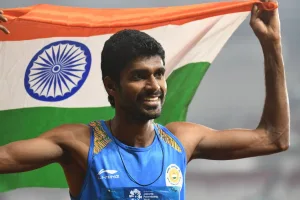
From heartbreak to historic highs: Defining sports moments of 2025

Across disciplines, Indian athletes not only delivered memorable victories but also sparked national conversations, reshaped expectations, and signalled a shift in the country’s sporting identity.

Neha Buswal | New Delhi |

From historic triumphs and breakout stars to moments of controversy, inspiration, and ambition, 2025 emerged as a defining year for Indian sport. Across disciplines, Indian athletes not only delivered memorable victories but also sparked national conversations, reshaped expectations, and signalled a shift in the country’s sporting identity. Here are the moments that defined Indian sport in 2025.

Historic wins: World Cup glory signals a new era for Indian cricket

Indian sports witnessed remarkable triumphs in 2025, both on the men’s and women’s fronts. The India Women’s ODI team clinched their maiden ICC Women’s ODI World Cup, defeating South Africa by 52 runs in the final at Navi Mumbai, with Smriti Mandhana and captain Harmanpreet Kaur leading the charge. The win has been compared to Kapil Dev’s 1983 World Cup victory for men, highlighting how it could transform the trajectory of women’s cricket in India. On the men’s side, India ended an 11-year ICC T20 World Cup title drought, reaffirming the country’s dominance in global cricket.

Breakthrough athlete: Divya Deshmukh’s chess triumph puts India on the global map

Divya Deshmukh emerged as a new face of Indian sport, winning the FIDE Women’s World Cup in chess. Her victory, achieved against some of the world’s best in a high-pressure knockout format, also completed the requirements for the prestigious Grandmaster title, the highest accolade in the sport.

Controversy: India men’s Asia Cup protest

India’s men’s cricket team became the centre of a high-profile controversy during the Asia Cup when players refused to accept the trophy from Pakistan’s federal interior minister, Mohsin Naqvi, during the presentation ceremony. The incident, captured on camera, sparked a nationwide debate over protocol, politics, and sporting decorum. The decision followed broader tensions between the nations, including the tragic Pahalgam attack, and saw senior players, led by Suryakumar Yadav, refrain from shaking hands with Pakistani counterparts in all three matches. This “no handshake” policy was mirrored by India’s women’s ODI team and continued with the U-19 team, underlining how certain issues were deemed “bigger than sportsmanship”.

Comeback: Rishabh Pant’s return from the brink redefines resilience

Rishabh Pant’s return to elite cricket in 2025 was nothing short of miraculous. After surviving a high-speed car crash in late 2022 that nearly cost him his life, Pant underwent reconstruction of three knee ligaments and endured a 629-day hiatus from Test cricket. Defying medical predictions, he returned not just to participate but to dominate, smashing twin centuries in a Test match, equalling MS Dhoni’s record for most Test hundreds by an Indian wicketkeeper, and becoming the most expensive IPL player ever with a ₹27-crore move to Lucknow Super Giants. Pant’s story, capped by a nomination for the 2025 Laureus World Comeback of the Year, became a symbol of resilience and human willpower.

Youth grassroots highlight: Minerva Academy’s European sweep validates India’s grassroots promise

Minerva Academy’s Under-14 football team wrote a new chapter in Indian grassroots sport by sweeping the Gothia Cup, Dana Cup, and Norway Cup unbeaten – a first for any Indian youth side. Beyond the trophies, the achievement proved that world-class coaching and infrastructure at the grassroots level can enable young Indian talent to compete with and defeat the best globally. The story gained further prominence when Lionel Messi visited India and felicitated the Minerva players, underscoring global recognition for Indian youth football.

Women’s sport milestone: A breakthrough year of global dominance across disciplines

Indian women athletes achieved landmark successes across multiple disciplines in 2025. Alongside the ODI World Cup win, the Indian blind women’s cricket team won the inaugural Women’s T20 World Cup for the Blind, remaining undefeated and defeating Nepal in the final. The women’s kabaddi team secured their second consecutive World Cup title, defeating Chinese Taipei 35-28 in Dhaka, while Indian women boxers shone at the 2025 World Boxing Cup Finals, with Jaismine Lamboria (57kg) and Minakshi Hooda (48kg) among the champions. Collectively, these feats highlighted the growing depth, consistency, and global impact of Indian women in sport.

 Viral moment: Messi’s India visit captures hearts and headlines

The most widely celebrated sporting moment of 2025 was Lionel Messi’s historic visit to India. The global superstar met legends Sachin Tendulkar and Sunil Chhetri in Mumbai, interacted with fans across the country, and felicitated Minerva Academy’s U-14 football stars, generating an unprecedented wave of excitement. One particularly heartwarming moment went viral when a young child walked past Messi to get an autograph from Chhetri, capturing the deep admiration fans hold for Indian heroes.

Moment that changed future expectations: India’s 2036 Olympic bid reshapes sporting ambition

Beyond victories on the field, India took a transformative step off it by officially entering the “Continuous Dialogue” phase with the International Olympic Committee to host the 2036 Olympic and Paralympic Games in Ahmedabad. This milestone signifies a long-term commitment to world-class infrastructure, stronger anti-doping systems, and streamlined sports governance. Successfully hosting the Games would elevate India’s global sporting stature and create the historic “host nation” effect, inspiring athletes and setting the expectation that India could become a top-10 Olympic nation by 2036.

Indian Railways hikes train ticket fare; non-Ac coach passengers to pay Rs 10 extra for 500-km journey

Under the revised train ticket fare structure, passengers will now have to pay an additional 2 paise per kilometre for travelling in AC coaches and non-AC Mail and Express trains.

Statesman News Service | New Delhi |

Indian Railways has increased train ticket fare for AC coaches as well as non-AC passengers on Mail and Express trains for the second time in less than six months.

Under the revised train ticket fare structure, passengers will now have to pay an additional 2 paise per kilometre for travelling in AC coaches and non-AC Mail and Express trains.

As a result of the hike, a passenger travelling 500 km in a non-AC coach will have to pay Rs 10 extra on the ticket fare.

The revised ticket fare will be effective from December 26 and is estimated to generate Rs 600 crore in revenue till March 31, 2026.

However, the train ticket fare for suburban (local) services and Monthly Season Tickets (MSTs) will remain the same. Similarly, train ticket fare has not been changed for journeys up to 215 km in ordinary class.

“There is no increase in the monthly season tickets of suburban trains and up to 215 km travel in ordinary class of other trains,” said Railways officials.

This is the second hike in train ticket fares in the current financial year. Earlier, the Indian Railways had hiked its fare in July this year. The July hike has generated Rs 700 crore in revenue for the Railways.

Railways has attributed this hike in train ticket fare to the increased manpower and expanded operations over the oast decade.

According to Railways, its total manpower coast has increased to Rs 1,15,000 crore and pension cost to Rs 60,000 crore. Moreover, Railways’ total cost of operations has also increased to Rs 2,63,000 crore in 2024-25.

Year-Ender 2025: Palestine in focus; films that illuminate lives, struggles, and dreams amid adversity

In 2025, Palestinian films reached audiences all over the world, sharing stories of courage, hope, and struggle. From small family dramas to big historical stories, these movies brought the life of Palestine to the screen.

Statesman News Service | New Delhi |

Year-Ender 2025: In 2025, Palestinian cinema leapt from the margins to the international spotlight. They earned acclaim, awards, recognition. Films from Palestine and collaborations with international filmmakers took audiences on journeys rarely seen before.

Across global festivals from Cannes to Venice, Toronto to Doha, these films highlighted the resilience, pain, hope of a people whose stories have too often been overlooked.

This year has shown Palestinian cinema is no longer just a voice from the sidelines. It is shaping conversations and winning awards.

Also Read: Year-ender 2025: Bollywood films with big stars and big budgets that failed at the box office

The power of personal tragedy

One of the most talked-about films of the year is “The Voice of Hind Rajab”, directed by Tunisian filmmaker Kaouther Ben Hania. The film reconstructs the harrowing last hours of six-year-old Hind Rajab, who was killed by Israeli forces in Gaza in January 2024.

Using an actual audio recording of a phone call from inside the car where Hind was trapped with her family, the film immerses viewers in her final moments

Premiering at the 82nd Venice Film Festival, the film earned the Silver Lion Grand Jury Prize and received a standing ovation that lasted over 20 minutes.

It continued its award-winning journey at Cannes in 2025 and is Tunisia’s official submission for the 2026 Academy Awards.

A Golden Globe nomination in the Best Non-English Language Film category has further cemented its place in global cinema.

Also Read: Year-ender 2025: From Zubeen Garg to Dharmendra and Manoj Kumar, the stars we said goodbye to

Humour amid hardship

Not all Palestinian films of 2025 focus solely on tragedy. “Once Upon a Time in Gaza”, directed by brothers Arab and Tarzan Nasser, mixes dark humor with the lived realities of Gaza in 2007.

Its premiere at Cannes in the Un Certain Regard section earned the Best Director Award. Later, the Cairo International Film Festival recognized it with three major honours, including Best Arab Feature and Best Actor for Majd Eid.

In Doha, both Majd Eid and co-lead Nader Abd Alhay shared the Best Performance Award. The film was released in Egyptian cinemas on 17 December 2025.

Also Read: Year-Ender 2025: Dark secrets, fierce women, and OTT that ruled every screen

Documenting displacement and solidarity

The documentary “No Other Land” stood out for its collaboration between Palestinian and Israeli filmmakers. Co-directed by Basel Adra, Hamdan Ballal, Yuval Abraham, Rachel Szor, the film follows the forced displacement of Palestinians in Masafer Yatta, West Bank. It also highlights bond between a Palestinian activist and an Israeli journalist.

Its impact was immediate. It earned the Academy Award for Best Documentary Feature in 2025. Earlier, it had won the Panorama Audience Award and the Berlinale Documentary Award at the 2024 Berlinale.

The filmmakers’ calls for a ceasefire and an end to apartheid sparked controversy with some politicians condemning their speeches, and one director even facing death threats in Israel.

Also Read: Year-Ender 2025: The year that shook South Indian movies; hits, flops, and everything in between

Ambitious historical epics

2025 also saw grand historical narratives. “Palestine 36”, written and directed by Annemarie Jacir, is a sweeping historical drama set during the 1936-39 Arab Revolt. Despite delays caused by the war in Gaza, Jacir insisted on filming in Palestine and Jordan rather than relocating, preserving the authenticity of the landscape.

The film premiered at the Toronto International Film Festival to a 20-minute standing ovation. It is Palestine’s official submission for the 2026 Academy Awards and represents the boldest Palestinian cinematic undertaking in years.

Intense family dramas

In a starkly different approach, “I’m Glad You’re Dead Now” by Tawfeek Barhom is a minimalist drama set mostly in a single room. It tells the story of two estranged brothers reuniting after a family tragedy, exploring survivor’s guilt, resentment, and unresolved trauma.

Critics praised its “claustrophobic intensity”. It won the Palme d’Or for Best Short Film.

Stories of youth and resistance

Cherien Dabis’ “All That’s Left of You” focuses on the First Intifada of 1988. Through the eyes of a teenager named Noor, swept into a protest in Nablus, the film captures the bravery and vulnerability of youth during violent conflict.

Premiering at the 2025 Sundance Film Festival, it won the Silver Yusr for Feature Film at the Red Sea International Film Festival. Jordan submitted the film as its official entry for the 2026 Academy Awards and it was shortlisted for Best International Feature Film.

The resilience of everyday life

Some films celebrated life and resilience amid devastation. “One More Show” by Mai Saad and Ahmed Al-Danaf documents the Free Gaza Circus.

The 74-minute documentary won the Youssef Cherif Rizkallah Audience Award at Cairo International Film Festival and channels hope and humanity through performance art.

Similarly “Gaza: Doctors Under Attack” directed by Karim Shah highlights the courage of Palestinian medical workers operating under siege.

Expanding voices through anthologies

The “From Ground Zero+” initiative led by Rashid Masharawi expanded the 2024 anthology into longer works. These films from 20-minute documentaries to full-length features depict life under siege in Gaza with raw intimacy:

– The Clown of Gaza

– Citizen Osama

– Colors Under the Sky

– Very Small Dreams

– Hassan

– Gaza to Oscar

– Sama

Palestinian films in 2025 show that cinema can be a bridge between worlds. These films have sparked conversations worldwide amid the ongoing genocide on their land.

Congress opposed Northeast’s growth, insulted Bhupen Hazarika, says PM Modi in Assam

PM Modi on Sunday accused the Congress party of repeatedly opposing the development of Assam and the Northeast.

Statesman News Service | New Delhi |

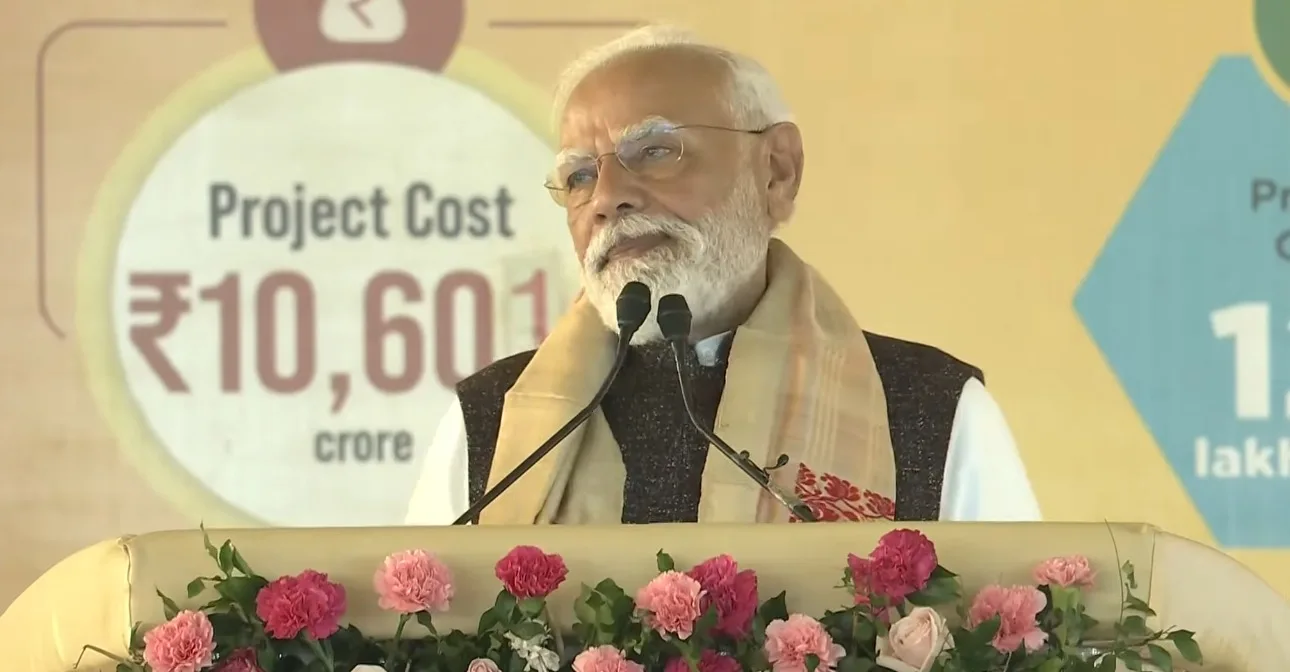
Prime Minister Narendra Modi on Sunday hit out at the Congress party, accusing it of repeatedly opposing the development of Assam and the Northeast, while inaugurating a fertiliser unit in Namrup, Assam.

Addressing a public meeting, PM Modi alleged that the Congress insulted Assam’s cultural icon Bhupen Hazarika when the BJP-led government conferred the Bharat Ratna on the legendary music maestro. “The Congress party even opposed our decision to set up a semiconductor manufacturing unit in Assam’s Nagaon district,” the Prime Minister said.

Allegations on development and infiltration

PM Modi claimed that the Congress lacks respect and concern for the people of Assam and instead favours infiltrators for political gains. “Congress backed infiltrators who have destroyed the demography of Assam because those infiltrators are the vote bank of the opposition party,” he alleged, adding that the BJP has consistently worked to safeguard the rights of Assam’s people and protect the interests of indigenous communities.

Earlier in the day, the Prime Minister paid homage to the martyrs of the historic Assam Movement at the Swahid Smarak Kshetra in Guwahati. He offered floral tributes and garlanded the bust of Khargeswar Talukdar, the first martyr of the six-year-long anti-foreigner agitation that began in 1979.

The Swahid Smarak Kshetra commemorates 860 people who lost their lives during the Assam Movement. PM Modi also visited the martyrs’ gallery, where busts of all the martyrs are installed, paying respects to each of them.

His visit was seen as a significant gesture acknowledging Assam’s turbulent past and the sacrifices made to protect the state’s identity, culture and rights.

Interaction with students on Brahmaputra cruise

As part of his two-day visit to Assam, the Prime Minister also interacted with 25 selected students from different parts of the state aboard the cruise vessel Charaideo on the Brahmaputra River, marking a unique engagement during his visit.


Year-Ender 2025: Dark secrets, fierce women, and OTT that ruled every screen

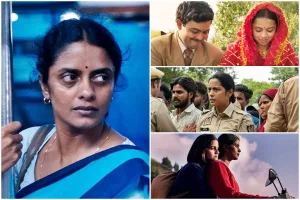
In 2025, Indian OTT became a part of daily life, with families watching together and young viewers bingeing late at night. From gripping crime thrillers to dramas about strong women, these shows kept everyone talking, sharing, and coming back for more.

Statesman News Service | New Delhi |

Year-Ender 2025: In 2025, India lived on OTT. Late-night binge sessions to family watchlists, and viral reels to endless memes, web series became part of daily routine. People argued about endings. They waited years for new seasons. And, they rewatched comfort shows like old friends.

OTT in 2025 was no longer “new media”. It was mainstream culture.

This year also marked a shift. Subscription prices went up. Attention spans went down. So creators adapted. Short clips flooded social media. Dialogues became memes. Scenes became Instagram reels.

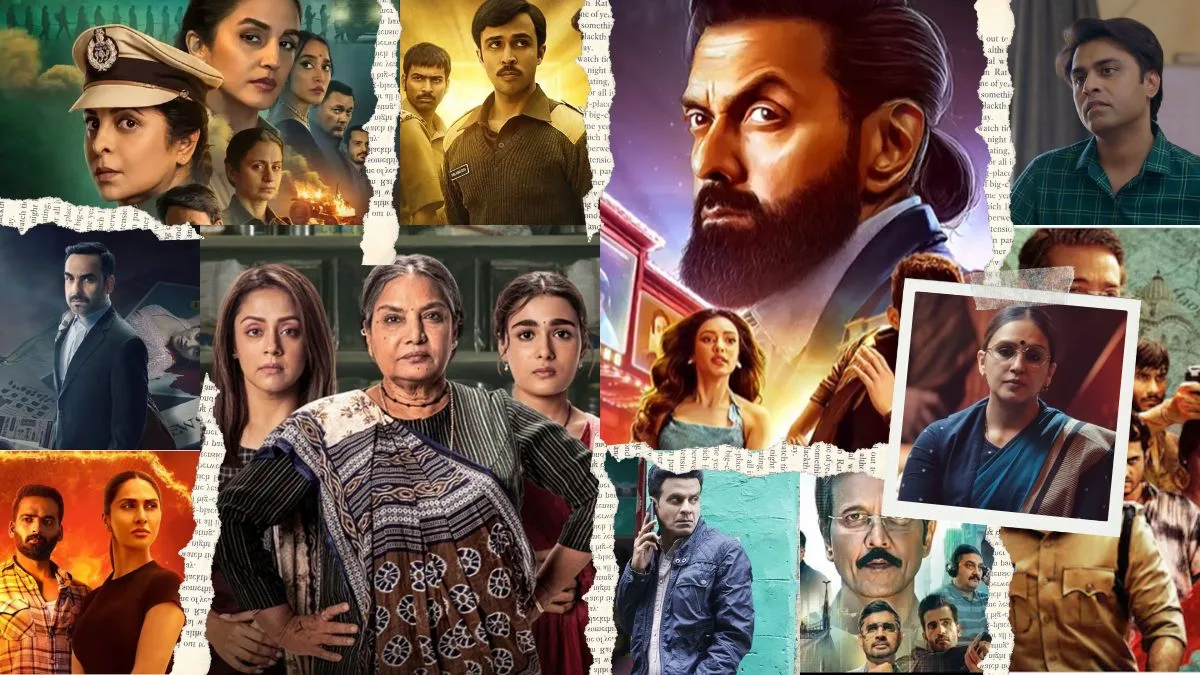
Here is a deep dive into the OTT shows that made the loudest noise in 2025.

Also Read: Year-Ender 2025: Bollywood at the crossroads; where it fell, where it rose, and what changed forever

Indian OTT in 2025: A year of growth, risk, and reflection

2025 was not about one genre or one platform winning race. It was about variety.

Crime thrillers continued to rule. Village dramas stayed close to the heart. Espionage series delivered adrenaline. Horror finally felt mature. And women-led stories moved from the margins to the centre.

Families watched together. Young viewers binged alone at night. Stories reflected real fears, real dreams, and real frustrations. The Indian OTT space grew up this year and audiences grew with it.

1. The Bads of Bollywood

The most talked-about OTT series of 2025 came from an unexpected place.

The Bads of Bollywood marked Aryan Khan’s directorial debut, and curiosity surrounded it long before release. But once it dropped, the conversation changed from “who made it” to “what it revealed”.

Set in the glossy but ruthless world of Hindi cinema, the show follows an outsider chasing fame. What begins as a dream slowly turns into a lesson in power, privilege, manipulation, and survival.

The tone is sharp. The humour is dark. The storytelling pulls no punches.

Controversies surrounded it. Debates followed. Memes exploded. And that’s exactly why it topped IMDb’s popularity list.

Also Read: Year-Ender 2025: The year that shook South Indian movies; hits, flops, and everything in between

2. Black Warrant

Dark, quiet, deeply unsettling, Black Warrant proved that OTT doesn’t need glamour to grip viewers.

Based on the non-fiction book Black Warrant: Confessions of a Tihar Jailer, series is set inside Tihar Jail. It follows newly appointed jailer whose ideals are tested as he discovers corruption embedded deep within the system.

Zahan Kapoor, grandson of the late Shashi Kapoor, delivered controlled and powerful performance. The storytelling stayed grounded avoiding melodrama and focusing instead on moral dilemmas.

Every episode asked uncomfortable questions. What does justice look like behind bars? Who holds power when no one is watching? How much compromise is too much?

Also Read: Year-Ender 2025: Records broken, Eras ended, and Taylor Swift found forever

3. Paatal Lok Season 2

After a long five-year wait, Paatal Lok returned and it didn’t soften its edges.

Season 2 moved its setting from Delhi to Nagaland expanding its political and emotional landscape. Jaideep Ahlawat once again anchored the series with a performance full of quiet rage and exhaustion.

The show explored crime, politics, and personal loss with brutal honesty. The violence felt real. The corruption felt familiar. The characters felt painfully human.

Instead of offering easy answers, Paatal Lok asked hard questions about power, identity, and survival.

It was heavy viewing but powerful.

Also Read: Year-ender 2025: From Zubeen Garg to Dharmendra and Manoj Kumar, the stars we said goodbye to

4. Panchayat Season 4

In a year full of darkness, Panchayat returned like a warm cup of tea.

Season 4 brought viewers back to Phulera, where life moves slowly but problems still feel big. Abhishek Tripathi continued his journey through bureaucracy, village politics, and personal confusion.

What makes Panchayat special is its simplicity. There are no villains. Only people trying their best with limited resources.

5. Mandala Murders

Mandala Murders arrived quietly but soon dominated conversations.

Set in a peaceful town shaken by ritualistic killings, the series followed detectives chasing a serial killer linked to a secret organisation. Strange symbols, psychological games, and hidden beliefs formed the backbone of the story.

Vaani Kapoor led a strong ensemble cast, and the show stood out for its atmosphere. It was slow, eerie, layered.

Critical opinions were divided but audience curiosity never dipped. Viewers stayed hooked, theorising online and dissecting clues.

6. Khauf

Horror on Indian OTT often relies on jump scares. Khauf chose a different path.

Set in a Delhi hostel room, the series followed a young woman experiencing disturbing events linked to a violent past. The fear didn’t come from ghosts alone but from guilt, memory, and trauma.

The show used silence, shadows, and emotional tension instead of loud scares. The horror felt intimate and personal.

7. Special Ops Season 2

One of the most awaited returns of 2025, Special Ops Season 2 delivered what fans wanted and more.

KK Menon returned as intelligence officer Himmat Singh, leading a new mission against global terror threats. The stakes were higher. The dangers closer to home.

The show balanced slick action with emotional storytelling. It showed the cost of duty, not just on the nation, but on families.

For fans of espionage drama, this season was worth the wait.

8. Khakee: The Bengal Chapter

Set in early-2000s Bengal, Khakee: The Bengal Chapter explored the uneasy relationship between crime, politics, and law enforcement.

Inspired by real events, the series followed an IPS officer fighting gang lords and corrupt systems. The setting felt authentic. The tension felt real.

Rather than glorifying violence, the show focused on consequences: moral confusion, broken systems, and the price of honesty.

9. The Family Man Season 3

After a long wait, The Family Man returned and fans welcomed it like family.

Manoj Bajpayee slipped back into the role of Srikant Tiwari, once again juggling national security threats with domestic chaos. The humour remained sharp. The action stayed tense.

Season 3 didn’t reinvent the wheel but it didn’t need to. It delivered exactly what audiences loved: relatable struggles wrapped inside high-stakes missions.

10. Criminal Justice: A Family Matter

Pankaj Tripathi leads the legal drama revolving around a complicated murder case tied to buried family secrets. Each episode peeled back layers of truth, slowly and carefully.

The courtroom scenes felt intense but grounded. The performances stayed restrained. It wasn’t flashy but it was effective.

11. Dabba Cartel

In 2025, one web series quietly flipped the crime genre on its head. No guns blazing. No loud gangsters. Just steel tiffins, everyday women, and a secret that travelled from one lunchbox to another.

Dabba Cartel was not just another crime drama on Indian OTT. It was a statement. A reminder that power does not always wear suits or carry weapons. Sometimes, it comes wrapped in routine, silence, and survival.

12. Delhi Crime Season 3

Some stories don’t arrive to entertain. They arrive to disturb, to remind, and to refuse silence.

With Delhi Crime Season 3, the acclaimed Netflix series returned in 2025 carrying its heaviest subject yet. This time the focus shifted to human trafficking inspired by 2012 Baby Falak case.

Unlike many crime dramas that thrive on suspense alone, Delhi Crime has always walked a difficult line. It tells real stories without turning pain into spectacle. Season 3 stayed true to that promise.

13. Maharani Season 4

By the time power settles in, it no longer whispers. It demands. And in Season 4 of Maharani, power arrives louder, sharper, and far more dangerous.

Released in 2025, Maharani Season 4 took the political drama beyond Bihar and placed it on the national stage. What began years ago as the story of an unlikely woman rising in state politics has now transformed into a full-blown battle for the soul of Indian democracy during the coalition era.

2025 showed that Indian OTT has matured.

It experimented. It reflected reality. And, it sparked conversations.

As we step into a new year, one thing is clear: OTT is no longer competing with cinema or television.

It has become a world of its own because India is watching.

Also Read: Year-ender 2025: Bollywood films with big stars and big budgets that failed at the box office

Bangladesh-Pakistan: Anti-Indianism or fear of cultural assimilation?

What feeds the feeling of anti-Indianism? Is it India’s much-criticised about “big brother” attitude towards its smaller neighbours? Is it the perceived senatorial aloofness of Indian diplomats posted to neighbouring capitals? Or is it something more structural, more psychological, and hence more enduring?

Jayanta Roy Chowdhury | New Delhi |

In recent years, anti-Indian sentiment has surfaced across South Asia with unsettling regularity. Indian diplomatic missions have been attacked in Bangladesh; slogans denouncing India have been raised in Kathmandu; while the press and government have tarred every untoward incident in Pakistan’s rebellious Baloch and Pashtun areas with familiar accusations of Indian interference.

These have not been isolated incidents, nor were they merely episodic outbursts triggered by specific events. They point to a deeper, older current in the political psychology of the subcontinent.

What feeds this feeling of anti-Indianism? Is it India’s much-criticised about “big brother” attitude towards its smaller neighbours? Is it the perceived senatorial aloofness of Indian diplomats posted to neighbouring capitals?Or is it something more structural, more psychological, and hence more enduring?

Pakistan offers the clearest historical lesson in this regard. Pakistan was not born merely out of the need to create a homeland for a few; it was born out of a desire to be separate from India.Fear of the larger neighbour, demographically, culturally, and civilisationally, became a defining element of Pakistan’s national psyche. From even before it was born, Pakistani politics revolved around accusations of being “pro-Indian,” a label synonymous with treachery.

Electoral battles, military interventions, and ideological campaigns were all shaped by this anxiety. Anti-Indianism became not just a foreign policy posture but a domestic political tool. Behind this rhetoric was the fear that the mainstream of ideas in the sub-continent – secularism, socialistic and liberal – may at some stage overtake the narrower nation construct of Pakistan.The name Pakistan, translated into English meaning ‘Land of the Pure’, itself was a marker of this fear – which tried otherise the rest of the sub-continent as somehow impure and hence a threat to the “purer ideals” that formed foundation stone of the new border nation.A similar dynamic played out in Bangladesh. Sheikh Mujibur Rahman was repeatedly accused by his opponents of being “pro-Indian,” of acting in league with New Delhi, simply because he sought better trade relations and a peaceful coexistence with a neighbour Bangladesh could not wish away.

In the 1960s, he was subjected to a sham trail where he was accused of being an Indian agent. In 1975, his killers did not merely accuse him of being dictatorial but of “selling out to India”, despite there being no evidence of his having done so. In fact, witnesses to that era speak of how Mujib was drawing closer to China on the one hand and warmly embracing his former jailor Zulfikar Ali Bhutto on the other.The accusers were not just his opponents from outside his party but his own comrades in arms.

The smear campaign was never really about policy differences. It was always about carving out a separate identity and the fear that surrounded by a larger neighbour, that project may spectacularly fail.At the heart of this anxiety lies the fear of being subsumed by the larger cultural entity that is Indianness. India’s civilisational spread, through language, literature, cinema, music, and markets, does not stop at political borders.It seeps across them, often effortlessly.

For societies attempting to assert a distinct post-colonial or post-partition identity, this cultural permeability can be threatening.This tension is now playing out sharply in Bangladesh amid the current upheaval following the death of Osman Hadi.On the one hand, India is being blamed, without any credible evidence, for allegedly sheltering the perpetrators of the crime. Indian missions have been attacked in retaliation. On the other hand, Bangladeshi television channels speak incessantly of Indian “cultural, economic, and political aggression,” even though such aggression is conspicuously absent from daily life on the streets.More revealing, however, is the second stream of violence and rhetoric, directed not at India, but at Bangladesh’s own cultural foundations.Cultural organisations such as ‘Chhayanaut’, long-standing custodians of Bengali identity, have come under attack. Sufi shrines, representing a plural, syncretic strand of Islam deeply rooted in Bengali society, are being targeted.

Newspapers which were quite avowedly anti-Hasina but in favour of pluralism have been burnt down. These are not accidental choices of targets, they have been deliberately and carefully chosen.Bangladesh was founded on two abiding streams of consciousness. The first was a distinct Bengali cultural identity, inclusive, linguistic, and rooted in shared heritage, with a Muslim identity woven into it, which set it apart from India’s Bengal but yet in many ways it’s twin.The second was a pragmatic aspiration: to live in peace with neighbours, to coexist, to prioritise economic upliftment, social mobility, and a better life for its people.The current wave of demonstrations seeks to negate both. Closeness with India is portrayed as betrayal; India itself is branded the enemy and openly threatened by street demonstrators.Simultaneously, the very idea of being Bengali is under assault. For the new political actors emerging in this turbulence, Bengali-ness appears to be an inconvenience, an obstacle to the construction of their chosen narrower identity.In this context, India becomes a convenient antagonist. Anti-Indianism serves as a proxy, a mobilising slogan that masks a more fundamental project: the redefinition of national identity through separation: culturally, emotionally, and ideologically.The real culprit, therefore, is not India’s actions or attitudes alone. It is the desire to be defined as separate at all costs.However this constructed definitiveness collapses in everyday life.

A Pakistani may watch a Bollywood film in private even as public discourse condemns Indian culture. A Bangladeshi may read Bankim Chandra Chattopadhyay or Sunil Gangopadhyay or watch a Bengali serial produced by Tollywood, while political rhetoric denounces cultural proximity to India and business interests deny Indian-made Bengali movie to be shown in Dhaka.These contradictions expose the fragility of constructed separateness. What is being attacked, ultimately, is the discomforting truth that identities in the subcontinent are intertwined. Language, culture, memory, and imagination do not recognise political borders.Anti-Indianism has emerged not as reaction to India’s power display, but a defence mechanism being constructed against cultural intimacy, which could open windows for people behind a border separated by barbed wires.

Year-Ender 2025: Bollywood at the crossroads; where it fell, where it rose, and what changed forever

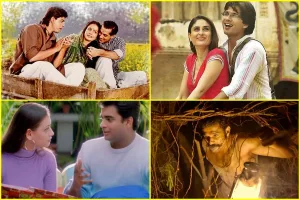
Bollywood entered 2025 surrounded by doubt, fatigue and loud predictions of decline. By the year’s end, a mix of blockbusters, surprise hits and hard lessons proved Hindi cinema was not fading, it was finding its footing again.

Statesman News Service | New Delhi | Updated :

Year-ender 2025: For most of 2025, one sentence refused to leave film conversations. “Only South Indian films are working now.” It was said at chai stalls, inside trade offices, on social media threads, and even at multiplex queues. Kannada, Telugu, Tamil and Malayalam cinema were riding high. Big scale, rooted stories, powerful stars, and fearless storytelling made South Indian films feel unstoppable.

Bollywood, people said, was still finding its feet.


View this post on Instagram


A post shared by The Statesman (@thestatesmanltd)

Also Read: Year-ender 2025: Bollywood films with big stars and big budgets that failed at the box office

And yet, while the noise stayed loud, something else was happening quietly week after week, month after month. Hindi films were pulling audiences back. Not always with noise. Not always with whistles. But with numbers, emotion, and variety.

By the time December rolled in, the box office told a very different story.

Also Read: Year-Ender 2025: The year that shook South Indian movies; hits, flops, and everything in between

This was not a year of one kind of Bollywood movie.
This was a year of historical epics, courtroom dramas, war films, love stories, social dramas, comedies, and mid-budget surprises.

Bollywood didn’t scream its return. It earned it.

Welcome to the Bollywood year-ender of 2025, the year Hindi cinema proved it still knows how to bring people to theatres.

The big picture: Bollywood in 2025

Before diving into individual films, let’s understand the mood. 2025 was not about “superstars only”. It was about stories clicking. Big budgets worked sometimes. Small and medium films worked often. Content and conviction mattered more than hype

Bollywood gave hits, blockbusters, averages, flops, and disasters, but most importantly, it gave range.

The return of the big Bollywood blockbusters

Chhaava had a roaring box office record

If one film announced Bollywood’s confidence loudly, it was ‘Chhaava’.

Vicky Kaushal as Sambhaji Maharaj was a commitment. The film arrived with expectations and left with applause. With a budget of ₹150 crore, it amassed worldwide gross of ₹808.7 crore, domestic net of ₹604.1 crore

Dhurandhar: Grit, scale, and the return of Akshaye Khanna

Dark, layered, and intense. ‘Dhurandhar’ arrived like a storm.

Ranveer Singh disappeared into a dangerous Karachi underworld. Aditya Dhar’s direction gave the film raw energy, while Akshaye Khanna and Sanjay Dutt added weight. It had a budget of ₹250 crore with worldwide gross ₹740.8 crore and domestic net ₹485.4 crore.

Saiyaara: Romance still works when it feels real

In a year filled with action and noise, ‘Saiyaara’ reminded everyone that love stories still sell if they feel honest.

Mohit Suri returned to his emotional roots. New faces brought freshness. The music did half the talking.

Simple emotions. Familiar pain. Big rewards.

When big budgets didn’t guarantee big love

War 2: When expectations became the enemy

On paper, ‘War 2’ had everything. Hrithik Roshan. NTR Jr. YRF scale.
But sometimes, even firepower isn’t enough. It became a flop despite a budget of ₹400 crore. It earned only worldwide gross of ₹360.7 crore with domestic net ₹240.5 crore.

The film opened strong but faded fast. Spectacle couldn’t hide storytelling fatigue.

Sikandar: Salman Khan, but not the magic

Salman Khan remains a force, but ‘Sikandar’ failed to ignite his usual box office fire. Even with 200 crore budget, it managed only worldwide gross ₹182.7 crore with domestic net ₹108.7 crore

The intention was massy, but the connection never fully landed.

The power of content-driven Bollywood

Sitaare Zameen Par: Aamir Khan’s gentle win

Aamir Khan returned with sensitivity, not swagger. ‘Sitaare Zameen Par’ told a story about empathy, growth, and human connection, without shouting. Budget of ₹80 crore but worldwide gross of ₹268.1 crore. It had a domestic net of ₹166.8 crore.

It wasn’t record-breaking.

It was heart-breaking in the best way.

Raid 2: Old-school thriller done right

Ajay Devgn’s calm intensity once again worked magic. It was made with ₹80 crore but collected worldwide gross ₹235.8 crore, domestic net ₹173.5 crore.

The film proved sequels can work if they respect the original.

Jolly LLB 3: Laughter, law, logic

Courtroom chaos returned smarter and louder. Akshay Kumar and Arshad Warsi together felt like a reunion audiences didn’t know they missed.

– Budget: ₹100 crore
– Worldwide Gross: ₹170.3 crore
– Domestic Net: ₹116.7 crore

Love stories found new life

Tere Ishk Mein: Intensity over gloss

Aanand L Rai delivered heartbreak with poetry. Dhanush and Kriti Sanon brought raw emotion, not perfection. This was romance without filters.

– Budget: ₹75 crore
– Worldwide Gross: ₹159.4 crore
– Domestic Net: ₹114.2 crore

Dhadak 2: Brave, but costly

The film tackled caste, violence, and young love. But the appreciation did not translate to numbers. But the attempt mattered.

– Budget: ₹45 crore
– Worldwide Gross: ₹31.2 crore
– Domestic Net: ₹22.5 crore

Comedy: Mixed laughs, mixed results

Housefull 5 kept the franchise’s trademark chaos alive. It had massive cast, loud humour, grand setups. However by 2025, the jokes felt familiar and overstretched.

Made on a hefty budget of ₹225 crore, it collected around ₹292.5 crore worldwide. Not a failure, but far from the franchise’s earlier glory.

On the other hand, Bhool Chuk Maaf proved that comedy works best when it feels honest and relatable. Led by Rajkummar Rao, the film relied on situational humour and not scale.

With budget of ₹45 crore, it earned ₹89.2 crore globally.

Patriotic and political cinema

Kesari Chapter 2 arrived with strong intentions and a powerful theme rooted in patriotism. The film tried to balance emotion with message-driven storytelling. And while its heart was in the right place, the impact remained uneven.


In contrast, The Bengal Files generated more discussion than footfalls. Heavy on conversations and political commentary, the film struggled to convert curiosity into ticket sales.

Also Read: Year-Ender 2025: Records broken, Eras ended, and Taylor Swift found forever

Bollywood’s quiet strength: Medium & small films

Ek Deewane Ki Deewaniyat turned out to be one of the biggest surprises. The film built momentum and exceeded expectations. Made on budget of ₹30 crore, it went on to collect ₹113.2 crore worldwide.

On the other hand, Haq struggled to find its audience. The film was praised for its performances and message. But the box office response remained muted. With a budget of ₹30 crore and worldwide collections of ₹27.8 crore.

What 2025 finally proved about Bollywood

Bollywood is not dead and it is not one genre. It doesn’t need to copy the South, and works best when it trusts its own voice

While South Indian cinema continued its incredible run, 2025 showed that Hindi cinema was never out of the race.

It was just recalibrating.

Also Read: Year-ender 2025: From Zubeen Garg to Dharmendra and Manoj Kumar, the stars we said goodbye to

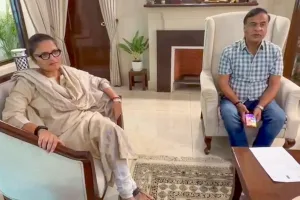
Hijab row: J’khand leaders target Bihar CM Nitish Kumar, question his ‘mental condition’

JMM leader termed the incident a shameful act and questioned if a person with such mental condition should continue to serve as the Bihar CM.

Statesman News Service | New Delhi |

Bihar Chief Minister Nitish Kumar has come under sharp criticism from leaders in Jharkhand as the hijab controversy continues to escalate, with the opposition parties demanding accountability and accusing him of “disrespecting women”.

The criticism comes after the Jharkhand government extended a job offer to Bihar AYUSH doctor Nusrat Praveen, promising a monthly salary of Rs 3 lakh, after she stopped reporting for duty following the hijab-related incident. Jharkhand Health Minister Irfan Ansari said on Saturday that he had offered employment to the woman doctor with a monthly remuneration of Rs 3 lakh, along with a government residence and a posting of her choice, in response to the controversy that erupted during the distribution of appointment letters in Bihar. Ansari claimed that Bihar Chief Minister Nitish Kumar attempted to insult the hijab and the Muslim community by removing a woman’s veil.

Supporting Ansari’s remarks, Jharkhand Mukti Morcha (JMM) spokesperson Manoj Kumar Pandey termed the incident a “shameful act” and accused Nitish Kumar of publicly humiliating the woman doctor. Speaking to IANS, Pandey said, “What happened in the land of Bihar was a disgraceful act, and I consider it nothing but a shameful deed. A Chief Minister behaving improperly and publicly insulting a woman is unacceptable.”

“We don’t care about the religion or caste, but about the behaviour towards any woman. Why is this issue being buried? Why is Nitish Kumar not being removed from his post? Will a person with such mental condition serve as the Chief Minister of Bihar? Are there only such leaders in the BJP-led alliance?” he questioned.

Congress leader Rakesh Sinha also attacked the Bihar Chief Minister, accusing him of “disrespecting the dignity of women”. Speaking to IANS, Sinha said, “When a person seated within the constitutional framework attempts to violate the dignity of women, it becomes our responsibility to restore that dignity. Congress respects the honour of mothers and sisters, regardless of their religion, community, or caste.”

Targeting the NDA allies, the Congress leader further said, “We believe it is in the nature of the Bharatiya Janata Party and its allies to disrespect women and violate their dignity.”

“Since the leaders of Nitish Kumar’s alliance have consistently displayed this behaviour, it was natural that when the woman became so emotional and agitated that she decided that she would no longer participate. Hence, we offered her to come to Jharkhand, assuring her that her dignity would be respected under the Mahagathbandhan government and the Congress party, and we would even provide her employment here,” he added.

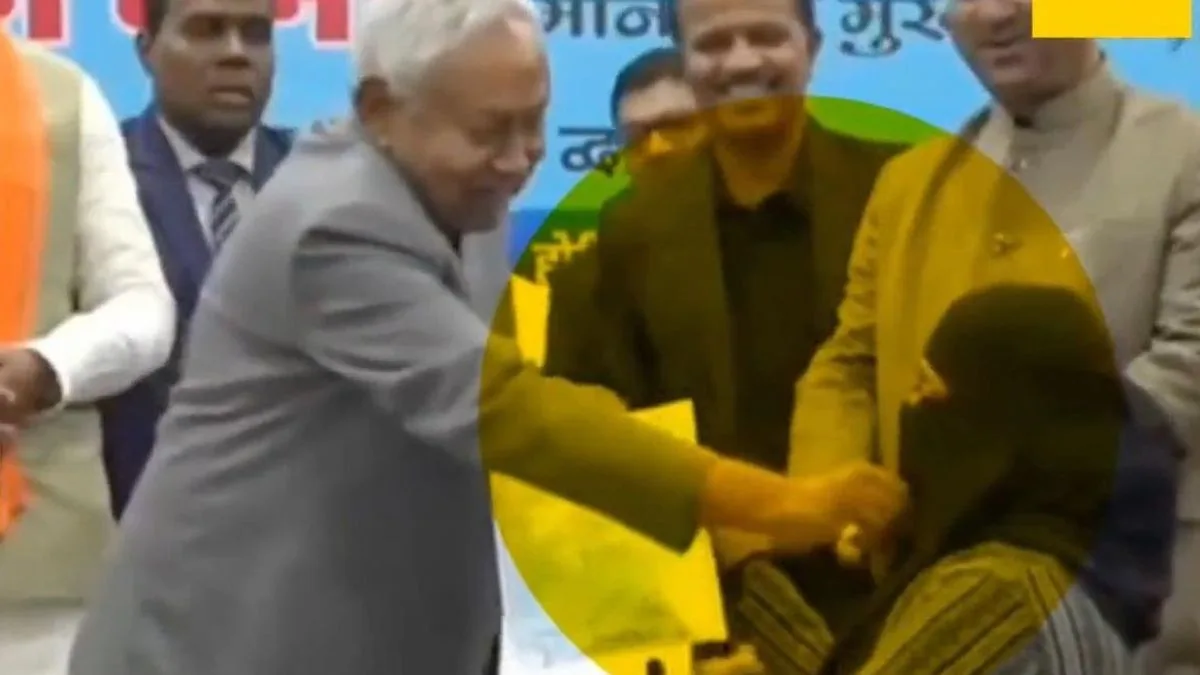
The event, a video recording of which has been extensively shared and ignited a significant political controversy, occurred on December 20 at the Chief Minister’s Secretariat in Patna, where AYUSH doctors had assembled to obtain their appointment letters. When the woman approached to receive her letter, Nitish Kumar noticed her hijab, asked her to remove it, stating, “What’s this?”, and then lifted the hijab himself. The footage was widely circulated by the Rashtriya Janata Dal (RJD) and soon turned into a political flashpoint. Opposition parties raised objections, and the controversy triggered debates across the nation.

Akhilesh Yadav targets BJP over ‘one nation, one businessman’ claim

Akhilesh Yadav on Sunday attacked BJP government for pursuing a “one nation, one businessman” agenda that could be fatal for the country.

Statesman News Service | New Delhi |

Samajwadi Party (SP) national president Akhilesh Yadav on Sunday attacked the Bharatiya Janata Party (BJP) government for pursuing a “one nation, one businessman” agenda that could be fatal for the country. He alleged that the BJP is working on a model that aims to consolidate every major business in the country into the hands of a select few.

In a post on social media, Yadav claimed that the BJP leadership aims to place the country’s entire economic system under the control of a few select individuals. He alleged that instead of seeking donations from diverse sources, the government is attempting to consolidate major businesses in the hands of a limited group. According to him, individuals who unquestioningly approve decisions have been positioned within the government and the party organisation to fulfil what he described as an “insatiable hunger” for money.

The SP leader warned that monopolistic practices are dangerous for any nation, whether in political, economic, or social spheres. He alleged that frequent changes in policies and rules by the BJP government are intended to weaken other industrial houses while restricting economic opportunities to select groups. He said that such actions are pushing the country towards a serious and risky situation.

Yadav further claimed that such a model would lead to unchecked profiteering, rising inflation, and large-scale corruption. He alleged that rules would be altered to favour monopolistic companies, consumers would face arbitrary charges, and workers would be subjected to exploitation through what he termed a system of “less pay, more work.”

He also said that farmers and the PDA communities, including Pichda (Backward Classes), Dalit, and Alpsankhyak (Minorities), would not be heard, resulting in nearly 95 per cent of the population facing exploitation.

Calling for unity, Yadav said it was time for the country to collectively oppose monopoly and make it clear that such a system is unacceptable.

IndiGo issues travel advisory as fog disrupts flights over Bengaluru, Amritsar

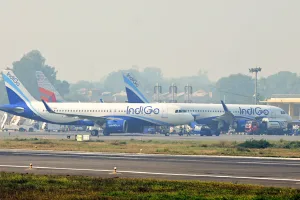
IndiGo on Sunday issued a travel advisory warning passengers about flight disruptions caused by dense fog and low visibility over Bengaluru and Amritsar.

ANI | New Delhi |

IndiGo on Sunday issued a travel advisory warning passengers about flight disruptions caused by dense fog and low visibility over Bengaluru and Amritsar.
The airline said it is closely monitoring weather conditions and providing full support to ensure safe and smooth travel for its passengers.

In its advisory, IndiGo stated, “Low visibility and fog over #Bangalore and #Amritsar have impacted flight schedules. We’re keeping a close watch on the weather and doing our best to get you where you need to be, safely and smoothly.”

The advisory urged travellers to stay up to date on their flight status via the airline’s official channels. “We request that you stay updated on your flight status bit.ly/3ZWAQXd. Please be assured that our teams are here to assist you at every step and provide full support,” the advisory further read.

“Here’s hoping clearer skies help us serve you better soon and thank you for your patience and understanding during this challenging time,” it added.
Meanwhile, West Bengal’s Bagdogra Airport also reported that flights to and from the city may be affected due to dense fog. Authorities said conditions are expected to improve in the next few hours and advised passengers to check with their respective airlines before heading to the airport.

A statement from Bagdogra Airport read, “Due to dense fog and low visibility, flights to and from Bagdogra may be affected. Conditions are expected to improve in the next few hours. Passengers are advised to check flight status with their airline before coming to the airport.”

Earlier on Sunday, the Airports Authority of India (AAI) issued an advisory noting that fog conditions in parts of northern India are affecting visibility and may lead to delays or changes in flight operations at select airports.
Passengers have been advised to check flight updates with their respective airlines through official channels and to allow extra time for travel to airports and completion of necessary formalities.

“Fog conditions in parts of Northern India are affecting visibility and may lead to delays or changes in flight operations at select airports. Passengers are advised to check flight updates with their airlines through official channels and allow extra time for airport travel and formalities,” AAI’s advisory read.
To assist travellers during adverse weather, AAI has deployed passenger assistance teams at affected airports to provide guidance and on-ground support, ensuring smooth operations and passenger safety amid dense fog conditions.