Logo

Hospitals to offer “home away from home” for patients’ families

The Chhattisgarh government announced the creation of dedicated rest homes for relatives of patients at government medical college hospitals.

Statesman News Service | Raipur |

In a move that blends healthcare with compassion, the Chhattisgarh government has announced the creation of dedicated rest homes for relatives of patients at government medical college hospitals, addressing a long neglected hardship faced by families travelling from remote and rural areas for treatment.

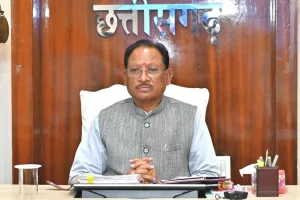
The initiative was formalised with the signing of a Memorandum of Understanding (MoU) between the Department of Medical Education and the Sevadan Arogya Foundation at the state secretariat in Nava Raipur, in the presence of Chief Minister Vishnu Deo Sai. The project aims to ensure that attendants of hospitalised patients are no longer forced to spend nights in corridors, staircases or open spaces while caring for their loved ones.

Under the agreement, the Sevadan Arogya Foundation will take full responsibility for the construction, furnishing, and day-to-day management of the rest homes. The facilities will operate on a “no profit, no loss” basis, offering safe, clean and affordable accommodation. Each rest home will provide round the clock security, CCTV surveillance, hygienic food and a dignified living environment within or near hospital campuses.

In the first phase, the rest homes will be developed at government medical colleges in Raipur, Ambikapur, Raigarh and Jagdalpur, key healthcare hubs that receive a steady influx of patients from distant districts. Officials said the selection reflects the pressing need for organised accommodation in cities where families often stay for weeks during prolonged treatment.

Health Minister Shyam Bihari Jaiswal said the initiative recognises that recovery is not limited to medicines alone. “Treatment also depends on emotional support and peace of mind. These rest homes will allow families to remain close to patients in a secure and humane setting,” he said.

Chief Minister Sai emphasised that healthcare must extend beyond clinical care. “Our objective is not only to provide quality treatment but also to safeguard the dignity and comfort of patients’ families. For those coming from far flung areas, these rest homes will offer safe, clean and affordable shelter, along with food and basic facilities, under one roof,” he said, describing the move as a hallmark of sensitive and responsible governance.

Technical Education Minister Khushwant Saheb, Health Secretary Amit Kataria, Medical Education Commissioner Ritesh Agrawal, and representatives of the Sevadan Arogya Foundation were present at the signing ceremony.

 

Chhattisgarh signs MoU with Sri Sathya Sai Trust to boost healthcare skills, youth employment

The MoU aims to enhance skill development in the healthcare sector by introducing structured vocational training programmes tailored to the growing demands of modern medical services.

Statesman News Service | Raipur |

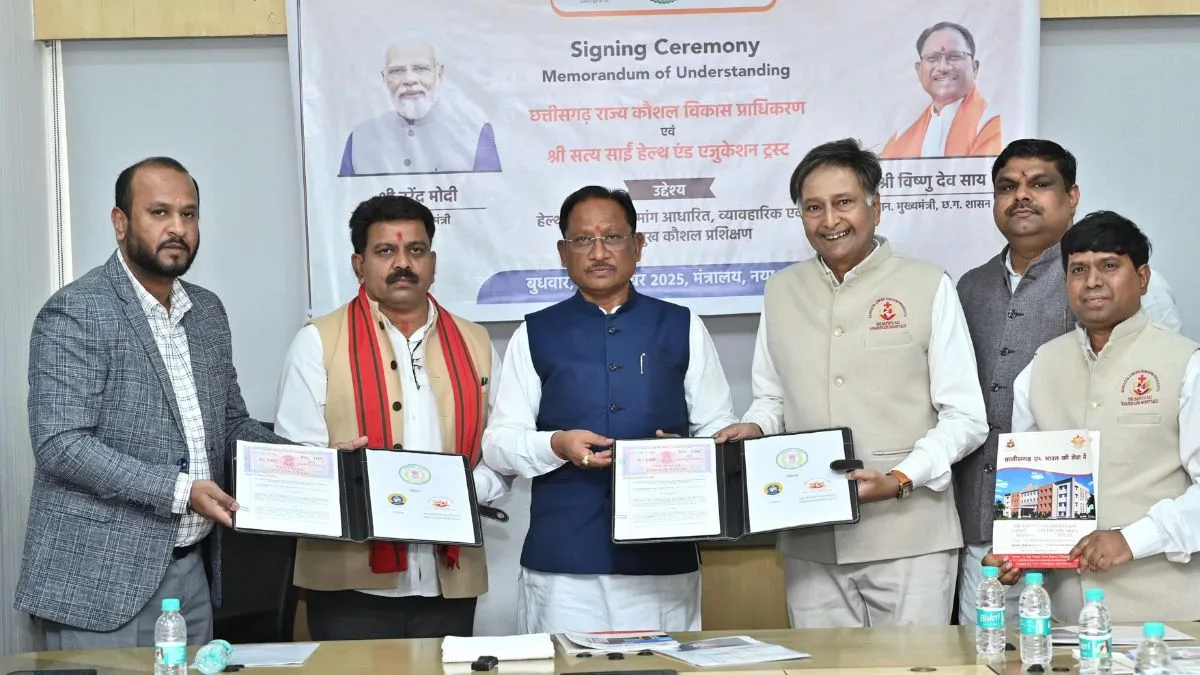
Chhattisgarh took a significant step towards strengthening its healthcare workforce and expanding employment opportunities on Thursday with the signing of a Memorandum of Understanding between the Chhattisgarh State Skill Development Authority and the Sri Sathya Sai Health and Education Trust. The agreement was formalised at Mahanadi Bhawan in Nava Raipur in the presence of Chief Minister Vishnu Deo Sai.

The MoU aims to enhance skill development in the healthcare sector by introducing structured vocational training programmes tailored to the growing demands of modern medical services. Under the partnership, healthcare training centres will be established to equip young people with industry-relevant skills while creating a pool of trained professionals to support hospitals and emergency services across the state.

As per the agreement, training will be provided free of cost through both residential and non-residential programmes. Courses will cover key healthcare disciplines, including Medical Laboratory Technology, Cardiology Technician, ECG Technician, Cardiac Care Technician, and Emergency Medical Technician. Officials said the initiative is designed to open sustainable career pathways for youth, particularly in a sector witnessing rapid expansion.

Addressing the gathering, Chief Minister Sai said skill development remains central to the state’s development strategy. He noted that focused training in healthcare would not only improve service delivery but also generate meaningful employment for young people. “A skilled workforce is essential for strengthening healthcare infrastructure, especially in remote and underserved areas,” he said, expressing confidence that the initiative would have a long-term social impact.

The Chief Minister added that trained professionals emerging from the programme would be able to contribute effectively to hospitals, diagnostic centres and emergency response systems, thereby improving access to quality healthcare across Chhattisgarh.

Deputy Chief Minister Vijay Sharma, Cabinet Minister Gajendra Yadav, Principal Secretary to the Chief Minister Subodh Singh, and Sri Sathya Sai Health and Education Trust Chairman C Srinivas were among those present at the signing ceremony, along with senior officials of the Skill Development Department.

Officials said the collaboration reflects the state government’s emphasis on linking skill development with public health priorities, positioning Chhattisgarh to meet future healthcare challenges with a trained and employment-ready workforce.

Indore contaminated water tragedy leaves families shattered: Many dead, hundreds ill, answers still missing

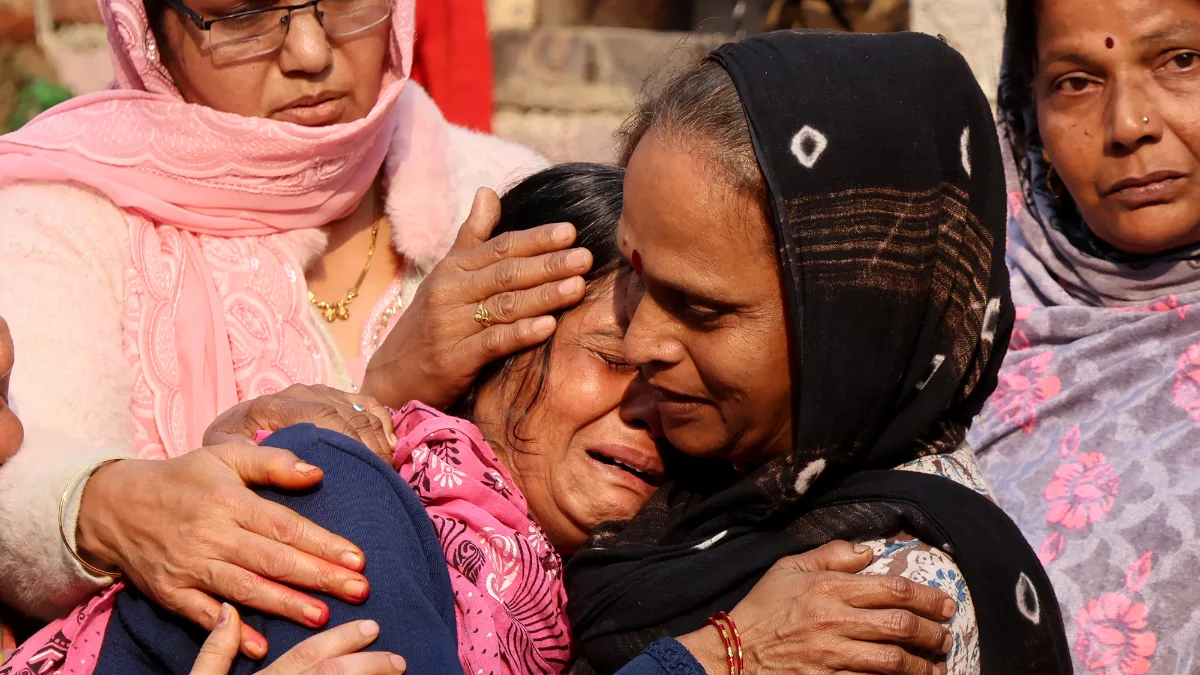
What should have been an ordinary glass of drinking water turned fatal for several families in Indore’s Bhagirathpura area, where many people have died and more than 149 have been hospitalised after consuming allegedly contaminated water.

Manisha Gupta | New Delhi |

What should have been an ordinary glass of drinking water turned fatal for several families in Indore’s Bhagirathpura area, where at least four people have died and more than 149 have been hospitalised after consuming allegedly contaminated water. Behind the official figures lie homes filled with silence, shock and questions that remain unanswered.

As per some media reports, the death toll due to the consumption of contaminated water has risen to eight.

A child born after 10 years, gone in 6 months

Among the dead is a six-month-old boy whose birth had come after a decade of waiting for his family. Sunil Sahu still struggles to grasp how quickly life slipped away from his infant son.

“He had diarrhoea and fever. We took him to the doctor on December 26. The medicines helped, and he seemed fine for two days,” Sahu recalled, his voice breaking. “But suddenly one night, he developed a very high fever. He vomited and died at home on December 29.”

The child, born after 10 years, was the family’s long-awaited joy. “I already have a daughter. This son came after so many years. He was only six months old,” the father said.

Many such stories of pain have emerged

Recounting her father’s death after consuming contaminated water, Sudha Pal said he passed away on the 30th after suffering severe diarrhoea and vomiting. “He did not have a heart attack or any other illness. It was solely due to diarrhoea and vomiting,” she said, adding that his condition deteriorated so rapidly that he could no longer stand on his own.

According to her, several others in the area also fell ill after consuming the same water. “The water smelled bad. We suspected that some medicine or harmful substance might have been mixed into it,” she said.

Can money replace a life?

The state government has announced an ex-gratia compensation of ₹2 lakh for families of the deceased and assured free treatment for all patients. Officials say disciplinary action has been taken against water supply personnel, and an investigation is underway to identify the source of contamination.

But for grieving families, compensation offers little solace.

The questions of the bereaved parents, echoing a sentiment heard across the affected lanes, are simple, yet devastating: How did this happen? Could it have been prevented? And who will ensure it never happens again?

Illness spreads door to door

Reports suggest the outbreak led to severe vomiting and diarrhoea across the locality. Emergency screening was launched as panic spread, with medical teams moving door to door.

The District Magistrate said survey teams are conducting door-to-door checks to identify more affected persons and prevent further spread of illness. He added that nearly 2,700 houses had been surveyed till Tuesday, and the exercise is being extended to nearby areas as well.

Hospitals in Indore admitted hundreds over a span of a few days. Many patients were discharged after recovery, but dozens remain under observation. Over 40,000 residents were screened, and thousands reported symptoms. Of these, 2,456 suspected cases were identified, and 212 were admitted to hospitals. Around 50 patients have recovered and been discharged, while 162 patients are still admitted.

For families living in the affected neighbourhood, largely from economically weaker sections, each trip to the hospital brought fear of losing another loved one.

ASHA and ANM workers continue to distribute ORS packets, while residents have been advised to boil water. Yet for many, trust in something as basic as drinking water has been deeply shaken.

Tall assurances, lingering fear

Authorities insist corrective measures are in full swing, water sources are being tested, and surveys expanded to nearby areas. Yet residents say fear still grips daily life.

As Indore struggles to come to terms with the tragedy, the focus on numbers, reports and promises feels hollow to families who have already paid the highest price.

For them, this is not about statistics or statements, it is about loved ones lost to something as basic, and as essential, as water.

Also read: MP Minister uses abusive language on being questioned in Indore water tragedy

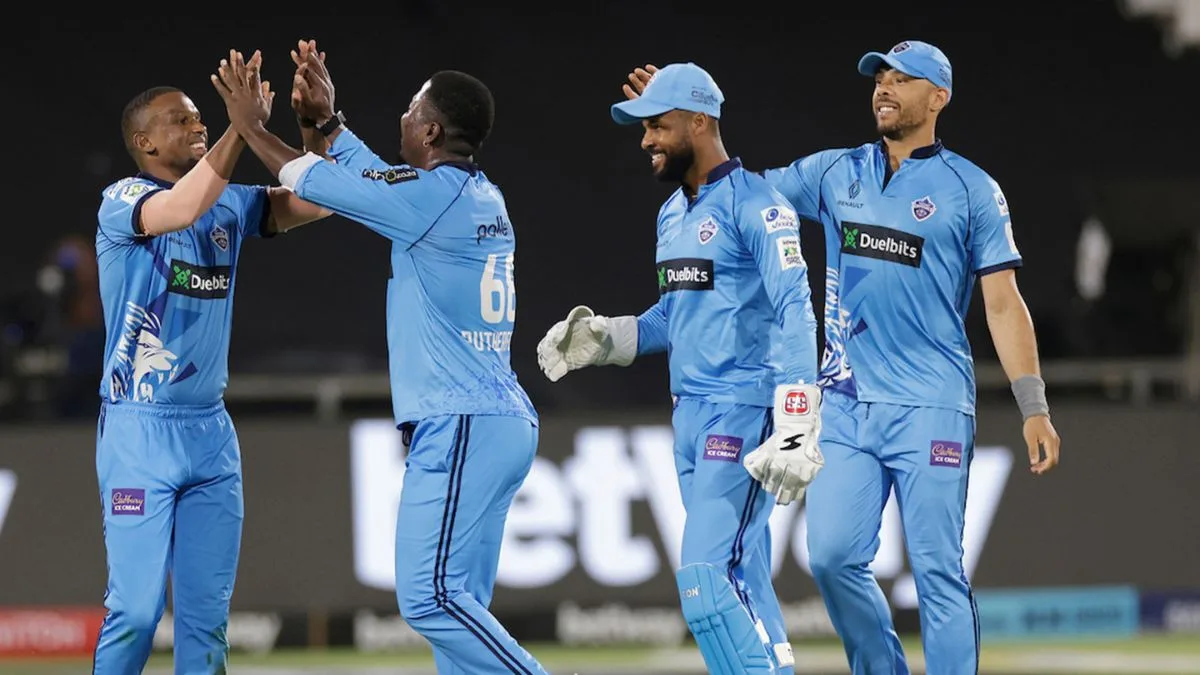
SA20: Pretoria Capitals defeat MI Cape Town by 85 runs to earn a bonus point victory

Capitals eased past MI Cape Town by 85 runs to earn a bonus point victory at Newlands.

ANI | New Delhi |

New Year’s Eve proved to be the good luck charm for Pretoria Capitals as they joined Paarl Royals in opening their SA20 Season 4 accounts with their respective first victories on Wednesday, according to a release.

Capitals eased past MI Cape Town by 85 runs to earn a bonus point victory at Newlands.

Sherfane Rutherford enjoyed a New Year’s Eve to remember with the West Indies allrounder delivering the perfect all-round performance for Capitals.

Rutherford (47 not out 15 balls, 6×6) and Dewald Brevis (36 not out off 13 balls, 1×4, 4×6) brought the fireworks with the bat before the Windies superstar delivered a career-best bowling performance of 4/24 to dismiss MI Cape Town for just 135 in response to the Capitals’ mammoth 220/5.

The ‘Sky Blues’ pair delivered an explosive 86-run partnership off just 27 balls that offset a poor Powerplay after a fit-again Kagiso Rabada had helped reduce the visitors to 36/3.

It was a belligerent exhibition of power-hitting with 92 runs for the loss of just one wicket at a run-rate of 18.2 coming in the last five overs.
The duo almost matched each other shot for shot, but it was Rutherford’s astonishing assault on Dewald Pretorius in the penultimate over that shocked the Newlands faithful.

The West Indian blasted four successive maximums, which formed part of a sequence of a half dozen sixes in a row that had been kickstarted by Brevis’ double in the previous over.

It was the perfect ending after Shai Hope (45 off 30 balls, 3×4, 2×6) and Wihan Lubbe (60 off 36 balls, 7×4, 2×6) had done the initial resurrection job.

The four Player of the Match candidates were Dewald Brevis, Wihan Lubbe, Keshav Maharaj and Sherfane Rutherford with the West Indian winning 77.4% of the fan vote.

MI Cape Town’s chase was always going to be dependent on their openers Ryan Rickleton (33 off 17 balls) and Rassie van der Dussen (28 off 20 balls) and the pair duly delivered a 60-run stand within the Powerplay.

But their dismissal within a short period of each scuppered MI Cape Town’s run chase, despite Nicholas Pooran matching his fellow West Indian Rutherford by also smashing Keshav Maharaj (3/28) for four consecutive sixes in his six-ball 25.

Maharaj, though, had the last laugh by having Pooran caught in the midst of a three-wicket spell that ripped the heart out of MI Cape Town’s middle-order and ultimately the hosts’ challenge.

Earlier in the day, Paarl Royals captain David Miller masterminded his team’s successful run-chase with a timely unbeaten 71 runs off just 38 balls.

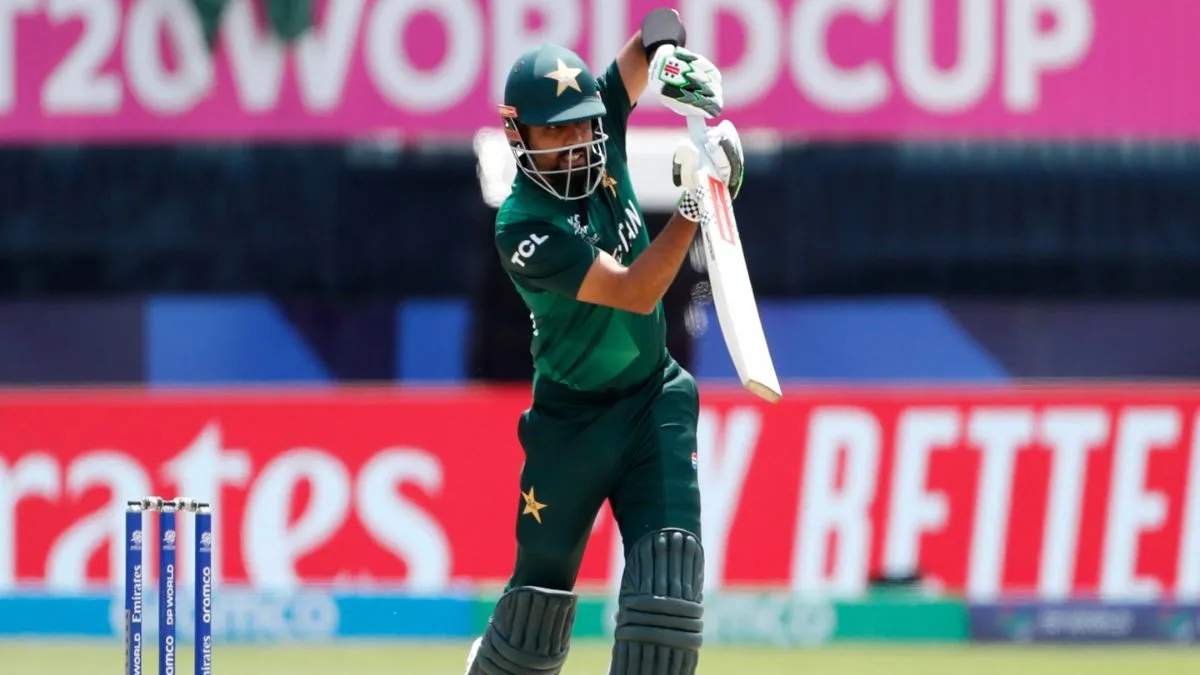
BBL: Babar, Abbott shine as Sixers pull off six-wicket win over Renegades

Billed as a contest between two Pakistani stalwarts, Renegades’ Mohammed Rizwan and Sixers’ Babar, it was the latter who came out on top, scoring his second half-century of the season.

ANI | New Delhi |

A fine half-century from Babar Azam and a three-wicket haul by pacer Sean Abbott helped Sydney Sixers seal a six-wicket win over Melbourne Renegades during their Big Bash League (BBL) New Year’s clash on Thursday.

Billed as a contest between two Pakistani stalwarts, Renegades’ Mohammed Rizwan and Sixers’ Babar, it was the latter who came out on top, scoring his second half-century of the season.

Sixers’ skipper Moises Henriques put Melbourne to bat first. Jack Edwards, the recent Sunrisers Hyderabad (SRH) pick in the Indian Premier League (IPL) auction, continued his fine run, removing the danger man Tim Seifert for a nine-ball six. While a 44-run stand between Josh Brown (43 in 19 balls, with three fours and four sixes) and skipper Rizwan (6), with Josh doing the bulk of the scoring, Renegades were pushed two steps back with the removal of these two openers, leaving them at 61/3 in 6.4 overs.

Jake Fraser-McGurk (38 in 29 balls, with four boundaries) and Hassan Khan (39 in 29 balls, with a four and three sixes) fought hard, taking Renegades to a modest 164/9 in 20 overs.

Abbott (3/16) delivered a tight four-over spell for the Sixers. Recent Punjab Kings IPL buy, Ben Dwarshuis (2/47) and Hayden Kerr (2/40) were also among the wickets.

Sixers started off the chase with a 46-run opening stand between Babar and Daniel Hughes (30 in 23 balls, with two fours and a six). But Will Sutherland (1/27) and Gurinder Sandhu (2/23) pushed the Sixers back with two quick wickets, reducing them to 66/2 in 8.5 overs.

Babar, who scored a 46-ball 58*, with eight fours and a six, had a 42-run stand with skipper Henriques (23 in 18 balls, with a four and two sixes), taking Sixers beyond the 100-run mark. Some fireworks from Joel Davies (34* in 15 balls, with three fours and two sixes) and his half-century stand with Babar took Sixers to a six-wicket win with five balls left.

Abbott took home the ‘Player of the Match’ prize. In five matches, Babar has scored 129 runs in five innings at an average of 32.25, with a strike rate of around 117, with two half-centuries.

Property of Pakistan-based wanted terror handler attached in Poonch under UAPA

The attachment by the Poonch Police has been effected in connection with an FIR registered at Police Station Gursai in District Poonch.

Statesman News Service | Jammu |

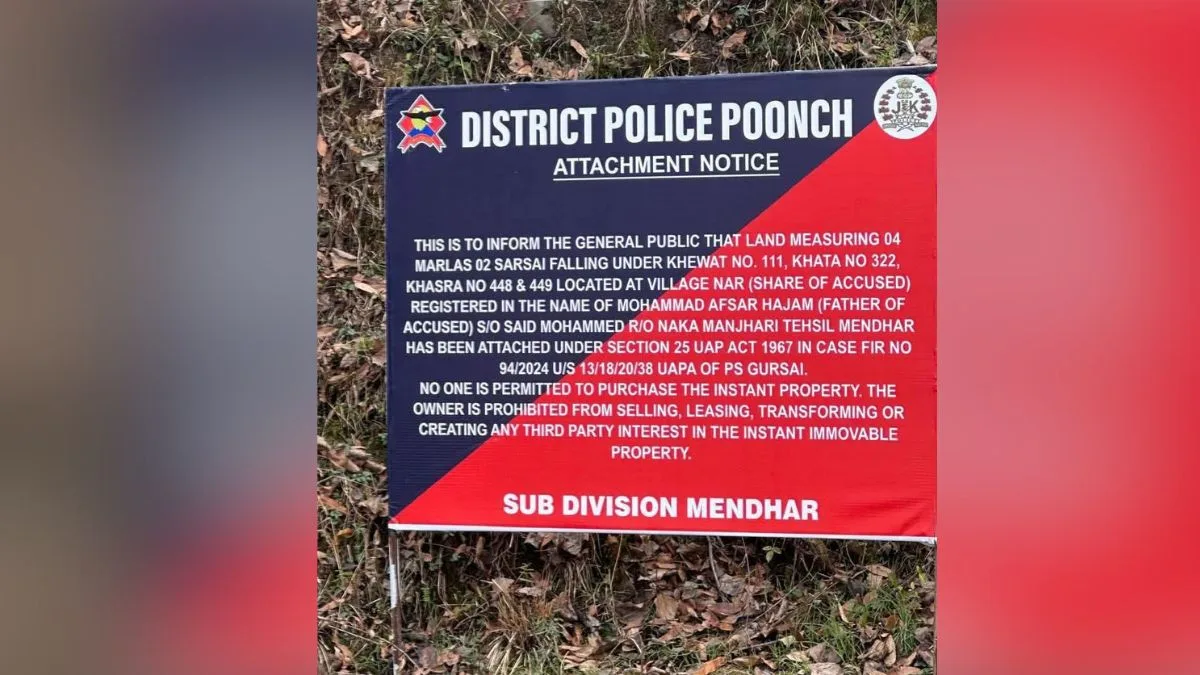
In a decisive and resolute action against terror networks operating from across the border, the Jammu & Kashmir Police have attached an immovable property belonging to Pakistan-based terror handler and launch commander of a banned terrorist outfit, Rafiq Nai @ Sultan, under the provisions of the Unlawful Activities (Prevention) Act (UAPA).

The attachment by the Poonch Police has been effected in connection with an FIR registered at Police Station Gursai in District Poonch. The attached property comprises agricultural land, situated in Village Nar, Nakka Majhari area of Tehsil Mendhar, District Poonch.

Rafiq Nai @ Sultan is presently operating as a Pakistan-based handler and launch commander of the banned terrorist outfits Tahreek-ul-Mujahideen and Jammu Kashmir Ghaznavi Force, police said.

Rafiq Nai is actively involved in the supervision of narcotics and weapons smuggling, facilitation of infiltration of trained terrorists, and revival of terrorist activities in the Poonch-Rajouri sector. He has been declared a “Designated Individual Terrorist” and is wanted in multiple serious terror and criminal cases.

The attachment was executed by a joint team of Police Station Mendhar and the Revenue Department, after following all due legal procedures, verification, documentation, and obtaining approval from the competent authority. The market value of the attached property is assessed at approximately Rs 10 lakh.

This action forms part of a broader and sustained strategy to dismantle the financial, logistical, and support infrastructure of terrorist networks, and to ensure that individuals involved in anti-national and terror-related activities are deprived of their resources, the police added.

Preview 2026: Five critical elections and one common thread — Opposition fury over SIR, MGNREGA

With five critical Assembly elections due in 2026 in West Bengal, Assam, Tamil Nadu, Kerala, and the Union Territory of Puducherry, opposition parties are converging on a major concern: the SIR of electoral rolls.

VIBHA SHARMA | New Delhi |

The Trinamool Congress (TMC) on Wednesday voiced strong dissatisfaction after its delegation met with the Election Commission of India’s (ECI) over its Special Intensive Revision (SIR) of electoral rolls in the party-ruled West Bengal. Party leader Abhishek Banerjee accused Chief Election Commissioner Gyanesh Kumar of failing to respond satisfactorily to their concerns, including the classification of 1.36 crore voters as “suspicious” or having “logical discrepancies.”

He also questioned “unsubstantiated” claims about illegal Bangladeshi or Rohingya voters and accused the poll body of facilitating “vote chori” through manipulation of voter lists. “We will fight it legally,” he said, briefing the media after the meeting. Rejecting the allegations, the EC cautioned parties against intimidating election officials.

With five critical Assembly elections due in 2026 in West Bengal, Assam, Tamil Nadu, Kerala, and the Union Territory of Puducherry, opposition parties are converging on a major concern: the SIR of electoral rolls. The Congress, meanwhile, has an additional issue—the Centre replacing the UPA-era MGNREGA with the Viksit Bharat Guarantee for Rozgar and Ajeevika Mission (Gramin) or the VB G-RAM G scheme.

The Congress has announced a nationwide agitation from January 5, with party president Mallikarjun Kharge accusing the Narendra Modi government of “kicking the poor in the stomach” by dismantling welfare guarantees. In Tamil Nadu, the Congress state unit has urged the ECI to ensure transparency in SIR procedures, citing multiple concerns.

Similar apprehensions have been raised by opposition parties in other poll-bound states. The DMK in Tamil Nadu has described the SIR as a “political weapon” meant to “disenfranchise genuine voters, particularly minorities and Scheduled Castes and Tribes.” In Kerala, the CPI(M)-led Left Democratic Front (LDF) under Chief Minister Pinarayi Vijayan has flagged exclusions in the draft electoral rolls.

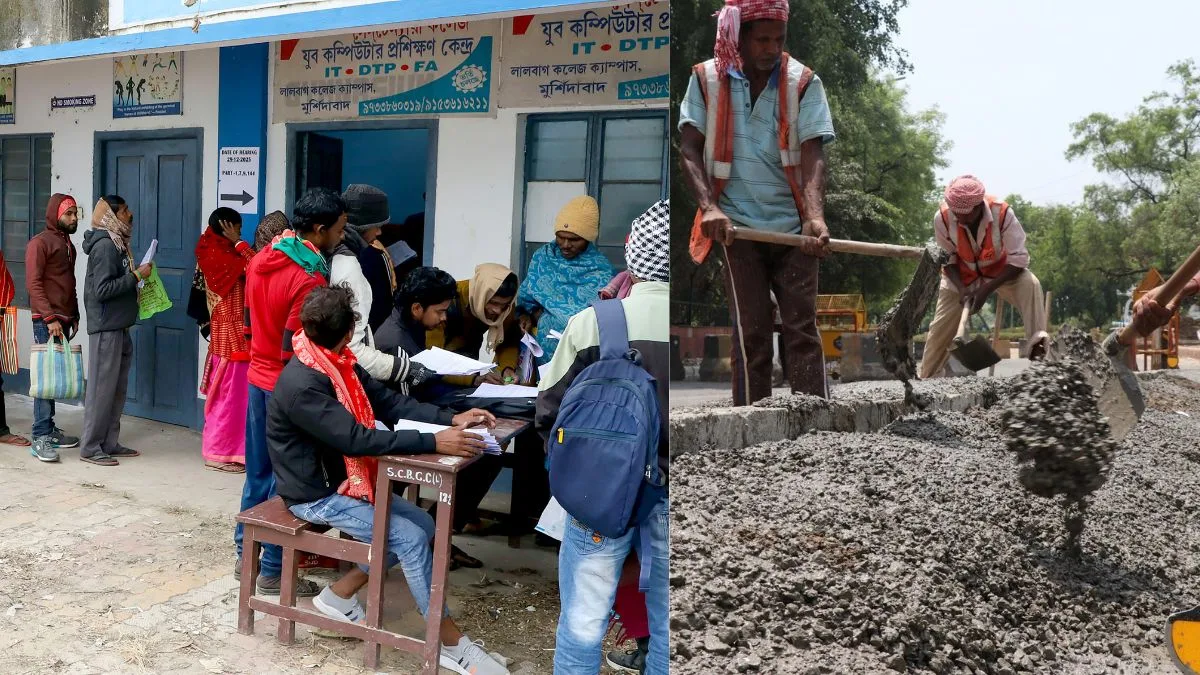
While the ECI maintains that the SIR is intended to eliminate ghost voters, duplicates, and ineligible entries to uphold the principle of “one person, one vote,” opposition parties claim that migrants, youth, minorities, and the poor are being disproportionately affected due to documentation hurdles. Protests have already surfaced in states such as West Bengal and Tamil Nadu. Assam, meanwhile, is undergoing a separate “Special Revision,” distinct from the SIR elsewhere.

Politically, 2026 is an interesting and also a significant year, and parties will be deploying all available ammo in the expected tough challenges. What is making the upcoming elections even more significant is that three of the five poll-bound states—West Bengal, Tamil Nadu, and Kerala—are governed by the BJP’s principal rivals: Mamata Banerjee’s TMC, M K Stalin’s DMK-led Secular Progressive Alliance, and the CPI(M)-led Left Democratic Front (LDF), respectively. Assam has a BJP government under Chief Minister Himanta Biswa Sarma, and Puducherry has an AINRC–BJP coalition government headed by N Rangasamy.

In West Bengal, Mamata Banerjee is facing a resurgent BJP, while the Congress and the Left parties attempt to regain lost ground. Kerala’s LDF is aiming for an unprecedented third consecutive term, but recent local body elections signalled a revival of the Congress-led UDF and a breakthrough for the BJP-led NDA, altering the state’s traditional bipolar politics. In Tamil Nadu, the DMK is facing a challenge from the AIADMK, which now has the backing of the BJP. As for Assam, BJP’s Himanta Biswa Sarma will be fighting against a resurgent Congress, while in Puducherry, the AINRC–BJP coalition has the challenge of holding against the DMK and the Congress.

Usman Khawaja named for final Ashes Test amid retirement speculation

Khawaja, who has recently been the subject of speculation regarding his Test future, is expected to address the media ahead of the Sydney Test.

Statesman News Service | New Delhi |

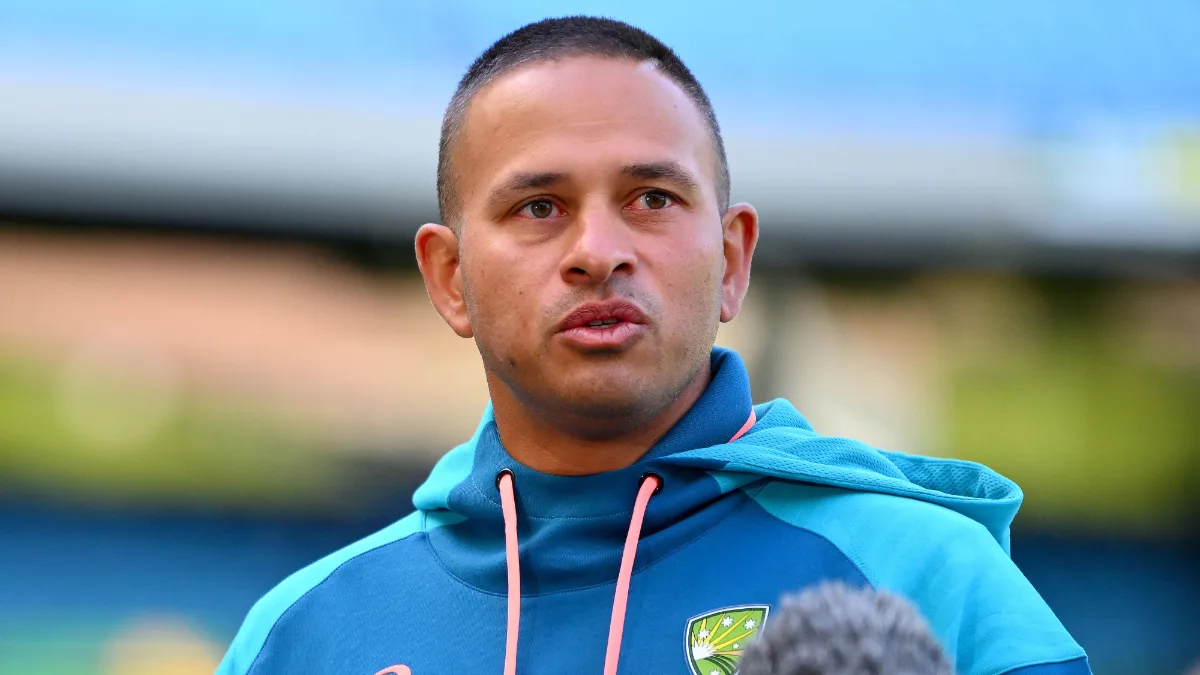
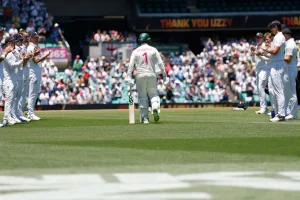
Usman Khawaja has been named in Australia’s 15-member squad for the fifth and final Ashes Test against England, which begins on January 4 in Sydney.

Steve Smith will lead the side in the absence of regular captain Pat Cummins, who has been rested to manage his workload and ensure full fitness for upcoming assignments. Cummins missed the first two Tests of the Ashes series after failing to recover in time from a lower-back injury before returning for the third Test, which Australia won. His availability for the ICC Men’s T20 World Cup 2026 will be assessed following a scan on his back later this month.

Khawaja began the series as Australia’s long-standing opener in the Perth Test but did not take the field in the second innings due to back spasms. He was left out of the Brisbane Test before making a late return to the XI and batting at No. 4 following Steve Smith’s illness.

In the fourth Test, the 39-year-old again featured in the middle order, scoring 29 off 52 balls in the first innings and a duck in the second. He has so far scored 153 runs from three matches and five innings, averaging 30.60 in the ongoing Ashes series.

Khawaja to address retirement speculation

Khawaja, who has recently been the subject of speculation regarding his Test future, is expected to address the media ahead of the Sydney Test. The fifth Test will be played at his home ground, adding further significance amid discussions around a potential farewell.

Former England captain Michael Vaughan encouraged Khawaja to make any retirement decision on his own terms, rather than being influenced by external pressure.

“I would say to Usman, ‘Don’t let them decide. You decide your destiny. When someone has been playing for so long, we’ve just got to let them decide,’” Vaughan said, as quoted by the Sydney Morning Herald.
“Usman has had an incredible career, and not many get the chance to say goodbye on their own terms at their own venue.”

“If he doesn’t do that, he runs the risk of his career ending not on his own terms. I can’t think of a better way to say goodbye than at his home ground in an Ashes series. If Uzzie has the energy and desire to keep going, that’s his call, but leaving in Sydney during an Ashes series sounds pretty special,” Vaughan added.

Australia squad for fifth Ashes Test

Steve Smith (captain), Scott Boland, Alex Carey, Brendan Doggett, Cameron Green, Travis Head, Josh Inglis, Usman Khawaja, Marnus Labuschagne, Todd Murphy, Michael Neser, Jhye Richardson, Mitchell Starc, Jake Weatherald, and Beau Webster. 

Australia will look to secure a 4–1 series victory in the Sydney Test after England claimed the Boxing Day Test.


UP BJP chief Pankaj Chaudhary faces a Herculean task as new state president; road to 2027 will not be easy

According to party sources and political analysts, this appointment has been made keeping in mind the 2027 assembly elections, following the party’s losses in the 2024 Lok Sabha elections, but the road ahead for Pankaj Chaudhary is not considered easy.
Statesman News Service | Lucknow |

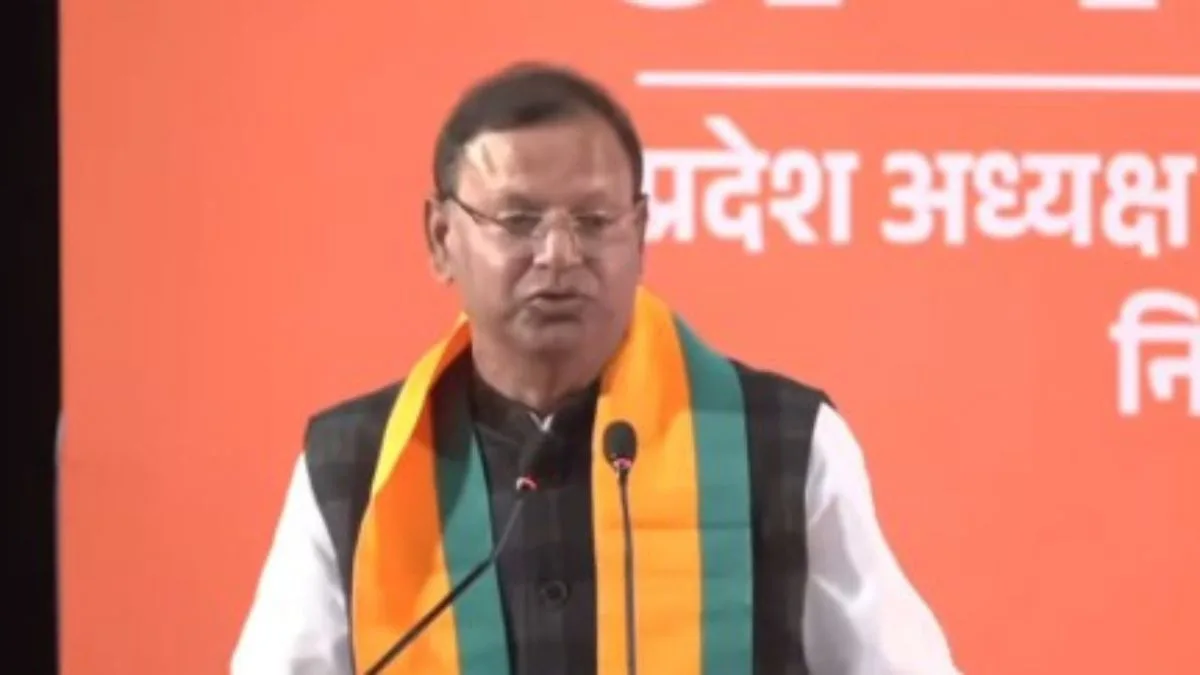
The Bharatiya Janata Party (BJP) has played a major organisational gamble by appointing Union Minister of State for Finance Pankaj Chaudhary as the new president of the Uttar Pradesh BJP.

According to party sources and political analysts, this appointment has been made keeping in mind the 2027 assembly elections, following the party’s losses in the 2024 Lok Sabha elections, but the road ahead for Pankaj Chaudhary is not considered easy.

According to the report, the BJP-led NDA suffered a major setback in Uttar Pradesh in the 2024 Lok Sabha elections. While the alliance had won 64 seats in 2019, this number dropped to 36 in 2024. It is believed that the alienation of a large section of OBC voters, especially the Kurmi community, impacted the election results.

Pankaj Chaudhary’s appointment is being seen as an OBC card. The party leadership believes that as a senior leader from the Kurmi community, Chaudhary will not only strike a social balance but will also play a crucial role in rebuilding trust among OBC voters.

A picture of his first meeting with Chief Minister Yogi Adityanath after becoming the state president went viral on social media. This picture is being seen as a message of better coordination between the organisation and the government.

However, it is also believed within the party that symbolic gestures alone will not suffice, and strengthening coordination at the grassroots level will be the biggest challenge.

The report states that reactivating the organisation, engaging workers at the booth level, and maintaining a balance among various social groups—especially Brahmin and Thakur leaders—will be major responsibilities for Pankaj Chaudhary.

The recent Brahmin meeting controversy involving Kushinagar MLA PN Pathak and the state president’s strong reaction to it is being seen as a sign of discipline within the organisation.

According to party sources, Pankaj Chaudhary may soon form his new organisational team. Deliberations on the names have already begun, and it is expected that major changes will be seen in the organisation before the assembly elections.

Political analysts say that although Pankaj Chaudhary has the support of the national leadership, he is new to organisational politics. Therefore, keeping the party united and balancing the various factions before the 2027 assembly elections will be his biggest test.

How India’s stock market learned to modernize itself

Rather than presenting market evolution as a neat sequence of reforms, the book portrays advancement as a messy, uneven process shaped by global shocks, political hesitation, technological leaps and repeated crises.

Sourav Shekhar | New Delhi |

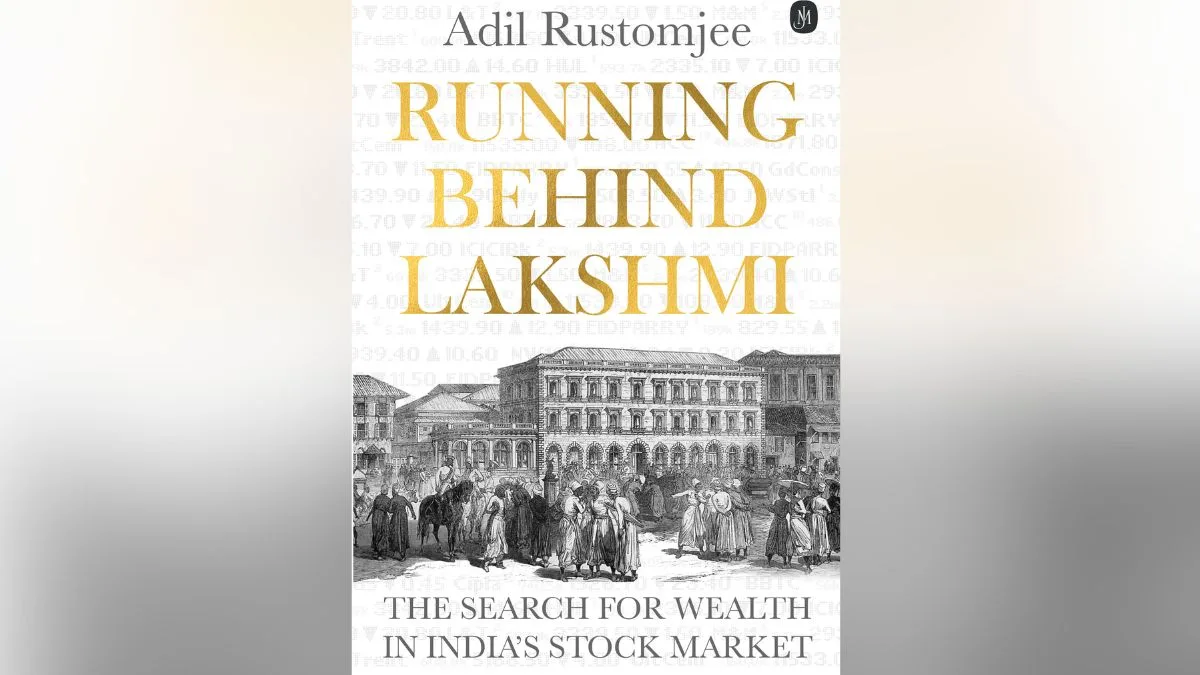
Adil Rustomjee’s “Running Behind Lakshmi” is a sweeping narrative of how India’s stock market slowly learned to modernize itself.

Rather than presenting market evolution as a neat sequence of reforms, the book portrays advancement as a messy, uneven process shaped by global shocks, political hesitation, technological leaps and repeated crises.

The result is a richly textured account of how an informal trading culture gradually transformed into a structured, technology-driven financial system.

Rustomjee begins with the earliest phase of Indian stock trading, when markets operated more on personal relationships than formal rules. Transactions under banyan trees in Bombay reflected a system built on trust, reputation and proximity.

This stage, the author suggests, was crucial—it created a risk-taking culture but lacked the institutional strength needed for scale.

As global forces like the American Civil War triggered cotton booms and speculative frenzies, the limitations of these informal markets became clear, pushing traders toward more organized exchanges.

The book then shows how advancement stalled after Independence.

The Nehruvian economic model, suspicious of private capital, restricted the role of markets. Rustomjee describes this period as one where the stock market survived but did not thrive.

Regulations were heavy, participation was narrow, and innovation was minimal. Yet this stagnation, the author argues, was not wasted time; it preserved the market infrastructure while exposing the costs of sidelining capital markets in a growing economy.

A major shift in the narrative comes with liberalization. Rustomjee treats the 1990s not merely as a policy turning point but as a cultural transformation.

The creation of the National Stock Exchange marks a decisive break from closed, opaque trading practices. Electronic trading, screen-based price discovery, and nationwide access fundamentally altered who could participate in the market.

Advancement here is shown as both technological and psychological—investors begin to trust systems more than individuals.

One of the book’s strongest contributions is its focus on institutions. Rustomjee details how dematerialization of shares, faster settlement cycles, and the strengthening of regulatory bodies gradually reduced friction and fraud.

Market scandals, particularly episodes of manipulation, are framed not as derailments but as stress tests. Each crisis exposes weaknesses, leading to tighter oversight and stronger frameworks.

In this sense, advancement is depicted as reactive, built through correction rather than ideal planning.

“Running Behind Lakshmi” frames the advancement of India’s stock market as a reflection of India’s broader economic journey—slow to trust markets, cautious in reform, but capable of rapid transformation once momentum builds.

Rustomjee’s detailed historical storytelling makes it clear that today’s sophisticated financial ecosystem is the product of decades of learning, failure, and institutional evolution. The book stands as both a history of markets and a reminder that progress in finance, like progress in nations, is never linear.

Kailash Vijayvargiya regrets using objectionable word over Indore contaminated water deaths

Vijayvargiya had used an objectionable word in response to a reporter question on Indore contaminated water deaths.

Statesman News Service | New Delhi |

Madhya Pradesh Cabinet Minister Kailash Vijayvargiya on Thursday expressed regret over the use of an objectionable word while responding to a reporter’s question on Indore contaminated water deaths.

At least 13 people were killed and over 150 others were hospitalised after allegedly drinking water mixed with sewage in Madhya Pradesh’s Indore.

When a reporter asked Vijayvargiya about the responsibility of senior officials and the situation of families, he rebuffed the question using an objectionable Hindi word.

The report shot back and asked Vijayvargiya not to resort to using foul language while being a senior minister.

After the controversy, Vijayvargiya expressed regret, saying he and his team had been working to improve the situation without sleep for the past two days. “My team and I have been continuously working to improve the situation in the affected area without sleep for the past two days. My people are suffering from contaminated water, and some have left us; in this state of deep sorrow, my words came out wrong in response to a media question. For this, I express my regret. But until my people are completely safe and healthy, I will not sit quietly,” he wrote on X in Hindi.

Congress demands Vijayvargiya’s resignation

Meanwhile, the Opposition Congress has launched a scathing attack on the BJP-led Madhya Pradesh government over the incident, demanding registration of an FIR and resignation of Vijayvargiya.

Madhya Pradesh Congress President Jitendra (Jitu) Patwari accused the BJP of poisoning the water despite Indore consistently electing the saffron party leaders as MPs and MLAs. “Indore has consistently given the BJP 9 MPs, 9 MLAs, and a municipal corporation, but the BJP has poisoned the water. Questions are being raised about 13 deaths, while the BJP’s own CM says only 4 deaths occurred. Does that mean the CM also has a responsibility to hide the number of fatalities,” he asked.

Patwari also demanded that a culpable homicide case should be registered against those responsible.

“Why doesn’t the CM want to punish the officials responsible for this? A case should be filed against them for culpable homicide, and against the Indore Mayor too… All these deaths are happening because of their arrogance and unrighteousness…,” he added.

The Congress leader said that the state government should give Rs 1 crore in compensation to the families of those who died after drinking the contaminated water.

He also demanded the resignation of Vijayvargiya. “The Chief Minister should file an FIR against those responsible for this and should seek the resignation of the minister who abused.”

Petition filed before MP High Court

A petition has been filed before the Madhya Pradesh High Court over the issue of contaminated water supply in Indore’s Bhagirathpura.

According to Indore High Court Bar Association President Ritesh Inani, “a petition was filed in court for a clean water supply to the people of Indore, and the people affected by the contaminated water must be treated free of cost.”

Rajasthan welcomes New Year amid fog, chill, and drizzle

Despite overcast sky in several towns, including the state capital, causing marked rise in the minimum temperatures, light drizzle to moderate downpour coupled with thick fog intensified winter chill in most of the major cities.

Statesman News Service | Jaipur |

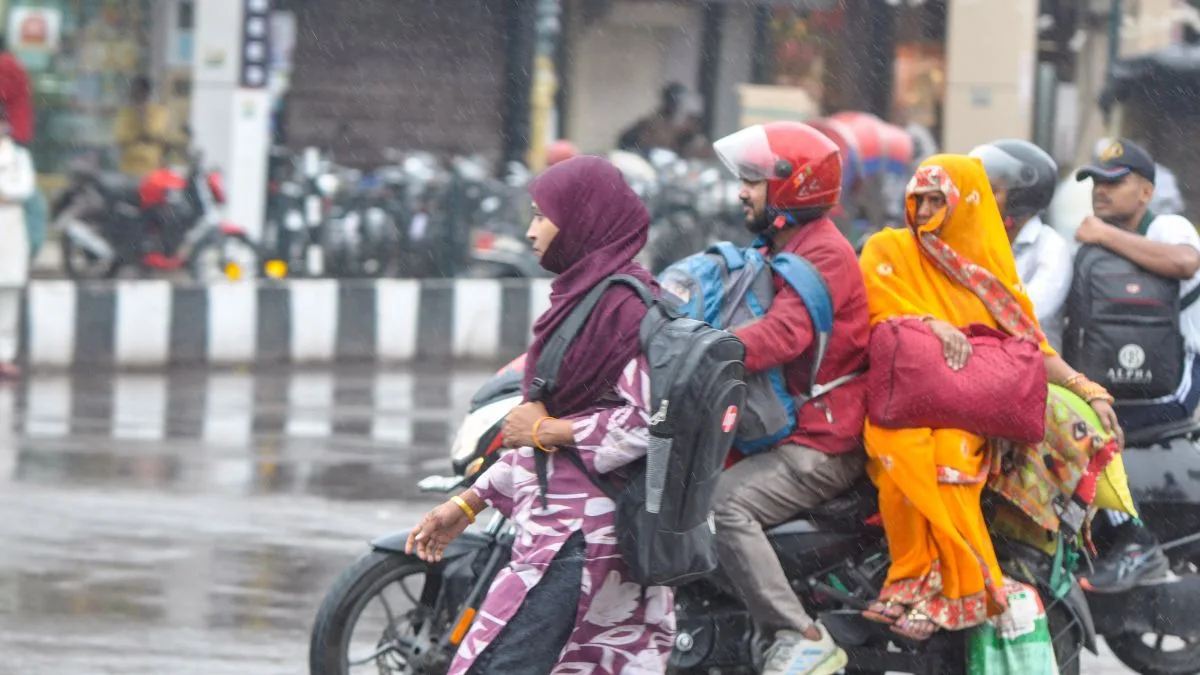
A chilly, foggy and rainy morning marked the first day of the year – 2026 – in the Pink City on Thursday even as the New-Year revellers in many Rajasthan cities had to brave a shivery December 31 yesterday.

Despite overcast sky in several towns, including the state capital, causing marked rise in the minimum temperatures, light drizzle to moderate downpour coupled with thick fog intensified winter chill in most of the major cities.

Bikaner and several other western towns received light to moderate rainfall of up to 3 ML in the past 24 hours, several pockets in the desert city of Bikaner also reported hailstorm. On the other hand, most parts of eastern Rajasthan, including Jaipur, remained enveloped in dense to extremely dense fog, while mild drizzling to light rains contributed to deepening the weather woes leaving people shivering even during the day.

Alwar, at 8.0 degrees Celsius, remained the coldest place in the eastern state and Sirohi (8.6 degrees C), Bikaner and Jaisalmer (9.6 degrees C) were the coldest among western towns.

Despite a general rise in night temperature at all most all places during the past 24 hours, six cities – Alwar, Sirohi, Chittorgarh, Banasthali, Bikaner, and Jaisalmer – recorded the night temperatures at below 10 degrees C. Jaipur recorded 12.0 degrees Celsius.

The regional Meteorological office has forecast light drizzle and foggy weather to prevail during the next 48 hours.

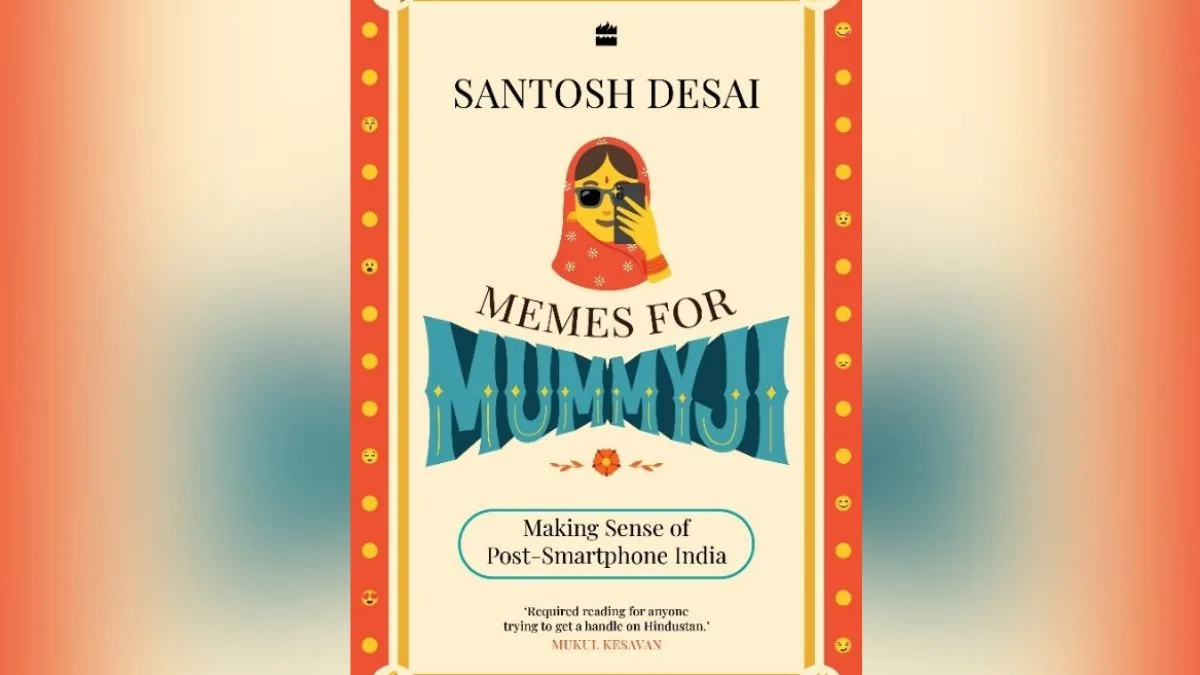
Memes for Mummyji: A witty mirror to India’s post-smartphone life

Instead, Desai uses the mobile phone as a narrative doorway into the deeper patterns of Indian life—our families, aspirations, anxieties, and the invisible rules that govern how we behave, online and offline.

SARATH CHANDRAN | New Delhi |

Columnist Santosh Desai, in his latest book “Memes for Mummyji”, offers a sharp yet affectionate portrait of an India quietly transformed by the smartphone. This is not a book obsessed with screens, apps, or algorithms.

Instead, Desai uses the mobile phone as a narrative doorway into the deeper patterns of Indian life—our families, aspirations, anxieties, and the invisible rules that govern how we behave, online and offline.

Written as a series of essays, the book reads like a long conversation with a keen observer who notices what most of us overlook. Desai suggests that smartphones did not radically change Indian society; they simply amplified its existing instincts. The digital world, he argues, is not a parallel universe but an extension of familiar social structures.

WhatsApp groups mirror joint families, Instagram reproduces hierarchies of beauty and success, and online marketplaces echo the hustle and intimacy of traditional bazaars.

What makes the book engaging is Desai’s ability to capture everyday moments with humour and insight. Whether he is describing a mother’s relentless forwarding of messages or unpacking how selfies double as tools of self-expression and self-surveillance, his writing consistently hits home. These observations are never cruel; they are laced with warmth, curiosity, and a gentle irony that invites recognition rather than judgment.

The book is particularly strong when examining the friction between tradition and change. Desai shows how age-old moral codes, family expectations, and social controls continue to operate even in supposedly liberating digital spaces.

The shift from streets to malls, and now to screens, raises questions about class, access, and belonging—issues that Desai explores with quiet provocation rather than loud conclusions.

That said, Memes for Mummyji does not aim to be a comprehensive sociological study. Its essay format means it avoids a single, sweeping argument, and its focus remains largely on urban, middle-class experiences. Readers looking for statistics or a deeper engagement with rural and marginal digital realities may find the treatment selective. Yet this selectiveness feels intentional; Desai is more interested in texture than theory.

Ultimately, the book succeeds because it understands that technology is only the surface story. Beneath it lie enduring habits, contradictions, and desires that define Indian life. With wit, clarity, and empathy, Desai captures a country learning to speak a new digital language while still thinking in its old cultural dialects. The result is a perceptive, entertaining, and deeply human account of India in the smartphone age.

Air Marshal Nagesh Kapoor, ex-Defence Attache to Pak, takes over as vice chief of IAF

Air Marshal Kapoor took over from Air Marshal Narmdeshwar Tiwari SYSM PVSM AVSM VM, who superannuated after 40 years of glorious and distinguished service to the nation.

IANS | New Delhi |

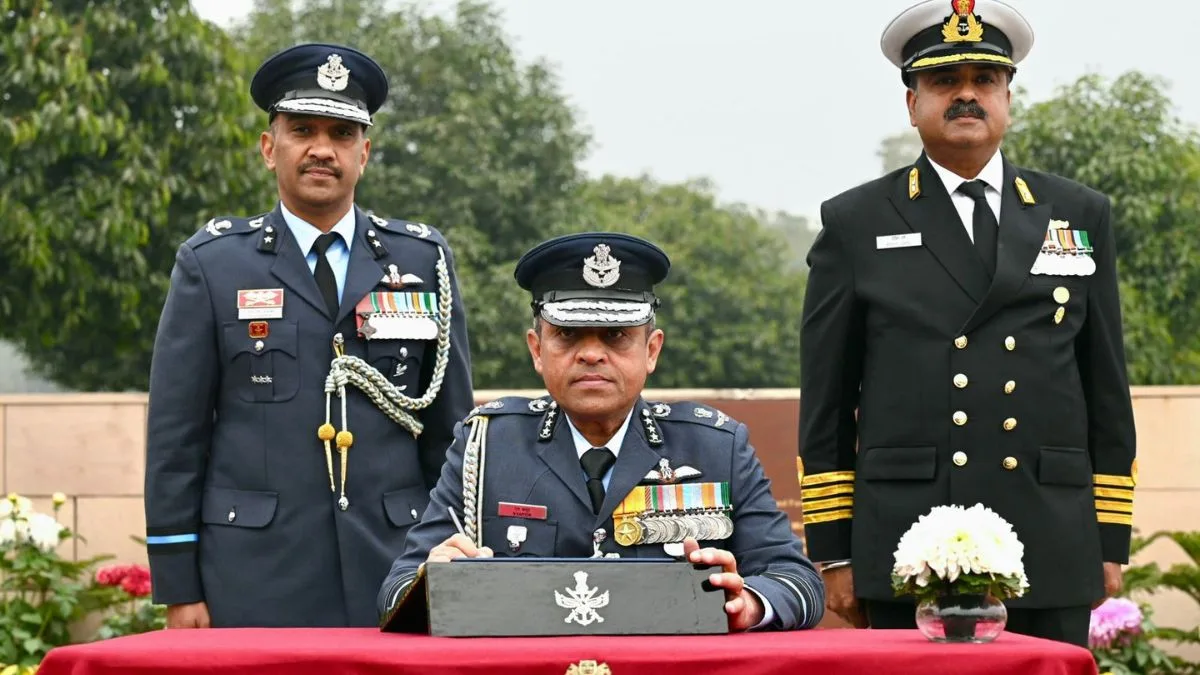
Air Marshal Nagesh Kapoor SYSM PVSM AVSM VM, a former Defence Attache to Pakistan, took charge as the Vice Chief of the Air Staff, Indian Air Force, on Thursday, a Defence Ministry official said.

Air Marshal Kapoor took over from Air Marshal Narmdeshwar Tiwari SYSM PVSM AVSM VM, who superannuated after 40 years of glorious and distinguished service to the nation.

Air Marshal Kapoor graduated from the National Defence Academy in December 1985 and was commissioned in the Indian Air Force in the fighter stream of the Flying Branch on December 6, 1986, the official said in a statement.

He is an experienced fighter pilot, a Qualified Flying Instructor and a Fighter Combat Leader. During his distinguished flying career, he has flown all variants of the MiG-21 and the MiG-29 and has accumulated over 3,400 hours of flying experience on a variety of combat and trainer aircraft.

An alumnus of the Defence Services Staff College and the National Defence College, the Air Marshal has rendered more than 39 years of illustrious service and has held a wide spectrum of command, operational, instructional and staff appointments.

His operational tenures include Commanding Officer of a fighter squadron in the Central Sector, Station Commander of a flying base in the Western Sector and Air Officer Commanding of a premier air base.

His instructional appointments include Chief Instructor (Flying) at the Air Force Academy and Directing Staff at the Defence Services Staff College, Wellington. During his tenure at the Air Force Academy, the Air Officer was instrumental in the induction and operationalisation of the PC-7 Mk lI aircraft in the Indian Air Force.

The Air Marshal has also undertaken a diplomatic assignment as Defence Attaché to Pakistan. His key staff appointments include Assistant Chief of Air Staff Operations (Strategy) at Air Headquarters, Air Defence Commander at South Western Air Command, Senior Air Staff Officer at Headquarters Central Air Command and Air Officer-in-Charge Personnel at Air Headquarters.

Before assuming charge as the Vice Chief of the Air Staff, the Air Marshal served as the Air Officer Commanding-in-Chief, Training Command, and thereafter as the Air Officer Commanding-in-Chief, South Western Air Command.

In recognition of his exemplary and distinguished service to the nation, the Air Marshal has been awarded the Vavu Sena Medal in 2008, Ati Vishisht Seva Medal in 2022, and the Presidential Awards of Param Vishisht Seva Medal and Sarvottam Yudh Seva Meda in 2025.

Masaba Gupta wishes ‘fearless’ new year for women, shares playtime moments with daughter Matara

Ace designer Masaba Gupta says, ‘I guess I wish for all women to be fearless, that is our core and that will dictate what the world order will be.’

Hiya | New Delhi |

As we all welcome 2026, the ace designer Masaba Gupta expressed her wish for all women to be ‘fearless’ this year.

A glimpse at the designer’s social media

The designer shares a peek into her playtime with her daughter on her social media. Masaba then took to her official Instagram handle and posted a photo of her daughter Matara enjoying herself at the beach. In another click, the little one was seen enjoying the sea with her father, Satyadeep Mishra.


View this post on Instagram


A post shared by Masaba (@masabagupta)

Masaba tied the knot with actor Satyadeep Mishra in 2023, and the couple welcomed their first child, daughter Matara, in October 2024.

An adorable Grandmother-granddaughter moment

Earlier, on November 2, her mother and veteran Bollywood actress Neena Gupta, wishing Masaba on her birthday dropped an adorable video of her, teaching her granddaughter Matara to chant Om. The clip showed the veteran actor sitting on the bed with her granddaughter, gently teaching and reciting chant Om to her, but the little one, who was in a fun mood, constantly referred to her grandmother by her first name – Neena making it an adorable moment.

A wish for women

Masaba also added that it gives her great joy to see her daughter growing up as a fearless person. “And that nothing makes me happier than watching my daughter running into the waves happily & fearlessly. I guess I wish for all women to be fearless…that is our core and that will dictate what the world order will be. Happy New Year :),” she said.

Masaba wrote on her Insta, “I’ll tell you what this year taught me – that I am no longer who I used to be. And that is terrifying .. but it’s great news. It’s nice to shed your skin every once in a while. (sic)”

She shared that the year gone by turned her into a completely new person, something which she finds to be both terrifying and great.

New Chief Secretary pitches for balancing Ladakh’s ecology, youth aspirations

Soon after assuming the charge from Pawan Kotwal, Kundra emphasised Ladakh’s ecologically fragile landscape and said that growth in the region must be carefully planned, climate-sensitive and people-centric.

Statesman News Service | Jammu |

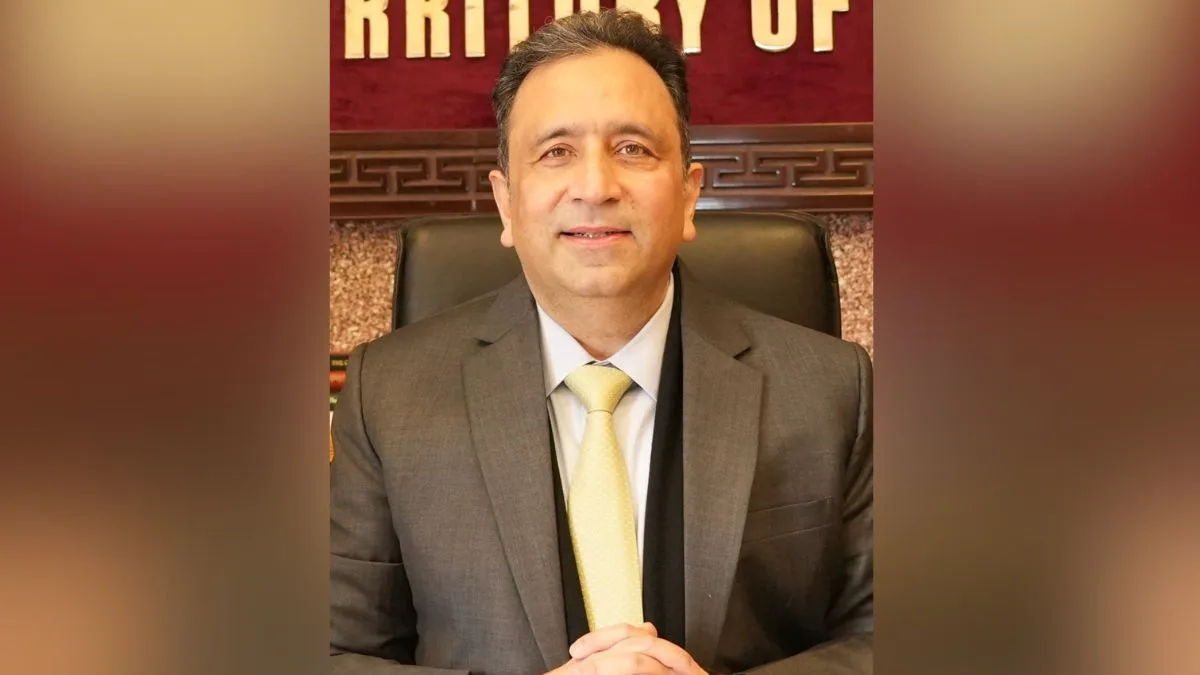
Highlighting Ladakh’s fragile ecology, the new Chief Secretary of the Ladakh UT, Ashish Kundra, articulated a vision of development rooted in environmental responsibility and long-term sustainability.

Soon after assuming the charge from Pawan Kotwal, Kundra emphasised Ladakh’s ecologically fragile landscape and said that growth in the region must be carefully planned, climate-sensitive and people-centric.

He cautioned that unchecked and reckless construction in the name of development could have serious consequences.

He underlined that addressing sustainability and climate change concerns must remain central to Ladakh’s development roadmap.

The new Chief Secretary of Ladakh outlined key priorities for the administration, asserting that it must gear up to meet the economic aspirations of the youth while unlocking the vast economic potential of the Union Territory.

Emphasising Ladakh’s rich civilisational legacy, he said the region has long been a symbol of peace, a heritage that must be carefully treasured and preserved even as it moves forward on the path of development.
Kundra reaffirmed his commitment to effective governance, transparent administration, and inclusive development across the Union Territory.

He emphasised the need to strengthen institutional mechanisms, enhance service delivery, and ensure the timely implementation of developmental programmes aimed at the welfare of all sections of society.

Highlighting the importance of teamwork, accountability, and responsiveness, the new Chief Secretary stated that addressing the aspirations of the people of Ladakh would remain a key priority of the administration.

He laid emphasis on accessible administration which reaches out to all parts of the Union Territory in line with the Prime Minister’s vision of ‘Sabka Saath Sabka Vikas Sabka Vishwas’.

The Administrative Secretaries and senior officers of the UT Administration welcomed Kundra and expressed confidence that his vast administrative experience and leadership would further strengthen governance and accelerate the overall development of the Union Territory.

Earlier, a ceremonial Guard of Honour was accorded to Kundra at the UT Secretariat, Leh, following his assumption of charge as the Chief Secretary.

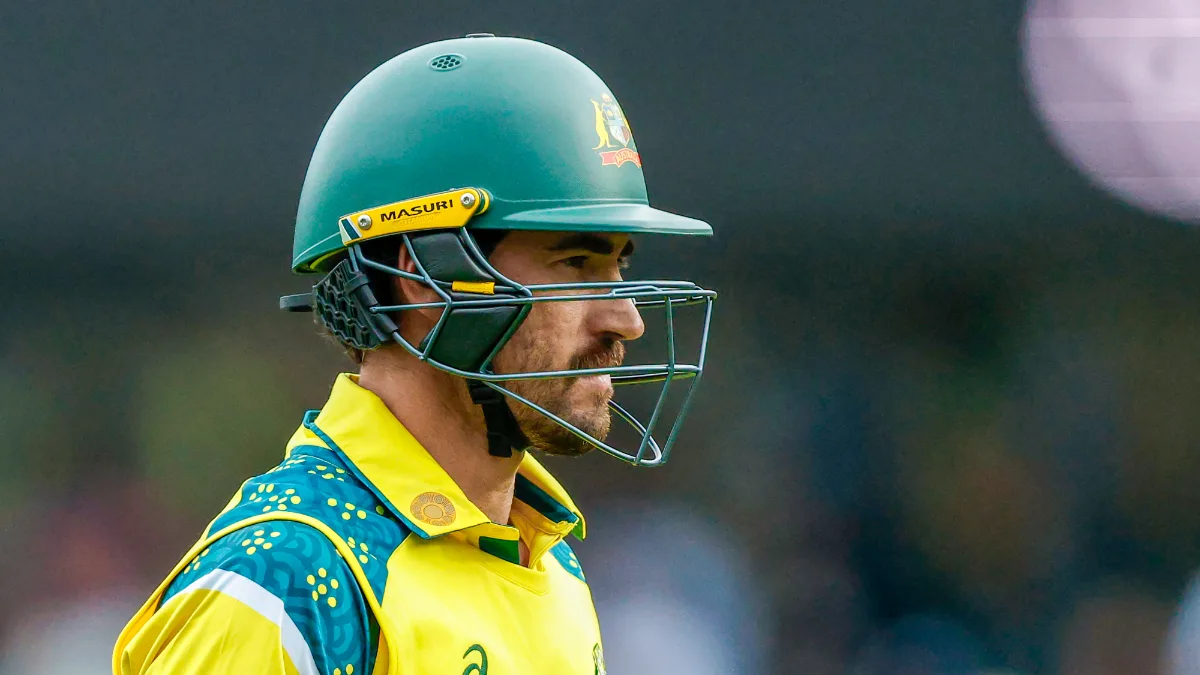
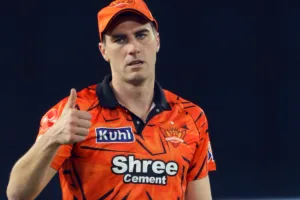
Australia T20 World Cup 2026 squad announced: Mitchell Marsh captain, Cummins and Hazlewood included

The provisional 15-member squad includes the pace trio Pat Cummins, Josh Hazlewood and middle-order batter Tim David, despite lingering injury concerns.

Statesman News Service | New Delhi |

Mitchell Marsh will lead Australia at the ICC Men’s T20 World Cup 2026, with the selectors naming a provisional 15-member squad that includes pace trio Pat Cummins, Josh Hazlewood and middle-order batter Tim David, despite lingering injury concerns. Cricket Australia announced their 15-man provisional squad on January 1.

The T20 World Cup 2026 is scheduled to be held in India and Sri Lanka February 7 to March 8, 2026.

Cummins suffered a lumbar stress injury in July while featuring in the third Test in Adelaide and has played only one international match since. A scan on the pacer’s back later this month will determine his availability for the tournament.

Hazlewood missed the entire Ashes series due to hamstring and Achilles issues, while David sustained a hamstring injury while playing for the Hobart Hurricanes in the Big Bash League (BBL). However, the selectors remain confident both players will recover in time for the tournament.

“The T20 side has enjoyed a long run of recent success, which enabled the panel to choose a balanced group of players across the variety of conditions Sri Lanka and India may present,” chief selector George Bailey said.

“Pat Cummins, Josh Hazlewood and Tim David are tracking well, and we are confident they will be available for the World Cup. This is a preliminary squad, so should changes need to be made, they will be ahead of the support period,” he added.

Spin-heavy squad, notable omissions

Australia have opted for a spin-heavy combination, with Adam Zampa joined by Matthew Kuhnemann, Cooper Connolly, and all-rounders Glenn Maxwell and Matthew Short. Mitchell Owen is the most notable omission from the squad.

Both Cameron Green and Connolly, who missed Australia’s T20I series against India earlier in the summer, return to the squad.

For the first time in several major tournaments, Australia has not included a left-arm fast bowler. Mitchell Starc, who retired from T20 internationals in September 2025 to focus on Test cricket and the 2027 ODI World Cup, was not considered. Spencer Johnson was ruled out due to a stress fracture sustained during the 2025 IPL, while Xavier Bartlett was preferred over Ben Dwarshuis, who will remain on standby as a fitness cover.

Australia’s T20I squad for the upcoming series against Pakistan is yet to be announced and will be named later, Bailey confirmed. The three-match series will be played in late January 2026, serving as preparation for the World Cup, which begins in February.

Australia has been placed in Group B, alongside Ireland, Oman, Sri Lanka and Zimbabwe. They will play their group-stage matches in Sri Lanka, beginning their campaign against Ireland on February 11 in Colombo.

Australia squad for ICC Men’s T20 World Cup 2026

Mitchell Marsh (c), Xavier Bartlett, Cooper Connolly, Pat Cummins, Tim David, Cameron Green, Nathan Ellis, Josh Hazlewood, Travis Head, Josh Inglis, Matthew Kuhnemann, Glenn Maxwell, Matthew Short, Marcus Stoinis, Adam Zampa