Logo

Boong Is A Burnished Boon From Manipur, Touched For The Very First Time

There is no way any formal words can describe what director Lakshmipriya Devi has achieved in her fragile yet ferociously strong narrative about a little boy in Manipur searching for his missing father.

SUBHASH K JHA | Kolkata |

There is no way any formal words can describe what director Lakshmipriya Devi has achieved in her fragile yet ferociously strong narrative about a little boy in Manipur searching for his missing father. Hell, that description above is like saying Schindler’s List is about a kind man who saves lives. Funny, I thought of Steven Spielberg’s Schindler’s List at one particular point in Boong when the single mother Mandakini (Bala Hijam,incandescent) walks into an all-white memorial for the dead in a shimmering pink saree. It reminded of the girl in the red coat in Spielberg’s film.

There is a sublime innocence in the storytelling of Boong. Even the ‘evil’ Pradhan (Thoudam Brajabidhu) , who screens forbidden Hindi films in a backroom (banned Hindi films are mentioned more than once and Kuch Kuch Hota Hai gets a special mention ) is a harmless bloke. You don’t get to hate a single character in Boong. This is not about villains and heroes. It is about seeking a smile in a situation of deep sorrow. When little Boong (an absolutely incredible Gugun Kipgen) sets off on a secret mission with his ‘outsider’ bestie Raju (Angom Sanamatum) to find his father, we know this cannot end well. And it doesn’t. But the sorrow of a deadend, the numbness of defeat, is mutated into a mellow melodious meditation on life’s vagaries. We may find them cruel.

But they are what they are. Acceptance, which is not always the same as resignation, plays a very big hand in writer-director Lakshmipriya Devi’s tender trot into heartbreak land. Here is a film that doesn’t shy away from sentimentality or cultural pride. But the messaging, if we may call it that, is so muted it never feels intrusive. Boong derives its forceful mood from its tender slender but supple and strong sense of selfhood. The Manipuri landscape, shot with such subdued grace by Tanay Satam feels like a real but unpunctuated presence defining rather than straitjacketing the characters. The narrative travels from Imphal to Ukhrul to Moreh to Myanmar.

But it doesn’t feel like a travelogue. It is the other journey, the one within the characters, that irrigates every corner of this stirring drama of heartbreak and redemption. Like all great works of art, this one can be viewed in many ways. It is a mother-son story told with an evocative emotional vigour. It is the story of two young boys who willy nilly iron out the cultural differences between them. It is also about a misplaced Rajasthani man (Vikram Kochhar) and his absolutely selfless emotions for a local Manipuri woman. Oh yes, it is also about a kind cross dresser (Jenny Khurai) and Madonna’s song ‘Like A Virgin’. How does all of this fit in so effortlessly???!!! Most of all, Boong finds for us what the movies are rapidly relinquishing. Feelings.

(THE WRITER IS A VETERAN JOURNALIST AND FILM CRITIC)

India and China must choose cooperation

In a century defined by rapid technological change, planetary crises, and shifting global power, the most consequential decisions nations make are often not about rivalry, but about restraint.

ABHIK ROY | New Delhi |

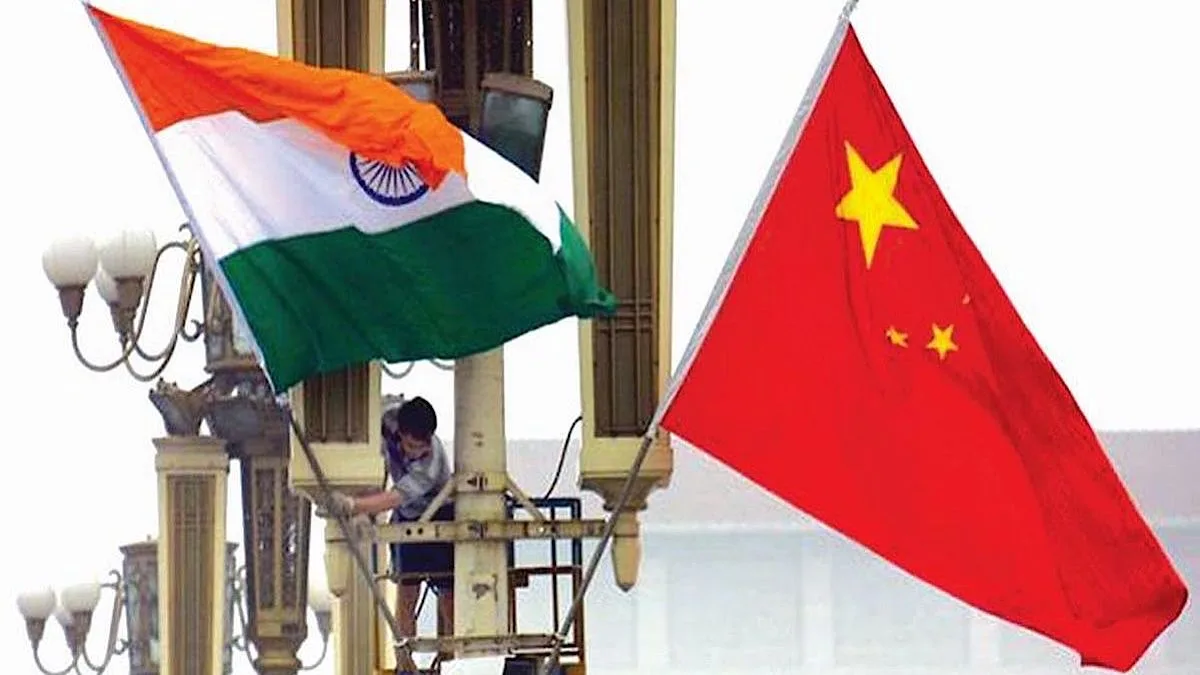
In a century defined by rapid technological change, planetary crises, and shifting global power, the most consequential decisions nations make are often not about rivalry, but about restraint. For India and China – two ancient civilizations, rising powers, and uneasy neighbors – the central question is no longer whether distrust exists. It clearly does. The more important question is whether distrust should continue to determine the future. A mature foreign policy cannot remain indefinitely anchored in grievance, suspicion, or inherited trauma.

India and China together account for more than a third of humanity. Their choices will shape Asia’s stability and, by extension, the global order. Continued estrangement serves neither country’s long-term interests. Strategic engagement – difficult, patient, and incremental – remains not only possible but necessary. China’s rise in science and technology is among the most consequential developments of the modern era. Advances in artificial intelligence, quantum computing, renewable energy, biotechnology, and advanced manufacturing have reshaped global innovation ecosystems. India, with its vast talent pool, strong universities, and entrepreneurial dynamism, stands to gain from selective and carefully structured collaboration in these domains.

Joint research initiatives, academic exchanges, and co-funded innovation platforms could accelerate India’s ambitions in AI-driven healthcare, climate modeling, smart infrastructure, and agricultural technology. This is not an argument for dependence or imitation. It is an argument for strategic learning. Technological capacity alone is not enough; governance matters just as much. Artificial intelligence is reshaping labour markets, security, public administration, and social life at unprecedented speed. Neither India nor China can afford to approach AI merely as a competitive race detached from ethical responsibility. Dialogue on AI governance – covering data ethics, algorithmic accountability, workforce disruption, and public-sector use – could help shape global norms that reflect non-Western perspectives. Cooperation here would allow both countries to act not merely as technology producers, but as norm-setters.

Climate change is a domain where cooperation is imperative. Both countries face rising temperatures, water stress, and extreme weather, while also carrying development responsibilities to large populations. China’s leadership in solar manufacturing, electric mobility, battery storage, and green infrastructure complements India’s strengths in scale and frugal innovation. Joint work in climate technology could deliver mutual benefits while offering scalable solutions for the developing world. Space exploration offers a uniquely forward-looking arena for cooperation. Both India and China have demonstrated capabilities in satellite technology, lunar missions, and space science. Collaboration in earth observation, climate monitoring , disaster management, and space research would advance scientific knowledge while building confidence through transparency and shared standards. Cooperation in healthcare offers immediate dividends.

Joint research on affordable medical devices, pharmaceuticals, public-health systems, and epidemic preparedness could improve outcomes for millions. Education remains an underused bridge. Academic partnerships and sustained scholarly exchange deepen mutual understanding while advancing knowledge. Tourism vividly illustrates what prolonged estrangement has cost both countries. Before the Galwan border clash, people -to -people exchange was expanding. In 2019, India received roughly 339,000 Chinese tourists, while about 142,000 Indians visited China. These flows collapsed after 2020, yet they point to enormous untapped potential. Tourism is not merely an industry; it is quiet diplomacy. Sp or ts provide a powerful, non-contentious avenue for cooperation.

China’s sustained success at the Olympic Games reflects decades of investment in sports science, coaching, and talent development. Collaboration through joint training camps and sports-science partnerships could accelerate India’s progress. Such cooperation need not be one-sided. India’s growing strength in golf offers opportunities for reciprocal training and exchange, reinforcing partnership rather than hierarchy. Cinema shapes public perception in ways diplomacy cannot. While films depicting recent border conflicts have generated controversy, future-oriented collaboration offers more constructive possibilities. Joint projects in animation and science fiction could allow Indian and Chinese creators to explore shared futures – technology, space, climate, and artificial intelligence – without being burdened by historical grievance. One illustrative – but not exclusive – avenue for cooperation lies in targeted regional investment, with West Bengal serving as a limited case study.

Strategically located near the Bay of Bengal and regional trade routes, the state combines port access with a large pool of educated, technically skilled workers. Selective investment in manufacturing, logistics, renewable energy, and urban infrastructure could generate employment and infrastructure renewal, while offering foreign investors access to a viable market and skilled labor. As an example rather than a centerpiece, West Bengal demonstrates how cooperation can be anchored in practical outcomes without overwhelming the broader strategic agenda. Defense cooperation remains sensitive, yet it deserves rational discussion rather than reflexive rejection.

Selective engagement – base d on strategic ne e d and cost-effectiveness – should be evaluated pragmatically. Engagement does not imply submission. Confidence, not insecurity, allows for nuance. For both India and China, tensions along the Line of Actual Control are deeply felt realities involving loss, anxiety, and uncertainty. It is therefore natural that border stability remains central to hopes for a more settled relationship. Sustained dialogue, approached with patience, flexibility, and mutual understanding, offers the most constructive path forward. Dialogue grounded in respect, empathy, mutuality, and openness reflects strategic confidence and political maturity.

India and China now face a defining choice: to remain constrained by inherited distrust, or to imagine a relationship that is cooperative, constructive, and forward-looking. Choosing cooperation does not mean erasing differences. It means managing them without allowing them to eclipse shared interests. The pathways outlined here – technology, climate, space, health, education, tourism, sports, creative industries, and selective regional development – offer practical mechanisms through which trust can be rebuilt incrementally. Engagement is not concession; it is strategy informed by confidence. Dialogue is not weakness; it is an assertion of agency. India and China possess the civilizational depth and strategic maturity to choose differently. The question is not whether cooperation is possible, but whether imagination can prevail over inheritance.

(The writer is Professor Emeritus of Communication Studies, Loyola Marymount University, Los Angeles.)

Oil surges toward $120 as West Asia conflict deepens; Trump shrugs off spike as ‘small price to pay’

Markets worldwide are reacting to a sharp jump in crude oil prices as geopolitical tensions in West Asia escalate, raising fears of inflation and economic uncertainty.

Statesman News Service | Mumbai |

Global oil prices climbed sharply on Monday as tensions in West Asia unsettled energy markets, pushing the Brent crude price above $116 a barrel and raising fresh worries about disruptions to global oil supplies.

The jump comes as the conflict involving Iran, Israel and the United States continues to intensify, adding uncertainty to the region and fuelling concerns that oil supply could be affected and inflation may rise worldwide. The growing instability has raised fears that oil supplies could be affected, which may push up fuel costs and add to inflation across many economies.

During Monday’s trading session, the Brent crude price rose more than 25 per cent to about $116.5 per barrel, with prices briefly touching $119.45 at one point. Analysts say the sharp surge reflects growing anxiety in financial markets as the conflict intensifies.

Rising tensions push crude oil prices higher

The crisis in West Asia has widened into a multi-front confrontation after coordinated US–Israeli strikes on Iran. Iran’s Supreme Leader Ayatollah Ali Khamenei was killed in the attack.

Market watchers say the escalating situation has already begun to affect investor sentiment and energy markets globally.

Banking and market expert Ajay Bagga told news agency ANI that oil markets were reacting strongly to the possibility of shortages and rising geopolitical risk.

“Oil prices are rising 18 per cent to 20 per cent this morning in Asia, transmitting a massive risk off to markets as fear takes centre stage. Oil prices are the basis of pricing in the economy. A 20 per cent global shortage of oil is now getting reflected in prices, which may go up further to the USD 150 level on Brent,” Bagga said.

According to Bagga, a strong “fear premium” has already entered global markets, reflecting the uncertainty surrounding the conflict.

At such elevated price levels, he warned, demand destruction could follow as businesses and consumers cut back spending.

Oil prices also have a direct impact on food and consumer goods, he said, meaning a sustained spike could lead to broader inflation across economies.

Bagga cautioned that central banks might be forced to tighten monetary policy if inflation remains high, potentially pushing the global economy closer to recession.

“Monetary policy tightening may be forced onto central banks if this inflation stays elevated for a longer time. Overall, these levels of inflation point to an incipient global recession on the back of aggregate demand turning negative as marginal consumers stop discretionary consumption and cut back on non-discretionary consumption,” he added.

Trump says short-term oil spike is ‘worth the cost’

Amid rising oil prices, US President Donald Trump sought to calm concerns, arguing that the surge would be temporary if Iran’s nuclear capabilities were eliminated.

In a post on Truth Social, Trump said the short-term spike in fuel prices was a small price to pay for global security.

“Short term oil prices, which will drop rapidly when the destruction of the Iran nuclear threat is over, is a very small price to pay for U.S.A., and World, Safety and Peace. ONLY FOOLS WOULD THINK DIFFERENTLY!” he wrote.

Trump’s comments come as oil markets react sharply to the conflict. According to CNN Business, crude prices crossed $100 per barrel on Sunday for the first time since the Russia–Ukraine war began in 2022.

The report said investors are worried that the conflict with Iran could disrupt the global oil supply. There are fears the situation may worsen if attacks begin targeting oil facilities and other energy infrastructure across West Asia and the Gulf region.

US oil futures reportedly jumped about 18 per cent to around $108 per barrel, the highest level since July 2022, while Brent crude futures rose roughly 16 per cent, approaching the same mark.

The spike has also unsettled financial markets. CNN Business reported that Dow futures dropped more than 800 points, while S&P 500 and Nasdaq futures declined about 1.6 per cent each.

Fuel prices have already begun to rise in the United States. According to data from AAA, the average gasoline price reached $3.45 per gallon on Sunday, up about 16 per cent from the previous week.

Forged Authority

When Sundararaman Ramamurthy, chief executive of the Bombay Stock Exchange, found himself apparently dispensing stock tips in a slick online video, the most alarming detail was not the sophistication of the forgery.

Statesman News Service | New Delhi |

When Sundararaman Ramamurthy, chief executive of the Bombay Stock Exchange, found himself apparently dispensing stock tips in a slick online video, the most alarming detail was not the sophistication of the forgery. It was the plausibility. The face looked right. The voice carried a familiar cadence. The authority felt authentic. And that was precisely the point. Deepfakes have moved beyond celebrity pranks and political satire. They are now calibrated instruments aimed at the nervous system of modern commerce: trust. Financial markets, corporate hierarchies and digital communications all depend on the assumption that a voice or a face corresponds to a real, accountable individual.

Artificial intelligence has shattered that assumption. Consider the implications. If the head of India’s oldest stock exchange can be convincingly fabricated urging investors to buy specific shares, retail traders scrolling through Instagram or WhatsApp are left navigating a hall of mirrors. The Securities and Exchange Board of India can issue warnings. Exchanges can file complaints. Yet the damage lies not only in monetary loss but in corrosion of credibility. Every genuine message now competes with the suspicion that it could be synthetic. The threat is not confined to India. In 2024, executives at the engineering firm Arup were duped into transferring $25m after a video call that appeared to feature senior leadership.

The participants were digital impostors. Around the same time, Karim Toubba of LastPass discovered that his likeness had been used in an attempted internal fraud. The attackers required neither a film studio nor vast capital – only commercially available AI tools and a plausible pretext. What makes this moment distinct is the collapsing cost of deception. For a few thousand dollars, criminals can manufacture authority. Meanwhile, companies must invest exponentially more in cybersecurity staff, biometric verification tools and layered authentication protocols. This asymmetry favours the aggressor. There is also a psychological dimension. Corporate culture often prizes responsiveness and deference to senior executives. A message marked “urgent” from a chief financial officer is rarely questioned. Deepfakes weaponise that instinct. The fraud succeeds not merely because the technology is advanced, but because organisational habits remain outdated.

The answer cannot be technological alone. Yes, firms should deploy AI-based detection systems that analyse micro-expressions and blood-flow patterns. But they must also institutionalise scepticism. No large transfer should hinge on a single video call. No executive instruction should bypass established verification chains. In other words, procedure must trump perception. Governments, too, have a role. Regulators such as SEBI and counterparts worldwide should treat deepfake fraud as a systemic financial risk, not an episodic cybercrime. Disclosure norms, reporting standards and public awareness campaigns need urgent strengthening. We are entering an era where seeing is no longer believing. The camera, once a witness, has become an accomplice. If institutions fail to adapt, the next deepfake will not merely embarrass a chief executive. It will undermine the fragile architecture of digital trust on which the global economy now rests.

Slow Pivot

When China’s leadership gathers in Beijing for the annual meetings of the National People’s Congress, the numbers announced are usually meant to project confidence.

Statesman News Service | New Delhi |

When China’s leadership gathers in Beijing for the annual meetings of the National People’s Congress, the numbers announced are usually meant to project confidence. This year, however, the message from Premier Li Qiang and President Xi Jinping is notably different. By setting economic growth expectations at roughly 4.5-5 per cent, the Chinese government is acknowledging that the era of relentless double-digit expansion that defined the country’s rise is firmly over.

That admission is not necessarily a sign of weakness. Rather, it reflects the difficult transition China now faces as it tries to rebuild the foundations of its economic model. For decades, growth was powered by exports, massive infrastructure spending, and a property boom that transformed cities from Shenzhen to Chongqing. Today those drivers are losing force. The property sector illustrates the problem clearly. Real estate once accounted for close to a third of China’s economic activity, sustaining construction companies, steel production, and local government revenues. But the debt crises that engulfed developers such as Evergrande exposed how fragile the system had become. With housing demand weakening and local governments already burdened by heavy debt, Beijing can no longer rely on property as the engine of expansion.

Demographics are another constraint. China’s population is ageing rapidly, and birth rates continue to fall despite repeated policy efforts to encourage families to have more children. A shrinking workforce inevitably means slower growth, forcing policymakers to look for productivity gains rather than sheer scale. The leadership’s response is becoming increasingly clear. Under President Xi Jinping’s broader vision of technological self-reliance, Beijing is investing heavily in advanced manufacturing, artificial intelligence, renewable energy, and scientific research. These priorities are expected to feature prominently in the country’s new Five-Year Plan, which will shape development goals through the end of the decade. The aim is not merely to maintain growth but to upgrade China’s economic structure. External pressures are accelerating that shift.

Trade tensions with the United States, particularly the tariff policies associated with President Donald Trump, have reinforced Beijing’s determination to strengthen domestic industries and reduce dependence on Western technology. At the same time, geopolitical disruptions affecting global energy supplies remind Chinese planners of the risks that come with reliance on external resources. Yet the transition will not be smooth. Weak consumer spending remains a persistent challenge, reflecting household caution after years of property market turmoil and uncertain employment prospects.

Without stronger domestic demand, China’s strategy risks leaning too heavily on industrial expansion and exports, potentially creating new imbalances. Still, a slower target may ultimately prove to be a realistic one. By abandoning the political pressure to chase ever higher growth numbers, Beijing may gain the policy flexibility needed to manage structural reforms. The real test for President Xi’s economic strategy is not whether China grows at five per cent, but whether the country can adapt its model to a far more complex global and demographic reality

Rot in Education

It would be difficult to decide which was the greater tragedy ~ fiasco at the AI Summit, or admission of students with negative marks in post-graduate medical classes.

DEVENDRA SAKSENA | New Delhi |

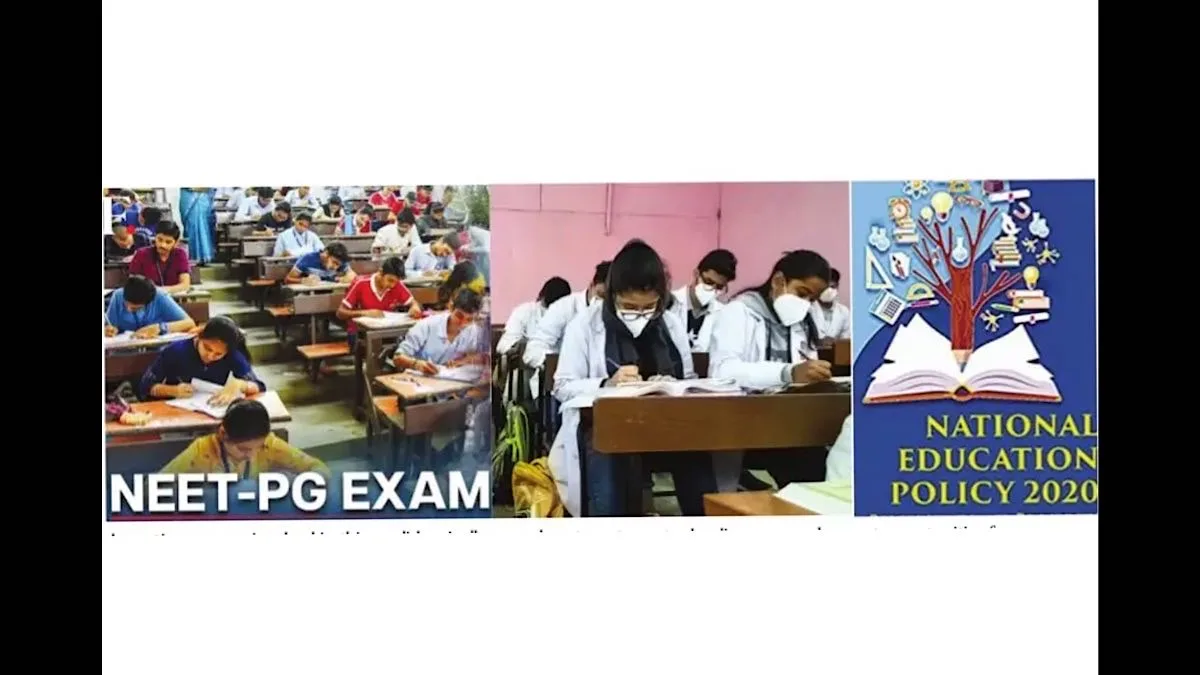
It would be difficult to decide which was the greater tragedy ~ fiasco at the AI Summit, or admission of students with negative marks in post-graduate medical classes. However, one thing is beyond doubt ~ both exemplify the deep rot that plagues our education system. An examinee who leaves the answer book blank would get zero marks in the NEET-PG examination, so only an ignorant candidate, who is also foolish ~ a dangerous combination for a medical specialist ~ would end up with negative marks (a more savvy candidate would choose a particular option, say A, for all 200 questions, and given the fact that a right answer gets four marks, and a wrong answer fetches minus one mark, would end up with 50 marks).

The same epithet could be used for college students who demonstrated a rechristened Chinese robodog, claiming it as their own creation, because any reasonably intelligent person would have known that such plagiarism would be easily detected at the AI Summit, where topmost global IT talent was present. There was a time, not too long ago, when merit was recognised and rewarded, and plagiarism, or ‘cheating,’ was looked down upon. However, times have definitely changed ~ responding to a PIL filed in Supreme Court challenging the reduction of the minimum qualifying marks for PG medical admissions, the Health Ministry averred that a low cut-off does not imply incompetence, losing sight of the fact that the NEET-PG examination is specifically designed to test the suitability of candidates to pursue medical specialisation, and a candidate getting negative marks is definitely not cut out to become a specialist doctor.

In the same vein, after the Chinese robodog was called out at the AI Summit, no remorse was expressed ~ either by the boys and girls who claimed to have created the robodog, or by the college management, that furthered the deception. To be fair, a leading IT company had also showcased the same robodog at the AI Summit, with a different name, though not as their own creation. Significantly, just desserts have eluded all dramatis personae involved in this sordid drama. It is not difficult to see that gross commercialisation is at the root of such incidents. The Health Ministry let the cat out of the bag, when at the end of their affidavit filed in the Supreme Court, they said that reducing cut-off was a recurrent phenomenon and if the cut-off was not reduced, 9,600 medical speciality seats would remain vacant.

The public is definitely not going to benefit by having such poor-quality medical specialists ~ the overwhelming majority of vacant seats being in private medical colleges, it is not difficult to see who will benefit from lowering the cut-off. Since a suitable number of candidates were not available, year after year, a logical step could be to convert post-graduate seats to MBBS seats, as more MBBS doctors are required. In any case, students scoring less than pass marks in the NEET-PG examination should be re-examined for validity of their MBBS degree. Sadly, the rot in the education system starts at the beginning. According to the Annual Status of Education Report (ASER) 2024, a survey of 6.5 lakh children revealed that 76 per cent of Class 3 students, 55.2 per cent of Class 5 students, and 32.5 per cent of Class 8 students still cannot read Class 2 level texts, and over 66 per cent of Class 3 and Class 5 students, struggle with simple maths.

The reason is not far to seek. Till today, Government schools established by the British, more than a century ago, are the backbone of our education system. Due to neglect over the years, most Government schools are now floundering, with falling buildings, and a huge shortage of teachers. Most of the Government primary schools have a single teacher, teaching many classes in a single room. A viral video from Bihar showed five primary Government schools operating from a single room, with five teachers writing on a single blackboard, to a roomful of bemused children. Obviously, education imparted in such schools would be of an abysmal standard, yet despite pontifications at the highest levels, no efforts are visible for the improvement of Government schools, where most of the poor children get educated.

The shortage of teachers is amplified with Government teachers being entrusted with all kinds of administrative tasks like vaccine surveys, gram sabha work, voter list revision, Aadhaar enrolment, sports events, cleanliness drives and nutrition surveys. Teachers are the workhorses for the ongoing Special Intensive Revision (SIR) exercise; the strenuous nature of this job has resulted in a number of suicides. In fact, the Gujarat government has identified 123 non-academic, noneducation-related works for which teachers are commandeered. Marking a new low, recently, the state government issued a circular (withdrawn now) directing teachers to conduct a survey of stray dogs in and around school campuses. Schoolchildren fare little better, being asked to swell crowds for VIP visits and Government-sponsored events.

However, throwing out the baby with the bathwater, the Government is closing down schools on the pretext of low enrolment ~ negating the Right to Education. An obvious solution could be to provide enough funds, and appoint able and motivated persons, with sufficient financial and administrative powers, as heads of Government schools. And surely, the Government has sufficient resources to spare teachers, and hire ad-hoc volunteers, to carry forward Government schemes. Secondary education appears to be doing better, what with almost 94 per cent pass rate in CBSE tenth board examinations and 88.4 per cent pass rate in twelfth board examinations, with almost two lakh students scoring above 90 per cent in CBSE tenth and 1.1 lakh students in CBSE twelfth board examinations.

This façade is ripped away at engineering and medical examinations; the qualifying score was 20.56 per cent at the JEE Advanced Examination, and 18.75 per cent, in NEET. Also, we have the sad spectacle of parents doing everything possible to ‘help’ their wards; be it climbing walls to pass on chits at examination time, or to cut deals with examiners. Built on such a ramshackle foundation, the edifice of higher education is bound to be shaky. Universities have proliferated ~ from 17 in 1947 to more than 1,300 now ~ but the quality has definitely deteriorated. The prime reason is that there are few employment opportunities for young men with traditional education. Resultantly, the great universities of yesteryears like Calcutta University have a large number of vacant seats at undergraduate level. Even engineering courses in run-of-the-mill institutions have no value in the job market. Not surprisingly, hardly half the seats for undergraduate engineering courses could be filled up across India.

However, quality college education develops essential skills like analytical thinking, active learning, and complex problem solving, which results in brighter college graduates with the right skillset being paid more, and being employed at higher levels. This would explain why sixteen lakh students appear for the 18,000 IIT seats. The icing on the cake is that a talented alumnus of IIT/IIM can, one day, aspire to become the CEO of some top US corporate. Outside the charmed circle of IITs/IIMs, a student of ordinary means faces a cruel dilemma. After completing his school education, he has little capital, skill or experience to strike out on his own. If he goes to a second-grade college in India, he can only hope that he will get some small-time employment ~ after wasting his parent’s money and several years of his own life.

The obvious solution is to link education to jobs, which is not an untried idea; one-half to nearly two-thirds of students pursue vocational education in Germany and Switzerland. The National Education Policy (NEP) 2020 rightly aims to introduce vocational education at all levels by integrating vocational education into mainstream education in all educational institutions, by 2030. But implementation of NEP 2020 is far behind schedule; NEP had envisaged that by 2025, at least half of the students would have vocational exposure through school and higher education.

The problem in implementation of NEP appears to be of finance and resolve; the NEP document requires that 6 per cent of GDP be spent on education, while we are spending only half that. Further, changeover to NEP would require teacher re-education, new infrastructure and a complete overhaul of the education system ~ which is easier said than achieved. Probably, a small beginning can be made by developing courses that foster specialization in emerging fields like horticulture, child care, customer marketing etc. which offer higher-paying jobs.

(The writer is a retired Principal Chief Commissioner of Income-Tax)

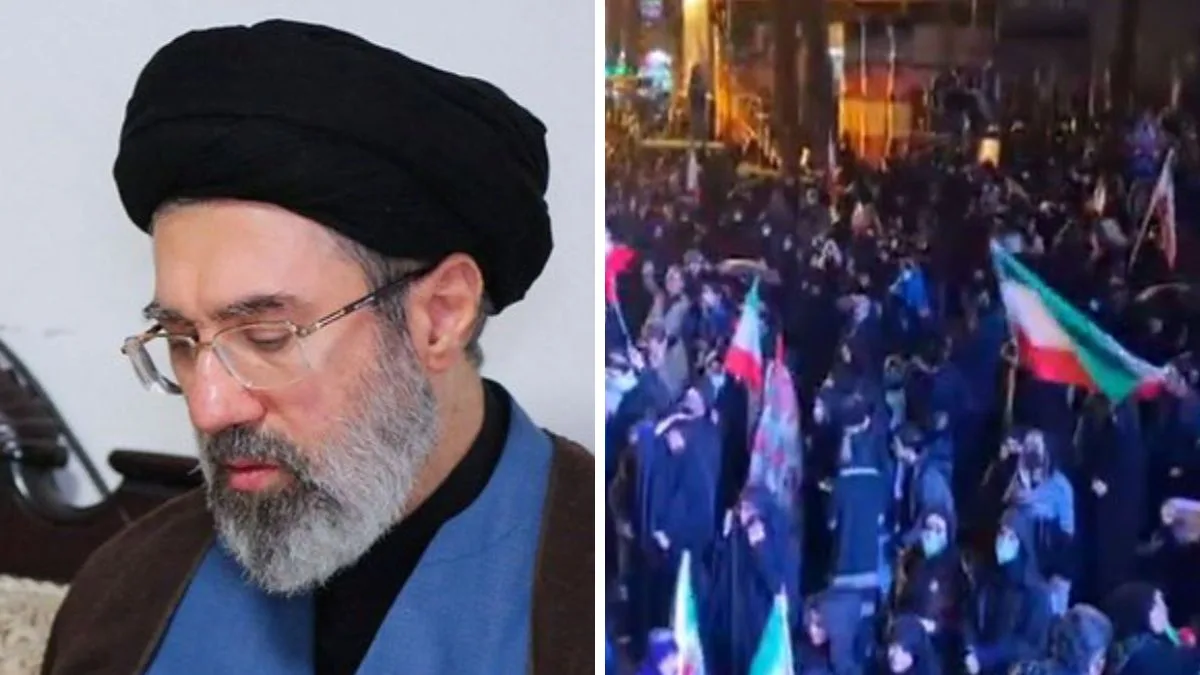
New leader, same battle: Iran names Mojtaba Khamenei as Supreme Leader as conflict with US, Israel escalates

Iran’s clerical council has appointed Mojtaba Khamenei as the country’s third Supreme Leader, drawing support from political and military leaders while tensions continue to escalate across the region.

Statesman News Service | Mumbai |

Crowds gathered in parts of Tehran and other cities on Monday after Ayatollah Seyyed Mojtaba Hosseini Khamenei was announced as Iran’s new Supreme Leader. State broadcaster Press TV said people came out on the streets soon after the decision was made public, welcoming the choice of the country’s clerical council.

The development marks a major transition in Iran’s leadership. The country has been on edge since the death of the previous Supreme Leader, Ayatollah Ali Khamenei, during the latest escalation in West Asia. With Mojtaba Khamenei now taking the position, Iran enters a new political phase while the region remains tense.

Iran’s Assembly of Experts, an 88-member clerical body responsible for choosing the Supreme Leader, finalised the decision on Sunday. A message from Mojtaba Khamenei’s official account on X confirmed that the council had appointed him “the Third Leader of the Sacred Islamic Republic of Iran under Article 108 of the Constitution.”

Soon after the announcement, groups of supporters were seen celebrating the decision in different parts of the country, Press TV reported.

Political and military backing signals continuity

Iran’s political leadership quickly voiced support for the new leader. Ali Larijani, Secretary of the Supreme National Security Council, called for unity and said he hoped the country would move forward under Mojtaba Khamenei’s leadership.

The Speaker of Iran’s Parliament described the appointment as a “soothing balm” for the nation.

The security establishment also signalled its backing. Both the Islamic Revolutionary Guard Corps (IRGC) and Iran’s General Staff of the Armed Forces pledged support to the newly appointed leader, according to Press TV.

Iranian President Masoud Pezeshkian congratulated Mojtaba Khamenei and said the moment represented “a new era of honour and authority for the Iranian nation.” In remarks carried by Press TV, he said the transition reflected unity among Iranians at a crucial time.

Leadership change unfolds amid growing regional tensions

The change at the top comes during an already volatile period in the region.

Tensions shot up after a joint US-Israel strike inside Iran on February 28 killed the country’s Supreme Leader Ayatollah Ali Khamenei and a number of senior figures.

Iran later launched waves of missile and drone strikes across different locations in the region. Press TV reported that two missile waves were fired toward Israel shortly after Mojtaba Khamenei’s appointment was announced.

According to The Jerusalem Post, fragments from one missile struck central Israel, leaving one person injured.

Inside Iran, the consequences of the conflict are becoming more visible. Al Jazeera reported that more than 1,300 people have died since the violence began.

Large numbers of civilians have also been forced to move. Around 100,000 people have left their homes, seeking safer areas as attacks continued. Aid agencies say requests for emergency assistance are rising as displacement increases.

Despite the pressures, President Pezeshkian said Iran had endured difficult moments before and remained capable of overcoming the current situation through national unity and determination.

US-Israel-Iran war: Trump ‘not happy’ with Iran’s new Supreme Leader as Tehran strikes UAE, Turkey and Israel

Oil prices cross $100, evacuation flights increase, and global markets react as tensions in West Asia deepen, with missile exchanges and humanitarian concerns growing across the region.

Statesman News Service | Mumbai |

Nine days after the US and Israel carried out strikes on Iranian territory, the conflict in West Asia continues to widen, drawing in political upheaval, missile exchanges, and economic tremors far beyond the battlefield. The crisis has already left thousands dead or displaced and triggered fresh fears of a broader regional war.

On Monday, Iran announced a major leadership change. Ayatollah Sayyed Mojtaba Khamenei, the second son of the late Supreme Leader Ali Khamenei, has been chosen as the country’s new Supreme Leader by the Assembly of Experts. The announcement was followed by celebrations in parts of Iran even as fresh missile strikes were reported.

US-Iran War Top updates

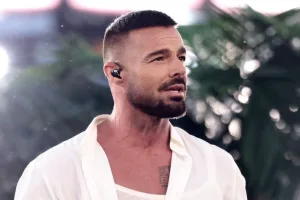
Video | Ricky Martin is a ‘desi munda’ now: Pop star dances to Sukhbir Singh’s ‘Oh ho ho ho’ at T20 World Cup finale

Ricky Martin set the T20 World Cup closing ceremony on fire with his energetic performance. Fans went wild as he grooved to Sukhbir Singh’s chartbuster ‘Oh Ho Ho Ho’, matching their moves beat for beat.

Statesman News Service | New Delhi |

Ricky Martin dances to ‘Oh ho ho ho’: Move over cricket drama. This T20 World Cup final was about music, too! While India and New Zealand battled it out on the pitch on March 8, the real entertainment buzz was off the field. International pop sensation Ricky Martin lit up the stadium with a show-stopping performance during the closing ceremony. And he just showed that cricket fans can groove as hard as they cheer.


View this post on Instagram


A post shared by ICC (@icc)

Also Read: Photo Story | Tricolours, cheers, and patriotic songs: India Gate turns into giant party after India’s T20 World Cup win

Ricky Martin goes ‘Oh ho ho ho’

The party kicked off with Indian pop icon Sukhbir Singh setting the mood with his ever-energetic chartbuster ‘Oh Ho Ho Ho’.

The crowd couldn’t resist; the stadium turned into an instant dance floor. And then came the global superstar. Ricky Martin hit the stage and delivered a high-energy performance of his biggest hits. And then he charmed fans with his signature moves.

Ricky dives into the Indian vibe

A video shared by the ICC Instagram account captured a priceless moment: Ricky, dressed casually in a white tee, dancing his heart out to Sukhbir’s ‘Oh Ho Ho Ho’ alongside a group of ecstatic fans.

The clip quickly went viral. Sukhbir couldn’t resist joining in online, commenting, “ale ale ale meets oho ho ho!”

Fans went wild in the comments.

A first-time cricket crowd for Ricky

For Ricky, performing for a cricket crowd was a brand-new experience. Speaking to ANI, Sukhbir shared, “I am very excited as I have never performed for a cricket audience. This performance will be very special…”

Clearly, it was more than special; Ricky’s energy, coupled with the crowd’s enthusiasm, created a once-in-a-lifetime carnival-like atmosphere.

Patanjali describes Peedanil Gold as long-term Ayurvedic option for inflammatory and degenerative pain

Patanjali says Peedanil Gold works beyond temporary pain relief by targeting inflammation, nerve signals and joint damage linked to chronic pain conditions. The Ayurvedic formula is promoted as a long-term support option.

Statesman News Service | New Delhi |

Peedanil Gold is an Ayurvedic pain relief medicine made by the Patanjali group. The company says it is not just a quick fix that hides pain. Instead, it claims the formula works deeper inside the body, targeting the real causes of long-lasting pain like inflammation, nerve pressure and tissue wear and tear.

Patanjali explains pain as the body’s alarm system. Special sensors in our body notice injury and send signals to our brain. This is why we feel pain. Short-term pain usually comes from fresh injury. But long-term pain is quite different. It is often linked to deeper problems such as arthritis, cervical spondylosis, slipped disc, nerve disorders. These conditions can disturb sleep, reduce movement and slowly affect everyday life.

The main claim is that Peedanil Gold works on pathways inside the body that create pain. It is said to control inflammatory chemicals that cause swelling and irritate nerves. Since inflammation is a big reason behind chronic pain, calming it down is presented as the key way the medicine gives relief. Patanjali compares this action to common anti-inflammatory drugs that target similar processes, but says its Ayurvedic formula may avoid the harsh side effects linked to long-term use of such medicines, like stomach, kidney or heart problems.

For joint problems like osteoarthritis, the company says Peedanil Gold may do more than just reduce pain. It claims the formula can also support cartilage health, which is important for smooth joint movement. According to the company’s internal observations, the product may help slow down joint damage and support tissue recovery, leading to better movement along with pain relief.

Also Read: Ginger benefits you didn’t know: Natural pain relief, toothache soother, health booster | Acharya Balkrishna explains

The medicine is also promoted for nerve-related pain such as sciatica and slipped disc. Patanjali says it helps balance abnormal pain signals while supporting nerve strength and stability.

Another claim is about its effect on brain and genes. The company says the formula may influence gene activity linked to pain pathways. In simple terms, this means it could work deeper than just blocking the feeling of pain for a short time. This is shown as a key difference from many regular painkillers that only numb the sensation without addressing the root biological triggers.

Finally, Patanjali states that long-term safety checks have not shown major harmful effects on organs like the liver, kidneys or brain when Peedanil Gold is taken in the recommended dose and along with proper diet. The product is thus positioned as a long-term Ayurvedic support for people dealing with chronic, inflammatory and nerve-related pain.

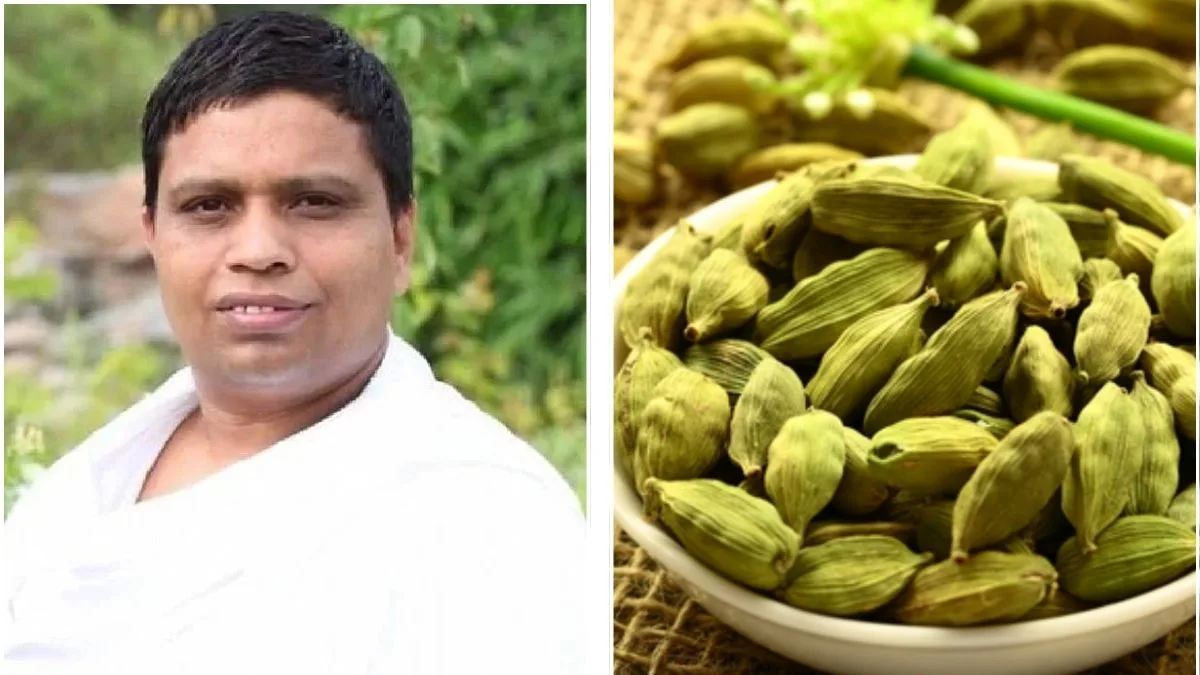
Kitchen spice or natural detox hero? Acharya Balkrishna says small cardamom may cleanse the body from within

Health experts say the aromatic spice is also rich in antioxidants and may help with digestion, blood pressure, and oral health, though more human studies are still needed.

Statesman News Service | New Delhi |

A tiny green spice sitting quietly in your kitchen might be doing much more than making your tea smell amazing. At least that’s what yoga guru and Ayurveda expert Acharya Balkrishna recently hinted at in a fresh Facebook post that has sparked curiosity among health lovers.

Talking about “chhoti elaichi” (small cardamom), Balkrishna shared a simple but powerful claim that this fragrant spice may help the body flush out toxins naturally.

His post has now started a conversation among people who love natural remedies and traditional wellness practices.

Acharya Balkrishna’s claim: Cardamom helps detox the body

In his Facebook message, Acharya Balkrishna explained that consuming small cardamom may help remove toxic substances from the body through the kidneys.

According to him, the spice supports body’s natural detox process. When kidneys work properly, they filter waste and toxins from blood and push them out through urine.

Because of this effect, Balkrishna suggested that cardamom may help detoxify body from inside.

Cardamom has been part of traditional Indian medicine for centuries especially in Ayurveda. In this practice, spices are often used not just for taste but also for health.

Also Read: Cinnamon, cloves, and a cup of relief: Acharya Balkrishna’s Ayurvedic trick for flu and heart woes!

Why cardamom is considered good for health

Modern studies also suggest that cardamom may have several health benefits.

One important reason is its high antioxidant content. Antioxidants help protect the body’s cells from damage caused by harmful molecules called free radicals.

Researchers say these compounds may also play role in supporting overall health and preventing certain diseases.

Also Read: Patanjali positions Dant Kanti Gandush Oil Pulling as a traditional Gandush practice backed by modern testing

Could help digestion and stomach problems

Cardamom has also been used for digestive relief for thousands of years.

In traditional remedies, it is often mixed with other spices to reduce nausea, stomach discomfort, vomiting, indigestion.

Some animal studies have even suggested that cardamom extract may help reduce stomach ulcers and protect the stomach lining.

May fight bad breath and oral bacteria

Another popular traditional use of cardamom is for fresh breath.

In many cultures, people chew whole cardamom pods after meals. The spice has a strong aromatic flavour that can instantly freshen the mouth.

Scientific studies also suggest that cardamom may help fight bacteria linked to bad breath and dental cavities. Some laboratory research shows that cardamom extracts can reduce the growth of certain harmful mouth bacteria.

Also Read: Ginger benefits you didn’t know: Natural pain relief, toothache soother, health booster | Acharya Balkrishna explains

Anti-inflammatory and disease protection potential

Cardamom is also believed to have anti-inflammatory properties.

Inflammation is body’s natural response to injury or infection. But long-term inflammation can increase risk of chronic diseases.

Antioxidants present in cardamom may help protect cells and reduce inflammation in body.

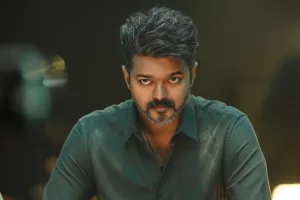
Trisha Krishnan slams ‘stupid’ comment as photos with Vijay go viral after Sangeetha Sornalingam files for divorce

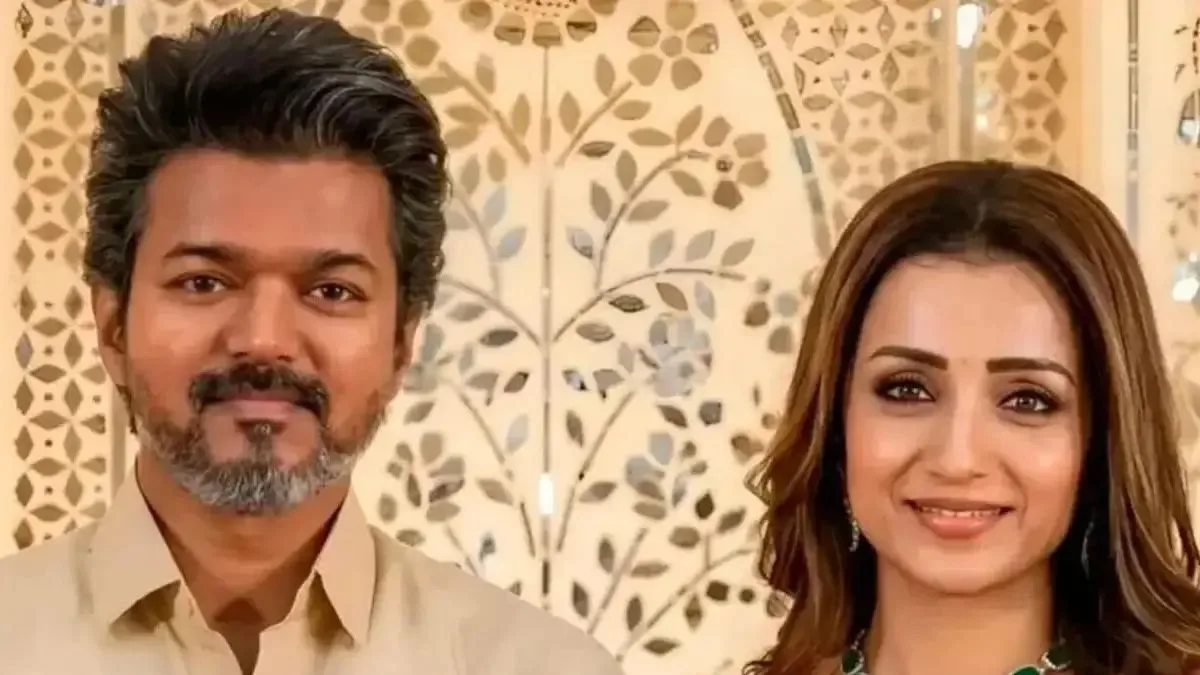
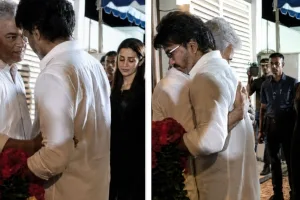
Trisha Krishnan and Vijay were recently seen attending a reception together, where they walked on stage to congratulate the newlyweds and posed for photographs. The appearance quickly went viral online.

Statesman News Service | New Delhi |

The internet loves drama, and this time it has landed right in the middle of the Tamil film industry. Actress Trisha Krishnan suddenly became the talk of social media after she was spotted attending a reception with actor-politician Vijay Thalapathy. Photos and short clips from the evening spread like wildfire online.

Soon after, filmmaker and actor R Parthiban made a remark about her during an award event. The comment quickly caught attention. Now Trisha has responded with a sharp social media post that many believe is her indirect reply to the situation.

Viral moment: Trisha And Vijay at a reception

The buzz started when Trisha Krishnan and Vijay Thalapathy were seen together at a reception ceremony. The two walked up to the stage side by side to congratulate the newly married couple.

They also posed for photographs together at the event. Guests and fans present there captured several glimpses of the moment, and those images soon reached social media.

The chatter grew even louder when people noticed that both actors were seen leaving the venue around the same time as well.

The sight of popular on-screen pair together quickly sparked conversations online.

Timing adds fuel to the speculation

The reception appearance became even more talked about because it happened shortly after Vijay’s wife Sangeetha Sornalingam reportedly filed for divorce.

Because of this timing, many social media users began speculating about the situation. Discussions about Trisha and Vijay started trending across platforms.

Neither actor directly addressed the rumours, but the public attention kept growing.

R Parthiban’s comment at award ceremony

In the middle of the online chatter, filmmaker and actor R Parthiban made a remark that soon added more heat to the discussion.

During an award ceremony, he was asked to talk about actors he had worked with. While speaking, he was shown Trisha’s photograph on screen.

Looking at the picture, Parthiban referred to her famous role as Kundavai and said, “This Kundavai should be kept at home for a few days. That’s good. Don’t let her come out.”

Trisha’s strong social media message

Soon after, Trisha Krishnan shared a post on her social media accounts that many believe was her response to the incident.

She did not mention any names or clearly specify the event she was referring to. However, her words seemed to address the remarks made about her.

In her post, she revealed that organisers of a recent event had informed her that her name and picture were added at the last moment.

She wrote, “I was informed by the organisers of a recent event that my name and picture were included at the last minute at the request of an individual conveyed through his assistant.”

Trisha then criticised the comments made about her.

“A microphone doesn’t make a comment intelligent or humorous. It just makes stupidity louder,” she wrote.

She further added, “Crude words without knowledge say more about the speaker than the person they’re aimed at.”

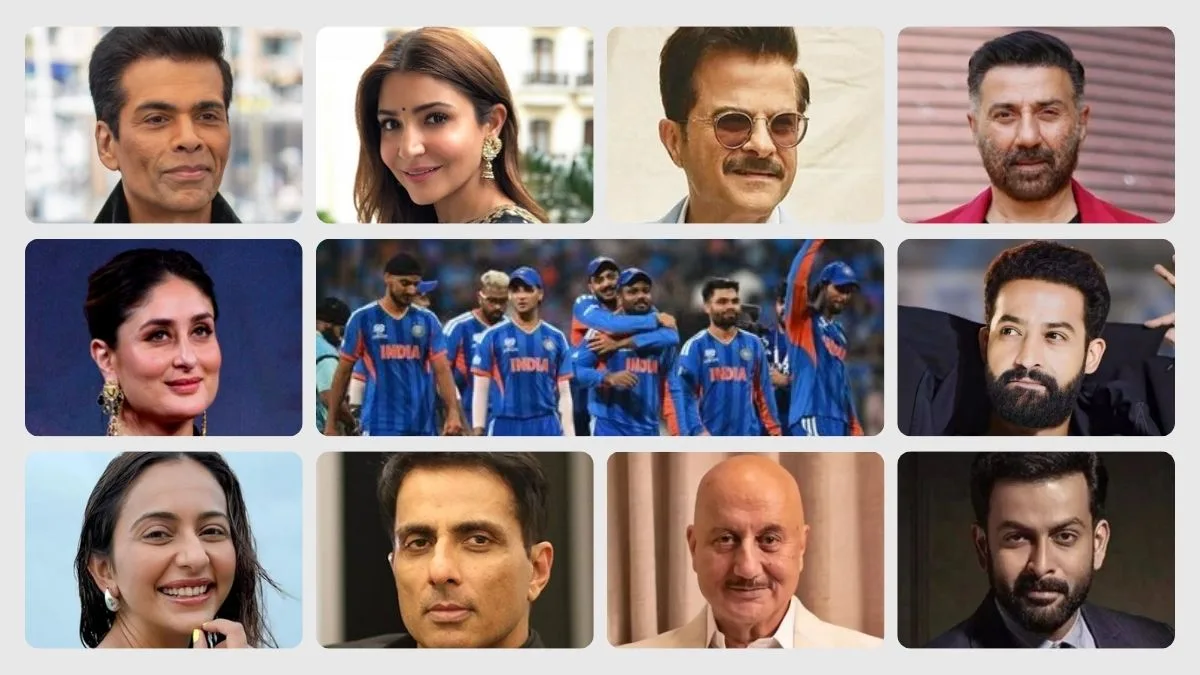
When team India wins, Bollywood parties! Film stars turn social media into celebration zone after T20 World Cup victory

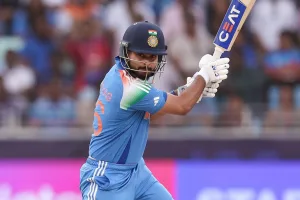
India sealed a dominant victory over New Zealand in the T20 World Cup 2026 final. A top-order performance from Abhishek Sharma, Sanju Samson and Ishan Kishan helped the Men in Blue defend their world title.

Statesman News Service | New Delhi |

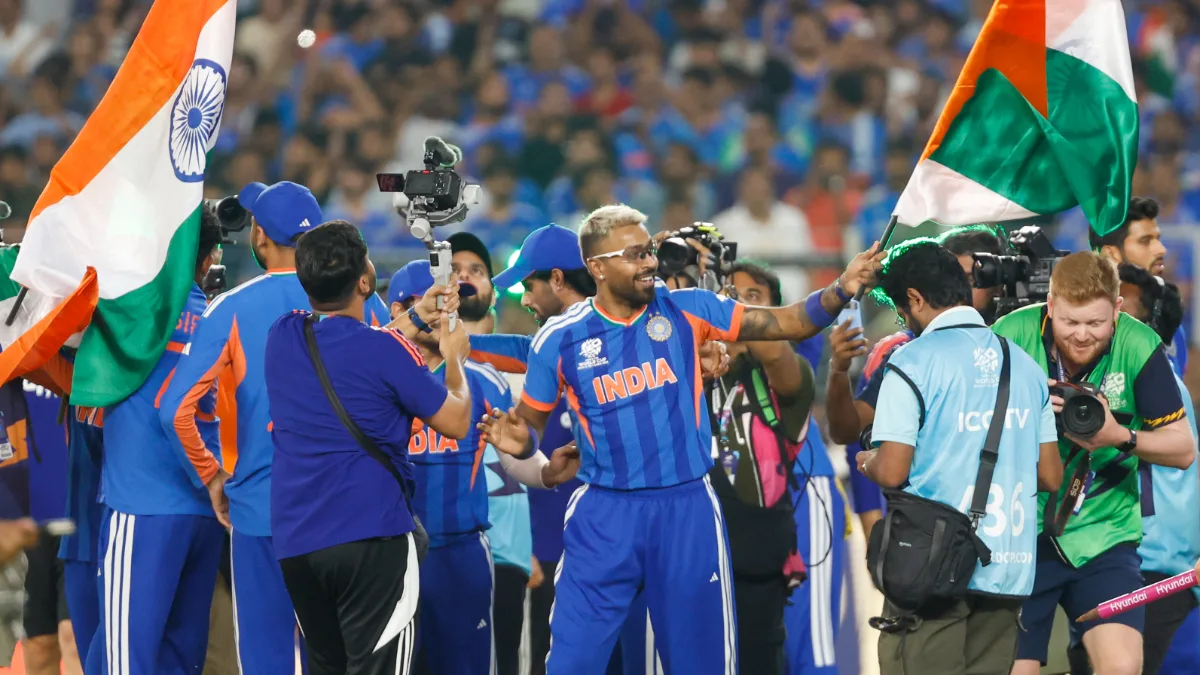
India did not just celebrate a cricket victory on Sunday night, it exploded into a full-blown party. Fireworks burst across cities and social media turned into a digital stadium as Team India lifted the ICC Men’s T20 World Cup 2026 trophy after defeating New Zealand in the final.

From cricket lovers to film stars, everyone seemed to be in the same mood: proud, emotional, and extremely loud online. Within minutes of the final whistle, Bollywood celebrities flooded Instagram and X with congratulatory posts.

Also Read: Photo Story | Tricolours, cheers, and patriotic songs: India Gate turns into giant party after India’s T20 World Cup win

The victory was even sweeter because India successfully defended their T20 World Cup title, becoming the first team ever to do so. Naturally, the film industry had plenty to say.

Bollywood’s Instagram party begins

Filmmaker Karan Johar was among the first celebrities to react. Instead of writing a long caption, he chose drama, Bollywood style.

Johar shared famous clip from his blockbuster film ‘Kabhi Khushi Kabhie Gham’ on his Instagram story. This perfectly captured the mood of celebration across the country.

Meanwhile, Kareena Kapoor also joined the celebrations on social media.

Anushka Sharma cheers the champions

Actor Anushka Sharma kept it heartfelt and simple. Taking to Instagram, she congratulated the team with a warm message.

“Heartiest congratulations to this brilliant team for this phenomenal victory!! Back to back World Cup wins,” she wrote.

Sunny Deol calls Team India ‘gabrus’

If anyone brought full Punjabi energy to the celebration, it was Sunny Deol.

The actor proudly hailed the players as fearless warriors and wrote an enthusiastic message for the team.

“The GABRUS of Team India!!! You have WON IT!!! #Champions you have made Hindustan Proud!! Congratulations #TeamIndia for back to back World Cup wins, you truly played like GABRUS. No Fear, All heart!”

Anil Kapoor’s funny kiwi joke

Veteran actor Anil Kapoor decided to celebrate the victory with humour.

Taking a playful dig at New Zealand, he joked online, “Aaj kiwi thodi zyada hi meethi lag rahi hai!”

He then congratulated the Indian squad and added that the team never fails to make the nation proud.

Anupam Kher’s loud victory shout

Actor Anupam Kher was clearly watching the match closely. The moment India won, he shared clips from the final and wrote a loud celebratory message.

“INDIIIIIIAAAAAAA ARE THE CHAMPIONS! Jai Hind!”

South stars join the celebration

The celebrations were not limited to Bollywood. Several stars from the South Indian film industry also applauded Team India.

Jr NTR praised the squad for staying calm and dominant throughout the tournament.

“This is how our Men in Blue showed up with calm, composure, and dominance throughout the tournament… and brought the trophy home again and created history. Congratulations Team India. The nation will sleep well tonight,” he wrote.

Meanwhile, superstar Mahesh Babu described the team’s performance as “beast mode.”

“What was that!!! A magnificent testimony to Team India’s dominance unleashing full beast mode to bring it home for 1.4 billion hearts,” he wrote.

He also praised the players individually, mentioning Sanju Samson, Abhishek Sharma, Ishan Kishan, Shivam Dube, Jasprit Bumrah, Axar Patel, and the rest of the squad for making the victory unforgettable.

More celebrities join the victory chorus

Several other stars also joined the celebrations online. Among them were Rakul Preet Singh, Sonu Sood, Vicky Kaushal, Arjun Kapoor, Vivek Oberoi, Riteish Deshmukh, Abhishek Bachchan, Suniel Shetty, Ahan Shetty, Aparshakti Khurana, and Prithviraj Sukumaran.

How India won the historic final

The victory itself was nothing short of spectacular.

India’s top order of Abhishek Sharma, Sanju Samson, Ishan Kishan delivered powerful performance that put the team firmly in control. With strong contributions from the rest of the squad, India defeated New Zealand by massive 96-run margin.

The final match took place at the iconic Narendra Modi Stadium in Ahmedabad, where the Men in Blue sealed their place in history by defending the T20 World Cup title.

Bumrah’s Masterclass: Player of the Match, record-breaking pacer, India’s national treasure

Team India captain Suryakumar Yadav hailed Bumrah as a “national treasure” for his exceptional skill and experience.

Statesman News Service | New Delhi |

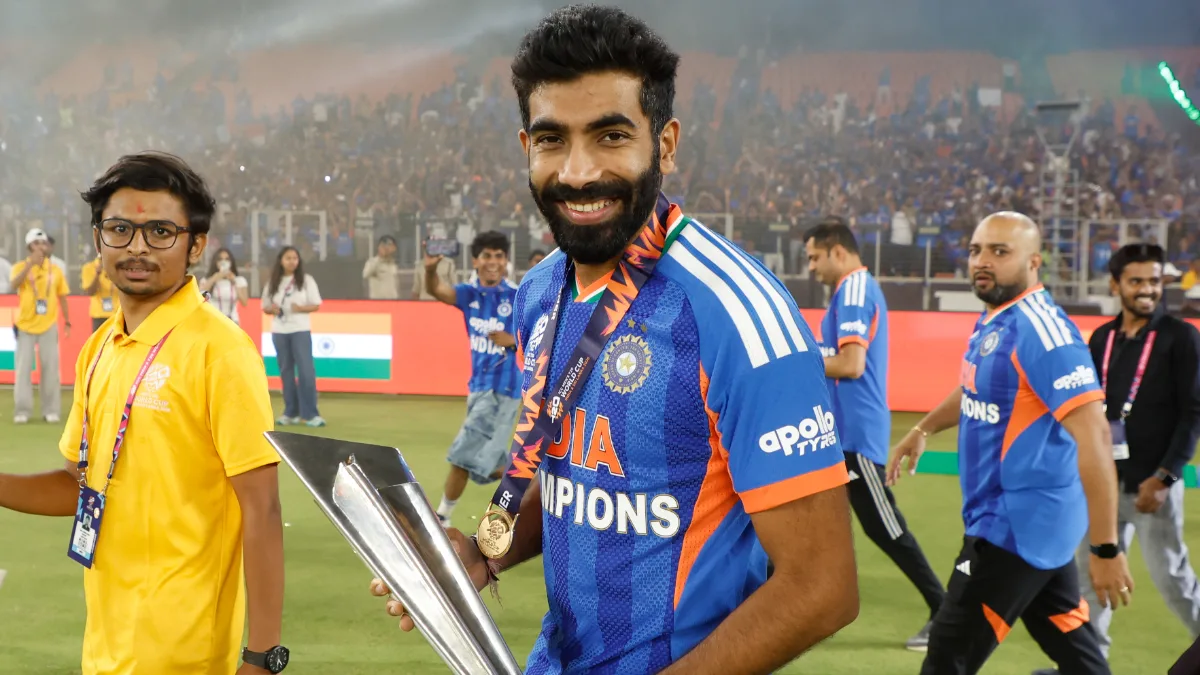
Indian pacer Jasprit Bumrah made his special mark in India’s ICC Men’s T20 World Cup 2026 triumph, becoming the first-ever pacer to claim a four-wicket haul in a T20 World Cup knockout and surpassing Sri Lanka’s Lasith Malinga as the most successful pacer in tournament history.

At his home venue in Ahmedabad, Bumrah delivered a stunning 4/15 in the final, supported by Axar Patel’s 3/23, as New Zealand crumbled under pressure and were bundled out for 159, handing India a 96-run victory. The win secured India’s third T20 WC title and made them the first team to defend the trophy at home.

Bumrah, who finished as joint-highest wicket-taker with 14 scalps, said, “Feels extremely special because I have played a final at my home venue before but couldn’t win. Today, I did. I just let the game come to me and trusted my experience. Getting Player of the Match at my home ground in a World Cup final, it doesn’t get better than this.”

The pacer also revealed his tactical adjustments:

“I realised bowling too fast could make shot-making easier for batters, so I focused on slower, pace-off deliveries. Played smart, read the game, and communicated constantly with the bowling group. That’s how good teams win tournaments, and I’m very happy we did it.”

Team India captain Suryakumar Yadav hailed Bumrah as a “national treasure” for his exceptional skill and experience. He added, “He knows what needs to be done and how to do it, one of a generation. Today, he was absolutely unplayable and a huge reason why we lifted the trophy.”

India’s top order, led by Sanju Samson (89), Abhishek Sharma (52), and Ishan Kishan (54), laid the foundation for the highest total in a T20 WC final (255/5), while Shivam Dube’s quickfire 26* added valuable runs. Despite a valiant half-century from Tim Seifert (52), the Kiwis couldn’t cope with India’s lethal bowling.

Bumrah’s record-breaking effort now places him among the T20 World Cup’s all-time greats, joining spinners Ajantha Mendis (2012 final) and Shadab Khan (2021 semifinal) as the only bowlers with a four-wicket haul in knockout matches. With 40 wickets in 26 matches, he is officially the most successful pacer in T20 WC history, surpassing Malinga’s 38 wickets.

However, Bangladesh’s Shakib Al Hasan, with 50 wickets in 43 matches, remains the overall leading wicket-taker in T20 World Cup history, highlighting the extraordinary achievement of Bumrah among pacers.

With this performance, Bumrah cements his place not just as a match-winner but also as a bowler who thrives under pressure and delivers on the biggest stages, proving why he is regarded as India’s premier strike bowler of this era.

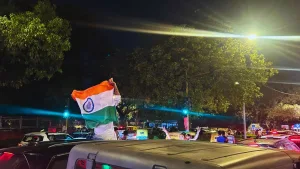
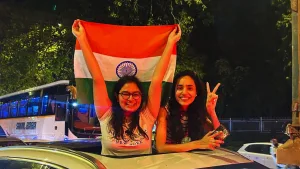
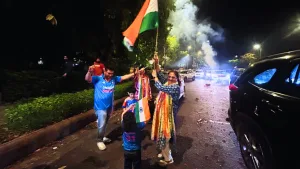
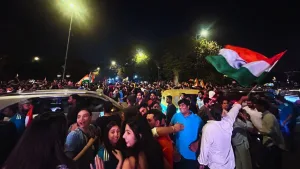
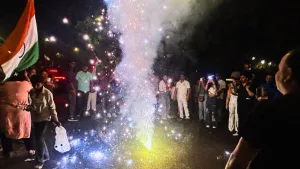
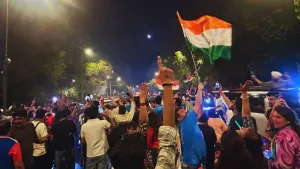
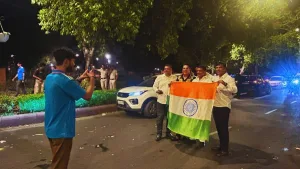
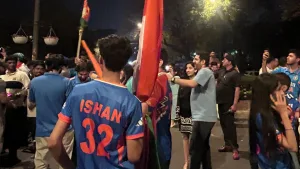
Photo Story | Tricolours, cheers, and patriotic songs: India Gate turns into giant party after India’s T20 World Cup win

Cheers and chants filled India Gate as fans gathered in huge numbers to celebrate India’s historic batting show in the T20 World Cup final. See the exclusive photos from the celebrations.

Statesman News Service | New Delhi |

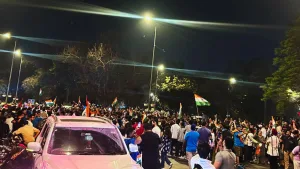
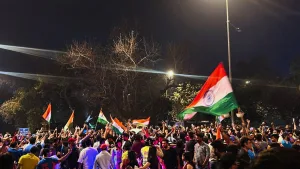
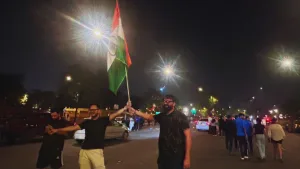
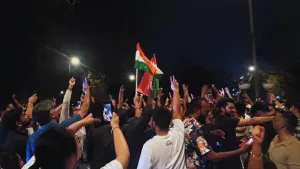
World Cup victory celebration at India Gate: Cheers erupted across India Gate as fans celebrated a historic moment in Indian cricket. Team India lit up the T20 World Cup final with a stunning batting show. And this happened by piling up a massive 255 for 5 on the scoreboard. It is the highest total ever in a T20 World Cup final, and the crowd watching the match together in New Delhi could hardly believe what they were seeing.

Every boundary brought louder cheers. And the atmosphere turned into a giant street party as India showed the world its batting power once again.

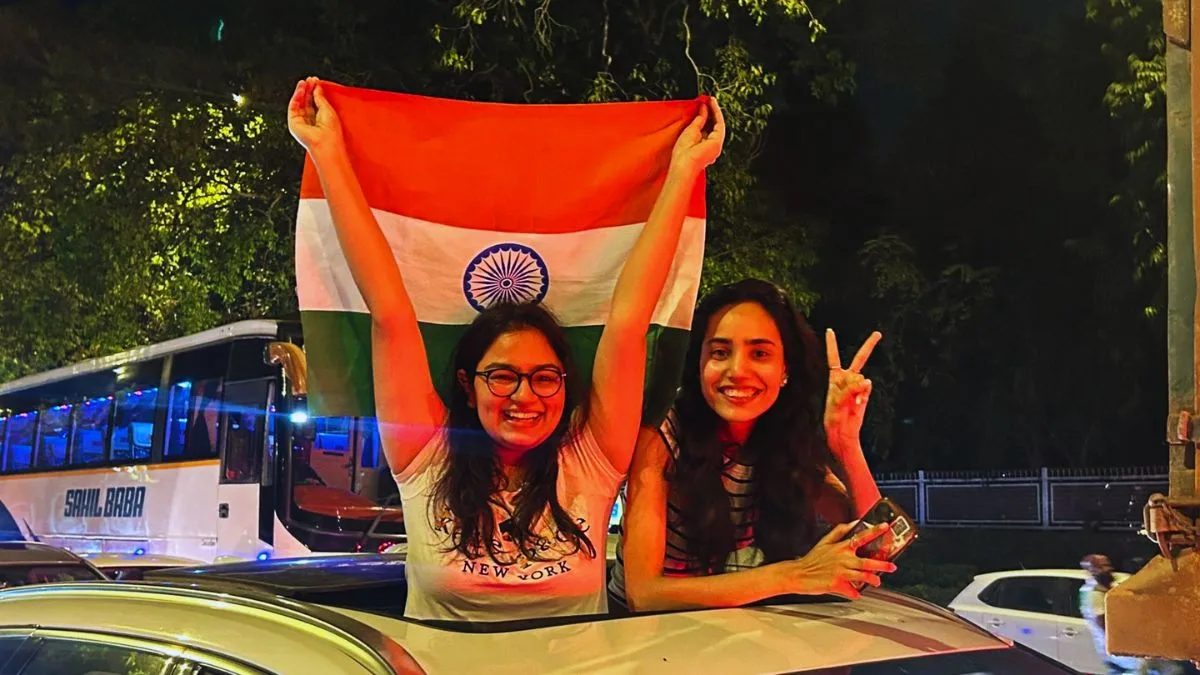
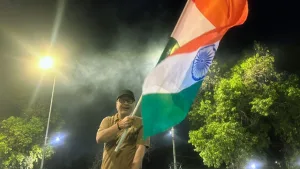
The air echoed with the powerful beats of ‘Maa Tujhe Salaam’, ‘Jai Ho’, and ‘Chak De India’. People waved the tricolour, clapping, and jumping in joy as India’s historic performance lit up the night.

All photos in this gallery are exclusive to The Statesman.

Victory feels better with the tricolour on your back.


Victory looks this good!


Family that dances together, stays together!


Crowd energy: 100% pure joy!


A sea of cheers!


Warning: Happiness overload ahead!


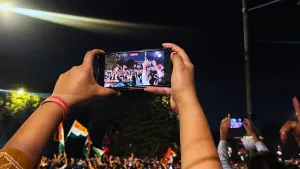
Recording history, one frame at a time!


Tricolour game on point!


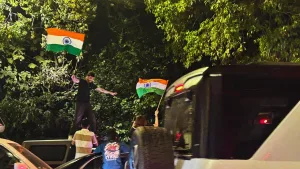
Front seat? Too boring. Celebration needs the roof!


Cheering, clapping, celebrating!


Holi was fun, but today feels like Diwali at India Gate!


Fans on fire!


Arey bhai, photo toh banti hai!


Ishan on the back, flag in hand, full energy!


Double the hands, double the pride!


Cheer it loud, cheer it proud!


Flag high, mood higher!

The night goes on. But the celebrations at India Gate do not show any sign of slowing down. Well, not at least today. People are cheering, dancing, and waving the tricolour with big grins on their faces.

For the fans gathered there, it has been a night of pure, pure happiness as they celebrate Team India’s big victory together.

‘Special brand of cricket on display’: Sachin, Virat laud India’s T20 World Cup victory

The Men in Blue dominated the final against New Zealand at the Narendra Modi Stadium in Ahmedabad, winning by 96 runs.

Statesman News Service | New Delhi |

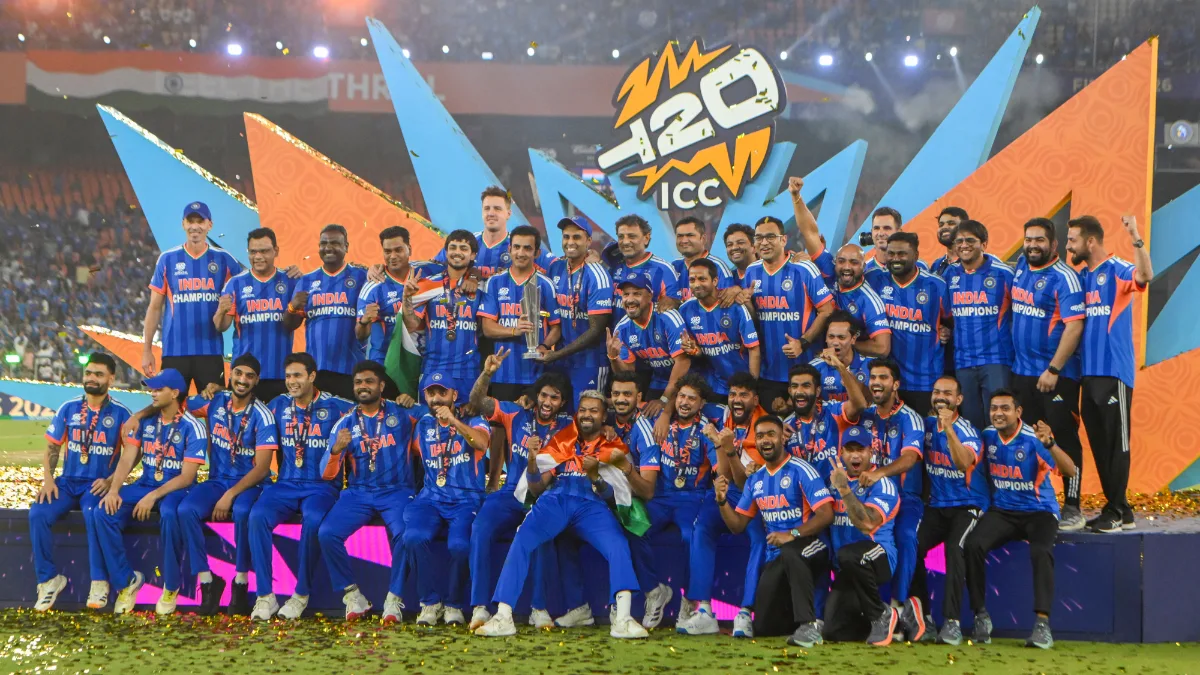
Team India made history on Sunday by winning their third ICC Men’s T20 World Cup title, becoming the first team to defend the trophy in the T20 format and the first host nation to lift the trophy at home.

The Men in Blue dominated the final against New Zealand at the Narendra Modi Stadium in Ahmedabad, winning by 96 runs. Fiery spells from Axar Patel (3/27) and Jasprit Bumrah (4/15), combined with a spectacular top-order performance from Sanju Samson (89 off 46 balls), Abhishek Sharma (52 off 21), Ishan Kishan (54 off 25), and *Shivam Dube (26 off 8)**, helped India post 255/5, the second-highest total of the tournament.

Despite a fighting fifty from Tim Seifert (52 off 26 balls), New Zealand’s chase fell short against India’s relentless bowling, cementing India’s historic triumph.

Cricket legends and current stars quickly congratulated the team for their achievement:

Sachin Tendulkar wrote on X:

“Winning the World Cup twice in a row, the first time any team has done so in the T20 format. Totally deserving and rightful winners of the trophy. What a fantastic performance by our team and a special brand of cricket on display. Well done, Team India. Jai Hind!”


Virat Kohli hailed the team’s resilience:

“Champions. Phenomenal win for Team India in Ahmedabad. Absolutely no match for the explosive cricket played by us throughout the tournament. Brilliant character shown by the boys to keep fighting in tough situations and become world champions once again. Congratulations to all the players and all the members of the management for achieving this feat. Jai Hind.”


Harbhajan Singh added: “Congratulations Team India in advance before the network gets too busy. Super proud of our Team. JAI HIND.”


Shubman Gill expressed his pride: “So proud of our team. Winning a World Cup for India is the dream and you’ve made the entire nation proud. Congratulations, boys.”


With this victory, India not only becomes the most successful team in T20 World Cup history with three titles but also sets a benchmark for dominance in the shortest format of the game.

PM Modi, President Murmu & HM Shah hail India’s historic T20 World Cup triumph

Prime Minister Narendra Modi lauded the team’s teamwork and determination, adding that their remarkable triumph has filled every Indian heart with pride and joy.

Neha Buswal | New Delhi |

India’s historic victory in the ICC Men’s T20 World Cup has sparked a wave of congratulations from political leaders across the country, celebrating the team’s skill, determination, and historic achievement.

Prime Minister Narendra Modi lauded the team’s teamwork and determination, adding that their remarkable triumph has filled every Indian heart with pride and joy.

“Champions! Congratulations to the Indian team on winning the ICC Men’s T20 World Cup! This remarkable triumph reflects exceptional skills, determination and teamwork,” he posted on social media.


President Droupadi Murmu described India’s triumph as historic, noting that the team has become the only country to win the ICC Men’s T20 World Cup three times and the only team to secure back-to-back titles.

“Heartiest congratulations to Team India, which scaled several peaks of history by winning the ICC Men’s T20 World Cup emphatically. This victory reflects the talent and determination of our youth and the growing strength of the nation,” the President said on X.


Union Home Minister Amit Shah congratulated the team on X, calling it a proud moment for the nation. He praised the players for their exceptional performance and unwavering grit throughout the tournament.

“What a victory…!! Hats-off to World Champion #TeamIndia. Your exceptional performance throughout the tournament and the vigorous display of mettle has brought glory and pride for the nation,” HM Shah wrote. He was also present at the Narendra Modi Stadium during the final.


Vice President C.P. Radhakrishnan called it a proud and historic moment, noting India’s commanding performance and successful defense of the title.

“Heartiest congratulations to Team India on winning the ICC Men’s T20 World Cup once again and retaining the title. With a history-making and commanding performance in the final, India has become the first team to win three ICC Men’s T20 World Cup titles, marking a proud moment for the nation,” he said.