Logo

Hollow numbers

India is once again debating numbers ~ how many Members of Parliament it should have, how many seats each state deserves, and whether expanding legislatures will improve democracy.

Statesman News Service | New Delhi |

India is once again debating numbers ~ how many Members of Parliament it should have, how many seats each state deserves, and whether expanding legislatures will improve democracy. But beneath this arithmetic lies a more uncomfortable question: does increasing the number of elected representatives make citizens feel better represented? Across both Parliament and state assemblies, the answer is far from clear.

The logic behind expansion appears intuitive. A larger population should mean more MPs in the Lok Sabha and more MLAs in state legislatures. Smaller constituencies, in theory, bring representatives closer to the people. Yet the lived reality of governance suggests that representation in India is not constrained by numbers alone. It is constrained by function. Over time, decision-making has become increasingly centralised. Key policy choices are often shaped by a narrow executive core, with legislatures playing a limited role in altering outcomes. Parliamentary debates rarely shift the direction of major legislation, and disruptions frequently replace deliberation.

At the state level, legislative assemblies face similar constraints, with chief ministers and small advisory circles exercising disproportionate influence. In such a system, the addition of more MPs or MLAs risks expanding the structure without strengthening its purpose. Expanding legislatures without addressing their functional limitations may produce unintended consequences. More seats can mean higher campaign expenditure, increased pressure to mobilise financial resources, and a broader distribution of political patronage. This arithmetic has consequences beyond the legislature. Under current constitutional limits, the size of the Union Council of Ministers is capped at 15 per cent of the Lok Sabha’s strength, with a similar rule in the states.

If the Lok Sabha expands to around 850 seats, the Union ministry could grow from roughly 81 members to nearly 128. A comparable expansion would follow in the states as assemblies grow. This is not a trivial change. It enlarges the pool of ministerial positions ~ the most powerful form of political reward ~ without necessarily improving governance. Finally, there is the additional cost of the MPs and MLAs themselves, their salaries, perquisites, et al. At the same time, the symbolic value of representation continues to grow. Policies such as reservations seek to make legislatures more inclusive.

This is an important democratic objective. But inclusion within a system that lacks effective voice risks becoming largely symbolic. Representation on paper does not automatically translate into influence in practice. What emerges is a paradox. India is attempting to deepen democracy by expanding representation, even as the institutions through which representation operates appear constrained.

This raises a more fundamental question. Should the priority be to increase the number of elected representatives, or to strengthen the role they play? Without meaningful legislative participation ~ through robust debate, empowered committees, and genuine oversight ~ numerical expansion may do little to enhance democratic outcomes. The debate over seats in Parliament and assemblies is therefore only part of the story. The deeper challenge lies in restoring the link between representation and decision-making. Until that connection is rebuilt, adding more MPs or MLAs will only expand political patronage without deepening accountability.
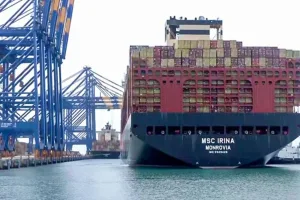

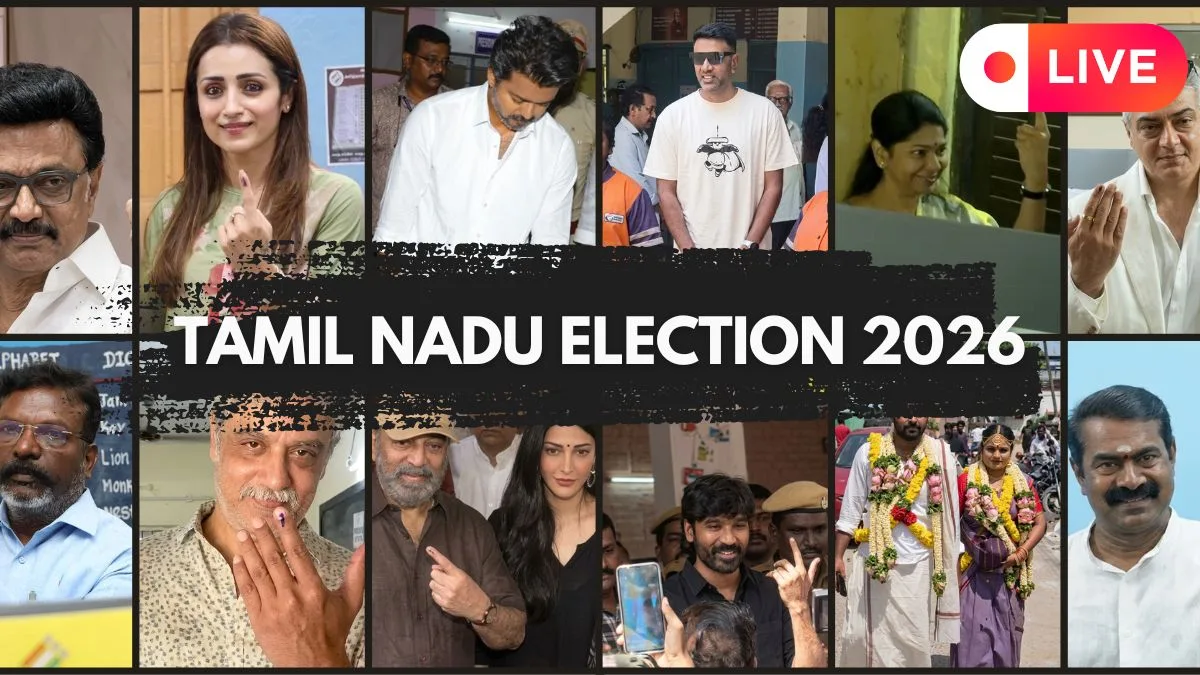
Tamil Nadu election 2026: Polling ends across all seats as state records 84.73 per cent turnout

The voting across all the 234 constituencies began at 7 am in the morning and concluded at 6 pm, with a record 84.73 per cent turnout.

Statesman News Service | New Delhi |

Tamil Nadu Election 2026 LIVE: The voting for the Tamil Nadu Assembly Elections 2026 was held on Thursday. The voting across all the 234 constituencies began at 7 am in the morning and concluded at 6 pm, with a record 84.73 per cent turnout.

The counting of votes is scheduled for May 4, which will reveal who will run the state next. The current Assembly term ends on May 10.

DMK’s “Rising Sun” vs AIADMK’s “Two Leaves” comeback push

At the centre of this election is the familiar face-off between the two Dravidian giants. The ruling DMK-led Secular Progressive Alliance is hoping to hold on to power with its “Rising Sun” symbol shining again in 2026. On the other side, the AIADMK, under the “Two Leaves” banner, is trying to stage a comeback after losing ground in the last election.

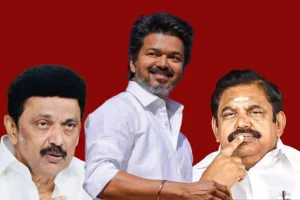
The DMK camp, led by Chief Minister MK Stalin, has projected confidence throughout the campaign. Stalin himself is contesting from Kolathur in Chennai, a constituency closely watched as a symbol of his political strength. His son and Deputy Chief Minister Udhayanidhi Stalin is also in the race from Chepauk-Thiruvallikeni.

In response, AIADMK chief and Leader of Opposition Edappadi K Palaniswami is contesting from Edappadi in Salem district.

Vijay’s TVK enters the race

One of the biggest talking points of this election is the entry of actor-turned-politician Vijay and his party Tamilaga Vettri Kazhagam (TVK). For the first time, Vijay is testing his political strength on a full scale.

Also Read: Is the ‘Vijay factor’ about to turn the DMK vs AIADMK two-horse race into a dramatic three-cornered showdown?

What has surprised many is the ambition of his debut move. TVK has fielded candidates in all 234 constituencies across Tamil Nadu, showing that it is not playing safe or limited. Vijay himself is contesting from two seats: Perambur in Chennai and Tiruchirappalli East.

With 4,023 candidates, multiple alliances, and a new political entrant shaking things up, this election is far from simple.

Bengal’s Missing Debate

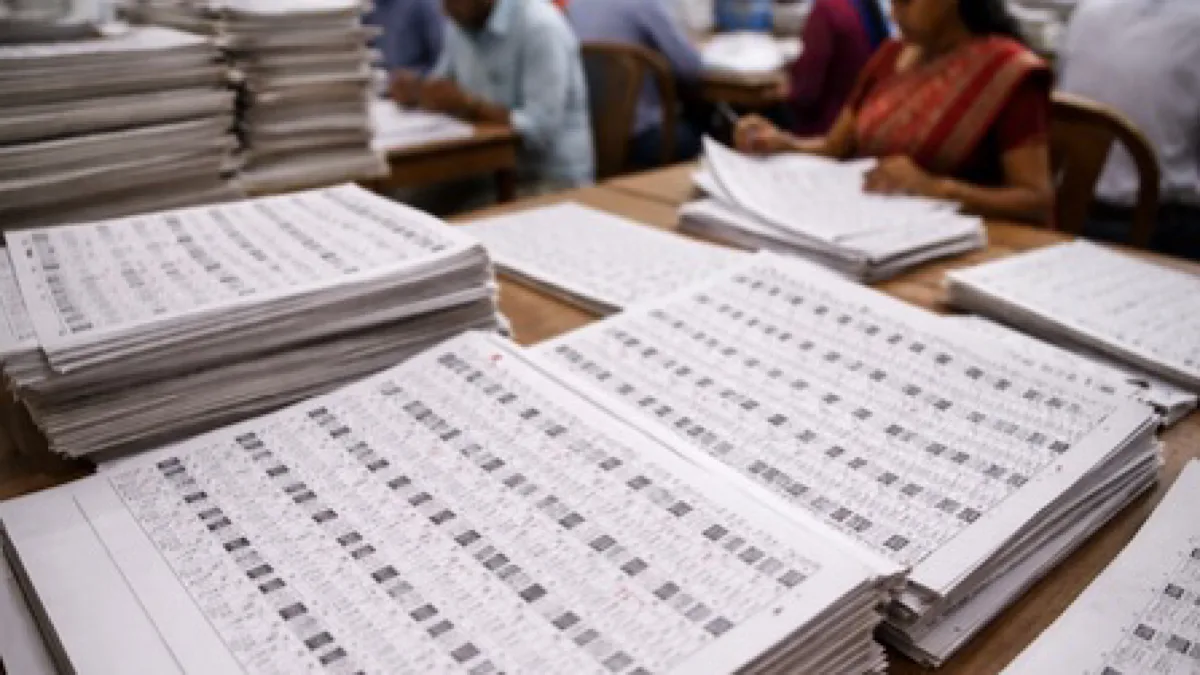
The electoral sky over battleground Bengal is thick with the dust raised by the controversy surrounding the Special Intensive Revision (SIR) of electoral rolls, occasionally punctuated by politics of cultural belonging, with candidates campaigning with fish in hand to prove their Bengali identity.

TATHAGATA CHATTERJI | New Delhi |

The electoral sky over battleground Bengal is thick with the dust raised by the controversy surrounding the Special Intensive Revision (SIR) of electoral rolls, occasionally punctuated by politics of cultural belonging, with candidates campaigning with fish in hand to prove their Bengali identity. Lost in this cacophony is any meaningful discussion about the state’s developmental trajectory ~ from immediate economic concerns to long-term structural challenges arising from demographic change and urbanisation.

Employment generation remains the most pressing concern for Bengal’s youth. On the surface, the numbers appear reassuring: the state’s unemployment rate, at 2.2 per cent is below the national average of 3.2 per cent, as per NITI Aayog’s Macro and Fiscal Policy Landscape Report 2025; and Kolkata remains the country’s third-largest urban economy. Yet these figures mask deeper structural issues. Bengal’s per capita Net State Domestic Product at Rs 1,63,467 ~ remains significantly below that of states like Telengana (Rs 3,87,623) and Maharashtra (3,09,340) as per RBI data.

Over the past three decades, slower growth in manufacturing and high-value services compared to southern and western states has steadily pushed young people to migrate in search of opportunities. The challenge, therefore, is not merely job creation but structural transformation ~ towards industries that can sustain growth and retain skilled youth. Interestingly, despite political polarisation, there is a remarkable convergence across the manifestos of the Trinamool Congress (TMC), the BJP, and the CPI(M)-led Left Front. All three emphasise logistics-led growth and port-based development as central pillars of Bengal’s future economy.

The TMC manifesto outlines an ambitious roadmap: positioning Bengal as India’s third-largest economy within a decade and building a Rs 40 lakh crore economy within five years. It proposes double-digit growth, a USD 30 billion logistics hub by 2031, five multimodal logistics parks, and industrial corridors from Raghunathpur-Tajpur to Dankuni-Kalyani and Kharagpur-Morgram, aiming to generate 10 lakh jobs. The BJP focuses on improving the investment climate through ease of doing business and single-window clearances. It proposes deep-sea ports at Tajpur and Kulpi, a blue economy hub at Haldia, four industrial parks including one at Singur.

Connectivity projects include a north–south highway from Darjeeling to the Sunderbans; airports at Purulia, Balurghat, and Cooch Behar; and revival of stalled railway projects. The party promises employment and self-help opportunities for one crore people over five years, though without specifying sectoral pathways. The Left Front manifesto foregrounds employment more explicitly, promising 40 lakh permanent jobs ~ 25 lakh in industry and logistics services and 15 lakh technology-based jobs. It proposes an international air cargo and aero-logistics hub in Durgapur, expanded cold storage and warehousing networks, and efforts to bring industries back to the state.

Another area of convergence is unemployment assistance. The TMC proposes Rs1,500 per month under the Yuva Sathi scheme for educated unemployed youth aged 21–40. The Left Front promises Rs 2,000, while the BJP proposes Rs 3,000. This emphasis on income support underscores the political centrality of youth employment, but risks reducing structural economic challenges to competitive welfarism. What is striking, however, is that these economic visions largely overlook Bengal’s changing demographic reality. The state has entered a low-fertility, late demographic transition phase with significant economic implications.

According to Sample Registration Survey data, Bengal’s Total Fertility Rate declined by 17.6 per cent between 2013 and 2023 – from 1.7 to about 1.3 – well below the national average of 1.9 and far below replacement level. Bengal’s urban TFR is the lowest in the country, while its rural TFR is the second lowest. Higher female literacy ~ among the highest for women aged 15-49 in India ~ appears to be a key driver. These shifts will reshape the economy. A slower-growing working-age population could create labour shortages in agriculture, construction, and other labour-intensive sectors, while ageing will increase demand for healthcare, assisted living, and social support.

This transition requires a shift towards skill-intensive industries, productivity-enhancing technologies, and services catering to older populations, alongside investments in urban care infrastructure. Among the manifestos, the Left Front addresses this most explicitly, proposing geriatric care homes in every subdivision, 24×7 helplines, municipal care centres, and support systems in public institutions. The TMC proposes gradual expansion of the old age pension scheme, while the BJP does not outline specific ageing-related interventions.

A comprehensive strategy linking ageing, labour markets, and civic infrastructure remains largely absent. The second megatrend is urbanisation. With about 37 per cent of the population already living in urban areas ~ that is above the national average of 35 per cent – Bengal is approaching an urban future. By early 2040s the state is likely to become predominantly urban. This transition is driven partly by structural changes in the rural economy. As occupational patterns shift away from agriculture, many large villages are acquiring urban characteristics and are classified as census towns. In 2011, West Bengal recorded 834 such settlements ~ the highest in India. Yet this transformation is largely unplanned.

Conversion of fertile agricultural land, loss of waterbodies, and fragmented growth are intensifying environmental stress. The challenge is particularly acute given Bengal’s population density of 1,106 persons per sq. km., far above the national average of 415, making land a scarce resource that must be optimised. Urbanisation and economic development are deeply intertwined, especially in a logistics- and port-centric strategy. Ports, industrial corridors, and multimodal logistics parks depend on nearby cities providing labour, housing, warehousing, transport, and business services. Without planned urbanisation, such investments risk creating congested, poorly serviced growth nodes that undermine efficiency.

The TMC proposes expanding urban local bodies through geographical reorganisation ~ an overdue step to address chaotic urbanisation. It also plans to develop 25 towns as model cities under Mission Mahanagar, build a cultural city in Baruipur, expand housing, and provide piped water to all households. The BJP proposes a comprehensive vision for Kolkata focusing on traffic, drainage, and encroachments, along with tourism-led development, riverfront revitalisation, and four modern cities, though without detailing their spatial rationale. The Left Front places greater emphasis on municipal governance and social infrastructure, proposing affordable housing, scientific vending zones, slum upgrading without eviction, reserving 25 per cent of municipal budgets for slums, universal piped water supply, improved public transport, and transparent contracting systems.

Taken together, these proposals acknowledge the importance of urban development, but in a business-as-usual manner. As Bengal moves toward an urban future, the central challenge is not merely building new towns, but managing land, infrastructure, and governance in a way that aligns urban growth with economic transformation and environmental sustainability. Bengal has confronted structural challenges before ~ and responded with vision. Faced with post-Partition refugee influx and the need for rapid industrialisation the then Chief Minister Dr. Bidhan Chandra Roy initiated planned development of Durgapur, Kalyani, and Haldia, alongside a strategy to reduce population pressure on Kolkata. Economic strategy and urban planning were integrated within a long-term development vision. That experience offers an important lesson.

Bengal’s future cannot be built through fragmented announcements or welfare-driven competition. It requires a coherent strategy linking industrial growth, demographic transition, and urban development. Logistics hubs need functioning cities; employment generation requires skilled labour and liveable urban environments; and an ageing population needs care infrastructure embedded within urban systems. Without a vision that aligns economic strategy with demographic change and planned urbanisation, the state risks incremental drift rather than structural progress.

The writer is Professor, Urban Management and Governance, School of Human Settlements, XIM University ( formerly Xavier Institute of Management), Bhubaneswar

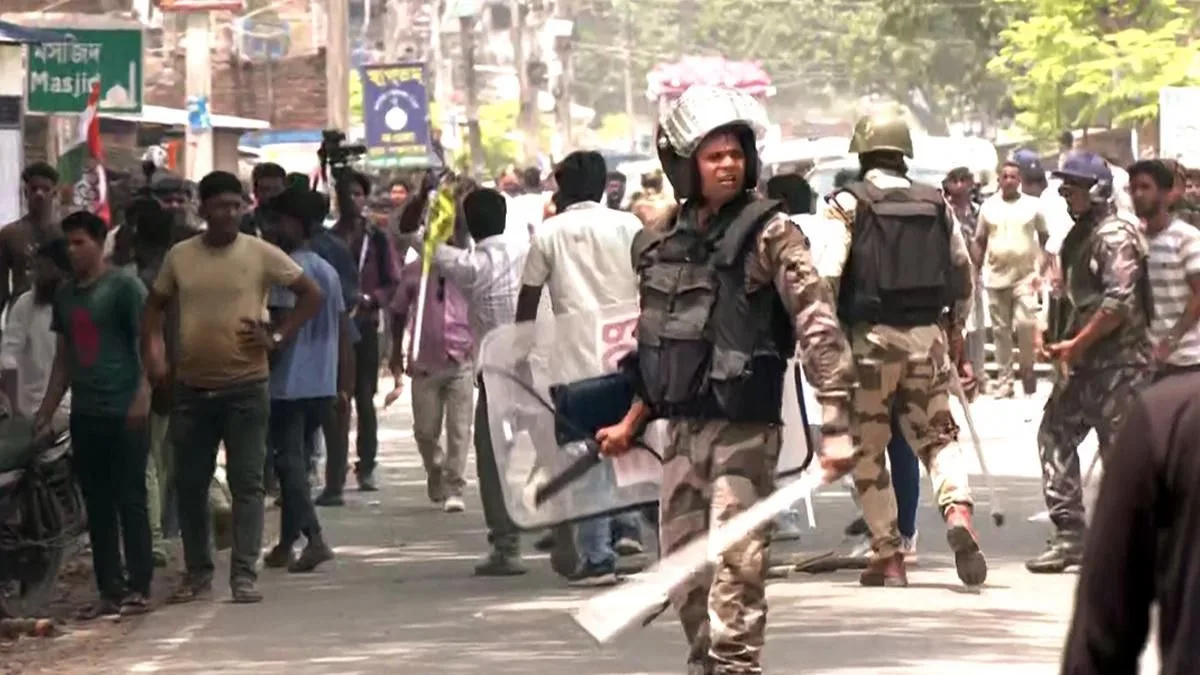
West Bengal election 2026: First Phase polling ends across 152 constituencies amid RECORD turnout, sporadic violence

West Bengal election 2026 LIVE updates: Phase 1 voting underway across 152 seats, with 18.76% turnout recorded till 9 am amid long queues at polling booths.

Statesman News Service | New Delhi |

West Bengal is voting. Phase 1 of the 2026 Assembly election got underway at 7 am on Thursday, with booths open across 152 constituencies. Polling runs until 6 pm.

The mood across the state is charged. This is essentially a two-horse race between Chief Minister Mamata Banerjee’s Trinamool Congress, gunning for a historic fourth straight term, and a BJP that has been working hard to finally break through in Bengal.

This live blog will track everything as the day unfolds, such as turnout trends, ground reports, political reactions, and every development that matters.

West Bengal election 2026: LIVE UPDATES

Springdales School shines at Delhi AI Grind 2026–27

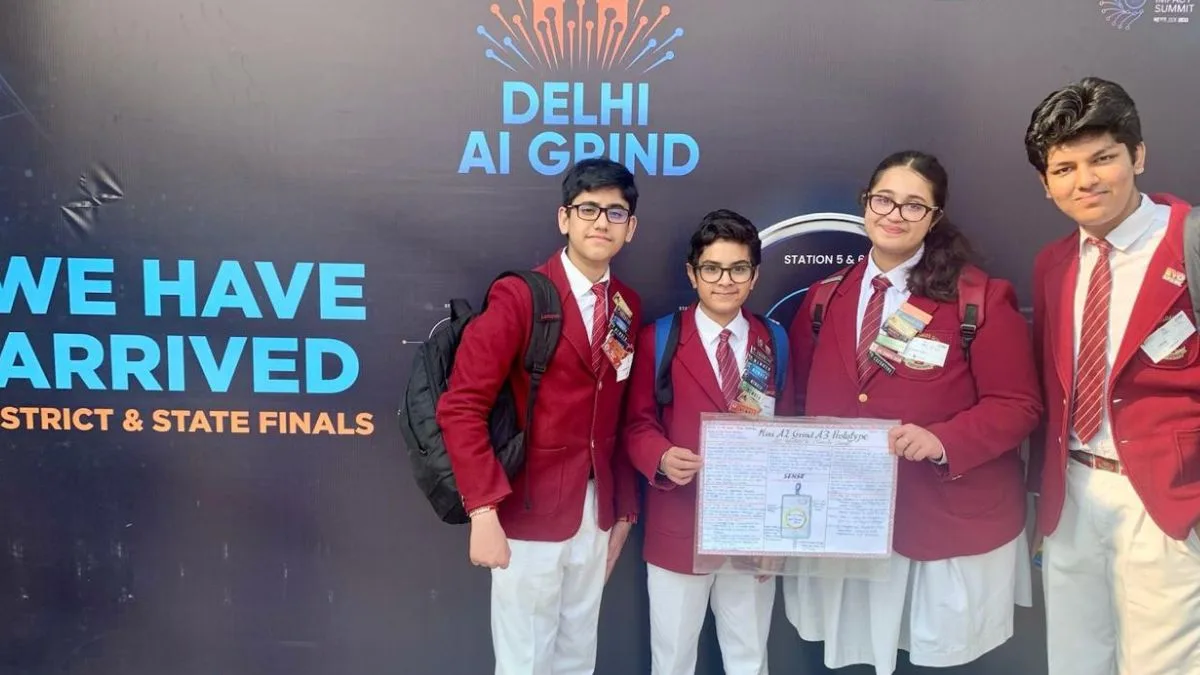
The team comprising Saion Gupta, Khwahish Sethi, Abhimanyu Gupta, and Hridik Sabharwal emerged among the district-level winners.

Statesman News Service | New Delhi |

Springdales School, Dhaula Kuan, has once again demonstrated its “commitment to innovation and future-ready education” with an outstanding performance at the prestigious Delhi AI Grind 2026–27, a city-wide initiative organised by the Department of Education, Government of NCT of Delhi.

The team comprising Saion Gupta, Khwahish Sethi, Abhimanyu Gupta, and Hridik Sabharwal emerged among the district-level winners.

Their project, “SENSE”, an AI-powered system for monitoring air and water quality, earned them a place among the top 60 teams in Delhi.

They will now advance to the state-level stage, where they will receive specialised mentorship and technical support to further develop their innovation.

The six-month-long initiative, aimed at fostering awareness and application of Artificial Intelligence, saw enthusiastic participation from students through quizzes, prototyping, exhibitions, and a special assembly.

Guided by Mr. Aparojito Bose, Administrative Manager, along with teacher mentors, the programme nurtured curiosity, creativity, and critical thinking amongst the young innovators..

The achievement brings pride to the institution and highlights the vital role of young innovators in building a sustainable and technologically advanced future.

Inter-ministerial briefing: Govt debunks ‘cyber fraud’ claims involving Indian vessel; confirms seafarer safety in Persian Gulf

During an inter-ministerial briefing, Additional Secretary Mukesh Mangal said that rumours circulating about the vessel Sanmar Herald are false.

Statesman News Service | New Delhi |

The Ministry of Ports, Shipping and Waterways on Wednesday dismissed reports claiming that an India-linked vessel fell victim to cyber criminals or extortion in West Asian waters..

During an inter-ministerial briefing, Additional Secretary Mukesh Mangal said that rumours circulating about the vessel Sanmar Herald are false.

“News is spreading about the reported payment by the captain of the vessel Sanmar Herald in USD to persons claiming to represent the IRGC Navy to grant right of passage and falling victim to cyber criminals,” Mangal said.

“We spoke with the owner of the vessel, and he confirmed that it is fake news and no such incident has happened,” he added.

He further stated that the government is continuously coordinating with the Ministry of External Affairs, Indian missions, and maritime stakeholders to ensure seafarer welfare and uninterrupted maritime operations. The Ministry confirmed that no incidents involving Indian-flagged vessels have been reported in the last 24 hours.

“No incident involving Indian flag vessels has been reported in the last 24 hours, and our seafarers are safe in the Persian Gulf region,” he said.

However, a Gujarat-bound and Liberia-flagged vessel was seized by the IRGC Navy while attempting to sail through the Strait of Hormuz.

There are currently 14 vessels (13 Indian-flagged and one Indian-owned) in the Persian Gulf region, with 10 having already transitioned safely out of the area.

He said, “At present, 13 Indian flagged vessels plus one Indian-owned vessel, i.e. a total of 14 vessels are there in the Persian Gulf region, of which a total of 10 vessels have passed from the Persian Gulf to this side.”

“The safety and security of Indian seafarers remains the top priority. We are monitoring the situation continuously and are committed to extending all possible help,” Mangal added.

The official further confirmed that Indian-flagged crude oil tanker Desh Garima is expected to dock in Mumbai this evening. The vessel, carrying 31 Indian seafarers, successfully crossed the region on March 18 and is completing its journey home without incident.

Assam CM Himanta says BJP will win 200 seats in Bengal

Assam Chief Minister Himanta Biswa Sarma on Tuesday led a roadshow from the town’s iconic Curzon Gate to Rajbati, accompanied by BJP’s Bardhaman Dakshin candidate Moumita Biswas Mishra and Bardhaman Uttar candidate Sanjay Das.

Statesman News Service | Kolkata |

Assam Chief Minister Himanta Biswa Sarma on Tuesday led a roadshow from the town’s iconic Curzon Gate to Rajbati, accompanied by BJP’s Bardhaman Dakshin candidate Moumita Biswas Mishra and Bardhaman Uttar candidate Sanjay Das.

“BJP will come to power in the state with 200 seats. In the first phase, we will win 90 per cent of the seats. The party will secure both Bardhaman Uttar and Bardhaman Dakshin,” Sarma said.

Popularly known as ‘Mama’ in Assam, Sarma arrived in Burdwan in the afternoon to campaign for the two candidates. The roadshow passed through BC Road and Baro Bazar in the evening, with people lining both sides of the route to greet him. Many offered cold drinks, which he accepted, while women waved from balconies and rooftops as the procession moved along.

Sarma also criticised poll strategist agency IPAC, which is working for the Trinamul Congress. “IPAC is a goon, a mawali. Congress, TMC and BJP are political parties ~ where does IPAC come from? It is not a political organisation. It facilitates syndicates and extortion in Bengal. The court’s remarks on IPAC are justified. Mamata Banerjee has diminished the dignity of the Chief Minister’s post by visiting the IPAC office. The BJP will win over 200 seats in West Bengal,” he said.

Meanwhile, film actress Shrabanti Chatterjee took part in a roadshow in support of Trinamul Congress candidate Khokon Das for Bardhaman Dakshin. The procession moved from Kalibazar to the police lines via Ichhlabad.

Shah raises issues of women’s safety and security at Dadpur rally

Union home minister Amit Shah today addressed the ‘Vijay Sankalp Sabha’ at Balikukhari ground in Dadpur, Hooghly, in support of BJP candidates Swaraj Ghosh (Saptagram) and Barnali Das (Dhanekhali).

Statesman News Service | Kolkata |

Union home minister Amit Shah today addressed the ‘Vijay Sankalp Sabha’ at Balikukhari ground in Dadpur, Hooghly, in support of BJP candidates Swaraj Ghosh (Saptagram) and Barnali Das (Dhanekhali).

During his speech, he launched a broad attack on the Trinamul Congress and Chief Minister Mamata Banerjee, raising multiple issues.

Speaking on alleged infiltration, Shah said, “It is time to say goodbye to ‘Didi’. She is on her way out, and ‘Padma’ (the lotus) is on its way in.” He claimed that if the BJP comes to power, infiltrators would be identified and expelled, alleging that infiltration in border areas is increasing and adversely affecting local residents.

On women’s safety, Shah criticised the Trinamul Congress over the Sandeshkhali incident, stating that if the BJP forms the government, women would be able to move freely and safely, even at night. He also promised 33 per cent reservation for women in jobs.

Shah made announcements in the transport sector, stating that women would be allowed to travel free of cost on government buses from Gangasagar to Darjeeling if the BJP comes to power. He also promised employment opportunities for one lakh youth every year.

On extremism, Shah said that earlier governments had allegedly patronised extremist elements, but under Prime Minister Narendra Modi’s leadership, the country is now largely free from extremism.

Referring to the construction of the Ram temple, he said that despite opposition from various parties over the years, the project was completed during the Modi government’s tenure. He added that incidents similar to the Babri Masjid issue would not be allowed in Bengal.

Shah also spoke about stopping what he termed ‘love jihad’ and ‘land jihad’. Overall, the BJP used the meeting to make several promises while strongly criticising the Trinamul Congress during the rally in Dadpur.

North Bengal votes amid SIR row and high-stakes political battle

Voters across eight districts of North Bengal are poised to exercise their democratic rights in the Assembly elections scheduled for 23 April.

MANAS R BANNERJEE | Kolkata |

Voters across eight districts of North Bengal are poised to exercise their democratic rights in the Assembly elections scheduled for 23 April. The electoral battle will determine the fate of candidates from major political parties, including the ruling Trinamul Congress (TMC) and the principal Opposition Bharatiya Janata Party (BJP), across their respective constituencies.

North Bengal comprises 54 Assembly constituencies, stretching from Cooch Behar to Malda, including the hill segments of Kalimpong, Darjeeling, and Kurseong.

However, this time the Election Commission of India has put in place unprecedented arrangements for the polls, including the deployment of additional Central forces, extensive CCTV surveillance, and several other measures aimed at ensuring a fear-free election.

Despite these elaborate arrangements, election personnel assigned to polling duties have raised various complaints while casting their ballot papers ahead of polling day.

Allegations have also surfaced that, in some cases, votes meant for genuine voters were allegedly cast by others, raising concerns over the overall management of the process.

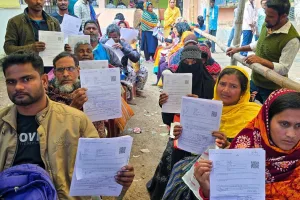
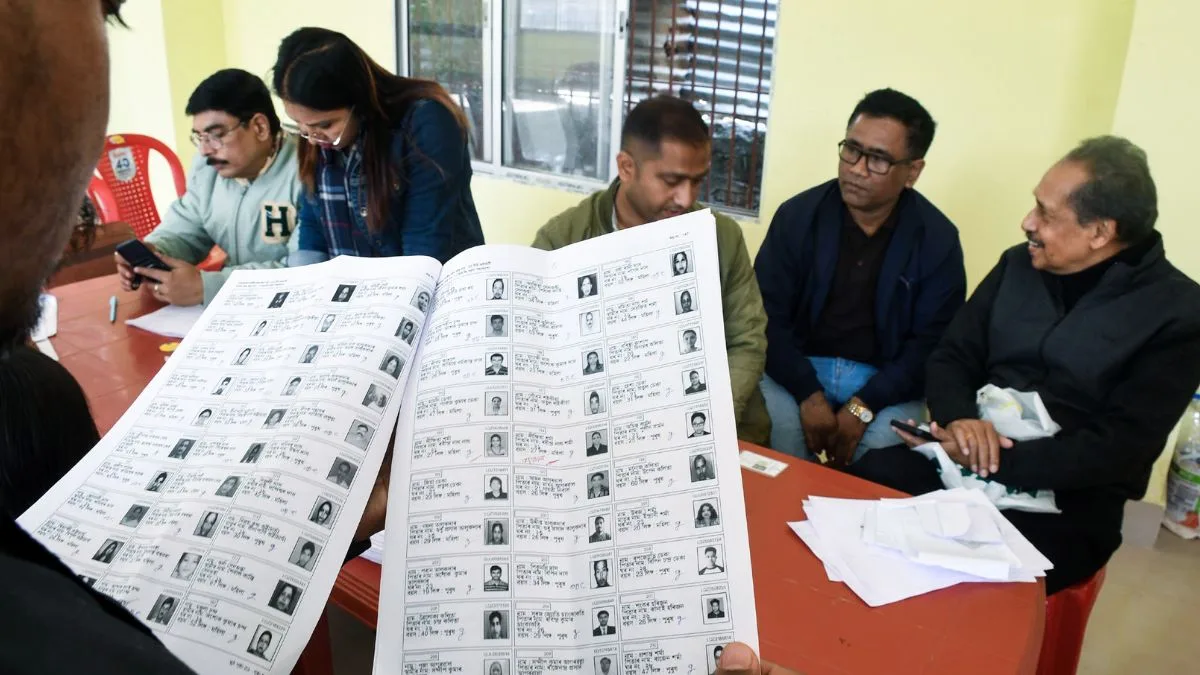
However, the elections are being held amid lingering discontent over the Special Intensive Revision (SIR) of electoral rolls conducted by the Election Commission of India under the supervision of the Supreme Court. A significant section of voters remains dissatisfied, as nearly 27 lakh names were still pending adjudication before tribunals. Many among them claim to be valid voters whose inclusion is yet to be finalised.

This incomplete revision process has cast a shadow on the electoral atmosphere, with political parties engaging in a blame game over the issue.

On 21 April, the final day of campaigning, Union home minister Amit Shah, addressing a gathering in Sukna, alleged that the Mamata Banerjee-led TMC government had deliberately removed Gorkha voters from electoral rolls. In response, Chief Minister Mamata Banerjee accused both the BJP and the Election Commission, asserting that had she not approached the Supreme Court, “32 lakh voters would not have received justice.”

Meanwhile, Congress leaders, including Adhir Ranjan Chowdhury and Mausam Noor, criticised the TMC, BJP, and the Election Commission alike, demanding that elections be deferred until the SIR process is completed accurately. The CPI-M also mounted sharp criticism against both ruling and opposition parties.

Despite the controversy, both Shah and Banerjee have assured that, if voted to power, their respective parties would ensure inclusion of all genuine voters currently left out of the rolls.

Political observers believe that the uncertainty surrounding nearly 27 lakh voters could influence electoral outcomes, potentially triggering resentment that may reflect in EVM results and affect both the TMC and BJP.

While Congress and the Left Front, particularly the CPI-M, are hopeful of opening their account in North Bengal after drawing a blank in 2021, the BJP and TMC are focused on retaining and expanding their respective tallies. In 2021, the BJP had secured a majority of seats in the region, though it later lost ground due to bypoll defeats and defections, with two MLAs switching to the TMC.

District-wise Political Landscape:

Cooch Behar (9 seats, 5 SC reserved):

In 2021, the BJP dominated with 7 seats, securing 49.5 per cent votes, while the TMC won 2 seats with 44.8 per cent. A notable contest saw then Union minister of state Nisith Pramanik defeat TMC’s Udayan Guha by just 57 votes. However, Guha reclaimed the seat in a bypoll with a record margin. This time, Pramanik is contesting from Mathabhanga (SC), and observers believe the TMC may recover some lost ground.

Alipurduar (5 seats):

The BJP swept all five seats in 2021 with nearly 50 per cent vote share. However, the TMC regained the Madarihat seat in a bypoll after the 2024 parliamentary elections. In Falakata, BJP’s Dipak Barman, who had earlier won by a narrow margin of 1.8 per cent, is again in the fray. Following a recent attack on him allegedly by TMC supporters, sympathy votes may work in his favour.

Jalpaiguri (7 seats):

With 2 ST and 4 SC reserved seats, the district saw the TMC win 3 seats in 2021 with around 43 per cent votes. The party later captured Dhupguri in a bypoll. The BJP is now aiming to reclaim Dhupguri and expand its tally by targeting seats like Rajganj and Jalpaiguri. Notably, the Jalpaiguri seat was won by the TMC by a slender margin of 0.4 per cent.

Kalimpong (1 seat):

The seat was won by Independent candidate Ruden Sada Lepcha in 2021, backed by regional forces. This time, he is contesting with support from the Bharatiya Gorkha Prajatantrik Morcha led by GTA Chief Anit Thapa, facing BJP’s Bharat Chetri, former captain of the Indian hockey team.

Darjeeling (5 seats):

The BJP had swept all seats here in 2021, including Siliguri and other Terai regions. In 2026, contests are expected to be tighter, especially in Siliguri, where TMC leader and Mayor Goutam Deb is challenging BJP MLA Dr. Sankar Ghosh. In Darjeeling, Ajoy Edwards has added a new dimension, making it a triangular contest alongside BJP-backed and regional candidates.

North Dinajpur (9 seats):

The TMC dominated in 2021, winning 7 seats with 53.3 per cent vote share, while the BJP secured 2. One BJP MLA from Raiganj later defected to the TMC.

South Dinajpur (6 seats):

The TMC and BJP were evenly matched in 2021, winning 3 seats each. The TMC secured 47.2 per cent votes, slightly ahead of BJP’s 43 per cent.

Malda (12 seats):

Traditionally a Congress stronghold, Malda witnessed a shift in 2021, with the TMC winning 8 seats and the BJP 4, including English Bazar. Congress failed to win any seat. Vote shares stood at 53 per cent for TMC, 32.8 per cent for BJP, 8.8 per cent for Congress, and 1.6 per cent for the Left.

In 2026, Congress is hopeful of a comeback, especially with former MP Mausam Noor rejoining the party and contesting from Malatipur. The BJP aims to expand its presence by targeting Manikchak and Baishnabnagar. A triangular contest is expected in several constituencies, including Gazole. The English Bazar seat has drawn particular attention, with CPI(M) veteran Ambar Mitra, backed by ISF, taking on TMC’s Asis Kundu and BJP’s Amlan Bhaduri in a highly polarised political environment.

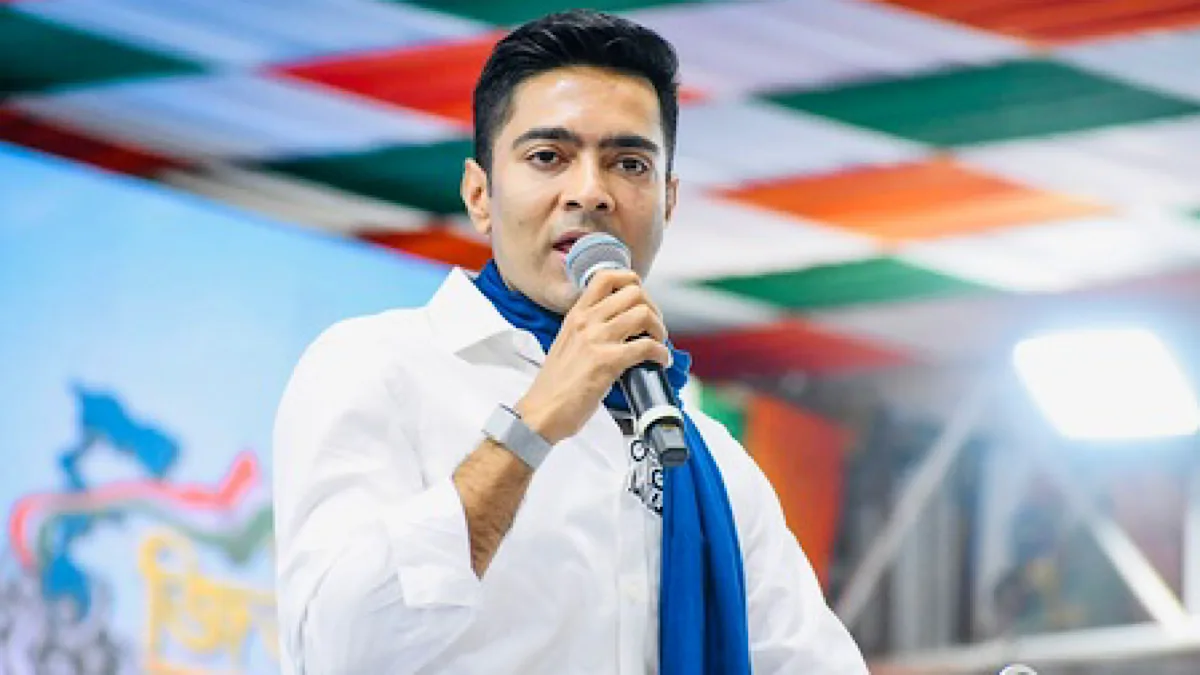
Some leaders have taken money from BJP to undermine TMC: Abhishek

He was addressing a public meeting at Belpur in Deganga this afternoon. Trinamul Congress has fielded Anisur Rahaman (Bidesh) from the seat.

Statesman News Service | Kolkata |

Commenting on the huge turnout for his rally, Trinamul Congress national general secretary Abhishek Banerjee said the spontaneity of people indicates that the BJP has no chance of winning the forthcoming Assembly election.

He was addressing a public meeting at Belpur in Deganga this afternoon. Trinamul Congress has fielded Anisur Rahaman (Bidesh) from the seat.

He said some political leaders have taken money from the BJP and are trying to cut Trinamul Congress votes. “Do not waste your vote by casting it in favour of CPI-M or the BJP. Vote for Trinamul Congress and for sustained development.”

Mr Banerjee said the political parties and leaders did not stand beside people when their names were deleted in the SIR. “After 80 years of Independence, people had to stand in queues to prove their nationality. Rest assured that one month after the election, all the names that have been dropped will be included in the electoral rolls again.”
He said: “ISF chief Nawsad Siddique is provided security by Amit Shah. If you are genuine then give up the security provided by Shah and take the security provided by the state government. To cast one vote in favour of ISF is equivalent to voting for the lotus.”

It is unfortunate that Amit Shah is calling Miss Banerjee “ei Didi”. This is most unfortunate. It shows their fear of losing the election,” he said. “The BJP has used ED, CBI, IT, the High Court and Supreme Court. But the last word is uttered by the people and they will cast their vote in favour of Trinamul Congress.”

He said he would take the responsibility to develop this area. “The BJP leaders are visiting every household to clean the courtyard. When they come, ask them to sweep the courtyard.”

Mr Banerjee said the Trinamul Congress is the only party in the country that had fought against the anti-people and corrupt government of Modi. “We will continue to protest if the people of Bengal are abused or beaten up for speaking our mother tongue. They have branded us as Bangladeshis. They do not have any faith in the people but in democracy, people speak the last word. In the 2014 Lok Sabha election, Deganga had given a lead of 68,000 votes to Trinamul Congress. In 2026, they will increase the lead. Deganga has never tolerated the traitors and will continue to do so in future. I have got the information that some people have told the voters that we have an understanding with Trinamul Congress and after the election, we will join the party. Rest assured Trinamul Congress will not take back the traitors. Vote for us and we will look after you,” he said.
Use EVMs to keep anti-Bengal BJP away: Mamata

Chief Minister Mamata Banerjee today addressed a public meeting at Nalikul at Hooghly in support of Trinamul Congress candidates from Singur, Haripal and Chanditala constituencies.

Hemant Jacob | Kolkata |

Chief Minister Mamata Banerjee today addressed a public meeting at Nalikul at Hooghly in support of Trinamul Congress candidates from Singur, Haripal and Chanditala constituencies.

She expressed surprise at the Centre’s deployment of more than two lakh Central forces personnel for the elections. “The people of Bengal are peace-loving and tolerant towards all religions, faiths and beliefs. They uphold communal harmony and a sense of brotherhood, following the teachings of Ramakrishna Paramahamsa on the unity of all religions. Bengal is rich in art, culture and literature, and its reformers and patriots have guided the nation. People here are aware of their constitutional rights and limitations. The question in their minds is: for whom are two lakh forces being deployed? The general public feels humiliated,” the Chief Minister said.

She alleged that migrant workers returning home by train to vote in Bengal were being compelled to promise, in the name of their holy books, that they would vote for the BJP. “This is a grave offence and a violation of the constitutional rights and freedoms of the people. Elections are a festival of democracy. The BJP has declared war against the Constitution and the constitutional rights of the people of Bengal,” she said.


Banerjee added that once the TMC returns to power for a fourth term, “the days will be numbered” for the Modi-led BJP government at the Centre.

The Chief Minister also criticised the alleged misuse of Central investigative agencies against TMC leaders and workers. The chief minister said: “Migrant workers availing the railways to return home to cast their vote in Bengal are being made to promise in the name of their religious books that they would vote in favour of BJP. We strongly condemn this,” she said.

Highlighting development initiatives, she said the state government has renovated, upgraded and beautified places of worship and tourist sites, ensuring better amenities for lakhs of devotees and visitors.

She urged people to retain faith in the TMC and not be misled by “false and lucrative promises” of the BJP, stating that 105 government welfare schemes are benefiting people across all sections and professions.

Banerjee further claimed that railway and Metro projects currently underway were planned and sanctioned during her tenure as Union railway minister, and that the BJP should not take credit for them.

Addressing concerns of potato growers, she assured that agricultural research centres would soon supply high-quality seeds, reducing dependence on costly imports from other states. The state government, she said, is directly procuring potatoes at a maximum support price of Rs 900 per quintal. Thirty per cent storage space has been reserved for small potatoes, and farmers are free to sell their produce in other states. They can also avail themselves of crop insurance benefits in case of losses due to adverse conditions.

The procured potatoes are utilised in ICDS centres, school mid-day meals, Maa Canteens and Sufal Bangla outlets, she added.

139 deleted voters reinstated after tribunal clearance

The names of about 139 voters of Bengal, which had previously been deleted by judicial officers while adjudicating cases from the “under adjudication” list as part of the Special Intensive Revision of electoral rolls, were restored to the electoral rolls today after being cleared by the appellate tribunal.

Statesman News Service | Kolkata |

The names of about 139 voters of Bengal, which had previously been deleted by judicial officers while adjudicating cases from the “under adjudication” list as part of the Special Intensive Revision of electoral rolls, were restored to the electoral rolls today after being cleared by the appellate tribunal.

This revalidation confirms them as “valid voters” with the right to exercise their franchise in the first phase of polls tomorrow.
The Election Commission of India on Wednesday released the list of voters who regained their voting rights following tribunal hearings on petitions filed by individuals whose names had been struck off the list by judicial officers.
The Commission also informed that the tribunals have so far disposed of petitions from approximately 657 electors.

The list released today is a supplementary roll issued in compliance with the Supreme Court’s ruling in the SIR case. The Court had stated that names cleared by the tribunal ~ among the 27 lakh voters whose names were deleted ~ would be revalidated, thereby granting them the right to cast their ballots in the first phase.
While reinstating the names of about 139 voters, the tribunal also struck off the names of eight voters from among the 32 lakh previously cleared by judicial officers from the adjudication list.

The Election Commission of India had on 28 February published the final electoral roll for West Bengal, which saw more than 61 lakh voters being excluded.
However, the process had continued with about 60 lakh “doubtful and pending” cases remaining under adjudication based on their objections to their exclusions from the draft rolls published in December.
Several supplementary lists were released, in which the names of more voters have been included.
The process had concluded on 6 April after judicial officers adjudicated the 60 lakh claims and objections. However, voters who were removed during the adjudication process can appeal in 19 tribunals set up for the purpose.

Not a cakewalk for TMC candidate in Durgapur, but still confident of win

It is unlikely to be a cakewalk for Pradip Majumdar in the Durgapur (Purba) Assembly constituency, where he was elected by a narrow margin in 2021.

Kanchan Siddiqui | Kolkata |

It is unlikely to be a cakewalk for Pradip Majumdar in the Durgapur (Purba) Assembly constituency, where he was elected by a narrow margin in 2021.

His candidature, having been ‘planted’ from Kolkata, had earlier triggered an intra-party squabble within the Congress, contributing to his defeat in 2016, when CITU leader Santosh Debroy was elected as MLA. The constituency, incidentally, has a sizeable population of steel plant workers, among whom the CPI-M’s labour wing, CITU, remains the largest trade union.

The consolidated CITU vote appears to have strengthened further this year after the Left Front fielded another CITU leader, Simanta Chatterjee, against minister Majumdar. “We expect a much bigger turnout in our favour this time, as I have received an enthusiastic response from common citizens and steel workers across the segment wherever I have campaigned over the past month,” said Simanta.

The absence of an alliance with the Congress has made the Marxist party keen to draw back its disgruntled Left voters this year, even as the Congress has fielded INTUC leader Debesh Chakraborty from the seat.

This has created what observers describe as a ‘hidden poll arithmetic’, potentially working in Majumdar’s favour. BJP candidate Chandrasekhar Banerjee said: “The CPI-M, for sure, has lost all credibility of winning the seat. A substantial vote in favour of Simanta Chatterjee will ultimately benefit the Trinamul Congress candidate.” He urged voters “not to waste their votes” on the CPI-M, arguing that it would not change the fate of the state or the constituency.

TMC supporters, too, appear keen on a decisive shift to secure Majumdar’s victory.

Meanwhile, Banerjee’s debut as a new face in Durgapur (Purba) has unsettled sections of BJP workers, many of whom have been actively campaigning for Lakshman Ghorui, the party’s candidate in neighbouring Durgapur (Paschim). This has added to the challenges faced by Banerjee in the constituency.

Majumdar had won the seat by a slender margin of just 2,803 votes in 2021. That year, CPI-M’s ‘outsider’ candidate Abhas Roy Chowdhury secured 15.08 per cent of the vote. “That was because Congress voters backed the CPI-M candidate due to the alliance. This year, the polling pattern will certainly be different and more challenging,” said Debesh Chakraborty, the Congress candidate.

While such ‘snake-and-ladder’ political calculations offer no certainty, veteran politician Majumdar has visited multiple localities, placing particular emphasis on the neighbouring Molandighi and Amlajora panchayats, considered crucial to his prospects.

Majumdar said: “I know it will not be easy to secure victory this time, as I have fewer political workers compared to 2021, with many from my constituency engaged in Durgapur (Paschim). Still, I am confident of winning the seat.”

Birbhum TMC banks on low deletions, minority votes; BJP eyes gains from 2021

Barely 1,08,290 names have been deleted across the eleven Assembly constituencies in Birbhum district following the SIR.

Statesman News Service | Kolkata |

Barely 1,08,290 names have been deleted across the eleven Assembly constituencies in Birbhum district following the SIR.

The total number of voters in the 2021 Assembly polls stood at 27,99,639 but has declined to 26,91,349 in 2026. While the BJP won the lone seat of Dubrajpur in 2021, the Trinamul Congress secured the remaining ten seats ~ Siuri, Bolpur, Nanoor, Labhpur, Sainthia, Mayureswar, Nalhati, Murarai, Rampurhat and Hansan.

Labhpur recorded the highest polling percentage in 2021 at 88.33 per cent, while the lowest turnout was in Murarai at 82.8 per cent.

Birbhum was shaken last year when five persons were deported to Bangladesh by the Delhi Police from Rohini over fears of illegal entry through the BSF. While Sunali Bibi and her son managed to return to their native place in Birbhum, the other three remain in Bangladesh.

TMC national general secretary Abhishek Banerjee met Sunali Bibi and assured her that her husband and the two others would be brought back safely, promising assistance in all legal matters. The families had been working as migrant labourers in Delhi for a long period before being detained by the police.

The TMC is placing considerable emphasis on the sizeable minority vote bank in Birbhum, many of whom have reportedly faced harassment during the prolonged SIR process and encountered difficulties while working as migrant labourers in Hindi-speaking states.

However, the BJP maintains that despite the relatively low number of deletions, it expects to win at least four to five seats, citing factional infighting within the ruling party and strong anti-incumbency sentiment.

“The BJP will perform exceedingly well in Birbhum district and is certain to win significantly more seats this time,” said Jaganath Chattopadhyay, the BJP candidate from Siuri.

Four seats ~ Dubrajpur, Siuri, Nanoor and Rampurhat ~ were decided by margins of less than 10,000 votes in the 2021 polls. In contrast, the TMC won Hasan, Nalhati and Murarai by margins exceeding 50,000 votes.

Meanwhile, a key political figure in the district, Anubrata Mondal, has returned to the spotlight. He was lodged in Tihar Jail in Delhi during both the 2024 Lok Sabha elections and the 2023 three-tier panchayat polls. All eyes are now on his movements in the district, although his strained relationship with zilla parishad sabhadipati and political rival Kajal Sheikh remains unchanged.

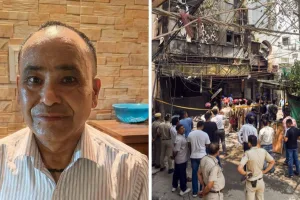
Delhi Police arrest accused servant in IRS officer’s daughter rape-murder case

The victim was allegedly raped and murdered by the accused at her residence in southeast Delhi’s Kailash Hills on Wednesday morning.

Statesman News Service | New Delhi |

The Delhi Police on Wednesday arrested the accused in the alleged rape and murder of a 22-year-old daughter of a senior Indian Revenue Service (IRS) officer.
The accused has been identified as the former servant, who was fired just a a month and half ago, said a police official.
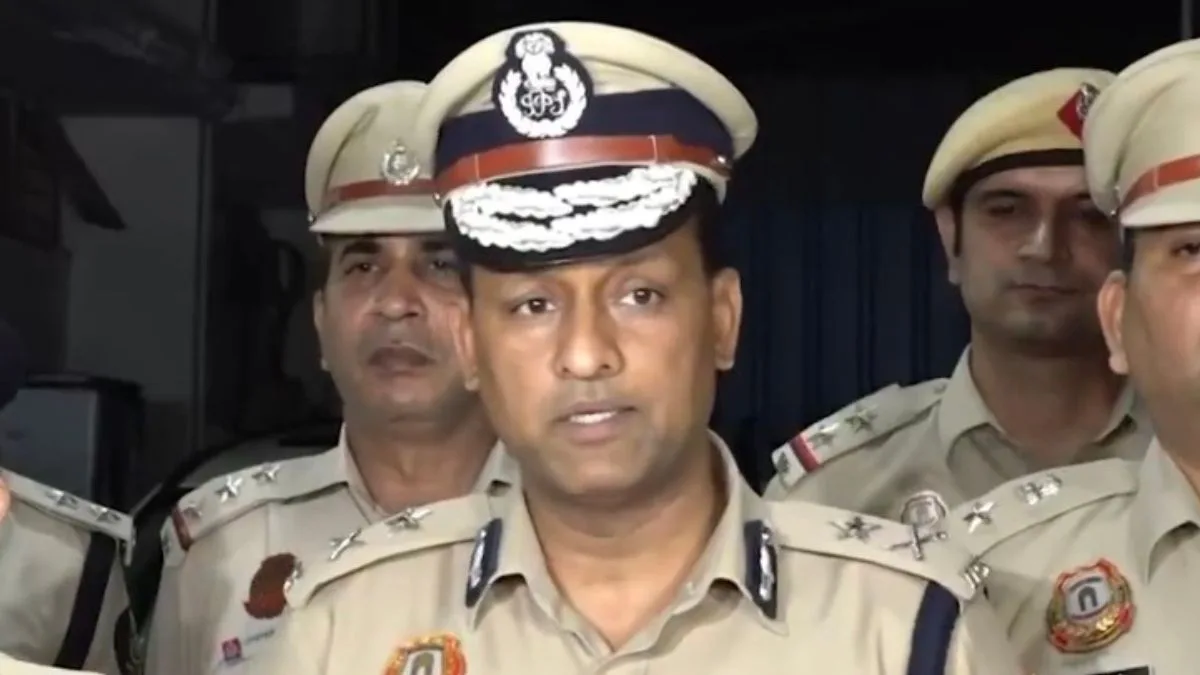
“The servant was hired a year ago on the recommendation of a junior officer. He frequently borrowed money, and about a month and a half ago, he was fired. He came back today, after committing the crime, he changed his trousers,” Joint Commissioner of Police, Eastern Range, Vijay Kumar said.
The official further stated that the motive behind the murder is still unknown but suspected a personal grudge could be a possible factor.
According to Kumar, the parents returned home.around 8.00 am. Upon their arrival, they found their daughter lying downstairs in an unconscious state.

They rushed her to the hospital where doctors declared her brought dead.
“Following this information, we constituted 15 separate teams to work on various leads related to the case. Each team was assigned specific responsibilities. One team went to Alwar, another to Dausa, one to Jaipur, and others to various locations within Delhi,” the Joint Commissioner of Police said.
The victim was allegedly raped and murdered by the accused at her residence in southeast Delhi’s Kailash Hills on Wednesday morning.
Police grew suspicous about the former servant after coming to know that he had been removed from job recently.
According to reports, two videos have also surfaced showing the accused walking towards the IRS officer’s house at 6.28 am and leaving around an hour later at 7.22 am.
The accused was apprehended from Dwarka. He was hired by the IRS officer based on a reference from another staff member within their own office.

Coca-Cola India partners with Invest UP to advance community and environmental initiatives

Coca-Cola India Pvt Ltd has signed a Memorandum of Understanding (MoU) with Invest UP to advance community development and environmental sustainability across Uttar Pradesh.

Statesman News Service | Lucknow |

Coca-Cola India Pvt Ltd has signed a Memorandum of Understanding (MoU) with Invest UP to advance community development and environmental sustainability across Uttar Pradesh.

The MoU was exchanged on Wednesday in the presence of Vijay Kiran Anand, CEO, Invest UP, along with Vivek Ladhani, Executive Director at SLMG Beverages Pvt Ltd, Siddharth Ladhani, Director at SLMG Beverages Pvt Ltd and Coca-Cola India team representatives.
The collaboration will focus on key areas including water access infrastructure, improved waste collection and recycling systems, and skill development initiatives to support local livelihoods. Special emphasis will be placed on high-footfall tourism destinations, aiming to enhance environmental infrastructure while improving visitor experience. The partnership is designed to deliver scalable, community-led solutions with long-term impact.

Speaking on the occasion, Vijay Kiran Anand said the collaboration reflects Uttar Pradesh’s commitment to integrating sustainability with infrastructure development by leveraging private sector expertise.

Devyani RL Rana, Vice President – Public Affairs, Communications and Sustainability, Coca-Cola India and Southwest Asia, said that the company looks forward to working closely with the state to strengthen water stewardship, improve waste systems, and support livelihoods through community-driven initiatives.

This partnership reinforces Coca-Cola India’s continued focus on Uttar Pradesh as a key state for advancing environmental responsibility and inclusive development through collaborative CSR efforts.
Coca Cola, a leading beverage company in India, offers a diverse portfolio across hydration, sparkling, juice, dairy, and nutrition segments, supported by a vast retail network nationwide.

Alleged illegal groundwater extraction by JSW Utkal Steel under NGT scanner

The Eastern Zone Bench of the National Green Tribunal, Kolkata has issued notice to JSW Utkal Steel Limited in Odisha’s Jagatsinghpur district on the alleged illegal groundwater extraction by the steel company.

Statesman News Service | BHUBANESWAR |

The Eastern Zone Bench of the National Green Tribunal, Kolkata has issued notice to JSW Utkal Steel Limited in Odisha’s Jagatsinghpur district on the alleged illegal groundwater extraction by the steel company.

NGT Eastern Zone Bench comprising Mr. Justice Arun Kumar Tyagi (Judicial Member) and Mr. Ishwar Singh (Expert Member), after hearing a petition filed in this regard, observed that “the matter raises substantial environmental questions under the provisions of the National Green Tribunal Act, 2010”.

The Bench, posting the matter for further hearing on 26 May next, issued notice to the steelmaker and directed it to file their responses within one month.

The petition filed by environmental activist Dillip Kumar Samantaray raised serious concerns over violations of environmental norms by the company during the establishment of its Greenfield Integrated Steel Plant project near Paradip.

The Ministry of Environment, Forest and Climate Change had granted Environmental Clearance (EC) to the project with a specific and mandatory condition that no groundwater shall be abstracted. The required water as per the ministry direction must be sourced from the Mahanadi river near Jobra Barrage. However, the petition stated that the company has violated this crucial condition by digging hundreds of borewells across its project area spanning over 4,000 acres.

The petition further relied on information obtained through RTI from the Central Ground Water Board, which indicates that only two No Objection Certificates (NOCs) were granted for a limited number of tube wells. Despite this, large-scale groundwater extraction is alleged to be ongoing, raising concerns about depletion of groundwater resources and ecological damage in the region.

Besides allegations leveled against the steelmaker also included non-compliance with mandatory safeguards such as installation of tamper-proof digital water flow meters and construction of observation wells (piezometers) for groundwater monitoring. The petition also raised questions on the legality of the NOCs granted without due consideration of the EC conditions.

Representing the petitioner, Advocate Akhand submitted that indiscriminate groundwater extraction poses a serious threat to the environment and local communities, and sought strict regulatory and punitive action against the company as well as accountability of concerned authorities.