Logo

Delhi Police arrest accused servant in IRS officer’s daughter rape-murder case

The victim was allegedly raped and murdered by the accused at her residence in southeast Delhi’s Kailash Hills on Wednesday morning.

Statesman News Service | New Delhi |

The Delhi Police on Wednesday arrested the accused in the alleged rape and murder of a 22-year-old daughter of a senior Indian Revenue Service (IRS) officer.
The accused has been identified as the former servant, who was fired just a a month and half ago, said a police official.
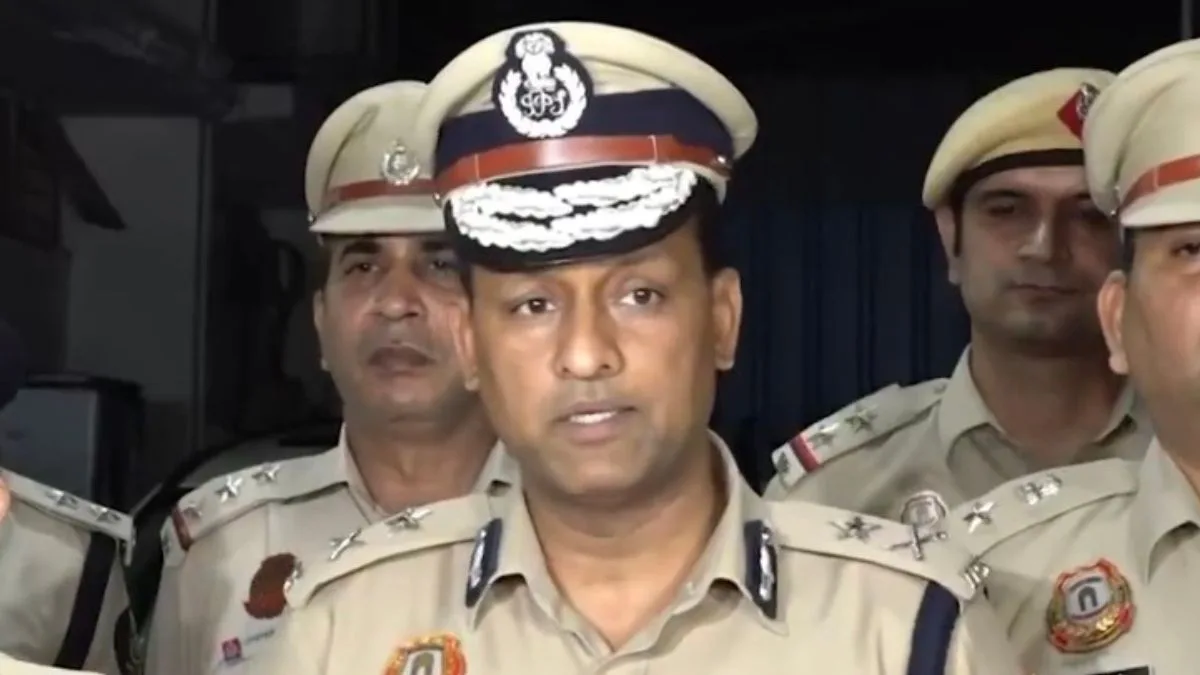
“The servant was hired a year ago on the recommendation of a junior officer. He frequently borrowed money, and about a month and a half ago, he was fired. He came back today, after committing the crime, he changed his trousers,” Joint Commissioner of Police, Eastern Range, Vijay Kumar said.
The official further stated that the motive behind the murder is still unknown but suspected a personal grudge could be a possible factor.
According to Kumar, the parents returned home.around 8.00 am. Upon their arrival, they found their daughter lying downstairs in an unconscious state.

They rushed her to the hospital where doctors declared her brought dead.
“Following this information, we constituted 15 separate teams to work on various leads related to the case. Each team was assigned specific responsibilities. One team went to Alwar, another to Dausa, one to Jaipur, and others to various locations within Delhi,” the Joint Commissioner of Police said.
The victim was allegedly raped and murdered by the accused at her residence in southeast Delhi’s Kailash Hills on Wednesday morning.
Police grew suspicous about the former servant after coming to know that he had been removed from job recently.
According to reports, two videos have also surfaced showing the accused walking towards the IRS officer’s house at 6.28 am and leaving around an hour later at 7.22 am.
The accused was apprehended from Dwarka. He was hired by the IRS officer based on a reference from another staff member within their own office.

Coca-Cola India partners with Invest UP to advance community and environmental initiatives

Coca-Cola India Pvt Ltd has signed a Memorandum of Understanding (MoU) with Invest UP to advance community development and environmental sustainability across Uttar Pradesh.

Statesman News Service | Lucknow |

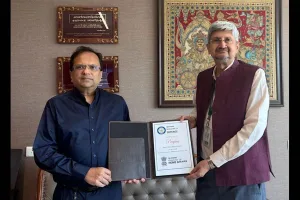
Coca-Cola India Pvt Ltd has signed a Memorandum of Understanding (MoU) with Invest UP to advance community development and environmental sustainability across Uttar Pradesh.

The MoU was exchanged on Wednesday in the presence of Vijay Kiran Anand, CEO, Invest UP, along with Vivek Ladhani, Executive Director at SLMG Beverages Pvt Ltd, Siddharth Ladhani, Director at SLMG Beverages Pvt Ltd and Coca-Cola India team representatives.
The collaboration will focus on key areas including water access infrastructure, improved waste collection and recycling systems, and skill development initiatives to support local livelihoods. Special emphasis will be placed on high-footfall tourism destinations, aiming to enhance environmental infrastructure while improving visitor experience. The partnership is designed to deliver scalable, community-led solutions with long-term impact.

Speaking on the occasion, Vijay Kiran Anand said the collaboration reflects Uttar Pradesh’s commitment to integrating sustainability with infrastructure development by leveraging private sector expertise.

Devyani RL Rana, Vice President – Public Affairs, Communications and Sustainability, Coca-Cola India and Southwest Asia, said that the company looks forward to working closely with the state to strengthen water stewardship, improve waste systems, and support livelihoods through community-driven initiatives.

This partnership reinforces Coca-Cola India’s continued focus on Uttar Pradesh as a key state for advancing environmental responsibility and inclusive development through collaborative CSR efforts.
Coca Cola, a leading beverage company in India, offers a diverse portfolio across hydration, sparkling, juice, dairy, and nutrition segments, supported by a vast retail network nationwide.

Alleged illegal groundwater extraction by JSW Utkal Steel under NGT scanner

The Eastern Zone Bench of the National Green Tribunal, Kolkata has issued notice to JSW Utkal Steel Limited in Odisha’s Jagatsinghpur district on the alleged illegal groundwater extraction by the steel company.

Statesman News Service | BHUBANESWAR |

The Eastern Zone Bench of the National Green Tribunal, Kolkata has issued notice to JSW Utkal Steel Limited in Odisha’s Jagatsinghpur district on the alleged illegal groundwater extraction by the steel company.

NGT Eastern Zone Bench comprising Mr. Justice Arun Kumar Tyagi (Judicial Member) and Mr. Ishwar Singh (Expert Member), after hearing a petition filed in this regard, observed that “the matter raises substantial environmental questions under the provisions of the National Green Tribunal Act, 2010”.

The Bench, posting the matter for further hearing on 26 May next, issued notice to the steelmaker and directed it to file their responses within one month.

The petition filed by environmental activist Dillip Kumar Samantaray raised serious concerns over violations of environmental norms by the company during the establishment of its Greenfield Integrated Steel Plant project near Paradip.

The Ministry of Environment, Forest and Climate Change had granted Environmental Clearance (EC) to the project with a specific and mandatory condition that no groundwater shall be abstracted. The required water as per the ministry direction must be sourced from the Mahanadi river near Jobra Barrage. However, the petition stated that the company has violated this crucial condition by digging hundreds of borewells across its project area spanning over 4,000 acres.

The petition further relied on information obtained through RTI from the Central Ground Water Board, which indicates that only two No Objection Certificates (NOCs) were granted for a limited number of tube wells. Despite this, large-scale groundwater extraction is alleged to be ongoing, raising concerns about depletion of groundwater resources and ecological damage in the region.

Besides allegations leveled against the steelmaker also included non-compliance with mandatory safeguards such as installation of tamper-proof digital water flow meters and construction of observation wells (piezometers) for groundwater monitoring. The petition also raised questions on the legality of the NOCs granted without due consideration of the EC conditions.

Representing the petitioner, Advocate Akhand submitted that indiscriminate groundwater extraction poses a serious threat to the environment and local communities, and sought strict regulatory and punitive action against the company as well as accountability of concerned authorities.

14 kg heroin, reportedly dropped by a drone from across Pakistan border, recovered

The police found the heroin concealed and kept in scooty. However, the youth was still unconscious and the actual true version in the case would be known after interrogation with the youth.

Statesman News Service | Jaipur |

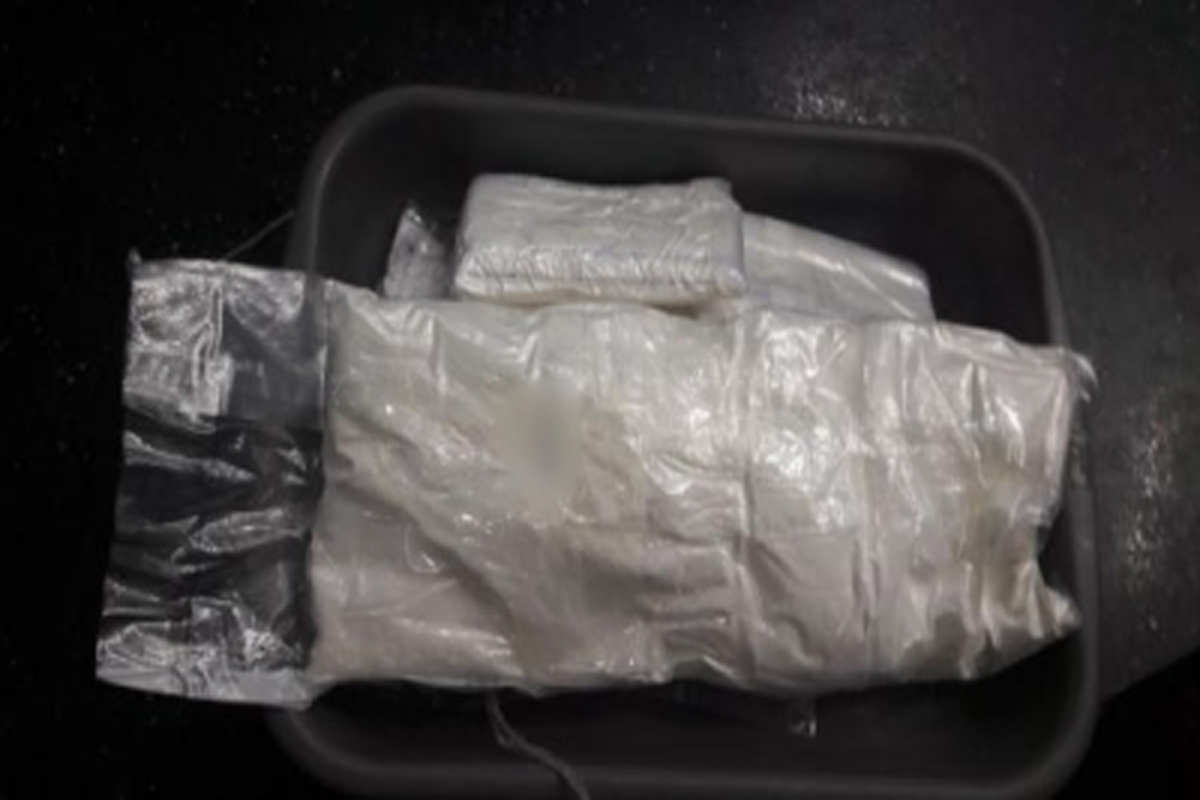
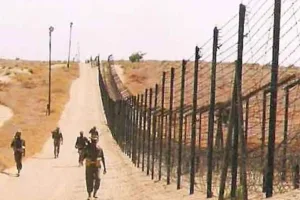
A contraband of 14 kg of heroin worth Rs 70 crore in the international market was recovered and seized by the police from a scooty, the driver of which fell unconscious after being hit by a blue bull in the Indo-Pak border area in Pugal sector in Bikaner district on Tuesday.

The Police held that the consignment of the drug seems to have been dropped from a drone that flew in from across the border. This contraband was picked up and was being carried away by youth Kheta Ram of Sojat (Pali) area, however, on the way he was hit by the blue bull, however, he fell unconscious on the spot.

The police found the heroin concealed and kept in scooty. However, the youth was still unconscious and the actual true version in the case would be known after interrogation with the youth.

However, the seizure has put the police on alert for averting possible attempts of drug trafficking, the police said.

Congress, Samajwadi Party snatched away 33% women’s reservation: Arjun Ram Meghwal

Union Law Minister Arjun Ram Meghwal said that there was a golden opportunity to provide 33% reservation to women in the Lok Sabha and Legislative Assemblies, but the Congress, through its “politics of hatred,” snatched it away.

Statesman News Service | Varanasi |

Union Law Minister Arjun Ram Meghwal said that there was a golden opportunity to provide 33% reservation to women in the Lok Sabha and Legislative Assemblies, but the Congress, through its “politics of hatred,” snatched it away.

Speaking to reporters here on Wednesday, Meghwal said that the Congress, Samajwadi Party, and other opposition parties were afraid that Prime Minister Narendra Modi would get the credit for it, so they prevented the bill from passing.

He alleged that the Samajwadi Party was playing politics by demanding reservation for Muslim women on the basis of religion, which is not permitted under the Constitution. Meanwhile, the DMK feared that this would reduce the number of seats in the southern states.

He elaborated that after delimitation, the number of seats in the Lok Sabha was going to increase to 815, of which 272 seats would be reserved for women. This was a constitutional amendment, and based on this formula, the number of seats in the Legislative Assembly would have increased after 2029.

The Union Minister stated that the Samajwadi Party had agreed during the negotiations, but as soon as the discussion began in the House, they began demanding separate reservations for Muslim women. The opposition acted against the women’s rights that were set to be realised.

He reiterated that the central government is committed to women’s political empowerment, saying the bill would have been a historic step in that direction.

ECI issues show-cause notice to Kharge over ‘terrorist’ remark on PM Modi

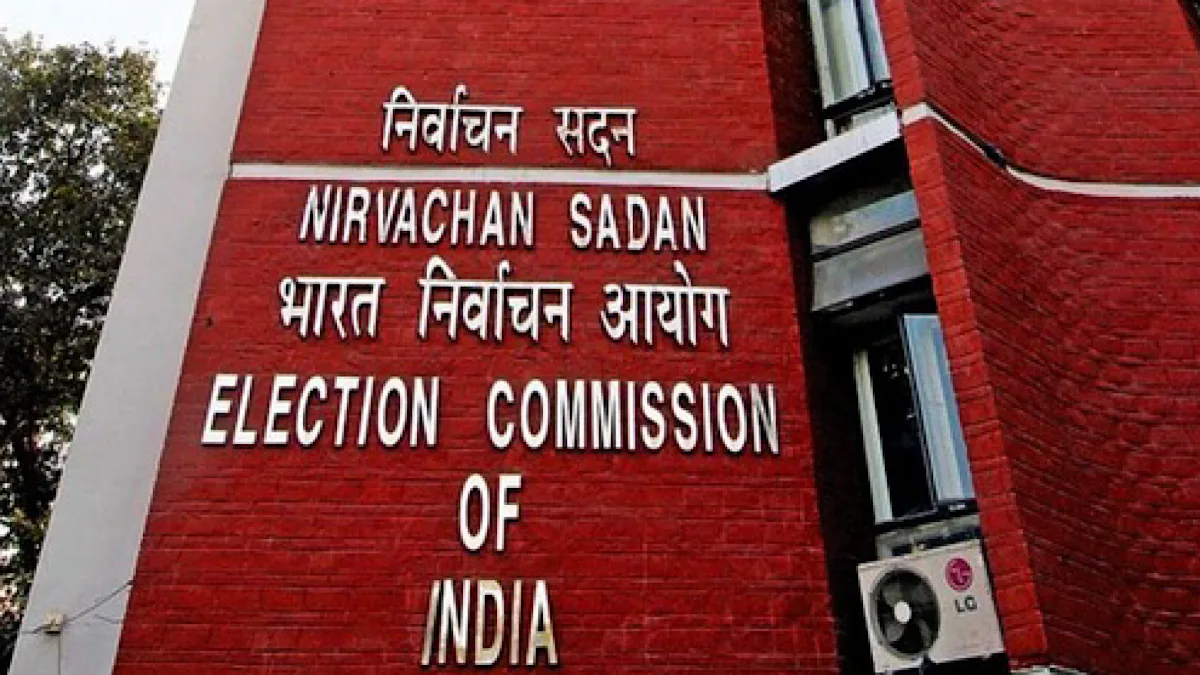
The Election Commission of India on Wednesday issued a show-cause notice to Congress president Mallikarjun Kharge over his “terrorist” remark directed at Prime Minister Narendra Modi, taking serious note of the comment in the midst of the ongoing Assembly election cycle.

Statesman News Service | New Delhi |

The Election Commission of India on Wednesday issued a show-cause notice to Congress president Mallikarjun Kharge over his “terrorist” remark directed at Prime Minister Narendra Modi, taking serious note of the comment in the midst of the ongoing Assembly election cycle.

‎The poll body has sought an explanation from Kharge within 24 hours, indicating that the statement could constitute a violation of the Model Code of Conduct (MCC), which mandates that political parties and leaders maintain dignity in public discourse and refrain from personal attacks.

‎The controversy stems from remarks made by Kharge during a press conference in Chennai on April 21, where he criticised the AIADMK-BJP alliance and referred to the Prime Minister as a “terrorist.” The Congress leader later clarified that he did not intend to use the term literally, but meant that the Prime Minister was “terrorising” democratic institutions.
‎The Election Commission’s action follows a formal complaint by the Bharatiya Janata Party (BJP), whose delegation, including Union Ministers Nirmala Sitharaman and Kiren Rijiju, met the Commission and demanded what they described as the “strictest action” against Kharge, along with a public apology.

‎Sources in the Commission said the notice underscores its zero-tolerance approach to violations of the code, especially those involving derogatory language against political opponents. The ECI has repeatedly emphasised the need for maintaining decorum and issue-based campaigning during elections.

‎The development adds to the charged political atmosphere in Tamil Nadu, where alliances and rhetoric have intensified in the final stretch before voting. The Commission’s intervention signals its intent to enforce compliance with electoral norms as the multi-phase Assembly elections progress across key states.

Tamil Nadu, West Bengal set for landmark elections

The polls will decide the future of two dominant regional forces — the DMK and the TMC — and their leaders, M.K. Stalin in Tamil Nadu and Mamata Banerjee in West Bengal.

Vibha Sharma | New Delhi |

The stage is set for voting in all 234 Assembly seats in Tamil Nadu and 152 constituencies in the first phase of West Bengal on Thursday, in elections that will test the fate of top leaders and their parties in both states.

The polls will decide the future of two dominant regional forces — the DMK and the TMC — and their leaders, M.K. Stalin in Tamil Nadu and Mamata Banerjee in West Bengal.

They will also test the BJP’s potential as the principal challenger in West Bengal and whether it can finally gain a foothold in southern state Tamil Nadu with the support of ally AIADMK.

These elections are also a key test for a new entrant — the Tamilaga Vettri Kazhagam (TVK), led by actor-turned-politician Vijay — in a state historically defined by bipolar Dravidian politics. Emerging as a potential disruptor, TVK has fielded candidates in all 234 seats, positioning itself as a “clean” alternative to the established players.

While Tamil Nadu will complete polling in a single phase, voting for the remaining 142 constituencies in West Bengal is scheduled for April 29.

Both states have witnessed fiercely intense campaigning.

In West Bengal, the political temperature has remained high as the BJP has stepped up its push to unseat the TMC, which has been in power since 2011. One of the most contentious issues this election season has been the Special Intensive Revision of voter lists—an exercise the ruling TMC alleges is politically motivated, a charge denied by both the BJP and the Election Commission.

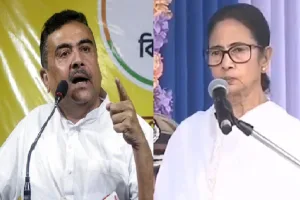
The phase going to polls on Thursday covers several key constituencies, including Nandigram—the most closely watched seat due to its role in the TMC’s rise to power. The spotlight is again on BJP leader Suvendu Adhikari. Once a close aide of Mamata Banerjee and now one of her fiercest rivals, Adhikari is contesting again from Nandigram, a seat he won in 2021 by defeating Banerjee. Other key constituencies include Darjeeling, Jalpaiguri, Cooch Behar, and Siliguri

In Tamil Nadu, the elections are being seen as a major turning point, with a multi-cornered contest. The ruling DMK, led by Chief Minister M.K. Stalin, is seeking a second consecutive term but faces a resurgent AIADMK, backed by the BJP, along with the growing influence of Vijay’s TVK.

Thursday will test the political fortunes of Stalin as well as AIADMK leader Edappadi K. Palaniswami, who must secure a strong mandate to emerge from the shadow of late J. Jayalalithaa, consolidate his leadership, and reaffirm the party’s position as the principal challenger.

Key candidates include Stalin in Kolathur, Palaniswami in Edappadi, Vijay in Perambur and Trichy East, and NTK leader Seeman in Karaikudi. Other prominent contenders include Udhayanidhi Stalin in Chepauk-Thiruvallikeni, O. Panneerselvam in Bodinayakanur, Premalatha Vijayakant in Vriddhachalam, and K.A. Sengottaiyan in Gobichettipalayam, contesting this time on a TVK ticket.

A key question remains whether Vijay’s TVK can shift the narrative away from the traditional binary, and if cinematic charisma can disrupt decades-old political structures. And in Chepauk–Thiruvallikeni,can Udhayanidhi Stalin consolidate his position and legacy as the DMK’s future leader.

Punjab to conduct statewide civil defence air raid and blackout mock drill on April 24

In order to test civil defence preparedness in the state, Punjab will conduct a Civil Defence Air Raid/Blackout Mock Exercise on April 24, 2026, at 2000 hrs (8 PM).

Statesman News Service | CHANDIGARH |

In order to test civil defence preparedness in the state, Punjab will conduct a Civil Defence Air Raid/Blackout Mock Exercise on April 24, 2026, at 2000 hrs (8 PM).

The exercise will be conducted across all districts of the state as per the directives of the Ministry of Home Affairs, Government of India, New Delhi.

The mock exercise will commence with an air raid warning signal, which will be disseminated through sirens featuring a high-low pitch for a duration of two minutes. During the exercise, a simulated blackout will be enforced in specific areas identified by the respective Deputy Commissioners-cum-Controllers, Civil Defence.

The general public in these identified areas is advised to switch off all non-essential lighting during the blackout period. However, essential services will remain fully functional throughout the drill.

The exercise will conclude with an “All Clear” signal, characterised by a continuous high-pitch siren for two minutes, marking the formal end of the drill.

During the mock exercise, various critical emergency functions will be simulated to test field coordination, including fire response operations, search and rescue operations, first aid and medical assistance, evacuation of injured persons, as well as traffic and crowd control measures.

The state government has appealed to the public not to panic, emphasising that this is a routine drill conducted solely to evaluate and enhance civil defence preparedness in the state.

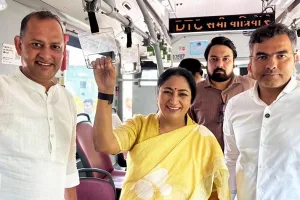
IIT Delhi to soon complete DTC route rationalisation study for DEVi buses

At a review meeting of the Transport Department, Minister Dr Pankaj Kumar Singh on Wednesday emphasised the importance of inclusive and data-driven planning, as well as leveraging the experience of DTC personnel in the ongoing Route Rationalisation exercise for the 9-metre DEVi buses.

Statesman News Service | New Delhi |

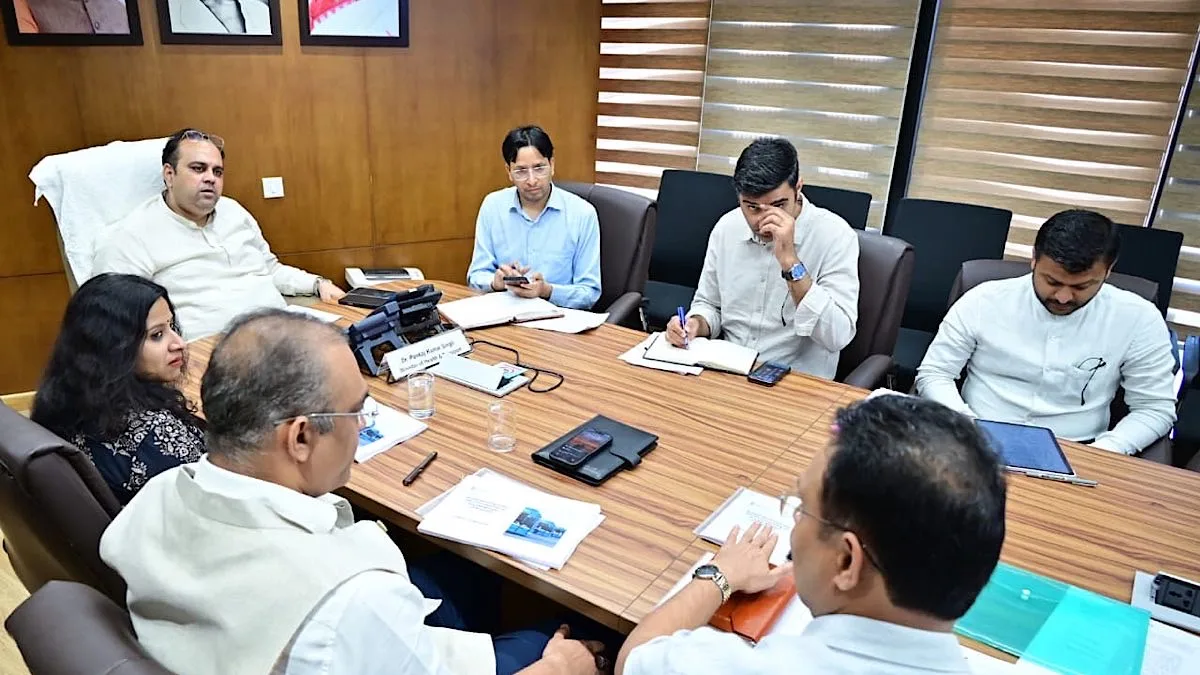
At a review meeting of the Transport Department, Minister Dr Pankaj Kumar Singh on Wednesday emphasised the importance of inclusive and data-driven planning, as well as leveraging the experience of DTC personnel in the ongoing Route Rationalisation exercise for the 9-metre DEVi buses.

“The Route Rationalisation exercise must reflect the on-ground realities of Delhi’s public transport system. By incorporating inputs from experienced DTC drivers, conductors, and depot managers, we can significantly enhance last-mile connectivity and improve the overall passenger experience,” the minister said.

According to Dr Singh, the DTC staff have experience, and their invaluable expertise will strengthen the route rationalisation study, ensuring that more passengers use eco-friendly public transport to help decongest roads and reduce pollution.

The comprehensive study is being undertaken by IIT Delhi to ensure a robust, data-driven, and optimised redesign of the national capital’s bus network.

The route rationalisation covers 121 routes in the East Zone, 181 routes in the West Zone, and 194 routes in the North Zone, as well as an ongoing exercise in the South Zone.

Highlighting the progress of electric mobility initiatives, the minister noted that DTC’s interstate electric bus services have received an encouraging response from commuters.

Currently, services are operational on key routes, including Delhi–Baraut (Uttar Pradesh), Delhi–Sonipat, Delhi–Dharuhera, Delhi–Panipat (Haryana), and Nanaksar–Ghaziabad Bus Terminal (Uttar Pradesh).

The minister said that the Transport Department is also actively exploring the introduction of bus services to major religious destinations, aimed at providing convenient, affordable, and environmentally friendly travel options for citizens.

Bengal’s Real Poll Battle: Not on Streets, but Over Who Gets to Vote 

Nearly 91 lakh names have been removed from voter rolls under the Special Intensive Revision (SIR). Of these, about 27 lakh were struck off after being flagged by an artificial intelligence filter for “logical discrepancies.”

Jayanta Roy Chowdhury | Kolkata |

Armoured vehicles rumble along rural roads as Central Armed Police Forces patrol bazaars. Checkpoints dot highways, stopping cars and buses to search for cash or liquor meant to influence voters.

Days before Bengal heads into a crucial election, the unprecedented deployment by the Election Commission is meant to curb violence and “vote buying.” Yet the “war zone” optics obscure a quieter, more consequential contest—one unfolding in tribunals deciding who gets to vote, and by implication, who counts as Indian.

Nearly 91 lakh names have been removed from voter rolls under the Special Intensive Revision (SIR). Of these, about 27 lakh were struck off after being flagged by an artificial intelligence filter for “logical discrepancies.”

Such discrepancies can be as minor as variations in surname spellings—Rai versus Ray, or Chattopadhyay versus Chatterjee. For Bengali Muslims, many of whom do not use fixed surnames, entire villages have found themselves excluded.

Researchers say the deletions have disproportionately affected minorities, women and the poor. Border districts such as Malda, Murshidabad, North and South 24 Parganas—home to large Muslim and Dalit populations—have been hit hardest, with deletions ranging from 2.2 lakh in South 24 Parganas to 4.6 lakh in Murshidabad.

But the impact has not spared the privileged.

At Joka, where an appellate tribunal set up by the Supreme Court hears cases arising from the deletions, stands the Indian Institute of Management, Calcutta. Nandita Roy, a 39-year-old faculty member, discovered her name missing from the rolls.

“I submitted all the documents, assuming it was a clerical error, but my name is still not there,” she said. “If someone like me faces this, imagine the plight of poorer, less-educated people trying to navigate the bureaucracy.”

Others share her predicament. Members of the family of the last Nawab of Murshidabad have also been struck off. “What crime have we committed?” asked 82-year-old Syed Reza Ali Mirza, a descendant of Bengal’s Nawabs.

The political fallout is complex. In Muslim-majority districts such as Malda and Murshidabad, where the ruling Trinamool Congress (TMC) faced anti-incumbency, the deletions have triggered consolidation of Muslim voters around the party. The Congress and smaller Muslim parties may still win some seats.

A counter-consolidation among Hindu voters appears less certain, particularly because Scheduled Caste communities have also been affected. The Matua community—estimated at 2.5 to 3 million—has seen significant deletions.

“We have protested and will decide our next steps after the elections,” said Dileep Matua, a community leader who claimed 200 names were removed from his village alone.

Critics argue the exercise oversteps legal bounds. “The Citizenship Act does not empower the Election Commission to determine citizenship,” said Jawhar Sircar, a former IAS officer. “Yet, in practice, the machinery appears to be doing just that.”

The Bharatiya Janata Party (BJP), however, defends the SIR as a necessary clean-up. “Authorities are removing dead, duplicate and fake voters,” said party ideologue Swapan Dasgupta.

The TMC sees it differently. Leader Debasish Kumar called it a “concerted attack,” alleging that the Centre has “let loose a wild horse” to weaken opposition-ruled states by shrinking their voter base.

Last month, Chief Minister Mamata Banerjee appeared before the Supreme Court, alleging that the Election Commission was “targeting” Bengal and “bulldozing” its people.

The gender dimension has added another layer of complexity. Women form a crucial support base for the TMC, which leads the BJP by about 10 percentage points among female voters. But data from the first phase of polling suggests a dip in the women-to-men ratio—from 952:1000 to 950:1000 after the SIR.

“Surprisingly, the exercise has challenged women’s voting rights,” said Samata Biswas, a scholar of gender and migration.

A study by the Kolkata-based Sabar Institute indicates that women are disproportionately affected in constituencies reserved for Scheduled Castes and Scheduled Tribes. In 67 SC seats, women account for 52.4 percent of those impacted; in 16 ST seats, the figure rises to 53.4 percent.

For many analysts, the SIR has upended electoral calculations. “If there is one move that has unsettled the electoral apple cart and made this election difficult to predict, it is this,” said political theorist Ranabir Samaddar. “The BJP hoped to benefit, but the TMC may yet have the last laugh.”

As Bengal votes under the shadow of security deployments, the more decisive battle may lie not in visible shows of force, but in the invisible process of determining who gets counted at the end of the polling season.

I-PAC-ED vs Mamata: SC raps CM over ‘interference’ in probe, says such acts put democracy in jeopardy

The Supreme Court on Wednesday strongly deprecated the West Bengal Chief Minister Mamata Banerjee’s storming into premises of the Pratik Jain – the co-founder of political consultancy firm I-PAC – when the Enforcement Directorate (ED) was carrying out searches on January 8, this year, observing that such conduct by a constitutional functionary has the potential to undermine democratic processes.

Parmod Kumar | New Delhi |

The Supreme Court on Wednesday strongly deprecated the West Bengal Chief Minister Mamata Banerjee’s storming into premises of the Pratik Jain – the co-founder of political consultancy firm I-PAC – when the Enforcement Directorate (ED) was carrying out searches on January 8, this year, observing that such conduct by a constitutional functionary has the potential to undermine democratic processes.

Terming it “extraordinary”, a Bench of Justice Prashant Kumar Mishra and Justice N.V. Anjaria, said, “A Chief Minister of any State cannot walk in the midst of an investigation, putting the democracy in peril. This is per se an act committed by an individual who happens to be the Chief Minister keeping the whole democracy in jeopardy.”

The strong observation by the bench came in the course of the hearing of a petition by the Enforcement Directorate seeking a probe by the Central Bureau of Investigation (CBI) against the Chief Minister Mamata Banarjee and other State police officers who had accompanied her at the time of the incident. The Central agency and its officers have approached the Supreme Court invoking top court jurisdiction under Article 32 of the constitution. Ordinarily, Article 32 can be taken recourse to by the citizens to safeguard their rights against the State. The West Bengal government has questioned the maintainability of the ED’s petitions.

As the senior lawyers appearing for the West Bengal government, opposing the maintainability of the ED’s petition, referred to the noted jurist M.H. Seervai and Dr, Bhim Rao Ambedkar in support of their contention, the bench remarked “You have taken us through Seervai, Ambedkar, but none of them would have conceived this situation, that a sitting Chief Minister will walk into the office” (where searches by ED are underway.

Further voicing its concern over what had happened on January 8, during the ED raids at I-PAC co-founder Pratik Jain’s residence, “We cannot shut our eyes to the reality. This is an extraordinary situation where the contours are totally different, court has to take decisions keeping in view socio-political realities.”

The bench also referred to the April 1 incident, when seven judicial officers, including three women judges — engaged in the special Intensive Revision (SIR) of electoral rolls in the State — were gheraoed and there the response of the State police was not immediate despite calls from the Calcutta High Court. The investigation into the incident, has now, been handed over to the National Investigation Agency.

The West Bengal government had in the earlier hearing has told the Supreme court that the Enforcement Directorate was being “weaponized” by the Central government against political opponents,

Senior advocates Abhishek Manu Singhvi, Siddharth Luthra and Menaka Guruswamy, appearing for the West Bengal government, Chief Minister Banerjee and state police officials, argued that the petition was not maintainable under Article 32 of the constitution.

The Bench, however, was not persuaded that the matter required reference to a larger Bench merely because questions of law were involved. It observed that in every issue there is a question of law but it does not necessitate reference to a larger bench.

The case arises out of an incident on January 8, when Banerjee allegedly entered the residence of I-PAC co-founder Pratik Jain during ED search operations linked to a money laundering probe in the coal smuggling case.

She has denied allegations of interference, stating that the documents taken pertained to the Trinamool Congress, while accusing the central agency of acting with political vendetta. The ED, on its part, maintains that the searches were part of an ongoing investigation into the alleged coal scam.

The hearing will continue on Thursday.

Thrissur fireworks tragedy: Four still missing; blast not due to extreme heat, says PESO

The rescue operations at the Mundathikode fireworks facility in Thrissur continue to be a race against time, with at least four people still missing.

Statesman News Service | THIRUVANANTHAPURAM |

The rescue operations at the Mundathikode fireworks facility in Thrissur continue to be a race against time, with at least four people still missing.

The Thrissur District Collector on Wednesday said that four persons have not yet been found in the Mundathikode firework disaster. The missing persons have been identified as Suresh CA (50), a native of Kanjirakode; Abhijith alias Abhi (28), a native of Kottapuram; Vishnu (38), a native of Manakkudi; and Girish (42), a native of Kottapuram. DNA samples of their relatives have been collected. One unidentified body and 29 body parts have been found. Currently, 8 out of the 9 bodies have been handed over to the relatives after post-mortem.

Meanwhile, the Petroleum and Explosives Safety Organisation (PESO) has assessed that the explosion at the Mundathikode firecracker manufacturing unit was not caused by extreme heat. Following its inspection, PESO assessed that the heat was not the main reason for the explosion. The inspection is considering the possibility of a short circuit.

The Electrical Inspectorate team is also conducting inspections at the disaster site. The Electrical Inspectorate is investigating whether a short circuit led to the explosion. As part of the magisterial investigation, the Additional District Magistrate (ADM) has inspected the scene and collected evidence.

Saffron flag will wave in Bengal on May 4, countdown for TMC goons will begin: Yogi Adityanath

Uttar Pradesh Chief Minister Yogi Adityanath on Wednesday said that the saffron flag will fly in West Bengal on May 4 and after that, the countdown for Trinamool Congress (TMC) goons will begin.

Statesman News Service | Kolkata |

Uttar Pradesh Chief Minister Yogi Adityanath on Wednesday said that the saffron flag will fly in West Bengal on May 4 and after that, the countdown for Trinamool Congress (TMC) goons will begin.

Taking an indirect dig at West Bengal Chief Minister Mamata Banerjee and Abhishek Banerjee, he said the “aunt-nephew duo” wants to erase Bengal’s identity. Referring to remarks about Urdu, he said no one can dare play with Bengali identity. TMC members should understand that Bengal’s identity is linked to Maa Kalibari, not Kaaba.

CM Yogi addressed public meetings in Jorasanko, Chakdaha, and Udaynarayanpur assembly constituencies of West Bengal. Despite alleged intimidation by TMC workers and the scorching heat, thousands gathered — many carrying towels and umbrellas — to listen to him. A large number of people held posters reading, “Yogi ji, bring the bulldozer, we are with you.”

CM Yogi said, “The first phase of voting is scheduled for April 23, and BJP is set to win 80% of the seats in this phase. When the results are declared on May 4, the saffron flag will be hoisted in Bengal. Bengal will once again establish its identity as ‘Sonar Bangla’. We must protect Bengal’s identity and stop those promoting extremism at all costs.”

He appealed to voters to use the power given to them by democracy wisely. Bengal stands at the threshold of change. Like Uttar Pradesh, if a double-engine government is formed, a new era of development, security, and cultural resurgence will begin in Bengal.

CM Yogi said, “Mamata Didi says ‘Khela Hobe’; I say, ‘This time the game ends and development begins.’” He alleged that the Bengal government has been looting funds sent by Prime Minister Modi for development, and that this will stop. Festivals like Ram Navami and Durga Puja will be celebrated with full enthusiasm, and anyone who creates obstacles will face consequences.

The strength of voters will free Bengal from hooliganism. “Amar Sonar Bangla will become TMC-free Bengal. Darkness will fade, the sun will rise, and the lotus will bloom.” Just as Article 370 was permanently removed in Kashmir, he said, Bengal must also be freed from the grip of TMC, Congress, and Communists, whom he accused of fostering lawlessness and mafia rule.

CM Yogi said, “Bengal has made an unparalleled contribution to nation-building through the penance, sacrifice, and efforts of great personalities born on its soil. In literature, Gurudev Rabindranath Tagore’s Gitanjali was the first Indian work to win the Nobel Prize. At Gurudev’s heritage premises, statues or photos of him and Bharat Mata should have been installed, but TMC workers allegedly occupied the place and put up Mamata Didi’s photograph instead.” He termed this an insult to Indian values and Bengal’s identity.

CM Yogi said that Bengal’s land is fertile and rich in water resources. The youth here are talented, farmers are hardworking, and traders and entrepreneurs are diligent. There was a time when people from across the country came to Bengal for employment, but first Congress looted it, then Communists drained it, and for the past 15 years, TMC goons have been trying to push Bengal into poverty.

The land of knowledge is now lost in the darkness of unemployment. A state that was once the growth engine of India’s economy has seen over 7,000 large industries and thousands of MSME units shut down in the last decade.

More than 30 lakh youth have become unemployed. Production of paddy and fish has declined. Potato farmers are distressed due to lack of fair prices, yet Mamata Didi remains unmoved. TMC, he said, has become synonymous with terror, mafia rule, and corruption.

Highlighting Bengal’s condition, CM Yogi said that cow slaughter is rampant there. Mamata Didi, he alleged, is irritated by the name of Lord Ram. She does not permit Durga Puja freely and restricts processions, even imposing curfews during the festival.

TMC goons extort money from traders. He added that before 2017, Uttar Pradesh faced similar chaos – riots, curfews, and unrest. Members of TMC’s ally, the Samajwadi Party, used to collect “goonda tax.” Taking Lord Ram’s name would invite violence. But today, he said, such disturbances are not possible in UP. Festivals like Ram Navami, Janmashtami, Kanwar Yatra, Durga Puja, and Saraswati Puja are celebrated openly.

People of UP are now living in a new era of “Ram Rajya” – no curfew, no riots, everything is peaceful. If any mafia tries to rise, a bulldozer crushes their illegal empire and it is converted into housing for the poor. Those who threaten the safety of women and traders face strict consequences, and illegal encroachments on the poor are dealt with decisively.

CM Yogi said, “The whole world came to Ayodhya, Kashi, Mathura, and Prayagraj during the Mahakumbh. Such respect for heritage is possible only under a double-engine government.”

While these cities have been developed and beautified in Uttar Pradesh, he alleged that in Bengal, TMC goons are encroaching upon the ancestral land of Gurudev Rabindranath Tagore. In UP, he said, any mafia attempting such acts would have properties of generations confiscated and used to build homes for the poor.

Chief Minister Yogi Adityanath said that the current TMC government is playing with the sentiments of the people. He referred to a mayor who allegedly said that half the population in Bengal would be made to speak Urdu. In response, he said Urdu should be spoken where it is the medium of education, while Bangla should be spoken in Bengal.

Referring to a statement by a TMC MP – “Kaaba in the heart and Medina in the eyes” – he countered by saying that Bengal’s heart belongs to Mahakali, and its vision reflects Chaitanya Mahaprabhu and Belur Math.

In Udaynarayanpur, CM Yogi met the mother of late BJP worker Subodh Jeet on stage and shared her grief. He said that by killing Subodh, TMC goons have created thousands like him. He added that he learned TMC workers were trying to prevent the BJP candidate’s rally – refusing permission for tents or arrangements.

He then decided to hold the rally standing in the open sun, postponing several other programs to attend. Calling BJP workers brave, he boosted their morale and said that after May 4, the countdown for TMC goons will begin and they will be answered. He saluted the enthusiasm of voters standing in the scorching heat.

Despite threats and obstruction, people gathered with determination, invoking Maa Dakshineswar Kali and following the legacy of Bengal’s martyrs. He expressed confidence that the BJP would win all assembly seats in Howrah district.

At the rallies, Chief Minister Yogi Adityanath appealed to voters to ensure the victory of BJP candidates – Vijay Ojha (Jorasanko), Tapas Roy (Maniktala), Santosh Pathak (Chowringhee), Purnima Chakravarty (Shyampukur), Partha Choudhury (Beleghata), Priyanka Tibrewal (Entally), Bankim Chandra Ghosh (Chakdaha), and Prabhakar Pandit (Udaynarayanpur) – by a large margin.


Mohammad Nawaz reportedly under PCB probe after positive drug test

Pakistan all-rounder Mohammad Nawaz is currently under investigation by the Pakistan Cricket Board (PCB) after returning a positive test for recreational drug use, according to ESPNcricinfo.

Statesman News Service | New Delhi |

Pakistan all-rounder Mohammad Nawaz is currently under investigation by the Pakistan Cricket Board (PCB) after returning a positive test for recreational drug use, according to ESPNcricinfo.

The development has also led to the collapse of his proposed stint with Surrey in England’s T20 Blast.

Nawaz, who has represented Pakistan in 98 T20 Internationals, was set to join Surrey for the duration of the T20 Blast, scheduled from May 26 to July 18. The PCB had granted him a No-Objection Certificate (NOC) for the tournament just two weeks ago, and the county side was expected to officially announce his signing shortly.

However, those plans have now been put on hold following the positive test result. Surrey have decided not to proceed with the deal, and Nawaz will no longer feature for the club this season. The county declined to comment on the situation.

A PCB spokesperson confirmed that the matter is being handled in coordination with the International Cricket Council (ICC). “The International Cricket Council (ICC) has informed the Pakistan Cricket Board (PCB) about this matter, and PCB has begun the due process. The results of this process will be communicated to the ICC today,” the spokesperson said.

It is understood that the positive test traces back to the ICC T20 World Cup held earlier this year. Nawaz, 32, played all seven matches for Pakistan during the tournament in Sri Lanka, where the team was knocked out in the Super Eight stage. He had a modest outing with the bat, scoring 15 runs, while picking up seven wickets with the ball.

Despite this ongoing issue, Nawaz has continued to feature in domestic cricket and remains part of the Multan Sultans squad in the Pakistan Super League (PSL). In their recent match against Rawalpindi in Karachi on Tuesday night, he bowled three overs but went wicketless as his team secured a six-wicket win.
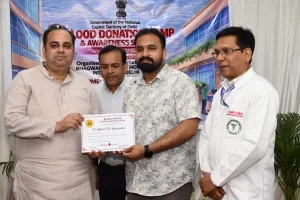
The ICC, meanwhile, has declined to comment on the matter at this stage. The investigation remains ongoing, and further clarity on Nawaz’s situation is expected once the PCB completes its process and shares its findings with the ICC.

Fadnavis attributes Karge’s remark on Modi to repeated poll defeats

Chief Minister Fadnavis said here on Wednesday that continuous electoral defeats may have affected Congress President Mallikarjun Kharge’s mental balance.

Statesman News Service | Mumbai |

Chief Minister Fadnavis said here on Wednesday that continuous electoral defeats may have affected Congress President Mallikarjun Kharge’s mental balance.

Speaking to media persons here after a cabinet meeting, Fadnavis said, “Continuous defeats must have affected Mallikarjun Kharge’s head. So, he used abusive language against Modi, a patriot who created modern India. This is the same Congress which had called Modi a merchant of death. But, whenever the Congress criticises Modi, the people defeat them in elections. Kharge should withdraw his statement and apologise publicly”.

On Tuesday, Congress President Mallikarjun Kharge said at a press conference in Chennai, “How can people who put up Annadurai’s photo go with Modi? He (Modi) is a terrorist. His party does not believe in equality and justice. Going with such people means weakening democracy”.

Kharge’s reference was to the AIADMK putting up Modi’s pictures along with pictures of the late Dravidian movement stalwart and former Tamil Nadu Chief Minister CN Annadurai.

Meanwhile, BJP Maharashtra state president Ravindra Chavan launched a strong attack against Congress President Mallikarjun Kharge. “The whole world looks yellow to a jaundiced person. Those whose rule gave free rein to terrorists now see everyone as terrorists even in the new terror-free India. Kharge Saheb, before blaming others, read the history of Congress, which is adorned with ‘love’ for terrorists!” BJP Maharashtra state president Ravindra Chavan on his X handle.
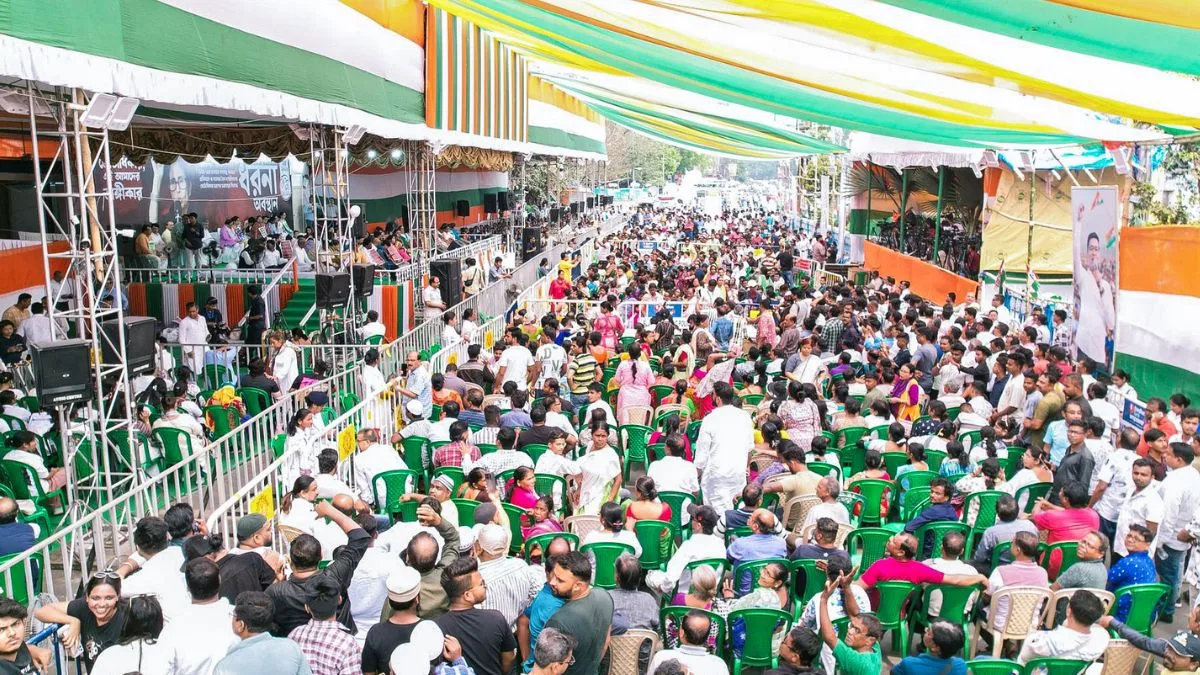
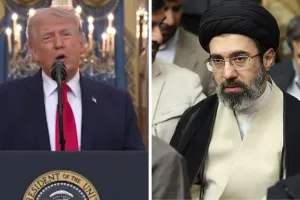
Trump shares ‘good news’ on US-Iran peace talks, says breakthrough ‘possible’ in 36-72 hours

Trump said that a “good news” is possible in the next 36-72 hours.

Statesman News Service | New Delhi |

US President Donald Trump on Wednesday hinted a possible breakthrough in his efforts to revive peace talks with Iran. Speaking to the New York Post, Trump said that a “good news” is “possible” in the next 36-72 hours.

According to the Post, renewed mediation efforts with Tehran may see peace talks happening in Islamabad later this week.

Earlier in the day, Trump said that he has directed the US military to continue with its blockade of Iranian ports and remain “ready and able”.

He also confirmed the extension of ceasefire until Iran submits its proposal.

“I have … directed our Military to continue the Blockade and, in all other respects, remain ready and able, and will therefore extend the Ceasefire until such time as their proposal is submitted, and discussions are concluded, one way or the other,” he said in a post to Truth Social.

The development comes amid the co tinued uncertainty over the second round of peace talks between the US and Iran.

Despite the extension of the ceasefire, Iran has been firm on its stand, saying talks with the US will be held only when rational conditions exist.

Ealrier today, Iranian foreign ministry spokesman Esmaeil Baghaei said that Tehran stands ready to defend itself militarily.

He, however, added that the Islamic Republic was open to the prospect of further talks provided rational conditions exist.

According to the official IRNA news agency, Baghaei said that Iran will negotiate “whenever we conclude that the necessary and rational conditions exist to use this tool to achieve national interests.”

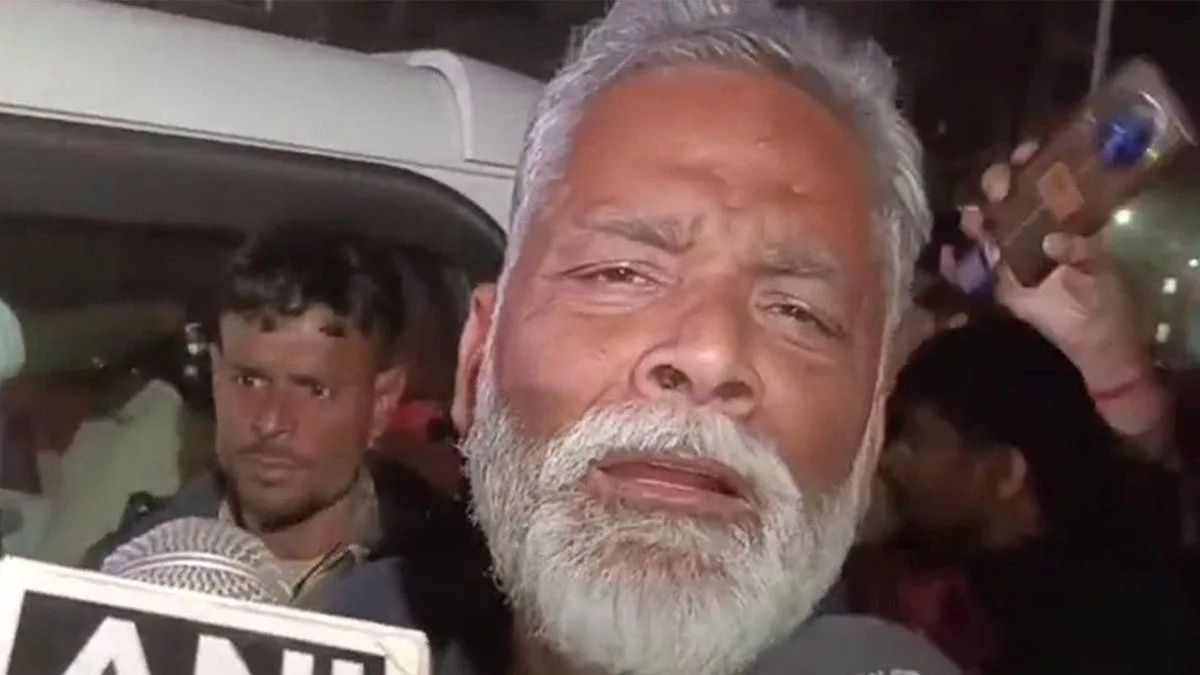
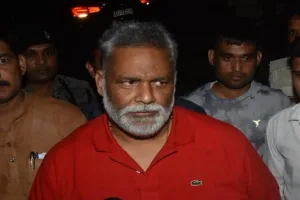
Pappu Yadav faces backlash from women BJP leaders over controversial his remarks

Speaking at a press conference on the Women’s Reservation Amendment Bill on Monday, Pappu Yadav had remarked, “90 per cent of women cannot succeed in politics without entering the rooms of politicians.”

Imran Mojib | Patna |

Independent MP from Purnea, Rajesh Ranjan alias Pappu Yadav, continued to face backlash on Wednesday over his intemperate remarks about women in politics, with several women BJP leaders demanding a public apology from him for what they termed an “objectionable” statement, adding that such comments reflect a “malicious mindset.”

Speaking at a press conference on the Women’s Reservation Amendment Bill on Monday, Pappu Yadav had remarked, “90 per cent of women cannot succeed in politics without entering the rooms of politicians.”

Former Bihar minister Shreyasi Singh strongly condemned the remarks, saying they not only reflect an individual’s thinking but also reveal his attitude toward women and how he treats them.

Addressing a press conference at the BJP state office in Patna, she said those who make inappropriate comments about women and consider them justified should publicly apologise, not only to women party workers but to all women across the country.

Expressing anger over the statement, the Jamui MLA questioned the Congress leadership. Referring to Rahul Gandhi and Priyanka Gandhi, she asked whether they still support Pappu Yadav. She posed a similar question to RJD leader Tejashwi Yadav, asking him if he stands with the MP.

She added that BJP and NDA workers are prepared to respond strongly to such remarks, both politically and socially, reiterating that “such statements reflect a malicious mindset.”

Shreyasi Singh further pointed out that Pappu Yadav’s wife is currently a Rajya Sabha member and has previously served in the Lok Sabha. She questioned whether he would make similar remarks if his own daughter were to enter any professional field, adding that women achieve success through struggle and determination.

MLA Maithili Thakur said women attain success in every field through hard work, and irresponsible comments about any profession can deeply hurt not only women but also their families. Terming the remark highly condemnable, she said it insults both women and men. “Women in politics today are hurt by this statement,” she added, urging Pappu Yadav to issue a public apology.

MLA Sangeeta Kumari described the remarks as an attack on women’s dignity, identity, and self-respect. Noting that his wife is herself a Member of Parliament, she said such comments expose his mindset. “This is a land where women are revered. How did he dare to make such a statement?” she asked.

She also demanded a response from Rahul Gandhi and Priyanka Gandhi, reiterating that the BJP stands firmly for women’s dignity and self-respect.

MLC Anamika Singh Patel said the statement refle