The loudspeakers are finally quiet. The roadshows have wrapped up. The slogans have faded into the evening air. And now, Tamil Nadu is holding its breath. On the eve of polling, the political noise has turned into a tense silence.
The familiar political rivalry is back, but a fresh face from cinema has shaken up the script. And suddenly, the story feels unpredictable. Voters across all 234 constituencies will cast their ballots in a single phase, and the mood on the ground suggests this is not going to be a routine contest.
Advertisement
DMK seeks continuity with welfare push
The ruling Dravida Munnetra Kazhagam (DMK), led by Chief Minister MK Stalin, is going into the election with confidence. The party believes its governance record speaks for itself.
From welfare schemes to social justice policies, the DMK has tried to project stability and continuity.
One of its biggest talking points remains free bus travel for women, a move that has had wide visibility across the state. The party is also highlighting investments in education, healthcare, and employment. Its campaign has focused on inclusive growth.
The DMK’s pitch is simple: don’t change what is working. The leadership has repeatedly urged voters to support continuity so that existing welfare programmes can continue and expand.
But even within the camp, there is caution. Leaders acknowledge that close contests in several seats could make every vote count. And that is where new factors could complicate the picture.
AIADMK eyes comeback with aggressive promises
On the other side, the All India Anna Dravida Munnetra Kazhagam (AIADMK) is pushing hard for a comeback. The party is banking on anti-incumbency sentiment and a renewed organisational push. It has also highlighted support from the BJP-led Centre as a sign of stronger coordination between state and national leadership.
The AIADMK’s campaign has leaned heavily on promises designed to ease daily economic pressures. These include direct cash assistance, subsidised essential goods, and targeted financial support for women. Inflation and household costs have been key themes in their messaging.
Alongside economic pledges, the party has also focused on law and order and administrative efficiency. Leaders have argued that a change in government would bring better governance and faster decision-making.
Still, the AIADMK faces a tough challenge. While the party has mobilised its cadre, it is also navigating a crowded field where votes could split in unexpected ways.
Vijay factor shakes traditional contest
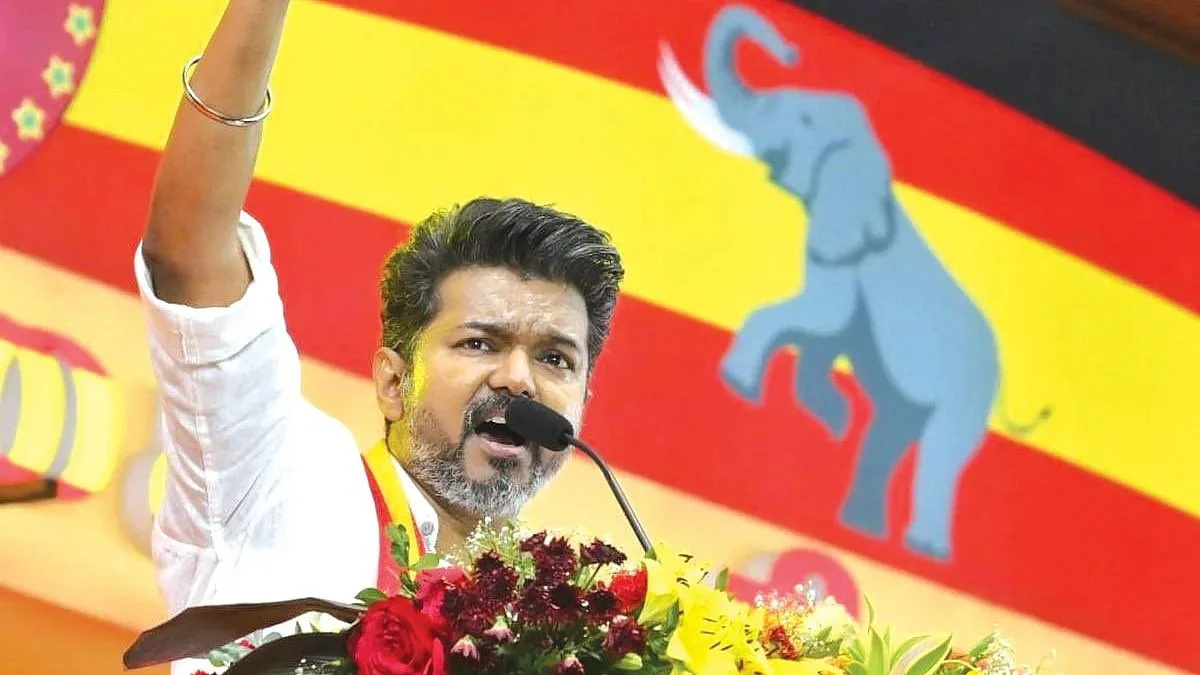
Enter the wildcard, actor-turned-politician Vijay. His entry into politics has added a completely new layer to the election. It began as curiosity but now has turned into real campaign energy, especially in urban areas and among younger voters.
Vijay’s messaging has been different from traditional party narratives. He has focused on governance, transparency, accountability. His speeches have targeted corruption and pushed for administrative reforms. But perhaps his biggest appeal lies in his youth-oriented vision for jobs, skills, opportunities.
First-time voters in Tamil Nadu are less tied to long-standing party loyalties. They seem particularly drawn to his campaign. His rallies have seen enthusiastic crowds. Social media buzz around him has been hard to ignore.
Even political observers admit modest vote share for Vijay could influence outcomes in closely contested seats.
This “Vijay factor” has made calculations tricky. Both major parties are watching closely. They are unsure where his support base might cut into their numbers.
Women and youth may decide the verdict
Beyond party manifestos and star power, two voter groups could hold the key: women and youth. Women voters in Tamil Nadu have historically shown strong participation often higher than men.
This time too, competing welfare promises have placed them at centre of the campaign.
Cash transfers, subsidies, schemes aimed at easing household expenses have dominated political messaging. Parties know that even a slight shift among women voters could swing multiple constituencies.
The youth vote is equally significant. A large number of first-time voters are entering the electoral arena. Their concerns are sharply focused on employment, entrepreneurship, and economic mobility. Unlike earlier elections, this generation has been reached through smartphones as much as through street-corner meetings.
Digital campaigns, short videos, and social media interactions have played a big role. This makes the election one of the most digitally driven contests the state has seen.