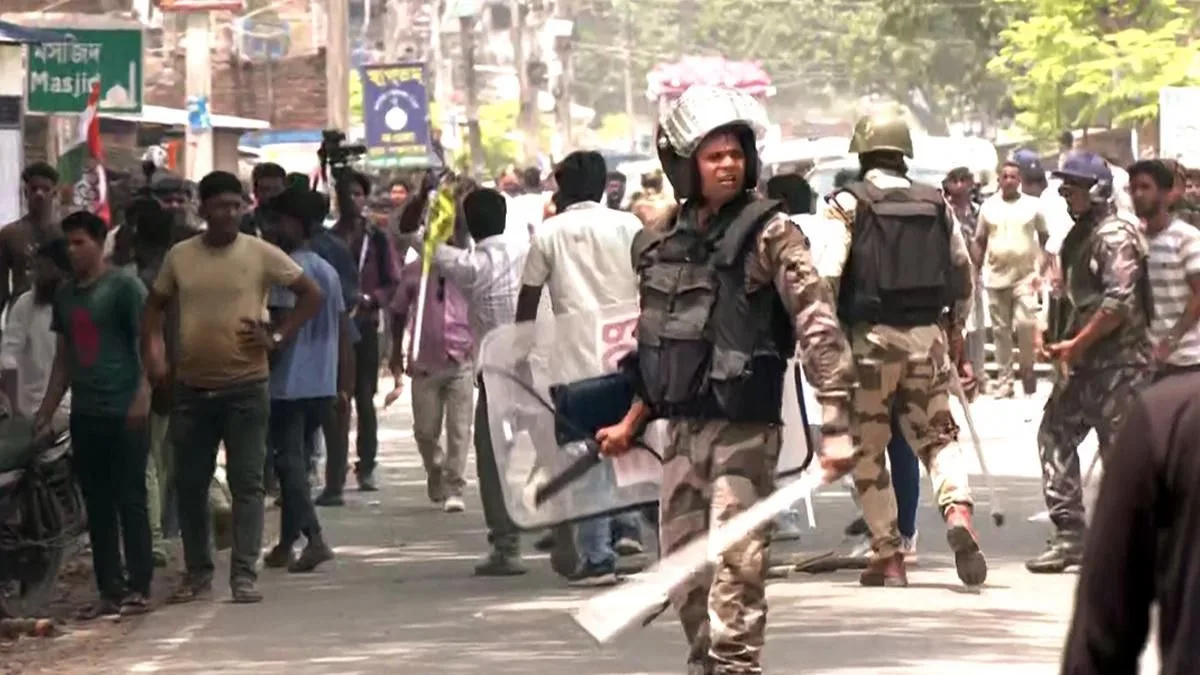
The electoral sky over battleground Bengal is thick with the dust raised by the controversy surrounding the Special Intensive Revision (SIR) of electoral rolls, occasionally punctuated by politics of cultural belonging, with candidates campaigning with fish in hand to prove their Bengali identity. Lost in this cacophony is any meaningful discussion about the state’s developmental trajectory ~ from immediate economic concerns to long-term structural challenges arising from demographic change and urbanisation.
Employment generation remains the most pressing concern for Bengal’s youth. On the surface, the numbers appear reassuring: the state’s unemployment rate, at 2.2 per cent is below the national average of 3.2 per cent, as per NITI Aayog’s Macro and Fiscal Policy Landscape Report 2025; and Kolkata remains the country’s third-largest urban economy. Yet these figures mask deeper structural issues. Bengal’s per capita Net State Domestic Product at Rs 1,63,467 ~ remains significantly below that of states like Telengana (Rs 3,87,623) and Maharashtra (3,09,340) as per RBI data.
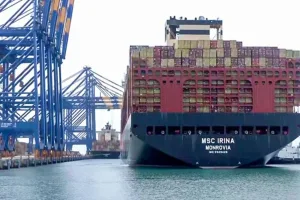
Over the past three decades, slower growth in manufacturing and high-value services compared to southern and western states has steadily pushed young people to migrate in search of opportunities. The challenge, therefore, is not merely job creation but structural transformation ~ towards industries that can sustain growth and retain skilled youth. Interestingly, despite political polarisation, there is a remarkable convergence across the manifestos of the Trinamool Congress (TMC), the BJP, and the CPI(M)-led Left Front. All three emphasise logistics-led growth and port-based development as central pillars of Bengal’s future economy.
The TMC manifesto outlines an ambitious roadmap: positioning Bengal as India’s third-largest economy within a decade and building a Rs 40 lakh crore economy within five years. It proposes double-digit growth, a USD 30 billion logistics hub by 2031, five multimodal logistics parks, and industrial corridors from Raghunathpur-Tajpur to Dankuni-Kalyani and Kharagpur-Morgram, aiming to generate 10 lakh jobs. The BJP focuses on improving the investment climate through ease of doing business and single-window clearances. It proposes deep-sea ports at Tajpur and Kulpi, a blue economy hub at Haldia, four industrial parks including one at Singur.
Connectivity projects include a north–south highway from Darjeeling to the Sunderbans; airports at Purulia, Balurghat, and Cooch Behar; and revival of stalled railway projects. The party promises employment and self-help opportunities for one crore people over five years, though without specifying sectoral pathways. The Left Front manifesto foregrounds employment more explicitly, promising 40 lakh permanent jobs ~ 25 lakh in industry and logistics services and 15 lakh technology-based jobs. It proposes an international air cargo and aero-logistics hub in Durgapur, expanded cold storage and warehousing networks, and efforts to bring industries back to the state.
Another area of convergence is unemployment assistance. The TMC proposes Rs1,500 per month under the Yuva Sathi scheme for educated unemployed youth aged 21–40. The Left Front promises Rs 2,000, while the BJP proposes Rs 3,000. This emphasis on income support underscores the political centrality of youth employment, but risks reducing structural economic challenges to competitive welfarism. What is striking, however, is that these economic visions largely overlook Bengal’s changing demographic reality. The state has entered a low-fertility, late demographic transition phase with significant economic implications.
According to Sample Registration Survey data, Bengal’s Total Fertility Rate declined by 17.6 per cent between 2013 and 2023 – from 1.7 to about 1.3 – well below the national average of 1.9 and far below replacement level. Bengal’s urban TFR is the lowest in the country, while its rural TFR is the second lowest. Higher female literacy ~ among the highest for women aged 15-49 in India ~ appears to be a key driver. These shifts will reshape the economy. A slower-growing working-age population could create labour shortages in agriculture, construction, and other labour-intensive sectors, while ageing will increase demand for healthcare, assisted living, and social support.
This transition requires a shift towards skill-intensive industries, productivity-enhancing technologies, and services catering to older populations, alongside investments in urban care infrastructure. Among the manifestos, the Left Front addresses this most explicitly, proposing geriatric care homes in every subdivision, 24×7 helplines, municipal care centres, and support systems in public institutions. The TMC proposes gradual expansion of the old age pension scheme, while the BJP does not outline specific ageing-related interventions.
A comprehensive strategy linking ageing, labour markets, and civic infrastructure remains largely absent. The second megatrend is urbanisation. With about 37 per cent of the population already living in urban areas ~ that is above the national average of 35 per cent – Bengal is approaching an urban future. By early 2040s the state is likely to become predominantly urban. This transition is driven partly by structural changes in the rural economy. As occupational patterns shift away from agriculture, many large villages are acquiring urban characteristics and are classified as census towns. In 2011, West Bengal recorded 834 such settlements ~ the highest in India. Yet this transformation is largely unplanned.
Conversion of fertile agricultural land, loss of waterbodies, and fragmented growth are intensifying environmental stress. The challenge is particularly acute given Bengal’s population density of 1,106 persons per sq. km., far above the national average of 415, making land a scarce resource that must be optimised. Urbanisation and economic development are deeply intertwined, especially in a logistics- and port-centric strategy. Ports, industrial corridors, and multimodal logistics parks depend on nearby cities providing labour, housing, warehousing, transport, and business services. Without planned urbanisation, such investments risk creating congested, poorly serviced growth nodes that undermine efficiency.
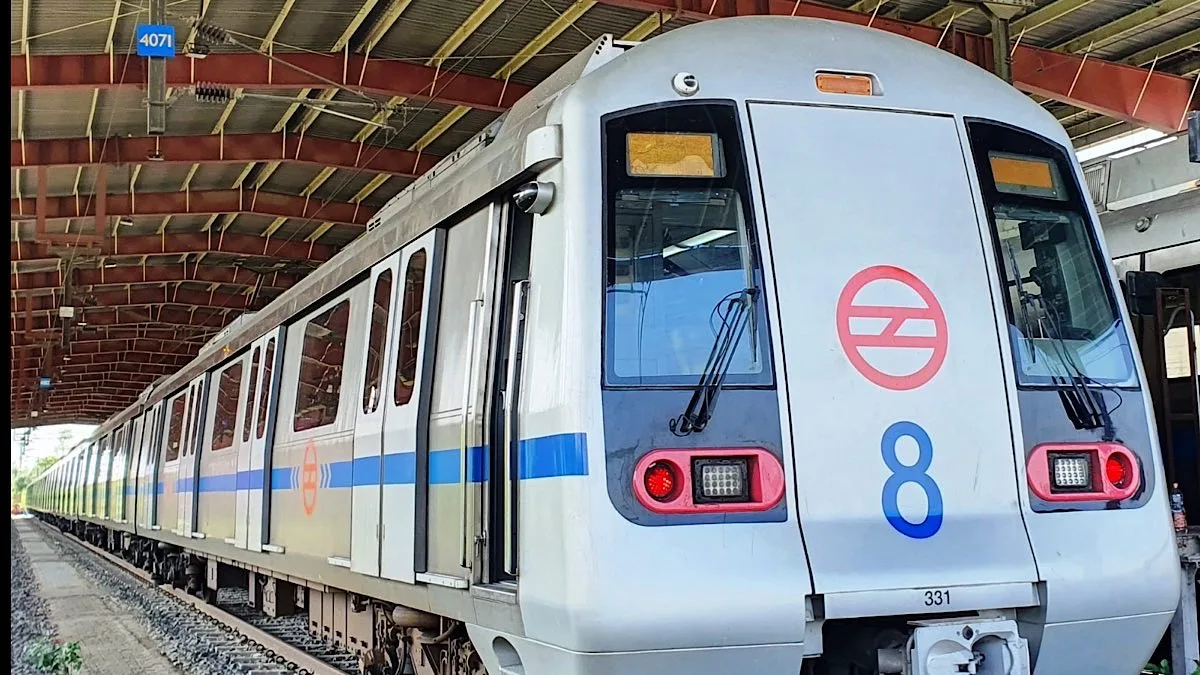
The TMC proposes expanding urban local bodies through geographical reorganisation ~ an overdue step to address chaotic urbanisation. It also plans to develop 25 towns as model cities under Mission Mahanagar, build a cultural city in Baruipur, expand housing, and provide piped water to all households. The BJP proposes a comprehensive vision for Kolkata focusing on traffic, drainage, and encroachments, along with tourism-led development, riverfront revitalisation, and four modern cities, though without detailing their spatial rationale. The Left Front places greater emphasis on municipal governance and social infrastructure, proposing affordable housing, scientific vending zones, slum upgrading without eviction, reserving 25 per cent of municipal budgets for slums, universal piped water supply, improved public transport, and transparent contracting systems.
Taken together, these proposals acknowledge the importance of urban development, but in a business-as-usual manner. As Bengal moves toward an urban future, the central challenge is not merely building new towns, but managing land, infrastructure, and governance in a way that aligns urban growth with economic transformation and environmental sustainability. Bengal has confronted structural challenges before ~ and responded with vision. Faced with post-Partition refugee influx and the need for rapid industrialisation the then Chief Minister Dr. Bidhan Chandra Roy initiated planned development of Durgapur, Kalyani, and Haldia, alongside a strategy to reduce population pressure on Kolkata. Economic strategy and urban planning were integrated within a long-term development vision. That experience offers an important lesson.
Bengal’s future cannot be built through fragmented announcements or welfare-driven competition. It requires a coherent strategy linking industrial growth, demographic transition, and urban development. Logistics hubs need functioning cities; employment generation requires skilled labour and liveable urban environments; and an ageing population needs care infrastructure embedded within urban systems. Without a vision that aligns economic strategy with demographic change and planned urbanisation, the state risks incremental drift rather than structural progress.
The writer is Professor, Urban Management and Governance, School of Human Settlements, XIM University ( formerly Xavier Institute of Management), Bhubaneswar