Logo

Why Pakistan is mum on Yemen

Pervez Hoodbhoy |

As an occasional guest on one of the dime-a-dozen talk shows that Pakistanis watch avidly every evening, I remarked that Donald Trump’s announcement on Jerusalem was certainly condemnable. But shouldn’t Pakistanis be more concerned about the humanitarian catastrophe in Yemen — and Pakistan’s murky role in it? The other guest ‘experts’ froze and the anchorperson turned speechless; she subsequently called for a commercial break.

This is typical of how public discussion on Yemen is avoided. A glance at Pakistan’s TV channels and Urdu newspapers confirms the absence of news or critical discussion. While English language newspapers occasionally take a potshot, our obedient media generally echoes the civil and military establishment — which fully sides with fabulously rich Saudi Arabia against its desperately poor neighbour, Yemen.

Pakistan’s Foreign Office made its position perfectly clear on Dec 19. Just hours after Houthi rebels failed to target a royal palace in Riyadh, it rushed to offer congratulations: “The attack was successfully intercepted by the Saudi-led Coalition, by the grace of God Almighty, before it could cause any damage”.

The communique went on to condemn the “increasing frequency and ferocity of the missile strikes, targeted at innocent civilians by Houthi rebels” and declared that Pakistan stands “shoulder to shoulder” with Saudi Arabia.

Whether the credit actually goes to God Almighty or to Raytheon’s Patriot missile system — in which the Saudis have invested a few billion dollars — the fact is that primitive rebel rockets have done little damage to a country fortified by the US and UK defence industries. Yemen no longer has an air force or air defences left; Saudi-directed aircraft roam its skies at will.

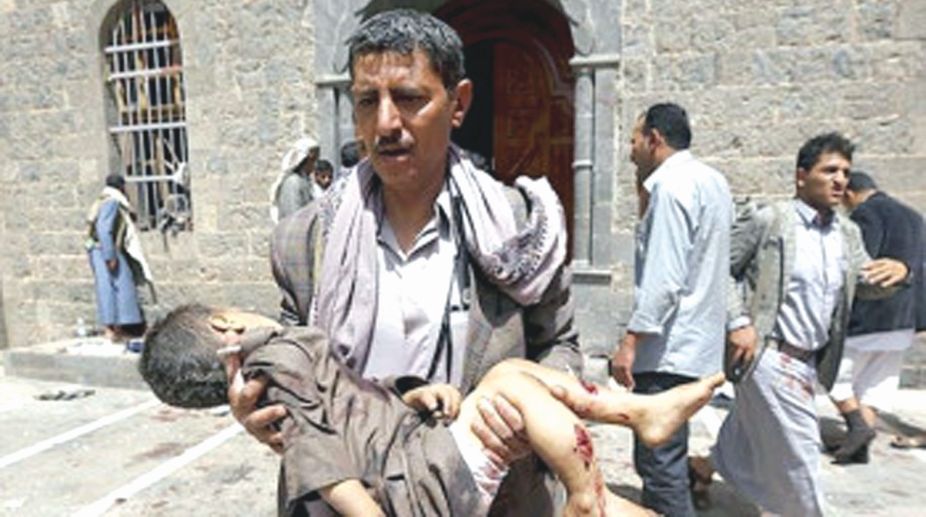
In the last year, Yemen’s markets, schools, and hospitals have been bombed and famine is around the corner. Even sanitary systems have been destroyed and nearly a million cholera cases have been reported. According to the UN, at least 10,000 have died, with air strikes responsible for 60 per cent of casualties. Over 2.5 million Yemenis have been internally displaced.

We can be amazed by Theresa May criticising Saudi Arabia for using the £4.6bn worth of weapons Britain sold to it after the Yemen war began. And it’s almost unbelievable that Donald Trump had actually demanded that Saudi Arabia end its blockade of Hudaydah port. Even this vicious white supremacist does not relish starving Yemenis en masse. These might be pangs of guilt or perhaps a reluctant move to appease international opinion.

Trump and May are, at best, hypocrites. But what shall we say about Pakistan’s damning silence on Yemen’s grade-3 humanitarian catastrophe (Syria and South Sudan are also grade-3)? The Foreign Office has not condemned Saudi-led coalition airstrikes that have deliberately targeted food and water supplies, considered a crime under the Geneva Convention. Nor has it demanded an end to the food blockade. Only the threat to Saudi royal palaces and princes has mattered.

What explains Pakistan’s support? That puny Yemen somehow threatens Saudi territorial integrity, although a claim sanctimoniously repeated from time to time, is unbelievable. The Houthis are unknown to Pakistanis. While there is some vague belief that they are Shia, orthodox Shias refuse to accept them as their own. Back in the 1960s, Saudi forces backed the Zaydi Shias — now part of the Houthi rebel forces — against pan-Arab nationalists.

Most Pakistanis neither know nor care about Mansour Hadi, the recently murdered Ali Abdullah Saleh, or Yemen’s countless tribal rivalries. They also know that Saudi Arabia does not bomb countries for the sake of democracy or human rights. A kingdom that chops off heads and hands publicly every Friday has little use for either.

Pakistan supports Saudi hegemony simply because bags of riyals will buy you everything, including the allegiance of politicians and generals. The Sharif brothers have just returned from Madina, delighted at their ‘victory’ of being allowed to pay homage to the king. And, even if they are not directly involved in combat, thousands of soldiers of fortune — including Pakistan’s ex-hero general — are at the beck and call of Saudi rulers. Religion is used as convenient rhetoric but everyone knows how fake that is or pretends blindness.

Cash is really what speaks. Notwithstanding low oil prices, there’s still plenty floating around. Crown Prince Mohammed bin Salman — the architect of the Yemen war — will soon become keeper of the Holy Places. He has just bought the world’s most expensive home, says The New York Times. The $392m Chateau Louis XIV near Versailles, France, is said to have the world’s best bar. It puts to shame the Surrey Palace or the Sharif properties in London. Salman also bought a 440-foot yacht — this $500m vessel has two pools and a helipad. His worthy daddy’s recent travels were with a 1,500-strong entourage, two Mercedes Benzes and 459 tons of luggage.

Those on our TV channels who daily rail against the United States for invading Iraq conveniently ignore that Saudi Arabia poured $20 billion into Iraq’s war against Iran, or the $40 billion dollop it gave to the Americans to chase Saddam Hussein out of Kuwait. But after Saudi Arabia’s muted response on the Jerusalem issue, parts of the Arab world are aflame. Posters displayed at a football match in Algeria depicted President Trump and King Salman as “two faces of the same coin”. After Trump’s Jerusalem declaration, Palestinian protesters in Gaza set fire to pictures of Trump, King Salman and Salman Jr.

Remaining a Saudi vassal state and siding with those who deliberately seek to starve Yemen’s children has degraded Pakistan’s moral status. Who will take Pakistan seriously when it talks of the plight of Kashmiris, Rohingyas, or Palestinians? Worship Mammon if you will and become mercenaries without conscience. But there’s a price to be paid.

The Yemen conflict is said to be a religious proxy war between Saudi Arabia and Iran. Maybe it is. Still, there is no reason for Pakistan to take sides. It must stay clear of a messy, bloody war that has no bearing on its security. It is time to bring our troops, retired or serving, back home from Saudi Arabia.

Reduced tensions vital for S Asia development

Bharat Dogra |

Name any indicator of human development, and you are likely to find the South Asian region somewhere at the bottom of it. While there can be many reasons for this, one important reason is the heavy direct and indirect expenditure on procuring and producing arms and ammunition. This trend seems to be escalating as various kinds of internal violence as well as tensions with neighboring countries lead to a growing feeling of insecurity, one that is whipped up by powerful forces to justify the increasing expenditure on arms at a time of shocking denial of basic needs.

The more insecure any nation feels, the more likely it is that its military expenditure will increase. But South Asia is a region where there is shocking deprivation in the context of basic health services and trained health personnel, under nutrition, malnutrition and even denial of clean drinking water to millions and millions of people. School education is still not available to millions of children.

Infact, South Asia is particularly vulnerable to poverty and deprivation as this region has 21 per cent of the world’s population but only three per cent of its land. In addition, a major part of this region suffered from colonial exploitation for nearly two centuries. Hence the need for concentration of attention and limited resources for removing or reducing poverty and deprivation is more acute here.

What is more this region has been identified by experts to be highly vulnerable to climate change and related threats. Due to this factor catastrophic disasters are likely to increase in the near future. Hence the need to devote more resources and efforts for climate change adaptation and mitigation is increasing all the time.

However, such priorities can be easily pushed aside when there is increasing threat perception about war and the entire discourse is mostly dominated by this. In this respect while Nepal and Sri Lanka have done well to move away from civil war type conditions (although several problems remain) tensions and hostilities between India and Pakistan have been escalating with worrying regularity.

While actual war is likely to be unbearably costly in terms of human life, even increasing threat perception can be very costly by removing resources from bread to guns. According to data given by the South Asian Human Development Report, the cost of one tank equals expenses of vaccination of four million children, the cost of one Mirage 2000-5 airplane equals one year’s primary education expenses of three million children, the cost of one submarine equals the cost of providing clean drinking water to 60 million people for one year. (See chart below).

A report by Amnesty International and other social organizations titled Guns or Growth says that escalating military expenditure can be particularly harmful when it takes the form of an arms race. This report says, “The cumulative impact of arms spending is also a cause for concern, particularly in the context of arms races. Research shows that states respond in kind to military spending by the neighbors-even non-hostile ones. Arms races in the context of developing countries can have particularly severe consequences for government spending allocations.” In fact, in the context of South Asia the costs of the arms race are actually much higher than what is revealed by the official arms data as many aspects of this expenditure remain hidden to a lesser or greater extent. In a region which has two nuclear weapon armed countries, many aspects of the development, maintenance and research of such weapons remain hidden.

Clearly the welfare of the people of South Asia is very closely tied up with the establishment of peace so that on the one hand the most terrible distress linked with actual war is entirely avoided and at the same time the possibility of heavy arms expenditure is greatly reduced. South Asia needs a strong peace movement which functions with continuity on several fronts, one of which is to reduce the expenditure on arms and ammunition so that more funds become available for essential development and welfare needs. Not just the official arms budget but also the huge purchases of arms and ammunition by various persons, groups, militias and mafias need to be curbed strictly.

Aging with Dignity

Anupriyo Mallick |

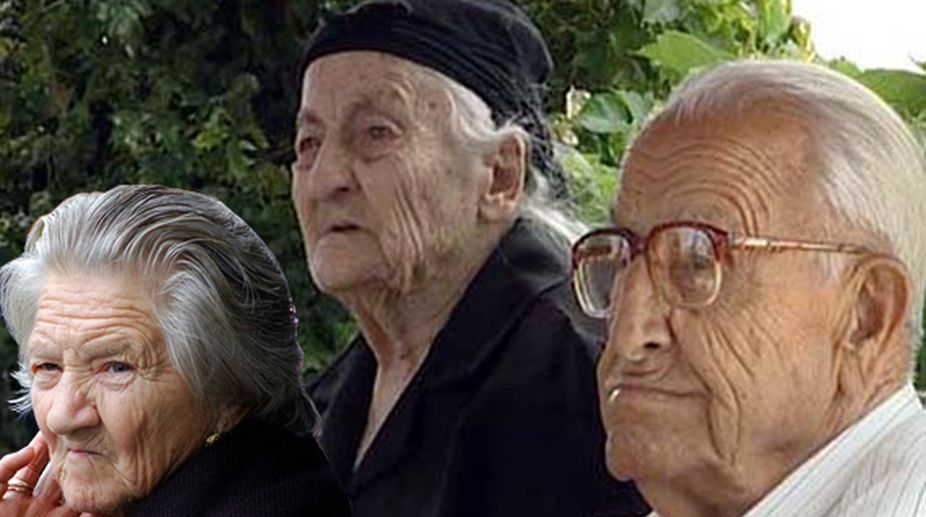
There are 87.6 million people in India aged above 60, a fact that deserves the attention of a nation almost obsessed with its ‘demographic dividend’. Considering that the country is expected to be home to 300 million elderly people by 2050, it is time to reflect on the problems of those who are as old, or even older, than the independent nation itself. Otherwise, the country will be confronted with an increasing incidence of degenerative diseases, accompanied with serious gaps in the geriatric medical ecosystem, a changing joint family structure, the lack of ‘grey-friendliness’ in public spaces, transport, housing, and a virtually non-existent policy framework to tackle these issues.

With nearly 50 per cent of the elderly being financially dependent on others, it is affordable housing, healthcare, and the psychological and social manifestations of ageing that will call for a response not least because there is little or no social security. Facilities for old-age care are woefully inadequate. What could the combined impact of this trend be on small, nuclear families, given the improvement in lifestyles and an increase in degenerative diseases and life-spans, especially for women? Where are we going to live as we grow old and who is going to take care of us?
Clearly Parliament had some of these issues in mind when it passed the Maintenance and Welfare of Parents and Senior Citizens Act in 2007. The model Act makes it obligatory for children or relatives to provide maintenance to senior citizens and parents. It also provides for the setting up of old age homes by state governments. Despite this, however, it is a fact that most people in India would rather suffer than have the family name tarnished by taking their own children to court for not taking care of them. The need to maintain a façade is combined with a lack of knowledge of rights, the inherent inability of the elderly to approach a tribunal for recourse under the law, and poor implementation of the Act by various State governments.

So what happens to those who have been turned out from their homes, or have lost their spouse, or just can’t manage to live on their own any more, especially since the number of old-age homes the Centre supports under the Integrated Programme for Older Persons (IPOP) has declined from 269 in 2012-13 to a dismal 137 in 2014-15? The Centre has asked State governments to ensure that there are old-age homes whose functioning can be supported under IPOP, but since it is optional for the State governments to do so, the total number of old-age homes remains abysmally low.
While we hope that the Indian family continues to be stronger than in most countries and provides a caring environment for the elderly, it can’t be the basis for our ability to support the elderly. India needs to take a serious look at the needs of the elderly in a more pragmatic and holistic manner. For starters it could focus on the three key aspects of health, housing, and dignity.
Each of these is a large issue on its own, but it is important to first strengthen the health-care system. If 18 per cent of the population is going to be over 60 years of age by 2050, then it becomes almost crucial to encourage research in geriatric diseases, and push for building capacity in the geriatric departments across the primary and tertiary health-care systems. There also seems to be a growing informal industry of home care providers, which urgently needs regulation and mandated guidelines so that a large pool of certified and affordable trained home care givers can help provide basic support, prevent unnecessary hospital admissions, and keep the elderly in the familiar environs of their homes as far as possible.

There has to be a network of old-age homes, both in the private and public sectors. While the private sector has taken the lead in setting up some state-of-the-art facilities, most of these are priced well out of the reach of ordinary citizens. The State governments must be mandated to set up quality, affordable homes.

As traditionally supportive social structures are changing and the elderly are increasingly losing their ‘status’ as the family patriarchs, it is time that we did our bit to help address the indignities and loneliness that this change is bringing about. Business enterprises can consider harnessing the talent of elders by retaining or hiring older workers and offering flexible working hours for those who want to continue working after retirement.

Industry will benefit by retaining their knowledge and experience and the elderly will continue to be financially independent and retain their sense of self-worth. At the community level we also need to increase the avenues for older people to participate in local issues, in resident associations, set up and manage spaces for community interaction, to leverage their experience as a resource, give them an opportunity to share their concerns, and help them feel that they contribute socially and have a purpose in life.

One major issue that doesn’t get enough attention today is that old people deserve dignity. Apart from ensuring appropriate medical help, there needs to be greater awareness about common degenerative diseases like dementia so that family members, care-givers, and society at large are sensitised to incontinence, the momentary lack of comprehension, the hallucinations. These are the painful behavioural, physical, emotional and mental struggles of those who suffer from these diseases.

We seldom give much thought, at last when we are young, to growing old but it may be surprising to learn that of the many physiological effects of ageing occur much earlier than you might imagine. However, at some point we begin to see and feel the effects of changes, such as wrinkles and grey hair, and some degree of physical decline, for example, aches and pains, issues pertaining to weight, diabetes, high blood pressure and cardio-vascular problems. Indeed, old-age can affect every aspect of our lives ~ physical, physiological, mental and emotional.

Ageing is a life-long process and taking proper care of ourselves and making healthy lifestyle choices at every stage can go a long way towards helping us live longer and reducing the risk of disability.

The writer is with Eastern Institute for Integrated Learning in Management(EIILM), Kolkata.

Towards breakthrough?

Editorial |

The forward movement on either side of the Demilitarised Zone is without question a hopeful start to the New Year. Three days after South Korea’s overture to hold talks with the North, Pyongyang has conveyed its willingness to join at the high table. Quite a change from the usual belligerence of the likes of Kim Jong-un, and the world will now expect the North Korean leader to hold his fire not least in the context of the international concern over the ballistic missile and other alarmist programmes. Appropriately enough, the talks will be held in Peace House, so-called, on the South Korean side of Panmunjom. Yet going by the contours of the agenda, the North’s game-theory might turn out to be of relatively lesser moment in the overall construct.

Discussions at the high table will be riveted to Pyongyang’s possible participation in next month’s Winter Olympics in the South Korean town of Pyeongchang. Beyond the event, it is direly imperative to improve overall ties after a year in which North Korea has raised tensions in the region with a series of missile launches and its sixth ~ and most powerful ~ nuclear test. It would be no exaggerration to suggest that North Korea has cast a nuclear shadow over Asia’s 2018. There is little doubt that Seoul’s overture and its prompt acceptance have followed Donald Trump’s decision to keep the military exercise, in league with South Korea, in abeyance before next month’s games. The US President and his South Korean ally, Moon Jae-in, agreed on Thursday night that the large-scale drills should be held after the Games. Markedly, the North’s concurrence has followed the postponement. Pyongyang regards the joint military exercises as a rehearsal for invasion and has often cited them as an impediment to any attempt to mend fences with the South.

Speculation that the Koreas would resume face-to-face contacts rose on New Year’s Day, when President Kim said he was willing to discuss the possibility of sending athletes to Pyeongchang. That was followed by a South Korean offer of talks and the resumption on Wednesday of a cross-border telephone hotline that had not been used since early 2016. Kim’s overture, however, came with a warning that Pyongyang would continue to develop nuclear weapons to counter threats by the US.

His claim that the nuclear button was “on my desk” had provoked President Trump to counter that his nuclear button was “bigger” and more effective, resuming the war of words between the two leaders that began last year with an exchange of personal insults. Such US insults have now gone beyond Pyongyang… to Pakistan and Palestine. Both the North and the South are inching towards a critical juncture and the world must hope that this is an essay towards an enduring breakthrough.

Film beyond argument

Editorial |

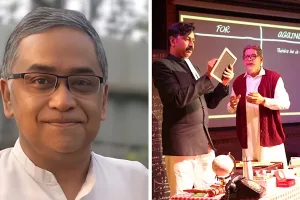
It would be reasonable to assume in the New Year that cinema is safe. With a vowel expected to end the controversy that was ignited recently, it is generally expected that Padmavat will be released sooner rather than later. No less critically, the curtain ought also to go up on the celluloid version of The Argumentative Indian, Suman Ghosh’s documentary embedded in Amartya Sen’s book of the same name. It is immensely gratifying to reflect that the film can now be screened across the country and without cuts thanks to the clearance that has now been accorded by the Central Board of Film Certification (CBFC), notably the very rational intervention of the present chairman, Prasoon Joshi.

One must give it to the board that it has eventually taken the film beyond any argument. Sad to reflect that both films reaffirm how the political/ideological underpinning can shroud cinema in a fog of uncertainty. It would be pertinent to recall that The Argumentative Indian was confined to the cans six months ago when the CBFC took umbrage to two expressions used by Sen and no less ~ “cow’’ and “Gujarat”. Both words, regretfully at the root of recent killings and a pogrom, had been ordered to be “beeped out” by the previous chairman… along with the words, “Hindu India” and “Hindutva view of India”.

Sen had been filmed saying: “Why democracy works so well is that the government is not free to have its own stupidities and, in case of Gujarat, its own criminalities, without the opposition being howled down and booted out”.

Happily, the 60-minute documentary will now be screened without being bowdlerised ~ Thursday’s horribly belated decision over which the film-maker is said to be “relieved as well as pleasantly surprised”. Sure the performing arts are open to subjective reflection. Appropriately, therefore, the viewer ought to be free to draw his conclusions on the documentary, indeed to spell the difference between the film and the book that didn’t trigger even a scintilla of controversy.

There has been a remarkable change in perceptions from one person to another. While Pahlaj Nihalani had barred the film, Mr Joshi is said to have “loved the documentary that kept him
completely engrossed”. Indeed, he has been quoted as saying that he “got to learn a lot about Amartya Sen”. Markedly, he did not find anything objectionable and has cleared the documentary without cuts. Crucially, Mr Joshi has overruled the objections, articulated last July, restoring ~ at any rate for now ~ the CBFC’s faith in the freedom of expression. It would be no promotion of the film to suggest that it richly deserves the U/A certificate; only to underline the rational imperative. And there is a parable to be drawn from the controversy ~ the political climate ought never to influence cinema.

The one that got away

M Krishnan |

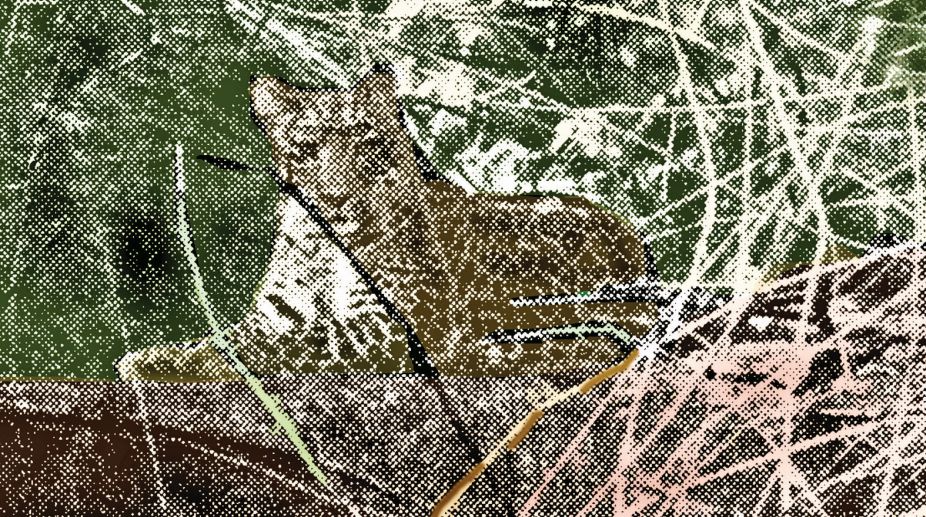
We were returning from a long and singularly luckless outing in the jungle on elephant-back, and had almost reached the road to the rest house. There was a wide patch of lantana and tall grass between us and the road, with a flat-topped rock to one side of it, and the leopard lay stretched at ease atop the rock, watching us.

We were too far away to see the markings on its coat, and it lay so still and grey that, but for the twitching forward of its ears and the slow turn of its head the better to observe us, we would have missed it altogether, and thought it only a part of the rock even if we had seen it. I had the elephant moved away into the scrub at once, so that our backs were to the watcher, and cautioned everyone not to turn and look at it.

When we were well past the rock, I held a brief, whispered conference with the mahout. Some years ago this man and I had had a rather terrifying experience with a large male leopard and I pointed out to him that this was a much smaller animal, very much at ease and therefore unlikely to go for us, and that even if it turned aggressive, I would be nearer the leopard than he, and that he could rely on me in a crisis-a thing which I had already once proved to him. He looked at me with a contemptuous expression on his face and asked: “who’s afraid of this cat?”
We moved round towards the rock again, zigzagging in a seemingly aimless, but carefully studied, approach. When we were still some 60 yards away, and the leopard was obscured by lantana branchlets, I took a few pictures to accustom it to the thud of my shutter, taking care not to look at it directly, but only through my reflex camera. It seemed utterly self-possessed, and not the least bit worried by our halting, slow approach.

I was sure that if we went slowly, took care not to look at it directly, and made no jerky movement or sound, I could take a clear picture of the leopard from under 25 yards with my lens more or less on a level with the rock. The light was ideal.

It was a smallish leopard, remarkably richly coloured, with the black rosettes clear against the golden sienna of its coat, and a shapely, beautifully-set head-a leopardess, evidently, and probably under 85 lb. With each casually-gained foot, I felt a growing excitement, but had the sense to suppress it and go very slow. Only two more yards to gain, and the last lantana twig would be clear of the leopard, which was in no way alarmed by our proximity.

Then suddenly our elephant began to dance a jig. Luckily I was able to retain my precarious seat, right on the front edge of the pad, by grabbing a rope with my right hand, while holding on grimly to the 10 lb camera with my left. I pressed my shoulder against the mahout, and whispered fiercely into his ear to halt the elephant. Out mount continued to twist and turn and fidget, and out of the tail of my eye I saw the leopard prick its ears and slightly elevate its head, the first sign of alertness it had shown so far. A frown creased its forehead as it watched the extraordinary performance we were staging right in front of it.

Then it rose unhurriedly to its feet, lazily stretched itself fore and aft with a fluid, see-sawing movement of superlative grace, and slid softly into the tall grass beneath the rock and disappeared.
It was useless blaming the mahout. It was the sudden fear in his mind that had fled down his legs and caused him to make the elephant dance jerkily with a series of quick, disjointed kicks. No doubt the recollection of our old misadventure had unnerved him, but there was no point in asking him to rally himself-a man in a panic does not become calm and steady all at once by being asked to pull himself together, and I have felt sudden fear too often myself when close to wild animals to blame another for the feeling.

In fact, I write this merely to tell you how self-possessed that leopardess was throughout, and how narrowly I missed the first clear chance I have had of photographing a wild leopard from near enough to get a really good picture. And perhaps it is the photographer’s equivalent of the tendency of anglers to dwell on the one that got away that moves me to retail this incident in such regretful detail!

A closer look at ‘xenotransplantation’

Maneka Gandhi |

The first known xenotransplantation was done by the god Shiva. Daksha, the father in law of Shiva, organised a yagna. He insulted Shiva and his daughter. Sati, Shiva’s wife, immolated herself in protest. Daksha’s head was cut off and burnt. Later, when Shiva forgave him, he was brought back to life but with a ram’s head. The more famous decapitation was that of Ganesha. Shiva cut off the head of a baby elephant and transplanted it on to his son’s neck.

For the last 300 years doctors have been trying to replicate this miracle. The process is called xenotransplantation, or the transplanting of non-human organs or cells into a human body.
Thousands of animals have died in the process. And each attempt has been a failure. But that doesn’t stop scientists from trying. After all, animal life is cheap and, in the name of science, one can do anything.

In the 17th century, Jean Baptiste Denis started the practice of blood transfusion from animals to humans. Everyone died and xenotransfusion was banned in France for a number of years. In the 19th century, skin grafts became relatively popular between various animal species and humans. The fact that many of the species used as donors-sheep, rabbits, dogs, cats, rats, chickens, and pigeons-had hair, feathers, or fur, growing from the skin, did not deter the surgeons involved. The ideal graft was from frogs, which were sometimes skinned alive. None of the grafts were successful.

In the 20th century, the French experimental surgeon, Alexis Carrel, developed surgical techniques for joining blood vessels, which enabled organ transplantation to be carried out successfully for the first time. For this work he was awarded the Nobel Prize in 1912. He developed an interest in cross-species transplantation and his techniques became a reason for more people to experiment on animals.

A few years later, Serge Voronoff , a Russian émigré working in Paris, developed an interest in reversing the effects of aging in elderly men who had lost their “zest for life.” He sliced a large number of chimpanzee or baboon testicles and implanted them in the testicles of old men. None of them had any effect. In fact they created infections and more complications. The concept of transplanting glandular tissue to produce hormones that would benefit the recipient was continued in the United States by John Brinkley, whose chosen donor was the goat, as he had been convinced by a local farmer of its sexual potency. He was later disbarred by the American Medical Association.

In the 1960s, Keith Reemtsma at Tulane University in Louisiana-hypothesised that non-human primate kidneys might function in human recipients and thus be a successful treatment for renal failure. By then kidney transplantation from human to human had been established (in the 50s), but the availability of kidneys from deceased humans was extremely limited. Reemtsma selected the chimpanzee as the source of organs, because of its close evolutionary relationship to humans. He carried out 13 of these transplants. While all the chimpanzees died in great pain the experiments failed. One woman lasted 9 months but spent all that time strapped to a bed and hospital catheters. In another experiment scientists transplanted a pig kidney into a baboon. The baboon died in 5 months.

But the scientists carried on with kidney transplants. Tom Starzl used baboons as donors in Colorado. His results were similar to those of Reemtsma.
James Hardy, in 1964, tried to transplant a chimpanzee heart into a patient who had undergone amputations of both legs-and was in a semi-comatose state at the time the transplant was undertaken. The patient died within a few hours. The chimpanzee, of course, had been killed. In 1967 Christian Bernard also carried out two cardiac xenotransplants. Both failed. Perhaps the best known clinical cardiac xenotransplantation since Hardy’s attempt was that by Leonard Bailey, who transplanted a baboon heart into an infant girl, known as Baby Fae, in 1983. The graft underwent acute rejection and the patient died 20 days later. One of the reasons, which would appear common sense to an average, non medical person, is that baboons don’t have O blood type, which is donor blood. They have ABO which is incompatible with humans.

Tom Starzl, who is considered one of the pioneers in the field of kidney and liver human to human transplantation, performed a handful of liver transplants between non-human primates and young patients in Colorado in the 1960s, with no success. As more immuno-suppressants became available, he performed two liver transplants from baboons into adult patients in the 1990s, with no survivors.

In the meantime xenotransplantation of pig islet transplantation is under way in diabetic patients in New Zealand. A European group has given rhesus monkeys an artificially induced Parkinson like motor disease and is experimenting with genetically modified pig dopamine-producing cells from pig embryos into the monkey brain, so that this can eventually be done with people with Parkinson’s. No luck so far, but there is no shortage of monkeys being imported from Mauritius.

The people of Asia and Africa need new corneas. Experimental corneal xenotransplantation is being done; like transplanting pig corneas into monkey eyes. The recipient needs corticosteroid injections into the eyes for the rest of his life – if the 4 experiments work which they have not done so far. Nebraska Medical Center, is transplanting hearts from pigs into sheep. Pig xenotransplants of heart, kidneys, lungs and livers, into apes carries on. The results? Completely unsuccessful. Does that stop the scientists? Not yet. Clinics in Europe tout the efficacy of various animal tissues from placentas to blood cells, plasma and organs for a variety of conditions – from acne to anti-aging. There is no evidence that they work.

The pig is now the creature that is being focused on. Why? Its genetic makeup is completely different from that of a human being. But the reasons are far more commercial. Its organs are the same size as humans, it is cheap to maintain and it has three litters a year, so pigs can be easily available. Does this make any scientific sense. No. But by the time they give up, xenotranplantation companies will have tortured and killed millions of pigs.

In 1969, Nobel Prize winner Sir Peter Medawar, who is considered the father of transplant immunology, stated, “We should solve the problem of organ transplantation by using xenografts in less than 15 years.” It is now 2017 and we are no closer. Norman Shumway, the pioneer of heart transplantation, stated truthfully “xenotransplantation is the future of transplantation, and always
will be.”

The scientists are going to keep trying. They get paid for their research and, if they do succeed in producing usable organs from pigs, then there is a Nobel Prize at the end of the rainbow. Who cares about the animals?

The conversation

Haimanti Dutta Ray |

The house reeked of an amalgam of masala powders, expensive cosmetics and mingled perfumes from flowers like the Indian jasmine and marigolds. Piya’s parents had made every arrangement in order to make their only daughter’s wedding as memorable and joyous as possible.

“Who will grind the turmeric paste?”
The bride’s mother could be heard hollering at the maids — some of the girls were working in the household for as long as memory could travel while some had been hired from a local “service centre”. Of late, they had been doing brisk business owing to the dearth in the need for full-time domestic helps.

“None of you will get your wages until the work is done to my satisfaction.”

Sunayini Mitra’s voice was enough to start up the human engines again. Those maids had been working round the clock as it was an occasion for the most elaborate of all celebrations. Bireshwar and Sunayini Mitra’s daughter, the lovely Piya, was getting married to the scion from the family whose origins took them back to Raja Rammohan Roy.

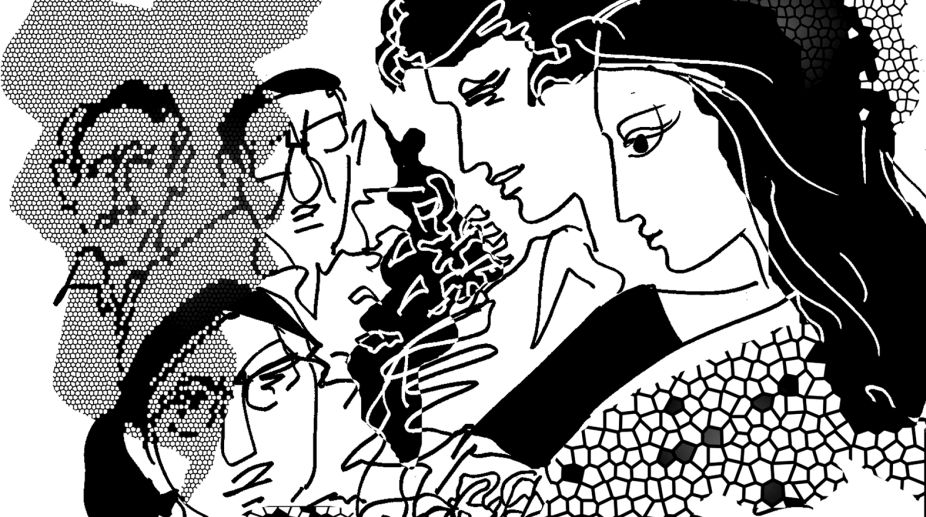
Kanishka was as handsome as any girl could ever dream about or for that matter, any boy could aspire to become. Soft-spoken, with a deliberately accentuated drawl, which showed off his Oxford University education, he was the quintessential gentleman. Medium in stature and dark in complexion, his attire was always impeccably British. Kanishka had just returned from the UK after having done his Masters in anthropology. Despite living there for close to five years, he was a true Bengali at heart. He could recite Tagore as well as converse in the diction with ease and finesse. He liked Piya as soon as he, along with his parents, visited their place after an invitation.

“Have you ever been to England?”
Kanishka had asked Piya as soon as the elders had left them alone to have some private chat. Growing up in the northern fringes of Kolkata with its big portico houses and never ending staircases, he always used to consider that the southern parts boasted of people with very “liberal” mindsets. Until the time he went abroad for further studies.

He wanted to be frank with Piya. This he had decided before even he had stepped into their house. He wanted to tell her that despite having a few emotional entanglements there, it’d ultimately be the Indian, more particularly a Bengali, girl who’d rule his home and heart.

“No. Never.”
Piya had answered back, with her head lowered as all Indian girls are expected to do, well aware that her friends and cousins were putting their ears surreptitiously behind the curtains.
“Would you like to accompany me?”

For the very first time, Piya experienced an inner turmoil she had never felt before. She had overheard from her parents’ conversation that Kanishka’s parents had asked for a hefty lump sum as dowry as part of the marriage settlement.
***
“You would hardly understand what the times are, sitting as you do all day long within the confines of these four walls.”
Piya’s father was raising a hand over all protestations from her mother’s side. “Don’t you know that asking for dowry is punishable by law and we can place these people behind bars? You know, don’t you, that she is our only daughter?” Piya’s mother, the otherwise docile and submissive homemaker, was speaking with marked anger in her voice. She added further, “Just look at you! With what calm and serenity you are accepting this outrage of our daughter’s modesty. If I had not heard you speaking for women’s empowerment in seminars, I would have never believed that you had double standards.”

“But the groom is one in a million. How could I refuse them? Moreover what they are asking for, comes within our capabilities.”
“The question is not whether we can afford to pay.”
***
Piya had overheard the conversation between her parents a few days back. She had wondered at the courage, which her mother, quite understandably, had mustered to speak up against the patriarch of their household. A characteristic, which she knows, had never been exhibited before.

Piya was a petite girl of 23 — an age, which is considered opportune for girls to get married in most Bengali households. She was fair, with glowing skin and lustrous hair. The latter often tied up in a little ponytail. She was learning Hindustani classical music and studying chemistry at Ashutosh College.

Piya was sincere about her music. A few days ago, she had won the first prize at an inter-college singing competition. Her mornings always started with an hour of riyaz and only then did she sit with her college notes.

She knew that Kanishka was a good student and would eventually make a good husband as well. So she said “yes” when asked by her parents whether she liked the boy.
***
When the wedding bells eventually rang for Piya, the entire household was jubilant.
“Look at her! All beaming and blushing! You’ll make a wonderful new bride, Piya,” their neighbour, Arundhati mashi, who had come over to supervise proceedings, said.
“Can I have a word with your daughter, Mr Mitra?”

Kanishka’s father had come over to put the seal, as if it was a contract of some sort, over his son’s wedding arrangements. That his son was left besotted by their daughter’s looks as well as her demeanour was not unknown to him.
“Yes?”
Piya’s father had welcomed his would-be son-in-law’s father with open arms and a heart full of happiness for their only daughter, soon to step into a new stage in her life.
“I would like to have a word with your daughter, you see, in seclusion. I hope you’ll grant this wish of mine.”
“But….? Everything has been finalised, you know.”
“But I insist on my request. Consider it to be one of my whims.”
Piya’s father shouted, turning his back to his sudden and whimsical guest. “Call Piya right now.”
***
When the two, the prospective bride and her would-be father-in-law, were left alone and the former had made sure that there’d be no one to prick a needle into the private conversation, Kanishka’s father began, “You’re soon to be a part of our household. You cannot imagine how happy we are. But I’d like to ask you, a question personally. Have you given consent by your own free will or has there been pressure from your parents? Reply after giving it serious thought.”
Piya sat with her head lowered for a couple of minutes.

Only after she was certain that she could withstand the piercing eyes from a person who considered that every girl has a right to say her views regarding her choice of life partners, did Piya say, “Baba, Ma have pressurised me to accept the marriage proposal. But frankly, I want to study further and am confident that I’d be able to choose my husband with my own abilities, not relying on my parents’ bank balance.”

Piya thought that she had uttered the unutterable, considering all the arrangements had been made from both ends. But what she hadn’t expected was the uproarious laughter that emanated from the person confronting her.

“Bravo!”
At first Piya was left speechless. She felt that, in the first place, she had made an outrageous statement and in the second, it had decidedly struck her that her would-be father-in-law might be mad.
“This is what I wanted to see in my future daughter-in-law.” Kanishka’s father had stood up from his seat and was standing, with a beaming look spread all over his otherwise dark countenance.
“Bravo!” He repeated. “I had wanted to see for myself whether you’re as intelligent as Kanishka, my son, has promised you to be. I appreciate and respect your views and frankly, find it hard to annul the arrangements at this eleventh hour. I would plead you to agree to become my somewhat-eligible son’s lawfully wedded wife.”

Piya had hardly expected this reaction. She had thought that she’d been able to douse the man’s ego. But what she got was an ounce of affection, which bowled her over.
“I would be immensely happy and would consider myself fortunate if you decide to pursue your studies after the wedding. I’d see to it myself that you face no hurdle in finding financial independence, at least from my household. I’d be too proud of you if you accept me as your father-in-law and my son however, he may have behaved with you, as your life companion.”
The man meant what he said.

Piya smiled and this was about all Kanishka’s father had wanted to notice. He knew that this girl’s “No” as an answer to this private conversation could jeopardise the entire wedding. But what’s more he was left impressed by Piya’s views and was obviously glad that his son had selected this girl before anyone else did.

Bonding with Bond

Krishnan Srinivasan |

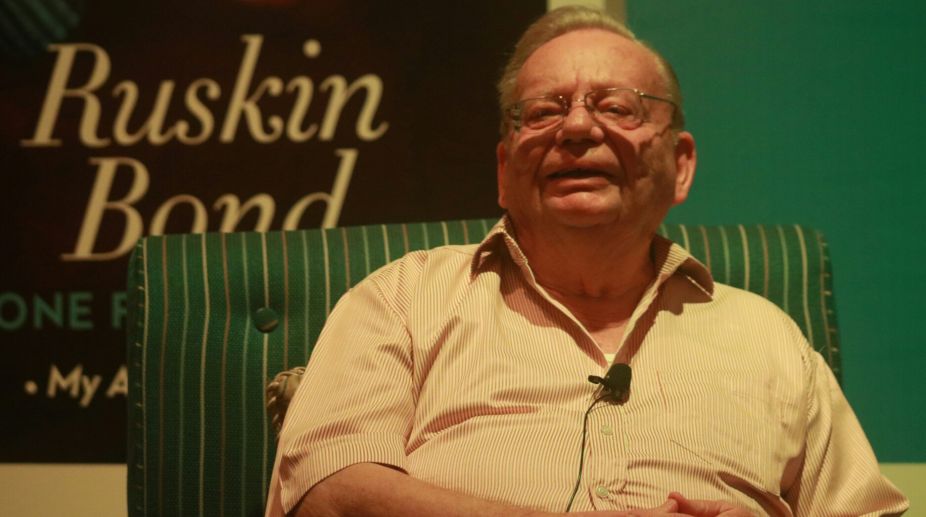
Ruskin Bond according to the publisher’s jacket cover is “one of India’s greatest writers.” Born in 1934, he has written “over 100 books of fiction, non-fiction and poetry,” and was awarded the Padma Bhushan in 2014. I confess to reading none of the hundred books and I felt it better to begin with this autobiography, with an open mind, following the advice of the greatest literary critic of all time, Charles Saint-Beuve, who wrote “you judge the tree by its fruits.”

“No life is more, or less, important than another…It is the story of a small man,” writes Bond appealingly, though he is undoubtedly a considerable Indian celebrity. He has the remarkable ability to recall accurate memories from a very early age, and remembers details even form the age of five, and the names of his preparatory school teachers.

It is hard to deny he seems to have been disagreeable if not obnoxious as a child. Obviously spoilt by a doting father, he was self-obsessed. Studying in two boarding schools in hill stations in India from the age of six till class X, he had a confrontational attitude to teachers, and gives them little merit for his education. Only Mr Jones, a Welshman with literary tastes, is credited with some influence on Bond wishing to be a writer.

His devoted father died of hepatitis at age of 46 when Bond was 10, but he and Bond’s mother, who was Anglo-Indian and was what would then be called “flighty”, had separated before that. In fact Bond suspects there might not have been a marriage at all, and he was born out of wedlock. His mother subsequently married an Indian Hindu, always described for some reason as “Mr H”. Apart from the father, Bond is severe on all his other relatives. “I made no effort to be close to them, or to my brothers”. He had one brother and one sister, and two half-brothers and one half-sister.

Bond’s account of English and Anglo-Indians who stayed on in India in near-penury is the most interesting and poignant part of the book, though not central to the narrative. Bond had a lonely childhood, a broken home and boarding schools he did not like. Sent to a maternal aunt, he was in England from age 17 to 21, first in Jersey and then London. This was a period of “four years of dreary office work” and loneliness and homesickness for India, but also his highly-rated first book, an autobiographical story published by Andre Deutsch, before Bond was 23.

The author returned to India which to him was “a land of acceptance”; the “intimacy of human contact” was what he missed in England. “I wanted the freedom of being my very own person.” He is attracted by loners without prospects; a village boy sleeping with a flute by his side, on another occasion by “a boy huddled in a recess, a think shawl wrapped around his shoulders.”

From age 25 to 29 he stayed in Delhi. At 29, he moved to Mussoorie, welcoming the solitude, the surrounding nature, and leisure. By page 200 and over 2/3rds of the way through the book, Bond is still only 25. At page 243 and thirty pages form the end, he is only 30. The narrative therefore is heavily tilted towards his early years, and ends at page 258 because the rest of the book is episodic. He provides no context of the Indian societal/political scene for his life and work, and except for fleeting mentions of Partition, Gandhi’s assassination and the Emergency; other events seem to have had no impact on his life.

He achieved financial security only in the late 1990s, when he was in his 60s. He does not use a computer or cell phone but says nothing about his methodology or technique for writing. He describes himself as celibate but not as virginal. He now makes his home at Landour above Mussoorie with the descendants, to whom the book is dedicated, of his one-time cook.

He is at times self-deprecating but with the ring of truth — “Some people get by on their charm and their wits. Not having much of either..” and goes on to say that “bachelors and kittens are suitable objects for compassion.” He himself, however, displays no sign of compassion whatever even for his handicapped sister “neither child nor adult” whose mind “would remain that of a five-year-old,” who was unable to see or walk properly and died at the age of 78 apparently without any support from the celebrated author. Both half-brothers died in traffic accidents. There are no generous words of gratitude for those who helped him in his days of struggle — not even for people who lent him money or his first editor, the remarkable Diana Athill. Nor is there any praise for any contemporary writer, and he must have known many of them personally.

Bond’s few efforts at humour fall flat and the book lacks an index. Perhaps an admirer of his books would be pre-disposed to affection for the author’s autobiography and sympathy for his early struggles. But for a newcomer to Bond’s work , the author seems to take satisfaction, or at least lack of remorse, in his failings and especially his callousness.
The closer the family relationship with Bond, it would appear, the greater his alienation, always excepting his father. Does reading this book draw the reader to the author’s many works? Not
necessarily.

Master of the mysterious

Manas Das |

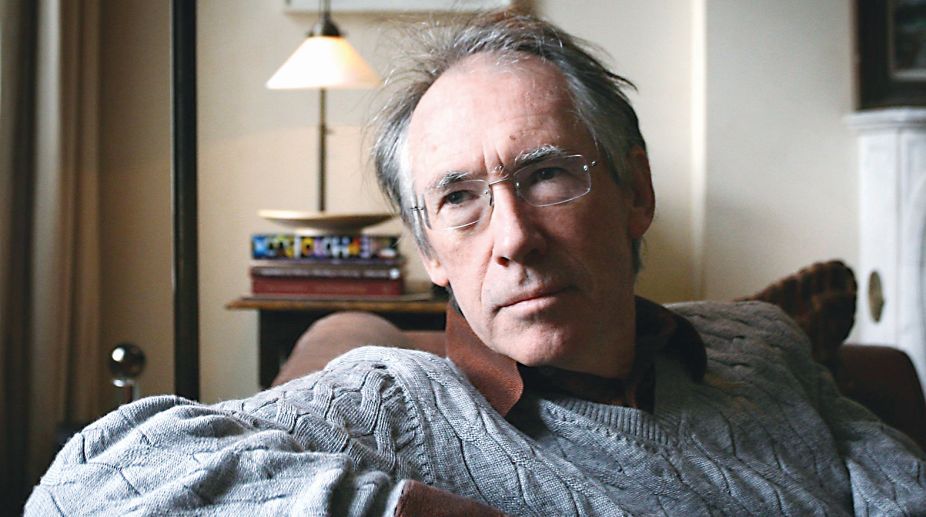
To capture the spirit of our turbulent times in their myriad manifestations, we can hardly miss reading the works of Ian McEwan, who has been a major voice in contemporary British fiction since his first collection of stories, First Love, Last Rites, which won the Somerset Maugham Award in 1976.

He is often called the finest writer of his generation which includes Martin Amis, Julian Barnes, Angela Carter, Salman Rushdie, and Kazuo Ishiguro. In 2008 The Times featured him on their list of the 50 greatest writers since 1945 and The Daily Telegraph ranked him number 19 on their list of the 100 most powerful people in British culture.

Few people can string together words as beautifully as McEwan. When one reads an Ian McEwan novel, one can almost hear the pauses in the clacking of his keyboard as he comes up with a beautiful idea and a beautiful way to put it to paper. To get a real feel of our times and of McEwan’s writing, we can resort to his latest novel Nutshell where the narrator is extremely unusual, a male foetus in its third trimester who overhears plans for a murder. His mother Trudy is sleeping with his uncle Claude and they are planning to kill his father. The plot resembles Shakespeare’s Hamlet, until halfway through, after the murder is committed and Trudy feels remorse, when she starts quoting Macbeth.

The plot also reminds one of Abhimanyu. Locked inside his mother’s womb — as one version of Mahabharata story runs — Abhimanyu overhears his father Arjuna discussing a well-known battle strategy with his wife. It involves a military formation called the “disk” — a murderous rank of enemy soldiers forms around a warrior in a perfect spiral, and seven steps, carried out in precise sequence, can penetrate that deadly labyrinth, permitting escape. Abhimanyu listens intently — at times, the thumping drone of his mother’s aorta next to his tiny ear is near-deafening. But as Arjuna speaks, his mother dozes off to sleep. The conversation stops. The final route of escape — the seventh step — is left unmentioned.

The idea for the extremely unusual narrator of Nutshell first came to him while he was chatting with his pregnant daughter-in-law,“We were talking about the baby, and I was very much aware of the baby as a presence in the room”, McEwan reminisces. He scribbled a few notes, and soon afterwards, daydreaming in a long meeting, the first sentence of the novel popped into his head, “So here I am, upside down in a woman”.

McEwan has written novels, screenplays, children’s stories, and a libretto for an oratorio on the topic of nuclear annihilation. His subject matter is as varied as his choice of genre, alternating between sadomasochism (which earned him early in his career the title of “Ian MacAbre”) and feminism, between historical fiction and contemporary psychological intrigue. But there is a distinctive element in his works. His writing has been called “the art of unease”, an apt term for the discomfort and disquiet his works invoke.

In The Child in Time, McEwan’s protagonist realises that his marriage ended, as “there had been a malevolent intervention”. McEwan’s works brilliantly portray “malevolent interventions” — child snatchings, hot-air balloon disasters, and car crashes. His characters’ attempts to make sense of such incidents and to regain or to maintain some kind of security in the incidents’ aftermath often motivate his plots. The novels’ occasional failures to coalesce into more than distinct set pieces may say less about McEwan’s skill in plotting than about his reluctance to give coherence to a world that he says “distresses me and makes me anxious”. He made his name as a writer of dark short stories in which disturbing subject matter (incest, murder and violence) is rendered in stark, unemotional prose.

For example, in Homemade, an adolescent boy rapes his ten-year-old sister and is proud of the act, while Dead as they come describes a man’s erotic obsession with a store mannequin. McEwan’s later works widen their scope, taking on political topics (government propaganda, patriarchy, terrorism) and a greater cast of characters and historical time periods.

What Kiernan Ryan has sceptically called the “received wisdom” about McEwan’s career is that he began as a “writer obsessed with the perverse, the grotesque, the macabre”, but grew out of this adolescent style of writing “to a more mature engagement with the wider world of history and society”. But this easy division fails to account for important continuities of McEwan’s work, overstating the sensationalism of the earlier stories while underestimating the eroticism and perverse power games still at large in the later works.

Ian Russell McEwan was born on 21 June 1948 in Aldershot, Hampshire, though he spent much of his childhood abroad, in Singapore and in Libya, where his father, a Scottish sergeant major in the British Army, was stationed. McEwan has said that he was mentally an only child, since his stepsiblings were a decade older than he, and his early stories and his first novel, The Cement Garden (1978), seem fascinated by potential sibling relationship.

The Cement Garden has been described as a modern Lord of the Flies, wherein four siblings, recently bereft of both parents, first bury their mother’s body in cement in the basement, and then unsuccessfully attempt to reconstruct a “normal” family life. Another element of his childhood that reverberates thematically throughout their works was his experience of being gathered for safety into armed military camps when Britain and France invaded Egypt over the Suez Canal in 1956. He has remarked that his childhood realisation that political changes intimately affect individuals’ experiences underscores the political engagement in his works.

McEwan earned his Master’s from the University of East Anglia under the auspices of two famous literary figures, Malcolm Bradbury and Angus Wilson. Stories from his thesis became his acclaimed first collection First Love, Last Rites. By 1983, having published another collection of stories and two novels, he was named one of the Twenty Best Young British Novelists by Granta.
Meanwhile, McEwan felt the need of rising above the label of being “the chronicler of comically exaggerated psychopathic states of mind or of adolescent anxiety, snot and pimples”. The difference between The Comfort of Strangers (1981) and The Child in Time (1987) seems to be a thematic watermark in McEwan’s oeuvre. While The Comfort, reminiscent of Thomas Mann’s Death in Venice, is a horrifying tale, examining a young couple’s boredom while on holiday until they meet two strangers.

The strangest characteristic of this dark tale may be the young couple’s apparent complicity in their doom, the similarity between their erotic rejuvenation and the fatal “comfort” provided by their new psychopathic friends.

The Child in Time turns away from this earlier Gothicism, and although the tale presents the regression of an aspiring statesman to childhood, this regression is beautiful, as the man carefully builds his tree house, and begins to live like a boy. McEwan’s other works of this middle period include The Innocent (1990), a spy thriller set in Berlin, and Black Dogs (1992), wherein a young man tries to stitch together his family’s memories.

McEwan’s admiration for Nabokov’s remark that readers must first “learn to fondle the details” certainly applies to the appreciator of McEwan’s own clear prose. Undoubtedly one of the most powerful images in his works is that of the man clinging to the hot-air balloon at the beginning of Enduring Love, “He had been on the rope so long that I began to think he might stay there until the balloon drifted down or the boy came to his senses and found the valve that released the gas, or until some beam, or god, or some other impossible cartoon thing, came and gathered him up… Even as I had that hope, we saw him slip down right to the end of the rope…. You could see the acceleration. No forgiveness, no special dispensation for flesh, or bravery, or kindness. Only ruthless gravity… . He fell as he had hung, a stiff little black stick”.

Apart from his brilliant prose, McEwan can also assimilate vast quantities of knowledge for the benefit of his fiction. His three most recent novels, Amsterdam, Atonement and Saturday demonstrate this ability of McEwan. Amsterdam, which tells the story of three men who reconnect at their former lover’s funeral, is a cutting social satire, sending up the sixties generation who seem to have resigned their former rebelliousness for creature comforts. In this short book McEwan demonstrates his copious knowledge of music and journalism in order to describe the occupations and preoccupations of his characters.

Although Amsterdam received the prestigious Booker Prize in 1998, Atonement was a true best-seller, receiving rave reviews on both sides of the Atlantic. McEwan’s research at the Imperial War Museum bears fruit in the careful descriptions of Briony Tallis’s experience as a nurse trainee at a London hospital during World War II and of Robbie Turner’s bewilderment during the British Army’s retreat from Dunkirk. The novel asks why Briony, a young girl who would be writer, pinpoints an innocent neighbour as the criminal who assaulted her cousin, and why she clings to her story even in the face of doubt. McEwan writes, “Did she really think she could hide behind some borrowed notions of modern writing, and drown her guilt in a stream — three streams! — of consciousness?”

The most autobiographical of McEwan’s works, Saturday has been hailed as the best post-9/11 work of fiction. A book set over the course of one twenty-four-hour period, it shares characteristics with earlier masterpieces of the genre including Ulysses and Mrs Dalloway, and it is also McEwan’s first effort at writing entirely in the present tense, a quality that explains Saturday’s occasional resemblance to John Updike’s Rabbit novels.

Henry Perowne, the protagonist, is a brain surgeon — a profession that lends well to the novel’s absorption in the mental health of individuals in current society. Perowne dislikes literature, but he shares McEwan’s love of wine, squash, and his wife, “What a stroke of luck, that the woman he loves is also his wife”, Perowne muses. Saturday strives to capture and present current society as it is, in all its ambiguities and anxieties, while also depicting what a man is willing to do when his family falls under threat. Although it received mostly glowing reviews, the display of scientific knowledge and terminology has led some critics to despair, whereas others have feared that its political agenda overwhelms the plot.

McEwan himself is not unaware of such a concern as he states, “I am aware of the danger that in trying to write more politically, I could take up moral positions that might pre-empt or exclude that rather mysterious and unreflective element that is so important in fiction”.

However, the reading public and critics concur — no matter whether they prefer the early, brutal stories, or the later, longer novels of ideas — that McEwan has mastered the “mysterious and unreflective element”, which creates great fiction.

Vaulting ambition & idealism

Anjana Basu |

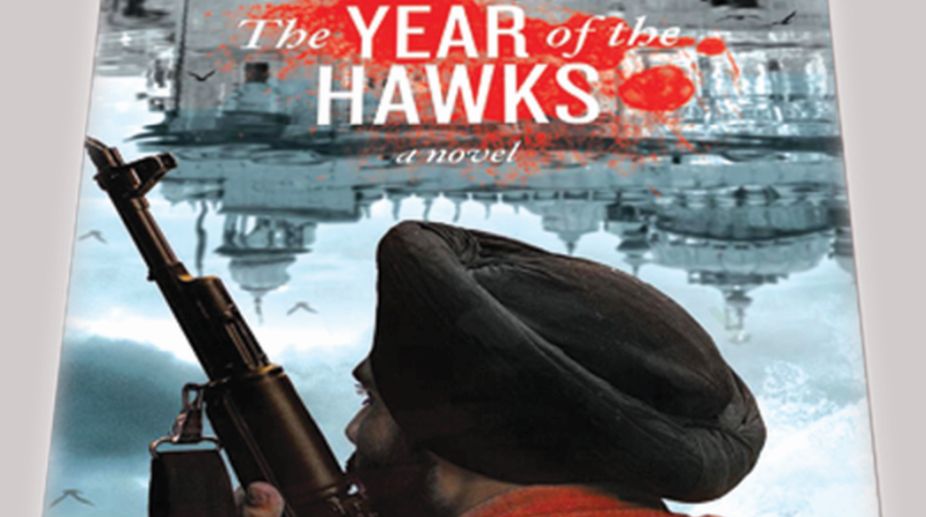
This year there have been several books on the Punjab uprising of the 1980s. Kanwaljit Deol’s is a slim book that tries to simplify the issue and make it identifiable for readers. Deol worked in the police forces and hence may have a deeper insight on issues affecting that time of chaos. Certainly she tries to pen it down, while making it very clear that the book is a work of fiction from the cover. However, given the complexity of the situation the broad canvas that she works with may not always be the answer because there is a certain patchiness in places, especially in the character of the journalist from Delhi, Sikand who, despite having a Sikh mother, seems to be out of step with what is actually happening in Punjab and who tries to put it down in purple prose and theories that sound good but miss the ground realities. To be fair to Deol, this could be a comment on the vagaries of the Indian media, which works in its own cycle of theorising, though Sikand does on occasion confront Bhindranwale and points out the fatality of his actions.

Deol’s main character is a boy from a village in Punjab, Fareed, who has an abusive father and whose family owns cattle and land.

Fareed is a representative of the grassroots folk of the state who responded enthusiastically to Bhindranwale’s call to action.

The revolution in Punjab was in the end about humble peasants and farmers who, feeling ignored by the Centre, were manipulated by the quest for an identity that rose to the level of an addiction. Deol sketches Bhindranwale’s rise deftly and charts his course of action that would inevitably lead to violence. Despite being a police official she does throw in a scene or two of police brutality to explain how power mechanics operate at the state level. Fareed and his friend, Jeeta, encounter the local police and that is one of the turning points of the book. However, she also describes the killing of an unarmed DIG in the Golden Temple to balance the scales. As in most of these cases there are faults on both sides; the media of course would put more blame on the police who have the big guns on their side.

It is quite clear that what Deol wants to do is tell a good story, sometimes at the expense of what she is describing. Though the attack on Harmandir Sahib was the defining moment of destruction, she tends to gloss over it, focussing instead on how an abused young boy looking for a hero finds himself drawn to Bhindrawale’s magnetism and gives him his soul and, ultimately, his life. Much in the way many young people dissatisfied with their way of life join in lost causes hoping to rise above the mundanity of everyday existence and join something that is bigger than they are. Unfortunately, because they don’t clearly understand what they are getting into, in most case it leads to death and destruction. That part of Deol’s message is very clear. The rest is silence.

Long lasting influences

Kallol Basu |

Chinese
Ever wondered why Kolkata boasts of having the oldest Chinatown in the world outside South East Asia? The hardworking and enterprising Chinese community has vastly influenced the city of Kolkata since the 18th century. It all started with Atchew who bought a sugar factory near Budge Budge and brought Chinese labourers to the capital of the British Empire in India. The place has come to be known as Achipur after him.
Most of the settlers came from Canton, who were mostly a travelling class, earning their bread through family businesses of carpentry, leather tanning and laundry.
With the increase in number, Chinese gradually settled at the centre of Calcutta near a market place designed by Italian architect Edward Tirreta and hence named Territi Bazar.
Once a thriving community of almost 20,000, the number has now dwindled to around 4000 following the large scale migration in recent times. The Chinese community mostly are tannery-owners, sauce manufacturers, restaurateurs, shoe shop owners and dentists. Needless to mention, the restaurants have given rise to an eclectic fusion of Chinese Hakka cuisine with traditional Indian cuisine and is the most popular mark of Chinese influence in the city.

Territi Bazar is famous to this day for its yummy breakfast stalls starting at 6.30 AM selling a wide variety of momos or dumplings stuffed with beef, pork, chicken, seafood or vegetables along with sausages, stuffed buns, pork rolls and wontons. Close by is another iconic store Hap Hing Co, considered to be the oldest shop in Chinatown and selling a wide variety of items from tea, dried fruits, and rice noodles to medicinal herbs. The store even today uses abacus and not calculator and is run by the grand old dame of Chinatown, Stella Chen.
Around the old Chinatown area, are six active Chinese temples. Of them Nam Soon Church dating back to 1820 is the oldest and is especially impressive with a spacious courtyard and intricate décor.

Sea Ip Church established 1905 is another impressive temple dedicated to Kwan Yin, the Chinese goddess of compassion and mercy. Later on, a large section of the Chinese has moved to the eastern part in Tangra, to form the New China Town. In January/February, the community celebrates the Chinese New Year in a traditional way complete with dragon and lion dances on the streets of Tangra &Tiretta Bazar. The entire area is brilliantly illuminated contributing to a carnival like atmosphere thus safeguarding a slice of Kolkata’s unique cultural heritage. Kolkata also hosts and celebrates India’s only Dragon boat race on actual dragon boats brought all the way from China.
Despite dwindling of numbers, the Chinese community continues to be an integral part of the city and is destined to play a vital role in “bridging the communication gap” between the businessmen of the two countries.

Parsis
Parsis have amalgamated into the social fabric of Kolkata just as spoon of sugar dissolves into a cup of milk. One of the world’s oldest extant religions, Zoroasterians from Iran fled the country to avoid religious persecution and reached the shores of Diu and chose to settle in Gujarat areaupon being given shelter by the king in 785AD.

The industrious nature of the Parsis coupled with Kolkata’s exponential growth attracted them to this city from the middle of 18th century. Dadabhai Behramji Banaji of Surat regarded as the first Parsi to be in this city was a shipbuilding pioneer and a close friend of Dwarakanath Tagore. His relative Rustomji Cowasjee Banaji came in early 19th century, and founded a Gothic style Pars near Ezra Street in 1839, which is now completely decrepit and widely encroached upon by hawkers.

The only active fire temple was established in 1912 on Metcalfe Street in Bow bazar area of Central Kolkata and is the major binding force of the approx. 700 strong Parsi community in the city. The Parsis are fire worshippers and the holy flame burns eternally in the second floor open only to believers. The ground floor consists of a large hall containing a brass plate of Faravahar, the Primary Symbol of Zoroastrianism and some beautiful frosted glass work.

Parsis become an important component of the trading network between India, East Asia and Europe and their contribution to trading and business continues to be rich over the decades. The community emerged as a Westernized and progressive one with wide range of opportunities even for females.

The Parsis of Calcutta were once synonymous with a popular fizzy drink (Byron , precursor to Cokes and Pepsis), heavily embroidered silk saris of a particular type, pioneer of the Indian cinema (referring to JF Madan’s theatre empire) and the generous contribution to the charitable trust funds especially during the infamous Bengal Famine. Owner of currently the only restaurant serving authentic Parsidhansak, Patranimachi and other delicacies, Meher Hansotia’s love affair with Kolkata began a decade ago as the manager for the ‘Parsis-only’ guest house ordharmashala bang opposite Bow Barracks.

In Meher’s words, “Kolkata Parsis are very active, sweet, helping and fun loving people. We all participate in lots of activities like community get togethers, picnics, sports, fancy dress, debates, elocution and painting competitions held every year”. Despite the sharp demographic decline in recent times, Parsis have continued to preserve a resplendent heritage and are active in all aspects of civic and national life.

Tribute to the passionate rebel poet

Shoma A Chatterji |

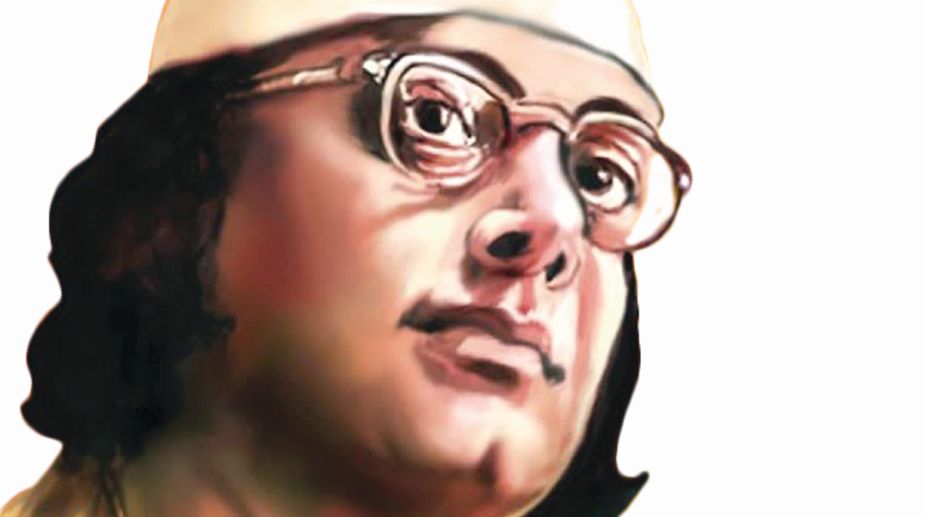
One of the most remarkable additions to West Bengal’s cultural and archival cauldron is the recent opening of a beautifully curated and orchestrated digital archive of and on the works of poet-musician-lyricist-actor Kazi Nazrul Islam. The West Bengal Housing Infrastructure Development Corporation Limited the initiative to set up Nazrul Tirtha to provide an institutional set up to promote research and appreciation of life and works of revolutionary poet Kazi Nazrul Islam. The digitalised archive has been christened Muhafiz.

Popularly known as the Rebel Poet of Bengali literature and the “nightingale” of Bengali music, Kazi Nazrul Islam’s works reached beyond literature to touch political beliefs and ideologies so powerfully that he became an outstanding intellectual and poet between 1920 and 1942. His contribution to liberate modern Bengali poetry from the ‘prison’ of Rabindranath Tagore in the form of imitations is memorable. He was a passionate creator of letters written at different points of time to women he fell in love with. During his tenure as a soldier, he wrote a prose piece called Baunduler Atmakahini (Autobiography of a Vagabond) published in May 1919 and Mukti (Freedom), published in July the same year. He put together his experiences as a soldier in World War II, commencing from April 1920, in the shape of a novel later published in Moslem Bharat. The original documents are now lost.

His rebellious writings through every form of creative expression were vocal against all forms of oppression, bonding, communalism, feudalism and colonialism. This angered the then-British-ruled India so much that they not only banned many of his books but also put him behind bars. His contributions lay scattered, torn, lost and unpreserved so it must have been an extremely challenging task. But HIDCO Chief Debasis Sen with the guidance and support of the curator of Nazrul Tirtha Sri Anup Motilal took up the challenge. A tender was invited to invite willing archivists, collectors and other interested individuals in March 2017.

The Nazrul Digital Archive was inaugurated by urban development minister Firhad Hakim in the presence of members of the poet’s family and researchers on 20 December 2017. Arindam Saha Sardar is the archivist commissioned to research, put together the collection and assimilate the entire available and recoverable works of Nazrul and on Nazrul with the guidance and support of Sri Anup Motilal. All this has been carefully and painstakingly digitalized.

“I was already into field and documentary research on Kazi Nazrul Islam since 2014 because at that time, I was working towards making a documentary on this great poet. The film is on hold for want of funds. I personally visited collectors, family members, friends and Nazrul scholars to collect his music and songs that form the biggest slice of his works. Fortunately, I got hold of the first recorded song penned by Nazrul on 78 r.p.m. record sung by Harendranath Dutta. It was a political satire that went – jaater naamey bojjati shob khelche jua (they are gambling in the name of the nation and committing mischief). That record now is a part of this digital archive,” says Arindam Saha Sardar who is a noted digital archivist who lives in Uttarpara, a few kilometres away from Kolkata.

Saha Sardar says that during his research, he discovered that there were too many discrepancies and contradictions in the documents and books that carried information and education on Nazrul. “This led me to a deeper and more extensive search for his original documents such as manuscripts, song books, cinema booklets, and this went on for four years and it remains ongoing till this day. I can never claim that our research is complete” says Saha Sardar. Jagat Ghatak gave him the original notations of Nazrul’s song compositions. His brother Nitai Ghatak gave me a diary consisting of Nazrul’s songs written in his own hand. Dilip Roy (Junior), now 101, is the only person alive who learnt music directly from Nazrul and was the first publisher of Nazrul’s songs in book form. He gave Sardar that diary. Another person who pitched in to help was Dhiren Das. Sardar also managed to gather the song booklets of three films Nazrul was involved with – Dhruba, Vidyapati and Gora.

All the items were photographed, then digitalized to take the shape of a proper library archive collected from across Bangladesh and West Bengal. The collection includes 13 booklets of films in which Nazrul was directly involved as director, actor, lyricist, and music director such as Dhruba. The archivist also interviewed Arun Kumar Bose who wrote the first biography of Nazrul.
“I was helped in clearing the contradictions that confused by Brahmanand Tagore and old audio interviews were retrieved which helped resolve my confusion. We also restored his hold books and digitalized them. I interviewed the great musician Dipali Nag in 2009 when she was alive, not to forget an audiovisual interview of Juthika Roy in 2011. I also took the help of Nazrul scholar and researcher Rafiqul Islam, based in Bangladesh. I had the good fortune to interview Karunamoy Goswami, a scholar in Nazrul music and songs,” adds Saha Sardar. 800 manuscripts handwritten by Nazrul, 10 cinema booklets in original and three magazines he had edited are a part of the archive. Dipali Nag’s notebook that contains six Nazrul songs handwritten by Nazrul have also been included.

As many as 1200 Nazrul song compositions recorded and/composed by Nazrul between 1925 and 1950 have been restored by this young archivist. Included is an interview with Sudhin Das of Bangladesh taken in 2015 who is a music scholar and trainer in the music of Nazrul and Tagore. As many as 500 photographs collected from different sources, around 100 rare books on Nazrul that are now out-of-print, 35 books of notations published from Kolkata but now out-of-print, 500 songs sung by Nazrul himself have all been restored digitally. “We have digitalized a total of 25,000 pages by taking photographs with a high-end still camera and in some cases, we have used scanners. This resulted from visiting libraries, collectors and homes of people associated with Nazrul have made it possible to realise this dream project of Mamata Banerjee, CM, West Bengal.

An archive is defined as “a collection of historical documents or records providing information about a place, institution, or group of people.” Nazrul Tirtha from now on, is a living example of how researchers in music, poetry, lyrics, cinema, songs and drama can sit and home and conduct research from distant places by accessing this digitalized treasure on Nazrul and everything he stands for, for all time.

HP Guv administers oath to Protem Speaker

Statesman News Service | Shimla |

Governor Acharya Devvrat administered Oath of Office and Secrecy to Protem Speaker of the newly formed Vidhan Sabha, Ramesh Dhwala in the presence of Chief Minister, Jai Ram Thakur at a simple ceremony held at the Raj Bhavan on Saturday. Dhwala is a four-time MLA from Jwalamukhi.

The oath ceremony was attended by Food, Civil Supplies and Consumer Affairs minister, Kishan Kapoor, Education minister, Suresh Bhardwaj, Urban Development minister, Sarveen Chaudhary and Health and Family Welfare minister, Vipin Parmar.

FA Cup: Majestic Manchester City ride late salvo to down brave Burnley

The Sky Blues remain on course for an unprecedented quadruple!

SNS | New Delhi |

Manchester City avoided the ignominy of a FA Cup upset as they struck four second-half goals to beat Burnley 4-1 in an enthralling tie at the Etihad Stadium on Saturday night.

Ashley Barnes’ brilliant volley in the 25th minute had silenced the Sky Blues faithful, who were forced to accept that perhaps their brilliant side’s unbeaten run in domestic competition had come to an end.

Don’t miss: Ander Herrera impressed with Red Devils’ display in FA Cup

As John Stones skewed a routine clearance, Barnes pounced on the mistake and rifled a shot beyond Ederson to give the Clarets a shock lead and Sean Dyche’s men absorbed the pressure to cling on to their slender lead till half-time.

With 45 minutes left in the tie, Pep Guardiola could have been forgiven into sending on Kevin De Bruyne into forcing a result, but the Catalan tactician stuck to his guns and didn’t make any changes at the interval.

Must read: Manchester United ride late goals to beat Derby County

And the vaunted manager’s faith was rewarded as star striker Sergio Aguero scored a quick fire double (56 and 58) to turn the tie on its head.

Aguero’s second goal, in particular, was spectacular not for the finish but the deft assist by Ilkay Gundogan. The German midfielder, with his back to the goal, cheekily split Burnley’s defence open with a back-heel pass and Aguero calmly rounded Nick Pope before finishing into an empty net.

Leroy Sane would then make sure of the win with a well-worked move in the 71st minute, collecting David Silva’s through ball expertly before beating Pep with a low finish.
Substitute Bernardo Silva tapped-in with eight minutes remaining and the Etihad roared in unison after witnessing a comeback perhaps only one team in England can manage at the moment.

Also read: Debutant Virgil van Dijk settles 230th Merseyside Derby as Liverpool progress

The Sky Blues, who are running away with the Premier League, remain on course for an unprecedented quadruple, and will now shift their focus to a EFL Cup semi-final with Bristol City on Tuesday before travelling to Anfield to take on Liverpool in a Premier League clash on January 14.

Burnley will hold their heads high, for despite the unflattering scoreline, they gave as good as they got and for almost an hour, looked like they had the better of a side that are simply swatting everyone away.

City join the likes of Liverpool, Manchester United in the fourth round and will know their opponent when the draw takes place on Monday.

Punjab to launch farm debt waiver today

Statesman News Service | Chandigarh |

Punjab government’s much awaited farm loan waiver scheme will be launched on Sunday with over 46,000 farmers in five districts set to receive first installment of the debt relief scheme.
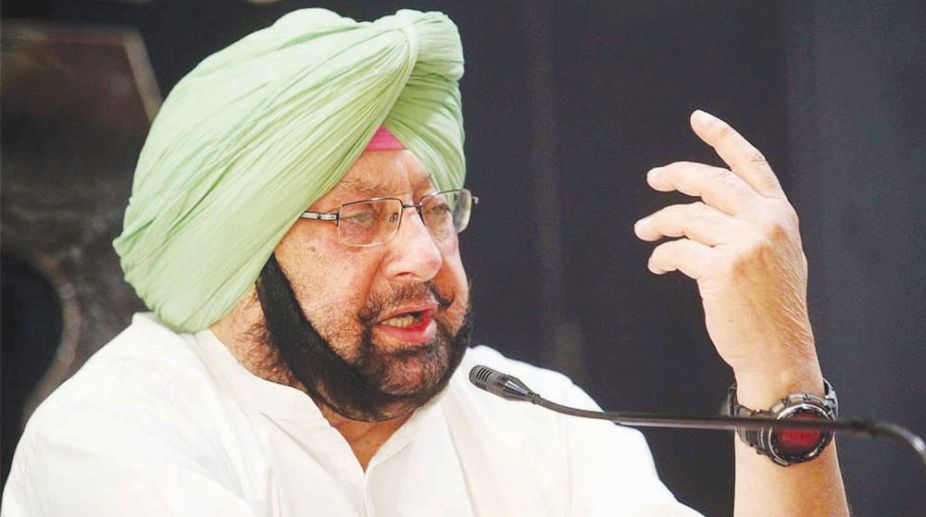
Punjab Chief Minister (CM) Amarinder Singh will on Sunday formally launch the farm debt waiver scheme from Mansa district. The other districts being covered under the scheme include Bathinda, Faridkot, Muktsar and Moga.

Each beneficiary farmer, who has taken loan of less than Rs Two lakh, would get about Rs 40,000 as first installment of the waiver scheme. Addressing a Press conference, additional chief secretary (co-operation) DP Reddy and additional chief secretary (development), Viswajeet Khanna said the government had already identified 5.63 lakh farmers, who had taken loan of nearly Rs 2,700.00 Crore from cooperative institutions as on 31 March 2017 as beneficiaries for disbursement of the debt waiver certificates in the first of the four planned phases for completion of the entire process.

Of these, the process of verification had been completed for 3.20 lakh farmers. As many as 1.60 lakh cases with loans to worth Rs 748 crore had been approved pan Punjab. The symbolic launch event at Mansa will witness disbursement of debt relief certificates to the tune of Rs 167.39 Crore to nearly 47000 eligible marginal and small farmers, who had taken loans from 701 Primary Agriculture Cooperative Societies of the five districts of Mansa, Bathinda, Faridkot, Muktsar and Moga. Reddy said an extensive plan had been prepared, in association with the departments of agriculture and revenue, for finalisation of the list of eligible farmers.

As per the plan, the entire debt waiver process would be completed in four phases. In the first phase, verified marginal farmers would be handed over the debt relief certificates and the rest in subsequent phases, after proper verification.

hanna said that loans of farmers taken from commercial and private banks would be settled thereafter under the Debt Relief Scheme-2017 already notified by the State, whereby marginal farmers having land holdings less than 2.5 acres and small farmers having land less than FIVE acres, who have taken loan upto Rs Two lakh, would be provided debt relief.

Ander Herrera impressed with Red Devils’ display in FA Cup

The mighty Manchester United were made to work for the win on Friday night!

SNS | New Delhi |

Despite leaving it late to secure a win, Manchester United midfielder Ander Herrera felt his side’s performance against Derby County in their FA Cup third round fixture on Friday night was one of the best of their season so far.

“I think we have played one of our best games this season – full of control, good play, good movement of the ball and everyone feeling good on the pitch, participating in the game,” the Spaniard told MUTV after the game.

Don’t miss: Manchester United ride late goals to beat Derby County

“That is why I couldn’t believe we weren’t winning after 30 minutes. I think football was fair with us, we have scored two in the end but we could have scored six or seven, to be honest,” the combative midfielder, who completed 90 minutes against the Championship side on Friday, added.

Jesse Lingard struck a marvellous goal from distance to continue his fine goalscoring run as United broke the deadlock with six minutes left before substitute Romelu Lukaku sealed the deal after a quick breakaway.

And Herrera was effusive in his praise for both goalscorers as he gushed, “The goal (Lingard’s) was amazing, the goal was incredible. He tries always, he moves very well. He has a very good shot with both feet. When you try all the time and you’re optimistic with yourself and you try and try, sooner or later you will get the result. The result was again another fantastic goal”.

Must read: Debutant Virgil van Dijk settles 230th Merseyside Derby as Liverpool progress

Lukaku’s goal was well-deserved after United’s dominance and Herrera was quick to laud not only the burly Belgian but Anthony Martial as well for their involvement in the second goal.

“He (Lukaku) played very well.He held the ball up for us, he gave us that target man in the second half, he played amazing. The second goal was incredible, also the assist of Anthony (Martial) was very good”.

Also read: Chelsea sign Everton hotshot Ross Barkley for £15m

“I think we cannot say just two or three names today, the whole team played amazingly. We were very good on the pitch, moving the ball, everyone receiving the ball – running, shooting, crossing. I think we did everything good. Of course you always have things to improve on but almost everything was good,” Herrera added.

The Red Devils will know who their fourth round opponents will be on Monday after the draw but will be backing themselves to beat any side at the moment.

Jose Mourinho’s men have a bit of a breather now as they next play a game on January 15, a home Premier League clash with Stoke City.