Logo

ISI picks Jamaat heir Azmi to oversee radical armed force in Bangladesh

Security agencies are keeping a close watch on the developments in Bangladesh as the radical National Armed Reserve (NAR) is set to come up.

IANS | New Delhi |

Security agencies are keeping a close watch on the developments in Bangladesh as the radical National Armed Reserve (NAR) is set to come up.

The unit would comprise over 8,000 radicalised youth of Bangladesh, and the aim would be to control the country by imposing the Sharia law, officials said.

The NRA is being set up to replace the police in the country. This unit will ensure the strict implementation of the Sharia law, Intelligence Bureau officials said.

This plan was set in motion by the ISI and the Pakistan army, and in the run-up to its setting up, several meetings have already taken place.

The plan by Pakistan is to have both a radical army and a police wing. The process of identifying persons in Bangladesh who have a complete Pakistan tilt and are highly radicalised has already begun, officials have learnt.

Currently, there are many within the army, including its chief, General Waker-Uz-Zaman, who feel that Bangladesh should be run democratically. This is the reason why the ISI is trying to restructure the Army and put people who are loyal to Pakistan at the helm. Pakistan has identified Brigadier (retd) Abdullahil Aman Azmi to oversee the process.

He is a highly radicalised person and the son of the late Jamaat-e-Islami emir, Golam Azam. He has held a series of meetings with top Pakistani officials, and Indian agencies have learnt that he is likely to be given an important portfolio in Bangladesh’s security architecture. Pakistan seeks to make Azmi an advisor first in the home ministry.

Once the elections are conducted, this position would cease to exist, and then the plan would be to put him in charge of the NAR, officials said.

Since Muhammad Yunus took charge, several Pakistani diplomats have moved to Bangladesh. They hold regular consultations with officials in Dhaka. One of the key figures that they have been meeting is Azmi. He is the go-between man between Dhaka and Islamabad officials, have learnt.

Meetings are held at the Banani Officers’ Housing Scheme, where many Pakistani diplomats are lodged. One such meeting that was held on December 23 has come under the radar of the Indian agencies.

The meeting was held between Azmi and Pakistan’s Deputy High Commissioner, Mohammad Wasim, at the same complex. This meeting signals the making of something big, officials said.

Further, meetings have also been held between top ISI officials and diplomats in Dhaka. Intelligence agencies say that these meetings point towards a sinister plot ahead of the proposed February 2026 elections.

While plans are afoot to disrupt the elections, officials said that this plan may not be successful. The aim is to run Bangladesh like how Pakistan is being governed.

While there is a “namesake” democratically elected government in power, all the control is with the Pakistan Army, headed by Field Marshal Asim Munir.

Elections would have to be held to avoid pressure from the International community, especially the United States. Even if there is a democratically elected government in power, Pakistan wants the NAR and the army to be in charge.

The NAR would eventually replace the police, while puppets of the Pakistan establishment in the Bangladesh army would oversee the running of the country.

The primary aim is to turn Bangladesh into a completely radical country. Outfits such as the ISI-backed Jamaat-e-Islami are rooting for this, and hence they need to have an NAR in place. This unit would ensure that everyone strictly adheres to radical Islam.

On the other hand, the Army would be helmed by puppets of Pakistan, officials say.

The Indian Intelligence agencies will have a lot on the plate in the days to come, as several developments are unfolding in Bangladesh. The nation remains on edge due to the fake narrative that the ISI has spread. On the other hand, the ISI is trying to infiltrate every institution and take control over the country.


Candle light vigil, silent rallies mark 21st Tsunami anniversary in TN

For all the tragic reasons, this day–December 26–will remain etched in the minds and hearts of the people living in coastal hamlets not only in Tamil Nadu, but also in countries like Indonesia and Sri Lanka.

UNI | Chennai |

For all the tragic reasons, this day–December 26–will remain etched in the minds and hearts of the people living in coastal hamlets not only in Tamil Nadu, but also in countries like Indonesia and Sri Lanka.

It was on this day on a peaceful Sunday morning, the mother nature struck it in all its fury, snuffing out thousands of lives, in the
form of deadly tidal waves triggered by an under sea earthquake which was later named as tsunami.

Twentyone years on, more than 8,000 people who had lost their lives, including in the worst affected coastal Nagapattinam district, Cuddalore, Kanniyakumari and Chennai, people still are in a state of mourning unable to come to terms with the deadly disaster, that
took the lives of their near and dear ones and the kith and kins.

Yes. The wounds might have healed. But the scars remain as any amount of compensation or solace that was offered by the government helped them to overcome this grief as wailing women outpored their emotions on the seashore.
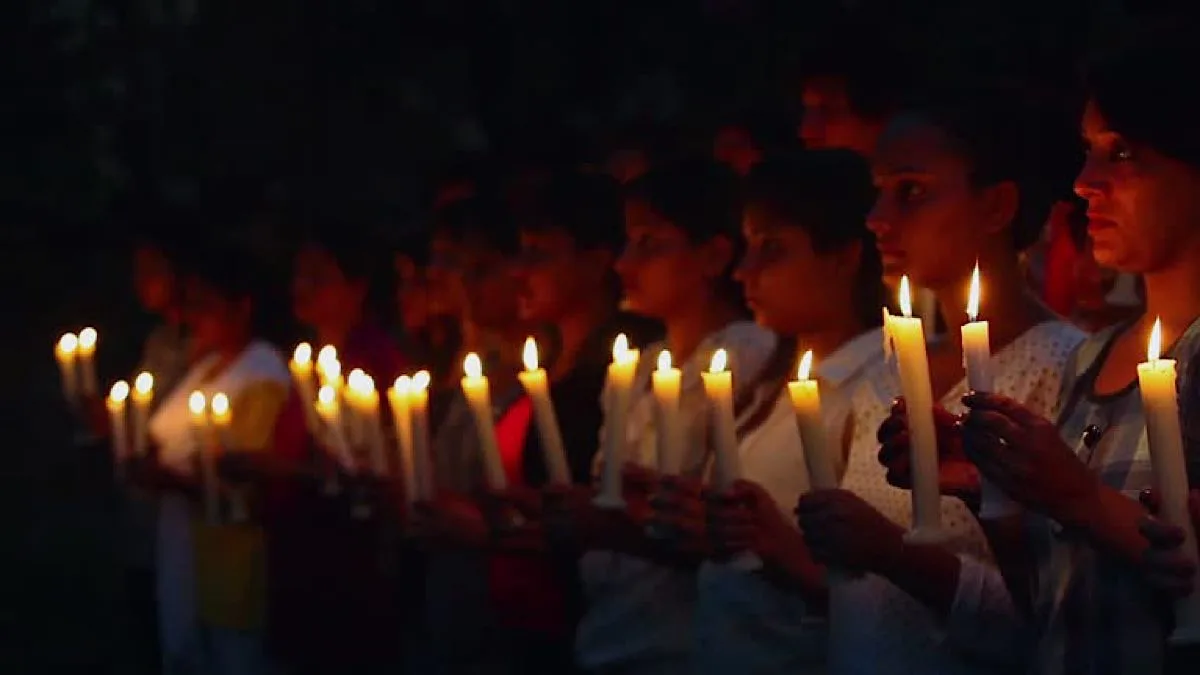
Silent rallies, tearful homage and special worships in memory of those, who were swept away by the deadly tsunami, this day in 2004, marked the observation of the 21st solemn anniversary in Tamil Nadu.

The massive tsunami, triggered by deadly tidal waves had claimed more than 8,000 lives and devastated coastal districts of Chennai, Cuddalore, Nagapattinam and Kanniyakumari, besides leaving a trail of horror memories.
In most of the fishing hamlets fishermen observed the day as black day as people poured pots of milk into the sea to pay respects to
their near and dear.
In some of the districts, fishermen stayed away from the sea as a mark of respect to the victims.

”Though the tragedy occurred 21 years back, it is still vivid in our memory as if it had occurred today”, was the refrain of one of
the grim-faced grieving fishermen, who said, justifying their decision to stay away from sea.

As the day dawned, floral tributes were paid to the tsunami victims by the fishing community at Sreenivasapuram area in the city.
In the coastal districts of Nagapattinam, Cuddalore and Kannniyakumari, tens and hundreds of people, including weeping women, showered flower petals into the sea as a mark of remembrance of those who perished in the tragedy.
Reports from Cuddalore, Kanniyakumari and the worst-affected Nagapattinam said special prayers were held and candles were lit
at the memorial to pay respects to the victims.
Silent processions were also taken to mark the occasion.

‘Bunty Aur Babli’-inspired Indore heist: Teen duo steals jewellery worth ₹16 lakh after watching the film

An Indore jewellery theft inspired by ‘Bunty Aur Babli’ has put the spotlight on how Bollywood films can blur the line between fantasy and reality. From teen cons to meticulously planned murders, this case is just one among several crimes influenced by cinema.

Statesman News Service | New Delhi |

It began like a movie fantasy. Two young friends, struggling with money, dreaming of a better life. But unlike the film ‘Bunty Aur Babli’, this story ended with police sirens, not applause.

In Indore, an 18-year-old graphic designer and his woman friend, also 18, were arrested for stealing jewellery worth over ₹16 lakh. The duo, who had known each other since childhood, planned and carried out the theft after watching the popular 2005 con film starring Abhishek Bachchan and Rani Mukerji.

According to police, the theft took place on the night of December 22 in the Rau area of Indore. Gold, silver, and diamond jewellery were stolen from a shop with careful planning. After the crime, the pair fled to Bhopal, hoping to lie low.

But their escape did not last long. Police tracked them down and recovered all stolen jewellery.

During questioning, the man shared a story that reflects modern fear: job loss due to artificial intelligence. He told officers that he worked part-time as graphic designer at an IT company. He lost his job when the firm adopted AI tools. With no steady income and rising pressure, he said life became unbearable.

Both accused come from economically weak backgrounds. The film ‘Bunty Aur Babli’ made crime look easy, stylish, and rewarding. In real life, however, the duo soon discovered the harsh truth.

They tried selling the jewellery but failed. Buyers suspected something was wrong and refused to pay a fair price assuming the sellers were too young to own such valuables. Frustrated, the pair decided to wait until after Christmas to try again. Police arrested them before they could make another move.

Hobart Stalking case: When films blur boundaries

In many Bollywood films, persistence in love is shown as romance. The hero follows the woman, calls her repeatedly, refuses to give up, and eventually, she falls in love. But in real life, such behaviour can turn into fear and trauma.

In 2015, a Hobart magistrate court heard the case of Sandesh Baliga, a 32-year-old security guard who stalked two women over long periods, one for 18 months and another for four months.

Baliga, who came to Tasmania from India to study accounting, admitted that Bollywood movies shaped his thinking. He believed that if a man pursued a woman long enough, she would eventually say yes.

The court heard that Baliga sent excessive text messages, made repeated phone calls, and even approached the women in person. Over time, he began calling himself their boyfriend, even though the women had clearly not consented.

His lawyer argued that such behaviour was often shown as “normal” in Indian cinema and that Baliga did not understand the seriousness of his actions in an Australian legal context.

‘Rustom’ and the Nanavati case

Some stories refuse to fade. One such tale is the famous KM Nanavati vs State of Maharashtra, a real-life case from 1959 that continues to inspire films, including Akshay Kumar’s ‘Rustom’.

Kawas Manekshaw Nanavati was a decorated Indian Navy commander, living in Mumbai with his wife Sylvia and their three children. Their seemingly perfect life shattered when Sylvia confessed she was in love with Prem Bhagwan Ahuja, Nanavati’s friend.

According to Nanavati’s testimony, he confronted Ahuja and asked if he planned to marry Sylvia. Ahuja’s alleged reply, “Am I to marry every woman I sleep with?” enraged him.

Nanavati took his service revolver and fired three shots at Ahuja, killing him instantly. After the shooting, he did something that stunned the nation. He walked straight into a police station and confessed.

What followed was a legal drama like no other. The powerful Parsi community rallied behind Nanavati. Newspapers covered every detail. Public opinion was sharply divided.

Initially, a sessions court declared Nanavati not guilty. Bombay High Court overturned the verdict and sentenced him to life imprisonment. Supreme Court later upheld this decision.

Drishyam (2015): When the “perfect crime” turns deadly in Pune

In ‘Drishyam’, a man goes to extreme lengths to protect his family after a crime. But in Pune, one man used the movie not as entertainment but as manual.

In November 2025, Pune resident Samir Jadhav was arrested for allegedly murdering his wife Anjali.

Also Read: Drishyam 3: Tabu drives the drama, Rajat Kapoor confesses his role ‘has no arc’

Samir had first reported Anjali missing on October 28, claiming she had left home two days earlier to meet a friend. But CCTV footage told a different story. It showed Samir accompanying her during the same period.

During interrogation, Samir confessed.

Police revealed that Samir had been having an extra-marital affair. He also suspected Anjali of being involved with another man, leading to constant fights and jealousy.

What shocked investigators most was the level of planning. About a month before the murder, Samir rented a godown near Shindewadi. He installed a fabrication kiln there and quietly collected wood and fuel.

On October 26, he took Anjali out under the excuse of an outing. While they sat together eating bhel, he strangled her inside the godown.

He then burned her body in the kiln using the materials he had prepared weeks in advance. Afterward, he threw the ashes into a river and dismantled the kiln. The crime scene was washed carefully to destroy all evidence.

Police registered a case under Section 103 (murder) of Bharatiya Nyaya Sanhita. Officers openly stated that Samir appeared inspired by ‘Drishyam’ believing he could erase all traces.

Shootout at Lokhandwala (2007): Delhi’s ‘Maya Gang’ dream shattered

For 23-year-old Sagar, cinema did not just inspire, it gave him new identity.

Obsessed with the gangster character Maya Dolas from ‘Shootout at Lokhandwala’, Sagar adopted same alias and built his own gang in Delhi. He even named it the “Maya Gang.”

According to police, the influence went deep. Gang members were forced to get tattoos of the gang’s name as part of their initiation. Sagar wanted fear, respect, and a reputation just like his on-screen hero.

Reality caught up with him on a Monday night near the Sarita Vihar flyover.

Police had received a tip-off about Sagar’s movement. He was wanted in an armed robbery case in Amar Colony. Officers laid a trap around 11:45 pm.

When police tried to stop him, Sagar attempted to flee on his scooter. He abandoned it midway and opened fire at the police team. Officers returned fire in self-defence. One bullet struck Sagar in the leg.

He was rushed to Safdarjung Hospital, where doctors declared him out of danger. His dream of being a feared gangster ended not with cinematic slow motion but with handcuffs and hospital beds.

When reel life rewrites real life

These cases share a chilling common thread. Films that entertain millions can also mislead a few into believing crime is clever.

Cinema is powerful. It reflects society but also shapes it. When stories blur line between right and wrong, some viewers mistake fiction for guidance.

Behind every inspired crime lies a harsh truth. Real life does not offer retakes, background music, heroic justifications. It only delivers consequences.

And unlike movies, the ending is never glamorous.

Three fault lines, one narrative: Mamata Banerjee’s political battles in 2025

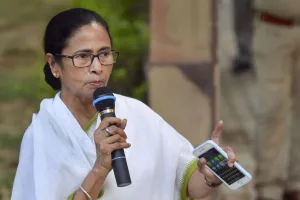
As 2025 draws to a close, West Bengal Chief Minister Mamata Banerjee finds herself navigating one of the most politically testing years of her long tenure.

Saibal Gupta | Kolkata |

As 2025 draws to a close, West Bengal Chief Minister Mamata Banerjee finds herself navigating one of the most politically testing years of her long tenure.
The year was marked not by a single defining crisis, but by three overlapping fault lines; the Bhasha Andolan, the Special Intensive Revision (SIR) of electoral rolls, and the unresolved teachers’ movement stemming from the SSC recruitment scam.

Each issue emerged from a different institutional domain – culture, democracy, and governance- yet together they converged into a single political storyline: a chief minister positioning herself as the defender of Bengal against perceived systemic, external, and institutional threats, even as governance challenges under her administration continued to cast long shadows.

Alleging harassment, profiling, and mistreatment of Bengali-speaking migrant workers in BJP-ruled states, Banerjee, also the Trinamool Congress supremo, formally launched the Bhasha Andolan from the ‘Martyr’s Day’ rally at Esplanade on July 21.
Framing the movement as a defence of Bengali language, identity, and sentiment, Banerjee invoked the legacy of the 1952 language movement to portray her agitation as a broader civilisational struggle against what she described as “linguistic terrorism,” rather than a routine political protest.
She asserted that Bengali was not merely a regional language but an Indian one, reminding audiences that the national anthem and national song were written in Bangla, and warned that any attempt to “delegitimise” the language was an assault on India’s pluralism itself.
Politically, the Bhasha Andolan served as a powerful mobilisation tool that allowed Banerjee to consolidate cultural pride, channel migrant anxieties, and sharpen her long-standing confrontation with the Centre.

Though the state’s principal opposition, the BJP, dismissed the movement as “manufactured outrage,” for Banerjee it proved handy in her bid to reclaim the political initiative, especially among minorities and migrant-linked households, while setting the emotional tone for the electoral battles ahead.

While the Bhasha Andolan and the SIR were projected as battles against external forces, the teachers’ movement emerged from the SSC recruitment scam as an internal crisis exposing deep systemic failures, where court findings of widespread irregularities led to mass cancellations of appointments and inflicted devastating human consequences through financial ruin and social stigma for affected families.
The fallout from the teachers’ movement was severe, leaving government schools grappling with acute staff shortages, disrupted academic schedules, and an administration compelled to consider fresh recruitment under intense legal scrutiny.
Politically, the issue dented the Trinamool Congress’s image of clean governance and provided the BJP with a potent weapon.
Running parallel to the language movement was the far more consequential confrontation over the Special Intensive Revision (SIR) of electoral rolls, an otherwise institutional exercise that Banerjee skilfully converted into a high-stakes political battle ahead of the 2026 Assembly polls.
The publication of the draft rolls in December 2025 triggered widespread anxiety over possible large-scale deletions, particularly among minorities, migrant workers, and the Matua community (lower-caste Hindus who migrated from erstwhile East Pakistan). These groups form a critical part of the Trinamool Congress’s electoral base.
Banerjee repeatedly alleged that the BJP and the Election Commission of India were acting in concert to “disenfranchise” these sections, accusing the process of being opaque and selectively targeted, and positioning herself as the sole bulwark against what she described as a systematic assault on Bengal’s electorate.
From November onwards, she took to the streets, directly questioned the ECI’s intent, and warned of statewide and even national agitation if legitimate voters were removed from the rolls.
Simultaneously, she reached out to booth-level officials and vulnerable communities, urging vigilance against harassment during verification and reinforcing her image as a protector of minority, migrant, and Matua voters.
By doing so, Banerjee sought to assume the role of a political messiah for these groups, a strategy aimed at consolidating sentiment that could potentially outmanoeuvre the BJP in 2026.

The SIR controversy allowed Banerjee to recast electoral administration itself as a contested political space.
To her supporters, Banerjee’s agitation appeared as a defence of democratic rights against institutional overreach and majoritarian politics; to critics, it amounted to politicising a constitutional process.

Crucially, the SIR narrative dovetailed with the Bhasha Andolan, binding language, identity, and voting rights into a single political frame of resistance.
Banerjee further expanded this narrative by attempting to fold the teachers’ movement into the same arc of confrontation.

By linking the SSC crisis with the SIR and the Bhasha Andolan, she reframed disparate challenges as interconnected expressions of institutional bias against Bengal and its people, a strategic shift that helped move the political discourse away from alleged governance failures and towards mobilisation, grievance, and electoral consolidation.
Whether this strategy succeeds electorally will be tested in 2026. But as a year-ender verdict, 2025 will be remembered as the year Banerjee fought three simultaneous battles — over language, voters, and livelihoods, each reshaping Bengal’s political landscape and redefining her leadership in a moment of extraordinary pressure.

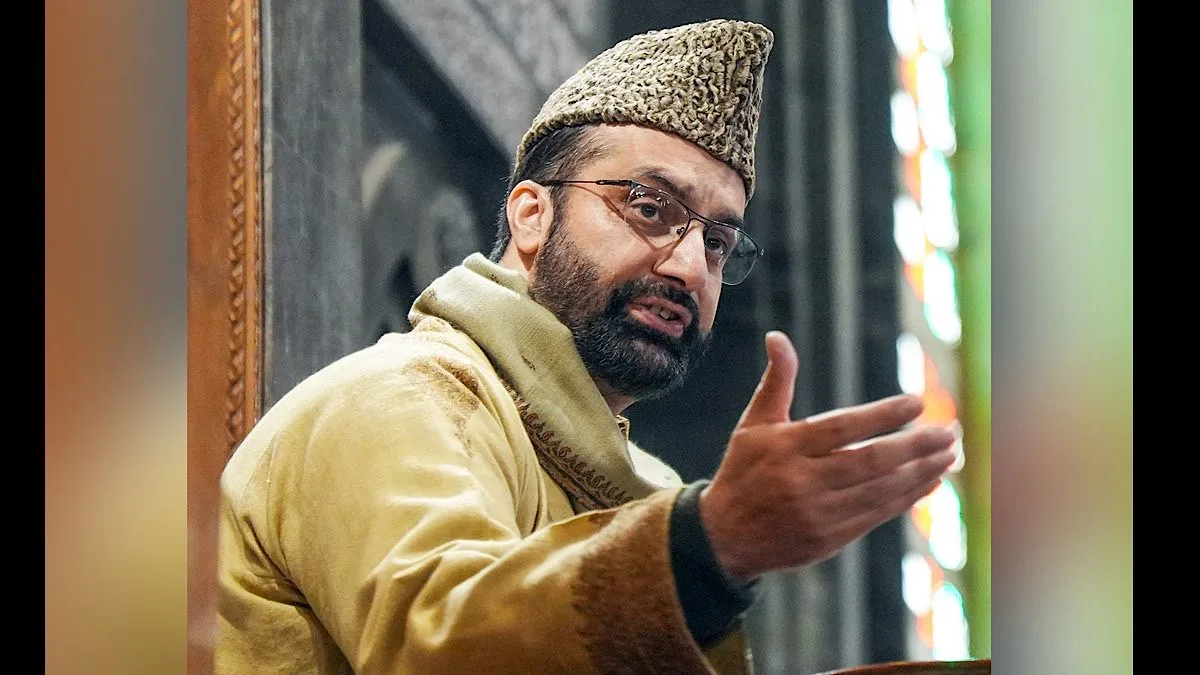
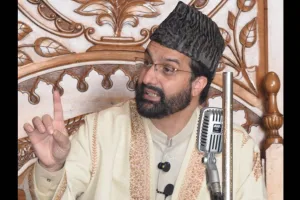
J-K: Mirwaiz Umar Farooq takes down ‘Chairman’ designation from social media

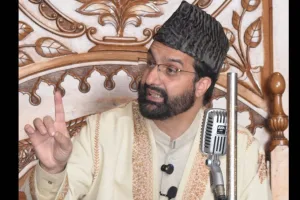
All Parties Hurriyat Conference president Mirwaiz Umar Farooq on Friday removed the ‘Chairman’ designation for All Parties Hurriyat Conference’ from his verified profiles on X (formerly Twitter) and Facebook.

ANI | New Delhi |

All Parties Hurriyat Conference president Mirwaiz Umar Farooq on Friday removed the ‘Chairman’ designation for All Parties Hurriyat Conference’ from his verified profiles on X (formerly Twitter) and Facebook.

Farooq clarified his move, saying that after authorities warned that his account could be taken down, citing the ban on the Hurriyat Conference and its constituent bodies under the Unlawful Activities (Prevention) Act (UAPA).

In a post on X, Farooq wrote, “For some time now, I was being pressed by the authorities to make changes to my X (formerly Twitter) handle as Hurriyat chairman, as all constituents of Hurriyat Conference, including the Awami Action Committee that I head have been banned under the UAPA, making Hurriyat a banned organisation, failing which they will take down my handle.”
< He said he had little choice but to comply with the authorities' directive, stating that social media remains one of the few platforms left for him to communicate with people and share his views with the wider world. "At a time when public space and avenues of communication stand severely restricted, this platform remains among the very few means available to me to reach out to my people and share my views on our issues with them, and the outside world. Under such circumstances, it is a Hobson's choice I was left to make," the post read. Following the abrogation of Article 370 in 2019, the Centre banned most constituent groups of the All Parties Hurriyat Conference (APHC), with several senior leaders either arrested under stringent laws or stepping away from public life. Awami Action Committee, which is Mirwaiz's own organisation, was also banned by the Centre under the stringent anti-terror law. All Parties Hurriyat Conference (APHC) was formed on March 9, 1993, and emerged as an umbrella body for separatist groups in Jammu and Kashmir.

Oppn accuses govt of vendetta as former Bihar CM Rabri Devi vacates official residence

As former Bihar Chief Minister Rabri Devi vacated the government residence at 10 Circular Road, the opposition on Friday accused the state government of pursuing personal vendetta.

IANS | New Delhi |

As former Bihar Chief Minister Rabri Devi vacated the government residence at 10 Circular Road, the opposition on Friday accused the state government of pursuing personal vendetta. The ruling JD(U) and the BJP, however, maintained that the law applies equally to everyone and that due process was followed.

Reacting to the development, Purnia MP Pappu Yadav said the move reflected personal animosity in politics.

Speaking to IANS, he said, “We do not understand why personal enmity is pursued in politics. From a security perspective, that house is important. Lalu Prasad Yadav and Rabri Devi lived there for a long time. No one should be forced to vacate a house because of political differences. I did not expect this from Chief Minister Nitish Kumar, and I still do not.”

Congress spokesperson Surendra Rajput also criticised the government, accusing it of vendetta politics.

“The BJP-led government always indulges in politics of enmity and revenge, which is why such actions are taken,” he said.

He further alleged that the move was aimed at harassing the RJD leadership.

“Despite rules, the BJP is conspiring to trouble an elderly couple. Lalu Prasad Yadav is seriously ill. This hostile approach towards the opposition reflects the BJP’s policy. Through such actions, they want to weaken democracy and the Constitution,” Rajput told IANS.

Responding to the allegations, JD(U) National Spokesperson Rajeev Ranjan Prasad dismissed the claims and said there was no question of discrimination.

“Why do they need a government house? They have several properties and assets registered in the names of family members, making them one of the wealthiest families in Bihar. They can live anywhere –whether on Gola Road or elsewhere. There is no justification for retaining a government residence,” he said.

Bihar Minister Ram Kripal Yadav also defended the decision, asserting that rules apply uniformly. “The law is the same for everyone. You are no longer entitled to the official residence. You have already been provided with all facilities applicable to a former Chief Minister. No one has been deprived of lawful entitlements,” he said.

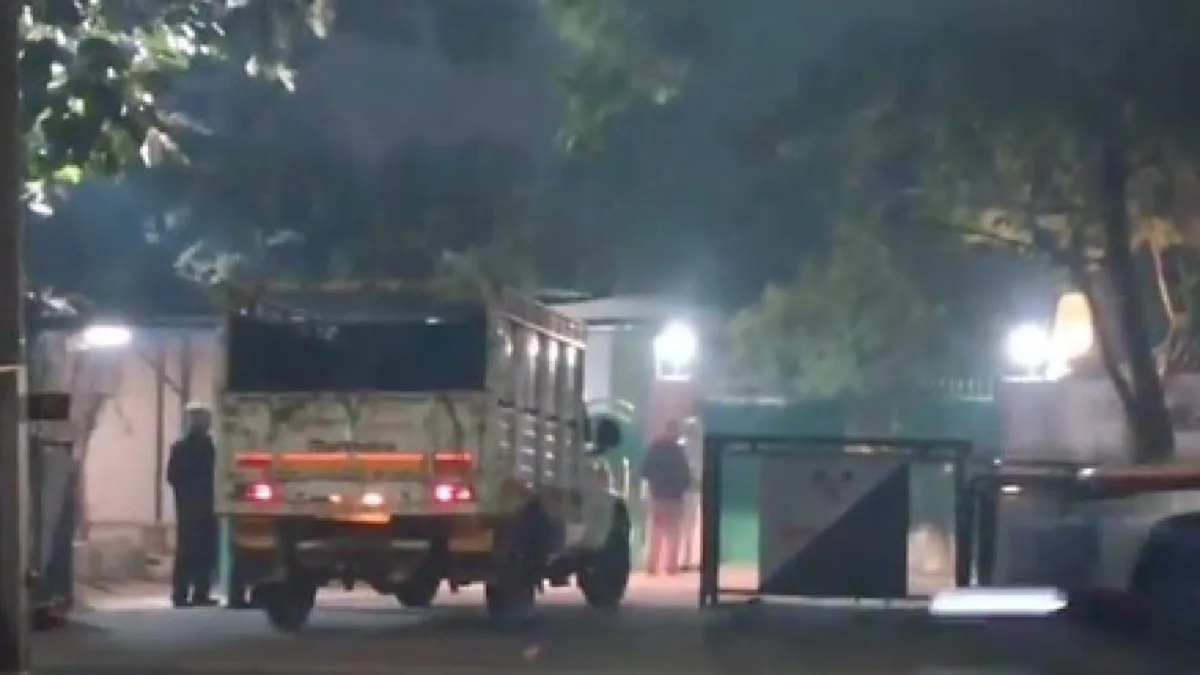
The process of vacating the 10 Circular Road residence of former Bihar Chief Minister Rabri Devi in Patna has been underway for the past several days.

Even late on Thursday night, plants and household belongings were seen being shifted from the premises in a pickup van.

When asked about the destination of the items, those present at the site did not provide a clear response.

However, sources speculate that the belongings are being gradually shifted to the under-construction residence of RJD supremo Lalu Prasad Yadav at Mahua Bagh locality.

It may be recalled that on November 25, the Bihar government’s Building Construction Department issued a notice to Rabri Devi, asking her to vacate the bungalow at 10 Circular Road.

Subsequently, a new government bungalow — Number 39 on Harding Road, Patna — was allotted to her.

The 10 Circular Road bungalow was modified to suit the family’s needs, including additional rooms and a conference hall for political engagements.

Leader of Opposition in the Legislative Assembly, Tejashwi Yadav, also stays in the 10 Circular Road bungalow, and the 1 Polo Road bungalow is mainly used as his office, where his close aide Sanjay Yadav stays.

According to reports, the Lalu-Rabri family is now shifting to the Mahua Bagh residence, and the newly allotted bungalow — Number 39 on Harding Road — will mainly be used for official work.

Miscreants arrested for vandalism in school during Christmas celebration, says Assam CM

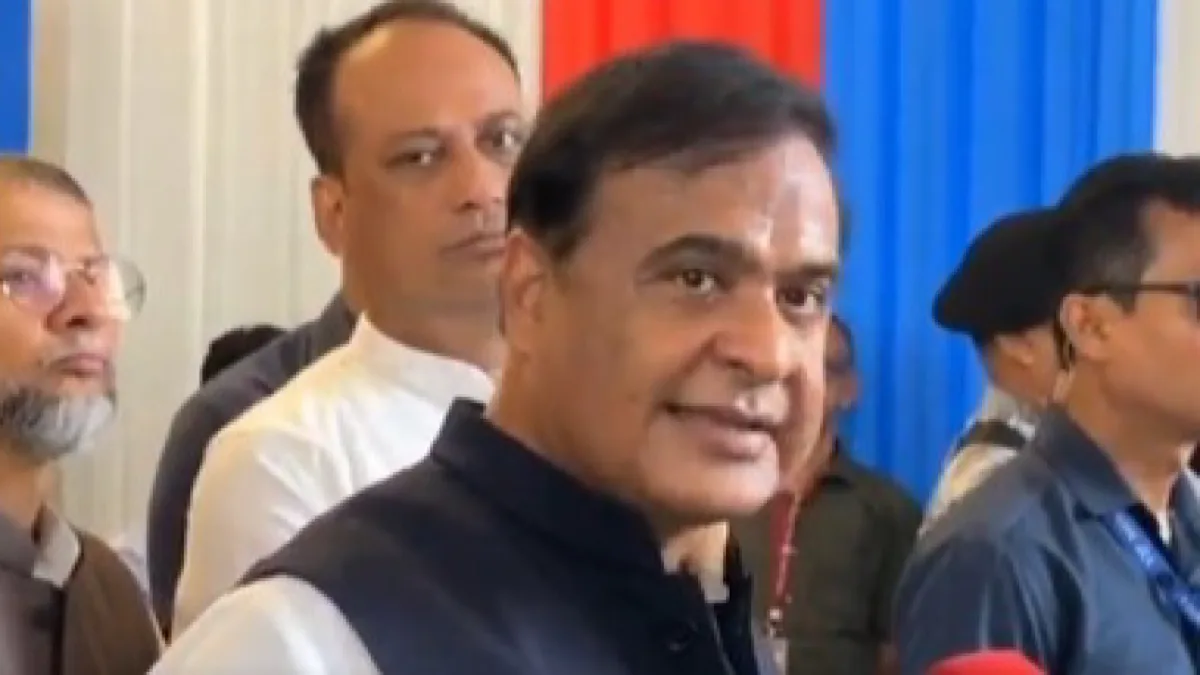
Assam Chief Minister Himanta Biswa Sarma on Friday said that the miscreants involved in the vandalism at St. Mary’s English School in Panigaon area of Nalbari district have been arrested, asserting that the state government remains fully committed to maintaining peace, communal harmony and ensuring the safety of all institutions and citizens across Assam.

IANS | New Delhi |

Assam Chief Minister Himanta Biswa Sarma on Friday said that the miscreants involved in the vandalism at St. Mary’s English School in Panigaon area of Nalbari district have been arrested, asserting that the state government remains fully committed to maintaining peace, communal harmony and ensuring the safety of all institutions and citizens across Assam.

“In connection with the vandalism at St. Mary’s English School, Panigaon, under Belsor Police Station, the miscreants involved have been arrested. Assam Police acted promptly, and further action will be taken strictly as per law,” the Chief Minister said in a post on social media platform X, underscoring the government’s zero-tolerance approach towards any attempt to disturb communal harmony.

The incident took place on Thursday afternoon when a group allegedly entered the premises of the school and vandalised decorations prepared for Christmas celebrations.

According to a written complaint lodged by the school’s Principal, Fr. Baiju Sebastian, the miscreants unlawfully entered the campus around 2.30 p.m. and damaged serial lights, decorative items, plant pots and other materials. Some of the Christmas-related articles were also reportedly set on fire, resulting in damage to school property.

Following the complaint, Belsor Police Station registered a case under multiple sections of the Bharatiya Nyaya Sanhita (BNS), 2023, and launched an investigation. Sub-Inspector Chanakya Das has been assigned to probe the case, officials said.

Police have arrested four people in connection with the incident. They have been identified as Bhaskar Deka (34), district secretary of the Vishwa Hindu Parishad (VHP); Manash Jyoti Patgiri (32), vice-president of the VHP; Biju Dutta (34), assistant secretary of the VHP; and Nayan Talukdar (37), district convenor of the Bajrang Dal.

All the accused are residents of Nalbari district.

Sources said the group allegedly entered the school premises, raising slogans and vandalising Christmas decorations, triggering tension in the area.

The incident has raised serious concerns, with many stressing the importance of safeguarding religious harmony and ensuring educational institutions remain free from intimidation. Police said the situation is under control and that strict legal action will be taken against those found guilty.

President Murmu confers Pradhan Mantri Rashtriya Bal Puraskar on Veer Bal Diwas

She expressed confidence that these awards will inspire all children across the country.
Statesman News Service | New Delhi |

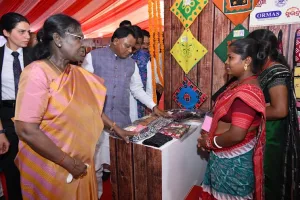
President Droupadi Murmu conferred the Pradhan Mantri Rashtriya Bal Puraskar on children for their exceptional achievements in the fields, including bravery, sports, art and culture, and science and technology, at a ceremony held here on Friday. She expressed confidence that these awards will inspire all children across the country.

She presented awards to 17 children—seven boys and 10 girls—from 14 states, recognising achievements in art, sports, culture, and innovation. The event coincided with Veer Bal Diwas, honouring the courage of Guru Gobind Singh Ji’s sons—Sahibzada Ajit Singh, Sahibzada Jujhar Singh, Sahibzada Zorawar Singh, and Sahibzada Fateh Singh. To commemorate their sacrifice, Prime Minister Narendra Modi announced in 2022 that December 26 would be observed annually as Veer Bal Diwas.

Congratulating the recipients of the Puraskar, the President said the award-winning children have brought pride to their families, their communities, and the entire country. She stated that this award has been presented to them for their encouragement.

Addressing the gathering, President Murmu said, ”About 320 years ago, Guru Gobind Singh Ji—the tenth Guru of the Sikh faith and revered by all Indians—and his four sons made supreme sacrifices while fighting in support of truth and justice. The bravery of the two youngest Sahibzadas is honoured and respected both in India and abroad.” She remembered with reverence the great child heroes who laid down their lives with pride for truth and justice.

The President expressed confidence that the greatness of a country is certain when its children are filled with patriotism and high ideals. She was happy to note that the children have showcased their exceptional talent in various fields such as bravery, art and culture, environment, innovation, science and technology, social service, and sports.

”It is because of talented children such as the seven-year-old Vaka Lakshmi Pragnika that India is considered a chess powerhouse on the world stage. Ajay Raj and Mohammed Sidan P, who saved the lives of others with their bravery and intelligence, deserve all the praise they receive. Nine-year-old daughter Vyoma Priya and eleven-year-old brave son Kamlesh Kumar lost their lives while saving the lives of others with their courage,” she said.

She also praised 10-year-old Shravan Singh, who, amidst the risks associated with war during Operation Sindoor, regularly delivered water, milk, and lassi to the Indian soldiers stationed at the border near his home, whereas the differently abled daughter, Shivani Hosuru Uppara, has achieved extraordinary accomplishments in the world of sports, overcoming economic and physical limitations.

Praising Vaibhav Suryavanshi, who has made a name for himself in the highly competitive and talent-filled world of cricket and has set many records, President Murmu expressed confidence that brave and talented children like them will continue to do good work and make India’s future bright.

The Pradhan Mantri Rashtriya Bal Puraskar is the highest civilian honour for children in India. It is awarded annually to children in the age group of 5-18 years for their exceptional abilities and outstanding achievements in seven categories.

Kharge, Priyanka Gandhi Remember Manmohan Singh, the Quiet Reformer Who Redefined India’s Growth Story

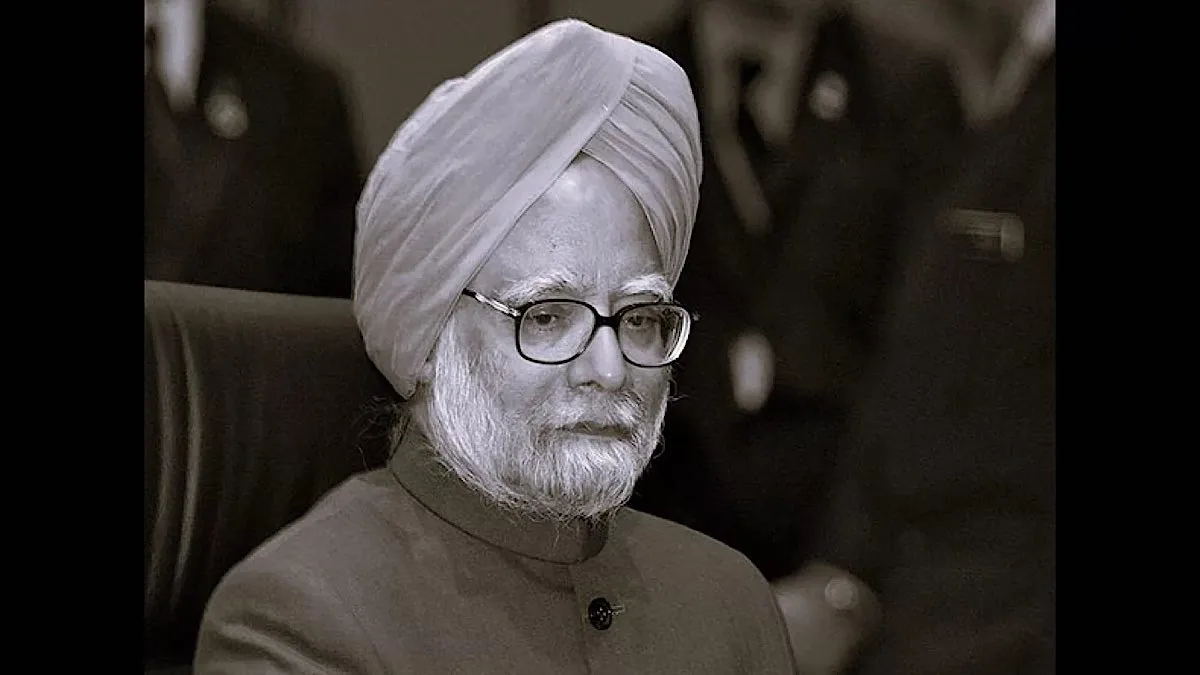
On the first death anniversary of former Prime Minister Manmohan Singh, Congress leaders, including party President Mallikarjun Kharge and party leader Priyanka Gandhi Vadra paid heartfelt tributes to the economist-statesman remembered as the gentle yet decisive architect of modern India’s economic framework.

IANS | New Delhi |

On the first death anniversary of former Prime Minister Manmohan Singh, Congress leaders, including party President Mallikarjun Kharge and party leader Priyanka Gandhi Vadra paid heartfelt tributes to the economist-statesman remembered as the gentle yet decisive architect of modern India’s economic framework.

Dr Singh, who served as Prime Minister from 2004 to 2014 and earlier as the Finance Minister behind the landmark 1991 economic reforms, passed away on December 26, 2024, at the age of 92. His legacy continues to shape India’s economic and institutional landscape.

Kharge led the tributes, recalling Singh’s pivotal role in guiding the nation through periods of transition and uncertainty. Emphasising his belief in inclusive development, Kharge said Singh’s policies were rooted in growth that uplifted the most marginalised.

“On his first punyatithi, we remember with deep respect the immense contribution of former Prime Minister Dr Manmohan Singh to India’s nation-building,” Kharge wrote. “A transformative leader, he reshaped India’s economic path, expanded opportunities for millions, and helped lift countless people out of poverty.”

Kharge also highlighted Singh’s commitment to a rights-based governance model, citing landmark legislations such as the Mahatma Gandhi National Rural Employment Guarantee Act (MGNREGA) and the Right to Information (RTI) Act as enduring symbols of his focus on social justice and accountability.

Echoing these sentiments, Priyanka Gandhi paid tribute to Singh’s personal values and moral stature. Reflecting on his long public career — which included serving as Governor of the Reserve Bank of India — she described him as a leader defined by dignity and courage.

“Dr Manmohan Singh ji believed deeply in equality and carried himself with resolution, courage, and grace,” she said. “His simplicity, honesty, and unwavering dedication to the nation will continue to inspire generations.”

Born in 1932 in Gah, now in Pakistan, Manmohan Singh rose from a modest academic background to become a globally respected economist. His decade-long tenure as prime minister was marked by sustained economic growth, effective handling of the 2008 global financial crisis, the expansion of social safety nets, and a major breakthrough in foreign policy through the Indo-US Civil Nuclear Deal, which ended India’s nuclear isolation.

As India marks his first death anniversary, leaders and citizens alike remember Dr Singh not merely for economic metrics or reforms, but for his unimpeachable integrity, quiet leadership, and lifelong commitment to public service — a legacy that continues to resonate beyond the corridors of power.

PV Sindhu to lead BWF Athletes’ Commission, joins council for 2026–29

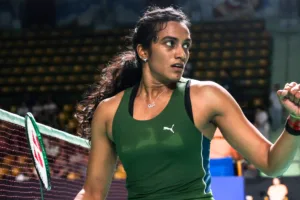
Two-time Olympic medallist PV Sindhu has been elected Chair of the BWF Athletes’ Commission for the 2026–2029 term and will also serve on the BWF Council.

Statesman News Service | New Delhi |

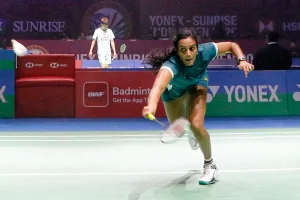
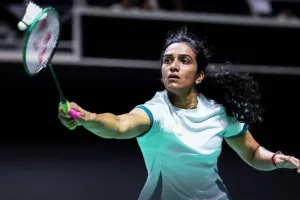
PV Sindhu, the Indian badminton star and two-time Olympic medallist has been elected Chair of the Badminton World Federation (BWF) Athletes’ Commission for the 2026–2029 cycle, according to Olympics.com. With this appointment, Sindhu is set to take a seat on the BWF Council, ensuring direct representation of athletes in the sport’s global decision-making body.

Two-time Olympic medallist continues leadership role in world badminton

Sindhu has been part of the BWF Athletes’ Commission since 2017 and has served as a BWF Integrity Ambassador since 2020. Expressing her appreciation for the same, she said “To be entrusted with this responsibility by fellow athletes is an honour I carry with humility and gratitude. I would also like to sincerely acknowledge Greysia Polii for the exceptional work she has done in the previous term,” as quoted by Olympics.com.

Polii is a Tokyo 2020 Olympic gold medallist who retired in 2022 and served twice on the Athletes’ Commission, most recently from 2021 to 2025.

As India’s most successful badminton player, Sindhu won silver at the Rio 2016 Olympics and bronze at Tokyo 2020. She is also set to captain India at the 2026 Badminton Asia Team Championships in Qingdao, China.

Debora Jille named Deputy Chair; global stars included in commission

The Deputy Chair of the commission will be Debora Jille of the Netherlands, a European Games women’s doubles silver medallist and other members will include reigning Olympic women’s singles champion An Se-young of South Korea, six-time African Games medallist Doha Hany of Egypt, and Paris 2024 women’s doubles gold medallist Jia Yifan of China.

Previously, in para-badminton, Chan Ho Yuen Daniel of Hong Kong China’s had been appointed full-time chair after serving in an interim role. Indian para-badminton player Abu Hubaida is also part of the Athletes’ Commission.

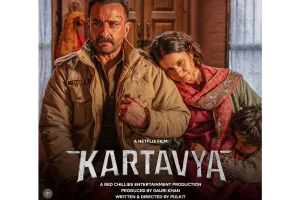
Sara Ali Khan reveals family strength and life lessons learned during father Saif Ali Khan’s knife attack

Sara Ali Khan opens up about the terrifying knife attack on her father Saif Ali Khan earlier this year. She shares how the family stayed strong and the lessons in dignity she learned from grandmother Sharmila Tagore.

Statesman News Service | New Delhi |

Actress Sara Ali Khan recently shared heartfelt insight into her family’s life, especially the tough times they faced earlier this year. Speaking on her aunt Soha Ali Khan’s podcast, ‘ALL ABOUT HER’, Sara opened up about the traumatic knife attack on her father, Saif Ali Khan, back in January.

Also Read: Saif Ali Khan details the attack incident; reveals his family’s reaction

A difficult start to the year for the Pataudis

Saif Ali Khan was attacked at his Mumbai home by an intruder during a robbery attempt suffering multiple stab wounds to his back and arm. He required immediate surgery but recovered.

Sara described this period as extremely challenging for the family. “We have been through quite a lot together, especially earlier this year with abba,” she said.

Lessons in grace and dignity

On the podcast, Soha asked Sara and her grandmother, Sharmila Tagore, what they have learned from each other. Sara highlighted her grandmother’s poise and composure in difficult situations.

“I have learned that dignity and grace above all else, even in the hardest of times, is important,” she shared. “Holding herself together and not letting the situation break her—that’s something I really aspire to bring into my own life.”

Sara also mentioned that she deeply admires Sharmila Tagore’s elegance and hopes to incorporate that dignity into her own personality.

On the work front

Sara has been keeping busy with her film projects. She was last seen in ‘In Dino’, a spiritual sequel to the 2007 anthology film ‘Life in a… Metro’.

The movie features ensemble cast including Anupam Kher, Neena Gupta, Konkona Sen Sharma, Pankaj Tripathi, Aditya Roy Kapur, Ali Fazal, and Fatima Sana Shaikh. The film explores contemporary love stories and modern urban relationships.

Looking ahead, Sara is all ready to star in ‘Pati Patni Aur Woh Do’ alongside Ayushmann Khurrana, Rakul Preet Singh, Wamiqa Gabbi.

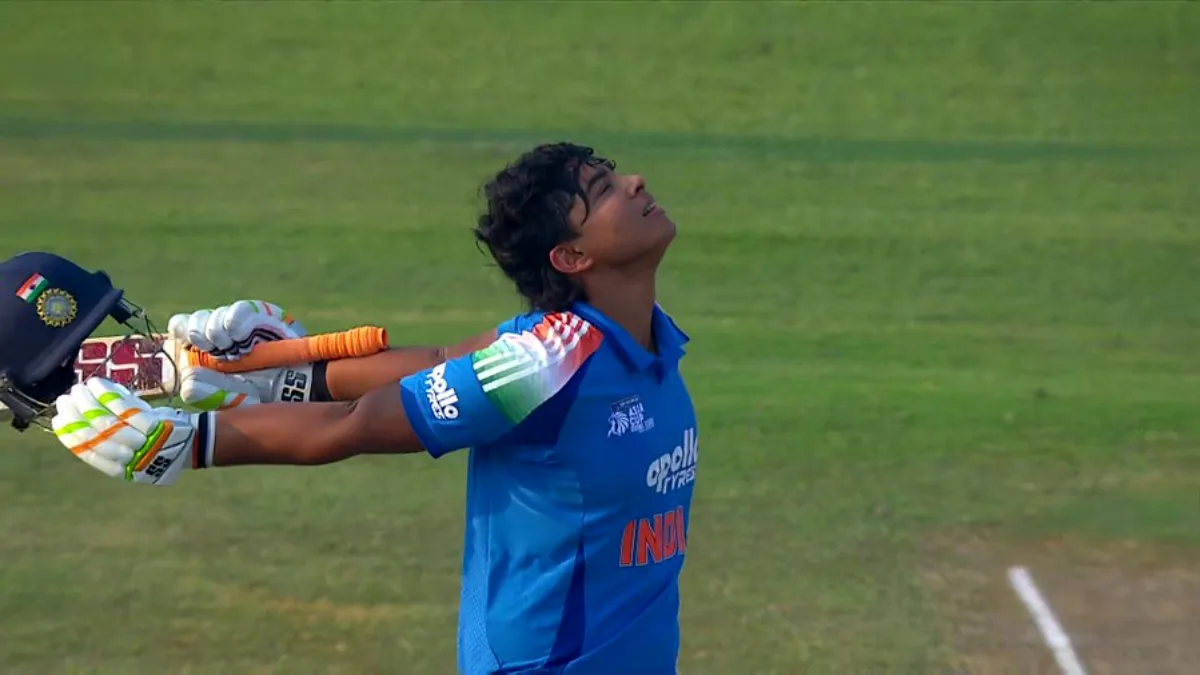
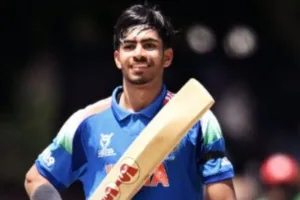
Vaibhav Suryavanshi felicitated with Rashtriya Bal Puraskar, set to meet PM Narendra Modi

President Droupadi Murmu presented the prestigious award to the young batting sensation at Vigyan Bhawan, New Delhi, on the occasion of Veer Bal Diwas.

Statesman News Service | New Delhi |

Vaibhav Suryavanshi will miss Bihar’s second-round Vijay Hazare Trophy 2025-26 match against Manipur at the JSCA International Stadium in Ranchi, as the 14-year-old was felicitated with the Pradhan Mantri Rashtriya Bal Puraskar on Thursday.

President Droupadi Murmu presented the prestigious award to the young batting sensation at Vigyan Bhawan, New Delhi, on the occasion of Veer Bal Diwas, which honours children for their outstanding achievements across various fields.


Vaibhav reached Delhi on Wednesday for the ceremony. Following the formal proceedings, he and the other awardees are scheduled to meet Prime Minister Narendra Modi, an interaction aimed at inspiring the next generation.

The honour comes on the back of a remarkable run in previous matches. Vaibhav delivered a masterclass in Bihar’s opening match of the Vijay Hazare Trophy, smashing a stunning 190 off just 84 balls against Arunachal Pradesh. His teammate Sakibull Gani also made headlines in the same match, breaking the record for the fastest century by an Indian in List A cricket, reaching the milestone in just 32 balls.

Vaibhav Suryavanshi will miss the rest of the Vijay Hazare Trophy 2025–26

Following the award ceremony, Vaibhav will join the India U-19 squad for preparatory matches ahead of the ICC Under-19 World Cup, scheduled to begin on January 15, 2026, in Zimbabwe. His national duties mean he will be unavailable for the remainder of the Vijay Hazare Trophy.

At 14 years and 272 days, Vaibhav became the youngest player to score a century in men’s List A cricket, shattering the record of former Pakistani cricketer Zahoor Elahi, who scored the century at 15 years and 209 days in 1986. He went on to rewrite history further by registering the fastest 150 in List A cricket, reaching the landmark in only 59 balls, surpassing the previous record held by AB de Villiers in the match against Arunachal Pradesh.

He continued his sensational form by scoring a phenomenal 171 off 95 balls against the United Arab Emirates (UAE) in the opening group match of the U-19 Asia Cup on December 12, 2025, in Dubai.

UK citizenship, Indian salary, foreign funds: inside the ED case against Shamsul Huda Khan

The Enforcement Directorate has filed a PMLA case against UK-based preacher Shamsul Huda Khan after a UP ATS FIR, probing alleged illegal funding, madrasas and foreign links.

Statesman News Service | New Delhi |

The Enforcement Directorate (ED) has filed a money laundering case against Islamic preacher Maulana Shamsul Huda Khan, currently based in the United Kingdom, and has initiated a probe under the Prevention of Money Laundering Act (PMLA), a report said on Friday.

The action follows an FIR filed by the Uttar Pradesh Anti-Terrorism Squad (UP ATS), bringing alleged foreign funding, asset accumulation and suspected radical links into focus.

Case registered under PMLA after UP ATS FIR

According to officials, the ED probe stems from an FIR registered by the UP ATS. The agency has invoked provisions of the PMLA to examine suspected illicit financial flows and assets allegedly linked to Khan.

As per available records, Shamsul Huda Khan was appointed as an assistant teacher in a government-aided madrasa in 1984. He later acquired British citizenship in 2013. However, investigators allege that despite becoming a UK citizen and residing abroad, he continued to draw a salary between 2013 and 2017, without actively discharging teaching duties during that period.

Salary draw despite UK citizenship under scrutiny

Officials said the alleged continuation of salary payments after the acquisition of foreign citizenship forms a key part of the investigation, as Khan was neither residing in India nor performing his teaching responsibilities at the time.

During the past two decades, Khan reportedly travelled to several foreign countries. Investigators allege that he received substantial funds amounting to several crores of rupees through seven to eight bank accounts maintained in India.

Funding trail and assets worth over Rs 30 crore

The ED is also examining Khan’s alleged acquisition of more than a dozen immovable properties, with their estimated value exceeding Rs 30 crore. The assets are suspected to have been purchased using proceeds linked to illegal funding activities, officials said.

Investigators allege that Khan promoted radical ideology and engaged in unlawful funding under the guise of religious education. A native of Azamgarh, he is accused of routing funds to multiple madrasas through his NGO, Raja Foundation, as well as through his personal bank accounts.

Madrasas in Azamgarh, Sant Kabir Nagar under scanner

Officials said Khan had established two madrasas in Azamgarh and Sant Kabir Nagar. The registrations of both institutions were subsequently cancelled by the competent authorities.

Agencies are also scrutinising Khan’s overseas connections. Officials said his alleged links with radical organisations based in the United Kingdom are under examination. Further, since he had visited Pakistan, his suspected contacts with extremist organisations there are also being probed. Investigators believe he is associated with the Pakistani radical organisation Dawat-e-Islami.

At present, the Enforcement Directorate is mapping the funding network, foreign linkages and assets connected with the accused as part of the ongoing money laundering investigation.

Daayra: Kareena Kapoor and Prithviraj Sukumaran wrap Meghna Gulzar-directed film exploring morality and justice

Kareena Kapoor Khan and Prithviraj Sukumaran have wrapped filming for Meghna Gulzar’s investigative thriller ‘Daayra’. The film, exploring morality and justice, is set for a 2026 theatrical release.

Statesman News Service | New Delhi |

Bollywood’s Kareena Kapoor Khan and Malayalam superstar Prithviraj Sukumaran have officially wrapped up shooting for their much-anticipated investigative crime thriller ‘Daayra’. Directed by the National Award-winning Meghna Gulzar, the film promises a gripping story that treads the grey areas of morality and justice.

Produced jointly by Junglee Pictures and Pen Studios, the movie is all ready for a theatrical release in 2026.

A story that makes you think

According to the filmmakers, ‘Daayra’ isn’t your usual whodunit. The plot revolves around single disturbing act and explores how it sparks reactions that ripple across society shaping public opinion and challenging conventional ideas of right and wrong.

Meghna Gulzar has described the film as reflection on society and its institutions pushing audiences to question rather than offering simple answers.

Also Read: Meghna Gulzar shares family moment with Rakhee and Gulzar: samose, chai aur baarish

Stars share their excitement

Prithviraj took to Instagram to share the wrap-up moment, writing, “That’s a wrap on #Daayra… The story we’ve lived on set will soon come alive for audiences everywhere. Grateful for this journey and can’t wait for you to witness it on screen in cinemas in 2026.”

Kareena earlier shared behind-the-scenes glimpses from the first day of shooting. “Day 1. 68th film Daayra with the most amazing @meghnagulzar and @therealprithvi… Send love and blessings,” she captioned.

Special moments on set

The film also saw veteran lyricist Gulzar visiting the sets, engaging with the team, and adding his creative touch to the atmosphere.

Prithviraj described his first days on set as a thrilling experience, saying, “#Daayra is officially rolling. A new story, a new journey that challenges and excites in equal parts. Thrilled to be stepping into this world.” Director Meghna Gulzar herself shared heartfelt notes highlighting the film’s theme of “blurred and crossed lines.”

Anticipation builds

Kareena had expressed her enthusiasm even at the announcement stage: “I’ve always said that I’m a director’s actor… and this time I cannot wait to work with one of the finest directors we have, @meghnagulzar & alongside the magnificent @therealprithvi, whose work I deeply admire. To my dream team, #Daayra let’s do this.”

Prithviraj too described the story as one that stayed with him from the moment he heard it, adding his happiness to work with the talented cast and crew.

‘NDA govt committed to Ease of Living; reform trajectory to continue with greater vigour’: PM Modi

Taking to X, PM Modi shared a thread by MyGovIndia and said his government will continue to work hard to make life better for Indians.

Statesman News Service | New Delhi |

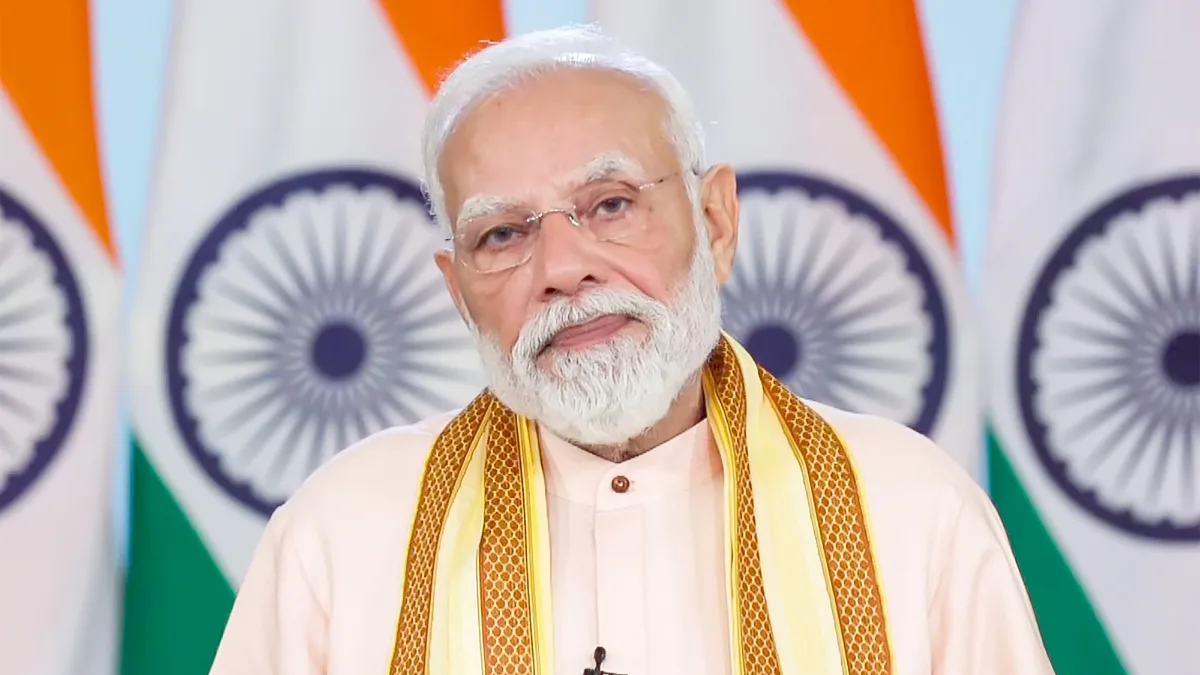
As India prepares to say goodbye to 2025, Prime Minister Narendra Modi, in his 11th year in office, on Friday reaffirmed that his NDA government is committed to enhancing “ease of living” for the people of the country.
Taking to X, PM Modi shared a thread by MyGovIndia and said his government will continue to work hard to make life better for Indians. The X thread highlights many reforms initiated by the BJP-led Central government, including simpler tax laws, modern labour codes, increased rural employment and others in the year 2025.

“Ours is a Government committed to boosting ‘Ease of Living’, and this thread below gives examples of how we have worked in that direction. Our reform trajectory will continue with even more vigour in the coming times,” the PM posted.

It may be noted that MyGovIndia is a platform of the Central government that engages with citizens on government initiatives.

In its thread, MyGovIndia posted that real reforms aim to reduce stress for the people.

“2025 marked a clear shift in governance, with reforms focused on outcomes, not complexity. Simpler tax laws, faster dispute resolution, modern labour codes, and decriminalised compliance reduced friction for citizens and businesses alike. The emphasis was on trust, predictability, and long-term growth, showing how well-designed policy can quietly improve everyday life,” the post read, while sharing details on “how these reforms made life easier across sectors and for people on the ground”.
“The emphasis (for reforms) was on trust, predictability, and long-term growth, showing how well-designed policy can quietly improve everyday life,” MyGovIndia added.

The MyGovIndia thread highlighted income tax reforms brought in in 2025, including zero tax up to Rs 12 lakh income and the new Income Tax Act, 2025.

The post further mentioned reforms introduced for small businesses that enable higher investment and turnover limits.

The VB-G RAM G Act that has replaced MGNREGA was also mentioned, while highlighting that the rural employment scheme is now focused not just on wages but also on building permanent village assets.

The post further highlighted the new labour codes and GST reforms, including rate rationalisation.

Drishyam 3: Tabu drives the drama, Rajat Kapoor confesses his role ‘has no arc’

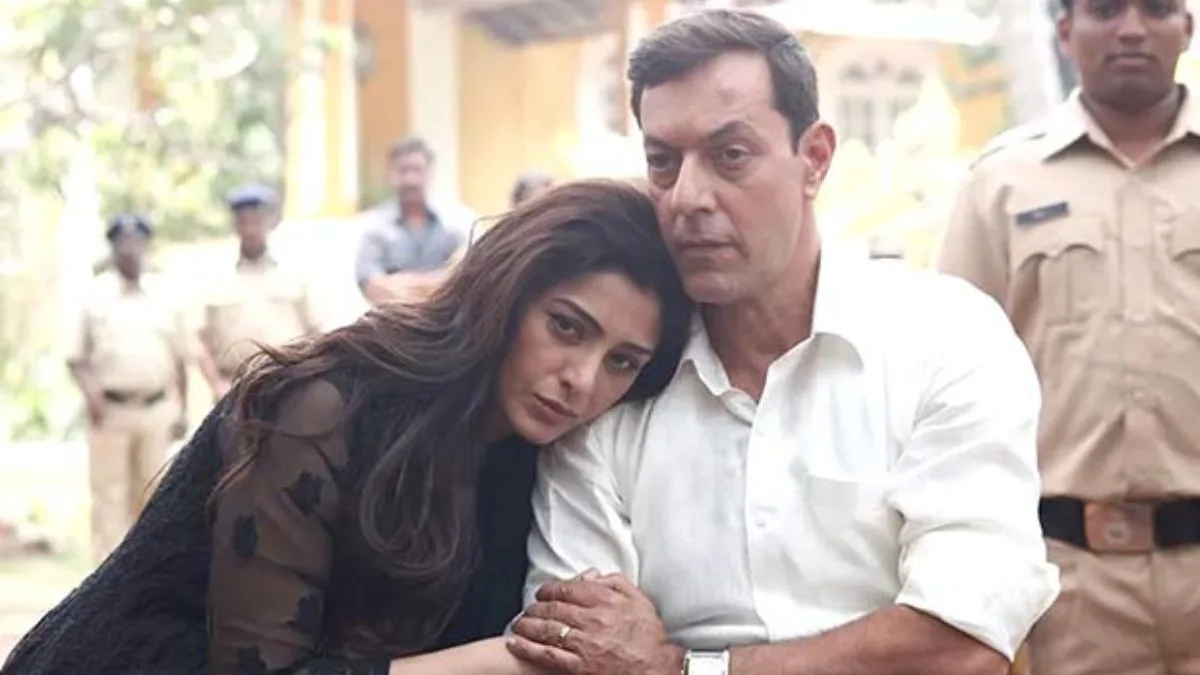
Rajat Kapoor returns as Mahesh Deshmukh in ‘Drishyam 3’, playing the quiet husband to Tabu’s cop character. He admits his role has “no arc” and says, “I’m still standing behind Tabu,” as the family unravels the mystery of their son’s death.

Statesman News Service | New Delhi |

Fans of the ‘Drishyam’ franchise have a lot to look forward to, but Rajat Kapoor, who plays Mahesh Deshmukh, admits his role in the upcoming third instalment won’t steal the spotlight. Rajat is back as the civilian husband of cop Meera Deshmukh in ‘Drishyam 3’, played by Tabu, and he’s keeping things simple.

Also Read: Drishyam 3: Mohanlal or Ajay Devgn, who will hit the screens first? All about release dates, cast, and more

“Still standing behind Tabu”

In a recent interview with SCREEN, Rajat shared some candid thoughts about his role. Asked if his character gets a deeper storyline in ‘Drishyam 3’, he laughed and said, “There’s nothing to crack. I was standing behind Tabu, that’s it. There’s no arc. I’m still standing behind Tabu.”

Rajat described his role as that of a ‘cop husband,’ but the real focus remains on Tabu’s character.

Also Read: ‘Drishyam 3’ release date and cast revealed: Ajay Devgn is back as Vijay Salgaonkar, mystery deepens

A familiar typecast

Rajat Kapoor has played his share of officers and bureaucrats on screen. From a Senior Income Tax officer in Ajay Devgn’s ‘Raid 2’ to a police official in Nawazuddin Siddiqui’s ‘Raat Akeli Hai: The Bansal Murders’, he has often portrayed figures of authority.

Reflecting on these roles, he said, “Oh man, income tax, CBI, that’s where I’m stuck at. It’s not just a cop role. You’re playing a character in the script, so you’re just reacting to the situation.”

He explained that unlike a character with more depth, a generic officer doesn’t offer much room to explore emotions or personal growth.

The ‘Drishyam’ legacy

‘Drishyam’ series originally began as Malayalam franchise created by Jeethu Joseph. It stars Mohanlal and Meena. The story revolves around family caught in aftermath of an unexpected crime.

The Hindi adaptation has won over audiences with Ajay Devgn and Shriya Saran in lead roles and Abhishek Pathak directs the upcoming finale.

The third instalment of the Hindi ‘Drishyam’ is scheduled for release on October 2, 2026.

Steve Smith’s mediocre Ashes continues, falls to Josh Tongue for third time in as many meetings

Steve Smith’s mediocre Ashes campaign continued as he once again fell to England’s right-arm pacer Josh Tongue during the Boxing Day Test at Melbourne on Friday.

ANI | New Delhi |

Steve Smith’s mediocre Ashes campaign continued as he once again fell to England’s right-arm pacer Josh Tongue during the Boxing Day Test at Melbourne on Friday.

Leading the side in the fourth Ashes Test with the series already in pocket, Smith, who also led Australia in two opening Tests in the absence of regular skipper Pat Cummins, did get off to a decent start with a boundary each against Tongue and Brydon Carse, but the 31st delivery he faced, coming into him, beat the inside edge of his bat and crashed into middle stump. Smith walked back for just nine in 31 runs and was the fourth wicket to fall for Australia.

In Tests, Smith has faced 35 deliveries against Tongue and scored 69 runs at an average of 11.66, being dismissed thrice in as many meetings. In the ongoing series, Smith has not looked at his best, and the Australia’s ‘Best Since Bradman’ has not been able to deliver a bumper Ashes series expected from him. In three Tests and five innings, he has scored just 112 runs at an average of 37.33, with just one half-century to his name and best score of 61. At Perth during the first Test, he scored 17 and 2*, following it with a better outing with 61 and 23* at Brisbane during the pink-ball Test. Having missed the third Test at Adelaide due to fitness concerns, Smith’s Ashes return fell flat at MCG.

At the end of session one, Australia was 72/4, with Usman Khawaja (21*) and Alex Carey (9*) unbeaten.
England won the toss and opted to bowl first, with Aussie openers Travis Head and Jake Weatherald coming out to bat.
The batting duo started off cautiously against Gus Atkinson and Brydon Carse. In the sixth over, Australia released some pressure, with Head getting two successive boundaries against Carse, one being an elegant cover drive, and Weatherland ended the over with another cover drive for four, getting 15 runs off the over.

Atkinson earned England their first breakthrough, with Head chopping on a delivery angling across him into his stumps. Head was gone for 22-ball 12, with Australia on 27/1 in 5.1 overs.
From the ninth over, Josh Tongue started his spell of horror for the Aussies, with Weatherald strangled down the leg side and caught by keeper Jamie Smith for a 23-ball 10. Australia slipped to 31/2 in nine overs.
It was the Boxing Day Test and England, who had failed to secure the Ashes, were not holding back with their punches as Tongue got Marnus Labuschagne (6) and Steve Smith (5) in quick succession, leaving Aussies in disarray at 51/4 in 19.2 overs, with the cream of Aussie batting sitting in the pavillion barely an hour into the Test match.
The left-handed batting pair of Alex Carey and Usman Khawaja managed to see Australia through the remainder of the session.
Australia (Playing XI): Travis Head, Jake Weatherald, Marnus Labuschagne, Steven Smith(c), Usman Khawaja, Alex Carey(w), Cameron Green, Michael Neser, Mitchell Starc, Jhye Richardson, Scott Boland
England (Playing XI): Zak Crawley, Ben Duckett, Jacob Bethell, Joe Root, Harry Brook, Ben Stokes(c), Jamie Smith(w), Will Jacks, Gus Atkinson, Brydon Carse, Josh Tongue.