PM Modi interacts with athletes at Darjeeling sports meet virtually
The closing ceremony of the Darjeeling Sansad Khel Mahotsav 2025 was held on Thursday with the grand final of the Sansad Football Tournament, marking the conclusion of a multi-sport festival aimed at promoting fitness, healthy lifestyles and youth participation.
Statesman News Service | Kolkata | December 26, 2025 11:31 am
PM Modi (Photo:IANS)
The closing ceremony of the Darjeeling Sansad Khel Mahotsav 2025 was held on Thursday with the grand final of the Sansad Football Tournament, marking the conclusion of a multi-sport festival aimed at promoting fitness, healthy lifestyles and youth participation.
The event was organised in line with the ‘Fit India’ and ‘Nasha Mukt Bharat’ initiatives and witnessed participation from thousands of youths from across the Darjeeling constituency, covering the Hills, Terai and Dooars regions. Competitions were conducted in a wide range of disciplines, including football, hockey, karate, table tennis, badminton, athletics and yogasana, along with community activities such as tug-of-war and musical chairs.
Officials said the Mahotsav served as a platform for young sportspersons to showcase their talents while fostering unity among diverse communities of the region through sports.
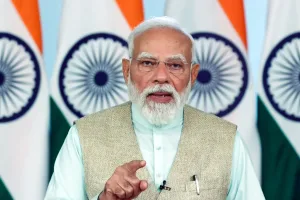
A key highlight of the event was an interaction between the Prime Minister and selected young athletes, virtually. During the interaction, encouragement was extended to participants to pursue excellence in their respective sports disciplines with dedication and discipline.
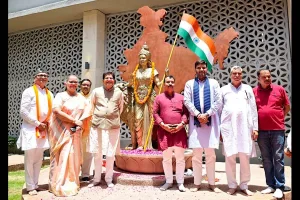
Several prominent dignitaries were present at the closing ceremony, including former Indian football captain Bhaichung Bhutia, former Indian hockey captain and Olympian Bharat Chettri, Rajya Sabha MP Harshvardhan Shringla, senior security officials, elected representatives and BJP leaders from across the region.
The organisers said sports play a vital role in strengthening physical and mental well-being and in promoting national unity.
Sebaashray 2 caps see 1.4 lakh people visit for treatment
More than 1.40 lakh people have visited the Sebaashray 2 camps since its inception on 1 December.
Statesman News Service | Kolkata | December 26, 2025 11:31 am
Sebaashray initiative By Abhishek Banerjee (Photo:Instagram)
More than 1.40 lakh people have visited the Sebaashray 2 camps since its inception on 1 December.
Records show that 1,42,288 people have visited the camps till 23 December. The camps are now being held in Bishnupur, one of the seven constituencies under the Diamond harbour Lok Sabha seat.
The camps are closed on 24 and 25 December. They will be held in Bishnupur till 28 December. The camps have already been held in Maheshtala, Metiabruz and Budge Budge. After Bishnupur, it will move to Falta, Satgachia and Diamond Harbour.
Records said on 23 December, 2,892 people had registered their names in Bishnupur. Out of these, 1,334 people were given medicines while six persons were referred for advanced treatment. Around 1,356 underwent diagnostic tests. In Bishnupur, 15 camps have been opened.
The initiative is the brain child of Mr Banerjee. This is for the first time in the country when camps are held in the Assembly segments under a Lok Sabha seat where treatment is given to the people free of cost. Thirty nine people underwent cataract surgery so far while more than 15,000 people underwent diagnostic tests.
Crude bomb violence in West Bengal has once again played havoc with the children of the state.
Statesman News Service | Kolkata | December 26, 2025 11:31 am
Representation image (file photo)
Crude bomb violence in West Bengal has once again played havoc with the children of the state. A minor boy was critically injured in a bomb explosion at the house of a political worker in South 24-Parganas’ Basanti last night, triggering panic and sharp political reactions in the area.
The victim, identified as Kalo Gayen, a Class IV student, sustained grievous injuries when a bomb went off at a residence in Kharimachan area, under Amjhara Gram Panchayat in Basanti police station area. He suffered severe injuries to his right hand and eyes and was initially taken to a local hospital before being shifted to SSKM Hospital in Kolkata, where his condition is stated to be critical. The explosion took place at the house of Anar Sheikh, reportedly a Trinamul worker.
Local sources said a long-standing dispute has been simmering between the Sheikh and Gayen families, primarily over a piece of land where a local club Kharimachan Nazrul Sangha’ is situated. According to villagers, tensions had escalated in recent days, prompting plans for a salishi (arbitration) meeting between the two families scheduled for 25 December. However, on the evening of 24 December, before any settlement could take place, the bomb explosion occurred, leaving the minor boy critically injured.
Residents alleged that crude bombs were being manufactured inside Anar Sheikh’s house to assert dominance in the ongoing dispute. At the time of the explosion, several children were reportedly playing nearby, leading to the tragic injury. This is not the first time violence has flared up between the two families. In 2019, Rahim Sheikh, a member of the Sheikh family, was murdered, plunging the area into tension for a prolonged period. Police from Basanti police station have started an investigation and are probing the circumstances leading to the blast.
With elections approaching, the incident has intensified political sparring. A BJP leader, Sanjay Nayek, blamed the ruling party, questioning the state’s law and order situation. However, Basanti Trinamul MLA Shyamal Mondal denied any political connection to the incident, calling it a purely local dispute.
Children of brick-kiln workers celebrate Christmas at Balagarh
The National Service Scheme (NSS) of Balagarh Bijoy Krishna Mahavidyalaya, which created an open learning space called Biplabi Bhupati Majumdar Pathshala, celebrated Christmas with children of migratory brick-kiln workers on Wednesday.
Statesman News Service | Kolkata | December 26, 2025 11:30 am
Devotees at Cathedral Church during Christmas celebrations (Photo:Subrata Dutta)
The National Service Scheme (NSS) of Balagarh Bijoy Krishna Mahavidyalaya, which created an open learning space called Biplabi Bhupati Majumdar Pathshala, celebrated Christmas with children of migratory brick-kiln workers on Wednesday.
The open-air school was set up for children whose lives are surrounded not by classrooms and playgrounds, but by brick kilns, dust-filled air and constant uncertainty. While their parents go out to work each day, the children are often left to wander aimlessly. In this open classroom, the children have not merely learnt alphabets and numbers, but have also begun to dream of a better future.
Speaking on the occasion, Partha Chatterjee, an NSS officer of Balagarh Bijoy Krishna Mahavidyalaya, said that it was immensely heartening to see children who once wandered in dust now growing up with education and values. “They are developing a sense of right and wrong, learning good habits, personal hygiene, discipline and punctuality,” he said. He added that celebrating Christmas with them had also taught the children lessons of love, care, sharing and a feeling of oneness.
Abhishek’s virtual meeting to focus on SIR, voter inclusion
Trinamul Congress national general secretary Abhishek Banerjee will hold a virtual meeting tomorrow where one lakh party leaders and workers are likely to join.
Statesman News Service | Kolkata | December 26, 2025 11:30 am
Kolkata: All India Trinamool Congress (AITC) National General Secretary Abhishek Banerjee (photo:IANS)
Trinamul Congress national general secretary Abhishek Banerjee will hold a virtual meeting tomorrow where one lakh party leaders and workers are likely to join.
The Block Level Agents will take part in the meeting along with leaders and workers up to the block level.
In view of 2026 Assembly election Trinamul Congress is leaving no stone unturned to ensure victory of the candidates and increase the number of seats. Abhishek Banerjee has said over and again that the BJP will not get more than 50 seats.
Trinamul Congress chairperson Mamata Banerjee has already addressed party leaders and workers at the Netaji Indoor stadium and urged them to pull up their socks and work sincerely for the party.
Mr Banerjee will give a roadmap which the party leaders and workers need to follow to make people aware of the development work the state government has carried out in the past 15 years. Trinamul Congress has brought out a booklet titled Unnayaner Panchali. Well-known vocal artists have sung the development work contained in the booklet in the form of folklore.
It was learnt that Mr Banerjee will ask the BLAs to take up the hearing of the voters by the Election Commission of India due to the Special Intensive Revision (SIR) seriously. Trinamul Congress will ensure that names of the genuine voters are dropped from the electoral roll. Because of delimitation after 2002, the area of some Assembly constituencies have changed and new constituencies have come up. Earlier, Bhowanipur which is the constituency of Chief Minister Mamata Banerjee, was a part of Chowringhee Assembly seat. Now, Bhowanipur has come up as a separate constituency. The names of many present electors, who were not voters in 2002, have faced problems due to the SIR.
Mr Banerjee has said emphasised that he was not against SIR but did not like the way it is being carried out in haste. The party workers will visit every household across the state to ensure that the names of the deceased have been deleted from the list along with those who have left the area and ensure that the final list contains names of the genuine voters.
Biomass pellet scarcity hampers DVC’s green power genertion driive
Scarce availability and exorbitant prices of biomass pellets have consistently been forcing the Damodar Valley Corporation to compromise with the country’s much ambitious ‘co-firing’ policy over the months, which the top officials currently are trying to overcome desperately.
Statesman News Service | Kolkata | December 26, 2025 11:30 am
Photo:SNS
Scarce availability and exorbitant prices of biomass pellets have consistently been forcing the Damodar Valley Corporation to compromise with the country’s much ambitious ‘co-firing’ policy over the months, which the top officials currently are trying to overcome desperately.
The biomass co-firing policy that came into effect in 2021-22 fiscal year mandates 5 per cent mixing of pellets with the gross fossil fuel intake of the boilers of the thermal power units. Co-firing in the steel industry involves partial replacement of traditional fuels (like coal/coke) with alternative, often renewable, sources (like biomass or waste gases) in furnaces and boilers, DVC engineers explained. The method reduces costs, lowers greenhouse gas emissions, and decreases pollutants offering a fast, affordable way to decarbonise by using existing infrastructure.
Biomass pellets are carbon-neutral alternatives to fossil fuels used for consistent combustion for heating of power plant boilers and are derived from compressed food scraps, saw dust and agricultural waste. Their utilisation is now mandatory to add a ‘green’ liability to generation.
DVC requires around 2.33 lakh MT of agro-residue biomass pellets annually for combustion. The orgaiation, however, has failed to meet the Centre’s biomass co-firing mandate as yet due to supply chain issues, DVC officials said. Despite issuing short-term and long-term procurement orders, “non-availability has posed a big hurdle for us to achieve this,” they added.
Last July, the DVC, which is an autonomous power generation major, had floated tenders for procurement of 51,100 MT pellets each for its thermal power units in Mejia, Andal, Raghunathpur and Koderma, besides 29,200 MT for its Bokaro unit.
DVC’s Durgapur Steel Thermal Power Station meanwhile achieved an ‘all time record’ in co-firing, which indicated that some quantities of pellets are being used. The authorities, however, have received a lukewarm response from the pellet producers.
Aiming to meet its non-conventional power contributions to the grid, the DVC “has stressed on alternative sources of power generation, like pump-storage projects, solar power generation and hydel projects in Bengal and Jharkhand.” Some of these projects too have faced challenges due to policy shifts by the respective state governments, said S. Suresh Kumar, Chairman, DVC:.
About biomass pellets procurement, Kumar told The Statesman: “Considering the continued difficulties, we have now stressed to motivate local entrepreneurs for gross pellet production.” He added: “With this, we want to restrict the procurement from Panipath, as those are highly-priced.”
BJP reunites old guards in Bengal ahead of Shah visit
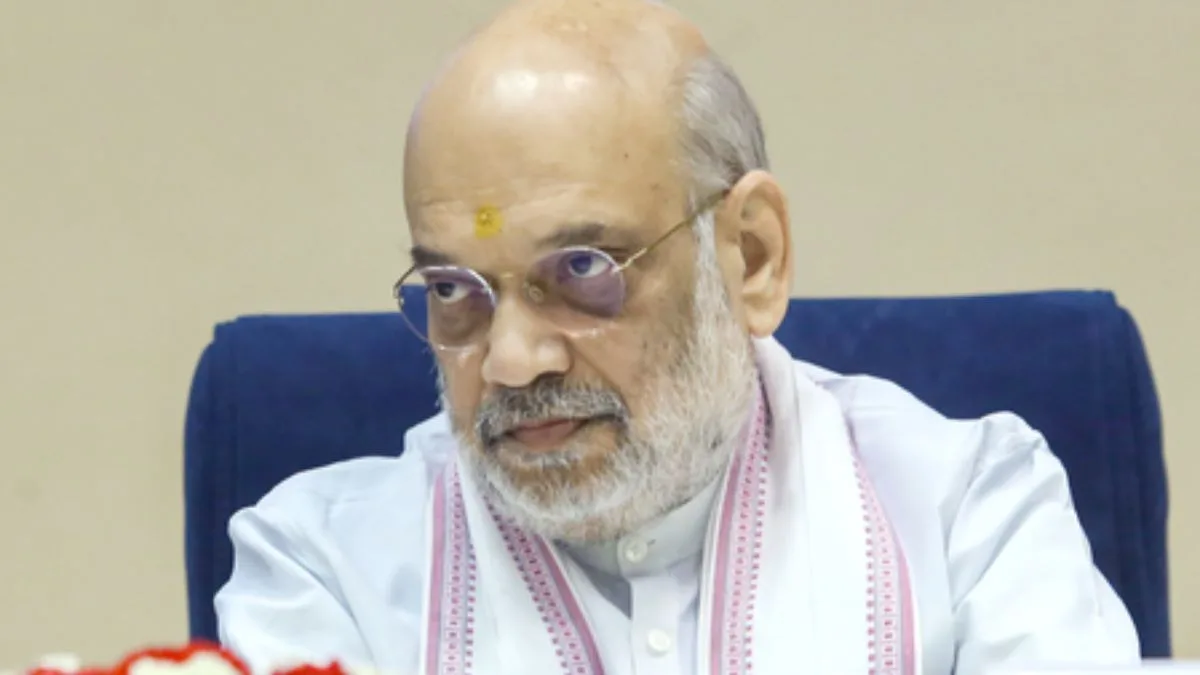
Ahead of the visit of Union home minister Amit Shah later this month, the West Bengal unit of the Bharatiya Janata Party (BJP) on Thursday held a “reunion” of its old and sidelined leaders, signalling an attempt by the central leadership to consolidate the organisation before the 2026 Assembly elections.
Statesman News Service | Kolkata | December 26, 2025 11:19 am
File Photo: IANS
Ahead of the visit of Union home minister Amit Shah later this month, the West Bengal unit of the Bharatiya Janata Party (BJP) on Thursday held a “reunion” of its old and sidelined leaders, signalling an attempt by the central leadership to consolidate the organisation before the 2026 Assembly elections.
The meeting, organised at the auditorium of the National Library on the birth anniversary of former Prime Minister Atal Bihari Vajpayee, brought together several veteran leaders who had either faded from prominence or were dropped from organisational roles in recent years. The programme, described in the invitation as a “special relationship campaign”, was attended by central leader Sunil Bansal, state BJP president Samik Bhattacharya and Leader of Opposition in Bengal Assembly Suvendu Adhikari. National Executive member and actor Mithun Chakraborty was also present. Party sources said the initiative was taken on the instructions of Mr Bansal and Mr Bhattacharya, with the clear objective of reactivating experienced leaders and former functionaries ahead of the crucial 2026 polls.
Former BJP candidates from the 2021 Assembly elections, ex-state committee office-bearers and former district presidents were invited. The programme began with a lunch, followed by the closed-door meeting. However, the absence of former state BJP president Dilip Ghosh became the most discussed aspect of the event. Despite the focus on bringing back “old faces”, Mr Ghosh was not invited, even as some leaders considered close to his camp — including Raju Banerjee and Ritesh Tewari — were present. This has triggered murmurs within a section of the party’s old guard, with questions being raised over the selective nature of the outreach.
Addressing the gathering, attended by around 1,500 leaders today, Mr Adhikari struck an aggressive political note. Referring to movements before 2011, he said change had once been possible through mass struggles, citing his role in the Nandigram agitation alongside martyr families. He alleged that the Trinamul Congress government, led by Chief Minister Mamata Banerjee was “far more dangerous” and asserted that the BJP must work collectively to oust it in the 2026 Assembly elections.
The reunion comes amid intense speculation over the formation of a new state BJP committee. Mr Bhattacharya has already submitted the final list of proposed names to the central leadership in New Delhi. While rumours suggest the announcement could coincide with Mr Shah’s visit, party sources indicated that the new committee is more likely to be declared after his tour, to carefully manage discontent among those who may be dropped.
Mr Shah is scheduled to arrive in Kolkata on the night of 29 December and will attend several organisational programmes on 30 and 31 December. In a novel outreach move, the BJP Yuva Morcha plans a massive bike rally of 4,000-5,000 motorcycles accompanying the Home Minister’s convoy across Kolkata, North and South 24-Parganas and Howrah.
Senior National Badminton: Tanvi Sharma, Rounak Chauhan, and Tanvi Patri continue strong run to reach quarterfinals
India’s upcoming juniors Tanvi Sharma, Rounak Chauhan, and Tanvi Patri continued their strong run in the Senior National Badminton Championships here on Thursday as they registered convincing wins over their respective opponents to reach the quarterfinals.
IANS | New Delhi | December 26, 2025 11:19 am
(Photo:IANS)
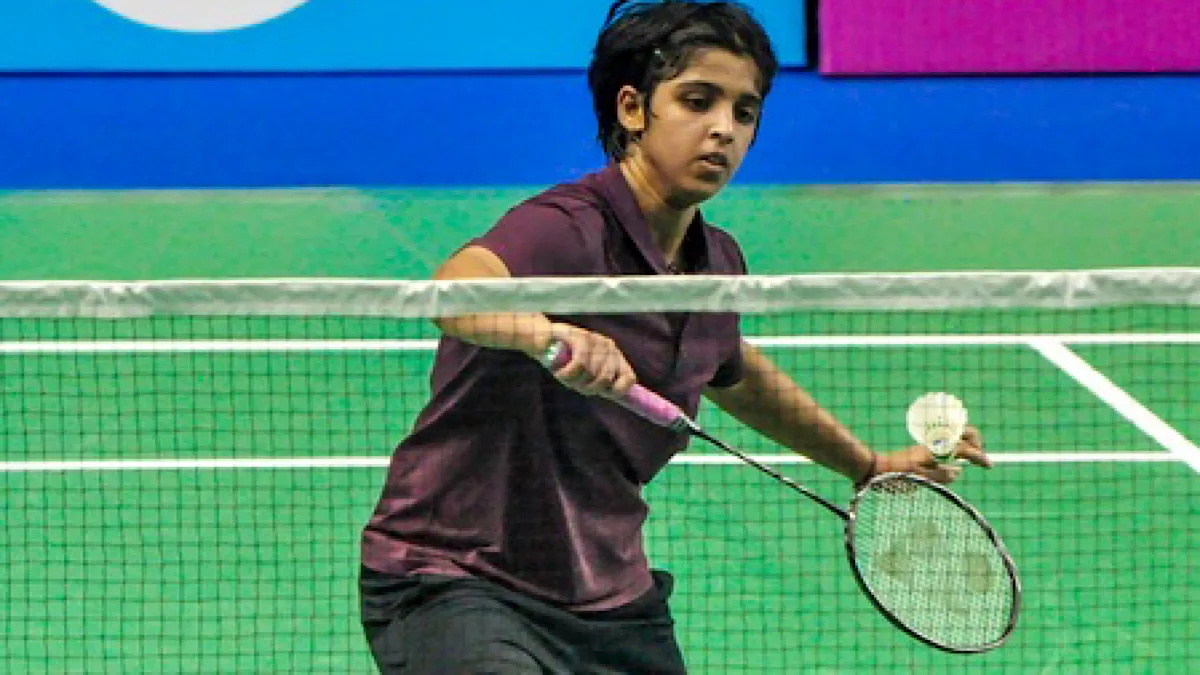
India’s upcoming juniors Tanvi Sharma, Rounak Chauhan, and Tanvi Patri continued their strong run in the Senior National Badminton Championships here on Thursday as they registered convincing wins over their respective opponents to reach the quarterfinals.
World junior championships silver medallist Tanvi Sharma got the better of 10th seed Devika Sihag 21-11, 10-21, 21-10, while Patri packed off Parul Choudhary 21-14, 21-17 in the women’s singles pre-quarterfinals.
Tanvi Sharma will now face Rakshita Sree, who defeated Sneh Lamba 21-13, 21-11, while Patri will be up against the experienced Aakarshi Kashyap, who packed off third seed Anmol Kharb 21018, 21-18.
Top seed Unnati Hooda and second seed Anupama Upadhyaya also sealed their quarterfinal berths with contrasting wins. Unnati had to come back from a game down to beat M Meghana Reddy 19-21, 21-14, 21-12, while Anupama defeated Anvi Rathore 21-13, 21-5.
In the men’s Round of 16, Rounak Chauhan upset sixth seed Lakshya Sharma 21-16, 21-16, while second seed M. Tharun ended Abhinav Garg’s run with a 21-15, 21-5 win.
Aryaman Tandon upset third seed M Raghu 17-21, 21-11, 21-14 in the round of 32. Abhinav Garg and Rithvik Sanjeevi S. also created upsets to reach the pre-quarters.
Garg got the better of 10th seed Abhinav Thakur 21-19, 21-16, while Rithvik defeated 13th seed Orijit Chaliha 21-15, 21-19. In the mixed doubles event, Nitin Kumar and Kanika Kanwal upset the 6th seeds Kevin Wong CC and Pranavi N 23-21, 21-15.
Earlier in the day, the experienced Shruti Mundada and Parul Choudhary upset higher-ranked opponents to reach the women’s singles pre-quarterfinals at the 87th Senior National Badminton Championships in Vijayawada on Thursday. Shruti packed off seventh seed Jiya Rawat 21-14, 21-9 while Parul got the better of 9th seed 18-21, 21-18, 21-12 to advance to the next round. Tanvi Patri also ended the campaign of eighth seed Isharani Baruah 22-20, 21-19.
Earlier on Wednesday, Women’s top seed Unnati, world junior championships silver medallists Tanvi Sharma, the experienced Aakarshi Kashyap, and upcoming junior Rounak Chauhan registered convincing wins to reach the next round.
Quiet Christmas, loud battle: Kareena shares family moments as Sunjay Kapur’s inheritance case nears verdict
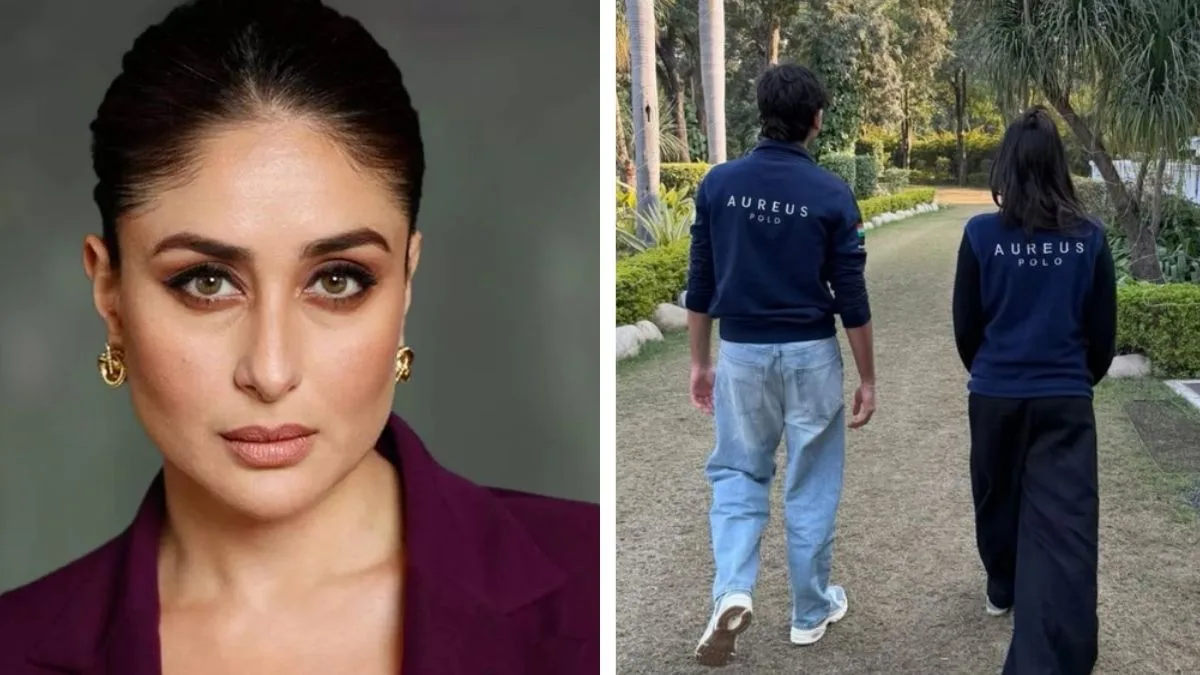
Kareena Kapoor Khan shared intimate Christmas moments from the Pataudi home as Samaira and Kiaan paid a quiet tribute to their late father, Sunjay Kapur. Away from the festive calm, a major legal battle over his vast estate now awaits a crucial court decision.
Statesman News Service | New Delhi | December 26, 2025 11:16 am
Image Source: Instagram
Sunjay Kapur case: Christmas this year arrived softly at the Pataudi residence. The mood was calm, personal and filled with family warmth. Kareena Kapoor Khan, who is spending the holidays with her loved ones, gave fans a small glimpse into the celebration through her social media.
One picture showed a beautifully decorated Christmas tree glowing gently carrying the spirit of the season.
For fans used to glamorous holiday posts, this quiet moment felt refreshingly real.
What truly touched hearts, however, was another post Kareena shared soon after. It featured her niece Samaira and nephew Kiaan, the children of actor Karisma Kapoor and late industrialist Sunjay Kapur.
Image Source: Instagram
The children stood with their backs to the camera, wearing matching jerseys from the Aureus Polo team, the polo club founded and captained by their father.
Kareena captioned the photo with love, calling them her “Christmas Angels” adding heart and rainbow emojis.
Remembering Sunjay Kapur
Sunjay Kapur was known in elite circles not just as an industrialist, but as a passionate polo player. Aureus Polo was close to his heart, and he led the team himself.
His sudden death in June this year shocked many. He passed away while playing polo in London, doing what he loved. Since then, his absence has been deeply felt by his children.
Festive silence, legal noise elsewhere
While the Pataudi home focused on warmth and remembrance, a very different story unfolded in Delhi.
The Delhi High Court has now completed hearings in a heated civil case related to Sunjay Kapur’s personal estate. The matter has drawn attention not just for its scale, but also because it involves members of a well-known family.
The court has reserved its order on an interim plea that could shape the direction of this long legal fight.
What the court has decided so far
Justice Jyoti Singh noted that both sides had completed their oral arguments earlier. All written submissions have now been formally accepted by the court.
With procedural requirements met, the court has made it clear that no new documents or filings will be accepted before the final order is announced.
This means the next decision could significantly impact how the estate is managed in the coming months.
The defence’s stand
Representing Priya Kapur, Senior Advocate Rajiv Nayar firmly denied allegations that assets were hidden or moved overseas.
According to him, a complete list of assets has already been placed before the court. These include financial records, company documents and sworn disclosures. He argued that these details clearly counter claims of concealment.
He also questioned reports suggesting Sunjay Kapur earned around ₹60 crore annually calling those figures inaccurate.
One specific allegation involved a luxury watch. The defence dismissed this claim, stating it was based on images from a fake social media account and not from Sunjay Kapur’s real profile.
The defence further said that any corporate actions taken after Sunjay’s death were based on emails sent from an account later denied by another family member. It also rejected claims that the Will was copied stating its format matched an earlier Will already on record.
The children challenge the will
On the other side, Senior Advocate Mahesh Jethmalani appeared for Samaira and Kiaan, Sunjay Kapur’s children from his marriage with Karisma Kapoor.
They have questioned the authenticity of the Will and are seeking an order to prevent Priya Kapur from dealing with the estate until the matter is settled.
Their argument raised serious concerns. They pointed to unusual language in the will including pronouns that seemed inconsistent with the identity of the person writing it. They also questioned why Sunjay’s mother was not mentioned and why will was never registered.
According to them, these issues raise doubts about who actually drafted the document and under what circumstances.
A mother’s separate objection
Sunjay Kapur’s mother, Rani Kapur, has also challenged the Will independently.
Through her lawyer, she told the court she was never informed about the document and that it does not even acknowledge her existence. She argued that this goes against her son’s lifelong conduct and the respect he openly showed her.
Her counsel stated it was difficult to believe that Sunjay would leave his entire personal estate to one person, ignoring his children, mother and wider family.
Rani Kapur has also alleged that after her son’s death, there was a rush to gain control over businesses and assets. She claimed that asset disclosures made to the court were incomplete and did not include valuable items and income sources.
What’s at stake
At the heart of this case is massive inheritance dispute. The estate in question is said to involve assets worth nearly ₹30,000 crore.
With all arguments now officially on record, the Delhi High Court’s upcoming order on the interim injunction will be crucial. It will decide who can manage or control the estate while the larger case continues.
Stone pelting, injured cops and a WhatsApp ban: What unfolded overnight in Rajasthan’s Chomu
Violence erupted in Rajasthan’s Chomu after a dispute near a mosque, injuring six policemen. Authorities imposed WhatsApp and social media curbs to prevent rumours and restore order.
Statesman News Service | Mumbai | December 26, 2025 11:12 am
Shuttered shops in Chomu town of Jaipur district after tensions flared following a dispute near a mosque. (Photo source: IANS)
Tension broke out in Chomu town of Rajasthan’s Jaipur district early Friday after a dispute near a mosque turned violent, leaving several policemen injured and forcing authorities to use tear gas and impose communication curbs.
The incident took place around 3 am near the Chomu bus stand when police intervened during a dispute linked to the installation of an iron railing outside a mosque. A section of the crowd allegedly began pelting stones at the police, triggering chaos in the area.
According to officials, at least six policemen were injured in the stone-pelting. Most of them suffered head injuries and were admitted to a nearby hospital. Their condition is said to be stable. Several police vehicles were also damaged during the clashes.
How the situation escalated
Police sources said the tension stemmed from stones placed along the roadside near the mosque, which had reportedly been lying there for several years.
Officials said the removal of the stones was part of a traffic management drive that began on Wednesday, during which traffic was diverted from key routes such as Thana Mod and Morija Tiraha. Members of a particular community had agreed to the removal during a meeting with the police administration.
However, after the stones were removed, some people allegedly began installing iron girders and railings near the mosque to create a boundary, leading to fresh objections and rising tempers.
Negotiations between the police and community representatives continued late into Thursday night, and an agreement was reached to maintain the status quo. However, police later removed the iron railings installed at the spot, which allegedly angered some locals and is believed to have triggered the stone-pelting.
Tear gas fired, reinforcements rushed in
When police attempted to stop the installation of the railing, a section of the crowd allegedly turned violent and began throwing stones at the force.
To control the situation, police resorted to a lathi-charge and fired tear gas shells to disperse the crowd and prevent further escalation. Additional police forces were rushed in from Chomu, Vishwakarma, Harmada and Daulatpura police stations, officials said.
Senior officers said the situation was brought under control by morning, though tension continued to prevail in the area.
Flag march held to restore confidence
To maintain law and order and reassure residents, hundreds of police personnel carried out a flag march across Chomu town.
The bus stand area has effectively been turned into a police camp, with the entire locality declared a high-security zone. Special Task Force teams, riot control vehicles and additional forces were deployed to prevent any further flare-up.
A large contingent of police personnel was mobilised not just from local stations but also from the Jaipur Police Line and Murlipura, officials said.
Additional Police Commissioner Dr Rajiv Pachar, along with DCP West Hanuman Prasad, Additional DCP Rajesh Gupta, and other senior officers from Jaipur, reached the spot to review the situation. The officers appealed to residents to remain calm and maintain peace.
Internet curbs, search for accused underway
In view of the tense situation, Divisional Commissioner Poonam, on the recommendation of the Police Commissioner, ordered the suspension of WhatsApp, social media platforms and bulk message services in Chomu for 24 hours. i.e. from 7 am Friday to 7 am Saturday, to curb the spread of misinformation and rumours.
Police officials said the area is currently peaceful. Search operations are underway to identify those involved in the stone-pelting, and strict legal action will be taken against all the accused.
Authorities warned that any attempt to disturb law and order will be dealt with firmly.
Former Chomu MLA Ramlal Sharma told news agency IANS that the situation was under control and said that internet services were available in the area, though WhatsApp and bulk messaging services had been suspended as a precaution.
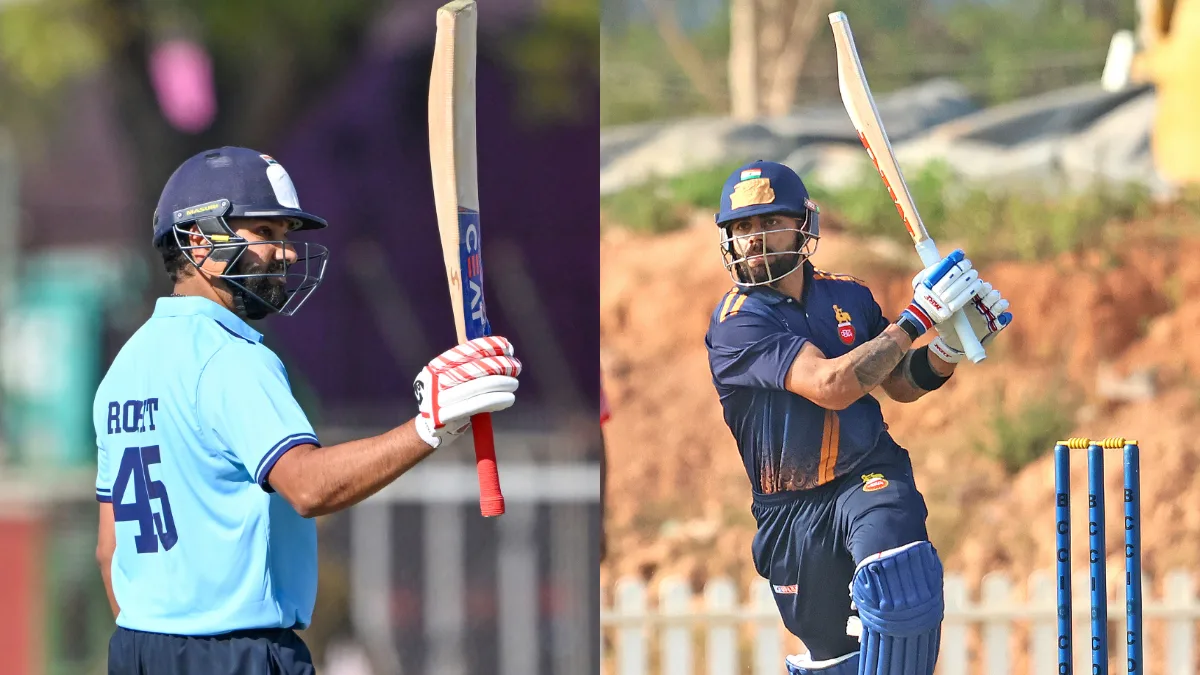
Rohit out for duck in Jaipur; Kohli dismissed for 77 runs off 61 balls
Virat Kohli’s super-positive knock came to an end as the former India captain was stumped for 77 off 61 deliveries
Neha Buswal | New Delhi | December 26, 2025 11:06 am
Rohit Sharma and virat kohli during the opening match of the Vijay Hazare Trophy match (IANS)
The second round of the Vijay Hazare Trophy is underway on Friday, 26 December, with all eyes on two star-studded clashes, Mumbai vs Uttarakhand in Jaipur and Delhi vs Gujarat in Bengaluru, featuring Rohit Sharma and Virat Kohli, respectively.
Virat Kohli’s super-positive knock came to an end as the former India captain was stumped for 77 off 61 deliveries. Kohli fell short of a century but registered his sixth consecutive fifty in the format, continuing his fine run in List A cricket.
Vijay Hazare Trophy: Rohit Sharma falls for a golden duck against Uttarakhand, Virat Kohli scores a brisk 77 against Gujarat.
At the Sawai Mansingh Stadium in Jaipur, Mumbai suffered an early shock as Rohit was dismissed in the very first over by Devendra Bora. The early exit was a huge disappointment for the thousands of fans who had gathered hoping to see another big knock from the former Indian captain.
Rohit’s dismissal stood in stark contrast to his heroics in Mumbai’s opening match against Sikkim, where he smashed 155 off 94 balls, including 18 fours and nine sixes. That innings powered Mumbai to an eight-wicket win and helped Rohit equal David Warner’s world record for the most 150-plus scores in List A cricket (nine).
Returning to the Vijay Hazare Trophy after more than seven years, Rohit made an immediate impact by bringing up his century in just 62 balls, bettering his previous fastest ODI hundred (63 balls), scored against Afghanistan during the 2023 World Cup in Delhi.
Virat Kohli also created history in Delhi’s opening match of the Vijay Hazare Trophy against Andhra on December 24, 2025, scoring a magnificent 131 off just 101 balls. His innings guided Delhi to a comfortable victory and saw him become the fastest player to reach 16,000 runs in List A cricket.
The knock marked a significant moment in Kohli’s career as he returned to domestic cricket after a 15-year gap. Kohli had last featured in India’s domestic 50-over competition in February 2010, when he represented Delhi against Services in the Ranji One-Day Trophy at the Feroz Shah Kotla in Delhi.
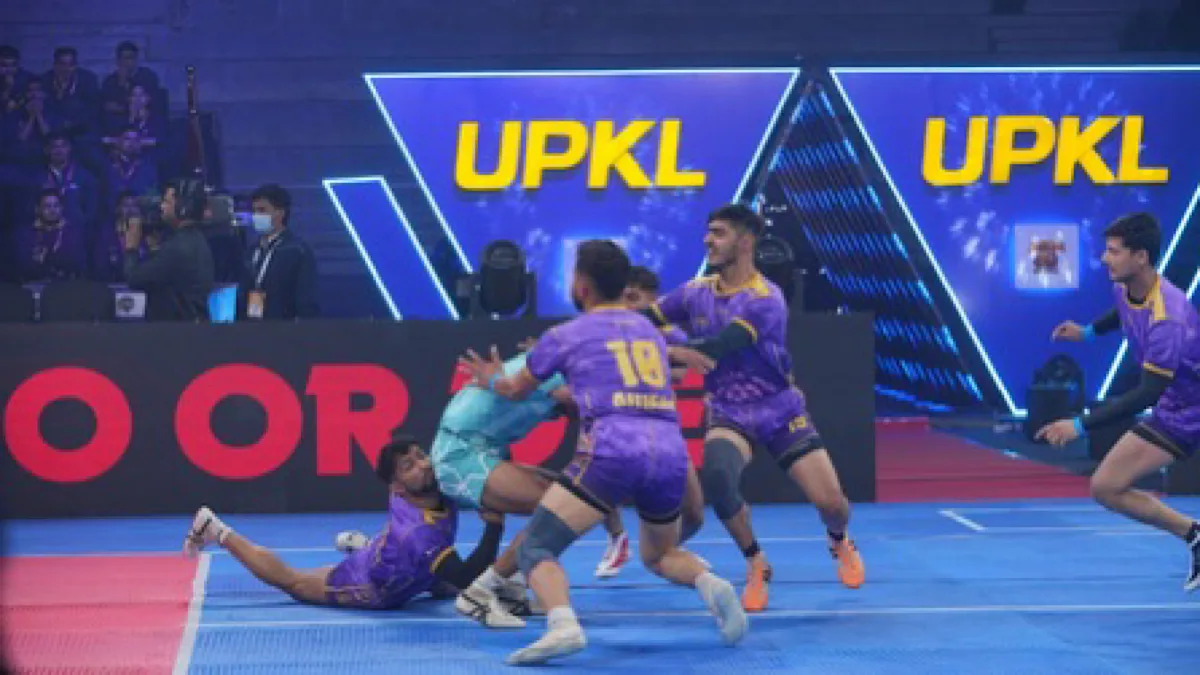
UPKL Season 2: Noida Ninjas defeat Kanpur Warriors in opening match
Noida Ninjas made a winning start in Season 2 of the Uttar Pradesh Kabaddi League (UPKL), which commenced on Thursday at the Noida Indoor Stadium, marking an exciting start to the new season.
IANS | New Delhi | December 26, 2025 10:56 am
Photo credit: UPKL
Noida Ninjas made a winning start in Season 2 of the Uttar Pradesh Kabaddi League (UPKL), which commenced on Thursday at the Noida Indoor Stadium, marking an exciting start to the new season.
In the opening match of the season, JD Noida Ninjas defeated Kanpur Warriors by a narrow margin of 39–36 in a closely contested encounter on Thursday evening.
Kanpur Warriors put up a strong performance, accumulating 36 points through a combination of raid points, tackle points, and bonus points. JD Noida Ninjas responded with a balanced effort across raids and tackles to finish with 39 points, sealing the first win of the season.
A large number of fans from both sides were present at the venue, creating an energetic atmosphere as they cheered for their respective teams. Following the match, JD Noida Ninjas owner Deepak Nagar congratulated the players on their opening-day victory.
The second match of the day was played between Mirzapur Kings and Lucknow Lions.
Speaking on the occasion, Sambhav Jain, Founder and Director of SJ Uplift Kabaddi, stated that the league was originally scheduled to begin on 24 December, but the start was deferred by one day following directions related to pollution control issued by the Supreme Court and the Sports Directorate.
A total of 12 teams are competing in UPKL Season 2. Each team will play 11 matches in a round-robin format. The season will feature 69 matches, including one exhibition match. Several international-level players, including Vinay Tewatia, Arjun Deshwal, Mohammad Aman, Abhimanyu, and RP Singh, are participating in the league.
The first season of the Uttar Pradesh Kabaddi League was organised in 2024 with the cooperation of UP Kabaddi Association and was won by Lucknow Lions. The Lucknow Lions defeated the Sangam Challengers 59-33 to win the championship. Awadh Ramdoot, Brij Stars, Ganga Kings of Mirzapur, Kashi Kings, Lucknow Lions, Yamuna Yodhas and Sangam Challengers are the other teams in fray.
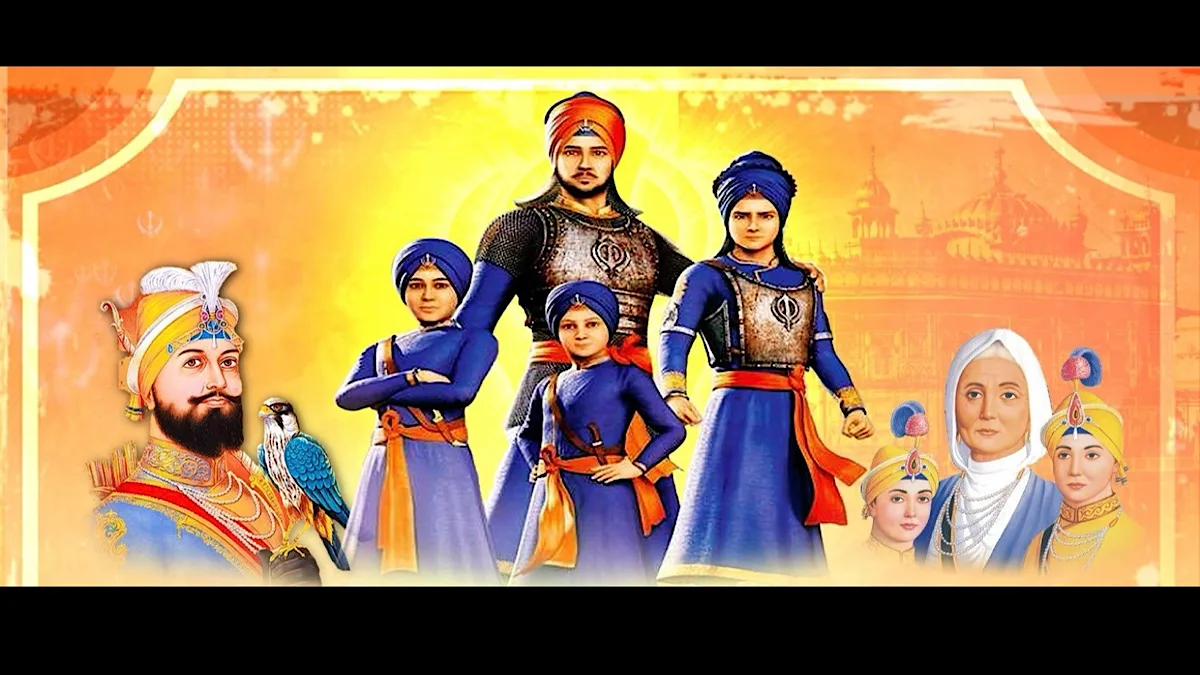
‘Day of reverence, dedicated to remembering the sacrifice of brave Sahibzades’: PM Modi on Veer Baal Diwas
Prime Minister Narendra Modi, on Friday, paid tributes to the Sahibzades, the sons of the tenth Sikh Guru, Guru Gobind Singh, on the occasion of Veer Baal Diwas, describing it as a day of reverence dedicated to remembering their supreme sacrifice.
IANS | New Delhi | December 26, 2025 10:53 am
(Photo: X/Amit Shah)
Prime Minister Narendra Modi, on Friday, paid tributes to the Sahibzades, the sons of the tenth Sikh Guru, Guru Gobind Singh, on the occasion of Veer Baal Diwas, describing it as a day of reverence dedicated to remembering their supreme sacrifice.
Taking to social media platform X, the Prime Minister said, “Veer Baal Diwas is a day of reverence, dedicated to remembering the sacrifice of the brave Sahibzades. We recall the unshakeable faith of Mata Gujri Ji and the immortal teachings of Sri Guru Gobind Singh Ji.”
He further said that the day symbolises courage, conviction, and righteousness.
“This day is associated with courage, conviction and righteousness. Their lives and ideals will continue to motivate people for generations,” he added.
Union Home Minister Amit Shah also paid tribute to the Sahibzades on the occasion, highlighting their unmatched courage and sacrifice at a very young age.
In a post on X, Amit Shah said, “The sacrifices made by Guru Gobind Singh Ji’s brave sons at such a young age, in defence of their faith and country, are unparalleled in history. The values instilled in the Sahibzades by Mata Gujri and Guru Gobind Singh Ji, the seeds of humanity they sowed, could not be shaken even by the inhumane torture inflicted by cruel tyrants.”
The Union Home Minister further noted that to ensure the story of the four Sahibzades reaches every generation, Prime Minister Modi initiated the observance of Veer Baal Diwas
“To ensure that the story of the four Sahibzades’ sacrifice reaches every generation, Prime Minister Modi initiated the observance of ‘Veer Bal Diwas’. On this ‘Veer Bal Diwas’, I pay my respects to Guru Gobind Singh Ji, Mata Gujri, and the brave Sahibzades, remembering their martyrdom,” Amit Shah added.
Uttar Pradesh Chief Minister Yogi Adityanath also paid homage to the Sahibzades on the occasion. In a message posted on X, he said, “Hundreds of salutations to the four Sahibzades of Guru Shri Gobind Singh Ji Maharaj on their martyrdom day ‘Veer Bal Diwas’ (Sahibzada Diwas) who made the supreme sacrifice for the protection of the nation, religion and Sanatan culture.”
“This immortal saga of indomitable courage and bravery will continue to illuminate the path of patriotism, religious devotion and dutiful life for everyone for ages to come,” he added.
Veer Baal Diwas is commemorated every year on December 26 to honour the martyrdom of Sahibzada Baba Zorawar Singh and Sahibzada Baba Fateh Singh, the younger sons of Guru Gobind Singh. The Prime Minister announced the observance of Veer Baal Diwas on January 9, 2022, on the occasion of the Prakash Purab of Guru Gobind Singh.
The youngest sons of Guru Gobind Singh, Sahibzada Baba Zorawar Singh and Sahibzada Baba Fateh Singh, were born at Anandpur Sahib. On the morning of December 7, 1705, the day of the historic Battle of Chamkaur, the two Sahibzades, along with their grandmother Mata Gujri, were taken into custody by Mughal officials Jani Khan and Mani Khan Ranghar at Morinda.
They were subsequently sent to Sirhind, where they were confined in the Cold Tower (Thanda Burj) of the fort. On December 9, 1705, the Sahibzades were produced before the Mughal governor, Nawab Wazir Khan, who attempted to coerce them into abandoning their faith. Despite threats of death, the young Sahibzades remained steadfast, and a death sentence was eventually pronounced.
On December 11, 1705, they were ordered to be sealed alive in a wall. As the masonry reached chest height, it reportedly collapsed, and the Sahibzades were sent back to the Cold Tower for the night. The following day, December 12, 1705, Sahibzada Baba Zorawar Singh and Sahibzada Baba Fateh Singh attained martyrdom after being sealed alive in a wall.
The site of these events, now known as Fatehgarh Sahib near Sirhind, is marked by four prominent Sikh shrines. A religious fair is held there every year from December 25 to 28 to honour the memory of the martyrs.
Veer Baal Diwas is observed nationwide and also underscores the importance of children as the foundation of India’s future. On this occasion, initiatives such as the ‘Suposhit Gram Panchayat Abhiyan’ have been launched to improve nutritional outcomes and overall well-being by strengthening nutrition-related services and encouraging active community participation.
Delhi air quality improves as overall AQI falls to ‘poor’ category
The national capital witnessed a marginal improvement in air quality on Friday, with the Air Quality Index (AQI) falling into the ‘poor’ category and averaging 292, according to official data.
IANS | New Delhi | December 26, 2025 10:34 am
Heavy Smog and Cold Morning Engulf New Delhi. (Photo: IANS/Deepak Kumar)
The national capital witnessed a marginal improvement in air quality on Friday, with the Air Quality Index (AQI) falling into the ‘poor’ category and averaging 292, according to official data.
The improvement comes after Delhi recorded ‘severe’ air quality levels earlier this week, with the AQI touching 412 on December 23. Over the past two days, a gradual decline in pollution levels has been observed across several parts of the city.
Data from the Central Pollution Control Board’s (CPCB) Sameer mobile application showed that, as of 6.05 a.m., three monitoring stations reported air quality in the ‘moderate’ category. These included Lodhi Road-IITM with an AQI of 160, Lodhi Road-IMD at 194, and Najafgarh at 188.
Several other stations recorded AQI levels in the ‘poor’ category. These included Aya Nagar (212), CRRI Mathura Road (265), Dr Karni Singh Shooting Range (290), Dwarka Sector 8 (282), IGI Airport Terminal 3 (238), IIT Delhi (231), Jawaharlal Nehru Stadium (253), and Mandir Marg (222), among others.
However, a number of monitoring stations continued to report ‘very poor’ air quality. Areas such as Anand Vihar (377), Bawana (363), Jahangirpuri (372), Narela (345), Nehru Nagar (346), Sonia Vihar (353), and Vivek Vihar (361) recorded some of the highest pollution levels in the city.
In view of the recent improvement in air quality, the Commission for Air Quality Management (CAQM) lifted the Graded Response Action Plan (GRAP) Stage-IV restrictions across the Delhi-National Capital Region (NCR) on December 24. Officials said that if the improving trend continues, further relaxations in pollution control measures could be considered in the coming days.
Air quality in the surrounding NCR areas remained mixed. In Haryana, Bahadurgarh recorded an AQI of 301, placing it in the ‘very poor’ category, while Gurugram’s overall AQI stood at 270, falling under the ‘poor’ range. One of Gurugram’s four monitoring stations, located in Sector 51, reported ‘very poor’ air quality with an AQI of 375. Dharuhera also recorded ‘poor’ air quality with an AQI of 279.
In Uttar Pradesh, Ghaziabad registered an overall AQI of 344, with all four monitoring stations reporting ‘very poor’ air quality. Greater Noida recorded an overall AQI of 362, while Knowledge Park-V reported an AQI of 386, and Knowledge Park-III recorded 337. Noida’s overall AQI also remained in the ‘very poor’ category at 334.
Delhi’s decision to allow only Bharat Stage (BS) 6 vehicles to enter the national capital had blocked at least 1.2 million older vehicles registered outside from entering the city.
Vehicular emissions are a major contributor to Delhi’s toxic air, especially in the winter months when cold weather traps smog close to the ground. Experts estimate that vehicles account for up to 40 per cent of particulate pollution in the NCR, particularly in densely travelled corridors. By restricting higher-emitting vehicles, authorities hope to reduce the pollution load and safeguard public health.
Another migrant worker lynched in Odisha, two others critical
A migrant labourer from West Bengal’s Murshidabad district was beaten to death in an alleged mob attack in neighbouring Odisha, while two other workers from the same district sustained grievous injuries, triggering political outrage and tension in the area.
Statesman News Service | Kolkata | December 26, 2025 10:32 am
Representative Image (IANS)
A migrant labourer from West Bengal’s Murshidabad district was beaten to death in an alleged mob attack in neighbouring Odisha, while two other workers from the same district sustained grievous injuries, triggering political outrage and tension in the area.
The incident occurred on Wednesday night in Sambalpur district of Odisha, a BJP-ruled state. The deceased has been identified as Jewel Rana (30), a resident of Suti-I block in Murshidabad. The injured workers are Arik Sheikh and Palash Sheikh, both from Murshidabad, who are currently undergoing treatment in a critical condition. According to police and local sources, Jewel, Arik and Palash had travelled to Sambalpur on 20 December along with a few other youths in search of work. They were reportedly engaged as labourers.
On Wednesday evening, around 8.30 p.m, Jewel went to a local tea stall where Arik and Palash were already present. The three were conversing in Bengali when a group of five assailants allegedly confronted them.
The attackers reportedly branded the workers as “Bangladeshis” and began assaulting them. Even after the workers produced valid identity documents, the assailants allegedly continued the attack, accusing them of being illegal migrants. Arik and Palash managed to flee the spot despite sustaining injuries, but Jewel was caught by the group and beaten mercilessly. He collapsed on the ground and was left alone as the attackers fled. Police reached the spot following information from locals and rushed Jewel to a hospital, where doctors declared him dead. His family in Murshidabad has been informed. A post-mortem examination is scheduled for Thursday.
Sambalpur police have started an investigation, though no arrests had been made till the filing of this report. Tension prevails in the area following the incident. The killing has sparked sharp political reactions in West Bengal. Minister of state (power) Akhruzzaman alleged that Bengali Muslim migrant workers were being targeted in “double-engine” BJP-ruled states. “In Odisha, a migrant worker named Jewel Rana has been beaten to death. Several others are seriously injured. BJP is anti-Bengali and particularly anti-Muslim,” he said, adding that the state government would ensure medical treatment and assistance for the injured workers.
Trinamul spokesperson and minister Shashi Panja said the party stood firmly with the bereaved family. “We will extend all possible help. But will BJP answer—can they bring back the life that was lost?” she asked. BJP leader Sajal Ghosh, however, countered by questioning why the worker had to migrate to Odisha for employment and demanded an explanation from the Trinamul Congress. The incident has once again brought the safety of migrant workers and the issue of vigilantism over identity into sharp focus.
In an era when contemporary theatre often tends toward experimentation, high-concept staging, and modernist narratives, Baghajatin Alaap’s recent production of Padma Nadir Maji stands out as both a daring and deeply nostalgic venture.
Statesman News Service | Kolkata | December 26, 2025 10:30 am
Photo:SNS
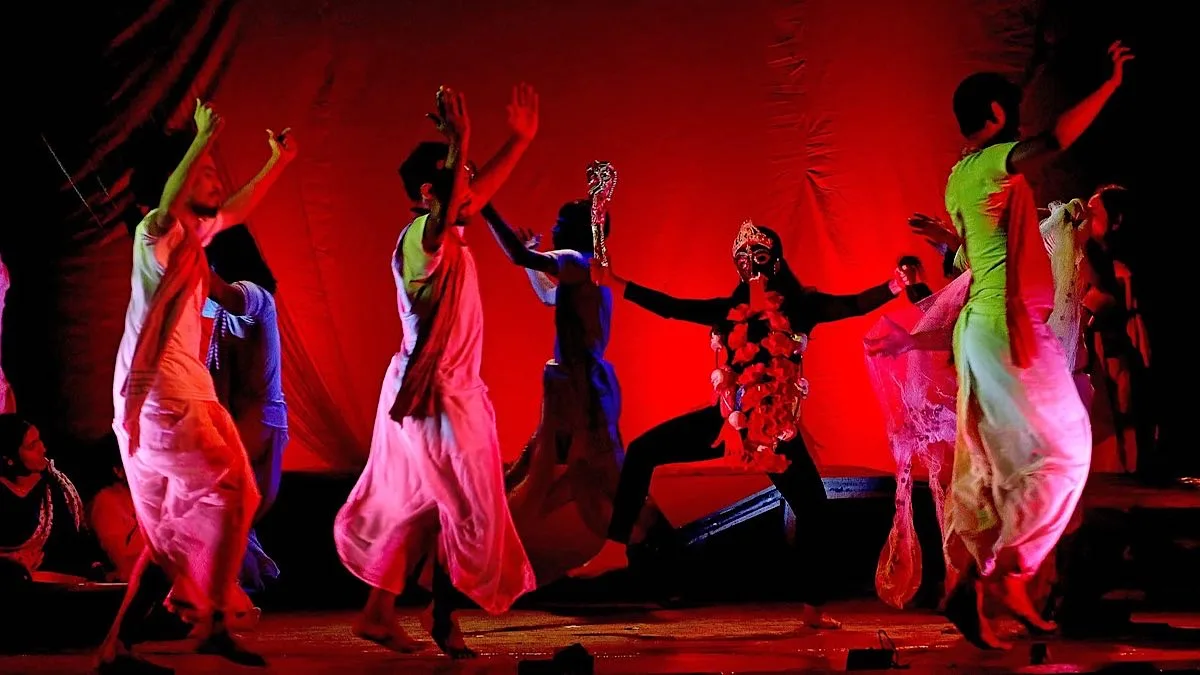
In an era when contemporary theatre often tends toward experimentation, high-concept staging, and modernist narratives, Baghajatin Alaap’s recent production of Padma Nadir Maji stands out as both a daring and deeply nostalgic venture. Staged at Kolkata’s iconic Tapan Theater, the drama marked a triumphant return to the roots of Bengali literary and cultural tradition. Directed with sensitivity and insight by Parthapratim Deb, the play breathed new life into Manik Bandyopadhyay’s seminal 1936 novel, which remains a cornerstone of Bengali literature.
This ambitious adaptation- rich in emotional intensity, cultural specificity, and historical detail- invited the audience to journey back nearly a century to the banks of the Padma River, a world shaped by nature’s whims, human resilience, and the quiet poetry of everyday life.
Manik Bandyopadhyay’s Padma Nadir Maji (The Boatman of the Padma River) is widely celebrated for its unflinching realism, empathetic characterisation, and nuanced portrayal of rural life in Bengal. Far from being a mere documentation of fisherfolk culture, the novel is a profound exploration of human dignity, survival, and the intricate relationship between people and the river that sustains- and often threatens- their lives.
Adapting such a text for the stage is no easy task. Bandyopadhyay’s narrative relies heavily on internal monologues, subtle shifts in mood, and the lyrical descriptions of natural surroundings. Yet it is precisely in this challenge that the production truly shines. Parthapratim Deb’s direction succeeds in translating the novel’s layered complexity into performance, honouring its emotional depth while embracing the theatrical opportunities it provides. He approached the adaptation with a rare combination of artistic maturity and respect for the source material. Rather than relying on dramatic excess or melodrama, he opted for a restrained yet evocative storytelling style. This allowed the audience to engage intimately with the characters’ struggles, hopes, and vulnerabilities.
Deb’s direction demonstrated a profound understanding of the social context of the 1930s—the period of the Great Depression, shifting economic structures, and mounting social tensions. His ability to retain the authenticity of rural Bengal without resorting to caricature is particularly commendable. The river, though an intangible presence on the stage, becomes a living character through the interplay of sound, lighting, and movement.
The staging captured the relentless rhythm of riverside life—the early morning bustle at the ghats, the communal gatherings, the anxieties that accompany the changing tides, and the interdependence between nature and livelihood. The audience is immersed in the world of Padma’s boatmen, whose lives are shaped by toil and uncertainty but infused with a profound sense of belonging.
A standout element of the production is the skilful incorporation of folk music and dance. The use of traditional Bengali songs not only enriches the narrative but also situates the story firmly within the cultural fabric of Bengal. The music, drawn from regional folk traditions, is performed with authenticity and emotional resonance, capturing both the melancholy and joy of riverside life.
The choreography deserves special mention. Rather than serving as mere decorative interludes, the dances function as extensions of the narrative, expressing moods, transitions, and communal harmony. They heighten the emotional atmosphere, lending vibrancy to scenes that might otherwise risk becoming static.
Whether it is the rhythmic boatmen’s tunes echoing across the stage or the soft strains of a lullaby sung in a moment of tenderness, the musical elements of the production bring the world of Padma Nadir Maji to life with striking immediacy.
One of the most compelling aspects of the adaptation is its ability to connect a 90-year-old narrative to modern sensibilities. The themes of Padma Nadir Maji—economic disparity, environmental unpredictability, the fragility of traditional livelihoods, and the resilience of marginalised communities—resonate strongly in our current context.
With increasing instances of climate-induced displacement and changing socioeconomic dynamics, the story of the Padma’s boatmen feels uncannily contemporary. The production subtly underscores these parallels without resorting to overt preaching. Instead, it allows the audience to draw their own connections, making the experience both intellectually stimulating and emotionally engaging.
Baghajatin Alaap’s staging of Padma Nadir Maji at Tapan Theatre is a triumph of artistic vision, cultural reverence, and theatrical craftsmanship. Director Parthapratim Deb and his dedicated team have delivered a production that is both faithful to Manik Bandyopadhyay’s classic novel and refreshingly innovative in its presentation.
In reviving this 90-year-old masterpiece, Baghajatin Alaap has gifted audiences an experience that is not only captivating but profoundly meaningful—a reminder that literature, history, and culture remain alive as long as we continue to engage with them.
Sustainable farming inspired by nature can transform rural India: Acharya Balkrishna
Acharya Balkrishna emphasised that farming aligned with nature is the foundation of prosperous and self-reliant villages. Speaking at Patanjali’s agriculture training in Haridwar, he highlighted sustainable and integrated farming as the future of rural growth.
Statesman News Service | New Delhi | December 26, 2025 10:27 am
Image Source: Patanjali
At a time when farmers are searching for stable income and sustainable methods, Patanjali’s Samriddh Gram Patanjali Training Centre offered hopeful path forward. A three-day Integrated Agriculture Cluster Training Programme came to a successful end carrying message that farming aligned with nature can make villages prosperous and self-reliant. (Also Read: World Herbal Encyclopedia: Acharya Balkrishna redefines botanical research with a single giant work)
The programme was designed to strengthen rural livelihoods through practical eco-friendly farming practices. More than 150 members of Self-Help Groups (SHGs) took part in the residential training learning new skills while sharing experiences from their own villages.
Spiritual start with a practical purpose
The final day of the programme began on a meaningful note. A traditional havan was performed. This was followed by a lamp-lighting ceremony that marked the formal closing of the training.
Acharya Balkrishna graced the occasion and blessed the participants. Addressing them, he said that villages can only become strong when farming works in harmony with nature. He stressed that integrated and sustainable farming is the backbone of a self-reliant rural economy.
According to him, farmers should move beyond single-crop farming and adopt multi-dimensional agriculture that protects the soil, water, environment while increasing income.
Learning that touches real life
Throughout the three days, participants were deeply involved in both classroom learning and hands-on field training. Many SHG members shared that programme helped them understand farming not just as tradition but as smart livelihood option.
Government support for village growth
Block Development Officer (BDO) of Bahadrabad, Manas Mittal, addressed the gathering and highlighted the importance of integrated agriculture models. He said such models strengthen village-level economies and provide long-term livelihood security for farmers and SHG members.
He also praised Patanjali’s contribution, stating that farmers can only become truly self-reliant when governments and institutions work together. Programmes like this, he said, play a big role in connecting policy with ground-level action.
The event also gained international importance with the presence of senior officials from Nepal. The chief guest, Govind Prasad Sharma, Secretary of the Ministry of Environment and Forests, Government of Nepal, shared his views on sustainable agriculture and environmental protection.
He said that farming development and environmental conservation go hand in hand. According to him, such training programmes are the need of the future and also help strengthen cooperation across borders.
Skills for today and tomorrow
The training covered a wide range of topics aimed at increasing income and reducing risk for farmers. Key sessions included beekeeping, mushroom cultivation, climate-smart agriculture, and a unique module called “Doctor of the Earth,” which focused on understanding soil health naturally.
Participants also received training in quality control of FMCG products. That helps them understand how farm-based products can meet market standards. Experts conducted detailed technical sessions giving step-by-step guidance and real-world examples.