Logo

Top 5 astounding astronomical discoveries in 2025.

As 2025 draws to a close, we look back at the year and, in the world of science, at the findings that have kept the world on its toes. Space aficionados, in particular, have had a thrilling time.

Shamim Haque Mondal | Kolkata |

As 2025 draws to a close, we look back at the year and, in the world of science, at the findings that have kept the world on its toes. Space aficionados, in particular, have had a thrilling time. For ages, astronomers have been hunting for exoplanets, uncovering massive cosmic formations like Quipu, and glimpsing the Alaknanda in the James Webb Space Telescope’s mirror (a galaxy similar to the Milky Way). They’ve also tracked a parade of comets, from Lemon to 3I/ATLAS and beyond. Meanwhile, a single, persistent worry loomed—an asteroid impact! Here are five of the year’s most intriguing discoveries.

1. Quipu the largest superstructure:
“This year, a paper entitled “Unveiling the Largest Structure…” was published in the journal ‘Astronomy & Astrophysics’ and has created a stir in the world of astronomy. Researchers from the Max Planck Institute for Extra-Terrestrial Physics and the Max Planck Institute for Physics have discovered the largest structure in the universe, ‘Quipu.’ The supermassive structure of about 200 quadrillion solar masses (1 solar mass = 1.988416 × 1030 kg) was detected during the mapping of the nearby universe with the help of the ROSAT X-ray satellite. The size and mass of this object are incomprehensible; it occupies 428 megaparsecs (1 ‘megaparsec’ = 32.6 light years) of space, and light takes thirteen million years to pass through it, according to scientific estimates.
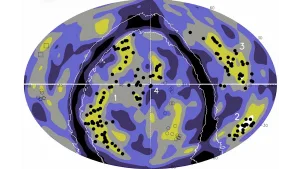
Galactic distribution (color coding) and galaxy cluster distribution (black dots) in a spherical shell 416–826 million light years from us.The five superstructures are marked: 1 Quipu, 2 Shapley, 3 Serpens-Corona Borealis and Hercules (overlapping in the sky), 4 Sculptor-Pegasus. Credit: MPE, DOI:10.48550/arXiv.2501.19236

Max Planck’s scientist, Hans Boehringer, and his colleagues named the structure Quipu. Why such a strange name? The Inca civilization of Central America had the practice of knotted ropes in the counting system. Boehringer saw the ropes at a museum near Santiago, Chile, while working at the European Southern Observatory. That’s why the name. Another reason is that the distances of most galaxy clusters were measured at the Southern Observatory of Chile. Basically, a thick rope is tied with several thin ropes around it in the form of a ‘Quipu,’ just like in the ancient Inca script.

Astronomers hope that in the future, such research will help improve existing cosmological models. “If these cosmological measurements can only be corrected by a few percent, they will become more important as the accuracy of cosmological observations increases,” said Gayoung Chon, a principal investigator on the project.

2. K12-18b exoplanet:
Scientists have been observing the sky with binoculars since ancient times. With the passage of time, they have come up with powerful telescopes like Hubble and James Webb. Scientists from the University of Cambridge, using NASA’s James Webb Space Telescope, have discovered life on a planet called ‘K12-18 b,’ 128 light-years away from Earth.

Transmission spectrum of K2-18b using Webb’s MIRI spectrograph. ( credit: A. Smith / N. Mandhusudhan.)

They found the presence of two chemical gases, dimethyl sulfide (DMS) and dimethyl disulfide (DMDS), on this planet, which is 8.6 times larger than our Earth. They mainly produce marine phytoplankton-algae. That is, the researchers speculate that the imprint of a biological process may be there. As technology advances, we can learn more about it.

3. Life on Mars!
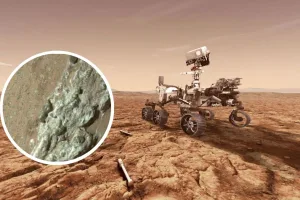
Scientists have been searching for water on Mars for a long time. Water is not the only element of life, but it is the most important. In a study published in Nature on September 10 this year, a group of scientists claimed that traces of life were found in rock samples called ‘Cheyava Falls’ collected on NASA’s Perseverance rover. The stone, which is 6 square feet in size and shaped like an arrow, was found in a place (Jezero pit) where the river used to flow.
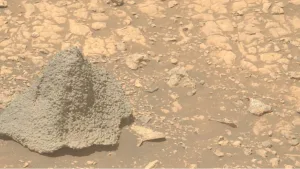
Perseverance rover’s Mastcam-Z imager capture of ‘Cheyava Falls’ (Credit: NASA)

Scientists have collected small samples from the rock found by the rover and reviewed them over the past year. They named the specimen ‘Sapphire Canyon.’ In the initial analysis, they claimed that the stone is rich in organic compounds. It found vivianite, a type of iron phosphate found near decomposing organic matter on Earth, and graizite, an iron sulfide. Usually, their combination is seen as an indication of possible life on Earth.

Long scars have been found on the Cheyava Falls, proving that water once flowed through the rocks. Scientists believe that some chemical reactions related to ancient microorganisms are behind these stains. However, scientists are not yet sure if the stains are due to an unknown chemical reaction. Since 2021, scientists have collected and stored samples from various parts of Mars in 10 titanium boxes for further confirmation. Therefore, we may have to wait a few more years to determine whether there was indeed life on Mars billions of years ago, how long it existed, and how the climate there changed.

4. New Moon of URANUS:
The planets of our solar system have different numbers of moons; the largest, Jupiter, has 95, Saturn has 274, and Earth has only one satellite. There are no satellites of Mercury or Venus. Recently, scientists discovered a new moon of Uranus called S/2025 U1, which is only 10 kilometers in diameter. Because of its small size, astronomers had not noticed it for a long time. The moon was discovered by the James Webb Space Telescope’s infrared camera on February 2. At present, Uranus has 29 satellites. There are 13 rings around Uranus, and scientists believe that there are more moons hidden behind them. So we have to wait more for the total number of moons on this ice-cold planet.

Uranus’s new (credit: NASA, ESA)

5. 3I/ATLAS Comet:
Comets Swan (C/2025 R2) and Lemmon (C/2025 A6) were discovered in October this year. Since July, the interstellar comet 3I/ATLAS has been the center of attention for space enthusiasts. Recently, on December 19, this celestial object came closest to the Earth (approximately 1.8 astronomical units away). What is 3I/ATLAS?

3I/ATLAS Comet (Source: Getty image)

It is usually composed of solid ice (water, carbon dioxide, etc.) and dust and rocks, with a core extending from 0.6 to 5.6 km, surrounded by a continuous cloud of gas and dust. It looks like an inverted tail, which is called an ‘anti-tail.’ Astronomer Larry Deneau discovered this celestial object while observing the night sky on July 1, 2025.

Denneau was involved with the Asteroid Terrestrial Impact Last Alert System (ATLAS), which monitors asteroids or celestial objects that may strike Earth. It is part of the Institute for Astronomy at the University of Hawaii. ATLAS uses four telescopes, two in Hawaii and two in the Southern Hemisphere, to keep track of celestial objects long before they reach Earth’s edge.

(The writer is associated with the Physics Division, State Forensic Science Laboratory, Kolkata)
Desktop Doodles: The Time of Transition

The yearend is also a time to look forward to the future. There are travel stories which are sure to help you draw up a bucket list of destinations.

Dola Mitra | New Delhi |

The countdown to 2026 has begun. Only four more days to go. Traditionally, this is a time to reflect on the year that was. What we did. What we achieved. What the world did. What the world achieved. Or did not. There are an nth number of things that can be listed. Yet we narrow them down to a select few. This week, we present you with two amazing articles from our contributors who highlight success stories of 2025. The subjects they touch on are as varied as science and cinema.

The yearend is also a time to look forward to the future. There are travel stories which are sure to help you draw up a bucket list of destinations. The postcards from different parts of Italy that have been delighting you for the past few Sundays will continue to arrive as the writer journeys to mesmerizing places we didn’t even knew about Closer home, at the very heart of our country there are “offbeat” routes which will entice you into taking that trip, especially those of you who are seekers of solitude.
Yes, years will come and years will go. Time is fluid, flowing without pause. Time itself is however perhaps oblivious of old ends and new beginnings. We humans create the transitions. The yearends. The new years.

On the topic of “humans” don’t miss our interview this week in which our very “human” contributor interviews the Al robot Gork. There is also a human to human interview as our reporter meets an acclaimed author and talks about her latest book. While a tongue-in-cheek review by our veteran film critic will leave you wondering whether or not to watch the film under consideration, we suggest that you definitely read the review. It’s a laugh riot. The review, I mean, not the film.

But make no mistake. While we try to tune into the stories that are “feel good” just as we block out the cacophony and tune into the mellifluous music on the radio, as we bid goodbye to 2025 and say hello to 2026, we are not oblivious to all the suffering too that the year has unleashed on people globally. Whether wars or conflicts in different parts of the world; whether racial or religious discord which have erupted and reared its ugly head, these are the failures, the frailties we also witnessed. We are not going to gloss over the predicament of the people or their plight. While manmade horrors (wars, for instance) have wreaked havoc in the lives of people, (so-called) “natural disasters” too have struck. “So-called” because these “natural disasters” too can willy-nilly be traced to our own irresponsible actions. Climate Change caused by global warming has a direct impact on seawater temperatures. As hot air rises, creating deep hollows in the ocean, the vacuum pulls into itself the gushing, rushing water and this whirlpool twirls around the sea until it crashes on shore. India’s coasts, east, west and south have witnessed many a cyclone. And floods. We bring you an article from an expert on floods, who discusses what can be done as disaster management in the future.
And the future is upon us. The countdown has begun. Four-three-two-one. Happy New Year.

Ramanujan’s troubled nationalism

The same year as Asia’s first Nobel, an FA dropout clerk of the Madras Port Trust gathered courage to write to Prof. G. H. Hardy, who led the mathematical establishment of Britain in his era, with a small sample of his mathematical results backed by no institutional credibility or proof.

ANAMITRO BISWAS | New Delhi |

The same year as Asia’s first Nobel, an FA dropout clerk of the Madras Port Trust gathered courage to write to Prof. G. H. Hardy, who led the mathematical establishment of Britain in his era, with a small sample of his mathematical results backed by no institutional credibility or proof. What followed in the next few years was a collaborative hurricane of unbelievable findings, scribbling of ideas that would take more than a century to realize, and international scientific limelight straight on the face of an ‘enigma like the Hindu Ramanujanwho arrives unexpectedly out of nowhere’.

Shockingly, apart from academic circles locally, contemporary nationalists remained oblivious to the existence and the untimely death of perhaps the most brilliant Indian brain of the 20th century. The year Ramanujan died was that of the Khilafat and Non-cooperation movements. No prominent leader in British India bothered to pay homage to the man of international acclaim as the second Indian F.R.S., the first Indian Fellow of Trinity, and arguably he most productive Indian mathematician ever, all in 32 years of life. Witnesses saw in Ramanujan ‘the immemorial wisdom of the East’. No mortal could comprehend the mind map to his striking insights.

Almost always right, he could do more math in his head than most of his peers could on paper – and by math here, I do not mean just numerical manipulations, but analysis of structures abstract and vast. For Bruce Berndt ‘still covered by a curtain that has barely been drawn’, to E. T. Bell his artistry was ‘all but supernatural’. Bell particularly identified him with his affiliation to the exotic land of Hindus. His advent in England was mythically majestic, and veni, vidi, vici! Ramanujan led a life of strict religious observance, up to his personal space. He continued with his vegetarian diet into the sanatorium of Matlock.

For him, his deity Namagiri uncovered secrets of mathematics. He pictured equations as thoughts of G o d. He went deep enough into spirituality to attribute human action, like in an electric streetcar, to ‘the current that flows in the overhead wires. That is the way maya works in this world.’ Hardy, his colleague, insisted that his religion was simply ‘a matter of observance and not of intellectual conviction’.Baron Snow chose not to trust Hardy’s insight in this. Hardy’s self-proclaimed ‘distaste for all forms of mysticism’ might have affected his view, but on the contrary, ‘Hardy’s deep reverence for mathematics… was precisely of the same kind as impels other people to the worship of God.’ To Dr. George Andrews, a special case ofmathematicians’ reacting to subconscious flashes of insight was Ramanujan’s attachment of that to his Hindu outlook.

The earliest extant mathematics of India is embedded intexts of architecture and rhythm, the Śulbasūtras and the Chandaḥśāstras, where principles of geometry and combinatorics are stated and utilized to make the perfect yajña altar and the exquisitely resonating hymn. Scholars like Baudhāyana and Piṅgala have stated the synopses of their deductions as Vedic truths. Following Alexandria’s fall, more original work had been produced here, of which the use of zero as a number apart from place value has taken up all prominence, but which also encompasses Brahmagupta’s extension of Euclid’s magnum opus and Bhāskara’s work on Diophantine number theory.

Dr. Cajori’s book, published by AMS Chelsea, calls it the phase of “the Hindus”. The UGC’s new undergrad syllabus emphasizes math ‘made in India’. Algebra, often misattributed to Arab compiler Khowarizmi’s Al Jebr, and Varāha Mihira’s development of trigonometry as a tool for astronomy flourished here before the medieval Dark Ages after the eclipse of Nalanda and Taxila. By the time Ramanujan was born, India was a subcontinent engulfed in ignorance and shadowed by colonialists. Ramanujan hailed from a corner distant in infrastructure and culture from the anglicized capitals of Bombay and Calcutta. Ramanujan, with all his familiarity of Sanskrit, could not have read the works of the Indian stalwarts, which had been pushed to obscurity.

As India had to re-learn math from a British framework, so did Ramanujan. With no formal training, he studied Carr’s textbook that listed just formulae, so never cared for rigorous deduction. His style of writing in notebooks that hide to date a mine of surprises, erasing any deduction on slate, is similar to the assertions of Vēdāṅga math, but in a manner adapted from perhaps the worst example of an English formula manual, not from sages to whom formulae were as important as their mystic interpretation. His inheritance of Hindu spirituality tuned into perfect harmony the non-academic faith and the secular math he had picked up from distinct sources. Tr uths, whether in mathematics or in the Upanishads, mattered equally to him.

In an age when the flood of wartime technological advances would motivate the acceleration of theoretical sciences, Ramanujan, like his advisor Hardy, remained faithful to pure mathematics not ‘useful’ in war or amenity, that Hardy was convinced did not make, ‘for good or ill, the least difference to’ the material world’. They both defied gracefully the peril of civilization during the world war and dedicated their efforts to the unadulterated pursuit of Truth, which to Hardy was, as to Keats, synonymous with beauty, and to Ramanujan stood for his religious integrity. Besides sourcing his math from Carr, Ramanujan willingly learnt the literary conventions of modern mathematics at Trinity. He kept his mysticism to himself; his cultural affiliation packed in his suitcase.

Hardly in a position to flaunt his nationalism, not being born in affluence that allows one to toss aside a job under the British, he never spoke against the British Raj nor indulged in politics. If he had made friends with Indian students like Mahalanobis in Cambridge, that was only because of shared roots and emotions. Yet, the Tamil man in European attire, with his hair tuft cut off and his tilak wiped off, to his Western peers seemed to personify the treasures of clouded India that Max Müller, Vivekananda and Tagore were revealing to them – perhaps more vividly than Gandhi in dhoti and chaddar.

(The writer is a research scholar in the Department of Mathematics, IIT, Bhilai.)

2026 assembly elections: Amit Shah to kick off poll strategy visits to four states today

Home Minister Amit Shah will begin poll strategy visits to Assam, West Bengal, Kerala, and Tamil Nadu today for the 2026 Assembly elections.

Statesman News Service | New Delhi |

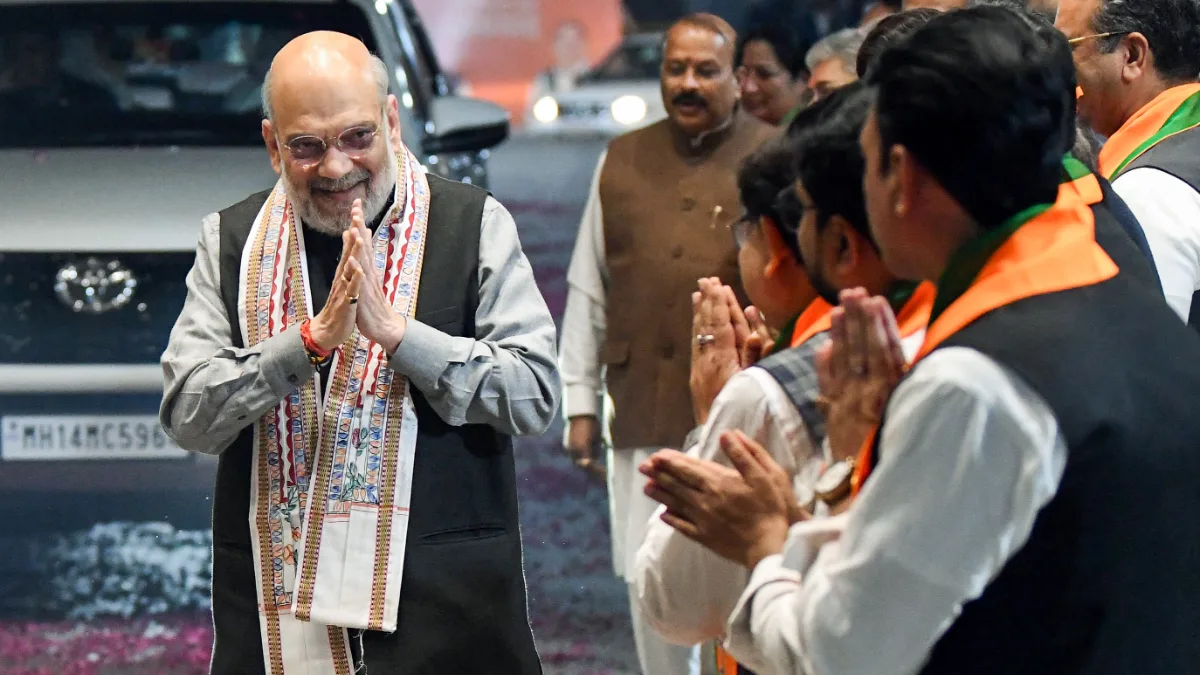
Union Home Minister Amit Shah will begin a series of visits to four poll-bound states from Sunday to outline the Bharatiya Janata Party’s (BJP) strategy for the Assembly elections scheduled next year in Assam, West Bengal, Kerala, and Tamil Nadu.

The outreach comes in the wake of the NDA’s recent victory in the Bihar Assembly elections. “After the Bihar Assembly election victory, Home Minister Shah has outlined a major strategy for the Assembly elections next year in four states – Assam, West Bengal, Kerala, and Tamil Nadu,” said a party leader.

Detailed tour schedule

As per the BJP’s organisational unit functionary, Shah will tour Assam on 28 and 29 December, followed by West Bengal on 30and 31 December. He is scheduled to visit Tamil Nadu in the first week of January and Kerala in the second week of January.

Shah plans to spend at least two days every month in each of these states until the elections are held. Three of the four states are currently governed by non-NDA parties.

Focus on booth-level strength

During his visits, the Home Minister will particularly focus on boosting Panna Pramukhs and overseeing the implementation of the ‘Mera Booth Sabse Majboot’ campaign. Organisational meetings and interactions with party workers are also in the schedule.

Sources within the BJP told IANS that Shah is aiming to replicate the NDA’s strong performance in Bihar, despite what they described as a misinformation campaign by the Mahagathbandhan over the Special Intensive Revision (SIR) of electoral rolls.

The upcoming visits will also involve assessing ground-level sentiment, identifying key local issues and preparing counter-narratives to opposition attacks, a party leader said.

The BJP is simultaneously working on a plan to counter what it calls “politics of falsehood” by rival parties on issues such as the rural job scheme, VB G RAM G, SIR, employment rates and other socio-economic concerns, another party leader added.


Return, reckoning

The return of Tarique Rahman to Bangladesh after nearly two decades in exile is more than a personal political comeback.

Statesman News Service | New Delhi |

The return of Tarique Rahman to Bangladesh after nearly two decades in exile is more than a personal political comeback. It marks a decisive moment in the country’s post-uprising recalibration, where power, legitimacy, and memory are being renegotiated all at once. In a political landscape cleared by the dramatic fall of Sheikh Hasina, Mr Rahman’s arrival signals the consolidation of an alternative centre of authority rather than the emergence of a genuinely new political order. For many Bangladeshis, Mr Rahman embodies continuity rather than rupture. As the heir to the Zia family legacy and the leading face of the Bangladesh Nationalist Party, he represents a familiar pole in a system long defined by dynastic rivalry. Yet timing matters.

His return comes at a moment when institutional trust has been deeply eroded by years of repression, violent protests, and the politicisation of justice. In such conditions, familiarity can feel reassuring, even if it carries unresolved baggage. The clearing of legal cases against Mr Rahman following the collapse of the previous regime underlines a persistent weakness in Bangladesh’s governance framework: the use of courts as instruments of political combat. While his supporters view this vindication as proof of persecution, critics see it as another example of how accountability bends with shifts in power. The danger lies in mistaking legal reversals for moral closure. Without transparent reckoning, political amnesia risks becoming the price of stability. Yet public euphoria should not be mistaken for democratic renewal. Crowds can signal momentum, but they cannot substitute for institutions weakened by years of executive dominance.

Without credible electoral safeguards, independent courts, and a culture of restraint, popular returns risk entrenching majoritarian authority rather than correcting the systemic failures that produced the crisis. The upcoming election, widely described as consequential, is therefore less about electoral arithmetic than about the nature of the state that will emerge. With the former ruling party effectively sidelined, the contest risks becoming an exercise in succession rather than representation. Mr Rahman’s popularity on the streets reflects organisational strength and pent-up opposition energy, but it also exposes the absence of institutional counterweights capable of broadening political choice. From an Indian perspective, this transition deserves careful, unsentimental scrutiny.

Bangladesh is not merely a neighbour but a strategic partner whose internal stability directly affects regional security, border management, and economic integration. A government born out of exclusion rather than reconciliation may find early legitimacy at home, but it could struggle with long-term coherence and external credibility. Ultimately, Mr Rahman’s return is a test not just of leadership but of learning. If Bangladesh’s next phase merely restores an older political equilibrium under new circumstances, the cycle of grievance and reversal will continue. If, however, this moment is used to rebuild institutions rather than personalise power, Mr Rahman’s homecoming could yet become a turning point rather than a prelude to repetition

Unfinished Justice

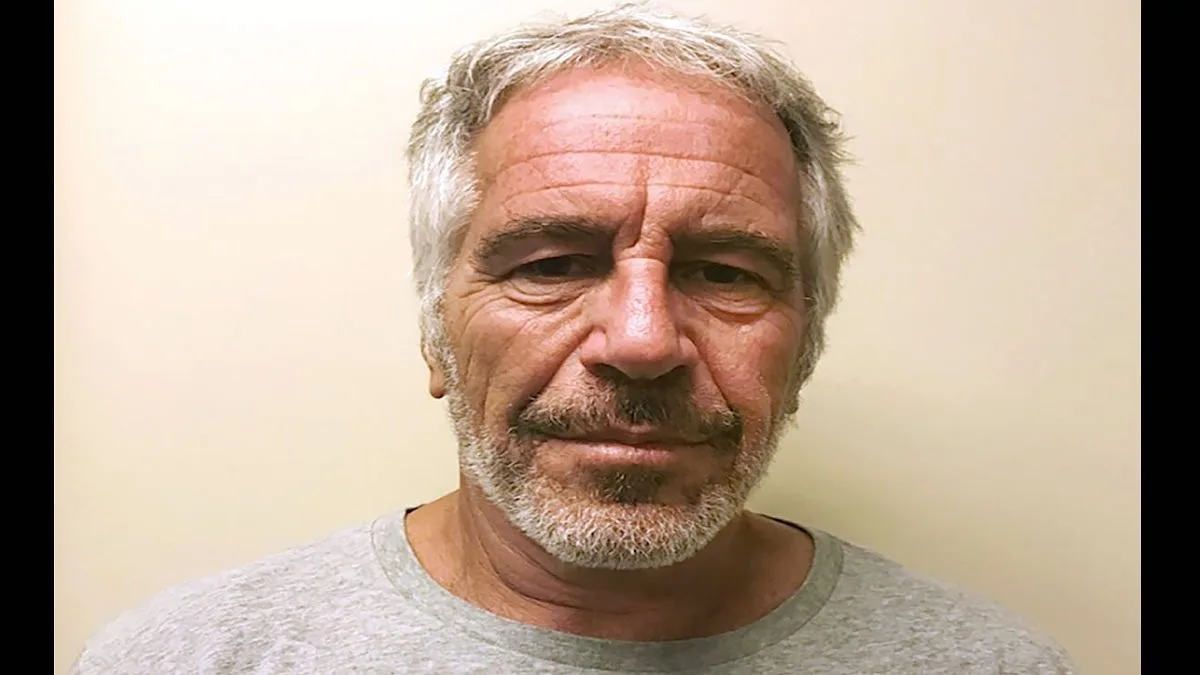
The sudden discovery of more than a million additional documents linked to Jeffrey Epstein does not merely extend a scandal; it reopens a fundamental question about power, accountability, and the limits of institutional transparency.

Statesman News Service | New Delhi |

The sudden discovery of more than a million additional documents linked to Jeffrey Epstein does not merely extend a scandal; it reopens a fundamental question about power, accountability, and the limits of institutional transparency. Years after Epstein’s death, the continuing drip of files suggests that the public reckoning with his crimes was never truly complete, only deferred. What stands out is not just the scale of the material but the manner of its release.

Staggered disclosures, shifting timelines, and heavy redactions have turned what should have been a clarifying exercise into a source of renewed mistrust. When authorities insist that they are complying with the law while repeatedly missing deadlines, the credibility gap widens. Transparency delayed, especially under legal compulsion, risks being perceived as transparency resisted. At the centre of the dispute is the boundary between protecting victims and protecting reputations. Safeguarding survivors’ identities is non-negotiable. But when redactions extend beyond that narrow purpose, the process begins to look less like justice and more like damage control.

The explicit rejection of “reputational harm” as a valid reason for secrecy reflects a hard-earned lesson: powerful individuals have historically escaped scrutiny precisely because institutions treated embarrassment as equivalent to injustice. The unresolved question of Epstein’s possible co-conspirators is particularly corrosive. The absence of clarity feeds speculation and conspiracy, neither of which serves victims or the rule of law. Silence creates its own narrative, one in which influence appears to trump accountability. Even if further investigation ultimately clears some names, the refusal to address them openly prolongs doubt and deepens cynicism.

In the absence of decisive closure, secrecy itself becomes a second injury, compounding harm long after the original crimes. The episode also exposes structural weaknesses within the justice system. That such a vast archive could surface so late suggests fragmented record-keeping, poor inter-agency coordination, or an institutional reluctance to confront uncomfortable implications. None of these explanations inspires confidence. In cases involving elite wrongdoing, process matters as much as outcome, because process is what distinguishes justice from mere assertion of authority. There is a broader democratic cost to this drawn-out disclosure. Public faith in legal institutions depends on the belief that rules apply evenly, regardless of wealth or proximity to power.

When transparency appears selective, citizens begin to assume that truth itself is negotiable. That erosion of trust causes lasting damage, far beyond the confines of a single criminal case. Ultimately, the Epstein files are less about salacious details than about whether the system can confront its own failures. Genuine closure will not come from endless document dumps, but from a clear demonstration that the law is capable of naming wrongdoing wherever it leads. Until then, each newly “discovered” cache of papers will feel less like progress and more like proof that justice, in this case, remains unfinished.

Toxic Delhi

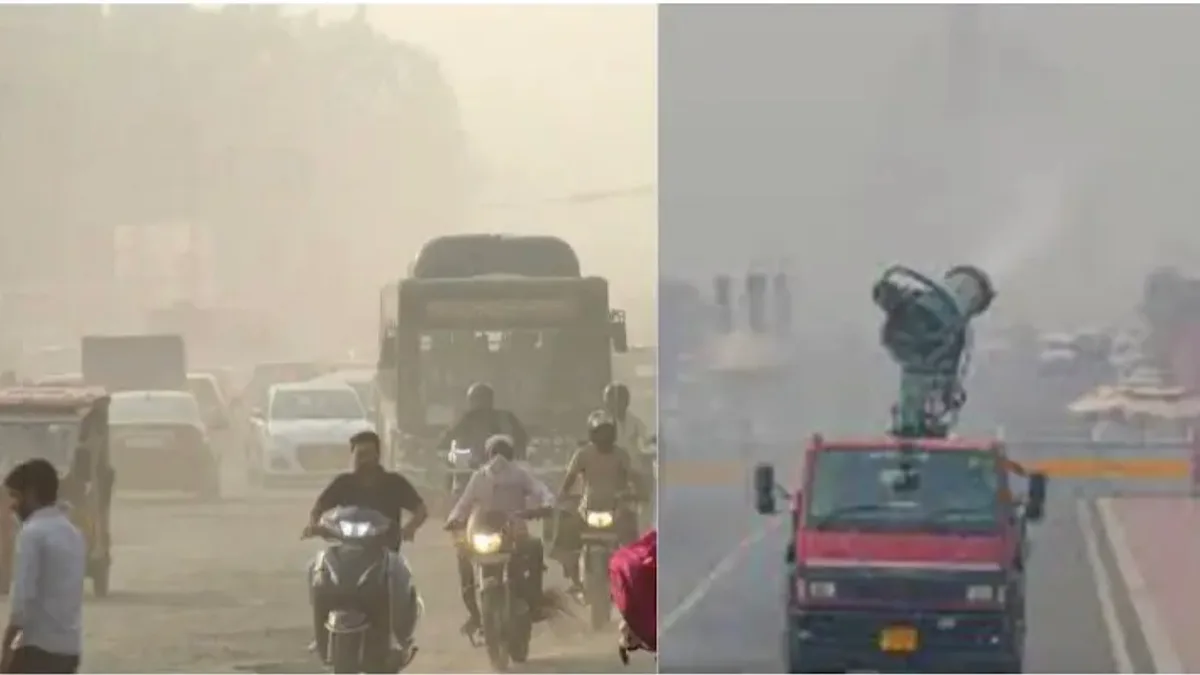
Delhi’s air pollution is no longer a temporary crisis. It has become a regular and predictable condition. What should have triggered sustained alarm has instead settled into what The Statesman aptly described as “choking normality”, where citizens adjust their lives while authorities attempt to manage the problem without much success.

SUBHAS CHAKRAVARTY | New Delhi |

Delhi’s air pollution is no longer a temporary crisis. It has become a regular and predictable condition. What should have triggered sustained alarm has instead settled into what The Statesman aptly described as “choking normality”, where citizens adjust their lives while authorities attempt to manage the problem without much success. Quietly, the poisoned air has come to be accepted as part of urban existence. This article explains, in simple terms, what this pollution is, why it is so harmful, and why there is now no alternative but to act decisively and root it out before it irreversibly damages a city of beauty, heritage, and architectural vistas.

Air pollution in Delhi is not a single invisible enemy. It is a complex mixture of microscopic particles and harmful gases produced largely by human activity. The most dangerous components are fine Particulate Matter (PM) known as PM10 and PM2.5. PM10 particles are small enough to enter the nose and throat, while PM2.5 particles are even smaller, allowing them to penetrate deep into the lungs and pass into the bloodstream. These particles are produced by the emissions from automobiles, power plants, biomass burning, and forest fires. These particles are accompanied by harmful gases released mainly from vehicles, coal-based power generation, and incomplete combustion, including nitrogen oxides, sulphur dioxide, carbon monoxide, and ground-level ozone formed through chemical reactions under sunlight.

During winter, meteorology worsens the situation. As the surface cools rapidly, cold air near the ground becomes trapped beneath a layer of warmer air above, preventing vertical convection and mixing. Pollutants emitted day after day remain confined close to the surface, accumulating into dense smog ~ a combination of smoke and fog. The smoke arises primarily from the burning of coal, biomass, plastics, and other polluting fuels. With the air remaining steady and non-dispersive, pollution builds up cumulatively, making winter air in Delhi particularly oppressive. The health consequences are severe and operate on two timescales. In the short term, high pollution levels cause eye and throat irritation, coughing, breathlessness, headaches, and extreme fatigue. Hence hospitals see sharp increases in patients suffering from asthma attacks, respiratory infections, and cardiac distress. For the elderly, children, pregnant women, and those with existing heart or lung disease, even brief exposure can be dangerous.

These immediate effects, however, are only part of the damage. The long-term effects are far more alarming. Continuous exposure damages lung tissue, permanently reduces lung capacity in children, increases the risk of heart attacks and strokes, contributes to diabetes and metabolic isorders, and significantly raises the likelihood of lung cancer. Scientific evidence now also links air pollution to cognitive decline and neurological disorders. The burden does not fall equally: traffic police, street vendors, construction workers, and the urban poor breathe the worst air and pay the highest price. Air pollution, therefore, is not merely an environmental problem; it is a public health and social justice issue. Delhi’s predicament is often explained away by isolating individual causes like stubble burning in neighbouring states, Diwali fireworks, or unfavourable weather. This fragmentation of cause and effect obscures the real picture.

The city’s pollution arises from multiple sources acting together: an enormous and growing vehicle fleet operating in chronic congestion; relentless construction activity without effective dust control; coal-based power plants and industries in the wider region; routine burning of waste and biomass; and widespread use of diesel generators. What is striking is that these causes are well-known, as are their possible solutions. The real issue lies in the absence of sustained and structural action. Policies appear, often during pollution emergencies, but fade once public attention subsides. This pattern of reaction without reform has allowed toxic air to become routine.

That this trajectory can be reversed is not a matter of speculation. Cities like Beijing, once suffered pollution levels comparable to Delhi’s. Faced with mounting health and economic costs, China implemented a coordinated national clean-air strategy. Polluting industries were shut or relocated, coal use was sharply reduced, emission norms were enforced strictly, electric public transport expanded rapidly, and officials were held accountable for air-quality outcomes. Within a decade, particulate pollution fell dramatically. Similar recoveries have been recorded elsewhere. London, once choked by lethal smog, improved air quality through sustained regulation, cleaner fuels, and restrictions on vehicular emissions.

Los Angeles and Tokyo, long associated with severe urban pollution, achieved major reductions through stringent emission standards, technological innovation, and strict enforcement. Equally important in all these cases is creating public awareness, i.e. citizens are informed, educated, and encouraged to cooperate with authorities, accept temporary inconveniences, and adhere to policy guidelines in the larger interest of public health. A large number of scientists and engineers are attempting to develop AI, machine learning (ML) and deep learning methods for predicting air pollutant concentration. In order to improve the accuracy of these models, data from a denser network of surface level and satellite measurements of pollution constituents would be required.

The observations would show the locations with high pollution enabling to identify the root causes. Accordingly, suitable measures can be implemented to check such sources of pollution. Delhi now stands at a critical juncture. As the national capital, it is not merely another polluted city; it is a test case for urban India. There is no choice left but to acknowledge the gravity of the problem and address it at its roots through cleaner transport, strict control of construction dust, rapid transition away from coal and diesel, elimination of waste burning, and effective regional coordination across the entire airshed.

Addressing major contributors to air pollution requires infrastructure for electric vehicles, enhanced public transit networks, and prioritization of renewable energy sources year-round. If Delhi succeeds, it can set a powerful example. Bengaluru can prevent traffic emissions from spiralling into a crisis. Mumbai can adapt lessons for construction, port activity, and industrial clusters. Kolkata can address coal use, brick kilns, and winter stagnation before reaching the same tipping point. Clean air need not be a privilege of a few cities; it can become a shared urban standard. Pollution is not the unavoidable cost of development; it is the consequence of policy choices. Different choices can yield different outcomes. Delhi’s decisive and sustained action will shape not only its own future, but also that of India’s rapidly growing cities. The air we breathe today will determine how long and how well our cities survive tomorrow.

(The writer is ex-ISRO Brahma Prakash Professor, Bengaluru)

PM Modi chairs meet of chief secretaries; discussion on governance reforms held

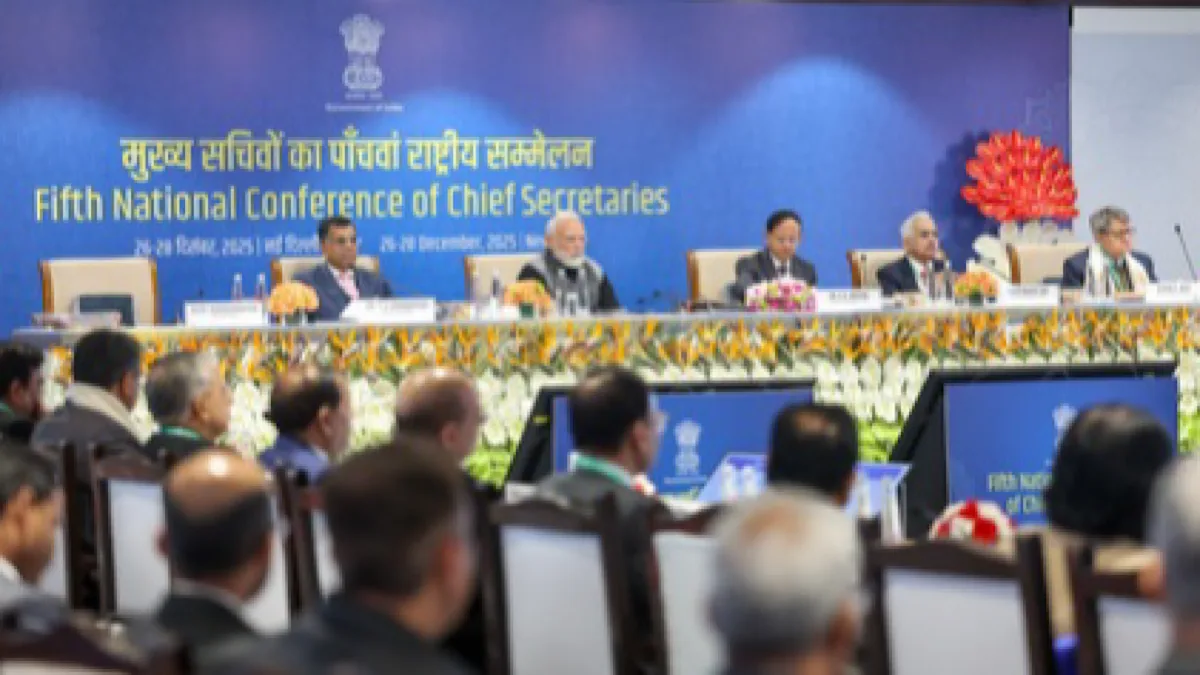
Prime Minister Narendra Modi conducted the fifth meeting of the National Conference of Chief Secretaries on Saturday in New Delhi.

IANS | New Delhi |

Prime Minister Narendra Modi conducted the fifth meeting of the National Conference of Chief Secretaries on Saturday in New Delhi.

The event is currently underway at Bharat Mandapam.

The aim of the event is for the Centre and states to align their priorities for the national growth of the country.

In a posting on social media, the Prime Minister said that he had “insightful” talks, emphasising the significance of reform and performance for enhancing the administrative system of India.

“Had insightful discussions on various issues relating to governance and reforms during the National Conference of Chief Secretaries being held in Delhi,” PM Modi posted on X.

The conference for this year is pegged on the theme ‘Human Capital for Viksit Bharat’ and includes forums focused on early childhood education, schooling, skilling, higher education, and development in extra curriculum activities.

The conference also includes discussions on deregulation in states, technology in governance, and projects under Atmanirbhar Bharat.

The event is being organized by NITI Aayog in partnership with Union ministries and states.

The event holds the purpose of finalising a common roadmap to maximize India’s human capital potential.

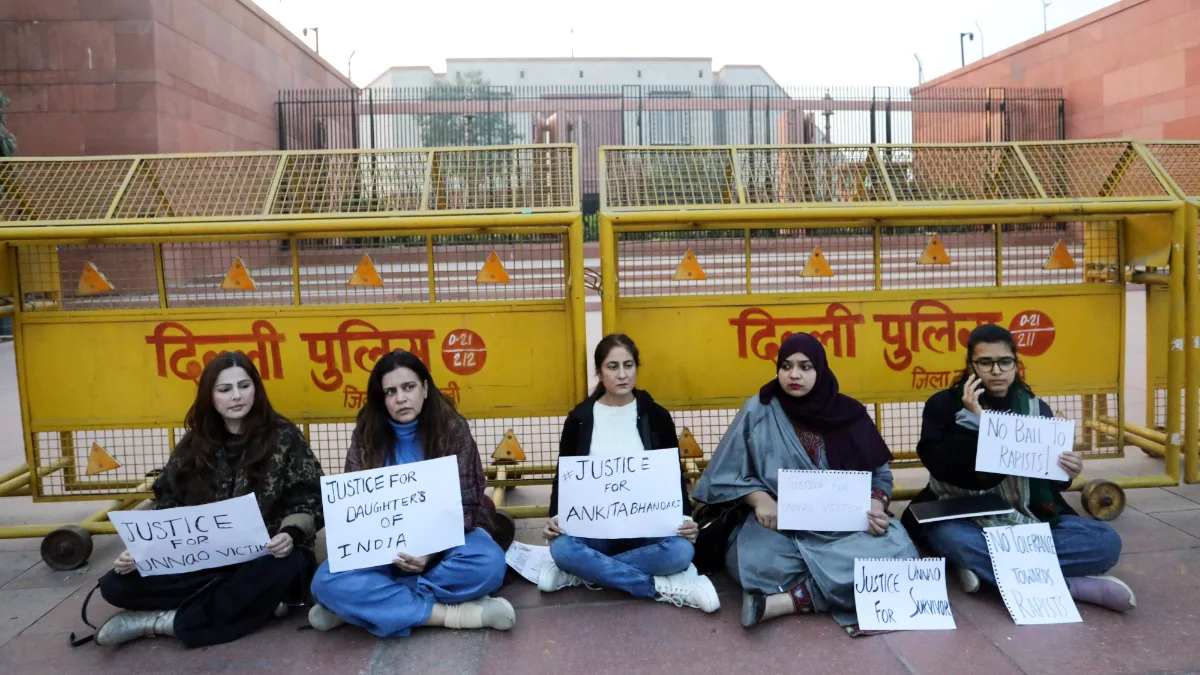
Unnao rape case: Supreme Court to hear CBI plea against Delhi HC’s bail to Kuldeep Sengar on 29 Dec

Supreme Court will hear the CBI petition on 29 Dec challenging the Delhi HC’s bail order for Kuldeep Singh Sengar in the Unnao rape case.

Statesman News Service | New Delhi |

The Supreme Court will take up the Central Bureau of Investigation’s (CBI) petition on 29 December challenging the Delhi High Court’s order suspending the life sentence awarded to former BJP leader Kuldeep Singh Sengar in the 2017 Unnao rape case.

The matter will be heard by a three-judge vacation bench led by Chief Justice of India Surya Kant.

Earlier on Friday, the CBI filed a Special Leave Petition (SLP) before the apex court questioning the Delhi High Court’s 23 December order that suspended Sengar’s life sentence pending appeal and granted him bail.

Sengar was found guilty in December 2019 in the Unnao rape case and was sentenced to life imprisonment along with a fine of Rs 25 lakh. Although he has been granted bail in this case, he continues to remain behind bars as he is serving a separate 10-year jail term in another CBI case related to murder.

Survivor alleges misconduct in probe

Meanwhile, the survivor of the Unnao rape case and her mother met CBI officials in New Delhi on Saturday and submitted a complaint alleging misconduct in the investigation. They accused the investigating officer (IO) of colluding with a judge to favour the accused.

After the meeting, the survivor told reporters that she had requested an appointment with a senior CBI official but was informed that it was a holiday. She said a junior officer accepted her complaint instead. “The junior official has received my application and said that the senior official will meet on Monday,” the victim told ANI.

She further alleged that the investigating officer acted against her interests. “The complaint is that the investigating officer has wronged me. He colluded with the judge to ensure that the other party won, so that the rape victim would lose, her courage would be broken, and she would not be able to pursue the case further,” said the victim.

Her mother also stated that the family is prepared to approach the Supreme Court. “They have received my complaint. Now we have to see when the authority meets us. We trust the Supreme Court,” she said.

She added, “The CBI is there, but I will only trust them if they stand by my side in the Supreme Court.”

Trinamool delegation meets Bengal CEO, lodges complaint over SIR process

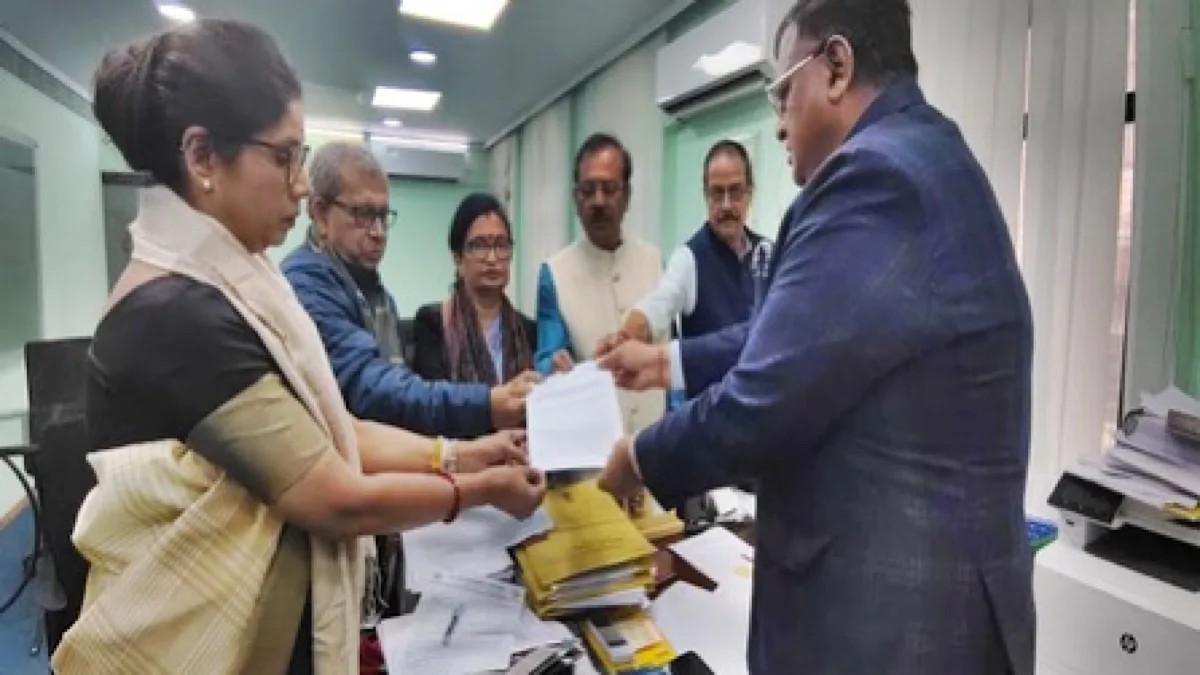
As the second phase of the Special Intensive Revision (SIR) of electoral rolls began on Saturday, a Trinamool Congress delegation visited the office of the Chief Electoral Officer (CEO) in West Bengal and lodged a series of complaints regarding the hearing process.

IANS | Kolkata |

As the second phase of the Special Intensive Revision (SIR) of electoral rolls began on Saturday, a Trinamool Congress delegation visited the office of the Chief Electoral Officer (CEO) in West Bengal and lodged a series of complaints regarding the hearing process.

The delegation also submitted a written representation outlining its grievances and said that officials at the CEO’s office informed them that the letter would be forwarded to the Election Commission of India.

The TMC delegation comprised state ministers Chandrima Bhattacharya, Aroop Biswas and Shashi Panja, along with senior party leaders Manas Bhunia and Moloy Ghatak.

After meeting officials at the CEO’s office, members of the delegation levelled allegations against the Election Commission over the conduct of the SIR process.

State Minister Chandrima Bhattacharya said the revision exercise should be carried out keeping public convenience in mind, but alleged that this was not being followed in West Bengal.

“The way the SIR process is being conducted in BJP-ruled states, it is not being done in the same manner in Bengal,” she alleged.

Bhattacharya further claimed that the powers of Electoral Registration Officers (EROs) were being curtailed in the state, which she described as illegal. “We will not accept this,” she said, alleging that the Election Commission was acting at the behest of the BJP.

State Minister Aroop Biswas also made similar allegations, claiming that the Commission was acting under pressure from the ruling party at the Centre.

“The Election Commission is doing whatever the BJP is saying. It is acting like the B-team of the BJP. The electoral office is now functioning like a BJP office, and the central government is repeatedly dictating who should remain voters,” Biswas alleged.

He also questioned why the names of lakhs of people, allegedly deleted from the electoral rolls after the first round of the SIR process, had not been made public.

“We will not allow the name of a single legitimate voter to be removed,” Biswas said.

Senior TMC leader Manas Bhunia alleged that the developments were politically motivated because the Trinamool Congress and Chief Minister Mamata Banerjee are in power in the state.

The delegation further alleged that elderly people were being harassed by being called for hearings over minor discrepancies during the revision process.

Joint crackdown against illegal mining to begin across 20 Aravalli districts in Rajasthan from 29 Dec

The joint operation will be carried out by the Mines, Revenue, Police, Transport and Forest departments in coordinated action under the supervision of district collectors.

IANS | New Delhi |

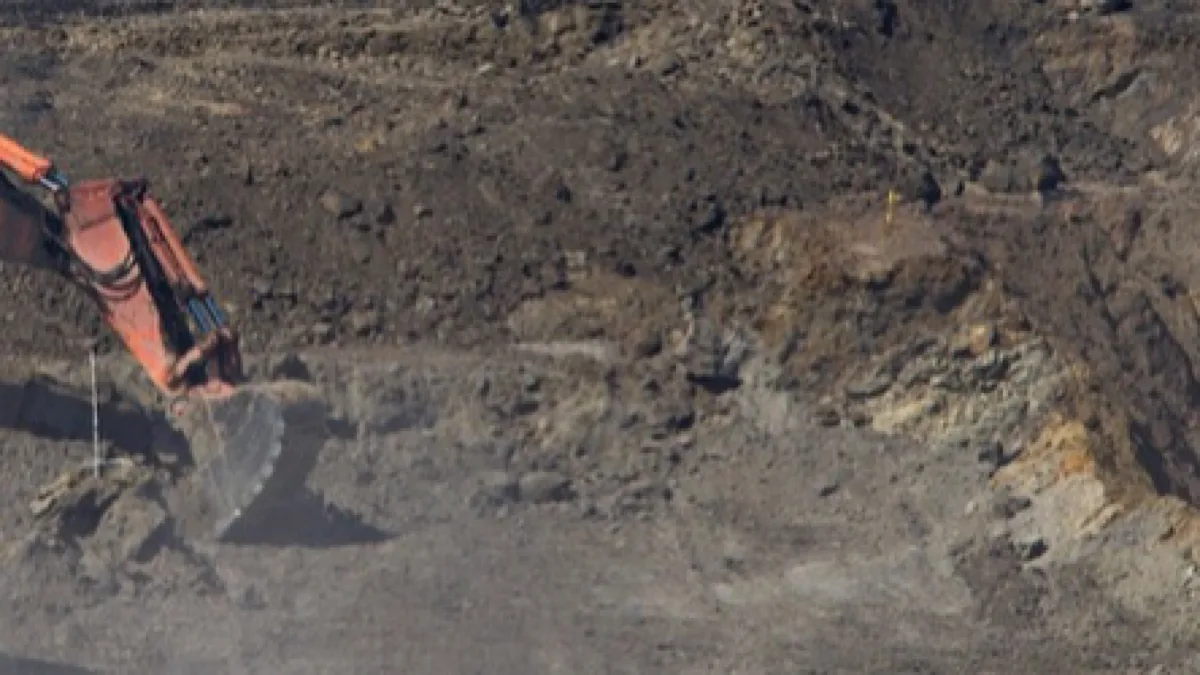
Acting on the directives of Rajasthan Chief Minister Bhajan Lal Sharma, a large-scale joint operation will be launched against illegal mining, transportation and storage activities across 20 districts of the Aravalli mountain range from December 29, 2025 to January 15, 2026, government officials said on Saturday.

The joint operation will be carried out by the Mines, Revenue, Police, Transport and Forest departments in coordinated action under the supervision of district collectors.

The initiative reflects the state government’s zero-tolerance policy against illegal mining.

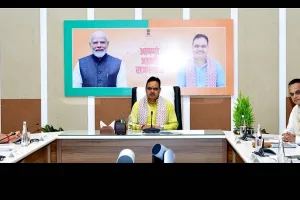
On Saturday, Chief Minister Sharma chaired a joint meeting of the Mines and Forest departments and issued clear instructions to take strict action against illegal mining activities.

Emphasising an “action mode” approach, the Chief Minister directed officials to ensure visible and effective results on the ground.

Rajasthan Principal Secretary of the Mines Department, T. Ravikant, held discussions with senior mining engineers at the Secretariat and conveyed the Chief Minister’s instructions, saying that illegal mining must be completely eradicated from the state.

In line with these directions, the decision was taken to launch a coordinated operation involving five departments in the 20 Aravalli districts.

Ravikant said the campaign will cover all aspects of illegal mining, including unlawful extraction, transportation and storage.

Under the guidance of district collectors, the operation will be conducted with close inter-departmental coordination.

Officials have been instructed to convene Special Investigation Team (SIT) meetings immediately under the chairmanship of the district collectors.

Ravikant also stressed that action should not be limited to intercepting illegal transportation alone, but must also identify and act against the source and locations of illegal activities to eliminate the problem at its roots.

“Districts severely affected by illegal mining will have vulnerable hotspots identified, where strict action including seizure of machinery will be undertaken.”

Clear instructions have been issued that no leniency will be tolerated during the campaign, and the strictest action as per law must be ensured.

The operation will be regularly monitored from the Udaipur headquarters and at the level of the Principal Secretary of the Mines Department.

Accountability of officers will be fixed, and any negligence will not be tolerated.

Officials have also been directed to publicise actions taken during the campaign through the media to send a strong message about the state government’s firm stance against illegal mining activities.

Zelenskyy calls Putin “a man of war” after Russia’s deadly attack on Kyiv

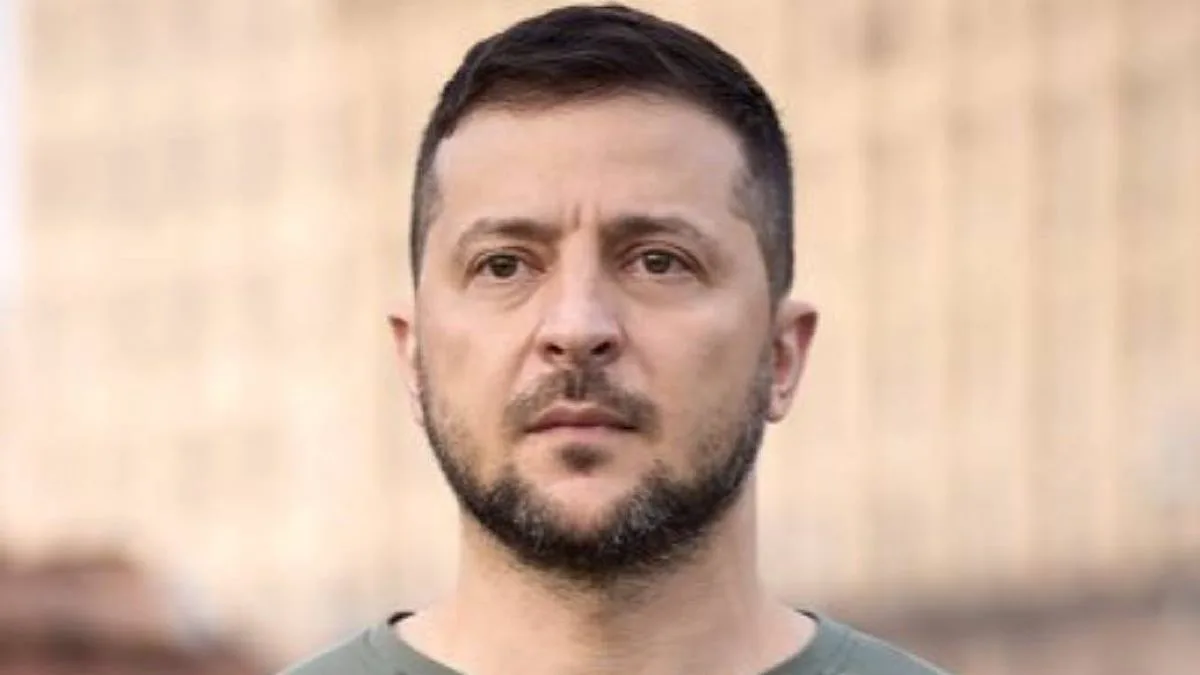
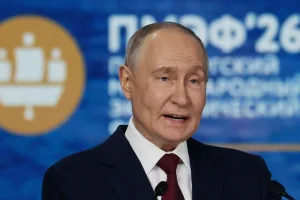
After Russia unleashed a fresh wave of strikes on Kyiv and nearby regions, Ukrainian President Volodymyr Zelensky has called Russian leader Vladimir Putin a “man of war.”

ANI | New Delhi |

After Russia unleashed a fresh wave of strikes on Kyiv and nearby regions, Ukrainian President Volodymyr Zelensky has called Russian leader Vladimir Putin a “man of war.”
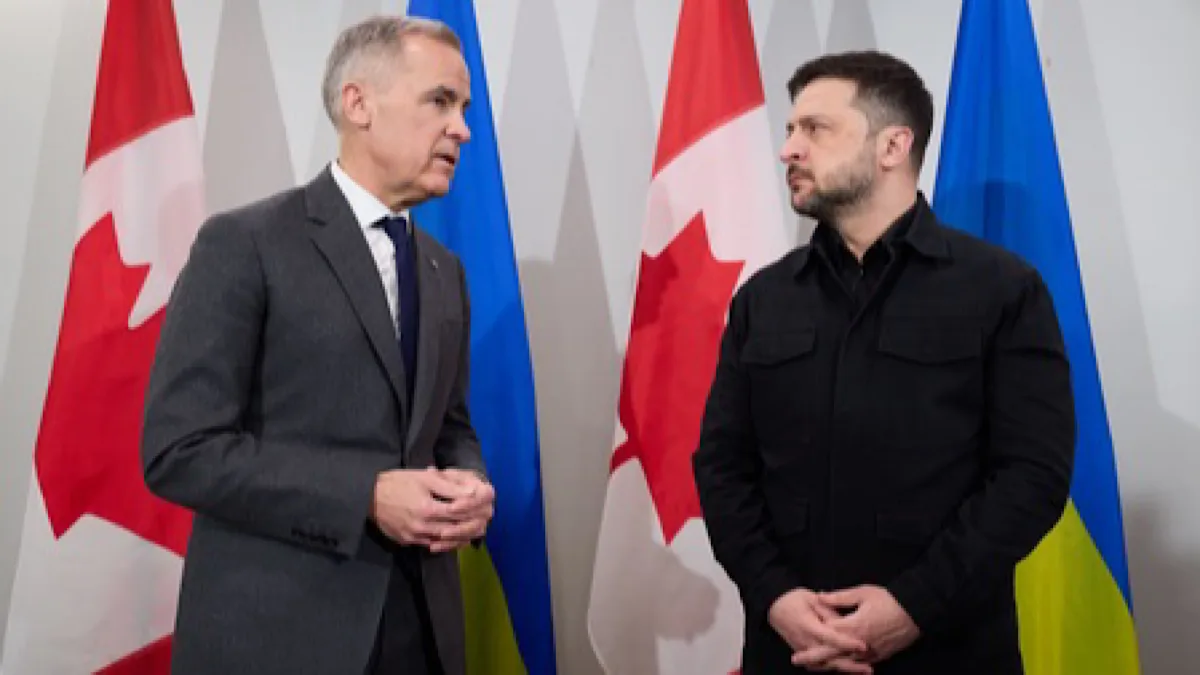
Speaking in Halifax, Nova Scotia, alongside Canadian Prime Minister Mark Carney, Zelensky linked the prolonged assault to Russia’s intentions, a day before his meeting with US President Donald Trump in Florida.

“We want peace,” Zelensky said. “And he’s a man of war.”
Zelensky made a stop in Canada as he prepared for talks with Trump on Sunday in Florida, where he is expected to present a 20-point peace plan aimed at ending the nearly four-year-long conflict. Trump has earlier stated that any peace proposal would require his “approval.”

During his stopover, Zelensky held discussions with Canadian Prime Minister Mark Carney, as well as leaders from NATO and the European Union.
He urged strong positions on both the battlefield and the diplomatic front to stop Russian President Vladimir Putin from manipulating and evading a real and just end to the war.”
Following the meetings, Zelensky wrote in a post on X, “Strong positions are needed both at the front and in diplomacy to prevent Putin from manipulating and evading a real and just end to the war. The world has sufficient strength to guarantee security and peace.”
The remarks came hours after Russia launched one of its largest aerial assaults on Ukraine’s capital, Kyiv, and surrounding regions, killing at least two people and injuring four others.

Zelensky alleged that Russia fired more than 500 drones and over 40 missiles during the attack. According to CNN, the assault lasted more than 10 hours, disrupting daily life in Kyiv and causing widespread power outages that lasted for several hours.
In a post on X, Zelensky said, “Another Russian attack is still ongoing: since last night, there have been almost 500 drones – a large number of ‘shaheds’ – as well as 40 missiles, including Kinzhals. The primary target is Kyiv – energy facilities and civilian infrastructure. Regrettably, there have been hits, and ordinary residential buildings have been damaged. Rescuers are searching for a person trapped under the rubble of one of them. In some districts of the capital and the region, electricity and heating are currently unavailable. Firefighting efforts are underway. Repair crews have already begun work at some energy facilities; at others, personnel remain in shelters, and rescuers and repair teams will start work as soon as the air raid alerts stop.”

The attack came a day after Zelensky confirmed his upcoming meeting with Trump.
The Ukrainian president is scheduled to meet the US leader at Mar-a-Lago in Florida on Sunday, December 28, 2025, where discussions will focus on the peace plan and potential US security guarantees.

Magnitude 7.0 earthquake hits Taiwan

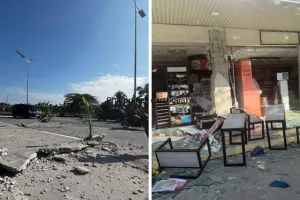
A strong earthquake measuring 7.0 on the Richter scale struck Taiwan late Saturday night, triggering tremors across several parts of the island, Focus Taiwan reported.

ANI | New Delhi |

A strong earthquake measuring 7.0 on the Richter scale struck Taiwan late Saturday night, triggering tremors across several parts of the island, Focus Taiwan reported.
According to Taiwan’s Central Weather Administration (CWA), the quake occurred at 11:05 pm local time. The epicentre was located in the sea, around 32 km east of Yilan County, at a depth of about 73 km, Focus Taiwan reported.

The tremors were felt in many areas, including Taipei, New Taipei, Taichung, Taoyuan, Tainan, and counties such as Hualien, Yilan, Hsinchu, Miaoli, Nantou, Changhua, Yunlin, Taitung and Chiayi, along with Keelung, Hsinchu and Chiayi cities. The earthquake registered an intensity level of on Taiwan’s seven-level intensity scale in these regions.
There were no immediate reports of injuries or damage following the quake.
According to official data, the earthquake recorded an intensity level of 4 in Yilan County on Taiwan’s seven-level intensity scale. Similar tremors were also felt across large parts of eastern, northern and central Taiwan, including Tainan, Taipei Times reported.
Intensity was slightly lower in the south, with a reading of 3 in Kaohsiung and Pingtung County. Lighter tremors were reported in outlying regions, with intensity levels of 2 in Lienchiang and Penghu counties and 1 in Kinmen County.

Speaking at a late-night press briefing around 11:50 pm, the Central Weather Administration (CWA) said this was only the third earthquake of magnitude 7 or higher to hit Taiwan in recorded history. The previous major quakes were the deadly 7.3-magnitude earthquake in September 1999 and another 7.2-magnitude tremor in April last year, Taipei Times reported.
The CWA explained that the quake was caused by tectonic movement between the Philippine Sea Plate and the Eurasian Plate. With a depth of 72.8 kilometres, it was classified as an intermediate-depth earthquake.

Because the quake originated deep below the surface and offshore, the shaking was felt across a wide area but is not expected to cause major damage, officials said.
Authorities also warned that aftershocks measuring between 5.5 and 6.0 could occur within the next day, urging residents to remain cautious.
It is also worth noting that this is the second strong earthquake to hit Taiwan this year. (ANI)

Myanmar junta holds first elections since coup amid ongoing civil war

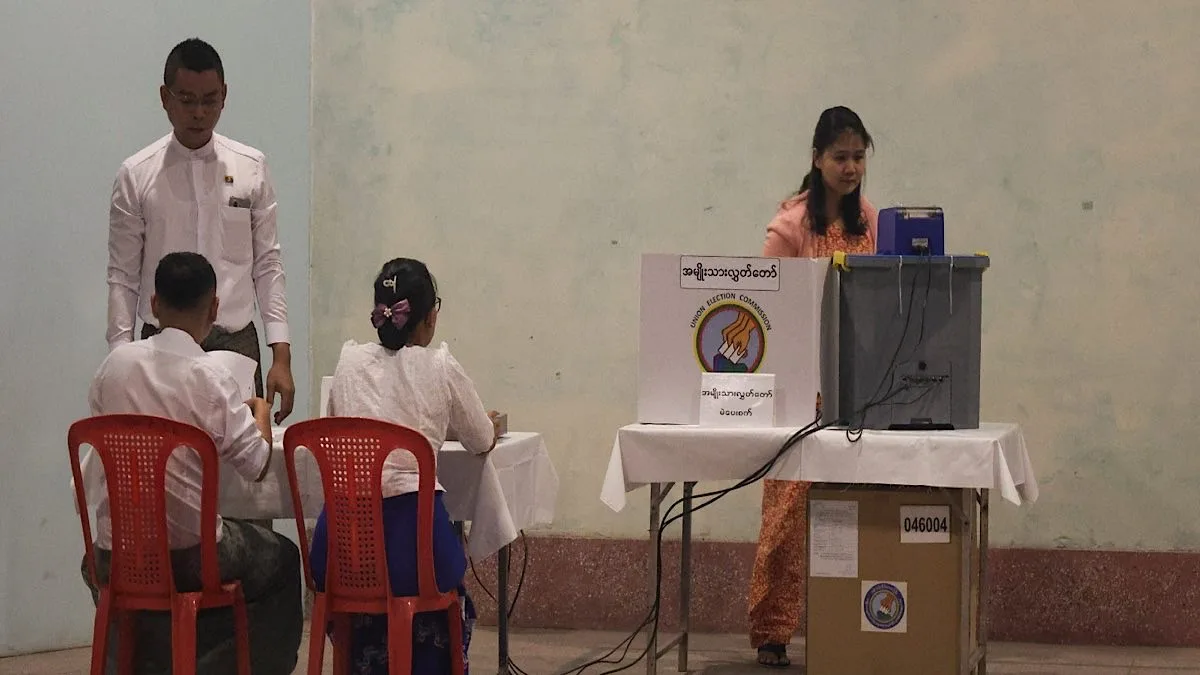
Nearly five years after overthrowing Myanmar’s elected government, the military junta on Sunday began polling in a tightly controlled national election.

ANI | New Delhi |

Nearly five years after overthrowing Myanmar’s elected government, the military junta on Sunday began polling in a tightly controlled national election.

The poll marks the first nationwide election organised by the junta since it seized power in February 2021, a takeover that triggered mass protests and plunged the country into a brutal civil war that continues to this day.

The military has claimed the election will pave the way for a return to democracy. However, opposition groups and human rights organisations have dismissed the vote as a move designed to legitimise continued junta rule.
The elections are happening even as Myanmar’s most popular political leader, whose government was overthrown by the military in February 2021, remains imprisoned. Her party, the National League for Democracy (NLD), has been dissolved, effectively excluding it from the political process.

According to CNN, the electoral landscape is heavily tilted in favour of the military junta, with the ballot dominated by parties aligned with or backed by the junta.
Voting began on Sunday in parts of the country and is being conducted in three phases, with additional rounds scheduled for January 11 and January 25. Authorities have not announced when the final results will be released.

Large areas of Myanmar will not participate in the election due to ongoing fighting. Continued clashes between junta forces and a mix of ethnic armed groups and pro-democracy fighters have made voting impossible in several regions, particularly in border areas and parts of central Myanmar, CNN reported.

Over the past year, rebel forces have inflicted notable losses on the Junta military, briefly raising hopes among opponents that the junta’s grip on power could weaken.
Security has been tightened nationwide ahead of the three-phase vote. At the same time, hundreds of people have been arrested under a newly enacted law that criminalises criticism of the election or efforts to disrupt the process. The military has continued its operations against opponents even as polling takes place.

The military has rejected accusations of abuse, saying it is targeting “terrorists” and maintaining that the election aims to build what it calls a “genuine, disciplined multiparty democratic system.” It has dismissed international criticism of the polls.
The United States and most Western countries do not recognise the junta as Myanmar’s legitimate government. Several Asian nations, including Japan and Malaysia, have also criticised the election.

Canadian PM announces new support for Ukraine in meeting with Zelensky

Canadian Prime Minister Mark Carney announced new financial support for Ukraine during a meeting with visiting Ukrainian President Volodymyr Zelensky.

IANS | New Delhi |

Canadian Prime Minister Mark Carney announced new financial support for Ukraine during a meeting with visiting Ukrainian President Volodymyr Zelensky.

According to a news release from the prime minister’s official website, the commitment of 2.5 billion Canadian dollars (1.83 billion US dollars) for Ukraine includes financing that will enable the International Monetary Fund to lend to Ukraine, as well as other debt service suspension and loan guarantee programs, Xinhua news agency reported.

Carney and Zelensky held a bilateral meeting in the Canadian city of Halifax to discuss the latest developments in ongoing peace talks.

Carney affirmed Canada’s full support for Ukraine. They also participated in a call with European leaders to advance joint efforts for Ukraine’s security and recovery, added the release.

“Canada has committed new support to Ukraine, not only to help end this war, but also to help the Ukrainian people recover and rebuild,” said Carney.

Zelensky on Saturday stopped over in the Canadian city before flying to Florida to meet with US President Donald Trump for talks aimed at ending the Ukraine crisis.

According to local media, Zelensky is set to discuss a 20-point peace plan with Trump, likely at Trump’s Mar-a-Lago estate in Palm Beach, Florida, on Sunday.

Carney and Zelensky held a bilateral meeting to discuss the latest developments in ongoing peace talks, and Carney affirmed Canada’s “full support” for Ukraine, according to a statement on the official website of the prime minister.

“In the coming days, much can be accomplished both bilaterally between Ukraine and the United States, as well as with our Coalition of the Willing partners,” Zelensky was quoted as saying by CBC News.

“It is critical that we jointly and constructively bolster Ukraine’s ability to protect life, reinforce our front-line positions and enhance the effectiveness of the negotiation process. Right now, it is Russia that is dragging its feet and trying to waste time,” he said.

Zelensky’s Canadian visit came after he spoke with Carney by phone on Friday.

According to a readout of the call from the prime minister’s official website, Carney commended “Zelensky for his continued efforts to secure a just and lasting peace for the people of Ukraine, and the courage of the Ukrainian people as they face another winter of Russian aggression.”

Trump to meet Zelensky today amid push for Ukraine peace deal

US President Donald Trump is set to meet Ukrainian President Volodymyr Zelensky in Florida on Sunday, as Kyiv presses ahead with a new 20-point peace plan aimed at ending Russia’s nearly four-year war in Ukraine.

IANS | New Delhi |

US President Donald Trump is set to meet Ukrainian President Volodymyr Zelensky in Florida on Sunday, as Kyiv presses ahead with a new 20-point peace plan aimed at ending Russia’s nearly four-year war in Ukraine.

The White House on Friday (local time) announced that Trump would meet Zelensky at Palm Beach, Florida, on Sunday, December 28.

Ahead of the meeting, Trump cast himself as the final arbiter of any potential agreement between Ukraine and Russia, striking a guarded note on Zelensky’s latest proposal. “He doesn’t have anything until I approve it,” Trump told POLITICO in an interview. “So we’ll see what he’s got.”

Zelensky has said he will bring a revised peace framework to the talks, including proposals for a demilitarised zone and discussions on US security guarantees.

Zelensky on Saturday stopped over in the Canadian city before flying to Florida to meet with US President Donald Trump for talks aimed at ending the Ukraine crisis.

Speaking to reporters on Friday, ahead of his meeting with Trump, the Ukrainian leader said the two sides would try to “finalise as much as we can”, while cautioning that he could not predict whether the meeting would result in a firm agreement.

Earlier, Zelensky expressed optimism, writing on X that “a lot can be decided before the New Year.”

Trump said he expected the talks with Zelensky to be productive and suggested he was also open to engagement with Moscow. “I think it’s going to go good with him. I think it’s going to go good with (Vladimir) Putin,” he said, adding that he expects to speak with the Russian president “soon, as much as I want.”

The president’s comments underscore the central role Washington is playing in the US-mediated peace effort, even as Russia has shown little movement from its stated positions. Trump said Russia’s economy was under strain. “Their economy is in tough shape, very tough shape,” he said.

Zelensky, meanwhile, has intensified diplomatic outreach ahead of the Florida meeting. He said he had spoken with leaders of NATO, Canada, Germany, Finland, Denmark and Estonia to coordinate positions, stressing that “Ukraine has never been and will never be an obstacle to peace.”

The planned meeting follows Zelensky’s recent conversations with US special envoy Steve Witkoff and Jared Kushner, Trump’s son-in-law. Zelensky later described that exchange as a “good conversation.”

Zelensky told reporters that the 20-point plan, developed by Ukrainian and US officials, is “90 per cent ready.” He said he intended to discuss how Ukraine’s allies could guarantee its future security, even as Kyiv signals flexibility on long-standing demands.

Zelensky said Sunday’s talks would also focus on sensitive issues such as management of the Zaporizhzhia nuclear power plant and control of Ukraine’s eastern Donbas region, which Moscow claims. Ukrainian officials have described the latest peace proposal as an attempt to show flexibility without conceding territory, including a demilitarised zone tied to a reciprocal Russian withdrawal from parts of Donetsk.

Russia has given no public indication that it is willing to accept such terms. Kremlin spokesman Dmitry Peskov said Friday that Yuri Ushakov, a senior foreign policy aide to President Putin, had spoken with members of the Trump administration after Moscow received the latest proposals, without specifying when the conversation took place.

‘Bangladesh-origin Muslim population in Assam will be around 40 per cent in 2027 Census’: Assam CM

He alleged that years of “appeasement politics” by the Congress had led to the emergence of a “new civilisation” that threatens Assam’s social and cultural fabric.

ANI | New Delhi |

Assam Chief Minister Himanta Biswa Sarma on Saturday raised concerns over what he described as a major demographic shift in the state, alleging that years of “appeasement politics” by the Congress had led to the emergence of a “new civilisation” that threatens Assam’s social and cultural fabric.

Speaking at the Assam State BJP Executive Meeting held at Srimanta Sankardeva Kalakshetra in Guwahati, Sarma cited census data to underline his claims. He said that as per the 2011 Census, Muslims constituted around 34 per cent of Assam’s population.

“If we exclude about three per cent Assamese Muslims from this figure, the Bangladeshi-origin Muslim population stood at around 31 per cent at that time,” he said.

Pointing out that the Census could not be conducted in 2021, the Chief Minister claimed that the Muslim population in Assam has historically grown by nearly four per cent in every census cycle.

“When the next census report comes out in 2027, the Bangladeshi-origin Muslim population could be close to 40 per cent,” Sarma alleged, terming this trend a “conspiracy to weaken our community”.

The CM further asserted that the issue was not merely political but civilisational. “A new civilisation of nearly 1.5 crore people has gradually been created due to the appeasement policies of the Congress,” he said, adding that such policies had long-term consequences for Assam’s identity.

Sarma also spoke at length about Assam’s cultural and historical icons, cautioning against attempts to blur historical narratives.

“In Assam, we have the legacy of Sankar and Madhab (Mahapurush Srimanta Sankardeva and Mahapurush Madhabdev). There was no concept of Sankar-Azan,” he said. While acknowledging the presence of Azan Fakir in Assam’s history, Sarma said his contributions should be seen in their own context.

Referring to legendary Ahom general Lachit Borphukan, Sarma said, “We should not weaken our fight by attaching unrelated figures to Lachit’s legacy. We want to see Lachit as the hero who defeated the Mughals.”