Logo

Aravalli row: SC takes suo motu cognisance; CJI-led bench to hear matter on Monday

A three-judge bench will hear the matter listed as ‘Definition of Aravalli Hills and Mountain Ranges and Related Issues’ on Monday.

Statesman News Service | New Delhi |

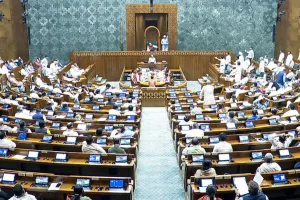
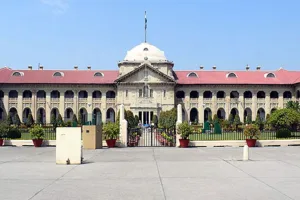
Amid nationwide outrage and protests, the Supreme Court on Saturday took the suo motu cognisance of the matter pertaining to the recent change in the definition of Aravalli hills.

A three-judge vacation bench comprising Chief Justice of India (CJI) Surya Kant, Justice J K Maheshwari and Justice A G Masih will hear the matter listed as ‘Definition of Aravalli Hills and Mountain Ranges and Related Issues’ on Monday.

The development comes amid the nationwide outrage and protests over the purported changes in the definition of Aravalli hills.

Last month, the top court had accepted the Centre’s definition of Aravalli hills. As per the definition, only hills with an elevation of 100 meters and above will be considered as part of the Aravalli range.

Following the decision, several environmental activists expressed concerns that the move could pave the way for unregulated mining in the Aravalli range and pose serious risks to the mountain range’s ecosystem.

As the issue raged and protests intensified, the government issued a clarification, saying that the ‘100 meter rule’ has been misinterpreted by YouTubers and that only 0.19 per cent area of Aravalli range will be eligible for mining.

Union Environment, Forest and Climate Change Minister Bhupendra Yadav, who represents the Alwar Lok Sabha seat — one of the regions that significantly benefits from the Aravalli ecosystem — reiterated that there are no relaxations in the protection of the Aravalli range.

“The total Aravalli area is about 1.47 lakh square kilometres. Only around 217 square kilometres is eligible for mining. Even so, the Supreme Court has directed that a Management Plan for Sustainable Mining be prepared. After that, permission from ICFRE will be required before any activity can proceed,” Yadav said.

Yadav further stated that all protected areas and forest reserves will remain unchanged. “Our government has been running a Green Aravalli programme for the past two years. We are very committed to protecting the Aravalli, and a false narrative is being created,” he added.


Around 360 road projects will be undertaken in Asansol and Durgapur at a cost of Rs.208 crore, says District Magistrate Of West Burdwan

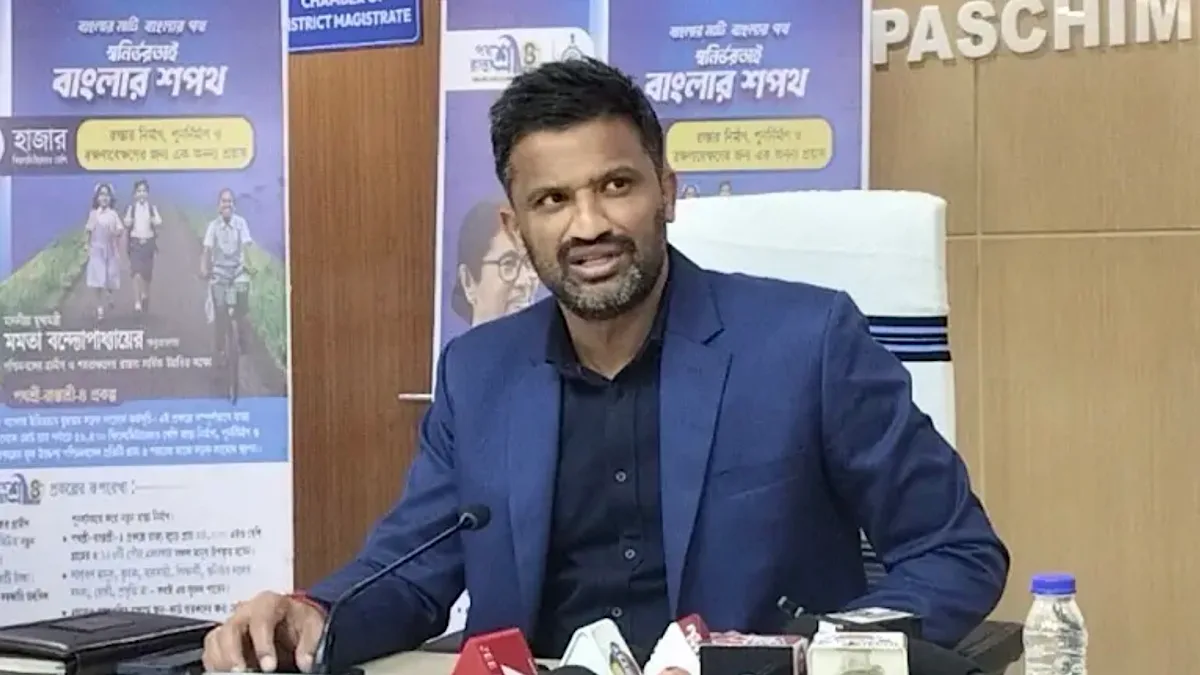
The District Magistrate of West Burdwan, S. Ponnabalam, held a meeting at the District Magistrate’s office in Asansol district headquartersregarding the state government’s “Pathashree” project and said that Rs.206 crores will be invested on 360 road projects.

DEBAJYOTI CHAKRABORTY | Kolkata |

The District Magistrate of West Burdwan, S. Ponnabalam, held a meeting at the District Magistrate’s office in Asansol district headquartersregarding the state government’s “Pathashree” project and said that Rs.206 crores will be invested on 360 road projects. He said that the state government has now launched the fourth phaseof the Pathashree scheme. Earlier, under this scheme, only rural roadswere constructed or repaired. But in this fourth version/phase, urbanroads have also been included.

The District Magistrate said that in this district, there was a planto take up work on 165 rural roads. After identifying them all, thedistrict administration sent a proposal for 160 roads, which has beenapproved. The total length of these proposed roads is 176.5 km, andthe total cost will be Rs.88 crore. Tenders have been issued for theseworks, and construction on 108 roads has already begun.In urban areas, the work will be carried out by the MunicipalEngineering Directorate (MED). In the Asansol Municipal Corporationarea, there are 250 projects with a total length of about 200 km. Inthe Durgapur Municipal Corporation area, there are 110 projects with atotal length of 60 km.

The combined cost for the Asansol and Durgapururban areas will be approximately Rs.120 crore.The District Magistrate of West Burdwan further said that tendershave been floated for all these works. Regarding the meeting relatedto “Amader Para, Amader Samadhan” (Our Neighborhood, Our Solution) inthe Asansol Municipal Corporation (AMC) , he said that a meeting washeld at the Asansol Municipal Corporation on that day. He informed theofficials that the state government has allocated Rs.28 crore. Therewill be no shortage of funds for the works under the “Pathashree” and“Amader Para, Amader Samadhan” schemes. ( attached photo of DM)

Indian Railways plans to double train capacity in major cities in next 5 years

While the plan to double the capacity is by 2030, it is expected that capacity will be increased progressively in the next 5 years so that the benefits of capacity addition can be reaped immediately.

Statesman News Service | New Delhi |

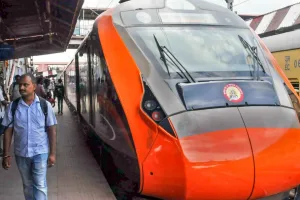
In view of the rapid sustained growth in demand for travel, the capacity of major cities to originate new trains needs to be doubled from the current level in the next 5 years. The current infrastructure serving needs to be augmented so as to meet the requirements of upcoming years.

The works for doubling the originating capacity by the year 2030 would include the following actions:

i. Augmenting the current terminals with additional platforms, stabling lines, pit lines, and adequate shunting facilities.

ii. Identifying and creating new terminals in and around the urban area.

iii. Maintenance facilities, including mega coaching complexes.

iv. Increasing the sectional capacity with traffic facility works, signaling upgradation, and multitracking required for handling increased trains at various points.

Ten stations of Northern Railway are also planned for infrastructure upgrade. These ten stations are as under:

1.Delhi
2.Lucknow
3.Varanasi
4.Ayodhya
5.Chandigarh
6.Ludhiana
7.Amritsar
8.Jammu
9.Haridwar
10.Bareilly

While the plan to double the capacity is by 2030, it is expected that capacity will be increased progressively in the next 5 years so that the benefits of capacity addition can be reaped immediately. This will help in meeting the traffic requirement progressively over the years. The plan will classify actions under three categories, i.e., immediate, short-term, and long-term.

The plan for Redevelopment work of New Delhi Station is as follows:

Two station buildings shall be constructed alongside the Platform no 01 & 16 by demolishing the existing station buildings. The new station building will be having area about 109000 Sqm of built up area against the existing 17274 sqm built up area. At present four lakhs passengers are being dealt daily. The new station has been designed to cater for seven lakhs passengers daily. These buildings will also include proper holding area, apron area for transition of passengers from elevated road to station building and retail. These buildings will be having parking facilities. Integration has been planned with the various modes of city traffic and Metro.

Jammutawi station is being upgraded with additional pit lines, 4 additional platforms, 07 additional stabling lines. This infrastructure upgrade will enable better operation of trains, better maintenance facilities

Yard remodeling work is planned for Bareilly Junction. After yard remodelling, this station shall be able to operate 24 coach trains easily. Development of sick line, pit line will enable better train operation and train maintenance.

Sh. Ashwini Vaishnaw, Union Minister of Railways, Information & Broadcasting, and Electronics & Information Technology, said, “We’re expanding coaching terminals, enhancing sectional and operational capacities in various cities to meet rising passenger demand and reduce congestion. This move will upgrade our railway network and improve nationwide connectivity.’’

Punjab: Cross-border drug smuggling network busted, one held with 5.11 kg heroin

Director General of Police (DGP) Punjab Gaurav Yadav said here on Saturday that the arrested accused has been identified as Baljit Singh, a resident of village Dhandi Qadim in Jalalabad, Fazilka

Statesman News Service | Chandigarh |

In a major breakthrough amid the ongoing drive to make Punjab a drug-free state as per the directions of Chief Minister Bhagwant Singh Mann, State Special Operations Cell (SSOC), Fazilka, in a joint operation with Border Security Force (BSF), has apprehended one drug smuggler and recovered 5.11 kg heroin from his possession.

Director General of Police (DGP) Punjab Gaurav Yadav said here on Saturday that the arrested accused has been identified as Baljit Singh, a resident of village Dhandi Qadim in Jalalabad, Fazilka.

DGP Gaurav Yadav said preliminary investigation has indicated that the recovered heroin consignment was sourced from Pakistan and delivered via drone by Pak-based smuggler.

The contraband was meant to be distributed further across the state, said the DGP, adding that further investigation is underway to establish forward and backward linkages of the network.

Sharing operational details, AIG SSOC Fazilka Gursewak Singh said acting upon a specific tipoff, a police team of SSOC Fazilka along with BSF launched a special secret operation in the Jalalabad area. During the operation, the suspected individual was apprehended from the area of Village Dhandi Qadim in Fazilka. During his personal search, 5.11 kg of heroin was recovered from his possession, he added.

In this regard, an FIR has been registered under Section 21-C of the NDPS Act at Police Station SSOC Fazilka.

Election Commission releases draft Assam electoral rolls; over 10.56 lakh voters removed

As per the draft electoral rolls, Assam now has 2,51,09,754 voters, excluding D-voters.

Statesman News Service | New Delhi |

The Election Commission of India (ECI) on Saturday released the integrated draft electoral rolls in Assam following a Special Revision exercise.

As per the draft electoral rolls, Assam now has 2,51,09,754 voters, excluding D-voters. The ECI removed more than 10.56 lakh voters from the electoral rolls.

Of the voters deleted, 4,78,992 were marked as “dead”, 5,23,680 had shifted from their registered addresses and 53,619 were identified as “duplicate” voters.

The state currently has 93,021 D-voters or doubtful voters. In Assam, D-voters are individuals who have been disenfranchised by the government in the absence of valid citizenship credentials.

Under the Foreigners Act, 1946, individuals unable to furnish proper citizenship credentials are declared D-voters.

Such voters are not issued a voter identity card. However, their details, including name, age and photographs, continue to appear in the electoral rolls.

The integrated draft electoral rolls of Assam were published after a Special Revision exercise conducted between November 22 and December 20.

Those left out of the draft electoral rolls can submit claims and objections till January 22. The ECI will publish the final voter list on February 10.

Earlier this year, the ECI ordered a Special Intensive Revision (SIR) of electoral rolls in 12 States and Union Territories.

However, the poll body had separately announced a non-intensive Special Revision exercise in Assam, citing the northeastern state’s special citizenship provisions under the Citizenship Act.

MP Congress media in-charge Mukesh Nayak resigns amid ‘Talent Hunt’ row

However, MP Congress Chief Jitu Patwari did not accept the resignation. Patwari is learnt to have made it clear to all party leaders that internal conflicts would be solved through discussions in an amicable way.

Statesman News Service | Bhopal |

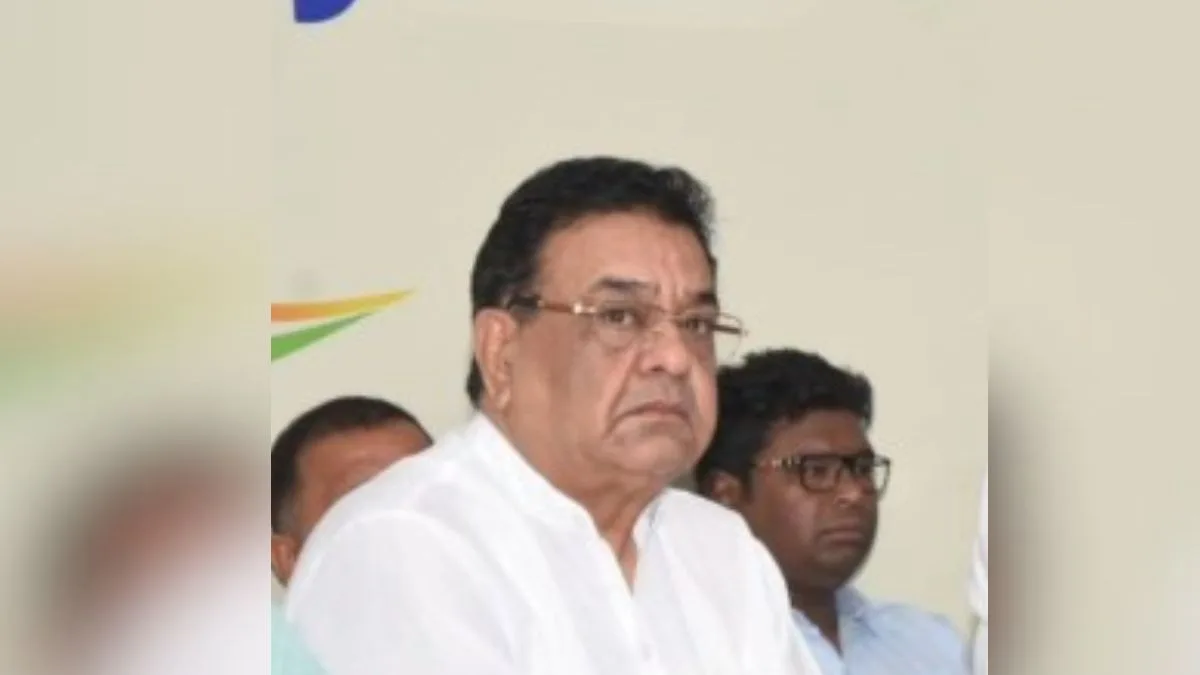
An internal controversy over the MP Congress party’s ’Talent Hunt’ drive allegedly escalated, and disgruntled MP Congress media in-charge Mukesh Nayak resigned from his post on Saturday.

However, MP Congress Chief Jitu Patwari did not accept the resignation. Patwari is learnt to have made it clear to all party leaders that internal conflicts would be solved through discussions in an amicable way.

Sources said that Nayak, a former cabinet minister, was unhappy after some of his decisions and directives regarding the Talent Hunt drive were either neglected or overruled by certain Congress leaders.

Unhappy over that, Nayak submitted his resignation to Jitu Patwari today. Although Nayak cited personal reasons behind his decision to resign.

Nonetheless, Patwari has not accepted Nayak’s resignation and has directed him to continue in the post of media cell head.

Nitin Nabin set to replace JP Nadda as BJP national president by January 20 next year: Report

State BJP presidents are likely to be called to the national capital after January 15 for the election of the ruling party’s national president.

Statesman News Service | New Delhi |

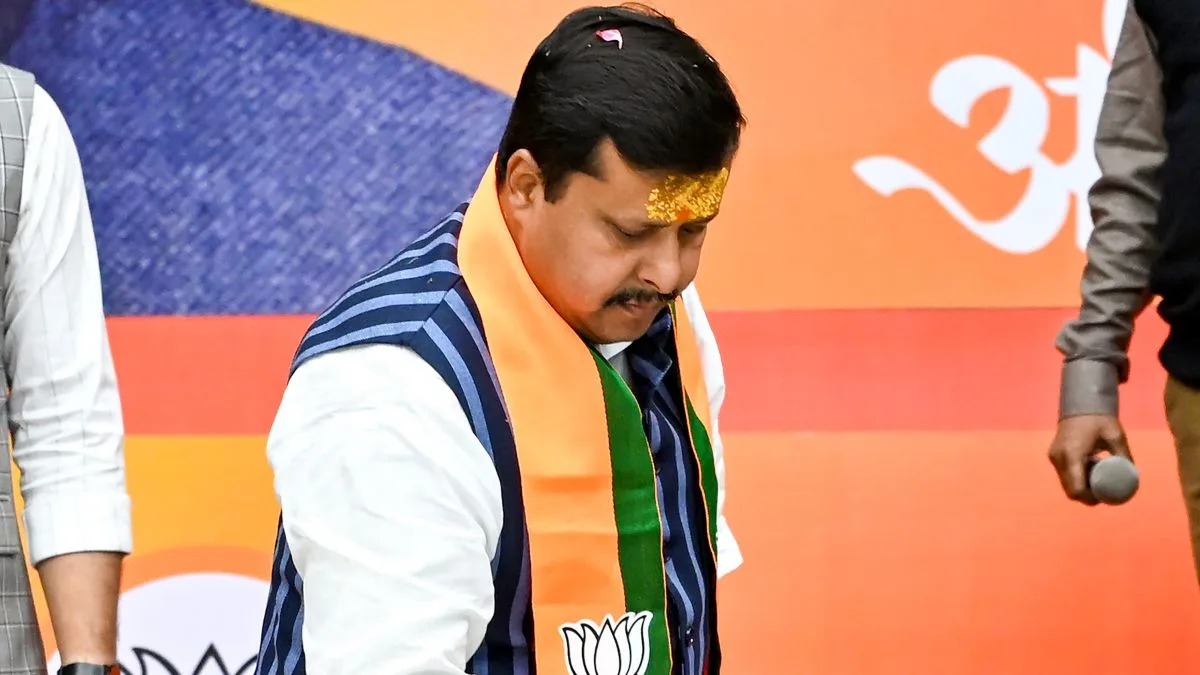
Nitin Nabin, who was recently appointed as the national working president of the BJP, is all set to be elevated to the post of the saffron party’s national president by January 20 next year, replacing JP Nadda, who currently holds the post.

According to a report by news agency ANI, state BJP presidents are likely to be called to the national capital after January 15 for the election of the ruling party’s national president.

Citing party sources, the report further stated that the process for the BJP national president’s election is expected to be completed between January 18 and January 20.

Nabin is likely to be the only candidate to file nomination for the national president’s post. As per the process, state BJP presidents from across the country will submit one set of nomination papers supporting Nabin’s candidature, while another set will be filed by the party’s National Council members.

Earlier this month, Nabin was appointed the BJP national working president. At 45, Nabin will be the youngest leader to be elevated to the post of BJP’s national president.

A five-time MLA from the Bankipur assembly constituency in Patna, Nabin served as the Public Works Department minister in the Bihar government. He relinquished the post after elevation to the post of BJP national working president.

He has also served as the BJP’s in-charge for Chhattisgarh and has worked extensively within the party’s youth wing.

Party leaders have pointed to his RSS background and long association with the organisation as factors that weighed in his favour.

Renowned art director K Shekhar passes away at 72

Shekhar started his career in cinema as a costume designer in the first 70 mm film in Malayalam, Padayottam, which was released in 1982 under the direction of Jijo Punnoos

Statesman News Service | Thiruvananthapuram |

Renowned art director K Shekhar passed away at a private hospital in Thiruvananthapuram. He was 72 years old.

Shekhar started his career in cinema as a costume designer in the first 70 mm film in Malayalam, Padayottam, which was released in 1982 under the direction of Jijo Punnoos.

He was the art director of India’s first 3D film, My Dear Kuttichathan. The rotating room in the song ‘Aalipazham Perukkam’ was designed by Shekhar.

He has worked in many films, including Nokathdoorath Kannum Nattu, Chanakyan, and Onotu Poojyamvara. He was the art director of Fazil’s films Nokketha Doorath Kannumnattu and Ono To Poojyam Vare.

Eco tourism facilities being developed in Kukrail Forest Area of Lucknow to offer close-to-nature experience

As part of this initiative, the Uttar Pradesh Eco Tourism Board is developing several amenities including a children’s park, play stations, bamboo round huts, nature walk trails, an open gym, and a cafeteria.

Statesman News Service | Lucknow |

Tourism activities are being developed in the Kukrail Forest Area located in Lucknow. While the Forest and Tourism Departments are jointly developing the Kukrail Night Safari, the Uttar Pradesh Eco Tourism Board is simultaneously developing various facilities for tourists in the surrounding areas of the night safari.

As part of this initiative, the Uttar Pradesh Eco Tourism Board is developing several amenities including a children’s park, play stations, bamboo round huts, nature walk trails, an open gym, and a cafeteria. In addition, parking and toilet facilities are also being constructed to ensure greater convenience for visitors.

In line with the vision of Chief Minister Yogi Adityanath to promote tourism activities in the state capital, the Kukrail Night Safari is being developed as a major attraction. Alongside this, the Uttar Pradesh Eco Tourism Board is focusing on enhancing facilities for tourists visiting the crocodile, gharial, and turtle sanctuaries located within the Kukrail Forest Area.

Additional Director of the Uttar Pradesh Eco Tourism Board, Pushp Kumar, informed here on Saturday that “the board is developing tourism facilities in the Kukrail Forest Area at a cost of ₹2 crore. These facilities will provide a pleasant and enriching experience for visitors to the sanctuaries and the night safari”.

He further stated, under this initiative, a children’s park and play stations are being developed where adventure games, swings, and an open gym will also be installed for children.

Keeping environmental conservation as a priority, bamboo round huts are being constructed to allow tourists to enjoy nature in an eco-friendly manner.

Along with this, nature walk trails are also being developed, enabling visitors to experience the natural surroundings of the Kukrail River up close, including trees, plants, and birds.

To further enhance tourist convenience, a cafeteria, toilets, and parking facilities are also being constructed within the forest area.

The Additional Director stated, “construction work has already begun and will be completed soon. Tourists visiting the Kukrail Forest Area in the initial months of the new year will be able to benefit from these facilities”.

These initiatives will not only promote eco tourism but will also contribute to an increase in revenue and generate employment opportunities for local residents.

Eight-year-old Elvis Kushwaha leads grassroots tree plantation drive in Etawah

Known locally as a “young environmental guardian”, the Class III student has been motivating people to plant and protect trees, invoking memories of community-led green movements such as the historic Chipko Movement.

Statesman News Service | Etawah |

While most children his age spend their time on mobile phones and video games, eight-year-old Elvis Kushwaha from Etawah in Uttar Pradesh is quietly inspiring people to reconnect with nature through tree plantation.

Known locally as a “young environmental guardian”, the Class III student has been motivating people to plant and protect trees, invoking memories of community-led green movements such as the historic Chipko Movement.

Elvis began his journey during the COVID-19 pandemic, a period marked by fear and lockdowns. At a time when people largely remained indoors, he took it upon himself to plant saplings and encourage friends and neighbours to do the same. What started during the pandemic has since grown into a sustained environmental campaign.

So far, he has distributed more than 600 saplings, including guava, jamun, amla, mango and Christmas trees. He urges recipients not only to plant the saplings but also to nurture them. Notably, he saves the money he receives in a small piggy bank and spends it on buying saplings instead of toys, particularly on his birthday and on World Environment Day. He has also actively supported the government’s “Ek Ped Maa Ke Naam” initiative.

Born on September 1, 2017 in Ajit Nagar of Etawah, Elvis draws inspiration from his mother, Pooja Kushwaha, and his maternal grandfather, Ramesh Kushwaha, an avid environmentalist. It was his grandfather who first encouraged him to plant trees at home, sparking his early love for nature.

His efforts have not gone unnoticed. District Forest Officer Vikas Nayak has appreciated Elvis’s environmental awareness and is working to associate him with plantation programmes run by the forest department.

Elvis has also presented saplings to several prominent personalities, including District Panchayat President Abhishek Yadav, BJP MLA Sarita Bhadoria, educationist Kailash Yadav and renowned badminton player Saina Nehwal. His message has reached beyond Etawah as well, with plantation activities carried out by him at Datia Airport in Madhya Pradesh and the distribution of tulsi saplings to devotees at the Tirupati temple in Andhra Pradesh.

According to Elvis, planting trees is the most effective way to address environmental degradation, as it helps restore ecological balance and ensures a healthier future. His consistent efforts have earned him multiple honours at the Etawah Mahotsav’s Environment Student Parliament.

At a time when climate concerns are growing worldwide, Elvis Kushwaha’s work serves as a reminder that meaningful change can begin at any age.

Punjab police notice to officials of UK, Mumbai music labels in royalty fraud case

In an ongoing probe into the alleged transnational cheating involving misappropriation of royalties of the song ‘Ishqam’ featuring Mika Singh and Ali Quli Mirza which was released by Navrattan Music, Patiala police have sent fresh notices to the CEO and others from Believe Digital music company, as also to officials of the UK-based firm.

Statesman News Service | Patiala |

The Patiala police has asked officials of UK-based Sentric Music and Mumbai-based Believe Digital to appear before it on January 5, 2026 in an alleged case of music royalty fraud in which the two main accused are Bangladeshi nationals Sheikh Saami Mohammad and Sheikh Shafi Mohammad.

In an ongoing probe into the alleged transnational cheating involving misappropriation of royalties of the song ‘Ishqam’ featuring Mika Singh and Ali Quli Mirza which was released by Navrattan Music, Patiala police have sent fresh notices to the CEO and others from Believe Digital music company, as also to officials of the UK-based firm.

The police has said in its notice that it has been revealed during the ongoing probe that there are “reasonable grounds to question the persons concerned” to ascertain facts.

The original complaint was filed by the Indian label Navrattan Music, in an FIR with the Patiala Police earlier this year, where it had alleged that Bangladesh based Sheikh Saami and Sheikh Shafi were involved in alleged forgery, copyright infringement, and criminal misappropriation of royalties related to the song.

The issue is related to the song Ishqam, which was released by Navrattan Music in collaboration with singer Ali Quli Mirza and global artist Mika Singh.

Legal experts say the case underlined the growing complexity of copyright infringements in the globalised music industry.

Centre notifies guidelines for Shipbuilding Financial Assistance, Development Schemes

The guidelines lay down a transparent and accountable framework for implementation, the Ministry said on Saturday.

Statesman News Service | New Delhi |

The Ministry of Ports, Shipping & Waterways (MoPSW) has notified the operational guidelines for two major shipbuilding initiatives — the Shipbuilding Financial Assistance Scheme (SBFAS) and the Shipbuilding Development Scheme (SbDS) — with an aim to strengthen India’s domestic shipbuilding capacity and improving global competitiveness.

The guidelines lay down a transparent and accountable framework for implementation, the Ministry said on Saturday.

Speaking on the occasion, the Union Minister of Ports, Shipping & Waterways (MoPSW) Sarbananda Sonowal said, “Prime Minister Narendra Modi ji’s leadership has given India’s shipbuilding sector a decisive policy reset.”

He said these guidelines create a stable and transparent framework that will revive domestic shipbuilding, boosting forward and backward linkage amping ‘Make in India’ initiative, enable large-scale investment and build world-class capacity, positioning India as a major maritime nation on the path to Viksit Bharat and Aatmanirbhar Bharat.

Under the SBFAS, which has a total corpus of Rs 24,736 crore, the government will provide financial assistance ranging from 15 per cent to 25 per cent per vessel, depending on the vessel category.

The scheme introduces graded support for small normal, large normal and specialised vessels, with stage-wise disbursement linked to defined milestones and backed by security instruments. Incentives for series orders are also included.

The scheme provides for the establishment of a National Shipbuilding Mission to ensure coordinated planning and execution of shipbuilding initiatives. It also introduces a Shipbreaking Credit Note, under which ship owners scrapping vessels at Indian yards will receive a credit equivalent to 40 per cent of the scrap value, linking ship recycling with new ship construction and supporting a circular economy approach.

Independent valuation and milestone-based assessments have been made mandatory to strengthen governance and ensure efficient use of public funds.

Over the next decade, SBFAS is expected to support shipbuilding projects worth about Rs 96,000 crore, stimulate domestic manufacturing and generate employment across the maritime value chain.

The Shipbuilding Development Scheme (SbDS), with a budgetary outlay of Rs 19,989 crore, focuses on long-term capacity and capability creation. The scheme provides for the development of greenfield shipbuilding clusters, expansion and modernisation of existing brownfield shipyards, and the establishment of an India Ship Technology Centre under the Indian Maritime University to support research, design, innovation and skills development.

Under SbDS, greenfield shipbuilding clusters will receive 100 per cent capital support for common maritime and internal infrastructure through a 50:50 Centre–State special purpose vehicle, while existing shipyards will be eligible for 25 per cent capital assistance for brownfield expansion of critical infrastructure such as dry docks, shiplifts, fabrication facilities and automation systems.
Disbursements will be milestone-based and monitored by independent evaluation agencies.

The scheme also includes a Credit Risk Coverage Framework, offering government-backed insurance for pre-shipment, post-shipment and vendor-default risks to improve project bankability and financial resilience.

With the creation of modern infrastructure and a skilled workforce, India’s commercial shipbuilding capacity is projected to rise to about 4.5 million gross tonnage per annum by 2047, according to the ministry.

Adding further, Sonowal said, “Viksit Bharat is about reclaiming India’s industrial confidence. By strengthening shipbuilding and maritime capabilities, PM Narendra Modi ji has ensured that India’s growth is anchored in self-reliance, skill and global competitiveness—true to the spirit of Atmanirbhar Bharat.”

Both SBFAS and SbDS will remain valid until March 31, 2036, with an in-principle extension envisaged up to 2047. Together, the schemes are expected to generate employment, promote indigenous technology development and strengthen India’s maritime security and economic resilience.

The guidelines have been formally approved and published on the Ministry’s official website to enable structured and transparent implementation of the schemes.

17 marine fishers held for intruding into Odisha’s Gahirmatha Marine Sanctuary

The fishing trawlers used by the intruders for fishing in the prohibited sanctuary area, along with their fishing implements, were seized by the forest patrol teams.

Statesman News Service | BHUBANESWAR |

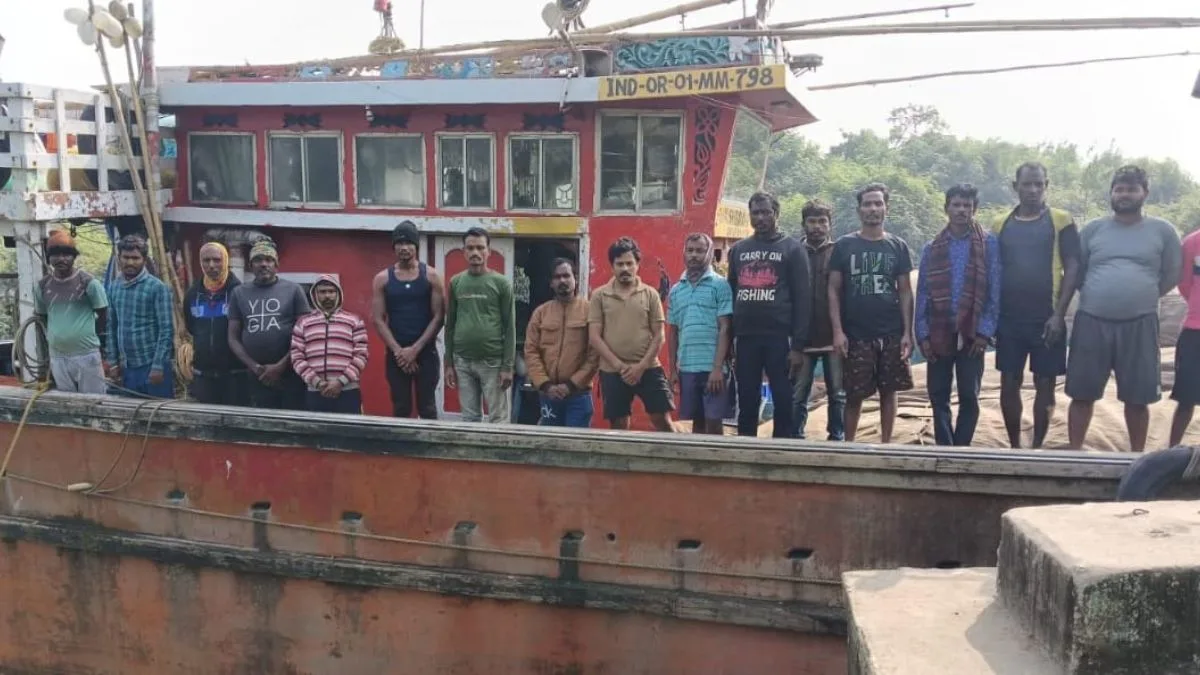
Forest officials on Saturday arrested 17 marine fishermen and seized the seaworthy fishing trawlers carrying them in the waters of the Gahirmatha Marine Sanctuary in Odisha’s Kendrapara district for illegally fishing within the turtle congregation zone, an official said.

The fishing trawlers used by the intruders for fishing in the prohibited sanctuary area, along with their fishing implements, were seized by the forest patrol teams.

The fishing vessel had trespassed into prohibited sanctuary corridors, contravening the provisions of the Wildlife Protection Act, the Orissa Marine Fishing Regulation Act, and the mandatory rules of the marine sanctuary, the forest officer added.

With the latest interceptions, around 350 fishermen have so far been arrested for acts of intrusion into the marine sanctuary as the forest department is intent on ensuring the safety of Olive Ridley sea turtles, forest officials said.

It should be noted here that the state government has imposed a seven-month ban on trawl fishing along the 20 km stretch from Dhamara to the Devi River mouth from 1 November in view of the ensuing mass nesting of endangered Olive Ridley marine turtles. The fishing prohibition remains enforced round the year in Gahirmatha as it is accorded the status of a marine sanctuary. The mute species, listed as a Schedule 1 animal under the Wildlife Protection Act due to its highly threatened status, gets entangled in the nets for prolonged periods and dies of asphyxiation. The turtles also perish in large numbers after getting struck by the fast-moving propellers of fishing trawlers, forest personnel concluded.

Two killed as lorry carrying concrete mixer overturns in in Kerala

The accident occurred on Saturday evening at Mootharikulam, Payyavoor in the Kannur district while the workers were returning after completing concrete work for a house.

Statesman News Service | Thiruvananthapuram |

Two people were killed and six workers injured when a lorry carrying a concrete mixer overturned at Payyavoor in Kerala’s Kannur district.

The accident occurred on Saturday evening at Mootharikulam, Payyavoor in the Kannur district while the workers were returning after completing concrete work for a house.

The two deceased were workers from other states. They were immediately rushed to the hospital but died on the way. The names of the deceased who have not yet been confirmed. Their bodies have been shifted to the Pariyaram medical college hospital, Kannur.

The injured were admitted to a private hospital in Kannur. It is reported that their injuries are not serious.

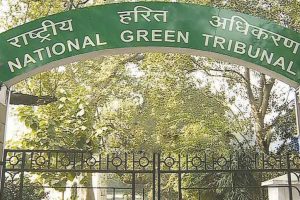
CAQM teams inspect 125 Gurugram roads, flag dust and open burning

The Commission for Air Quality Management (CAQM) in NCR and adjoining areas conducted an extensive inspection drive on Friday in Gurugram to review road-cleaning and sweeping operations and upkeep of road stretches maintained by the Municipal Corporation Gurugram (MCG).

Statesman News Service | New Delhi |

The Commission for Air Quality Management (CAQM) in NCR and adjoining areas conducted an extensive inspection drive on Friday in Gurugram to review road-cleaning and sweeping operations and upkeep of road stretches maintained by the Municipal Corporation Gurugram (MCG).

The inspection was done as part of its continuous monitoring and enforcement efforts under the statutory framework of the extant Graded Response Action Plan (GRAP), with the objective of evaluating on-ground compliance with dust mitigation measures and identifying associated issues such as accumulation of road dust, Municipal Solid Waste (MSW), Construction and Demolition (C&D) waste and instances of open burning.

A total of 17 inspection teams, comprising 15 teams of the Haryana State Pollution Control Board (HSPCB) and two teams of the Central Pollution Control Board (CPCB), were directed by the Commission for inspection of 125 road stretches under the jurisdiction of MCG in Gurugram.

“Geo-tagged and time-stamped photographic documentation was collected by the inspection teams and submitted to the Commission as part of the consolidated inspection report,” the Ministry of Environment, Forest and Climate Change said on Saturday.

The findings of the inspection revealed that out of the 125 road stretches inspected, 34 stretches exhibited High Visible Dust levels, 58 stretches showed Moderate Dust, 29 stretches recorded Low Dust intensity, while only four stretches were found to have No Visible Dust.

A large number of stretches observed with high visible dust were also found to have significant accumulation of MSW and C&D waste, along with multiple instances of open burning, indicating serious deficiencies in routine road maintenance, waste management and enforcement at the field level.

Several road stretches across different wards and sectors of Gurugram, including residential colonies, internal roads and arterial stretches, were identified with persistent dust accumulation and waste dumping.

The presence of open burning and unmanaged waste on multiple stretches further aggravated the dust conditions, highlighting the need for immediate corrective measures and strengthened supervision by the concerned agency.

The Commission observed that the overall inspection results point towards the need for significant strengthening of on-ground operations by MCG, particularly with respect to regular mechanical sweeping, timely lifting and scientific disposal of collected dust and waste, active water sprinkling and dust-suppression measures, and strict prevention of open burning.

The Commission emphasised that sustained and focused efforts are essential to ensure visible improvement in road conditions and to prevent re-accumulation of dust and waste.

The Commission reiterated that inspection and enforcement drives under ‘Operation Clean Air’ will continue to be carried out regularly across the NCR to ensure strict adherence to its Statutory Directions and GRAP measures for dust mitigation and prevention of open burning. The Commission is working on war-footing to ensure clean, green and dust-free road stretches in the region.

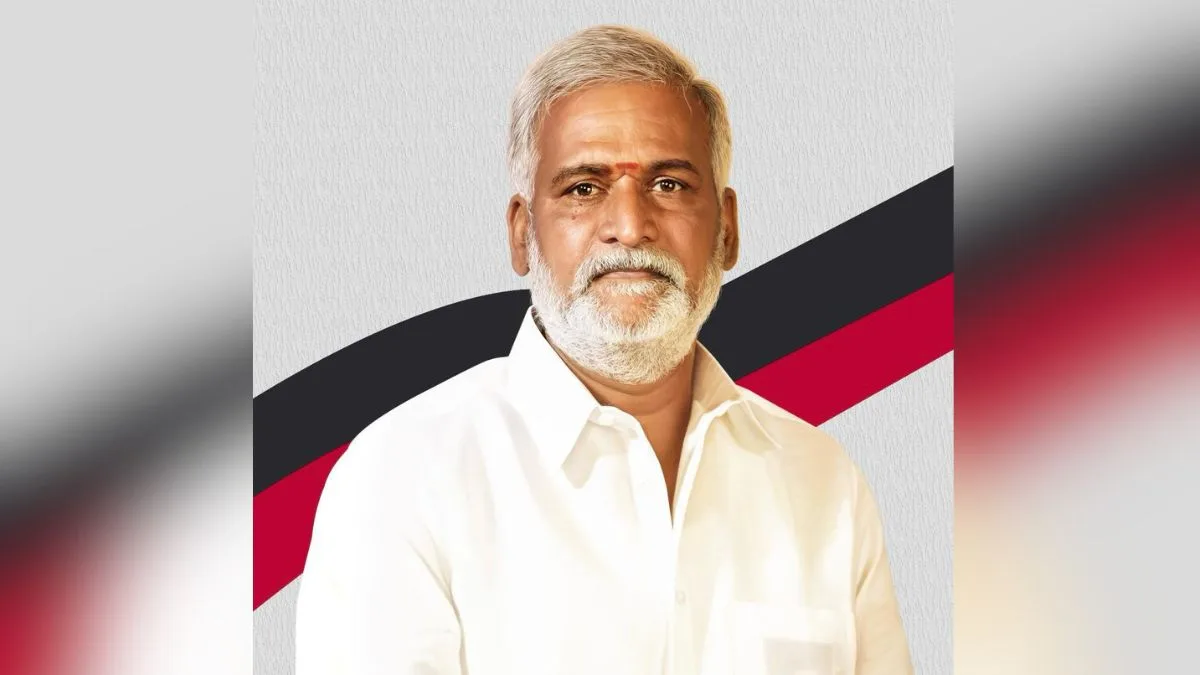
BJP’s attempt to stoke communal tensions fails, Lord Murugan not on their side: TN Minister

Citing an order of a single judge of the Madurai Bench of the Madras High Court, BJP leaders attempted to proceed to the hilltop to light the Deepam.

Statesman News Service | Chennai |

Tamil Nadu Hindu Religious and Charitable Endowments (HR&CE) Minister PK Sekarbabu on Saturday said the Bharatiya Janata Party’s attempt to incite communal hatred through the Deepam issue at Thiruparankundram had failed miserably, adding that even Lord Murugan, the presiding deity of the temple, was not on their side.

Addressing the media, Sekarbabu said that despite repeated efforts by the BJP to create communal divisions, their plans had not succeeded. “With Chief Minister M.K. Stalin at the helm, no attempt to divide people on communal lines will succeed. The BJP’s effort to politicise the Deepam issue has completely failed. Even Lord Murugan does not seem to be in their favour,” he said.

Earlier this month, the BJP and organisations affiliated with the RSS had demanded that the Deepam be lit at a disputed stone pillar located near a dargah atop the Thiruparankundram hill. At the foothills of the same hill stands the renowned Murugan temple. Citing an order of a single judge of the Madurai Bench of the Madras High Court, BJP leaders attempted to proceed to the hilltop to light the Deepam. However, the police stopped them, citing potential law and order issues.

Subsequently, the temple authorities lit the Deepam at its traditional location near the Uchipillaiyar temple on the hill. Following this, officials concerned are now facing contempt proceedings. The state government has also appealed against the single judge’s order, stating that it runs contrary to earlier directions issued by a Division Bench of the High Court.

Responding to BJP leader H. Raja’s statement that temples would be freed from the control of the HR&CE Department and handed over to devotees once the BJP comes to power, Sekarbabu said sarcastically, “Let him first contest an election and win. Instead of making such baseless claims for publicity, he should prove his strength by contesting and winning from any constituency in Chennai.”

Earlier, Chief Minister M.K. Stalin had also strongly criticised the BJP, accusing it of deliberately attempting to fuel communal tensions. He asserted that the saffron party would not succeed in disturbing the harmony among people living in unity. “As long as the Dravidian Model government is in power, your attempts to incite communal violence will fail. No matter how much drama you stage, your ambitions will remain unfulfilled,” the Chief Minister had said.

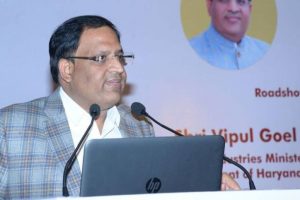
FTAs with New Zealand, Oman to open new export avenues for Rajasthan: Industries Commissioner

The Free Trade Agreement, signed in the presence of PM Modi and his New Zealand counterpart Christopher Luxon, is expected to enhance trade opportunities for Rajasthan in several sectors, including textiles and apparel, leather and footwear, gems and jewelry, engineering goods, handicrafts, processed foods, pharmaceuticals, and plastic and rubber products, Ola said.

Statesman News Service | Jaipur |

India’s historic Free Trade Agreement (FTA) with New Zealand and the Comprehensive Economic Partnership Agreement (CEPA) with Oman will unlock new trade and investment opportunities for Rajasthan across key sectors such as textiles, gems and jewelry, and handicrafts, said Industries Commissioner Suresh Kumar Ola.

The Free Trade Agreement, signed in the presence of PM Modi and his New Zealand counterpart Christopher Luxon, is expected to enhance trade opportunities for Rajasthan in several sectors, including textiles and apparel, leather and footwear, gems and jewelry, engineering goods, handicrafts, processed foods, pharmaceuticals, and plastic and rubber products, Ola said.

“The elimination of tariffs of up to 10 percent on several product categories will enable our state’s exporters to access the New Zealand market more competitively. This agreement is expected to particularly benefit labor-intensive sectors, which form the backbone of Rajasthan’s industrial ecosystem, by boosting production, exports, and job creation,” he said.

“It also opens new avenues in services, education and skilled workforce development, as New Zealand is creating dedicated visa pathways for Indian students and professionals. This will benefit the youth of the state and skilled professionals in IT, engineering, healthcare, education, construction, AYUSH, and tourism,” Ola added.
In addition, the agreement includes a commitment of US$20 billion in investments over 15 years, providing Rajasthan with opportunities to attract long-term foreign investment in manufacturing, infrastructure, agricultural value chains, renewable energy, and other emerging sectors.

“Similarly, the Comprehensive Economic Partnership Agreement (CEPA) signed with Oman under the leadership of PM Modi and His Majesty Sultan Haitham bin Tariq will provide new opportunities for economic growth in Rajasthan,” the Industries Commissioner said.

“Under CEPA, Oman has eliminated duties on 98.08 percent of its tariff lines, while India has offered concessions on 77.79 percent of its tariff lines. Several key sectors, including gems and jewelry, textiles, leather, footwear, sporting goods, plastics, furniture, agricultural products, engineering products, pharmaceuticals, medical devices, and automobiles, will benefit from the complete elimination of tariffs,” he further said.
“In the gems and jewelry sector, precious and semi-precious stones, handcrafted jewelry, and value-added gemstone products will receive duty-free entry, leading to improved margins and increased export volumes. Similarly, in the textiles and handicrafts sector, handloom products, home furnishings, carpets, and apparel will gain better access to Gulf countries and re-export markets. Exports of leather, footwear, and furniture will also increase as tariffs have been eliminated for these MSME clusters,” an official spokesman said.

“In the agriculture and processed products sector, spices, pulses, oilseeds, and organic products will benefit from the acceptance of India’s NPOP certification, directly boosting exports, creating employment, and empowering artisans, women entrepreneurs, and MSMEs across Rajasthan,” the official spokesman added.