Logo

Delhi records coldest morning at 2.9 degrees Celsius, AQI remains ‘poor’

According to the India Meteorological Department (IMD), Delhi recorded the coldest morning of the ongoing winter season with a minimum temperature of 2.9 degrees Celsius today.

Statesman News Service | New Delhi |

The national capital woke up to a windy and chilly morning today with severe cold wave conditions during the early hours. According to the India Meteorological Department (IMD), Delhi recorded the coldest morning of the ongoing winter season with a minimum temperature of 2.9 degrees Celsius today. It is the lowest January reading in the last three years, as per IMD data.

The lowest temperature was recorded in the Ayanagar area, according to the weather department. While other places across the city also reeled under an intense cold spell, with minimum temperatures recorded close to the three-degree mark early morning today. As per IMD data, Palam recorded a minimum temperature of 3.0 degrees Celsius.

IMD has suggested that similar cold conditions are expected to persist through the day.

Last night, the minimum temperature was measured at 4.8 degrees Celsius at Safdarjung, while the Ridge station recorded a minimum temperature of 3.7 degrees Celsius. The temperatures are likely to fall further to around 3 degrees Celsius tonight.

AQI remains ‘poor’

While the cold wave deepens, air quality remained in the ‘poor’ category in the national capital. According to the Central Pollution Control Board (CPCB), the overall Air Quality Index (AQI) was recorded at 293, as of 7 am today.

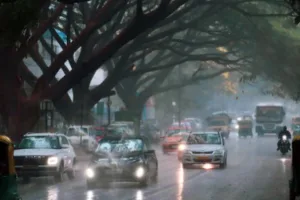
Several areas were engulfed in a layer of smog, impacting visibility.

AQI classification defines a reading between 0 and 50 as ‘good’, 51 to 100 as ‘satisfactory’, 101 to 200 as ‘moderate’, 201 to 300 as ‘poor’, 301 to 400 as ‘very poor’ and 401 to 500 as ‘severe’.

Cold wave warning issued

A yellow alert was issued by the India Meteorological Department yesterday for a cold wave in Delhi-NCR for Monday. It suggested the weather conditions will likely worsen over the next two days amid plunging temperatures across several parts of Delhi.

Also, IMD has forecast that visibility in Delhi NCR is likely to drop, and cold conditions may further aggravate in the coming days.
According to IMD, a region is declared to have cold wave conditions if minimum temperatures dip between 4.5 and 6.4 degrees Celsius below normal, depending on local climatology.

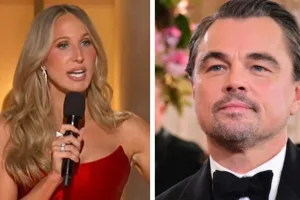
Golden Globes 2026 full list of winners and nominees: One Battle After Another, Hamnet, Adolescence dominate

The Golden Globes 2026 celebrated the best in film and television, with ‘One Battle After Another’, ‘Hamnet’ and Netflix’s ‘Adolescence’ emerging as the biggest winners of the night. From major acting honours to top series victories, here’s a complete look at who took home the trophies.

Statesman News Service | New Delhi |

Golden Globes 2026 Full List of Winners and Nominees: Hollywood had a long night, a loud night, and a very opinionated night. Cameras flashed. Champagne flowed. Dresses floated. Speeches ran long. And by the end of it all, some movies and shows walked away glowing… while others quietly smiled, clapped, and went home empty-handed.

The 83rd Golden Globe Awards, held in Los Angeles, celebrated the best films and television shows from the past year.

By the end of the night, “One Battle After Another”, “Hamnet”, and Netflix’s “Adolescence” ruled the room. Actors like Wagner Moura, Jessie Buckley, and Stephen Graham had their big moment. And yes, the audience had plenty to gossip about on the ride home.

Let’s break it all down category by category. Here is a full list of Golden Globes 2026 winners and nominees.

Also Read: Actor Awards, formerly SAG Awards, nominations: ‘One Battle After Another’, ‘The Studio’ lead | Full List

Best Film – Drama

Hamnet – WINNER
Frankenstein
It Was Just an Accident
The Secret Agent
Sentimental Value
Sinners

Best Film – Musical or Comedy

One Battle After Another – WINNER
Blue Moon
Bugonia
Marty Supreme
No Other Choice
Nouvelle Vague

Best Male Actor in a Film – Drama

Wagner Moura – The Secret Agent – WINNER
Joel Edgerton – Train Dreams
Oscar Isaac – Frankenstein
Dwayne Johnson – The Smashing Machine
Michael B Jordan – Sinners
Jeremy Allen White – Springsteen: Deliver Me from Nowhere

Best Female Actor in a Film – Drama

Jessie Buckley – Hamnet – WINNER
Jennifer Lawrence – Die My Love
Renate Reinsve – Sentimental Value
Julia Roberts – After the Hunt
Tessa Thompson – Hedda
Eva Victor – Sorry, Baby

Best TV Series – Musical or Comedy

The Studio – WINNER
Abbott Elementary
The Bear
Hacks
Nobody Wants This
Only Murders in the Building

Best Limited Series or TV Film

Adolescence – WINNER
All Her Fault
The Beast in Me
Black Mirror
Dying for Sex
The Girlfriend

Best TV Series – Drama

The Pitt – WINNER
The Diplomat
Pluribus
Severance
Slow Horses
The White Lotus

Best Female Actor in a TV Drama

Rhea Seehorn – Pluribus – WINNER
Kathy Bates – Matlock
Britt Lower – Severance
Helen Mirren – MobLand
Bella Ramsey – The Last of Us
Keri Russell – The Diplomat

Best Stand-Up Comedy on TV

Ricky Gervais – Mortality – WINNER
Bill Maher – Is Anyone Else Seeing This?
Brett Goldstein – The Second Best Night of Your Life
Kevin Hart – Acting My Age
Kumail Nanjiani – Night Thoughts
Sarah Silverman – Postmortem

Best Supporting Female Actor on TV

Erin Doherty – Adolescence – WINNER
Carrie Coon – The White Lotus
Hannah Einbinder – Hacks
Catherine O’Hara – The Studio
Parker Posey – The White Lotus
Aimee Lou Wood – The White Lotus

Best Non-English Language Film

The Secret Agent – WINNER
It Was Just an Accident
No Other Choice
Sentimental Value
Sirāt
The Voice of Hind Rajab

Best Animated Film

KPop Demon Hunters – WINNER
Arco
Demon Slayer: Infinity Castle
Elio
Little Amélie
Zootopia 2

Best Director – Film

Paul Thomas Anderson – One Battle After Another – WINNER
Ryan Coogler – Sinners
Guillermo del Toro – Frankenstein
Jafar Panahi – It Was Just an Accident
Joachim Trier – Sentimental Value
Chloé Zhao – Hamnet

Cinematic & Box Office Achievement

Sinners – WINNER
Avatar: Fire and Ash
F1
KPop Demon Hunters
Mission: Impossible – The Final Reckoning
Weapons
Wicked: For Good
Zootopia 2

Acting wins continue (Film, TV, Supporting & Comedy)

Key Winners:

Michelle Williams – Dying for Sex
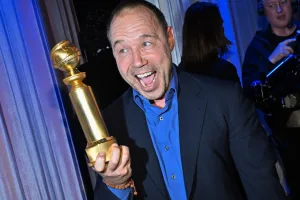
Stephen Graham – Adolescence
Timothée Chalamet – Marty Supreme
Rose Byrne – If I Had Legs I’d Kick You
Seth Rogen – The Studio
Jean Smart – Hacks
Noah Wyle – The Pitt
Stellan Skarsgård – Sentimental Value
Teyana Taylor – One Battle After Another

Music, podcasts & final cheers

Best Original Score: Ludwig Göransson – Sinners
Best Original Song: Golden – KPop Demon Hunters
Best Podcast: Good Hang with Amy Poehler

Raphinha shines as Barca beat Madrid to retain Spanish Super Cup trophy

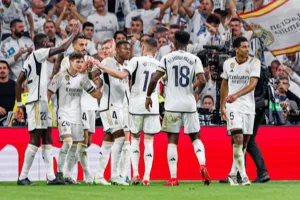
Raphinha was FC Barcelona’s hero as his side retained the Spanish Super Cup with a 3-2 win over Real Madrid.

IANS | New Delhi |

Raphinha was FC Barcelona’s hero as his side retained the Spanish Super Cup with a 3-2 win over Real Madrid.

The Brazilian scored his side’s first goal and then netted the winner in the second half with a touch of fortune to decide a thrilling game where Madrid looked for an equalizer until the final moments.

Madrid started with Kylian Mbappe in the bench and Dean Huijsen in for Antonio Rudiger in defense, with coach Xabi Alonso adopting a pragmatic policy of getting his side to defend deep and look to hit Barcelona on the break, reports Xinhua.

With Barcelona careful not to give the ball away to allow Madrid the chance to break, the first half hour was a cautious affair, although both Vinicius – who had an excellent game after having been criticized on Thursday – and Gonzalo Garcia had chances to put Madrid ahead, only for both to hit weak shots at Joan Garcia in the Barcelona goal.

Barcelona gradually pushed Madrid further back, with Fermin Lopez denied by Thibaut Courtois before Raphinha fired wide after 35 minutes when put though by Lamine Yamal.

A minute later the Brazilian drilled Barca ahead with a low shot, and with Yamal springing to life, Barca could have killed the game with Courtois denying Fermin again and Yamal going close with a near-post effort.

Barca’s profligacy was punished when Vinicius levelled for Madrid in first-half injury time, the Brazilian collecting the ball on the halfway line, beating Jules Kounde for pace, cutting past Pau Cubarsi and firing past Garcia.

Barcelona were back in front just a minute later, when Robert Lewandowski fired home a smart finish after being put through by the excellent Pedri, with Madrid players complaining that the halftime whistle should have been blown.

Those same players were celebrating two minutes later when the referee continued to play on for another two minutes and Garcia stabbed home after Huijsen’s header had bounced back off the bar following a corner.

The second half began with further chances for Vinicius and Rodrygo, which were both saved by Garcia, but Raphinha decided the game in the 73rd minute when he turned on the edge of the area and his shot took enough of a deflection off Raul

Asencio to wrong-foot Courtois.

There was still drama as Madrid went in search of an equalizer, and Barcelona ended with 10 men after Frenkie de Jong was sent off for a high challenge on Mbappe, who came on for the closing minutes.

With Barca sitting deep in injury time, both Alvaro Carreras and Aurelien Tchouameni had chances to level for Madrid, but their efforts went straight at Garcia and Barcelona were finally able to celebrate a hard-won but deserved title.

WPL 2026: Gardner highlights contribution of Indian players after GG beat DC by four runs

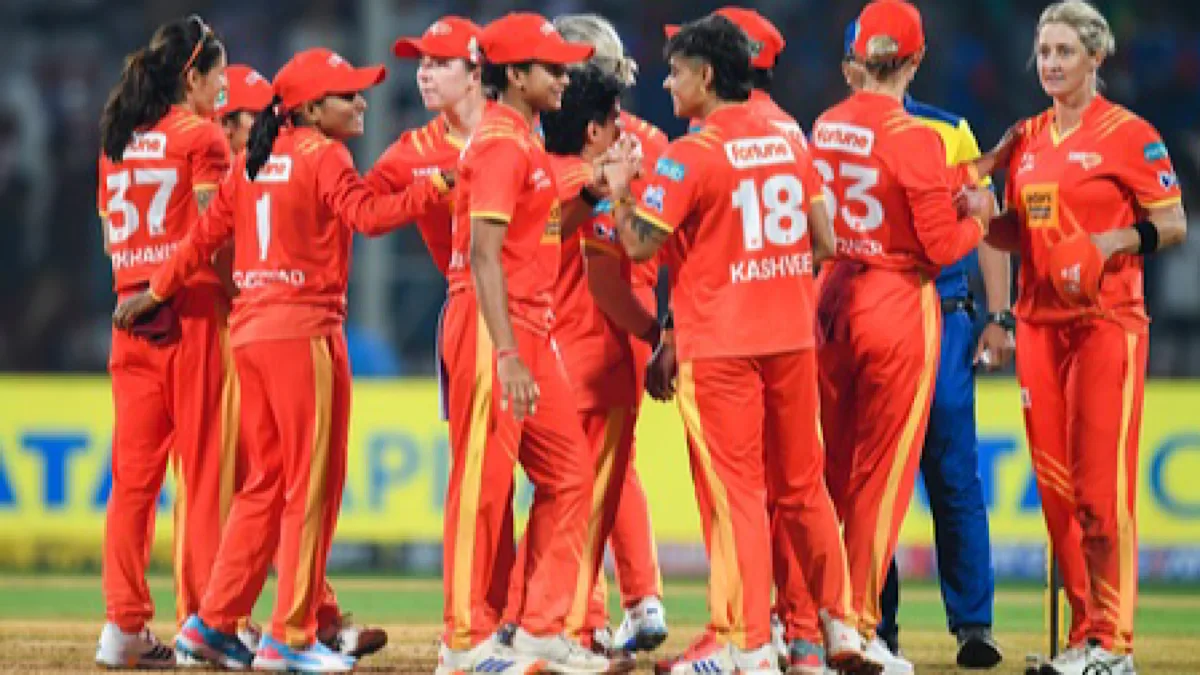
Gujarat Giants’ Australian skipper Ashleigh Gardner highlighted the importance of Indian players in the Women’s Premier League (WPL) side, noting the contribution of the local players in her team’s narrow four-run victory over Delhi Capitals in Match 4 at the DY Patil Stadium on Sunday.

IANS | New Delhi |

Gujarat Giants’ Australian skipper Ashleigh Gardner highlighted the importance of Indian players in the Women’s Premier League (WPL) side, noting the contribution of the local players in her team’s narrow four-run victory over Delhi Capitals in Match 4 at the DY Patil Stadium on Sunday.

Though New Zealander Sophie Devine (95 off 42 balls) and Gardner (49 off 26) starred with the bat to help the Giants post 209 all out in 20 overs after being asked to bat. Delhi Capitals’ young bowler Nandani Sharma claimed her maiden five-wicket haul, including a hat-trick in the 20th over, as GG fell short of the target they were aiming for.

But Lizelle Lee (85) and Laura Wolvaardt (77) took Delhi Capitals to the verge of victory with seven needed from the last over before Devine produced more magic in the last over, conceding only two runs and taking wickets of Jemimah Rodrigues and Wolvaardt to seal victory.

Gardner attributed the Gujarat Giants’ fight back to their Indian players, especially the bowlers. “Overseas players make these competitions, but Indian players win you these competitions. Our bowlers did an amazing job – our two left-arm spinners especially. Anushka as well (with a sensational save),” said Gardner in the post-match presentation.

She admitted that even a stiff target of 210 or 60 runs in four overs looks achievable in India.

“One of those games where it was in the balance the whole time. 60 off 4, in the past, you’d have been more comfortable, but here in India, you’re never out of it. To be able to defend seven in the last over, we stole it, and this gives confidence (to the dressing room),” she said.

She said they wanted to bowl well as they had fallen short by 15 runs. “Felt like we were 15 short. That part was disappointing. We knew their batting had firepower. We knew 200 was a fantastic score, but we knew we had to field and bowl well. There were glimpses where we did both well, but still lots of learnings. Happy we have two wins on the board. Overseas players make these competitions, but Indian players win you these competitions. Our bowlers did an amazing job – our two left-arm spinners especially. Anushka as well (with that save),” said Gardner.

Though they slumped to two defeats in two matches, Delhi Capitals captain Jemimah Rodrigues was proud of her team’s efforts in making it a close encounter.

“Very proud of the girls, the way we fought back. She (Devine) put us under pressure, but the way Nandani and Charani bowled… I could not be prouder. Tough pill to swallow, but lots of positives to take,” she said.

Jemimah said they will have to work on their bowling in the Power-play as they conceded 80 runs in the first six overs.

“Our powerplay bowling – we need to get our plans more sorted. Tough to bowl when Devine is in such form. In such games, you want to finish off on the winning side,” she added. “One thing DC has done well is to maintain a positive environment. Anything can happen as long as we keep the belief. These two days off could help us, and we will come back stronger.”

Jemimah also praised young bowler Nandani Sharma, who claimed 5-33, including a last-over hat-trick, to apply the brakes on the rampaging Gujarat Giants batters.

“She has been one of our top picks. A captain’s delight. She is so accurate in whatever she does. Ready to take it on, and very happy for her,” she said.

Trump says he would strip US citizenship ‘in heartbeat’

US President Donald Trump has said he would strip naturalised Americans of their citizenship “in a heartbeat” if he believed they were dishonest or posed a threat.

IANS | New Delhi |

US President Donald Trump has said he would strip naturalised Americans of their citizenship “in a heartbeat” if he believed they were dishonest or posed a threat.

Trump made the remarks in an interview with The New York Times last week, the transcript of which was released Sunday, during a contentious exchange about immigration, national security, and citizenship.

“If they deserve to be stripped, I would, yes,” Trump said when asked whether he would revoke citizenship from naturalized Americans. Pressed further, he added, “I’d do it in a heartbeat.”

Trump said his administration was “looking at criteria” for such actions, though he did not outline specific standards. He rejected suggestions that citizenship protections should be absolute, arguing that national loyalty and honesty should determine eligibility.

During the course of the interview that lasted for about two hours in the Oval Office, Trump repeatedly focused on Somali Americans while discussing immigration, describing Somalia as “one of the worst in the world” and claiming that people from the country had caused serious problems in the United States.

Asked directly whether people of Somali descent were a group he was considering for citizenship revocation, Trump replied, “Sure I would,” adding, “if they were dishonest.”

Trump singled out Democratic Congresswoman Ilhan Omar of Minnesota, saying she should be “immediately thrown out of Congress” and sent back to Somalia. When asked whether she should lose her US citizenship, Trump replied, “Oh, absolutely.”

New York Times reporters challenged Trump on the lack of evidence for some of his claims, including allegations about Omar’s personal history, which they said were unproven. Trump rejected those objections and insisted his views were justified.

He dismissed concerns that his comments painted entire communities with a broad brush, saying, “I don’t care. I want great people in this country. I want people that love the country.”

Trump argued that judges could block him under certain circumstances but suggested that his authority was broader in areas tied to law and order. He said he had been elected on promises of border control and public safety.

The president also raised the possibility of invoking the Insurrection Act, which would expand presidential powers to deploy the military domestically, though he said he had not yet felt the need to do so.

Trump’s remarks come amid ongoing legal battles over immigration enforcement, deportations and civil rights, as well as broader debates over the constitutional limits of executive authority.

Under US law, citizenship revocation is rare and typically requires proof of fraud during the naturalization process, with courts playing a central role.

Talks underway with PMK leader Ramadoss to join DMK alliance: TN Minister

Senior Dravidian Movement leader Dr S. Ramadoss is holding discussions to join the DMK-led alliance, Tamil Nadu Minister Rajakannappan has said, amid growing signs of a split within the Pattali Makkal Katchi (PMK).

IANS | New Delhi |

Senior Dravidian Movement leader Dr S. Ramadoss is holding discussions to join the DMK-led alliance, Tamil Nadu Minister Rajakannappan has said, amid growing signs of a split within the Pattali Makkal Katchi (PMK).

The developments come at a time when tensions between Ramadoss and his son, Anbumani Ramadoss, continue to deepen, resulting in the party functioning in effect as two separate factions.

With Assembly elections drawing closer, Anbumani-led PMK has already aligned with the National Democratic Alliance (NDA), setting the stage for a possible realignment by the Ramadoss camp.

Speculation intensified a few days ago after Ramadoss met party cadres at his residence in Thailapuram and later spoke to the media. In a remark seen as politically significant, he described the four-year tenure of Chief Minister M.K. Stalin as “good governance”.

When asked whether he could consider an alliance with VCK leader Thol Thirumavalavan, Ramadoss responded cryptically, saying that in politics “anything is possible, anything can happen, even the unexpected; one can never say nothing will happen.”

Against this backdrop, a DMK consultative meeting held at Paramakudi in Ramanathapuram district added fuel to the political buzz.

Addressing the gathering, Minister Rajakannappan said discussions were indeed underway for Ramadoss to join the DMK alliance, lending official weight to the speculation.

Rajakannappan also pointed out that several alliance partners, including the MDMK, have largely been contesting elections under the DMK’s ‘Rising Sun’ symbol. He urged cadres and alliance partners to work collectively to ensure victories for coalition candidates, signalling confidence in a broad-based front ahead of the polls.

While no formal announcement has been made by Ramadoss himself, the minister’s remarks are being widely interpreted as confirmation that talks are progressing. If the move materialises, it could significantly reshape Tamil Nadu’s alliance arithmetic, especially in regions where PMK traditionally commands influence.

Himachal Pradesh: Major fire broke out near Arki old bus stand; claims life of 8-year-old

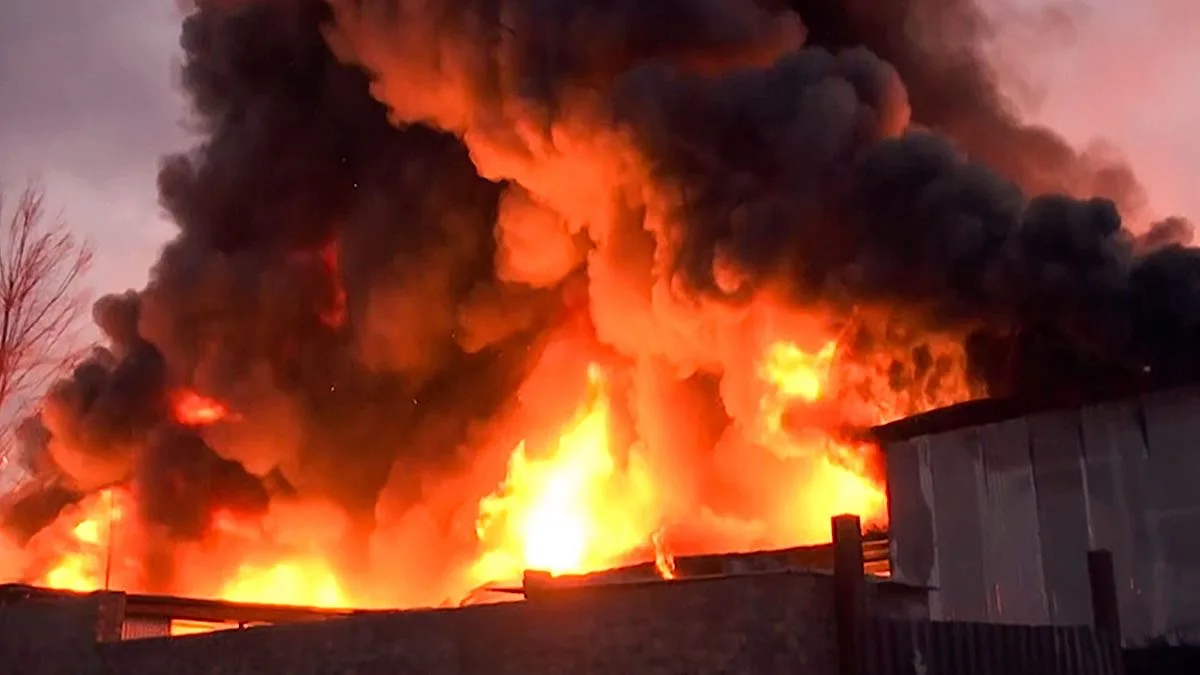
A major fire broke out near the UCO Bank building at the old bus stand in Arki town of Himachal Pradesh’s Solan district during the early morning hours on Sunday, triggering panic in the area.

ANI | New Delhi |

A major fire broke out near the UCO Bank building at the old bus stand in Arki town of Himachal Pradesh’s Solan district during the early morning hours on Sunday, triggering panic in the area.
One child, around eight years old, lost his life in the incident. Several people were suspected of being trapped inside the affected premises.

Confirming the incident, Superintendent of Police, Solan district, Gaurav Singh said that police and fire brigade teams were immediately rushed to the spot and rescue operations continued. He added that teams of the National Disaster Response Force (NDRF) and State Disaster Response Force (SDRF) were also called in to assist in the rescue efforts.
Arki MLA Sanjay Awasthi said that eight to nine people were feared trapped in the fire. He further stated that the deceased child belonged to a family of migrant labourers.
The cause of the fire is yet to be ascertained. Rescue operations continued until the last reports came in.

Earlier on Wednesday, a massive fire broke out at the historic royal palace of the erstwhile Kyonthal princely state in Junga near Shimla, causing extensive damage to the nearly 800-year-old heritage structure and destroying invaluable historical and religious property.

According to members of the Kyonthal royal family, the blaze is believed to have originated near the sacred installation of Devta Maharaj Deo Junga, located within the palace complex, and rapidly spread through the ancient wooden structure. The palace, constructed during the reign of Raja Khushvakram Sen, was largely made of old timber and had been lying unoccupied for several years due to its dilapidated condition.

Royal family member Vijay Jyoti Sen said that although no one was residing in the palace, priceless religious assets belonging to the deity, including gold and silver ornaments and other valuables worth crores of rupees, were kept there and have been completely destroyed.
“This palace was nearly 800 years old. Though it was vacant, it housed the deity’s property, including gold and silver ornaments. Everything has been reduced to ashes. Nothing could be saved as the entire old structure was engulfed,” she said, adding that the exact cause of the fire is still not known.

Thick smoke was first noticed by local residents around 1:00 pm, after which information was relayed to the Junga police outpost. Fire tenders were immediately rushed to the spot from Chhota Shimla, Mall Road Shimla and the Tilak Nagar water station.
Station Fire Officer Mansaram of the Chhota Shimla fire station said they received information about the blaze at 1:05 pm after a call from Vijay Jyoti Sen.
“Two fire engines were dispatched from Chhota Shimla and Mall Road, and additional water tankers were sent from Tilak Nagar. A total of four fire vehicles are engaged at the spot. Around 20 fire personnel from three fire stations are still involved in the operation. The fire is under control, but some parts are still smouldering. No casualties have been reported,” he said.

Superintendent of Police (SP) Sanjeev Kumar Gandhi of Shimla district confirmed there was no loss of life in the incident.
The SP further added that the local police have called in a Forensic Science Laboratory (FSL) team of experts to ascertain the exact cause of the fire.
Police have taken cognisance of the incident and registered a case under relevant sections of law. The revenue department and the local administration have also initiated a detailed assessment of the fire-related losses.

‘Powerful source of inspiration for India’s youth’: PM Modi’s tributes to Swami Vivekananda

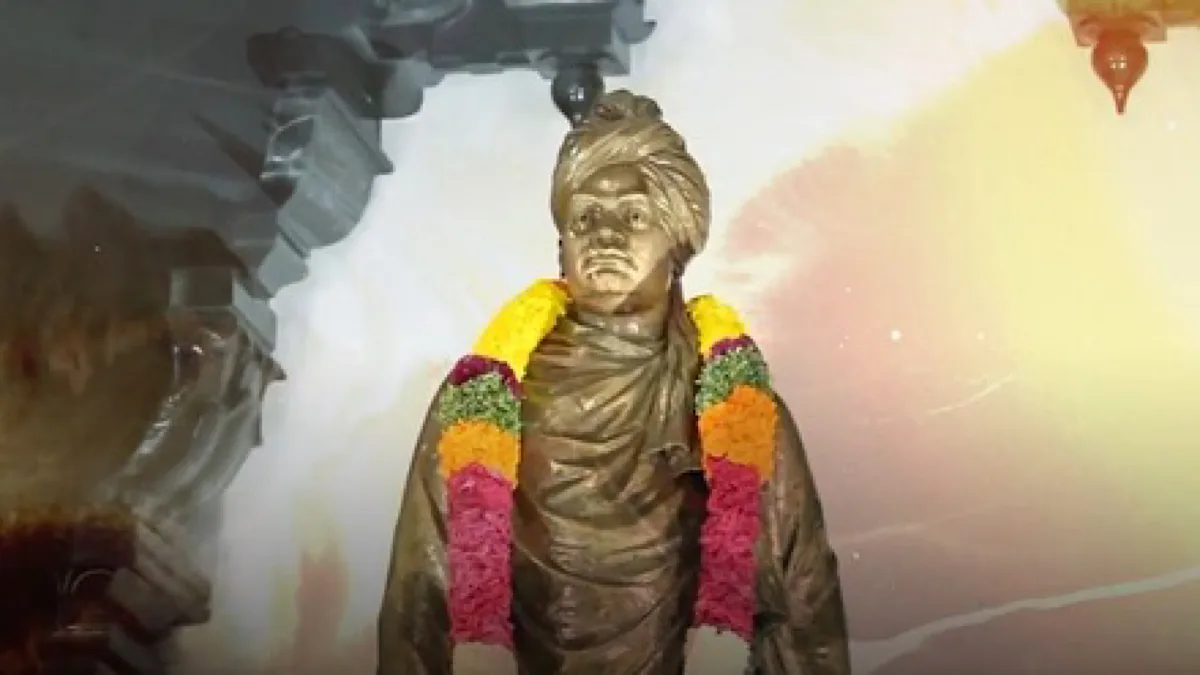
Prime Minister Narendra Modi on Monday paid tributes to Swami Vivekananda on his birth anniversary, also marked as National Youth Day, and said that this day brings new strength and self-confidence for younger generations.

IANS | New Delhi |

Prime Minister Narendra Modi on Monday paid tributes to Swami Vivekananda on his birth anniversary, also marked as National Youth Day, and said that this day brings new strength and self-confidence for younger generations.

The government proclaimed January 12 as National Youth Day in 1984 with the aim of motivating young individuals by connecting them to the principles and teachings of Swami Vivekananda, while also promoting their involvement in the development of the nation.

In a post on X, PM Modi said, “My respectful tribute to Swami Vivekananda, the powerful source of inspiration for India’s youth power, on his birth anniversary. His personality and works continuously infuse new energy into the resolve for a Viksit Bharat. My wish is that this divine occasion of National Youth Day brings new strength and new self-confidence for all fellow citizens, especially our young companions.”

He said that the birth anniversary of Swami Vivekananda serves as an inspiration for society.

In a video message, the Prime Minister said, “What Swami Vivekananda gave to the country and society transcends time and place, inspiring every generation. He showed us the way. It was Swami Vivekananda who, in that era, said that fearless, selfless, pure-hearted, courageous, and ambitious youth are the foundation upon which the nation’s future is built. He had immense faith in the youth and their power.”

Calling on the younger generation, PM Modi said, “Now, you have to live up to his faith. Today, as the world looks to India with great hope, it is because of all of you, my young friends. Today, be it a village, a city, or a town, the enthusiasm of the youth is everywhere. I extend my best wishes to all of you on National Youth Day.”

Swami Vivekananda was born on January 12, 1863, in Kolkata. He is widely praised for introducing Indian philosophies, including Vedanta and Yoga, to the West.

Swami Vivekananda’s famous speech at the 1893 World’s Parliament of Religions in Chicago sparked interfaith dialogue and revitalised Hinduism as a world religion.

He promoted Indian nationalism, social reform, and unity, urging youth to serve humanity, and established the Ramakrishna Mission for education and service.

PSLV-C62 launch: ISRO’s EOS-N1 mission deviates from flight path after encountering third-stage anomaly

PSLV-C62 failed to place defence satellite EOS-N1 into orbit after a third-stage disturbance, adding to recent setbacks in India’s strategic space missions.

Statesman News Service | Mumbai |

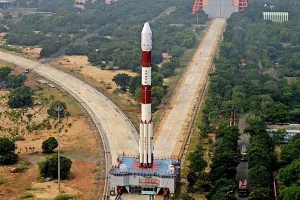
India’s space agency suffered another setback on Monday morning after PSLV-C62 failed to place the defence satellite EOS-N1 into its intended orbit, following a disturbance during the rocket’s third stage.

The mission, launched from the Satish Dhawan Space Centre at Sriharikota, was carrying Anvesha (EOS-N1) — an advanced Earth observation satellite developed for strategic surveillance. The launch vehicle was also transporting 15 smaller satellites from Indian and international customers.

The problem surfaced late in the flight.

Speaking from the Mission Control Centre, ISRO Chairman Dr V Narayanan said the rocket faced an issue during the final phase of the third stage.

“The rocket experienced disturbance towards the end of the third stage performance.”

He added that this led to a deviation from the planned flight path.

“ISRO will come back after analysing the data.”

What went wrong during the PSLV-C62 flight

The 44.4-metre-tall PSLV-DL variant, weighing around 260 tonnes, lifted off at 10.18 am IST from the first launch pad.

The rocket rose steadily, trailing thick orange flames, before gaining speed and climbing into the sky. Around four minutes into the mission, the third stage ignited. The engine later shut down — after which the anomaly occurred.

A rocket expert, who declined to be identified, said the visuals suggested a familiar pattern.

“The failure seems to be similar to the failure of PSLV-C61 rocket as seen from the video broadcast.”

PSLV-DL is a four-stage launch vehicle that alternates between solid and liquid propulsion, supported by six strap-on boosters during lift-off. Monday’s launch marked the fifth flight of this variant, first used in 2019 for the Microsat-R mission.

Why EOS-N1 mattered for India’s surveillance capability

EOS-N1, also known as Anvesha, is a hyperspectral satellite designed to see what conventional cameras cannot.

Instead of seeing the Earth like a regular camera, the satellite reads the ground in many fine layers of colour. This allows it to tell one surface or object from another with far greater accuracy.

For defence planners, this means better visibility on the ground. Equipment hidden under camouflage, moving troops, vehicles or concealed weapons can stand out, because fabrics, metals and human bodies reflect light differently.

The satellite was expected to strengthen India’s strategic monitoring capabilities across sensitive regions.

A string of recent failures raises concerns

Monday’s failure comes amid a troubling run for India’s strategic space missions.

  • May 18, 2025: PSLV-C61 failed mid-flight while carrying EOS-09, a synthetic aperture radar satellite. Estimated loss: ₹850 crore.
  • January 29, 2025: GSLV-F15 failed to place the NVS-02 navigation satellite into orbit due to a pyro valve malfunction, cutting off oxidiser flow despite normal fuel pump operation.
  • 2021: India lost the GISAT-1 satellite when the cryogenic stage of the GSLV-F10 failed to ignite.
  • 2017: The navigation satellite IRNSS-1H never made it to space because the PSLV’s heat shield did not separate, leaving the satellite trapped inside the rocket.

Taken together, these failures have cost the programme hundreds of crores of rupees, once replacements, delays and lost mission time are counted.

ISRO is now expected to conduct a detailed post-flight analysis before announcing corrective steps.

‘One way or the other’: Donald Trump reiterates push to acquire Greenland, cites Russia and China threat in the Arctic

United States President Donald Trump today reiterated that the United States will have to take over Greenland, citing Russia and China threats in the Arctic region.

Statesman News Service | New Delhi |

United States President Donald Trump today reiterated that the United States will have to take over Greenland, citing Russia and China threats in the Arctic region. He insisted that the US needs to acquire Greenland, or else Russia or China may establish control of the territory.

Speaking to reporters aboard Air Force One, Trump said, “If we don’t take Greenland, Russia or China will.” He reaffirmed that he will not let Russia or China acquire Greenland. He said, “And I’m not letting that happen.”

An autonomous territory of Denmark, Greenland holds immense strategic significance due to its location in the Arctic and its proximity to emerging shipping routes and military corridors.

‘Greenland should offer a deal,’ says Trump

By hook or crook, Trump sounds determined to take over Greenland as he told reporters that the outcome was inevitable. He told reporters, “One way or the other, we are going to have Greenland.” In response to the question about any negotiated agreement, Trump said, “I would love to make a deal with them. It’s easier.”
However, he clarified that Greenland should be the one to make the potential deal. He said, “I haven’t done that, but Greenland should make the deal,” he said.

On the question of whether the US is planning any military action on Greenland, the US President asserted that the US is only interested in absolute acquisition. “We’re talking about acquiring, not leasing, not having it short-term. We’re talking about acquiring,” he said.

Undermining the defence forces of Greenland, Trump said, “Basically, their defence is two dog sleds.” He contrasted that with the deployment of Russian and Chinese destroyers and submarines across the region. There has been a significant rise in Russian and Chinese activity in the Arctic territory recently, raising concerns about its security.

From shared history to green hydrogen: What PM Modi said on India–Germany ties

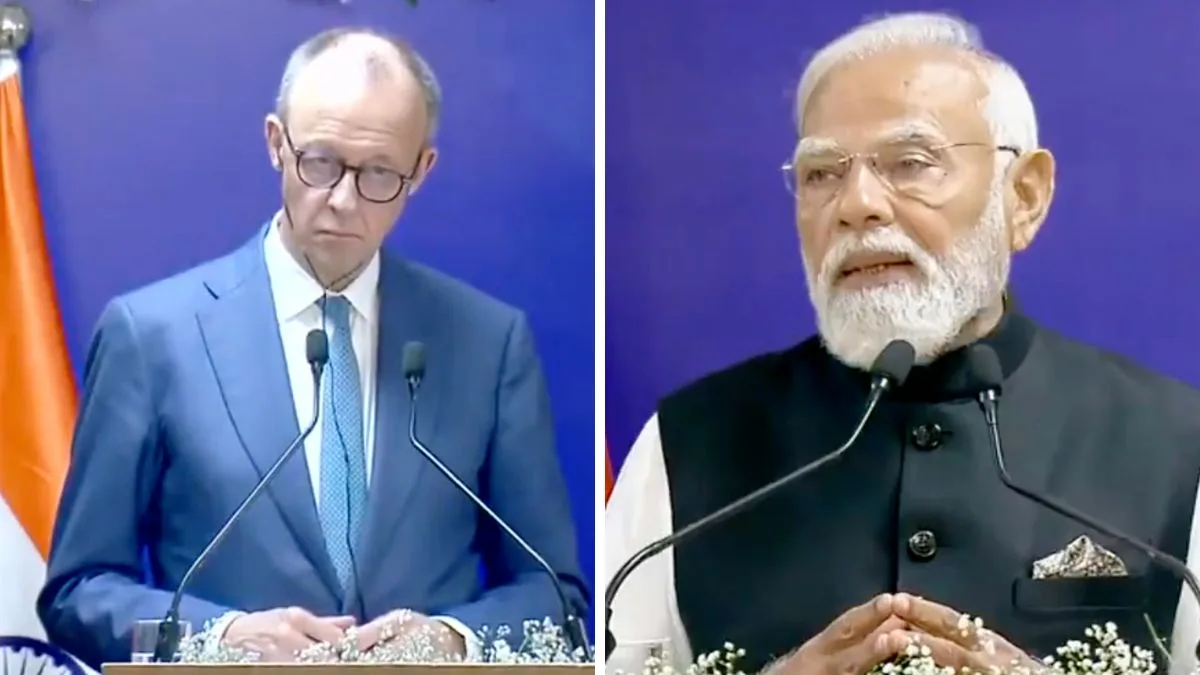
PM Modi met German Chancellor Friedrich Merz in Gujarat for delegation-level talks, reviewing cooperation in trade, technology, defence and strategic ties during Merz’s first official India visit.

Statesman News Service | Mumbai |

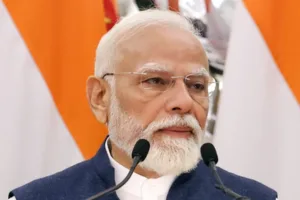
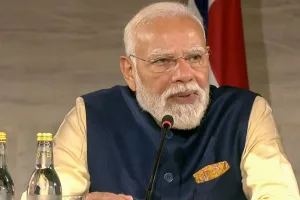
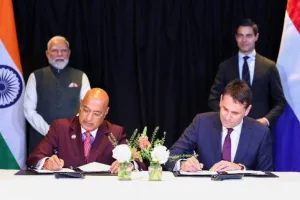
Prime Minister Narendra Modi on Monday held delegation-level talks with German Chancellor Friedrich Merz in Gandhinagar, marking the German leader’s first official visit to India since taking office.

The meeting comes in a landmark year for bilateral ties. India and Germany are marking 75 years of diplomatic relations. They also recently completed 25 years of their strategic partnership.

Several memoranda of understanding were signed during the visit in the presence of Prime Minister Modi and Chancellor Merz, adding momentum to cooperation across multiple sectors.

While addressing a joint press conference after the talks, PM Modi said the partnership was rooted not just in policy, but in shared values and long-standing connections.

“Last year, we completed 25 years of our strategic partnership, and this year, we are also celebrating 75 years of our diplomatic relations. These milestones are not merely achievements of time. They are symbols of our shared ambitions, mutual trust, and ever-strengthening cooperation. Close cooperation between economies like those of India and Germany is crucial for all of humanity. Growing trade and investment ties have given new energy to our strategic partnership,” he said.

From shared history to modern partnership

The PM also pointed to deep cultural and intellectual links between the two countries, saying today’s cooperation builds on a long shared past.

“India and Germany share historical and deep people-to-people ties. Rabindranath Tagore’s works gave a new perspective to the intellectual world of Germany. Swami Vivekananda’s philosophy inspired all of Europe, including Germany, and Madam Cama gave global recognition to our aspirations for independence by unfurling the flag of India’s freedom for the first time in Germany. Today, we are transforming this historical connection into a modern partnership…”

He described Chancellor Merz’s visit as a strong signal of Germany’s commitment to India.

“As a Chancellor, this is Friedrich Merz’s first visit to India, and indeed to Asia. This is strong evidence of the deep importance he attaches to relations with India. India is fully committed to further strengthening its friendship and partnership with Germany. We extend a heartfelt welcome to Chancellor Merz in India. Chancellor Merz’s visit is taking place at a special time…”

The talks were held at Mahatma Mandir in Gandhinagar. According to news agency ANI, both sides reviewed cooperation in trade, investment, technology, education, skilling, and mobility, along with defence, security, science, innovation, research, and sustainable development.

External Affairs Minister S Jaishankar, National Security Advisor Ajit Doval, and Foreign Secretary Vikram Misri were part of the Indian delegation.

Trade, green hydrogen and defence take centre stage

PM Modi said economic ties had reached a new high and were now backed by concrete outcomes.

“Our bilateral trade has reached its highest level ever, surpassing the 50 billion dollar mark. More than 2,000 German companies have a long-standing presence in India. This reflects their unwavering confidence in India and the immense opportunities available here.”

He added that cooperation in technology and clean energy was expanding rapidly.

“We are jointly pursuing new projects in areas such as climate, energy, urban development, and urban mobility. The new mega-project by companies from both countries in green hydrogen will prove to be a game-changer for future energy.”

The PM also highlighted growing defence and security cooperation. “The growing cooperation in defence and security is a symbol of our mutual trust and shared vision. I express my heartfelt gratitude to Chancellor Merz for simplifying the priorities related to defence trade. We will also work on a roadmap to enhance cooperation between defence industries, which will open up new opportunities for co-development and co-production…”

Germany’s Chancellor echoed the sentiment during the joint press interaction. “We want to elevate the relations between India and Germany to an even higher level… You invited me to visit your home state of Gujarat. I express my heartfelt gratitude for this special gesture. It is a sign of very deep ties between our two countries, but it is also a testament of friendship towards me,” Merz said.

PM Narendra Modi also announced plans to deepen cooperation in renewable energy. “Technology cooperation between India and Germany has strengthened year after year, and its impact is clearly visible on the ground today. India and Germany share common priorities in the field of renewable energy. To further enhance this cooperation, we have decided to establish the India-Germany Centre of Excellence. This will serve as a shared platform for knowledge, technology, and innovation…”

Earlier in the day, Prime Minister Modi welcomed Chancellor Merz at Sabarmati Ashram in Ahmedabad. Both leaders paid floral tributes to Mahatma Gandhi, and the German Chancellor signed the visitors’ book.

Later, they jointly inaugurated the International Kite Festival 2026 at the Sabarmati Riverfront and flew a kite featuring Lord Hanuman.


The visit also has a wider context. It takes place ahead of the India–EU Summit scheduled for January 27, placing India–Germany relations within the broader European engagement framework.

Chancellor Merz is on a two-day official visit from January 12 to January 13. On Tuesday, he is scheduled to visit Bosch and the Centre for Nano Science and Engineering (CeNSE) before returning to Germany.

The two leaders had last met on the sidelines of the G7 Summit in Canada, where Prime Minister Modi had extended the invitation for this visit.

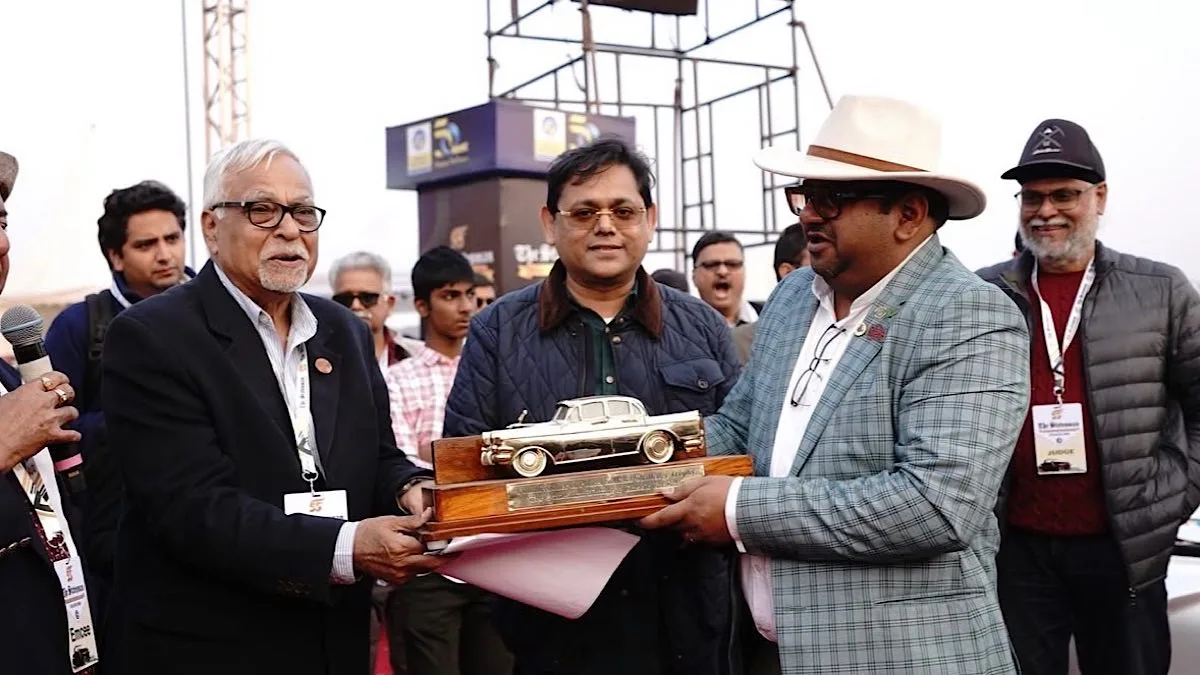
Spectacular journey into the past: 55th Statesman Vintage and Classic Car Rally

11 January Kolkata witnessed a spectacular journey into the past as The Statesman Vintage & Classic Car Rally celebrated its 55th edition at the Royal Calcutta Turf Club Polo Grounds.

Statesman News Service | Kolkata |

11 January Kolkata witnessed a spectacular journey into the past as The Statesman Vintage & Classic Car Rally celebrated its 55th edition at the Royal Calcutta Turf Club Polo Grounds. On a bright Sunday morning, the city turned back the clock nearly a century, with more than 150 vintage and classic cars and motorcycles gracing its streets. Flagged off at 9:15 a.m. by Lieutenant General Ram Chander Tiwari, GOC-in-C Eastern Command, the rally covered a 30-kilometre route from the Turf Club grounds through Shovabazar Grey Street crossing to Harish Mukherjee Road in south Kolkata. Pedestrians were enthralled as the timeless automotive masterpieces rolled past, transforming the cityscape into a living museum of motoring heritage.

The rally once again proved to be a landmark event for car and bike enthusiasts, offering not only a glimpse of Kolkata’s motoring legacy but also opportunities for photographs and close encounters with the vehicles. Dr Ananda Chanda hosted the event with enthusiasm, introducing each car as it set off, supported by crew members from The Statesman House. Adding to the festive spirit, the Nosey-Posey Crew ~ Suraj, Dipjyoti, and Madhurima ~ entertained the crowd with clown acts and humour. Among the standout vehicles was Ananda Chowdhury’s parakeet-green 1913 Gebrüder Stoewer, the oldest car in the rally. It was closely followed by SK Lahiri’s 1948 sapphire-blue Plymouth, fondly known as ‘Neelu’, and Anwesha Dutta’s 1963 Triumph. Other notable entries included the 1923 Panther Sloper, the 1940 Triumph 3HW, and several other rare beauties.

Motorcycles also drew admiration, with the 1936 James Villiers, 1956 Vespa, 1951 Matchless, 1969 Jawa, and the iconic 1972 Rajdoot sharing the spotlight. Classic cars such as the 1985 Range Rover, 1989 Mercedes, 1987 Land Rover, and 1986 Mercedes-Benz added to the nostalgic spectacle. For many onlookers, seeing these vehicles on Kolkata’s streets was akin to reliving cherished memories, with cameras capturing every moment. Participants dressed in period costumes ~ sarees, umbrellas, and Victorian attire ~ added a surreal charm to the event, enhancing its historic ambience. Tollywood superstar Prosenjit Chatterjee, accompanied by the crew of his upcoming Kakababu film Vijaynagarer Hirey, graced the occasion.

“This rally is the oldest in India, and I first attended it as a child. Even today, I feel the same excitement as I return to this extravagant automobile celebration,” he said. Concluding the event, Ravindra Kumar, Editor and Managing Director of The Statesman, extended his gratitude to the Indian Army, Kolkata Police, sponsors, judges, participants, and the audience for their enthusiastic support. Vineet Gupta, Director of The Statesman Group, added: “The rally has been a source of pride for The Statesman for decades, and the RCTC grounds allow us to relive this dream with warmth and ease.”

Donald Trump posts image showing himself as ‘Acting President of Venezuela’ as US engages Caracas

Donald Trump shared an image portraying himself as Venezuela’s acting president, as he spoke about oil shipments, diplomatic engagement and possible meetings with Venezuelan leaders.

Statesman News Service | Mumbai |

US President Donald Trump has shared a social media image that depicts him as the “Acting President of Venezuela”, triggering fresh debate around Washington’s posture towards Caracas.

The image appears to show an edited Wikipedia entry. It lists Trump as the “incumbent Venezuelan president” from January 2026, while also noting his official roles as the 45th and 47th President of the United States.

The post comes at a moment of heightened US engagement with Venezuela, especially on oil and regional diplomacy.

Trump points to oil deal and improving ties with Caracas

Speaking to reporters aboard Air Force One, Trump said relations with Venezuela’s leadership were progressing.

“Venezuela is really working out well. We’re working along really well with the leadership, and we’ll see how it all works out,” he said, when asked about ties with Caracas after the US raid that removed Nicolas Maduro from power.

Trump said Venezuela had requested that the US accept a large oil shipment.

“She asked us, can we take 50 million barrels of oil? And I said, yes we can,” he said. “It’s $4 billion, $4.2 billion, and it’s on its way right now to the United States.”

He added that American oil companies were showing strong interest in Venezuela, but criticised ExxonMobil.

“I didn’t like Exxon’s response,” Trump said. “They’re playing too cute.”

On assurances to energy firms, he said: “Guarantees that they’re gonna be safe, that there’s gonna be no problem, and there will be. There’s not gonna be a problem.”

Meetings hinted with Venezuelan leaders and opposition

Trump said he may meet Venezuelan Vice President Delcy Rodríguez in the future.

“At some point I’ll meet. Yeah, she’s been very good,” he said.

He also suggested that talks with opposition leader Maria Corina Machado were likely soon.

“I hear Tuesday or Wednesday. I look forward to that,” Trump said.

The President blamed earlier difficulties in US-Venezuela relations on previous American administrations.

“They had problems in the past because they didn’t have Trump as a president,” he said.

Trump also briefly referred to discussions involving Cuba, without giving details.

“You’re gonna find out pretty soon,” he said.

Earlier, Trump posted that Venezuela would no longer send “oil or money” to Cuba, and said the US military would help enforce separation between the two countries.

“Venezuela doesn’t need protection anymore from the thugs and extortionists who held them hostage for so many years,” he wrote.

“Venezuela now has the United States of America, the most powerful military in the World (by far!), to protect them, and protect them we will,” Trump added.

Iran protests: Exiled prince Reza Pahlavi urges ‘man of peace’ Trump to back Iranians against Khamenei regime

Exiled Crown Prince Reza Pahlavi has urged Donald Trump to support Iranians protesting against the Khamenei regime as unrest leaves hundreds dead across the country.

Statesman News Service | Mumbai |

As unrest deepens across Iran, exiled former Crown Prince Reza Pahlavi has made a direct appeal to US President Donald Trump, urging him to stand firmly with Iranians protesting against the country’s clerical leadership.

Speaking on Sunday, Pahlavi described Trump as a “man of peace” and called Iran’s current leadership under Supreme Leader Ayatollah Ali Khamenei a “terror regime”. He said continued international backing could help Iranians secure freedom and rebuild the country.

Pahlavi, 65, is the son of Iran’s last Shah, Mohammad Reza Pahlavi. He has lived in exile since the 1979 Islamic Revolution.

In an interview with Fox News host Maria Bartiromo, Pahlavi praised Trump’s past statements in support of Iranians and framed them as a source of encouragement for protesters on the streets.

“Mr President, you have already forged a legacy as a man of peace. Your words of solidarity have given Iranians the strength to fight for freedom,” he said.

“And while Khamenei and his thugs call for ‘Death to America,’ the Iranian people are renaming streets after you. They know you have their back and will not abandon them like Obama and Biden,” Pahlavi added.

“After the fall of this terrorist regime, they will be your best partner for peace and prosperity. Help them liberate themselves and Make Iran Great Again!”

Also Read: Iran protests: Iranians will not bow to foreign mercenaries, says Supreme Leader amid US intervention threat

Protests turn deadly as international pressure grows

The appeal comes amid mounting violence linked to nationwide anti-government protests in Iran.

At least 420 protesters, including eight children, have been killed over the past 15 days, according to Human Rights Activists in Iran (HRA).

Demonstrations began on December 28 due to rising inflation and worsening economic conditions. Multiple cities experienced widespread unrest after protests escalated into clashes between protesters and security forces.

There have been arrests, crackdowns, and the use of force. Human rights organisations have repeatedly flagged concerns over civilian deaths and the treatment of detainees.

Iranian officials, however, have blamed the unrest on “rioters” and alleged foreign interference. They have insisted that genuine economic grievances will be addressed.

Iran’s Attorney General Mohammad Movahedi Azad has warned that legal action against protesters will be severe. According to Tasnim news agency, he said cases would proceed “without leniency, mercy or appeasement,” adding, “The charges against all rioters are the same.”

UN urges restraint, leaders react to Iran crisis

Global leaders have also begun weighing in.

United Nations Secretary-General Antonio Guterres on Monday urged Iranian authorities to show restraint and respect basic freedoms. In a post on X, he said the rights to freedom of expression, association and peaceful assembly “must be fully respected and protected”.

“Shocked by reports of violence & excessive use of force by the Iranian authorities against protesters resulting in deaths & injuries in recent days,” Guterres said.

“I urge the Iranian authorities to exercise maximum restraint & refrain from unnecessary or disproportionate use of force.”

He also called for restoring access to information, including communication services inside Iran.

Israeli Prime Minister Benjamin Netanyahu said Israel was closely watching developments. In a statement on X, he voiced support for Iranian protesters, calling their actions a display of “immense bravery”.

Meanwhile, US officials told CNN that President Trump is weighing several military options amid the escalating situation. He has earlier warned Tehran against using lethal force on demonstrators.

New year festivals of Arunachal Pradesh: Meaningful engagement with life

As the New Year dawns over the easternmost frontier of India, Arunachal Pradesh awakens not merely to a change of calendar but to a season of vibrant cultural affirmation.

RATAN BHATTACHARJEE | Kolkata |

As the New Year dawns over the easternmost frontier of India, Arunachal Pradesh awakens not merely to a change of calendar but to a season of vibrant cultural affirmation. Here, the New Year is not a single date marked quietly on the Gregorian calendar; it is a living, breathing celebration that unfolds through festivals deeply rooted in indigenous traditions, ecological rhythms, and collective memory. In 2026 and beyond, Arunachal Pradesh’s New Year festivals stand as powerful reminders of how culture, community, and nature can come together to celebrate renewal.

Among these, the Torgya Festival, Si-Donyi Festival, Pang Su Pass Winter Festival, Orange Festival, and Sunrise Festival illuminate the diverse ways in which the state welcomes the New Year. Arunachal Pradesh is home to an extraordinary mosaic of tribes, each with its own language, rituals, and worldview. New Year celebrations here are therefore plural rather than uniform. They mark not only the passage of time but also the renewal of social bonds, agricultural cycles, and spiritual balance. At a time when modern life often compresses celebrations into brief spectacles, Arunachal’s festivals offer a slower, more meaningful engagement with life itself.

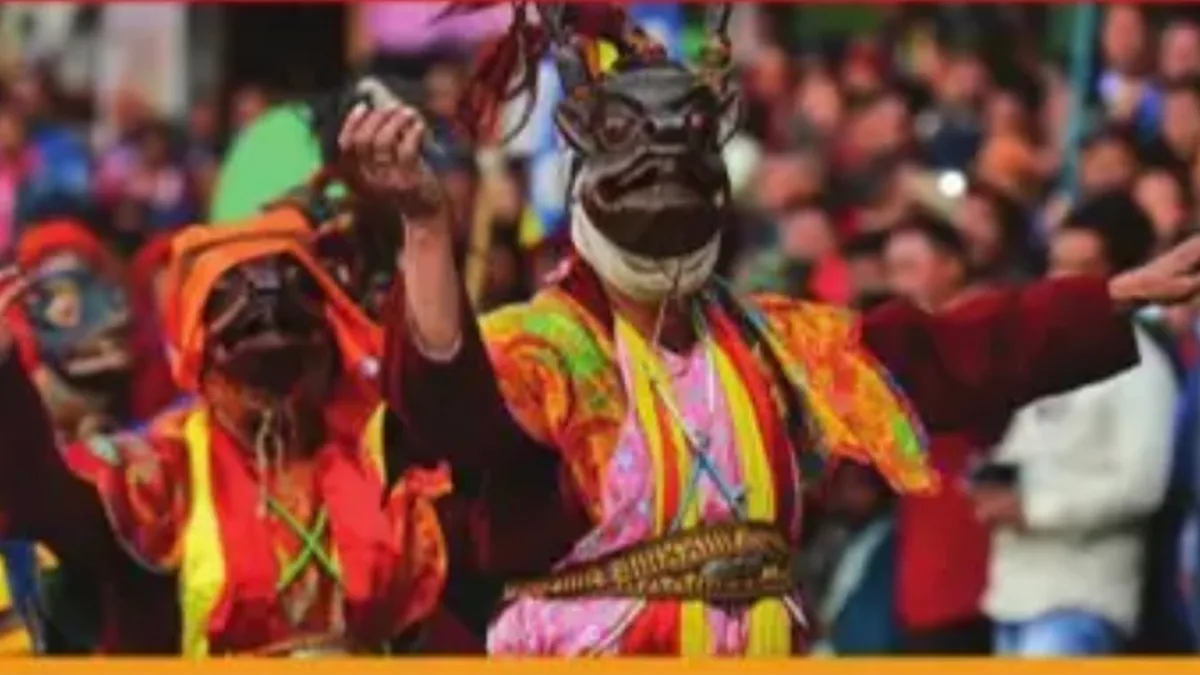
One of the most spiritually significant New Year festivals is the Torgya Festival, celebrated primarily by the Monpa community in the Tawang region. Held at the historic Tawang Monastery, one of the largest Buddhist monasteries in Asia, Torgya is deeply embedded in Mahayana Buddhist philosophy. Celebrated in January, close to the New Year, Torgya is both a religious and cultural event, symbolising the victory of good over evil, and the cleansing of negative forces from the land. During Torgya, monks perform elaborate masked dances known as Cham dances.

These dances are not merely artistic performances but sacred rituals believed to ward off evil spirits and bring peace and prosperity to the region. The colourful masks, ritual costumes, rhythmic drumbeats, and chanting transform the monastery courtyard into a sacred space where the spiritual and the communal merge. For the people of Tawang, the New Year begins with prayer, reflection, and collective hope for harmony. In an age of material excess, Torgya reminds both locals and visitors that renewal begins within the spirit. While Torgya reflects Buddhist spiritual traditions, the Si-Donyi Festival represents the indigenous belief systems of the Tagin community.

Celebrated in the Upper Subansiri region, Si-Donyi honours the Sun (Si) and the Earth (Donyi), which are considered the supreme sources of life. Marking the New Year, this festival underscores a worldview that sees humans as an integral part of nature rather than its masters. Si-Donyi is characterised by ritual prayers, traditional dances, and community feasts. Elders and priests perform ceremonies to seek blessings for good harvests, health, and social harmony. What makes Si-Donyi especially relevant today is its ecological wisdom. At a time when environmental crises dominate global discourse, Si-Donyi offers a cultural philosophy grounded in respect for natural forces.

The New Year, in this tradition, is not about consumption or spectacle, but about gratitude and balance. The Si-Donyi festival, celebrated by the Tagin tribe of Arunachal Pradesh (4-7 January), is their major New Year festival, honoring the Sun (Donyi) and Earth (Si) for peace, prosperity, and good harvest through rituals, offerings (like Mithun), traditional dances (Ponung), songs, feasting, and cultural displays of their rich heritage, symbolizing community unity and gratitude to nature. The celebration is to appease deities for universal peace, harmony, health, flourishing flora/fauna, and ward off evil spirits. The Sunrise Festival, perhaps the most symbolic of all, celebrates Arunachal Pradesh’s geographical uniqueness as the first place in India to witness the sunrise.

Held at Dong village in the Anjaw district, this festival marks the New Year with the rising sun, embodying the most literal sense of new beginnings. As the first rays of sunlight touch Indian soil, people gather to witness a moment that is both natural and profoundly symbolic. The Sunrise Festival has grown into a cultural event featuring music, dance, and community gatherings. It attracts visitors from across the country, eager to welcome the New Year in the earliest light possible. Beyond its tourism appeal, the festival carries a deeper message: that renewal is inseparable from nature’s rhythms. The New Year here is not announced by fireworks but by sunlight, reminding participants of humanity’s ancient relationship with the cosmos.

Together, these festivals reveal the many ways Arunachal Pradesh understands and celebrates the New Year. They are not isolated events but interconnected expressions of a shared philosophy that values community. Nyokum is a major annual festival of the Nyishi Tribe in Arunachal Pradesh is celebrated around February 26th, symbolizing “land” (Nyok) and “togetherness” (Kum) to invoke spirits for prosperity, good harvest, health, and harmony, featuring shamanistic rituals, traditional dances, and community feasts, a vibrant cultural event to connect with nature and ancestors. Rituals are performed by Shaman –priests ( Nyibus ) to appease spirits. A bamboo altar (Yugang) is built but no idols are worshipped. Sacrifices, often Mithun, are made as a gesture of gratitude.

The festivals are open to all, emphasizing unity, community spirit, and cultural pride. In essence, Nyokum is a vital celebration of the Nyishi people’s deep connection to the earth, their rich heritage, and their shared aspirations for collective happiness and abundance Unlike homogenised celebrations seen elsewhere, Arunachal’s New Year festivals resist uniformity. They affirm that diversity itself is a source of strength. In contemporary times, these festivals also play a vital role in preserving indigenous cultures. As younger generations migrate to cities and digital lifestyles reshape social habits, festivals become living classrooms where traditions are transmitted through participation rather than instruction. Dance steps, songs, rituals, and stories are learned not from books but from elders and community gatherings.

The New Year thus becomes a moment of cultural education. Tourism has added another dimension to these celebrations. While festivals like Torgya and the Sunrise Festival attract increasing numbers of visitors, local communities remain conscious of the need to balance cultural integrity with economic benefits. Responsible tourism initiatives aim to ensure that festivals are not reduced to performances for outsiders but remain authentic expressions of community life. This careful negotiation between tradition and modernity defines Arunachal’s evolving cultural landscape. Festivals in Northeast India symbolize deep connections to nature, agriculture (harvests, new year), spirituality (Buddhism, Hinduism), tribal identity, and community solidarity, celebrating good fortune, prosperity, and cultural heritage through vibrant music, dance, rituals, and traditional crafts, showcasing the region’s rich diversity and unique way of life.

Many festivals, like Bihu and Losoong, mark seasons, new beginnings, and thank gods for bountiful crops, reflecting dependence on agriculture, Festivals like Saga Dawa (Buddhist) and Ambubachi Mela (Hindu) highlight deep religious faith, prayers, and reverence for deities.They are vital for preserving unique tribal customs, languages, art forms, music (drums, bamboo clappers), and traditional values . Festivals bring tribes together, fostering solidarity, social bonding, and collective celebration. People pray for health, protection from calamities, and prosperity, often involving rituals for purification and good fortune. Modern festivals also showcase regional crafts, GI-tagged products, tourism, and economic growth, linking culture to development. Under the banner of “Arunachal Celebrates New Year,” these festivals collectively tell a story of a land that greets the future without forgetting its past.

Boori Boot ( Hill Miri/ Nishi) celebrates spring and togetherness praying for prosperity and freedom from disease. Through the Loku festival of the Nocte tribe they bid farewell to winter and celebrate harvest, meaning “to drive out the season”. Oriah of the Wancho tribe welcomes spring with prayers for rich harvests, good health, and community well-being. Dree of the Apatni Tribe is an agricultural festival focused on prayers and offerings for a good harvest. They remind the nation that the New Year is not just a date, but a process of renewal—of values , relationships, and hopes. In the first light of dawn, in the echo of monastery chants, in the rhythm of tribal drums, and in the shared sweetness of oranges, Arunachal Pradesh welcomes the New Year not with noise, but with meaning.

(THE WRITER IS A RETIRED ASSOCIATE PROFESSOR AND HEAD POST-GRADUATE DEPT OF ENGLISH DUM DUM MOTIJHEEL COLLEGE, AND A FORMER AFFILIATE FACULTY VIRGINIA COMMONWEALTH UNIVERSITY RICHMOND)


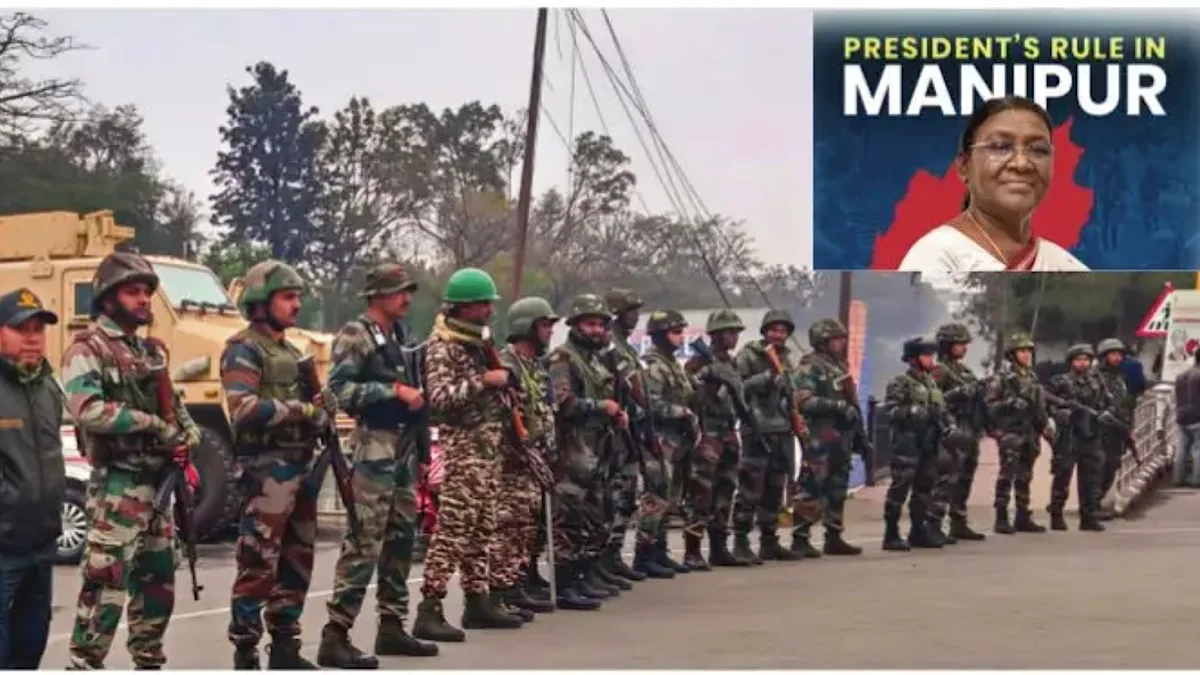
President’s Rule in Manipur: Tactical pause or strategic design?

The imposition of President’s Rule in Manipur on 13 February, 2025, placing the 12th Manipur Legislative Assembly under suspended animation, stands among the most consequential constitutional interventions in the state’s political history since its merger with India.

RAJKUMAR BOBICHAND | Kolkata |

The imposition of President’s Rule in Manipur on 13 February, 2025, placing the 12th Manipur Legislative Assembly under suspended animation, stands among the most consequential constitutional interventions in the state’s political history since its merger with India. Unlike many earlier invocations of Article 356, this was not a response to routine political instability, legislative deadlock, or the collapse of a coalition.

It followed a prolonged and violent ethnic conflict that systematically eroded the authority of the elected government, fractured civil administration, and rendered normal governance virtually impossible. Nearly a year later, Manipur remains suspended in political limbo. The state is neither governed by an elected government nor moving decisively towards democratic restoration. The Assembly has not been dissolved, and the Bharatiya Janata Party continues to command a numerical majority within it. Yet all executive authority rests with the BJP-led Central Government, exercised through the Governor and the Union Ministry of Home Affairs. This unusual constitutional arrangement – a retained majority legislature without power and an extended President’s Rule – raises questions that go far beyond Manipur.

Is this merely a tactical pause to allow peace to return? Is it political insurance to protect the ruling party from future risk? Or does it reflect a deeper strategic design shaped by electoral calculations, security priorities, and geopolitical considerations? These questions became sharper following a closed-door meeting on 14 December, 2025, when BJP legislators from Manipur were summoned to the party headquarters in New Delhi. Senior party leaders, including BL Santhosh and Sambit Patra, directed the MLAs to prioritise peace, ensure free movement, and visibly engage across ethnic lines. Publicly, the BJP described the meeting as focusing on “peace and progress,” while privately ruling out any immediate restoration of an elected government. The symbolism of the meeting was unmistakable, but so was the ambiguity it left behind.

At the heart of this moment lies a fundamental contradiction that remains insufficiently confronted: how can MLAs of a suspended Assembly be expected to bring peace when the Central Government itself is directly ruling Manipur under President’s Rule? Constitutionally, keeping the Assembly under suspended animation rather than dissolving it preserves the option of restoring a government without fresh elections. Politically, however, this choice carries deeper implications. Suspension serves as a powerful political instrument for the ruling party at the Centre. It discourages defections by keeping alive the promise ~ explicit or implied ~ of a return to power, ensuring party discipline among MLAs who might otherwise drift or defect. Dissolution would introduce uncertainty and weaken internal cohesion.

Suspension also defers accountability. Under President’s Rule, governance failures ~ whether in law and order, humanitarian relief, displacement management, or administrative paralysis ~ are formally borne by the Union rather than by a party-led state government. This insulation is particularly significant when the same party governs both at the Centre and would otherwise govern the state. At the same time, suspension creates a holding pattern that allows the Centre to wait out volatility. The violence that erupted on 3 May 2023, was neither episodic nor easily containable. Keeping the Assembly in suspended animation enables selective intervention without committing to a political arrangement that might collapse under renewed pressure. The BJP today confronts a paradox in Manipur. It possesses numerical strength in the Assembly without effective political control, and it exercises formal authority without democratic legitimacy. Restoring a BJP government prematurely would expose the party to immense risk.

If such a government were to fail again – administratively, politically, or morally – the consequences would be severe. In Manipur, it would further erode public trust ahead of the 2027 Assembly election. Nationally, it would damage the party during the crucial 2026 electoral cycle, when Assembly elections are due in Assam, West Bengal, Tamil Nadu, Kerala, and Puducherry. Unlike Manipur, these states carry far greater electoral weight. Images of renewed violence, administrative breakdown, or moral failure in Manipur under a restored BJP government would quickly be weaponised by political opponents elsewhere. The Centre’s reluctance to restore an elected government, therefore, reflects electoral calculation rather than indecision or disengagement.

The most striking contradiction in the present arrangement is the role assigned to Manipur’s MLAs. Under the President’s Rule, they possess no executive authority. They cannot direct the police or security forces, reopen highways, dismantle buffer zones, oversee arms recovery, implement rehabilitation for internally displaced persons, or allocate resources. Law and order, intelligence operations, security deployment, and administrative control lie entirely with the Centre. Yet these same MLAs are being instructed to restore peace, ensure free movement, and set examples by travelling across ethnic divides. This expectation is structurally incoherent. Peace in Manipur today is not merely a matter of persuasion or symbolism.

It depends on decisions regarding buffer zones, neutral policing, highway access, arms recovery, and engagement with armed groups – areas wholly beyond the reach of suspended legislators. Asking MLAs to travel into each other’s areas without addressing these structural constraints risks reducing peace-building to performative gestures rather than substantive change. The result is asymmetric accountability: the Centre governs without fully owning outcomes, while MLAs are expected to persuade without power. This is neither cooperative federalism nor shared responsibility, but a carefully calibrated imbalance. The emphasis on MLA visibility also points to another dimension of the strategy: peace as performance. The BJP recognises that peace imposed solely through central authority risks being perceived as coercive.

Keeping MLAs visible – issuing appeals, crossing ethnic lines, staging gestures of reconciliation – creates an image of local ownership and continuity. This serves political objectives by framing peace as organic, preparing ground for a future government, and allowing selective attribution of success or failure. Yet symbolism cannot substitute for structural transformation. Communities living amid displacement, restricted movement, and de facto segregation are unlikely to be persuaded by optics alone. Without dismantling buffer zones, restoring genuine mobility, ensuring neutral security, and rebuilding trust in institutions, peace risks becoming an optical threshold – just enough stability to justify delay, but not enough to prevent relapse.

A growing concern within Manipur’s public discourse is that President’s Rule itself has evolved from a temporary exception into an extended governance model. From the Centre’s perspective, prolonged central rule offers direct administrative control, unmediated deployment of security forces, freedom from local political constraints, and flexibility in border and security management. This is particularly relevant given Manipur’s strategic location along the Indo–Myanmar border and the instability in Myanmar. Yet Article 356 was never intended to substitute democratic governance indefinitely. Normalising extended President’s Rule risks hollowing out federalism and setting dangerous precedents for other conflict-affected regions.

Within Manipur, narratives have also emerged that view prolonged central rule as part of a proxy strategy to weaken Meitei-led insurgent structures. Whether empirically provable or not, the persistence of such perceptions matters. When communities believe constitutional mechanisms are being selectively deployed against them, alienation deepens and reconciliation becomes harder. Manipur’s political fate cannot be separated from the BJP’s broader electoral map. The party governs in Assam, seeks expansion in West Bengal, struggles for relevance in Tamil Nadu and Kerala, and supports an alliance government in Puducherry.

A destabilised Manipur risks becoming a national embarrassment during this cycle. Conversely, Manipur kept under managed stasis – neither collapsing nor resolving – minimises immediate electoral exposure. This calculus reflects the reality that national parties often prioritise national risks over regional aspirations, especially where electoral weight is limited. The central dilemma remains unresolved: should the Centre resolve the crisis first and then restore an elected government, or restore a government to claim political ownership of peace? Both options carry risks. For now, the Centre appears to have chosen delay, hoping that time, security management, and incremental normalisation will create safer conditions for political transition.

Legally, the suspension of the Manipur Assembly may be defensible. Politically, its prolonged continuation is corrosive. Democracy is not only about elections; it is about accountability, participation, and trust. Every additional month of suspended democracy widens the distance between the state and its citizens and weakens constitutional politics. Peace cannot be outsourced to the powerless. If the Central Government believes peace is achievable under President’s Rule, it must own that responsibility fully and transparently. If peace requires political leadership, meaningful authority must be restored to elected representatives. Anything in between risks turning Manipur into a laboratory of managed instability – stable enough to avoid embarrassment, unstable enough to avoid accountability. Manipur deserves more than symbolism and suspension. It deserves governance with responsibility, power with accountability, and peace rooted in democratic legitimacy.

(VIEWS ARE PERSONAL TO THE AUTHOR. THE WRITER IS A POLITICAL ANALYST, PEACE PRACTITIONER AND EXECUTIVE EDITOR OF THE IMPHAL REVIEW OF ARTS AND POLITICS. HE WRITES ON GOVERNANCE, CONFLICT, AND PUBLIC POLICY IN NORTH-EAST INDIA)
The significance of AI architects

One of the oldest and most impactful media traditions is Time magazine’s Person of the Year title, first given to legendar y aviator Charles Lindbergh after his momentous transatlantic trip in 1927.

ATANU BISWAS | New Delhi |

One of the oldest and most impactful media traditions is Time magazine’s Person of the Year title, first given to legendar y aviator Charles Lindbergh after his momentous transatlantic trip in 1927. In addition to individuals, Time has also named organizations and, on rare occasions, even concep ts, such as the “endangered earth” in 1988. The magazine has now identified “the architects” of AI as the most influential figure rather than a single individual as Person of the Year for 2025.

“And this year, no one had a greater impact than the individuals who imagined, designed, and built AI,” Time Editor-in-Chief Sam Jacobs wrote in a letter to readers. This year, there are two covers: one is an artwork that shows the letters AI surrounded by workers, and the other is a painting that highlights the tech leaders: Nvidia’s Jensen Huang, xAI’s Elon Musk, Anthropic’s Dario Amodei, AMD’s Lisa Su, Meta’s Mark Zuckerberg, DeepMind’s Demis Hassabis, AI “godmother” Fei-Fei Li of Stanford University’s Human-Centered AI Institute and CEO of World Labs, and OpenAI’s Sam Altman.

Interestingly, this is the third instance in the past 50 years that Time’s selection of the person of the year captured pivotal moments in the technological revolution, following “Personal Computer” in 1982 and “You” – indicating the digital communities – in 2006. Now that the age of AI has replaced the social internet made possible by personal digital devices, experts say this shows how rapidly and profoundly AI and the companies behind developing it are changing society (or how it’s perceived to be). The introduction of ChatGPT by OpenAI in late 2022 may have ushered in the current AI era. Indeed, it marked a change-point in the development of human civilization.

And it continues at a steady speed. When AI reached its full potential in 2025, it became evident that there would be no going back or opting out. AI may be the answer to any question that comes up today. Additionally, it attempts to make sense of a hurried blitz toward an unidentified destination. Let us see how AI covered the 2025 pro ceedings, even more effectively than Donald Trump. Leading internet entrepreneurs flocked to Washington, DC, for Trump’s inauguration on January 20 and sat behind him during his speech, setting the tone. That day, a little-known Chinese company, DeepSeek, unveiled a new AI model that alarmed investors and sparked a rallying cry from Silicon Valley.

According to DeepSeek, by building this model in just a few months, utilizing less advanced chips, China was able to close the gap in a competition that Silicon Valley experts hadn’t thought would be close. The revelation of DeepSeek’s discovery strengthened the argument for acceleration for the tech executives influencing Trump’s new AI strategy. Tech giants Masayoshi Son, Larry Ellison, and Sam Altman made their own statement at the White House the following day. They called the project “Stargate” and promised to invest up to $500 billion in the construction of AI data centers around the US.

Global competitiveness, incredible innovation, enormous sums of money, and the alchemizing powers of public and private interests were all foreshadowed in those two days. Trump signed an executive order undermining President Biden’s more circumspect AI policies during that first week of his second term. Trump also approved several AI projects in the months that followed while cutting or freezing massive amounts of federal funding in other sectors. What is the true potential of AI? Well, in November, Jensen Huang told Time, “This is the single most impactful technology of our time.” However, many people think that AI is a bubble, perhaps larger than the dot-com one.

Whether this is the case or not, there are trade-offs associated with all this advancement. The energy needed to operate these systems depletes resources. For the f irst time in histor y, even college-educated people are losing jobs due to new tech. Undoubtedly, some employment may vanish, but this is an entirely unexplored field. As was pointed out by Jensen Huang, ten years ago, some AI scientists expected that AI would eliminate radiologists from the workforce. However, now, radiologists are in greater demand than ever as AI has improved their ability to identify cancer. AI orchestrates deepfakes, AI increases the likelihood of widespread cyberattacks, and AI also makes inequality worse. Many saw the January DeepSeek breakthrough as Beijing’s Sputnik moment. The following month, Alibaba unveiled plans to invest $53 billion in AI over the next three years. Six AI unicorns – StepFun, Zhipu AI, Moonshot AI, MiniMax, 01.

AI, and Baichuan – rose to prominence due to a flood of investment, earning them the moniker China’s “AI Tigers.” However, experts and common p e ople have widely different perspectives on the roles of AI. While leaders, businesspeople, and professionals are mostly overly excited about AI and the “architects” guiding its development, interestingly multiple surveys revealed that average Americans are concerned about AI and would rather prefer the technology be developed safely, even if it means taking its time. For instance, according to a Pew Research Center study published in September, 53 per cent of participants predicted that AI would make people’s capacity for creative thought worse, while 16 per cent predicted that it would make it better and 16 per cent thought that it would make it neither better nor worse.

What about the pulses of people in other countries? As per a Pew Research report from October 2025, of the respondents surveyed in 25 countries, a median of 34 per cent say they are more worried than excited about the growing use of AI, while 42 per cent say they are both worried and excited. Only 16 per cent of respondents are more enthusiastic than worried. In India, 16 per cent are more excited than worried, 39 per cent are equally excited and worried, and 19 per cent are more worried than excited. Well, despite this skepticism, AI has transformed our environment in recent years in novel, enchanted, thrilling, and occasionally terrifying ways. And according to Forrester researcher Thomas Husson, 2025 might be a “tipping point” for how often AI is currently utilized in our daily lives. Thus, despite widespread cautionary notes, as Sam Jacobs of Time has noted, AI’s destiny will be decided by humanity, and each of us may contribute to determining AI’s structure and future. Does that mean that each of us is an “architect” of AI?

(The writer is Professor of Statistics, Indian Statistical Institute, Kolkata.)