Logo

Policing Speech

India’s long struggle with hate speech has always sat at an uneasy intersection of law, politics and social reality.

Statesman News Service | New Delhi |

India’s long struggle with hate speech has always sat at an uneasy intersection of law, politics and social reality. The recent move by Karnataka to introduce a dedicated law against hate speech and hate crimes is, therefore, not merely a legal experiment; it is a test of whether the country can confront a real social menace without undermining constitutional freedoms in the process. There is no disputing the problem. Public discourse has coarsened. Identity has become an easy weapon.

Social media has accelerated outrage, television has amplified it, and electoral politics has often rewarded it. The link between incendiary speech and real-world tension is no longer theoretical. In such a climate, the impulse to legislate is understandable, even necessary. A state that does nothing risks appearing complicit in the erosion of civic peace. Yet, the manner in which a problem is addressed often matters as much as the intent behind it. When a law treats the mere communication of offensive or hateful ideas as a criminal act, without a clear requirement of incitement or resulting harm, it crosses into dangerous territory. Criminal law is a blunt instrument. It is designed to punish acts that threaten public order or safety, not to police opinion or regulate moral boundaries. The risk is not abstract. Vague definitions invite subjective interpretation, and subjective interpretation invites misuse. This is especially sensitive in India’s political environment, where lines between criticism, provocation and propaganda are frequently contested.

What one group sees as hateful, another may defend as ideological expression. Without precise legal thresholds, enforcement becomes dependent on who is in power, who is being criticised, and which way the political wind is blowing. That is not rule of law; it is rule by discretion. Supporters of such legislation argue that empowering the police and removing procedural barriers will lead to quicker action and fewer communal flare-ups. But speed is not the same as fairness. The police are not insulated from political pressure, social bias or institutional instinct. When laws are broad and penalties severe, enforcement tends to become cautious in some cases and aggressive in others. Both outcomes are corrosive: one breeds impunity, the other fear.

There is also a deeper constitutional question. Free speech in India is already subject to reasonable restrictions. The legal framework does criminalise incitement, deliberate provocation and acts intended to inflame communal passions. The challenge has never been the absence of law; it has been uneven application. Creating new offences without fixing enforcement culture risks multiplying power without improving accountability. None of this is an argument for tolerating hatred. A society that shrugs at bigotry eventually pays a price in fractured trust and episodic violence. But the answer lies in sharper definitions, higher thresholds for criminality, and stronger judicial oversight ~ not in elastic laws that expand executive discretion. India’s diversity is both its strength and its vulnerability. Protecting harmony requires firmness, but it also requires restraint. A law that is meant to shield communities should not end up silencing citizens.

We, the People

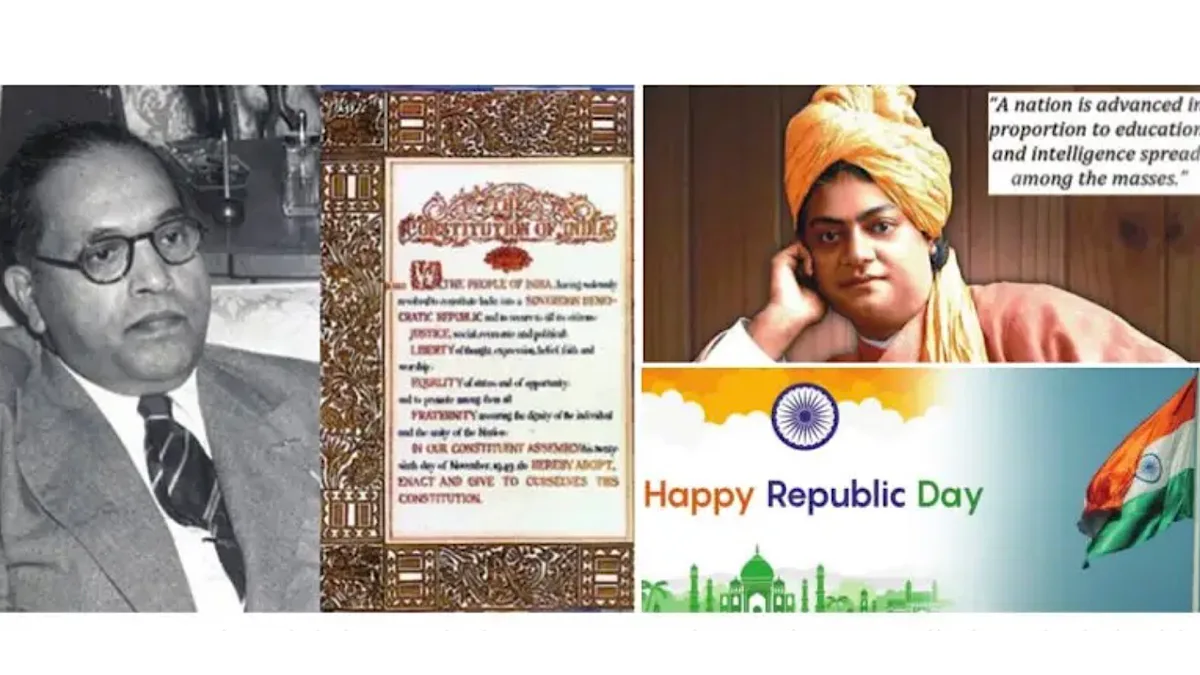
As the nation prepares to celebrate yet another Republic Day on 26th January, 2026, some serious reflections on the health of the republic are the need of the hour.

JAYITA MUKHOPADHYAY | New Delhi |

As the nation prepares to celebrate yet another Republic Day on 26th January, 2026, some serious reflections on the health of the republic are the need of the hour. While institutions and ideas forming the bedrock of our constitutional edifice are under intense scrutiny, it is also pertinent to reflect on the inner dynamics of ‘We, the People of India’ who enacted, adopted and gave to themselves the hallowed Constitution of India.

The quality of human resource is a very significant marker of a nation’s power which again depends on variables like access to nutrition, health care, education, and skill. Of equal importance are subjective factors like fellow feeling, cooperative spirit, ability for team work, empathy for the less privileged, respect for other’s rights, intolerance towards injustice and agency to fight for vindication of citizens’ rights. Dr. Bhimrao Ambedkar’s emphasis on the principle of Fraternity, as the most significant cohesive factor joining together the values of Liberty Equality and Justice, is particularly noteworthy as one tries to fathom the nuances of India’s nationhood.

At the beginning of its journey as the world’s largest democracy, 345 million people started a ‘tryst with destiny’, to borrow a phrase immortalized by India’s first Prime Minister Pandit Jawaharlal Nehru. It was a stupendous challenge for every Indian and the leaders as they embarked on a journey to lift millions above the poverty line, to ensure universal education, health care, and meaningful employment, and perhaps most daunting, to eradicate entrenched divisive factors like casteism, communalism , patriarchy, linguistic chauvinism and ethnic animosities so as to create a truly cohesive nation, a rock solid edifice of the “we, the people of India”.

During the last seven decades, the trajectory of India’s journey has been an awe-inspiring one. Proving wrong many Western scholars who predicted the imminent collapse of democracy in a semi-literate, underdeveloped country, India has muddled through, despite occasional hiccups. One of the world’s fastest growing economies, producing the highest numbers of graduates every year, a country whose technological prowess has become noteworthy, a country committed to uphold the post-war liberal international order, a leading advocate of sustainable, futuristic development, India has made its mark in the comity of nations. But unfortunately, the people of India, despite their glorious achievements in various fields, continue to be a divided lot.

Casteism, communalism, violence against women and people of third gender continue to tear asunder the fabric of our nation. Many social commentators allege that such violence, far from declining, is on the rise. These prejudices continue to lurk behind our gleaming cities, sparkling malls, spiraling highways, and our apparently peaceful, idyllic rural hinterland. Citizens for Justice and Peace has recorded thousands of cases of caste-related violence even in 2025, like the killing of Dalit men who dared to have relationships with upper caste girls, Dalit students denied access to drinking pots in schools, Dalit grooms burned alive for daring to ride a horse during marriage procession, a practice considered to be the prerogative of only upper caste men.

Though India has risen to rank 130 in the 2025 Human Development Index, showing progress in life expectancy, education, and income, it continues to face persistent gender, caste, communal and income inequality. Neeraj Ghaywan’s film ‘Homebound’, recently shortlisted for Best International Feature Film by the Oscar Awards Committee is a soul-stirring depiction of two young men, belonging to the marginalized sections of society, struggling desperately for a life of dignity in a ruthless society trying to hide its nasty prejudices. According to the renowned Indian economist and philosopher Amartya Sen, true freedom goes beyond merely having resources; it is about the ability to use these resources to lead the kind of life one values.

Prevalence of primordial prejudices in India often acts s a hindrance to economic and emotional wellbeing. India is witnessing a troubling rise in road rage incidents, with what often begins as a minor disagreement escalating into violent altercations, sometimes ending in death. Frustrations on the road, fuelled by congestion and impatience, are increasingly leading to physical confrontations. In extreme cases, these incidents have turned deadly, leaving behind a trail of victims. Extreme lack of patience and fellow feeling becomes apparent from such incidents. Numerous incidents of stampedes in India also reflects badly on our national character.

From religious festivals to sporting celebrations, fan frenzy to political campaigns, the year 2025 witnessed several crowd crushes and stampedes, leading to over 100 deaths. While what triggered these stampedes could vary, poor crowd management and a lack of proper public infrastructure cannot be ignored. Almost 80 per cent of stampedes in India occur at religious gatherings or pilgrimages. They also bear testimony to the fact that Indians keen on achieving salvation often sacrifice the basic human spirit of helping the weaker among us on the altar of blind devotion, not only to Gods and Goddess but also cine superstars and renowned footballers. Women and children suffer greater number of casualties in such incidents.

People becoming irrational machines of wild passion, and dispensers of justice, lynching petty thieves sometimes accused of stealing food are symptomatic of deep-seated anger or frustration, perhaps rising from dissatisfaction about their own socio-economic conditions or helplessness in the face of mounting corruption and abuse of power perpetrated by the social and political elite. Our leaders are projected and accepted as Messiahs, not evaluated as duty bound public servants. Psychologists opine that rapid degeneration of moral and ethical standards and ever-increasing materialistic cravings, exacerbated by a rabid bourgeoise and consumer culture, are contributing to the emergence of a heartless, cruel social order.

Our education is no longer a man-making mission but just a tool to open the gates of material success. Men are becoming money-making machines. Of late, the rate of suicides has risen alarmingly in India, particularly among young men, women and even among the elderly. Suicides in India have quietly become a public health emergency. Multiple factors are responsible for this growing malady. Adolescents and young children often struggle with academic challenges or neglectful or abusive parenting, while many older adults grapple with social isolation and coming to terms with physical limitations. Sheer hopelessness and lack of social support push them into the pit of depression.

Breakdown in relationship and financial crisis emerging from wrong choices are also pertinent factors. The trend signifies weakening of our emotional resilience, fighting spirit and our helplessness and isolation in an era when people have numerous friends in social media but very few in real life, friends who can hold one’s hands and offer advice in times of crisis. India ranked 118th out of 147 countries in the World Happiness Report 2025 released recently, again a pointer to the sorry state of the mental well-being of Indians. This Republic Day, we should pay more attention to this sorry state of affairs and focus on taking care of our emotional intelligence alongside material wellbeing. We must recall the clarion call of Swami Vivekananda, asking us to stand by our less fortunate brethren. Let us find strength in each other’s wellbeing and thus make ‘Viksit Bharat’ a truly ‘Manvik (Humane) Bharat’.

(The writer is an Associate Professor in the Department of Political Science, Women’s Christian College, Kolkata)


When Kolkata’s streets became a moving museum

As the 55th edition of The Statesman Vintage and Classic Car Rally got into gear on Sunday, the city streets of Kolkata became a moving museum where two wheeler retro beauties dazzled the crowd with the rhythmic thrum of their engines, evoking nostalgia and eliciting wonder for their timeless craftsmanship and innovation.

PRIYANJALI DAS | Kolkata |

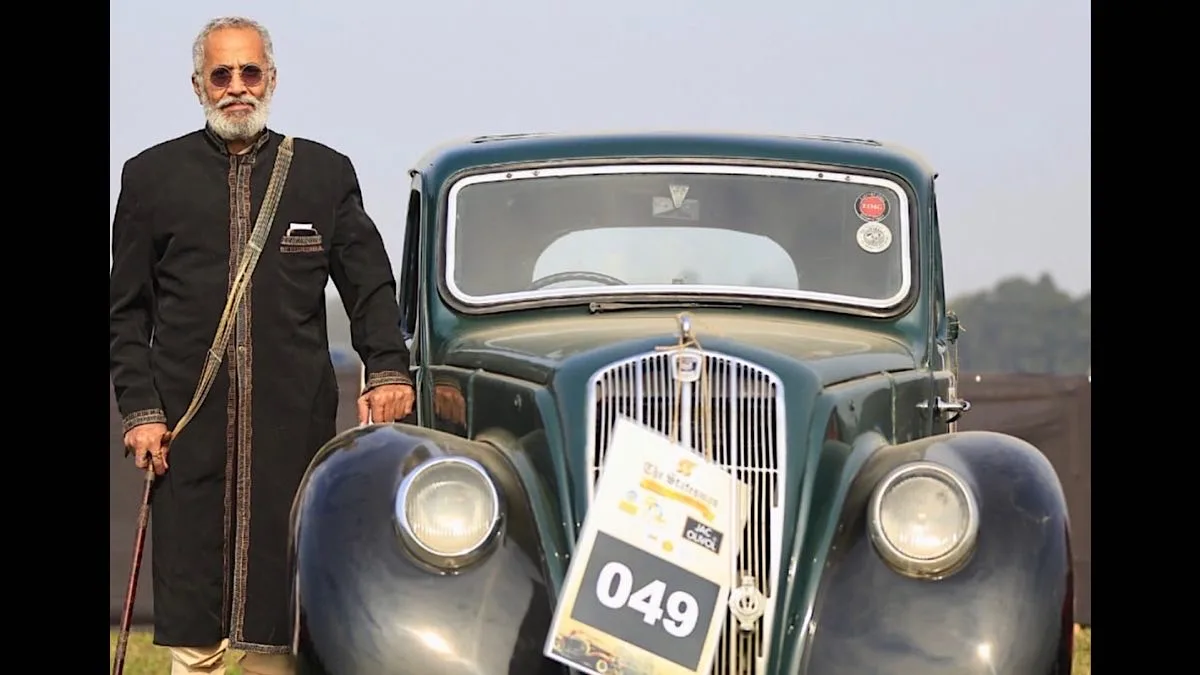
As the 55th edition of The Statesman Vintage and Classic Car Rally got into gear on Sunday, the city streets of Kolkata became a moving museum where two wheeler retro beauties dazzled the crowd with the rhythmic thrum of their engines, evoking nostalgia and eliciting wonder for their timeless craftsmanship and innovation. A standout presence that drew the eye was the 1923 Panther Sloper that is owned by Syed Kamal Uddin Hossain and is beautifully maintained by his brother, Syed Afzal Uddin Hossain.

This two-wheeler comes with a single cylinder, three gears, a hand-gear shift and an open valve rocker. In all probability, this is the only model in India that is still in running condition. Taking part in the vintage rally for more than 20 years now, this bike has been in the family for three generations. A particularly striking entry was the 1956 Lambretta Model that had been a part of the rally since 2018 and had fetched Nitin Shrestha several trophies, including ‘The HDFC trophy for the best restored classic motorcycle’ in 2023. Remember the 1953 classic ‘Roman Holiday’ movie, with its iconic scene featuring Audrey Hepburn and Gregory Peck riding a Vespa scooter through the city’s landmarks?

A 1956 Vespa at the event, with its timeless design and gleaming finishes, yet again proved why it became a global sensation. Launched in 1946, right after World War II, by Piaggio in Italy, it was a response to Italy’s growing need for affordable, practical transport. A visual marvel was the 1936 James Villiers, a single cylinder two wheeler owned by Late Dr. Abdul Karim and cherished and maintained by his son Mohammad Abdul Rahim. With a single cylinder and two-stroke engine, this bike was used in the Indian circuses till the 1990s. A new participant in the rally, a 1951 Matchless, was a visual delight. First manufactured in late 1941 for the British Army during World War II, it later developed into a post-war model for civilian transport and use.

Automotive history parades through city streets

Kolkata witnessed the engines of history taking over the city lanes on Sunday as the 55th edition of The Statesman Vintage and Classic Car Rally became a testament once again to elegance, innovation and timelessness.

PRIYANJALI DAS | Kolkata |

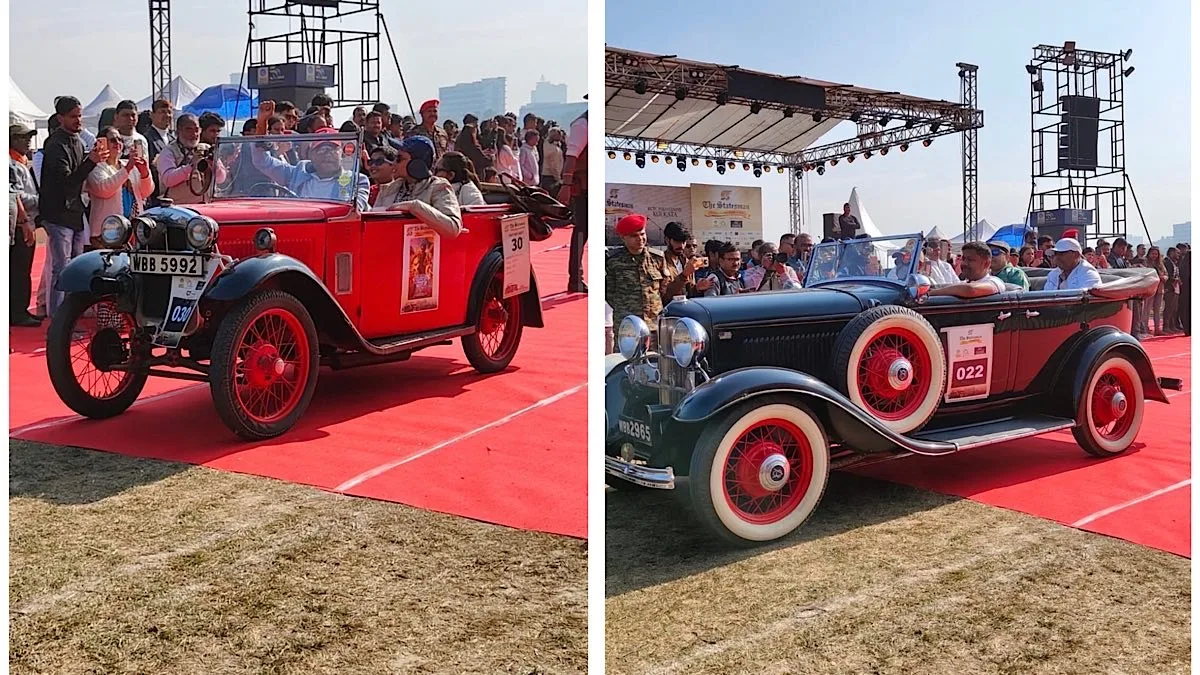
Kolkata witnessed the engines of history taking over the city lanes on Sunday as the 55th edition of The Statesman Vintage and Classic Car Rally became a testament once again to elegance, innovation and timelessness. With more than 170 vintage and classic cars and bikes ruling the roads of ‘The City of Joy’, the sight became a moving memory where the past paraded through the present. With the sun high in the sky and a subtle chill in the air, the guests were mesmerised by the sheer resplendence of the timeless marques.

Drawing all eyes was the oldest participating car in the event ~ the 1500 cc 1913 Stoewer, a German-built car owned by Ananda Chowdhury, with only four cylinders, which has been inherited from one generation of the family to another. An example of automobile craftsmanship, this parakeet green retro wonder is one of the only ones running in India. A 1947 Chevrolet Fleetmaster (The car that had won the Best Restored Classic Car in 2024) owned by Debdut RoyChoudhury and restored by Pallab Roy and Saurov Roy of the famed Father and Son Restorations, captivated everyone with undeniable charm. With a six-cylinder and overhead valve inline 6 engine, this car, alongside the 1956 Dodge Kingsway used by the Commissioners of Kolkata Police, had created quite a buzz.

A 1936 Bentley, owned by Shrivardhan Kanoria, was a vision from another era. The car dazzled spectators and held them spellbound. A gleaming relic of the past, the 1940 Austin A-125 of the Indian Army radiated timeless splendour. This car was initially used by the erstwhile British Indian army before independence. It was inducted by the Indian army on 9 November 1948 and was used by independent India’s first Indian Commander-in-Chief of the Indian army, Field Marshal KM Chariappa and was brought to Kolkata in 1964 by Field Marshal SHFJ Manekshaw during his tenure as Army Commander, Eastern Command.

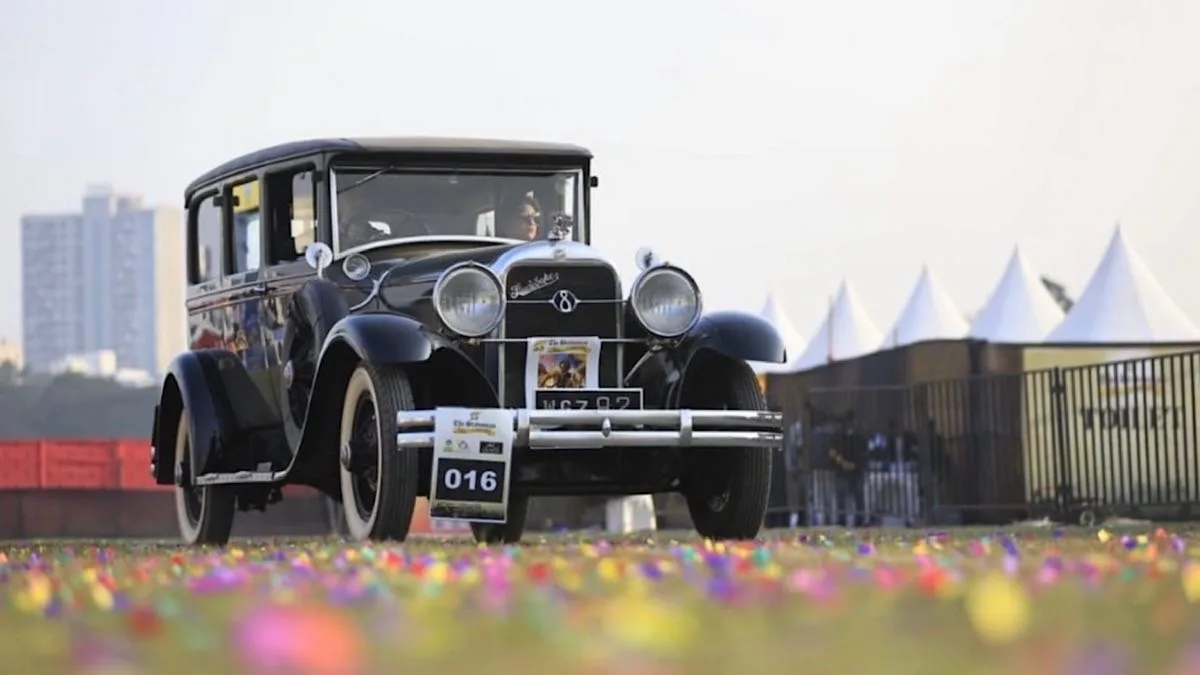
Pallab Roy’s 1928 Studebaker President 8 State Limousine captivated onlookers and commanded attention. A 1967 Mercedes-Benz 230 S owned by him had always been a constant presence at the event. According to him, “The car was complete scrap when we acquired it, which we had restored. It was my first serious restoration then and had taught me a lot- from how to handle the mechanical and electrical parts, the bodywork, the paintwork.” His other car, the 1951 Mercury 8, was another aristocratic beauty present at the event. It comes with a ‘flathead V8’ engine, and Pallab Roy opines that it was his son Saurov, who had single-handedly restored the car to its present condition.

Another beauty that stole the limelight would be ‘Nilu’, a 1948 Blue Plymouth that initially belonged to the celebrated singer Hemanta Mukhopadhyay, and is now presently owned and under the loving care of Mr Swapan Kumar Lahiri. Amritendu Roy’s 1964 Ford Anglia 105E was a spectacular retro beauty that, for the kids, could only be equivalent to the popular ‘Flying car’ in the Harry Potter series. Initially belonging to the famous footballer Subhas Bhowmick, this car was acquired by Mr Roy in 2000. Both Surendra Kumar Dugar’s 1929 Hudson Essex and Saikat Dutta’s red 1963 Triumph Spitfire that belonged to Bollywood’s ‘bhidu’ Jackie Shroff enthralled everyone. Among the new entries, a 1946 Standard owned by Pradip Kumar Chopra and Bikramjit Ghosh’s 1952 Morris were proud participants and a testament to automobile marvel.

(Photos by Biswajit Ghoshal)

‘Madness’: Volodymyr Zelenskyy says ‘Russia losing 1,000 soldiers daily since December to prolong Ukraine war’

President Volodymyr Zelenskyy says Russia is losing at least 1,000 soldiers daily to prolong the war, urging the US and Europe to act together.

Statesman News Service | Mumbai |

Ukrainian President Volodymyr Zelenskyy said on Monday that Russia is losing no fewer than 1,000 soldiers every day, a toll he said reflects the price Moscow is willing to pay simply to prevent the war from ending.

Zelenskyy described the situation as ‘madness’ and urged the United States, Europe and Ukraine’s international partners to act together to stop Russia’s aggression.

“Right now, Russian losses amount to no less than 1,000 killed per day – and this has been the case since December. This is how Russia is essentially paying just to keep the war from ending. This is madness and it can only be stopped by combined forces – the forces of Europe and the United States, the forces of all our partners,” Zelenskyy said.

He warned that every passing day of the conflict exposes the world’s inability to restrain violent regimes.

“Every day of this war is a reminder that the world cannot protect itself from madmen. We must protect it. Russia must be stopped,” he added.

Zelenskyy also thanked countries backing Ukraine with military and humanitarian support, saying their assistance remains vital for defence and recovery.

“Thank you to everyone who stands with Ukraine! Thank you to everyone who helps our people, our defence, and our recovery! Glory to Ukraine!” he said.

Russia paying heavy cost to keep war going, Zelenskyy says

Zelenskyy’s remarks came days after Ukraine faced one of the largest aerial assaults in recent months. He said Russia launched a massive overnight attack using drones and missiles, targeting Kyiv and several other regions.

According to the Ukrainian President, the assault involved 242 drones, 13 ballistic missiles and 22 cruise missiles. At least four people were killed and dozens injured.

In a post on X, Zelenskyy said civilian infrastructure and energy facilities were hit during a spell of severe cold, worsening conditions for residents as the war in Eastern Europe stretches into its fourth year.

He confirmed that four deaths occurred in the capital alone, including a member of an ambulance crew. Emergency services were still responding to the damage, he said.

“In Kyiv and the region, the aftermath of the massive Russian strike is still being dealt with. All necessary services are deployed. Twenty residential buildings alone were damaged,” Zelenskyy said.

He added that rescue and repair work was also underway in the Lviv region and other affected areas. Zelenskyy noted that a second strike hit a residential building while first responders were already on site, assisting victims after the initial attack.

Vintage rally blends heritage, culture and nostalgia

The Royal Calcutta Turf Club Polo ground came alive on Sunday as the 55th edition of The Statesman Vintage and Classic Car Rally unfolded in a festive atmosphere.

ROUSHAN CHATTERJEE | Kolkata |

The Royal Calcutta Turf Club Polo ground came alive on Sunday as the 55th edition of The Statesman Vintage and Classic Car Rally unfolded in a festive atmosphere. In the warm winter sunshine, the Polo Grounds in Hastings turned into a lively space where heritage, entertainment and nostalgia came together.

As the vintage wheels took to the city roads, the rally offered enthusiasts and onlookers a rare glimpse into the golden age of motoring. While the vintage and classic cars remained the central attraction, the rally went far beyond an automotive showcase. It became a day-long celebration marked by musical performances and a special cinematic moment, drawing visitors from across the city. From early morning, spectators gathered at the venue and strolled leisurely between rows of gleaming automobiles and motorcycles. Conversations flowed easily as enthusiasts discussed design, restoration and family histories linked to the vehicles.

Children posed for photographs, while senior visitors reminisced about an era long past. Adding to the visual charm, many participants and visitors embraced period fashion. Flowing dresses, tailored jackets, hats and scarves evoked the elegance of a bygone time. The setting resembled a living museum, where history was not only displayed but also worn and lived. A major highlight of the day was the screening of the teaser of the upcoming Kakababu film, ‘Vijaynagar’er Hirey.’ The presence of director Chandrasish Ray and actor Prosenjit Chatterjee, along with other cast members, added grandeur to the event. Based on Sunil Gangopadhyay’s popular novel, the film revolves around the search for a mythical diamond in Hampi.

The teaser screening added a strong cinematic flavour to the event and drew enthusiastic responses from both film lovers and rally visitors. Speaking at the event, Prosenjit Chatterjee highlighted the importance of the rally in keeping the motoring heritage alive and said he was delighted to be part of such an occasion. Following the screening, Prosenjit Chatterjee was seen taking a round of the Polo Grounds in a 1936 Bentley owned by Shrivardhan Kanoria, with the car being driven by Kanoria himself. The moment drew considerable attention from visitors and photography enthusiasts.

The celebratory mood was further elevated by musical performances that kept the audience engaged throughout the day. Well-known singer Anik Dhar took the stage and enthralled the audience with his performance. Actress Chaiti Ghoshal and singer Deb Chowdhury also attended the event as special guests and were felicitated on the occasion. For car owners, the rally remained a deeply personal affair. Supratim Basu, owner of a 1922 Austin, said the rally has been part of his life since childhood. “I have been coming here since I was five years old. Now I am 31. Every year, this feels like an annual festival for our family,” he said. He added that the car, bought by his great-grandfather, has remained with the family for over a century. “It is no longer just a vehicle.

It is a family member,” he shared. Basu also explained his traditional Bengali attire, noting that such dress symbolised elegance during the era when these cars were first owned. Another participant, Gautam Sureka, said the rally continues to be an important platform for preserving heritage. “These cars are recognised in very few places today. This is one of the biggest and oldest platforms in Kolkata,” he claimed. Speaking about his attire, Sureka said he chose an Italian-inspired look to match his 1929 Fiat. “Every year we try something new. The idea is to keep the spirit alive,” he added. Visitors also shared their impressions of the event. Sanjay Goenka of SEVARTH said he has been attending the rally for the past 25 years.

“It is always something I look forward to. You rarely get to see such beautiful vintage cars anywhere else in the country,” he stated, praising The Statesman for sustaining the event over decades. First-time visitor Mohammad Shahzeeb, Zonal Manager of Bank of Maharashtra, described the experience as overwhelming. “The atmosphere is wonderful. These vehicles are beautifully maintained, and their designs remind us of a kind of beauty we seem to be forgetting today,” he affirmed. He added that he hoped the rally would grow even bigger in the coming years. As the day progressed, the atmosphere remained relaxed and cheerful. The rally concluded on a formal note with the distribution of awards. The event once again reaffirmed its reputation as not just a tribute to vintage automobiles, but a celebration of culture, memory and shared enjoyment.

‘Hindutva asks 80 per cent Hindus to quiver in front of 14 per cent Muslims’: Mani Shankar Aiyar

Addressing The Debate 2026 event at the Calcutta Club, Aiyar said that “Hindutva is Hinduism in paranoia.”

Statesman News Service | New Delhi |

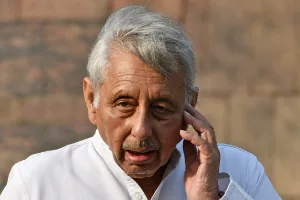
Veteran Congress leader Mani Shankar Aiyar, long known for courting controversy, has once again triggered a political row with his latest remarks on Hindutva.

Addressing The Debate 2026 event at the Calcutta Club, Aiyar said that “Hindutva is Hinduism in paranoia.”

“It (Hindutva) asks 80 per cent Hindus to quiver in front of 14 per cent Muslims. Hindutva is a BJP leader slapping a blind, hungry tribal girl because she attends a Christmas lunch in a church. Hindutva raids shopping malls to tear down Christmas decorations,” Aiyar was quoted as saying by news agency ANI.
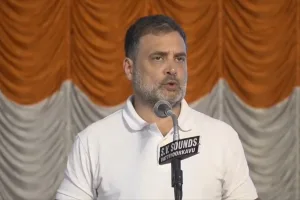
Mani Shankar Aiyar links Pahalgam terror attack to unresolved legacy of partition

He also claimed that Hindutva ideologue Vinayak Damodar Savarkar viewed Buddhism as an “existential threat to all Hindus.”

“Savar­kar described it as the ultimate negation of Hindutva, bearing the opiate of universalism and non-violence. He said it was disastrous to national virility and even to the existence of the Hindu race,” Aiyar added.

A day earlier, Aiyar had reportedly suggested that the government should end Operation Sindoor and initiate an “uninterrupted dialogue” with Pakistan.

The BJP strongly objected to his remarks, with party spokesperson Shehzad Poonawalla slamming the Congress for allegedly “praising” Pakistan and “insulting” the Indian Army.

“Congress has always stood with Pakistan and with terrorists. The one identity of Congress is praising Pakistan and insulting the Indian Army. Mani Shankar Aiyar, considered one of the most trusted people of the Gandhi family, says that Operation Sindoor should be stopped and uninterrupted dialogue with Pakistan should be started,” Poonawalla said.

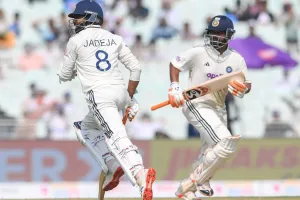
Kohli’s masterclass guides India to thrilling win against New Zealand in 1st ODI

India pulled off a thrilling chase, reaching 301 in the second last over of the innings, with KL Rahul and Washington Sundar putting up a decent partnership to seal the win by four wickets.

ANI | New Delhi |

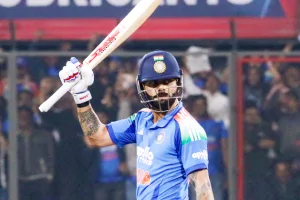
Virat Kohli’s masterclass alongside vital contributions from Shubman Gill, Shreyas Iyer and Harshit Rana helped India to secure a win in the first ODI against New Zealand in Vadodara on Sunday.

India pulled off a thrilling chase, reaching 301 in the second last over of the innings, with KL Rahul and Washington Sundar putting up a decent partnership to seal the win by four wickets.

Chasing 301, Rohit Sharma and Shubman Gill opened the innings for India. After a slow start, Hitman finally opened up his arms and pulled for a six off Zakary Foulkes in the 6th over.

In the following over, Sharma took on Kyle Jamieson, smashing him for a six and four each. The six off Jamieson was also the 650th six for Sharma in International cricket.

However, in the 9th over, Jamieson got the better of Sharma, removing him for 26 runs off 29 balls, including three fours and two sixes.

India finished power-play on 48/1 with Gill and Virat Kohli unbeaten on the crease. In the 13th over, Kohli smashed a four off Adithya Ashok to complete 28000 runs in International cricket.

He is the quickest to reach there in just 624 innings, bettering Sachin Tendulkar (644 inngs) and Kumar Sangakkara (666 inngs).

After a slow power-play, India took on the charge against the Kiwi bowlers and raced past the 100-run mark in the 17th over.

In the 20th over, Kohli (28,017* runs) also went past Sangakkara (28,016 runs) to become the second-leading run-getter in International cricket, behind Sachin Tendulkar (34,357 runs).

The duo of Kohli and Gill brought up their fifties, placing India on top in the run chase. Gill brought up his fifth 50-plus score in 13 ODI innings against New Zealand.

Ashok finally gave New Zealand a much-needed breakthrough in the 27th over, removing Gill for 56 runs, and India’s vice-captain Shreyas Iyer joined Kohli in the middle.

In the 31st over, Iyer took on Ashok, smashing him for 15 runs in the over.

Kohli missed out on a well-deserved 100 as Jamieson scalped his second wicket of the innings. He removed Kohli, seven runs short of his hundred and Ravindra Jadeja joined Iyer in the middle.

Jamieson gave India a double blow in the same over as he removed Jadeja for four, and KL Rahul joined Iyer in the middle.

Jamieson gave India another major blow as he cleaned up Iyer on 49 in the 42nd over. Harshit Rana got a promotion in the batting order, coming before Washington Sundar.

Rana made the best use of the opportunity as he slammed 29 runs in just 23 balls, and Sundar came at the crease to complement Rahul.

Earlier in the match, Daryl Mitchell’s powerful knock of 84, along with half-centuries from Devon Conway and Henry Nicholls, guided New Zealand to a competitive total of 300/8 in their 50 overs.

After winning the toss, India opted to bowl first, but the Kiwi openers laid a solid foundation. Conway and Nicholls stitched together a steady 117-run opening stand, bringing up 50 in 10.1 overs and reaching the 100-run mark in 19.5 overs, putting early pressure on the Indian bowlers.

Henry Nicholls became the first New Zealand batter to be dismissed after scoring 62 off 69 balls, which included eight fours. He was removed by Harshit Rana, who struck again soon after to send back Devon Conway. Conway scored 56 off 67 deliveries, hitting six fours and a maximum, before being cleaned up by Rana. Will Young departed shortly thereafter for 12, dismissed by Mohammed Siraj.

The middle order failed to fully capitalise on the strong start. Glenn Phillips also managed 12 before falling to Kuldeep Yadav, while Mitchell Hay scored 18 and was bowled by Prasidh Krishna.

New Zealand captain Michael Bracewell was run out by India’s vice-captain Shreyas Iyer after scoring 16, and Zak Foulkes departed for 1, becoming Siraj’s second wicket of the match.

Daryl Mitchell held the innings together with a commanding knock of 84 off 71 balls, which included five fours and three sixes. He looked set for a century but was dismissed by Prasidh Krishna late in the innings. Kristian Clarke provided a valuable finishing touch, remaining unbeaten on 24 off just 17 balls to push New Zealand to the 300-run mark.

For India, Mohammed Siraj (2/40), Harshit Rana (2/65) and Prasidh Krishna (2/60) picked up two wickets each, while Kuldeep Yadav returned figures of 1/52. India will now chase a target of 301, with a total of 300-plus always carrying significant psychological pressure in a one-day contest.

Brief score: New Zealand 300/8 in 50 overs (Daryl Mitchell 84, Henry Nicholls 62; Mohammed Siraj 2/40) vs India 306/6 in 49 overs (Virat Kohli 93, Shubman Gill 56; Kyle Jamieson 4/41).

Audits of urban development affairs should enable govt provide quality services: CAG

With India striving to become a thirty trillion dollar economy, the audits across the country’s Urban Development landscape must be oriented towards making constructive and implementable recommendations, as the cities are poised to be the growth hubs in realising the nation’s goal, according to a top official.

Agraj Pratap Singh | New Delhi |

With India striving to become a thirty trillion dollar economy, the audits across the country’s Urban Development landscape must be oriented towards making constructive and implementable recommendations, as the cities are poised to be the growth hubs in realising the nation’s goal, according to a top official.

Such audits would boost the government’s efforts to provide high-quality urban governance and services to the citizens, said the Comptroller and Auditor General (CAG) Sanjay Murthy.

The CAG made the remarks while chairing the concluding session of a three-day workshop on “Urban Development and Governance” on Saturday.

Murthy emphasised that the knowledge acquired from the workshop must be implemented in their respective audit domains by the officials concerned who attended the training, in a bid support the economy’s growth.

Speaking exclusively to UNI, retired IAS, and currently a Professor of Practice at the Indian School of Public Policy, OP Agarwal, who headed the faculty that conducted the workshop, said that in all economies around the world which witnessed rapid growth, there was expansion of manufacturing and the services sectors – activities primarily happening in the urban areas.

He stated that, therefore, the cities are extremely important for many reasons, especially from the perspective of economic growth as these are the places that also cater to the youth for providing jobs in the manufacturing and services sector.

Agarwal underscored that the urban areas have to be prepared not only to accommodate the rapid growth, but also to proactively enable the same.

He stated that the way to go forward for achieving rapid progress is to strike the right balance, and for that, a sustainable, low growth path, which simultaneously keep supporting the economic activities must be followed.

He said that the planning and the infrastructure development of the cities need to be based on an economic vision and not as per the traditional process, which is incremental, and does not take into account a future economic growth driver.

According to the expert, plans for the expansion and development of the urban areas should be based on the vision for the future. In this regard, he mentioned the Niti Ayog’s new initiative for twenty growth hubs, and said many states have already picked up the idea.

Agarwal said the idea is to have focused attention on selected regions which can be developed as growth hubs.

This would typically be a region around a city, which can be planned effectively to become a one trillion dollar economy. If there are twenty such regions, then twenty trillion would accrue from such focused locations.

He also stated that the vulnerability to disasters is higher in cities, given their higher density, and the need is to prepare them in advance for such challenges.

Futuristic plans based on key economic drivers for such focused regions will help determine the infrastructure needs and the land requirements for these needs, which is going to create a more credible basis for master planning.

The COVID pandemic, earthquakes, or floods, have clearly shown that cities are vulnerable to emergencies and disasters.

He pointed out that after considering all such challenges, there is now a recognition of the need to build capacity at the municipal, state and national levels to deeply understand these challenges and also look at how these can be dealt with.

“In today’s planning, it is important to identify what are going to be the economic drivers for the city, how fast do we need to go, and what is the ambition,” he said.

Meanwhile, the workshop was attended by seven IA&AS officers and sixteen Senior Audit Officers/Assistant Audit Officers from across the country.

The training was conducted by a faculty headed by Agarwal, with members like Chetan Vaidya, Former Director, School of Planning and Architecture (SPA), Hitesh Vaidya, Former Director, National Institute of Urban Affairs (NIUA) and Alok Shiomany, an expert in urban finance.

C & AG, being the apex and the sole audit authority for urban local bodies and related institutions, plays an important role in highlighting issues related to urban governance.

Iran protests: Iranians will not bow to foreign mercenaries, says Supreme Leader amid US intervention threat

Khamenei stated that Iran is better equipped and armed today than it was before the Islamic Revolution.

Statesman News Service | New Delhi |

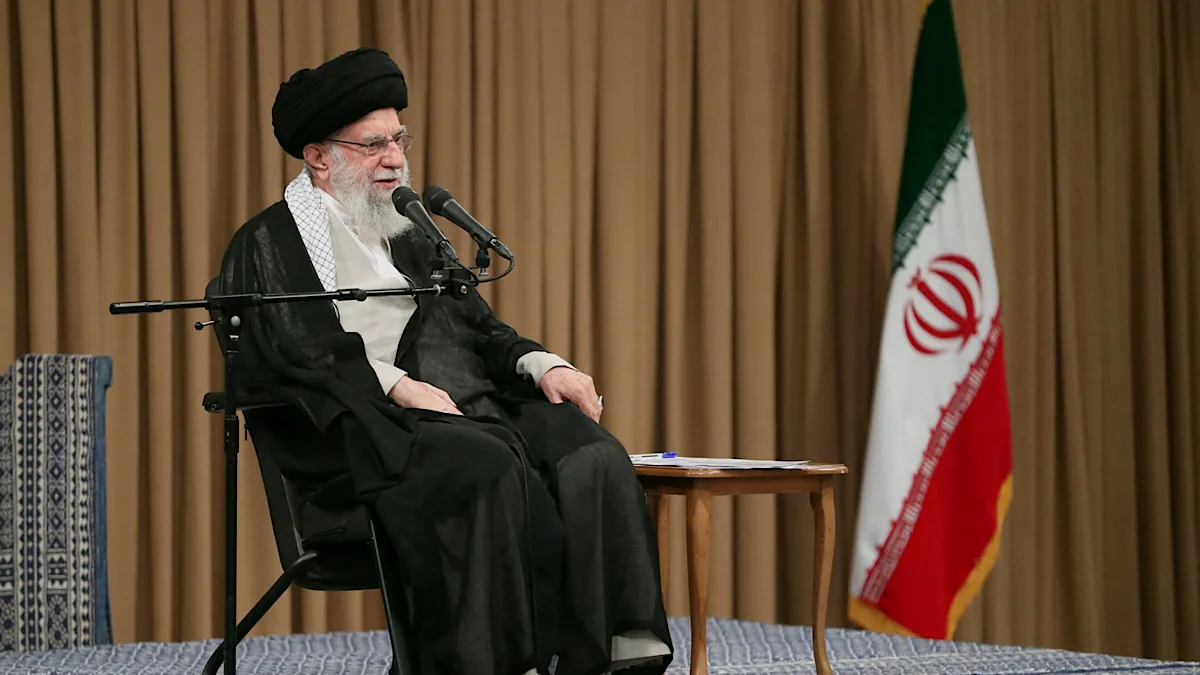
Amid ongoing anti-government protests and the growing threat of intervention by the United States, Iranian Supreme Leader Ayatollah Ali Khamenei on Sunday said that Tehran would not bow to “foreign mercenaries.”

In a series of statements posted on X, Khamenei said, “Let everyone know that the Islamic Republic of Iran, established through the sacrifice of hundreds of thousands of honourable people, will not back down in the face of those who sow destruction.”

Responding to US President Donald Trump’s remarks that the United States “stands ready to help” as Iran is “looking at FREEDOM,” Khamenei said, “The US president declared that if the Iranian government did this or that, he would side with the rioters. The rioters have placed their hopes in him. If he is so competent, let him run his own country.”

The Iranian Supreme Leader accused Trump of having “Iranian blood on his hands.”

“During the 12-day war, over a thousand Iranian citizens were martyred. The President of the United States said he ordered it. He thus admitted that Iranian blood was on his hands. And now he says he stands with the Iranian nation!” Khamenei remarked.

Iran anti-government protests: Internet blackout, ‘death penalty’ threats and US intervention warning – everything you need to know

He further stated that Iran is better equipped and armed today than it was before the Islamic Revolution. “Neither our spiritual strength nor our material and conventional weapons are comparable to what we had before,” he said.

“The Iranian people will not tolerate mercenaries of foreign powers,” he declared.

His remarks came hours after Trump threatened that the US would launch attacks on Iran if the country’s regime killed protesters. On Saturday, he reaffirmed Washington’s readiness to “help” anti-government protesters in Iran.

“Iran is looking at FREEDOM, perhaps like never before. The USA stands ready to help!!!” Trump said in a social media post.

Massive anti-government protests have rocked Iran since December 28. What began as demonstrations by traders against the falling Iranian currency and rising prices has swelled into a mass uprising against the Khamenei regime.

According to some human rights groups, at least 72 people have been killed and more than 2,300 detained since the demonstrations began. The protests have reportedly spread to 512 locations across 180 cities in all 31 provinces of the country as of Saturday.

Congress protests in Indore over alleged contaminated water deaths, demands resignations and judicial probe

Claiming that the consumption of contaminated water from the Narmada river, supplied through household taps in Indore’s Bhagirathpura locality by the Municipal Corporation, has resulted in 21 deaths so far, the opposition Congress staged a massive protest in Indore on Sunday.

Statesman News Service | Bhopal |

Claiming that the consumption of contaminated water from the Narmada river, supplied through household taps in Indore’s Bhagirathpura locality by the Municipal Corporation, has resulted in 21 deaths so far, the opposition Congress staged a massive protest in Indore on Sunday.

The Congress reiterated its demand for the resignation of Madhya Pradesh Urban Development Minister Kailash Vijayvargiya and Indore Mayor Pushyamitra Bhargava. As part of the protest, the party took out a ‘Nyay Yatra’ from Bada Ganpati Square to Rajwada Square. Several Congress MLAs and senior party leaders participated in the foot march.

Holding placards, the protesters also demanded the registration of FIRs against those responsible for the drinking water tragedy. Bhagirathpura falls under the Indore-1 Assembly constituency, represented by senior MP minister Kailash Vijayvargiya.

Addressing the ‘Nyay Yatra’, state Congress president Jitu Patwari said that over the past 25 years, the BJP government had spent Rs one lakh crore in the name of development in Indore, but failed to provide even a glass of clean drinking water to the people of Bhagirathpura.

“Chief Minister Mohan Yadav should apologise to Indore for the deaths of 21 people due to contaminated drinking water, as the Chief Minister is also the in-charge minister for Indore,” Patwari said.

Congress Rajya Sabha member Digvijaya Singh demanded that the Indore drinking water tragedy be probed by a sitting judge of the Madhya Pradesh High Court, with public hearings held as part of the judicial inquiry. The former Madhya Pradesh Chief Minister said that those found guilty should be given appropriate punishment to set an example for others.

Singh also targeted the Rashtriya Swayamsevak Sangh (RSS) for holding Hindu conventions across the state to mark its centenary year. “Such events should have been postponed. After all, it is Hindus who have died in the tragic Bhagirathpura incident. Why do they want to set the country on fire once again?” he asked.

Leader of Opposition in the state Assembly, Umang Singhar, also attacked the BJP during the ‘Nyay Yatra’. He said BJP leaders spoke about Hindus in Bangladesh but showed no concern for Hindus who died due to contaminated drinking water in Indore’s Bhagirathpura area.

Singhar further alleged that no criminal case had been registered so far in connection with the drinking water tragedy.

NHAI creates 4 Guinness World Records in Andhra Pradesh

The National Highways Authority of India (NHAI), in association with concessionaire Rajpath Infracon Private Limited, set a record in the implementation of Bengaluru–Kadapa–Vijayawada economic corridor.

Statesman News Service | New Delhi |

The National Highways Authority of India (NHAI), in association with concessionaire Rajpath Infracon Private Limited, set a record in the implementation of Bengaluru–Kadapa–Vijayawada economic corridor.

The record is for the longest continuous laying of Bituminous Concrete, covering 28.89 lane km in 24 hours; for continuous laying of the highest quantity of 10,655 metric tonnes of Bituminous Concrete in 24 hours; for continuous laying of 57,500 metric tonnes of Bituminous Concrete; and for continuous paving of 156 lane km.

On 6th January 2026, NHAI made two Guinness World Records near Puttaparthi, Andhra Pradesh. First, was the record for the longest continuous laying of Bituminous Concrete, covering 28.89 lane km or 3-lane wide 9.63 km long section within 24 hours.

The second record was created for continuous laying of the highest quantity of 10,655 metric tonnes of bituminous concrete in 24 hours. Both records were established for the first time globally under the six-lane National Highway project on Bengaluru–Kadapa–Vijayawada Economic Corridor.

Two additional Guinness World Records were created on 11th January 2026. These include the continuous laying of 57,500 metric tonnes of Bituminous Concrete and a record for continuous paving of 156 lane km or 3-lane wide 52 km long section, surpassing the previous world record of 84.4 lane km or 2-lane wide 42.2 km long section. These record-setting feats were executed across Package-2 and Package-3 of the Bengaluru–Kadapa–Vijayawada Economic Corridor.

The historic feat was achieved through the deployment of state-of-the-art construction equipment and machinery involving 70 tippers, five hot mix plants, one paver, and 17 rollers.

Supported by stringent quality assurance mechanisms, the process was monitored for quality control with the help of premier institutions, including IIT Bombay, along with Original Equipment Manufacturers (OEMs), ensuring adherence to the highest standards of quality and safety.

The 343 km long, access-controlled six-lane Bengaluru–Kadapa–Vijayawada Economic Corridor has been designed for a safe, high-speed, and scenic travel experience. It features 17 interchanges, 10 wayside amenities, a 5.3 km long tunnel and a 21 km long section of the corridor passing through a forest area.

Delivering substantial economic and logistical benefits, once completed the corridor will reduce travel distance by 100 km from the current 635 km to 535 km and cut travel time by nearly four hours from the current 12 hours to around 8 hours.

The corridor will significantly enhance regional connectivity by linking Bengaluru with Vijayawada, strengthening access between the Rayalaseema region and the coastal and northern regions of Andhra Pradesh, as well as the Koparthy Industrial Node, according to a Ministry of Road Transport & Highways statement on Sunday.

India’s committed to achieving 500 GW of non-fossil fuel installed power capacity by 2030 and Net Zero emissions by 2070: Minister

Reaffirming India’s strong commitment to a just, equitable, affordable and sustainable global energy transition, Union Minister for New and Renewable Energy Pralhad Joshi on Sunday reiterated India’s commitment to achieving 500 GW of non-fossil fuel installed power capacity by 2030 and Net Zero emissions by 2070.

Statesman News Service | New Delhi |

Reaffirming India’s strong commitment to a just, equitable, affordable and sustainable global energy transition, Union Minister for New and Renewable Energy Pralhad Joshi on Sunday reiterated India’s commitment to achieving 500 GW of non-fossil fuel installed power capacity by 2030 and Net Zero emissions by 2070.

Union Minister Joshi delivered India’s national statement at the 16th Assembly of the International Renewable Energy Agency (IRENA) in Abu Dhabi, United Arab Emirates, reaffirming India’s strong commitment to a just, equitable, affordable and sustainable global energy transition.

Highlighting a major milestone, Joshi informed that India has already achieved 50 per cent of its installed electricity capacity from non-fossil fuel sources in 2025, five years ahead of its Nationally Determined Contribution (NDC) target under the Paris Agreement.

India’s renewable energy capacity has crossed 266 GW, placing the country among global leaders in renewable energy deployment.

The Union Minister underlined that as one of the world’s fastest-growing major energy markets, India is prioritising reliable and resilient power systems through accelerated deployment of energy storage solutions, grid modernisation, development of Green Energy Corridors and innovative bidding mechanisms such as hybrid and round-the-clock renewable energy projects.

He also highlighted India’s efforts to strengthen clean energy supply chains and expand domestic manufacturing across solar, wind, batteries and electrolysers, contributing to both national self-reliance and diversified global supply chains.

Emphasising the people-centric nature of India’s energy transition, the Union Minister highlighted flagship programmes aimed at empowering households and farmers.

The Union Minister noted that the global energy transition will require unprecedented investment and cooperation. ”India alone is expected to require around USD 300 billion by 2030, creating significant opportunities across renewable generation, storage, green hydrogen, grids and manufacturing. With stable policies and transparent markets,” he said, adding that India continues to remain one of the most attractive destinations for clean energy investment.

Calling for enhanced international cooperation, Joshi stressed the importance of technology transfer, access to low-cost finance, capacity building and harmonisation of standards, particularly to support developing countries in scaling up renewable energy without compromising development aspirations.

Reaffirming India’s strong support for IRENA, he stated that India stands ready to share its experience, institutions and technical expertise and to work closely with all member countries, especially Least Developed Countries and Small Island Developing States, to accelerate the global renewable energy transition.

The Union Minister emphasised that India’s energy transition is not only about capacity addition, but about people, opportunity and a shared sustainable future.

Healthy body is the foundation of strong leadership: Dr Mandaviya

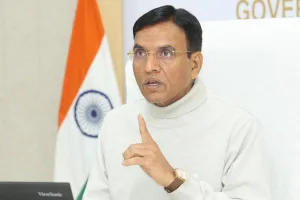
Union Minister of Youth Affairs & Sports Dr Mansukh Mandaviya, who led a cycle rally in the national capital on Sunday, said a healthy body is the foundation of strong leadership.

Statesman News Service | New Delhi |

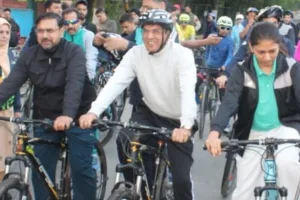
Union Minister of Youth Affairs & Sports Dr Mansukh Mandaviya, who led a cycle rally in the national capital on Sunday, said a healthy body is the foundation of strong leadership. Fit India’s flagship mass fitness movement, Sundays on Cycle (SoC), made a vibrant comeback, with more than 1000 people, including 500 Young Leaders, participating in the fitness festival.

This was followed by a Cycle Rally, beating the 6 degree C winter cold at 7 AM. Speaking at the Delhi event, Dr Mandaviya said, “A healthy body is the foundation of strong leadership. Cycling teaches us powerful leadership lessons—it tells us when to pedal fast, when to slow down, and most importantly, how to maintain balance to keep moving forward in life.”

The minister was joined by tennis legend Leander Paes and Badminton legend Pullela Gopichand, along with up-and-coming international wrestler Shivani Pawar.

The Young Leaders from across the country who are here to participate in the four-day Viksit Bharat Young Leaders Dialogue 2026- a national platform meant to identify and promote youngsters who want to be part of public life – took centre stage as special invitees in the 56th edition of Fit India Sundays on Cycle.

This edition was held across 15,000 locations, with Bhopal organising a mega event which was graced by Madhya Pradesh’s Minister of Youth Affairs and Sports, Vishvas Kailash Sarang, who flagged off the cycling rally alongside actress Payal Rohatgi and a distinguished line-up of athletes, including Olympian judoka Garima Choudhary.

Appreciating the Union Minister’s vision of launching the Sundays on Cycle initiative, Gopichand said, “It is motivating to see a Minister not just putting so much thought to make fitness a part of everyday life, but also leading the entire movement from the front.

The fact that he himself participates in this event on Sunday morning after a hard week’s work speaks volumes about his commitment to creating a Fit India.”

Echoing his sentiments, Gopichand added, “Today we have fun on our fingertips so we have forgotten to have fun in nature, to step out and be part of the outside world, so I appreciate those who have turned up here today.”

Adding to the festive atmosphere, the morning featured an enthusiastic Zumba session, calming yoga practices, and captivating electric Mallakhamb and rope-skipping performances by athletes, drawing loud applause from the crowd.

Fit India Ambassadors Timsy Bector and Divya Ahuja joined in the fun and also shared important fitness tips for winter, stressing on the need for continued exercises and easy warm-ups at home, even for those who are aged and cannot step out of home.

The 56th edition dedicated to Young Leaders, who were joined by citizens, athletes and fitness enthusiasts, reinforces the message that physical fitness is integral to nation-building and leadership and that Fit India Sundays on Cycle has become an integral part of the Viksit Bharat journey.

The Fit India Sundays on Cycle is supported by the Cycling Federation of India, Yogasana Bharat, My Bharat, and Fit India Cycling Clubs as regular partners.

Morphed Atishi video a conspiracy to incite communal unrest in Punjab: CM

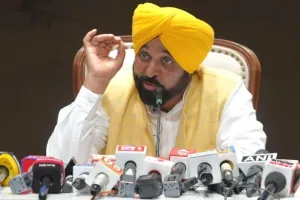
Punjab Chief Minister Bhagwant Singh Mann Sunday, launched a strong rebuttal to the BJP over the tampering of former Delhi Chief Minister Atishi’s Delhi Assembly video, terming it a deliberate conspiracy to provoke communal unrest in Punjab.

Statesman News Service | Bathinda |

Punjab Chief Minister Bhagwant Singh Mann Sunday, launched a strong rebuttal to the BJP over the tampering of former Delhi Chief Minister Atishi’s Delhi Assembly video, terming it a deliberate conspiracy to provoke communal unrest in Punjab.

The Chief Minister said the video was edited with false subtitles, describing the act as beadbi (sacrilege), and pointed out that forensic findings have conclusively established that Atishi never used the word “Guru.”

Defending the Punjab Police’s action over the beadbi of Guru Sahibs, CM Mann said the falsified clip does not figure anywhere in the official Assembly records.

He added that the BJP is pursuing an anti-Punjab agenda on issues ranging from Chandigarh and the BBMB to Panjab University, while opposition leaders, he remarked, were scrambling to defend lies in the absence of any real issue against the state government.

Addressing a press conference in Bathinda, the Chief Minister said, “Ever since its inception, the BJP has pursued the politics of communalism, divisiveness and hatred. With the Assembly elections approaching, the party has started implementing this agenda in Punjab to divide people on sectarian lines. The BJP morphed the video of the former Delhi Chief Minister by inserting its own subtitles. Even the forensic investigation has clearly established that the word ‘Guru’ was never used by the AAP leader.”

The Chief Minister said misrepresenting facts to suit political needs was an old strategy of the saffron party and that this act had deeply hurt the sentiments of the Sikh sangat.

“By morphing the video, they have committed sacrilege. This is intolerable, and they will be punished for their sins,” he said, adding that the video had clearly been morphed as the words attributed to the former Delhi Chief Minister did not appear in the official proceedings of the House.

Referring to BJP leader Kapil Mishra, CM Mann said, “The leader who uploaded the morphed video on social media will have to face the consequences of his actions. The Punjab Police rightly registered a case against him. There is no issue of Delhi Assembly privilege here. He has been booked for hurting the sentiments of the common people and will face strict action as per the law.”

Citing the BJP’s anti-Punjab stand on issues such as Chandigarh, the BBMB, Panjab University, Republic Day tableaux and other matters, the Chief Minister said the saffron party’s mindset towards Punjab was hostile.

“Former CM Captain Amarinder Singh, state BJP president Sunil Jakhar and Union Minister of State Ravneet Singh Bittu are in an awkward situation today, as they are forced to justify the BJP’s enmity towards Punjab through a bundle of lies,” he added.

The Chief Minister said the BJP and its leadership had little respect for the great Sikh Guru Sahibs. “The Prime Minister never even found time to accept the invitation to attend events commemorating the 350th Shaheedi Diwas of Sri Guru Tegh Bahadur Ji. Neither the Prime Minister nor any senior central leader visited Punjab to pay obeisance during these events. This reflects a narrow and myopic mindset towards Sikhs and our great Guru Sahibs,” he said.

CM Mann said the Congress, Akali Dal and BJP were following the same line against Punjab and its government. “These parties even issue identical press notes at different times of the day only to spread venom against the state government,” he added.

Slamming Akali Dal leader Sukhbir Singh Badal, the Chief Minister said, “Sukhbir Badal is shedding crocodile tears over Punjab’s issues, but these are the same leaders who consented to granting central university status to Panjab University and who hailed Modi for the draconian farm laws.”

He said these parties were responsible for patronising drug smugglers and gangsters in the past, adding, “Even today, they continue to give party tickets to gangsters.”

Taking a jibe at former Congress minister Sukhjinder Singh Randhawa, CM Mann said, “Randhawa should remember that his father had congratulated former Prime Minister Indira Gandhi for Operation Bluestar. The sitting Lok Sabha MP from Gurdaspur represents the same Congress party that carried out Operation Bluestar at the holiest Sikh shrine.”

The Chief Minister said that in the absence of any real issue against the Punjab government, opposition leaders had lost their mental balance. “Despite this, my government remains fully committed to the welfare of every section of society, and no stone is being left unturned to ensure inclusive development,” he said.

Highlighting achievements in education, CM Mann said, “Government schools are being upgraded into Schools of Eminence and, due to the sustained efforts of the state government, Punjab has secured the top position nationwide in the National Achievement Survey conducted by the Government of India, surpassing Kerala for the first time. From government schools, 848 students have qualified NEET, 265 have cleared JEE Main and 45 have cleared JEE Advanced.”

The Chief Minister said principals and teachers were being sent to Singapore, Finland and Ahmedabad for professional training. On religious matters, he said, “I will appear before Sri Akal Takht Sahib on January 15 with all facts. Sri Akal Takht Sahib is sacred for every Sikh and is the highest temporal seat of our community.”

CM Mann unequivocally asserted, “For me, Sri Akal Takht Sahib Ji is above everything, and any order received from there will be obeyed in true letter and spirit. Its command was, is and will always remain supreme for me and my family. It is a highly revered place from where Sikhs derive divine peace and strength.”

Clarifying the constitution of a Special Investigation Team (SIT) to probe the 328 missing saroops of Sri Guru Granth Sahib Ji, the Chief Minister said, “There is no politics behind forming the SIT. Only those who have committed this sin are afraid of the probe. The SGPC was elected around 14 years ago and has continued to function despite many members having passed away or moved abroad.” He added that misleading statements were made by SGPC authorities whenever it suited their interests.

Chirag Paswan confident of NDA wins in Assam, West Bengal and Tamil Nadu in 2026

Union Minister Chirag Paswan on Sunday expressed confidence that the NDA would return to power in Assam and form governments in West Bengal and Tamil Nadu in the Assembly elections due in 2026.

Statesman News Service | Patna |

Union Minister Chirag Paswan on Sunday expressed confidence that the NDA would return to power in Assam and form governments in West Bengal and Tamil Nadu in the Assembly elections due in 2026.

Addressing the media in Patna, the Lok Janshakti Party (Ram Vilas) chief said his confidence stemmed from the fact that people across the country had realised what a “double-engine” government truly means and the benefits it brings.

He said, “In the coming days, elections will be held in states like Assam, West Bengal and Tamil Nadu. I believe that in Assam we will return to power, and that ‘double-engine’ governments of the NDA will be formed in West Bengal and Tamil Nadu as well. The Lok Janshakti Party (Ram Vilas) has fully geared up to play its role in these states.”

Paswan said the party was preparing to expand its organisation to meet upcoming challenges. “In the coming days, several changes will be made in the national committee, and I believe these will be shared with all of you by the end of this month. Accordingly, many important organisational changes will also be made in Bihar,” he said.

The LJP (Ram Vilas) chief also attacked the Congress, alleging that the party had developed a tradition of winning people over by misleading and frightening them.

Reacting to the Congress’ stand on the renaming of MNREGA, Paswan said history shows that schemes are changed from time to time and that modifications and amendments are made, but spreading confusion over such issues is completely inappropriate.

“No matter how much confusion the opposition spreads, I believe that just as they helped us win in Bihar by creating confusion, in the same way, by opposing Lord Ram, they will help us win in West Bengal as well. Congress leaders and their allies are known for scoring self-goals, and undoubtedly, we will benefit from this,” he said.

Earlier in the day, Chirag Paswan met Bihar Chief Minister Nitish Kumar and invited him to the traditional ‘Dahi-Chura’ feast at the party office in Patna. All NDA allies have been invited as well.

He said, “I believe the next five years will be a golden period for Bihar. During this time, the state will benefit from the ‘double-engine’ government, and after five years, when we go back to the elections, we will do so with full accountability, having fulfilled every promise made in this election.”

Chirag Paswan also announced that he would begin a state-wide tour on 16 January to thank people for placing their confidence in the party and voting in its favour in the recent Assembly elections.

‘Shri Girdharlal Byahula Utsav’ begins in Barsana amid deep devotion and chants of Radha Rani

A unique confluence of devotion and joy was witnessed on Sunday in Barsana, the sacred land of Braj.

Statesman News Service | MATHURA |

A unique confluence of devotion and joy was witnessed on Sunday in Barsana, the sacred land of Braj.

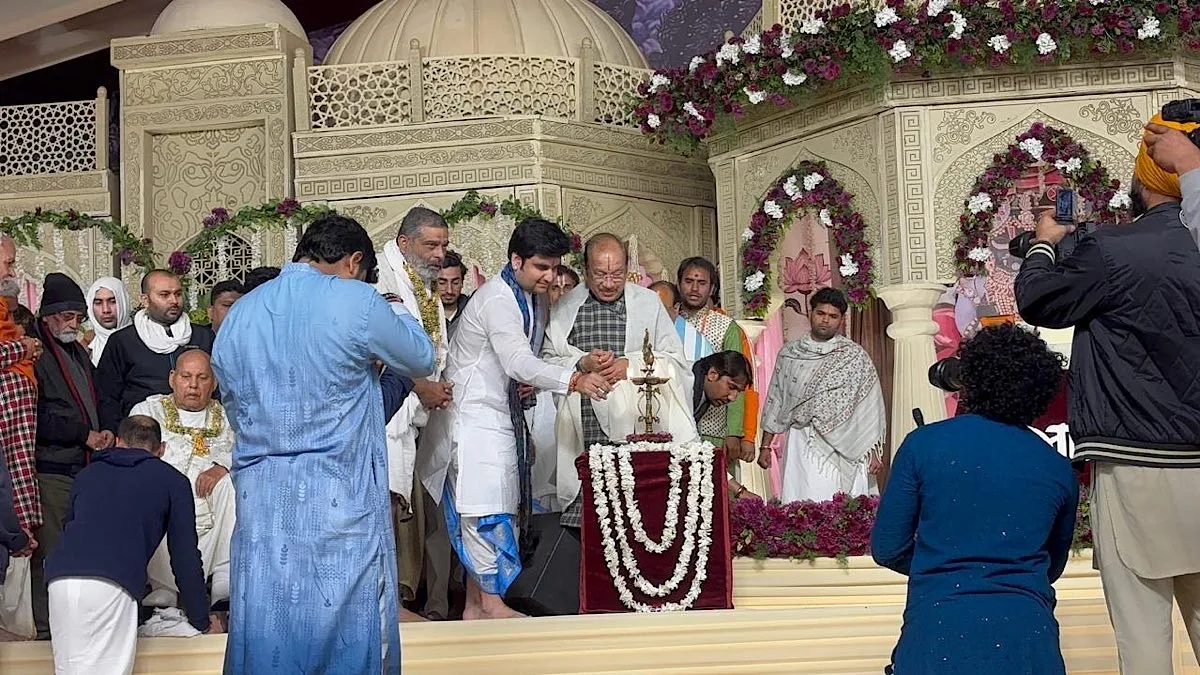
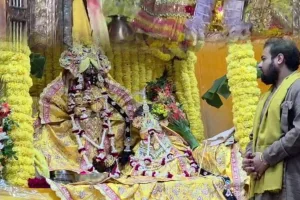
The ‘Shri Girdharlal Ji’s Byahula Utsav’ (wedding ceremony) commenced with grandeur in the vast premises of Mata Ji Gaushala in Barsana. The resounding chants of Radha Rani and the dignified presence of saints made the entire atmosphere divine. Thousands of devotees from India and abroad have camped in Barsana to witness this extraordinary wedding festival.

The festival was formally inaugurated by Ramesh Baba Maharaj, the founder of Man Mandir and a renowned saint, by lighting the lamp.

Addressing the devotees on the occasion, he said that Barsana is a treasure trove of Shriji’s grace, and the celebration of Girdharlal’s Byahula Utsav here is a matter of great pride for Braj. He appreciated the event and bestowed the blessings of Ladli Ji (Radha Rani) upon all the devotees.

Devotees were overwhelmed with emotion upon hearing the descriptions of Thakur Ji’s various festivals and pastimes from the eloquent discourse of the renowned storyteller Indresh Upadhyay Maharaj. On the first day, the pastime of the appearance of the Ashtasakhis (eight principal companions) from Nikunj and Shriji was enacted. As the bhajans of “Jani Vrishbhan Ki Lali” echoed in the pandal, the devotees lost themselves in devotion and began to dance. Indresh Maharaj said that it is our great fortune that Kishori Ji (Radha Rani) has given us the opportunity to serve at this festival on her sacred land.

Malook Peethadhishwar Rajendra Das Maharaj, in his blessings, made a poignant statement. He said that Barsana is the eternal in-laws’ home of Thakur Ji himself, and the organisation of the Byahula Utsav here shows that Girdharlal is extremely pleased today. He also highlighted the importance of ‘Mata Ji Gaushala’, a sanctuary for 70,000 cows.

Bhagwat Bhaskar Shri Krishna Shastri Thakur Ji described this festival as a vibrant manifestation of Braj culture. Several ascetics and dignitaries, including Vinod Baba Maharaj, Pandit Baba Ji, Sarrafa Mohit Agarwal, and Rohit Richariya, were present at the event. This festival has become not just a religious event, but a symbol of the unbroken tradition and love of Braj.