Logo

India Open: Lakshya wins all-Indian clash against Ayush Shetty; Treesa-Gayatri also advance

Sen needed just 36 minutes to seal a 21-12, 21-15 win over his academy-mate Shetty while Treesa and Gayatri defeated Thailand’s Ornnicha Jongsathapornparn and Sukitta Suwachai 21-15, 21-11 at the Indira Gandhi multi-purpose indoor stadium.

Statesman News Service | New Delhi |

Former champion Lakshya Sen, Syed Modi International winners Treesa Jolly and Gayatri Gopichand made a commanding start to their India Open 2026 campaign while men’s fourth seed Chou Tien Chen of Chinese Taipei, seventh seed Kodai Naroaka of Japan and French sixth seed Alex Lanier were knocked out on the opening day of the BWF World Tour Super 750 tournament, organised by the Badminton Association of India, at the Indira Gandhi Indoor Stadium here on Tuesday.

Sen needed just 36 minutes to seal a 21-12, 21-15 win over his academy-mate Shetty while Treesa and Gayatri defeated Thailand’s Ornnicha Jongsathapornparn and Sukitta Suwachai 21-15, 21-11 at the Indira Gandhi multi-purpose indoor stadium.

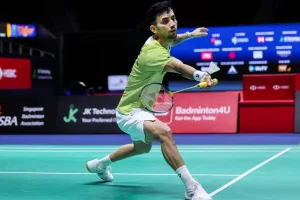
Earlier, Canada’s Brian Yang packed off Chou 21-19, 21-11, Chi Yu Jen of Chinese Taipei upset Lanier 21-17, 21-19 and Kodai Naraoka retired against compatriot Kenta Nishimoto while trailing 6-21, 5-7.

With the India Open 2026 moving to a much bigger stadium this year, the focus on the opening day was on the all-Indian clash between Sen and Shetty. The 24-year-old Indian Oil employee stepped on the accelerator from the very start as he opened up a 7-1 lead in the first game, dominating the net exchanges, and did not allow his young opponent to settle down.

It was only at the end of the first game that Shetty began to find his rhythm and won six straight points to close the gap from 6-17 to 12-17 but that was too little too late.

Shetty started well in the second game as he opened up a 5-1 lead with Sen this time struggling to control his strokes due to the side-way drift. But then the 2021 World Championships bronze medallist used his stick smashes to make the tall Shetty bend and followed it up with a tap to kick-start his comeback in the game, before wrapping the match without much ado.

“The first match in any tournament is very important and the conditions were a bit tricky. Since this is a big hall, we were thinking that the conditions would be slow but the shuttle was travelling fast. Also it’s quite cold and I was happy that I was warmed up well for the start of the match,” said Sen, who will now face Nishimoto in the second round.

Before Sen took the court, Treesa and Gayatri provided a winning start for the hosts with a commanding performance. The world no.21 Indian combination were hardly under any pressure throughout the 42 minute clash against the Thai pairing.

The Indian combination will now face seventh seeds Li Yi Jing and Luo Xu Min of China, who defeated Francesca Corbett and Jennnie Gai of USA 21-12, 21-8.

Also advancing to the second round were the men’s doubles pairing of Hariharan Amsakarunan and MR Arjun as they defeated the Malaysian combination of Ong Yew Sin and Teo Ee Yi 21-15, 21-18 in the opening round. They will next face fourth seeds Liang Wei Keng and Wang Chang of China.

Meanwhile, national women’s doubles Championships finalist Shruti Mishra and Priya Konjengbam saved a total of five match points but could not convert the one match point they earned to go down 21-11, 20-22, 24-22 in an hour and eight minutes against Lui Lok Lok and Tsang Hiu Yan of Hong Kong China.

Facing the world no. 31 Hong Kong combination, Shruti and Priya fought back from a game down to save a match point in the second game and forced a decider. In the third and final game, the Indian combination were for an all-attack strategy to save four match points and even earned one themselves.

But a lucky net chord helped the Hong Kong pairing to save that match point and then two drive errors meant that the Indians were ousted in the opening round itself.

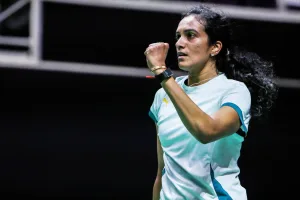
Former world champion PV Sindhu, men’s singles stars Kidambi Srikanth and HS Prannoy will kick off their campaign on Wednesday. Third seeds Chirag Shetty and Satwiksairaj Rankireddy received a walkover in the opening round after USA’s Chen Zhi Yi and Presley Smith withdrew.
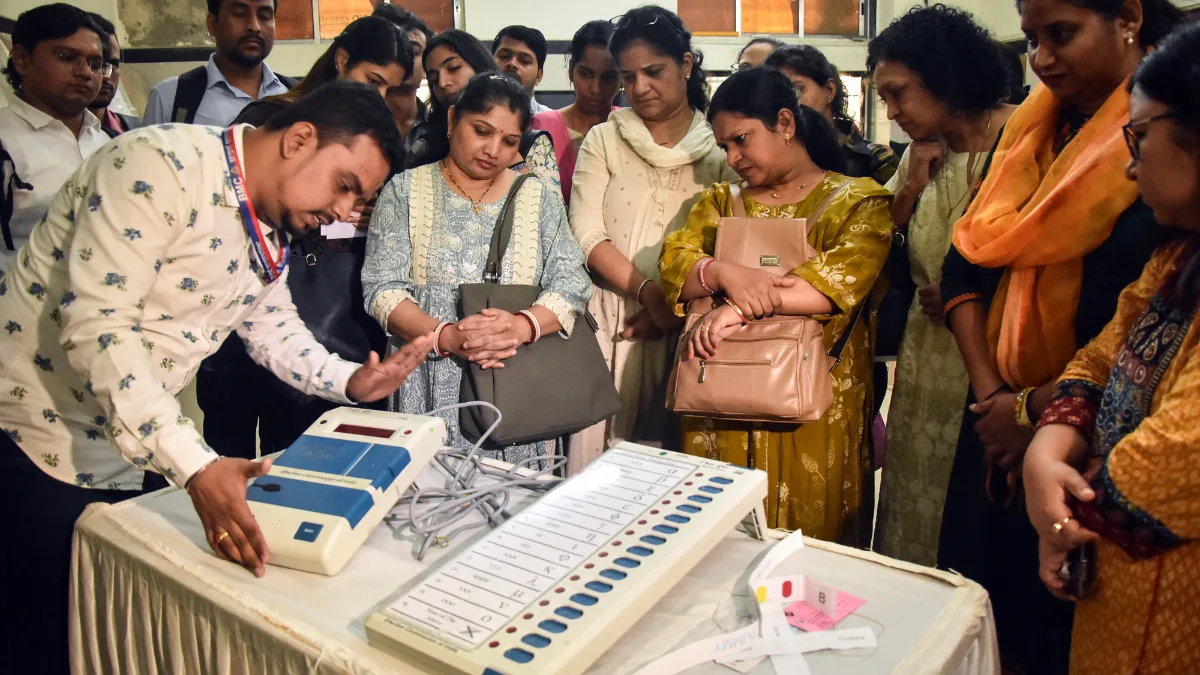
Mumbai BMC elections 2026: From voting timings to direct face-offs, here’s complete guide to polls

The high-voltage battle for the Brihanmumbai Municipal Corporation (BMC) is scheduled to be held on 15 January 2026 in a single phase, while the results will be declared on 16 January.

Statesman News Service | New Delhi | Updated :

The high-voltage battle for the Brihanmumbai Municipal Corporation (BMC) is scheduled to be held on 15 January 2026 in a single phase, while the results will be declared on 16 January.

The State Election Commission (SEC) had announced on 15 December 2025, the polling dates for municipal corporations in Maharashtra, including the Brihanmumbai Municipal Corporation (BMC). The nomination process began on 23 December, and candidates were allowed to make their submissions until 30 December. The last date of withdrawal of nominations was on 02 January. The final list of candidates was published on 03 January.

While the civic body elections are scheduled to be held for 29 municipal corporations across the state, the focus remains firmly on the BMC, which is the biggest civic body in the state with 227 seats.

Voting timings & electoral count

Voting will take place between 7.30 AM and 5.30 PM. Voters have been advised to visit their designated polling centres during the specified hours.

According to an official statement, more than one crore voters are eligible to cast their ballots in the BMC elections across all 227 wards.

To encourage voter participation, January 15 has been declared a public holiday by the Maharashtra SEC in municipal corporation areas. Posters have been put up by EC urging voters to come out in large numbers to cast their vote during the BMC elections.

Preps for 2026 civic body polls

For the smooth conduct of the polls, nearly 13,000 presiding and polling officers have been deployed across polling stations, along with an equal number of assistant officers.

In addition, about 13,000 security personnel, including support staff, have been engaged for polling and the counting day.

Direct face-off among major political parties

The BMC elections are set to be a fiercely competitive affair as it will see multiple direct contests. Brihanmumbai Municipal Corporation Commissioner Bhushan Gagrani has announced that 1,700 candidates are contesting the elections for the BMC wards.

For the 227-member BMC, the Shiv Sena (UBT) is contesting 163 seats, the BJP 137 seats, the Shinde faction 90 seats, the MNS 53 seats, the NCP (Sharad Pawar faction) 11 seats, while the Congress is contesting between 143 and 150 seats. The Vanchit Bahujan Aghadi is contesting 46 seats.

According to State Election Commission data, on 69 seats, Shiv Sena (UBT) and the Eknath Shinde-led Shiv Sena will be locked in a straight fight. The BJP and the Thackeray faction will face each other on 97 seats. The Maharashtra
Navnirman Sena (MNS) and the Shinde faction will be engaged in a direct contest on 18 seats.

The high-decibel election campaign

The election campaigning activities concluded on 13 January as poll campaigns end 48 hours before any elections as per the ECI norms.

In the 48 hours before polling, the official election silence period remains in effect with no campaign activities, such as posters, rallies, ads, or social media campaigning.

After the dynamic election campaign, high-stakes BMC elections are being seen as a decisive battle for Mumbai.

The political landscape will see a major overhaul on 16 January, when the election results will be announced.

AI can significantly bridge urban–rural healthcare gap: Experts

On the second day of the two-day Uttar Pradesh AI and Health Innovation Conference on Tuesday, experts deliberated on the transformative role of Artificial Intelligence (AI) in strengthening the healthcare sector.

Statesman News Service | Lucknow |

The experts emphasised that when adopted thoughtfully, AI has the potential to significantly enhance healthcare delivery across the country, especially by narrowing the gap between urban and rural services.

On the second day of the two-day Uttar Pradesh AI and Health Innovation Conference on Tuesday, experts deliberated on the transformative role of Artificial Intelligence (AI) in strengthening the healthcare sector.

Dr Pinky Jowel, Secretary, Medical Health and Family Welfare, highlighted that the true impact of AI will be realised when it empowers frontline health workers. She noted that ASHA workers, Anganwadi workers, ANMs, and doctors form the backbone of healthcare delivery in every village.

She added, “When technology supports these workers, timely and more effective treatment becomes possible.” She stressed the importance of expanding telemedicine and remote care to ensure that people in remote areas can easily access medical advice.

Dr Jowel pointed out that nearly 1.80 lakh ASHA workers, Anganwadi workers, ANMs, and Chief Health Officers are directly connected to communities across villages and towns, making them central to both the state and national healthcare systems.

AI-based tools, she said, must be designed to simplify their work rather than add to their burden. Effective use of AI at facilities such as Ayushman Arogya Mandirs can ensure quality healthcare even in remote regions.

Several sessions focused on AI solutions already being implemented on the ground, particularly those aimed at early disease detection and timely referral of patients to appropriate healthcare facilities.

Experts underlined that inter-departmental coordination is critical for the successful integration of AI in healthcare. Beyond the health department, collaboration among various government departments, from policy formulation to on-ground implementation, is essential to fully harness AI’s potential. Such coordinated efforts can ensure consistent and improved healthcare services from the village level to tertiary hospitals.

Panelists also stressed the importance of data security and patient consent, especially as women and children constitute nearly half of the country’s population.

They noted that transparency and trust are fundamental to any effective healthcare system, and public acceptance of new technologies depends on confidence in how data is handled.

AI, they said, can play a vital role in reducing maternal mortality by enabling early identification of risk factors during pregnancy. AI-driven systems can help frontline workers detect warning signs early and ensure timely referral to hospitals, thereby saving the lives of both mothers and children through prompt intervention at the village level.

MNREGA replaced with G Ram G for better development of rural infrastructure: Kiren Rijiju

Rijiju said Uttar Pradesh is the largest state and the BJP and the state government will reach out to the public to explain the benefits of the legislation.

Statesman News Service | Lucknow |

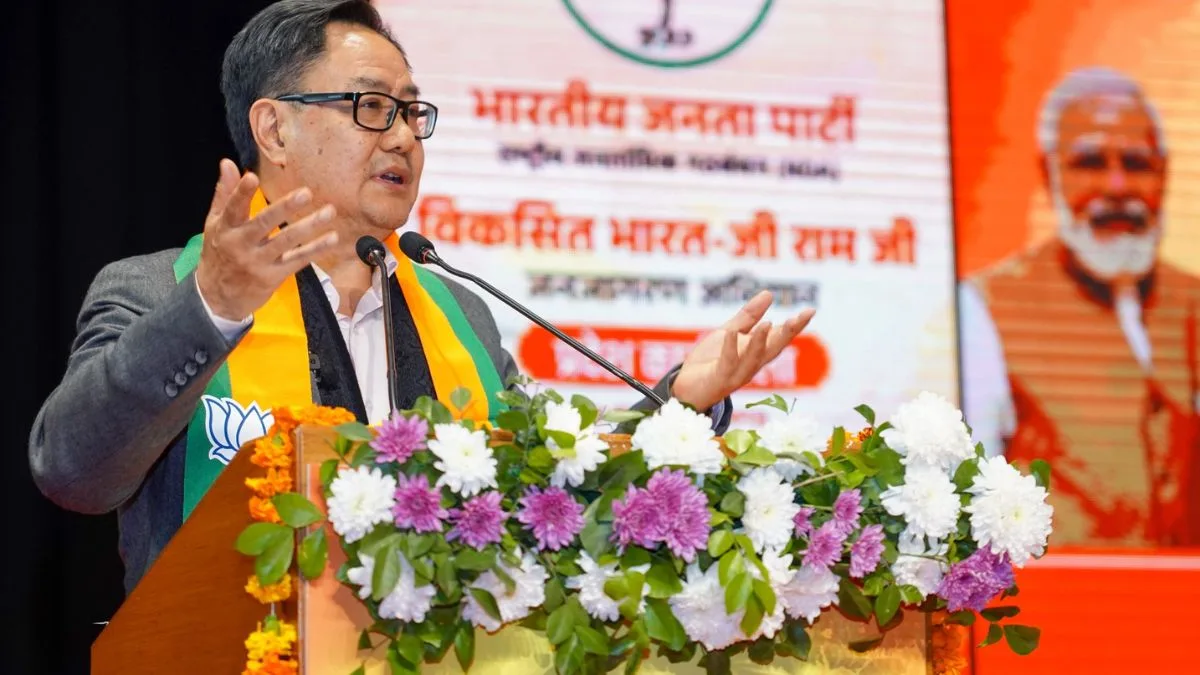
Union Minister for Parliamentary Affairs and Minority Welfare Kiren Rijiju on Tuesday said that the G RAM G” (Viksit Bharat – Guarantee for Rozgar and Ajeevika Mission Rural) Act has been brought in place of MNREGA for better development of the rural infrastructure in the country.

Rijiju said Uttar Pradesh is the largest state and the BJP and the state government will reach out to the public to explain the benefits of the legislation.

Talking to the media , the Union minister said, “Despite spending ₹11 lakh crore on MNREGA, there was no development in rural areas. Work was not being done where employment was needed. Expenditure was not being made according to the needs. It was a guarantee of loot, not employment. That is why VB-G IRAM G has been introduced for a developed India. All avenues for misuse have been closed.”

He said every project under VB-G RAM G will be digitally monitored. “During the agricultural season, exemptions have been provided in the scheme for agricultural work. India has surpassed China in production and become number one. There are provisions for healthcare, water conservation, and complete rural infrastructure. There will be a major boost to the rural economy. The changes coming to Uttar Pradesh will be the biggest” he claimed.

Countering the Opposition parties’ protest against the new law, Rijju said , “This is how the country will progress and misinformation will achieve nothing. Even during the CAA (Citizenship Amendment Act) protests, propaganda was spread that the citizenship of Muslims would be taken away, turning them against the government. Did anyone lose their citizenship?”

He said resolutions will be brought from every village assembly and people from every village and every household will support it. “This is a new law but forget the name. The old law was such that corruption could not be stopped. That is why we were forced to bring in a new law,” he stressed.

Meanwhile, Uttar Pradesh BJP President and Union Minister of State for Finance Pankaj Chaudhary presided over a state-level workshop of the National Democratic Alliance (NDA) under the Viksit Bharat–G Ram G Jan Jagran Abhiyan in Lucknow. The workshop focused on strengthening organisational mechanisms, outlining campaign objectives, and formulating strategies to deepen public participation across Uttar Pradesh.
Addressing the gathering, Pankaj Chaudhary said under the leadership of Prime Minister Narendra Modi, the government has consistently worked to uplift women, farmers, the poor, and the youth, thereby accelerating the nation’s overall development. He highlighted that since 2014, a comprehensive reform agenda has been implemented, resulting in the repeal of nearly 1,500 obsolete laws that had long hindered growth and administrative efficiency.

Taking a critical stance of the Opposition, Chaudhary referred to the launch of the Viksit Bharat – Guarantee for Employment and Livelihood Mission (Rural), aimed at ensuring last-mile connectivity and economic empowerment in villages.

He pointed out that even though almost ₹11 lakh crore was spent on rural job programs like MGNREGA from 2006 to 2014 under the UPA government, there was not much real progress in rural infrastructure. He said that if this money had been used carefully and openly, many of the problems that rural India faces now could have been solved.

The workshop, held under Chaudhary’s leadership, reaffirmed the NDA’s resolve to take the Viksit Bharat vision to the grassroots through sustained public outreach and organisational mobilisation, strengthening the foundation for Mission 2027.

Punjab expands anti-rabies vaccination to all 881 Aam Aadmi Clinics

Access to Anti-Rabies Vaccination (ARV) was limited to just 48 Primary Health Centres, forcing victims – often children, the elderly and daily wage workers – to travel long distances, wait for hours, lose wages and, in many cases, abandon the crucial five-dose vaccination schedule midway.

Statesman News Service | Chandigarh |

Punjab has significantly strengthened its fight against rabies by expanding Anti-Rabies Vaccination (ARV) services to all 881 Aam Aadmi Clinics across the state. This has ended years of limited access that forced dog bite victims to travel long distances and frequently discontinue treatment. With approx three lakh dog bite cases reported yearly, the state government’s action marks a major public health intervention under Chief Minister Bhagwant Singh Mann, aimed at ensuring timely, affordable, and community-level care.

Access to Anti-Rabies Vaccination (ARV) was limited to just 48 Primary Health Centres, forcing victims – often children, the elderly and daily wage workers – to travel long distances, wait for hours, lose wages and, in many cases, abandon the crucial five-dose vaccination schedule midway. The gaps were systemic, and the human cost was severe.

Leveraging the expansive network of 881 Aam Aadmi Clinics established over the last three years, the Punjab Government has delivered one of its most consequential public health reforms by universalising ARV services at the primary care level.

On this, Punjab Health Minister Dr Balbir Singh stated, “Under the visionary leadership of CM Bhagwant Singh Mann, Punjab is committed to protecting every life through accessible and affordable healthcare. With nearly three lakh dog bite cases annually, expanding Anti-Rabies Vaccination services to 881 Aam Aadmi Clinics is a critical public health milestone.”

The Aam Aadmi Clinics, which together have already recorded over 4.6 crore OPD visits and treat nearly 70,000 patients every day, have emerged as the backbone of Punjab’s primary healthcare system. By integrating ARV services across all these clinics, the Mann Government has ensured that a dog bite no longer translates into panic, expense, or delay.

The impact has been swift and measurable. Over the last four months alone, an average of 1,500 dog bite patients have been reporting to Aam Aadmi Clinics every month. Crucially, patients are now able to start treatment within minutes of arrival, dramatically reducing the risk of rabies fatalities. Thousands are completing the full vaccination schedule, something that was far from guaranteed under the earlier hospital-centric model.

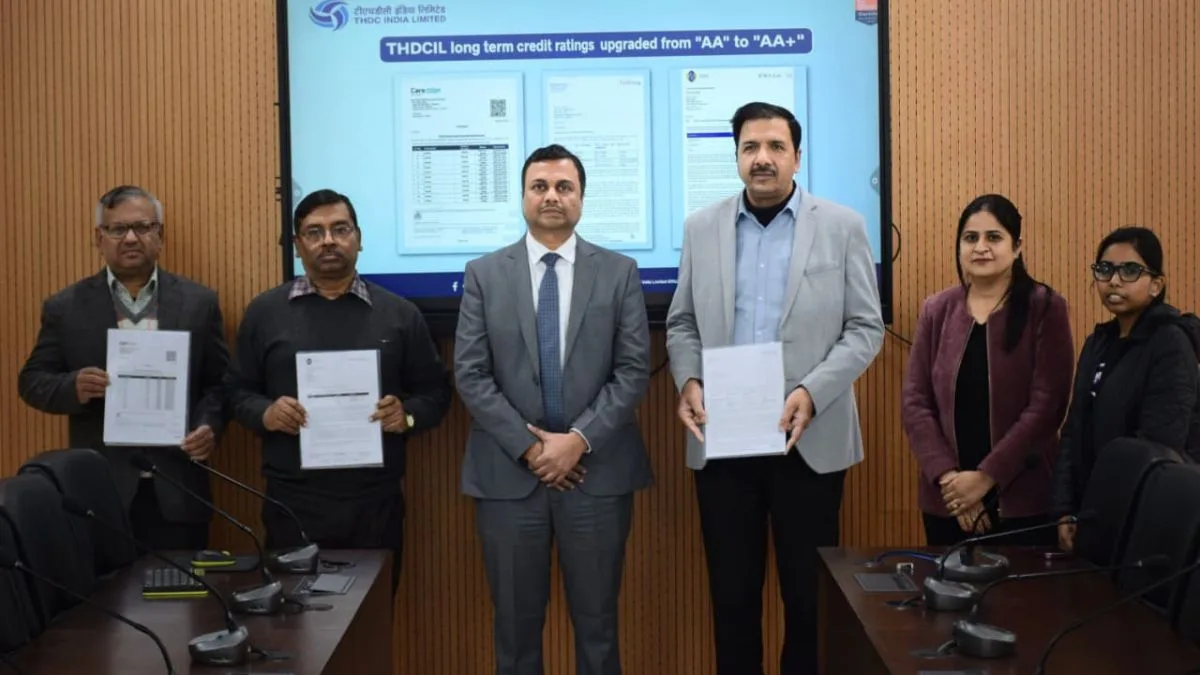
THDC India Limited Secures Credit Rating Upgrade to “AA+”

Shri Sipan Kumar Garg, CMD & Director (Finance), THDC India Limited congratulated the entire THDCIL team and stated that the credit rating upgrade reflects the Company’s strengthening financial progress and disciplined strategic execution.

Statesman News Service | Rishikesh |

In a significant recognition of financial strength and sustained growth, THDC India Limited received an upgrade to its credit rating from M/s ICRA Ltd., M/s CARE Ltd., and M/s India Rating. The rating agencies upgraded the company’s long-term credit rating from “AA” to “AA+” with stable Outlook, citing consistent revenue growth, improved profitability, and a stronger balance sheet.

Shri Sipan Kumar Garg, CMD & Director (Finance), THDC India Limited congratulated the entire THDCIL team and stated that the credit rating upgrade reflects the Company’s strengthening financial progress and disciplined strategic execution. He noted that the enhanced rating serves as an external validation of THDCIL’s sustained focus on operational efficiency, long-term financial stability, and maintenance of a robust capital structure.

The improved credit rating is expected to further strengthen THDCIL’s access to capital markets, potentially reduce borrowing costs, and enhance investor confidence. It also reinforces the company’s financial capacity to pursue future growth opportunities and strategic initiatives.

THDC India Limited is one of the leading Power Sector PSU, with a diversified operational portfolio of 3,657 MW, encompassing Hydro, Wind, Solar, Pumped Storage and Thermal Power projects.

The Company’s portfolio includes India’s first variable speed pumped storage plant. Backed by a strong asset base, stable cash flows, and prudent financial management, THDCIL continues to strengthen its role in India’s energy security while supporting the nation’s evolving energy transition.

Why Pakistan sought a ceasefire during Operation Sindoor: Army Chief reveals two key turning points

Army Chief General Upendra Dwivedi has revealed two key turning points that prompted Pakistan to approach India seeking a cessation of hostilities.

Statesman News Service | New Delhi |

Several months have passed since India and Pakistan fought a brief but intense conflict in May last year. However, it was not the fighting itself but the sudden announcement of a ceasefire—made not by India or Pakistan but by US President Donald Trump—that raised eyebrows.

The hostilities began after India launched ‘Operation Sindoor’ to avenge the deadly Pahalgam terrorist attack, targeting terrorist camps deep inside Pakistan and Pakistan-occupied Kashmir (PoK).

Pakistan responded aggressively, launching counter-attacks using drones and missiles against civilian and military targets. However, India’s robust air defence systems ensured that these attacks were effectively neutralised.

In retaliatory strikes, India destroyed Pakistani radar facilities and inflicted heavy damage on Pakistan’s military infrastructure.

By May 10, the conflict had entered its fourth day when President Trump posted on X that New Delhi and Islamabad had agreed to an immediate ceasefire. Shortly afterwards, both countries made formal announcements. Claims were made that Trump had forced India to halt its military operations—an assertion New Delhi never accepted.

India maintained that it stopped the fighting only after the Pakistani side reached out to India’s Directorate General of Military Operations (DGMO).

Now, Army Chief General Upendra Dwivedi has revealed two key turning points that prompted Pakistan to approach India seeking a cessation of hostilities.

Addressing an annual press conference in New Delhi, General Dwivedi said the Armed Forces were given complete operational freedom during Operation Sindoor. He highlighted that certain orders issued to the forces unsettled Pakistan and ultimately led it to request a ceasefire.

“It took time for them to understand the situation. After that, they started attacking with whatever they had—some with stones, some with drones or missiles. It was a chaotic situation, and they did not know what was happening. Given the mismanagement on the other side, we gave a calibrated response. We did not want to take the fighting further because our politico-military objectives had been achieved,” he said.

The Army Chief stated that the first turning point came after the 22-minute strike carried out by India on terror targets in Pakistan and PoK.

“During those 22 minutes, the decision-making cycle of the opposite side was completely bewildered,” General Dwivedi told reporters.

The second turning point, he said, could not be revealed publicly, but he dropped strong hints that India was prepared for a much larger escalation if required.

“On the morning of May 10, certain orders were issued to all three services in case the fighting escalated. The message was clear about what needed to be done and was understood by those who needed to understand it,” he said, without divulging specific details.

However, General Dwivedi added that Pakistan was clearly aware of which Indian naval ships and aircraft were being moved and to which locations.

“When they connected the dots, they realised it was the right time to stop the fighting and that doing so was in their best interest,” he added.

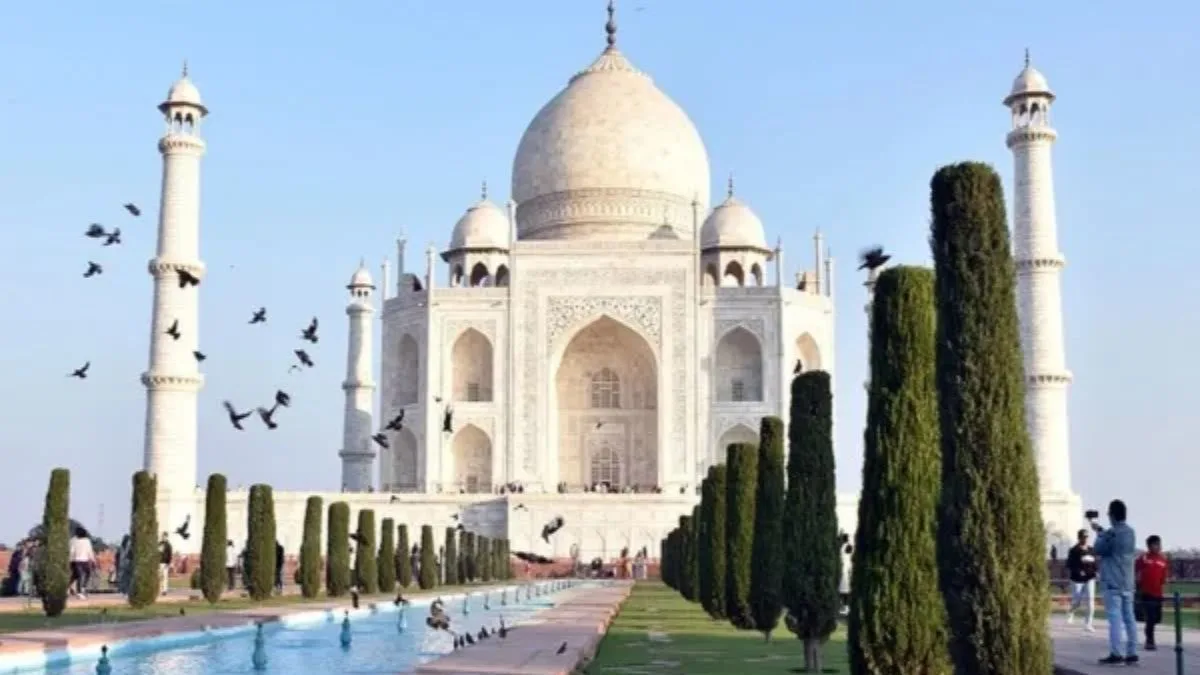
Shah Jahan’s 371st Urs at Taj Mahal from Jan 15

A special 1,720-metre-long Lambdi Chadar will be offered to Shah Jahan’s grave on the last day of Urs.

Statesman News Service | Agra |

Shah Jahan’s 371st Urs will be celebrated at the Taj Mahal in the Agra district of Uttar Pradesh from January 15 to 17.

A special 1,720-metre-long Lambdi Chadar will be offered to Shah Jahan’s grave on the last day of Urs.

According to the organisers, it took about a month to make this sheet. Common people willingly contribute silk cloth for the purpose. The Urs Committee, comprising people of all religions, prepared the Chadar. Some people have been involved in making the chadar for generations.

The sheet includes cloth of all colours, which is why it is called the Hindustani Satrangi Chadar. People of all religions contribute cloth every year, causing the chadar to grow in length annually. This year, the chadar has been made 1,720 metres long.

On this occasion, the basement of the Taj Mahal, where the actual graves of Shah Jahan and Mumtaz are located, will be opened. On the first day of Urs, the graves will be cleaned, while on the second day, the Sandal ceremony will be performed.

The Urs chadar will be presented on the last day, i.e., on January 17. The Taj Mahal will be open free of charge from 2 pm on January 15 and 16, while on January 17, it will be free for the whole day.

Anticipating large crowds during Urs, the Archaeological Department and CISF personnel have completed the necessary preparations.

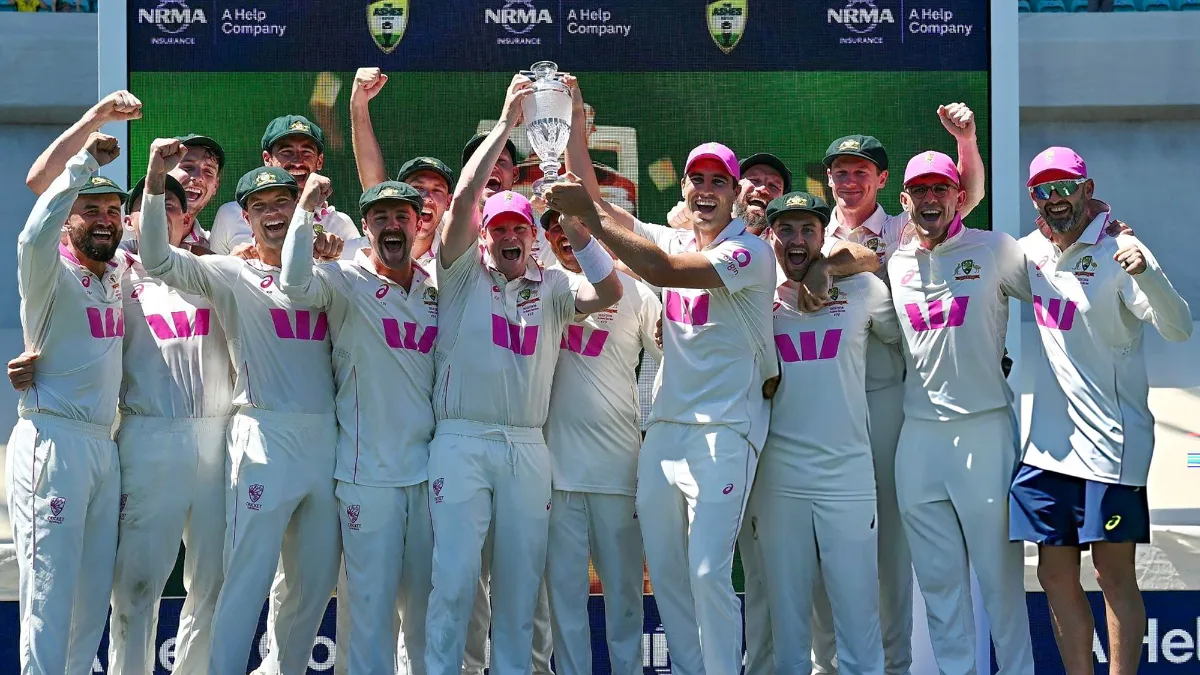
Ashes 2025–26: A one-sided series or a warning sign for Test cricket?

Crowds turned out in record numbers for some of the test matches, witnessing some of the bizarre games of cricket, including two of the shortest tests ever played. Was this series an example of a template for the future of Test Cricket, or is the standard of cricket deteriorating?

Yatharth Nigam | New Delhi |

The ‘worst Australian side’ retained the urn after only 11 days of cricket, defeating England 4-1 in the five-match Ashes series. For England, this was the most disappointing tour in recent memory. With numerous off-field controversies, critics questioned their integrity and abilities; the only respite they had was a two-day Test victory on Australian soil. For the hosts, this was a great escape because they won the series with a relatively weak team.

Crowds turned out in record numbers for some of the test matches, witnessing some of the bizarre games of cricket, including two of the shortest tests ever played. Was this series an example of a template for the future of Test Cricket, or is the standard of cricket deteriorating?


Was Ashes 2025-26 a boring series?

Cricket Australia CEO Todd Greenberg, after the conclusion of the third test, in an interview said that “short tests are bad for business.” Cricket Australia is headed to suffer an estimated loss of more than $3 million in ticket revenue for days three and four of the MCG test. This Ashes series had two of the shortest test matches played in the series, in the list of shortest test matches in the history of the greatest test series. Many Test cricket fans called this year’s Ashes the most boring and low-quality series, debating online whether this is simply because the hosts dominated the England team by retaining the urn in just 11 days of cricket after defeating the visitors in a one-sided affair in the first three test matches, or because the quality of cricket is really low because of the ‘aggressive’ approach that the batting teams are trying to adopt, abandoning the traditional test match approach of patience, grit, and discipline – the simple reason why it’s known as ‘Test Cricket’.

After the conclusion of the MCG test match, where England men tasted victory Down Under after nearly 15 years in just two days of cricket played, where 20 wickets fell on just Day 1 of the match, former England captain Alastair Cook said, “It’s not the death of Test cricket at all,” calling it a “different entertainment” for the fans. Back in 2017, Cook batted nearly seven hours to save England from a clean sweep, scoring 244 runs in 409 balls. If he’s in favour of this kind of test cricket, then what future does the five-day Test match hold?


Is batting quality going down?

With batters playing fearlessly and aggressively with the red ball, the traditional method of batting in Test cricket has shifted dramatically. Teams are increasingly shifting into full-on attack mode, adapting the T20 mindset in a format that requires courage, skill, patience, and mental fortitude. When England appointed Brendon McCullum as head coach of their Test team in 2022, the goal was to introduce a new approach to Test cricket, to rebuild from a low point, and to bring an appealing brand of cricket to a format that was still thriving. This philosophy gave rise to ‘Bazball‘, in which players were given complete freedom to play a fearless and aggressive style of cricket.

However, after losing the series to Australia in just three matches, with two tests remaining, England’s batters faced widespread criticism for their impatience and ‘ultra-aggressive’ approach. Following a 4-1 series defeat, former England captain Michael Vaughan stated that it was past time for England to abandon their ‘Bazball method’, implying that the ultra-risky approach with the bat had failed because it had not resulted in success in a major series.

Not only did English batters struggle during this series, but Australian batters also found it difficult to adjust to the spicy pitches on offer. Travis Head, Australia’s standout performer, scored 629 runs at an average of 62.9 in 10 innings, including three big hundreds, to finish as the top scorer for both teams. Apart from Head, no other Australian batter scored more than 400 runs in the series, with wicketkeeper-batsman Alex Carey coming closest, scoring 323 runs in eight innings, including a century.


What’s the future of Test Cricket?

McCullum’s Bazball approach was introduced to revive the game’s longest format and make it entartaining. The fearless batting approach drew some attention, and some fans and critics preferred the ball-one attacking approach. Back in 2023, when England opener Zak Crawley opened the series with a first-ball boundary off Australian captain Pat Cummins’ delivery, it was a statement about how the English would play.

When Australia defeated England 3-0 to retain the urn, former English players, media, and fans criticised the approach as the ‘End of an Era’. Some are even calling for England to restart Test cricket with a new coach. A former England spinner suggested former Indian head coach Ravi Shastri as McCullum’s successor, but in an interview following the third test, Rob Key stated that he believes in McCullum and Stokes, and will continue if McCullum is willing to keep his job.

Bihar govt to offer property registration at home for senior citizens

Applicants can apply for this service online. The Registration Department will ensure that the registration process for land or flat is completed within seven working days.

Imran Mojib | Patna |

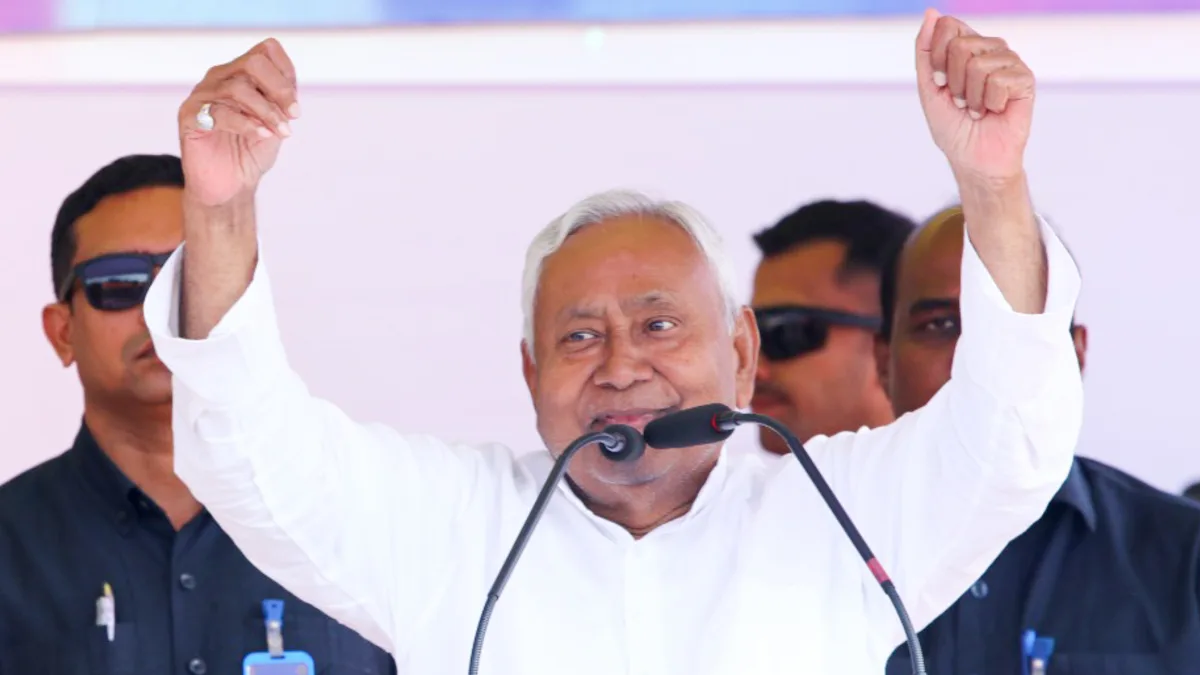
As part of Bihar Chief Minister Nitish Kumar’s vision of “Ease of Living,” the state government on Tuesday launched another ambitious initiative to make the lives of senior citizens dignified and more convenient.

From 1 April, the Prohibition, Excise and Registration Department of the Bihar government will launch Mobile Registration Units to facilitate property registration at home for senior citizens in the state who are 80 years of age or above and wish to register a plot of land or a flat.

Applicants can apply for this service online. The Registration Department will ensure that the registration process for land or flat is completed within seven working days.

In a message posted on ‘X’, Chief Minister Nitish Kumar stated that the decision has been taken to reduce the difficulties faced by citizens in their daily lives and to make life easier for them.

He said, “Arrangements are also being made to provide updated land information to buyers and sellers before registration. Under this system, after receiving an application request, the Registration Department will obtain the current status of the land from the Circle Office and provide it to the buyer. This will greatly benefit applicants and ensure they receive accurate and up-to-date information about the land.”

“I firmly believe that this initiative will prove to be highly beneficial for senior citizens aged 80 years or above and will make their daily lives much easier. Additionally, the system of providing accurate and updated land information will benefit everyone,” he added.

Earlier this month, the state government launched a door-step healthcare facility to ensure that needy senior citizens in the state can receive essential healthcare services at their homes whenever required, including nursing assistance, pathology tests at home, blood pressure and ECG testing, physiotherapy services, and all types of medical assistance during emergencies.

Video of idols being demolished at Manikarnika Ghat in Kashi goes viral; authorities clarify

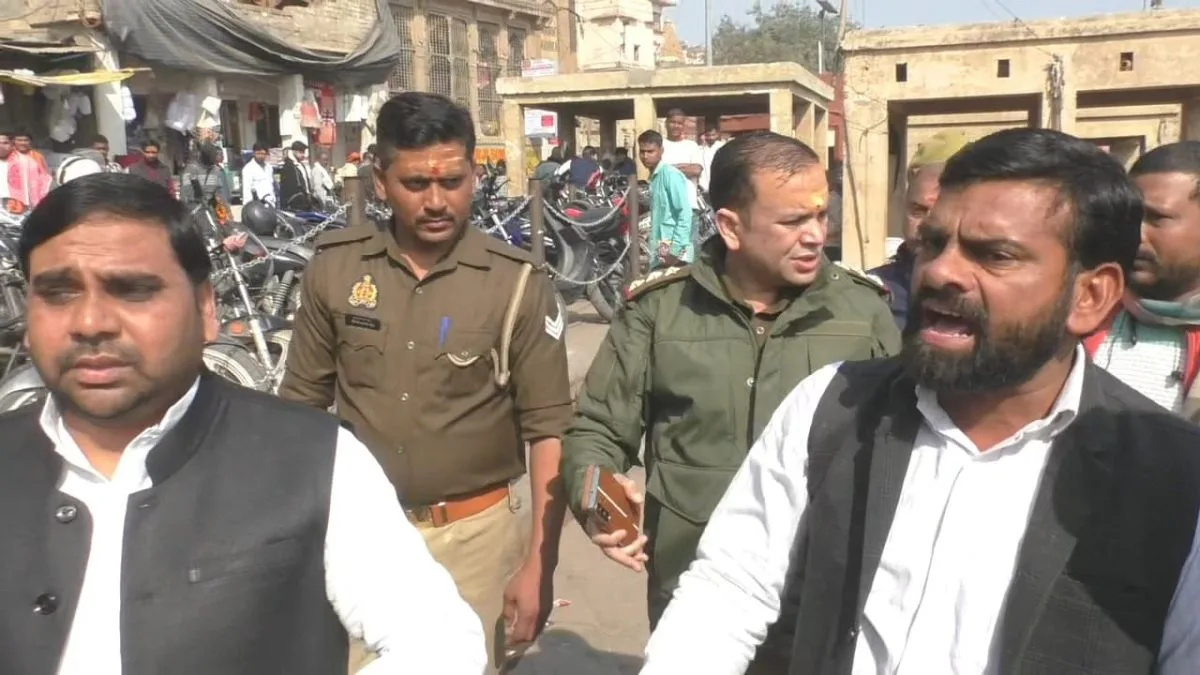
Local residents protested against the video on Tuesday. As soon as the district administration and police received the information, senior officials reached the spot.

Statesman News Service | Varanasi |

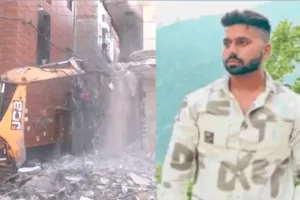
For the past few days, a video has been circulating on social media showing a bulldozer demolishing some idols at Manikarnika Ghat, the main cremation ground at the holy city of Kashi where redevelopment work is underway. Authorities said the investigation is underway in the matter.

Local residents protested against the video on Tuesday. As soon as the district administration and police received the information, senior officials reached the spot.

Additional District Magistrate (City) Alok Verma said, “The entire matter is being investigated. As soon as we received the information, we reached the spot with the ACP and other officials. Some external elements are protesting. We are talking to the local people. The beautification work of Manikarnika Ghat has been going on for a long time. The work will be resumed after consultation with senior officials.”

The redevelopment work of Manikarnika Ghat is being done with CSR funds from the Rupa Foundation, at an estimated cost of around Rs 18 crore. The work is being carried out by a contracting agency under the supervision of the Municipal Corporation.

Prime Minister Narendra Modi had laid the foundation stone for this project in 2023. The work was halted for several months due to floods, but now the pace of work has been accelerated to complete the project.

Under the beautification plan, two community toilets will be constructed. The total area of the ground floor will be 29,350 square feet, of which the cremation area will be 12,250 square feet. More than 30 cremation platforms and pollution-free chimneys will also be built at the ghat. A registration room, wood storage area, and waiting room will also be constructed on the ground floor.

One Indian student dead, two injured in Kazakhstan road accident

As a result of the incident, the Embassy said that one student, Mili Mohan (date of birth: 17.04.2000), died, while two other students — Ashika Sheejamini Santhosh and Jaseena B — sustained injuries.

ANI | New Delhi |

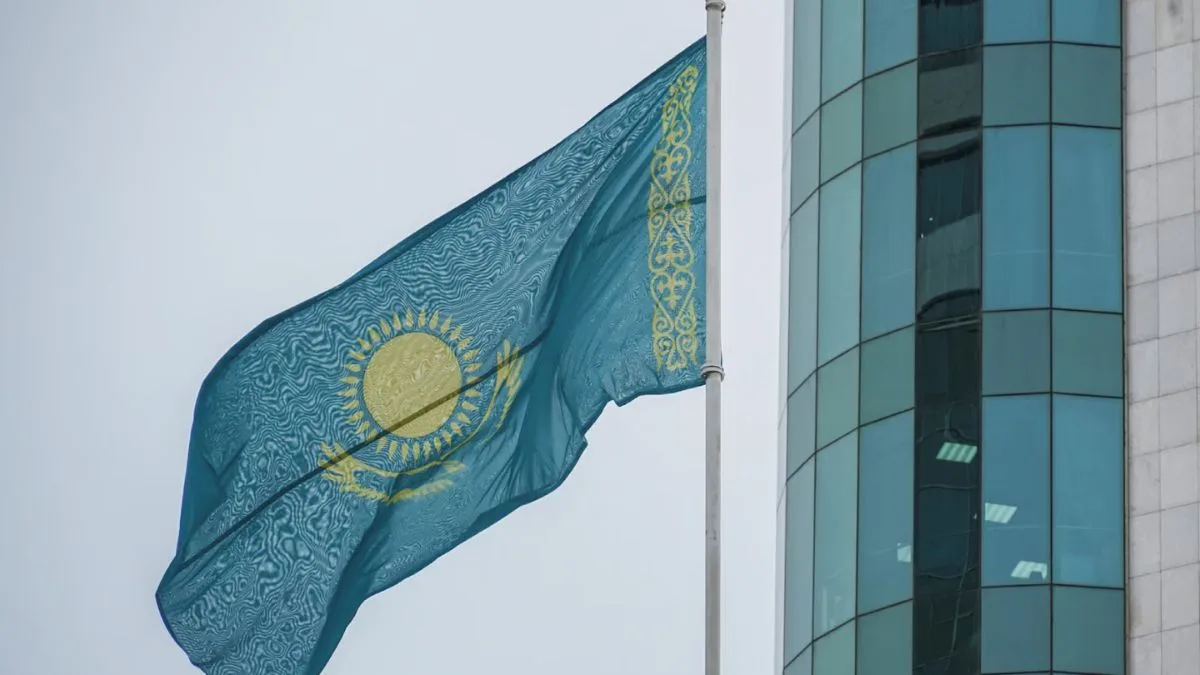
he Indian Embassy in Kazakhstan on Tuesday said that 11 Indian students from Semey Medical University were involved in a road accident in Oskemen while returning from an excursion to the Altai Mountains in East Kazakhstan.

Sharing details in a post on X, the Embassy said, “In a tragic accident in Oskemen, a group of 11 Indian students from Semey Medical University, who were on an excursion trip to the Altai Mountains (East Kazakhstan), encountered an accident on their way back to Oskemen City.”

As a result of the incident, the Embassy said that one student, Mili Mohan (date of birth: 17.04.2000), died, while two other students — Ashika Sheejamini Santhosh and Jaseena B — sustained injuries.

It further stated that the injured students are receiving treatment at City Hospital No. 1 in Oskemen. “According to the latest reports, their condition is stable,” the Embassy said.

Expressing condolences over the death, it said, “The Embassy extends its deepest condolences to the family of the deceased student.”
The Embassy added that it is in constant contact with the university administration, hospital authorities, and the students’ families.

The Altai Mountains are a striking mountain range in Central Asia that stretches across Russia, China, Mongolia and Kazakhstan.

Famous for dramatic scenery and towering peaks such as Mount Belukha, the region is rich in biodiversity and also forms the source of major rivers, including the Ob and Irtysh.

Parts of the Altai are recognised by UNESCO as World Heritage sites for their unique ecosystems and cultural value.

Modi govt vengeful in targeting TN like perennial Corona, yet state leaps ahead: Chief Minister MK Stalin

Likening the vengeful targeting of Tamil Nadu by the Modi government to the perennial attack of the Corona epidemic without respite, Tamil Nadu Chief Minister MK Stalin on Tuesday took pride in the state leapfrogging in growth and development despite the Union government’s vindictive discrimination.

Statesman News Service | Chennai |

Likening the vengeful targeting of Tamil Nadu by the Modi government to the perennial attack of the Corona epidemic without respite, Tamil Nadu Chief Minister MK Stalin on Tuesday took pride in the state leapfrogging in growth and development despite the Union government’s vindictive discrimination.

“When we took over the reins of governance, we were in the middle of the second wave of the Corona epidemic. Subsequently, we faced the Union BJP government’s vengeful discrimination against Tamil Nadu like the perennial corona epidemic and natural disasters. Overcoming the forces that place hurdles in its path, Tamil Nadu remains a frontrunner in the country. Data from Union ministries and rankings confirms this,” he said in an epistle extending Pongal greetings to the party cadres and others.

Describing Pongal as the cultural expression of Tamils, he said the festival is being celebrated by all, irrespective of caste, religion, wealth, or gender. The DMK units across the state are holding ‘Dravida Pongal’ in villages, while the Chief Minister himself celebrated ‘Equality Pongal’ at Kolathur, his assembly constituency. It was the late DMK patriarch and former Chief Minister M Karunanidhi who initiated and popularised the celebration of ‘Equality Pongal’ as a party programme.

“It was Dravidian icons ‘Periyar’ (social reformer EV Ramasamy), ‘Anna’ (DMK founder and former Chief Minister, and Kalaignar (Karunanidhi), who were instrumental in redeeming Pongal, the distinctive Tamil festival, he said, adding that the DMK had been holding Pongal festivities for over 75 years, providing a platform for the traditional art and cultural forms of the land.

On Thursday, the first day of the Tamil month Thai and the commencement of the four-day festival, the Chief Minister is scheduled to inaugurate the bull-taming festival at Alanganallur near Madurai, famed for the sport, and in the evening launch the ‘Chennai Sangamam’, a confluence of traditional and folk arts across the city. Chennai Sangamam is the brainchild of DMK deputy general secretary Kanimozhi, MP, who is also the DMK Parliamentary Party Leader.

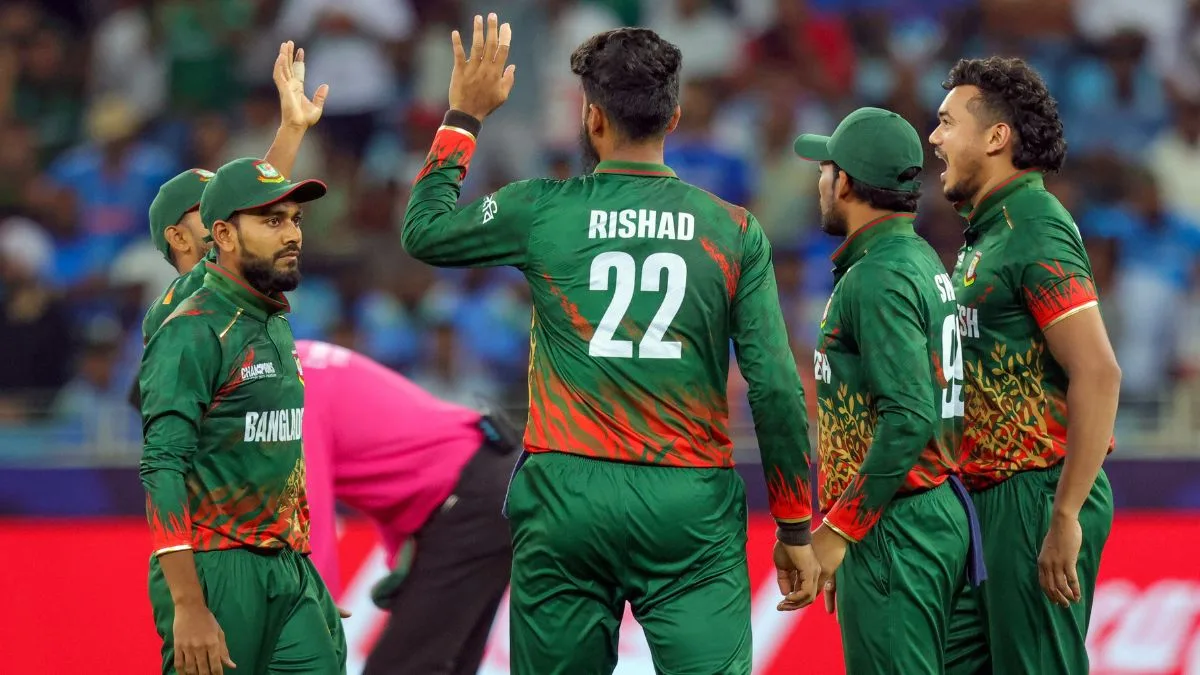
Will not change our stance even by an inch: BCB rigid on relocating T20 WC games

The BCB issued a statement on Tuesday after a video conference with the ICC, maintaining that security concerns remain the primary reason behind its request to have Bangladesh’s matches moved out of India.

Statesman News Service | New Delhi |

The Bangladesh Cricket Board (BCB) has reiterated that it will not send its team to India for the 2026 ICC men’s T20 World Cup, standing firm on its position despite ongoing discussions with the International Cricket Council (ICC).

The BCB issued a statement on Tuesday after a video conference with the ICC, maintaining that security concerns remain the primary reason behind its request to have Bangladesh’s matches moved out of India.

The 2026 T20 World Cup, co-hosted by India and Sri Lanka, is scheduled to begin on February 7. As per the current fixture list, Bangladesh are slated to play their first three group matches in Kolkata, with their final group game in Mumbai.

“During the discussions, the BCB reaffirmed its position regarding the decision not to travel to India, citing security concerns,” the board said in its statement.

The board also reiterated its request for the ICC to consider relocating Bangladesh’s matches outside India.

“While the ICC highlighted that the tournament itinerary has already been announced and requested the BCB to reconsider its stance, the board’s position remains unchanged. Both parties agreed that discussions will continue to explore possible solutions. The BCB remains committed to safeguarding the well-being of its players, officials and staff while engaging constructively with the ICC to address the matter,” the board said.

The BCB was represented during the meeting by president Aminul Islam, vice presidents Shakawath Hossain and Faruque Ahmed, director and chairman of the cricket operations committee Nazmul Abedeen, and chief executive officer Nizam Uddin Chowdhury.

On Monday, the ICC shared an internal security assessment with the BCB, which concluded that there was no specific or elevated threat to the Bangladesh team in India during the tournament.

The report, circulated to the BCB’s security team, stated there was no overall risk to the side, although it did flag low to moderate risks at some venues and low to nil risks at others, classifications routinely used by the ICC and generally not considered grounds for relocating matches.

We are not going to India: BCB VP

BCB vice-president Shakhawat Hossain said that they are hoping for a positive outcome. “We are firm in the position we have taken (regarding venue relocation). We will not change our stance even by an inch. We are not going to India,” Shakhawat told reporters following the meeting.

“We have stated our position and they are looking for alternatives. The path for discussion is still open. Of course, we are in a positive position. There isn’t much time, so we will see. Some arrangements will be made quickly. Since the dialogue has started, let’s see what happens. But we are firm in our position,” he said, adding that both parties are aware time is running out.

“Yes, the time is short. They know that too. Arrangements will be made very soon. I can’t say anything more apart from the dialogue is open,” he concluded.

The issue of Bangladesh playing in India surfaced after the Board of Control for Cricket in India (BCCI) instructed Kolkata Knight Riders to drop Mustafizur Rahman from their IPL 2026 squad. While no official reason was given for the decision, it came against the backdrop of strained diplomatic relations between the two countries.

In response, the Bangladesh government banned the broadcast of the IPL in the country, following which the BCB formally wrote to the ICC, refusing to play its T20 World Cup matches in India.

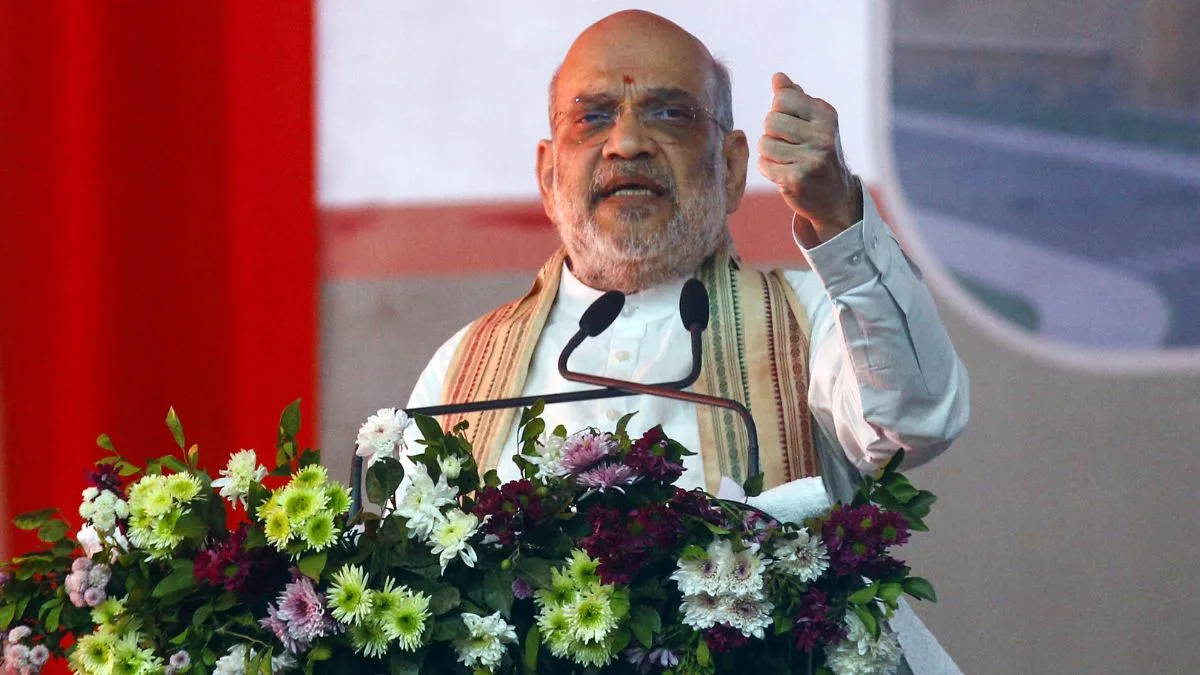
Growing resistance to antibiotic medicines is very serious threat to our society & to all of humanity: HM Shah

Shah laid the foundation stone of the BSL-4 Bio-Containment Facility of the Gujarat Biotechnology Research Centre in Gandhinagar, the capital of Gujarat.

Statesman News Service | New Delhi |

Union Home Minister Amit Shah on Tuesday said Antimicrobial Resistance (AMR) is a ‘silent disaster’, to tackle it, a clear roadmap, timely treatment, and spreading awareness to every individual are essential

Shah laid the foundation stone of the BSL-4 Bio-Containment Facility of the Gujarat Biotechnology Research Centre in Gandhinagar, the capital of Gujarat.

Addressing the gathering, the Union Home Minister said, “The growing resistance to antibiotic medicines is a very serious threat to our society and to all of humanity. It is like a ‘silent disaster’.”

He said AMR is a major crisis for the entire society, and in the coming days it will also become a cause of widespread transmission affecting future generations.

“To tackle AMR, a clear roadmap, timely treatment, and spreading awareness to every individual are essential. Our goal should be to prevent infections and to keep antibiotics safe for future generations,” the Union Home Minister said.

Shah added that development and science are not against heritage; both are the needs of the nation’s people, and both can move forward together.

The Minister noted there has been unprecedented growth in the field of biotechnology in over the past 11 years.

“We have achieved significant success in the bio sector and there is immense potential in this area,” Shah said.

He noted in 2014, India’s bio-economy was worth USD 10 billion, and by the end of the financial year 2024, it had grown to USD 166 billion.

Shah added that a 17-fold growth in just 10 years shows that India’s youth and entrepreneurs can achieve great success in the bio-economy sector, provided they receive support from the government and the necessary infrastructure.

The Union Home Minister stated in 2014, there were fewer than 500 startups working in the biotechnology sector, which has increased to over 10,000 by 2025.

“The number of bio-incubators was 6 in the year 2014, and it has risen to 95 by 2025. We had 60,000 square feet of incubation space earlier, which has increased 15 times to 9 lakh square feet today. Earlier there were only a few products in the market, but now more than 800 products have been launched,” he said.

On the occasion, several dignitaries, including Gujarat Chief Minister Bhupendra Patel and Deputy Chief Minister Harsh Sanghavi, were present.

J&K’s spiritual, cultural heritage key to societal growth: LG Manoj Sinha

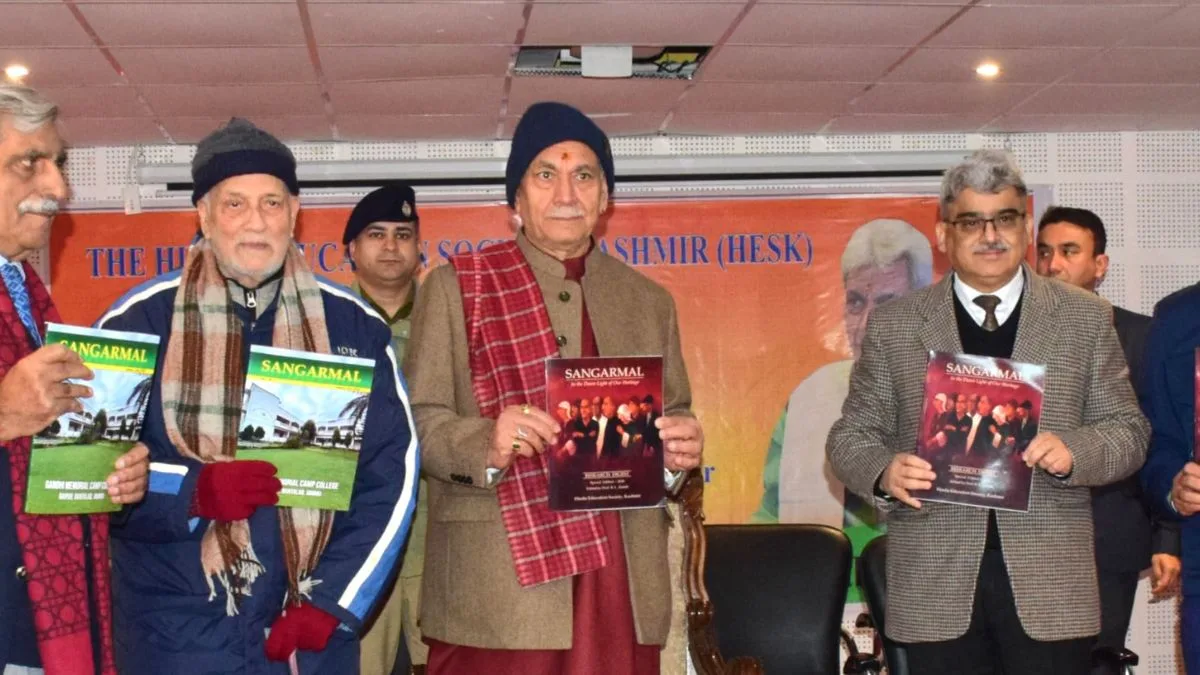
The LG was speaking after launching the special edition of ‘Sangarmal’ magazine published by the Hindu Education Society, Kashmir.

Statesman News Service | Jammu |

Lieutenant Governor Manoj Sinha on Tuesday said that Jammu and Kashmir’s ancient cultural heritage and spiritual wisdom are the invisible force that will propel societal growth.

The LG was speaking after launching the special edition of ‘Sangarmal’ magazine published by the Hindu Education Society, Kashmir.

The Lieutenant Governor spoke on social cohesion and the use of cultural-spiritual heritage and education as a unifying thread to create a blueprint for the thriving future.

He emphasised on instilling values such as compassion, humility, and resilience to strengthen community bonds.

“In an era dominated by rapid technological growth and globalization, our timeless spiritual and cultural heritage, our shared beliefs, traditions, arts, rituals, and values will shape the society and fuel the holistic growth of the nation,” the Lieutenant Governor said.

“Jammu Kashmir’s rich spiritual heritage is a dynamic asset. Since Vedic ages, the traditional values acted as our guiding principles which built an ethical foundation for overall growth. For J&K to grow, our citizens must become more innovative, focus on intellectual growth to take great leaps in research and development, promote creative industries and invest in heritage,” the Lieutenant Governor said.

He commended the Hindu Education Society, Kashmir, for its dedicated efforts in raising public awareness regarding culture, social responsibilities and the transformative power of education.

Padma Dr KN Pandita; Atal Dulloo, Chief Secretary; Prof. B.L Zutshi, president, Hindu Education Society Kashmir; Ram Niwas Sharma, Commissioner Secretary, School Education, office bearers of Hindu Education Society Kashmir and prominent citizens from different walks of life were present.

Dr Ashok Bhan, Member, Shri Mata Vaishno Devi Shrine Board; Prof. (Dr.) Pragati Kumar, Vice Chancellor, SMVDU; Kuldeep Khoda, former DGP; Dr. Arvind Karwani, Relief and Rehabilitation (M) Commissioner and senior officials also attended the launch ceremony.

Where Books Meet Bravery: Soldiers Steal the Spotlight at World Book Fair

From pages to patrol: World Book Fair 2026, Indian soldiers bring stories of valour alive at Bharat Mandapam.

Hiya | New Delhi |

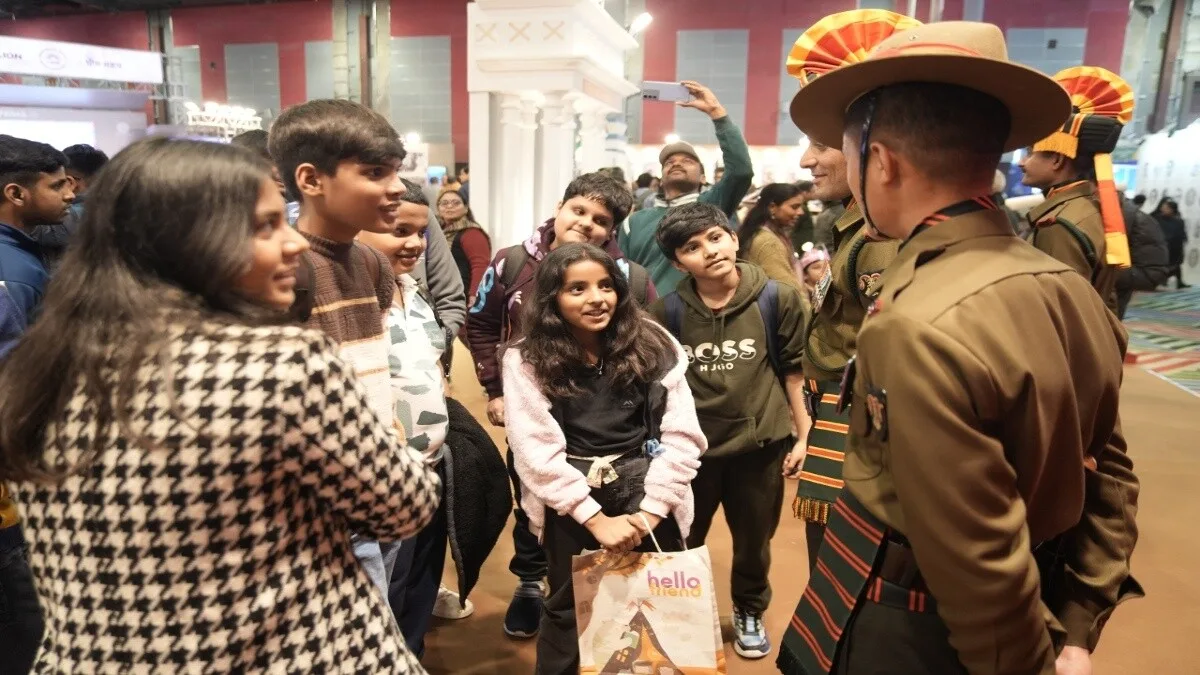
An armed sniper standing beside an Indian military war vehicle smiles patiently as visitors, especially children, pepper him with questions. He poses for selfies, explains how the weapons work, and firmly but politely discourages anyone from touching the rifles. The scene feels straight out of a Bollywood war film, but it is a real-life moment unfolding at the ongoing 53rd World Book Fair at Bharat Mandapam, New Delhi.

A Book Fair Dedicated to India’s Bravehearts

Organised by the National Book Trust (NBT), this year’s World Book Fair has been dedicated to India’s armed forces, with the theme “Indian Military History: Valour and Wisdom @75.” The initiative aims to instil a sense of patriotism among Gen Z while familiarising visitors with the courage, discipline, and sacrifice of Indian soldiers.

Inside the Theme Pavilion: Valour on Display

The theme pavilion, spread across 1,000 square metres in Hall 5, offers visitors a 360-degree immersive experience. Over 500 books narrating tales of bravery and military life are showcased alongside curated posters and documentary screenings.


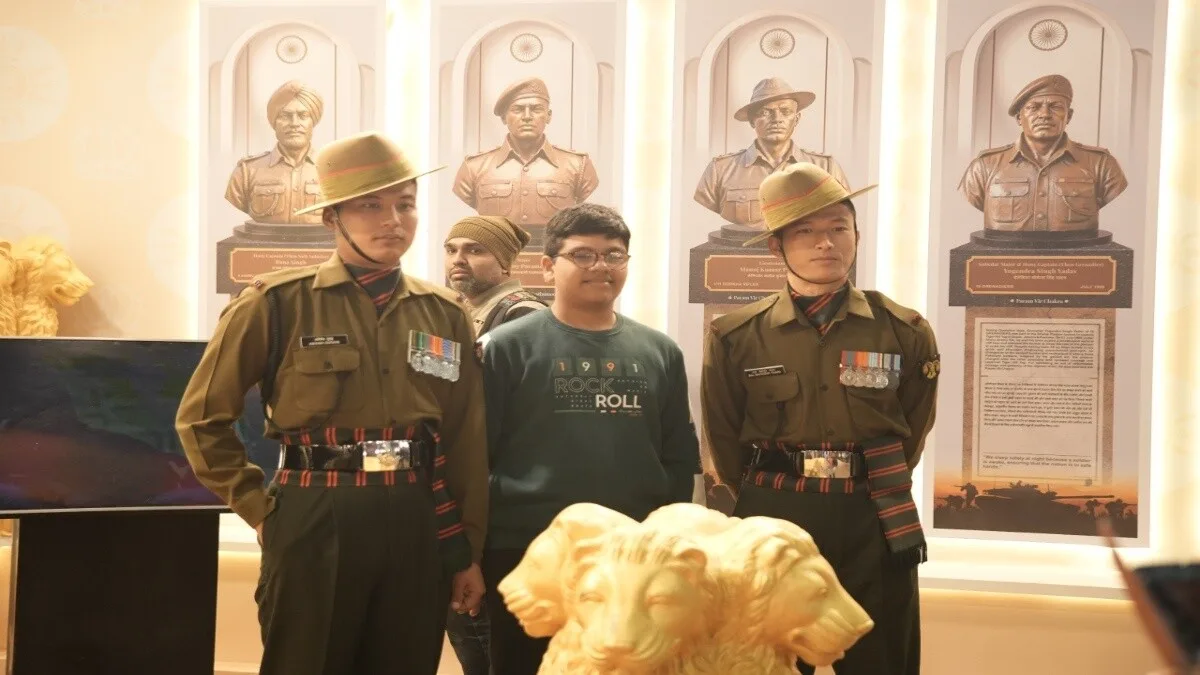
Adding to the spectacle are life-like replicas of the Arjun Tank, INS Vikrant, and LCA Tejas, along with a photo gallery honouring 21 Param Vir Chakra awardees, making the pavilion one of the most visited attractions at the fair.

‘Books and Guns’: A Powerful Combination

“It’s an amazing combination of books and guns. While one teaches us dignity, the other empowers us to protect that dignity,” said Diksha, a second-year student at Delhi University’s Hindu College.

Reflecting on the role of the armed forces, she added that while a strong economy gives a nation confidence, a well-equipped army ensures its security. “A country’s borders define its identity, and it’s a soldier who risks their life to keep those lines intact,” she said.

Soldiers Share Stories Beyond the Pages

Visitors also got the rare opportunity to interact with decorated soldiers such as Lt Gen (retd) KJS Dhillon, author of the acclaimed book Kitne Ghazi Aaye, Kitne Ghazi Gaye, which recounts counter-terrorism operations in Kashmir.

Young visitors appeared eager to hear untold stories, whether from historical wars or modern military operations, highlighting a growing curiosity about India’s defence forces beyond textbook narratives.

Bridging the Civil–Military Divide

Ex-servicemen at the pavilion are not just sharing stories but gently reshaping perceptions. They engage warmly with visitors, answer questions patiently, and even cradle children in their arms for photographs, creating moments that humanise the uniform.

Source: NBT

The initiative has effectively bridged the gap between civilians and security forces, while maintaining the dignity and integrity of the Indian Army.

Source: NBT

Planting the Seeds of Patriotism in Young Minds

The focus on children is evident. Bal Mandapam, dedicated to children’s programming, aligns closely with the military theme. Posters, installations, and interactive exhibits introduce young minds to the glory of the Indian Army.

A recurring moment draws smiles from onlookers, children asking, “Uncle, can I hold your gun once?”, a request that is always met with a gentle yet firm refusal.

Dreams in Uniform

“I buy a toy gun whenever we go out. I play fauji games with my brother. I want to be a soldier and hold a real gun one day,” said 8-year-old Advik, his eyes lighting up with curiosity and admiration for the armed forces.

Also Read: World Book Fair 2026: Indian Military History and Cultural Discourse Shape Day 3