Logo

Australia great Alyssa Healy to retire from international cricket after India tour

The news emerged early on Tuesday when Healy made the announcement on the Willow Talk podcast, which she co-hosts, bringing an end to a distinguished 16-year international career.

Statesman News Service | New Delhi |

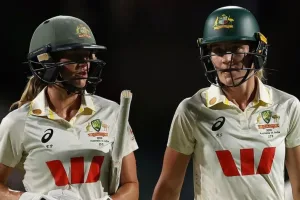
Australia will soon usher in a new era of leadership, with long-serving captain Alyssa Healy announcing her retirement from international cricket at the end of the home summer.

The news emerged early on Tuesday when Healy made the announcement on the Willow Talk podcast, which she co-hosts, bringing an end to a distinguished 16-year international career.

Healy’s retirement from T20 internationals takes effect immediately, ruling her out of the three-match T20I series against India scheduled from February 15 to 21. She will, however, continue to represent Australia in the ODI leg of the series later in the month and in the one-off Test match, with the multi-format contest set to begin on March 6.

“It’s with mixed emotions that the upcoming India series will be my last for Australia,” Healy said in a statement.

“I’m still passionate about playing for Australia, but I’ve somewhat lost that competitive edge that’s kept me driven since the start, so the time feels right to call it a day.

“Knowing I won’t be going to the T20 World Cup this year and the limited preparation time the team has, I won’t be part of the T20s against India, but I’m excited to have the opportunity to finish my career and captain the ODI and Test side at home against India, one of the biggest series on the calendar for us.

“I’ll genuinely miss my teammates, singing the team song and walking out to open the batting for Australia. Representing my country has been an incredible honour and I’m grateful for one last series in the green and gold,” she added.

By stepping away from the T20Is, Australia will be able to begin preparations for the ICC Women’s T20 World Cup in England and Wales without Healy, with their opening match of the tournament scheduled for June 13 in Manchester.

Before the World Cup, Australia will play three T20Is against India and another three away to the West Indies as they look to improve on their semi-final exit in 2024.

With Healy set to depart, Australia face uncertainty over leadership across formats. Vice-captain Tahlia McGrath is one option, while Ashleigh Gardner and Phoebe Litchfield have also been mentioned as potential candidates to take on the captaincy role.

Kohli’s form keeps India on course as injury worries linger ahead of Rajkot ODI

India began the series with a four-wicket win in Vadodara, though the victory came at a cost.

Statesman News Service | New Delhi |

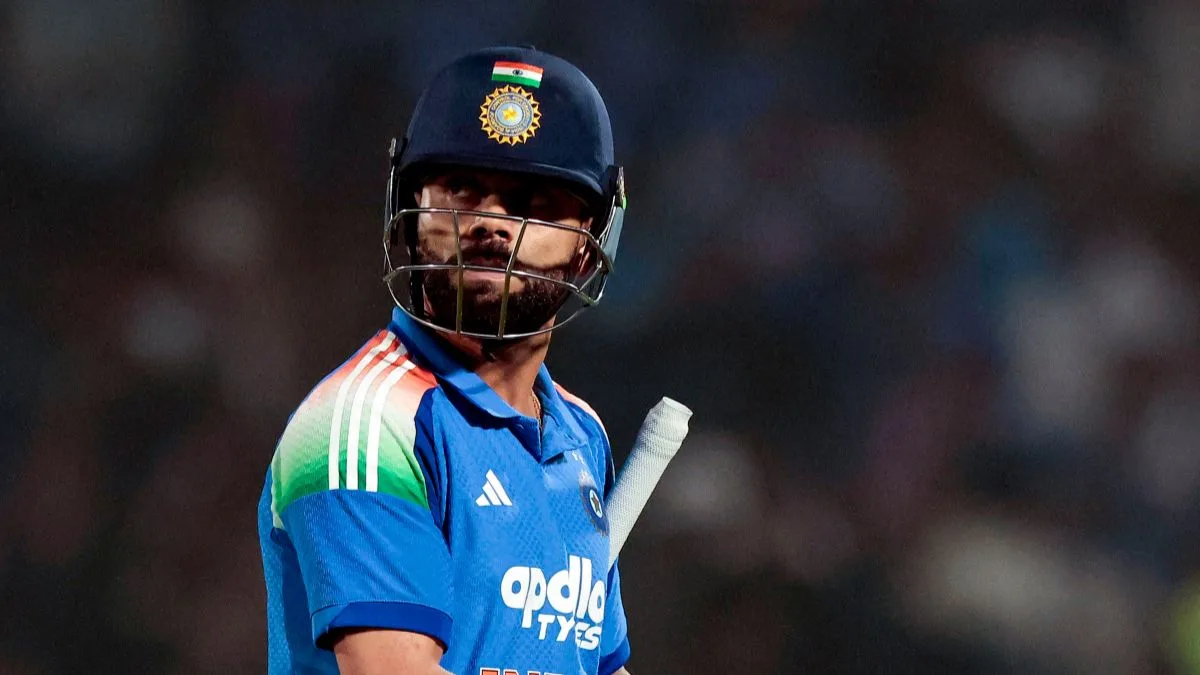
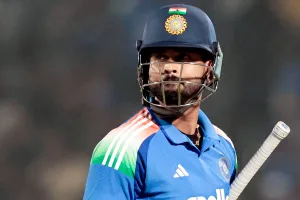
Virat Kohli’s scintillating form has helped India sideline injury woes, but the team management will be hoping the concerns do not multiply as the hosts aim to clinch the ODI series in the second match against New Zealand in Rajkot on Wednesday.

India began the series with a four-wicket win in Vadodara, though the victory came at a cost. All-rounder Washington Sundar was ruled out of the remainder of the series after sustaining a side strain, prompting the selectors to call up Delhi’s Ayush Badoni as cover.

However, in keeping with head coach Gautam Gambhir’s preference for versatile cricketers, Nitish Kumar Reddy is expected to slot into the playing XI as an all-round option.

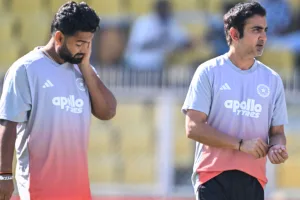
Injuries have already disrupted India’s plans even before the series began. On the eve of the opener, Rishabh Pant suffered a blow while batting against throw-down specialists and was subsequently ruled out of the ODIs. His absence led to the inclusion of Dhruv Jurel, who remains an option should the team management opt for a specialist batter.

While replacements are available, India’s white-ball setup would be keen to avoid further setbacks with the T20 World Cup less than a month away. Although the T20 squad will feature a different batting combination, several players overlap between the two formats. One such key name, all-rounder Tilak Varma, is already sidelined for at least the first three T20Is against New Zealand due to a groin injury.

For now, however, the focus remains firmly on the ongoing ODI series, which has been headlined by two stalwarts nearing the twilight of their international careers. Kohli and Rohit Sharma appear to be relishing this phase, playing with freedom and authority.

Kohli narrowly missed out on a 54th ODI century in the opening match, but his fluent 93 off 91 balls laid the foundation for India’s successful chase, even as a brief middle-order wobble created some tense moments.

Those moments are unlikely to trouble the Indian think-tank, especially given the gulf between the two sides, with New Zealand also arriving with a depleted squad. Captain Shubman Gill contributed a composed half-century in the opener, while vice-captain Shreyas Iyer fell just one shy of a fifty. A strong collective batting effort, led by Rohit’s typically aggressive intent at the top, suggests India will once again look to dominate.

Kohli, in particular, seems to be batting with rare clarity and confidence, carrying the same intensity from the nets into match situations. Free from the weight of expectation and criticism, he has added new dimensions to his game, attacking from the outset and refusing to leave runs on the field. That approach was evident in Vadodara, where he became the fastest batter to reach 28,000 international runs.

Despite the batting riches, India will be seeking improvement in their bowling, especially from the spinners, who struggled for grip and turn on the Vadodara surface. It was the fast bowlers’ ability to vary pace that eventually fetched breakthroughs in the latter stages, and the spinners will hope for more assistance from the pitch at the Niranjan Shah Stadium.

New Zealand, meanwhile, can draw encouragement from the way they pushed India in the series opener despite Kohli’s briliance. During India’s chase of 301, the equation remained around a run a ball for much of the innings before Kyle Jamieson’s three-wicket burst, on his way to figures of 4 for 41, briefly swung momentum.

The visitors ultimately paid the price for a few dropped chances late in the game. Earlier, a commanding 117-run opening stand between left handers Devon Conway and Henry Nicholls had provided the perfect platform, which the middle order failed to fully capitalise on. World No. 3 Daryl Mitchell’s aggressive 84 ensured New Zealand posted a competitive total, while late contributions from Mitchell Hay and Kristian Clarke offered further positives. As the Kiwis head into the second ODI, the visitors will also be hoping that rookie leg-spinner Adithya Ashok delivers a stronger showing in Rajkot.

Squads:

India: Shubman Gill (c), Rohit Sharma, Virat Kohli, KL Rahul, Shreyas Iyer (subject to fitness clearance), Ayush Badoni, Ravindra Jadeja, Mohammed Siraj, Harshit Rana, Prasidh Krishna, Kuldeep Yadav, Rishabh Pant, Nitish Kumar Reddy, Arshdeep Singh, Yashasvi Jaiswal

New Zealand: Michael Bracewell (c), Adi Ashok, Kristian Clarke, Josh Clarkson, Devon Conway, Zak Foulkes, Mitch Hay, Kyle Jamieson, Nick Kelly, Jayden Lennox, Daryl Mitchell, Henry Nicholls, Glenn Phillips, Michael Rae, Will Young


‘If protecting our own is hatred, then we accept it’: Devkinandan Maharaj on killing of Hindus in Bangladesh
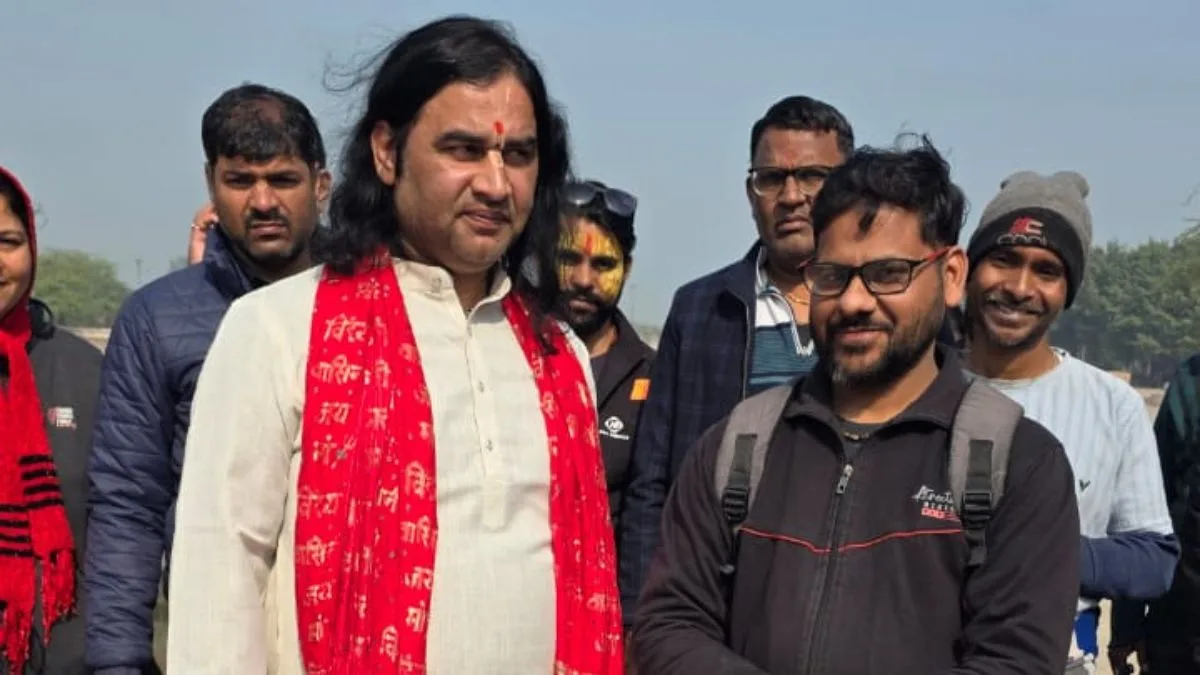
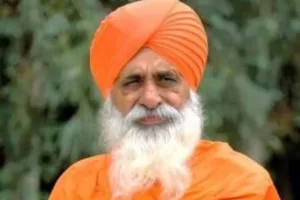
Citing continuous attacks on Hindus in Bangladesh in which eight members of the communtiy were brutally murdered in the last 25 days, renowned storyteller and Hindu leader Devkinandan Thakur Ji Maharaj not only questioned the safety of Hindus but also strongly criticized those who call him a “hate-monger”.

Statesman News Service | Mathura |

Citing continuous attacks on Hindus in Bangladesh in which eight members of the communtiy were brutally murdered in the last 25 days, renowned storyteller and Hindu leader Devkinandan Thakur Ji Maharaj not only questioned the safety of Hindus but also strongly criticized those who call him a “hate-monger”.

In a sharp and emotionally-charged statement on this matter, Maharaj Ji sarcastically said, “You people call me ‘Devkinandan, the purveyor of hatred’. If talking about applying a tilak (religious mark), and pleading to save our children and temples is hatred, then yes, we are spreading hatred.” He questioned whether those who are burning Hindus alive, shooting them, and committing atrocities on our daughters are giving a “message of peace.”

He asked why those who preach others to remain silent when Sanatani Hindus are being killed day after day in Bangladesh. “Temples are being set on fire there, girls are being abducted from their homes, but the world is sitting with its mouth shut. Shouldn’t a campaign be launched against those murderers?”

Adopting a firm stance on the issue, Devkinandan Maharaj said things have gone too far. “If even a single Hindu is killed in Bangladesh, there should be a military intervention there. It should be the government’s responsibility to protect every single Hindu,” he demanded.

Clarifying that he does not care how the world views him, he reiterated his resolve, saying, “Let anyone say anything about me, I don’t care. My pain is for my own people. My first priority is my Sanatani brother, my Hindu, and my Sanatan nation.”

Iran protests: Death toll crosses 2,000 amid crackdown, internet blackout

Iran has been facing one of its biggest anti-government protest movements since December 28.

Statesman News Service | New Delhi |

Over 2,000 people, including civilians and security personnel, were killed, and scores of others were wounded as anti-government protests in Iran entered its 17th day. The death toll is much higher than what is being reported by human rights agencies.

An Iranian official confirmed the death toll while speaking with an international news agency and blamed “terrorists” for the deaths.

According to Human Rights Activists News Agency (HRANA), at least 646 people have been killed in the Iranian regime’s crackdown on anti-government protesters till Monday.

This included 133 members of military and law enforcement forces, who also lost their lives in the clashes.

In addition to this, 579 others were also feared dead, but this remained under review, the HRANA said.

The internet blockade and disruptions in communication services have exceeded 100 hours. Apart from mobile and broadband internet services, telephone calls and other communication services were also disrupted.

US announces 25 per cent tariff on Iran trade; what it means for India

Iran has been facing one of its biggest anti-government protests since December 28. The protests were initially triggered by falling Iranian currency and rising inflation, but soon turned into a massive uprising against the Ayatollah Ali Khamenei-led regime.

The protests have spread to over 600 locations across the country, in 187 cities, spanning all 31 provinces.

Iran has accused the US and Israel of provoking the protesters. Iranian Foreign Minister Abbas Araghchi alleged that “terrorists” have infiltrated the protests in an attempt to invite foreign intervention.

The United States has warned Iran that it will intervene if the protesters are killed. US President Donald Trump has said that he is considering “some very strong options”.

“We’re looking at it very seriously. The military is looking at it, and we’re looking at some very strong options. We’ll make a determination,” he told reporters on board Air Force One on Sunday.

He also claimed that the Iranian leadership has reached out to him seeking to negotiate and that a meeting is being set up.However, he added that the US may have to act before a meeting.

Venezuela developments unlikely to impact Indian companies: Crisil Ratings

In a credit alert, the rating agency noted that even if the situation in Venezuela escalates and disrupts crude oil production, the impact on global oil prices is expected to be muted, as Venezuela accounts for only about 1.5 per cent of global crude oil supply.

Statesman News Service | New Delhi |

The recent developments in Venezuela are unlikely to have any material impact on India’s global trade or the credit quality of Indian corporates, said Crisil Ratings, citing the country’s limited role in global oil supply and India’s minimal trade exposure.

In a credit alert, the rating agency noted that even if the situation in Venezuela escalates and disrupts crude oil production, the impact on global oil prices is expected to be muted, as Venezuela accounts for only about 1.5 per cent of global crude oil supply.

Brent crude prices have remained largely stable in recent days, hovering slightly above USD 60 per barrel, it added.
India’s direct trade exposure to Venezuela is also insignificant, with imports from the South American nation accounting for less than 0.25 per cent of India’s total imports. Crude oil is the primary import, with India sourcing around 1 per cent of its crude oil requirements from Venezuela.

In fiscal 2025, crude oil and related products made up over 90 per cent of India’s total imports of approximately Rs 14,000 crore from the country.

While India imports nearly 85 per cent of its crude oil needs and remains sensitive to global price movements, Crisil Ratings said it does not anticipate any near-term impact from the Venezuela situation on oil prices.

Over the medium to long term, increased investments in Venezuela’s vast untapped crude oil reserves could potentially boost global supply and lead to softer crude prices, which would be beneficial for India.

On the exports front, India’s shipments to Venezuela were below Rs 2,000 crore in fiscal 2025, accounting for less than 0.1 per cent of total exports.

These exports are diversified across sectors such as pharmaceuticals, ceramics, textiles, and two-wheelers.
Pharmaceutical products led exports stand at around Rs 900 crore, but still constitute less than 0.5 per cent of India’s total pharmaceutical exports.

Given the modest exposure, Crisil Ratings does not expect any material impact on the credit profiles of Indian companies engaged with Venezuelan customers. However, the agency said it would continue to closely monitor developments in the region.

Court sends expelled Congress MLA Rahul Mamkootathil to 3-day police custody

While issuing orders, sending him to three days’ police custody, the court directed the Special Investigation Team ( SIT) probing the case to produce Rahul Mamkootathil before it on the evening of January 15.

Statesman News Service | Thiruvananthapuram |

The judicial first-class magistrate court, Thiruvalla, on Tuesday sent expelled Congress MLA Rahul Mamkootathil, who was arrested in connection with a third rape case, to three days’ police custody.

While issuing orders, sending him to three days’ police custody, the court directed the Special Investigation Team ( SIT) probing the case to produce Rahul Mamkootathil before it on the evening of January 15. The SIT, in its application, sought a 7-day custody of Mamkootathil.

During the hearing of the custodial application of the SIT, the counsel for Rahul Mamkootathil argued that the bail application of the accused should be considered before the custodial application and that the arrest was illegal.

The defence counsel argued that the complainant’s statement was taken through video conferencing. The statement has to be signed within three days after it is taken. The defence counsel also argued that the case against Mamkootathil was registered without following the procedures.

Once Rahul Mamkootathil is in custody, the SIT will start collecting evidence with him. It is learned that the SIT will take him to the hotel in Pathanamthitta, where the alleged rape took place, and collect evidence. He will also be taken to Adoor and Palakkad, and evidence will be collected.

The court will consider Rahul Mamkootathil’s bail plea on January 16.

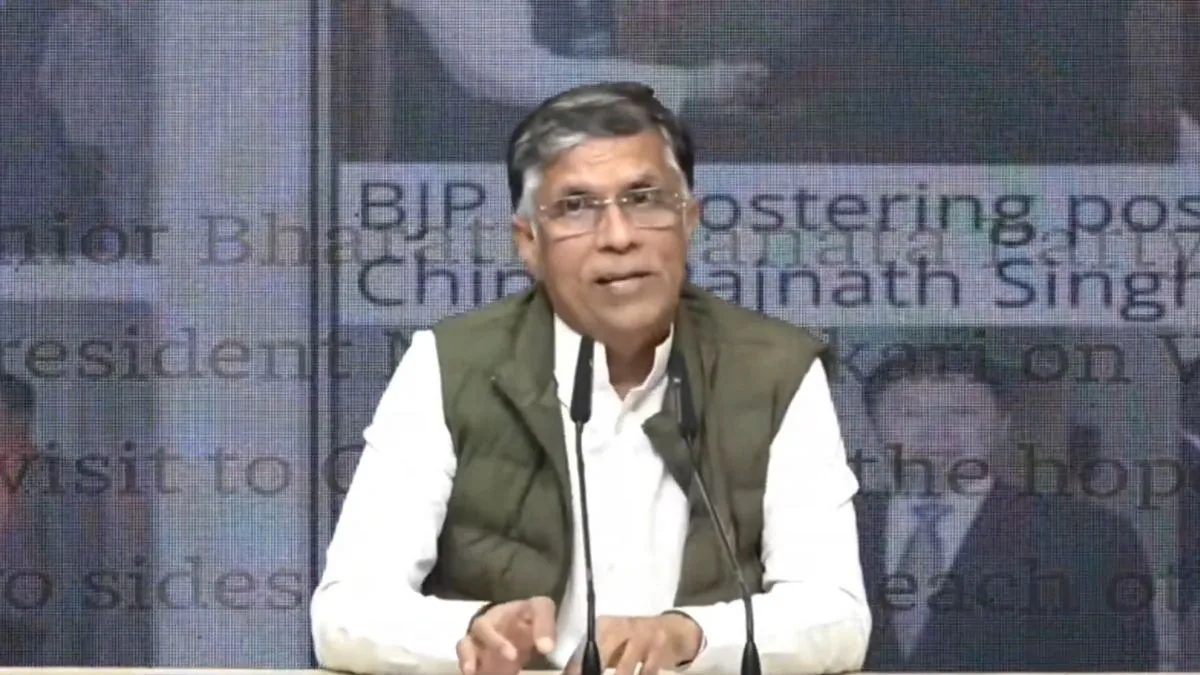
‘Meek surrender’: Congress demands transparency on BJP-CPC ties

Congress Media and Publicity Department chairman Pawan Khera alleged that Prime Minister Modi’s foreign policy had emboldened Beijing despite multiple provocations and violations.

Statesman News Service | New Delhi |

The Congress on Tuesday launched a sharp critique of the Narendra Modi government’s China policy, accusing it of repeatedly compromising India’s strategic interests, territorial integrity, and sovereignty.

The party described the relationship with the Chinese Communist Party (CPC) as “hypocritical” and opaque.

Addressing a press conference, Congress Media and Publicity Department chairman Pawan Khera labeled the BJP-led government’s approach to China as a “meek surrender”, alleging that Prime Minister Modi’s foreign policy had emboldened Beijing despite multiple provocations and violations. “A meek surrender is the most fitting description of the BJP’s China policy,” Khera stated.

He added that the government’s hypocrisy had confused India’s foreign policy, turning what was once projected as a tough stance (“Laal Aankh”) into submissive gestures (“Laal Salaams”) toward the CPC.

China recently reiterated its territorial claims over the Shaksgam Valley in Jammu and Kashmir, dismissing India’s objections to infrastructure development there. Khera accused the Modi government of undermining India’s national interests, citing the 2020 Galwan Valley clash where 20 Indian soldiers died. He criticized Modi for seemingly endorsing China’s expansionist ambitions post-Galwan.

The Congress leader also highlighted China’s military support to Pakistan and noted that despite India’s Deputy Chief of Army Staff Lt Gen Rahul R Singh identifying China as an adversary during Operation Sindoor, the government intends to lift bans on Chinese companies.

He listed several grievances, including China deploying advanced air defense systems and supplying Pakistan with missiles aimed at India, while the Modi government agreed to resume the Kailash Mansarovar Yatra on terms favorable to China. He also criticized Modi’s silence on claims by Chinese and US leaders about their intervention to prevent war between India and Pakistan.

The party accused Beijing of economic coercion by banning exports of specialized fertilizers and restricting rare earth minerals critical to India’s agriculture and industry. Despite this, the Modi government continues to issue tourist visas to Chinese nationals.

Strategic concerns were raised about China’s persistent attempts to intrude into the Siliguri Corridor, build military infrastructure near Pangong Tso, establish buffer zones in eastern Ladakh, and construct villages close to the Line of Actual Control (LAC). Khera said the pre-May 2020 status quo has not been restored, yet the government remains inactive.

He condemned China’s claims on Shaksgam Valley, renaming places in Arunachal Pradesh, and depicting Indian territories like Aksai Chin in its maps. Despite these claims, Modi invited the CPC to the BJP office and allowed Chinese investments in India’s electronics sector.

Khera also pointed out contradictions in policy, such as procuring smart meters from blacklisted Chinese companies, the alleged unbanning of Chinese apps after bans, and claims that banned Chinese firms contributed to the PM CARES Fund.

Warning of ecological and security risks, he criticized China’s plan to build what he called the world’s largest dam on the Brahmaputra, labeling it a potential “water bomb” threatening India’s water security in the Northeast. He accused the government of ignoring this threat.

Despite repeated Chinese incursions, detentions of Indian citizens from Arunachal Pradesh, and a growing trade deficit with China (which has increased by 56 percent since Galwan), the government has not discussed China policy in Parliament, Khera said, adding that the nation is kept in the dark.

The Congress highlighted what it called the BJP’s “continuous and cosy” engagement with the CPC, citing at least 12 interactions between BJP leaders and Chinese officials since 2008, including visits by senior BJP figures to China and meetings at BJP headquarters.

Khera challenged the BJP’s criticism of Congress-China interactions, questioning what really occurs in BJP-CPC meetings and the nature of collaboration between the CCP and BJP-RSS. He asked whether the BJP has ever raised issues such as Chinese transgressions, Ladakh status quo, trade imbalances, bans on rare earths and fertilizers, detention of Indians, or China’s military support to Pakistan during these talks.

Demanding accountability, Khera called for “full transparency” in the government’s China policy, including the public disclosure of agendas, outcomes, and minutes of all closed-door meetings between CCP and BJP-RSS representatives.

Magh Mela: UPSTDC’s Sangam Tent Colony ready to meet surge of devotees ahead of Makar Sankranti

This Tourism Department initiative is distinct from privately operated tent cities and has been planned specifically to support the growing inflow of pilgrims during the Magh Mela period.

Statesman News Service | Prayagraj |

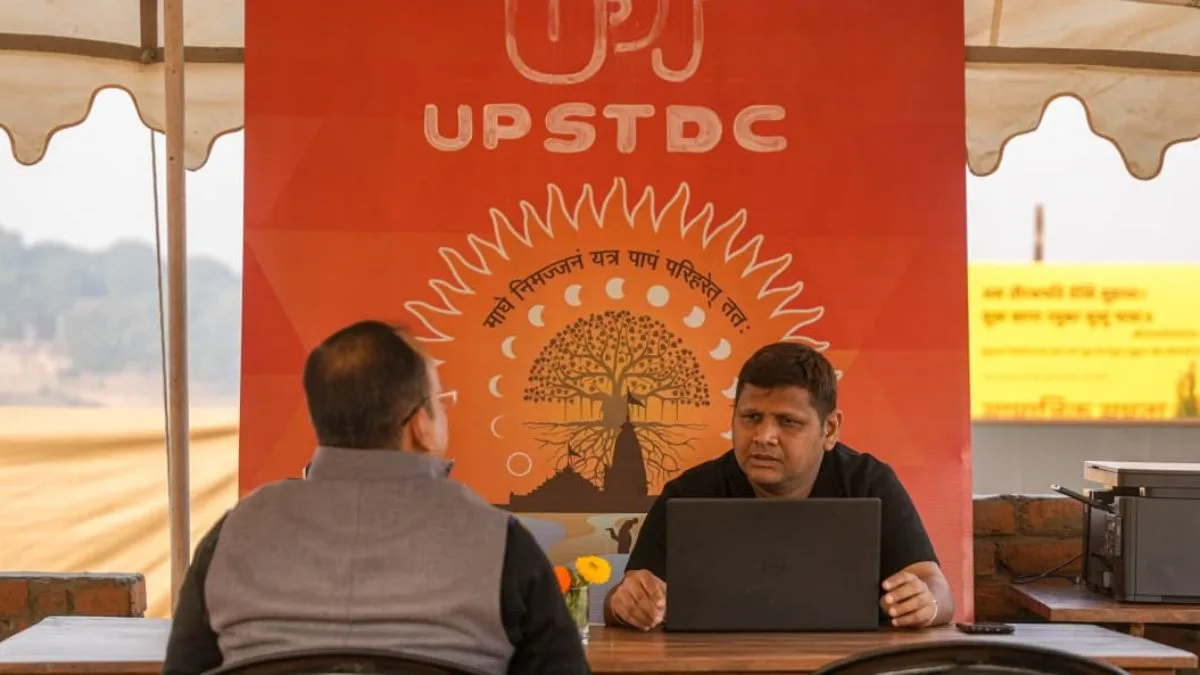
As ‘Sangam City’ witnesses a steady build-up of pilgrims ahead of Makar Sankranti, arrangements for Magh Mela 2026 have moved into an important phase. Keeping in view the expected rise in devotee arrivals during the peak bathing days, the Uttar Pradesh State Tourism Development Corporation has put in place a dedicated Sangam Tent Colony near the riverfront to offer a structured, safe and comfortable stay option for visitors.

This Tourism Department initiative is distinct from privately operated tent cities and has been planned specifically to support the growing inflow of pilgrims during the Magh Mela period.

Located at Arail Sector-7, before Triveni Pushp, the Sangam Tent Colony has been developed with a focus on simplicity, order and convenience. A total of 50 cottages have been set up, catering to families, senior citizens and pilgrims who prefer a regulated accommodation close to the mela area. The layout and facilities have been designed to allow devotees to stay near the Sangam without facing the uncertainties that often accompany peak-season travel.

The accommodation is available in three categories. Premium cottages are priced at Rs 15,000 per night, Luxury cottages at Rs 11,500 and Deluxe cottages at Rs 7,500. The facility includes 12 Premium, 8 Luxury and 30 Deluxe cottages. The tariff includes arrangements for satvik meals, allowing pilgrims to follow their daily rituals without additional planning. Online booking has been opened through UPSTDC to help visitors plan their stay in advance and avoid last-minute inconvenience.

The tent colony also carries a quiet spiritual atmosphere. Yagyashalas have been set up where bhajan and kirtan are taking place regularly, while a Kalagram within the campus showcases local art and craft traditions, adding a cultural layer to the stay experience.

The initiative has also created space for local livelihoods during the mela. Under the ‘One District One Product’ programme, stalls featuring Prayagraj’s traditional moonj craft have been set up inside the tent colony.

Artisans are displaying and selling handcrafted baskets, pen stands, food containers, planters, and decorative items, drawing interest from devotees and tourists visiting the mela area.

Tourism and Culture Minister Jaiveer Singh said the Sangam Tent Colony reflects CM Yogi Adityanath’s approach of ensuring that large religious gatherings are supported by planned facilities that serve both pilgrims and local communities. He said Magh Mela is not only a festival of faith but also an opportunity to strengthen tourism systems and provide income avenues for local artisans and service providers. The UPSTDC-managed tent colony, he added, is aimed at meeting the pressure of rising footfall around Makar Sankranti while offering pilgrims an organised and dependable stay option close to the Sangam.

With the Magh Mela entering its busiest phase, the Sangam Tent Colony stands as a practical support system for devotees arriving in Prayagraj, helping them focus on their spiritual journey while the city prepares to host one of its largest annual gatherings.

Over 1 crore devotees expected for Makar Sankranti snan at Magh Mela

After the successful Paush Purnima snan, in which over 31 lakh devotees took a holy dip, the Mela administration has stepped up preparations for the upcoming Makar Sankranti Snan.

Statesman News Service | Prayagraj |

The second sacred bathing festival (snan) of Prayagraj’s Sangam-based Magh Mela will be held on Makar Sankranti, on January 15.

After the successful Paush Purnima snan, in which over 31 lakh devotees took a holy dip, the Mela administration has stepped up preparations for the upcoming Makar Sankranti Snan.

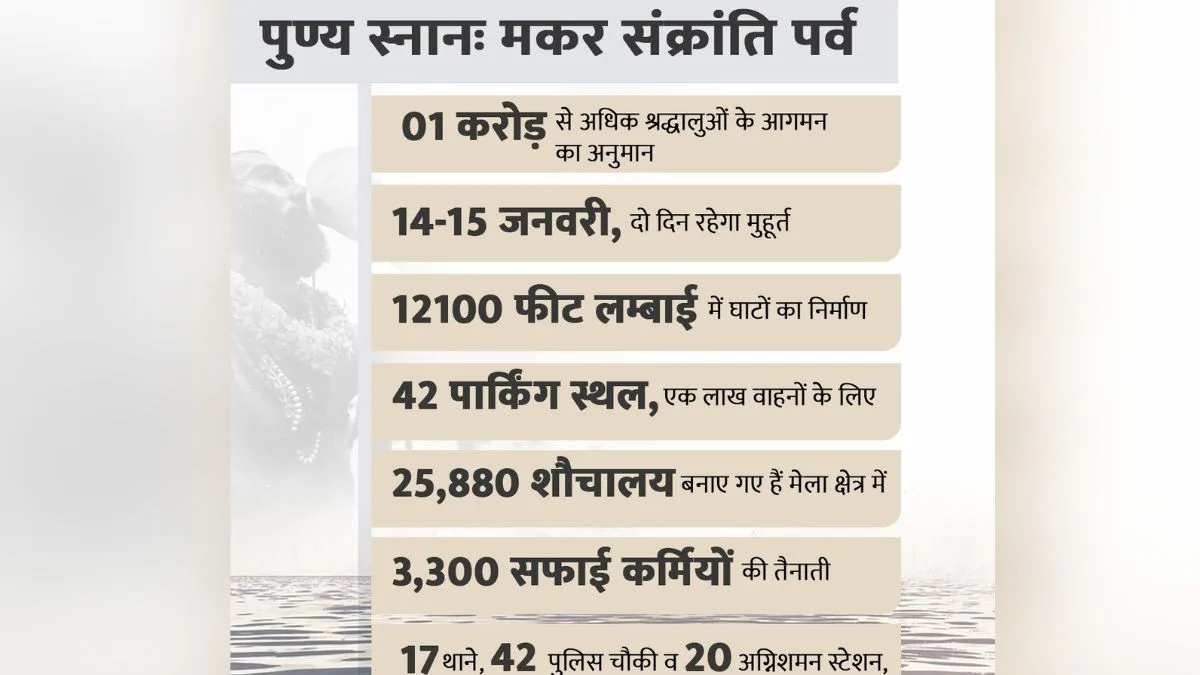
Special arrangements have been made at the bathing ghats to ensure smooth movement, with parking facilities set up closer to the ghats so that devotees have to walk as little as possible. The administration estimates that more than 1 crore devotees will take the holy dip.

In Magh Mela-2024, on this festival, over 28.95 lakh devotees did snan. Seeing the estimate of almost three times more devotees’ arrival this time, the Mela administration has also prepared a mega plan for crowd management.

Magh Mela officer Rishiraj said that considering crowd management and smooth traffic, 42 temporary parking spaces have been developed, in which almost over 1 lakh vehicles can park. In Magh Mela 2025-26, a total of 12,100 feet in length of ghats construction was done.

According to the Mela officer, to ensure water availability in the Ganga in Magh Mela, daily 8000 cusec water is being released from Kanpur’s Ganga Barrage. Tapping of all 81 drains falling in both rivers in Prayagraj has been done. Continuous monitoring of the Ganga water is happening.

On the state’s instructions, in Magh Mela, special emphasis is given on cleanliness, security, and smooth transport. Mela officer said that for making Magh Mela open defecation free (ODF), odor-free, and Ganga zero discharge, approx 25,880 toilets, 11,000 dustbins, over 10 lakh liner bags, 25 suction vehicles, and 3,300 cleaning workers were deployed.

Magh Mela police superintendent Neeraj Pandey informed that in the entire mela area, 17 police stations and 42 police posts, 20 fire stations, 07 fire posts, 20 fire watch towers, 01 water police station, 01 water police control room, and 04 water police sub control rooms were established.

In addition to previously established CCTV cameras in the city and mela area, over 400 cameras, including AI-equipped cameras, are arranged for crowd monitoring, crowd density analysis, incident reporting, cleanliness, and security surveillance.

Aditya Sahu set to be Jharkhand BJP president; formal announcement on January 14

The nomination process at the state BJP office on Tuesday drew considerable activity through the day, but only one nomination was filed during the stipulated time between noon and 2 pm.

Statesman News Service | Ranchi |

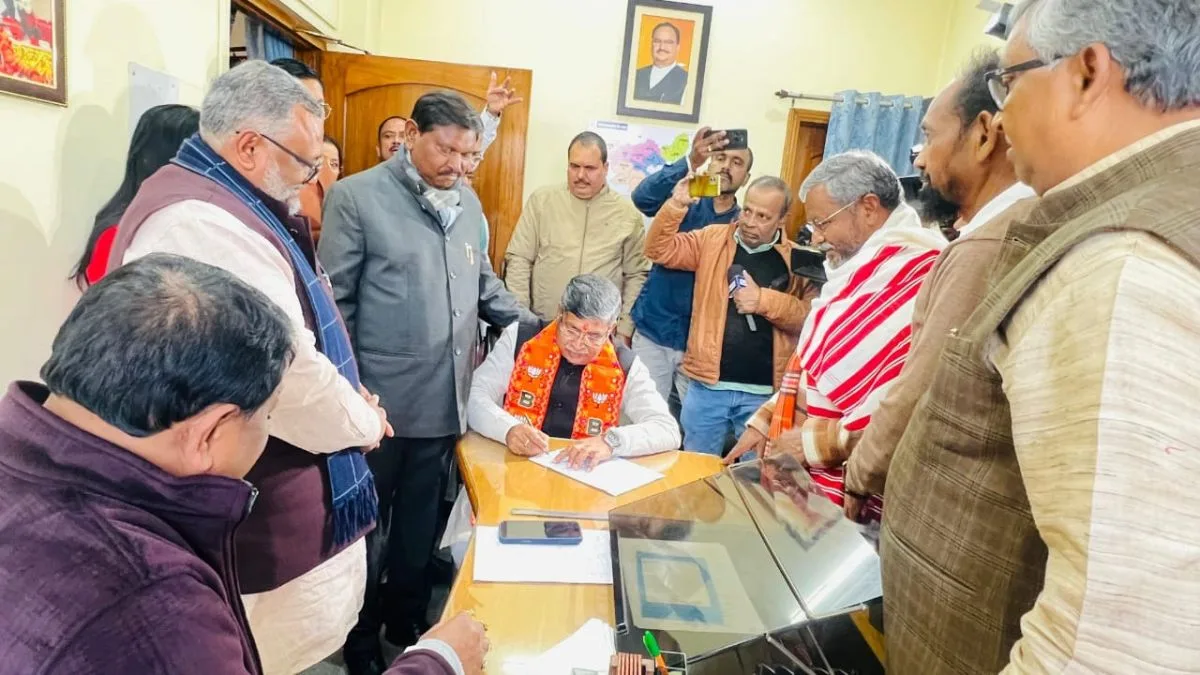
Aditya Sahu is set to become the next president of the Bharatiya Janata Party Jharkhand, with his election virtually assured after he emerged as the sole nominee for the post. The formal declaration will be made on January 14.

The nomination process at the state BJP office on Tuesday drew considerable activity through the day, but only one nomination was filed during the stipulated time between noon and 2 pm. At around 1 pm, Sahu submitted his papers before the party’s designated election officer and Union minister Joel Oraon, in the presence of senior party leaders.

The nomination was proposed by a broad cross-section of the party leadership, including current state president Babulal Marandi, former Union minister Kariya Munda, former chief minister Raghubar Das, Champai Soren, Madhu Koda, Sameer Oraon, Arjun Munda, and several other senior leaders.

With no other candidate in the fray, Sahu’s elevation is considered a formality. Briefing the media, Joel Oraon said the names of the newly-elected state president and members of the BJP National Council would be announced on January 14 at 2 pm. Sahu is currently serving as the party’s working state president.

The organisational elections also covered the National Council, where 21 nominations were filed for 21 available seats, effectively rendering that exercise uncontested as well. The results for these positions will also be declared on January 14.

State election in-charge Pradeep Verma said the party was following its internal democratic process, which includes scrutiny of nominations and a window for withdrawals. With these steps nearing completion, the organisational election process that began last year is now moving towards its conclusion, amid congratulations and greetings for Sahu from senior leaders at the state party office.

Carbon Edge Knowledge Series highlights pathway for MSMEs in India’s green transition

The publication brings together perspectives from industry leaders, policymakers, and environmental experts, outlining strategic recommendations to enhance the efficiency, credibility, and inclusiveness of India’s carbon markets.

Statesman News Service | New Delhi |

The PHD Chamber of Commerce and Industry (PHDCCI), through its Carbon Market Forum and Centre for Sustainability, has unveiled the Special Edition Carbon Edge Knowledge Series, offering a comprehensive assessment of India’s rapidly evolving carbon trading and sustainability landscape.

The publication brings together perspectives from industry leaders, policymakers, and environmental experts, outlining strategic recommendations to enhance the efficiency, credibility, and inclusiveness of India’s carbon markets. It highlights the growing importance of carbon markets in mobilising climate finance, incentivising emissions reductions, and aligning economic growth with environmental responsibility

Emphasising the need for robust institutional frameworks, the series calls for greater coherence between India’s Climate Finance Taxonomy, global carbon market mechanisms, and international standards. Such alignment, it notes, is essential to ensure transparency, environmental integrity, and investor confidence in the country’s emerging carbon ecosystem.

A key focus of the knowledge series is on Micro, Small, and Medium Enterprises (MSMEs). It outlines the challenges faced by MSMEs in adopting Environmental, Social and Governance (ESG) practices, complying with Business Responsibility and Sustainability Reporting (BRSR) requirements, and undertaking carbon accounting.

To address these barriers, the publication recommends simplified methodologies, targeted capacity-building initiatives, and the use of digital tools to enable MSMEs to participate more effectively in sustainability initiatives and carbon markets.

The series also highlights sector-specific opportunities across agrivoltaics, manufacturing decarbonisation, smart buildings, and blue carbon ecosystems. It underscores the role of water management and ecosystem restoration in strengthening climate resilience, while examining global policy developments such as the European Union’s Carbon Border Adjustment Mechanism (CBAM) and their potential implications for Indian industry.

Reaffirming its commitment to sustainable development, PHDCCI stated that it will continue to support industry and stakeholders in advancing India’s climate goals, fostering inclusive participation in carbon markets, and accelerating the transition towards a low-carbon and resilient economy.

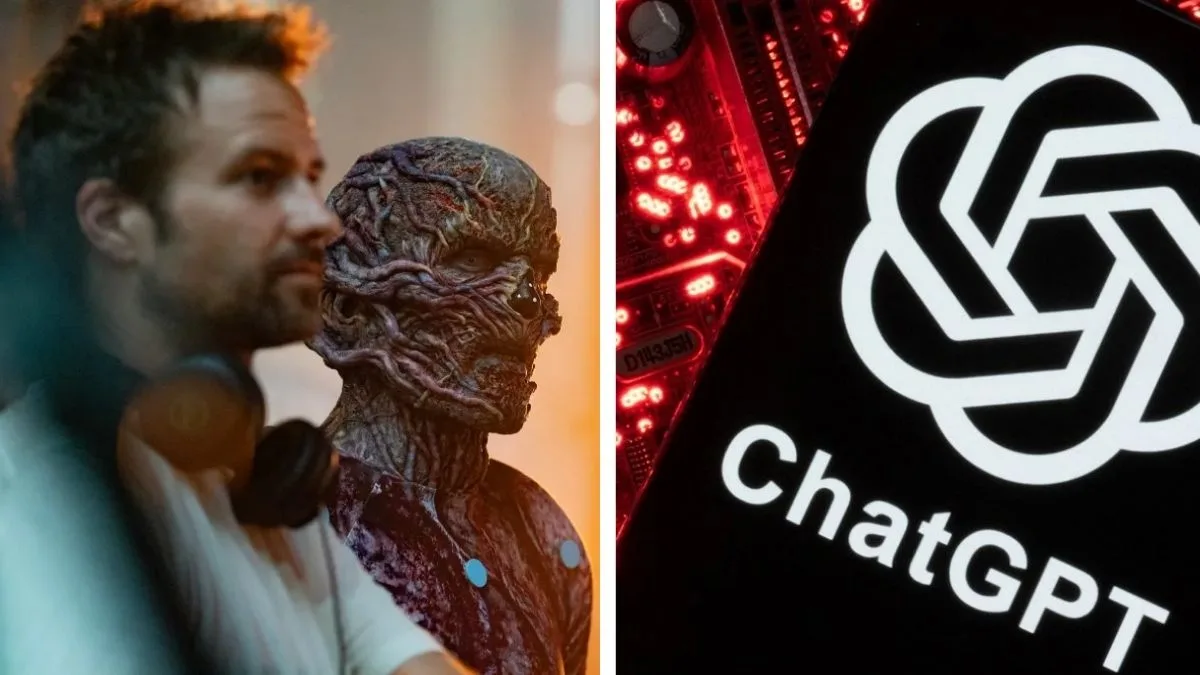
Stranger Things documentary written with ChatGPT? Alleged AI tabs and unfinished scripts ignite backlash

The ‘Stranger Things’ documentary ‘One Last Adventure’ has fans buzzing online after blurry screenshots suggested possible ChatGPT use in writing season 5. Coupled with unfinished scripts and missing cast members, the behind-the-scenes footage has sparked widespread debate.

Statesman News Service | New Delhi |

If you thought ChatGPT was only for writing college assignments or venting out after a bad breakup (not recommended), ‘Stranger Things’ fans might have you thinking it is secretly writing scripts now.

The new Netflix documentary, ‘One Last Adventure: The Making of Stranger Things 5’, dropped on January 12. And instead of cheers, it stirred a digital storm. Fans tuned in hoping for behind-the-scenes magic from the show’s final season, but what they got was controversy.

Behind the curtain of ‘Stranger Things’ Season 5

The two-hour doc promised a peek into the Duffer brothers’ creative process, showing cast rehearsals, writer discussions, interviews about bringing the fifth season to life. From inside the writers’ room to on-set bloopers, viewers were expecting nostalgia and excitement.

But one small detail quickly overshadowed the intended celebration.

The ChatGPT tab in ‘Stranger Things’ that broke the internet

Eagle-eyed fans spotted what they think were ChatGPT tabs open on a laptop in one behind-the-scenes shot.

Screenshots spread fast on social media, particularly on X, igniting a frenzy of speculation. Was ‘Stranger Things’ season 5 secretly AI-assisted? The accusation hit especially hard among viewers already critical of the final season’s plot and pacing.

It’s worth noting that the screenshots were blurry, and no one can confirm for sure that the tabs were ChatGPT. Yet, in true online fashion, fans ran with the idea of mixing disappointment over the finale with outrage over potential AI involvement.

More controversies

Adding fuel to the fire, the Duffer brothers admitted in the documentary that they started production on season 5 without a finished finale script. That revelation caused fans to raise eyebrows and questions about the show’s planning.

Maya Hawke, who plays Robin, is shown asking director Shawn Levy to tweak a line because other characters weren’t aware Robin and Vickie were dating.

Also Read: Stranger Things Episode 9 on Netflix: Is there more after the Season 5 finale?

While Levy accommodated the change, fans online weren’t impressed.

Some viewers also noticed that David Harbour (Jim Hopper) and Winona Ryder (Joyce Byers) were absent from the documentary entirely. Their absence only added to the chatter with fans questioning why major cast members weren’t interviewed or shown during the final season’s making.

The missing pieces went on to leave fans speculating about behind-the-scenes drama or creative conflicts.

So far, neither Netflix nor the Duffer brothers have commented on the ChatGPT controversy. Whether AI really played a role or not, truth might come out soon. But the incident has certainly made ‘Stranger Things’ finale feel even more dramatic than Upside Down itself.

IIT BHU and FAARD sign MoU for integrating cutting-edge agricultural research

The MoU was signed on Tuesday by Prof. Punjab Singh, Chairman of the FAARD Foundation, and Prof. Amit Patra, Director of IIT (BHU). This agreement will be effective for the next five years.

Statesman News Service | Varanasi |

In a significant step towards agricultural innovation and rural development, a Memorandum of Understanding (MoU) was signed between the Indian Institute of Technology (IIT-BHU) and the Foundation for Advancement of Agriculture and Rural Development (FAARD Foundation).

The MoU was signed on Tuesday by Prof. Punjab Singh, Chairman of the FAARD Foundation, and Prof. Amit Patra, Director of IIT (BHU). This agreement will be effective for the next five years.

The MoU’s objective is to benefit farmers, rural youth, and Farmer Producer Organizations (FPOs) by integrating cutting-edge research, digital technology, and on-the-ground implementation.

Under this strategic partnership, both institutions will work together to develop Eastern Uttar Pradesh as a ‘lighthouse region’ for agricultural innovation. This will combine IIT (BHU)’s technical expertise with the FAARD Foundation’s extensive rural network.

Addressing the gathering, Prof. Amit Patra, Director, IIT (BHU), said that this agreement reflects the institute’s commitment to transforming research into effective solutions at the grassroots level and providing technology-based empowerment to farmers.

Prof. Punjab Singh, Chairman of the FAARD Foundation, said that this partnership will provide farmers with better access to modern technology, knowledge, and markets, thereby strengthening their livelihoods and increasing their income.
Prof. Rajesh Kumar, Dean (Research & Development), IIT (BHU), while detailing the key areas of the MoU, said that this collaboration will focus on the demonstration and dissemination of smart farming techniques, the development of AI and IoT-based digital twin platforms, the establishment of digital knowledge repositories, promoting agricultural entrepreneurship among youth, integrating climate-smart and renewable energy solutions, capacity building of FPOs, providing practical training to students, conducting research trials on farmers’ fields, and developing jointly funded projects.

Five govt employees terminated in J&K on charges of terror links

The officials said he procured arms, ammunition, and funds for HM on cross-border directions and was intercepted by Ganderbal Police on 20 July 2024.

Statesman News Service | Jammu |

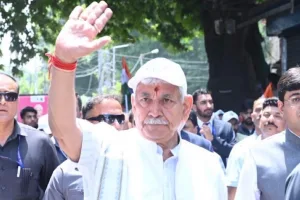
In a crackdown on terror networks within the administration, Lieutenant Governor of Jammu and Kashmir Manoj Sinha on Tuesday ordered termination of five government employees for their alleged active links with banned terrorist organisations.

Officials said that the dismissed employees include Mohammad Ishfaq, a government school teacher; Tariq Ahmad Rah, a laboratory technician; Bashir Ahmad Mir, an assistant lineman; Farooq Ahmad Bhat, a Class-IV employee in the Forest Department; and Mohammad Yousf, a driver in the Health and Medical Education currently lodged in Central Jail Srinagar, has been identified as an indexed Over Ground Worker (OGW) of Hizb-ul-Mujahideen (HM) with sustained contact with Pakistan-based handler Bashir Ahmad Bhat.

The officials said he procured arms, ammunition, and funds for HM on cross-border directions and was intercepted by Ganderbal Police on 20 July 2024. The operation led to the seizure of a pistol, ammunition, a grenade, and Rs.5 lakh cash under FIR No. 183/2024 registered under the Arms Act, Explosives Act, and UAPA. Investigations revealed his involvement in Rs.3 lakh arms procurement at SKIMS Soura and misuse of his ambulance-driver position as operational cover, officials said.

Farooq Ahmad Bhat, a Forest Department employee, was found to have maintained long-standing links with Hizb-ul-Mujahideen and played a key role in the 2005 escape of HM commander Mohammad Amin Baba. Officials said he coordinated logistics, arranged an official vehicle, and personally escorted the commander from Bijbehara to Attari for illegal cross-border movement.

Intelligence inputs further revealed his continued role in providing shelter, transport, and support to terrorists, posing a serious insider threat.Tariq Ahmad Rah, a Lab Technician at SDH Bijbehara, allegedly misused his official position to maintain links with Hizb-ul-Mujahideen through his uncle, commander Mohammad Amin Baba. Investigations confirmed his involvement in facilitating the commander’s escape in 2005 by arranging shelter and logistical support, as well as his continued radicalisation efforts and misuse of official access, officials said.

Mohammad Ishfaq, a government teacher from Bhaderwah, was found to be in sustained contact with Lashkar-e-Taiba commander Mohammad Amin alias Khubaib. Officials said he was involved in a conspiracy to assassinate a police officer in Doda and was linked to arms movement and terror coordination. Arrested in April 2022 and charge-sheeted under the Unlawful Activities (Prevention) Act, he allegedly used his position to radicalise youth and continued ideological influence even from jail.

He is currently lodged at Kot Bhalwal Jail in Jammu.Bashir Ahmad Mir, an Assistant Lineman from Gurez, and has been identified as a long-term OGW of Lashkar.

Officials said he exploited his government position to provide shelter, logistical assistance, and movement guidance to LeT terrorists in the Bandipora–Gurez belt.

His involvement culminated in a 2021 encounter in which two terrorists were killed inside his house. Subsequent investigations and intelligence inputs indicated that he continued ideological support and covert facilitation for the outfit even after securing bail.

SP stages protest in Lucknow over murder of Ronu Kashyap in Meerut, demands immediate arrest of accused

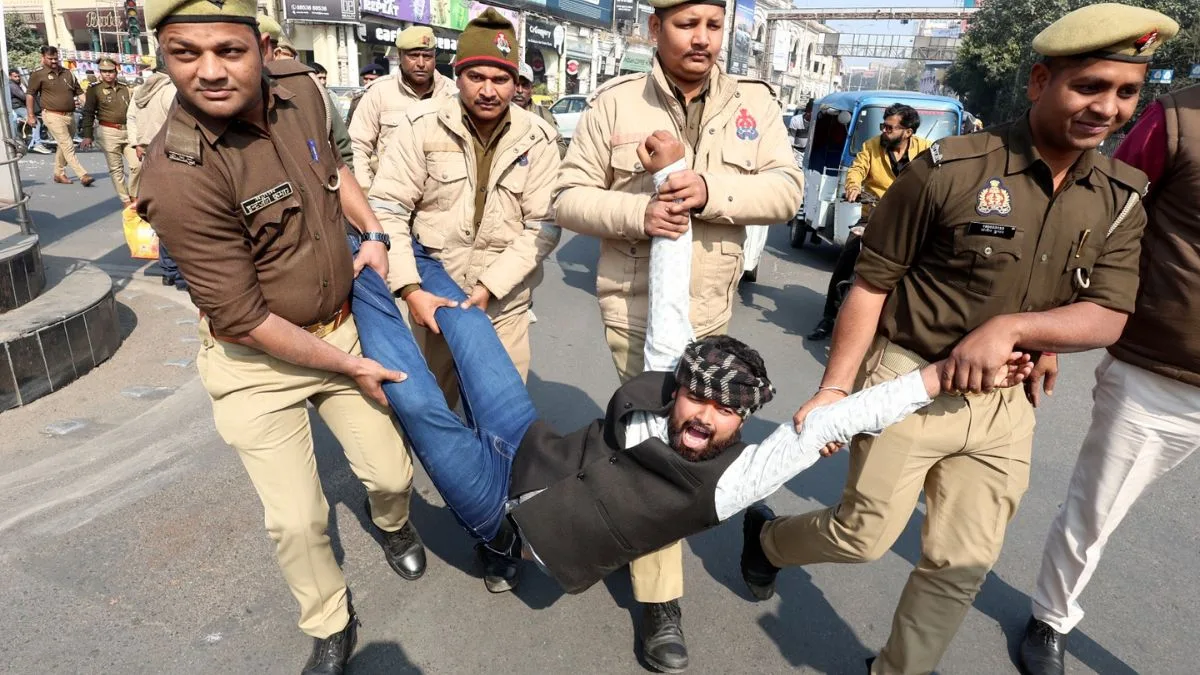
The SP activists raised slogans, accusing the government of deteriorating law and order in the state. Police reached the spot and escorted the protesters to Eco Garden.

Statesman News Service | Lucknow |

The murder of Rohit alias Sonu alias Ronu Kashyap in Meerut heated up the political atmosphere in the state capital on Tuesday as Samajwadi Party (SP) workers staged a strong protest against the Uttar Pradesh government.

The SP activists raised slogans, accusing the government of deteriorating law and order in the state. Police reached the spot and escorted the protesters to Eco Garden.

During the protest, there was pushing and shoving, and heated arguments were witnessed between the workers and the police.

Samajwadi Party workers alleged that crime is continuously increasing in the state and that common people feel unsafe. They demanded the immediate arrest of all the accused in the Sonu Kashyap murder case and justice for the victim’s family.

Samajwadi Party worker Jeetu Kashyap, who participated in the protest, alleged that the police are avoiding action under pressure from the government.

He said that while the minor accused has been sent to a juvenile detention centre, three or four other accused are still roaming freely, creating fear among the victim’s family. The deceased’s brother has also expressed fear for his life and demanded security.

SP leaders accused the government of adopting a double standard, claiming that a tough stance is taken on incidents outside the state, while the government remains silent on similar incidents within Uttar Pradesh. Before the situation could escalate further, the police detained all the protesters, put them on buses, and sent them to Eco Garden.

Communist Party of China delegation meets RSS, BJP leaders; Congress fumes

RSS sources, meanwhile, described the meeting as a “pure courtesy call facilitated at the behest of the Chinese delegation,” which had “expressed desire to meet the Sangh leadership.” “It is a courtesy call. The request came from them, and we obliged. There is no agenda to the meeting,” according to a Sangh functionary.

VIBHA SHARMA | New Delhi |

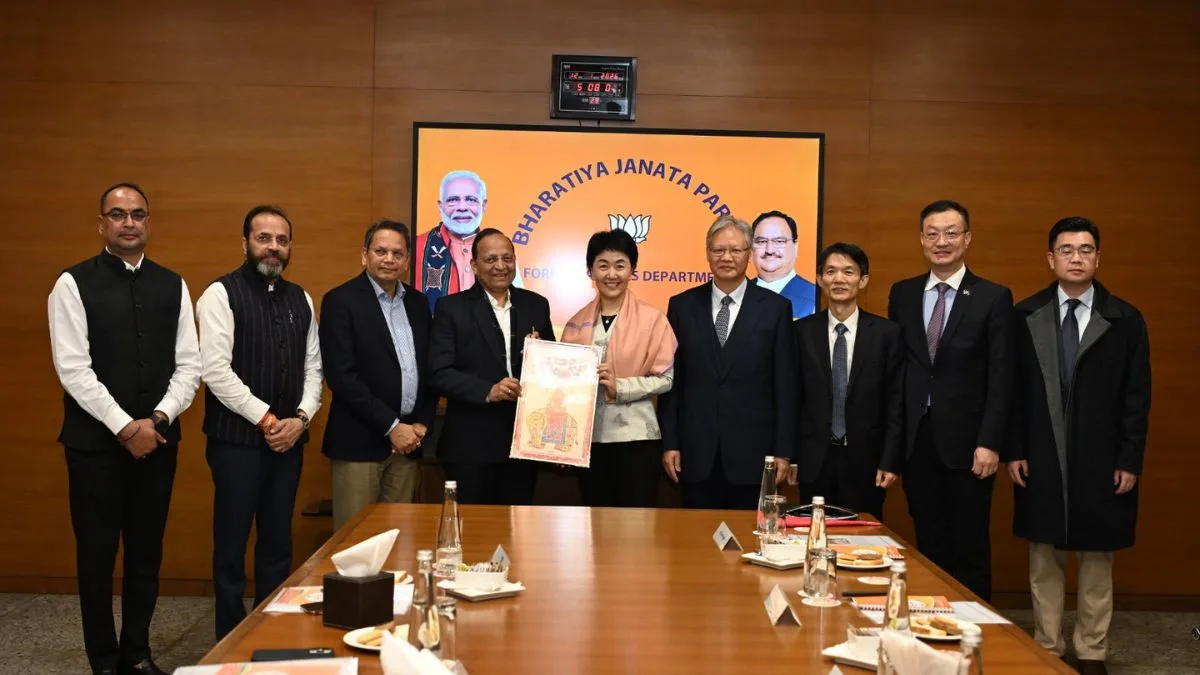
A day after a delegation of the Communist Party of China (CPC) met BJP leaders, the group on Tuesday called on Rashtriya Swayamsevak Sangh (RSS) general secretary Dattatreya Hosabale at the Sangh’s Keshav Kunj headquarters in the national capital. Aimed at facilitating communications, the meetings triggered a political row with the opposition Congress criticising the saffron leadership for engaging with Chinese representatives despite Beijing’s reported claims over the Shaksgam Valley in Jammu and Kashmir.

RSS sources, meanwhile, described the meeting as a “pure courtesy call facilitated at the behest of the Chinese delegation,” which had “expressed desire to meet the Sangh leadership.” “It is a courtesy call. The request came from them, and we obliged. There is no agenda to the meeting,” according to a Sangh functionary.

The interaction was significant given the limited engagement between the BJP’s ideological fountainhead and Chinese representatives. The Sangh did not invite Chinese diplomats to Sarsanghchalak Mohan Bhagwat’s lecture series (which was attended by representatives of several other countries) last year. The decision was linked to Operation Sindoor, following which neither Pakistan nor China was invited.

The meeting with the BJP was the first party-to-party contact between the two ruling parties since the recent thaw in India-China relations following the 2020 Galwan clashes along the Line of Actual Control.

On Monday, the CPC delegation led by Sun Haiyan, Vice Minister of the International Department of the CPC, visited the BJP headquarters. Chinese Ambassador to India Xu Feihong was also present in the meeting, which on the BJP side was headed by party general secretary Arun Singh.

According to Dr Vijay Chauthaiwale, in-charge of the BJP’s Foreign Affairs Department, discussions focused on advancing “inter-party communications between BJP and CPC.”

“A delegation of the Communist Party of China under the leadership of H.E. Ms Sun Haiyan, (Vice Minister, IDCPC) visited the BJP head office today. During the discussion, a BJP delegation headed by party Gen Sec Shri Arun Singh Ji discussed at length the means to advance inter-party communications between BJP and CPC,” Chauthaiwale posted following the meeting. Chauthaiwale coordinates the BJP’s international outreach, including engagement with the Indian diaspora through Overseas Friends of BJP chapters and interactions with foreign diplomats.

Observers decode these interactions as “well-thought-of inter-party exchanges and perhaps also easing the existing political mistrust.”

“The presence of the Chinese Ambassador underscores official endorsement, aligning with recent economic pacts, including on rare earth supplies. It is in line with ongoing de-escalation via India’s “3 Ds”—disengagement, de-escalation, de-induction—and mutual respect principles, amid debate on ties with China. The follow-up meeting with RSS indicates deeper, tactical outreach. The CPC meeting the ruling party and its ideological parent, underlines a calibrated effort to broaden political channels of communication amid an otherwise strained India-China relationship. Coming at a time when India is engaged in a tariff war with the USA, the party-to-party interactions with a neighbour like China become even more significant,” they add.

The last such engagement between the two parties was when the BJP, led by its then president and current Union Minister Nitin Gadkari, visited China before the saffron party came to power in 2014. “The BJP President, Nitin Gadkari, visited China on a five-day goodwill mission from 20th January, 2011, at the invitation of the Central Committee of the Communist Party of China,” according to a report on Gadkari’s “goodwill visit” on the BJP website.

The Congress questioned the optics of these engagements, citing border tensions and “territorial encroachments.” Congress leader Supriya Shrinate launched a fierce attack, raising national security concerns and accusing China of asserting territorial claims even as political engagement continued in the capital.

“China has called the Shaksgam Valley of Jammu and Kashmir its own territory. For the past several days, China has been carrying out construction here in the name of CPEC. After Ladakh, how has China now entered this area as well? How is China daring to act so brazenly? Meanwhile, BJP leaders are holding meetings with China’s Communist Party!” Shrinate wrote on X.

The outreach also comes amid repeated attacks by the BJP on the Congress leadership over its alleged “proximity to the CPC,” referencing past meetings and “memoranda of understanding” between the two parties. The BJP had accused the Congress of “undermining national security” by signing the MoU with the CPC.

Quick-commerce platforms to ditch ’10-minute delivery’ after govt intervention; AAP’s Raghav Chadha welcomes decision

Last month, Chadha had raised the issue in Parliament, demanding a ban on 10-minute delivery.

Statesman News Service | New Delhi |

Aam Aadmi Party (AAP) Rajya Sabha MP Raghav Chadha on Tuesday expressed his gratitude to the Central government for its compassionate intervention and persuading quick-commerce platforms to remove the “10-minute delivery claim” from their branding.

According to reports, major e-commerce platforms such as Swiggy, Zomato, Blinkit and Zepto have decided to halt 10-minute delivery services following a meeting of Union Labour Minister Mansukh Mandaviya.

Reacting to the development, Chadha said, “Satyamev Jayate. Together, we have won..I am deeply grateful to the Central Government for its timely, decisive and compassionate intervention in enforcing the removal of the “10-minute delivery” branding from quick-commerce platforms.”

The AAP MP, who has been prominently raising the issue of poor working conditions and deadline pressure on delivery agents, said the decision was “much needed” step as the 10-minute delivery tag put constant and dangerous pressure on delivery agents.

‘No more 10-minute delivery’: Quick commerce players do away with deadline after labour minister intervenes

“This step will help ensure safety of the delivery riders, and everyone who shares our roads,” the AAP leader said.

Last month, Chadha had also raised the issue in Parliament, demanding a ban on 10-minute delivery.

Raising concern over the inhumane working conditions of quick commerce delivery agents, he flagged the issues faced by delivery agents of quick commerce and instant commerce companies like Zomato, Swiggy and Blinkit.

These quick-commerce and instant-commerce companies have reached billion-dollar valuations riding on the shoulders of this silent workforce. Yet the condition of these gig workers is worse than that of daily-wage labourers,” he noted.

Sharing the everyday struggles of delivery agents, the AAP MP raised three key issues: the oppression of speed and delivery time — the dangerous trend of “10-minute delivery; the fear of customer harassment; and dangerous working conditions”.

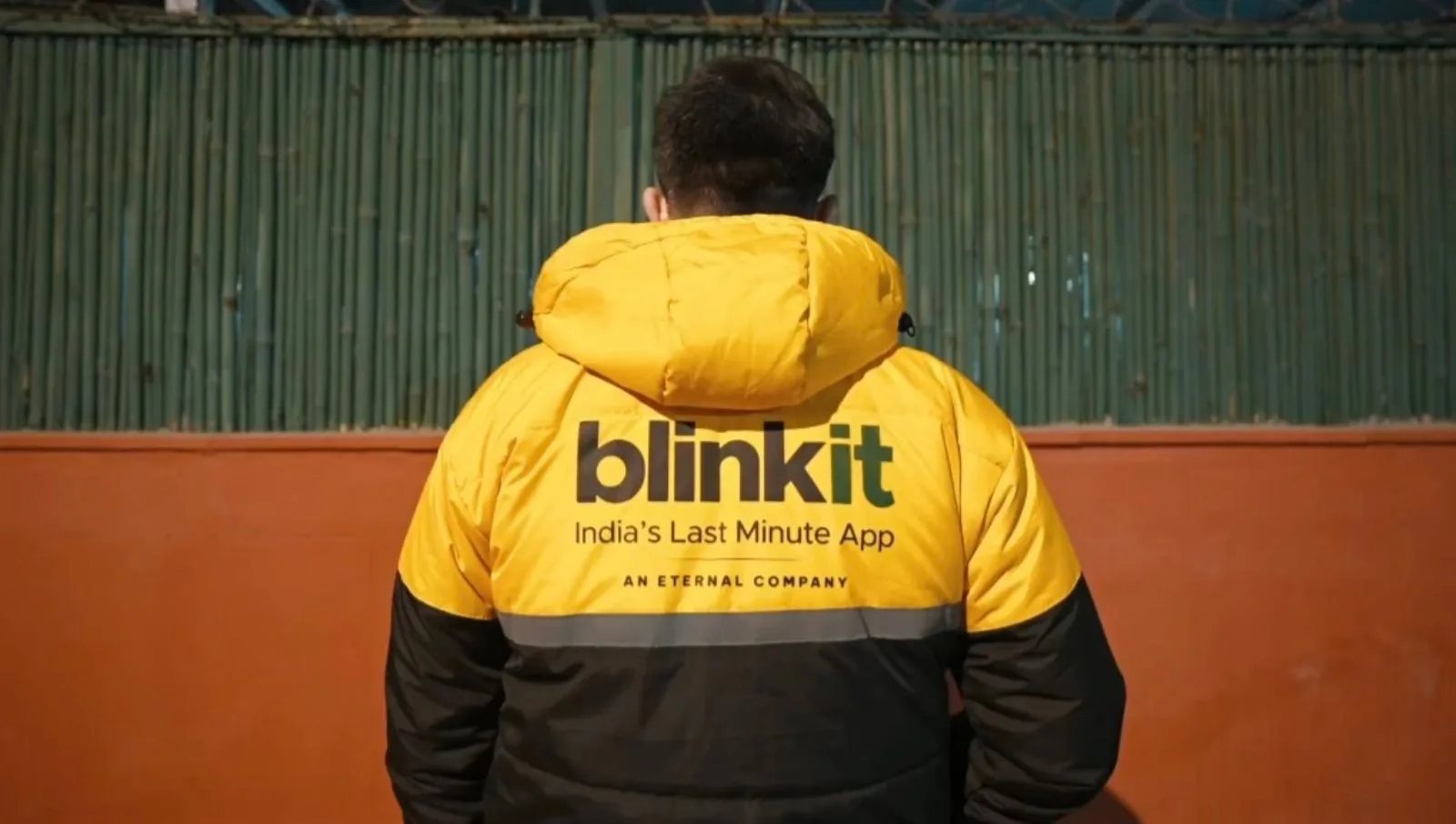
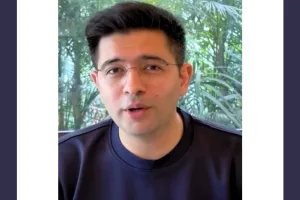
Earlier on Monday, Chaddha spent a day working as a delivery agent to experience the challenges first-hand. He also shared a video of him working as a delivery agent, wearing a Blinkit jacket.

According to reports, Blinkit has already removed the 10-minute delivery promise from its branding and other aggregators are also likely to follow the suit in the coming days.