Logo

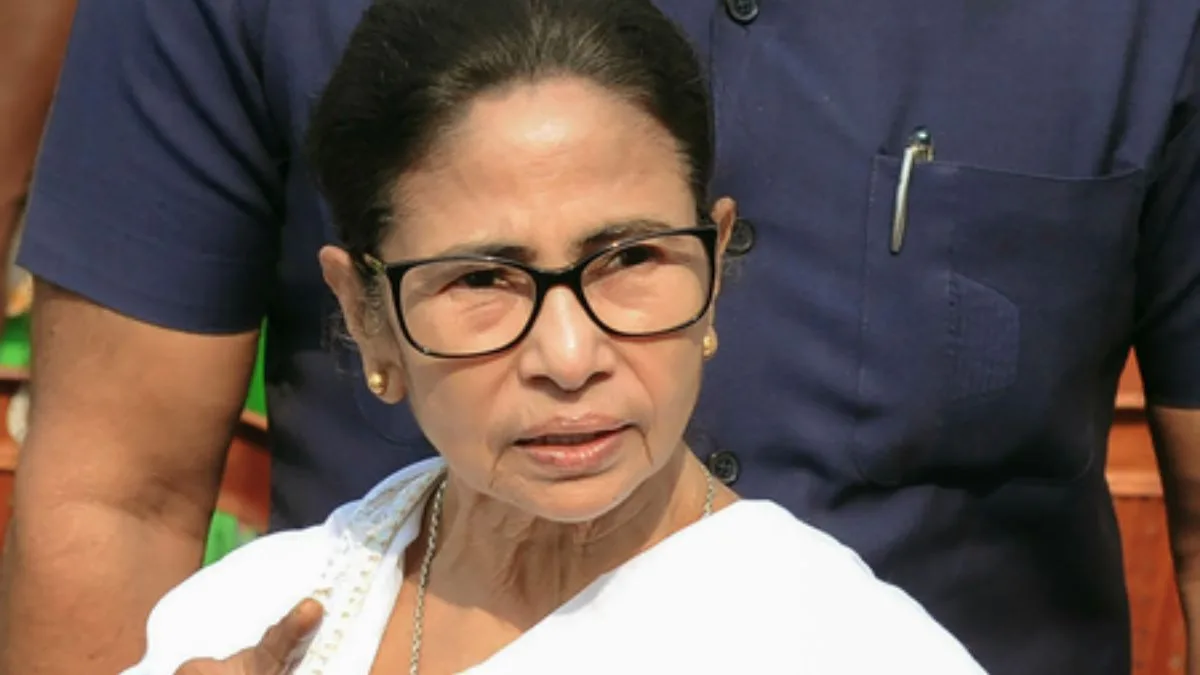
Mamata Banerjee to meet CEC in Delhi today over West Bengal electoral roll revision

Mamata Banerjee will meet the Chief Election Commissioner in Delhi today over concerns on West Bengal’s electoral roll revision, while also seeking opposition unity during Parliament’s Budget Session.

Statesman News Service | Mumbai |

West Bengal Chief Minister Mamata Banerjee will on Monday meet Chief Election Commissioner Gyanesh Kumar in New Delhi, with the state’s Special Intensive Revision (SIR) of electoral rolls at the centre of the talks.

The meeting is scheduled at the headquarters of the Election Commission of India. It follows a sharply worded letter sent by the Chief Minister to the CEC over the weekend, flagging concerns about how the revision exercise is being carried out in West Bengal.

According to IANS, Banerjee left for the national capital on Sunday afternoon. Her itinerary includes several engagements, most of them linked to the SIR issue.

She is also expected to reach out to senior leaders of opposition parties during her stay. The aim, party sources say, is to build a common position against the revision process.

The timing of the visit is deliberate. Parliament is in session for the Union Budget, ensuring the presence of top opposition leaders in Delhi.

Why the SIR has triggered a political flashpoint

The Chief Minister’s letter to the CEC signals a confrontational meeting ahead. In it, she questioned the authority granted to special roll observers and micro-observers, saying such appointments have been made only in West Bengal.

Her objection goes beyond oversight. She argued that these observers have been given approval powers, not merely supervisory roles.

In her words, this has left electoral registration officers (EROs) and assistant electoral registration officers (AEROs) “helpless, isolated and reduced to mere spectators”.

Banerjee further wrote that extending such powers to observers runs counter to “democratic ethos, federalism, and fundamental rights” guaranteed under the Constitution.

What happens next in Kolkata

Her return date has not been officially fixed. However, Trinamool Congress leaders indicated she is likely to be back before February 5.

That date matters. A “vote on account” is due to be presented in the West Bengal Assembly. The budget session will also see the government move two key motions.

One will criticise the role of central agencies such as the CBI and ED in the state. The other will formally condemn the manner in which the SIR is being conducted.

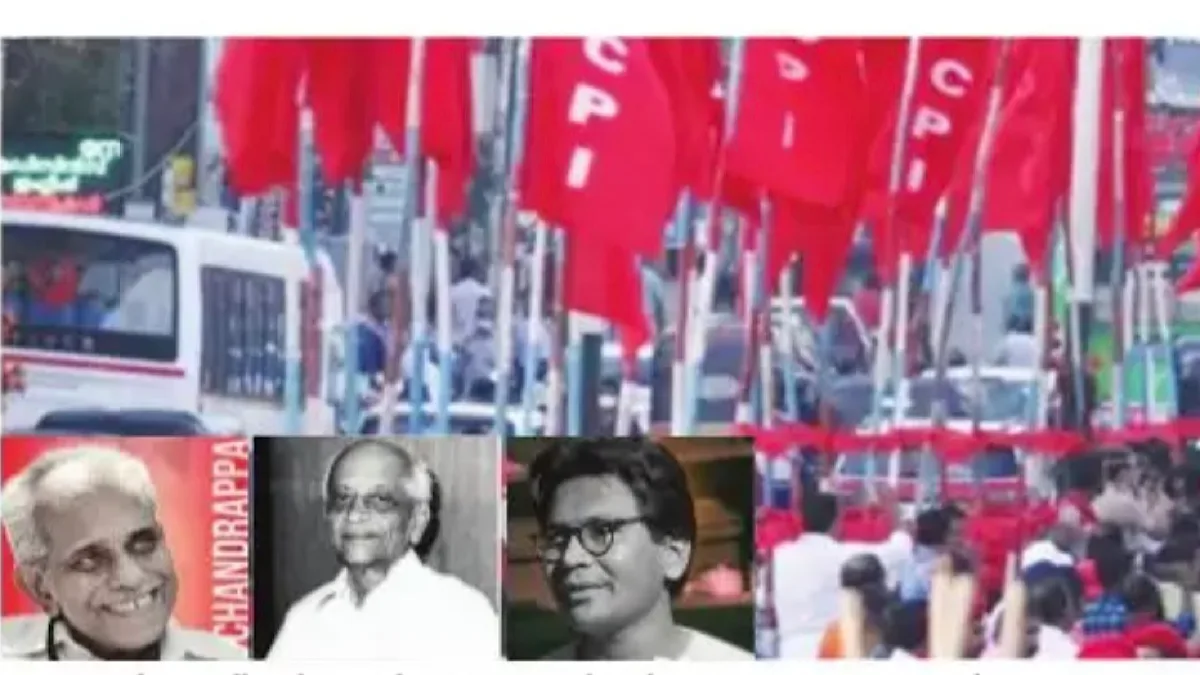
Last Bastion Crumbling ~ I

A few months before his demise in 2012, CK Chandrappan, CPI Kerala State Secretary, called me ~ I was at the time a member of the Kerala Public Service Commission ~ to the MN Memorial Building in Thiruvananthapuram to discuss an urgent matter.

DR. AJAYAKUMAR KODOTH | New Delhi |

A few months before his demise in 2012, CK Chandrappan, CPI Kerala State Secretary, called me ~ I was at the time a member of the Kerala Public Service Commission ~ to the MN Memorial Building in Thiruvananthapuram to discuss an urgent matter. When I stepped into his room, he seemed to awake from deep thought.

Suddenly, he said something that startled me: “The CPI-M is going to sink!” My immediate query was: “Then, what about the CPI?” The reply came instantaneously: “What else? CPI will also sink along with it!” When Chandrappan uttered those words nearly 15 years ago, the CPI-M in Bengal had just imploded after being in power for 34 years. Not long afterwards, a similar phenomenon took place in Tripura. So, what do the results of the recently-concluded local body elections in Kerala point to, and what portents do they hold for the upcoming Assembly poll? Is not the CPI-M in Kerala on the path towards the same destination? As CP John, the Kerala Left leader told me in a private conversation, the role played by the CPI whenever it saw the Left go off-track in Kerala, was that of a bed-bug. Occasionally, it bit Pinarayi Vijayan but if he made the slightest movement, it hid itself from plain sight. At the next opportunity, it bit again and quickly disappeared from view.

A shift from this trend happened only recently when the PM SHRI issue cropped up. While that change of attitude has to be duly acknowledged, it alone will not be enough to keep the CPI from drowning along with the CPI-M. What is the reason for the local bodies’ poll debacle of the CPI-M in Kerala, its last outpost? Isn’t it a fact that, ideologically speaking, the party has reached a cul-de-sac? Do the CPI-M or the Indian Left have an effective strategy or national policy to confront Hindutva forces in contemporary India? The CPI-M took birth in 1964, after splitting the CPI down the middle, and identifying the Congress as its arch enemy. Today, in Kerala, the only state in which it remains electorally relevant, has it reconsidered its anti-Congress stand or dismantled its Stalinist organizational system in order to be in sync with the times? The answer is expressly not in the affirmative.

Is the CPI-M’s impending irrelevance any wonder, then? Not only the results of the latest local body elections, but the activities of the CPI-M in the last five years of its governance, as well as its organizational and policy-related changes, have shown beyond doubt that the CPI-M in Kerala is following in the footsteps of its comrades in West Bengal. The 1964 CPI split marked the beginning of the political destruction of the Left in India, but in the eyes of the CPI-M it was a sacred revolutionary act! Though differences of opinion existed within the Communist movement right from the beginning, these became intense and burst into the open in 1948, after India gained independence.

The central issue of debate then was whether India’s freedom was genuine or not. The sectarian group led by BT Ranadive trained its guns on the pioneering General Secretary and towering leader of the CPI, PC Joshi, and his policy of aligning himself with nationalism. The crucial arguments of the Calcutta Thesis, which Ranadive introduced in the 1948 party congress at Calcutta, were that the gaining of independence in 1947 was a mere case of power changing hands; Pandit Nehru was an agent of the British government, and an armed revolution had to be waged to unseat the Nehru government. There is no greater example of dogmatism to be found in the history of India’s Left movement.

The havoc it wreaked within the party and in the country was simply unimaginable. What Joshi, who gave a sense of direction to the Indian left movement for a long spell of thirteen years ~ from 1935 to 1948 ~ envisioned was a creative spirit of co-operation with the Nehru government in post-Independence India for the purpose of rebuilding our nation. But a group within the (undivided) CPI leadership saw this goal as a sin. Over the course of time, not only the sin but the “sinner” too became the object of hatred. The ingratitude and injustice that the Indian Communist movement showed towards Joshi was not just petty but self-defeating as we can now observe. Ironically, by the time the Calcutta Thesis was rejected as a flawed idea at the Madurai Party congress in 1953, Joshi had already been politically demonized and personally ostracized. The plain truth is that PC Joshi became the scapegoat for daring to take on the communist dogmas of the time and attempting to pursue solutions rooted in the Indian reality to uniquely Indian issues, albeit under a left and progressive umbrella.

Joshi, after the 1948-1953 period, spent the years till his death in 1980 pursuing his academic interests including writing the history of Indian communism, keeping up the pressure on the extremist elements of the Left through his prolific public writings, and swallowing the political slights and personal insults meted out to him by his erstwhile admirers, many of whose political- intellectual careers he had made. But the CPI-M did not end its campaign of calumny with Joshi. When the mantle of incremental, sensible, and progressive Left politics fell on SA Dange, they targeted him too. The spokespersons of the Calcutta Thesis continued to adhere to their narrow standpoints. Their fundamental arguments revolved around the class character of the Congress and the attitude to be adopted towards that party. In 1964, with China calling upon the Communist parties of Asian and African countries to initiate an “immediate revolution,” the split within the Communist Party of India became inevitable.

Dange and his supporters came to be known as “revisionists” who followed the Joshi line and were later accused of promoting “right-revisionism” within the Left, as it were! Although the CPI-M leaders went to the extent of misrepresenting Dange by portraying him as having written to the British government seeking a pardon while he was incarcerated in jail in pre-independent India, they did not succeed in destroying his spirit, like they arguably did with Joshi who, loyal to the end, refused to break ties with the CPI despite the humiliations heaped on him and the progressive forces in the Congress waiting to welcome him with open arms. Dange was perhaps less naïve than Joshi. For, in the General Election of 1957, Dange stood for and was elected as MP from the Bombay City Central constituency. That his margin of victory was higher than Nehru’s from the Phulpur parliamentary constituency is a matter of public record.

Dange became the Opposition leader in Parliament and AK Gopalan, the deputy Opposition leader. Despite his resounding electoral mandate, the CPI-M did hold Dange up to public ridicule. Obviously, intelligence goes awry when destruction is imminent. Both Joshi and Dange were always of the opinion that our nation’s greatest adversaries were: (i) Imperialism, and (ii) Extreme rightwing forces that extended cooperation to it. They also took the position that to fight these two threats, the CPI should participate in the nation-building process by cooperating with the Indian National Congress, the mainstream organization that spearheaded the freedom struggle.

What, then, does the extant political-electoral situation in contemporary times tell us against this backdrop? In present-day Kerala, the only geography where the communists as an electoral force are relevant (for now), it is clear that the CPI-M’s political stands ever since it came to power for a second time in the 2021 Assembly election are the cause of the party’s debacle in the recently held local body elections. It may be recalled that at its 1978 Bhatinda party congress, the CPI surrendered its policy of “national democratic revolution” at the feet of the CPI-M, and since then the ‘Big Brother’ has succeeded in maintaining the Left’s relevance and electability in Kerala with the support of the CPI (though the CPI-M will never concede this truth).

But the CPI-M’s doctrinaire arrogance and parochial mindset continue to remain its predominant feature. It will not be long before the CPI-M follows the “Bengal model” towards total self-destruction. Who is responsible for this impending collapse? Whoever those CPI-M leaders are, they do not deserve the support and compassion that leaders like PC Joshi and SA Dange deserved ~ then or now.

(The writer, a Left sympathizer, is former member, Kerala Public Service Commission)

Balochistan crisis deepens: Transport suspended, internet cut as Pakistan reports 133 militants killed in 2 days

Transport services to Quetta were halted and internet access disrupted as violence escalated across Balochistan, following militant claims and a sweeping security response by Pakistani forces.

Statesman News Service | Mumbai |

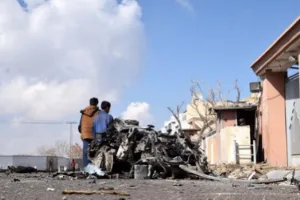
Public life across large parts of Pakistan’s Balochistan province has been severely disrupted as transport services to Quetta were suspended and internet access cut, following a sharp escalation in violence linked to a militant offensive.

Bus services connecting Quetta with other major cities were halted on Saturday due to security concerns, leaving hundreds of passengers stranded at Rakhni and other transit points, transport officials told local media. Operators said services would remain suspended until further notice.

The shutdown comes at a time of heightened tension in the province, after the Baloch Liberation Army (BLA) announced the launch of the second phase of its armed campaign, named Operation Herof.

Internet blackout and transport curbs hit daily life

The shutdown has begun to spill into everyday life. Internet services were suspended in several parts of Quetta, making it harder for people to work, study, or even stay in touch with family. Shops and small businesses reported slower activity, while routine communication all but stalled.

Travel has also been affected. Air and train services were either cut back or stopped in some areas, adding to the uncertainty for those trying to leave or return to the province.

Schools have not been spared. Cadet College Mastung said its entry test, scheduled for February 1, has been postponed to February 5 due to unavoidable circumstances.

Across the province, residents described an atmosphere of unease. Tension was reported in districts including Quetta, Tump, Nushki, Gwadar, Dalbandin, Kharan, Kalat, Mastung, Pasni, Buleda and Dhadar, as people stayed indoors and movement thinned on the streets. Local sources cited by The Balochistan Post spoke of gunfire, explosions, and attacks on police and military installations.

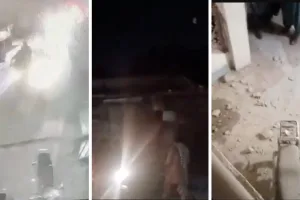
In Quetta, residents reported hearing gunfire and explosions in several neighbourhoods, including areas near the city’s highly sensitive Red Zone. One police mobile van was reportedly attacked on Sariab Road, killing two personnel and setting the vehicle on fire.

Militant claims and military response diverge sharply

The violence follows the BLA’s announcement that it had entered a new phase of its campaign. Calling it a “declaration of decisive resistance”, BLA spokesperson Jeeyand Baloch said the operation was aimed at “the occupying state and all its military and administrative structures.”

“By standing alongside Baloch fighters, the people of Balochistan will defeat the enemy in every city, street and neighbourhood,” he said, adding that the group wanted to demonstrate that “there is no place for the occupier in Balochistan.”

In subsequent statements issued to media outlets, the BLA claimed it had carried out coordinated attacks in multiple cities, including Nushki, Dalbandin, Quetta, Gwadar, Pasni, Tump, Kalat, Mastung, Kharan, and Buleda. The group said its fighters had targeted military and administrative installations, disrupted troop movement, and pushed back security forces in several areas.

According to Jeeyand Baloch, the operation remained active for more than 35 hours, with fighters maintaining positions in districts such as Shaal and Noshki. He also said two local officials, Deputy Commissioner Noshki Muhammad Hussain Hazara and Assistant Commissioner Maria Shamoo, had been released after being detained earlier.

“The officials were freed on humanitarian grounds,” he said, adding that the group does not consider local civil administration as adversaries if they do not resist its fighters.

However, Pakistan’s military presented a sharply different account.

According to Pakistan’s military media wing, the Inter-Services Public Relations (ISPR), security forces killed 92 militants during clearance operations launched in response to the attacks, while 15 security personnel also died in the clashes, The Express Tribune reported.

The ISPR said militants had targeted civilians and security installations across several districts, including Dalbandin, Nushki, Quetta, Panjgur, Mastung, Kharan, Gwadar and Pasni. It also claimed that 18 civilians, including women and children, were killed in attacks in Gwadar and Kharan.

The military said operations were continuing and those responsible would be “pursued and held accountable.” Earlier, it had claimed that 41 militants were killed in separate operations in Panjgur and Harnai, taking the total number of militants killed over two days to 133.

Meanwhile, Balochistan government spokesperson Shahid Rind said on X that several attacks had been foiled due to timely action by police and the Frontier Corps.

The BLA, however, rejected the military’s version. In a separate statement, the group claimed it had launched coordinated attacks at 48 locations across 14 cities, seized multiple government facilities, and destroyed banks, offices and vehicles. These claims could not be independently verified.

PWL 2026 Final: Haryana Thunders edge Delhi Dangal Warriors 5-4 to lift title

Haryana Thunders will pocket Rs 1.5 crore along with the PWL 2026 trophy, while runners-up Delhi Dangal Warriors will take home Rs 75 lakh.

Statesman News Service | New Delhi |

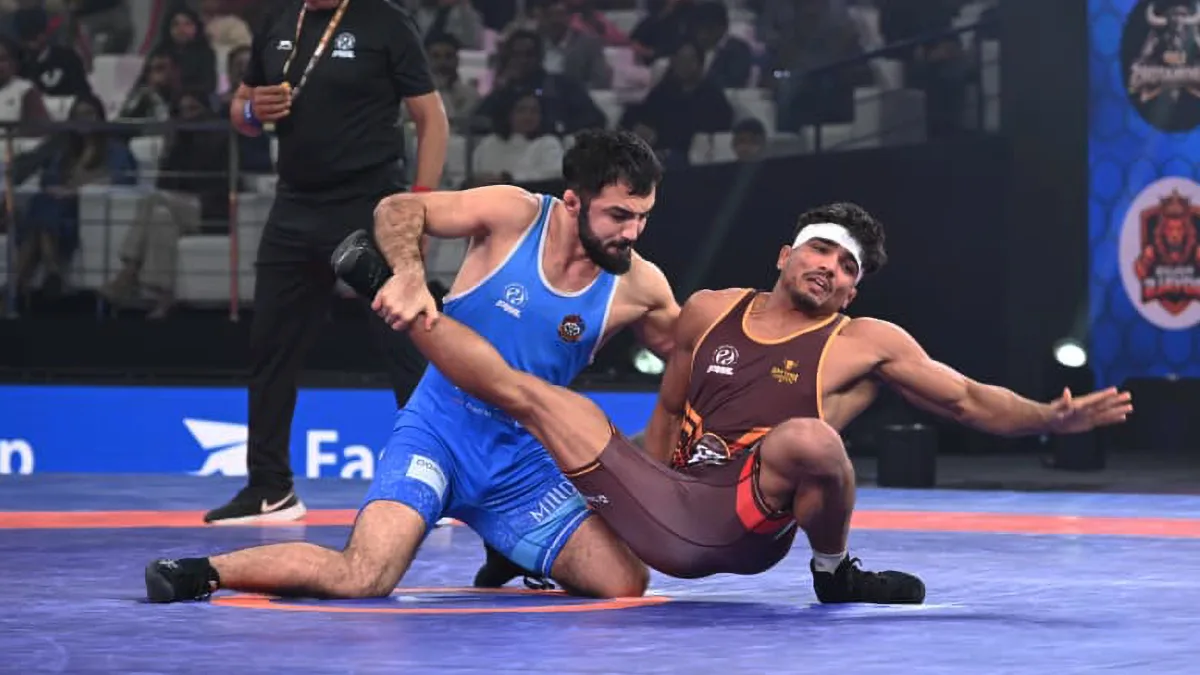
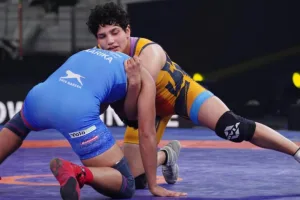
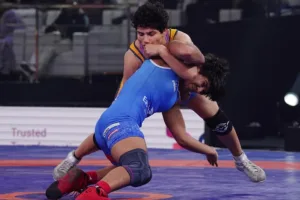
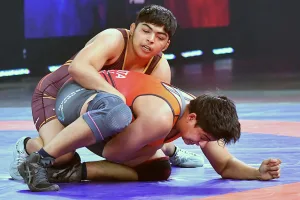
In a nail-biting finale to the Pro Wrestling League (PWL) 2026, Haryana Thunders were crowned champions after edging past Delhi Dangal Warriors in a dramatic title clash at the Noida Indoor Stadium on Sunday. The blockbuster final went right down to the last bout, with Haryana sealing the trophy 5–4 in what turned out to be one of the most intense championship nights in league history.

With the score locked at 4–4 after eight bouts, the title was decided in the final women’s 62kg contest, where Paris Olympic silver medallist Iryna Koliadenko rose to the occasion with a dominant performance under pressure. Wrestling with composure and authority, Koliadenko registered a commanding 16–0 technical victory, clinching the decisive point and sparking celebrations in the Haryana camp.


For their title triumph, Haryana Thunders will pocket Rs 1.5 crore along with the PWL 2026 trophy, while runners-up Delhi Dangal Warriors will take home Rs 75 lakh. In the individual honours, Delhi’s star wrestler Turan Bayramov was named Player of the Tournament, earning Rs 2.5 lakh, after winning all seven bouts in the men’s 57kg category and scoring 59 points. Chandermohan (Punjab Royals) finished as the tournament’s top point scorer.

The awards on the night also recognised key match-winners: Neha Sangwan (Haryana Thunders) was adjudged Player of the Match for keeping the final alive till the very end, while Ronak (Delhi Dangal Warriors) earned Fighter of the Match honours for his standout effort in the men’s 125kg bout. Haryana’s Akshay Dhere was named Impact Player of the Match for his strong showing in the men’s 57kg division.

The championship night began with Delhi striking first, as the unbeaten Bayramov dominated the men’s 74kg bout with an emphatic 8–1 win to hand his team an early lead. Haryana responded immediately in the women’s 76kg bout, where U20 World Champion Kajal Dhochack edged past European champion Anastasiya Alpyeeva 3–1, restoring parity.

Delhi regained momentum in the men’s 65kg contest as skipper Sujeet Kalkal produced a late surge to defeat World Championships silver medallist Tumur Ochir Tulga 8–6. But Haryana once again hit back through multiple-time world champion Yui Susaki, who cruised to a technical win over Saarika to make it 2–2.

The pendulum swung again when Asian Championship bronze medallist Vafaeipour Hadi Bakhtiar powered Delhi ahead with a one-sided 11–0 victory over Ashirov Ashraf in the men’s 86kg bout. Haryana, however, refused to let the contest slip away, with Akshay Dhere producing a dominant technical superiority win over Amit Kumar in the men’s 57kg category.


In the heavyweight men’s 125kg match, Ronak delivered for Delhi with a strong 12–2 win over Anirudh Gulia, pushing Delhi to a 4–3 lead and placing them one bout away from the title. Haryana kept their championship hopes alive when Neha Sangwan pinned Anjali in the women’s 57kg bout, tying the final at 4–4 and setting up a winner-takes-all decider.


With everything on the line, Koliadenko delivered the moment of the season. Using relentless turn-and-exposure moves, she dismantled Anjli for a 16–0 technical win, sealing the championship for Haryana Thunders and bringing the curtains down on a memorable PWL 2026 season filled with tight contests, standout performances and a final worthy of the hype.

Highest-ever budgetary allocation for Railways: Seven high-speed rail corridors announced

The Ministry of Railways on Sunday received its highest-ever outlay in the Union Budget, with the Centre allocating a total capital expenditure (capex) of Rs 2,93,030 crore for the financial year 2026–27.

Nikhil Vyas | New Delhi |

The Ministry of Railways on Sunday received its highest-ever outlay in the Union Budget, with the Centre allocating a total capital expenditure (capex) of Rs 2,93,030 crore for the financial year 2026–27.

“The provision under capital expenditure towards New Lines, Gauge conversion, Doubling, Traffic facilities, Rolling Stock, etc. is met from the gross budgetary support. A total outlay of Rs 2,77,830 crore is provided for capital expenditure in BE 2026-27. Further amount of Rs 200 crore is being met from Nirbhaya Fund in BE 2026-27,” the statement said.

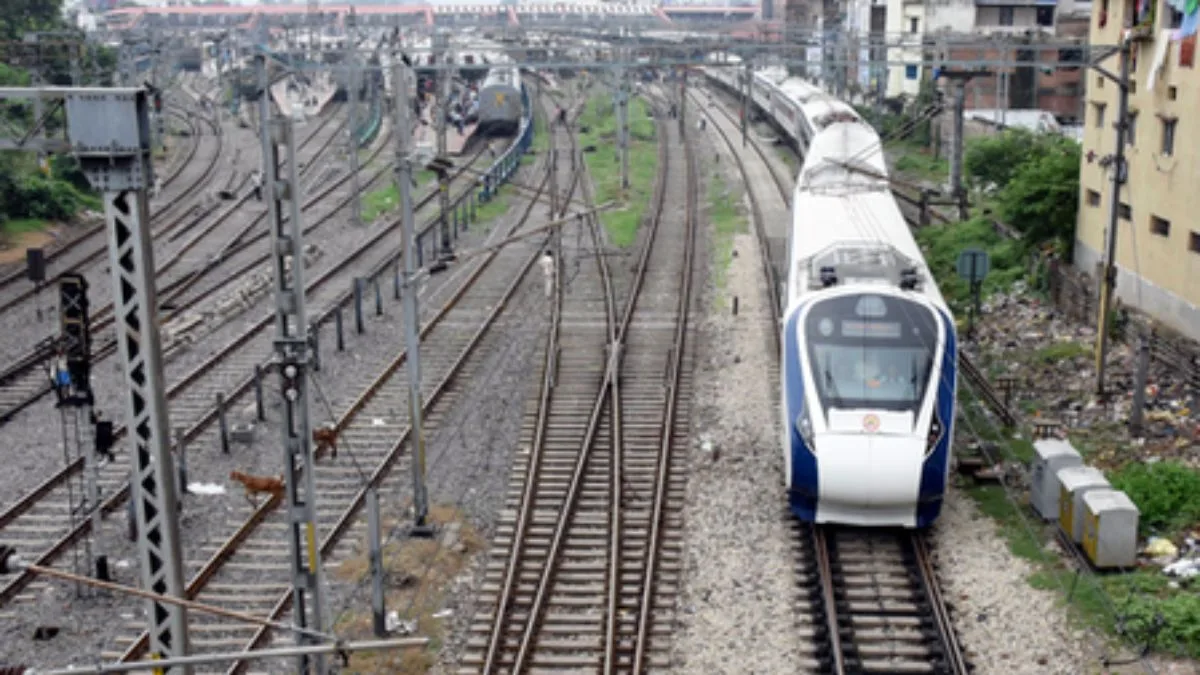
To promote environmentally sustainable passenger systems, in her Budget speech, Union Minister for Finance and Corporate Affairs Nirmala Sitharaman proposed to develop seven High-Speed Rail corridors between cities as ‘growth connectors’, namely i) Mumbai-Pune, ii) Pune-Hyderabad, iii) Hyderabad-Bengaluru, iv) Hyderabad-Chennai, v) Chennai-Bengaluru, vi) Delhi-Varanasi, vii) Varanasi-Siliguri.

Later, addressing mediapersons here, Railway Minister Ashwini Vaishnaw said, “Today’s railway budget of Rs 2,78,000 crore is clearly a step in that direction… Seven new high-speed corridors have been announced today. These high-speed corridors will significantly reduce travel time, bringing about a major change in people’s lives.”

“Chennai, Bangalore, and Hyderabad–that southern triangle — will drive significant economic growth across the southern states of Telangana, Andhra Pradesh, Tamil Nadu, Kerala, and Karnataka. This will be a major, major win for all five southern states,” he said.

Vaishnaw further stated that about 4,000 kilometres of high-speed corridors will attract Rs 16 lakh crore in investment.

“Then, Mumbai, Pune, and Hyderabad will also become major economic corridors. In northern India, Delhi, Varanasi, and Siliguri will connect Delhi, UP, Bihar, and West Bengal in a major economic corridor, which will bring about a huge change in the way people travel. It will boost tourism and economic activity across UP, Bihar, West Bengal, and Delhi,” he added.

Elaborating further about the corridors, Vaishnaw said, “The corridor, connecting Delhi to Varanasi and several cities in Uttar Pradesh in North India, will allow travel between Delhi and Varanasi in just 3 hours and 50 minutes.”

He said from Varanasi to Siliguri in West Bengal, via Patna, the journey will take only 2 hours and 55 minutes. This will greatly multiply and benefit travel and activity for healthcare, education, and any other purpose across Delhi, Uttar Pradesh, Bihar, and West Bengal.

“Seven new corridors totalling approximately 4000 kilometres, and the investment in them will be around Rs 16 crore. A major announcement has also been made regarding a new dedicated freight corridor. We all know about the significant progress of the Western Corridor, which has already reached saturation levels,” he said.

Vaishnaw said four freight corridors are already operational, and this new corridor will connect Durgapur in West Bengal, passing through Odisha, Chhattisgarh, Madhya Pradesh, and Maharashtra, terminating in Surat, Gujarat, where it will connect with the Western Corridor.

“This will allow any industry to send its goods to any port on the west coast, whether in Gujarat or Maharashtra, by connecting to the Western Corridor. So, in a way, the Western Corridor, the Eastern Corridor, and this East-West Freight Corridor – this 2052-kilometer East-West Freight Corridor and the seven high-speed corridors – will give a totally new transformation and energy to the railways,” he said.

Talking about train accidents, Vaishnaw said Ninety-five per cent of train accidents have been reduced.

“Now, by focusing even more on maintenance, track maintenance, loco maintenance, wagon maintenance, coach maintenance, rapid installation of Kavach, installation of CCTV cameras, upgrading the OHE (Overhead Electrical) system, and constructing new stations, safety will be further improved, and customer care and customer facilities will be enhanced,” Vaishnaw said.

He further said the progress of the Ahmedabad-Mumbai high-speed corridor is being noticed by the entire world.

“The work is progressing so rapidly and with such high quality, and with the announcement of these seven new high-speed corridors, the transportation sector in the country will be completely transformed,” he added.

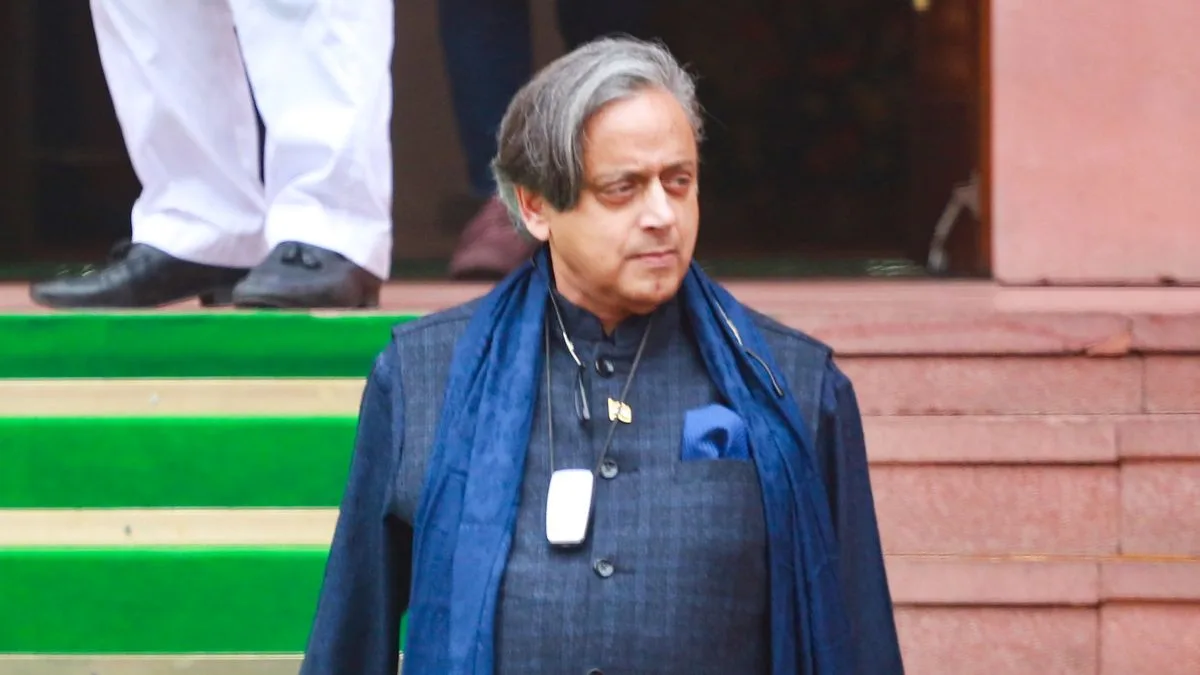
Shashi Tharoor says Union Budget 2026 failed to address people’s concerns; flags zero allocation for Chabahar Port

Shashi Tharoor said that the budget failed to address key issues, including unemployment and the household stress.

Statesman News Service | New Delhi |

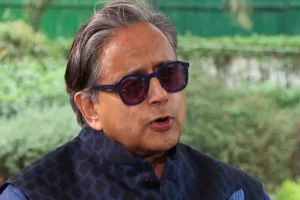
Congress MP Shashi Tharoor on Sunday criticised the Union Budget 2026, describing it as “underwhelming”. Tharoor said that the budget failed to address key issues, including unemployment and the household stress.

“I think that, honestly, this is an underwhelming budget. It’s one where a number of things have disappointed us,” he told news agency ANI.

Tharoor said that the budget has nothing for the common people of the country. “What I think about is the aam aadmi in this country. Is there enough money in his pocket? Very clearly not,” he said, adding, “You’re seeing a dramatic increase in credit card debt every day,” he added.

Amid rising unemployment in the country, Tharoor highlighted that the educated youth is jobless due to lack of employment opportunities and yet the government has not addressed this in the budget.

“There are so many anecdotes of positions being advertised in the railways, a peon position, a head constable position, and you get over a thousand applications per post. These are not just the eight standard or ten standard qualifications that are required for the job; these are college graduates and PhDs because they have no adequate employment,” Tharoor said, adding that “that’s something the government has not addressed specifically in this budget.”

Questions Modi govt’s foreign policy after zero allocation for Iran’s Chabahar Port in the budget

Tharoor raised concerns over Modi government’s foreign policy, questioning  the absence of allocation for Iran’s Chabahar Port.

“Last year they had announced Rs 100 crores for the Chabahar port in the budget estimates. Then that went up to Rs 400 crores in the revised estimates, and this year’s budget is zero, which looks like we’re giving up on the port,” he said.

The Congress MP, who in the past has praised the Modi government’s foreign policy decisions, said that no allocating any funds to Chabahar Port looks like a surrender to the policy imposed from outside Iran, an apparent reference to the pressure form US President Donald Trump.

“It may be true that there are practical obstacles. If everything is sanctioned, how do you spend money? And what happens to those who do go there? Because those companies will be sanctioned by the West. Even Indian companies will be sanctioned. So that may be the reason. But it does look like it’s a surrender to a particular policy that has been imposed from the outside on Iran,” Tharoor said.

He also flagged the absence of support for Kerala’s inland waterways and ports. “We’ve had an announcement of ship repair in Patna and Varanasi, but Kerala has more inland waterways than any other Indian state, and there’s been no mention of Kerala,” he said.

Referring to the Verenium Port in his constituency, he further said, “We have the magnificent Verenium Port, which is the biggest container terminal in India, where the largest ships in the world are able to dock, but no mention of any support for it. It needs better connectivity into the hinterland — road and rail connectivity.”

He noted that a long-standing promise of AIIMS als9 remains unfulfilled. “We’ve been promised the AIIMS in the very first NDA budget 12 years ago. It still has not become reality,” Tharoor added

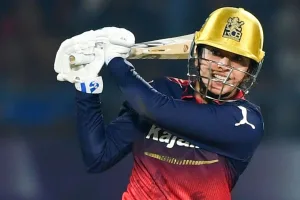
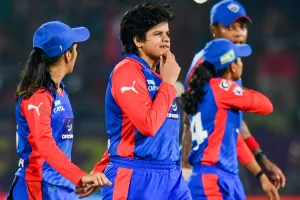
DC vs UPW WPL 2026: Delhi Capitals beat UP Warriorz by 5 wickets, seal Eliminator spot

After a disciplined bowling effort restricted UPW to 122/8, DC completed the chase despite a mid-innings wobble, riding on Jemimah Rodrigues’ composed finishing act.

Neha Buswal | New Delhi |

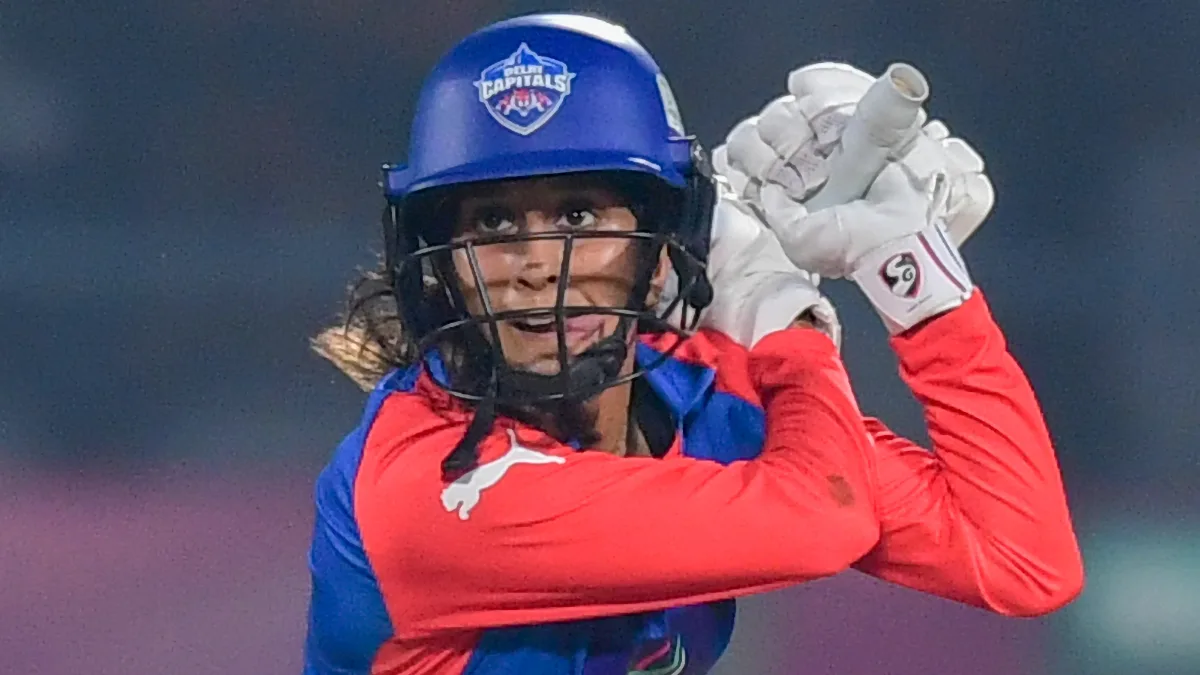
Delhi Capitals produced an all-round performance to beat UP Warriorz by five wickets in their final league match of WPL 2026 at the BCA Stadium, Kotambi, sealing qualification for the Eliminator.

After a disciplined bowling effort restricted UPW to 122/8, DC completed the chase despite a mid-innings wobble, riding on Jemimah Rodrigues’ composed finishing act.

UP Warriorz innings: Kapp leads disciplined DC show

Asked to bat first, UP Warriorz never really found momentum as Delhi Capitals struck early and kept chipping away at regular intervals. Chinelle Henry made an instant impact, trapping the UPW skipper Meg Lanning lbw for a duck with the first ball of the innings. Deepti Sharma and Charli Knott tried to stabilise with a few boundaries, but Marizanne Kapp broke the stand by removing Knott and later outfoxed Deepti as well to tighten DC’s grip in the powerplay.

UPW’s troubles continued as Harleen Deol struggled to rotate strike and fell to Sree Charani, while Deandra Dottin was also dismissed via lbw on review. Simran Shaikh attempted a counterattack with a brisk 22, striking a couple of boundaries, but her resistance ended when Henry had her caught. Asha Sobhana added a brief six-hitting moment, while Shikha Pandey provided late fireworks with 23 off 13 balls*, but UPW still finished with a below-par 122/8.

For DC, Kapp starred with 3 wickets, while Charani and Henry supported with key breakthroughs to keep UPW under pressure throughout.

Delhi Capitals chase: early blow, Wolvaardt steady, Jemimah finishes

Delhi Capitals began the chase with Lizelle Lee and Shafali Verma opening the innings, but UPW struck early as Deandra Dottin dismissed Lee in the first over, handing UPW the ideal start. Laura Wolvaardt then joined Shafali, and the pair rebuilt steadily, keeping the chase under control. Wolvaardt accelerated in the middle overs, hammering four boundaries in an over to take 16 runs off Kranti Gaud and push DC ahead in the chase.

However, UPW fought back when Deepti Sharma removed Wolvaardt in the 13th over, triggering a brief collapse. Shafali’s scratchy 29 off 33 ended in the 15th over, and DC slipped from a strong position into a wobble. Marizanne Kapp also departed soon after, followed by Chinelle Henry, as DC briefly found themselves in a tricky spot.

But Jemimah Rodrigues held firm and guided the chase calmly, striking key boundaries at the death. With Niki Prasad supporting, Jemimah finished the job in style, sealing the chase with a boundary as Delhi Capitals won by five wickets and booked their place in the Eliminator.

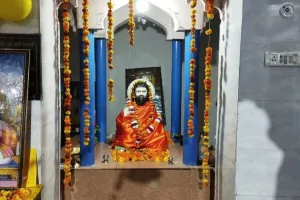
Will achieve the goal of a developed India with Guru Ravidas’s blessings: PM Modi in Punjab

The PM praised the social service of Dera Sachkhand Ballan, whose head Sant Niranjan Das was conferred Padma Shri on Republic Day 2026.

Statesman News Service | New Delhi |

Prime Minister Narendra Modi on Sunday said the ideas of Shri Guru Ravidas ji have spread to many countries around the world, and that his blessings will ensure India achieve its goal of being a developed country by 2047.

Addressing a gathering at Dera Sachkhand Ballan in Punjab on the occasion of the 649th birth anniversary of Guru Ravidas, PM Modi said, “This work is being carried out continuously under the guidance of the revered Sant Niranjan Das-ji Maharaj. Under his leadership, the ideas of Shri Guru Ravidas-ji have also spread to many countries around the world.”

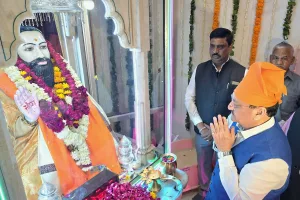
The PM praised the social service of Dera Sachkhand Ballan, whose head Sant Niranjan Das was conferred Padma Shri on Republic Day 2026. He said that the Adampur airport has been renamed Guru Ravidas Ji Maharat Airport.

“I extend my best wishes to all fellow citizens for these endeavours. Guru Ravidas-ji Maharaj-ji spoke about equality and equal opportunities in society,” he said.

Modi said that he was fortunate to be among the people of the Dera Sachkha Ballan and extended greetings to all on Sant Ravidas Jayanti and Magh Purnima.

“I have had the good fortune of serving Kashi (Varanasi) as a Member of Parliament. It was on the ghats of Kashi that the teachings of Sant Ravidas-ji were revealed. We all draw great inspiration from him,” he said.

Modi also expressed his heartfelt gratitude towards the members of the sect for organizing a prayer ceremony on the occasion of his 75th birthday.

“The path of service that Sant Ravidas has shown us has given me inspiration and more energy. I express my heartfelt gratitude to all of you for your affection,” he said.

The PM also highlighted the inauguration of a temple and museum dedicated to Guru Ravidas in Madhya Pradesh’s Sagar. He said that it was his privilege to lay the foundation stone.

Modi also mentioned the Union Budget 2026 which was presented by Finance Minister Nirmala Sitharaman earlier today. He claimed that the budget would strengthen villages and increase farmers’ income.

He also highlighted the recent trade deal signed between India and 27-member European Union. According to the PM, the trade deal will bring immense benefits to the people of Punjab.

“Here in Jalandhar, Ludhiana, and Amritsar, millions of people are connected to the textile industry. Now, Punjab’s textile sector will gain access to new and larger markets,” he stated.

PM Modi further added, “I am confident that with the blessings of Sant Ravidas-ji, we will certainly achieve the goal of a Developed India.”

Punjab CM reiterates demand to name Halwara airport after Shaheed Kartar Singh Sarabha

Raising the issue in the presence of Union Civil Aviation Minister Kinjarapu Ram Mohan Naidu during the virtual inauguration of the airport by Prime Minister Narendra Modi, the Chief Minister said Shaheed Kartar Singh Sarabha had laid down his life for the nation at the age of just 19.

Statesman News Service | Chandigarh |

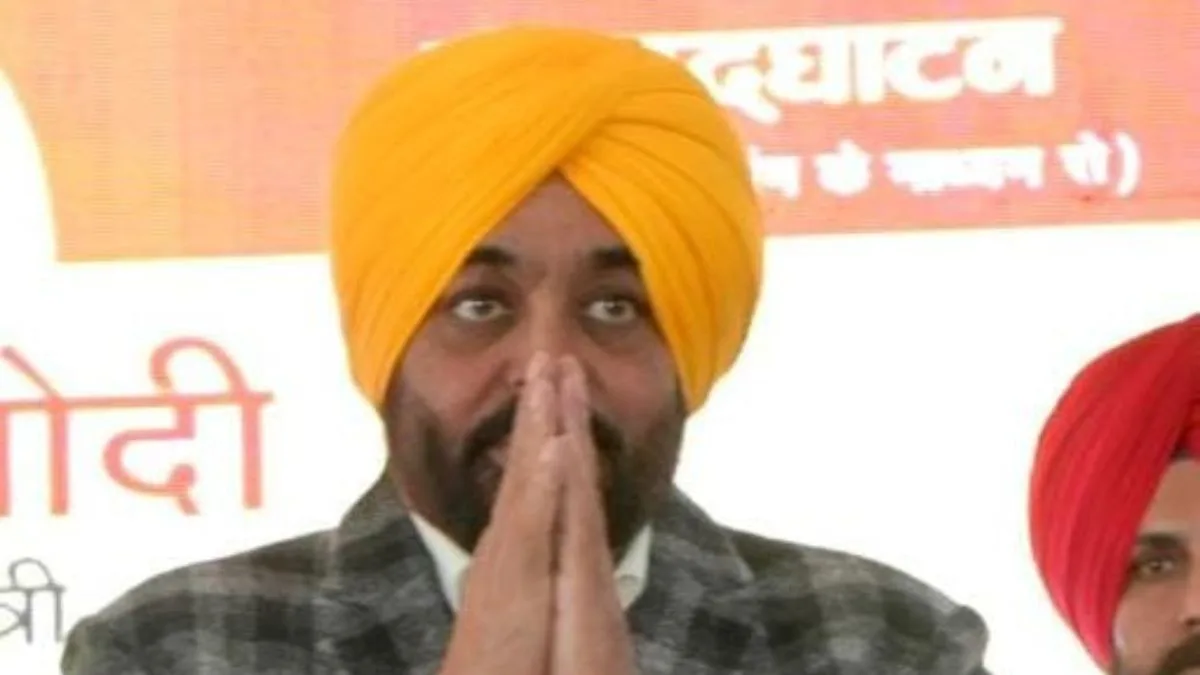
Punjab Chief Minister Bhagwant Singh Mann on Sunday reiterated his demand to the Government of India to name the newly inaugurated terminal building at Halwara International Airport in Ludhiana after legendary freedom fighter Shaheed Kartar Singh Sarabha, calling it a fitting tribute to one of the youngest and most inspirational martyrs of India’s freedom struggle.

Raising the issue in the presence of Union Civil Aviation Minister Kinjarapu Ram Mohan Naidu during the virtual inauguration of the airport by Prime Minister Narendra Modi, the Chief Minister said Shaheed Kartar Singh Sarabha had laid down his life for the nation at the age of just 19.

“Shaheed Kartar Singh Sarabha’s supreme sacrifice inspired millions to rise against British imperialism. Even Shaheed-e-Azam Bhagat Singh regarded him as his role model,” Mann said.

The Chief Minister said that naming Halwara Airport after Sarabha would honour a son of the soil who had gone to Berkeley University to pursue a career in aviation but chose instead to return to India and dedicate his life to the freedom movement. “Punjab is the land of great Gurus, saints, seers, and martyrs. Every inch of this sacred soil bears the imprint of their sacrifices,” he said.

Mann expressed confidence that Punjab is steadily moving towards a moment when all four of its airports will carry the names of revered Gurus and martyrs, symbolically linking modern infrastructure with the state’s spiritual and revolutionary legacy.

He noted that Sri Guru Ramdass Jee International Airport, Amritsar, and Sri Guru Ravidass Maharaj Ji Airport, Adampur, are named after Gurus, while Shaheed Bhagat Singh Airport, Mohali, and the proposed Shaheed Kartar Singh Sarabha Airport at Halwara would commemorate martyrs.

Congratulating the people on the parkash purab of Sri Guru Ravidas Maharaj Ji, the Chief Minister said it was a matter of pride that Adampur Airport has been named after the great proponent of the Bhakti movement.

“The path shown by Sri Guru Ravidas Maharaj Ji to create an egalitarian society is the core pillar of our government’s commitment to serve the masses,” he said, adding that it was a historic day for Punjab as the Prime Minister dedicated two airports to the people on this auspicious occasion.

Highlighting the strategic importance of Halwara Airport, Mann said the facility has played a vital role over the years and has been used by the armed forces during critical operations. He expressed gratitude to the Indian Armed Forces for their contribution in developing the terminal building, which has now been dedicated to the public.

The Chief Minister also urged the Centre to further strengthen international connectivity from Mohali Airport, stating that the state government would hold deliberations with the Government of India in the coming days to enhance air connectivity from Halwara as well.

Recalling an earlier initiative, Mann noted that on March 22, 2023, the Punjab Vidhan Sabha had unanimously passed a resolution urging the Centre to name the International Airport at the Indian Air Force Station, Halwara, as Shaheed Kartar Singh Sarabha International Airport.

“As a committed leader of the Ghadar Party, Shaheed Kartar Singh Sarabha worked tirelessly for India’s freedom both abroad and within the country. Naming the airport after him would be a humble tribute to his unparalleled contribution,” he said.

He further pointed out that Mohali International Airport has already been named after Shaheed Bhagat Singh due to sustained efforts of the state government.

“Naming airports, universities, and institutions after our iconic martyrs is central to our vision of preserving their legacy and inspiring the youth towards selfless service of the nation,” Mann said.

A refreshingly disciplined capacity building Budget for Viksit Bharat

The Union Budget for 2025-26 offers no fireworks for those chasing populist handouts or headline-grabbing sops. Neither does it add any extra burden on the taxpayer.

Tuhin Sinha, BJP National Spokesperson & Dr Alok Kumar Dwivedi, Assistant Professor, KSAS – Lucknow, INADS - USA | New Delhi |

The Union Budget for 2025-26 offers no fireworks for those chasing populist handouts or headline-grabbing sops. Neither does it add any extra burden on the taxpayer. Instead, it speaks quietly to those who grasp the deeper rhythms of governance.

This is a budget built on the conviction that India’s ascent is not a matter of if, but of how steadfastly we stay the course—through policies that are deliberate, unglamorous, and unyielding in their consistency. This clarity is what makes FM Nirmala Sitharaman’s ninth budget a distinctly unambiguous capacity building Budget that would serve as a crucial catalyst in attaining India’s larger economic goals.

Accelerating and Sustaining India’s Economic Growth

India’s vision of becoming a Viksit Bharat depends on its ability to grow fast and grow steadily in a world marked by uncertainty and change. This recognizes that growth today is not just about producing more, but about producing better: with higher productivity, stronger competitiveness, greater resilience, and strategic self-reliance.

The Union Budget outlines a clear six-part strategy to achieve this. At its heart is a strong push for manufacturing in key strategic sectors. From building India into a global biopharma hub through the ₹10,000 crore Biopharma SHAKTI initiative, to strengthening semiconductor capabilities under ISM 2.0, the focus is on making India a trusted global production partner.

Expanded support for electronics, chemicals, rare earths, capital goods, containers, and textiles further strengthens this manufacturing backbone. At the same time, the Budget seeks to revive traditional industrial clusters and help MSMEs grow in global champions.

Infrastructure forms the most visible pillar of this growth strategy. With a record public capital expenditure of ₹12.2 lakh crore, new freight corridors, waterways, and coastal shipping incentives, the government signals its belief that roads, rails, ports, and logistics are the foundation of long-term prosperity.

This budget also looks ahead by investing in energy security and sustainability. The ₹20,000 crore commitment to carbon capture technologies reflects India’s intent to balance economic growth with climate responsibility. Finally, the development of City Economic Regions and high-speed rail corridors connects cities, markets, and people—unlocking the power of urban clusters and regional integration.

Fulfilling Aspirations by Building Human Capacity

If economic growth powers a nation forward, it is people who provide the energy. This budget places India’s citizens at the heart of development by investing in education, health, skills, sports, tourism, and the creative economy areas that shape aspirations and define national strength in a services-driven world.

The Budget outlines a clear four-part focus: creating skilled professionals, strengthening education, building a strong sports ecosystem, and unlocking tourism-led jobs. At the center of this approach is a high-level Education to Employment and Enterprise Committee, reflecting a major shift from degrees to real-world skills, and from learning to livelihoods.

A key priority is preparing professionals for the future. In healthcare, the plan includes training 100,000 allied health professionals over five years and 1.5 lakh caregivers in the coming year, alongside the creation of regional medical hubs and new Ayurveda institutes. Rural livelihoods are strengthened through expanded veterinary education and infrastructure, ensuring better animal healthcare and food security.

Education reforms go beyond classrooms by linking learning with industry. New University Townships near industrial corridors will foster innovation and entrepreneurship, while girls’ hostels in every district will improve access and inclusion. Investments in advanced scientific facilities signal India’s ambition to lead in knowledge and research, not just supply talent.

Sports also receive long-term attention through a renewed Khelo India Mission, which aims to build talent pipelines, modern coaching systems, sports science support, and competitive leagues.

Tourism complements this people-first strategy by combining heritage with employment. A strengthened hospitality institute, trained tourist guides, and the development of iconic archaeological sites will turn India’s cultural wealth into sustainable livelihoods and global soft power.

Ensuring Equitable Access and Meaningful Participation

Economic growth and human capacity matter most when they touch everyday lives. This gives real meaning to the idea of Sabka Saath, Sabka Vikas by ensuring that every family, community, region, and sector can genuinely participate in India’s development journey.

At its heart, this budget focuses on improving farmer incomes and strengthening rural livelihoods. Agriculture, fisheries, and animal husbandry, lifelines for millions are supported through better water resources, stronger value chains, and entrepreneurship-led growth.

From developing reservoirs and boosting fisheries to promoting high-value crops like coconut, cocoa, cashew, and nuts, the aim is to make farming more resilient, profitable, and future-ready. Digital tools like Bharat-VISTAAR bring technology directly to farmers, offering customized advice and improving productivity.

Women’s economic participation is another key pillar. Through SHE-Marts, women-led self-help groups are supported to move beyond subsistence and become confident market players, embedding entrepreneurship into the rural economy.

It also places strong emphasis on inclusion. Programmes for Divyangjan focus on skills, livelihoods, and access to assistive devices reinforcing that inclusion is about empowerment, not charity. Mental health and trauma care receive long-overdue attention through new and upgraded institutions, recognizing that social well-being is as important as economic opportunity.

Regional balance is addressed by focusing on Purvodaya states and the North-East. Industrial corridors, tourism development, e-mobility, and cultural circuits such as the Buddhist Circuit—are designed to unlock local potential while preserving regional identity. Supporting this inclusive vision are financial sector reforms and ease-of-doing-business measures that improve access to capital, encourage investment, and maintain fiscal discipline. By keeping the fiscal deficit on a stable path, the Budget balances social inclusion with economic stability.

Together, these segments ensure that development is not just measured in numbers, but felt in villages, towns, cities, and communities. It reminds us that true national progress is achieved when everyone has the opportunity to participate and prosper. In an era that rewards spectacle ,such restrained, long haul leadership may well be the most demanding form of statecraft.


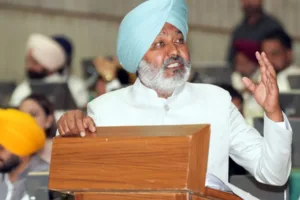
Union Budget ignores Punjab, Haryana farmers once again: Punjab FM Harpal Singh Cheema

Cheema pointed out that there has been no increase in the Agriculture Infrastructure Fund, nor any concrete assistance to strengthen mandi and market infrastructure, leaving agrarian states deeply disappointed.

Statesman News Service | Chandigarh |

Reacting sharply to the Union Budget 2026–27, Punjab Finance Minister Harpal Singh Cheema on Sunday said the Union government has once again ignored the legitimate concerns of farmers from Punjab and Haryana, exposing what he termed its hollow claims of being pro-farmer.

Cheema pointed out that there has been no increase in the Agriculture Infrastructure Fund, nor any concrete assistance to strengthen mandi and market infrastructure, leaving agrarian states deeply disappointed.

“The farmer of Punjab feeds the nation, yet the Union government continues to neglect investment in systems that ensure food security,” Cheema said. He criticised the selective promotion of high-value crops, noting that while the Budget mentions coconut, cashew, sandalwood, and dry fruits, it offers nothing for North Indian farmers whose livelihoods depend on crops suited to their agro-climatic conditions.

“This Budget clearly shows the Centre’s bias and its continued indifference towards foodgrain-producing states, especially Punjab. Our farmers deserve respect, support, and appropriate investment—not empty slogans,” he added.

The Finance Minister said there is nothing in the Budget for farmers of Punjab and Haryana in terms of enhanced allocations to the Agriculture Infrastructure Fund or strengthening mandi infrastructure, forcing states to bear the development burden from their own resources. He also noted that while the government spoke of developing high-value crops, Punjab was completely left out.
Cheema further highlighted that the urea subsidy has been reduced from ₹1,26,475 crore last year to ₹1,16,805 crore in the current Budget. He said there was “nothing for the aam aadmi,” with zero tax relief at a time when incomes are stagnating and inflation is eroding household savings. He also criticised the increase in Securities Transaction Tax (STT), saying it would adversely affect ordinary investors, adding that there was no relief on long-term capital gains.
On defence, Cheema said the state was expecting major announcements to boost defence production and a meaningful increase in defence spending in view of last year’s tensions with Pakistan. “Nothing of that sort has happened. Defence was mentioned only four times in the Finance Minister’s speech,” he remarked.

Referring to the PM Vishwakarma Scheme, Cheema said the scheme—launched last year with much fanfare to support traditional artisans and craftspeople—has seen its allocation reduced from ₹5,100 crore to ₹3,861 crore. “On one hand, the government claims this is a Yuva-Shakti and legacy industries Budget, and on the other, it cuts funds for schemes meant precisely for that purpose,” he said.

On the 16th Finance Commission, Cheema noted that the vertical devolution of taxes to states has been retained at 41 per cent, with no increase despite mounting fiscal stress on states. While Punjab’s horizontal devolution has marginally increased to 1.996 per cent from 1.807 per cent under the 15th Finance Commission, he said Punjab will receive no Revenue Deficit Grants, which were recommended earlier. He also criticised restrictive conditions on the State Disaster Response Fund (SDRF), warning that they would hamper Punjab’s ability to manage disasters.

“There was no mention of Punjab in the Budget speech. The Centre seems to have completely forgotten Punjab and Punjabis,” he said.

On education, Cheema termed the Budget “uninspiring,” noting that allocations have grown by less than 10 per cent compared to last year, while funding under the PM-SHRI scheme remains unchanged at ₹7,500 crore.

He also pointed out that the Special Assistance to States for Capital Investment (SASCI) scheme found no mention, despite states seeking its extension and enhancement to sustain capital expenditure.

In the health sector, he said the Ayushman Bharat scheme allocation remains unchanged at ₹9,500 crore, while the Swachh Bharat Mission budget has been halved to ₹2,500 crore from ₹5,000 crore last year. He added that the Border Infrastructure and Management Scheme budget has been reduced from ₹5,597 crore to ₹5,577 crore.

UP’s total Credit-Deposit Ratio crosses 60.39%, target set at 62% by March

Presiding over a special meeting of the State Level Bankers’ Committee (SLBC) on Sunday, the Chief Minister obtained information from all bank representatives regarding their CD ratios and emphasised the need for concrete efforts to increase the ratio.

Statesman News Service | Lucknow |

Uttar Pradesh Chief Minister Yogi Adityanath has set a target of increasing the state’s total Credit-Deposit (CD) ratio to over 62 percent by the end of the current financial year.

Presiding over a special meeting of the State Level Bankers’ Committee (SLBC) on Sunday, the Chief Minister obtained information from all bank representatives regarding their CD ratios and emphasised the need for concrete efforts to increase the ratio.

The meeting was informed that the total CD ratio of Uttar Pradesh had reached 60.39 percent by December 2025, the highest level in the last ten years. According to the district-wise review, the number of districts with a CD ratio of less than 40 percent has decreased to only five, while the number of districts in the 40-50, 50-60, and 60-80 percent categories has also shown continuous improvement. In March 2018, there were 20 districts with a CD ratio of less than 40 percent, which has now reduced to 5. The Chief Minister directed that the targeted improvement in the CD ratio of all districts be ensured by March 2026.

In the important meeting, the Chief Minister said that after the success of the One District-One Product (ODOP) scheme, the state government is now going to give a new identity to small traders, artisans associated with traditional culinary arts, and gig workers through the One District-One Cuisine (ODOC) scheme. He appealed to banks to provide financial support to ODOC on a priority basis, just as they did for ODOP, and to provide loans to as many people as possible. The Chief Minister said that the government is providing full support in training, packaging, branding, and marketing, and the role of banks will be crucial in accelerating this mission.

Presiding over the special meeting of the State Level Bankers’ Committee (SLBC), the Chief Minister cited the examples of the Pradhan Mantri Surya Ghar Yojana and the Chief Minister Yuva Udyami Vikas Abhiyan and said that the cooperative spirit of the banks is at the heart of the success of these schemes. He clearly stated that situations like demanding unnecessary documents, repeated verification, and delays in the process discourage beneficiaries. The Chief Minister instructed that the banking process should be such that it provides genuine convenience to the common citizen and eligible beneficiaries can avail the benefits of the schemes without any difficulty.

The Chief Minister said that Uttar Pradesh is progressing rapidly in the areas of economic activities, industrial investment, entrepreneurship, agriculture, and women and youth empowerment. Active participation of the banking system is essential for this progress. He told all bank representatives that loan availability for farmers, micro, small and medium enterprises (MSMEs), startups, women’s self-help groups, and young entrepreneurs should be simple, respectful, and timely. The Chief Minister instructed that special campaigns be launched in districts where the Credit-Deposit (CD) ratio is less than 40 percent, and said that banks should organise mega loan fairs targeting villages. The Chief Minister directed the Chief Secretary to ensure monthly meetings of the District Level Bankers’ Committee. He also appealed to banks to participate in the development of Uttar Pradesh through CSR (Corporate Social Responsibility) activities.

The meeting was informed that the state’s banking system has become extremely strong in the last 8 years. In March 2017, the total deposits in the state were Rs 8.92 lakh crore, which increased to Rs 20.44 lakh crore in December 2025. During the same period, total loan disbursement increased from Rs 4.05 lakh crore to Rs 12.34 lakh crore. In March 2017, the total banking business of the state was Rs 12.80 lakh crore, which increased to Rs 32.79 lakh crore in December 2025. Between April 2022 and December 2025 alone, a growth of Rs 6.47 lakh crore in deposits, Rs 5.03 lakh crore in loans, and Rs 11.50 lakh crore in total banking business was recorded. The flow of credit to agriculture, MSMEs, and priority sectors has consistently improved. Between December 2024 and December 2025, the MSME sector registered a growth of over 23 percent.

The achievements of the Financial Inclusion Campaign (July-October 2025) were also presented at the meeting. During this period, the state performed exceptionally well nationwide, securing the first position in seven out of eight key indicators. 57,699 financial literacy camps were organised in the state, 22.24 lakh Jan Dhan accounts were opened, 17.14 lakh people were enrolled in the Pradhan Mantri Jeevan Jyoti Bima Yojana (PMJJBY), and 43.35 lakh citizens were enrolled in the Pradhan Mantri Suraksha Bima Yojana (PMSBY). 6.90 lakh new subscriptions were registered under the Atal Pension Yojana (APY). The state’s performance was also top-ranked nationally in areas such as enrolment, claim settlement, re-KYC, and enrolment updates.

The meeting was informed that during the financial year 2025-26, large loans exceeding ₹22,000 crore were sanctioned across various sectors, including energy, agriculture, infrastructure, industry, MSMEs, and the NBFC co-lending model. Significant sanctions were also given to UPPCF, UPCU, power transmission, and other industrial projects. Large-scale loan disbursements were made during events such as MSME Day, Chief Minister’s Youth Conclave, Vishwakarma Jayanti, International Trade Show, and Uttar Pradesh Day in the past year. Loans worth ₹1.32 lakh crore were sanctioned on Vishwakarma Jayanti alone. Two mega loan disbursement programmes are proposed for February 20 and March 16, 2026, with a target of disbursing loans exceeding ₹2.20 lakh crore.

After talks with MCD leaders, Khap chiefs discuss future course of action on Lal Dora house tax waiver

The meeting of the village chiefs came after a discussion on the house tax waiver issue that recently took place between a delegation from the villages led by Solanki and the top leaders of the MCD, including Mayor Raja Iqbal, standing committee chairperson Satya Sharma and the house leader.

Statesman News Service | New Delhi |

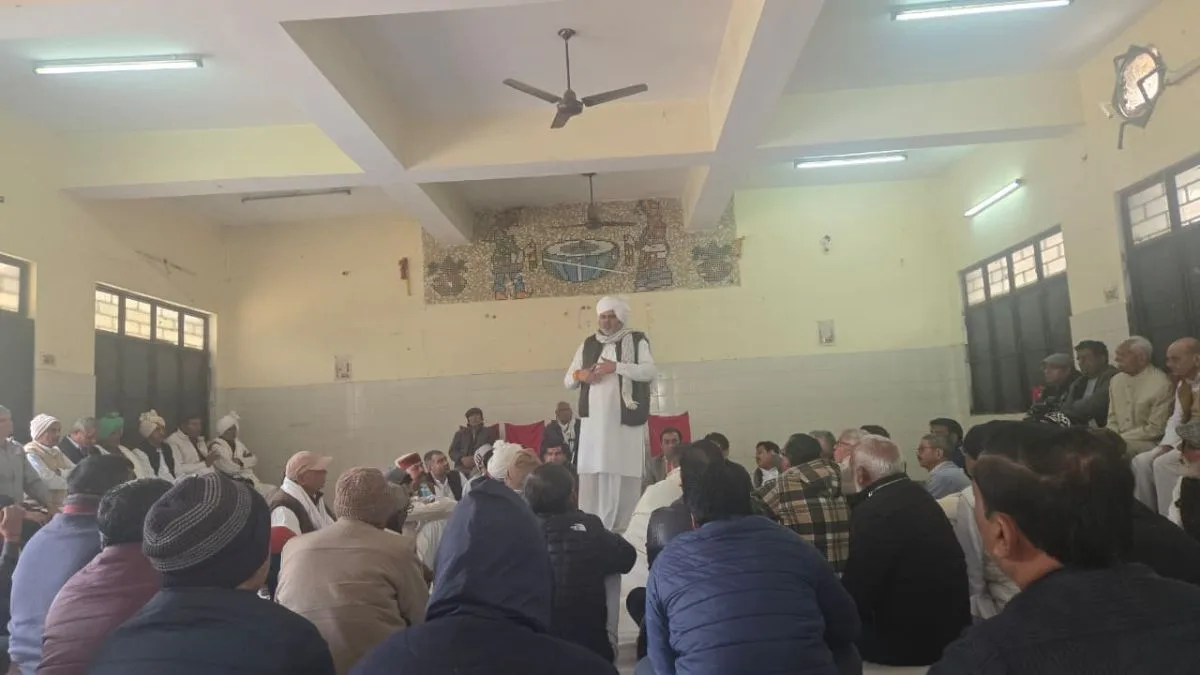
Representatives from across Delhi’s rural belt comprising 360 villages, on Sunday met at the Mangolpur Kalan village, under the leadership of Sakal Panchayat Palam 360 chief Surender Solanki, to discuss the crucial issue of house tax waiver in the national capital’s Lal Dora and extended Lal Dora areas, a demand that they has long been placed before the government.

The meeting of the village chiefs came after a discussion on the house tax waiver issue that recently took place between a delegation from the villages led by Solanki and the top leaders of the MCD, including Mayor Raja Iqbal, standing committee chairperson Satya Sharma and the house leader.

According to Solanki, the villagers on Sunday met to decide the future course of action to find a solution to the problem. He said the recent talks with the MCD leadership were positive, claiming that they have been assured of chalking out a solution in favour of the rural belt.

After the meeting of Khap chiefs, the rural leader said soon a delegation would meet the standing committee chairperson to hold discussions on the matter as they have taken the opinions from the entire villages on the issue.

Apart from the house tax waiver, the rural belt leaders discussed several issues pertaining to the 360 villages, including revision of circle rates and decided that the pending issues like land allotments and ownership related to 74/4 and the 20-point programme, allotment of alternative plots etc must be put on fast track.

Solanki said a delegation from the villages is planning to meet Delhi CM Rekha Gupta and Union Minister for Urban Affairs Manohar Lal with a request to put the ongoing works on Delhi’s villages on fasttrack.

The Palam 360 Khap chief said these issues were discussed earlier with Home Minister Amit Shah as well prior to the Delhi assembly polls, and the rural belt had been assured their works will be done.

He also said that the entire rural belt expects that building by-laws apply to the Lal Dora or the extended Lal Dora areas of the Delhi’s villages.

It is noteworthy that the villages of the national capital have been struggling with a lot of issues, especially civic woes and lack of basic amenities, but found that their resolution is not forthcoming. As a result, they they have no option but to endure broken roads, lack of sanitation and other basic facilities.

Pakistan to boycott February 15 T20 World Cup match against India

The development follows ICC’s decision to replace the Bangladesh team with Scotland after the former refused to play its matches in India, citing security concerns.

Statesman News Service | New Delhi |

Pakistan cricket team will participate in the upcoming T20 World Cup tournament but will boycott the match against arch-rivals India, the Government of Pakistan announced on Sunday.

“The Government of the Islamic Republic of Pakistan grants approval to the Pakistan Cricket Team to participate in the ICC World T20 2026.However, the Pakistan Cricket Team shall not take the field in the match scheduled on 15th February 2026 against India,” the Pakistani Government said on X, according to Geo TV.

According to BCCI sources, the Indian team will travel to Sri Lanka on February 15 and follow the ICC protocol. The team will practice as per the schedule, hold a press conference and reach the stadium according to time and wait for the match referee to call off the match.

The development follows ICC’s decision to replace the Bangladesh team with Scotland after the former refused to play its matches in India, citing security concerns.

The entire controversy started after a group of right wing leaders objected the inclusion of Bangladeshi cricketer Mustafizur Rahman in the Indian Premier League amid incidents of violence against Hindus in Bangladesh.

Following this, the BCCI asked the Kolkata Knight Riders to release Rahman. This didn’t go down well with the Bangladesh Cricket Board (BCB), with its President Aminul Islam Bulbul formally requesting the ICC to move Bangladesh team matches from India to Sri Lanka.

The BCB cited security concerns, saying that if India cannot provide security to one cricketer (Mustafizur Rahman), how can the entire team travel to the country.

The ICC rejected BCB’s request after n independent security assessment found no credible threat to the Bangladeshi team in India. As the ICC turned down BCB team’s request, Scotland replaced Bangladesh.

After this, Pakistan Cricket Board chairman Mohsin Naqvi expressed solidarity with Bangladesh and said that Pakiatan will also reconsider its participation in the T20 World Cup.

He had said that the Government of Pakistan will take the final call. The ICC is yet to respond to Pakistan’s decision.

Glow from within: Acharya Balkrishna reveals why carrots are a skin superfood

That glow you’re chasing might not be in a bottle at all. Acharya Balkrishna says a crunchy carrot rich in vitamins and antioxidants could be quietly doing more for your skin than your entire beauty shelf.

Statesman News Service | New Delhi |

If glowing skin had a colour, Acharya Balkrishna might say it’s bright orange. In a recent Facebook post, the Patanjali co-founder and well-known Ayurveda expert dropped a simple beauty tip that sounds more like kitchen wisdom than a cosmetic ad.

His advice? Eat carrots. According to him, this humble vegetable could be your skin’s best friend, especially under the harsh Indian sun.

Acharya Balkrishna wrote that carrots are rich in vitamins A and C, which help protect the skin from the harmful effects of sunlight. He also pointed out that carrots are packed with antioxidants, and regular consumption can bring a natural glow to the skin.

No fancy serums, no complicated routines. Just a crunchy, affordable vegetable sitting quietly in your sabzi basket.


We all love sunshine, but too much of it can be rough on our skin. Long hours under the sun can lead to tanning, dullness, early wrinkles, and even long-term damage. Pollution and stress only make things worse. Sunscreens and creams are important. But Acharya Balkrishna’s message tells us skin care does not start and end on the surface. What we eat matters just as much.

Vitamin A: The skin repair hero

Carrots are famous for their vitamin A content and for good reason. Vitamin A helps repair skin tissues and keeps the skin smooth and healthy. It supports cell renewal. This means old damaged skin cells are replaced faster.

This can make the skin look fresher and more even-toned over time. In Ayurveda, such nutrients are believed to nourish body from within leading to visible results on the outside.

Vitamin C: The glow booster

Vitamin C is another star nutrient found in carrots. It plays key role in collagen production. It keeps skin firm and youthful. And it also helps fight damage caused by sun exposure and pollution.

When Acharya Balkrishna talks about protecting the skin from the sun’s harmful rays, vitamin C is doing much of that behind-the-scenes work.

Antioxidants: Silent skin guards

Carrots are also rich in antioxidants. These are compounds that fight free radicals. These are unstable molecules that damage skin cells and speed up ageing.

By reducing this damage, antioxidants help maintain skin brightness and slow down signs of ageing like fine lines and dullness. This is why regular carrot consumption is often linked to clearer healthier-looking skin.

How to add more carrots to your day

The best part? You don’t need to change your life to follow this advice. Add grated carrots to salads, cook them into sabzi, blend them into soups, or drink fresh carrot juice a few times a week. Some people even enjoy raw carrot sticks as a snack.

Simple, tasty, and easy on the pocket.

Also Read: No creams, no filters: Just curd and turmeric | Acharya Balkrishna’s take on hand tanning

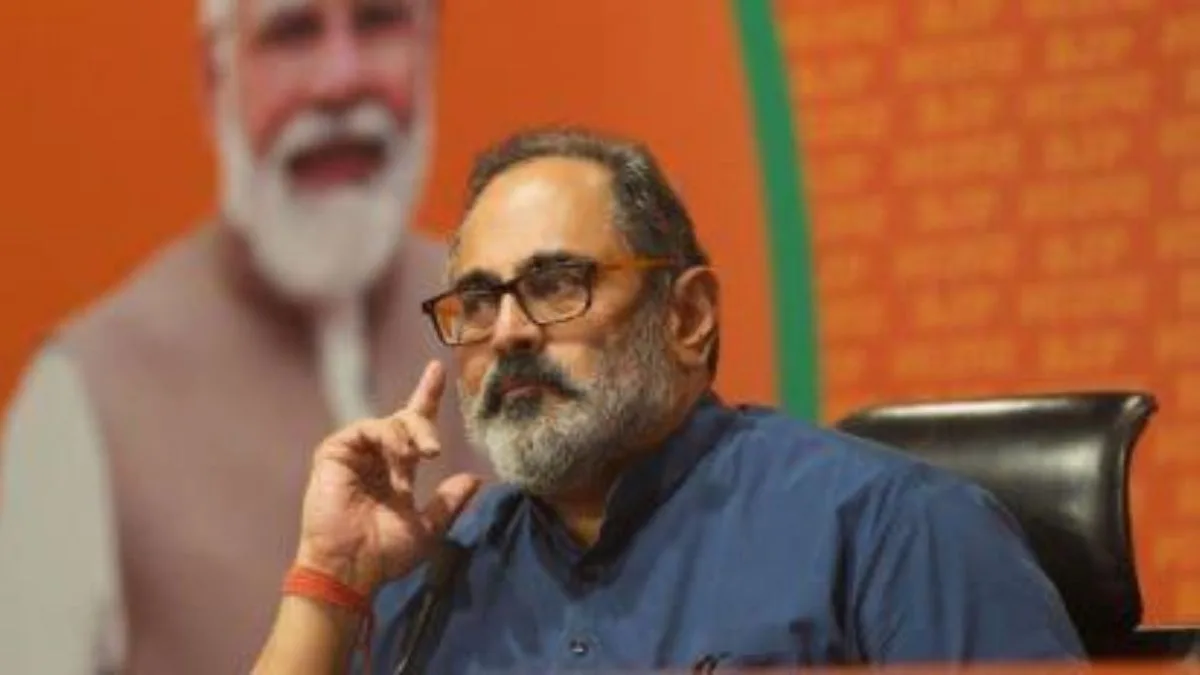
Kerala Govt failed to implement Centre-sanctioned projects: BJP state chief

Speaking to the media here, BJP Kerala state president Rajeev Chandrasekhar said the Union Budget includes several schemes for youth and development that would benefit Kerala as well.

Statesman News Service | Thiruvananthapuram |

Amid sharp criticism from the Kerala government that the Union Budget has completely neglected the state, the Bharatiya Janata Party on Sunday shifted the blame to the Left government, alleging that it had failed to implement several projects and schemes sanctioned by the Centre.

Speaking to the media here, BJP Kerala state president Rajeev Chandrasekhar said the Union Budget includes several schemes for youth and development that would benefit Kerala as well.

He asserted that the Modi government had transformed India from a weak economy into the world’s fourth-largest economy and that the Budget reflects clear medium- and long-term strategies.

Chandrasekhar questioned why the Kerala government had failed to implement schemes announced for the state in the last 11 Union Budgets.

“I have only one question for the Left government, which is spreading the narrative that Kerala has received nothing in the Union Budget. The Central government has announced several schemes for Kerala over the last 11 budgets. Why has the state government failed to implement many of them?” he asked.

Citing specific examples, the BJP leader said the PM Ayushman scheme, which benefits people above 70 years of age, has not been implemented by the Left government in Kerala.

He also pointed out that ₹6,000 crore was allocated under the Jal Jeevan Mission to benefit 32 lakh families in the state, but claimed that the scheme had not reached a single household.

On the absence of an announcement for setting up AIIMS in Kerala in the current Budget, Chandrasekhar said the Centre could not proceed as the state government had failed to acquire the required land.

He recalled that the establishment of AIIMS in Kerala was announced in 2017, but the land acquisition process has not been completed so far.

He further asserted that implementation of new Central projects in Kerala would be possible only if a BJP-led NDA government comes to power in the state. “Development will happen only when a double-engine government comes to power in Kerala,” he said.

Meanwhile, Leader of the Opposition in the Kerala Assembly, V D Satheesan, strongly criticised the Union Budget, alleging that it raised doubts about whether Kerala was being treated as part of the country.

“BJP leaders, including Union Ministers from Kerala, spoke repeatedly about AIIMS. We expected at least that. There is no AIIMS and no high-speed rail line for Kerala,” Satheesan said.

Referring to assurances made during the local body election campaign, Satheesan said BJP leaders, including the Prime Minister, had promised to transform Kerala into a developed state. “If this is how Kerala is being developed, it is a warning,” he added.

Budget draws mixed reactions in Telugu states; Telangana alleges neglect, Naidu hails rail corridors

Telangana Deputy Chief Minister Bhatti Vikramarka described the Budget as disappointing and alleged that it had done injustice to the state. “The Budget presented by the central government has been disappointing. The central government has done injustice to Telangana in the Budget. The expected allocations are missing,” he said.

Statesman News Service | Hyderabad |

The Union Budget drew sharply contrasting reactions from the Telugu states on Saturday, with Andhra Pradesh Chief Minister N Chandrababu Naidu welcoming the proposals, while the Telangana government complained that the state had once again been ignored by the Centre.

Telangana Deputy Chief Minister Bhatti Vikramarka described the Budget as disappointing and alleged that it had done injustice to the state. “The Budget presented by the central government has been disappointing. The central government has done injustice to Telangana in the Budget. The expected allocations are missing,” he said.

However, the Budget proposes three of the seven high-speed rail corridors passing through Telangana—Pune–Hyderabad, Hyderabad–Bengaluru, and Hyderabad–Chennai.

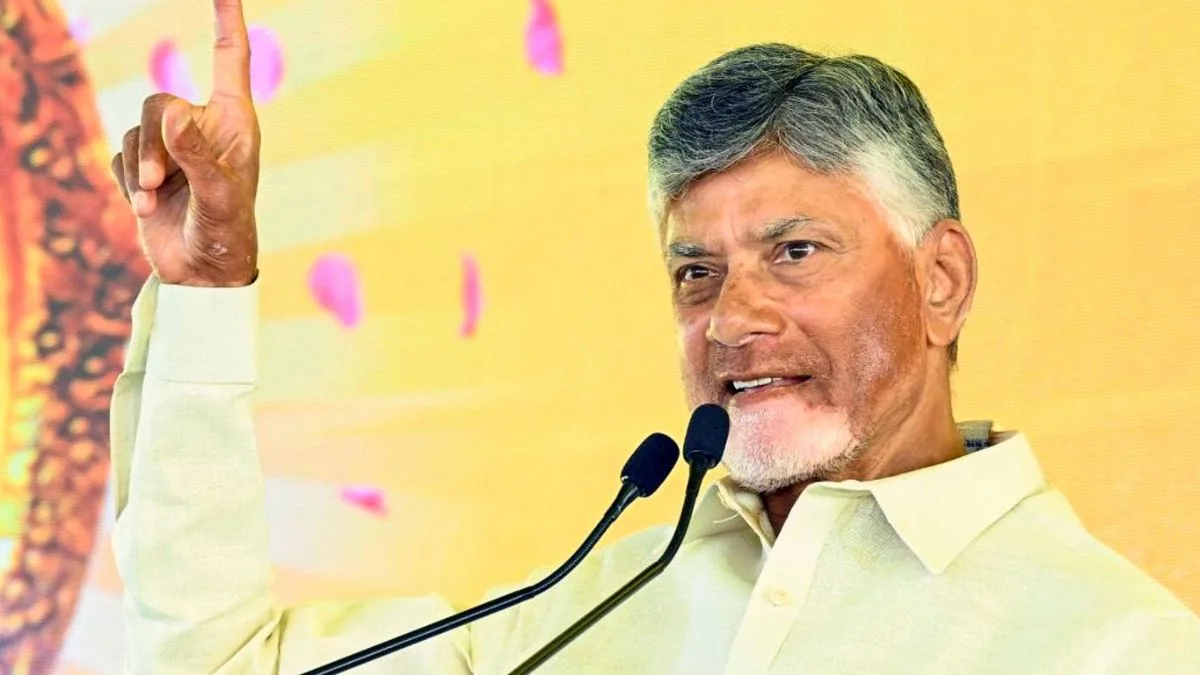
Appreciating the Budget, Andhra Pradesh Chief Minister N Chandrababu Naidu said three high-speed rail corridors would benefit his state. He said Anantapur and Kurnool would be part of the Hyderabad–Bengaluru corridor, Amaravati and Tirupati would be included in the Hyderabad–Chennai corridor, and Palamaneru in Chittoor district would feature on the Bengaluru–Chennai high-speed rail route.

Welcoming the Budget, Telangana BJP leader and Malkajgiri MP Eatala Rajender said the Hyderabad-centric high-speed rail corridors would give a significant boost to Telangana’s growth. He added that the Budget prioritises the poor, youth, and students, with a strong focus on startups and entrepreneurship.

In contrast, Telangana Jagruthi leader Kalvakuntla Kavitha expressed disappointment over the Budget. “Telangana has sent eight BJP MPs to Parliament. Parliament has sent back zero funds and endless files. This is not even cooperative federalism. Our state has been pushed to the back of the queue. The streak of zero for Telangana continues,” she said.