Logo

After talks with MCD leaders, Khap chiefs discuss future course of action on Lal Dora house tax waiver

The meeting of the village chiefs came after a discussion on the house tax waiver issue that recently took place between a delegation from the villages led by Solanki and the top leaders of the MCD, including Mayor Raja Iqbal, standing committee chairperson Satya Sharma and the house leader.

Statesman News Service | New Delhi |

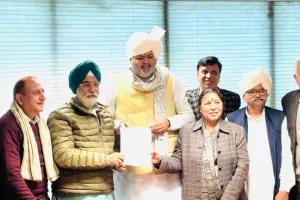
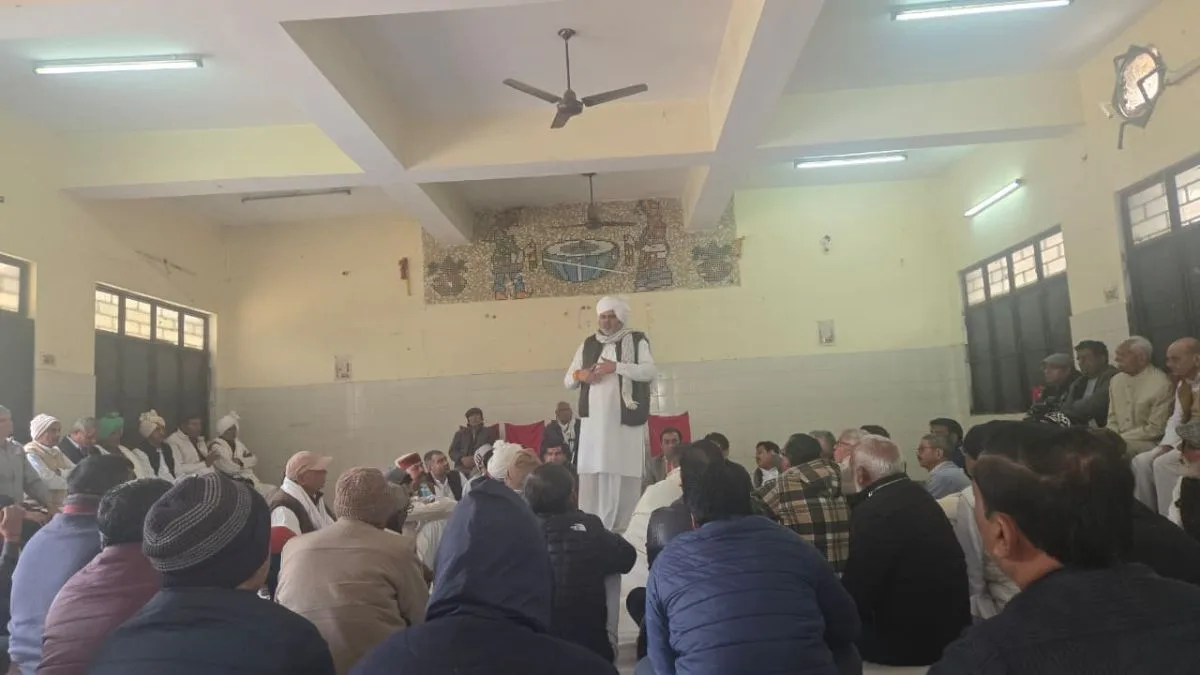
Representatives from across Delhi’s rural belt comprising 360 villages, on Sunday met at the Mangolpur Kalan village, under the leadership of Sakal Panchayat Palam 360 chief Surender Solanki, to discuss the crucial issue of house tax waiver in the national capital’s Lal Dora and extended Lal Dora areas, a demand that they has long been placed before the government.

The meeting of the village chiefs came after a discussion on the house tax waiver issue that recently took place between a delegation from the villages led by Solanki and the top leaders of the MCD, including Mayor Raja Iqbal, standing committee chairperson Satya Sharma and the house leader.

According to Solanki, the villagers on Sunday met to decide the future course of action to find a solution to the problem. He said the recent talks with the MCD leadership were positive, claiming that they have been assured of chalking out a solution in favour of the rural belt.

After the meeting of Khap chiefs, the rural leader said soon a delegation would meet the standing committee chairperson to hold discussions on the matter as they have taken the opinions from the entire villages on the issue.

Apart from the house tax waiver, the rural belt leaders discussed several issues pertaining to the 360 villages, including revision of circle rates and decided that the pending issues like land allotments and ownership related to 74/4 and the 20-point programme, allotment of alternative plots etc must be put on fast track.

Solanki said a delegation from the villages is planning to meet Delhi CM Rekha Gupta and Union Minister for Urban Affairs Manohar Lal with a request to put the ongoing works on Delhi’s villages on fasttrack.

The Palam 360 Khap chief said these issues were discussed earlier with Home Minister Amit Shah as well prior to the Delhi assembly polls, and the rural belt had been assured their works will be done.

He also said that the entire rural belt expects that building by-laws apply to the Lal Dora or the extended Lal Dora areas of the Delhi’s villages.

It is noteworthy that the villages of the national capital have been struggling with a lot of issues, especially civic woes and lack of basic amenities, but found that their resolution is not forthcoming. As a result, they they have no option but to endure broken roads, lack of sanitation and other basic facilities.
Pakistan to boycott February 15 T20 World Cup match against India

The development follows ICC’s decision to replace the Bangladesh team with Scotland after the former refused to play its matches in India, citing security concerns.

Statesman News Service | New Delhi |

Pakistan cricket team will participate in the upcoming T20 World Cup tournament but will boycott the match against arch-rivals India, the Government of Pakistan announced on Sunday.

“The Government of the Islamic Republic of Pakistan grants approval to the Pakistan Cricket Team to participate in the ICC World T20 2026.However, the Pakistan Cricket Team shall not take the field in the match scheduled on 15th February 2026 against India,” the Pakistani Government said on X, according to Geo TV.

According to BCCI sources, the Indian team will travel to Sri Lanka on February 15 and follow the ICC protocol. The team will practice as per the schedule, hold a press conference and reach the stadium according to time and wait for the match referee to call off the match.

The development follows ICC’s decision to replace the Bangladesh team with Scotland after the former refused to play its matches in India, citing security concerns.

The entire controversy started after a group of right wing leaders objected the inclusion of Bangladeshi cricketer Mustafizur Rahman in the Indian Premier League amid incidents of violence against Hindus in Bangladesh.

Following this, the BCCI asked the Kolkata Knight Riders to release Rahman. This didn’t go down well with the Bangladesh Cricket Board (BCB), with its President Aminul Islam Bulbul formally requesting the ICC to move Bangladesh team matches from India to Sri Lanka.

The BCB cited security concerns, saying that if India cannot provide security to one cricketer (Mustafizur Rahman), how can the entire team travel to the country.

The ICC rejected BCB’s request after n independent security assessment found no credible threat to the Bangladeshi team in India. As the ICC turned down BCB team’s request, Scotland replaced Bangladesh.

After this, Pakistan Cricket Board chairman Mohsin Naqvi expressed solidarity with Bangladesh and said that Pakiatan will also reconsider its participation in the T20 World Cup.

He had said that the Government of Pakistan will take the final call. The ICC is yet to respond to Pakistan’s decision.

Glow from within: Acharya Balkrishna reveals why carrots are a skin superfood

That glow you’re chasing might not be in a bottle at all. Acharya Balkrishna says a crunchy carrot rich in vitamins and antioxidants could be quietly doing more for your skin than your entire beauty shelf.

Statesman News Service | New Delhi |

If glowing skin had a colour, Acharya Balkrishna might say it’s bright orange. In a recent Facebook post, the Patanjali co-founder and well-known Ayurveda expert dropped a simple beauty tip that sounds more like kitchen wisdom than a cosmetic ad.

His advice? Eat carrots. According to him, this humble vegetable could be your skin’s best friend, especially under the harsh Indian sun.

Acharya Balkrishna wrote that carrots are rich in vitamins A and C, which help protect the skin from the harmful effects of sunlight. He also pointed out that carrots are packed with antioxidants, and regular consumption can bring a natural glow to the skin.

No fancy serums, no complicated routines. Just a crunchy, affordable vegetable sitting quietly in your sabzi basket.


We all love sunshine, but too much of it can be rough on our skin. Long hours under the sun can lead to tanning, dullness, early wrinkles, and even long-term damage. Pollution and stress only make things worse. Sunscreens and creams are important. But Acharya Balkrishna’s message tells us skin care does not start and end on the surface. What we eat matters just as much.

Vitamin A: The skin repair hero

Carrots are famous for their vitamin A content and for good reason. Vitamin A helps repair skin tissues and keeps the skin smooth and healthy. It supports cell renewal. This means old damaged skin cells are replaced faster.

This can make the skin look fresher and more even-toned over time. In Ayurveda, such nutrients are believed to nourish body from within leading to visible results on the outside.

Vitamin C: The glow booster

Vitamin C is another star nutrient found in carrots. It plays key role in collagen production. It keeps skin firm and youthful. And it also helps fight damage caused by sun exposure and pollution.

When Acharya Balkrishna talks about protecting the skin from the sun’s harmful rays, vitamin C is doing much of that behind-the-scenes work.

Antioxidants: Silent skin guards

Carrots are also rich in antioxidants. These are compounds that fight free radicals. These are unstable molecules that damage skin cells and speed up ageing.

By reducing this damage, antioxidants help maintain skin brightness and slow down signs of ageing like fine lines and dullness. This is why regular carrot consumption is often linked to clearer healthier-looking skin.

How to add more carrots to your day

The best part? You don’t need to change your life to follow this advice. Add grated carrots to salads, cook them into sabzi, blend them into soups, or drink fresh carrot juice a few times a week. Some people even enjoy raw carrot sticks as a snack.

Simple, tasty, and easy on the pocket.

Also Read: No creams, no filters: Just curd and turmeric | Acharya Balkrishna’s take on hand tanning

Kerala Govt failed to implement Centre-sanctioned projects: BJP state chief

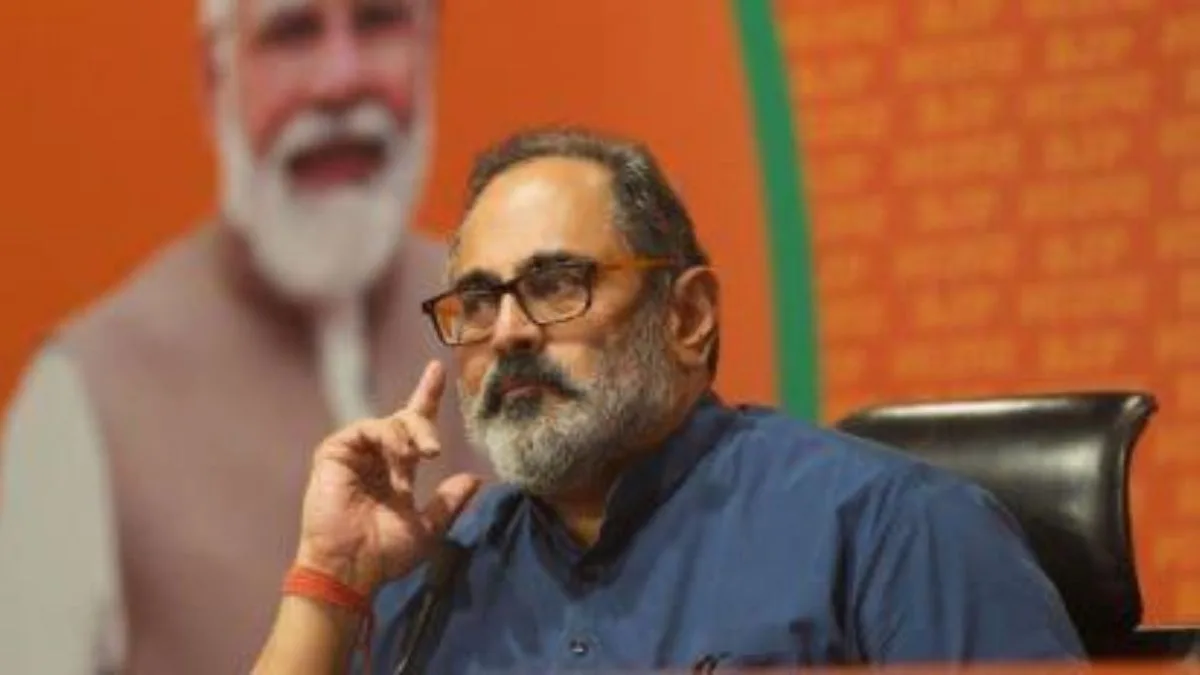
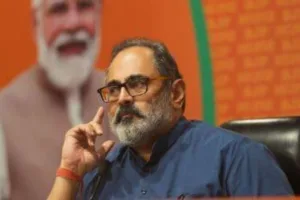
Speaking to the media here, BJP Kerala state president Rajeev Chandrasekhar said the Union Budget includes several schemes for youth and development that would benefit Kerala as well.

Statesman News Service | Thiruvananthapuram |

Amid sharp criticism from the Kerala government that the Union Budget has completely neglected the state, the Bharatiya Janata Party on Sunday shifted the blame to the Left government, alleging that it had failed to implement several projects and schemes sanctioned by the Centre.

Speaking to the media here, BJP Kerala state president Rajeev Chandrasekhar said the Union Budget includes several schemes for youth and development that would benefit Kerala as well.

He asserted that the Modi government had transformed India from a weak economy into the world’s fourth-largest economy and that the Budget reflects clear medium- and long-term strategies.

Chandrasekhar questioned why the Kerala government had failed to implement schemes announced for the state in the last 11 Union Budgets.

“I have only one question for the Left government, which is spreading the narrative that Kerala has received nothing in the Union Budget. The Central government has announced several schemes for Kerala over the last 11 budgets. Why has the state government failed to implement many of them?” he asked.

Citing specific examples, the BJP leader said the PM Ayushman scheme, which benefits people above 70 years of age, has not been implemented by the Left government in Kerala.

He also pointed out that ₹6,000 crore was allocated under the Jal Jeevan Mission to benefit 32 lakh families in the state, but claimed that the scheme had not reached a single household.

On the absence of an announcement for setting up AIIMS in Kerala in the current Budget, Chandrasekhar said the Centre could not proceed as the state government had failed to acquire the required land.

He recalled that the establishment of AIIMS in Kerala was announced in 2017, but the land acquisition process has not been completed so far.

He further asserted that implementation of new Central projects in Kerala would be possible only if a BJP-led NDA government comes to power in the state. “Development will happen only when a double-engine government comes to power in Kerala,” he said.

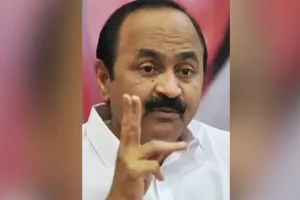
Meanwhile, Leader of the Opposition in the Kerala Assembly, V D Satheesan, strongly criticised the Union Budget, alleging that it raised doubts about whether Kerala was being treated as part of the country.

“BJP leaders, including Union Ministers from Kerala, spoke repeatedly about AIIMS. We expected at least that. There is no AIIMS and no high-speed rail line for Kerala,” Satheesan said.

Referring to assurances made during the local body election campaign, Satheesan said BJP leaders, including the Prime Minister, had promised to transform Kerala into a developed state. “If this is how Kerala is being developed, it is a warning,” he added.

Budget draws mixed reactions in Telugu states; Telangana alleges neglect, Naidu hails rail corridors

Telangana Deputy Chief Minister Bhatti Vikramarka described the Budget as disappointing and alleged that it had done injustice to the state. “The Budget presented by the central government has been disappointing. The central government has done injustice to Telangana in the Budget. The expected allocations are missing,” he said.

Statesman News Service | Hyderabad |

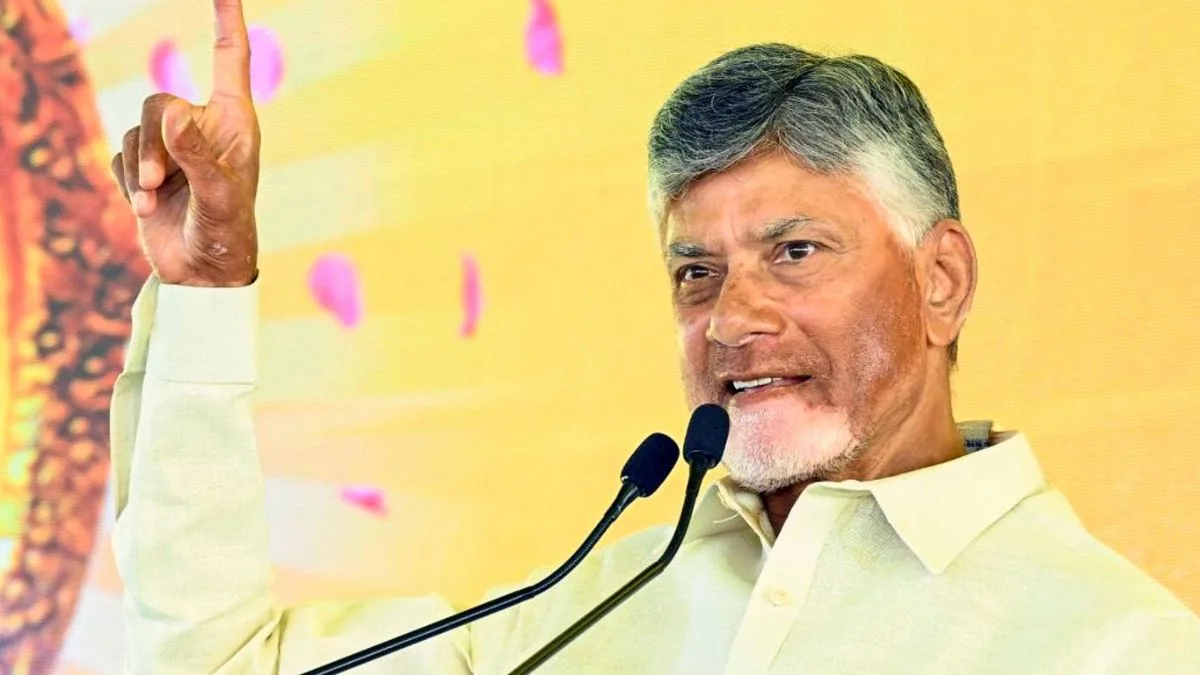
The Union Budget drew sharply contrasting reactions from the Telugu states on Saturday, with Andhra Pradesh Chief Minister N Chandrababu Naidu welcoming the proposals, while the Telangana government complained that the state had once again been ignored by the Centre.

Telangana Deputy Chief Minister Bhatti Vikramarka described the Budget as disappointing and alleged that it had done injustice to the state. “The Budget presented by the central government has been disappointing. The central government has done injustice to Telangana in the Budget. The expected allocations are missing,” he said.

However, the Budget proposes three of the seven high-speed rail corridors passing through Telangana—Pune–Hyderabad, Hyderabad–Bengaluru, and Hyderabad–Chennai.

Appreciating the Budget, Andhra Pradesh Chief Minister N Chandrababu Naidu said three high-speed rail corridors would benefit his state. He said Anantapur and Kurnool would be part of the Hyderabad–Bengaluru corridor, Amaravati and Tirupati would be included in the Hyderabad–Chennai corridor, and Palamaneru in Chittoor district would feature on the Bengaluru–Chennai high-speed rail route.

Welcoming the Budget, Telangana BJP leader and Malkajgiri MP Eatala Rajender said the Hyderabad-centric high-speed rail corridors would give a significant boost to Telangana’s growth. He added that the Budget prioritises the poor, youth, and students, with a strong focus on startups and entrepreneurship.

In contrast, Telangana Jagruthi leader Kalvakuntla Kavitha expressed disappointment over the Budget. “Telangana has sent eight BJP MPs to Parliament. Parliament has sent back zero funds and endless files. This is not even cooperative federalism. Our state has been pushed to the back of the queue. The streak of zero for Telangana continues,” she said.

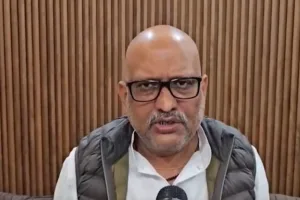
‘Capitalist Budget’ benefits BJP’s capitalist friends: UP Congress chief

Reacting to the Budget through a social media post, Rai said the government had failed to address core issues such as education, healthcare, and employment.

Statesman News Service | Lucknow |

Uttar Pradesh Congress President Ajay Rai on Sunday strongly criticised the Union Budget, alleging that it has shattered the hopes of the common people and lacks any clear direction.

Reacting to the Budget through a social media post, Rai said the government had failed to address core issues such as education, healthcare, and employment.

He alleged that instead of providing relief to the middle class and the poor, the Budget was a “capitalist budget” designed to benefit a select group of capitalist friends of the Bharatiya Janata Party.

“There is no concrete relief for the youth, farmers, or ordinary families who are struggling with inflation and unemployment,” Rai said, adding that the Budget reflects a government completely detached from the problems faced by the people.

He further alleged that the proposals expose the true character of the BJP-led government, which, according to him, is insensitive to public concerns.

It may be noted that Union Finance Minister Nirmala Sitharaman presented her ninth consecutive Union Budget in the Lok Sabha on Sunday. Prime Minister Narendra Modi later described her nearly 85-minute Budget speech as “historic and forward-looking.”

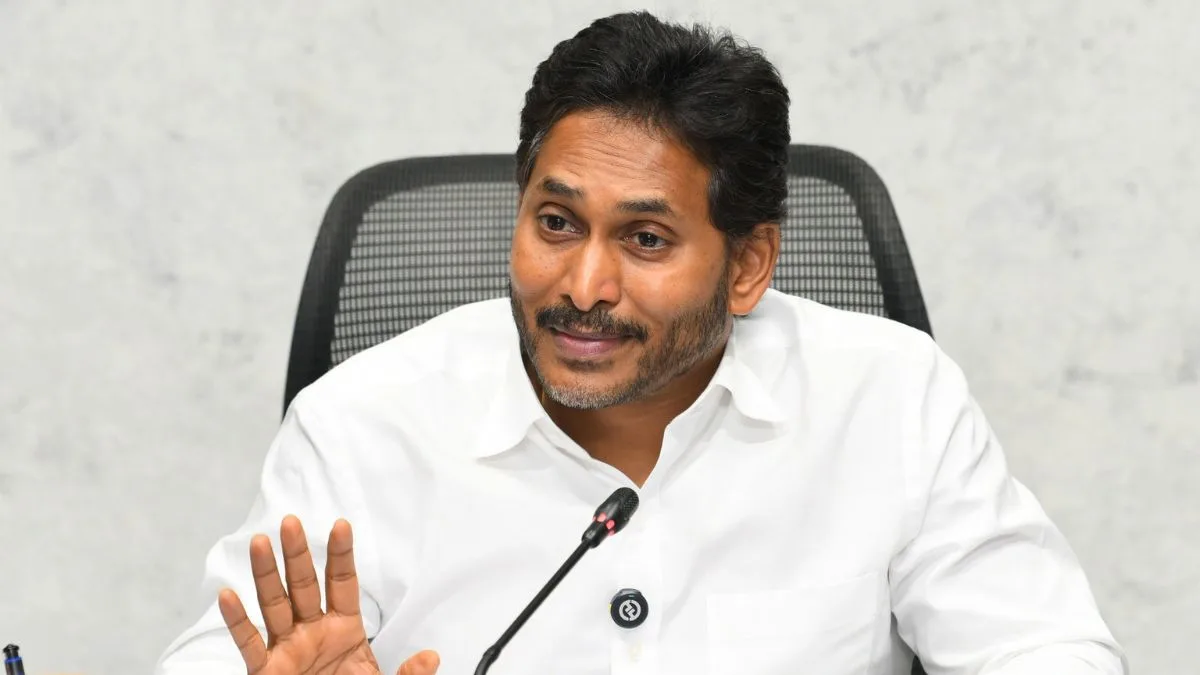
YS Jagan slams NDA Govt over attacks on YSRCP leaders’ houses, alleges ‘Jungle Raj’ in Andhra Pradesh

Less than 24 hours after TDP supporters allegedly attacked the house of former minister and YSRCP leader Ambati Rambabu, another incident of violence was reported on Saturday

Statesman News Service | Hyderabad |

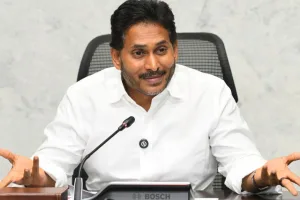
Former Andhra Pradesh chief minister and YSR Congress Party (YSRCP) president YS Jagan Mohan Reddy on Saturday slammed the NDA government in the state, accusing it of unleashing a “jungle raj” after the residences of two former ministers were attacked allegedly by supporters of the Telugu Desam Party (TDP).

Less than 24 hours after TDP supporters allegedly attacked the house of former minister and YSRCP leader Ambati Rambabu, another incident of violence was reported on Saturday. The residence of former minister and YSRCP leader Jogi Ramesh in Ibrahimpatnam was attacked, with furniture set on fire, allegedly by TDP supporters.

According to the YSRCP, the attack followed Ramesh’s unsavoury remarks against Chief Minister N Chandrababu Naidu and IT Minister Nara Lokesh. Ramesh, however, was not present at his residence at the time of the incident. The party alleged that the police remained mute spectators while the miscreants vandalised the property.

On Friday, Ambati Rambabu’s house was also attacked allegedly after he used unparliamentary language against Chief Minister Naidu. Rambabu was arrested and taken into custody later that night.

Condemning the incidents, YS Jagan Mohan Reddy said the prevailing situation in Andhra Pradesh reflected a “jungle raj” and accused Chief Minister Naidu of running a barbaric and vindictive administration. He alleged that the law and order situation in the state had collapsed and that attacks were being carried out to silence those questioning the government.

The former chief minister further accused the ruling dispensation of misusing the police machinery to shield its own actions and enable political attacks on opposition leaders.

The political confrontation between the YSRCP and the TDP has intensified over the final chargesheet filed by the Central Bureau of Investigation (CBI) in the Tirupati laddu adulteration case. The YSRCP has taken an aggressive stand, citing the chargesheet to counter allegations made by Naidu.

In the final chargesheet, the CBI stated that there was no presence of beef tallow or lard in the ghee used for preparing the Tirupati laddu prasadam, contradicting claims of “animal fat” contamination.

Budget FY27: India’s growth, reforms, and inclusive development take center stage

Highlighting a strong macroeconomic stability with a growth rate of around 7 pc, she said, “The Modi government has decisively chosen action over ambivalence, delivering reforms that have improved lives and reduced poverty.”

Shahid K Abbas | New Delhi |

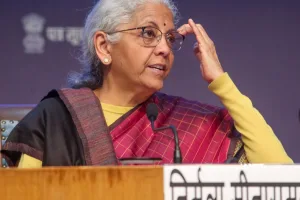
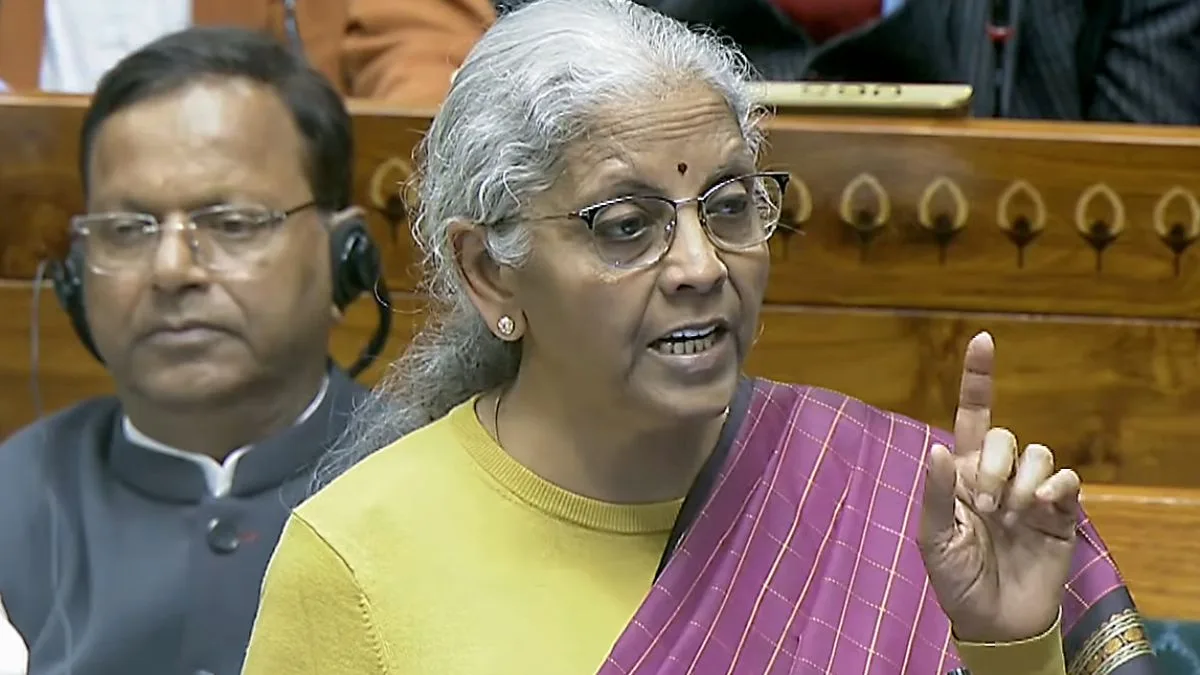
Finance Minister Nirmala Sitharaman presented the union Budget for 2026-27 in the Lok Sabha on Sunday, emphasising India’s sustained economic growth and resilience amid global uncertainties.

Highlighting a strong macroeconomic stability with a growth rate of around 7 pc, she said, “The Modi government has decisively chosen action over ambivalence, delivering reforms that have improved lives and reduced poverty.”

The Budget focuses on balancing ambition with inclusion, aiming to transform aspiration into achievement. Sitharaman noted, “This is a Yuva Shakti-driven Budget inspired by three duties: to accelerate economic growth, build resilience to global volatility, and ensure inclusive development.”

Key reforms announced include significant steps to build domestic manufacturing capacity, enhance energy security, and cut critical import dependency. The government proposes to boost manufacturing in sectors such as biopharma, semiconductors, textiles, and infrastructure, with dedicated funds like Rs 100 billion for Biopharma Shakti and an expanded Rs 400 billion outlay for electronics manufacturing.

A major thrust is on supporting MSMEs through a three-pronged approach, including a proposed Rs 100 billion SME growth fund and measures to improve liquidity and compliance via TReDS and GeM integration. Infrastructure development will be scaled up with a capital expenditure target of Rs 12.2 trillion and initiatives like 20 new waterways and coastal shipping schemes aimed at boosting trade and connectivity.

On the financial front, the Budget aims to strengthen the banking sector with a new high-level committee for banking reforms and restructuring of key public NBFCs. Tax reforms include the rollout of the new Income Tax Act from April 1, reduced TCS rates for education and medical expenses, and rationalization of prosecution under the Income Tax Act. Notably, tax holidays are extended till 2047 for cloud services from Indian data centers, and safe harbor provisions are enhanced for IT services.

Sitharaman stressed the importance of integrating India with global markets, stating, “India must continue to take confident steps to ensure long-term economic stability while fostering innovation through cutting-edge technology and AI as force multipliers.”

The fiscal deficit for FY27 is pegged at 4.3 per cent of GDP with a debt-to-GDP ratio expected to decline to 55.6 per cent, underscoring the government’s commitment to fiscal prudence. Tax devolution to states continues at 41 per cent, with Rs 1.4 trillion allocated as grants.

The Budget also prioritizes social sectors and employment generation, proposing schemes for medical tourism hubs, upgrading allied health skills, promoting sports goods manufacturing, and supporting vulnerable populations, including women entrepreneurs and the differently-abled.

Finance Minister Sitharaman reaffirmed the government’s reform momentum: “Over 350 reforms have been rolled out since August 15, and the reform express is well on its way to boosting growth, employment, and production across the country.”

The Budget is seen to lay a foundation for India’s ambitious vision for 2047, balancing rapid growth with inclusive, sustainable development.

Former Odisha CM says state received little, expresses disappointment over Union Budget

While welcoming the proposal to establish the Rare Earth Corridor in Odisha, he said Odisha is the leading producer of several key minerals and will always contribute to nation building through its rich resources.

Statesman News Service | BHUBANESWAR |

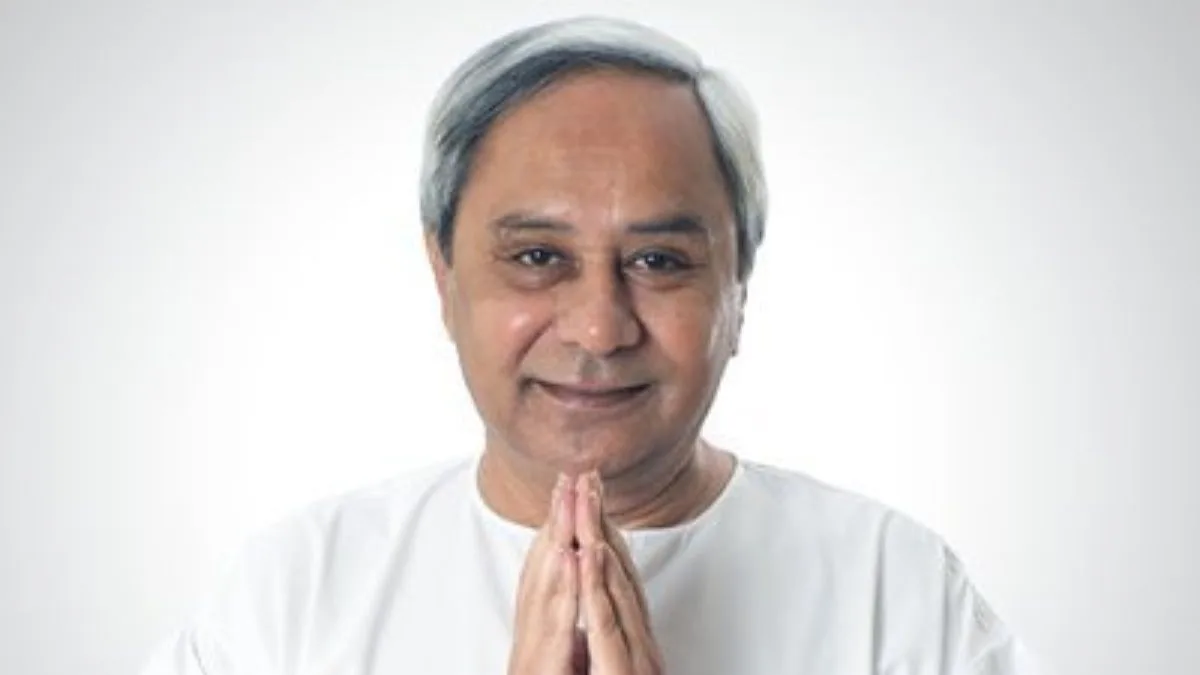
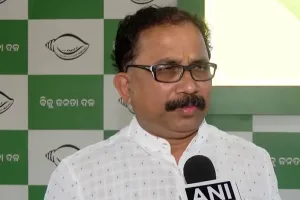
Leader of Opposition and former chief minister Naveen Patnaik has expressed disappointment on the Budget-2026 presented today by the Union Government saying that “the state has received little as far as infrastructure, job creation and due additional allocation is concerned.”

The anticipation from the people of Odisha was that the double engine government would offer a growth momentum with focus on infrastructure, job creation and additional allocation which is due to the state. The state has received very little. The budget has offered no noteworthy benefits to Odisha and its people; Patnaik reacted in a post in ‘X’ handle.

While welcoming the proposal to establish the Rare Earth Corridor in Odisha, he said Odisha is the leading producer of several key minerals and will always contribute to nation building through its rich resources.

Commenting on the growth in national waterway connectivity, he said the proposal for National Waterways to connect mineral rich areas and industrial centres to the Ports is a decade old proposal without any progress on the ground.

It is a huge disappointment for the people of Odisha that the announcement to develop seven High-Speed Rail corridors between cities as ‘growth connectors’ does not feature Odisha., he stated.

Odisha BJP nipped the Bhubaneswar Metro project earlier and the neglect of people’s needs continues as usual.

And it’s quite baffling that the Tourism Centric Scheme for Development of Buddhist Circuits has completely skipped Odisha despite having several very important Buddhist sites including our Diamond Triangle.

As seen from the entirety of the Union Budget, Odisha is getting allocations only for taking its natural resources away and completely ignored when it comes to resource allocation for benefit of people of the State.

It’s time the State BJP Govt takes responsibility for people of Odisha and ensures they get their rightful dues from centre. Odisha and its people deserve more and better from the Union Budget, he concluded.

Union Budget is visionary roadmap for inclusive Viksit Bharat: Sr BJP leader Sanjay Tandon

Tandon said the budget reflects Prime Minister Narendra Modi’s vision of accelerating economic growth, empowering citizens, and ensuring Sabka Sath, Sabka Vikas. He noted that the clear focus on productivity, competitiveness, and resilience against global uncertainties demonstrates the government’s firm commitment to long-term national interest.

Statesman News Service | Chandigarh |

Senior BJP leader Sanjay Tandon on Sunday welcomed the Union Budget 2026–27 presented by Union Finance and Corporate Affairs Minister Nirmala Sitharaman, describing it as a bold, visionary and inclusive budget that lays a strong foundation for a Viksit Bharat while balancing growth, stability, and social justice.

Tandon said the budget reflects Prime Minister Narendra Modi’s vision of accelerating economic growth, empowering citizens, and ensuring Sabka Sath, Sabka Vikas. He noted that the clear focus on productivity, competitiveness, and resilience against global uncertainties demonstrates the government’s firm commitment to long-term national interest.

“The Union Budget is inclusive and wholesome. Its emphasis is on converting education into employment opportunities. For girls, every district will have a hostel. The Budget has given a big boost to our collective efforts to realize the goal of inclusive Viksit Bharat by 2047,” he said.

“The budget has addressed all sectors of the economy. It has given some incentives and concessions to each of them. Railway, health, education, infrastructure, cooperative, waterways and MSMEs, the Budget has something great for every sector. This Budget has further positioned India as a global magnet of the world economy,” he said.

Addressing party workers and other stakeholders at the BJP office here, after the Union Budget’s presentation in the Lok Sabha, Tandon said the Union Budget 2026-27 has come at a time when global geopolitics is undergoing a complete metamorphosis. “Still, India, through this Budget, has shown to the world that we are continuing to have an economy with one of the strongest fundamentals in the world.”

Praising the macroeconomic prudence of the Budget, Tandon highlighted that maintaining the fiscal deficit at 4.3 per cent of GDP and reducing the debt-to-GDP ratio to 55.6 per cent reflects responsible fiscal management while continuing strong public investment. The increase in capital expenditure to Rs12.2 lakh crore, along with an effective capital outlay of over Rs 17 lakh crore, will significantly boost infrastructure creation, employment generation and private sector confidence.

He particularly lauded the emphasis on manufacturing through targeted interventions in strategic sectors such as biopharma, semiconductors, electronics, rare earths, chemicals, textiles and capital goods. The launch of initiatives like Biopharma SHAKTI, India Semiconductor Mission 2.0 and the expansion of electronics manufacturing will position India as a global manufacturing and innovation hub, fully aligned with the Make in India vision.

Tandon welcomed the strong push for small and medium enterprises through the Rs 10,000 crore SME Growth Fund and additional support to micro enterprises. He said these measures will create “Champion SMEs”, strengthen grassroots entrepreneurship and generate large-scale employment, especially in Tier-II and Tier-III cities.

Calling infrastructure the backbone of growth, he appreciated the proposals for new Dedicated Freight Corridors, expansion of National Waterways, promotion of coastal shipping, high-speed rail corridors and urban economic regions.

Tandon also praised the people-centric initiatives, including major investments in education, healthcare, allied health professionals, medical tourism, tourism infrastructure, sports and the creative economy.

He said the Budget gives due priority to farmers, Divyangjan, mental health, Purvodaya states and the North-Eastern region. Initiatives like high-value agriculture support, Bharat-VISTAAR, Buddhist circuit development and enhanced support to states through the 16th Finance Commission will ensure balanced and regionally equitable growth.

On tax reforms, Tandon welcomed the New Income Tax Act, simplification of compliance, rationalisation of penalties, ease of living measures and strong support for the information technology sector and global investors. He said these reforms will enhance transparency, reduce litigation and improve India’s attractiveness as an investment destination.

In conclusion, Tandon said the Union Budget 2026–27 is growth-oriented, reform-driven and compassionate, providing a clear roadmap for economic strength, social inclusion and national progress, and firmly steering India towards becoming a developed nation in the coming decades.

Rajasthan expects optimum gains from Union Budget: BJP all praise, Congress terms it ‘damp squib’

In the direct benefits, Rajasthan will get one exclusive girls’ hostel each in the 41 districts of the state, 27 new roads at an investment of Rs 1,154.47 crore (from the Centre) that would strengthen the connectivity and approach to the industrial hubs and tourism centers.

Statesman News Service | Jaipur |

Rajasthan is likely to be happy with optimum gains from Union Budget 2026-27 to cater to the needs of development even as economists and political leadership air divergent views.

The fact is that the budget speech delivered by the Finance Minister Nirmala Sitharaman in the Lok Sabha did not announce any big infrastructure, railway, metro-rail, irrigation or road projects for the state. However, the state is expected to get indirect advantages from the proposed high speed railways corridors, strengthening of mega textile parks, khadi – handicrafts hubs and mega tourism initiatives at the national level.

In the direct benefits, Rajasthan will get one exclusive girls’ hostel each in the 41 districts of the state, 27 new roads at an investment of Rs 1,154.47 crore (from the Centre) that would strengthen the connectivity and approach to the industrial hubs and tourism centers.

Besides, the state will get Rs 7,000 crore more from the Centre as its share in the Central tax revenue. Had the rate of granting shares not lowered from the present 6.026 per cent to 5.926 per cent in the new budget, this amount could have been even bigger.

The authorities in the finance, statistics, and economic planning departments are largely optimistic that the announcement of the high-speed rail network at Delhi would be most beneficial to Rajasthan as it would surely strengthen connectivity with the national capital region in its neighbourhood and would reduce journey time and costs.

Big announcements for the tourism sector will also be beneficial in generating additional employment; it would also facilitate desired global projection (and promotion) of new heritage and cultural tourism circuits.

Likewise, proposals of major boosts to the big textile parks and khadi and handicrafts will transform business and development scenarios at state’s textiles and handloom hubs including Bhilwara, Pali, Barmer and Sanganer – Bagru (Jaipur).

Shradha Agarwal, An economist and budget analyst, was not off the mark when she said the overall proposals in the budget at the national level would give resources to the state in education, particularly girls’ education, infrastructure, tourism, and green energy sectors.

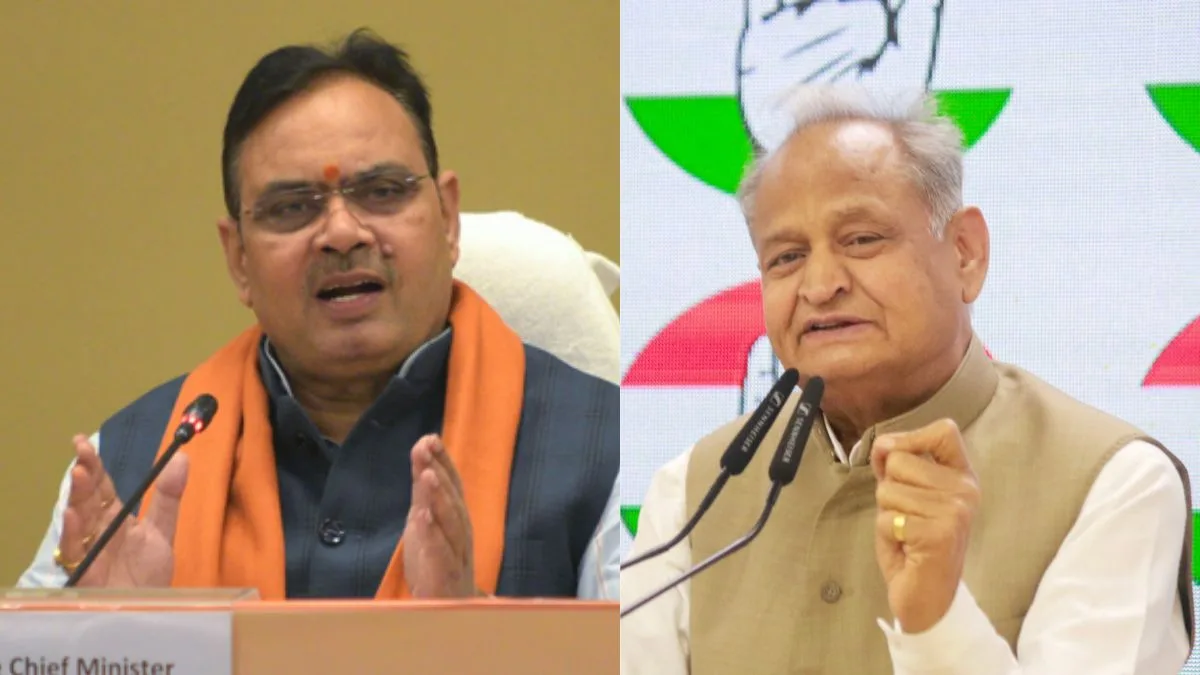
The ruling BJP, including state Chief Minister Bhajan Sharma and ex-CM Vasundhara Raje, was all praise for the budget terming it a progressive, inclusive and economy booster, while Opposition Congress leaders, including former chief minister Ashok Gehlot and state president Govind Singh Dotasra, called it a disappointing drill that proved to be “damp squib”.

Chief Minister Sharma patiently listened to Finance Minister Sitharaman’s budget address at his official residence here along with State Finance Commission Chairman Arun Chaturvedi and former Minister Rajendra Rathore. In his initial reaction, he expressed gratitude to the FM for presenting a visionary, inclusive and progressive budget that forms a distinct roadmap for Viksit Bharat that will take care of everything from infrastructure to artificial intelligence (AI), rural prosperity to tourism, youth affairs, economy to health
care.

His senior party colleague and former chief minister Raje viewed the new budget as a progressive budget that would strengthen the economy and boost up employment generation. This will further the motu of sabka saath; sabka vikas and enable the youth power to live up and realise their dream.

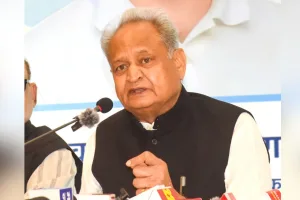
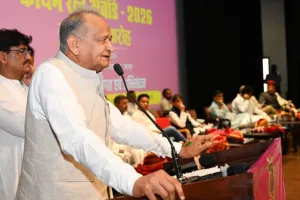
However, Congress leader and three-time ex-chief minister Gehlot was disappointed over the want of the big and mega projects to the state, lack of even a reference about ERCP, the Rail or the Metro Rail projects and even no relief to the poor.

Congress state president Dotasra said, “There is an atmosphere of disappointment among people in the country, particularly in Rajasthan.” This is because of the big gap between the promises made by Prime Minister Narendra Modi and the ground reality about failure in keeping the promise, he added.

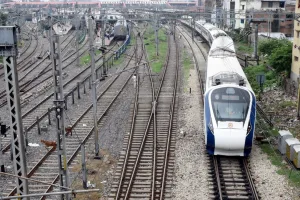
8,354 ticketless passengers apprehended in Railways’ Jammu Division in January; Rs 62 lakh fines recovered

Senior Divisional Commercial Manager of Jammu Division, Uchit Singhal, said that to provide better facilities to passengers and curb ticketless travel, a well-organised ticket-checking drive was conducted in the Jammu Division of Northern Railway in January.

Statesman News Service | Jammu |

A staggering 8,354 ticketless travellers were apprehended by officials of the Railways’ Jammu Division in January, with fines amounting to approximately Rs 62 lakh recovered from the offenders, said officials on Sunday.

Senior Divisional Commercial Manager of Jammu Division, Uchit Singhal, said that to provide better facilities to passengers and curb ticketless travel, a well-organised ticket-checking drive was conducted in the Jammu Division of Northern Railway in January.

This ticket-checking drive was carried out at all major stations and on trains in the Jammu Division by teams constituted according to a special strategy.

During this drive, extensive checks were conducted by the ticket-checking staff at railway stations and on trains. The main objective was to make travel more comfortable, safe, and convenient for passengers with valid tickets.

Under the ticket-checking drive, all major railway stations in the division were completely cordoned off and checked at the entry and exit points. Based on data analysis, trains and routes with a high number of irregular passengers were identified, and special teams were deployed.

Special ‘surprise checks’ were planned for late-night and early-morning trains. During this period, joint teams were formed with officers from the Commercial Department, Railway Protection Force, and Government Railway Police, ensuring effective security and ticket checking.

Commenting on the ticket-checking drive in the division, Singhal said it was the first such drive of 2026, conducted under a special strategy, which proved successful. As a result, action was taken against ticketless and irregular travellers.

The ticket-checking campaign will continue at all railway stations and on all trains in the future, he added.

Kerala CM strongly criticises Union Budget, says Union Finance Minister forgot that Kerala is also on the map of India

He said that Union ministers from Kerala need to answer for this neglect.

Statesman News Service | Thiruvananthapuram |

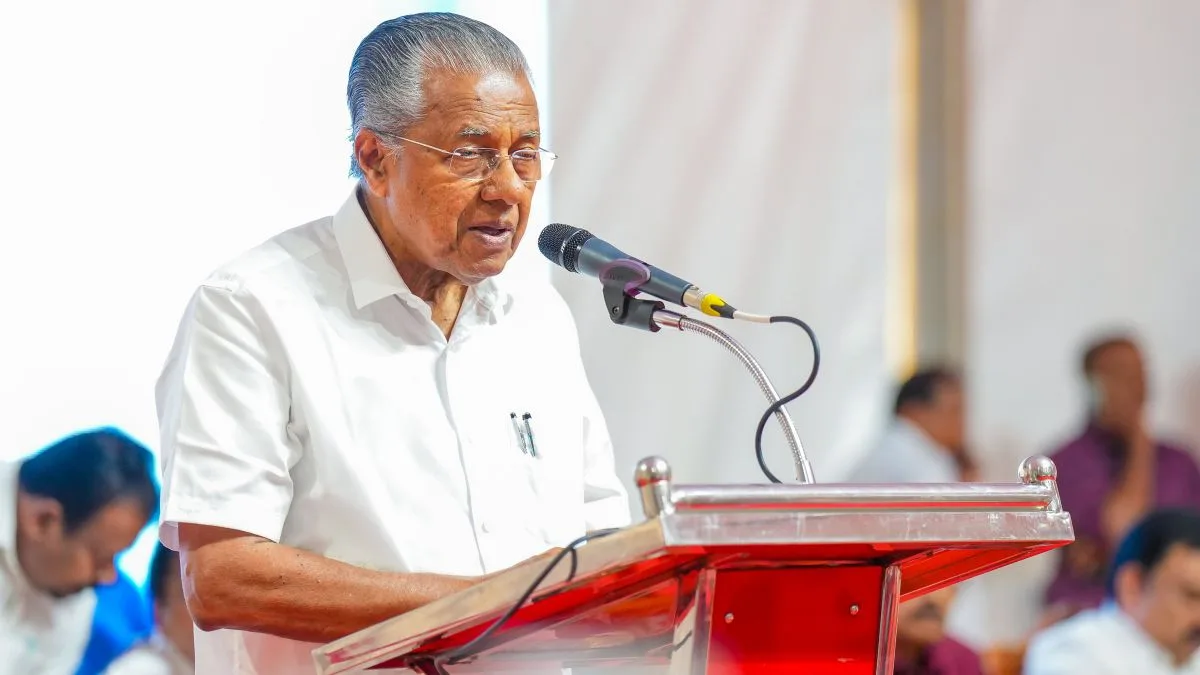
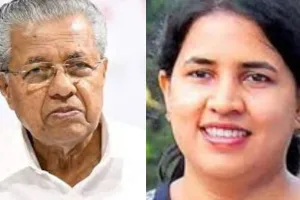
Kerala Chief Minister Pinarayi Vijayan on Sunday strongly criticised the Budget 2026 presented by Union Finance Minister Nirmala Sitharaman. The Chief Minister said the biggest crisis facing the state is the central government’s neglect towards Kerala.

“Union Finance Minister Nirmala Sitharaman has deliberately forgotten the fact that Kerala is also on the map of India. The state’s long-standing demands for AIIMS, seven high-speed corridors for railway development, and a special package for Vizhinjam port development have all been completely ignored,” CM Vijayan said here.

He said that Union ministers from Kerala need to answer for this neglect.

The Chief Minister said that the Finance Commission’s decision to reject Kerala’s demand to increase its share and continue with the current status quo of a 41 per cent share was a move that undermined federal principles.

As regards the state’s inclusion in the Dedicated Rare Earth Corridor scheme in the budget, Pinarayi Vijayan said, “The Centre’s move to seize Kerala’s mineral wealth is dangerous. The announcement in the Union Budget is a policy that paves the way for private mining companies. The Centre’s move is to help the private sector by speeding up the issuance of environmental clearances by repealing even the strict conditions of the Environment Ministry. The state government had announced in the budget that a mineral corridor would be established in the public sector by connecting Vizhinjam, Chavara, and Kochi. The Centre’s move to hand over mineral wealth to private companies, in complete contradiction to the state’s announcements, is dangerous. “

CPM Kerala secretary MV Govindan has also come out against the Union Budget, stating that it has completely ignored the state, and “the budget is a declaration of war on Kerala”.

Addressing a press conference here, Govindan said that the CPM would raise a strong protest against the Union budget, which has completely disappointed Kerala

“The Centre is continuing its stance of destroying Kerala through economic sanctions. There is nothing in the budget that is in Kerala’s favour. Kerala had demanded 29 items, including the AIIMS. But the budget has completely disappointed Kerala,” Govindan said.

The CPM leader said even when three All India Institutes of Ayurveda (AIA) were announced to promote Ayurvedic treatment and research, Kerala, the main centre of Ayurveda, did not get a single one. Although high-speed rail corridors were announced in seven places, Kerala was not included in the list. He alleged that the state’s inclusion in the Dedicated Rare Earth Corridor scheme will only benefit the private sector.


Kerala Industries Minister P Rajeev said that Kerala has been severely neglected in the central budget. Kerala, which was the first state in the country to come up with a high-speed rail project, was not considered in the budget, he said.

“The budget is disappointing. Seven high-speed rail projects were announced in the budget. Kerala was the first to approach the Centre with a high-speed rail project. Yet, Kerala was not considered. The state itself had taken the initiative and given the high-speed rail system to the Center. It was not approved,” Rajeev said.

Despite finding land and providing it, AIIMS was not allotted to Kerala this time, either, he told the media here.

Congress leader Shashi Tharoor MP said he hoped the Centre would carry out its promises to Kerala, including the establishment of an AIIMS, in the Union Budget, and stressed the need to tackle coastal erosion on a war footing. The large-scale erosion of coastal areas, referred to as parts of Bharat Mata, caused by the sea, does not receive proper attention in the budget, he said

Amidst stinging criticism that the budget has completely neglected Kerala, the state BJP shifted the blame to the state government, alleging failure to implement projects sanctioned by the Centre.

Speaking to the media here on Sunday, BJP state president Rajeev Chandrasekhar said the Modi government had lifted India from a weak economy to the world’s fourth-largest economy and that the Budget reflected medium- and long-term strategies.

He asked why the state government has not implemented the schemes given by the Centre to Kerala in the last 11 budgets.

“The Centre had announced several projects for Kerala in the last 11 budgets, but none were implemented by the state government. PM Ayushman Scheme, which benefits people above 70 years of age, is not being implemented by the Left government. Rs 6000 crore has been allocated for the Jal Jeevan Mission. This scheme is supposed to benefit 32 lakh families. But it has not reached a single house,” he said.

Union Budget 2026–27 a roadmap for growth, investment, and employment: Dr Rajeshwar Singh

“The budget presents a balanced convergence of growth, fiscal discipline, and socio-economic stability, which will further strengthen India’s position on the global economic stage,” he claimed.

Statesman News Service | Lucknow |

BJP MLA from the Sarojininagar assembly segment in Lucknow, Dr Rajeshwar Singh, said on Sunday that the Union Budget 2026–27 is not only a response to present needs, but a numbers-driven and future-oriented budget designed to make India’s economy strong and competitive over the next decade.

“The budget presents a balanced convergence of growth, fiscal discipline, and socio-economic stability, which will further strengthen India’s position on the global economic stage,” he claimed.

In a statement, Dr Rajeshwar Singh emphasised that the government has prioritised long-term vision over short-term populist measures. With a strong focus on infrastructure, investment, technology, youth, and green growth, this budget gives renewed momentum to the resolve of a self-reliant India.

He said the Union Budget 2026–27 proposes capital expenditure of ₹12.2 lakh crore—about 4.4% of GDP—the highest ever. This enhanced Capex will boost investment in infrastructure, construction, transport, and manufacturing, leading to large-scale job creation and faster economic activity.

The former cop said that with a fiscal deficit target of around 4.3%, the government has underscored that fiscal discipline is as important as rapid growth. This balance will ensure macro-economic stability, investor confidence, and long-term economic resilience.

He said Uttar Pradesh’s participation in seven high-speed rail corridors, increased Capex for logistics and connectivity, and an estimated ₹2.8 lakh crore in central tax devolution will together help position the state as a major growth engine and employment hub of the country.

In conclusion, Dr Rajeshwar Singh said, “The Union Budget 2026–27 is not a budget for short-term relief, but a document that lays a strong foundation for the economy over the coming decade. It presents a clear roadmap for building an inclusive, sustainable, and employment-oriented India, while further integrating Uttar Pradesh into the national development mainstream.”

Reassuring signal of continuity, credibility from Budget, say Industry bodies & corporate world

Reacting to the Budget, industry body PHDCCI said it welcomes and strongly supports the Union Budget 2026–27 initiatives aimed at expanding manufacturing across strategic and sunrise sectors.

Nikhil Vyas | New Delhi |

Terming Union Budget 2026-27, presented in Parliament by Finance Minister Nirmala Sitharaman on Sunday, ”positive”, industry bodies and the corporate world said the Budget sends a reassuring signal of continuity, credibility, confidence, and long-term vision for the country’s development journey.

Reacting to the Budget, industry body PHDCCI said it welcomes and strongly supports the Union Budget 2026–27 initiatives aimed at expanding manufacturing across strategic and sunrise sectors.

The focus on the BioPharma Shakti Yojana to position India as a global biopharma manufacturing hub, along with the upcoming India Semiconductor Mission (ISM) 2.0, reflects a forward-looking approach to strengthening India’s industrial capabilities.
The enhanced outlay of Rs 40,000 crore for electronic component manufacturing, creation of dedicated Rare Earth Corridors in Odisha, Kerala, Andhra Pradesh, and Tamil Nadu, establishment of three new chemical parks, and new schemes for capital goods and infrastructure equipment manufacturing are commendable steps.

“Union Budget 2026–27 takes a strong step towards increasing farmers’ income with the launch of Bharat-VISTAAR, a multilingual AI-powered platform to enhance farm productivity, enable informed decision-making, and reduce risks through customised advisory support,” the PHDCCI said.

Meanwhile, the Confederation of Indian Industry (CII) said the Union Budget 2026-27, with its next‑generation reforms, builds confidence, and its thrust on public capital expenditure will enhance private investment.

The increase in public capital expenditure to Rs 12.2 lakh crore, with effective capital expenditure exceeding Rs 17 lakh crore, will crowd in private investment, strengthen infrastructure, and improve productivity across sectors, the industry body said.

“At a time of heightened global uncertainty, the Budget sends a reassuring signal of continuity, credibility, confidence, and long-term vision for India’s development journey,” said Chandrajit Banerjee, Director General, CII.

Corporate world has also welcomed the announcements made in the Budget in pharma, real estate and healthcare sectors.

“Biopharma Shakti is not just another government scheme; it marks the moment India moves from being the world’s ‘back-office pharmacy’ to becoming an innovation engine,” said Dr Santosh Moses, Partner and Pharma, BioTech and Life Sciences Leader, Grant Thornton Bharat.

“We welcome the Finance Minister’s balanced macroeconomic strategy, with a record capital expenditure and robust infrastructure allocation under the Viksit Bharat vision, reinforcing infrastructure as a catalyst for economic resilience. The expanded focus on Tier-2 and Tier-3 cities and the development of City Economic Regions and new connectivity corridors are set to unlock fresh consumption and growth hubs,” said Shriram PM Monga, Co-Founder and Principal Consultant, SRED Real Estate Advisory.

“By fast-tracking the Labour Codes, the government is accelerating formalisation—a move that fundamentally expands the addressable market for organized leaders like SIS Limited,” said Rituraj Sinha, MD, SIS Limited.

“The Union Budget 2026 is a strong and forward-looking step for the healthcare sector. With a focus on expanding healthcare infrastructure, investing in medical education, and promoting affordable treatment, it will make healthcare services more accessible and efficient across the country,” said Dr. Sanjay Gupta, Senior Director, Yatharth Super Speciality Hospital, Model Town.

22 million take holy dip at Sangam on Maghi Purnima in Prayagraj

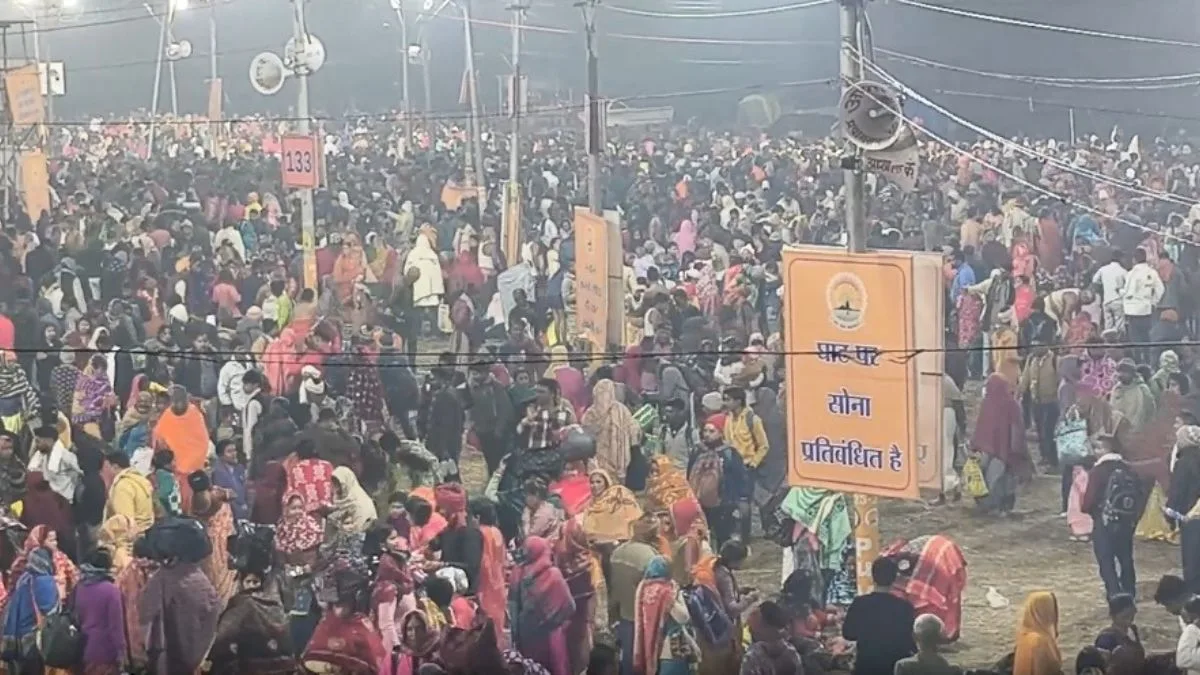
By late evening, 22 million devotees had taken a dip in the holy waters. The administration had estimated that one to one and a half crore devotees would bathe on Maghi Purnima, but this figure was surpassed by 12:00 PM today.

Statesman News Service | Prayagraj |

The bathing ritual on Maghi Purnima at the Magh Mela in Prayagraj, Uttar Pradesh, concluded peacefully on Sunday.

By late evening, 22 million devotees had taken a dip in the holy waters. The administration had estimated that one to one and a half crore devotees would bathe on Maghi Purnima, but this figure was surpassed by 12:00 PM today.

With the Maghi Purnima bath, more than 200 million devotees have now taken a dip of faith at the Magh Mela. From today onwards, the Kalpavasi (devotees observing Kalpavas) also perform puja of Mother Ganga and then listen to the Satyanarayan Katha in their camps. By late evening, all the Kalpavasi begin preparing for their return home.

This means that from tomorrow, Monday, only local devotees will be present in the Mela area. However, the administration is expecting a large number of devotees for the final bath of Mahashivratri on February 15, with estimates of around 80 lakh to one crore people.

Agriculture/Farmers Welfare: Allocations ‘unprecedented, historic’ says govt; critics allege bias

To bring technology into farming, she proposed launching BHARAT VISTAAR, a multilingual AI-based tool providing customised advisory support to improve productivity and reduce risks.

VIBHA SHARMA | New Delhi |

Union Finance Minister Nirmala Sitharaman on Sunday announced a series of measures to support farmers and animal husbandry, targeted at fisheries, high-value crops, agri-technology, and women-led rural enterprises in the Union Budget 2026-27. A key proposal was the integrated development of 500 reservoirs, or Amrit Sarovars, to boost fisheries.
To bring technology into farming, she proposed launching BHARAT VISTAAR, a multilingual AI-based tool providing customised advisory support to improve productivity and reduce risks.

Sitharaman proposed the “highest ever total annual budgetary support of Rs 2,761.80 crore for the fisheries sector.” Of this, Rs 2,530 crore is earmarked for scheme-based interventions, ensuring direct support to fishers and fish farmers. The Pradhan Mantri Matsya Sampada Yojana remains central to fisheries development, with an allocation of Rs 2,500 crore. The Department of Fertilizers received a net allocation of Rs 1.71 lakh crore, “reflecting the government’s focus on protecting farmers from global fertilizer price volatility and supply disruptions.”

The FM appeared to prioritise technology to boost yields and high-value sectors like fisheries and cash crops while withholding funds from underperforming schemes. “We will undertake initiatives for integrated development of 500 reservoirs and Amrit Sarovars, strengthen the fisheries value chain in coastal areas and enable market linkages involving start-ups and women-led groups together with Fish Farmers Producer Organisations (FFPOs),” she said
Agriculture and Farmers Welfare Minister Shivraj Singh Chouhan described the budget as “historic and unprecedented”—a “dynamic Budget for a developed India.” He highlighted a 21 per cent increase to the Rural Development Department, the agriculture budget of Rs 1.32 lakh crore, and over Rs 1.70 lakh crore for fertiliser subsidies, providing relief to farmers and reducing input costs.
“This Budget is laying a strong foundation for a self-reliant, empowered and prosperous India by 2047. It is writing a new chapter by bringing about transformative change in the lives of farmers, youth, women and the poor — the four pillars of the nation,” Chouhan said.
The Minister also expressed confidence that the Rs 1.51 lakh crore allocation under the ‘Viksit Bharat G Ram G’ scheme, along with Rs 55,900 crore to be received under the Finance Commission, will play an unprecedented role in building developed, self-reliant, employment-oriented and poverty-free villages.

Critics and farmer unions, however, accused the government of neglecting farmers.

The Alliance for Sustainable & Holistic Agriculture (ASHA-Kisan Swaraj) said, “The disregard towards farmers and their role in nation-building is reflected in the further slash of budgetary allocations to agriculture and allied sectors, now only 3.04 per cent of the overall budget, down from 5.44 per cent in 2019–20.”

Agriculture expert Prof Sudhir Panwar added, “For the first time, agriculture, farmers and villages faced neglect not only in the budget speech but also in the fine print. The budget on crop husbandry, fertiliser subsidy, and social sector spending either stagnated or reduced, even as rural income declines. PM Modi rightly said it is ambitious but far from reality.”

According to the ASHA-Kisan Swaraj: “While the total budget rose from Rs 50.65 lakh crore to Rs 53.47 lakh crore, agriculture and allied sectors saw a cut of Rs 9,000 crore, from Rs 1.72 lakh crore to Rs 1.63 lakh crore, with significant under-spending in previous years suggesting actual allocation may fall below 3 per cent. The government’s promise to double farmer incomes by 2022 remains unfulfilled, with new AI initiatives like Bharat-VISTAAR offering minimal real benefit to small and marginal farmers.

“Climate risks remain inadequately addressed. PMFBY insurance allocation fell by 15.7 per cent to Rs 12,200 crore, despite crop damage increasing fourfold in 2025. Several schemes have seen a decline in allocations. A big focus of the speech was announcing dedicated schemes and programs for “high-value crops” such as coconut, cashew, cocoa, sandalwood, etc, but these have relevance to a very small section of farmers”.