Logo

EC should hoist its flag on BJP members’ houses and turn them into polling booths: Akhilesh Yadav

He sarcastically remarked that it now seems as if the Election Commission’s flag should be hoisted on the houses of BJP members, making them presiding officers and turning their houses into polling booths.
Statesman News Service | Lucknow |

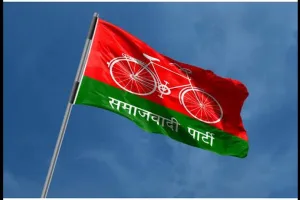
Once again targeting the Election Commission and the BJP, Samajwadi Party (SP) national president Akhilesh Yadav said on Thursday that the situation has become such that there seems to be no difference between the two.

He sarcastically remarked that it now seems as if the Election Commission’s flag should be hoisted on the houses of BJP members, making them presiding officers and turning their houses into polling booths.

Posting on his social media account, Akhilesh Yadav asked, “Has the Election Commission given its work to the BJP on contract, or has the BJP hired the Election Commission on a contract basis?” He suggested that in the administrative thesaurus, ‘Election Commission’ should be added as a synonym for the ‘BJP’.

Akhilesh Yadav alleged that activities like openly manipulating of votes are taking place during the current regime, but constitutional institutions are turning a blind eye. He said that those who are snatching votes today will snatch other rights of the people tomorrow, and even BJP supporters will not be safe. He said, “Thieves only have a relationship with thievery,” and this is why the trust of the common people is continuously being broken.

In another post, he described ‘PDA’ as a shared feeling connected to suffering, saying, “Those who are suffering are the PDA.”

The Samajwadi Party chief has coined the abbreviation PDA for pichde (backward classes), Dalits, and alpsankhyak (minorities), and has been using the expression as a political plank to gain votes.

According to Akhilesh Yadav, the PDA community is now uniting and speaking out openly instead of silently enduring the oppression. He claimed that until now, people have formed governments for others, but in the future, they will form their own ‘PDA government’ to establish a rule of social justice, where everyone will receive equal respect, equal opportunities for progress, and shared prosperity.

The SP chief said that the negative strategies of those who have been dividing a large section of society for years are now failing. “Good people” from every community, fed up with corruption and oppression, are increasingly connecting with the positive, progressive, and harmonious idea of PDA. According to him, “PDA is no longer just a political concept but has become a new name for hope.”

Acko Sets Its Sights on Major IPO as India’s Insurtech Trailblazer

Nitish Kapoor |

Acko, the Bengaluru-based digital insurance powerhouse, is advancing its plans for a significant initial public offering that could raise $300 million to $400 million. With early talks underway with investment banks, the company is targeting a public listing around 2026 or 2027, signalling a strategic shift toward broader market participation and long-term growth.

Founded in 2016, Acko has carved out a leadership position in India’s insurtech landscape by reimagining how insurance is bought, managed, and serviced. The company pioneered a fully digital, direct-to-consumer model that removes traditional friction in the insurance process. This technology-led approach resonates with today’s digitally savvy customers, many of whom now prefer to purchase car insurance online through streamlined and transparent platforms.

A Shift Toward Digital-First Insurance

At a time when the global insurance industry grapples with outdated processes and manual workflows, Acko’s model stands out for simplicity and user experience. Customers who once faced long waits and complex paperwork can now purchase coverage, manage policies, and initiate claims with minimal steps. The appeal of this model has helped Acko grow rapidly and build a strong presence across major insurance categories, from motor and health to travel and gadget protection.

The company’s rise reflects broader changes in India’s financial services landscape, where digital adoption is accelerating and consumer expectations are evolving. More people are comfortable making financial decisions online, from savings and investments to insurance protection. Acko’s seamless digital journey captures this shift, delivering solutions that combine technology with simplicity.

Expanding Reach Through Innovation and Partnerships

Acko’s expansion strategy has been rooted in innovation and strategic alliances. Rather than depending solely on traditional distribution channels, the company has partnered with a range of digital platforms to embed insurance into everyday online experiences. These tie ups allow customers to access tailored coverage options at natural moments, such as when booking a trip or managing mobility services.

This embedded model not only broadens distribution but also aligns with how modern consumers interact with financial products. By integrating insurance offerings into familiar apps and services, Acko has extended its reach beyond first-time buyers to new audiences who may not otherwise consider traditional insurance routes.

Investor Confidence and Market Momentum

Acko’s track record has attracted reputable investors, reflecting confidence in its long-term potential. The company has raised substantial capital from a mix of global and domestic backers, including prominent private equity firms and technology investors. This backing has supported product innovation, technology investments, and sustained expansion into new segments.

Over time, Acko has expanded its portfolio to serve a wide customer base. It has issued millions of policies across categories, and its scale underscores the strong demand for digital-first insurance solutions in India’s fast-growing market.

IPO Strategy in the Current Market Environment

The planned IPO is expected to combine new funding with opportunities for some early investors to sell shares. This structure is common in technology-led public offerings, balancing capital needs for growth with liquidity for existing stakeholders. As Acko finalises these plans, market observers see the move as a sign of maturity for India’s insurtech sector and a milestone for startups aiming to bridge private and public ecosystems.

India’s deepening capital markets and growing investor interest in technology companies have created favourable conditions for listings from high-growth firms. In recent years, several new age companies across fintech, commerce, and services have gone public or begun IPO preparations, reflecting rising confidence in India’s innovation economy.

Balancing Growth and Sustainability

While Acko continues to expand, its financial performance remains a key focus for investors and analysts. The company has reported growth in revenue and improved operational metrics, even as it invests in technology and customer acquisition. These trends are often closely watched by market participants ahead of a public listing, as they offer insight into both growth potential and financial discipline.

Acko’s digital-first strategy, combined with its commitment to transparent pricing and faster claims processing, helps differentiate it in a competitive environment. The company’s focus on customer experience and innovation has made it a benchmark for digital transformation in the insurance industry.

Shaping the Future of Insurance in India

In the future, Acko’s IPO may not only represent a significant step for the company itself but also mark a major milestone for the Indian insurtech ecosystem. If the company successfully gets listed, it would provide proof that investors are interested in technology-driven insurance models, and it could serve as motivation for more startups to tap the public markets to raise funds for scaling and innovation.

From the customers’ perspective, the digitalisation of the insurance sector is constantly opening up new avenues. It essentially equates to more accessible, transparent, and versatile solutions for them. Moreover, as digital platforms become more sophisticated, they will likely benefit from quicker policy issuance, simpler pricing, and more tailored product offerings. Acko’s evolution from a startup to a leader in the market serves as an example of how technology can revolutionise old sectors and bring real advantages to consumers.

In the coming months, more details on the IPO timeline, share structure, and strategic priorities are likely to emerge as Acko finalises its plans with regulators and investment partners. This phase will be closely watched by investors, customers, and industry leaders alike, as it offers a glimpse into the future direction of insurtech in India.


Why the Joni Mitchell film with Meryl Streep could redefine the music biopic amid decades of recycled narratives

Hollywood’s music biopic formula has grown predictable, but the upcoming Joni Mitchell film promises something different. With Meryl Streep starring and Cameron Crowe directing, the story aims to capture the singer’s complexity and creative brilliance.

Statesman News Service | New Delhi |

This time Hollywood is betting on Joni Mitchell. Again!

Hollywood loves a comeback. Even more, it loves a formula. And when the formula works once, it gets reheated forever, like leftover pizza that somehow keeps getting sold as “fresh”. That’s exactly what happened to the music biopic.

Back in 2005, ‘Walk the Line’ walked into theatres wearing black, smoking a cigarette, and acting very serious about art. The Johnny Cash movie won awards, made money, impressed critics. It followed ‘Ray’, the Ray Charles film that did the same thing a year earlier. Together, they quietly locked in a blueprint that Hollywood has never let go of.

Troubled childhood. Early talent. Sudden fame. Drugs. Bad choices. Redemption. Roll credits.

Also Read: Deepak Chopra in Epstein Files with ‘God is a construct, cute girls are real’ email; Richa Chadha slams the author

By the time ‘Walk Hard: The Dewey Cox Story’ mocked the whole thing in 2007, the joke was already old. And yet, here we are in 2026, still chewing on the same story just with different hair, different guitars, different sunglasses.

So when news broke about ‘another’ music biopic, this time about Joni Mitchell, many film fans prepared to groan. But then came the twist. The kind of twist that makes even the most tired audience sit up.

Meryl. Streep.

How one movie froze the music biopic in time

The modern music biopic didn’t just become popular. It became stiff.

After ‘Walk the Line’, Hollywood treated the genre like a checklist. If your movie didn’t include childhood trauma, a drug spiral, and a big emotional concert at the end, were you even trying?

Fast-forward through ‘Bohemian Rhapsody’, which made money but took few risks. Then came ‘A Complete Unknown’ (Bob Dylan) and ‘Springsteen: Deliver Me From Nowhere’, arriving close together like déjà vu in surround sound. Sam Mendes is even planning four Beatles films, one for each band member, scheduled for 2028.

At this point, it’s not a wave. It’s a flood.

So the idea of a Joni Mitchell biopic sounds like more of the same until you look closely at who’s involved.

Why Meryl Streep changes everything

Meryl Streep is not new to music roles. She has already earned Oscar nominations playing musicians: a violin teacher in ‘Music of the Heart’ and the famously tone-deaf singer in ‘Florence Foster Jenkins’.

But more than that, Streep has a rare gift. She doesn’t just imitate people. She understands them.

Nora Ephron once said that Streep “plays all of us better than we play ourselves.” That wasn’t flattery. It was a warning.

Streep specialises in women who don’t fit neatly into boxes. Women who are sharp, complicated, demanding, and sometimes difficult. Women who don’t smile on cue.

That description fits Joni Mitchell almost too well.

Joni Mitchell was never the sweet folk girl

Joni Mitchell has often been misunderstood. People remember the long hair, the acoustic guitar, the gentle melodies. But Mitchell was never just instinctive or emotional. She was deeply intellectual about music.

She thought about structure. Harmony. Lyrics. Meaning.

Her songs could be vulnerable without being sentimental. Honest without begging for sympathy. She refused to play the “nice girl” role that the music industry loved pushing onto women in the 1960s and 70s.

She was exacting. Prickly. Independent. Sometimes dismissive. Always serious about her work.

That kind of artist needs more than a look-alike. She needs an actor who understands why being difficult can sometimes be necessary.

Streep does.

Yes, Streep can sing, and that matters

This is not just about acting. It’s about sound.

Streep knows how to use music emotionally. Whether it was the fragile patriotism of “God Bless America” in ‘The Deer Hunter’ or the aching sadness of “You Don’t Know Me” in ‘Postcards from the Edge’, she understands how songs reveal character.

Joni Mitchell’s voice is delicate, controlled, and quietly devastating. Making it seem effortless is harder than belting out power notes.

Streep has the technical skill (and the restraint) to make that work.

Cameron Crowe knows this world from the inside

The other big reason this project stands out is the director: Cameron Crowe.

Crowe isn’t just a filmmaker who likes rock music. He lived it. He started writing for ‘Rolling Stone’ at just 15 years old. And, he was there when the music industry shifted from idealism to marketing.

His film ‘Almost Famous’ remains one of the most honest portrayals of rock culture ever made. It captured not just the glamour, but the heartbreak, the moment when art started losing its innocence.

Joni Mitchell was at her creative peak during that exact era.

Crowe understands the pressures, the egos, the compromises, and the cost of staying true to yourself when the industry wants to package you.

More importantly, he’s not guessing.

Crowe has reportedly spent four years meeting regularly with Mitchell herself. The film is based on ‘her’ account of her life, not an authorized biography written at a distance.

“It’s through her prism,” Crowe has said.

That’s not just a nice quote. It’s crucial.

Music biopics often fail because they smooth out rough edges. They turn artists into saints. They explain away uncomfortable choices.

Mitchell has never liked that approach.

A dual timeline, a fuller life

The film is expected to use a dual timeline structure. Rumours suggest Anya Taylor-Joy may play the younger Joni Mitchell, while Streep takes on the later years.

If true, that opens up rich storytelling possibilities.

One timeline could explore the Laurel Canyon years: sun-soaked, creative, and chaotic. Her relationship with Graham Nash. The music that came from that time. “Willy.” “Our House.”

The other timeline could focus on Mitchell’s later life; her reinventions, her battles, her refusal to become a nostalgia act singing old hits forever.

That’s the Joni Mitchell story rarely told.

Hollywood’s obsession with musical saints

Still, skepticism is fair.

Hollywood is currently addicted to musical history the way it was once addicted to superhero movies. Biopics are safer than original ideas. They come with built-in audiences and familiar songs.

And the results haven’t been great.

‘Springsteen: Deliver Me From Nowhere’ earned decent reviews but struggled financially, making about $45 million worldwide against a $55 million budget. Other films faced backlash before release simply because the actors “didn’t look right.”

Even before a frame was shot, Sam Mendes’s Beatles casting caused online outrage.

The genre now feels tired and audiences know it.

Joni Mitchell once said no to Taylor Swift

Here’s the detail that really matters.

Years ago, Joni Mitchell shut down a proposed biopic that would have starred Taylor Swift. She later said, bluntly, that she had never heard Swift’s music.

That wasn’t a joke. It was a boundary.

Mitchell has always been fiercely protective of her story. She doesn’t hand out approval easily. If she has signed off on this version, with Crowe and Streep, it means something.

This isn’t just another estate-approved project. It’s personal.

Let’s be clear. Even with all the right people, this film could still fail. The genre itself is exhausted. Audiences are cynical. Critics are sharper than ever.

Music biopics today are almost guaranteed to disappoint someone.

But if anyone can escape the cliché, it’s an artist who never fit the mold in the first place, played by an actor who refuses to simplify women, guided by a director who was actually there.

You could drink a whole case of Joni Mitchell albums and still not reach the bottom of her work.

Maybe, just maybe, this film understands that.

NEW START expires: No limits on US, Russia nuclear warheads

The expiration of the New START Treaty as of midnight on February 5 marks a grave moment for international peace and security, raising the prospect of an unconstrained nuclear arms race between the United States and Russia for the first time since the Cold War.

Arti Bali | New Delhi |

The expiration of the New START Treaty as of midnight on February 5 marks a grave moment for international peace and security, raising the prospect of an unconstrained nuclear arms race between the United States and Russia for the first time since the Cold War.

UN Secretary-General António Guterres said, “For the first time in more than half a century, we face a world without any binding limits on the strategic nuclear arsenals of the Russian Federation and the United States of America, the two states that possess the overwhelming majority of the global stockpile of nuclear weapons.”

For the first time in more than five decades, there are no formal limits on the long-range nuclear weapons held by the world’s two nuclear superpowers, a situation unseen since 1972, when US President Richard Nixon and Soviet leader Leonid Brezhnev signed landmark arms control agreements in Moscow.

Reflecting on decades of arms control efforts, Guterres said, “Throughout the Cold War and in its aftermath, nuclear arms control between these governments helped prevent catastrophe. It built stability and, when combined with other measures, prevented devastating miscalculation. Most importantly, it facilitated the reduction of thousands of nuclear weapons from national arsenals.”

“From the Strategic Arms Limitation Talks (SALT) to New START, strategic arms control drastically improved the security of all peoples, not least the populations of the United States and the Russian Federation,” he added.

Guterres warned that the collapse of these arrangements comes at a particularly dangerous moment. “This dissolution of decades of achievement could not come at a worse time; the risk of a nuclear weapon being used is the highest in decades,” he said.

The Secretary-General urged the US and Russia to engage in diplomatic talks “to prevent the return to a world of unchecked nuclear proliferation.” He added, “Even in this moment of uncertainty, we must search for hope. This is an opportunity to reset and create an arms control regime fit for a rapidly evolving context,” welcoming statements by both leaders acknowledging “the destabilising impact of a nuclear arms race and the need to prevent the return to a world of unchecked nuclear proliferation.”

Moscow expressed its willingness to temporarily preserve the status quo. Russian President Vladimir Putin was prepared to continue observing New START’s limits for an additional year beyond the treaty’s expiration, provided Washington does the same. Kremlin spokesperson Dmitry Peskov stated on January 29 that the United States has not yet responded to the proposal.

“The world now looks to the Russian Federation and the United States to translate words into action,” Guterres concluded. “I urge both states to return to the negotiating table without delay and to agree upon a successor framework that restores verifiable limits, reduces risks, and strengthens our common security.”

China has urged Washington to engage. A spokesperson for China’s Foreign Ministry said Beijing hoped the United States would “actively respond to Russia’s proposal” following New START’s expiration and “truly uphold global strategic stability.”

President Donald Trump has not formally endorsed Putin’s proposal. In a January interview, he downplayed the deadline, saying, “If it expires, it expires,” while insisting that any future agreement would be superior to the current treaty.

Trump has consistently called for broader denuclearization talks that would include China alongside Russia. Beijing has repeatedly rejected that idea, arguing it is unreasonable to expect parity with countries whose nuclear arsenals are far larger.

New START, signed in 2010 by President Barack Obama and then-Russian President Dmitry Medvedev, caps deployed strategic nuclear warheads at 1,550 per side and limits delivery systems, including land-based intercontinental ballistic missiles, submarine-launched missiles, and heavy bombers, to 700.

Meanwhile, Russia has developed new nuclear-capable systems, including the Burevestnik nuclear-powered cruise missile, the hypersonic Oreshnik, and the Poseidon nuclear torpedo, which fall outside New START’s framework. Trump has also announced plans for a space-based “Golden Dome” missile defense system, which Moscow argues could destabilize the strategic balance.

At the same time, China’s nuclear arsenal continues to expand without constraints from US–Russian arms control agreements. The Pentagon estimates that China currently has about 600 nuclear warheads and could exceed 1,000 by 2030.

A bipartisan US Congressional commission warned in 2023 that the United States faces an “existential challenge” from two nuclear peers and should prepare for the possibility of simultaneous conflicts with Russia and China. The commission recommended readiness to redeploy warheads removed under New START and currently held in reserve.

Such steps could include reloading warheads onto Minuteman III intercontinental ballistic missiles and Trident D5 submarine-launched missiles, as well as returning roughly 30 B-52 bombers, previously converted to conventional missions, to nuclear roles.

“The warheads are there. The missiles are there. You’re not buying anything new,” said a former senior US nuclear policy official, speaking on condition of anonymity. The official said any increases ordered by Trump would likely be modest.

Others warn that the potential expansion could be significant. Kingston Reif, a former Pentagon official now at RAND, said the United States could potentially double its deployed warheads above New START limits, while Russia could add around 800. Meaningful changes, he noted, would take at least a year.

President Trump had even suggested that the US may resume nuclear testing “on an equal basis,” raising fears of a new and increasingly volatile nuclear era. Although the US has maintained a moratorium on explosive tests since 1992, Trump’s October 2025 statement on Truth Social hinted at responding to other countries’ testing programs, potentially sparking a renewed global arms race.

Only North Korea has tested nuclear weapons in the 21st century. Other nuclear powers, including the US, Russia, China, India, and Pakistan, have largely refrained from testing since the 1990s, relying instead on simulations to maintain and modernise their arsenals.

Arms control advocates also note the financial strain of ongoing US nuclear modernization efforts, which include new submarines, bombers, and intercontinental ballistic missiles. The Congressional Budget Office estimates that modernization and operations will cost nearly USD 1 trillion between 2025 and 2034.

As of January 2025, the US Department of Defense maintained an estimated stockpile of approximately 3,700 nuclear warheads for delivery by ballistic missiles and aircraft. Most of the warheads in the stockpile are not deployed but are stored for potential upload onto missiles and aircraft as necessary.

Approximately 1,770 warheads are currently deployed, including roughly 1,370 strategic warheads on ballistic missiles and another 300 at strategic bomber bases in the United States. An additional 100 tactical bombs are deployed at air bases in Europe. The remaining warheads-approximately 1,930- are in storage as a so-called “hedge” against technical or geopolitical surprises.

Ishan Kishan’s 53 and bowlers help India register 30-run win against South Africa in T20 World Cup warm-up fixture

India posted a mammoth score of 240/6 in 20 overs. Opener Ishan Kishan slammed 53 off 20 deliveries, including two fours and seven towering sixes.

ANI | New Delhi |

India delivered a dominant batting display to overpower South Africa by 30 runs in a high-scoring ICC Men’s T20 World Cup warm-up fixture at the DY Patil Stadium on Wednesday.

Despite a spirited chase featuring several aggressive cameos, South Africa were unable to keep pace with the required run rate after an early setback. While the Proteas showed depth and intent with the bat, India’s bowlers restricted them to 210/7, sealing a confidence-boosting win ahead of the T20 World Cup opener against the USA on February 7.

Batting first, India posted a mammoth score of 240/6 in 20 overs. Opener Ishan Kishan slammed 53 off 20 deliveries, including two fours and seven towering sixes.

Kishan stitched a blistering 80-run stand for the opening wicket with world No. 1 T20I batter Abhishek Sharma, who made 24 off 18 balls, with three fours and one six.

Tilak Varma, who played the first T20 World Cup fixture against the USA, hammered 45 off just 19 deliveries, with three fours and as many sixes.

Captain Suryakumar Yadav chipped in with 30 off 16 deliveries, with two fours and two sixes.

All-rounders Axar Patel (35* off 23 balls), with four boundaries, and Hardik Pandya smashed a 10-ball 30 with two fours and three maximums, helped India post a daunting target of 241 runs.

For South Africa, Corbin Bosch (1/31), Anrich Nortje (1/57), Kwena Maphaka (1/19) and Marco Jansen (1/18) scalped one wicket each.

Chasing a mammoth target, South Africa were off to a poor start after they lost their opener, George Linde, for a four-ball duck. Captain Aiden Markram retired after making 38 off 19 balls, with two fours and four sixes. Wicketkeeper-batter Ryan Rickelton smashed a 21-ball 44, with four boundaries and three sixes.

The duo stitched a 65-run stand for the second wicket. Star batter Dewald Brevis departed after scoring two runs, whereas David Miller scored 13 runs.

Jason Smith made 35 off 23 balls, with four boundaries and one six. Tristan Stubbs played a blistering, unbeaten knock of 45 off 21 balls, with one four and four towering sixes.

Marco Jansen hammered 10-ball 30, with two fours and three sixes as South Africa reached 210/7 in 20 overs, falling short by 30 runs in the high-scoring contest.

For India, Arshdeep Singh (1/29), Shivam Dube (1/57), Varun Chakaravarthy (1/12), Axar Patel (1/2) and Abhishek Sharma (2/32) were among the wicket takers.

UP CM orders complete ban on Chinese manja, deaths to be treated as murder

During a special meeting on Thursday, the Chief Minister instructed senior police officials to conduct an intensive investigation into deaths caused by Chinese manja.

Statesman News Service | Lucknow |

Uttar Pradesh Chief Minister Yogi Adityanath has taken a strict stand following recent deaths caused by Chinese manja (glass-coated kite string) in the state. He has ordered a complete ban on its sale and use and directed that any death caused by Chinese manja be treated as a case of murder.

During a special meeting on Thursday, the Chief Minister instructed senior police officials to conduct an intensive investigation into deaths caused by Chinese manja. He ordered that sellers of the banned string be identified, held guilty, and booked under murder charges. CM Adityanath also directed the police to launch statewide raids to stop the illegal sale.

Noting that Chinese manja is already banned in Uttar Pradesh following directions from the Supreme Court and High Court, the Chief Minister questioned how it continues to be manufactured, sold, and used. He expressed serious concern over recent incidents in which several people lost their lives after being injured by the dangerous string.

The Chief Minister instructed the Director General of Police to run a statewide enforcement campaign and said that the action taken would be reviewed at the highest level. He emphasised that the entire operation against Chinese manja would be closely monitored.

CM Adityanath’s strict directives came in the wake of a recent incident in Lucknow where a youth died after being injured by Chinese manja. Despite the existing ban, its continued use has led to repeated fatal accidents.

Reiterating his stance, the Chief Minister said there would be zero tolerance for violations and that anyone responsible for deaths caused by Chinese manja would face the strictest legal action.

Meanwhile, on Thursday, Lucknow police raided several kite shops in the old city areas and were checking the manja being sold there.

Jan Suraaj moves SC challenging Bihar Assembly polls

The petition, filed under Article 32 of the Constitution, assails the direct transfer of Rs 10,000 to women voters in Bihar during the enforcement of the Model Code of Conduct.

UNI | New Delhi |

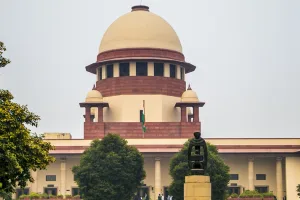
Jan Suraaj, floated by political strategist Prashant Kishore, has approached the Supreme Court in a writ petition challenging the last year’s Bihar Assembly polls, alleging large-scale irregularities and seeking fresh elections.

The petition, filed under Article 32 of the Constitution, assails the direct transfer of Rs 10,000 to women voters in Bihar during the enforcement of the Model Code of Conduct.

The party contends that fresh beneficiaries were added under the Mukhyamantri Mahila Rojgar Yojana and payments were made to them while the Code was in force.

The matter is listed for hearing tomorrow before a bench of Chief Justice of India Justice Surya Kant and Justice Joymalya Bagchi.
According to the plea, the addition of beneficiaries and disbursal of funds during the election period are illegal and violate Articles 14, 21, 112, 202, and 324 of the Constitution.

The petitioner has sought directions to the Election Commission of India (ECI) to take action under Article 324 of the Constitution and Section 123 of the Representation of the People Act, 1951, which deal with corrupt practices, in relation to the alleged transfer of Rs 10,000 to approximately 25-35 lakh women voters.

The petition further challenges the deployment of around 1.8 lakh women beneficiaries associated with the self-help group JEEVIKA at polling booths during both phases of polling, terming the exercise illegal and unfair.

Seeking fresh Assembly elections in Bihar in view of the alleged corrupt practices, the petitioner has also urged the ECI to implement the directions issued by the Supreme Court in S. Subramaniam Balaji v. State of Tamil Nadu (2013) and to frame comprehensive guidelines on freebies, direct benefit transfer schemes and welfare measures.

The plea also contends that the Election Commission prescribe a minimum cooling-off period of at least six months for the implementation of schemes that may impact free and fair elections, such as freebies, DBT schemes, and welfare programmes by ruling political parties before the announcement of the election schedule.

‘DA – a legally enforceable right’: SC asks West Bengal govt to pay employees arrears from 2008–19

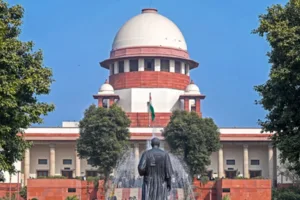
While constituting a high-level committee to finalise a binding payment schedule, a Bench of Justices Sanjay Karol and Prashant Kumar Mishra partly upheld the 2022 Calcutta High Court judgment, which had ruled in favour of state government employees and directed payment of DA at par with Central government employees.

IANS | New Delhi |

The Supreme Court on Thursday held that West Bengal government employees are entitled to Dearness Allowance (DA) as a legally enforceable right under the statutory pay rules and directed the state government to pay arrears for the period between 2008 and 2019.

While constituting a high-level committee to finalise a binding payment schedule, a Bench of Justices Sanjay Karol and Prashant Kumar Mishra partly upheld the 2022 Calcutta High Court judgment, which had ruled in favour of state government employees and directed payment of DA at par with Central government employees.

Pronouncing the verdict on appeals filed by the West Bengal government, the Apex Court held that once DA is defined in the West Bengal Services (Revision of Pay and Allowances) Rules, 2009 (ROPA) by linking it to the All-India Consumer Price Index (AICPI), the state government could not alter the manner of its calculation through subsequent office memoranda.

“To receive a Dearness Allowance is a legally enforceable fact that has accrued in favour of the employees of the State of West Bengal,” the Justice Karol-led Bench observed, adding that the AICPI, as incorporated in the ROPA Rules, was the standard to be followed for determining DA.

However, the Top Court partly allowed the state government’s appeals by holding that employees were not entitled to receive DA twice a year merely because the Central government followed such a pattern.

Rejecting the argument that the state government’s financial constraints could justify the denial of DA, the Supreme Court held that fiscal policy could not override accrued legal rights.

“Once there is a right which is conferred upon a person, then fiscal policy cannot come in the way of the disbursement of such rights,” the Justice Karol-led Bench said.

The Apex Court directed that employees would be entitled to arrears of DA from 2008 to 2019 and clarified that any amount paid pursuant to interim orders or the present judgment would not be recovered, even if there was a subsequent change in law.

It further constituted a committee to monitor the implementation of its directions and to balance employees’ statutory rights with the state government’s financial autonomy.

The committee will be chaired by former Supreme Court judge Justice Indu Malhotra and will include former Jharkhand High Court Chief Justice Tarlok Singh Chauhan, former judge Gautam Bhiduri, and the Comptroller and Auditor General of India or a senior officer nominated by the CAG. The committee has been tasked with determining the total amount payable and fixing a phased payment schedule in consultation with the state government. The Apex ourt directed that the exercise be completed by March 6, 2026, with the first instalment to be released by March 31, 2026.

The Supreme Court further directed the West Bengal government to extend full logistical support to the committee and bear all related expenses. The committee will submit a final status report after payment of the first instalment, detailing the payment schedule and the status of compliance.


Lok Sabha passes motion of thanks without PM’s reply amid opposition protests

The Lok Sabha on Thursday passed the Motion of Thanks to the President’s address without Prime Minister Narendra Modi replying to the debate, as sustained protests by opposition parties disrupted proceedings over their demand to allow Leader of Opposition Rahul Gandhi to speak.

Statesman News Service | New Delhi |

The Lok Sabha on Thursday passed the Motion of Thanks to the President’s address without Prime Minister Narendra Modi replying to the debate, as sustained protests by opposition parties disrupted proceedings over their demand to allow Leader of Opposition Rahul Gandhi to speak.

The motion was adopted by voice vote despite opposition members continuing to raise slogans, accusing the government of “stifling parliamentary democracy” by denying Rahul Gandhi his right to speak during the President’s address debate. Opposition MPs from the Congress and other INDIA bloc parties repeatedly crowded the Well of the House and vociferously protested, alleging that repeated adjournments and disruptions were being used to prevent Rahul Gandhi from continuing his speech.

Several opposition leaders described the situation as unprecedented, stating it was rare for the Motion of Thanks to be passed without the Prime Minister’s customary reply. Congress leaders termed the refusal to let Rahul Gandhi speak a “serious violation of parliamentary convention” and accused the government of deliberately avoiding addressing critical opposition issues.

“This is not just about one leader speaking; it is about the voice of the opposition being systematically silenced,” said a senior Congress MP outside Parliament.

On the other hand, members of the ruling treasury benches defended their position, arguing that the persistent disruptions left no room for orderly debate and that parliamentary business could not be held hostage by continuous protests. Parliamentary Affairs Minister Kiren Rijiju accused the opposition of creating chaos and wasting valuable House time, asserting, “The government was ready for discussion but could not function amid constant disorder.”

Despite the uproar, Speaker Om Birla proceeded with the voice vote, passing the motion and effectively concluding the debate on the President’s address. It is now expected that Prime Minister Modi will respond to the debate in the Rajya Sabha later Thursday at around 5 PM.

The Motion of Thanks to the President’s address is a key constitutional exercise that allows members of both Houses to discuss the government’s policies and programmes outlined by the President at the start of a new parliamentary session. Traditionally, the debate culminates with a detailed reply from the Prime Minister, addressing points raised by the opposition and reaffirming the government’s agenda.

The ongoing stalemate has raised concerns about parliamentary functioning, with opposition parties warning that such tactics could set a troubling precedent for democratic debate in the House and undermine the spirit of parliamentary democracy.

BSP gears up for organisational push in UP: Akash Anand to play key role as Mayawati reviews preparedness

With an eye on the 2027 Uttar Pradesh assembly elections, the Bahujan Samaj Party (BSP) is set to step up its organisational overhaul, with national coordinator Akash Anand expected to play a key role alongside party president Mayawati.

Statesman News Service | New Delhi |

With an eye on the 2027 Uttar Pradesh assembly elections, the Bahujan Samaj Party (BSP) is set to step up its organisational overhaul, with national coordinator Akash Anand expected to play a key role alongside party president Mayawati.

The renewed push will take shape from Saturday next, when Mayawati convenes a state-level meeting in Lucknow to review the party’s work so far, and issue fresh directions to strengthen its position across the state.

The meeting is being seen as a significant organisational exercise, as in-charges and presidents of all 403 assembly segments appointed by the party, heads and in-charges of the OBC and Muslim Bhaichara (brotherhood) committees, district presidents, and party coordinators appointed at the divisional level will be present.

“The state-level meeting is a platform where key issues related to the state are discussed, including the political atmosphere, people’s perceptions about law and order in different districts, and concerns affecting various castes and communities. Based on these inputs, the future course of action for the party is decided by the leadership,” party sources said.

According to a party functionary, the large number of office-bearers being called is aimed at seeking direct feedback from the ground and clearly instructing them on the party’s strategy going forward.

With assembly elections due next year, Mayawati has been reviewing the preparedness of the UP unit more frequently. The last such review meeting was held in October. While the party has appointed in-charges for all other states, Uttar Pradesh and Uttarakhand continue to remain under Mayawati’s direct supervision.

Sources said that as the BSP is aiming to align upper-caste voters with Bahujans in Uttar Pradesh ahead of the 2027 assembly elections, organisational tasks assigned to the state unit are likely to be reviewed more frequently in the coming months. In her address on January 15, Mayawati had appealed to upper-caste voters in the state to place their faith in the party.

Meanwhile, party sources indicated that Akash Anand is likely to be tasked with holding district-level meetings and undertaking extensive tours across Uttar Pradesh to review the ongoing organisational strengthening at the grassroots level and ensure effective implementation of the leadership’s directives.

MEA confirms 18 per cent US tariff on Indian exports, clarifies India’s energy stance after Modi–Trump call

The MEA confirmed an 18% US tariff on Indian exports, clarified India’s energy sourcing stance including Venezuela, and said eight Indian sailors detained in Iran have been released.

Statesman News Service | New Delhi |

India on Thursday confirmed that exports of made-in-India products to the United States will now attract a reduced tariff of 18 per cent, following a telephonic conversation between Prime Minister Narendra Modi and US President Donald Trump. The clarification came a day after President Trump announced the move on social media, triggering widespread attention around the contours of the India–US trade understanding and its economic implications.

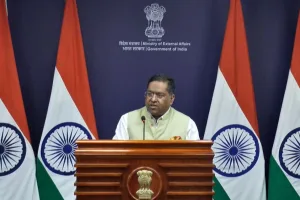
Addressing the media, Ministry of External Affairs spokesperson Randhir Jaiswal said the Prime Minister had spoken to President Trump and later acknowledged the tariff reduction publicly. He said the revised tariff rate would give a significant push to Indian exports, particularly benefiting labour-intensive sectors and employment generation, while adding that the US side had confirmed the final tariff figure.

“Prime Minister had a telecon with President Trump. Post that call and post the tweet by President Trump, the Prime Minister thanked President Trump for the reduction in reciprocal tariffs. The Prime Minister noted that made-in-India products will now be exported to the United States at a reduced tariff of 18%. This trade agreement will give a major boost to our exports to the United States. It will be a major boost to the labour-intensive industries here in India, create new job opportunities, growth and prosperity for our people. The US side has also clarified that the final figure of the tariff is 18%.”

India’s energy position amid US claims on oil sourcing

The MEA also responded to questions raised after President Trump claimed that India had agreed to stop buying Russian oil and would instead shift to sourcing crude from the United States and possibly Venezuela. Clarifying India’s position, Jaiswal said Venezuela had been a long-standing energy partner, with trade and investment ties in the oil sector stretching back several years.

He outlined how India’s crude imports from Venezuela had been disrupted due to sanctions, noting that supplies had resumed briefly before being halted again after sanctions were reimposed.

“As far as Venezuela is concerned, it has been a long-standing partner for us in the area of energy, both on the trade side and also on the investment side. We were importing energy and crude oil from Venezuela until 2019-20, after which we had to stop. Again, we began buying oil from Venezuela in 2023-24 but had to stop after sanctions were reimposed… Consistent with our approach to energy security, India remains open to exploring the commercial merits of any crude supply, including from Venezuela.”

The spokesperson underlined that India’s energy decisions are guided by national priorities rather than external pressure, stressing that securing reliable and affordable energy supplies for its population remains paramount.

“The government has stated publicly on several occasions that ensuring the energy security of 1.4 billion Indians is the supreme priority of our government. Diversifying our energy sourcing in keeping with objective market conditions and evolving international dynamics is at the core of our strategy to ensure this. All of Indias decision were taken and will be taken with this in mind.”

Consular access to Indian sailors detained in Iran

Separately, the MEA confirmed progress on the case of 16 Indian sailors detained in Iran, stating that Indian officials had been granted consular access and had met the crew in Bandar Abbas. According to Iranian authorities, eight of the sailors have already been released and are expected to return to India.

“We’ve had consular access to the 16 sailors in Iran. Our officials in Bandar Abbas have met with them. Of those 16, eight people, according to the Iranian authorities, have been released and will be returning home. With regards to the remaining eight sailors, we are in touch with the Iranian authorities. We will see how best to support them…”

Officials said engagement with Iranian authorities is ongoing to secure the release and welfare of the remaining sailors.

Main Hoon Na 2: Two decades after the original, Shah Rukh and Farah Khan plan a nostalgic yet bigger sequel

Shah Rukh Khan may reunite with Farah Khan after nearly 12 years as ‘Main Hoon Na 2’ emerges as a top contender for his next big-screen film after ‘King’. The sequel promises patriotism, action, comedy, and a double-role twist that has already excited the superstar.

Statesman News Service | New Delhi |

After the much-hyped ‘King’, Shah Rukh Khan may be heading straight into a blast from the past. Industry whispers say SRK is likely to reunite with filmmaker Farah Khan after almost 12 long years.

According to a Pinkvilla report, ‘Main Hoon Na 2’ is now emerging as the strongest contender for Shah Rukh Khan’s next big-screen film. Conversations between SRK and Farah are said to be in full swing hinting at a comeback collaboration that fans have been dreaming about for years.

Also Read: Dahaad 2 set to begin filming in Rajasthan; Sonakshi Sinha, Gulshan Devaiah, Vijay Varma return

A hit jodi with a blockbuster history

Shah Rukh Khan and Farah Khan are no strangers to success. Together, they have delivered some of Hindi cinema’s most iconic entertainers. Their last film, ‘Happy New Year’ (2014), turned into a box-office hit. Before that came ‘Om Shanti Om’ in 2007.

And of course, there was ‘Main Hoon Na’ in 2004. The film became a benchmark masala movie of its time and still enjoys a loyal fan following.

Two decades later, the sequel takes shape

Now, nearly 20 years after the original film, ‘Main Hoon Na 2’ is slowly coming together. Reports say the sequel aims to keep the soul of the first film alive while going bigger in scale.

One of the most exciting details? Farah Khan has reportedly cracked a double-role concept for Shah Rukh Khan. This fresh idea has apparently thrilled the superstar. SRK is expected to play two very different characters.

Just like the original, ‘Main Hoon Na 2’ will reportedly be high on patriotism. The central story will revolve around a new threat to India. At the same time, the film will balance serious themes with comedy.

Interestingly, the core idea of the story has come from Shah Rukh Khan himself. The concept is now being shaped into a full screenplay by writer Aakash Kaushik.

Old Faces, new energy, plenty of nostalgia

The makers are keen to keep the DNA of the first film intact. Along with new faces, there is strong interest in bringing back some actors from the original cast. This move is expected to add a heavy dose of nostalgia for fans who grew up watching ‘Main Hoon Na’.

When will Shah Rukh Khan decide?

Shah Rukh Khan’s schedule is packed, especially after ‘King’. Insiders say ‘Main Hoon Na 2’ has moved up the priority list, but timelines are still being worked out.

SRK is expected to hear the complete narration of the film after he wraps up the shoot of ‘King’, around May 2026. He will then take the final call on whether to move forward, even as the writing process continues actively.

For those who need a refresher, ‘Main Hoon Na’ was directed by Farah Khan and produced by Gauri Khan and Ratan Jain under Red Chillies Entertainment and Venus Movies. The film starred Sushmita Sen, Suniel Shetty, Amrita Rao, and Zayed Khan in key roles.

CM Omar to take up with Home Minister issue of reopening of closed tourist destinations in J&K

Chief Minister Omar Abdullah on Thursday said he would raise the issue of reopening tourist destinations in Jammu and Kashmir, which were closed after the Pahalgam terror attack, with Union Home Minister Amit Shah during his three-day visit here beginning this afternoon.

Statesman News Service | New Delhi |

Chief Minister Omar Abdullah on Thursday said he would raise the issue of reopening tourist destinations in Jammu and Kashmir, which were closed after the Pahalgam terror attack, with Union Home Minister Amit Shah during his three-day visit here beginning this afternoon.

Replying to a discussion in the Assembly, Omar said several tourist locations in the Kashmir Valley were shut following security concerns, but the situation now warrants a review.
“Some areas were closed, and the time has come to reopen them,” the Chief Minister said, adding that discussions with the Centre on the matter were ongoing.

He assured the House that the issue would be formally taken up with the Home Minister during his visit to Jammu and Kashmir.
The Chief Minister also expressed concerns over the existing registration process for tourism-related units, describing it as outdated and cumbersome.

The CM said that every part of Jammu and Kashmir is directly or indirectly connected with the tourism sector and stressed the need to simplify outdated procedures to boost the industry.

He said that while some districts have high tourism potential and others relatively less, tourism remains an integral component across the entire Union Territory.

Orissa HC directs Govt to curb plunder of natural resources in mineral-rich districts

The Orissa High Court has directed the police and transport authorities of two mineral-rich districts to act tough on illegal mining activities, stating that “the minerals are the natural resources and assets of the Government to be utilised in a responsible manner so as to provide all the sustainable support to the citizens of the country”.

Statesman News Service | New Delhi |

The Orissa High Court has directed the police and transport authorities of two mineral-rich districts to act tough on illegal mining activities, stating that “the minerals are the natural resources and assets of the Government to be utilised in a responsible manner so as to provide all the sustainable support to the citizens of the country”.

The Division Bench of Chief Justice Harish Tandon and Justice M S Raman taking cognisance of a public interest litigation on the alleged plunder of mineral resources in Mayurbhanj and Balasore district said, “We feel that each day of permitting such illegal mining to continue causes a loss to the national assets”.

The Bench directed the Superintendent of Police of Balasore and Mayurbhanj districts to depute an adequate number of police personnel across the locations and initiate immediate steps for verification of the relevant documents granted by the Competent Authority to ascertain the illegal extraction of mineral resources.

The Court also directed the Regional Transport Offices of both the districts ”to constitute a team of adequate personnel to intercept each vehicle passing through the road, carrying the minerals/ores and in the event the requisite documents as required under the Mines and Minerals (Development and Regulation) Act, 1957 and the Rules framed thereunder are not found or being carried, immediate seizure should be ensured, and the persons should also be taken into the rigours of law”.

The Division Bench asked the Government to file an affidavit on measures taken to curb the illegal mining and posted the matter for further hearing on 10 March next.

Not only is indiscriminate blasting done at the mining site by those mining mafias, but the complacency on the part of the administration is also patent in that no action or steps have been taken against those mafias, the PIL alleged.

Despite the Supreme Court showing deep concern over the mining scandal of enormous proportions involving megabucks, the reality is a far cry.

There is no monitoring or surveillance mechanism adopted by the administration, which led those illegal mining activities to continue seamlessly, and, therefore, it is high time that the government or its instrumentalities be reminded of its solemn duty, the petition further alleged.

J&K’s economy has not only regained lost ground but is expanding on a firmer footing: Economic Survey

Jammu and Kashmir’s Economic Survey tabled in the Assembly on Thursday by Chief Minister Omar Abdullah presents a picture of measured but steady economic consolidation, signalling that the Union Territory is moving from post-pandemic recovery to a phase of structural stabilisation and expansion.

Statesman News Service | New Delhi |

Jammu and Kashmir’s Economic Survey tabled in the Assembly on Thursday by Chief Minister Omar Abdullah presents a picture of measured but steady economic consolidation, signalling that the Union Territory is moving from post-pandemic recovery to a phase of structural stabilisation and expansion.

With real GSDP projected to grow by 5.82 per cent in 2025-26 and the economy’s nominal size touching Rs 2.86 lakh crore, the data suggests that growth is no longer episodic but increasingly broad-based and sustained.

The Survey’s longer trend — a 4.47 per cent CAGR in real GSDP between 2019-20 and 2024-25— is particularly significant as it captures a period marked by administrative transition, pandemic disruption, and gradual reopening of economic activity.

The figures indicate that J&K’s economy has not only regained lost ground but is now expanding on a firmer footing, reflecting improving governance capacity, revival of key sectors, and rising economic confidence across the region.

Jammu and Kashmir’s economy is projected to grow at a steady pace of 5.82 per cent in real terms during 2025-26, with the nominal Gross State Domestic Product (GSDP) estimated to rise by 8.89 per cent, taking the overall size of the Union Territory’s economy to Rs 2.86 lakh crore, according to the latest Economic Survey.

The Economic Survey points out that J&K’s growth trajectory is being supported by fiscal discipline, sectoral diversification, tourism revival, industrial reforms, and rapid infrastructure development.

It indicates that the per capita income in J&K has risen faster than in many northern States.
Per Capita Income in J&K is estimated at Rs 1,68,243 for 2025-26. The Survey notes that from 2019-20 to 2024-25, J&K’s per capita income grew at a CAGR of 8.81 per cent, higher than Himachal Pradesh (6.54 per cent), Delhi (6.74 per cent), Punjab (7.46 per cent), Chandigarh (8.21 per cent) and Haryana (8.72 per cent).

Sectoral analysis shows that the tertiary (services) sector contributes 61.02 per cent to Gross State Value Added (GSVA), followed by the primary sector at 20.45 per cent and the secondary sector at 18.52 per cent.

While services and industry are driving structural transformation, agriculture and allied sectors continue to play a crucial role in employment, supported by increased food grain and fruit production, expansion of high-density plantations, formation of Farmer Producer Organisations (FPOs), and integration with e-NAM markets.

The survey points out that inflation in J&K has declined from 4.5 per cent in 2024 to 3.8 per cent in 2025, and fiscal indicators show improved revenue performance. Rs 13,521 crore revenue has been realised till November 2025 (64 per cent of FY25 total). Power tariffs now account for 71 per cent of non-tax revenue, up from 56 per cent in FY22.

The Economic Survey says that major increases have been recorded in taxes on power: 80.71 per cent rise since FY22, GST collection: 34.28 per cent increase and Excise collection: 27.42 per cent increase.

The Survey also credits digital financial systems such as the Budget Estimation, Allocation & Monitoring System (BEAMS), GeM, and other e-governance platforms for improving transparency and efficiency.

It says that Jammu & Kashmir has attracted large-scale investment proposals, operationalised new industrial units, and achieved a ‘Top Achiever’ ranking nationally in Ease of Doing Business, reflecting policy reforms and administrative improvements.

Tourism continues to be a major economic driver, contributing nearly 7 per cent to J&K’s GDP and supporting the livelihoods of around 5 lakh people. It points out that 2.36 crore tourists visited J&K in 2024. As many as 1.78 crore visited in 2025 despite security and natural challenges.

The Survey points out a rise in destination weddings, adventure, border, rural and golf tourism and 72 film and OTT projects shot in J&K in the past year.

The Survey underscores progress in power, roads, water supply, digital services, and e-governance, with J&K emerging as a leading Union Territory in online public service delivery and digital inclusion.

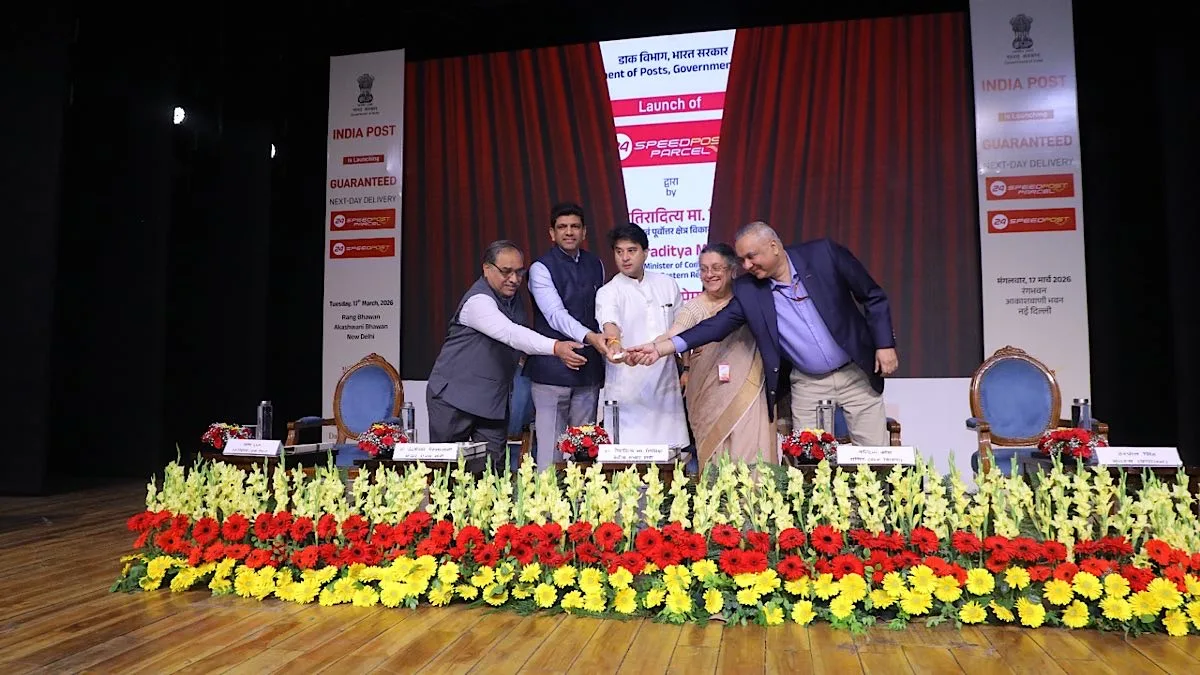
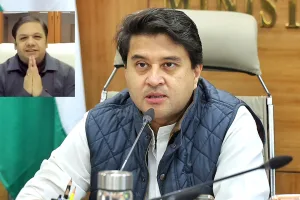
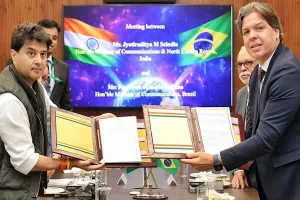
Union Minister Scindia urges Odisha CM to settle BSNL’s Rs 28.54 crore outstanding dues

In an official letter addressed to Chief Minister Mohan Majhi, the Union Minister stated that as on 31 December 2025, Rs 28.54 crores remain outstanding from departments and organisations under the State of Odisha.

Statesman News Service | New Delhi |

Union Communications Minister Jyotiraditya Scindia has requested the Odisha Government for expeditious settlement of Rs 28.54 crore outstanding dues payable to the central public sector undertaking BSNL at the earliest, saying that “the State Government’s support is vital to enable BSNL to continue delivering essential communication services for regional and national development”.

In an official letter addressed to Chief Minister Mohan Majhi, the Union Minister stated that as on 31 December 2025, Rs 28.54 crores remain outstanding from departments and organisations under the State of Odisha.

Considering BSNL’s critical role in providing secure and reliable telecommunications, timely payment of these dues is essential to sustain its operations and service quality.

BSNL plays a vital role in providing telecom services across the country, especially in rural and remote areas. It supports key Government departments, including the Armed Forces, and serves numerous banks and institutions. With its wide network and strong presence, BSNL remains a reliable and trusted service provider for delivering citizen-centric services, the Minister noted.

Given BSNL’s financial stress, the Government of India has approved revival packages in 2019, 2022 and 2023 to support its viability and competitiveness. Despite this, the company needs steady cash flows for routine operations and modernisation of its telecom infrastructure, said the letter.

“I would, therefore, request you to kindly issue necessary instructions to the concerned departments and organisations to expedite the settlement of all outstanding dues to BSNL at the earliest”, Union Minister Scindia urged Odisha CM Majhi.

Dahaad 2 set to begin filming in Rajasthan; Sonakshi Sinha, Gulshan Devaiah, Vijay Varma return

‘Dahaad 2’ is gearing up to return as Prime Video prepares to begin filming the second season in Rajasthan. Sonakshi Sinha, Gulshan Devaiah and Vijay Varma are expected to reprise their roles in the acclaimed crime thriller.

Statesman News Service | New Delhi |

The ‘Dahaad’ cops are not done. Not even close. ‘Dahaad’ Season 2 is officially getting back on the ground. And yes, Rajasthan is calling the shots once more.

Prime Video is quietly but firmly moving ahead with the second season of its much-loved police procedural crime thriller, and filming is expected to begin this month.

When ‘Dahaad’ dropped in May 2023, it did not arrive screaming for attention. It crept in slowly, confidently, and then hit hard. Set in a dusty Rajasthani village, the series followed two determined police officers trying to solve a case no one else seemed to care about: 27 women missing, vanished without noise, without outrage, without urgency.

That quiet anger became the show’s strongest weapon.

Created by Zoya Akhtar and Reema Kagti, and directed by Kagti along with Ruchika Oberoi, ‘Dahaad’ stood out for its restraint. No flashy twists for shock value. No loud hero moments. Just patient storytelling, social reality, and an unsettling villain.

Critics noticed. Audiences stayed hooked. And the world paid attention.

Back on the floors: Season 2 finally takes shape

According to reports, Prime Video is now ready to take ‘Dahaad’ Season 2 on floors in Rajasthan. The location is no coincidence. Rajasthan was not just a backdrop in Season 1; it shaped the mood, the tension, and the emotional weight of the story. The desert, the villages, the silence, all of it mattered.

The writing team reportedly took its time with the second season. This was not a rushed follow-up. Reports say the creators spent an extended period cracking the story before locking the script.

Once they found the right angle, everything moved fast.

The script has been finalised for some time now, and the team has been in active pre-production since last year. Location scouting, logistics, production design, and planning have been happening quietly, away from the spotlight. Now, the project is finally ready for full-scale filming.

Sonakshi Sinha and Gulshan Devaiah Expected to Return

Though nothing is officially confirmed yet, Sonakshi Sinha and Gulshan Devaiah are expected to reprise their roles as the police officers at the heart of the series.

For Sonakshi Sinha, ‘Dahaad’ marked a major shift. Her portrayal of Sub-Inspector Anjali Bhaati was quiet, firm, and deeply internal. There were no dramatic speeches. No grandstanding. Just steady resolve.

A quick look back at Season 1’s chilling story

Season 1 of ‘Dahaad’ was set in Mandawa, a small village in Rajasthan. Anjali Bhaati, a sub-inspector in her thirties, stumbles upon a troubling pattern: 27 women have disappeared across the state, and nobody seems disturbed by it.

As Anjali digs deeper, she finds a common thread linking the missing women. Slowly, the idea of a serial killer takes shape.

Anjali is not just fighting a criminal. She is fighting caste bias, gender expectations, and the quiet indifference of society. Her own life reflects the same struggles. She rebels against traditional norms, making it hard for her mother to find her a groom. She faces discrimination because of her caste. Still, she refuses to bend.

The investigation unfolds through two parallel cases. In one, a man from a scheduled caste reports his sister missing. In the other, an inter-caste love story blooms between a villager’s daughter and a Muslim man. Anjali and her colleague Devi Singh help the Muslim man escape to safety and focus their attention on the missing woman’s case.

As Anjali connects the dots, a disturbing pattern emerges.

All the missing women belonged to lower castes. They were over 25. Poor. Unable to marry because their families could not afford dowries. Emotionally vulnerable. Easy to overlook.

Each victim’s phone number led to another victim. All 27 women died a day after eloping with men they believed they loved. The cause of death was cyanide poisoning.

Also Read: Hold Onto Me Review: Father-daughter bonds forged in loss, laughter, and sunlit waves of Cyprus

While some officers believe a gang might be responsible, Anjali strongly disagrees. She argues that the killings show a level of precision that only a single person could manage.

There were no mistakes. No loose ends. No slip-ups.

For Anjali, that kind of control points to one psychopath with a carefully planned system.

She is right.

The investigation leads to Anand Swarnakar, a college lecturer who appears harmless on the surface. He has a wife, Vandana, and a son, Kapish. He teaches underprivileged children. And, he seems respectable.

But nothing is what it looks like.

Vandana is having an affair with a coworker named Jai. Kapish finds a phone in Anand’s van. The police trace it back to Anand, but there is not enough evidence to arrest him.

Suspicion shifts to Anand’s younger brother, Shiv, who is arrested. Eventually, Shiv realises the truth and helps the police.

Anand flees Rajasthan and starts a new life in Goa with a woman named Mariam. But Anjali and her team catch up with him before he can kill again.

In the final moments, Anjali confronts Anand and asks him why he killed innocent women. His answer is chilling.

He says they were not innocent. That they deserved punishment. He mocks Anjali’s caste, questions her authority, and even comments on her relationship with her boss.

In the end, Anjali makes a quiet but powerful decision. She changes her surname back to Meghwal reclaiming her identity and rejecting the idea that she must hide who she is to survive.

Awards, recognition, and global applause

‘Dahaad’ made history by becoming the first Indian streaming series to premiere at the Berlin International Film Festival. It competed for the Berlinale Series Award, putting Indian long-form storytelling on a global stage.

The show received glowing reviews and strong word-of-mouth after its release on Amazon Prime Video on May 12, 2023.

At the 2023 Filmfare OTT Awards, ‘Dahaad’ won two awards for performances by Sonakshi Sinha and Vijay Varma, out of nine nominations.

According to IMDb, the series was officially renewed for a second season, and production is now underway.