Logo

India condemns Pak attack on hospital in Kabul, calls it threat to regional peace

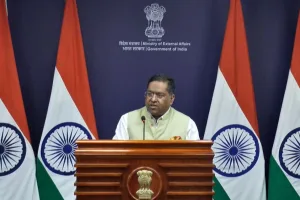
In a statement, the Ministry of External Affairs said the attack was a ‘’cowardly and unconscionable act of violence’’ that has claimed innocent civilian lives in a facility which can by no means be justified as a military target.

Statesman News Service | New Delhi |

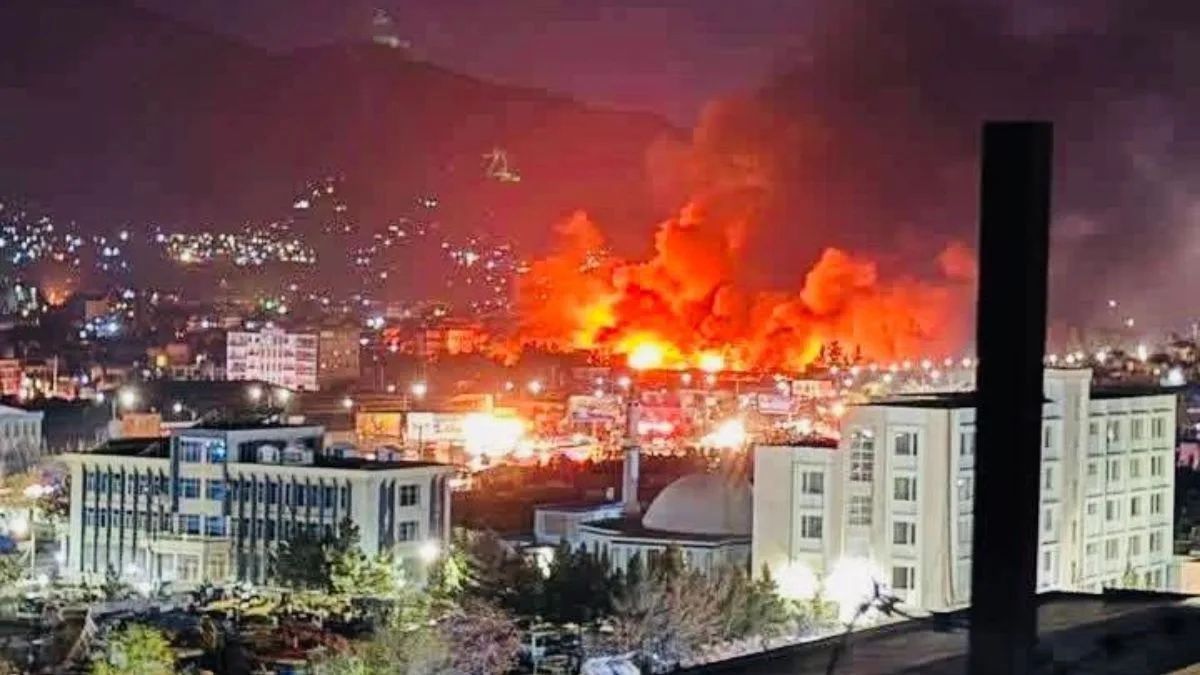
India on Tuesday strongly condemned Pakistan’s “barbaric’’ attack on the Omid Addiction Treatment Hospital in Kabul in which about 400 people were killed and over 250 wounded, calling it a blatant assault on Afghanistan’s sovereignty and a direct threat to regional peace in the holy month of Ramzan.

In a statement, the Ministry of External Affairs said the attack was a ‘’cowardly and unconscionable act of violence’’ that has claimed innocent civilian lives in a facility which can by no means be justified as a military target.

New Delhi said the attack reflects Pakistan’s persistent pattern of reckless behaviour and its repeated attempts to externalise internal failures through increasing desperate acts of violence beyond its borders.

‘’That this attack was carried out during the holy month of Ramzan, a time of peace, reflection and mercy among Muslim communities across the world, makes it all the more reprehensible. There is no faith, no law and no morality that can justify the deliberate targeting of a hospital and its patients,’’ the MEA said.

It called upon the international community to hold the perpetrators of this criminal act accountable and ensure that the wanton targeting by Pakistan of civilians in Afghanistan ceases without delay.

Khera questions Centre’s trade strategy with US, cites Malaysia’s move and lack of clarity

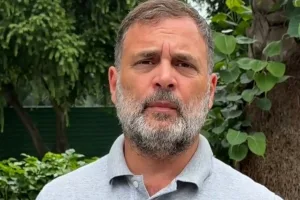
Congress leader Pawan Khera on Tuesday criticised the Union government’s handling of trade relations with the United States, citing Malaysia’s reported decision to declare its trade agreement with Washington “null and void” and questioning India’s approach to similar negotiations.

Statesman News Service | New Delhi |

Congress leader Pawan Khera on Tuesday criticised the Union government’s handling of trade relations with the United States, citing Malaysia’s reported decision to declare its trade agreement with Washington “null and void” and questioning India’s approach to similar negotiations.

‎In a post on X, the Congress leader said, “Malaysia has become the first country to declare its trade agreement with the United States of America ‘null and void.’ Malaysia signed its deal with the USA on October 26, 2025.” He contrasted this with India’s position, adding that New Delhi “does not even have a fully signed deal with the US like Malaysia,” and alleged a lack of transparency from the government.

‎Khera further claimed that the Centre had offered “no clarity on the fate of this anti-India trade deal—only rumours floated through anonymous ‘sources’,” and raised concerns over recent trade-related actions by Washington. Referring to reported investigations, he said the United States had initiated two Section 301 probes involving India, one related to alleged failures to curb imports linked to forced labour and another concerning industrial capacity and manufacturing practices.

‎Targeting the government’s response, Khera took aim at Prime Minister Narendra Modi and Commerce and Industry Minister Piyush Goyal. “They seem content with sitting back and sacrificing India’s pride while Washington decides India’s fate,” he said, questioning why India was “not as proactive as Malaysia in deciding its own fate.”

‎He also posed a series of sharp questions in his post, asking, “Why is Modi biting the bullet for America?” while making further unverified allegations.

‎The remarks come amid ongoing global trade realignments and heightened scrutiny of supply chains, labour standards and industrial policies. India and the United States have been engaged in discussions on trade and market access issues, though no comprehensive bilateral trade agreement has been finalised.

‎Analysts note that India’s trade negotiations with major partners often involve complex considerations, including domestic industry protection, regulatory standards and geopolitical factors. Khera’s comments add to the continuing political debate over India’s trade policy and its engagement with major global economies, particularly at a time when international trade dynamics remain in flux.

Punjab registers 37,000 elderly under ‘Sade Buzurg Sada Maan’ health initiative

Sharing further details, the Minister stated that the Punjab government considers its elderly citizens a valuable asset, and their safety and dignity remain a top priority.

Statesman News Service | Chandigarh |

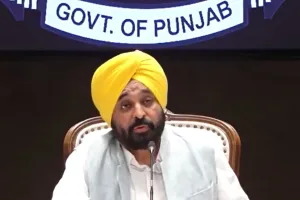
Under the leadership of Chief Minister Bhagwant Singh Mann, the Punjab government has registered around 37,000 elderly citizens during state-level health check-up camps organised under the ‘Sade Buzurg Sada Maan’ initiative, said Social Security, Women and Child Development Minister Dr Baljit Kaur.

Sharing further details, the Minister stated that the Punjab government considers its elderly citizens a valuable asset, and their safety and dignity remain a top priority.

Dr Baljit Kaur emphasised that elderly citizens are the foundation of families and society, and their experiences continue to guide future generations.

She said it is the moral responsibility of both the government and society to ensure that they live with dignity, care, and a strong sense of belonging.

“Through such initiatives, we reaffirm our commitment to support and stand by our elderly at every stage of their lives,” she added.

She further informed that a wide range of healthcare services were provided at these camps, including eye check-ups, cancer screening, non-communicable disease (NCD) screening, orthopaedic examinations, ENT check-ups, physiotherapy, and psychological assessments conducted by experts.

Dr Kaur also stated that 1,756 registrations were made for cataract surgeries, out of which 539 surgeries have been successfully conducted so far.

Additionally, 1,274 cancer screenings, 4,863 orthopaedic check-ups, 6,339 NCD screenings, 9,015 eye examinations, 2,593 ENT check-ups, and 1,621 physiotherapy sessions were conducted.

She added that 418 beneficiaries were identified for assistive devices through ALIMCO, and necessary aids were distributed. Moreover, 3,014 pairs of glasses were provided to help improve the vision of elderly citizens.

The Minister reiterated that the department remains committed to the welfare of elderly citizens and will continue to organise such initiatives in the future.

Haryana’s cyber crackdown delivers results as crime drops, arrests surge, says CM Nayab Singh Saini

Haryana Chief Minister Nayab Singh Saini on Tuesday asserted that the state government’s aggressive and technology-driven crackdown on cybercrime is showing tangible results, with a notable decline in cyber fraud cases in 2025, even as law enforcement agencies significantly ramped up arrests, sending a strong message to cyber criminals across the state.

Statesman News Service | Chandigarh |

Haryana Chief Minister Nayab Singh Saini on Tuesday asserted that the state government’s aggressive and technology-driven crackdown on cybercrime is showing tangible results, with a notable decline in cyber fraud cases in 2025, even as law enforcement agencies significantly ramped up arrests, sending a strong message to cyber criminals across the state.

Replying to a question raised by MLA Aftab Ahmed during Question Hour in the ongoing Budget Session of the Haryana Vidhan Sabha, Saini said cybercrime cases in the state fell from 6,054 in 2024 to 5,000 in 2025, marking a decline of nearly 17%. Fraud cases also saw a substantial drop, decreasing from 9,804 in 2024 to 6,324 in 2025, showing a reduction of around 36%.

Saini said the police administration is continuously working with seriousness and promptness to effectively control cybercrime, and the positive impact of these efforts is now visible. He added that the state government had created a separate cybercrime department to tackle the growing challenge of such offences.

The Chief Minister said strict action was being taken against those involved in cybercrime. While 5,156 arrests were made in 2024, the number rose to 8,093 in 2025, registering an increase of about 57%. Acting swiftly on a digital arrest, the police, in coordination with banks, ensure that the amount is immediately put on hold.

Saini said the nature of cybercrime was constantly evolving, with fraudsters using new techniques, including so-called “digital arrest” scams. In such cases, defrauded money is routed through multiple bank accounts. Acting swiftly, the police, in coordination with banks, ensure that the amount is immediately put on hold. The proportion of such held amounts increased from 27% in 2024 to 40% in 2025, an increase of 13 percentage points.

The Chief Minister said the government had implemented the Zero FIR system in cybercrime cases, under which victims can register complaints by calling the 1930 helpline. The FIR is automatically transferred to the concerned police station, ensuring prompt action.

He said 16 nodal officers from different banks had been deployed in the Cyber Crime Control Room, where they coordinated with the police to help freeze the defrauded amount. The money cannot be withdrawn until the investigation is completed.

Referring to the 2026–27 Budget proposals, Saini said the government had announced the opening of three new cyber police stations in Gohana, Bahadurgarh and Sonipat to further strengthen the state’s response to cyber offences.

On cybercrime and “digital arrest” cases, he said people above 60 years of age were among the most affected. Keeping this in view, the government was considering a dual OTP provision.

Under the proposed system, when an OTP is sought for a bank-linked transaction, it would be sent not only to the elderly person but also to their child. The transaction would be completed only after both OTPs are entered, a move expected to significantly curb cybercrime and “digital arrest” frauds.

MP tops HPV vaccination in the country

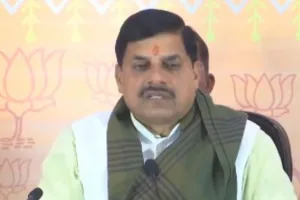
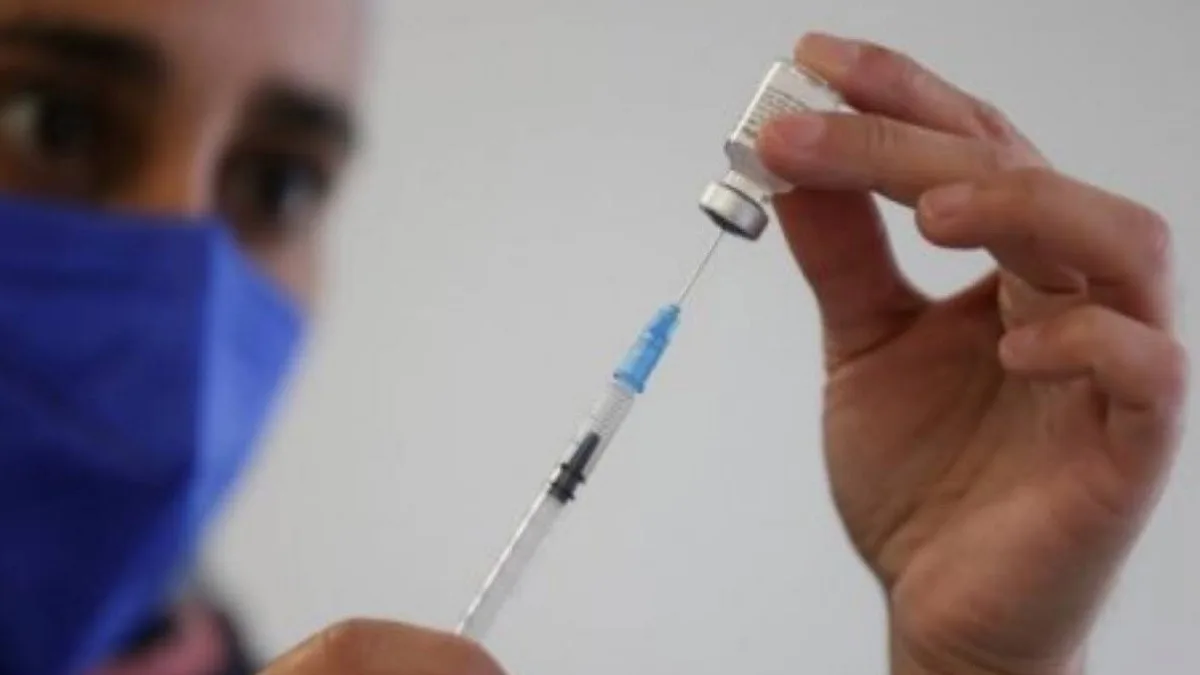
Madhya Pradesh has stood first in the country in administering the highest number of Human Papilloma Virus (HPV) vaccines to girls for prevention of cervical cancer.

Statesman News Service | Bhopal |

Madhya Pradesh has stood first in the country in administering the highest number of Human Papilloma Virus (HPV) vaccines to girls for prevention of cervical cancer.

According to officials, HPV vaccination of more than one lakh 14-year-old girls was done in MP in 15 days from the start of the drive. As per officials, this is the highest number in the country.

Chief Minister Dr Mohan Yadav congratulated the staff of the health department along with the ASHA and Aanganwadi workers for achieving the feat.

PM Narendra Modi had launched the nationwide drive on 28 February from Ajmer in Rajasthan.

Chattisgarh CM Sai pays tribute to legacy of freedom fighters at state Assembly

Chhattisgarh Chief Minister Vishnu Deo Sai met a delegation of the State Freedom Fighters’ Descendants Association at his Vidhan Sabha office on Tuesday.

Statesman News Service | Raipur |

Chhattisgarh Chief Minister Vishnu Deo Sai met a delegation of the State Freedom Fighters’ Descendants Association at his Vidhan Sabha office on Tuesday. The delegation formally invited him to a felicitation ceremony for the families of freedom fighters scheduled for March 23 in Bemetara district.

Expressing gratitude for the invitation, Chief Minister Sai said the contribution of freedom fighters occupies a place of lasting importance in the nation’s history and honouring their families is a collective responsibility. Such occasions, he noted, are not only an expression of gratitude but also serve to inspire the younger generation with the values of patriotism, dedication and service to the nation.

Earlier in the day, the Chief Minister inaugurated a three-day health camp organised within the Chhattisgarh Legislative Assembly premises. Leader of Opposition Dr. Charandas Mahant, Health Minister Shyam Bihari Jaiswal, along with senior officials and staff of the Health Department were present in the inauguration ceremony.

Chief Minister Sai himself underwent a health check up at the camp to spread awareness among others. He emphasised the growing necessity of regular medical screening in contemporary times in his address.

The Chief Minister expressed concern over changing lifestyles and reduced physical activity, which he noted have contributed to a rapid rise in various ailments. He stated that regular health check ups enable individuals to remain vigilant and adopt necessary precautions, thereby preventing the onset of serious diseases. “Healthy citizens form the bedrock of a strong society and a prosperous state,” CM Sai said.

Lok Sabha draws ‘Lakshman Rekha’, revokes suspension of eight MPs

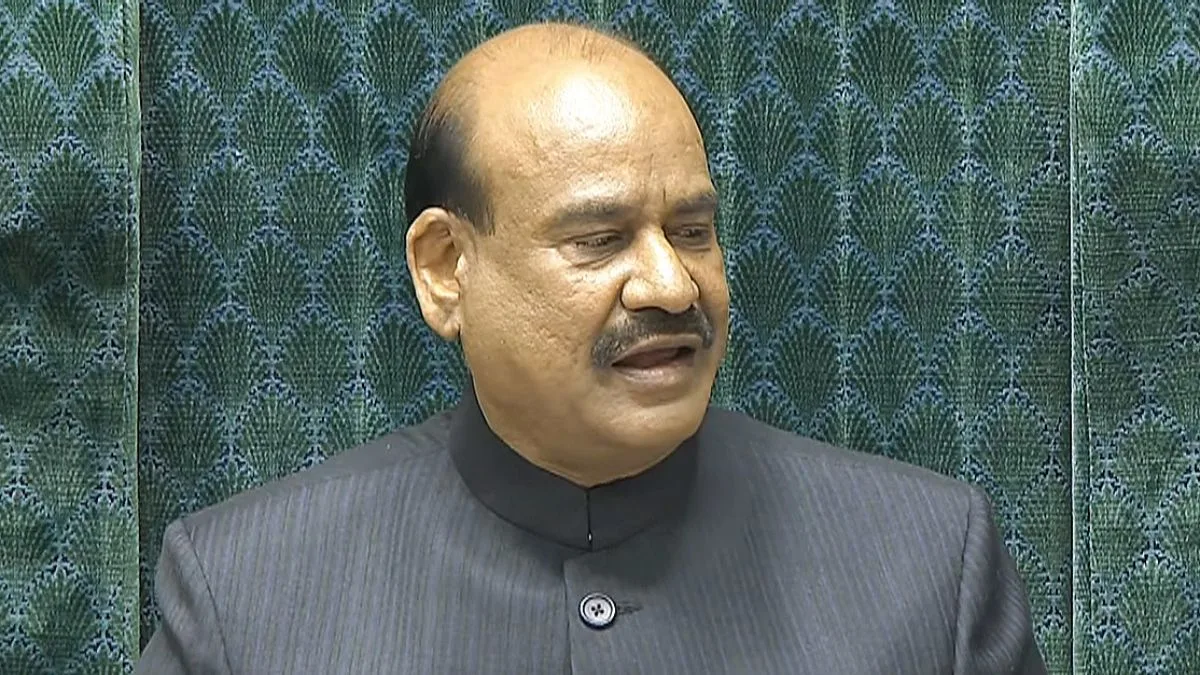
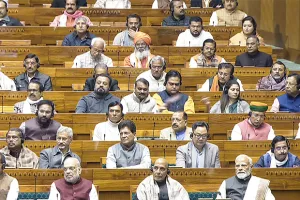
The Lok Sabha on Tuesday revoked the suspension of eight Opposition MPs, who had been barred from the lower house for their alleged “unruly” behaviour, through a voice vote, restoring calm after days of disruptions and volley of allegations during the Opposition’s no-confidence motion against Speaker Om Birla last week.

VIBHA SHARMA | New Delhi |

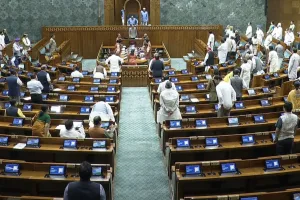
The Lok Sabha on Tuesday revoked the suspension of eight Opposition MPs, who had been barred from the lower house for their alleged “unruly” behaviour, through a voice vote, restoring calm after days of disruptions and volley of allegations during the Opposition’s no-confidence motion against Speaker Om Birla last week.

The move followed a meeting in the Speaker’s chamber on Monday and a consensus among floor leaders to uphold parliamentary decorum by observing a “Lakshman Rekha” during proceedings — a commitment from both Treasury and Opposition benches to maintain dignity and avoid disruptions — though not before a brief war of words in the House.

Congress chief whip K Suresh urged Speaker Birla to lift the suspension, citing the meeting where it was decided that the suspension should be revoked. Expressing regret for the “inadvertent indiscretion” by some of the members, he added that the Opposition had withdrawn protests and removed placards.

Samajwadi Party MP Dharmendra Yadav supported the move but stressed that responsibility for maintaining order lies with both sides. He accused the ruling party of “dictating terms” and called for equal accountability, prompting brief exchanges. “We will never cross the dignity of the House. But the ruling party should also resolve to do this. Without it, the House won’t function. Nishikant Dubey should improve his behaviour,” he said.

Birla intervened, appealing to members not to debate the issue. Dubey, meanwhile, responded saying that he had never crossed the line in the House. “They should apologise, and if they don’t, this House won’t run,” he said while NCP MP Supriya Sule urged members on both sides to refrain from personal remarks. “The decision yesterday was ‘Lakshman Rekha’ should not be crossed. We will try…but the Treasury Bench is not ready,” she said, pointing to ministers who had got up to counter her.

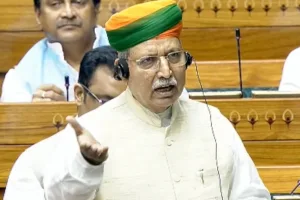
Union Minister Rajiv Ranjan Singh agreed, saying, “You can’t clap with one hand.” Union Parliamentary Affairs Minister Kiren Rijiju, too, emphasised the need for a “Lakshman Rekha” for the smooth functioning of the House, a sentiment shared across party lines. “We have followed rules in the past and will continue to do so,” he said, adding that the government remained open to discussion. Birla, meanwhile, reiterated that all parties had agreed to uphold parliamentary dignity and cautioned against displaying placards, posters, or AI-generated images inside the House or Parliament complex.

The suspensions had been imposed following chaos over Congress leader Rahul Gandhi’s attempt to raise the 2020 eastern Ladakh border tensions with China. MPs were accused of violating rules, including throwing papers toward the Chair. The floor leaders’ meeting chaired by Birla on Monday led to the breakthrough, with members agreeing that no one would enter the Well of the House, approach opposite benches, tear papers, or climb on officials’ tables. Both sides reaffirmed their commitment to parliamentary norms.

The Lok Sabha Secretariat issued a bulletin reiterating rules on decorum, highlighting provisions banning placards, banners, sticks, and derogatory or AI-generated images, and warning that violations would invite disciplinary action. The suspended members included seven Congress MPs—Manickam Tagore, Gurjeet Singh Aujla, Hibi Eden, K. Kiran Kumar Reddy, Dean Kuriakose, Amarinder Singh Raja Warring, and Prashant Padole—along with S.V. Venkatesan of the CPI(M).

With Vijay preparing to go solo Tamil Nadu in for four-cornered contest in assembly polls

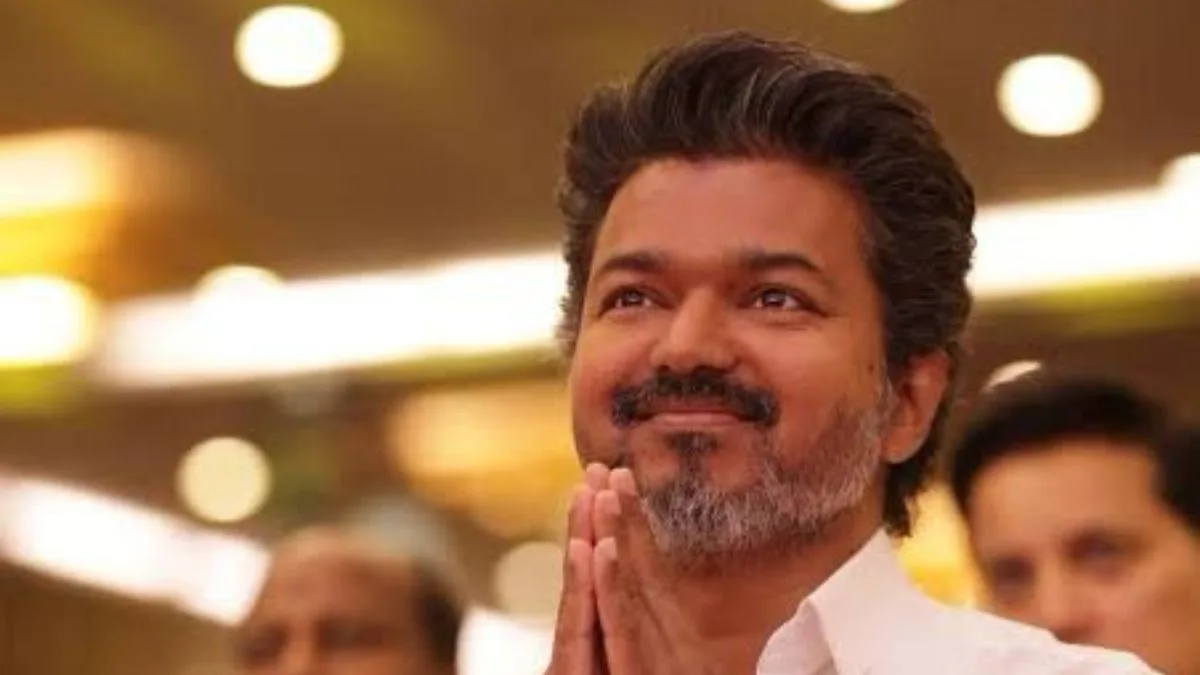
Even as the BJP national leadership is reportedly continuing its efforts to rope in the Tamilaga Vettri Kazhagam (TVK) of actor Vijay into the NDA fold, the latter appears to be preparing the party to face the Tamil Nadu assembly elections on its own by positioning himself as the alternative to the ruling DMK and Chief Minister M K Stalin.

Statesman News Service | Chennai |

Even as the BJP national leadership is reportedly continuing its efforts to rope in the Tamilaga Vettri Kazhagam (TVK) of actor Vijay into the NDA fold, the latter appears to be preparing the party to face the Tamil Nadu assembly elections on its own by positioning himself as the alternative to the ruling DMK and Chief Minister M K Stalin.

The TVK going it alone will result in a four-cornered contest practically putting an end to the duopoly of the DMK and the AIADMK. Apart from the DMK-led front and the principal opposition AIADMK-led NDA, the TVK, the ultra-Tamil nationalist Naam Tamilar Katchi (NTK) of film maker Seeman is ploughing a lonely furrow, having announced candidates for all the 234 seats. While the TVK makes its debut in this election, the NTK, having secured more than 8 percent votes in the last Lok Sabha election, is a recognised state party.

While Vijay’s appearance before the Central Bureau of Investigation (CBI) in Delhi for the third time in connection with the Karur stampede case has fuelled speculation about the BJP exerting pressure on the actor to fall in line and enter the NDA, he has remained tight-lipped. And it had been left to the TVK second line leaders like KA Sengottaiyan and CTR Nirmal Kumar to refute media reports of talks with the BJP.

On his return from Delhi, Vijay had a brainstorming session with TVK district secretaries and senior functionaries where he had reportedly told them that the party would fight the election on its own and emerge victorious. With the party having finalised candidates for 60 seats, he had also asked them to carry out their fieldwork at the grass roots. The actor-turned politician is planning to complete the process of interviewing aspirants for the remaining 174 seats so that the party’s manifesto and candidates list could be released at the earliest.

Clarifying the party’s position, TVK senior leader K A Sengottaiyan had this to say to reporters in Coimbatore the other day: “No negotiation has been held with anyone on the TVK joining the NDA. Having left a lucrative film career, Vijay has taken the political plunge to bring about a change and not to make someone else as the Chief Minister. The TVK has the support of the people.”

Another top functionary C T R Nirmal Kumar also rejected the reports of the party engaged in talks either with the BJP or any other party including that of VK Sasikala and PMK founder S Ramadoss. “False narratives have been circulated in the past linking us with several parties, including the Congress, and it is well known that those claims turned out to be false,” he posted on social media, alleging that these reports are the handiwork of the DMK, to confuse the public. However, even 24 hours is a long time in politics and a more clear picture could emerge when the nomination process comes to a close.

Middle East conflict key risk for FY27, potential impacts on exports, remittances: Report

India’s merchandise trade showed mixed trends in February 2026, with exports remaining largely stable while imports surged sharply, widening the trade deficit and raising concerns over the impact of the ongoing Middle East conflict, according to a research report by ICICI Bank.

Statesman News Service | New Delhi |

India’s merchandise trade showed mixed trends in February 2026, with exports remaining largely stable while imports surged sharply, widening the trade deficit and raising concerns over the impact of the ongoing Middle East conflict, according to a research report by ICICI Bank.

Looking ahead, the report flagged the Middle East conflict as a key risk for FY27, with potential impacts on exports, remittances, and oil prices if tensions persist. Assuming average crude prices of USD 80 per barrel, the goods deficit could rise to USD 383 billion, with the current account deficit widening to 1.4% of GDP.

Additionally, heightened global uncertainty is expected to keep foreign portfolio investment flows subdued, putting pressure on the rupee, which is projected to trade in the range of 91.5–93.5 per US dollar in the near term.

Goods exports stood at USD 36.6 billion in February, marginally down 0.8% year-on-year, as a steep decline in oil exports offset gains in non-oil segments. Oil exports dropped sharply by 40% to USD 3.4 billion, while non-oil exports rose 6.4% to USD 33 billion, supported by strong performance in engineering goods and electronics.

However, goods imports rose significantly by 25% year-on-year to USD 63.7 billion, driven by a sharp increase in gold imports, which surged 219%, along with higher non-oil, non-gold imports and oil purchases. As a result, India’s trade deficit widened to USD 27.1 billion in February.

On a cumulative basis, the goods trade deficit expanded to USD 311 billion during April–February FY26, compared to around USD 262 billion in the same period last year, reflecting stronger import growth relative to exports.

Exports to the United States declined by 13% year-on-year during the month, even as shipments to other markets remained steady. While easing US tariffs may support future exports, the report warned that escalating tensions in the Middle East could disrupt shipments to the region, which accounts for nearly 15% of India’s exports.

The geopolitical situation is also pushing up global crude oil prices, which have climbed to around USD 100 per barrel. This poses upside risks to India’s import bill and could further pressure the current account. India’s heavy dependence on energy imports, particularly from the Middle East, makes it vulnerable to such shocks.

Despite the widening goods deficit, strong growth in services exports, up 18% so far this fiscal, has helped keep the current account deficit relatively modest, estimated at about USD 33 billion or 0.8% of GDP.

Kharge condemns Kabul airstrikes, calls for global outrage over civilian casualties

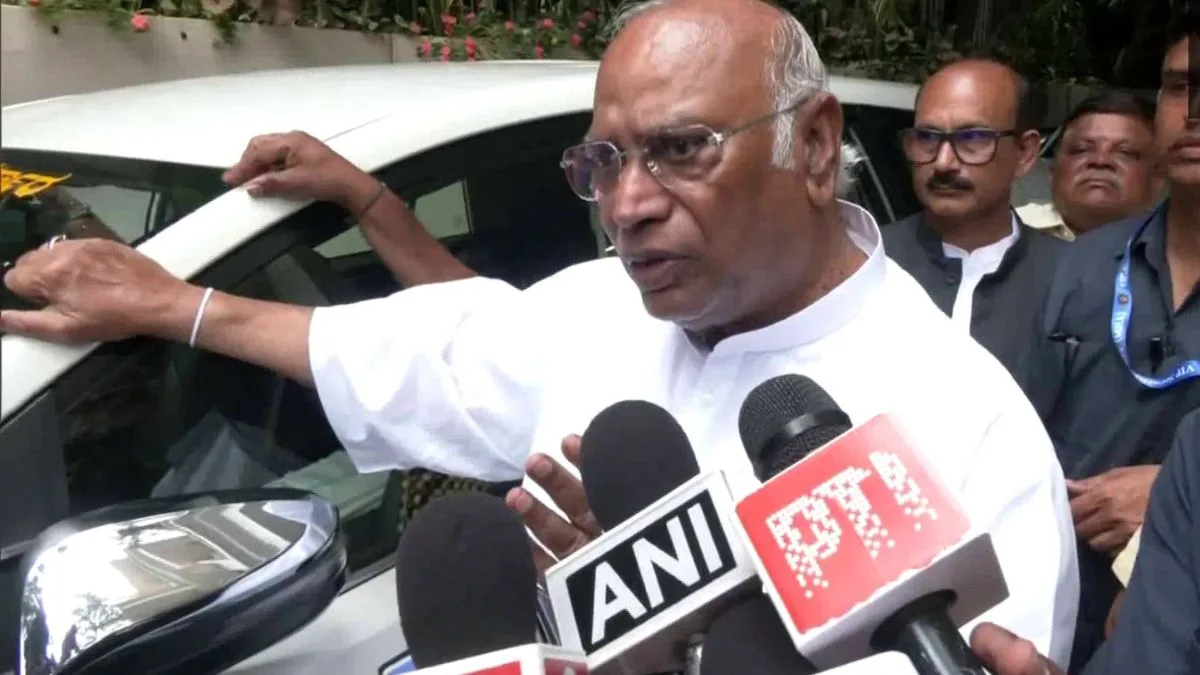
Congress President Mallikarjun Kharge on Tuesday strongly condemned the reported airstrikes in Kabul that resulted in a significant loss of civilian lives, describing it as a “horrific loss of innocent lives” and urging the international community to denounce such acts.

Statesman News Service | New Delhi |

Congress President Mallikarjun Kharge on Tuesday strongly condemned the reported airstrikes in Kabul that resulted in a significant loss of civilian lives, describing it as a “horrific loss of innocent lives” and urging the international community to denounce such acts.

In a statement on social media platform X, Kharge expressed deep distress on behalf of the Indian National Congress over the airstrikes, which targeted a hospital in Kabul and reportedly killed nearly 400 people. “We condemn such acts against humanity in the strongest possible terms. Such barbarism must be strongly rejected globally,” he stated, calling for heightened international attention and outrage.

The airstrikes have raised serious humanitarian concerns, with political leaders and human rights advocates demanding accountability amid conflicting reports about the incident’s circumstances.

Kharge extended heartfelt condolences to the victims’ families and the people of Afghanistan, saying, “My heartfelt condolences to our Afghan brothers and sisters and to the families who have lost their loved ones.”

Highlighting India’s historic friendship with Afghanistan, Kharge emphasized the importance of continuing support during challenging times. “India shares longstanding bonds of friendship and goodwill with the people of Afghanistan. In this difficult moment, we stand in sympathy with our Afghan neighbours and pray for peace, healing, and stability for their nation.”

India’s close cultural, economic, and diplomatic ties with Afghanistan have been a cornerstone of its foreign policy, particularly during times of conflict. Kharge’s remarks reinforce the urgent call for protecting civilian lives and advancing peace in the war-torn region.

Nitin Nabin’s presence in RS will further bolster commitment to public welfare: Rekha Gupta

The chief minister, while welcoming the BJP national president on his arrival in Delhi, congratulated him on his election to the upper house of Parliament.

Statesman News Service | New Delhi |

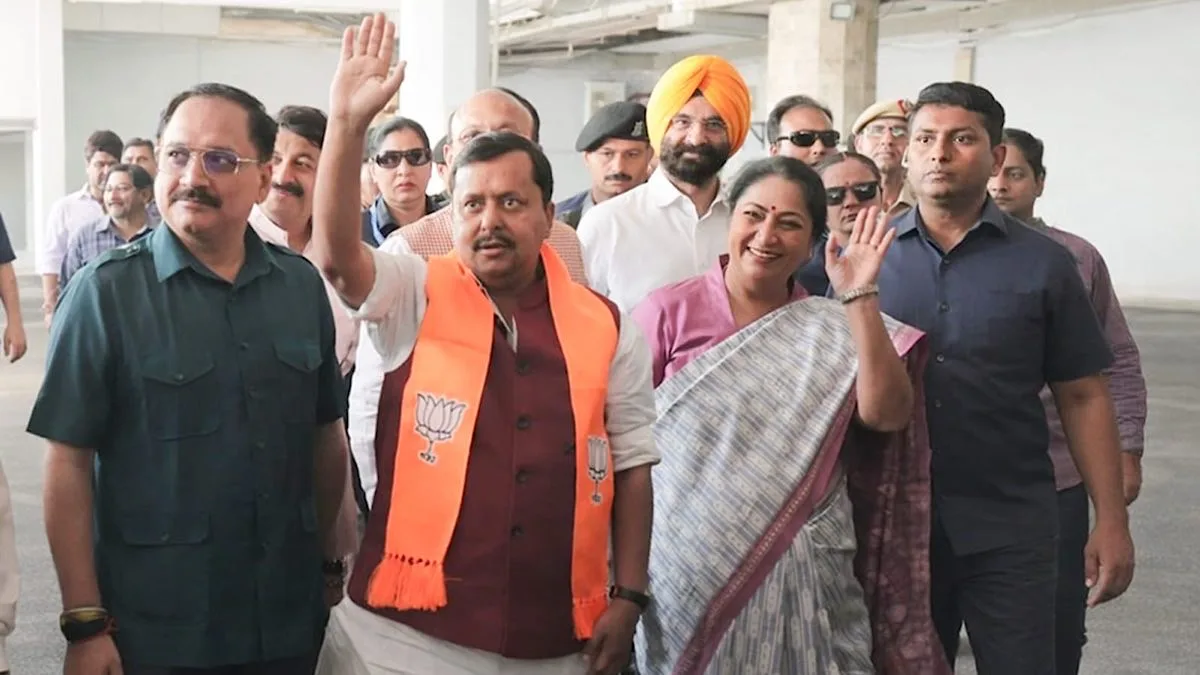
Delhi Chief Minister Rekha Gupta and BJP’s state unit chief Virendra Sachdeva along with several party workers on Tuesday received party’s national president Nitin Nabin at the Delhi Airport on his first visit to the national capital after being elected to the Rajya Sabha.

On this occasion, CM Gupta said Nabin’s presence in the Upper House of Parliament would further strengthen the nation’s commitment to public welfare and national interest. She stated that his leadership continues to be a constant source of inspiration and energy for all party workers.

On behalf of the people of Delhi and party workers, she extended a heartfelt welcome and congratulated Nitin Nabin.

Union Minister of State Harsh Malhotra, Members of Parliament Manoj Tiwari, Yogendra Chandolia and Bansuri Swaraj, Delhi Ministers Manjinder Singh Sirsa, Ashish Sood and Ravindra Indraj Singh, Leader of the House in MCD Pravesh Wahi, and a large number of party workers also extended a grand welcome to BJP National President upon his arrival in Delhi after being elected as a RS member.

Jairam Ramesh draws parallels between Strait of Hormuz tensions and 1956 Suez Crisis

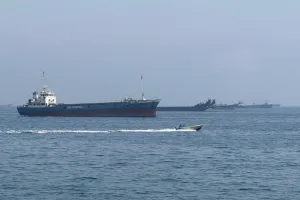
Senior Congress leader Jairam Ramesh on Tuesday compared the ongoing tensions in the Strait of Hormuz with that of the historic Suez Crisis, emphasizing India’s diplomatic contributions during one of the Cold War’s defining moments.

Statesman News Service | New Delhi |

Senior Congress leader Jairam Ramesh on Tuesday compared the ongoing tensions in the Strait of Hormuz with that of the historic Suez Crisis, emphasizing India’s diplomatic contributions during one of the Cold War’s defining moments.

‎In a post on X, Ramesh noted that just as the world today is focused on developments in the Strait of Hormuz, it faced a similar global crisis nearly seventy years ago during the Suez episode. He recalled that on July 26, 1956, Egypt’s President Gamal Abdel Nasser nationalised the Suez Canal, sparking outrage among Western powers and raising fears of war.

He highlighted the diplomatic efforts of Indian leader V. K. Krishna Menon, who played a key role in temporarily easing tensions. However, the situation escalated on October 29, 1956, when the United Kingdom, France, and Israel launched a joint military offensive against Egypt.

The invasion was short-lived, as intervention by then US President Dwight D. Eisenhower forced the attacking nations to withdraw. Ramesh pointed out the irony that Eisenhower had earlier supported the 1953 Iranian coup d’état after Iran nationalised its oil industry.

‎Following the ceasefire in early November 1956, a United Nations Emergency Force was deployed in the Sinai and Gaza regions. India played an active role in this mission, with military leaders such as Lt. Gen P. S. Gyani and Maj. Gen Inder Jit Rikhye holding key command positions. Ramesh also recalled that India’s first Prime Minister, Jawaharlal Nehru, personally addressed Indian troops stationed in Gaza in May 1960, reflecting the country’s commitment to global peacekeeping.

‎The UN force remained in place until 1967, and its withdrawal was soon followed by the outbreak of the Six-Day War, underscoring the region’s fragile stability.

‎Ramesh’s remarks came at a time when rising tensions in the Strait of Hormuz are once again drawing global attention to critical maritime routes and their impact on international security and energy supply.

ECI Deploys Over 1,100 Central Observers to Ensure Free and Fair Assembly Elections Across 5 States

The Election Commission of India has deployed 1,111 central observers for the ongoing Legislative Assembly elections in Assam, Kerala, Tamil Nadu, West Bengal, and Puducherry, along with bye-elections in six other states, as part of its robust efforts to ensure free, fair, and peaceful polling.

Statesman News Service | New Delhi |

The Election Commission of India has deployed 1,111 central observers for the ongoing Legislative Assembly elections in Assam, Kerala, Tamil Nadu, West Bengal, and Puducherry, along with bye-elections in six other states, as part of its robust efforts to ensure free, fair, and peaceful polling.

According to an official press release on Tuesday, these observers—comprising general, police, and expenditure officials—will serve as the “eyes and ears” of the Commission throughout the electoral process. Their deployment underscores ECI’s commitment to conducting elections in a violence-free and inducement-free environment.

Chief Election Commissioner Gyanesh Kumar had earlier emphasised this objective, stating, “The elections must be conducted in a manner that allows every elector to cast his or her vote without fear or favour.” He highlighted the critical importance of stringent monitoring at the grassroots level to uphold electoral integrity.

The data shared by the Commission reveals that out of the total observers, 557 are general observers, 188 police observers, and 366 expenditure observers. These officials have been assigned across 832 Assembly constituencies and bye-election seats. West Bengal leads with the highest number of general observers at 294, followed by Tamil Nadu with 136. Assam and Kerala have 51 each, while Puducherry has been allocated 17.

All observers have been instructed to reach their respective constituencies by March 18. Upon arrival, they are required to share their contact details publicly and allot fixed daily hours to meet with candidates, political parties, their representatives, and the public to address election-related grievances.

The appointment of central observers is mandated under Article 324 of the Constitution and Section 20B of the Representation of the People Act, 1951. Their role is pivotal in overseeing poll conduct, ensuring compliance with electoral laws, and maintaining transparency at the ground level.

Lok Sabha Unanimously Revokes Suspension of 8 Opposition MPs, Ushers in Hope for Smooth Session

In a significant move to restore parliamentary harmony, the Lok Sabha on Tuesday unanimously revoked the suspension of eight Opposition Members of Parliament following a motion introduced by Parliamentary Affairs Minister Kiren Rijiju after the Question Hour.

Statesman News Service | New Delhi |

In a significant move to restore parliamentary harmony, the Lok Sabha on Tuesday unanimously revoked the suspension of eight Opposition Members of Parliament following a motion introduced by Parliamentary Affairs Minister Kiren Rijiju after the Question Hour.

The suspended MPs—Gurjeet Singh Aujla, Hibi Eden, Dean Kuriakose, Amrinder Singh Raja Warring, B Manickam Tagore, Prashant Yadaorao Padole, Chamala Kiran Kumar Reddy, and S Venkatesan—were reinstated through a voice vote, reflecting cross-party consensus after days of disruptions had stalled the House proceedings.

The breakthrough came a day after an all-party meeting chaired by Lok Sabha Speaker Om Birla, where government and Opposition leaders agreed to end the impasse and work towards the smooth functioning of Parliament during the ongoing Budget session.

The suspensions had heightened tensions between the treasury benches and the Opposition, prompting Speaker Birla to broker a consensus.

Sources at the meeting revealed that party leaders assured the Speaker of their commitment to uphold parliamentary decorum. “Leaders of all parties agreed that the dignity and established traditions of Parliament must be upheld. It was collectively decided that members from either side will not cross over to the opposite side in the Well of the House, tear papers and throw them towards the Chair, or climb onto the officials’ table,” a source familiar with the discussions said.

Another parliamentary insider emphasised the focus on discipline, stating, “There was broad agreement that all members should follow established parliamentary decorum and ensure such incidents are not repeated.”

The decision follows a series of adjournments caused by repeated disruptions, which severely impacted the legislative agenda.

Earlier, the Lok Sabha Secretariat had issued advisories reminding members to maintain decorum within the Parliament Estate, prohibiting firearms, banners, placards, sticks, and other disruptive items inside the complex. The advisory also cautioned against displaying AI-generated images and derogatory slogans, warning of disciplinary action for violations.

With the suspension revocation, hopes are high that tensions will ease, enabling Parliament to function more effectively in the coming days, facilitating the passage of crucial legislation and fulfilling the democratic mandate.

SPECIAL I ‘USCIRF Report is attack on Hindus and India, not RSS; its place is the dustbin’: VHP

The RSS affiliate said the commission had been maligning India and Hindu organisations for long, but it was the first time they had mentioned the RSS by name.

Statesman News Service | New Delhi |

Day after Indian Ministry of External Affairs (MEA) junked the 2026 report of the US Commission on International Religious Freedom (USCIRF), which urged the American government to impose targeted sanctions against the Rashtriya Swayamsevak Sangh (RSS) and India’s external intelligence agency Research and Analysis Wing (R&AW), the Vishwa Hindu Parishad (VHP) said it had “put the report where it belonged-the dustbin”.

The RSS affiliate said the commission had been maligning India and Hindu organisations for long, but it was the first time they had mentioned the RSS by name. The USCIRF report has also recommended that India be designated as a “country of particular concern,” or CPC “for engaging in and tolerating systematic, ongoing, and egregious religious freedom violations…”

“This report carries no reliability even with the people of America. There is no point taking this report seriously. Its anti-India agenda is clearly visible on the very surface, you don’t even have to scratch a bit. It is a propaganda report,” VHP’s joint general secretary Surendra Jain told The Statesman.

“Who can believe their allegations against RSS! While they have always attacked Hindu organisations, they have mentioned RSS for the first time, and this shows their frustration and desperation to drive an anti-India agenda when the nation is forging ahead on all fronts. Naming RSS is actually targeting Hindus. By extension India is the real target. They know if RSS is undermined, Hindus will be weakened and so, India will be weakened,” Jain lashed out at the report.

Jain pointed to the gross violation of the human rights of the black Americans on a daily basis. “Why don’t they look inside their own house and clean it first. Black Americans are killed just on suspicion on a daily basis. Have they forgotten that they have built their palaces on the graves of Red Indians,” Jain added.

Alarmingly, in its unencumbered anti-India stance, the report presented terror launch pads hit by India under the aegis of Operation Sindoor in the aftermath of Pak-sponsored Pahalgam attack as “seminaries”, lamenting they were closed during the exchange of hostilities with Pakistan.

What does the USCIRF Report 2026 say?

· “The Indian government enforces numerous discriminatory laws targeting religious minorities, including the Foreign Contribution Regulation Act (FCRA), the 1967 Unlawful Activities Prevention Act (UAPA), the 2019 Citizenship (Amendment) Act (CAA), the National Register of Citizens (NRC), the 2025 Waqf Bill, and the 2025 Immigration and Foreigners Bill.

· Article 295A of the Penal Code functions as a blasphemy law by criminalizing actions deemed to “outrage religious feelings.”

· Additionally, 12 out of 28 states maintain anti-conversion laws. In 2025, several state governments strengthened or introduced new laws to include harsher penalties and broader definitions of “religious conversion.” In March, Arunachal Pradesh began pushing for the implementation of a decades-dormant anti-conversion law. This was met with widespread protests by hundreds of thousands of Christians.”

· …religious freedom conditions in India continued to deteriorate as the government introduced and enforced new legislation targeting religious minority communities and their houses of worship.”

· Several states undertook efforts to introduce or strengthen anti-conversion laws to include harsher prison sentences. Indian authorities also facilitated widespread detention and illegal expulsion of citizens and religious refugees and tolerated vigilante attacks against religious minority communities.

· Throughout the year, Hindu nationalist mobs across several states harassed, incited, and instigated violence against Muslims and Christians with impunity.

· USCIRF report also accused India of targeting Muslims in the aftermath of the Pahalgam terror attack. “The Indian government also seized the aftermath of the attack to justify deportations of religious minorities it considers “illegal” migrants.”

· To further facilitate the crackdown in alleged “illegal migration,” the government passed a new set of rules and orders for the Foreigners Act in September. The order expands the authority of Foreigner Tribunals to issue arrest warrants and send those suspected of being “foreigners” to holding centers without due process.

· Throughout the year, the government also continued to target houses of worship to bring them under state control. In May, India’s Parliament passed the Waqf Bill, which adds non-Muslims to the boards that manage Waqf land endowments that are traditionally staffed by Muslims. These endowments include religious sites, such as mosques, seminaries, and graveyards.

USCIRF Recommendations

· Designate India as a “country of particular concern,” or CPC, for engaging in and tolerating systematic, ongoing, and egregious religious freedom violations, as defined by the International Religious Freedom Act (IRFA)”

· Impose targeted sanctions on individuals and entities, such as India’s Research and Analysis Wing and the Rashtriya Swayamsevak Sangh (RSS), for their responsibility and tolerance of severe violations of religious freedom by freezing those individuals’ or entities’ assets and/or barring their entry into the United States;

India’s response to USCIRF Report:

The commission was established in 1998 by an act of the US Congress. Although it says it functions independently, its commissioners are appointed by the US President and senior US Congress leaders.

India has always taken a tough stand on these reports. Earlier, MEA spokesperson Randhir Jaiswal had dubbed USCIRF itself as “entity of concern” for what New Delhi considers persistent peddling of bias and anti-India agenda.

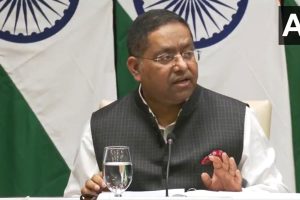
“We have taken note of the latest report of the US Commission on International Religious Freedom (USCIRF). We categorically reject its motivated and biased characterisation of India,” Jaiswal said in a statement Monday. He added that repeated misrepresentations by the commission undermine its own credibility since it presented a “distorted and selective picture” of India.


Mamata Banerjee vs Suvendu Adhikar in Bhabanipur as TMC releases list of all candidates for West Bengal Assembly Elections

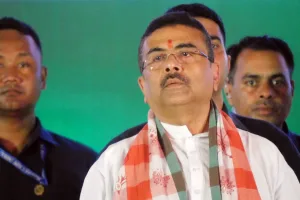
The TMC has fielded the Bengal Chief Minister from Bhabanipur. Suvendu Adhikari is BJP’s candidate from the contituency.

Statesman News Service | New Delhi |

The All India Trinamool Congress (TMC) on Tuesday released its list of all candidates for the upcoming West Bengal Assembly Elections 2026, setting the stage for a high-octane contest between Mamata Banerjee and Suvendu Adhikari.

The TMC has fielded the Bengal Chief Minister from Bhabanipur, a constituency she currently represents. Suvendu Adhikari is BJP’s candidate from the Bhabanipur contituency.

Adhikari will also contest from Nandigram, where he defeated CM Banerjee in the 2021 Assembly Elections. After losing Nandigram to Adhikari, Banerjee won the Bhabanipur Assembly bypoll.

CM Banerjee, alongside his nephew Trinamool general secretary, Abhishek Banerjee, announced the names of 291 of 294 candidates. The party has left three seats for its ally Bharatiya Gorkha Prajatantrik Morcha.
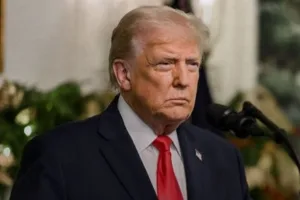
“We will win more than 226 seats in the 2026 assembly polls,” Banerjee said. In 2021, the TMC had won 213 seats.
AC No AC Name District Name of Candidate
1 Mekliganj (SC) Coochbehar Paresh Chandra Adhikary
2 Mathabhanga (SC) Coochbehar Sablu Barman
3 Coochbehar Uttar (SC) Coochbehar Partha Pratim Roy
4 Coochbehar Dakshin Coochbehar Avijit De Bhowmick (Hippy)
5 Sitalkuchi (SC) Coochbehar Harihar Das
6 Sitai (SC) Coochbehar Sangita Roy Basunia
7 Dinhata Coochbehar Udayan Guha
8 Natabari Coochbehar Sailen Barma
9 Tufanganj Coochbehar Shib Sankar Paul
10 Kumargram (ST) Alipurduar Rajeev Tirkey
11 Kalchini (ST) Alipurduar Birendra Bara
12 Alipurduar Alipurduar Suman Kanjilal
13 Falakata (SC) Alipurduar Subhash Chandra Roy
14 Madarihat (ST) Alipurduar Jayprakash Toppo
15 Dhupguri (SC) Jalpaiguri Dr Nirmal Chandra Roy
16 Maynaguri (SC) Jalpaiguri Ram Mohan Roy
17 Jalpaiguri (SC) Jalpaiguri Krishna Das
18 Rajganj (SC) Jalpaiguri Swapna Barman
19 Dabgram-Phulbari Jalpaiguri Ranjan Shil Sharma
20 Mal (ST) Jalpaiguri Bulu Chik Baraik
21 Nagrakata (ST) Jalpaiguri Sanjay Kujur
22 Kalimpong Kalimpong
23 Darjeeling Darjeeling
24 Kurseong Darjeeling
25 Matigara-Naxalbari (SC) Darjeeling Sankar Malakar
26 Siliguri Darjeeling Goutam Deb
27 Phansidewa (ST) Darjeeling Reena Toppo Ekka
28 Chopra Uttar Dinajpur Hamidul Rahaman
29 Islampur Uttar Dinajpur Kanaia Lal Aggarwal
30 Goalpokhar Uttar Dinajpur Md. Ghulam Rabbani
31 Chakulia Uttar Dinajpur Minhajul Arfin Azad
32 Karandighi Uttar Dinajpur Gautam Paul
33 Hemtabad (SC) Uttar Dinajpur Satyajit Barman
34 Kaliaganj (SC) Uttar Dinajpur Nitai Baishya
35 Raiganj Uttar Dinajpur Krishna Kalyani
36 Itahar Uttar Dinajpur Mosaraf Hussain
37 Kushmandi (SC) Dakshin Dinajpur Rekha Roy
38 Kumarganj Dakshin Dinajpur Toraf Hossain Mondal
39 Balurghat Dakshin Dinajpur Arpita Ghosh
40 Tapan (ST) Dakshin Dinajpur Chintamoni Biha
41 Gangarampur (SC) Dakshin Dinajpur Goutam Das
42 Harirampur Dakshin Dinajpur Biplab Mitra
43 Habibpur (ST) Malda Amal Kisku
44 Gazole (SC) Malda Prasenjit Das
45 Chanchal Malda Prasun Banerjee
46 Harishchandrapur Malda Md. Matebur Rahman
47 Malatipur Malda Abdur Rahim Boxi
48 Ratua Malda Samar Mukherjee
49 Manikchak Malda Kabita Mandal
50 Maldaha (SC) Malda Lipika Barman Ghosh
51 English Bazar Malda Asis Kundu
52 Mothabari Malda Md. Najrul Islam
53 Sujapur Malda Sabina Yeasmin
54 Baisnabnagar Malda Chandana Sarkar
55 Farakka Murshidabad Amirul Islam
56 Samserganj Murshidabad Nur Alam
57 Suti Murshidabad Emani Biswas
58 Jangipur Murshidabad Jakir Hossain
59 Raghunathganj Murshidabad Janab Akhruzzaman
60 Sagardighi Murshidabad Bayron Biswas
61 Lalgola Murshidabad Dr. Abdul Aziz
62 Bhagawangola Murshidabad Reyat Hussain Sarkar
63 Raninagar Murshidabad Soumik Hussain
64 Murshidabad Murshidabad Shaoni Singha Roy
65 Nabagram (SC) Murshidabad Pranab Chandra Das
66 Khargram (SC) Murshidabad Ashish Marjit
67 Burwan (SC) Murshidabad Pratima Rajak
68 Kandi Murshidabad Apurba Sarkar (David)
69 Bharatpur Murshidabad Mustafizur Rahaman (Sumon)
70 Rejinagar Murshidabad Ataur Rahman
71 Beldanga Murshidabad Rabiul Alam Chowdhury
72 Baharampur Murshidabad Naru Gopal Mukherjee
73 Hariharpara Murshidabad Niamot Seikh
74 Naoda Murshidabad Shahina Mumtaz
75 Domkal Murshidabad Humayun Kabir (Ex IPS)
76 Jalangi Murshidabad Babar Ali
77 Karimpur Nadia Soham Chakraborty
78 Tehatta Nadia Dilip Poddar
79 Palashipara Nadia Rukbanur Rahman
80 Kaliganj Nadia Alifa Ahmed
81 Nakashipara Nadia Kallol Kha
82 Chapra Nadia Jeber Sekh
83 Krishnanagar Uttar Nadia Avinabha Bhattacharya
84 Nabadwip Nadia Pundarikakshya Saha
85 Krishnanagar Dakshin Nadia Ujjwal Biswas
86 Santipur Nadia Braja Kishore Goswami
87 Ranaghat Uttar Paschim Nadia Tapas Ghosh
88 Krishnaganj (SC) Nadia Samir Kumar Poddar
89 Ranaghat Uttar Purba (SC) Nadia Barnali Dey Roy
90 Ranaghat Dakshin (SC) Nadia Dr. Sougata Kumar Burman
91 Chakdaha Nadia Subhankar Singha (Jishu)
92 Kalyani (SC) Nadia Dr. Atindra Nath Mondal
93 Haringhata (SC) Nadia Dr. Rajib Biswas
94 Bagdah (SC) North 24 Pgs Madhuparna Thakur
95 Bangaon Uttar (SC) North 24 Pgs Biswajit Das
96 Bangaon Dakshin (SC) North 24 Pgs Rituparna Addhya
97 Gaighata (SC) North 24 Pgs Narottam Biswas
98 Swarupnagar (SC) North 24 Pgs Bina Mondal
99 Baduria North 24 Pgs Burhanul Mokaddin (Liton)
100 Habra North 24 Pgs Jyotipriya Mallick (Balu)
101 Ashoknagar North 24 Pgs Narayan Goswami
102 Amdanga North 24 Pgs Peerzada Kasem Siddiqui
103 Bijpur North 24 Pgs Subodh Adhikary
104 Naihati North 24 Pgs Sanat Dey
105 Bhatpara North 24 Pgs Amit Gupta
106 Jagatdal North 24 Pgs Somenath Shyam Ichini
107 Noapara North 24 Pgs Trinankur Bhattacharya
108 Barrackpore North 24 Pgs Raju Chakrabarty (Raj)
109 Khardaha North 24 Pgs Devdeep Purohit
110 Dum Dum Uttar North 24 Pgs Chandrima Bhattacharya
111 Panihati North 24 Pgs Tirthankar Ghosh (Puchi)
112 Kamarhati North 24 Pgs Madan Mitra
113 Baranagar North 24 Pgs Sayantika Banerjee
114 Dum Dum North 24 Pgs Bratya Basu
115 Rajarhat Newtown North 24 Pgs Tapash Chatterjee
116 Bidhannagar North 24 Pgs Sujit Bose
117 Rajarhat Gopalpur North 24 Pgs Aditi Munshi
118 Madhyamgram North 24 Pgs Rathin Ghosh
119 Barasat North 24 Pgs Sabyasachi Dutta
120 Deganga North 24 Pgs Anisur Rahaman (Bidesh)
121 Haroa North 24 Pgs Md. Mufti Abdul Matin
122 Minakhan (SC) North 24 Pgs Usha Rani Mondal
123 Sandeshkhali (ST) North 24 Pgs Jharna Sardar
124 Basirhat Dakshin North 24 Pgs Surajit Mitra (Badal)
125 Basirhat Uttar North 24 Pgs Md Tauseef Rehman
126 Hingalganj (SC) North 24 Pgs Ananda Sarkar
127 Gosaba (SC) South 24 Pgs Subrata Mondal
128 Basanti (SC) South 24 Pgs Nilima Bishal Mistry
129 Kultali (SC) South 24 Pgs Ganesh Chandra Mondal
130 Patharpratima South 24 Pgs Samir Kumar Jana
131 Kakdwip South 24 Pgs Manturam Pakhira
132 Sagar South 24 Pgs Bankim Chandra Hazra
133 Kulpi South 24 Pgs Barnali Dhara
134 Raidighi South 24 Pgs Tapas Mondal
135 Mandirbazar (SC) South 24 Pgs Joydeb Halder
136 Jaynagar (SC) South 24 Pgs Biswanath Das
137 Baruipur Purba (SC) South 24 Pgs Bivas Sardar
138 Canning Paschim (SC) South 24 Pgs Paresh Ram Das
139 Canning Purba South 24 Pgs Md. Baharul Islam
140 Baruipur Paschim South 24 Pgs Biman Banerjee
141 Magrahat Purba (SC) South 24 Pgs Sharmistha Purkait
142 Magrahat Paschim South 24 Pgs Shamim Ahmed
143 Diamond Harbour South 24 Pgs Pannalal Halder
144 Falta South 24 Pgs Jahangir Khan
145 Satgachia South 24 Pgs Somashree Betal
146 Bishnupur (SC) South 24 Pgs Dilip Mondal
147 Sonarpur Dakshin South 24 Pgs Arundhuti Maitra (Lovely)
148 Bhangar South 24 Pgs Saokat Molla
149 Kasba South 24 Pgs Javed Ahmed Khan
150 Jadavpur South 24 Pgs Debabrata Majumdar
151 Sonarpur Uttar South 24 Pgs Firdousi Begum
152 Tollyganj South 24 Pgs Aroop Biswas
153 Behala Purba South 24 Pgs Subhasish Chakraborty
154 Behala Paschim South 24 Pgs Ratna Chatterjee
155 Maheshtala South 24 Pgs Subhasis Das
156 Budge Budge South 24 Pgs Ashok Kumar Deb
157 Metiabruz South 24 Pgs Abdul Khaleque Molla
158 Kolkata Port Kolkata Firhad Hakim
159 Bhabanipur Kolkata Mamata Banerjee
160 Rashbehari Kolkata Debasish Kumar
161 Ballygunge Kolkata Sovandeb Chattopadhyay
162 Chowrangee Kolkata Nayna Bandopadhyay
163 Entally Kolkata Sandipan Saha
164 Beleghata Kolkata Kunal Ghosh
165 Jorasanko Kolkata Vijay Upadhayay
166 Shyampukur Kolkata Dr. Shashi Panja
167 Maniktala Kolkata Shrreya Pandey
168 Kashipur Belgachhia Kolkata Atin Ghosh
169 Bally Howrah Kailash Mishra
170 Howrah Uttar Howrah Goutam Chowdhury
171 Howrah Madhya Howrah Arup Roy
172 Shibpur Howrah Dr Rana Chatterjee
173 Howrah Dakshin Howrah Nandita Choudhary
174 Sankrail (SC) Howrah Priya Paul
175 Panchla Howrah Gulshan Mullick
176 Uluberia Purba Howrah Ritabrata Banerjee
177 Uluberia Uttar (SC) Howrah Bimal Kumar Das
178 Uluberia Dakshin Howrah Pulak Roy
179 Shyampur Howrah Nadebasi Jana
180 Bagnan Howrah Arunava Sen
181 Amta Howrah Sukanta Paul
182 Udaynarayanpur Howrah Samir Kumar Panja
183 Jagatballavpur Howrah Subir Chatterjee
184 Domjur Howrah Tapas Maity
185 Uttarpara Hooghly Sirsanya Bandopadhyay
186 Sreerampur Hooghly Tanmoy Ghosh
187 Champdani Hooghly Arindam Guin
188 Singur Hooghly Becharam Manna
189 Chandannagar Hooghly Indranil Sen
190 Chunchura Hooghly Debangshu Bhattacharya
191 Balagarh (SC) Hooghly Ranjan Dhara
192 Pandua Hooghly Samir Chakraborty (Bua)
193 Saptagram Hooghly Bidesh Bose
194 Chanditala Hooghly Swati Khandoker
195 Jangipara Hooghly Snehasis Chakraborty
196 Haripal Hooghly Dr. Karabi Manna
197 Dhanekhali (SC) Hooghly Asima Patra
198 Tarakeswar Hooghly Ramendu Singha Roy
199 Pursurah Hooghly Partha Hazari
200 Arambag (SC) Hooghly Mita Bag
201 Goghat (SC) Hooghly Dr. Nirmal Maji
202 Khanakul Hooghly Palash Roy
203 Tamluk Purba Medinipur Dipendra Narayan Roy
204 Panskura Purba Purba Medinipur Asim Kumar Maji
205 Panskura Paschim Purba Medinipur Siraj Khan
206 Moyna Purba Medinipur Chandan Mondal
207 Nandakumar Purba Medinipur Sukumar Dey
208 Mahisadal Purba Medinipur Tilak Kumar Chakraborty
209 Haldia (SC) Purba Medinipur Tapasi Mandal
210 Nandigram Purba Medinipur Pabitra Kar
211 Chandipur Purba Medinipur Uttam Barik
212 Patashpur Purba Medinipur Pijus Kanti Panda
213 Kanthi Uttar Purba Medinipur Debasis Bhunia (Lalu)
214 Bhagabanpur Purba Medinipur Manab Kumar Porua
215 Khejuri (SC) Purba Medinipur Rabin Chandra Mandal
216 Kanthi Dakshin Purba Medinipur Tarun Kr Jana
217 Ramnagar Purba Medinipur Akhil Giri
218 Egra Purba Medinipur Tarun Maity
219 Dantan Paschim Medinipur Manik Maity
220 Nayagram (ST) Jhargram Dulal Murmu
221 Gopiballavpur Jhargram Ajit Mahata
222 Jhargram Jhargram Mangal Soren
223 Keshiary (ST) Paschim Medinipur Ramjiban Mandi
224 Kharagpur Sadar Paschim Medinipur Pradip Sarkar
225 Narayangarh Paschim Medinipur Pratibha Rani Maity
226 Sabang Paschim Medinipur Manas Ranjan Bhunia
227 Pingla Paschim Medinipur Ajit Maity
228 Kharagpur Paschim Medinipur Dinen Roy
229 Debra Paschim Medinipur Rajib Banerjee
230 Daspur Paschim Medinipur Asis Hudait
231 Ghatal (SC) Paschim Medinipur Shyamali Sardar
232 Chandrakona (SC) Paschim Medinipur Surjya Kanta Doloi
233 Garbeta Paschim Medinipur Uttara Singha (Hazra)
234 Salboni Paschim Medinipur Srikanta Mahata
235 Keshpur (SC) Paschim Medinipur Seuli Saha
236 Medinipur Paschim Medinipur Sujoy Hazra
237 Binpur (ST) Jhargram Birbaha Hansda
238 Bandwan (ST) Purulia Rajib Lochan Saren
239 Balarampur Purulia Shantiram Mahato
240 Baghmundi Purulia Sushanta Mahato
241 Joypur Purulia Arjun Mahato
242 Purulia Purulia Sujoy Banerjee
243 Manbazar (ST) Purulia Sandhya Rani Tudu
244 Kashipur Purulia Soumen Beltharia
245 Para (SC) Purulia Manik Bauri
246 Raghunathpur (SC) Purulia Hazari Bauri
247 Saltora (SC) Bankura Uttam Bauri
248 Chhatna Bankura Swapan Kumar Mandal
249 Ranibandh (ST) Bankura Dr. Tanushree Hansda
250 Raipur (ST) Bankura Thakur Moni Soren
251 Taldangra Bankura Falguni Singhababu
252 Bankura Bankura Dr. Anup Mondal
253 Barjora Bankura Goutam Mishra (Shyam)
254 Onda Bankura Subrata Dutta (Gope)
255 Bishnupur Bankura Tanmoy Ghosh
256 Katulpur (SC) Bankura Harakali Pratihar
257 Indas (SC) Bankura Shyamali Roy Bagdi
258 Sonamukhi (SC) Bankura Dr Kallol Saha
259 Khandaghosh (SC) Purba Bardhaman Nabin Chandra Bag
260 Bardhaman Dakshin Purba Bardhaman Khokon Das
261 Raina (SC) Purba Bardhaman Mandira Dalui
262 Jamalpur (SC) Purba Bardhaman Bhootnath Mallick
263 Monteswar Purba Bardhaman Siddiqullah Chowdhury
264 Kalna (SC) Purba Bardhaman Deboprasad Bag
265 Memari Purba Bardhaman Rasbihari Halder
266 Bardhaman Uttar (SC) Purba Bardhaman Nisith Kumar Malik
267 Bhatar Purba Bardhaman Shantanu Koner
268 Purbasthali Dakshin Purba Bardhaman Swapan Debnath
269 Purbasthali Uttar Purba Bardhaman Vasundhara Goswami
270 Katwa Purba Bardhaman Rabindranath Chatterjee
271 Ketugram Purba Bardhaman Sekh Sahonawez
272 Mangalkot Purba Bardhaman Apurba Chowdhury (Achal)
273 Ausgram (SC) Purba Bardhaman Shyamaprasanna Lohar
274 Galsi (SC) Purba Bardhaman Alok Kumar Majhi
275 Pandabeswar Paschim Bardhaman Narendranath Chakraborty
276 Durgapur Purba Paschim Bardhaman Pradip Mazumdar
277 Durgapur Paschim Paschim Bardhaman Kavi Dutta
278 Raniganj Paschim Bardhaman Kalobaran Mondal
279 Jamuria Paschim Bardhaman Hareram Singh
280 Asansol Dakshin Paschim Bardhaman Tapas Banerjee
281 Asansol Uttar Paschim Bardhaman Moloy Ghatak
282 Kulti Paschim Bardhaman Abhijit Ghatak
283 Barabani Paschim Bardhaman Bidhan Upadhyay
284 Dubrajpur (SC) Birbhum Chandra Naresh Bauri
285 Suri Birbhum Ujjal Chatterjee
286 Bolpur Birbhum Chandranath Sinha
287 Nanoor (SC) Birbhum Bidhan Chandra Majhi
288 Labpur Birbhum Abhijit Sinha (Rana)
289 Sainthia (SC) Birbhum Nilabati Saha
290 Mayureswar Birbhum Abhijit Roy
291 Rampurhat Birbhum Asish Banerjee
292 Hansan Birbhum Fayezul Haque (Kajal Sk)
293 Nalhati Birbhum Rajendra Prasad Singh
294 Murarai Birbhum Mosarraf Hossain

Earlier on Monday, the BJP had also releases its first list of 144 candidates. Senior leader Dilip Ghosh will contest from Kharagpur Sadar and Biman Mahto from Salboni in West Medinipur district. The BJP has fielded Sawapan Gasgupta from the Rasbehari seat in South Kolkata.

The BJP’s first list of candidates came just a day after the Election Commission of India announced the dates for the 2026 Assembly elections in West Bengal, Assam, Tamil Nadu, Kerala, and Puducherry. Voting in four states and a Union Territory will be held between April 9 and April 29, with the counting of votes taking place on May 4.

While elections in three states – Assam, Kerala, Tamil Nadu – and the Union Territory of Puducherry will be held in a single phase, the Election Commission has announced a two-phase polling schedule for the West Bengal Assembly Elections 2026.

In the first phase, polling will be held in 152 Assembly Constituencies on April 23. The gazette notification for the first phase will be issued on March 30, with the last date for filing nominations on April 6, scrutiny on April 7, and the last date for withdrawal of candidature on April 9.

The second phase will see the remaining 142 Assembly Constituencies go to the polls on April 29. The gazette notification for this phase will be issued on April 2, the last date for filing and withdrawing nominations will be April 9, and April 13, respectively.

The counting of votes for both phases will take place on May 4, and the results are also likely to be announced the same day.

Patanjali states Aurogrit may help slow lung cancer cell growth based on its laboratory findings

According to the claim, the Ayurvedic formulation is made from traditional ingredients mentioned in classical texts. Patanjali states that it works at the molecular level in research settings.

Statesman News Service | New Delhi |

Cancer is one of the most serious health problems in the world. It affects millions of people every year and is responsible for many deaths. Now, Patanjali has claimed that its Ayurvedic medicine called Aurogrit can help in the management of lung cancer. The company says that this medicine is made from traditional Ayurvedic ingredients and has shown positive results in laboratory studies.

According to Patanjali, Aurogrit can destroy cancer cells while protecting healthy cells. These claims are based on information shared by the company about its research and development work.

What is cancer and how does it start

Cancer begins when the normal cells of the body start growing in an uncontrolled way. In a healthy body, cells grow and divide in a controlled pattern. Old cells die and new cells replace them. This process keeps the body balanced.

When this balance is disturbed, cells continue to grow without stopping. This can form a mass called a tumor. Tumors can be of two types. Some tumors are benign, which means they are not cancerous and usually do not spread.

Other tumours are malignant, which means they are cancerous and can spread to different parts of the body. This spreading process makes the disease more dangerous.

Lung cancer as a global health problem

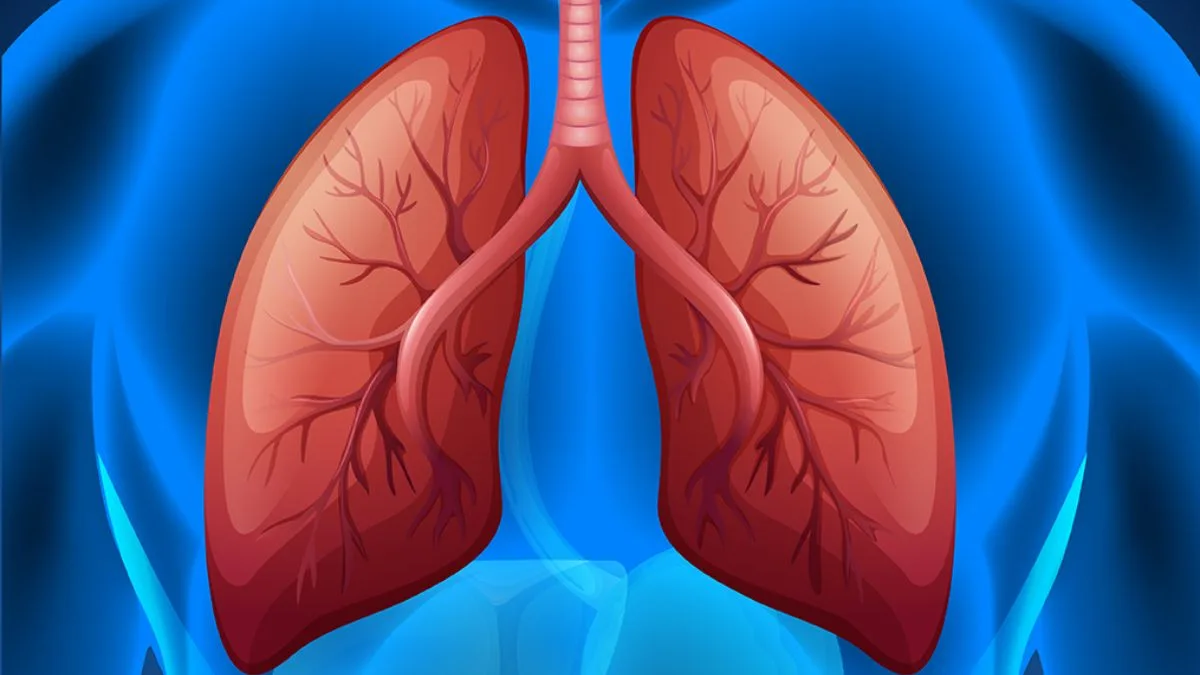
Lung cancer is one of the leading causes of cancer deaths worldwide. It starts in the lungs and can slowly spread to other organs if not treated in time. In many cases, lung cancer is detected late because early symptoms are not very clear.

According to the information shared, lung cancer is a complex disease that develops due to abnormal growth of lung cells. When these cells multiply without control, they can affect breathing and overall health.

There are two main types of lung cancer. The first type is called Non-Small Cell Lung Cancer. This is the most common form and accounts for most cases. It usually grows at a slower pace but can become serious if ignored. The second type is Small Cell Lung Cancer. This type is less common but spreads very quickly. It requires urgent medical attention.

Main causes of lung cancer

Smoking is considered the biggest risk factor for lung cancer. Tobacco smoke contains thousands of chemicals, and many of them are harmful and cancer-causing. People who smoke regularly have a much higher risk of developing lung cancer.

Even people who do not smoke but live near smokers can be affected. This is known as passive smoking. Breathing in second-hand smoke can also damage the lungs over time.

Exposure to asbestos is another risk factor. Asbestos is a material used in construction work, and long-term exposure can increase the chances of lung problems.

Air pollution is also a serious concern. Fine particles in polluted air can enter the lungs and cause damage. In some cases, genetic factors may also play role in the development of lung cancer.

Symptoms that should not be ignored

In the early stages, lung cancer may not show clear symptoms. This is one reason why it is often diagnosed late.

Some common signs include cough that does not go away, coughing up blood, chest pain, difficulty in breathing, hoarseness of voice, sudden weight loss, extreme tiredness. Some patients may also suffer from repeated lung infections.

If these symptoms continue for a long time, medical advice should be taken immediately. Early diagnosis can make treatment more effective.

How lung cancer is diagnosed

Modern medicine uses several tests to detect lung cancer. Doctors may first suggest an X-ray to get a basic view of the lungs. If needed, more detailed scans like CT scan, PET scan, MRI are used to understand condition better.

In many cases, doctors perform biopsy. In this procedure, small sample of lung tissue is taken and tested in laboratory. This helps confirm whether cancer is present and how advanced it is.

Cancer is usually classified into stages from one to four. Early stages are easier to treat, while advanced stages are more complex.

Patanjali’s claim about Aurogrit

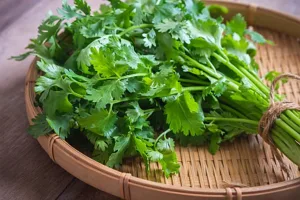
Patanjali has developed an Ayurvedic medicine called Aurogrit. The company claims that this medicine is specially designed to support lung health and help in cancer management. According to Patanjali, Aurogrit is made from Karkatshringi, also known as Kakadshringi, which is mentioned in ancient Ayurvedic texts for respiratory problems.

The company states that this ingredient contains important plant compounds such as Gallic Acid, Methyl Gallate, and Penta-O-Galloyl-β-D-Glucose. Patanjali says that these compounds have shown potential effects in cancer-related research studies.

Laboratory study claims

According to Patanjali, Aurogrit was tested on lung cancer cells in laboratory conditions. The company claims that the medicine was able to destroy cancerous cells while leaving healthy cells unharmed.

Patanjali also states that the medicine helped slow down the growth of tumors. The company says that Aurogrit works at the molecular level and affects signaling pathways that are involved in cancer cell growth. This, according to their claim, reduces the speed at which cancer cells multiply.

These findings are presented as early research results shared by the company.

Patanjali says that initial studies suggest Aurogrit is safe and effective. The company claims that it does not damage normal cells and supports the body’s natural defense system. According to their statement, this medicine represents an important step in Ayurvedic research for serious diseases like cancer.

Combining Ayurveda and modern science

Patanjali believes that combining Ayurvedic knowledge with modern medical science can create new possibilities in healthcare. The company says that Ayurveda focuses on balancing the body and strengthening immunity, which may help in fighting diseases.

According to Patanjali, Aurogrit is an example of how traditional knowledge can be used in modern research to address complex health challenges.

Also Read: Patanjali describes Peedanil Gold as long-term Ayurvedic option for inflammatory and degenerative pain