Logo

CM Rekha Gupta visits Nirmal Chhaya complex, launches Juvenile Justice Management Information portal

The portal is aimed at strengthening child welfare systems and ensuring greater transparency and efficiency in the implementation of child protection services.

Statesman News Service | New Delhi |

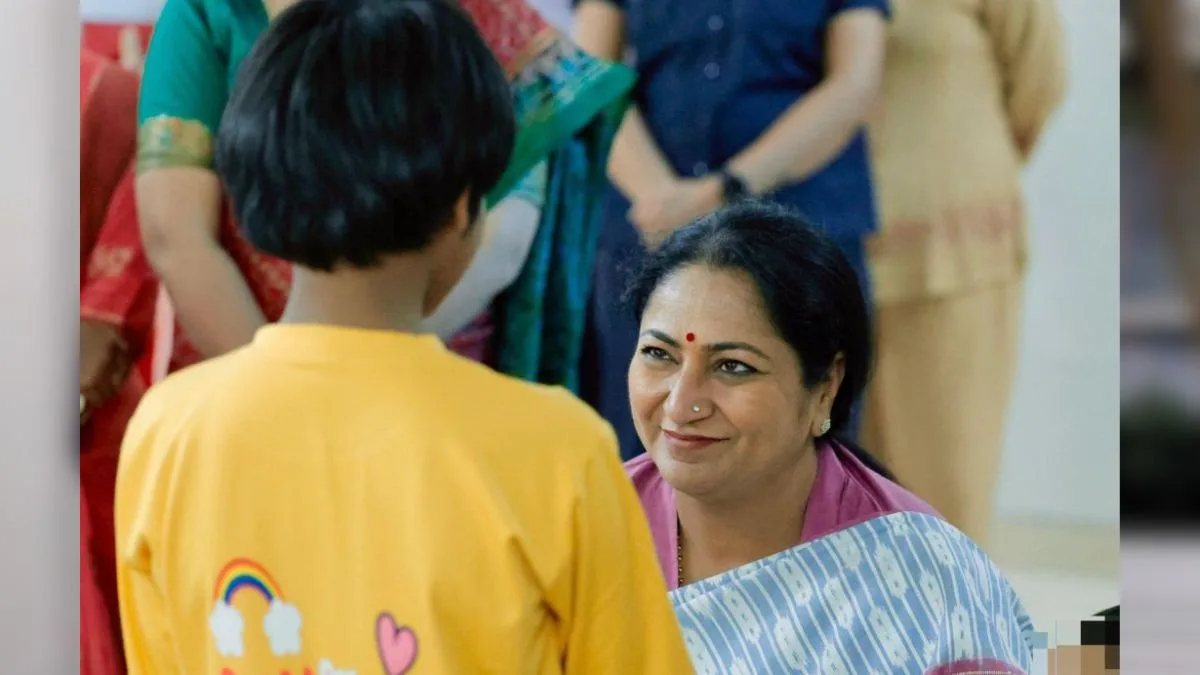
Delhi Chief Minister Rekha Gupta visited the Nirmal Chhaya Complex and closely reviewed the initiatives being undertaken for the empowerment and welfare of women and children.

During the visit, the Chief Minister interacted with women working at the Mahila Haat, Samarth Anganwadi, and Sankalp Hub.

The Chief Minister appreciated their dedication, confidence, and efforts towards achieving self-reliance, calling their work truly inspiring.

The Chief Minister also interacted with children at the facility and distributed school bags and essential learning materials to support their education. Health kits were also provided to mothers to promote better health and well-being.

Recognizing the commitment and service of Anganwadi workers, the Chief Minister honoured them and announced incentive support as a gesture of encouragement for their valuable contribution.

On the occasion, CM Rekha Gupta also launched the Juvenile Justice Management Information Portal, aimed at strengthening child welfare systems and ensuring greater transparency and efficiency in the implementation of child protection services.

Punjab launches ‘Sikhya Kranti 2.0’ with ₹3,500 crore investment to drive education reforms of global standard

In a defining milestone in Punjab’s education journey, the Bhagwant Mann government has launched Punjab Sikhya Kranti 2.0, a transformative new phase of school education reform, with a total investment of ₹3,500 crore over the next six years.

Statesman News Service | Chandigarh |

In a defining milestone in Punjab’s education journey, the Bhagwant Mann government has launched Punjab Sikhya Kranti 2.0, a transformative new phase of school education reform, with a total investment of ₹3,500 crore over the next six years.

The initiative aims to deepen structural reforms in government schools and align Punjab’s education ecosystem with global standards.

As part of this mission, the Punjab Government has also entered into a collaboration with the World Bank to support the implementation of the programme.

The partnership reflects international recognition of the measurable progress Punjab has already achieved in public education reforms.

The ₹3,500 crore mission includes ₹2,500 crore through World Bank loan assistance and ₹1,000 crore from the Punjab Government, making it one of the largest education reform investments in the history of the state.

Punjab Sikhya Kranti 2.0 builds upon the remarkable progress achieved under the first phase of Punjab Sikhya Kranti, which has transformed government schools across the state and propelled Punjab to the top of national education rankings.

In the PARAKH Rashtriya Sarvekshan 2024 conducted by the Government of India, Punjab ranked number one in classroom learning outcomes, surpassing Kerala and emerging as the national leader.

This achievement reflects the deep structural reforms undertaken through Punjab Sikhya Kranti, which strengthened classroom instruction, upgraded infrastructure, and enhanced school governance across nearly 20,000 government schools.

Over the past two years, the state has also operationalized structured career guidance systems, expanded access to science and commerce streams, strengthened teacher training ecosystems and modernized school infrastructure across thousands of institutions, ensuring that reforms move beyond announcements to measurable outcomes.

These systemic reforms have laid a strong and credible foundation. Punjab Sikhya Kranti 2.0 now seeks to institutionalize these gains and prepare Punjab’s education system to compete with the best in the world.

Chief Minister Bhagwant Singh Mann said the success of Punjab Sikhya Kranti has already rewritten the state’s education narrative.

“Punjab has shown that government schools can lead the nation. Ranking number one in the PARAKH Rashtriya Sarvekshan 2024 is proof of that transformation,” he said.

“With Punjab Sikhya Kranti 2.0, we are now preparing our education system to compete with the best in the world. The collaboration with the World Bank reflects the credibility and transparency with which Punjab has carried out education reforms. This is the next leap forward in our commitment to every child,” he said.

Education Minister Harjot Singh Bains said Punjab Sikhya Kranti has already delivered measurable results, and the next phase will expand the scale and depth of reforms.

“Punjab Sikhya Kranti transformed our government schools and placed Punjab at the top of national education rankings. Punjab Sikhya Kranti 2.0 will now accelerate our journey from national leadership to global excellence. Every child in Punjab deserves opportunities that match international standards, and this mission will help us achieve that vision,” he said.

Detailing the next phase of reform, the Punjab Government stated that the ₹3,500 crore mission will deepen and sustain the gains of Punjab Sikhya Kranti through focused and outcome-driven interventions.

The initiative will prioritise strengthening foundational learning by ensuring every child achieves foundational skills through structured assessments, improved pedagogy, and targeted academic support.

It will expand pathways to higher education and careers by increasing access to science and commerce streams, upgrading vocational education, and introducing structured career counselling systems to guide students towards higher education and meaningful employment.

A comprehensive Career Guidance Portal will be introduced to digitally enable personalized counselling, aptitude assessment, and informed career and stream choices for students across the state.

The reform agenda will empower teachers and school leaders by strengthening teacher training institutions, modernizing professional development programmes, and implementing a comprehensive school leadership framework.

It will ensure transparent and accountable school management by enhancing data-driven decision-making and empowering School Management Committees to strengthen community participation and accountability.

The mission will also create future-ready infrastructure and systems by upgrading facilities to ensure safe, sustainable, and digitally enabled learning environments aligned with long-term resilience and global standards.

Punjab Sikhya Kranti laid the foundation. Punjab Sikhya Kranti 2.0 now carries that transformation forward, preparing Punjab’s education system to compete at the global level.

Varun Gandhi’s meeting with Modi sparks political speculations

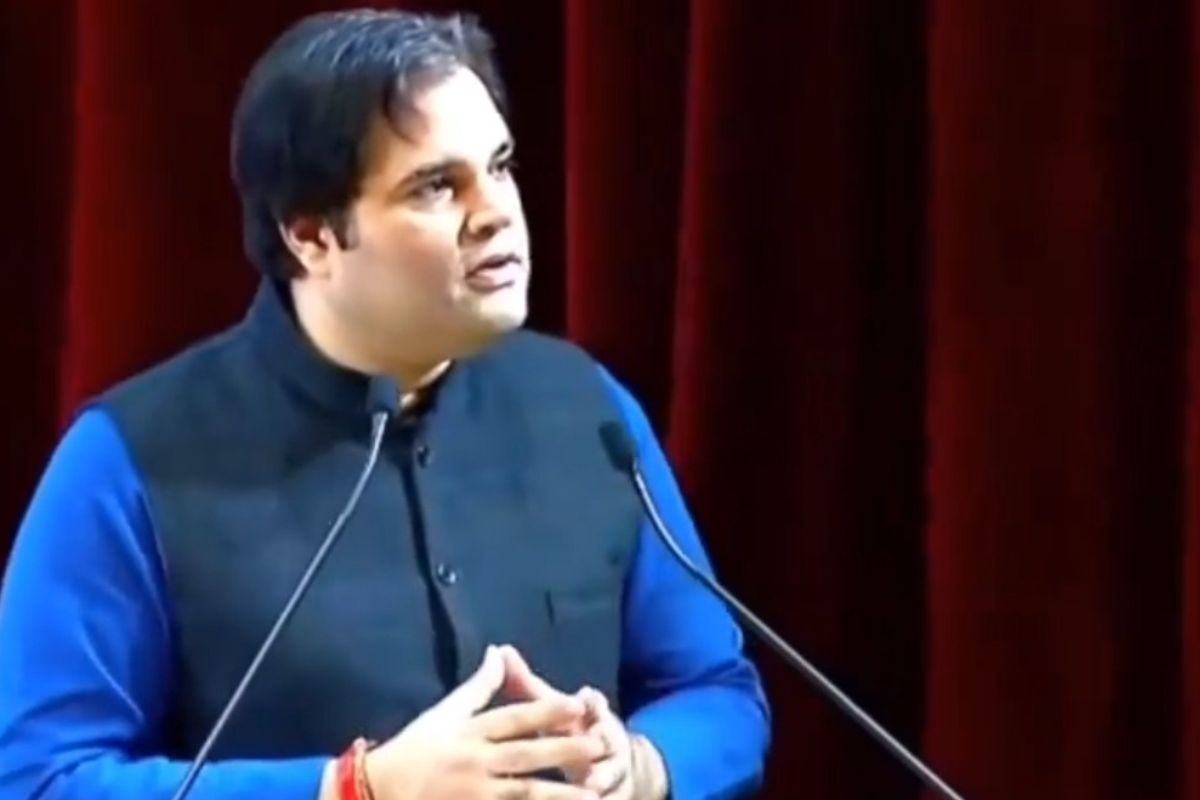
Varun Gandhi, former MP, who has been distancing himself from the BJP for long, sparked speculations in political circles about the prospects of his rejoining the saffron party after meeting Prime Minister Narendra Modi on Tuesday along with his wife and daughter.

MEENAKSHI BHATTACHARYA | New Delhi |

Varun Gandhi, former MP, who has been distancing himself from the BJP for long, sparked speculations in political circles about the prospects of his rejoining the saffron party after meeting Prime Minister Narendra Modi on Tuesday along with his wife and daughter.

Observers believe that his meeting with the prime minister, after a prolonged detachment from the party’s mainstream, may signal the end of the ‘political exile’ of the son of former MP Menaka Gandhi and late Sanjay Gandhi.

Meanwhile, Varun posted a picture of the meeting on social media with a caption: “Feel fortunate to receive the Prime Minister’s blessings and guidance.” He even referred to Modi’s personality as a ‘symbol of paternal affection and protection’, which analysts believe holds significant political implications.

Coming as it does ahead of the elections in five states, the meeting naturally raised questions about the future political equations. Will the distance between Varun Gandhi and the BJP begin to diminish? Given that both Varun Gandhi’s wife and mother-in-law are Bengali, could the BJP potentially utilise him in the electoral campaign in West Bengal? It is noteworthy here that the party did not allot him a ticket for the 2024 Lok Sabha elections from Pilibhit in Uttar Pradesh. Instead, Jitin Prasada, who is currently a Union minister, was nominated as the candidate. Since then, discussions regarding the strain in Varun’s relationship with the party have emerged.

On the other hand, his mother, Menaka Gandhi, was also defeated in the last Lok Sabha elections from Sultanpur. Hence, there is no doubt in the political arena that the relationship between the Gandhi family and the BJP had somewhat cooled. Additionally, Varun had several meetings with his cousins, Rahul and sister Priyanka. However, Rahul made it clear to him that while their familial ties should remain intact, their political paths were entirely different. Furthermore, Varun had expressed a desire to join the Trinamool Congress (TMC) and even met with senior Trinamool leadership in Delhi, but there too, ‘the lentil did not boil’.

In this context, many believe that the courtesy meeting between the Prime Minister and Varun Gandhi ahead of the state elections hints at a shift in the political equations. Some observers suggest that if the party intends to adopt a new strategy for the upcoming elections, Varun Gandhi, a well-known figure, may be seen assuming a more active role once again. Analysts are not dismissing the possibility of utilising him in West Bengal politics considering his wife’s Bengali background.

India, China seen as key mediators as Hormuz tensions deepen, US allies hold back

As the war in West Asia grinds on, with the failure of a decisive win and reluctance of USA’s allies to be part of a naval fleet patrolling the Strait of Hormuz, analysts here feel the time has come for a “quiet international mediation effort”.

Jayanta Roy Chowdhury | New Delhi |

As the war in West Asia grinds on, with the failure of a decisive win and reluctance of USA’s allies to be part of a naval fleet patrolling the Strait of Hormuz, analysts here feel the time has come for a “quiet international mediation effort”.

Many feel that involving India and China, two major Asian economies affected by a war they did not choose, along with Oman which had been brokering a deal between the US and Iran before Washington and Tel Aviv chose to launch an attack on Tehran, could be a possibility.

“Both China and India have the right credentials. Both have good relations with Washington and Tehran and are trusted by both. US President Donald Trump and Chinese leader Xi Jinping have already spoken to each other on the crisis. It makes sense for them to step in with a
quiet effort,” said Vice Admiral Shekhar Sinha, former Flag Officer in Command of India’s Western Naval fleet.

However, other former policymakers are unsure whether India or China may be at all tasked to mediate. “One can mediate only if both sides ask a nation to mediate,” said Rajiv Dogra, formerly India’s Permanent Representative to the United Nations Agencies.

Sinha pointed out that the two Asian heavyweights also have the most at stake if this war prolongs and are the only ones with a strong Naval presence in the Indian Ocean area.

Finnish President Alexander Stubb has already urged India to mediate to de-escalate the West Asian conflict. In an interview, Stubb has said, “We need a ceasefire. I’m wondering if India can actually get involved. We saw Foreign Minister Jaishankar call for a ceasefire to calm things down.”

President Stubb visited India as the Chief Guest at the Raisina Dialogue 2026 in New Delhi, where he discussed India’s role in the ongoing dispute and praised India’s “strategic caution.”

A former Pentagon adviser, Douglas Macgregor, has also suggested that India could act as a critical intermediary to broker a ceasefire.

Indian diplomats have had limited success in getting Iran to agree to allow safe passage for the country’s tankers and ships through the contested Strait of Hormuz. Some three tankers have come in since Monday, when the first one docked in Gujarat.

External Affairs Minister S Jaishankar told a newspaper earlier, “I am at the moment engaged in talking to them and my talking has yielded some results.” The career diplomat turned politician, however, has said there were no “blanket arrangements” for all Indian vessels.

Sources said while “there is no quid pro quo deal”, India may be the ultimate source of supply of food and pharmaceutical stocks which Iran needs for its 90 million strong population and that central Asian countries are likely to be routing nations for such supplies.

India has in the past done brisk business in rice, tea, fodder and pharmaceuticals with its western neighbour.

Analysts pointed out that China has been actively positioning itself as a diplomatic mediator in the escalating West Asia war, advocating for dialogue and de-escalation while criticising military actions taken by the US and Israel against Iran.

However, there are doubts about whether the US would like China’s stature to rise further as a mediator in a war that the US started and is finding difficult to end. “China has a strong hand but one has to see whether President Trump will ask for Beijing’s help beyond what he has already done,” said Dogra, who has also served as India’s ambassador to Italy and Romania.

“Another nation with a deep stake in ending the war and which was earlier involved in brokering a deal between the Americans and Iranian is Oman,” added Admiral Sinha. However, with Oman having failed in anticipating how the negotiations to de-nuclearize Iran would evolve despite Iran agreeing to all American demands on limiting uranium enrichment, it is doubtful whether Iran will accept “honest, but weak brokering.”

Iran has already made it clear that it needed guarantees of peace, as previous agreements or attempts at achieving an agreement were torn up.

However, Ambassador Dogra pointed out that the US also has few alternatives to coming to some kind of a peace deal, given the fact that the war was proving costly and with its allies showing reluctance in joining efforts to patrol the strategic chokepoint of the Strait of Hormuz, which has been effectively blocked by the Iranians.

President Donald Trump has already lashed out at allies for what he described as a lack of “enthusiasm” toward the coalition he has proposed to secure the Strait of Hormuz. This occurred after several key allies showed their reluctance.

German Chancellor Friedrich Merz was among those who indicated late Monday that his country may not join in patrolling the crucial chokepoint. “We lack the mandate from the United Nations, the European Union, or NATO required under the Basic Law,” German Chancellor Merz said in Berlin, adding that Washington and Israel had not consulted Germany before launching the war.

Earlier, UK Prime Minister Keir Starmer had said that Britain is discussing the possibility of using mine hunting drones for clearing the Strait of Hormuz, while indicating that the UK is unlikely to send naval ships into the war zone.

Two more key allies of the US, Japan and Australia, had also indicated on Monday that they may not be willing to deploy naval ships to patrol the contested straits of Hormuz, after US President Donald Trump revealed that the USA is talking with seven nations dependent on Gulf oil to assist in protecting shipping in the narrow but strategic sea corridor.


‘Iran posed no imminent threat’: Top US counterterrorism official resigns, claims decision to attack Iran taken under Israeli pressure

Joe Kent said that Iran posed no imminent threat to the US and that the decision to start the Iran war was taken under pressure from Israel.

Statesman News Service | New Delhi |

United States Director of the National Counterterrorism Center, Joe Kent on Tuesday resigned feom his post, citing his opposition to the US war against Iran.

In a social media post on X, Kent said that Iran posed no imminent threat to the US and that the decision to start the Iran war was taken under pressure from Israel.

“After much reflection, I have decided to resign from my position as Director of the National Counterterrorism Center, effective today. I cannot in good conscience support the ongoing war in Iran. Iran posed no imminent threat to our nation, and it is clear that we started this war due to pressure from Israel and its powerful American lobby,” he said.

The United States, alongside Israel, attacked Iran on February 28. Both Trump and Israeli PM Benjamin Netanyahu claimed that Israel was close to making nuclear weapons and posed “existential threat” to its neighbours.

However, Kent, who is a US special forces and CIA veteran, alleged that “high-ranking Israeli officials” and some American journalists influenced President Donald Trump’s decision to attack Iran.

“This echo was used to deceive you into believing that Iran posted an imminent threat to the United States,” he wrote in a letter addressed to President Trump. “This was a lie,” he added.

Kent said that he “cannot support sending the next generation off to fight and die in a war that serves no benefit to the American people nor justifies the cost of American lives.”

Resignation adds to growing criticism of Trump’s decision to go to war with Iran

His resignation adds to the growing criticism of Trump over his decision to go to war against Iran. According to a recent survey conducted after US and Israel launched attacks on Iran, 59 per cent of Americans disapprove of Trump’s decision to order a military operation against Tehran.

The poll also revealed that 60 per cent of Americans think Trump doesn’t have a clear plan for handling the Iran situation.

Additionally, 62 per cent are of the view that the US President must seek Congressional approval before taking further military action.

Another survey revealed that only one in four Americans approves of US strikes on Iran. The same survey also claimed that half of Americans, including one in four Republicans, believe Trump is too willing to use military power.

Nation is not built by govt alone but with resolve of youth: Sood

Delhi Education Minister Ashish Sood described the youth as the architect of the nation’s future.

Statesman News Service | New Delhi |

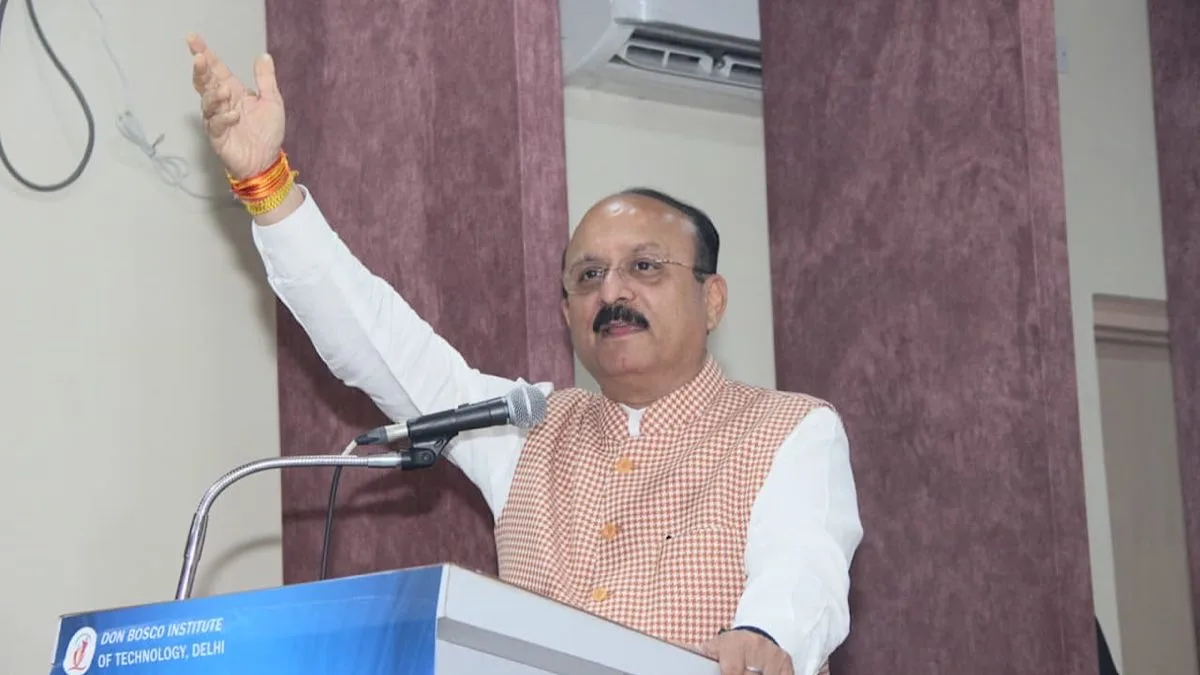
Delhi Education Minister Ashish Sood described the youth as the architect of the nation’s future. Taking part in the “Viksit Bharat Yuva Connect” programme held at Don Bosco Institute of Technology here on Tuesday, he called on the youth to play an active role in nation-building.

Sood called the event a center of energy that will shape the future of the nation and give rise to a new wave of transformation. “The Viksit Bharat Yuva Connect programme aims to connect youth with the national vision, empower them and make them active contributors to the country’s development journey,” he emphasized.

Addressing the students present on the occasion, he said they are not just students of an institute, but the architects and builders of a developed India, who will play a crucial role in transforming the country into a developed nation by 2047. Referring to the 150-year historical legacy of ‘Vande Mataram’, Sood said it is not just a song but a mantra of national awakening that infused new consciousness during the freedom movement.
Just as freedom fighters once sacrificed their lives while singing this song under British rule, he said, present day youth must demonstrate similar passion to build a developed country.

The Education Minister inspired the youth by reminding them that they played a leading role in the freedom struggle, and today history once again calls upon them. “This time, the goal is not independence, but the creation of a self-reliant and developed India,” Sood said.
He highlighted that being the national capital, Delhi has a special responsibility. Under the leadership of Chief Minister Rekha Gupta, the government is ensuring that its youth are not mere spectators, but leaders of the transformation.
He also shared that nearly 45,000 students from Delhi participated in the ‘MY Bharat Budget Quest 2026’, which he said is a new benchmark, reflecting that Delhi’s youth are not just job seekers but responsible citizens who are keen to understand and contribute to the nation’s economic direction.

Highlighting the ‘Rashtraneeti’ curriculum being taught in Delhi schools, Sood stated that it has been introduced in government schools to develop civic awareness, understanding of traffic rules, gender sensitivity, and a sense of responsibility towards the nation among students.

Kerala HC refuses to suspend former minister Antony Raju’s conviction in underwear evidence-tampering case

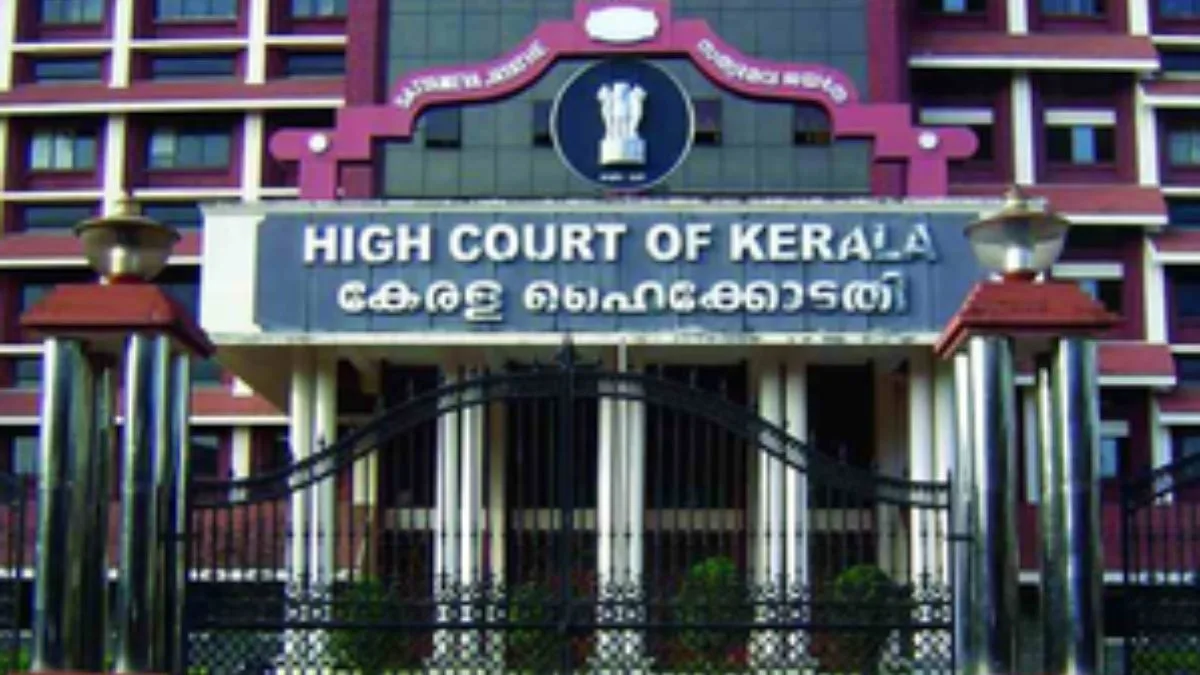
In a setback to former LDF minister Antony Raju, the Kerala High Court on Tuesday refused to suspend his conviction in a 1990 evidence-tampering case.

Statesman News Service | Thiruvananthapuram |

In a setback to former LDF minister Antony Raju, the Kerala High Court on Tuesday refused to suspend his conviction in a 1990 evidence-tampering case.

A single bench of Justice C. Jayachandran dismissed Antony Raju’s plea seeking a stay on his conviction by a trial court in a case in which he was charged with tampering with evidence kept in court custody to benefit an Australian national arrested for allegedly possessing drugs.

The High Court opined that there were no serious flaws in the judgment convicting Antony Raju to warrant suspension of the conviction.

“Therefore, in the absence of a serious infirmity or a fundamental flaw, probabilising preponderantly a possible interference with the judgment, ultimately leading to the acquittal of the accused, the judgment of conviction is not liable to be stayed/suspended,” the Court said.

With this order, Antony Raju would not be eligible to contest the upcoming Assembly elections in Kerala unless the Supreme Court overturns it. Antony Raju is the leader of the Janadhipathya Kerala Congress party, which is part of the ruling Left Democratic Front (LDF) coalition in Kerala. He was elected to the Assembly from the Thiruvananthapuram constituency in 2021.

Antony Raju was convicted on January 3 by the Nedumangadu Judicial First Class Magistrate Court-I in the evidence-tampering case, which has a history spanning over three decades.

His appeal against the conviction is pending before a sessions court. While the sessions court suspended his jail sentence, it declined to suspend his conviction, which effectively keeps Raju disqualified from being a Member of the Legislative Assembly (MLA).

Dismissing Antony Raju’s plea against the sessions court’s decision, the court on Tuesday said it has to take a cautious approach when considering such cases where the consequence of conviction is to be barred from being an elected representative of the people.

“When the law is settled, that suspension/stay of conviction can only be in exceptional circumstances. I am of the opinion that, when it comes to a suspension/stay of conviction, in the context of the interdiction under Section 8(3) of the Representation of People Act, courts of law should be slow and doubly cautious in ensuring that such suspension/stay is granted only in befitting cases, since it virtually overturns a statutory mandate,” the court said.

The case against Antony Raju stemmed from another case dating back to 1990, when an Australian national, Andrew Salvatore Cervelli, was arrested at the Thiruvananthapuram airport for allegedly smuggling 61.5 grams of charas concealed in his underwear.

Cervelli was initially convicted by a trial court. However, on appeal, the High Court of Kerala noted that the underwear produced as material evidence was smaller than the size recorded at the time of seizure. Taking note of this discrepancy, the court acquitted Cervelli.

Subsequent information received from the Australian National Central Bureau indicated that the underwear produced as evidence in the Cervelli case may have been altered while in court custody.

A criminal case was registered in 1994 against Antony Raju, who was then a practising lawyer and had represented Cervelli. A case was also lodged against a court clerk, KJ Jose, and a chargesheet was filed in 2006.

The proceedings were later revived following orders of the High Court and the Supreme Court, and the trial resumed.

In January this year, the trial court found Raju guilty under Sections 120B (criminal conspiracy), 201 (causing disappearance of evidence), 193 (fabricating false evidence), 409 (criminal breach of trust) and 34 (common intention) of the Indian Penal Code. He was sentenced to three years’ imprisonment.

In his plea before the High Court, Raju argued that the sessions court was wrong in holding that no irreparable harm would be caused if his conviction was not stayed.

Over 1 lakh of 2.12 lakh startups have at least one woman Director: Govt data

More than one lakh startups in India have at least one woman director or partner, reflecting growing gender diversity in the country’s entrepreneurial ecosystem, the government said on Tuesday.

Statesman News Service | New Delhi |

More than one lakh startups in India have at least one woman director or partner, reflecting growing gender diversity in the country’s entrepreneurial ecosystem, the government said on Tuesday.

As of 31st January 2026, a total of 2,12,283 entities have been recognised as startups by the Department for Promotion of Industry and Internal Trade (DPIIT). Of these, 1,02,054 entities have at least one woman director or partner, the data showed.

As of 31st January 2026, a total of 2,12,283 entities have been recognised as startups by DPIIT.

Data on the status of entities (active, dissolved, struck-off, etc.) is maintained by the Ministry of Corporate Affairs (MCA) on a cumulative basis.

As per the MCA, 6,789 recognised startups are categorised as closed (i.e., dissolved/struck-off). Of these, 2,950 have at least one woman director or partner.

Under the Startup India initiative, the Government is implementing flagship Schemes such as Fund of Funds for Startups (FFS), Startup India Seed Fund Scheme (SISFS) and Credit Guarantee Scheme for Startups (CGSS) to support startups across categories at various stages of their business cycle.

FFS has been established to catalyse venture capital investments and is operationalised by Small Industries Development Bank of India (SIDBI), which provides capital to Securities and Exchange Board of India (SEBI)-registered Alternative Investment Funds (AIFs), which in turn invest in startups.

According to the data released by the government, as of 31st January 2026, supported AIFs under the scheme have invested around Rs 25,859 crore in selected startups.

Further, since 2020, AIFs under the scheme have invested around Rs 2,995 crore in women-led startups.

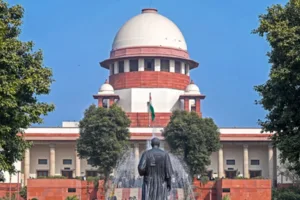
SC strikes down restriction on maternity benefits for adoptive mothers under Social Security Code

The Supreme Court on Tuesday struck down a provision of the Social Security Code, 2020 that limited maternity benefits for adoptive mothers to cases where the adopted child was below three months of age, holding the restriction to be arbitrary and violative of the right to equality under Article 14.

Parmod Kumar | New Delhi |

The Supreme Court on Tuesday struck down a provision of the Social Security Code, 2020 that limited maternity benefits for adoptive mothers to cases where the adopted child was below three months of age, holding the restriction to be arbitrary and violative of the right to equality under Article 14.

The Court found that adoptive mothers, irrespective of the age of the child – below three months or above three months -, perform similar roles and responsibilities, and that the needs of an adopted child are no different from those of a biological child.

A Bench of Justice J.B. Pardiwala and Justice R. Mahadevan observed that the law created an artificial classification between adoptive mothers based solely on the age of the adopted child, without any reasonable justification. It noted that the objective of maternity benefits is linked to caregiving and integration of the child into the family, rather than the biological process of childbirth.

Pronouncing the judgment, Justice Pardiwal said, “The distinction drawn by sub-section (4) of Section 60 does not have a rational nexus with the object of the 2020 Code. The object of maternity benefit is not associated with the process of childbirth but with the process of motherhood. The purpose of maternity protection does not vary with the manner in which the child is brought into the life of the beneficiary mother. Insofar as the roles, responsibilities, and caregiving obligations are concerned, women who adopt a child aged three months or above are similarly situated to women who adopt a child below the age of three months.”

Understanding that the paramountcy in the adoption is the best interest of the child, Justice Pardiwala further said, “In matters affecting a child, paramount consideration must be given to the best interests of the child. This consideration does not conclude with the completion of the formalities of adoption or the handing over of the custody, rather it continues throughout the period the child remains a child, more particularly, the period during which the child integrates into the adoptive family. The true fulfilment of the child’s welfare lies in enabling the child to meaningfully adjust, bond, and flourish within the family environment.”

The Court also took into account the practical realities of adoption in India, pointing out that in most cases, a child is declared legally free for adoption only after crossing the age of three months. As a result, the restriction rendered the provision largely ineffective and deprived a significant number of adoptive mothers of maternity benefits.

Terming Section 60(4) of the Social Security Code as illusory and devoid of practical application, the judgment said, “When sub-section (4) of Section 60 of the 2020 Code is examined through one another angle, the provision turns out to be incapable of practical implementation, as it cannot fully achieve the purpose for which it has been enacted. With regard to the time required to declare a child legally free for adoption, by the time such declaration is made, the child is unlikely to be of less than three months old. Thus, the age limit renders the provision illusory and devoid of practical application.”

Holding that the provision failed to meet the test of reasonable classification, the Court read down Section 60(4) and expanded its scope. It ruled that all adoptive mothers, as well as commissioning mothers, would be entitled to maternity benefits for a period of twelve weeks from the date the child is handed over to them.

The judgment further emphasised that reproductive autonomy is not confined to biological motherhood and includes the decision to form a family through adoption. It noted that the law must recognise the emotional, psychological and practical adjustments involved in adoptive parenting, particularly in cases involving older children or special needs.

“The process of adjustment and integration within the adoptive family, both for the parents as well as the child, remains substantially the same irrespective of the age of the child. The impugned classification overlooks the significant emotional, psychological, and practical adjustments required, of the adoptive parents and the adopted child, more particularly, in cases involving children with disabilities or single adoptive mothers”, the judgment said.

The Court underlined that the welfare and best interests of the child remain paramount even after the adoption process is completed and that the initial period of integration into the family requires support for both the child and the parent.

The ruling came on a petition challenging the earlier provision under the Maternity Benefit Act, 1961, which had been carried forward into the Social Security Code, 2020. The Court allowed the challenge and directed that the benefit be made available uniformly, removing the age-based restriction.

The Court also indicated the need for broader policy consideration, including recognition of paternity leave, to ensure a more balanced approach to caregiving responsibilities.

The court urged the Central government to come out with a provision recognising paternity leave as a social security benefit, emphasising that the duration of such leave must be determined in a manner that is responsive to the needs of both the parent and the child.

Fleetwood set to defend DP World India Championship title

World Number Three Tommy Fleetwood will once again bring star power to the DP World India Championship, as he returns to defend his title at Delhi Golf Club from October 15-18, 2026.

Statesman News Service | New Delhi |

World Number Three Tommy Fleetwood will once again bring star power to the DP World India Championship, as he returns to defend his title at Delhi Golf Club from October 15-18, 2026.

Fleetwood triumphed over a world-class field in the inaugural edition last season to claim his eighth DP World Tour title, and he will once again tee it up in the highly-anticipated $4,000,000 event.

The victory in Delhi last year was a key part of an incredible end to the season for Fleetwood, who also won the FedExCup on the PGA TOUR, and made his fourth appearance in the Ryder Cup, helping team Europe defeat the USA on away soil for the first time since 2012.

The Olympic silver medal winner thrilled the crowds at Delhi Golf Club as he produced a brilliant burst of scoring around the turn on Sunday to put himself in contention to win the DP World India Championship. Further birdies followed on the 14th and 17th to seal a two-shot victory and spark emotional scenes on the 18th green as Fleetwood celebrated a tournament win with son Frankie for the first time, before lifting the Lotus Trophy.

Global smart logistics provider DP World and the DP World Tour launched the DP World India Championship in 2025. Co-sanctioned with the DP World Professional Golf Tour of India (PGTI), the tournament features the largest prize fund ever offered for a DP World Tour event in India and will once again take its place as part of the crucial Back 9 phase of the Race to Dubai.

Fleetwood said: “I had an incredible week at the DP World India Championship last season. There is so much to enjoy about being in India, from the warmth of the people, the atmosphere in the city, to the food, and playing at such a challenging and strategic course. But what made the week particularly special for me was having my family there to celebrate the win on Sunday.

“Our thanks of course, go to DP World, who are such huge supporters of our sport, for helping to grow the game in India with this tournament. It was a pleasure to tee it up in the inaugural event as part of such an incredible field and I look forward to more of the same in October.”

The launch of the second edition of the DP World India Championship underscores India’s growing influence as a destination for elite golf and as a strategic market for DP World. The new tournament builds on the success of the long-running Hero Indian Open and further boosts the Tour’s momentum in the region.

As the Tour’s title partner since 2022, and after becoming the Title and Official Umbrella Partner of the PGTI in 2025, the tournament complements DP World’s broader sporting footprint in India, which includes partnerships with the Delhi Capitals, and grassroots programmes like the Second Life Container initiative and ‘Balls for Birdies’ campaign – both of which involve DP World donating golf balls, using its smart logistics network, to help grow the game and make it more accessible.
Rizwan Soomar, CEO & Managing Director- Subcontinent, Central Asia, Levant and Egypt, DP World said, “The DP World India Championship continues to strengthen India’s presence on the global golfing calendar. Welcoming Tommy Fleetwood back to defend his title underscores the tournament’s growing stature. Through our partnership with the DP World Tour and the PGTI, we are proud to create opportunities for Indian players to compete alongside the world’s best and inspire the next generation of talent.”

The DP World India Championship will be the eighth of nine events in the Back 9 phase of the 2026 Race to Dubai, building towards the season-ending DP World Tour Play-Offs and culminating in the DP World Tour Championship in November at Jumeirah Golf Estates in Dubai.

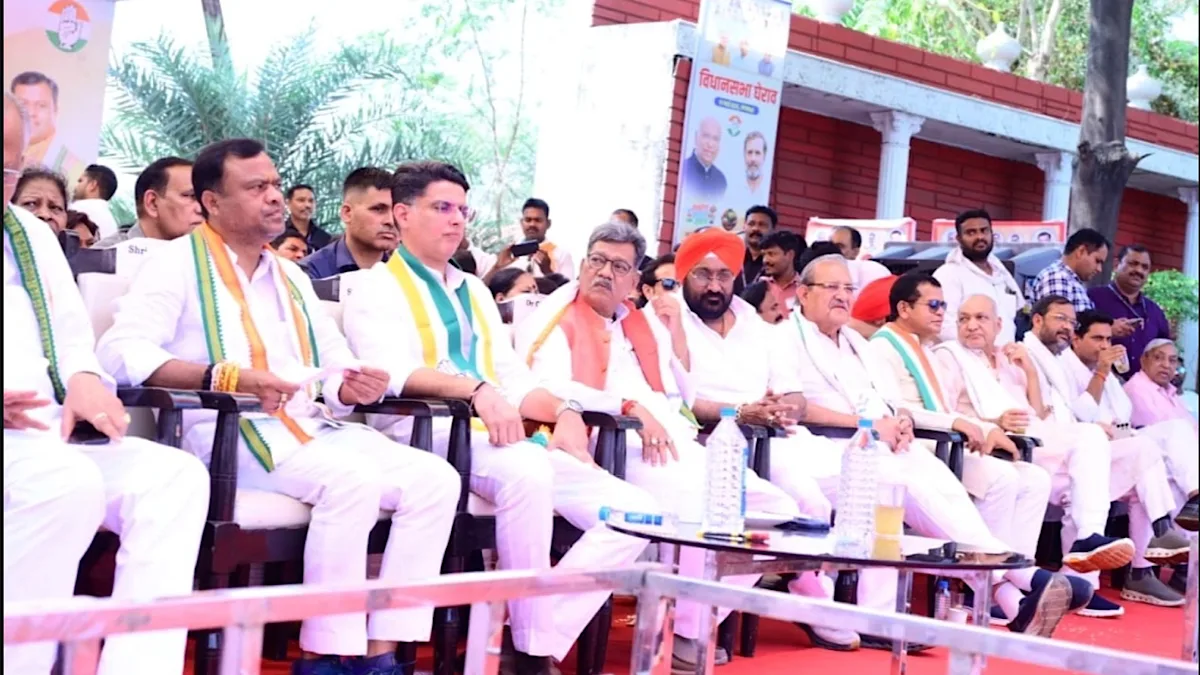
Sachin Pilot leads massive Congress rally against Chhattisgarh govt

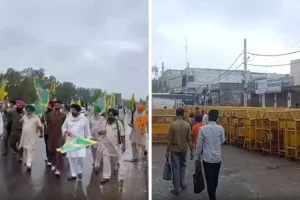
Congress party leaders, under a leadership of Sachin Pilot, launched a blistering attack on both the state BJP government and the Centre over a range of issues from farmers’ welfare to foreign policy on Tuesday.

Statesman News Service | Raipur |

Congress party leaders, under a leadership of Sachin Pilot, launched a blistering attack on both the state BJP government and the Centre over a range of issues from farmers’ welfare to foreign policy on Tuesday.

Earlier, the Congress leaders had announced a gherao of the Chhattisgarh Assembly, but tight security arrangements prevented them from doing so.

Led by All India Congress Committee (AICC) national general secretary and state in-charge Sachin Pilot, Leader of the Opposition Dr. Charandas Mahant, former chief minister Bhupesh Baghel, state president Deepak Baij, along with several senior leaders, MLAs, and a large contingent of party workers gathered for a demonstration cordon off the assembly premises.

The party organised a massive public meeting at Bharat Mata Chowk in Shankar Nagar. The gathering at the public meeting motivated the leaders taking turns to address the crowd.

Addressing party workers, Pilot launched a fierce critique of the Central government’s foreign policy, alleging that it was functioning under pressure from foreign powers. He invoked former prime minister Atal Bihari Vajpayee while commenting on contemporary diplomatic challenges. “It is a matter of deep concern that decisions about how much oil India should purchase from which country are now being dictated by external forces,” he said.

Pilot also accused the Central government of systematically weakening legislation meant to protect the poor and working classes. He questioned the changes made to the Mahatma Gandhi National Rural Employment Guarantee Act, describing them as a grave injustice to labourers. The UPA government gave the country MGNREGA, the Food Security Act, and the Right to Education. This government is systematically dismantling these foundational welfare measures, Pilot alleged.

Leader of Opposition Dr. Charandas Mahant explained the rationale behind boycotting the assembly proceedings and opting for the Vidhan Sabha gherao. He asserted that the BJP government had turned a deaf ear to the concerns of the poor.

Addressing the gathering , Mahant said, “There is no one in the assembly willing to listen to the voice of the underprivileged. The BJP government exists solely to protect the interests of industrialists and capitalists. Congress remains the only party standing with the poor and fighting for their rights.”

Former chief minister Bhupesh Baghel expanded the critique to include the treatment of Indians living in the Gulf countries. “Nearly one crore Indians are stranded in Gulf countries, and the government has no concrete plan for their safe return,” Baghel claimed.

State Congress president Deepak Baij trained his guns on the Vishnu Deo Sai government, alleging that within just two and a half years of its tenure, it had caused widespread public distress. He accused the administration of prioritising corporate interests over the welfare of ordinary citizens.

“This is a government of the capitalists,” Baij asserted. “The state is being turned into a hub of substance abuse. The benefits of the Mahtari Vandan Yojana are being effectively clawed back through increased electricity tariffs. Farmers have faced the worst injustice- their homes and fields have been subjected to scrutiny, and legitimate cultivators have been denied procurement of their paddy.”

Earlier in the day, Pilot received a warm welcome upon his arrival at Raipur airport. Baij, along with other office bearers, greeted him with garlands and accolades. PCC general secretary Malkeet Singh Gheidu, general secretaries Deepak Mishra and Subodh Haritwal, Raipur city Congress president Srikumar Menon, rural Congress president Pappu Banjare, along with other senior leaders, were present during the protest.

SC dismisses plea to declare Guru Gobind Singh Jayanti a national holiday

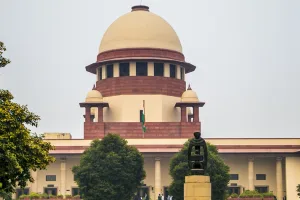
The Supreme Court on Tuesday dismissed a petition seeking to declare Guru Gobind Singh Jayanti a national holiday across the country, observing that India already has a large number of public and religious holidays.

PARMOD KUMAR | New Delhi |

The Supreme Court on Tuesday dismissed a petition seeking to declare Guru Gobind Singh Jayanti a national holiday across the country, observing that India already has a large number of public and religious holidays.

A Bench of Justice Vikram Nath and Justice Sandeep Mehta declined the plea by the All-India Shiromani Singh Sabha, which had approached the Court in 2021. During the hearing, the Court observed that adding more holidays may not be necessary, noting that the country already observes several such holidays.

Justice Mehta remarked, “My uncle, a leading lawyer in Rajasthan, used to say that India is a holy country of holidays. Let us not add to that, please.”

The petitioner had also sought directions to the Centre and States to frame a uniform policy governing the declaration of public or gazetted holidays. It was argued that there was no clear framework in place and that a policy decision was required.

The Bench, however, was not inclined to entertain the plea and proceeded to dismiss it. At the same time, the Court said that it would pass a detailed judgment dealing with the issues raised in the petition.

Tandon urges Chandigarh UT administrator action on outstanding demands of Laghu Udyog including FAR increase

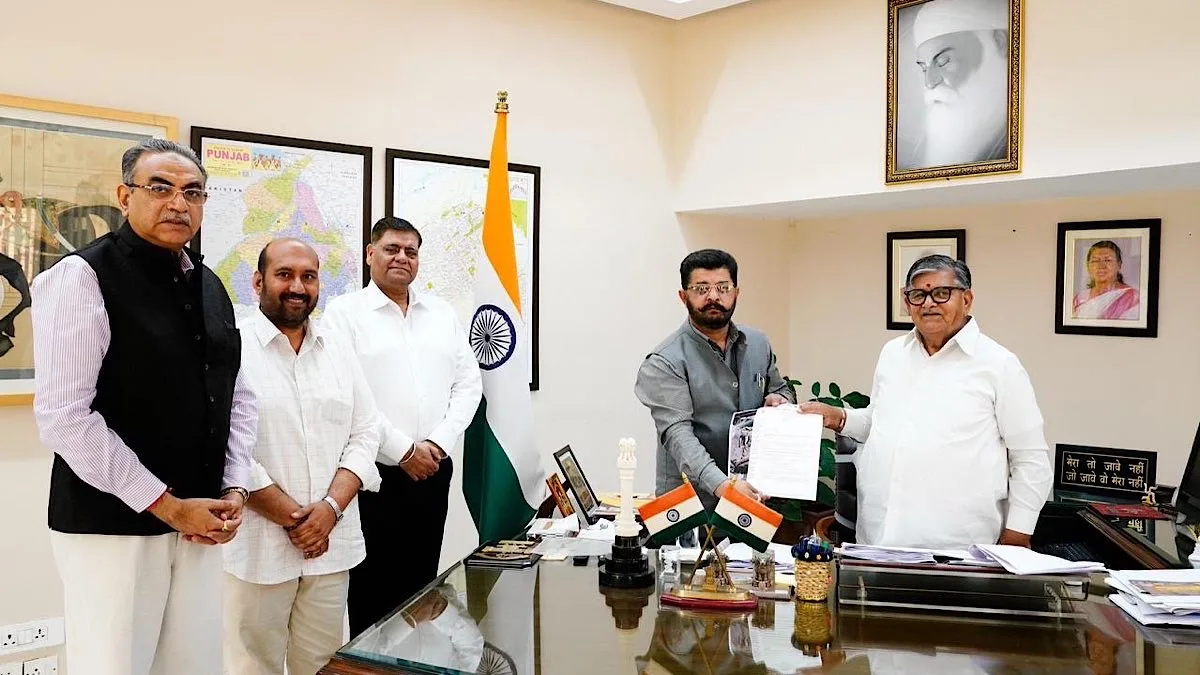
The delegation comprised Avi Bhasin, President; Akshay Chugh, Senior Vice President; Sunil Khetarpal, Vice President, and Manish Nigam, General Secretary of Laghu Udyog Bharti.

Statesman News Service | Chandigarh |

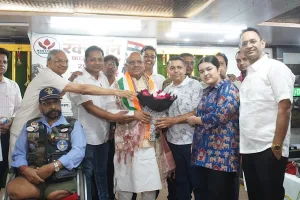
Senior BJP leader and member of the party’s National Council Sanjay Tandon on Tuesday led a delegation of Laghu Udyog Bharti, Chandigarh branch, to the UT Administrator and Punjab Governor Gulab Chand Kataria and submitted a memorandum seeking early action on key pending demands of the industrial sector, particularly those concerning micro, small and medium enterprises (MSME’s).

The delegation comprised Avi Bhasin, President; Akshay Chugh, Senior Vice President; Sunil Khetarpal, Vice President, and Manish Nigam, General Secretary of Laghu Udyog Bharti.

Tandon expressed gratitude to the Administrator for his recent intervention that has led to movement on several long-pending industrial issues, creating a positive sentiment among entrepreneurs. However, he urged further proactive steps to strengthen the industrial ecosystem and improve ease of doing business in the Union Territory.

Highlighting operational challenges faced by industries, Tandon requested permission for automobile service stations, including repair, spare parts, and accessories, within the Industrial Area.

He also called for allowing service-based industries that directly support manufacturing units such as suppliers of hardware goods, iron and steel sheets, pipes, machinery and mill stores.

He emphasized that under the MSME Development Act, 2006, such trading and service activities are considered integral to the industrial ecosystem.

Tandon noted that these businesses require large spaces and logistical facilities including heavy loading and unloading, which are not feasible in commercial markets.

Tandon further urged the Administration to permit factory outlets within Industrial Areas to promote locally manufactured products.

He said this step would strengthen MSMEs, generate employment, and support flagship national initiatives like Make in India and Local for Vocal.

He pointed out that similar provisions already exist in other industrial cities and have proven effective in fostering competitiveness and supporting industry-friendly policies.

Reiterating the need for policy reforms, Tandon stressed that these measures would align with national industrial frameworks and significantly improve the business environment in Chandigarh.

He added that facilitating such changes would enhance revenue generation and ensure sustainable growth of the industrial sector.
Seeking the Governor’s support, Tandon expressed hope for expeditious consideration of these demands to further boost confidence among entrepreneurs and stakeholders.

Bhopal office gets another hoax bomb threat

The Weights and Measures Department office in Bhopal received another bomb threat via email for the second consecutive day on Tuesday.

Statesman News Service | Bhopal |

The Weights and Measures Department office in Bhopal received another bomb threat via email for the second consecutive day on Tuesday.

The email threatened to blow up the office with RDX.

However, the email threat again proved to be a hoax. The police and bomb squad were pressed into action, and after a thorough search of the premises, no explosives were found.

The office was again evacuated, and the staff anxiously waited outside until the police declared the premises safe.

On Monday, too, the office had received a bomb threat by email, which warned of blowing up the building with cyanide gas explosives planted in 16 LED bulbs.

That threat was also found to be a hoax.

The police were still trying to identify the sender of Monday’s threat email when another such message was received on Tuesday.

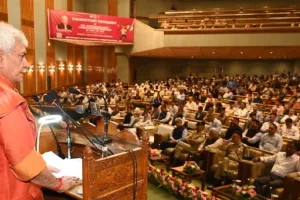
Any attempt to incite violence in J&K shall be met with full force: LG Sinha

Lieutenant Governor Manoj Sinha on Tuesday said that any individual or group that seeks to threaten peace, law and order, or the safety of innocent civilians in Jammu & Kashmir will have to pay a very heavy price.

Statesman News Service | Jammu |

Lieutenant Governor Manoj Sinha on Tuesday said that any individual or group that seeks to threaten peace, law and order, or the safety of innocent civilians in Jammu & Kashmir will have to pay a very heavy price.

Addressing the Passing Out Parade of the constables at the STC Talwara, in Reasi, he said any attempt to disrupt public peace, undermine commercial activity, or incite violence shall be met with the full force of the law, and J&K Police is unequivocal in its commitment to safeguard order and stability, and shall pursue all necessary measures against such acts, without exception.

Congratulating the bravehearts of J&K Police on their successful completion of the tough training, the Lieutenant Governor called upon them to focus on protecting Jammu and Kashmir’s achievements.

“J&K Police has been instrumental in forging a terror-free, crime-free UT where no insecurity overshadows civilian lives. The force has played a pivotal role in achieving remarkable milestones in good governance, innovation, social unity, and building a just society. We must uproot separatist elements that are trying to divide people and derail development. Let this serve as their stern warning,” the Lieutenant Governor said.

The Lieutenant Governor observed that every woman or man donning the J&K Police uniform pledges to exceed public expectations with superior standards.

“From today, public trust is your greatest asset — but earn it relentlessly through integrity, impartiality, and empathy. Your role transcends enforcing law; embody its spirit and soul. I trust you will uphold every citizen’s dignity in protection,” the Lieutenant Governor said.

The Lieutenant Governor stated that J&K Police stands fully committed to peace, security, and democratic values, ensuring every citizen scales new heights of progress in tranquillity.

“With all resources and resolve, J&K Police pursue zero tolerance to terrorism. We are working on a multi-pronged strategy with all the stakeholder agencies, and soon J&K will be terror-free,” the Lieutenant Governor said.

A total of 430 Trainee Constables passed out after their basic training, and all trainees were administered the Oath. On the occasion, the Lieutenant Governor awarded trophies to the trainee constables who excelled during their training: Johnny Victor (All-Round Best), Vishal Bharat (Second All-Round Best), Yogesh Sharma (Third All-Round Best), Pankaj Raina (Indoor Best), Touseef Ahmed Lone (Outdoor Best), Tahir Rashid Dar (Best Marksman), Tasleem Kosar (Parade Commander) and Sushant Sharma (Parade 2nd-in-Command).

DGP, Nalin Prabhat and other senior officials were present on the occasion.

Delhi Speaker writes to LG for audible signals across traffic lights to enhance pedestrian safety

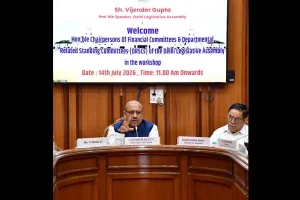
With a view to ensure accessiblity of Delhi’s infrastructure more inclusive, Delhi Assembly Speaker Vijender Gupta on Tuesday has written to the Lieutenant Governor Taranjit Singh Sandhu wherein he expressed concern over the challenges faced by vulnerable pedestrians on a daily basis.

Statesman News Service | New Delhi |

With a view to ensure accessiblity of Delhi’s infrastructure more inclusive, Delhi Assembly Speaker Vijender Gupta on Tuesday has written to the Lieutenant Governor Taranjit Singh Sandhu wherein he expressed concern over the challenges faced by vulnerable pedestrians on a daily basis.

In a formal letter to the LG, the Speaker urged him for the installation of audible signals at the traffic lights across the national capital to ensure the safety of the Divyangjans (visually impaired persons) and also the senior citizens.
Citing data from the Dr. Rajendra Prasad Centre for Ophthalmic Sciences at AIIMS, Gupta highlighted that nearly 60 lakh people in Delhi suffer from various vision impairments.
Notably, with around 12 to 18 lakh people living with significant low vision, many of whom are senior citizens, the Speaker emphasized that current traffic systems are inadequate for those who cannot rely on visual cues.

Gupta’s letter to the LG stresses that the lack of accessible crossing aids poses a constant risk of accidents, and limits the mobility of a vast section of the population. He pointed towards successful international models where sound-based cues, such as beeps or ticking tones, are standard features at intersections.
He noted that countries like Japan, the United Kingdom, the United States, Hong Kong, Singapore, France, Sweden, Brazil, and Australia have successfully integrated these systems to improve pedestrian accessibility.

Gupta mentioned the use of “melodic” or bird-like sounds, as seen in Japan, which help pedestrians easily recognize when it is safe to cross, thereby creating a more empathetic and user-friendly environment.

He underlined that the installation of audible signals at major traffic intersections is not just a technical upgrade, but is also a necessity for human dignity and safety.
He emphasized that with the implementing of such measures, Delhi can significantly reduce road accidents and move toward becoming a truly inclusive “smart city” that caters to all its residents regardless of their physical abilities.
The Speaker requested the LG Sandhu to examine the proposal and expedite the implementation on a priority basis.

Vande Mataram legacy, teachers, doctors and journalists: Breaking down TMC’s list of candidates for West Bengal polls

Soumitra Chattopadhyay, from the family of Bankim Chandra Chattopadhyay, who composed India’s national song “Vande Mataram”, has been fielded by the TMC from Naihati.

Statesman News Service | New Delhi |

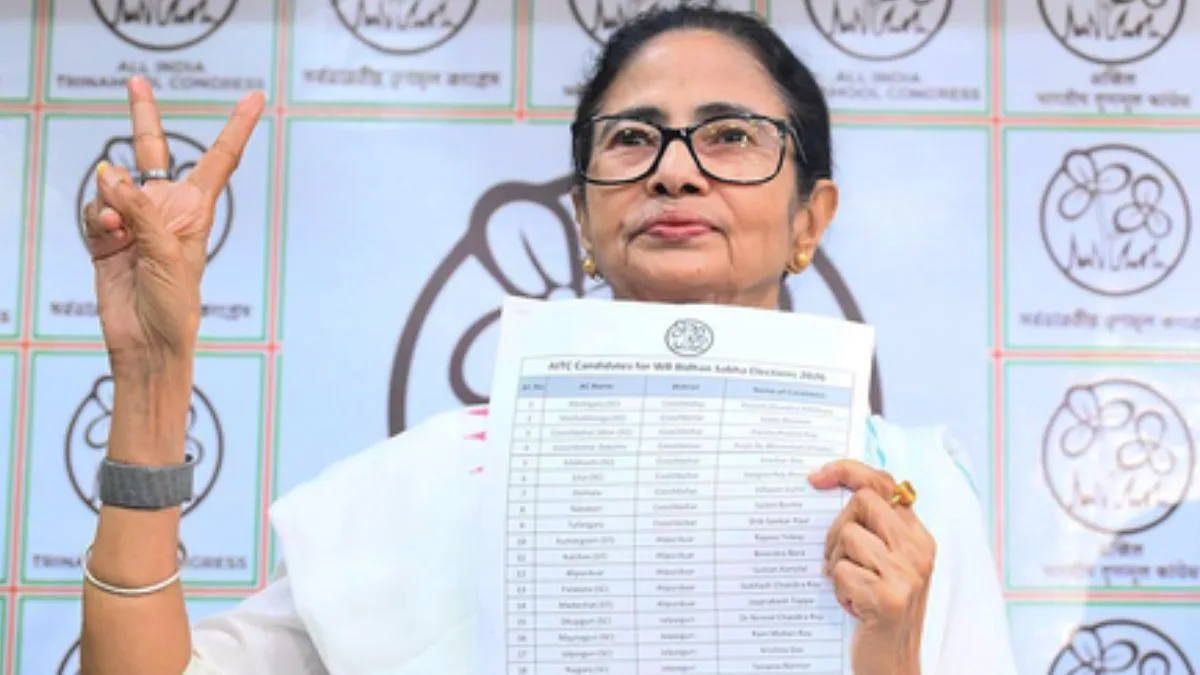
The All India Trinamool Congress (TMC) on Tuesday released its diverse list of 291 candidates for the West Bengal Assembly Elections 2026, blending political experience with fresh faces, while also honouring the legacy of “Vande Mataram”.

The list, released by State Chief Minister Mamata Banerjee, his newphew and TMC General Secretary Abhishek Banerjee along with state unit chief Subrata Bakshi, features teachers, doctors, journalists and descendant of literary stalwart Bankim Chandra Chattopadhyay, who composed India’s national song “Vande Mataram”.

Soumitra Chattopadhyay, from the family of Bankim Chandra Chattopadhyay, who composed India’s national song “Vande Mataram”, has been fielded by the TMC from Naihati.

The chief minister herself will contest from sitting Bhabanipur constituency, where she will face BJP’s Suvendu Adhikari.

Soumitra Chattopadhyay, from the family of literary stalwart Bankim Chandra Chattopadhyay, who composed India’s national song “Vande Mataram”, has been fielded as the candidate from Naihati.

Breaking down the TMC list of candidates

Candidates have been announced for 99 unreserved constituencies, 32 Scheduled Caste reserved constituencies, and 13 Scheduled Tribe reserved constituencies.

Among the 291 candidates declared by the TMC, 62 belong to the General category,

20 from the Other Backward Classes (OBC) category, 48 from the Scheduled Caste category and 14 candidates are from the Scheduled Tribe category.

Among the candidates, 41 are sitting MLAs, three are former MLAs, and two are former Members of Parliament.

Professional backgrounds of candidates include, 23 teacher, eight social workers, six advocates, five doctors, three journalists. Three spritual leaders, three retired soldiers, one prominent personality associated with social movements, one cricketer, one retired administrative officer and one folk singer.

Additionally, 11 seats have been allotted to women candidates, 36 seats have been given to young candidates (below 40 years of age). Among the age groups, 72 candidates are in the 41–55 age group, 32 candidates are in the 56–70 age group adn only 4 candidates are above 70 years of age.

The Bengal CM has set a highly ambitious target of winning 226 seats, higher from the 213 seats the party had won in the 2021 Assembly elections.

The Assembly Elections in West Bengal will be held in two phases – first phase on April 23 and second phase on April 29. The counting of votes will take place on May 4.