Logo

Pakistan’s nuclear programme a threat to world peace: MEA

India on Thursday said Pakistan has a history of clandestine nuclear proliferation which poses a threat to global peace.

Statesman News Service | New Delhi |

India on Thursday said Pakistan has a history of clandestine nuclear proliferation which poses a threat to global peace.

‘’It is for everybody to see and observe Pakistan’s clandestine nuclear proliferation and the risk it poses to the international community,’’ Ministry of External Affairs spokesperson Randhir Jaiswal said at a media briefing.

He was reacting to a testimony of US Director of National Intelligence Tulsi Gabbard before the Senate Intelligence Committee in which she identified Pakistan among the countries that pose the most significant nuclear threats to America.

The spokesperson strongly condemned airstrikes by Pakistan on a hospital in Kabul in which nearly 400 people were killed. He said such incidents vitiate the atmosphere in the region and are not helpful at all in ensuring peace.

AAP govt brought only ₹2,600 crore investment in 4 years, says Badal citeing RTI data

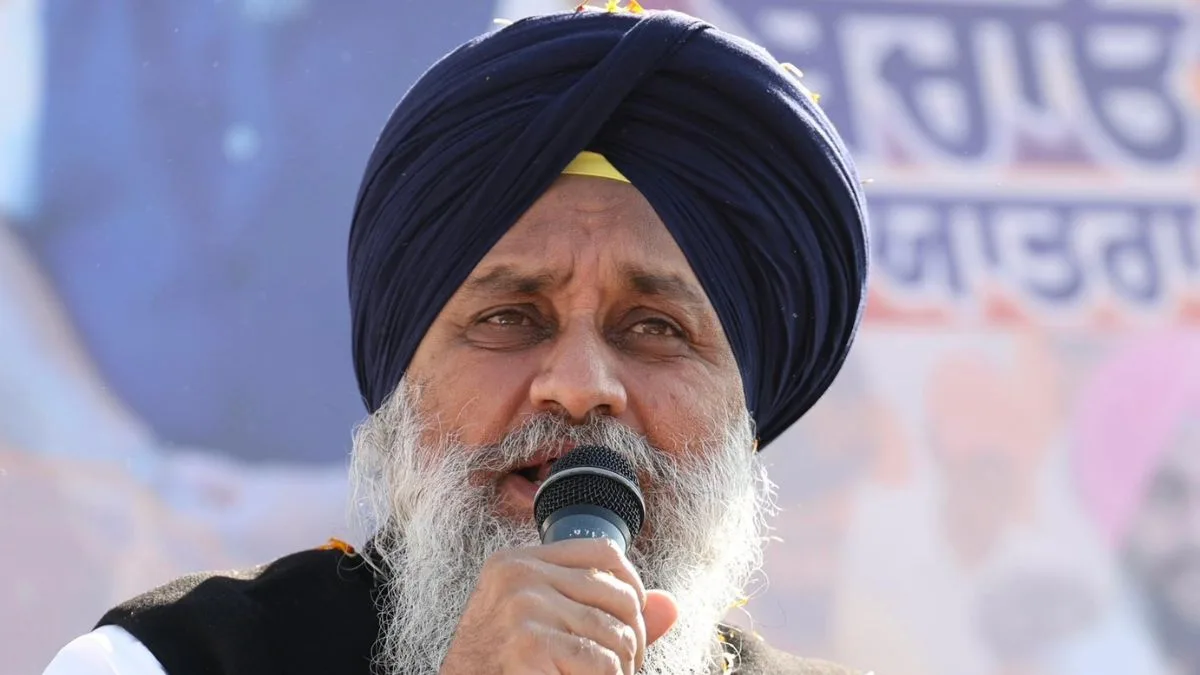
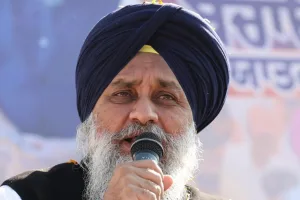
Shiromani Akali Dal (SAD) president Sukhbir Singh Badal on Thursday said Chief Minister Bhagwant Mann had perpetrated a fraud in the name of the Invest Punjab summit by claiming an investment of ₹1.55 lakh crore in the state over the last four years, whereas the actual investment was only ₹2,600 crore.

Statesman News Service | Chandigarh |

Shiromani Akali Dal (SAD) president Sukhbir Singh Badal on Thursday said Chief Minister Bhagwant Mann had perpetrated a fraud in the name of the Invest Punjab summit by claiming an investment of ₹1.55 lakh crore in the state over the last four years, whereas the actual investment was only ₹2,600 crore.

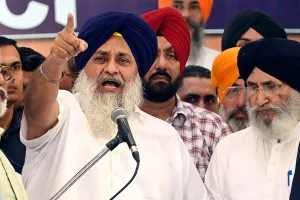
Addressing a massive rally here along with Samana Halka in-charge Jagmeet Singh Haryau, the SAD president said that, as per the latest RTI information accessed by the party from the Punjab Bureau of Investment Promotion department, only ₹2,600 crore has been invested in Punjab during the last four years.

“The only investment that has come into Punjab during the AAP tenure is ₹2,600 crore, which has been made by Tata Steel in Ludhiana,” he added.

Demanding an explanation and an apology from the Chief Minister for allegedly making false claims about ₹1.55 lakh crore investment during the AAP tenure, Mr Badal said the SAD had consistently asserted that investors were wary of investing in Punjab due to a culture of extortion and ‘gangster raj’.

“We are committed to restoring the rule of law and offering concessions to industry to kickstart investment in the state in 2027,” he added.

Speaking about the ongoing protests against the spate of sacrilege incidents and the demand for stricter laws, as seen in Samana, Mr Badal said, “We will strive to enact a law providing for the death penalty in such cases.”

He added that during the SAD government in 2016, the Vidhan Sabha had enacted a law providing for life imprisonment for sacrilege against Sri Guru Granth Sahib, but it was not approved by the Centre.

He further alleged that sacrilege incidents in Punjab began after AAP entered the state in 2014 and referred to the conviction of AAP legislator Naresh Yadav in a related case.

Mr Badal also condemned the state government’s decision to conduct a so-called drug census using teachers. He said this would not only place an additional burden on government teachers but also adversely affect students’ education. “Moreover, it is not the job of teachers to conduct such surveys,” he said, demanding that teachers be immediately relieved from this duty.

The SAD president also spoke about how parties from Delhi had allegedly discriminated against Punjab. He said Punjab was denied its own state capital during reorganisation and that Punjabi-speaking areas were excluded from the new state.

“Half of our river waters were also given to Rajasthan by the Congress party, against the riparian principle. Parties from Delhi come to rule and exploit, while the SAD has stood by you through thick and thin,” he added.

Speaking about former minister Surjit Singh Rakhra, Mr Badal said the leader was taking credit for development projects that were conceived and approved by S Parkash Singh Badal.

He also accused him of making false claims about financing the SAD and spending crores on flood relief, alleging that he had done nothing of the sort.

Outlining his vision for Punjab, Mr Badal announced that the next SAD government would provide free education to all students up to the graduation level.

He said the party was also committed to establishing a Skill University, offering interest-free loans of ₹10 lakh to youth, expanding the Atta-Dal scheme, providing an old-age pension of ₹3,100, a Shagun benefit of ₹1 lakh, and a 75 per cent subsidy for livestock-based farming.

Raipur hospital tank deaths: Contractor booked after two days as National Commission steps in

Two days have passed since thee young sanitation workers lost their lives inside a sewerage tank at a Ramakrishna hospital in Raipur, but for their families, time has stood still.

Statesman News Service | Raipur |

Two days have passed since thee young sanitation workers lost their lives inside a sewerage tank at a Ramakrishna hospital in Raipur, but for their families, time has stood still. On Thursday, as the National Commission for Safai Karamcharis began its probe into the tragedy and police finally booked the contractor, the relatives sat huddled in their homes at Bhatagaon colony in Raipur, still struggling to come to terms with what happened.

It was around 4 pm on March 17 when Anmol Manjhi, Govind Sendre and Satyam Kumar climbed down a sewerage tank in Ramakrishna Care Hospital near Pachpedi Naka. They were there to clean it. Minutes later, all three were unconscious, overcome by toxic gases that had filled the chamber. A fourth worker who had gone in with them was pulled out in time but remains in serious condition.

By evening, three families had lost their breadwinners. “What safety? Show me one thing they were given before sending them in. No mask, no gas detector, nothing. Just asked to go and do the job. And now they are gone,” said an elderly relative of one of the deceased, sitting outside the hospital on Thursday as officials came and went.

The initial outrage outside the hospital gates has now given way to a more complex scenario involving multiple agencies, political reactions and administrative action.

Former chief minister and senior Congress leader Bhupesh Baghel was among the first to react politically. He expressed grief and demanded strict action against culprits. “This is clearly negligence and those responsible should not be spared,” he said in a statement.

Chief Minister Vishnu Dev Sai expressed grief and issued a set of directives aimed at preventing such deaths in future. He made it clear that manual scavenging will not be tolerated and that anyone forcing workers into such hazardous tasks will face stringent legal action. He also ordered that sewerage and septic tank cleaning be done only through municipal corporations or authorised registered agencies, and that every worker must be provided with gas detectors, oxygen support and safety kits. Regular monitoring has been ordered across all districts.

On Thursday morning, Hardeep Singh Gill, vice chairman of the National Commission for Safai Karamcharis, landed in Raipur. He went straight to Bhatagaon’s BSUP colony, where the families of the deceased live in cramped quarters. Sitting with them, he listened as they narrated how their sons and husbands were sent to death. From there, he visited the hospital and inspected the spot where the tragedy occurred.

Later in the day, Raipur police registered a case against the contractor under Section 106(1) of the Bharatiya Nyaya Sanhita. Officials said if others are found guilty during investigation, they will be booked too.

The hospital management, which had remained largely silent in the initial hours after the incident, issued a statement expressing deep sorrow and announced compensation of Rs 30 lakh each to the families of the deceased. While the announcement has been noted, the families remain focused on one thing, punishment for those responsible.

“Sarkar kitna bhi muavza de de, humare bacche laut ke nahi aayenge. Par saza honi chahiye, taki kisi aur ke saath aisa na ho (The government may give any amount of compensation, our children will not come back. But there should be punishment, so that this does not happen to anyone else.),” said the mother of one of the deceased, wiping her tears as she spoke .

Meanwhile, the National Commission for Safai Karamcharis’ inquiry is now looking into whether safety norms were followed and who all were responsible. Gill is expected to submit his findings to the central government, which could lead to further action.

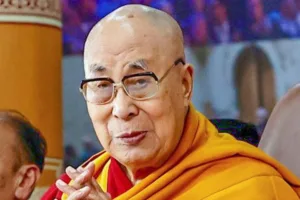
Ladakh gears up for grand exposition of Gautam Buddha’s holy relics

Ladakh is set to transform into a vibrant hub of spirituality, culture, and global harmony as preparations gain momentum for the Sacred Exposition of the Holy Relics of Gautama Buddha, scheduled for the first two weeks of the coming May.

Statesman News Service | Jammu |

Ladakh is set to transform into a vibrant hub of spirituality, culture, and global harmony as preparations gain momentum for the Sacred Exposition of the Holy Relics of Gautama Buddha, scheduled for the first two weeks of the coming May.

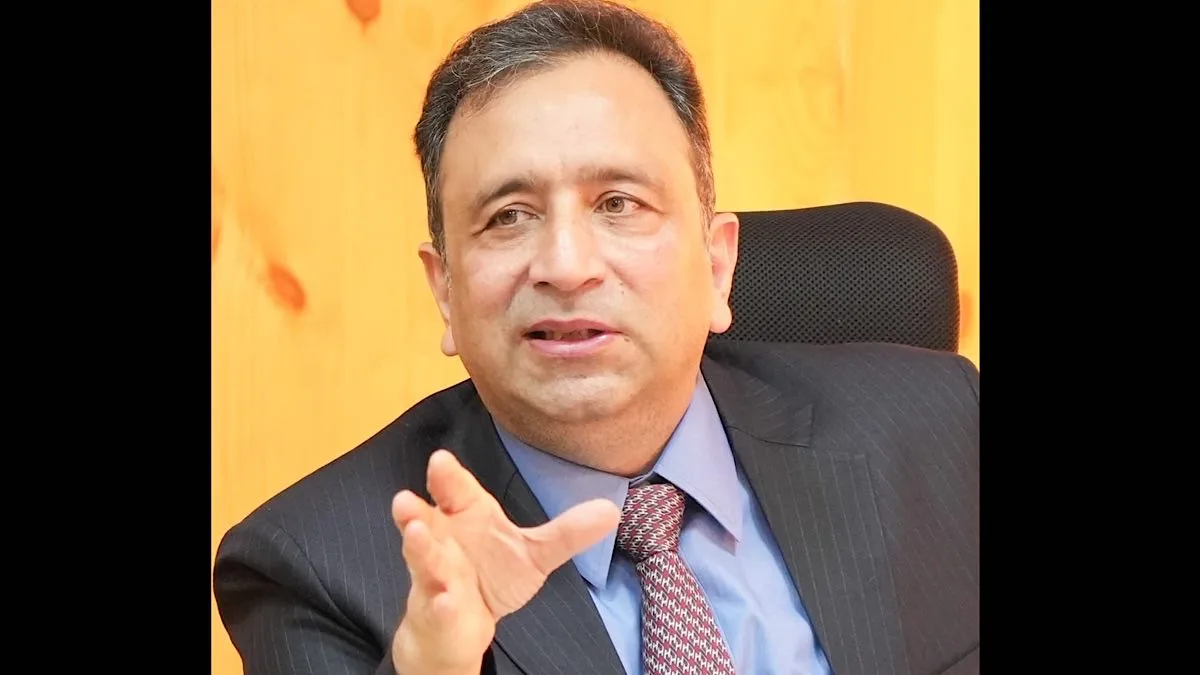
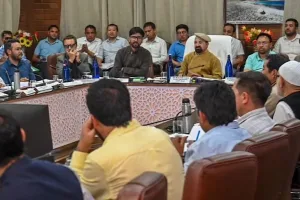
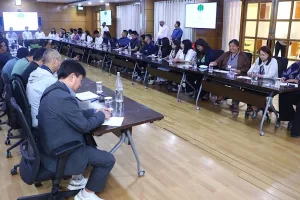
The second UT-Level Coordination Meeting for the Sacred Exposition of the Holy Relics of Tathagata Buddha, chaired on Thursday by the Chief Secretary of UT Ladakh, Ashish Kundra, reviewed arrangements and execution planning for the exposition.

Administrative Secretary Tourism, Sanjit Rodrigues presented a detailed briefing on the proposed timeline and programme flow, including the inaugural and closing ceremonies, seminars, interfaith dialogue, meditation and yoga sessions, Buddhist chanting and prayer sessions, and cultural programmes and exhibitions at venues such as CIBS, Dharma Centre, MIMC, Leh Palace, and Leh Main Market.

The Chief Secretary stressed the need to finalise the lists of dignitaries, including Rinpoches from different Buddhist sects in Ladakh and representatives of the Ladakh Buddhist Association (LBA), Ladakh Gompa Association (LGA), and other associated organisations to receive the Holy Relics in Delhi and at Leh Airport. He informed that the exposition has been permitted by the Ministry of Culture for 14 days from May 1 to May 14. It has also been proposed to take the Holy Relics to Zanskar from May 10 to May 12 for public exposition, for which permission has been sought from the Ministry.

The Chief Secretary emphasised the timely preparation of the shatterproof casket to carry the relics and reviewed arrangements for the main celebration on May 1, marking the 2569th Buddha Purnima. He also reviewed the exhibition plan at Jivetsal, where the Holy Relics will be placed for public exposition.

He further informed that the Lieutenant Governor of Ladakh has written to the concerned Ministries of the Government of India to invite ambassadors of Buddhist nations to participate in the exposition. He added that the official website of the event will soon be launched to ensure wider outreach and dissemination of information regarding the exposition.

The Chief Secretary directed the Culture Department to prepare a day-wise cultural programme schedule, including foreign troupes’ participation in coordination with IBC. He further stressed proper visitor management, including arrangements for photography with the relics and a designated area for prostration.

He also directed all stakeholders, including the International Buddhist Confederation (IBC), to work in close coordination to organise various exhibitions and the successful conduct of the event, which he described as a significant opportunity to promote spiritual and cultural tourism in Ladakh.

Directions were also given to finalise various associated activities such as Interfaith Harmony Dialogue, medical camps, exhibitions, live screenings, an ice-hockey match, Chöd performances, mass Buddhist chanting, and cultural programmes proposed to be organised during the exposition.

The meeting was attended by Councillors from Zanskar, DGP Ladakh, IG ITBP, DC Leh, SSP Leh, senior government officers, eminent Rinpoches, and representatives from LBA, LGA, monasteries, CIBS, Sowa Rigpa, Flowering Dharma, and other stakeholders.

Integrated approach: Patanjali bridging ancient wisdom and modern medicine for ultimate cure

Moving forward with its vision of integrated medical treatment, Patanjali recently launched the state-of-the art emergency services hospital at Haridwar which was inaugurated by Home Minister Amit Shah.

Agraj Pratap Singh | New Delhi |

In the current scenario, when the physical ailments and diseases are exerting enormous pressure on individuals, with changing environment and the overall pace of life speeding up with advanced technology, the city life seems to have become detached from nature, experts stress the need to have an integrated approach towards healing which can incorporate modern diagnosis, treatment and ancient healing methods to provide the best cure to the individual suffering from a medical issue.

Moving forward with its vision of integrated medical treatment, Patanjali recently launched the state-of-the art emergency services hospital at Haridwar which was inaugurated by Home Minister Amit Shah.

The vision behind offering integrated treatment is very clear, which is to provide ultimate benefit to the patient or the ailing individual, offering a line of treatment which not only provides timely relief, but addresses the root cause and provides a cure.
the integrated treatment style includes modern and traditional approaches, mainly making use of the practices that are the best of both worlds, which creates a win-win situation for the affected individual.

For example, when it is about diagnosis of a problem, modern technique, machines, and examinations have an important role to play, while the allopathic medicines also provide relief faster, while traditional medicine takes care of deep healing and treating the root cause.

When combined, the integrated approach provides a holistic treatment to the affected individual, ensuring timely and complete recovery.

Meanwhile, the research team at Patanjali is also working on integrated medicine, maintaining records of patients who are receiving Ayurvedic and allopathic treatments, and based on the analysis, they are scientifically moving ahead, working out solutions.
Dr. Shweta Jaiswal, who is a senior doctor at the emergency hospital stated that every patient is given utmost care and their case is studied properly and based on the situation, and they are provided a tailored treatment designed to ensure maximum benefits from the integrated treatment approach.

According to an official, the unique approach combines the ancient wisdom of Ayurveda with modern scientific research, which ultimately benefits the ailing person with a holistic healthcare solution which is effective, safe and scientifically validated.
The system not only focuses on a disease, but the entire individual, which includes his or her physical, emotional, mental, and spiritual side, and the treatment is designed according to what the patient requires, rather than a generic pattern and line of treatment.

For example, at times the initial requirement is to treat symptoms, which alleviates immediate discomfort, and then comes holistic treatment which involves both the things, that is to relieve the pain and also treat the underlying source of the illness simultaneously, this is where the integrated approach benefits in most of the cases.

Sangakkara calls for clarity as Rajasthan Royals gear up for IPL 2026

Sri Lanka batting great Kumar Sangakkara urged clear communication and clarity within the squad as Rajasthan Royals kicked off preparations for the upcoming Indian Premier League (IPL) season beginning March 28.

Statesman News Service | New Delhi |

Sri Lanka batting great Kumar Sangakkara urged clear communication and clarity within the squad as Rajasthan Royals kicked off preparations for the upcoming Indian Premier League (IPL) season beginning March 28.

Addressing the squad during the initial training sessions, Sangakkara emphasised the importance of open dialogue between players and the coaching staff. He highlighted that the pre-season camp is the ideal time for new and returning members of the squad to connect, understand each other’s expectations and align their efforts towards a common objective.

“Okay, guys, some of us have been here before, some for many years, some for one year, some of you are new, right? So first things first, it’s a great opportunity to just start talking to each other and getting to know each other, right? That’s how we start into a season. Number two is to ease yourself into practice, right? We’ll introduce ourselves one-on-one tomorrow, but talk to the coaches, tell us what you need, we will tell you what you need or what we need from you, not what you need, but what we need from you,” Sangakkara said in a video shared by the franchise.

The former Sri Lanka captain also underlined the collaborative nature of the team environment, encouraging players to maintain a relaxed atmosphere while ensuring that training sessions remain productive.

“It’s always a nice collaboration, it’s a partnership, right? That’s how we all do things, okay? I like a relaxed attitude, I like people having fun, I like people talking, smiling, but when you’re doing work, remember we all need to get something out of the time we’re here,” he added.

Sangakkara advised the squad to make the most of practice sessions by focusing on quality rather than quantity, expressing optimism about the campaign ahead despite the presence of several new faces in the team. “Use it smartly; you don’t need to practice too long, you don’t need to be too short, you need to be right so that everyone gets what they want and what they need, but it’s really great to see you,” he said.

“I look forward to a wonderful season. I look forward to getting to know all of you, and we’re going to be a tight, tight group. Okay, that’s all I have, man,” Sangakkara concluded.

Rajasthan Royals will open their campaign against five-time champions Chennai Super Kings on March 30 in Guwahati. The side, led by Riyan Parag, will then travel to Narendra Modi Stadium to take on Gujarat Titans on April 4.

Rajasthan will subsequently return to Guwahati for consecutive home fixtures against Mumbai Indians on April 7 and Royal Challengers Bengaluru on April 10.

Interim relief to Congress MLA from SC in election case

The Supreme Court on Thursday accorded an interim relief to Congress MLA from Vijaypur seat of the Sheopur district in Madhya Pradesh, Mukesh Malhotra, by settling aside the MP High Court’s recent decision that had declared Malhotra’s victory and MLA status void.

Statesman News Service | Bhopal |

The Supreme Court on Thursday accorded an interim relief to Congress MLA from Vijaypur seat of the Sheopur district in Madhya Pradesh, Mukesh Malhotra, by settling aside the MP High Court’s recent decision that had declared Malhotra’s victory and MLA status void.

As per media reports, a division bench of Justice J B Pardhiwala and Justice K V Vishwanathan of the the apex Court allowed Malhotra to remain the MLA from the constituency.

The Court, however imposed certain conditions till a final verdict in the matter. As per the conditions, Malhotra would neither get any salary nor would he have voting rights in this interim period. As a result, Malhotra would not be able to vote in the upcoming Rajya Sabha polls in Madhya Pradesh.

According to Malhotra’s lawyer, Vivek Tankha, the next hearing in the matter is scheduled on 23 July.

Madhya Pradesh Congress Chief Jitu Patwari hailed the Supreme Court’s relief to Congress MLA Mukesh Malhotra as a victory of truth, and thanked the Apex Court.

“This is a victory of truth, justice, democracy, and constitution. This is a victory for the people,” Patwari emphasised.

“The BJP’s political conspiracies have been foiled through this historic decision of the Supreme Court,” Patwari noted.

“It is hoped that the BJP, which is habitual of insulting the democracy and constitution, has been taught a good legal lesson,” Patwari stated.

On 9 March, the Madhya Pradesh High Court had declared void the 2024 by-poll win of Congress MLA Mukesh Malhotra from the Vijaypur Assembly seat of Sheopur district.

The decision was announced by the Gwalior Bench of the High Court while hearing a petition submitted by loosing BJP candidate and former minister Ram Niwas Rawat.

In his petition, Rawat had alleged that Malhotra deliberately provided false information in his election affidavit and mentioned only two criminal cases against him, whereas six criminal cases are registered against him.

According to Rawat’s advocate M P S Raghuvanshi, the bench of Justice G S Ahluwalia found the complaint valid, and cancelled Malhotra’s MLA win. Raghuvanshi added that the court consequently declared Rawat the MLA from Sheopur, as he was on second position in the by-poll.

The court had granted Malhotra 15 days’ time to appeal in a higher court. Malhotra had lodged his appeal in the Supreme Court, following which the Apex Court gave its decision in his favour on 19 March.

Interestingly, Mukesh Malhotra was in the BJP till 2023, but joined the Congress in 2024 after he was disgruntled with the saffron party for not giving him a ticket in the 2023 State Assembly polls.

Similarly, Rawat had resigned from the Congress, and joined the BJP, despite winning the 2023 Assembly poll on a Congress ticket.

MP CM Dr Mohan Yadav had subsequently appointed Rawat the State’s forest minister. However, as per electoral rules, Rawat had to contest a by-poll, and secure victory in it to continue being a BJP MLA, and retain his ministerial post.

But he suffered a setback defeat as a minister to Malhotra in the by-election held in 2024.

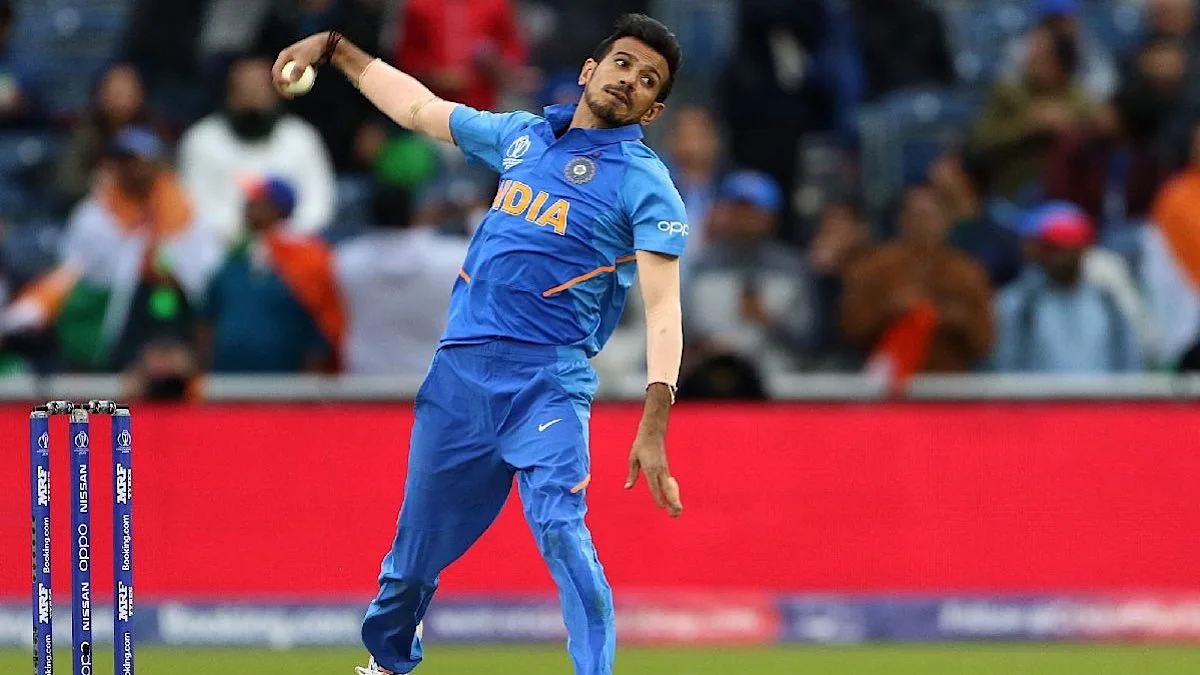
Chahal gives up alcohol to focus on fitness before IPL 2026

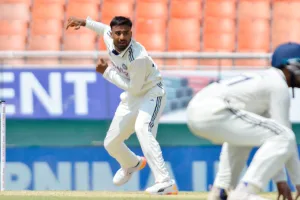
Leg-spinner Yuzvendra Chahal has revealed he quit alcohol more than six months ago as part of a renewed focus on fitness ahead of the upcoming Indian Premier League (IPL) season after battling multiple injuries last year.

Statesman News Service | New Delhi |

Leg-spinner Yuzvendra Chahal has revealed he quit alcohol more than six months ago as part of a renewed focus on fitness ahead of the upcoming Indian Premier League (IPL) season after battling multiple injuries last year. The 35-year-old said he is determined to look after his body and return in better shape for Punjab Kings, where he is expected to play a senior role in the bowling attack.

“After the KKR [Kolkata Knight Riders] game, my hip got fractured and later in the tournament my knuckle got fractured,” Chahal told AB de Villiers on the latter’s YouTube channel AB de Villiers 360. “So in the semi-final [Qualifiers] and final, I was not able to bowl my proper legspin and all. But this year I [wanted] to take care of my body first and I have one good news for you, I stopped alcohol. It’s been more than six months.

“Now, I’m 35, I want to be more active and give my 150% for my team. As a senior bowler and senior player, people will see me [and think] ‘this guy, we have to learn something from him.,” he said,

Due to those injuries, Chahal played only 14 of PBKS’ 17 games last season and wasn’t at his best during the knockouts. Chahal is now looking forward to reuniting with coach Ricky Ponting and captain Shreyas Iyer, who last year led PBKS to their first IPL final in 11 years.

“Ricky and Shreyas worked together during the IPL at DC [Delhi Capitals],” Chahal said. “So they have that bonding and I played with him [Ponting] when I was in Mumbai Indians. But when I met him, he was very clear about the players and the roles.”

“That’s the best thing you want as a player. He is very easy to communicate [with] – you can go there, anytime you can message Ricky he was always available. Same with Shreyas. You don’t feel like he’s your captain – he’s your friend only,” Chahal said.

PBKS will open their IPL 2026 campaign against Gujarat Titans in Mullanpur on March 31.

₹1,122 crore agriculture action plan approved for Haryana under PM-RKVY

The State-Level Sanctioning Committee (SLSC) on Thursday approved a comprehensive Annual Action Plan worth approximately ₹1,122 crore for the financial year 2026-27 to strengthen agriculture and allied sectors in Haryana under the Pradhan Mantri Rashtriya Krishi Vikas Yojana (PM-RKVY).

Statesman News Service | Chandigarh |

The State-Level Sanctioning Committee (SLSC) on Thursday approved a comprehensive Annual Action Plan worth approximately ₹1,122 crore for the financial year 2026-27 to strengthen agriculture and allied sectors in Haryana under the Pradhan Mantri Rashtriya Krishi Vikas Yojana (PM-RKVY).

The decision was taken at a meeting held at the Haryana Civil Secretariat, chaired by Chief Secretary Anurag Rastogi. Senior officers of the Agriculture and Farmers’ Welfare Department and representatives of various implementing agencies reviewed the progress of ongoing schemes and finalised the action plan for 2026–27.

The Chief Secretary emphasised the need for effective implementation, timely utilisation of funds, and strong inter-departmental coordination to ensure that the benefits of the schemes reach farmers at the grassroots level.

During the meeting, the committee reviewed the implementation status of PM-RKVY, Krishonnati Yojana, and the National Mission on Natural Farming in the state.

It was informed that during 2025–26, the Government of India released ₹318.17 crore as the first instalment under various components of PM-RKVY for Haryana, out of which ₹240.46 crore has already been utilised, reflecting a utilisation rate of over 75 per cent.

The committee was informed that the Government of India has communicated a central share of ₹545.53 crore for Haryana under PM-RKVY for 2026–27, while the state government will contribute ₹363.69 crore, taking the total allocation to ₹909.22 crore.

Officials stated that the action plan aims to enhance agricultural productivity, promote sustainable farming practices, improve irrigation efficiency, and strengthen agricultural infrastructure across the state.

A significant portion of the budget has been earmarked for agricultural mechanisation and crop residue management, which remain key priorities for the state.

Under the Sub-Mission on Agricultural Mechanisation, an outlay of ₹200 crore has been approved to support farmers in procuring modern agricultural machinery.

Additionally, ₹250 crore has been allocated for crop residue management, including the procurement of machinery and awareness programmes to promote in-situ management of crop residue and reduce stubble burning.

The committee also approved several initiatives aimed at diversifying agriculture and promoting sustainable farming practices.

An allocation of ₹110 crore has been approved under the Mission for Integrated Development of Horticulture to expand horticultural activities, develop post-harvest infrastructure, and strengthen marketing facilities.

To promote efficient water use in agriculture, ₹160 crore has been earmarked under the Per Drop More Crop programme, while ₹15 crore will be utilised to promote natural farming practices in the state.

Under food security initiatives, allocations have been approved for several national missions, including the National Mission on Edible Oils–Oilseeds, Mission for Atmanirbharta in Pulses, and the National Food Security and Nutrition Mission. These programmes aim to increase the production of oilseeds, pulses, and cereals in Haryana and reduce dependence on imports.

The committee also approved ₹6 crore under the National Beekeeping and Honey Mission to promote beekeeping activities and enhance farmers’ income through allied agricultural activities.

The committee approved projects for agricultural infrastructure development, including strengthening research facilities, improving irrigation resources, and supporting integrated farming systems. Officials stated that these initiatives will help promote modern agricultural practices and enhance productivity in the state.


Spiritual fervour marks start of Chaitra Navratri at Vaishno Devi Shrine

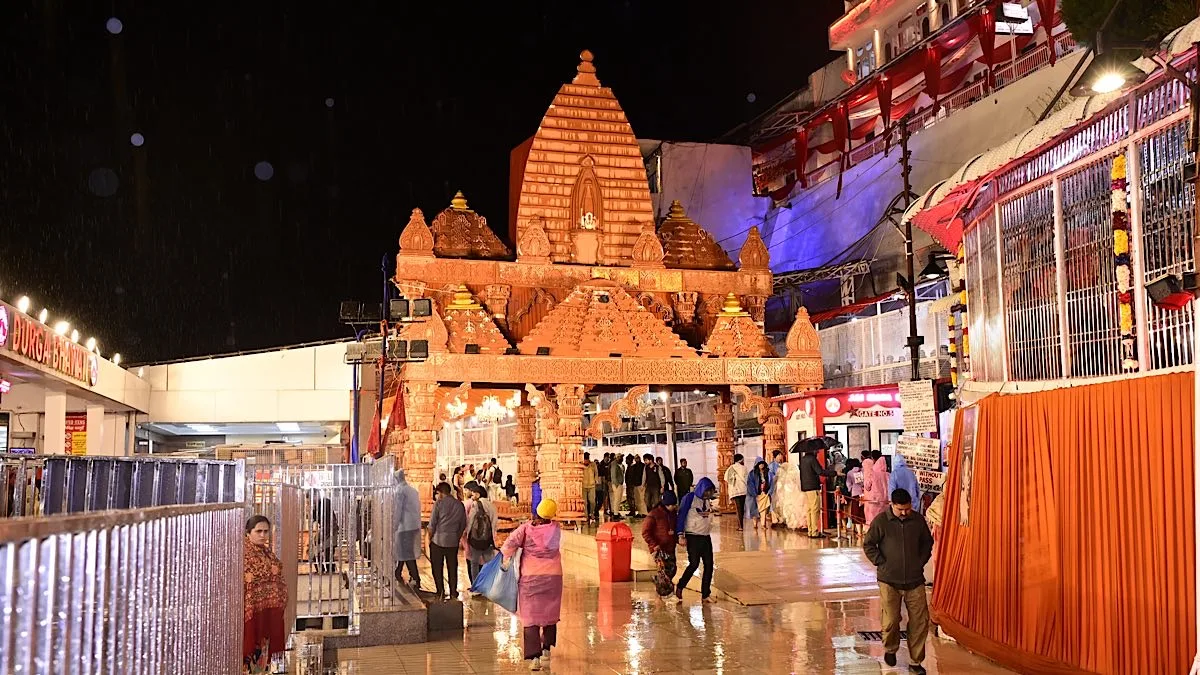
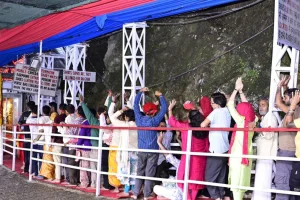
The sacred hills of Trikuta came alive with devotion and vibrant celebrations as the auspicious festival of Chaitra Navratri commenced with great fervour at the Holy Cave Shrine of Shri Mata Vaishno Devi on Thursday.

Statesman News Service | Jammu |

The sacred hills of Trikuta came alive with devotion and vibrant celebrations as the auspicious festival of Chaitra Navratri commenced with great fervour at the Holy Cave Shrine of Shri Mata Vaishno Devi on Thursday. Marking the beginning of the nine-day spiritual observance, the revered Shat Chandi Maha Yagya was ceremoniously inaugurated amid Vedic chants, creating an atmosphere of divine energy and joy.

Organised by the Shri Mata Vaishno Devi Shrine Board, the Yagya will continue throughout the Navratra period, culminating in Purna Ahuti on Mahanavami (March 26). The rituals are being performed to invoke blessings for peace, prosperity, and the well-being of humanity.
A large number of devotees, along with Shrine Board officials, participated in the opening ceremony led by CEO Sachin Kumar Vaishya.

As per the directions of Manoj Sinha, Chairman, SMVDSB (Lt. Governor, JK-UT) elaborate arrangements to facilitate the large influx of pilgrims including decorations have been undertaken at Bhawan, Atka, surrounding areas and main sectors of Shrine Board. The decoration features indigenous and exotic flowers and fruits, grand reception gates and vibrant lighting, creating a spiritually uplifting ambiance for pilgrims trekking from Katra to Bhawan.

Furthermore, the Shrine Board has ensured round-the-clock water and power supply, robust sanitation measures, medical care facilities and availability of fast-related food at Langars and eateries. Special emphasis has been placed on accessibility with complimentary pony and battery car services arranged for specially abled pilgrims.

Morning and evening Atka Arti will be accompanied by devotional performances from acclaimed artists, adding to the festive spirit. The CEO is personally monitoring Yatra management and interacting with pilgrims to ensure smooth and efficient arrangements.

The Vijay factor — who stands to benefit in Tamil Nadu assembly polls

The latest development adds to the list of multiple political and legal setbacks that Vijay has suffered since his political debut along with increased scrutiny over personal matters as well.

Statesman News Service | Chennai |

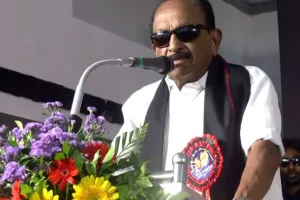
With just a few weeks to go for the crucial Tamil Nadu Assembly elections, actor-turned-politician Vijay’s party — the Tamilaga Vettri Kazhagam (TVK) — suffered a political setback when party leader Ranjana Nachiyar resigned to join the rival Dravida Munnetra Kazhagam (DMK), accusing Vijay of “disrespecting women”.

The latest development adds to the list of multiple political and legal setbacks that Vijay has suffered since his political debut along with increased scrutiny over personal matters as well.

With the TVK aiming to emerge as an alternative force to challenge the duopoly of the DMK and the AIADMK in Tamil Nadu politics, Ranajan’s crossover can be a setback for Vijay. The actor-politician is contesting all the 234 Assembly constituencies in the upcoming elections, and has also declined an offer that included the chief minister’s post along with 50 per cent of Assembly seats, according to TVK leaders, though no party was named as the source of the offer.

Making its electoral debut, the TVK is contesting with the stated aim of forming a government based on “secular and social justice” principles. Sources say Vijay declined offers of alliances to maintain the TVK as a “people’s team,” not subservient to any established political power.

Basically, Vijay is trying to project the TVK as a party that is different from national and regional political blocs, and establish an individual political brand centered on “secular social justice”.

“By going solo and contesting independently, Vijay aims to avoid being labelled a “B-team” of any party while reinforcing an individual political identity that is rooted in secularism and social justice,” say observers amid the buzz of the actor-politician making his electoral debut from Perambur in North Chennai—an area considered a traditional stronghold of the DMK—to directly take on the established Dravidian political structure.

Whether Vijay’s fan base will translate into political support remains to be seen but by positioning TVK as an alternative to decades of Dravidian rule, he may also end up splitting the anti-incumbency vote, in turn benefitting the ruling DMK, something that the opposition AIADMK-BJP combine also seems to be worried about.

What Vijay is trying to do is disrupt Tamil Nadu’s long-standing bipolar political landscape and establish TVK as a “lone warrior”. His support base may overlap with traditional AIADMK votes and perhaps also with some smaller regional players, the primary beneficiary of which may be the ruling side. But in the long run, the beneficiary may be Vijay himself. By fielding candidates across constituencies, he is building grassroots organisational strength and the potential to emerge as a bigger force by the next elections, analysts say.

207 new buses inducted into Rajasthan Roadways fleet; CM Sharma flags off for maiden run

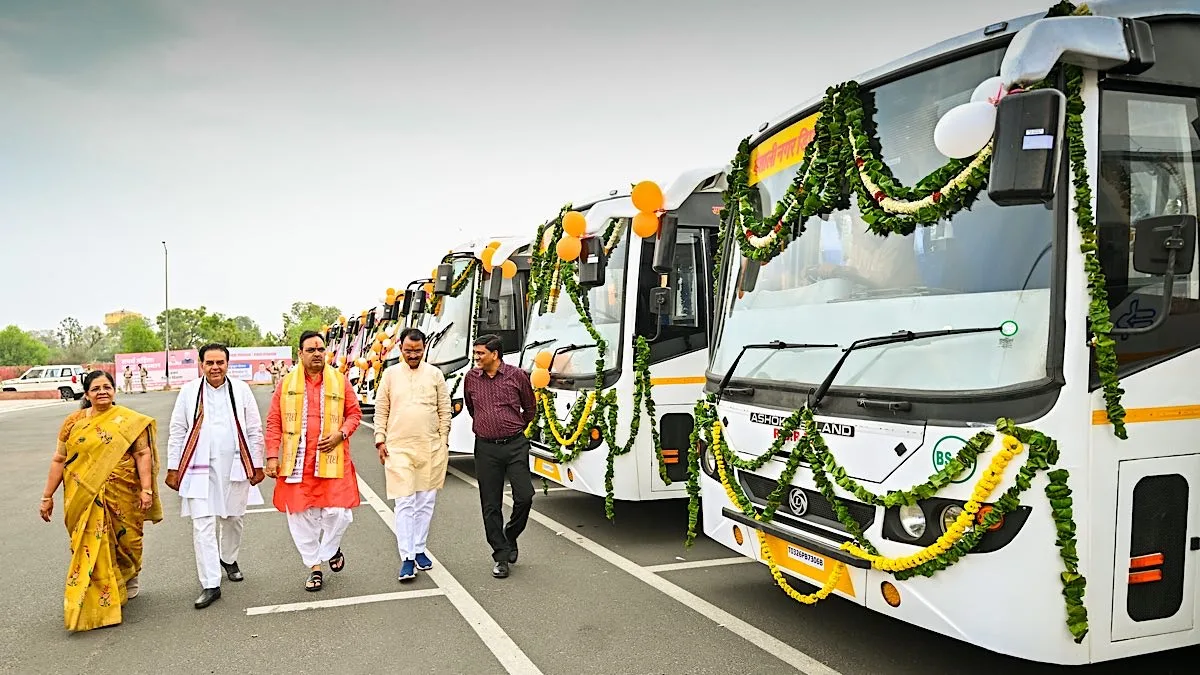
As many as 207 new buses were inducted into the Rajasthan State Road Transport Corporation (RSRTC) fleet here on Thursday with Chief Minister Bhajanlal Sharma flagging off the new buses at the Ajmer Road bus terminal to proceed to their respective bus depots to embark on their maiden run.

Statesman News Service | Jaipur |

As many as 207 new buses were inducted into the Rajasthan State Road Transport Corporation (RSRTC) fleet here on Thursday with Chief Minister Bhajanlal Sharma flagging off the new buses at the Ajmer Road bus terminal to proceed to their respective bus depots to embark on their maiden run.

Among the new buses, 100 are for Blue Line 3×2 express service, 79 buses 2×2 non AC and 28 2×2 buses.

Coming as it does on the auspicious day of Rajasthan Divas Mahotsav, Sharma called it a gift of the Rajasthan Roadways.

He also provided to ISI mark helmets to 700 Road Safety vigilantes on the occasion.

Addressing the gathering, the CM Sharma said that state government was committed to speedy, safe and comfortable travelling in modern and mechanically sound buses.

This induction of new buses will strengthen the the roadways network. The new buses would be deployed on long distance routes and also strengthen inter-city bus services, Sharma said.

Deputy Chief Minister Dr Prem Chand Bairwa, Law and Parliamentary Affairs Minister Joga Ram Patel and the Lok Sabha Member from Jaipur, Manju Sharma, were also present.

Government launches RELIEF scheme to support exporters amid West Asia crisis

Amid the ongoing conflict in the Middle East, the government on Thursday launched a new scheme, named Resilience and Logistics Intervention for Export Facilitation (RELIEF), aimed at supporting Indian exporters facing disruptions due to the ongoing crisis.

Statesman News Service | New Delhi |

Amid the ongoing conflict in the Middle East, the government on Thursday launched a new scheme, named Resilience and Logistics Intervention for Export Facilitation (RELIEF), aimed at supporting Indian exporters facing disruptions due to the ongoing crisis.

Commerce Secretary Rajesh Agrawal said the scheme forms part of the government’s broader Export Promotion Mission and is designed to stabilise export flows amid heightened geopolitical uncertainty.

Describing RELIEF as a targeted support package, Agrawal said it will primarily assist exporters, particularly micro, small and medium enterprises (MSMEs), grappling with operational challenges arising from shipping and logistics disruptions.

“The scheme will provide targeted support to exporters, especially MSMEs, who are facing operational challenges due to disruptions in shipping and logistics,” he said.

The scheme will focus on 17–18 export destinations that have been significantly impacted by the crisis in West Asia and the Gulf region. Its objective is to ensure continuity in exports despite ongoing challenges.

According to officials, RELIEF aims to offset the impact of rising freight costs and surging insurance premiums, which have escalated sharply amid the conflict.

The scheme will extend support to both insured exporters and non-ECGC-insured MSME exporters for a period of one month, along with assistance for future shipments for up to three months.

The financial outlay for the initiative will be drawn from the existing allocation under the Export Promotion Mission.

The government has also constituted an inter-ministerial group to address exporters’ concerns, as delays in shipments and disruptions in key trade routes continue to pose challenges.

The current situation follows last month’s joint attack by the United States and Israel on Iran, which has affected major shipping and air corridors in the region, leading to higher oil prices and increased logistics costs globally.

Meanwhile, Lav Agarwal, Director General of Foreign Trade, said the scheme will have an outlay of nearly Rs 500 crore and will serve as a focused, time-bound intervention.

The government-owned Export Credit Guarantee Corporation of India will act as the implementing agency for the RELIEF scheme.

He said the initiative is expected to help exporters navigate the ongoing disruptions and maintain the flow of goods during what the government termed as “extraordinary times.”

Tata power strengthens infra in Cuttack city

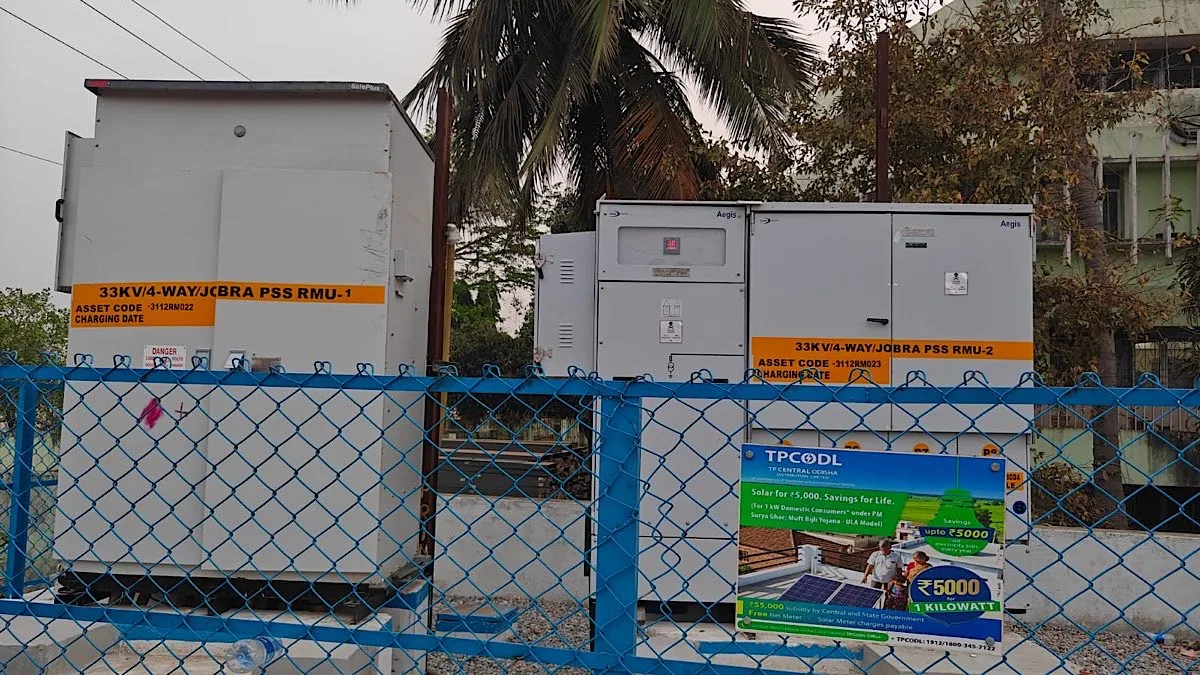
TP Central Odisha Distribution Limited (TPCODL) has successfully completed the EHT tower shifting work in Cuttack, significantly strengthening the city’s power distribution infrastructure.

Statesman News Service | Bhubaneswar |

TP Central Odisha Distribution Limited (TPCODL) has successfully completed the EHT tower shifting work in Cuttack, significantly strengthening the city’s power distribution infrastructure. As part of this project, two numbers of 33 kV 4-way Ring Main Units (RMUs) along with 10.5 kilometres of underground cable have been commissioned to enhance the reliability and resilience of the power network.

The project has been executed keeping in view the growing demand for reliable electricity in key parts of the city and to support important infrastructure development. The upgraded system will ensure uninterrupted and stable power supply to major institutions including SCB Medical College and Hospital, Ravenshaw University, National Law University Odisha and Cuttack Railway Station. Reliable electricity supply to these institutions is crucial as they cater to thousands of students, patients, professionals and commuters every day.

The infrastructure upgrade will directly benefit around 7,000 electricity consumers residing in the areas of Tulasipur, Jobra, College Square and Ranihat. With the commissioning of the new RMUs and underground cable network, consumers in these localities will experience improved reliability of power supply and better service continuity.

TPCODL continues to focus on strengthening its network through modern infrastructure and strategic projects to meet the increasing electricity demand of urban centres. The company remains committed to ensuring safe, reliable and quality power supply to its consumers while supporting the overall development of the region.

Through such initiatives, TPCODL aims to build a robust and future-ready power distribution system that supports essential services, urban infrastructure development and the growing needs of consumers across its operational areas.

CIL taking adequate measures to ensure coal supply to all consumers: Govt

Amid the ongoing West Asia conflict, the government on Thursday said Coal India Limited (CIL) is taking adequate measures to ensure supply of coal to all consumers including the small, medium and other consumers.

Statesman News Service | New Delhi |

Amid the ongoing West Asia conflict, the government on Thursday said Coal India Limited (CIL) is taking adequate measures to ensure supply of coal to all consumers including the small, medium and other consumers.

“As a proactive step, CIL has planned 29 e-auctions in the month of March 2026 offering about 23.56 MT of coal. Out of these 29 auctions, 5 auctions have already been conducted since 12th March, 2026, wherein 73.1 lakh ton of coal was offered and 31.96 lakh ton of coal has been booked, indicating adequacy of coal offered in the e-auctions,” the Ministry of Coal said in a statement.

In addition to this, CIL has also taken necessary action to ensure coal availability to the small, medium and other consumers through the State Nominated Agencies (SNAs) route and requested the state governments to provide the additional coal requirement, which can be met in full to avoid any energy shortages.

The coal offtake of the states through the SNAs is being constantly monitored by CIL to ensure that uninterrupted supplies are ensured.

According to the Ministry, coal is continuing to ensure reliable baseload power to support core industries such as steel and cement that underpin the economic growth of the country.

The coal production in the country continues at a pace matching with the prevailing demands of the consumer and building adequate stocks at the mine-end for maintaining adequate supplies to the consumers as per their requirements with the continued support of Railways, the statement said.

The pithead coal stock at the mines of CIL, which was 106.78 MT as on April 1, 2025 has grown to about 125.54 MT as on March 18, 2026.

Further, there is around 5.75 MT of coal at the mines of Singareni Collieries Company Limited (SCCL) and another 15.75 MT coal at the mines of captive/commercial mines and about 12 MT in transit and about 5.49 MT in ports and good-shed sidings.

This coal stock is in addition to the coal already available at the power plants which is around 53.41 MT, adequate for nearly 23 days at the present rate of consumption.

“The Ministry of Coal remains steadfast in its commitment to fostering a stable, transparent, and performance-driven ecosystem through sustained policy facilitation, robust monitoring mechanisms, and proactive stakeholder engagement. These concerted efforts are aimed at ensuring reliable coal availability, enabling uninterrupted operations across critical sectors, and effectively meeting the nation’s growing energy demands, thereby advancing the long-term national vision of a Viksit Bharat by 2047,” the statement added.

Delhi assembly will roll out ‘Vidhan Sathi’ AI tool for MLAs in budget session: Speaker Vijender Gupta

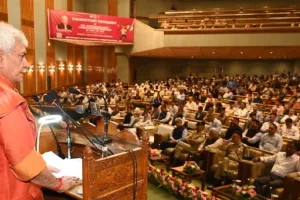
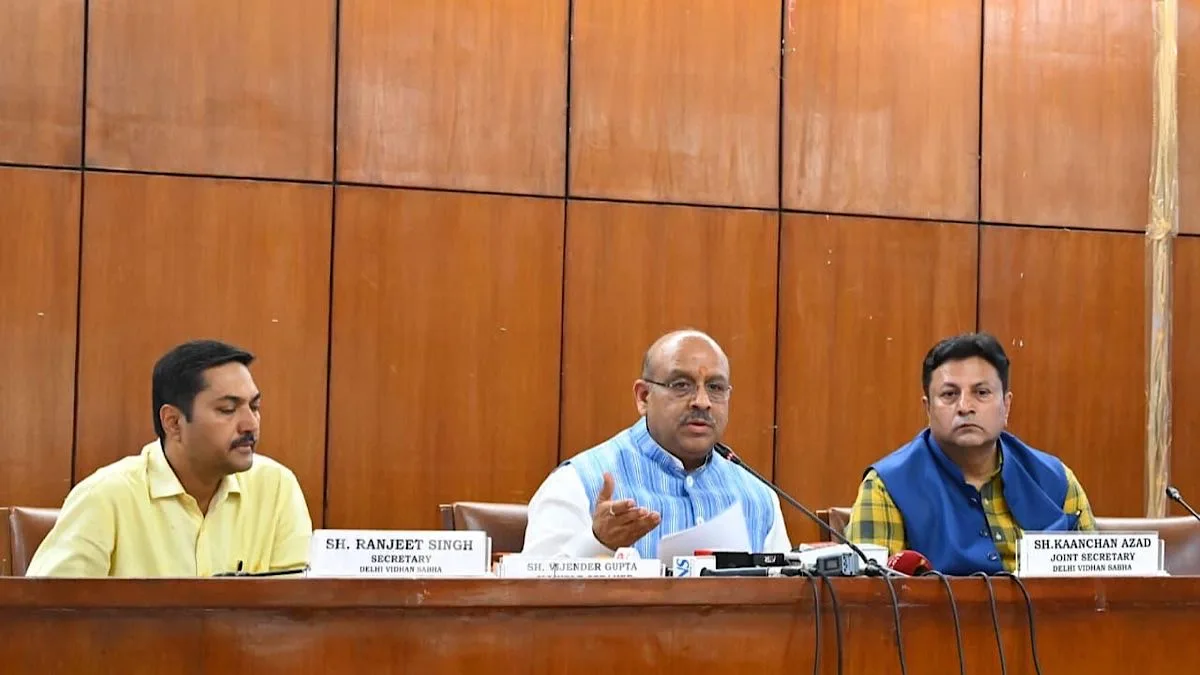
Delhi Assembly Speaker Vijender Gupta on Thursday said that the legislature is going to roll out ‘Vidhan Sathi’, a dedicated AI-based legislative research and assistance tool, during the upcoming budget session.

Statesman News Service | New Delhi |

Delhi Assembly Speaker Vijender Gupta on Thursday said that the legislature is going to roll out ‘Vidhan Sathi’, a dedicated AI-based legislative research and assistance tool, during the upcoming budget session. He called it an effort to ensure that the MLAs are supported with clarity, context, and credible information, to ensure that discussions in this House are thoughtful, and purposeful.

Gupta, while addressing the media on Thursday, said the members of a legislature are often required to engage with complex laws and policy issues within limited time, and this tool is expected to enhance their productivity. “Vidhan Sathi, conceived as a dedicated legislative research and assistance tool. It is our effort to ensure that the MLAs are supported with clarity, context, and credible information,’ he added.

He noted that the Delhi Assembly is the first legislative body in the country to introduce a dedicated AI-enabled chatbot for its members, developed in alignment with its own procedures and institutional framework. It marks decisive shift towards data-driven and technology-enabled legislative functioning.

The platform is exclusively designed to support legislators with data-based insights and analysis of Bills, Acts, and policy issues. The members of the legislative assembly can also upload screenshots of Bills or reports to receive instant analysis and contextual understanding, enabling more informed and effective participation in legislative discussions.

The purpose of the tool is not merely to provide access to documents, but to assist the MLAs in analysing complex issues and presenting well-informed, evidence-based arguments in the House, speaker said.

The Vidhan Sathi will be accessible through a dedicated QR code placed on each Member’s desk, along with a direct digital link, eliminating the need for downloads or additional processes. Notably, the access of the facility will be strictly restricted to the members, to ensure a secure and institution-specific legislative support framework.

The platform draws upon the Rules of Procedure, past debates, committee reports, and legislative records, ensuring that the information provided is relevant and institutionally grounded. It is available in both Hindi and English languages, and also offers voice-enabled features for ease of use during proceedings.

Gupta emphasised that the platform does not a substitute to independent judgment or deliberative role of members, but serves as a support mechanism to enhance their ability to present well-reasoned and evidence-based arguments.

In its next phase, the system will be integrated with the National e-Vidhan Application (NeVA), further strengthening the Assembly’s paperless ecosystem, he added.
Gupta also informed that the Budget Session of the Eighth Delhi Legislative Assembly will commence from 23 March (Monday), with the agenda to be finalised in the Business Advisory Committee tomorrow.

The session will include key legislative business such as discussions on reports of the Committee of Privileges, the Public Accounts Committee, and matters relating to CAG reports, along with opportunities for Members to raise issues and participate in short-duration discussions.

Meanwhile, on the occasion of the Hindu New Year and the Chaitra Navratri, the assembly complex has been illuminated in saffron hues, Gupta informed, saying that it reflects a spirit of renewal, devotion, and collective celebration.

ECI eases postal ballot access for elderly, disabled, service voters, and workers on poll duty

Voters aged over 85 and persons with disabilities listed in electoral rolls can now vote from home via postal ballots under Section 60(c) of the Representation of the People Act, 1951.

Statesman News Service | New Delhi |

The Election Commission of India (ECI) has introduced special measures to enhance postal ballot accessibility for elderly citizens, persons with disabilities, service voters, and those on election duty in the forthcoming Assembly elections across Assam, Kerala, Tamil Nadu, West Bengal, and Puducherry. This initiative aims to promote inclusivity and ease participation in the electoral process.

Voters aged over 85 and persons with disabilities listed in electoral rolls can now vote from home via postal ballots under Section 60(c) of the Representation of the People Act, 1951. Eligible voters must apply using Form 12D within five days of election notification. Polling teams will collect ballots from homes following a pre-announced schedule.

The facility extends to essential service personnel—including fire, healthcare, electricity, traffic, ambulance, aviation workers, and long-distance government transport employees—who can apply for postal ballots through nodal officers in their departments. Media personnel authorized for election coverage are also included as absentee voters eligible for postal ballots.

Election duty personnel will vote at designated facilitation centers to ensure secrecy, receiving and submitting postal ballots onsite. Service voters, such as armed forces members and those posted abroad, will receive electronic postal ballots via the Electronically Transmitted Postal Ballot System (ETPBS), free of postal charges.
All postal ballots must reach Returning Officers by 8:00 am on May 4, the counting day. Returning Officers and District Election Officers will inform political parties and candidates about these provisions to ensure transparency and smooth operation.