Logo

Union Budget 2026-27 & the Environment and Energy sector

The budgetary allocation to the Ministry of New and Renewable Energy has been enhanced further to a record high of ₹32,914 crore (BE 2026–27), with a bulk of that (₹22,000 crore) allocated to the flagship solar rooftop scheme PM Suryaghar Yojana. Coupled with exemptions for battery manufacturing, VGF for BESS, and grants for CCUS, the government’s focus is rightly tilting towards building an energy transition ecosystem.

Statesman News Service | Kolkata |

Aarti Khosla, Founder & Director, Climate Trends

The budgetary allocation to the Ministry of New and Renewable Energy has been enhanced further to a record high of ₹32,914 crore (BE 2026–27), with a bulk of that (₹22,000 crore) allocated to the flagship solar rooftop scheme PM Suryaghar Yojana. Coupled with exemptions for battery manufacturing, VGF for BESS, and grants for CCUS, the government’s focus is rightly tilting towards building an energy transition ecosystem. Continued boosts to power distribution reforms would bring 360-degree improvement in India’s green energy supply chain. However, given the extent of air pollution, the focus on mitigation could have been stronger, including faster EV adoption, fast charging infrastructure, and related areas.

Prof Anjal Prakash, Clinical Associate Professor & Research Director, Bharti Institute of Public Policy, ISB (IPCC Author)

The Budget 2026–27 signals a decisive shift from policy announcement to rigorous execution, framed by the Reform Express agenda which has already operationalised over 350 reforms. To translate the Viksit Bharat intent into tangible economic impact, the government is leveraging competitive federalism through challenge-mode financing. This compels states to compete for central resources—ranging from Chemical Parks to University Townships—ensuring funds support viable, reform-oriented projects rather than entitlement-based allocations.

Technology serves as the primary implementation engine to bridge the gap between allocation and outcome. The rollout of Bharat-VISTAAR in agriculture illustrates a move from generic aid to customised, AI-driven risk mitigation for farmers. Simultaneously, a whole-of-government approach in customs—integrating regulatory clearances into a single digital window—aims to dismantle bureaucratic silos that traditionally hamper trade efficiency.

Fiscal prudence anchors this approach, with a targeted fiscal deficit of 4.3% and the weeding out of outdated customs exemptions for domestically manufactured items such as solar silicon. Success now rests on effective utilisation of plug-and-play ecosystems by states and the private sector.

Duttatreya Das, Energy Analyst – Asia, Ember

While the Budget delivered no big-ticket announcements for renewables, continued duty exemptions, support for critical minerals, and manufacturing reforms are expected to quietly strengthen clean energy supply chains. Additional capital subsidies could have further unlocked the potential of PLI-led manufacturing, particularly in upstream solar and energy storage.

Vibhuti, Director – South Asia, Institute for Energy Economics and Financial Analysis (IEEFA)

While the Budget reflects strong macro-fiscal ambition—reducing the fiscal deficit to 4.4% of GDP this year and 4.3% next year, alongside lowering the debt-to-GDP ratio—the support for India’s energy transition remains uneven.

Allocations for PM Surya Ghar Muft Bijli Yojana and bioenergy have increased, but spending on wind energy, transmission, and energy storage has stagnated or declined. This is concerning as these are indispensable for integrating higher renewable energy shares into the grid.

Support for rare earth minerals strengthens tail-end supply chains, but limited PLI backing for solar modules and cells leaves EVs—especially buses, trucks, and passenger vehicles—undersupported despite worsening air pollution. Meanwhile, higher allocations for coal gasification and CCUS raise questions given their cost and uncertainty.

While increased funding for REC and IREDA is welcome, expanded credit guarantees and risk-sharing instruments were needed to crowd in private capital, especially for EV manufacturing and MSMEs.

Labanya Prakash Jena, Director, Climate and Sustainability Initiative

The restructuring of PFC and REC can significantly boost the power sector by improving credit allocation and supporting clean energy transition. Exemptions on capital goods for critical minerals will strengthen domestic processing capacity, while duty exemptions on inputs like sodium antimonate will reduce solar manufacturing costs. Banking sector reforms can better align finance with climate ambitions, and municipal finance incentives can encourage green municipal bonds for pollution control and urban environmental projects.

Trishant Dev, Deputy Programme Manager, Centre for Science and Environment (CSE)

Duty exemptions for lithium-ion cell manufacturing and solar glass inputs frame India’s energy transition within a broader push for industrial competitiveness and resilient supply chains, supporting domestic production of critical inputs and access to key minerals.

Sehr Raheja, Programme Officer, CSE

The Budget’s focus on critical minerals—through duty exemptions and Rare Earth Corridors—signals growing emphasis on supply chain security and domestic value addition, both critical for green industrialisation and the energy transition.

Arunabha Ghosh, CEO, Council on Energy, Environment and Water (CEEW)

Budget 2026 shapes the next generation of Indian capabilities across energy, technology, cities, and agriculture. Rare Earth Corridors and Semiconductor Mission 2.0 move India from intent to execution, addressing gaps in mineral processing.

City Economic Regions offer a timely response to climate risks faced by urban India, while incentives for municipal bonds can unlock private capital. The prioritisation of CCUS across heavy industries strengthens India’s net-zero pathway.

Bharat Vistaar and AI-enabled agri stacks can improve farmer incomes and resilience, while strengthened disaster risk financing—₹2.04 lakh crore for 2026–31—enhances protection against climate shocks. Together, these measures position India for a competitive, climate-resilient, low-carbon future.

Rishabh Jain, Fellow, CEEW

Rare Earth Corridors mark a shift to state-level execution, bridging upstream mining and downstream manufacturing. Fiscal support through tax deductions and duty exemptions de-risks private investment. However, success will require offtake guarantees, R&D investment, and international technology partnerships.

Abinash Mohanty, Global Sector Head – Climate Change & Sustainability, IPE Global

The Budget remains a gap-filler on climate adaptation, despite climate losses exceeding 3% of GDP annually. While mitigation receives continued support through CCUS, green hydrogen, and storage financing, the absence of a scaled adaptation roadmap risks uneven outcomes. Clean energy ambition must be matched with investments in resilience.

Saurabh Kumar, Energy Expert

The Budget reinforces Viksit Bharat goals with a strong push for atmanirbharta. Key highlights include ISM 2.0, enhanced electronics manufacturing support, Rare Earth Corridors, and incentives for BESS systems at par with EVs. Support for data centres and AI capacity will further drive clean energy demand.

Ulka Kelkar, Executive Program Director, Climate, Economics & Finance, WRI India

Strengthening MSMEs through improved finance and risk-mitigation is timely. These measures can help MSMEs remain competitive while building climate resilience and adopting cleaner, resource-efficient practices.

Jaya Dhindaw, Executive Program Director – Sustainable Cities, WRI India

City regions and the focus on Tier 2 and Tier 3 cities are important first steps. However, without institutional ownership, funding, and integrated planning across municipal boundaries, they risk remaining symbolic. Low-carbon, climate-resilient infrastructure must be foundational.

Bharat Jairaj, Executive Program Director – Energy, WRI India

The enhanced allocation for PM Surya Ghar underscores commitment to household clean energy. Rooftop solar can significantly reduce electricity costs for around 3.3 lakh MSMEs, driving inclusive economic growth.

Jagjeet Sareen, Partner & India Head, Dalberg Advisors

Budget 2026 deepens the National Manufacturing Mission with concrete cleantech measures, supporting end-to-end value chains across solar, wind, hydrogen, EVs, batteries, and transmission equipment. The shift from intent to implementation is now clearly visible.

Budget 2026: The Week After

India’s Union Budget for 2026–27, presented by Finance Minister Nirmala Sitharaman, marks a definitive strategic awakening in the nation’s approach to critical mineral security.

Upasna Mishra | Kolkata |

India’s Union Budget for 2026–27, presented by Finance Minister Nirmala Sitharaman, marks a definitive strategic awakening in the nation’s approach to critical mineral security. In what stands as the world’s fifth-largest economy, the budget is being framed not merely as a fiscal document but as a coordinated industrial blueprint aimed squarely at reducing debilitating dependencies in high-tech manufacturing and green energy sectors. The announcements signal a profound recognition that geopolitical and economic leadership in the 21st century is inextricably linked to mastery over minerals like rare earth elements, lithium, cobalt, and nickel. While the intent is clear and the direction promising, the budget reveals a nuanced landscape where ambitious vision meets complex on-ground execution challenges, setting the stage for a critical period of implementation.

Integration and Incentives

The budget’s centrepiece is its push toward creating integrated supply chains. In a bold move, the government has announced plans to establish dedicated rare earth corridors across four mineral-rich states: Odisha, Kerala, Andhra Pradesh, and Tamil Nadu. The underlying logic—to co-locate mining, processing, and downstream manufacturing near resource basins—mirrors global best practices for building resilient value chains. This move is coupled with the revival of the permanent magnet initiative, first highlighted in late 2025, acknowledging that the true strategic value of rare earths lies not in raw ore but in finished components vital for electric vehicles (EVs), wind turbines, and defense systems.
To translate this vision into reality, the budget employs concrete fiscal tools. A notable measure is the provision of customs duty exemptions for capital goods and machinery required for processing critical minerals. This directly lowers the capital expenditure barrier for setting up advanced processing facilities. Furthermore, a significant allocation of ₹20,000 crore (approximately USD 2.4 billion) has been earmarked for decarbonization initiatives, including Carbon Capture, Utilization, and Storage (CCUS). While primarily targeted at heavy industries like steel and cement, this fund enhances the environmental, social, and governance (ESG) appeal of India’s nascent critical minerals sector, potentially attracting sustainability-focused global investment. The rationalization of the Tax Collected at Source (TCS) on mineral and metal scrap also provides much-needed working capital relief for recyclers, a crucial yet often overlooked segment of the circular economy for critical materials.

Ambition vs. Reality

Despite the strategic clarity, analysts point to a significant execution gap between the budget’s rhetoric and the granular details required for operational success. The announcement of rare earth corridors, while strategically sound, lacks specific details on the separation capacity, technology partnerships, and clear permitting timelines necessary for these corridors to function as genuine value chains. The midstream processing of rare earths—particularly the complex solvent extraction process used to separate individual elements from ore concentrates—remains a formidable technical and environmental hurdle. India currently lacks large-scale, commercially viable separation facilities, and the budget is silent on partnerships to acquire this proprietary technology or to manage the associated radioactive by-products like thorium, which is commonly found in Indian monazite sands.

Similarly, the permanent magnet initiative, though critical, faces steep challenges. China’s global dominance is cemented not in mining but in the intellectual property (IP), precision tooling, and long-established customer relationships in magnet manufacturing. The budget does not outline a clear pathway for India to acquire this know-how, secure offtake agreements with anchor customers like global automotive OEMs, or achieve the stringent quality certifications required. Without these components, mineral abundance does not automatically translate into strategic leverage or market competitiveness.

India’s Position in a Contested Landscape

India’s budgetary push must be viewed within the intense global contest for critical mineral security. China currently controls over 80% of the world’s rare earth separation capacity and is the leading producer of permanent magnets. Other nations, including the United States, Australia, Japan, and members of the European Union, are deploying massive financial and diplomatic resources to diversify their supply chains through initiatives like the U.S.-led Mineral Security Partnership.

India’s strategy, as outlined in the 2026 budget, is a direct response to this reality. It represents a shift from being a passive raw material exporter to aspiring to become a self-reliant integrated producer. The focus on corridors aims to create clusters of excellence that can achieve economies of scale and foster innovation. However, to be truly effective, this domestic focus must be complemented by agile international diplomacy and strategic trade partnerships. India will need to actively engage with resource-rich countries in Africa and South America for diversified sourcing and with technologically advanced partners in the West and East for collaboration in processing and manufacturing.

From Signal to Delivery

The Union Budget 2026-27 is, without doubt, the most robust policy signal India has sent regarding its ambitions in the critical minerals domain. It moves the conversation from “why” to “how,” even if the “how” remains partially sketched. The real work now begins in the ministerial backrooms and corporate boardrooms.

The immediate steps for the government involve translating broad allocations into detailed project plans with clear milestones and accountability. This includes:

a) Fast-tracking the formation of technology joint ventures or licensing agreements for separation and magnet production.
b) Establishing a transparent and efficient regulatory framework for environmental clearances and waste management, particularly for radioactive residues.
c) Creating production-linked incentive (PLI) schemes specifically tailored for the capital-intensive and high-risk midstream and downstream segments of the critical minerals value chain.

For investors and industry stakeholders, the budget provides a clarified direction but demands cautious optimism. The policy intent is a powerful catalyst, but investment decisions will hinge on subsequent regulatory orders, the emergence of credible anchor tenants in the proposed corridors, and demonstrable progress on the technological front.
In conclusion, India’s 2026 budget has successfully laid down a marker, announcing its intent to play a decisive role in the global critical minerals arena.

It has transitioned from a stance of potential to one of strategic planning. Yet, as with any complex industrial endeavour, the devil resides in the details of execution. The budget is the compass pointing firmly toward Atmanirbharta (self-reliance) in critical minerals. The nation now must prove it possesses the map, the resources, and the resolve to navigate the difficult terrain ahead, transforming a promising blueprint into a tangible industrial reality. The world is watching to see if this mirage of mineral independence can be forged into a sustainable and competitive supply chain.

(The writer is PhD Research Scholar SYLFF Fellow School of International Relations and Strategic Studies Jadavpur University)

Reading time before clocks

Today, checking the time is effortless. A quick glance at a wristwatch, a wall clock, or even a mobile phone instantly tells us whether we are late for class, early for an appointment or right on time.

Roushan Chatterjee | Kolkata |

Today, checking the time is effortless. A quick glance at a wristwatch, a wall clock, or even a mobile phone instantly tells us whether we are late for class, early for an appointment or right on time. Time controls almost every part of our daily lives. From school schedules and office hours to train timings and exam routines, we are dependent on the twelve-numbered dial. But this convenience raises an important question: what about the people who lived long before clocks and watches existed? Did they not need to know the time?
The answer is that they did. Ancient humans also needed to organise their day, decide when to work or rest, perform rituals and grow crops. They used different methods which were not random guesses, but systems that helped societies function smoothly for centuries. Today, we will explore the different types of timekeeping methods used before clocks and discover how people understood and measured time without machines.

Sun-based timekeeping:
The earliest way humans measured time was by observing the Sun. As the Sun rises, moves across the sky and sets, its position creates changing shadows. Ancient people learned to read these shadows like a natural clock. One of the most important sun-based devices was the sundial. It consisted of a stick or pillar, called a gnomon. It was placed upright on a flat surface. As the sun moved, the shadow of the gnomon shifted across marked sections, indicating different times of the day. Sundials were widely used in Egypt, Greece, Rome, India and China. However, they worked only during sunlight, and their accuracy changed with seasons and geographical location.

Another early invention was the shadow clock or the portable sundial. These were portable instruments that measured time by the length of shadows, making them useful for travellers.

Water-based timekeeping:
Sundials are dependent on the Sun, but what happens at night or on cloudy days? Ancient civilisation relied on an innovative water-based timekeeping method. Known as a clepsydra or water clock, this timepiece was especially helpful on cloudy days or at night. It is one of the oldest time-measuring instruments. The word clepsydra comes from Greek and means ‘water thief.’ It refers to the slow and steady movement of water used to measure time. A water clock worked by allowing water to either flow into a container or drain out of it through a small, carefully controlled hole. Markings inside the vessel showed the passing of hours as the water level rose or fell. Some advanced versions used floats and simple mechanical parts to improve accuracy. The earliest water clocks were used in ancient Egypt. They also existed in Babylon and Persia around the 16th century BC. Other regions of the world, including India and China, also provide early evidence of water clocks. Beyond daily timekeeping, water clocks were used in courtrooms to limit speeches and during public debates.

Sand clock method:
Another important method of measuring time before clocks was the sand clock, commonly known as the hourglass. This device used sand flowing at a steady rate from an upper glass bulb to a lower one through a narrow opening. The time taken for all the sand to pass through measured a fixed interval. Sand clocks became popular during the medieval period, especially in Europe. It was widely used on ships as well. Sailors relied on them to track duty shifts, navigation schedules and meal times.
However, sand clocks could only measure short, fixed periods and had to be turned over repeatedly. Despite the limitation, their simplicity and reliability made them an essential timekeeping tool.

Candle clocks:
Another clever way of measuring time was with candle clocks. It used the steady burning of wax to mark the passing hours. A candle clock was simply a candle that had evenly spaced markings along its length. As the candle burned down, it melted the wax little by little. When the flame reached each mark, it showed how much time had passed since the candle was lit. The earliest written reference to candle clocks is from a Chinese poem at AD 520. Similar candles were later used in Japan, and in the medieval period Europe, King Alfred the Great was said to have used candle clocks that burned one after one for an entire day.

Incense clocks:
This method is the burning of incense to mark the passage of time. The burning of incense was already valued in many cultures for religious purposes and daily use. Incense clocks originated in China and spread to neighbouring countries such as Japan and Korea. Incense clocks were essentially special burners filled with calibrated incense sticks or powdered incense that burned at a steady rate. As the incense burned, the length or pattern that remained showed how much time had passed. Some incense clocks were simple sticks marked at intervals, while others were elaborate patterns or spirals that could burn for hours or even longer. In some versions, small weights hung along the incense thread would drop and make a sound when a certain amount of incense had burned. This acted like an alarm. Different scents at different stages could even help tell time by smell alone. These clocks were useful in homes, temples, and night watches.
Today, time is measured with the tap of a screen or the glance of a watch. However, these ancient methods remind us that long before modern technologies, humans relied on observation, creativity and intelligence. By reading the sky, water, and fragrance, early civilisation learned to understand time itself. These inventions reflect how human curiosity and innovation laid the foundation of the world we live in today.

Kage: A Hidden Mountain Paradise in Kalimpong District

Nestled quietly in the lap of West Bengal’s Kalimpong district lies a unique mountain village called ‘Kage’. Enchanted by the very magic of its name, we set out on September 29 with our little group Pratibha, Anindya, Megha, Surajit Dutta, NehaChatterjee and I.

NISITH SINHA ROY | New Delhi |

Nestled quietly in the lap of West Bengal’s Kalimpong district lies a unique mountain village called ‘Kage’. Enchanted by the very magic of its name, we set out on September 29 with our little group Pratibha, Anindya, Megha, Surajit Dutta, NehaChatterjee and I. Our travel plan was simple yet fulfilling: two days in Lataguri exploring the Dooars, then a night at Rishop, and finally two peaceful days in Kage, savouring fresh farm vegetables, sipping tea and coffee and soaking in the serene beauty of the mountains. Hidden within Kage’s forests are three farmstays and several homestays.

We stayed at a charming farmstay called ‘BhutiaFarmstay’, owned by SonamBhutia. His son, NardenBhutia, manages the farm and looks after everything himself. Through conversations, we learned that most families in Kage are of Bhutanese origin and follow Buddhism. And the food: oh, the food! That’s when we truly understood why it is called a ‘farmstay’. Every meal, every vegetable, fruit, and even the delicious country chicken served at dinner came directly from the farm itself. We enjoyed rice (including mountain-grown black rice), wheat, fr uits like avocado, cherry-sized mountain tomatoes, long pumpkins, lemons, squash and guava. It would not be an exaggeration to say that this farmstay is a completely self-sustained haven.

In this small, forest-surrounded village, we discovered the simplicity of mountain life, the mysteries of nature, and the deep bond between people and the land. Kage is about twelve kilometers from Rishop, yet far removed from urban noise, living to its own gentle rhythm as a quiet valley. From here, Kanchenjunga appears different, almost more intimate. Nearby attractions like KageKhasmahal, Pedong, and Mudung Waterfall add their own charm. The Bhutan border, known as ‘Tinsimana’, is only fourteen kilometers away. The name comes from its unique geography: Sikkim to the north, West Bengal to the south and Bhutan to the east. Mornings in the Himalayas begin with the soft touch of light and Kage is no exception. Clouds seem to play hide-and-seek, covering the entire valley, before sunlight pierces through and paints golden lines on dew-kissed leaves.

Standing there, one feels surrounded by a natural orchestra of blue and green mountains. The air is cool, carrying the sweet fragrance of wildflowers. The journey to Kage itself is enchanting with winding roads from Kalimpong through Pedong revealing breathtaking views of the Darjeeling Himalayan range. Distant mountain rivers flow silently, like wordless music carved into the hills. Every bend in the road offers a new picture: tall deodar trees, lemon orchards, terraced green fields and cloud-wrapped peaks—turning the journey into an experience in itself. Kage is primarily a quiet village with very few tourists. The locals are warm and genuinely welcoming; conversations flow as effortlessly as mountain streams. The village’s character is shaped by a blend of Lepcha and Bhutia cultures. Small wooden houses, colorful flower gardens and rooftops drying corn or red chilies define the scenery.

Walking through the village, one hears children’s laughter from afar and the gentle clinking sounds of daily life from busy mountain households. For nature lovers, Kage is nothing short of paradise. Early morning treks and sunset views from scenic points offer unforgettable experiences. On clear days, the glow of Kanchenjunga can be seen in the distance. Seeing the full peak is a matter of luck but when golden light touches the mountains through gaps in the clouds, it feels like nature has quietly gifted you a private moment. Several secluded viewpoints nearby allow visitors to sit for hours, gazing at the mountains, with silence broken only by birdsong. Kage’s tea gardens are another delight. Though not large plantations, many small tea gardens are scattered around. The rhythm of tea plucking, baskets in hand, scarves tied, sunlight filtering through creates a calm yet vibrant scene. Guests at farmstays can even enjoy locally brewed tea made from freshly plucked leaves, its purity enhanced by mountain water.

The night sky in Kage is priceless. Free from city light pollution, the sky reveals countless stars long forgotten in urban life. Watching them shimmer, one feels as if nature has paused life’s rush for a while. Wrapped in mountain air, with rustling leaves and the faint murmur of distant streams, Kage’s nights feel like a silent poem set to music. Staying in farmstays and homestays here feels like being a guest in a family home. Hosts serve home-cooked meals, local lentils, mountain vegetables, steaming momos and thukpa, simple yet rich in flavor. Sitting at the dining table, watching the faint glow of Pedong town through misty windows while the aroma of hot food fills the room, brings an indescribable sense of peace.

From Kage, one can also explore nearby spots such as Loleygaon’s hanging bridge, the dense forests of Lava-Lolegaon, Delo Hill in Kalimpong town, ZangDhokPalriPhodang Monastery and the Golden Stupa. Yet, the true beauty of Kage lies in its natural stillness and unhurried atmosphere. For anyone seeking a few days away from city chaos, Kage is a perfect destination. To travelers, it offers a pure pause; to wandering hearts, a memory that lingers. Many may not know this mountain village, but those who visit once will surely be called back by the magic of the hills, the silence, the nature, and the long-lost peace waiting to be rediscovered.

Manipur crackdown: Four militants arrested, explosives seized, 70 acres of illegal poppy cultivation destroyed

Security forces in Manipur carried out coordinated operations across the state, leading to the arrest of four militants linked to extortion and illegal activities. Explosives were recovered near the Indo-Myanmar border, illegal poppy farms destroyed, and security tightened on key highways.

Statesman News Service | New Delhi |

Security forces in Manipur have stepped up action across the state carrying out search operations that led to multiple arrests, recovery of explosives, destruction of illegal poppy farms, and tighter security on highways.

The police say these moves are part of an ongoing effort to curb extortion, militant activity, and illegal trade.

Four arrested in separate operations

According to a press note issued by Manipur Police, four people linked to banned outfits were arrested during coordinated security operations.

In Imphal East district, security forces picked up Sagolsem Joychandra Singh (47) from the Kongba Nandeibam Leikai area. Police identified him as an active cadre of PREPAK (Pro) and said he was involved in extortion activities.

Also Read: Manipur’s fragile calm tested as Churachandpur shuts down over backlash against Kuki-Zo MLAs in govt

Another PREPAK cadre, Seram Manimatum Meetei (20), was arrested from Senjam Khunou Mayai Leikai in Imphal West district. Officials said he was also allegedly linked to criminal and extortion-related activities.

In a separate operation, an extortionist associated with KYKL, Takhelambam Mohen Singh, was arrested from the Kakching Lamkhai area under Kakching police station in Kakching district.

On Friday, security forces arrested Sorokhaibam Rosses (40), identified as a Lieutenant of UNLF (K), from the Canchipur area in Imphal West district.

Explosives recovered near Indo-Myanmar border

During another search operation, security forces recovered mortars and two improvised explosive devices (IEDs) from the general area of Yangoubung along the Indo-Myanmar Border in Tengnoupal district.

Police said the recovered explosives were later destroyed on the spot by the Bomb Disposal team. This was to prevent any threat to civilians or security personnel.

Illegal poppy cultivation destroyed

In Ukhrul district, a joint team of security forces and forest department carried out operation against illegal drug cultivation.

The team destroyed around 70 acres of illegal poppy plantation at Sihai hill. Police also said that four huts found at the plantation sites were burned and demolished during the operation.

Authorities have been repeatedly warning against poppy cultivation, which they say fuels drug trafficking and funds illegal activities.

Tight security and smooth movement on highways

Manipur Police said security arrangements remain strong across the state. A total of 114 Nakas and checkpoints were set up in different districts, covering both hill and valley areas. No one was detained during these checks.

The police also ensured the movement of 303 vehicles carrying essential items along National Highway-37. Security convoys were provided in sensitive stretches to allow safe and uninterrupted travel.

“Strict security measures are taken up in all vulnerable locations,” the police said in a statement.

Police officers trained in intelligence sharing

Earlier, Manipur Police organised a one-day training programme on the National Intelligence Grid (NATGRID) at the New Manipur Police Headquarters in Mantripukhri.

Held with support from the NATGRID team under the Ministry of Home Affairs, the programme followed directions from Union Home Minister Amit Shah. Around 150 police officers from different units took part, both in person and through video conferencing.

The training aimed to help officers understand NATGRID’s features, improve intelligence sharing, and strengthen data-based investigations across the state.

Where Beauty Floats and Time Stands Still

There are cities you visit, and there are cities that quietly enter and stay in your system.

Prof. ABHIK ROY | New Delhi |

There are cities you visit, and there are cities that quietly enter and stay in your system. Venice is the latter. The moment I stepped out of Santa Lucia station and saw the Grand Canal shimmering like a sheet of liquid silk, I felt as though I had walked into a magical place that had been waiting for me to arrive. No cars, no honking, no chaos — just water, bridges, and old homes accompanied by a kind of delicate silence that felt almost sacred.

Venice is a city that must be absorbed slowly. I began by wandering through the narrow calli where homes are in handshaking distance from each other as if whispering ancient secrets. Every turn brought a new surprise: a crumbling archway, a flower-laden balcony, an elderly Venetian gazing at the canal. Even the laundry hanging from windows wasn’t an eyesore; it looked picturesque, fluttering gracefully in the breeze. As would be expected, St. Mark’s Square was crowded, but nothing prepared me for its magnificence. As I stood there surrounded by marble, mosaics, and the melodic calls of gondoliers, I understood why poets and painters have been captivated by Venice for centuries — from John Ruskin, whose love for Venetian architecture shaped his iconic work, to Marcel Proust, who found in Venice a mirror for memory and longing, and Daphne du Maurier, whose haunting imagination drew inspiration from its misty canals.

Venice has also been a backdrop for unforgettable romantic films such as “Summertime,” “The Tourist,” and “A Little Romance,” each capturing the city’s dreamy, otherworldly charm. Venice’s magic often reveals itself away from the grand monuments. One of my most cherished moments came in a quiet campo where a lone violinist played Vivaldi — a Venetian by birth — as dusk gave a soft hue to the sky. The notes seemed to float over the water, reverberating gently along the narrow canal. Gondolas passed by with some gondoliers singing happily. It was an image so perfect that I wondered whether Venice had arranged it deliberately to enchant unsuspecting travelers like me.

Then came the quintessential Venetian experience: getting lost. Every visitor to Venice eventually discovers that maps are mere suggestions, not guarantees. I happily surrendered to the maze, trusting that the city would guide me. And it did. A wrong turn led me to a tiny antique shop. A narrow alleyway opened onto a hidden courtyard filled with orange trees. A small stone bridge brought me face-to-face with a gondolier who greeted me with, “Buona sera, signore!” and lifted his hat with theatrical flair. Later that evening, I sat beside the Grand Canal, watching boats go by under the Rialto Bridge — the oldest of the four bridges spanning the Grand Canal, famed for its elegant stone arch completed in 1591, and celebrated as a masterpiece of Renaissance engineering and commerce.

Lights flickered on the water, creating shimmering pathways that seemed to lead to a magical and mystical world. As I listened to the gentle lapping of waves, I realized that Venice is not merely a city to see — it is a city to feel. It whispers to you, reminding you that beauty can be fragile yet resilient, like the city itself. Venice taught me that travel is not about ticking off famous sights. It is about surrendering to wonder, allowing a place to rearrange your sense of time, and leaving with the quiet conviction that you have been touched by something rare.

(The writer is Professor Emeritus, Loyola Marymount University, Los Angeles)

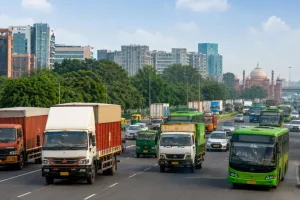
Delhi air quality update: Moderate AQI recorded on Sunday morning, Mundka and Rohini among most polluted

Delhi saw a slight improvement in air quality on Sunday morning as the AQI moved into the moderate range. However, pollution hotspots and lingering smog show the capital is still far from clean air.

Statesman News Service | New Delhi |

Delhi woke up to slightly cleaner air and better AQI on Sunday morning, but the relief was gentle, not dramatic. The city is breathing a little easier, yet the familiar haze has not fully left the streets.

Delhi AQI shows small improvement

At 7 am on Sunday, Delhi’s Air Quality Index (AQI) stood at 196, placing it in the ‘moderate’ category, according to data from the Central Pollution Control Board (CPCB). This is a step up from Saturday evening, when the AQI was recorded at 227 at 4 pm, firmly in the ‘poor’ range.

For a city that often struggles with choking pollution, even a small drop feels noticeable. However, experts say this improvement should be seen as temporary and limited.

Pollution hotspots still struggling

Several areas in Delhi continue to suffer from poor air quality. Mundka topped the pollution chart with an AQI of 266, making it the most polluted area in the city on Sunday morning. Close behind were Pusa (257), Narela (247), Rohini (247), and Ashok Vihar (243).

Other neighbourhoods such as Jahangirpuri (242), Wazirpur (239), Nehru Nagar (237), Shadipur (236), Bawana (231), and Vivek Vihar (231) also remained in the ‘poor’ category. Even historic and busy zones like Chandni Chowk, which recorded an AQI of 220, could not escape polluted air.

Some relief in greener pockets

Not all parts of Delhi were equally affected. Sri Aurobindo Marg recorded the lowest AQI at 126 offering relatively cleaner air. Other areas with better readings included IGI Airport (131), Aya Nagar (136), Lodhi Road (139), Major Dhyan Chand Stadium (140), IIT Delhi (141), Mandir Marg (145).

These areas stayed within the ‘moderate’ category giving residents small but welcome break from harsher pollution levels.

Smog still lingers

Despite the improved numbers, a thin layer of smog was still visible across many parts of the city. Early morning commuters noticed hazy roads and dull skies.

Sunday’s readings were similar to Saturday’s data. On Saturday, Anand Vihar recorded an AQI of 260, while RK Puram stood at 237, both in the ‘poor’ category. Busy areas like ITO saw AQI levels of 223, and Chandni Chowk was at 232.

Understanding AQI levels

According to official classification, AQI readings are divided as follows:

0-50: Good
51-100: Satisfactory
101-200: Moderate
201-300: Poor
301-400: Very Poor
401-500: Severe

Most of Delhi continues to hover between moderate and poor, which can still cause discomfort, especially for children, elderly people, and those with breathing problems.

Weather outlook for the day

The India Meteorological Department (IMD) has predicted a maximum temperature of 23°C and a minimum of 10°C for Sunday. Mist is also expected during the day, which could affect visibility and air quality.

For now, Delhi enjoys a slight pause from extreme pollution but the battle for clean air clearly continues.

A centenary tribute to Allen Ginsberg

He was a social critic and scholar, a professor, a polemicist, an activist for both general and sexual politics, a religious and cultural guru, a literary critic, promoter and publicist, a photographer, a counter-culture icon, a blues-pop-rock singer, a prosodist, and, of course, a poet.

MANAS DAS | Kolkata |

He was a social critic and scholar, a professor, a polemicist, an activist for both general and sexual politics, a religious and cultural guru, a literary critic, promoter and publicist, a photographer, a counter-culture icon, a blues-pop-rock singer, a prosodist, and, of course, a poet. It is the American poet Allen Ginsberg’s (1926-1997) many talents that induced him to assume so many roles during his life. This year Ginsberg’s birth centenary is being celebrated worldwide through diverse programmes including retrospectives, literary discussions and exhibitions to pay homage to this multifaceted genius.

Even in Kolkata, there is a Ginsberg Centenary session at the Exide Kolkata Literary Meet 2026. A panel of poets and litterateurs discussed Ginsberg’s life as a poet, activist and a cultural bridge between the East and the West, exploring how his experiences in India during the early 1960s shaped his worldview and creative output. As a result of his encounters with Bengali poets and thinkers, he ventured to experiment with new forms of poetic expression and cultural solidarity. Allen’s critical posture was not just insistently Left and anti-establishment, but also self-consciously transgressive. In general, his stances were liberally to the Left of social norms, as they were in his satirizing polite “queer society” (In Society, 1947), his lyricizing drugs and drug culture (Paterson, 1949), his jeremiad against American materialism (Howl, 1955-56), his parody of America’s Red-scare, Cold War, homophobic, racist xenophobia (America, 1956) his critique of the Vietnam War (Wichita Vortex Sutra, 1966), his exorcism of nuclear reactors and waste (Plutonian Ode, 1978), to say nothing of his paeans to bisexuality (Love Poems on Theme by Whitman, 1954), homosexuality (Love Comes, 1981), and various other “unnatural acts” over the years.

Allen Ginsberg’s transgressive stances persistently raised an interrogation of the individual’s relation to the social order. Whether his theme was war, pollution, CIA, drug, governmental malfeasance, censorship, sex, history or love, his address was essentially to the individual and collective state of being. This was articulated succinctly in his early poem Metaphysics: “This is the one and only / firmament; therefore / it is the absolute world. / The circle is complete. / I am living in eternity. / The ways of this world / are the ways of heaven”. Notwithstanding the occasional patina of Buddhist or transcendental mysticism, Ginsberg’s vision is anchored in this dialectic of the ways heaven reflects this world, rather than the other way around. And the ways of this world are often down and dirty. Accordingly, a near systematic use of obscenity is one, perhaps the most pervasive, function of transgression in Ginsberg’s work.

In Wichita Vortex Sutra, for example, a poem of high seriousness indicting the Vietnam War, the prologue declaims the need that a new “Man of America be born”, with “No more feat of tenderness.” And two lines later he further satirizes one of the most conspicuously vigorous American chauvinists, J. Edgar Hoover, with a punning version of a phallic joke: “How little the prince of the FBI, unmarried all these years!” A few pages later in that same volume, The Fall of America, he proposes resolutions to the Vietnam War, environmental abuses, and racism not so much via obscenity as meticulously calculated vulgarity in four precise lines under the title Kiss Ass: “Kissass is the Part of Peace / America will have to Kissass Mother Earth / Whites have Kissassed Blacks, for Peace and Pleasure, / Only pathway to Peace, Kissass.”.

His inclusion of “pleasure” in so unlikely a venue is vintage Ginsberg, a satiric indication that even such noble causes as racial justice should not be all work and no play. One aspect of Ginsberg’s project, then, is the tactical deployment of more obscenity or less to vivify the appeal of his social critique, which often simultaneously functions as a validation of homosexuality. America is a paramount instance. In this raucous send-up Ginsberg brilliantly satirizes the paranoia of cold war chauvinism and concludes, “It is true I don’t want to join the army or turn lathes in factories, I’m near-sighted and psychopathic anyway. / America, I’m putting my queer shoulder to the wheel.” In its adroit deconstruction by parody of normative assumptions about “perversity” and the good order of political economy this image is characteristic Ginsberg.

In Howl, madness and self-destruction victimize a whole generation, caused by the cultural materialism symbolized in Moloch. Moloch’s dominance is countered by Neal Cassady, who has so “sweetened the snatches of a million girls trembling in the sunset” that the poem is essentially a tribute “to the memory of his innumerable lays of girls”. Be that as it may, the appeal of Moloch and madness is potent, so Ginsberg trains the tactical weapon of obscenity on both sexual politics and its cultural context. For all of Ginsberg’s self-conscious transgression of poetic and social norms, however, his work also has a distinctly erotic dimension, that is, one focused more on love than on obscenity. While Kaddish, his great lament for the death of his mother Naomi, is not erotic as such, it does imply via degenerative state of his mother’s life a motif of cultural desexualization. Naomi’s madness subsumes her vitality, the sexual aspect of which is suggested by her youthful sensuous spontaneity, subsequently lost in her alienation from her husband.

This stance is, in fact, characteristic of Ginsberg’s erotic works although it is also informed by sexual longing or activity. “The weight of the world”, Ginsberg observed early on, “is love”. After an invocation of this “burden” and its “solitude”, in which he evokes images of sex where “the hand moves / to the center / of the flesh … and the soul comes / joyful to the eye”, he concludes, “yes, yes, / that’s what / I wanted, I always wanted / to return / to the body / where I was born”. Love, for Ginsberg, is indeed, as the saint says, on the arm. Other poems describe Ginsberg’s sexual relations with various, usually young, men and some similarly address his relations to his longtime lover Peter Orlovsky, and one,

This Forms of Life Needs Sex (1961), is an idiosyncratic apologia for his homosexuality. Perhaps his most famous erotic poem, Please Master (1968) is simultaneously an elegiac love poem to Cassady and a celebration of masochistic submission. As so often with Ginsberg, it accordingly confers double legitimacy on “perverse” pleasure with its implicit wink at the straight world and its interrogation of “normal” pleasures. Ginsberg’s unconventional stance becomes prominent not only in purely erotic poems but also in his other poems dealing with other issues as well as sex. Ginsberg first came to public attention in 1956 with the publication of Howl and Other Poems. Howl, a long-line poem in the tradition of Walt Whitman, is an outcry of rage and despair against a destructive, abusive society.
The poem’s raw, honest language and its “Hebraic-Melvillian bardic breath” stunned many traditional critics. James Dickey, for instance, refers to Howl as “a whipped-up state of excitement”, but some critics also responded positively. Richard Eberhart, for example, calls Howl, “a powerful work, cutting through to dynamic meaning… It is a howl against everything in our mechanistic civilization which kills the spirit. Its positive force and energy come from a redemptive quality of love”. The qualities in the book helped make Howl the manifesto of the Beat literary movement.

The Beats, popularly known as Beatniks, included such novelists as Jack Kerouac and such poets as Gregory Corso, Michael McClure and Gary Synder, all of whom wrote in the language of the street about previously forbidden and unliterary topics. The ideas and art of the Beats greatly influenced popular culture during the 1950’s and 1960’s. Ginsberg’s political activities were called strongly libertarian in nature, echoing his poetic preference for individual expression over traditional structure. In the mid-1960s he was closely associated with the hippie and anti-war movements. He created and advocated “flower-power”, a strategy in which anti-war demonstrators would promote positive values like peace and love to dramatize their opposition to the death and destruction by the Vietnam War. The use of flowers, bells, smiles and mantras (sacred chants) became common among demonstrators for some time. In 1969, when some anti-war activists staged an “exorcism of the Pentagon”, Ginsberg composed the mantra they chanted.

He testified for the defence in the Chicago 7 Conspiracy Trial in which anti-war activists were charged with “conspiracy to cross state lines to promote a riot’. Ginsberg’s political activities caused him problems in other countries as well. In 1965, he visited Cuba as a correspondent for Evergreen Review. After he complained about the treatment of gays at the University of Havana, the government asked Ginsberg to leave the country. A continuing concern reflected in Ginsberg’s poetry is a focus on the spiritual and visionary. His interest in these matters was inspired by a series of visions he had while reading William Blake’s poetry. Ginsberg recalled hearing “a very deep earthen grave voice in the room, which I immediately assumed… . was Blake’s voice… the peculiar quality of the voice was something unforgettable because it was like God had a human voice, with all the infinite tenderness and anciency and mortal gravity of a living Creator speaking to his son”. These visions prompted an interest in mysticism that led Ginsberg to experiment with various drugs.

He has claimed that some of his best poems were written under the influence of drugs: Howl with peyote; Kaddish with amphetamines, and Wales – A Visitation with LSD. After a trip to India in 1962, during which he was introduced to meditation and yoga, Ginsberg changed his mind about drugs, but till the end of his life he believed that psychedelics are “a variant of yoga and the exploration of consciousness”. Ginsberg lived a kind of literary “rags to riches” – from his early days as the feared, criticized, and “dirty” poet to his later position within the pantheon of American literature.

He has been one of the most influential poets of his generation, and according to Times Literary Supplement contributor James Campbell, “No one has made his poetry speak for the whole man, without inhibition of any kind, more than Ginsberg”. Ginsberg’s works and philosophy remain even in his centenary year a very relevant topic among all literary critics and readers across the globe. New poems and collections of his previous works are published regularly, and his letters, journals and even his photographs of fellow Beats have given critics and scholars new insights into the life and work of this controversial American poet.

(The writer is a PhD in English from Calcutta University and a freelance writer, teaches English at Govt.- Sponsored Sailendra Sircar Vidyalaya, Shyambazar, Kolkata. He is also the Research Head of Ullaskar Dutta Academy, a Kolkata-based research group.)

Kota building collapse: Two dead, 13 injured after under-construction structure crashes in Indravihar

A building under construction collapsed in Kota’s Indravihar area, killing two people and injuring at least 13 others. Rescue teams remain at the site as officials investigate possible construction negligence.

Statesman News Service | New Delhi |

A quiet day in Kota turned tragic when a building under construction suddenly collapsed leaving families shocked and rescue teams racing against time. What began as routine construction work ended in loss, injuries, and urgent questions about safety.

Building collapse shocks Kota

A building collapse in Kota has claimed two lives and left at least 13 people injured. Officials confirmed this on Friday. The incident happened in the Indravihar area of the city, where a new structure was being built.

According to authorities, the building came down from top to bottom trapping people under the debris and triggering panic in the neighbourhood. Local residents rushed to spot even before emergency teams arrived trying to help in any way they could.

What officials say about the cause

Kota Divisional Commissioner Anil Kumar Agrawal said that the collapse took place at a construction site where work was still in progress. Early information suggests that the structure may have failed due to poor construction quality.

“There were reports that drilling work was going on. Some local residents had earlier complained about it,” Agrawal told reporters. He added that negligence cannot be ruled out at this stage.

Also Read: Weeks after Noida drowning incident, biker dies in Delhi after falling into deep pit dug by Jal Board

However, officials stressed that the exact reason for the collapse will only be known after a detailed technical investigation. “We will conduct a proper inquiry and share the findings once it is complete,” Agrawal said.

Rescue operations continue at the site

Rescue efforts began immediately after the collapse and are still ongoing. Kota District Collector Piyush Samariya said multiple emergency teams are working together at the site.

Personnel from the National Disaster Response Force (NDRF), State Disaster Response Force (SDRF), Fire Department are clearing debris to ensure that no one remains trapped. Heavy machinery is being used. But officials say work is slow and cautious to avoid further harm.

Ambulances have been stationed nearby. Injured people were rushed to hospitals for treatment.

Om Birla expresses grief and support

Lok Sabha Speaker and Kota MP Om Birla expressed deep sorrow over the incident. Calling it “extremely heartbreaking,” he said he is in constant touch with the district administration.


Birla said he has instructed senior officials, including the District Collector, to speed up rescue and relief work. He also directed authorities to make sure that all injured people receive timely and proper medical care.

In a post on social media platform X, Birla prayed for the quick recovery of the injured and expressed solidarity with the families who lost their loved ones. He said he hoped they would find strength during this painful time.

Remembering India’s Nightingale

It is said in the Hindi film industry—and not wrongly—that Lata Mangeshkar could make or break a shooting schedule.

Subhash K Jha | New Delhi |

It is said in the Hindi film industry—and not wrongly—that Lata Mangeshkar could make or break a shooting schedule. Sets were dismantled when she felt her voice was not up to the mark on a particular day. Producers waited for weeks and months for Lataji to return from her concerts abroad to record their songs. Lataji defines six generations of beauty, grace and melody in Hindi cinema. Or as the ebullient Dev Anand once described it: “If Lata sneezed the whole industry caught a cold.”

So how powerful was Lata Mangeshkar? And we are not talking about the power that comes from the zeros in your bank account. It’s another kind of power, a power that comes from possessing a rare kind of talent that incites a worshipful awe and reverence. I remember entering a restaurant with Lataji and her sister and the minute we entered all conversation on the tables ceased completely. Every patron man or woman, adult or grownup, was on his or her feet. That was the magic of Lataji. When seen in public no one came forward to speak to her or get a picture from her: they just stood and watched her with admiration. Says diehard Latabhakt Jaya Bachchan, “When one saw her for the first time, the feeling is indescribable. That she actually existed is like a miracle.

When I saw her for the first time I just kept staring at her open-mouthed. I think she was used to it.” Sanjay Leela Bhansali who says he learnt direction by listening to her singing says for many years he didn’t want to meet his idol. “I didn’t want my reverence for her to be eroded. I would just find excuses to drive past Prabhu Kunj (Lataji’s residence) hoping that she would pass by on her balcony. But she never did.” Then when Bhansali finally met his Mata Saraswati, he was struck by the aura. “She exuded a serenity, and a go dliness that was just mesmerizing. Just sitting with her I felt close to God,” adds Bhansali. This kind of veneration is unknown to civilization.

As my dear friend Javed Akhtar puts it, “It begins and ends with her.” What made Lata Mangeshkar one of her kind was not only her extraordinary singing talent, she was also a woman way ahead of her times who worked in the viciously patriarchal Mumbai film industry on her own terms. Lataji was just 13 when she had to fend for her family. When her father the great Pandit Dinanath Mangeshkar was on his deathbed, it was clear that little Lata had suddenly grown up. Sister Asha Bhosle recalled how Lataji summoned all the siblings around her ailing father, she then commanded her sister Asha to get a thali and a lota filled with water.

Little Lata then poured the water in the thali, put her father’s feet in the thali and told her siblings to drink the water as god’s charanamrit. From the tender age of 13 Lataji went out to search for work. She once said “I did some acting though I hated it. But I had no choice. I was suddenly the only earning member of my family. I had to look after my mother, three sisters and one brother. Luckily my career as a singer took off in no time. I was soon recording two to three songs per day. There was no time for any of the things that girls my age did. My dolls were all forgotten.” Lataji remained single all her life. In 1949 when Lataji’s career took off in a big way with a slew of sensational chartbusters she demanded, and got, the name of the singer on the record.

Prior to this the name on the record was that of the character played by the actress for whom Lataji ghost-voiced. In the 1960s she fought a valiant copyright battle for royalty money for playback singers, and won. Known to be extremely charitable and kind to those whom she was close to, she never charged Hrishikesh Mukherjee a single penny for any of the classics she sang in his cinema. Lataji never allowed anyone to take her for granted. Nor would she compromise on the quality of her work. If she felt her voice was not up to the recording she would cancel at the last minute. Sets were known to be dismantled because she refused to sing in a less than perfect voice.

As she explained to me once, “For the producer, it was a job done. But for me it was there for posterity, I couldn’t compromise on the quality of my voice.” Not many know this, but Lataji was the first female working professional in the Hindi film industry to raise her voice against harassment. The singer was a top playback name before Mohd Rafi. He would find excuses to make improper comments. One day he commented on a necklace she was wearing. Lataji walked out of the recording (for the formidable Naushad) and vowed to never sing with that singer again. She never did.

Beyond guides, tourism education needs reform

India’s tourism sector is entering a pivotal moment. The recently presented Union Budget 2026–27 lays out an ambitious vision – from enhanced connectivity and cultural circuit development to job creation and workforce skilling.

ALOK SHARMA AND JEET DOGRA | New Delhi |

India’s tourism sector is entering a pivotal moment. The recently presented Union Budget 2026–27 lays out an ambitious vision – from enhanced connectivity and cultural circuit development to job creation and workforce skilling. Yet, amid these welcome policy signals, one foundational issue remains conspicuously under addressed: the urgent need to modernise tourism education and human capital development to align with the sector’s rapid transformation.

The Budget underscored tourism, transport, and skills development as central to national growth, setting the tone for an accelerated push to strengthen India’s travel ecosystem. Notable announcements included plans to train 10,000 tourist guides to enhance on-ground visitor experiences and deliver higher service standards at key destinations. It also outlined wide-ranging tourism skilling initiatives, touching upon hospitality education, heritage and nature-based experiences, and digital documentation of cultural sites through a national destination knowledge grid. These reflect a promising policy orientation towards workforce readiness and cultural preservation.

Despite this focus, the structural disconnect between academic outputs and industry demand persists. Tourism today is vastly more complex than traditional hospitality and travel services. It now includes digital engagement, sustainability governance, crisis management, destination branding, experience design, and community-inclusive development. According to UN Tourism (2023), nearly 75 per cent of emerging tourism jobs will require hybrid competencies that blend technology, sustainability awareness, and strategic thinking – skills rarely cultivated by legacy curricula.

Economically, the potential is immense. The World Travel and Tourism Council’s India Economic Impact Report 2024 estimates that tourism contributes over 7 per cent of India’s GDP and supports more than 43 million jobs. Yet, employers across the industry report a persistent skills mismatch – a gap between what graduates are trained for and what the workplace demands. This tension undermines service quality, restricts productivity gains, and limits India’s capacity to compete on the global tourism stage. Budget 2026’s initiatives hint at the right direction but remain insufficient without systematic educational reform.

For example, while training 10,000 guides will improve visitor engagement, India’s broader workforce – from destination managers to digital marketing experts – still lacks access to integrated, industry-aligned, and practice-oriented education pathways. High-speed rail corridors and expanded waterways will physically connect destinations, but it is human capability that will ultimately determine whether these linkages translate into quality tourism experiences. A core reform priority must be industry-academia integration. Leading tourism economies globally embed apprenticeship models, co-designed curricula, extended field immersion, and destination-linked learning labs into their higher education systems. These models ensure that students graduate with real-world competencies and are ready to contribute effectively from day one.

Institutions such as Indian Institute of Tourism and Travel Management (IITTM) are already aligned with this vision. Established under the Ministry of Tourism, IITTM serves as a national hub for tourism education, skills development, and applied research, with campuses across different regions. Strengthening its role, and replicating its best practices across state universities and national institutes, will be crucial for creating a continuum of quality tourism education that is both competitive and contextually relevant. Sustainability also demands a central place in curricula. The OECD Tourism Trends and Policies Report 2023 highlights climate resilience, overtourism mitigation, and ecosystem stewardship as priority issues for global tourism.

India’s fragile Himalayan regions, congested spiritual circuits, and sensitive coastal ecosystems require tourism professionals trained in carrying- capacity assessment, responsible destination planning, and community-centric engagement models. Without this expertise, tourism growth could come at the cost of environmental degradation and social discontent. Digital transformation is another frontier. Technologies such as AI-based visitor analytics, smart destination platforms, immersive digital marketing, and heritage interpretation systems are rapidly shaping traveller decisions. The UN Tourism Digital Transformation Report 2022 emphasises that technological fluency is now essential for destination competitiveness. Incorporating digital tourism and data literacy into core curricula – rather than relegating them to optional electives – is imperative. Effective reform will require coordinated governance.

The Ministry of Tourism, higher education authorities, and the National Skill Development Corporation must collaborate to establish outcome-based education standards aligned with the National Skills Qualification Framework. This alignment can elevate certification credibility, improve job market signalling, and ensure that graduate competencies match industry expectations. India now stands at a strategic crossroads. Budget 2026’s tourism measures are a positive starting point, but long-term success will depend on whether policy prioritises human capital with the same vigour as physical infrastructure. Roads, rail corridors, and seaplane connectivity can open up destinations – but it is skilled tourism professionals who will create memorable experiences, safeguard sustainability, and convert policy ambitions into lived reality. Tourism education reform is not a peripheral policy add-on. It is strategic infrastructure. If India aspires to evolve from mass tourism to meaningful value creation globally, investing in intellectual capital must be at the heart of its growth agenda.

(The writers are, respectively, Director and Assistant Professor, Indian Institute of Tourism & Travel Management, an autonomous body under the Ministry of Tourism, Govt. of India.)

Parade for a mature Republic

As the Republic Day parade drifts from solemn military tradition toward mass spectacle, serious questions arise about dignity, purpose, and discipline.

AMIT K PAUL | New Delhi |

The Republic Day parade in India holds a venerable and distinguished tradition. When it started in 1950 one of its main objectives was to solemnly commemorate the inauguration of the Republic and, in the immediate aftermath of Independence, to powerfully project the foundational national concept of unity in diversity. Consequently, the occasion served not merely as a platform to honour the nation’s martyrs, recognize acts of bravery, and showcase the military prowess of the nascent Republic, but equally as a celebration of its inherent cultural and regional diversity. To this end, the procession incorporated both the martial parade, comprising disciplined marching contingents from the armed forces and security agencies along with their equipment, and a significant cultural component through the inclusion of thematic tableaus representing various states and performances by artistes and school children

Over the years, the nature of the parade has demonstrably undergone substantial transformation. While positive changes aimed at improvement are welcome, the increasing trend to transform this national celebration into a spectacle designed primarily for mass entertainment is a cause for concern. There is no quarrel on the inclusion of elements that highlight the country’s multifarious progress – be it in technological, defense, or cultural spheres in the celebration of the Republic but the question which begs consideration is whether all of it must necessarily be a part of the parade?

Is it appropriate or essential for professional soldiers of the nation’s armed forces to engage in complex acrobatic displays such as balancing precariously on motorcycles or revolving in ‘formation’ on fabricated contraptions attached to them? While such displays of skills may appeal to a certain section of the audience and be suitable in informal settings they appear profoundly discordant with the solemnity of the Republic Day parade, an event broadcast globally and watched by millions worldwide. Far from inspiring the intended sense of awe and military confidence, such theatrical performances by soldiers regrettably tends to generate widespread social media ridicule and memes, an outcome that is wholly counterproductive and easily avoidable.

Similarly, the necessity of presenting ‘despatchers’ in the manner that they were or the need of displaying animals utilized by the armed and security forces across the country, marching in stylized formations, is debatable. It is acknowledged that every global military force employs diverse resources and that its personnel possess a wide array of specialized skills but is the display of all these operational elements in the parade necessary?

To maintain the sanctity and dignity of the parade, and simultaneously ensure its relevance to the needs of a Republic that is now over 75 years old, a judicious balance must be struck between the military parade and the cultural components. This necessary segregation could be effectively achieved by detaching all cultural elements from the parade and designating a separate, dedicated national Cultural Celebration of the Republic. This event could be formally scheduled for January 27, hosted at a suitable venue such as the National Stadium and graced by the President, the Prime Minister, and other national dignitaries, alongside the public. It would provide a fitting and focused platform to showcase the nation’s cultural diversity, talent, and skills and can be executed on a much larger and grander scale. Consequently, the state tableaus, cultural performances, and all other non-military displays could take place on this day.

Furthermore, it would allow military personnel involved in these cultural presentations to perform without the constraints of uniform if their participation is necessary. This restructuring would achieve two key objectives: firstly, it would substantially reduce the excessive length of the parade on January 26; and secondly, it would create the vital opportunity to incorporate a greater number of marching contingents and display more sophisticated military equipment, thereby projecting a more substantive and contemporary image of the country’s military strength.

The entirety of the Commemoration of the Republic could then formally and traditionally culminate on January 29 with the ‘Beating the Retreat’ ceremony. Historically, the ‘retreat’ bugle call was a time-honored military convention, marking the moment when fighting ceased, colours were lowered, and military forces withdrew from the battlefield to return to their respective barracks or stations. The ‘Beating the Retreat’ ceremony, therefore, signifies the official and ceremonial conclusion of the Republic Day events. It is a tradition which is meticulously performed to precise, martial marching beats, demanding and retaining a solemn, dignified, and disciplined character. It is crucial that the essential nature of this ceremony is not misunderstood or, worse, deliberately diluted.

While the exceptional musical talent and versatility of the armed forces bands including their ability to flawlessly execute everything from classical compositions to contemporary, even Bollywood-inspired, numbers, is acknowledged, the ‘Beating the Retreat’ ceremony is fundamentally the wrong occasion for such a display. The very essence of the ceremony is discipline and military rigour. Soldiers march, execute intricate drill formations, and play on instruments to time-honored martial beats and ruffles. It is these rhythms which are the soundtrack of military life, and not tunes which remind one of R D Burman or the drumming in of popular numbers like ‘O Haseena Zulfon Wali’ or ‘My Name Is Lakhan.’ To introduce such elements risks trivializing the event.

Furthermore, the personnel involved in the ceremony – the drummers and musicians – are military men and women executing a formal drill. They are not intended to perform the role of dholis at a Punjabi wedding, playing tunes to vigorously encourage the audience to join a spontaneous dance, nor are they the percussionists of a garba ceremony. While these forms of vibrant cultural display have their rightful place within the broader national celebrations, they too can be reserved for the Cultural Celebration of the Republic. There is a genuine risk that in our zeal to project a modern, all-encompassing image of nationalism, we might inadvertently ‘tinker’ with the basic nature and fundamental purpose of this time-honored ceremony and reduce a military ritual into nothing more than a high-profile, public performance by the bands of the armed forces.

Today, we must introspect and ask ourselves: What should be the desired purpose of our National Commemorations? Do we seek a solemn and powerful Republic Day parade that unequivocally projects the nation’s disciplined strengths, military might, and makes us proud of our armed forces and martial traditions along with a cultural display which puts every other ceremony to shame? Or, are we content to allow the function to devolve into a chaotic and contradictory mix of a school’s annual day celebration, a cultural fair, a martial parade, and a circus, all awkwardly rolled into a single event which has something for everyone? And while we introspect on this can someone please stop the theatrics undertaken by the BSF at Attari?

(The writer is a lawyer-turned-entrepreneur and can be reached at amitkrishankanpaul@gmail.com. He is the author of ‘Meghdoot: The Beginning of the Coldest War’ which tells the story of the race to Siachen between India and Pakistan.)

History in Limbo

The uproar over a former army chief’s unpublished memoir is less about one book and more about how a democracy negotiates the uneasy space between national security, political accountability, and historical truth.

Statesman News Service | New Delhi |

The uproar over a former army chief’s unpublished memoir is less about one book and more about how a democracy negotiates the uneasy space between national security, political accountability, and historical truth. When fragments of a still-uncleared manuscript begin shaping parliamentary debate, the real story is not just what is written on those pages, but why those pages have become so sensitive in the first place.

At the heart of the controversy lies the memory of a crisis that still unsettles the public imagination: a high-altitude confrontation that cost lives and altered the strategic climate along a contested border. Decisions taken ~ or deferred ~ during those weeks inevitably become part of the nation’s strategic folklore. It is precisely this grey zone, where military judgment meets political direction, that memoirs seek to illuminate and governments often prefer to keep shaded. There is a legitimate argument for caution. Operational details, command procedures, and sensitive assessments cannot be treated like material for casual disclosure. No serious state can allow its security architecture to be reverse-engineered through personal recollections. Clearance processes exist for a reason, and retired officers are not private citizens in quite the same way as retired teachers or diplomats. The uniform, even when folded away, leaves behind obligations. Yet, prolonged silence and opaque delays create their own problems.

When a manuscript lingers in limbo, it invites speculation, leaks, and selective quotation. Snippets then acquire a political life of their own, detached from context, sharpened into weapons for daily combat in Parliament. What should have been a sober debate about process and precedent becomes another shouting match, with rules and patriotism hurled at each other like slogans. This is not healthy for civil-military relations or for democratic oversight. A republic does not honour its armed forces by turning every uncomfortable question into an act of disloyalty. Nor does it strengthen national security by pretending that strategic episodes can be sealed off from historical scrutiny forever. The public does not need theatrics; it needs clarity about how decisions are made when the stakes involve lives, territory, and long-term deterrence. There is also a quieter issue here: who gets to write the first draft of history.

If only officially curated versions are allowed to circulate, trust slowly erodes. If, on the other hand, personal accounts are published without restraint, institutions risk being weakened by careless disclosure. The answer lies in a transparent, time-bound, and credible review process ~ one that explains what must be withheld, what can be edited, and what can safely be shared. Memoirs of soldiers are not gossip columns; they are part of a nation’s strategic memory. They help future leaders understand not just what happened, but how uncertainty, pressure, and ambiguity shape real decisions. Keeping such accounts permanently suspended between secrecy and scandal serves no one. A confident democracy should be able to protect its security without fearing its own history ~ and should be mature enough to let that history be examined in full, not through leaked lines and political noise

A Bad Call

The row over Peter Mandelson’s appointment as Britain’s ambassador to the United States has become more than a scandal about a man’s past.

Statesman News Service | New Delhi |

The row over Peter Mandelson’s appointment as Britain’s ambassador to the United States has become more than a scandal about a man’s past. It has turned into a stress test of Prime Minister Keir Starmer’s judgement, his authority over the Labour Party, and his instinct for how much risk he can afford to normalise. At one level, the controversy is brutally simple. Mr Mandelson’s long association with Jeffrey Epstein was not an obscure footnote. It was a reputational hazard so obvious that it should have triggered the most unforgiving scrutiny. Mr Starmer has said he was misled about the depth of that relationship, while also acknowledging that he knew it continued after Epstein’s conviction.

Those two claims sit uneasily together. Leaders are not only responsible for what they are told; they are responsible for what they choose to treat as adequate reassurance. Vetting, in such cases, is not a ceremonial hurdle. It is where political judgement is supposed to assert itself. The question is not whether procedures were followed, but whether they were followed with the seriousness the situation demanded. When the stakes involve the credibility of the government abroad and trust at home, “we were assured” is not a defence. It is an admission that plausibility was mistaken for proof. The drama in the House of Commons made the political cost visible. Mr Starmer entered the debate trying to control the terms of disclosure, only to be forced into a climbdown by anger from his own benches. The fact that senior Labour figures helped drive that reversal matters.

This was not just opposition theatre; it was an internal verdict that the Prime Minister had misjudged both the substance of the issue and the mood of the party. Such moments linger. A prime minister can survive a bad appointment. What is harder to shake is the impression that authority had to be wrestled into the right position rather than exercised there from the start. When backbenchers sense hesitation or defensiveness at the top, discipline weakens and every subsequent controversy becomes harder to contain. The ongoing police investigation sets legal limits on what can be said or released, but it does not change the political reckoning.

The core issue is not only what Mr Mandelson did, or did not do. It is why Mr Starmer’s government concluded that this appointment was worth the exposure it carried, and why it took a bruising Commons confrontation to reverse course on transparency. For Labour, the episode arrives at an awkward time, when it wants to project competence and restore standards. Instead, it has offered a reminder that credibility is not built by process alone, and authority is not preserved by managing the optics of retreat. It is built by decisions that look cautious in advance ~ and firm when they turn out to be wrong.

Treading with caution

While announcing budgets each fiscal year, India has been experimenting on various growth models, some led by capex, others hoping to be triggered by enhanced domestic consumption.

NANDITA CHATTERJEE | New Delhi |

While announcing budgets each fiscal year, India has been experimenting on various growth models, some led by capex, others hoping to be triggered by enhanced domestic consumption. In the budget of 2022-23, the budget rode high on capex pushing growth and this author had discussed the role of investment for growth relying heavily on capital investment in infrastructure, on public sector investments and on the potency of the private sector acting as a catalyst via increased investments (The Statesman, 4 April 2022).

The budget of 2025-26, this author had analyzed, was largely a balancing act, wherein the government had placed increased faith in boosting domestic consumption through personal tax relief as well as in generating consumer demand by reducing the indirect tax burden of GST (The Statesman, 25 February 2025, and 31 October 2025). In FY 2025-26, India’s growth strategy relied primarily on private consumption, which was pegged at 7 per cent, primarily boosted by rural demand. With the government front-loading capital expenditure, investment grew at the rate of 7.8 per cent. Manufacturing, mostly based on high value technical products, was more subdued, following at a rate of 7 per cent.

But it was the services sector benefiting from growth in infrastructure, expanded warehousing and availability of strategic credit, that rose by 9.1 per cent, spearheading the India growth story. Given this backdrop, the economy is expected to benefit from a diversified base of domestic consumption, the government-led thrust on capex, a burgeoning service sector and a supporting infrastructure-led ecosystem to provide stable ground for its projected growth in 2026-27. The challenges, however, are humongous. Geopolitical tensions, trade disruptions, global trade protectionism, flight of foreign capital, the sliding rupee that has fallen by over 5 per cent against the US dollar and a threatening tariff regime.

There is also the need to confront domestic difficulties on account of weak urban consumption, tardy private investment, low agricultural productivity, natural disasters, and the adverse fallouts of climate change. In 2026, the government has therefore adopted a cautionary approach thanks to the geopolitical headwinds and has presented a conservative budget based on the three “kartyavas” of sustainable economic growth, capacity-building and sabka sath, sabka vikas. Elaborating further, the Finance Minister has stated that these three pillars will expedite the reform momentum towards Viksit Bharat.

While the first “kartyava” was proposed to be achieved by enhancing productivity and competitiveness and building resilience to volatile global dynamics, the second “kartavya” relies on capacity building to fulfil aspirations and the third “kartavya” is proposed to be achieved by ensuring that every family has access to resources, amenities and opportunities for meaningful participation. The government continues to assert its ongoing thrust on structural reforms, a robust and resilient financial sector and cutting edge technologies including AI applications. In the Budget of 2026-27, the government is estimated to spend 7.7 per cent more than the revised estimate of 2025-26, while receipts are projected to be 7.2 per cent higher than the revised estimate of 2025-26, predicting a nominal GDP growth of 10 per cent in 2026-27.

Revenue deficit is targeted at 1.5 per cent of GDP, similar to that of 2025-26, while fiscal deficit, reduced from 4.4 per cent of 2025-26, is targeted to be at 4.3 per cent of the GDP. Outstanding liabilities, which are projected as 55.6 per cent of the GDP, as compared to 56.1 per cent of GDP in 2025-26, are expected to fall to 50 per cent of GDP by March 31. Such fiscal rectitude is a reflection of a cautionary approach of balancing domestic growth while cushioning it from the volatility of the changing global economic order. Tax revenue has been projected to rise modestly to 8 per cent of GDP, with the rationalization of GST in 2025 leading to a 2.62 per cent decline in the collection as compared to the previous year. Hence the fiscal deficit will mostly have to be funded out of borrowings which are expected to rise by 3.6 per cent.

The Government has also planned to raise gross borrowings which is estimated to rise by a whopping 17. 7 per cent as well as to generate 23.4 per cent more in surplus of the RBI and PSUs. In an attempt to further provide buffers against external headwinds, the Budget has highlighted the mandate of self-reliance, and in this process, a specific set of industries, spread over bio pharma, rare earths, electronics and semiconductors, have been earmarked for policy support with reliance on cutting edge technologies such as application of Artificial Intelligence.

Infrastructure, which has been the government’s favourite vehicle for growth, has also been highlighted as a projector for growth by establishing dedicated freight corridors, operationalizing 20 national waterways for the next five years, seven high speed rail corridors, mega textile parks as well as three chemical parks. Although capacity building has been highlighted as one of the government’s “kartyavas” to enhance the employability of youth and job seekers, the government’s track record in generating employment requires resurgence. Certain initiatives have been announced for the tourism, health, care giving and service sectors but the time has come to talk about the elephant in the room upfront and to initiate robust strategies towards employment generation.

In the context of taxes, there are no major announcements for the direct tax regime given the previous year’s rejig, except for certain procedural initiatives for updating returns and immunity from penalty in under-reporting income. There is, however, some news for corporates in that the Minimum Alternate Tax (MAT) will be converted to a final tax with no further credit accumulation after April 1. The new Rule means that the companies will be able to draw on their existing credits and the set off for tax credit will be restricted to 25 per cent of the tax liability in the new regime. Policy wise, the efforts are mostly confined to forming high level committees to work with state governments on regulations and compliance. Other policy initiatives are for comprehensive review of the banking sector, restructuring the Power Finance and the Rural Electrification Corporations and review of the Foreign Exchange Management Act.

To ensure sustained energy transition efforts, a scheme for Carbon Capture Utilization and Storage will be set up. Basic customs duty will be exempt from goods required for nuclear projects, on capital goods required for lithium ion cells as well as critical minerals processing. Another policy initiative declares that Coconut, Cashew and Coco promotion schemes will be set up and a multilingual AI tool has been proposed to integrate the agri-stack portal and the ICAR on agricultural practices. Towards export promotion, exporters of textile, footwear and leather, who have suffered in the tariff war and trade disruptions will get six extra months to complete exports using duty free inputs.

Additionally, duty exemption benefits for export production have been extended to shoe manufacturers. Exporters have also been allowed as a special measure to sell their products in domestic markets at concessional rates of duty. This is therefore a reticent, conservative budget with no big bang announcements for investors, consumers and job seekers and contains no enticements for poll-going states. Discretion, they say, is the better part of valour. The budget of 2026-27 has accepted this philosophy in choosing the path of wisdom and caution, a path which the country needs to tread carefully against the changing global order and volatile geopolitical headwinds.

(The writer is a former Secretary to the Government of India and Advisor, United Nation)

PM skipping Motion of Thanks reply in Lok Sabha aimed at protecting ‘dignity’ of office: Rijiju in Patna

Amid the disquiet in the opposition due to the recent passage of the Motion of Thanks on the President’s address unprecedentedly without a reply by Prime Minister Narendra Modi in the Lok Sabha, the union Parliamentary Affairs Minister Kiren Rijiju today said that the step was taken to protect the “Dignity and Prestige” of the Prime Minister’s post.

UNI | New Delhi |

Amid the disquiet in the opposition due to the recent passage of the Motion of Thanks on the President’s address unprecedentedly without a reply by Prime Minister Narendra Modi in the Lok Sabha, the union Parliamentary Affairs Minister Kiren Rijiju today said that the step was taken to protect the “Dignity and Prestige” of the Prime Minister’s post.

Speaking on the vexed issue, Rijiju told news persons here that, the Lok Sabha Speaker Om Birla had suggested to Prime Minister Narendra Modi to make a reply on the motion only in the Rajya Sabha and it would be passed by voice vote in the Lok Sabha. He said that protecting the prestige of the house and the post of the Prime Minister in the parliament was the prerogative of the Lok Sabha Speaker.

“The Speaker had said that he gives ample opportunity in the House to everyone but protecting its dignity and Prestige was his utmost responsibility,” said Rijiju while replying to queries regarding the passage of the motion without a customary reply by the Prime Minister in the Lok Sabha.

“Paralysing the House was a matter of grave concern,” he said, adding that in terms of strength the government has the power and had the opportunity to marshall out the “trouble mongers” but instead of doing so the government wishes to solve any issue through dialogue.
He said that it is better to resolve the matters on the negotiation table through conversations.

Speaking about the issue, he said that nearly 40 to 50 members of the Congress had visited Lok Sabha Speaker in his chamber and spoken “absurd” things which indicated their intention of creating some unprecedented action in the House.
Rijiju said that the Speaker had “credible” information that some members could create an unforeseen incident and to protect the dignity and prestige of the PM’s post and of the House, the Speaker suggested that the Prime Minister should not reply on the motion in the Lok Sabha.

As it is, following the advice of the Lok Sabha Speaker, PM Narendra Modi did not reply to the Motion of Thanks on the President’s address in the Lok Sabha which was passed by the lower house without the customary reply from the Prime Minister.

Netanyahu to meet Trump in Washington, discuss Iran talks

Israeli Prime Minister Benjamin Netanyahu’s office said that he will travel to Washington on Wednesday to discuss the Iran-US talks with US President Donald Trump.

IANS | US,Israel,Iran,US Iran war |

Israeli Prime Minister Benjamin Netanyahu’s office said that he will travel to Washington on Wednesday to discuss the Iran-US talks with US President Donald Trump.

The two will discuss “the negotiations with Iran,” Netanyahu’s office said in a statement, adding that Netanyahu “believes that any talks must include restrictions on ballistic missiles and an end to support for the Iranian axis.”

The announcement followed indirect talks between Iranian and US delegations held in Oman on Friday. Trump described them as “very good talks,” adding that “Iran looks like it wants to make a deal very badly.”

The talks marked the first round of negotiations between the two countries since Israel struck Iran in June last year, triggering a 12-day war, during which the United States bombed Iran’s key nuclear sites, Xinhua news agency reported.

Trump and Netanyahu last met in December.

There was no immediate White House comment.

The US and Iran held indirect talks on Friday in Oman that appeared to return to the starting point on how to approach discussions over Tehran’s nuclear program.

Trump called the talks “very good” and said more were planned for early next week.

Trump has repeatedly threatened to use force to compel Iran to reach a deal on its nuclear program after sending the aircraft carrier USS Abraham Lincoln and other warships to the region amid Tehran’s crackdown on nationwide protests that killed thousands.