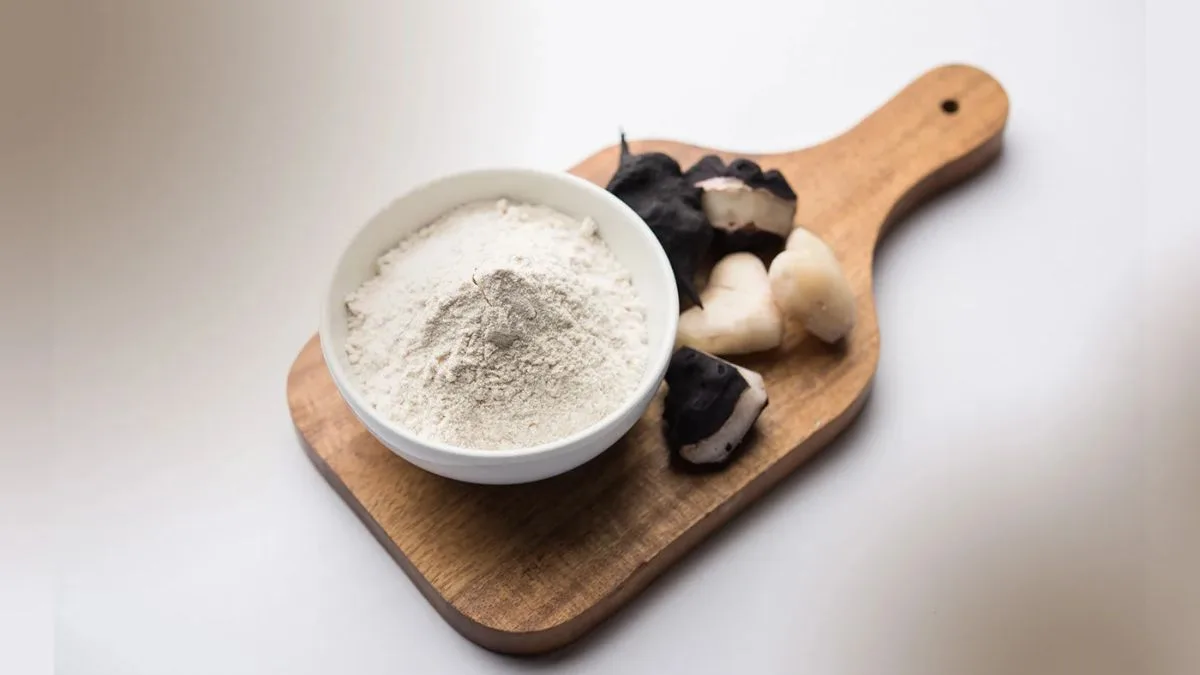
If your kitchen suddenly smells like vrat food and your family is quietly munching something “healthy,” chances are, singhara or singhada has entered the chat. Yes, the water chestnut, often seen only during fasting days, is now becoming the star of wellness gossip. From dadi’s nuskhas to Ayurveda experts, everyone seems to be whispering the same thing: “Don’t underestimate this fruit.”
So what’s the real story behind singhara? Let’s break it down.
Advertisement
Why singhara is a fasting favourite
Acharya Balkrishna says, during vrat (fasting), people switch to light, sattvik food, and that’s where singhara flour comes in. It is considered phalahaari, meaning it fits perfectly into fasting diets.
But this isn’t just about tradition. According to Ayurveda, singhara is packed with minerals and alkaline elements that make it deeply nourishing. It gives energy slowly, keeps you full for longer, and doesn’t feel heavy on the stomach.
Basically, it’s the quiet overachiever of fasting foods.
Natural shield against common diseases
Here’s where things get interesting. Ayurveda doesn’t just treat singhara as food—it sees it as medicine.
Regular consumption is believed to help manage:
- Blood sugar levels (helpful for diabetes)
- Heart health
- Ulcers
- Joint pain like arthritis
From Tooth Pain to TB: Traditional remedies that surprise
Old-school remedies involving singhara are honestly wild, and fascinating.
For dental issues like loose teeth, a mix including singhara has been traditionally used for relief. Even more surprising, Ayurveda texts mention its use in managing symptoms related to tuberculosis when combined with herbs like triphala and pippali.
Sounds intense, right? That’s because singhara has long been treated as a powerful healing ingredient, not just a snack.
Stomach problems? Singhara might help
Had too much spicy food and now regretting life? Singhara has your back.
It is known to:
- Help control diarrhoea
- Improve digestion
- Boost appetite
- Balance pitta (which often causes stomach issues)
Energy booster without the crash
Unlike sugary snacks that give quick energy and then drop you hard, singhara releases energy slowly.
Its natural “guru” (heavy) and “madhur” (sweet) properties mean:
- You feel full for longer
- Your body stays energised
- You avoid sudden fatigue
Skin, hair & sleep: The hidden glow-up benefits
This is where singhara quietly turns into a beauty secret.
It helps:
- Improve skin health and reduce acne or pigmentation
- Strengthen hair roots and reduce hair fall
- Calm the mind and improve sleep
Why? Because it balances pitta and vata doshas, which are often behind stress, skin issues, and insomnia.
Relief for piles, urinary issues & more
Ayurvedic use of singhara goes even deeper.
It may:
- Reduce bleeding and pain in piles
- Help with urinary discomfort
- Control excessive thirst caused by illness
Even the paste of its leaves is used traditionally to soothe burn wounds. Yes, this fruit really does a lot.
Special benefits for women’s health
Singhara is often recommended in traditional care for women.
It is believed to:
- Help control post-pregnancy bleeding
- Support during pregnancy in certain conditions
- Improve overall strength and recovery
Its nourishing nature makes it especially useful during physically demanding phases.