Logo

Will India jettison ties with Russia by halting oil purchases?

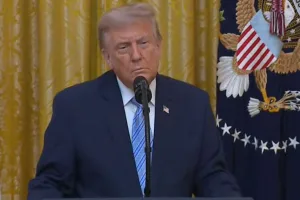
India is finding itself in a tricky situation over oil imports following the Donald Trump administration’s claim that the country will directly or indirectly stop importing oil from Russia.

ASHOK TUTEJA | New Delhi |

India is finding itself in a tricky situation over oil imports following the Donald Trump administration’s claim that the country will directly or indirectly stop importing oil from Russia.

Multiple sources in the government contacted by The Statesman were evasive on the issue, merely stating that things are still hazy.

While not denying what US President Donald Trump has publicly stated, New Delhi’s response has been quite ambiguous in the matter so far, raising more questions than answers that are available.

Asked about Trump’s statement, Ministry of External Affairs spokesperson Randhir Jaiswal last week preferred not to give a straight reply. ‘’Insofar as India’s energy sourcing is concerned, the government has stated publicly on several occasions that ensuring the energy security of 1.4 billion Indians is the supreme priority of the government. Diversifying our energy sourcing in keeping with objective market conditions and evolving international dynamics is at the core of our strategy to ensure this. ”All of India’s actions are taken and will be taken with this in mind,” he said, not ruling out the possibility of India continuing to purchase oil from Russia.

Relations between India and the US, which went through intense strain last year over India’s oil purchases from Russia, have started looking up again after President Trump and Prime Minister Narendra Modi reached the trade deal on Monday. The two countries have, meanwhile, announced a framework for an interim agreement which will eventually lead to the signing of the Bilateral Trade Agreement (BTA).

One sticking point between the two countries that delayed the much-anticipated trade deal between the two countries was India’s oil purchases from Russia. President Trump had charged India with funding the Russian war machine by purchasing oil amid the ongoing conflict in Ukraine.

New Delhi’s contention was that it was buying oil from Russia since Moscow was giving it a heavy discount, as also to maintain stability in the global energy market. However, President Trump refused to buy New Delhi’s argument and imposed a 25 per cent punitive tariff on India in addition to the 25 per cent tax he had already slapped on Indian imports. The total tariff on India has now been reduced from 50 per cent to 18 per cent.

But the million-dollar question is whether India will halt oil supplies from Russia and jettison its time-tested relationship with Moscow. Indian imports of Russian crude have already gone down due to the impact of US-imposed sanctions on Russian companies Rosneft and Luoil. According to available figures, India’s imports of Russian crude in December 2025 were worth USD 2.7 billion, the lowest monthly figure since February 2025. The supplies in December were nearly 27 per cent lower compared with imports worth USD 3.7 billion in November.

New Delhi has already been doing a tightrope walk in ties with major world powers in the wake of an uncertain global scenario and the tariff wall erected by President Trump.

Moscow has been closely monitoring the developments with regard to the much-touted Indo-US trade deal and its implications on its own ties with New Delhi. Russia has already stated publicly that it has not received any communication from India on oil purchases. While playing down President Trump’s claim, Russia said it is well aware that it is not the only supplier of crude to India, which has always purchased its products from other nations as well.

Former diplomats say India will never officially confirm the halting of petroleum products from Russia, despite the current situation in which it is becoming more and more difficult for New Delhi to continue these purchases.

Russia’s growing friendship with China and a steady improvement in its ties with Pakistan continue to be matters of concern for New Delhi.

Sources said India will continue to weigh from time to time the pros and cons of its actions while dealing with the complicated issue of oil purchases. To keep Washington in good humour, New Delhi has already declared that, apart from purchasing energy products from the US, it is open to exploring the commercial merits of crude supply from Venezuela.

Noam Chomsky in Epstein files: Emails show financier sought advice on handling media amid sex trafficking allegations

Newly released investigation files show Jeffrey Epstein contacted Noam Chomsky in 2019 seeking advice on how to handle escalating media coverage of sex trafficking allegations. Chomsky’s name appears in the records, though the documents do not suggest criminal wrongdoing.

Statesman News Service | New Delhi |

Linguist Noam Chomsky, 97, has appeared in government files showing he exchanged emails with disgraced financier Jefferey Epstein. The documents released recently by US authorities, reveal that Epstein turned to Chomsky for advice on handling “putrid” media coverage of his sex trafficking allegations.

‘Putrid press’ and puzzling plea

In February 2019, as the Miami Herald was publishing a series of explosive investigative reports on Epstein and revisiting his controversial 2008 plea deal, Epstein reached out to Chomsky.

“Noam, I’d love your advice on how I handle my putrid press,” he wrote. The financier complained that coverage was “spiraling out of control” and asked if he should write an op-ed, defend himself publicly, or simply ignore the media, noting that “mobs are dangerous.”

An account labeled as Chomsky responded, warning that public engagement would fuel “an onslaught of venomous attacks” and lamented the “hysteria that has developed about abuse of women.”

Also Read: Dalai Lama’s name appears 169 times in Epstein Files; office denies connection with convicted financier

The email advised Epstein that ignoring the press was probably the safest course.

The tone of the exchange (academic, detached, almost clinical) clashes sharply with the gravity of the accusations against Epstein, who would be arrested just months later in July 2019 and found dead in a New York jail cell in August awaiting trial on sex trafficking charges.

No legal wrongdoing… but morally?

Chomsky’s name in the files does not suggest any legal wrongdoing. Valéria Chomsky, Noam’s wife and spokesperson, emphasised in a statement that Epstein “created a manipulative narrative about his case, which Noam, in good faith, believed in.”

She added that the couple only fully understood the “extent and gravity” of Epstein’s alleged crimes after his 2019 arrest.

Still, critics have questioned why one of the world’s most respected intellectuals would even entertain correspondence with a man facing serious allegations.

After all, these weren’t casual dinner party exchanges. They involved guidance on handling public perception amidst a storm of credible accusations.

A closer look at the Chomsky-Epstein relationship

The newly released files show that the Epstein-Chomsky connection was not limited to media advice. Over the years, Epstein and Chomsky apparently corresponded on a wide range of subjects, from academic papers to arranging meetings.

Documents indicate the Chomskys even sought financial guidance from Epstein.

In a September 2017 email, Valéria Chomsky asked Epstein for suggestions on a letter her husband wanted to send to his children regarding finances. “Feel free to suggest. We trust you,” she wrote.

Valéria also noted that Epstein helped Chomsky transfer $270,000 of his own money, while emphasising that Chomsky never invested with Epstein or his offices.

This level of financial and personal interaction adds a layer of discomfort to the story suggesting that the Chomskys were not just receiving philosophical musings but were actively engaging with Epstein in ways that went beyond casual acquaintance.

Chomsky responds, claims distance

Chomsky himself has commented sparingly on the matter. In a 2023 interview with the Wall Street Journal, he said: “First response is that it is none of your business. Or anyone’s. Second is that I knew him and we met occasionally.”

He downplayed the relationship though the email troves paint a picture of repeated and sometimes in-depth engagement.

An undated letter from Chomsky in the files mentioned “many long and often in-depth discussions” with Epstein, further showing that their interactions were far from fleeting.

Where does curiosity cross the line?

Valéria Chomsky claims Epstein exploited her husband’s good faith. “Epstein had claimed to Noam that he was being unfairly persecuted, and Noam spoke from his own experience in political controversies with the media,” she explained.

But the question remains: How much responsibility does a public intellectual bear when his advice or opinions, even if neutral or detached, work towards protecting a predator?

In other words, ignoring Epstein’s pleas may have seemed safest, but exchanging multiple emails over years, offering guidance, and even accepting financial help blurs the lines between detachment and complicity.

Army Chief assesses ground situation in Poonch, Rajouri sectors; interacts with Veterans

Army Chief General Upendra Dwivedi on Sunday visited the Counter Insurgency Force (R) in the border areas of Poonch and Rajouri districts, under the aegis of White Knight Corps, to review the prevailing security situation and assess operational preparedness.

Statesman News Service | Jammu |

Army Chief General Upendra Dwivedi on Sunday visited the Counter Insurgency Force (R) in the border areas of Poonch and Rajouri districts, under the aegis of White Knight Corps, to review the prevailing security situation and assess operational preparedness.

He was briefed on ongoing counter-terrorism operations, the effectiveness of the security grid and measures undertaken to maintain sustained vigilance.
Deliberations also focused on inter-agency synergy and the infusion of advanced technologies to further enhance operational capability.

The Army Chief commended all ranks for their unwavering dedication, professionalism and steadfast commitment to duty. He lauded their sustained efforts in maintaining a high state of readiness under challenging operational conditions.

The interaction reaffirmed the Indian Army’s resolute focus on vigilance, preparedness and operational excellence.

General Dwivedi also engaged with the Veterans in Poonch. The interaction included discussion on service experiences, ongoing welfare initiatives and contribution to Nation Building.

He also met Veer Naris and representatives of the civil administration at Poonch Brigade.

The interaction was marked by camaraderie and mutual respect, underscoring the enduring bond between the serving leadership and the Army’s Veteran community.

CBDT invites inputs, suggestions from stakeholders for Income-Tax Act 2025

The Central Board of Direct Taxes (CBDT) has invited inputs and suggestions from stakeholders for the Income-tax Act, 2025, which received the assent of the President in August 2025 and will come into force from April 1, 2026.

Statesman News Service | New Delhi |

The Central Board of Direct Taxes (CBDT) has invited inputs and suggestions from stakeholders for the Income-tax Act, 2025, which received the assent of the President in August 2025 and will come into force from April 1, 2026.

As part of the consultative process, the CBDT has invited inputs under four broad categories namely simplification of language, reduction of litigation, reduction of compliance burden, and identification of redundant or obsolete Rules and Forms.

To streamline the feedback process, a dedicated utility has been launched on the Income Tax Department’s e-filing portal.

Stakeholders can submit their suggestions by providing their name and mobile number, followed by OTP-based validation. The CBDT has specified that all submissions must clearly mention the relevant provision of the proposed Rules or the specific Form number, including the rule or sub-rule concerned, to which the recommendation relates.

The inputs received will be compiled and examined before the final notification of the Income-tax Rules and Forms under the new Act, the Ministry of Finance said in a release.

Ahead of the final notification of the Income-tax Rules and related Forms under the new law, the proposed draft Rules and Forms have been uploaded on the official website of the Income Tax Department to facilitate wider stakeholder consultation.

The draft Rules and Forms, prepared after broad-based consultations, aim to align with the provisions of the Income-tax Act, 2025. The government has invited comments and suggestions from stakeholders before issuing the final notification.

As per the notification released by CBDT, the draft rules and forms shall remain in public domain for a period of 15 days, i.e. upto 22nd of February, 2026.

Under the New Income Tax Act, 2025, there will be simplified Income Tax Rules and Forms redesigned for easy compliance by ordinary citizens.

AAP’s Saurabh Bharadwaj attacks BJP on Delhi government’s first anniversary: ‘Happy fraud day’

AAP leader Saurabh Bharadwaj criticised the BJP government as it completed one year in power in Delhi. The remarks came on the same day the BJP released its report card highlighting development work and new projects.

Statesman News Service | New Delhi |

Aam Aadmi Party Delhi Unit President Saurabh Bharadwaj accused the Bharatiya Janata Party of forming the government by “committing fraud” exactly one year ago.

Taking to X, Bharadwaj marked the day with a strong message, writing, “Happy Fraud Day. Exactly one year ago today, the BJP won the elections by committing fraud.”

To support his claim, the AAP leader shared a video compilation of news reports. The video highlighted bulldozer actions carried out by the BJP government, ongoing problems related to clean drinking water, and the continuing landfill crisis in the Union Territory.

Through the post, Bharadwaj suggested that the BJP’s promises have not matched the ground reality over the past year.

BJP releases one-year report card

On the same day, the BJP government marked one year in office by presenting its performance report. Delhi Chief Minister Rekha Gupta released a report card of the Vidhan Sabha, detailing development work worth Rs 250 crore and major ongoing projects valued at Rs 10,000 crore.

Speaking to the public, Gupta said the booklet listed work that has been completed, work that has already started, and plans that are now being implemented. She described it as a summary of what the government has delivered and what it is building for the future.

Focus on parks and electric buses

The Chief Minister inaugurated redevelopment works at a district park as part of the celebrations. She said the park’s redevelopment had been planned for years and expressed satisfaction that the work had finally begun.

The project includes a new gate, repaired footpaths, renovated fountain areas, upgraded toilets, and rebuilt boundary walls. Gupta added that fountain renovation work is not limited to one park and has now started across the entire Vidhan Sabha area and in all DDA parks.

To mark the anniversary, Rekha Gupta, along with Transport Minister Pankaj Kumar Singh, PWD Minister Parvesh Verma, and BJP National President Nitin Nabin, flagged off around 500 electric buses. The Delhi-Panipat bus service was also launched on Sunday.

Three Indians arrested in Nepal for 83-year-old man’s murder; ring looted, body dumped in sack inside well

Three Indian nationals have been jailed in Nepal for the murder of 83-year-old Garjaman Thapa in Lalitpur. Police say he was killed for his ring, his body tied, packed in a sack, and dumped into a nearby well.

Statesman News Service | New Delhi |

Three Indians arrested in Nepal: A quiet neighbourhood in Lalitpur, Nepal was shaken by a brutal crime that unfolded in plain sight. What began as a missing person case ended in a shocking murder discovery leaving locals disturbed and a family devastated.

Three Indian citizens arrested in the murder of an 83-year-old man in Lalitpur have been sent to jail after a court order. The Lalitpur District Court has started legal proceedings against them on charges of murder.

The victim, 83-year-old Garjaman Thapa, lived in the Prashiddha Tole area of Lalitpur Metropolitan City-17. He went missing on January 10 in the afternoon. Two days later, his body was found inside a well, packed in a sack.

Who are the accused?

The accused are all residents of Hardiakothi, Motihari, East Champaran, Raxaul, Bihar, India. They are Mohammad Saddam Mansuri, 23, also known as Sadam, from Hardiakothi-9, Yusuf Hawari, known as Chhotu, from Hardiakothi-5, and Mohammad Noman, 22, from the same area.

Police filed a murder case against all three at the Lalitpur District Court. On Friday, Judge Tekraj Joshi ordered that they be sent to jail for further investigation. Following the order, they were transferred to Nakkhu Prison in Lalitpur.

More details about the case

According to police, Garjaman Thapa went missing at around 2 pm on January 10. When he did not return home, his family searched the neighbourhood throughout the day but found no trace of him.

By 7 pm, worried relatives filed a missing person complaint at the Satdobato Police Circle.

At the time he disappeared, Thapa was wearing a black jacket with “North Face” written on it, black jeans, black shoes, and a cream-coloured cap. He was around 4 feet tall and had a fair complexion.

Two days after his disappearance, locals noticed a large white sack inside a well near Thapa’s residence. Finding it suspicious, police pulled the sack out of the well.

Inside the sack was the body of the missing elderly man.

The condition of the body made it clear that this was not accident. Police confirmed early in the investigation that Thapa had been murdered and his body was dumped in the well to hide the crime.

Also Read: Sunil Thapa dies at 68 in Kathmandu: Ratey Kaila fame and ‘Mary Kom’ coach role defined his cross-border career

Police investigation revealed that the victim lived near a plywood factory where the accused worked. Because Thapa often visited the factory, the accused were familiar with him.

On the day he went missing, Thapa had again gone to the factory. Police believe the murder happened around 5 pm that same day.

Police say the main motive for the murder was robbery. The accused allegedly killed Thapa to steal his ring. After the arrest, police recovered the ring along with the knife used in the crime.

Thapa’s throat was slit, and after the murder, his hands and legs were tied. The body was packed into a sack and dumped into a well about 200 metres away from the factory.

Thailand election: What voters are deciding in the general election and referendum | Explained

Thailand is holding a snap general election along with a nationwide referendum on whether to rewrite its Constitution. Here is a simple explainer on how the vote works and what it means for the country’s next government.

Statesman News Service | New Delhi |

Thailand woke up to a long and serious Sunday as millions stepped out to vote in an election unlike any the country has seen before. For the first time in its political history, voters are choosing a new parliament and deciding whether to rewrite the Constitution, all on the same day.

Polling stations opened at 8 am local time, according to state broadcaster Thai PBS World, and voting continued across the country under tight watch.

Also Read: Japan Election: PM Sanae Takaichi’s LDP coalition looks to regain majority in rare mid-winter lower house polls

A sudden election call

This vote comes after the House of Representatives was dissolved on December 12, a full year before its four-year term was meant to end. That sudden decision forced a snap general election, putting political parties into campaign mode almost overnight.

Now, more than 50 million eligible voters are deciding who will sit in Thailand’s 500-member lower house.

How the 500 seats are being decided

Voters are choosing 500 lawmakers from a crowded field of nearly 5,000 candidates.

Out of these seats:

400 lawmakers will be elected directly from local constituencies
100 seats will go to political parties based on their nationwide vote share

This mixed system means both local popularity and national party strength matter.

Three ballots, one voter

Sunday’s vote is often being called a “three-in-one” poll.

Each voter is handed three different ballots:

  • Pink ballot for choosing a political party
  • Green ballot for selecting a local constituency candidate
  • Yellow ballot for voting on whether Thailand should rewrite its 2017 Constitution, which was drafted under military rule

This nationwide constitutional referendum is a first for Thailand and could shape the country’s political future for years.

Race for Prime Minister is wide open

The election will decide whether caretaker Prime Minister Anutin Charnvirakul manages to stay in power or whether a new coalition takes over.

A total of 43 political parties have nominated candidates for prime minister.

  • 19 parties named the maximum three candidates
  • 12 parties nominated two candidates each
  • 12 parties nominated just one

The age range is striking. The oldest candidate is 90 years old showing how wide and unusual the field is.

Bangkok leads in constituencies

Bangkok, Thailand’s most populated province, has the highest number of constituencies at 33.

It is followed by:

  • Nakhon Ratchasima with 16
  • Khon Kaen with 11
  • Ubon Ratchathani with 11

These regions are likely to play a major role in shaping the final result.

What happens after voting ends

Election authorities must announce final official results by April 9.

Once results are certified:

  • The new parliament must meet within 15 days
  • Lawmakers will first elect a House Speaker
  • After that, the House will vote to select the next prime minister

No clear winner expected

The contest is mainly a battle between three major forces:

  • Bhumjaithai Party
  • People’s Party
  • Pheu Thai Party

Opinion polls suggest no single party will win enough seats to rule alone. This makes coalition talks almost certain and could lead to weeks of negotiations before Thailand forms a new government.

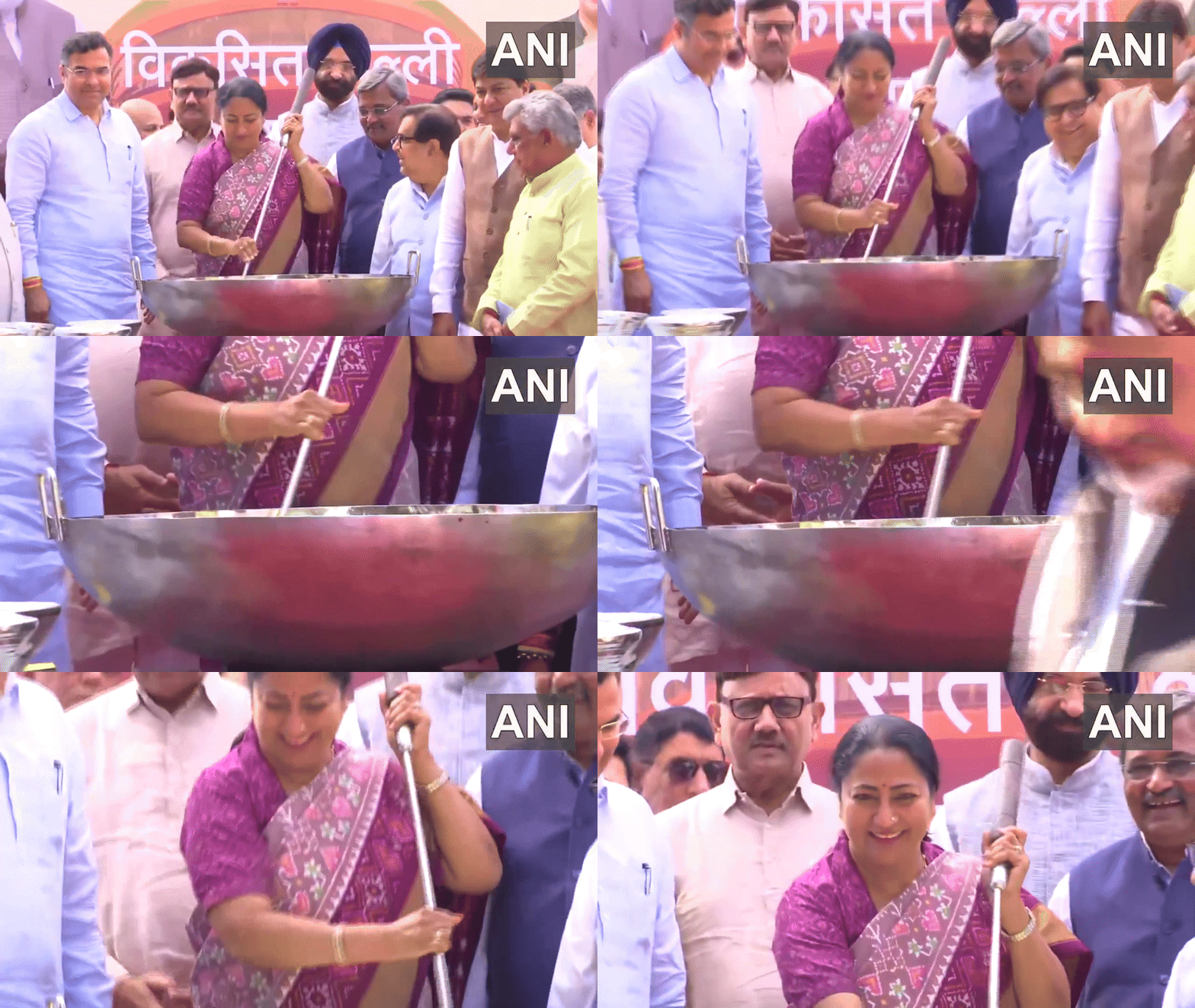
Delhi CM Rekha Gupta flags off 500 electric buses, launches Delhi-Panipat service on BJP govt’s first anniversary

Delhi Chief Minister Rekha Gupta flagged off 500 electric buses and launched the Delhi-Panipat bus service as the BJP-led government completed one year in office. The move is aimed at improving public transport, connectivity, and reducing pollution in the capital.

ANI | New Delhi |

Delhi Chief Minister Rekha Gupta, along with Transport Minister Pankaj Kumar Singh, PWD Minister Parvesh Verma and BJP National President Nitin Nabin, flagged off around 500 electric buses and the Delhi-Panipat bus service on Sunday to mark the BJP-led government’s first year in office.

Addressing a gathering, Chief Minister Rekha Gupta said that the people of Delhi ended years of neglect in development by electing the BJP government.

“For eleven years, Delhi lagged behind in development. The hopes and aspirations of the people of Delhi withered away. Delhi stopped dreaming of development. The people of Delhi were left yearning for basic amenities like water, sewage, and healthcare. But in the 2025 assembly elections, the people of Delhi gave a befitting reply to those who claimed to be the masters of Delhi,” CM Gupta said.

“Arrogant Kejriwal used to say, ‘You will have to be reborn to defeat me.’ But the people of Delhi, in this very lifetime, in this very Ramlila Maidan, changed the atmosphere of Delhi by forming the BJP government. The people of Delhi showed that if they can elevate someone to a position of power with love and affection, they also know how to bring them down,” he said.

Also Read: India, Malaysia aim for enhanced economic, digital, strategic collaboration: PM Modi’s visit and key outcomes

Further, Transport Minister Pankaj Singh said the BJP government is fulfilling its promises as it completed one year in office, announcing the introduction of 500 electric buses and improved connectivity between Delhi and Panipat.

Speaking to ANI, Singh said, “It is a matter of great joy that today marks one year since our government came into power, and it was on this very day that I became an MLA. Even more gratifying is that we are continuing to fulfil the promises we made to the people of Delhi. Today, we have introduced 500 electric buses for the people of Delhi. We are also increasing connectivity between Delhi and Panipat. So, I am happy that our work is progressing day by day.”

BJP MLA Anil Goyal, who was also present on this occasion, said the inauguration of 500 electric buses aims to improve Delhi’s environment and tackle air pollution.

Goyal said, “This celebration is for Delhi and to fix Delhi’s environment. To fix the polluted air of Delhi, today, 500 EV buses are being inaugurated by the BJP National President. I thank Chief Minister Rekha Gutpa, Minister Pankaj Singh, and our whole team.”

Vinod Khanna after quitting Bollywood: Wife Kavita reveals nude meditation and sudden exit at peak fame

At the height of his Bollywood stardom, Vinod Khanna shocked fans by quitting films to follow spiritual leader Osho. Years later, his wife reveals what his life inside the ashram really looked like; from public nude meditation to quiet service far from the spotlight.

Statesman News Service | New Delhi |

Bollywood has seen many shocking exits. Actors disappear, take breaks, or fade away. But very few simply ‘walk out’ at the top of their game. In 1982, when Vinod Khanna was one of the biggest stars in the country, he did exactly that. No goodbye film. No farewell speech. Just silence, and a sudden move toward spiritual leader Osho.

Decades later, that strange chapter is being talked about again. This time, the details are coming from inside the family.

Vinod Khanna’s second wife, Kavita Khanna, has spoken openly about what his life looked like after he left movies. Her revelations include gardening duties in the US, modelling robes for a guru, and even nude meditation sessions on a crowded Mumbai beach.

Why Vinod Khanna walked away from stardom

By the early 1980s, Vinod Khanna was everywhere. He was delivering hit after hit and competing directly with Amitabh Bachchan. His fame, money, and fan following were at their peak.

Yet in 1982, he quit films completely.

According to Kavita Khanna, this decision was not sudden. She said Vinod had spiritual leanings from a young age. When he was just 17, he bought the book ‘Autobiography of a Yogi’, which deeply influenced him.

But the real turning point came after multiple personal losses. Kavita revealed that several deaths occurred in Vinod Khanna’s family within a short span of two years.

The passing of his mother affected him deeply. Soon after, he chose to leave his glamorous life behind and take ‘sanyas’ under Osho Rajneesh.

Life inside Osho’s commune in India and the US

After joining Osho, Vinod Khanna lived at the guru’s communes, first in India and later in Oregon, United States. Despite being one of India’s biggest film stars, his life there was far from luxurious.

Kavita shared that Vinod Khanna worked as a gardener at Osho’s private residence in Oregon. This was not symbolic work. Gardening gave him direct access to Osho’s personal space, which was otherwise restricted. Kavita described this work as his ‘seva’, or service.

From film star to robe model

Another unusual detail from Kavita’s account involves Osho’s wardrobe.

Osho was known for wearing elaborate, flowing robes. These outfits were custom-designed, and before finalising them, someone had to try them on. That someone was often Vinod Khanna.

Kavita explained that Vinod was chosen because his shoulder size matched Osho’s. As a result, the former superstar became the fitting model for the guru’s clothes.

Nude meditation on a public Mumbai beach

Perhaps the most startling revelation involves nude meditation sessions.

Kavita recalled that even before Vinod moved to the Pune ashram, he participated in meditation gatherings at Girgaon Chowpatty in Mumbai. This beach is located in the heart of the city, surrounded by crowds and daily chaos.

During these sessions, participants removed all their clothes and meditated together in a circle on the open beach.

Kavita clarified that Vinod Khanna was not drawn to these practices for physical reasons. However, the fact remains that such activities took place in public spaces, drawing attention and controversy even today.

A choice that changed his family life

Vinod Khanna’s decision to leave films and follow Osho also affected his personal life.

At the time, he was married to Geetanjali, with whom he had two sons: Rahul Khanna and Akshaye Khanna. The marriage eventually ended in divorce in 1985, during his years away from Bollywood.

Also Read: How did Akshaye Khanna go from being forgotten to becoming the most celebrated actor of 2025?

Five years later, he married Kavita Khanna. The couple had two children together: Sakshi and Shraddha.

His long absence from cinema and family life remains one of the most debated aspects of his legacy.

Return to films, but not the same stardom

Vinod Khanna eventually returned to Bollywood after leaving Osho’s commune. However, the industry had changed.

Although he appeared in films like ‘Wanted’, ‘Dabangg’, ‘Dilwale’, he never fully regained the dominant superstar position he once held. His comeback was steady but subdued. They were more of character roles than box office dominance.

Vinod Khanna passed away in 2017 at the age of 70. He was suffering from advanced bladder carcinoma and was undergoing treatment at HN Reliance Foundation Hospital in Mumbai.

Vinod Khanna’s journey from Bollywood superstardom to spiritual isolation remains one of Hindi cinema’s most puzzling chapters. Was it devotion? Was it escape? Even today the answers remain unclear.

Bengal SIR: Voter list hearing deadline over, confusion continues over extension

With the deadline for hearings regarding claims and objections to the draft voters’ list in West Bengal now concluded, and the process still pending in approximately 15 Assembly constituencies across three electoral districts, uncertainty persisted concerning the extension of the deadline in this regard.

IANS | New Delhi |

With the deadline for hearings regarding claims and objections to the draft voters’ list in West Bengal now concluded, and the process still pending in approximately 15 Assembly constituencies across three electoral districts, uncertainty persisted concerning the extension of the deadline in this regard.

Although the Chief Electoral Officer, West Bengal, Manoj Kumar Agarwal, has sought an extension of seven days in the hearing process, no reply has so far come from the Election Commission of India (ECI)’s headquarters in New Delhi to the CEO’s office in Kolkata.

Insiders from the CEO’s office pointed out that the continuing confusion stems from two grounds — the first is what the new deadline for completing the hearing exercise could be. The second point of confusion is whether the extension of the deadline will be limited to the 15 Assembly constituencies where the hearing sessions are scheduled to be completed, or whether the deadline will be extended for the entire state.

“In case the ECI opts for the second option, there will be a proportionate delay in the publication of the final voters’ list that is scheduled to be published on February 14,” explained an insider from the CEO’s office.

The 15 or so Assembly constituencies where the hearing process is yet to be concluded are concentrated mainly in three electoral districts of minority-dominated Malda, coast-bordering South 24 Parganas, and Kolkata (Uttar).

Meanwhile, over 4,00,000 additional voters have already been identified as eligible for deletion from the final voters’ list because they failed to turn up for the hearing sessions on claims and objections to the draft voters’ list despite being served with subsequent notices for appearance.

Out of these, 4,00,000 voters who are heading for imminent deletion, 50,000 are “unmapped” voters, and around 3,50,000 are “logical discrepancy” cases. Unmapped voters are those who were unable to establish a link with the 2002 voters’ list either through “self-mapping” or “progeny mapping”. On the other hand, “logical discrepancy” cases are those in which unusual family-tree data were detected during “progeny” mapping.

When the draft voters’ list was published in December last year, a total of 58,20,899 voters were deleted after being identified as deceased, shifted, or duplicates. With the publication of the final voters’ list on February 14, the final number of deletions will become clear.

After the publication, the full Bench of the ECI will visit West Bengal to assess the situation. The ECI will then announce the polling dates for the Assembly elections.

A crucial hearing on the Special Intensive Revision (SIR) is scheduled at a three-judge Bench of the Supreme Court on Monday. West Bengal Chief Minister Mamata Banerjee might again argue the matter before the Bench as she had done on February 4.

T20 WC: Nothing to lose, everything to gain – Italy prepares for its moment in spotlight

When Herbert Kilpin founded the Milan Football and Cricket Club in 1899, the Englishman could scarcely have imagined that 127 years later, an Italian cricket team would play in a cricket World Cup.

IANS | New Delhi |

When Herbert Kilpin founded the Milan Football and Cricket Club in 1899, the Englishman could scarcely have imagined that 127 years later, an Italian cricket team would play in a cricket World Cup. Under the Monday morning sunshine at the Eden Gardens in Kolkata, Italy will make its Men’s T20 World Cup debut against Scotland, a game that will be broadcasted to millions across the globe.

AC Milan may have risen as a footballing giant, but cricket faded from Italy’s sporting stage. On Monday, the Azzurri will step into their World Cup debut and mark a seismic chapter in their remarkable cricketing journey. Ranked 27th in the men’s T20I rankings, Italy comprises of players born outside the country, yet bound by Italian heritage and an unwavering commitment to rewrite the cricketing narrative in a football-obsessed nation.

“That can be a positive—you’re getting players from all different types of backgrounds in terms of cricketing upbringing and different cultures who have all bought into this Italian culture, whether it’s through living in the country for up to 15 or 17 years like a few of the home-based players, or it’s through an Italian parent, or grandparent.

“Everybody has really embraced the Italian side of their families, and that’s one thing that the players and staff are very passionate about is trying to drive Italian cricket forward through the use of sport. Obviously, a cricket World Cup in India is probably the biggest World Cup there is.

“So, it’s great that we’ve been able to qualify, and hopefully we can play well, get some good victories and get some good results and people start to take Italian cricket a little seriously – I mean, a little bit more seriously,” said Kevin O’Brien, Italy’s assistant coach, to IANS in an exclusive conversation ahead of the side starting its Group C campaign.

The path for Italy, who have 4,000 registered players in approximately 80 clubs in a two-tier league system, to reach this historic moment has been arduous – they came agonisingly close to qualifying for the 2024 edition. But they finally secured qualification for this showpiece event in the Europe qualifiers last July with a stunning 12-run win over Scotland.

Recent warm-up victories over Canada (by 10 runs) and UAE (by 112 runs) in a very warm and humid Chennai have only bolstered confidence. The Azzurri, who arrived in India on February 1, also defeated Ireland in a pre-tournament game in Dubai by chasing down 157 to record their first-ever victory over a full ICC member.

Keeping the sub-continental conditions in mind, Italy had a training camp in November in Dubai for about eight or nine days and managed to play four practice games there against local teams. On January 16, the World Cup squad came to Dubai again for a training and preparation camp, before playing games against Ireland and Namibia.

O’Brien’s role in the Italian set-up is shaped around the side’s touring schedule rather than full-time employment. “Well, it’s not full-time. It basically revolves around the tours that we have. I do try and get to Italy a couple of times during the year, winter-time especially, to do some work with the home-based players.

“Ultimately that involves me going around maybe a couple of weekends in the winter and doing some high-performance camps and training camps with the home-based players. But it mainly revolves around going on tour.

“When the guys meet up, when we have either a 50-odd cricket tour or a T20 tour, I usually go on tour with them. So I’ve been with Italy now for three and a half years. I’ve really enjoyed my time so far. But hopefully this World Cup can be the start of something really positive and memorable for Italian cricket,” he said.

Apart from O’Brien, Italy also has coaches with extensive prior World Cup experience – John Davidson and Dougie Brown. “Having one coach with World Cup experience is very beneficial, but having three is even more beneficial. The real positive thing about our coaching staff is we’ve experienced associate cricket as players.

“We’ve experienced qualifying for World Cups and performing at World Cups as players. So being able to give that knowledge and information to our current players, it’s been pretty good. The players are obviously very accepting and welcoming of all that advice that we have.

“But ultimately, they do have to make decisions themselves at times and certainly within the game. Once the match starts, we as a coaching staff have full confidence that the players will make those good decisions at the right time,” he added.

Many of Italy’s players train and play abroad – captain Wayne Madsen plays for Derbyshire, Harry and Ben Manenti, both veterans of Australia’s Big Bash League (with Ben a part of South Australia’s Sheffield Shield triumph), as well as Justin and Anthony Mosca.

Grant Stewart, an Australian-born seamer, represents Kent in English domestic cricket, adds further professional nous, so as Jon Jon Smuts, who previously played for South Africa. Players like Crishan Kalugamage and Jaspreet Singh have day jobs to juggle as pizza maker and Uber driver respectively.

“We’re very and absolutely fortunate to have four or five fully professional players, whether it’s players based in England, Australia or South Africa. They’re bringing a lot of playing experience, but they’re also bringing a lot of experience in terms of how to deal with pressures and playing in front of TV, etc. and big crowds.

“The guys who have full-time jobs or a couple of full-time jobs, certainly with the local players, it’s a great opportunity for them to see cricket in a different light. They’ve probably watched a lot of cricket on TV and seen big crowds at World Cups and at the franchise tournaments, or probably watched a lot of cricket on TV, but now people are going to be watching them.

“So that’s not anything to be worried or nervous about. It’s important that the players realise it’s a great opportunity for them to showcase their skills personally and ultimately show Italian cricket has hopefully got a strong future,” added O’Brien, especially with Italy roping in a sports psychologist.

With Italy in a daunting Group C, featuring Scotland, Nepal, as well as two-time champions England and the West Indies, it may look like a mismatch on paper. But O’Brien is embracing Italy’s underdog status.

“With the way we’re playing at the moment and the experience we have and the leadership under Wayne, we’ve got good and high expectations. We’ve absolutely no reason to fear any of the other teams in our group.

“We know, yes, they’re good teams and they’re teams that have played in the World Cups before and are more experienced than us at World Cups, but ultimately that’s an advantage for us. We have nothing to lose in these four games. A lot of people didn’t know Italy had a cricket team until about three weeks ago.

“So that’s something that we can really use to our advantage and use it. We’ve got nothing to lose in this tournament, but we have everything to gain if we can stay calm and make good decisions at the right time. Ultimately, if we get a few wins, it’s going to put Italian cricket a few steps forward,” said O’Brien.

The heartbreak of not qualifying for the 2024 edition brought about a transformation towards physical fitness, explained O’Brien. “A lot of extra effort has gone in. With the playing group, a lot of emphasis was put on fitness and getting stronger, quicker, more agile and flexible. The guys have really bought into that aspect of the game and are really committed to trying to have the fitness levels like the professional teams.

“Ultimately, yes, we don’t have a full squad of professional players. We don’t have the facilities in Rome or Bologna that people would like. But you can control yourself, fitness levels and strength, which is very easily done in the gym. The guys have really bought into that.

“So that’s one of the main differences from the squad from the 2023 qualifiers is the fitness levels. If your fitness levels are a lot better, your skills and your execution under pressure become a lot better and we were able to showcase that in the qualifiers six-seven months ago,” he said.

O’Brien, the former Ireland batting great etched his name in cricketing folklore by smashing the then-fastest ODI World Cup century – off just 50 balls – as the side pulled off one of cricket’s greatest upsets by defeating England in Bengaluru in 2011. Thus, O’Brien’s unique perspective allows him to draw instructive comparisons between the cricketing journeys of Italy and Ireland.

“It’s a really important and exciting time to be involved with Italian cricket. You mentioned the 2007 World Cup with Ireland and Italy cricket is in a very similar position. Yes, the facilities in Ireland at that time and the grassroot cricket was a lot stronger and I’m not denying that.

“But the ability and the talent on the field between both teams, the Irish 2007 team and this current Italian side, the talent and match winners that both sides have, it’s very similar. We’ve seen where Irish cricket has gone in the last 17-18 years. I’m not sitting here saying that in 18 years, Italy will be a Test playing nation.

“But certainly with the progress that we’ve made in T20 cricket, and the progress that we’re continuing to make in 50-over cricket, we sit second in our group at the moment, very close to promotion and going up into the World Cricket League 2 potentially.

“That means a bright future, which will give us a lot more games to play, 50-over as well as T20 games and ultimately more funding from the ICC, which can then be reinvested into grassroots cricket, the facilities locally within the country and try and get a centre where the home-based players can train on grass to be a more high-performance, high-profile squad,” concluded O’Brien.

Arsenal nine points clear in Premier League after beating Sunderland

Arsenal overcame stubborn first-half resistance from Sunderland to strengthen its grip at the top of the Premier League with a 3-0 home win on Saturday, moving nine points clear of both Manchester City and Aston Villa.

IANS | New Delhi |

Arsenal overcame stubborn first-half resistance from Sunderland to strengthen its grip at the top of the Premier League with a 3-0 home win on Saturday, moving nine points clear of both Manchester City and Aston Villa.

Leandro Trossard set up Martin Zubimendi to break Sunderland’s resistance in the 42nd minute, and Kai Havertz then demonstrated the depth of Mikel Arteta’s attacking options when the German teed up Viktor Gyokeres to double the lead shortly after the Swede had come off the bench. Gyokeres enjoyed his second-half cameo with his second of the match to make it 3-0 in injury time, reported Xinhua.

Manchester City will face a difficult trip to Liverpool on Saturday.

Aston Villa was held to a 1-1 draw in an entertaining match away to Bournemouth. Unai Emery’s side took the lead in the 22nd minute when Jadon Sancho set up Morgan Rogers, but Rayan equalized for Bournemouth in the 55th minute.

Manchester United’s revival under Michael Carrick continues with a 2-0 win at home to Tottenham. Bryan Mbeumo opened the scoring in the 38th minute and Bruno Fernandes sealed the win nine minutes from time from a Diogo Dalot assist. Spurs had been reduced to 10 men in the 29th minute when Cristian Romero, who has been critical of the club’s transfer policy, was sent off.

Cole Palmer scored a hat-trick in Chelsea’s 3-1 win away to Wolverhampton Wanderers, scoring penalties after 13 and 35 minutes and adding a third just three minutes later. Tolu Arokodare scored for Wolverhampton in the 53rd minute but there was no further change to the scoreline as Chelsea made it four consecutive league wins under Liam Rosenior.

Brentford won a thrilling game 3-2 away to Newcastle United as the score swung both ways. Sven Botman put Newcastle ahead before Vitaly Janelt leveled. Igor Thiago’s penalty gave Brentford the lead in first-half injury time, Bruno Guimaraes replied with a spot-kick to make it 2-2 in the 79th minute, but Dango Ouattara struck a late winner to lift Brentford up to seventh.

Everton came from behind to beat Fulham 2-1 in a match featuring two own goals. Vitalii Mykolenko diverted Raul Jimenez’s shot into his own net, but Kiernan Dewsbury-Hall equalized with 15 minutes left before Fulham goalkeeper Bernd Leno spilled the ball into his own goal two minutes from time, with the hosts’ appeals for a foul waved away.

West Ham kept its survival hopes intact with a 2-0 win away to Burnley, who looks increasingly doomed after extending its winless run to 16 matches. Crysencio Summerville scored after 13 minutes and Valentin Castellanos added a second in the 26th minute, leaving Burnley unable to recover.

Leeds United took a big step towards assuring salvation on Friday night with a 3-1 win at home to Nottingham Forest. Jayden Bogle and Noah Okafor struck in the 26th and 30th minutes, and Dominic Calvert-Lewin added a third early in the second half, with Ilia Gruev providing two assists.

Dalai Lama’s name appears 169 times in Epstein Files; office denies connection with convicted financier

Dalai Lama’s name appears 169 times in newly released Jeffrey Epstein files, raising questions about the nature of his mentions. While his office denies direct contact, emails suggest attempts by Epstein or associates to involve him in events and meetings.

Statesman News Service | New Delhi |

The office of the Dalai Lama has issued a statement denying claims that the Tibetan spiritual leader was connected to the late financier Jeffrey Epstein. The clarification comes after media reports and social media posts suggested that his name appeared in documents linked to Epstein’s alleged crimes.

“Some recent media reports and social media posts concerning the ‘Epstein files’ are attempting to link His Holiness the Dalai Lama with Jeffrey Epstein. We can unequivocally confirm that His Holiness has never met Jeffrey Epstein or authorised any meeting or interaction with him by anyone on His Holiness’s behalf,” the statement posted on the Dalai Lama’s official X account said.

The Epstein Files and Dalai Lama mentions

The US Department of Justice (DOJ) recently released an enormous trove of materials related to Epstein, including more than 3 million documents, over 2,000 videos, and roughly 180,000 photographs.

These files form part of the “Epstein Files Transparency Act” disclosure containing grand jury transcripts, investigative records, and other official documents. While some pages are heavily redacted, the release has drawn global attention.

Reports indicate that the Dalai Lama’s name appears at least 169 times across the files. Emails within the collection suggest Epstein discussed attending events that the Dalai Lama would also be present at.

For instance, a 2012 email references an unnamed island event where Epstein noted the Dalai Lama’s attendance.

Another email from 2015 mentions, “First step would be to meet Tenzin. His student who runs the Dalai Lama center…can get us the Dalai Lama,” and a subsequent message reads, “I’m working on the Dalai Lama for dinner.”

Epstein advisors recall meetings

American journalist and consultant Michael Wolff, who previously advised Epstein, recalled on a podcast with Daily Beat host Joanna Coles that he met the Dalai Lama at Epstein’s Manhattan residence.

Wolff confirmed, “Yeah, indeed,” noting that Epstein often hosted prominent figures at his New York home.

However, the Dalai Lama’s office has clarified that any such encounters were not arranged or sanctioned.

Dalai Lama and his controversies

Tenzin Gyatso, the 14th Dalai Lama, is one of the world’s most recognised spiritual leaders. Born in 1935 in Tibet, he fled the region in 1959. This happened after failed uprising against Chinese control that had begun in 1950.

Crossing the Himalayas into India, he was granted asylum and later established the Central Tibetan Administration (CTA) in Dharamsala in Himachal Pradesh.

Also Read: Have witnessed firsthand far-reaching development, prosperity: Dalai Lama wishes PM Modi on his birthday

For decades, he has worked to preserve Tibetan culture and advocate for autonomy. Until his retirement from political life in 2011, the Dalai Lama also served as the head of the Tibetan government-in-exile.

China however does not recognise this administration and asserts that Tibet has been part of China since the 13th century. The Dalai Lama maintains that Tibet was independent when Chinese forces entered.

The 90-year-old Buddhist leader has faced occasional controversies. In 2023, a video surfaced showing him inappropriately interacting with a young male student prompting public backlash. In the video, he asks the young boy to suck his tongue.

Recently the Dalai Lama won Grammy for his audiobook ‘Meditations: The Reflections of His Holiness the Dalai Lama’.

Japan Election: PM Sanae Takaichi’s LDP coalition looks to regain majority in rare mid-winter lower house polls

Japan holds its first mid-winter snap election in 36 years as voters brave heavy snow and transport disruptions. Prime Minister Sanae Takaichi’s LDP coalition aims to secure a decisive majority in the Lower House.

Statesman News Service | New Delhi |

Japan woke up to an unusual scene on Sunday. Streets blanketed in snow, trains delayed, and ferry routes shut, yet voters braved the cold to cast their ballots. Prime Minister Sanae Takaichi called a snap election just weeks after winning her party’s leadership race seeking a clear public mandate.

It’s the first mid-winter election in 36 years, breaking Japan’s tradition of holding polls in milder seasons. Heavy snowfall in regions like Niigata and even Tokyo tested voters’ resolve. Despite these challenges, early voting numbers reached 4.6 million though this was slightly lower than the previous election in 2024 likely due to the harsh weather.

Also Read: Russia University violence: Four Indian medical students wounded in Ufa knife attack, 15-year-old suspect in custody

LDP’s comeback in the spotlight

Polls suggest that Takaichi’s Liberal Democratic Party (LDP), in coalition with the populist Japanese Innovation Party, could secure up to 300 of 465 Lower House seats. This is a remarkable comeback for the LDP. It recently lost its long-standing coalition ally and parliamentary majority following corruption scandals and rising living costs.

Takaichi’s rise represents a sharp turnaround for the party. After two prime ministers stepped down amid low approval ratings, she has emerged as a popular figure with voters

Promises of relief and critic concerns

Takaichi has won support by promising tax cuts and subsidies aiming to ease the burden on households. Yet critics remain sceptical.

Japan’s national debt is among the highest in the developed world, and some analysts question whether increased government spending can truly revive the sluggish economy.

Observers say that much of the LDP’s potential success hinges on Takaichi’s personal popularity. Her approval ratings have mostly hovered above 70% since she took office in October.

Snow disrupts voting, but enthusiasm persists

The winter weather has caused significant disruptions. The Ministry of Transport reported 37 train lines and 58 ferry routes closed, along with 54 flight cancellations by Sunday morning.

Yet, the sight of voters trudging through snow has captured attention across the nation.

Russia University violence: Four Indian medical students wounded in Ufa knife attack, 15-year-old suspect in custody

Four Indian medical students were injured in a shocking knife attack at a university dormitory in Ufa, Russia. The 15-year-old suspect, reportedly linked to extremist groups, is in serious condition as authorities investigate.

Statesman News Service | New Delhi |

A calm Saturday evening in the Russian city of Ufa turned into chaos when a knife attack inside university dormitory left several people injured including four Indian medical students.

The incident has shocked students, parents, officials. And, it has once again raised concerns about the safety of Indian students studying abroad.
The Indian Embassy in Moscow confirmed the incident and said it is closely coordinating with Russian authorities to help the injured students.

Also Read: Will India stop buying Russian oil? Here is what Piyush Goyal, MEA said

What happened in Ufa?

The attack took place on Saturday at the dormitory of the State Medical University in Ufa, a city in Russia’s Bashkortostan Republic. According to early reports from local media, a teenager entered the dormitory building carrying a knife and attacked students inside.

At least six people were injured in the incident. Among them were four Indian medical students. Two police officers were also injured while trying to arrest the attacker.

The sudden violence caused panic in the campus area with students rushing out of rooms and emergency services arriving quickly at the scene.

Indian Embassy responds quickly

Soon after news of the attack came out, the Indian Embassy in Moscow released an official statement confirming that Indian nationals were among the injured.
The Embassy said it was in constant contact with Russian authorities and that officials from the Indian Consulate in Kazan were travelling to Ufa to provide on-ground assistance. Kazan is around 400 kilometres away from Ufa.
In a social media post on Saturday evening, the Embassy described the incident as “unfortunate” and assured that all necessary help would be extended to the affected students.

Police injured while stopping the attacker

Russian authorities said the attacker did not surrender easily. According to the Interior Ministry, the teenager resisted arrest and stabbed two police officers during the struggle.

Interior Ministry spokesperson Major General Irina Volk said the suspect also injured himself during the incident. The police managed to bring the situation under control and took the attacker into custody.

Officials did not reveal the identities or nationalities of all the victims, but confirmed that multiple students were hurt in the attack.

Condition of the injured students

Russia’s federal health ministry said that four of the injured people are currently receiving medical treatment. Among them, one person is reported to be in critical condition.

The condition of the four Indian students has not been described in detail publicly, but Indian officials said assistance is being provided and the situation is being closely monitored.

Hospitals in Ufa responded immediately, and emergency medical teams were deployed to treat the injured.

Who was the attacker?

According to Russian media reports, the attacker is a 15-year-old teenager. He has been admitted to a children’s hospital and is said to be in serious condition.

Local investigators have started a probe into the incident to understand the motive behind the attack.

The Baza Telegram channel reported that the accused may have links to a banned neo-Nazi group called “NS/WP”. During the attack, the teenager was allegedly shouting nationalist slogans related to the Holocaust.

The same report also claimed that a swastika was found drawn on a wall using the blood of the victims. These details are part of the ongoing investigation.

Investigation underway

Russian authorities have launched formal investigation into stabbing. Law enforcement agencies are examining suspect’s background, online activity, possible extremist connections.

Officials are also looking into how the teenager managed to enter university dormitory with a weapon and whether there were any security lapses.

The case has drawn attention because it involved a university campus and foreign students.

Growing concerns over student safety abroad

This incident comes at a time when the safety of Indian students overseas is already under discussion in India.

Earlier this week, the Indian government informed Parliament about deaths of Indian students due to violent incidents between 2018 and 2025. According to the data shared, 17 Indian students died in Canada during this period, nine in the United States, and three in Australia, among other countries.

Delhi LG VK Saxena inaugurates 59th Statesman Vintage and Classic Car Rally featuring rare and iconic cars

Delhi LG VK Saxena inaugurated the 59th Statesman Vintage and Classic Car Rally, kicking off the grand event. Over 100 vintage and classic cars, including Rolls Royce, Mercedes, and Bentley, are currently parading through the city streets.

Statesman News Service | New Delhi |

Delhi witnessed a spectacular display of automotive history as Lieutenant Governor (LG) VK Saxena inaugurated the 59th Statesman Vintage and Classic Car Rally on Sunday.

The rally began at 10 am from the iconic Statesman House on Barakhamba Road, in the heart of the city. This attracted car lovers eager to witness some of the oldest and most elegant vehicles in India.

The Statesman Vintage and Classic Car Rally is one of India’s oldest automobile events. It was first held in Delhi in 1964 and later introduced in Kolkata in 1968. Over the decades, it has grown into a celebration of timeless engineering and design. Enthusiasts preserve cars from decades past and showcase them to the public during this event.

A parade of automotive icons

This year, more than 100 vintage and classic cars participated, creating a dazzling spectacle on Delhi’s roads.

Among the highlights are a 1936 Rolls Royce, 1926 Studebaker Erskine, 1906 Renault Freres, 1938 Mercedes, 1937 Wolseley, 1932 Baby Austin, 1919 Citroen Torpedo, and even a 1914 John Morris fire engine from the Rail Museum.

Also Read: 59th The Statesman VCCR Eve: Over 100 cars that ruled the roads in the past, line up for pre-judging

The rally also features smaller vintage vehicles, post-war classics, and cars from other cities. This gives Delhiites a rare opportunity to see these engineering marvels up close.

Visual feast for Delhi

For the people of Delhi, this rally offers a rare window into bygone era. Vintage, classic, post-war cars line the streets where they display elegance, power, and timeless design.

From luxury Rolls Royce and Bentley models to rare automobiles from the early 20th century, this event allows the national captial to experience the charm of automotive history.

CM Stalin urges PM Modi to expedite railway projects, release required funds in full

Tamil Nadu Chief Minister M.K. Stalin has written to Prime Minister Narendra Modi seeking urgent intervention to accelerate long-pending railway projects in the State, highlighting “delays” in fund allocation and stalled land acquisition that have slowed critical infrastructure development.

IANS | New Delhi |

Tamil Nadu Chief Minister M.K. Stalin has written to Prime Minister Narendra Modi seeking urgent intervention to accelerate long-pending railway projects in the State, highlighting “delays” in fund allocation and stalled land acquisition that have slowed critical infrastructure development.

In his detailed letter, the Chief Minister underscored that Tamil Nadu has already completed most of the groundwork required for railway expansion but is facing setbacks due to the “delayed and piecemeal release” of funds from the Ministry of Railways.

He requested the Centre to release the required funds in full and on priority to ensure faster project execution and timely compensation to the landowners.

According to CM Stalin, administrative sanction has been granted for acquiring 2,500 hectares of land for various Union government railway projects.

Of this, land acquisition has been completed for nearly 94 per cent of the required area for 19 major projects, and the land has been handed over to the Railways.

However, funds have not yet been sanctioned for over 931 hectares, creating bottlenecks in several works.

He pointed out that delays in compensating landowners have disrupted progress and created uncertainty among affected families.

CM Stalin cited the Thiruvananthapuram–Kanniyakumari broad-gauge doubling project as a key example, where funds amounting to Rs 289.78 crore for land compensation are still pending, thereby holding up the project’s completion.

The Chief Minister also called for the revival of projects that have been kept in abeyance, including the Thoothukudi–Madurai (via Aruppukottai) line and the Tindivanam–Tiruvannamalai line.

He further urged the Centre to sanction additional new railway projects in line with Tamil Nadu’s growing economic stature.

Describing Tamil Nadu as India’s second-largest economy and a major manufacturing and export hub, CM Stalin stressed that improved rail connectivity would significantly boost national growth.

He assured that the State government has established a robust monitoring system and is fully committed to extending cooperation for speedy implementation.

Expressing confidence in cooperative federalism, CM Stalin said timely Central support would benefit both Tamil Nadu and the nation at large.