Logo

Brazil’s Neymar sidelined for Egypt clash, undergoes ‘intensive physiotherapy’ for calf injury

Brazil star Neymar will miss the Selecao’s final World Cup warm-up match against Egypt as he continues treatment for a calf injury. Coach Carlo Ancelotti remains confident of his return for the tournament.

Statesman News Service | New Delhi |

Brazil will be without star forward Neymar for their final FIFA World Cup warm-up match against Egypt after the Brazilian Football Confederation (CBF) confirmed that the veteran attacker will remain at the team’s training base in New Jersey to continue treatment on a calf injury.

The 34-year-old has been ruled out of Saturday’s friendly in Cleveland as Brazil’s medical staff focus on accelerating his recovery ahead of the World Cup. Rather than travelling with the squad, Neymar will undergo intensive physiotherapy and physical recovery work under close supervision.

Neymar has not featured for nearly three weeks after suffering a grade-two calf strain while playing for Santos against Coritiba in the Brazilian league. The injury has sidelined him from both club and international action, prompting Brazil to adopt a cautious approach with one of their most important players ahead of the tournament.

According to the CBF, Neymar is continuing a specialised rehabilitation programme designed to help him regain full fitness as quickly as possible. Despite concerns surrounding his availability, Brazil head coach Carlo Ancelotti remains confident the forward will be ready to play a role during the World Cup.

“To be clear, Neymar is going to be with us. We think he can recover for the first match [against Morocco] and, if not, for the second [against Haiti]. No doubt that these 26 players are going to play in the World Cup,” Ancelotti said ahead of Brazil’s previous friendly against Panama, as quoted by Goal.com.

The Italian coach has reportedly also held individual discussions with Neymar regarding his tactical role at the tournament, underlining the importance of the forward in Brazil’s plans despite his injury setback.

Also Read: Neymar misses Brazil training ahead of FIFA World Cup after calf injury scare, fitness doubts continue

Brazil’s clash against Egypt will offer Ancelotti a final opportunity to assess his squad before the Selecao open their World Cup campaign against Morocco on June 13. They will then face Haiti on June 19 before concluding their group-stage fixtures against Scotland on June 24.

With the tournament fast approaching, Brazil will be hoping Neymar’s recovery continues on track as they chase a record-extending sixth FIFA World Cup title.

Explained: Why the US government could soon own stock in the world’s biggest AI firms

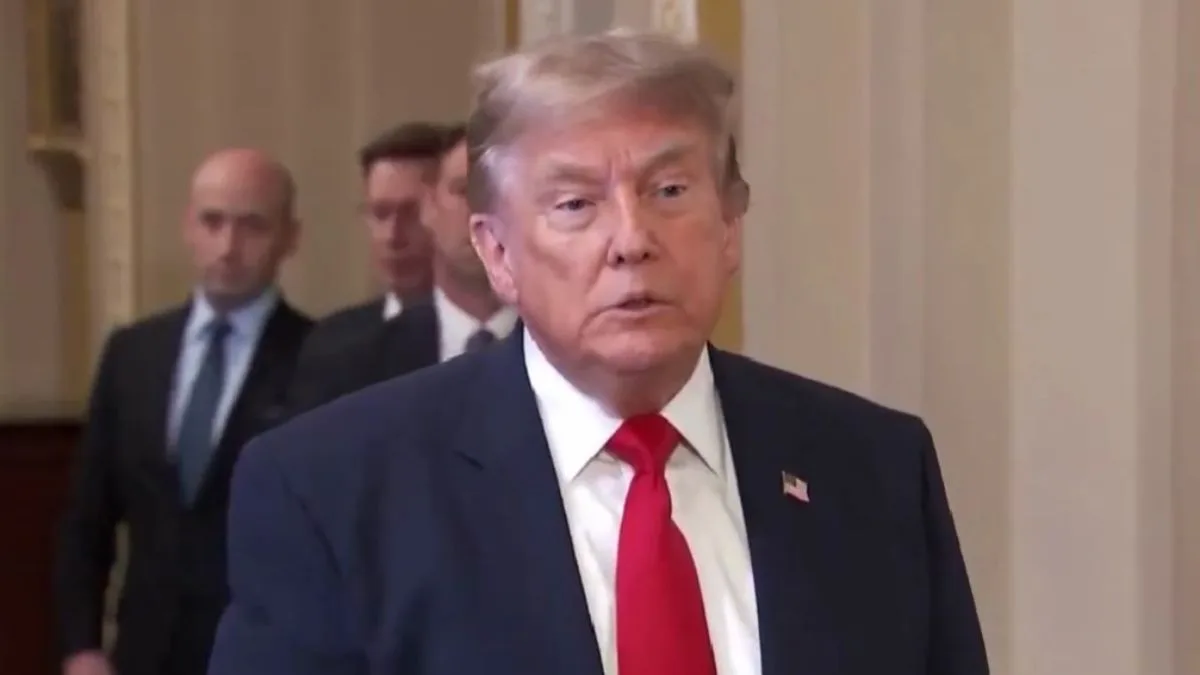
The US government wants a seat at the AI table, and possibly a share of the profits. Senior officials have been quietly talking to OpenAI about the government owning a piece of the company.

Statesman News Service | New Delhi |

Senior Trump administration officials have opened talks with major AI firms about acquiring government equity stakes. The discussions could reshape how AI wealth is distributed and how the government relates to tech industry.

What NOTUS reported

Senior US officials have held preliminary discussions with major artificial intelligence companies about the potential for the federal government to acquire some shares in their firms, according to three people familiar with the matter. All three sources spoke on the condition of anonymity to reflect private deliberations.

While planning is ongoing and details are in flux, discussions have centered on having the firms voluntarily cede the shares to the government.

The returns on the investment could then be directed to public purposes, such as distributing a dividend payment to all American households.

Reuters said it could not immediately confirm the report. OpenAI, Anthropic, and the White House did not immediately respond to requests for comment.

Who is at the center of these talks

Sam Altman, the CEO of OpenAI, has discussed the idea with senior Trump administration officials periodically since the president began his second term. Altman first pitched the concept directly to President Donald Trump in a conversation in early 2025, and has discussed it again with senior administration officials in recent weeks as a way to more broadly distribute the economic benefits of AI to the public.

Anthropic is a different story. OpenAI CEO Sam Altman has discussed the idea with senior Trump officials, while rival Anthropic was not in conversations over a government equity stake.

In 2025, Altman stated that OpenAI discussed with the US government the potential for federal loan guarantees to accelerate the construction of chip factories domestically, but did not request government guarantees for building its data centers.

Why these talks are happening now

The timing is not accidental. The deliberations come as OpenAI and Anthropic prepare for what are expected to be among the largest initial public offerings in history, and as they struggle with public concern over AI.

Public skepticism toward the technology is significant. Fifty-five percent of Americans think AI will do more harm than good in their day-to-day lives, according to recent Quinnipiac polling. The upsurge of public anger has posed a threat to AI’s development, particularly through local resistance to the construction of data centers crucial to its technological advancement.

OpenAI has itself put public ownership ideas on the table. OpenAI’s own policy report calls for creating a public wealth fund that provides every citizen, including those not invested in financial markets, with a stake in AI-driven economic growth.

The quantum precedent

The AI talks do not emerge in a vacuum. The Trump administration has already moved to take ownership positions in other technology sectors.

The Department of Commerce announced letters of intent to invest $2 billion across nine quantum computing companies under the CHIPS and Science Act. In exchange, the government would receive a minority equity stake in each business.

IBM confirmed it would work with the US government to develop America’s first purpose-built quantum foundry, supported by the proposed $1 billion award. IBM said the initiative would accelerate American quantum innovation and enable advanced quantum wafer production for a broad range of companies.

Other recipients are likely to include D-Wave Quantum, Rigetti Computing, Quantinuum, and Infleqtion, with each company potentially receiving around $100 million. Australian quantum startup Diraq could receive about $38 million.

The government has also taken stakes in other industries. The Trump administration has acquired a 10% stake in Trilogy Metals, a 5% stake in Lithium Americas, a 15% stake in MP Materials, and a 9.9% stake in Intel Corp, among others.

What the executive branch has already done on AI regulation

Separately from any equity discussions, the administration has moved to increase its oversight of AI models. Trump signed an executive order asking leading AI developers to voluntarily submit their most capable models for government cybersecurity tests before releasing them to the public.

Sanders pushes a harder line from the left

While the administration’s discussions focus on voluntary share transfers, Senator Bernie Sanders has proposed a far more aggressive approach from a different direction.

Sanders proposed the American AI Sovereign Wealth Fund Act, which would impose a one-time 50% tax, paid in shares, on OpenAI, Anthropic, and xAI, depositing the equity into a public fund that gives ordinary Americans voting rights, board representation, and eventually dividend checks.

Sanders said the bill would give the public a direct role in determining the future of this technology. He argued that AI companies built and trained their models using the creative work of millions of people, mostly without receiving permission from the creators or compensating them, and that those creative works come from some of the wealthiest people in the world.

Senator Elizabeth Warren, a Democrat from Massachusetts, also published a piece in Time on May 27, 2026, titled “Why We Need to Tax AI,” signaling that Washington politicians across the left are pressing for a share of AI wealth just as the companies prepare for major IPOs.

With Democrats in the minority in both houses of Congress, the initiatives are currently more political statements than any practical legislative threat.

The irony in the numbers

The piece notes the irony that the Trump administration, normally hostile to government ownership of private companies, has already taken equity stakes in roughly 20 firms, completing the ownership step without the redistribution that Sanders and progressives are calling for.

What is still unknown

The NOTUS report is explicit about the limits of what is out. The planning remains ongoing. No formal agreement has been in place. No companies have confirmed participation. The structure of any deal, including the size of any stake or how returns would be distributed to the public, has not been finalized.

Reuters was unable to independently verify the core claims of the report at the time of publication.

What is clear is that the idea of the federal government holding shares in AI companies is no longer a fringe proposal. It is being discussed by the CEO of the world’s most prominent AI company, by senior officials inside the White House, and by elected senators on both sides of the aisle, each with very different visions of what that ownership should look like and who it should benefit.

Also Read: Explained: Is the SpaceX IPO the best opportunity of the decade or Elon Musk’s most expensive con?

BJP accepts K Annamalai’s resignation; speculation grows over future plans

The BJP’s decision comes amid growing speculation around K Annamalai’s political future, with supporters and rivals closely watching his next move in Tamil Nadu.

Statesman News Service | New Delhi |

The BJP on Friday accepted the resignation of former Tamil Nadu unit chief K Annamalai from the party’s primary membership, a move that has intensified speculation about his political future.

The announcement has triggered fresh political chatter in Tamil Nadu, where Annamalai remains one of the BJP’s most recognisable faces. The decision follows a series of high-level meetings in New Delhi earlier this week and comes against the backdrop of the party’s disappointing performance in the recent Assembly elections in the state.

In a brief statement, the BJP said National President Nitin Nabin had accepted the resignation submitted by Annamalai.

“The National President of the Bharatiya Janata Party, Nitin Nabin, has accepted the resignation submitted by the Tamil Nadu Ex. State President, K. Annamalai, from the primary membership of the Party,” the party said in a press release.

Resignation follows meetings with BJP leadership

The development comes just three days after Annamalai travelled to the national capital and held meetings with BJP president Nitin Nabin, General Secretary BL Santhosh and Union Home Minister Amit Shah.

While neither the BJP nor Annamalai has publicly elaborated on the reasons behind the resignation, the timing has fuelled discussions about his future role in Tamil Nadu politics.

Social media interaction sparks curiosity

A day before the BJP’s announcement, Annamalai had invited people to join him for what he described as an open interaction on social media.

The former IPS officer said he was looking forward to sharing his thoughts with the public. In a post on X, he wrote, “Tomorrow at 12 Noon, I eagerly look forward to interacting with you all on social media to share my thoughts and have an open, heart-to-heart conversation.”
The message drew attention as rumours about a possible new political venture continued to circulate.

Speculation grows after Tamil Nadu poll setback

Talk of Annamalai launching a separate political outfit intensified after the BJP’s poor showing in the Tamil Nadu Assembly elections. Contesting 27 seats as part of its alliance with the AIADMK, the party secured around three per cent vote share.

In recent days, posters carrying slogans such as “Our Leader, Come and Lead Us” appeared across parts of Coimbatore ahead of Annamalai’s birthday on June 4, adding to speculation about his political plans.

During his time as Tamil Nadu BJP chief, the party’s vote share went up from around 3 per cent to 11 per cent in the 2024 Lok Sabha elections. However, the gains did not convert into electoral victories, with the BJP drawing a blank in the state. He was replaced by Nainar Nagendran as the Tamil Nadu BJP president the following year.

Taylor Swift’s ‘Toy Story 5’ song ‘I knew it, I knew you’ out now, and physical copies already sold out

A cowgirl, a reunion, and a bridge only Taylor Swift could write. “I Knew It, I Knew You” is on streaming now, and the vinyl is already gone. Swift and Jack Antonoff made a ‘Toy Story’ song. It sounds exactly as good as that sounds.

Statesman News Service | New Delhi |

‘Toy Story 5’ song, “I Knew It, I Knew You” by Taylor Swift has debuted on digital streaming services. Disney had previously billed the track as Swift’s return to country music when they helped her announce it earlier in the week.

The single is available on all major platforms, including Spotify, where it went live Thursday night.

Swift’s message to fans

When the single dropped, Swift shared a post on social media alongside vintage home video footage of herself as a young girl wearing a red cowgirl hat and a shirt embroidered with boots. In her message, she wrote that writing the song felt like “a musical departure and coming home at the same time” and that creating something for the character Jessie was both a new challenge and felt like second nature. She also noted that she has been a ‘Toy Story’ fan since she was five years old.


View this post on Instagram


A post shared by Taylor Swift (@taylorswift)

Swift thanked director Andrew Stanton, saying he had imagined her for the project years ago when writing the film. She also credited Randy Newman for building the sonic world of ‘Toy Story’ across the franchise.

Also Read: Taylor Swift’s net worth is now $2 billion; here is exactly how she built it to be the richest woman musician

Co-written and co-produced with Jack Antonoff

The track is co-written and co-produced by Swift and Jack Antonoff, who is returning to a production role for the first time since “The Tortured Poets Department.” Although Antonoff joined Swift’s circle after she had largely stepped away from country music, the two have worked in that territory before. They collaborated on the country-leaning song “Betty” from her 2020 album “Folklore,” which was also co-produced by Aaron Dessner.

In her social media post, Swift acknowledged Antonoff directly, saying the two wrote the song with deep affection for the ‘Toy Story’ characters that shaped their childhoods.

What the song is about

The song appears to follow the storyline of Jessie reuniting with her owner. It is sprightly and upbeat in tone. Critics have noted it could serve a similar narrative purpose to “When She Loved Me” in ‘Toy Story 2’, which played over a Jessie-focused montage. However, where that song dealt with separation and loss, “I Knew It, I Knew You” carries the opposite feeling, centered on the joy of reunion.

The song also includes one of Swift’s signature extended bridges, a structural element she is known for across her discography.

Lyrics

The song opens with Jessie recalling the details of a childhood friendship:

‘I knew you / Through the daze of the blades of the grass in summer / Parachutes for the free fall of being younger / I memorized the sound of your bare footsteps / Running wild, it’s been a long time.’

The chorus resolves with the lines: ‘I remembered I loved you / Came back when it mattered / I saw you, standing there in the light of the window / Wearing that same smile / Man, it’s been a while / But I knew it, I knew you.’

Physical copies sold out

Alongside the digital release, Swift has been selling both CD and vinyl versions of the single through her website. All physical editions sold out before their 48-hour sales windows closed.

Connection to the broader ‘Toy Story’ legacy

‘Toy Story 5’ is the work of Andrew Stanton, who also has a long history with the franchise. Randy Newman, who has composed and performed songs for every ‘Toy Story’ film, also continues his involvement in the new installment. Swift’s contribution marks the first time an outside artist has recorded an original song specifically tied to a Jessie storyline since Sarah McLachlan performed “When She Loved Me” for ‘Toy Story 2’ in 1999.

Mohali horror: Man grabs ex-lover by hair, stabs her over 20 times at workplace; then repeatedly slashes own throat

Police are examining CCTV footage and forensic evidence after a woman was killed inside a private company office in Mohali, while the accused remains hospitalised.

Statesman News Service | New Delhi |

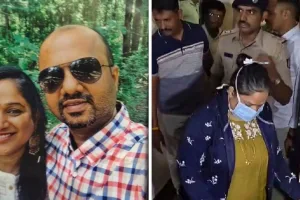
A 24-year-old woman was stabbed to death inside the office of a private company in Mohali on Thursday evening, allegedly by a former partner and colleague who later turned the knife on himself in an apparent suicide attempt, police said.

The killing, which was captured on CCTV cameras installed at the office, has raised fresh concerns over workplace violence and crimes linked to failed relationships. Police have registered a murder case and are examining footage from the scene as part of their investigation.

The victim, identified as Dimple, a resident of Patiala, suffered multiple stab wounds and was rushed to Fortis Hospital, where doctors declared her dead. The accused, Harvinder Mann alias Harry, remains in critical condition.

According to preliminary investigations, both worked for a private packers and movers company in Mohali and had known each other for nearly three years. Police said the two were previously in a relationship that had ended some time ago.

CCTV footage captures attack inside office

According to CCTV footage being examined by investigators, Harvinder entered the office around 7.40 pm on Thursday and allegedly launched the attack while Dimple was seated at her workstation.

As the woman tried to flee, the accused is seen chasing her across the office premises. Investigators said he allegedly grabbed her by the hair near the entrance and continued the assault. Several employees attempted to intervene and pull him away, but failed to stop the attack.

Police sources said the victim suffered more than 20 stab wounds. The assault continued even after she collapsed on the floor and stopped responding.

After the attack, the accused allegedly walked back towards the section of the office where Dimple had been working and turned the weapon on himself. As per reports, he repeatedly stabbed himself in the neck and throat in an apparent suicide attempt. Investigators said he inflicted dozens of injuries on himself before collapsing.

Terrified employees alerted police and emergency services, after which both the victim and the accused were taken to a nearby hospital, where Dimple was declared dead. The accused remains in critical condition.

Relationship angle under investigation

Police said the accused had reportedly been trying to reconcile with the victim after their breakup. Investigators are looking into whether an argument over their relationship immediately preceded the attack.

Aman Baidwan, Station House Officer of Phase-11 Police Station, said police received information about the incident around 7.40 pm and immediately dispatched a team to the spot.

A forensic team collected evidence from the office, and CCTV recordings have been seized for examination. Officials remained at the scene for several hours as part of the investigation.

The families of both the victim and the accused, who are from Patiala, have been informed. Police said statements of family members will be recorded as part of the probe.

The victim’s post-mortem examination is expected to be conducted on Friday.

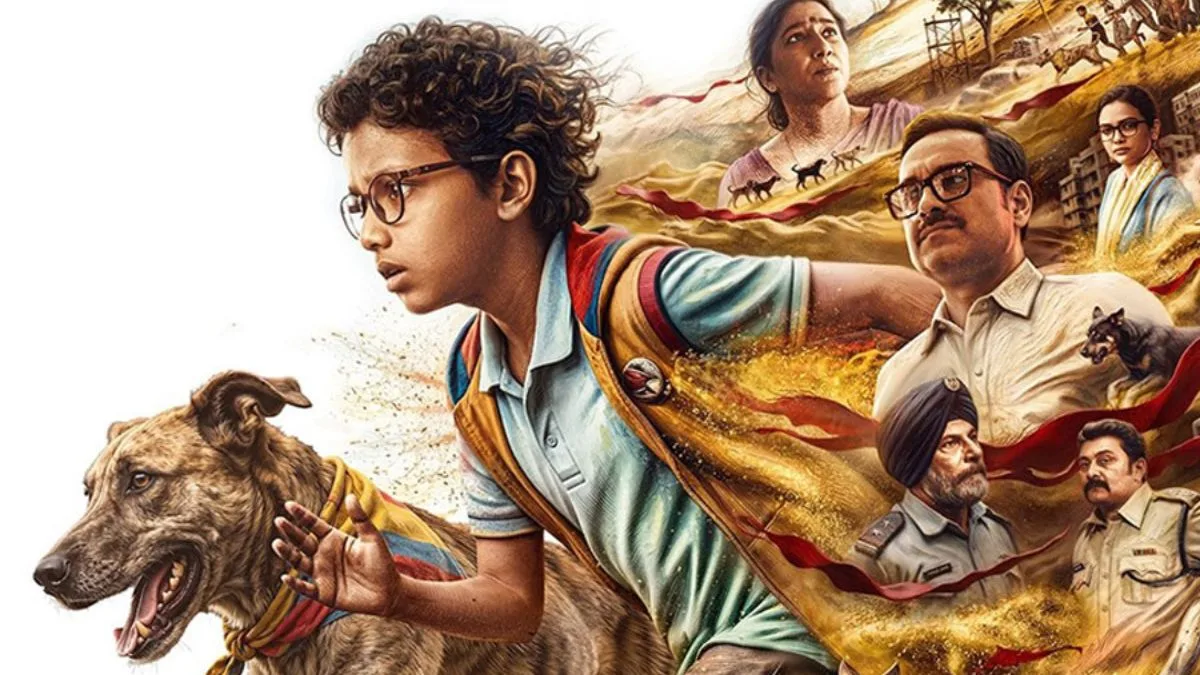
Gullak Season 5: Where to watch, cast, and everything you need to know

The Mishras are back. Same house, same chaos, same love, just a little older and a little more complicated. Season 5 of Gullak is streaming now, and it feels like coming home.

Statesman News Service | New Delhi |

Gullak Season 5 premiered on Sony LIV on June 5, 2026. Sony LIV itself confirmed the date on social media, writing: “Gullak Season 5 streaming from 5th June, only on Sony LIV.” The show is not available on any other OTT platform in India.

All seven episodes of Gullak Season 5 are available exclusively to Sony LIV subscribers. Those who do not have an active account, or whose subscription has lapsed, will need to sign up or renew to watch the new season. Sony LIV offers subscription plans starting at Rs 154 per month for SD quality and Rs 399 per month for 4K with Dolby Vision and Dolby Atmos.

How to watch

You can stream Gullak Season 5 through the Sony LIV website or its mobile app. The app is available on Android and iOS. Smart TV apps are also supported. All four previous seasons are also streaming on Sony LIV in India, available in Hindi with English subtitles. This makes it easy for new viewers to catch up before watching the latest season.

What the show is about

Gullak is a slice-of-life drama created by Shreyansh Pandey and produced by The Viral Fever (TVF). It is based on themes of middle-class family life, everyday nostalgia, sibling rivalry, and generational differences. The season’s central question, as stated by the makers, is: “Amid all the upgrades and upheavals, can you ever really outgrow where you come from?”

The cast

The returning cast includes Jameel Khan, Geetanjali Kulkarni, Harsh Mayar, and Sunita Rajwar. Shivankit Singh Parihar and Vipul Goyal are also part of the cast.

The biggest change this season is the recasting of the elder son Annu. Anant V Joshi has joined Gullak Season 5 as Anand Mishra, taking over the role from Vaibhav Raj Gupta, who played the character across the first four seasons.

How many episodes

Gullak Season 5 has seven episodes. Each episode runs for approximately 30 minutes, in line with the format followed by previous seasons.

The show’s track record

Gullak first aired in 2019 and has since built a loyal fan base. It is one of the few Hindi originals to reach a fifth instalment, marking a milestone in India’s streaming landscape. The show holds a 9.1 rating on IMDb and features in the platform’s Top 250 TV Shows worldwide.

Previous seasons

All seasons of Gullak follow the same release pattern. Season 1 released in June 2019, Season 2 in January 2021, Season 3 in April 2022, and Season 4 in June 2024. All of them are currently available to stream on Sony LIV.

Also Read: Raakh OTT release date and platform: When and where to watch Ali Fazal and Sonali Bendre’s crime thriller

‘Overlooking Suryakumar is not right’: Former chief selector warns against removing India’s T20 captain

Former India chief selector MSK Prasad says removing Suryakumar Yadav as T20I captain now would be premature. He backs Shreyas Iyer, Tilak Varma and others as future leadership options.

Statesman News Service | New Delhi |

Former India wicketkeeper and chief selector MSK Prasad has backed Suryakumar Yadav to continue leading India’s T20I side, saying that removing him as captain at this stage would be premature despite the batter’s recent struggles with form.

With India’s selectors set to meet in Mumbai on Saturday to pick squads for the upcoming Ireland series and the five-match T20I tour of England, Suryakumar’s future as captain has become one of the key talking points ahead of the selection meeting.

Prasad urges patience with Suryakumar

Prasad believes Suryakumar deserves more time, especially after leading India to another T20 World Cup title.

“Overlooking Surya is not the right thing to do because he has just handed over one more Men’s T20 World Cup to us,” Prasad told IANS.

The former selector acknowledged that the Mumbai batter has endured a difficult run over the last year, including a modest IPL 2026 campaign in which he scored 270 runs in 13 matches at a strike rate of 147.54, registering only two half-centuries.

“I know he has gone through a rough patch in the last one to one-and-a-half years. But removing him at this stage is not the right signal. Give him a couple of series. If the lean patch continues, then you have a deputy ready to take over,” he added.

India should start grooming the next T20 captain

While backing Suryakumar, Prasad stressed the need for India to identify and prepare future leaders.

“Now is the time to get ready with your next leaders. If you can identify someone and make him deputy to Surya, it will be nice to see,” he said.

Axar Patel served as India’s vice-captain during their successful T20 World Cup campaign, but Prasad feels selectors should continue looking at younger leadership options for the future.

Shreyas Iyer, Hardik Pandya among captaincy contenders

Prasad named several players who could emerge as long-term captaincy candidates, including Shreyas Iyer, Hardik Pandya, Sanju Samson, Ishan Kishan, Tilak Varma and Rajat Patidar.

“Hardik is one potential candidate. Shreyas is another. People like Ishan Kishan, Tilak Varma and Sanju Samson are also in line,” he said.

Prasad was particularly impressed by Tilak Varma’s leadership potential.

“We think Tilak Varma is the answer for the next few years for Indian cricket in the T20 format. He is not a bad choice at all.”

He also highlighted Rajat Patidar’s credentials after leading Royal Challengers Bengaluru to consecutive IPL titles.

Also Read: Shreyas Iyer to replace Suryakumar Yadav as India’s T20I captain, Tilak Verma to be appointed his deputy: Report

Shreyas Iyer emerges as leading candidate

Among the available options, Shreyas appears to have the strongest leadership résumé.

The batter captained Kolkata Knight Riders to the IPL 2024 title and has also guided Delhi Capitals and Punjab Kings to IPL finals. His recent appointment as India’s ODI vice-captain has further strengthened his case for a bigger leadership role in white-ball cricket.

Meanwhile, Tilak Varma has regularly captained India A in white-ball cricket and is set to lead the side in the upcoming tri-series in Sri Lanka.

Prasad also called for workload management, suggesting that players involved in both the T20 World Cup and IPL 2026 should be rested for the Ireland and England assignments.

“After the World Cup, all the players looked jaded and exhausted in the IPL. Why not give them a break and give opportunities to those who performed in the IPL?” he said.

The former chief selector believes India can use the Ireland series to test emerging leaders and evaluate the next generation of players.

“Hand over the baton to someone like Shreyas Iyer or another future leader. Give opportunities to players who have done well and are seriously in the leadership mix, such as Rajat Patidar and Ishan Kishan.”

Prasad also mentioned youngsters like Vaibhav Sooryavanshi as players who could benefit from greater exposure, while reiterating that several senior players appeared mentally and physically fatigued after a packed season.

“The focus should be on giving chances to the next level of players and understanding how India can move forward in the future,” he concluded.

Marjane Satrapi, who survived revolution and exile, died of a broken heart at 56

Her drawings looked like something a child might make. They contained things no child should ever have to know. That tension was the whole art.

Statesman News Service | New Delhi |

Marjane Satrapi, Iranian-French graphic novelist and filmmaker whose autobiographical work ‘Persepolis’ reshaped how the world understood Iran, died on June 4. She was 56. Her family released a statement saying she died of grief just over a year after the death of her husband and the love of her life, Swedish producer and screenwriter Mattias Ripa, who passed away on April 8, 2025. No further medical details were provided.

She was 56 years old. She was also, by any honest measure, one of the most consequential artists of her generation.

Also Read: ‘Top Gun: Maverick’ actor James Handy, 81, stabbed to death by girlfriend’s son in Los Angeles

Childhood inside a revolution

Satrapi was born in Tehran in 1969. Her childhood was shadowed by polarization. She grew up in a communist-leaning household and studied abroad in Vienna and France as a young adult. The 1979 Iranian Revolution and its resulting theocratic regime indelibly altered her life.

She was 10 years old when Ayatollah Khomeini came to power. That timing mattered enormously. She was old enough to remember the Iran before the revolution. She was young enough to come of age entirely under its constraints. The combination gave her a double vision that would define her art.

After the revolution, her family’s Western way of life drew the attention of Iranian authorities. By 1984, her parents decided to send her to Austria to attend school. A failed relationship there exacerbated her sense of alienation and contributed to a downward spiral that left her homeless and using drugs. Satrapi returned to Tehran at age 19, studied art, and after a short-lived marriage, moved back to Europe in 1993. In France she earned a degree in art, and by the mid-1990s she was living permanently in Paris.

This biography is not just backstory. It is the raw material of everything she made.

‘Persepolis’ and the power of the graphic memoir

Published in four French volumes between 2000 and 2003, Satrapi’s autobiographical comic book became an international bestseller. It has since been translated into more than 20 languages.

The work chronicled her childhood in Iran during and after the 1979 revolution and her later experiences living abroad. It is widely credited with helping bring graphic memoirs into mainstream literary culture. Through a deeply personal story, Satrapi offered readers an accessible window into Iranian society and the challenges of exile.

The book’s visual language was deliberate. The stark black-and-white drawings, spare and almost childlike in style, created a kind of clarity that dense prose rarely achieves. Satrapi’s work mixed political defiance with dark humour and a stripped-down visual style, making her one of the best-known graphic novelists of her generation.

She understood something that many writers miss. Simplicity is not the absence of depth. It is another path to it.

When ‘Persepolis’ was first published by Pantheon two decades ago, Satrapi brought North America a child’s-eye view of revolution in the Middle East. She also changed the future of comics publishing. The phenomenon of ‘Persepolis’ and its conversion of general readers into a breakthrough bestselling audience opened the gates to today’s diverse graphic novel landscape.

Her influence on the medium is difficult to overstate. Publishers Weekly compared her to Art Spiegelman, the creator of ‘Maus’. That comparison was not flattery. It was accurate.

From page to screen

The semi-autobiographical novel was later turned into an animated film, which she helmed herself. It premiered at Cannes in 2007. Satrapi and her creative partner Vincent Paronnaud earned an Academy Award nomination for Best Animated Feature for their work on the film.

The film’s success raised an interesting question about Satrapi as an artist. Hollywood had come calling about the film rights to ‘Persepolis’ years earlier. She turned them down. Hollywood immediately came knocking to adapt the work, but Satrapi resisted the offers and bravely decided to direct her own film adaptation. That decision preserved the book’s tone, its politics, and its intimacy. A Hollywood version of ‘Persepolis’ would likely have been a very different film.

She went on to direct films including ‘Chicken with Plums’, ‘The Voices’, and ‘Radioactive’, about scientist Marie Sklodowska Curie. Her last film was the 2024 ‘Dear Paris’ (‘Paris Paradis’), a dark comedy set in the French capital where a flurry of charming characters confront death only to embrace life once again.

Her filmmaking was uneven. ‘Radioactive’ received mixed reviews. ‘The Voices’ divided critics. But across all of it, there was a consistent sensibility: a preference for moral complexity, a discomfort with easy sentiment, and a willingness to make work that did not try to please everyone.

Activist, dissident, inconvenient voice

Satrapi was never willing to be simply a writer. She spoke, acted, and refused.

She backed the “Woman, Life, Freedom” mass protests that followed the death of Mahsa Amini in police custody in 2022, and published a collection of graphic novel-style essays under the same title about the movement.

Her last book, ‘Woman, Life, Freedom’ (2024), is a collaborative anthology assembled in just five months, bringing together works of artists and academics on the death of Mahsa Amini and the protests that followed.

Last year she refused to accept France’s Légion d’Honneur, citing France’s “hypocrisy” in its diplomatic dealings with Iran. “I can’t ignore what I see as a hypocritical attitude toward Iran, which forged the other part of my identity,” Satrapi wrote in an open letter to France’s culture minister. She added that she could not accept the honor while Iranian dissidents struggled to obtain tourist visas to enter France, and the children of Iranian oligarchs moved freely between the two countries.

This refusal was characteristic. She had spent her career making it clear that she would not be a decorative dissident. She wanted institutional accountability, not institutional recognition.

What she left behind

After her husband’s death, Satrapi set up the Mattias and Marjane Ripa-Satrapi Cinema Foundation to provide support for foreign students who want to study filmmaking in Paris. Even in grief, she was thinking about who comes next.

Satrapi also designed a nine-metre wool triptych for the Paris 2024 Olympics, showing athletes competing around the Eiffel Tower. The range of her work, from comics to cinema to textile art, reflected an artist who never allowed herself to become defined by a single format.

The Élysée Palace announced her death, saying that her work “captivated a global audience.” The office of French President Emmanuel Macron stated that her passing marked the loss of a leading figure in French culture and an artist deeply committed to freedom, whose work carried a universal message and earned her immense international acclaim.

The Narges Foundation, an Iranian women’s human rights organization, described her as a fearless advocate for feminism and women’s rights who championed the struggles of Iranian women.

What made Satrapi’s work lasting was not that it explained Iran to Western readers. Plenty of journalists and academics have tried to do that. What she did was harder. Marjane made Western readers feel the specific weight of growing up inside a particular history, in a particular body, in a particular family. She made the political personal in the oldest and most demanding sense of that phrase.

Marjane did it in black and white. She did it with a clean line and a sharp wit. And, she did it without asking for permission.

She was 56 years old. The work is permanent.

HC quashes herbicide registration

The High Court held last week that the grant of the Registration Certificate underSection 9(3) was manifestly illegal.

Statesman News Service | New Delhi |

Underscoring the importance of strict regulatory compliance in matters concerning agrochemicals and public safety, a Division Bench ofDelhi High Court (corum: C Hari Shankar and Om Prakash Shukla) has quashed the registration granted to aDelhi-based company, Crystal Crop Protection Limited (CCPL)for the import and manufacture of Halosulfuron methyl, a herbicide used to treat sledges and weeds in crops such as sugarcane and maize.CCPL obtained a permit in 2011 for the import of samples manufactured and supplied by M/s Fertiagro,Singapore.

However, CCPL subsequently applied for a Registration Certificate in 2016 for the import of Halosulfuron Methyl 98% manufactured by Jiangsu Agrochemicals, China and supplied by M/s Hebei Bestar,China.The Registration Committee granted the Registration Certificate despite this discrepancy and in the-absence of any material demonstrating that M/s Jiangsu Agrochemicals was authorised to manufacture Halosulfuron Methyl 98% in 2011. Notably,M/s Jiangsu Agrochemicals was granted temporary registration for the manufacture of Halosulfuron Methyl98% only in October 2018.

The High Court held last week that the grant of theRegistration Certificate underSection 9(3) was manifestly illegal. As a consequence of the judgment, CCPL is no longer entitled to import Halosulfuron Methyl 98% or undertake the indigenous manufacture of Halosulfuron methyl 75% WG.

In a detailed order, the Court recognised the serious consequences that may arise from the import and use of pesticides/insecticides sourced from an untested or unauthorised manufacturer,and stressed the potential risks posed to human and animal life, as well as the adverse impact such products may have on the environment. The orders came on aLetters Patent Appeal preferred by Dhanuka Agritech Limited, who were represented by Ms. Shoba Ramamoorthy,Advocate-on-Record, Supreme Court of India.

Ramalinga Reddy resigns from Karnataka Cabinet days after oath, says ‘I’m still in Congress’

Emphasising that he never sought positions for himself, Ramalinga Reddy said he had not lobbied for a berth in the Cabinet and had never requested anyone to make him a minister.

Statesman News Service | New Delhi |

Just 48 hours after being sworn into the DK Shivakumar government, senior Congress leader Ramalinga Reddy has stepped down from the Karnataka Cabinet on Friday, triggering political buzz over the first major setback for the newly formed administration. While announcing his resignation, the veteran leader made it clear that his exit was restricted to the government and did not signal any break with the Congress party, with which he said he has been associated for more than five decades.

The resignation comes barely a day after responsibilities were assigned to ministers in the newly constituted Karnataka government. Under the allocation approved by Governor Thaawarchand Gehlot, Ramalinga Reddy had been entrusted with the Major and Medium Irrigation portfolio. The swearing-in ceremony was held on Wednesday at Lok Bhavan, where DK Shivakumar took oath as Karnataka’s 34th Chief Minister.

The portfolio announcement was made late Thursday, making his resignation one of the quickest exits from a ministerial post in recent Karnataka political history.

Resignation, not rebellion

Addressing reporters, Ramalinga Reddy stressed that he continues to remain a part of the Congress and has not severed ties with the organisation.

Displaying his resignation letter before the media, he said his decision was confined to relinquishing the ministerial post and should not be interpreted as a departure from the party.

Ramalinga Reddy said he has spent 53 years in Congress and has handled several responsibilities during his long political career.

Recalls decades of service

The senior leader also pointed to his experience in previous Congress governments, noting that he had served as a minister under former Chief Ministers M Veerappa Moily and SM Krishna, among others.

Emphasising that he never sought positions for himself, Ramalinga Reddy said he had not lobbied for a berth in the Cabinet and had never requested anyone to make him a minister.


RBI keeps repo rate unchanged at 5.25%, says India better placed to weather global turbulence

The RBI maintained the status quo on interest rates and signalled confidence in India’s ability to navigate global volatility despite geopolitical and market uncertainties.

Statesman News Service | New Delhi |

Choosing caution over a policy shift, the Reserve Bank of India on Friday left the repo rate unchanged at 5.25 per cent. The decision was unanimous, with the Monetary Policy Committee citing an uncertain global environment, geopolitical risks and inflationary pressures.

The decision comes at a time when policymakers are navigating a complex external environment marked by disruptions to trade routes, volatile financial markets and rising energy prices. While India has remained relatively resilient compared to several major economies, the central bank signalled that external risks continue to warrant caution.

Announcing the outcome of the MPC meeting, RBI Governor Sanjay Malhotra said all members voted in favour of maintaining the policy repo rate under the Liquidity Adjustment Facility (LAF) at 5.25 per cent.

As a result, the Standing Deposit Facility (SDF) rate remains at 5 per cent, while the Marginal Standing Facility (MSF) rate and the Bank Rate continue at 5.5 per cent.

Global uncertainties remain a key concern

Explaining the committee’s thinking, Malhotra said the global economy continues to face multiple headwinds, including supply chain disruptions, uncertainty around trade flows and heightened market volatility.

“The global economy has been shaped by heightened uncertainty, disruptions to key trade routes and supply chains, increased market volatility, and cautious business sentiment,” the Governor said while announcing the policy decision.

He noted that India entered the current phase of global turbulence from a position of relative strength compared to previous periods of global stress.

According to Malhotra, the present environment should also be viewed as an opportunity to strengthen the country’s economic resilience while addressing emerging challenges.

“It is important to not only confront and address these challenges, but also, at the same time, take this as an opportunity to further enhance our resilience,” he said.

West Asia tensions and energy prices in focus

The RBI Governor also pointed to the continuing geopolitical impasse in West Asia as a major source of uncertainty for the global economy. Rising energy prices and supply chain disruptions linked to regional tensions remain among the key risks being watched by policymakers.

He said central banks across major economies have become increasingly cautious as they balance the need to support growth while keeping inflation under control.

Malhotra observed that some advanced economy central banks could increasingly lean towards monetary tightening as inflation concerns persist.

Markets showing mixed signals

While global equity markets have remained buoyant, aided by optimism around artificial intelligence-driven growth, bond markets continue to face pressure from inflation concerns and worries over debt sustainability, the Governor noted.

The latest decision follows the MPC’s previous policy review in April, when the committee had also unanimously opted to retain the repo rate at 5.25 per cent while maintaining a neutral policy stance.

‘DMK will never forget Congress’ betrayal’: Udhayanidhi Stalin attacks INC for supporting TVK

The DMK has decided not to attend the INDI bloc meeting scheduled for June 8 in New Delhi. The party attributed the decision to the sentiments of its cadre, who remain upset over Congress’ political stand after the Assembly elections.

Statesman News Service | New Delhi |

A sharp political confrontation has erupted between the DMK and Congress, with Udhayanidhi Stalin publicly accusing the Congress of betraying its longtime ally by backing Vijay’s Tamilaga Vettri Kazhagam (TVK) after the Tamil Nadu Assembly elections. The remarks signal a deepening rift between the two parties and have added fresh strain to opposition unity efforts, with the fallout now extending to the INDIA bloc as well.

Addressing a thanksgiving gathering in the Chepauk-Triplicane constituency, Udhayanidhi Stalin launched a direct attack on the Congress, claiming the party had abandoned the DMK despite years of political association. “DMK will never forget the betrayal of Congress. Even the winning MLAs of Congress have not met our leader. Congress has betrayed us by supporting them (TVK),” he said.

The statement marks one of the strongest public criticisms from the DMK leadership since Congress extended support to TVK following the Assembly polls.

Allegations of broken trust

Udhayanidhi Stalin also alleged that Congress failed to maintain communication with the DMK leadership on key political developments.

According to him, other alliance partners had continued to keep the party informed and coordinated with the leadership, while Congress chose a different course.

He claimed the conduct of Congress had caused resentment within the party and among DMK workers.

INDI bloc meeting to be skipped

The growing tensions have now begun affecting opposition coordination at the national level.

The DMK has decided not to attend the INDI bloc meeting scheduled for June 8 in New Delhi. The party attributed the decision to the sentiments of its cadre, who remain upset over Congress’ political stand after the Assembly elections.

While staying away from the meeting, the DMK maintained that it would continue to support and raise issues linked to national interest alongside other opposition parties.

Alliance strain widens

The latest remarks come amid an increasingly bitter phase in relations between the DMK and Congress.

With Udhayanidhi Stalin openly accusing Congress of betrayal and the DMK choosing to stay away from a key opposition meeting, the episode has exposed visible cracks within the opposition camp and highlighted the growing distance between two parties that had shared a long political partnership.

Noida sees two fire incidents in a day; all trapped occupants rescued, UP CM Yogi Adityanath directs relief operations

A fire in a high-rise apartment at Noida’s IVY County Society prompted a swift emergency response, while another blaze was reported separately in Sector 52.

Statesman News Service | New Delhi |

A major fire that broke out in an apartment at the Ivy County housing society in Noida on Friday prompted Uttar Pradesh Chief Minister Yogi Adityanath to direct officials to speed up relief and rescue operations while ensuring continuous monitoring of the situation.

The blaze erupted in a residential tower of the housing complex located in Sector 75, sending thick smoke billowing into the sky and triggering panic among residents. Firefighters rushed to the site and launched efforts to contain the flames. Officials said no casualties have been reported so far.

Taking cognisance of the incident, the Chief Minister instructed the district administration and emergency services to remain vigilant and ensure proper medical treatment for any injured persons. He also directed officials to maintain close oversight of relief and rescue work until operations are completed.

Visuals from the housing society showed flames and dense black smoke emerging from an apartment as fire personnel worked to prevent the blaze from spreading to neighbouring flats. Officials said operations were continuing to completely douse the fire.

Firefighters rescue people trapped in Sector 52 building

In a separate fire incident reported earlier in the day, a restaurant located on the ground floor of a commercial building in Noida’s Sector 52 caught fire, prompting a large-scale rescue operation.

According to fire department officials, initial information suggested that several people were trapped inside the building. Emergency teams reached the location within minutes and launched rescue efforts using firefighting and evacuation equipment.

“A fire broke out in a restaurant located on the ground floor of the building here. Initial information mentioned that a few people were also stuck in the building. Our response time was fast, and all our vehicles reached the spot quickly. Using all modern equipment, our teams extinguished the fire immediately. Our team has rescued all those people who were stuck here,” a fire department official said.

Officials later confirmed that all trapped occupants were safely evacuated and that no casualties were reported in the incident.

No casualties reported in either incident

Fire brigade personnel remained deployed at both locations through the day as cooling and monitoring operations continued.

The causes of the Sector 75 apartment fire and the Sector 52 restaurant fire have not yet been determined. Authorities are expected to investigate both incidents after firefighting operations are completed.

The twin fire incidents come just days after the deadly blaze at Delhi’s Flourish Stay hotel in Hauz Rani, which claimed 21 lives and reignited concerns over fire safety compliance in residential and commercial buildings.

Repo rate decision today: RBI likely to stay cautious amid global uncertainty

Economists and market participants are closely tracking RBI’s latest projections on inflation, growth and crude oil prices as the central bank unveils its policy verdict.

Statesman News Service | New Delhi |

The Reserve Bank of India is expected to hold interest rates steady when Governor Sanjay Malhotra announces the outcome of the Monetary Policy Committee (MPC) meeting on Friday.

While there is little expectation of a rate move this time, the policy assumes importance because it comes amid fresh tensions in West Asia that have unsettled global markets and sparked concerns over crude oil prices. For a country that imports most of its oil needs, any prolonged rise in prices could complicate the inflation outlook and influence the RBI’s policy calculations in the months ahead. Market participants will also closely track RBI Governor Sanjay Malhotra’s commentary for clues on the rate trajectory in the months ahead.

Most economists believe the central bank is unlikely to make any immediate move on interest rates, preferring to assess evolving global developments before altering its stance.

HSBC Chief India Economist Pranjul Bhandari said the RBI is expected to maintain the status quo for now, though the tone of its guidance will be important. According to her, financial markets are currently factoring in around two rate cuts from the final quarter of 2026 rather than expecting a sharp shift towards tighter monetary conditions.

She also said investors would be watching whether the central bank revises its assumptions on crude oil prices in its latest projections, particularly in light of the recent energy shock and its potential impact on inflation.

According to CareEdge Ratings, India’s GDP growth could be around 6.7 per cent in FY27 if crude oil prices average close to $90 per barrel.

SBI Research has also projected no change in policy rates, arguing that the RBI is likely to continue with a data-driven approach as inflation risks and external uncertainties persist. The report estimates GDP growth at 6.6 per cent in FY27 and around 7.5 per cent in FY26.

The research house further noted that consumer price inflation may remain above 5 per cent for an extended period if fuel prices continue to stay elevated amid global disruptions.

Emkay Global Financial Services has similarly forecast that the MPC will leave rates unchanged. The brokerage believes recent corrections in Brent crude prices and an improving external account position provide some relief, reducing the urgency for policy action.

At its previous policy meeting in April, the MPC had left the repo rate unchanged at 5.25 per cent while retaining its neutral policy stance.

Super El Niño Effect Hits Home: Bengal’s Villages Face Early Climate Breakdown

The first signs of the developing global Super El Niño are no longer confined to satellite maps over the Pacific Ocean.

ISWABRATA GOSWAMI | Kolkata |

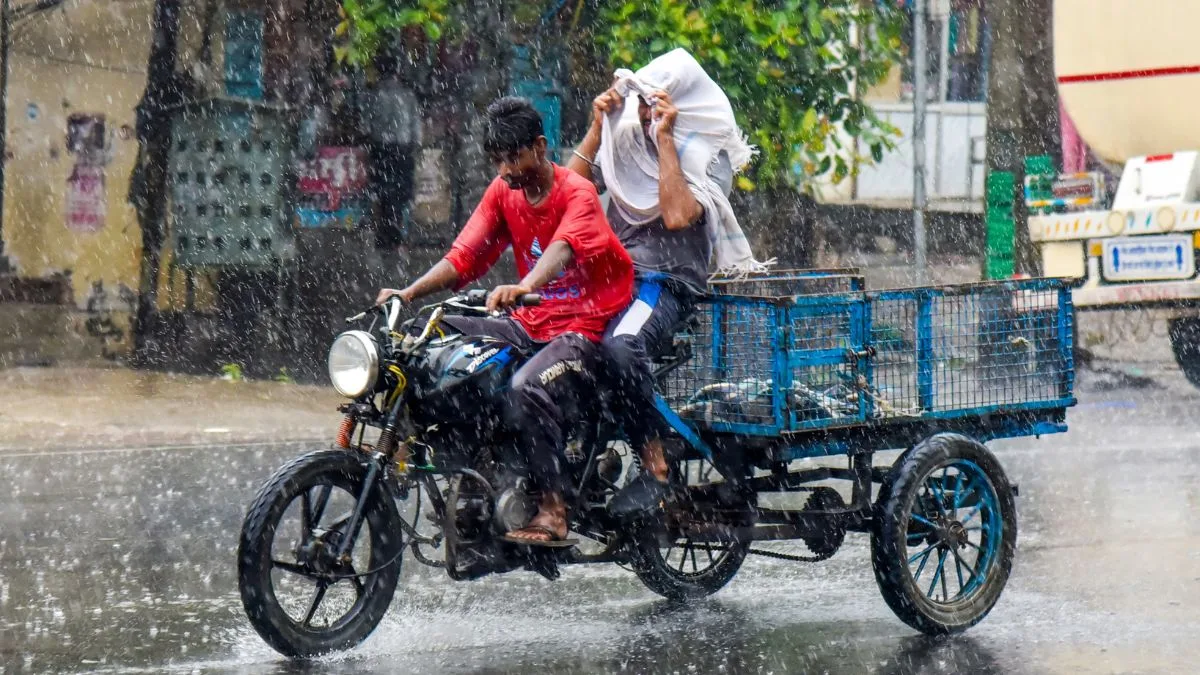
The first signs of the developing global Super El Niño are no longer confined to satellite maps over the Pacific Ocean. They are now visible in the drying ponds, collapsing groundwater levels, and cracked agricultural fields of rural Bengal, where villages dependent on monsoon rain are beginning to experience an alarming climate shift long before the arrival of peak summer. Across the agrarian belt of southern West Bengal, farmers confront a new and dangerous reality: pumps running dry, canals disappearing before winter ends, and farmland turning barren under relentless heat.

In Uttarbill-Bhedua village under Garbeta Block of Paschim Medinipur, the crisis has become a stark warning of how global climate instability is rapidly entering India’s rural hinterland. Climate agencies, including the National Oceanic and Atmospheric Administration (NOAA) and the India Meteorological Department (IMD), have warned that a powerful Super El Niño may intensify during late 2026, potentially weakening India’s southwest monsoon and triggering severe heatwaves, drought-like conditions, and agricultural distress across large parts of the country. But for farmers here, the impact is no longer a future forecast. It has already begun unfolding beneath their feet. The ponds that once sustained irrigation throughout the year are shrinking into muddy depressions.

Groundwater tables are falling sharply due to relentless extraction through deep borewells and submersible pumps. Monsoon rainfall has become increasingly erratic, while prolonged heat is draining moisture from the soil at unprecedented speed. For 68-year-old farmer Anisur Pathan, the climate crisis arrived the day his irrigation pump suddenly stopped drawing water in the middle of the boro cultivation season. Within days, standing paddy dried beneath the scorching sun. Scientists warn that if current Pacific warming trends continue, the world could witness one of the strongest El Niño events in modern history, a phenomenon capable of disrupting rainfall systems, intensifying extreme weather, and deepening water stress across monsoon-dependent regions like India. In Bengal’s villages, that planetary crisis is already beginning to take the shape of empty ponds, failed crops, and a growing fear that the monsoon can no longer be trusted.

WHEN WATER STOPS RESPONDING In Uttarbill-Bhedua, 68-year-old farmer Anisur Pathan walks slowly across his field each morning, not to assess growth, but to confirm absence. The soil, once soft and moisture-rich even in late summer, now cracks under foot long before peak heat arrives. The ponds that sustained multiple generations of cultivation no longer hold water through the year. Canals that once overflowed during monsoon spells now vanish into dry beds before winter ends. “We are no longer farming land,” he says quietly, “we are farming uncertainty.”

For decades, agriculture in this part of Paschim Medinipur, depended on shallow groundwater and seasonal rainfall. Wells were shallow, recharge was natural, and monsoon cycles though variables were broadly dependable. But over the past decade, that equilibrium has fractured. As rainfall patterns turned erratic and summer temperatures rose, villagers increasingly turned to submersible pumps and deep borewells. At first, it appeared to be a technological relief. Water was available even when the skies failed. Agriculture continued. Harvests were secured. But beneath the surface, a slower crisis was unfolding. Each pumping season began drawing groundwater deeper into the earth, lowering the water table beyond the reach of traditional systems.

What was once a shallow, easily accessible aquifer has now retreated hundreds of feet below ground in many pockets, leaving farmers dependent on increasingly expensive and energy-intensive extraction? The warning signs became unmistakable during the last boro season. In Anisur Pathan’s case, irrigation stopped abruptly in the middle of a cycle. Pumps ran, pipes hummed, electricity flowed but water did not rise. Within days, standing crops turned yellow, then brittle, then lifeless. “It was not as dry as before,” he recalls. “It was like the earth had closed itself.”

A GLOBAL CLIMATE SYSTEM TIGHTENING ITS GRIP While local distress intensifies, climate scientists are tracking an atmospheric shift thousands of kilometres away in the equatorial Pacific. According to projections from the National Oceanic and Atmospheric Administration, sea surface temperatures in key ENSO monitoring zones have been rising steadily since late 2025, increasing the probability of a strong El Niño event developing through 2026 and potentially extending into 2027. El Niño is part of the El Niño–Southern Oscillation (ENSO) system, a periodic climate cycle that influences weather patterns across the globe.

During El Niño phases, weakened trade winds allow warm Pacific waters to shift eastward, disrupting atmospheric circulation. The result is often a weakened Indian monsoon, altered rainfall distribution, and intensified heat extremes across South Asia. For India, this matters acutely. The India Meteorological Department has indicated a higher probability of below-normal monsoon rainfall for 2026, with the risk of rainfall deficits rising significantly compared to climatological averages.

Even marginal reductions in monsoon rainfall can have disproportionate effects in regions where agriculture remains overwhelmingly rain-dependent. Nearly 60 per cent of Indian agriculture still relies directly on monsoon precipitation rather than irrigation infrastructure, making the system highly vulnerable to climatic fluctuations. WHEN FORECASTS BECOME LIVED REALITY In Bengal’s rural districts, the abstract language of probability is being translated into lived experience. Farmers no longer speak only of crop cycles but of “failed seasons.” The timing of rainfall, once predictable within a narrow window, is now increasingly erratic.

Delayed monsoons compress sowing schedules, while early withdrawal of rains cuts short critical growth phases. Agricultural economists warn that this disruption is not merely meteorological but systemic. Reduced rainfall is occurring simultaneously with rising groundwater dependence, increased pumping costs, and declining aquifer recharge. The result is a structural imbalance where each failed monsoon deepens reliance on a resource that is itself shrinking. Dr Pravat Kumar Shit, a geo-scientist, stated that the El Niño–Southern Oscillation (ENSO) cycle and the Indian Ocean Dipole (IOD) significantly influence surface water quality, groundwater recharge patterns, groundwater drought, and groundwater level fluctuations, both directly and indirectly. In the Junglemahal districts, more than 60% of farmers and rural households depend heavily on groundwater resources and deeper bore-wells for irrigation during the Kharif cropping season (June to October).

Declining groundwater availability during El Niño years has serious socio-economic impacts, including reduced agricultural productivity, increased irrigation costs, livelihood insecurity, household financial stress, and greater vulnerability among rural communities dependent on agriculture. In Paschim Medinipur, this imbalance is already visible in the form of abandoned shallow wells, non-functional ponds, and fields lying fallow even during traditional cultivation periods.

THE LARGER PACIFIC SIGNAL Globally, the concern is not just the emergence of El Niño but its potential intensity. Climate models suggest that sea surface temperature anomalies in the central and eastern Pacific could exceed 2°C above average by late 2026 levels associated with historically severe “super” El Niño events. Such events are not new. The world has witnessed catastrophic El Niño episodes in 1982–83, 1997–98, and 2015–16, each of which triggered widespread droughts, floods, agricultural collapse, and economic disruption across multiple continents. The 1876–78 events, often cited by historians, are estimated to have contributed to tens of millions of deaths globally due to famine and disease. What makes the current situation more alarming, scientists argue, is the background of global warming. With the planet already approximately 1.4°C warmer than pre-industrial levels, even natural climate cycles now operate in a more volatile environment. Oceans store greater heat energy, amplifying atmospheric responses and intensifying extreme weather outcomes.

RURAL BENGAL AT THE FRONTLINE OF A PLANETARY SHIFT In villages like Uttarbill-Bhedua, the intersection of these global systems is felt not through data dashboards but through everyday deprivation. A failed pump is not an anomaly, it is a warning. A dry pond is not seasonal, it is structural. A missed rainfall is not an event, it is a threat to livelihood continuity. Farmers describe increasing unpredictability as the most distressing change. Crops can no longer be planned with confidence. Input costs rise while output becomes uncertain. Debt cycles deepen. Migration pressures grow. Professor Dr. Biswajit Bera explained that deficient rainfall directly threatens kharif crops such as rice, pulses, and oilseeds.

Lower agricultural production often leads to rising food prices, inflation, and declining rural demand. He further warned that prolonged heatwaves and falling reservoir levels may also affect hydroelectric generation and drinking water supply. The crisis is not limited to villages alone. Cities across India are also beginning to suffer from environmental stress. Bengaluru recently experienced severe water shortages. Chennai repeatedly approached “Day Zero” conditions where reservoirs nearly ran dry.

Across urban India, wetlands are disappearing beneath concrete expansion while groundwater extraction continues without adequate regulation. The signs of environmental imbalance are now impossible to ignore. Summer heat lingers longer than before. And yet, the landscape still carries echoes of its older rhythm. Morning light still falls on paddy fields. Birds still circle over dry canals. Farmers still walk their fields before sunrise, hoping for signs of moisture beneath the soil. But hope, increasingly, is being recalibrated.

A CLIMATE WARNING WRITTEN IN SOIL Scientists caution that if Super El Niño conditions fully develop, India could face a significant weakening of the southwest monsoon, with cascading effects on agriculture, food prices, water availability, and rural employment. Combined with ongoing groundwater depletion and rising temperatures, the risk of multi-layered drought conditions cannot be ruled out. For Bengal’s rural hinterland, this means that climate change is no longer a future tense phenomenon. It is present, incremental, and accumulating. Back in Uttarbill-Bhedua, Anisur Pathan still follows his routine. He walks to his field, bends down, and presses the dry earth between his fingers. There is no water to feel, only heat stored in soil. “The rain will come,” he says, half as belief, half as memory. But even that certainty now sounds like a question the climate is no longer obligated to answer.

THE WRITER IS A SENIOR STAFF REPORTER WITH THE STATESMAN.

Will AI kill solar and wind energy?

Global warming policies were expected to drive a rapid shift toward a renewables-based energy system dominated by wind and solar.

SUNIL SHARAN | New Delhi |

Global warming policies were expected to drive a rapid shift toward a renewables-based energy system dominated by wind and solar. While growth in these sources did occur, it has not matched the pace that was widely anticipated. In the United States, the rise of cheap and abundant shale natural gas significantly reshaped the energy mix, displacing coal and limiting the relative share of wind and solar in electricity generation. In China and India, the situation has been different.

Coal remains dominant because it is widely available domestically, while natural gas is more limited or expensive to secure at scale. As a result, coal has retained its central role in both countries’ power systems. Solar and wind always provide intermittent, variable power. It was widely assumed that a cost-effective, utility-scale electricity storage solution would emerge to solve this problem, but that has not yet happened at the scale originally expected. In the pre-AI era, solar and wind were typically integrated into power systems alongside more reliable sources such as coal, natural gas, and nuclear energy.

For example, if the sun was shining on a Monday, electricity demand could be met largely by solar power during the day. At night, coal, natural gas, or nuclear plants would supply the required electricity. If the following Tuesday was cloudy or gloomy, generation would shift back toward coal, gas, or nuclear to maintain supply. AI introduces a new and more demanding challenge. AI data centers require continuous, high-quality, always-on electricity, which solar and wind alone struggle to guarantee without large-scale storage or back-up systems. In addition, they require very large amounts of power.

As a result, the AI industry is now actively searching for new and expanded sources of reliable electricity. One of the major challenges in powering AI systems is electricity transmission. High-voltage transmission lines are expensive, slow to build, and often face regulatory and land-use constraints. As a result, some companies are exploring more localized power solutions, sometimes referred to as microgrids. These are self-contained energy systems that can operate independently from the main electricity grid. Technologies such as small modular nuclear reactors are an example of such microgrids.

In such isolated systems, the foccus is on highly reliable, always-available power generated close to the point of use. In this context, solar and wind are expected to play a limited role because their output is variable and depends on weather conditions, making them less suited as primary sources in fully self-contained AI-focused microgrids. The pace of AI infrastructure development is extremely rapid in both the United States and China. AI systems are widely seen as transformative technologies that promise significant new wealth creation, which is driving aggressive and sustained investment. As a result, development is moving quickly, without waiting for long-term solutions such as large-scale energy storage to mature alongside renewable energy systems.

In this environment, electricity demand is rising faster than new infrastructure can be built. In the United States, this reinforces the role of natural gas as the dominant source of reliable power. In China and India, where coal remains more established and readily available, it is likely to continue playing a central role in meeting growing demand. In India, AI data centers have not yet been built at the scale seen in the United States and China. When India does reach that stage, it will need to supply large amounts of reliable electricity. India has placed strong emphasis on solar energy in particular and has had some success in meeting the needs of ordinary consumers through renewable expansion. However, the key question is what choices will be made when large-scale AI data centers begin to arrive.

Will India rely more on coal generation, which is relatively cheap, widely available, and highly reliable, or on solar power, which is intermittent, variable, and often more expensive when reliability is taken into account? My view is that India is more likely to turn to coal to meet this demand, given its existing infrastructure and the need for dependable electricity supply. Then there is an overall question. Solar and wind were already struggling in the pre-AI days to displace coal and natural gas at the system level, despite strong expectations that they would become dominant sources of electricity. Now that AI is here and electricity demand is rising rapidly, will they push solar and wind further behind in the energy mix?

(The writer is an expert on energy and contributes regularly to publications in India and overseas.)

Nature for climate, and nature for our future

World Environment Day , observed on 5 June every year, serves as a reminder of humanity’s collective responsibility to protect the environment and ensure a sustainable future for generations to come.

DR J P GUPTA | New Delhi |

World Environment Day , observed on 5 June every year, serves as a reminder of humanity’s collective responsibility to protect the environment and ensure a sustainable future for generations to come. The theme proposed by the United Nations for World Environment Day 2026, “Nature for Climate, Nature for Our Future,” highlights the critical role that nature plays in combating climate change and preserving life on Earth.

While this theme is highly relevant, one cannot overlook an equally important issue confronting humanity today – the urgent need for world peace. Nature can heal many environmental wounds, but it cannot easily recover from the devastation caused by wars and armed conflicts. Therefore, the message of environmental protection must also include a call for peace, because without peace there can be no sustainable future. Across several regions of the world, particularly in conflict zones such as Gaza and other parts of West Asia , wars have cause d destruction on a scale that is difficult to comprehend. Thousands of innocent civilians, including women and children, have lost their lives.

Cities, homes, hospitals, schools, and public infrastructure have been reduced to rubble. Beyond the visible human suffering, these conflicts inflict severe damage on the environment and climate. Modern warfare leaves a massive carbon footprint. Explosions from bombs, missiles, rockets, and artillery release enormous quantities of greenhouse gases, toxic chemicals, and particulate matter into the atmosphere. Fires caused by attacks destroy vegetation and ecosystems, while damaged industrial facilities may release hazardous substances into the air, water, and soil.

The environmental consequences often persist for decades, affecting human health and biodiversity long after the conflict ends. The production of military equipment itself requires vast amounts of energy and natural resources. The manufacture of drones, fighter aircraft, tanks, missiles, warships, and ammunition consumes significant quantities of metals, minerals, fossil fuels, and electricity. Every stage – from extraction of raw materials to transportation and deployment – adds to global carbon emissions. Furthermore, once wars end, the reconstruction of destroyed cities demands additional resources, energy, and infrastructure, creating another substantial environmental burden.

At a time when nations are striving to meet ambitious climate targets and reduce greenhouse gas emissions, the environmental costs of war deserve far greater attention. Global efforts to combat climate change cannot succeed if armed conflicts continue to destroy ecosystems, waste resources, and divert investments away from sustainable development. It is particularly important for the world’s major powers to recognize their responsibility in shaping a peaceful and sustainable future.

The United States, China, the European Union, India, Russia, and other influential nations possess the economic and technological capabilities to lead global climate action. Rather than competing through military escalation, these nations should cooperate in addressing common challenges such as climate change, environmental degradation, food security, and clean energy transition. The vast financial resources spent annually on military conflicts and armaments could instead be invested in renewable energy, reforestation, sustainable agriculture, water conser vation, environmental restoration, scientific research, healthcare, and education.

Such investments would generate lasting b enef its for humanity while strengthening global resilience against climate-related disasters. The world to day faces unprecedented environmental challenges, including rising temperatures, extreme weather events, melting glaciers, biodiversity loss, desertification, and water scarcity. These challenges do not recognize national boundaries. Climate change affects every nation, rich and poor alike. Therefore, international cooperation and peaceful coexistence are essential for achieving meaningful progress. On this World Environment Day, let us reaffirm our commitment not only to protecting nature but also to promoting peace.

A peaceful world would allow nations to channel their resources toward environmental conservation and sustainable development rather than destruction and conflict. The true vision for the future should be: Nature for Climate, Nature for Our Future, and Peace for Humanity. By working together to preserve nature and prevent conflict, humanity can build a greener, safer, and more prosperous world for future generations. World Environment Day 2026 provides an opportunity to reflect on the inseparable relationship between environmental protection and global peace.

Nature inspires solutions to climate change, but lasting environmental sustainability can only be achieved in a world free from war and destruction. Let us therefore unite in our efforts to protect nature, reduce emissions, conserve resources, and promote peace, ensuring a sustainable and hopeful future for all.

(The writer is Managing Director, Greenstat Hydrogen India Pvt. Ltd., Chair, Environment & Climate Change Committee, PHDCCI and former Chairman, EAC – Ministry of Environment, Forest & Climate Change. He can be reached at jeewanprakashgupta@indrax.co.in)