Logo

Pressure on PM Modi harms global ties, says Putin; sees India-Russia trade touching $100 bn

Highlighting the resilience of India-Russia ties, Vladimir Putin said economic cooperation remains on a strong trajectory, with both nations aiming for deeper trade and investment engagement.

Statesman News Service | New Delhi |

Russian President Vladimir Putin on Thursday strongly defended Prime Minister Narendra Modi against external pressure over India’s ties with Moscow, saying attempts to influence New Delhi’s decisions were harmful to both bilateral and international relations.

The remarks came as Putin also expressed confidence that India and Russia could raise bilateral trade to $100 billion in the coming years, underlining the growing economic partnership between the two countries despite geopolitical headwinds.

Responding to a question during an interaction with representatives of international news agencies on the sidelines of the St Petersburg International Economic Forum (SPIEF), Putin rejected suggestions that India’s expanding engagement with the United States was creating problems in New Delhi’s relationship with Moscow.

“Everyone has understood that putting pressure on India’s PM Narendra Modi, a country that has the largest population in the world, is detrimental for international relations and for bilateral relations,” Putin said, according to the Kremlin.

He said Russia welcomed India’s growing engagement with countries across the world and viewed New Delhi’s foreign policy choices as a reflection of its national interests.

“India is a great country, with 1.5 billion people, a large economy and the world’s largest democracy. It is natural that India develops relations with countries it considers necessary for its own development,” Putin said.

Putin dismisses concerns over India-US ties

During the interaction, Putin described the premise that closer India-US cooperation could undermine India-Russia relations as misplaced.

He said Moscow did not see India’s partnerships with other nations as a threat to its longstanding relationship with New Delhi and remained supportive of India’s efforts to strengthen ties globally.

The Russian President, however, noted that some countries had attempted to exert pressure on India over its cooperation with Russia in certain sectors.

Without naming any specific country, he said such approaches had proved counterproductive.

Russia confident of reaching $100 billion trade target

Speaking separately at the economic forum, Putin said bilateral trade between India and Russia had the potential to cross the $100 billion mark in the coming years.

“We hope that in the upcoming years we will reach 100 billion US dollars in mutual trade. It is about 58 or 60 billion US dollars now, but we have all the foundations to work more actively and achieve more ambitious goals,” he said.

The Russian leader highlighted energy cooperation as one of the strongest pillars of the relationship and pointed to ongoing collaboration in both conventional and nuclear energy sectors.

Referring to the Kudankulam Nuclear Power Plant project, Putin said the two countries would continue working together on major strategic initiatives, including hydrocarbons and investment projects.

“We are not only talking about our plans in energy, including nuclear energy. Kudankulam Nuclear Power Plant is now being constructed. New platforms will emerge in terms of hydrocarbons. We will be continuing to work together,” he said.

Bilateral ties continue to deepen

India and Russia have maintained a close strategic partnership spanning defence, energy, trade, science and technology, and people-to-people exchanges.

According to official data, bilateral trade reached a record $68.7 billion in FY2024-25, driven largely by India’s imports of crude oil, petroleum products, fertilisers and other commodities from Russia.

The two countries have also set a target of achieving $50 billion in mutual investments while exploring avenues for deeper economic integration, including discussions on a proposed India-Eurasian Economic Union Free Trade Agreement.

In December last year, Putin travelled to New Delhi for a two-day state visit and held talks with Prime Minister Modi on defence, energy, trade and regional issues. The visit marked 25 years of the India-Russia strategic partnership.

Counting Trust

Every country counts its people. The real test lies in whether people are willing to be counted.

Statesman News Service | New Delhi |

Every country counts its people. The real test lies in whether people are willing to be counted. India’s ongoing census will be the country’s first fully digital enumeration, a technological leap in a process that has traditionally relied on paper forms, door-to-door visits and layers of administrative supervision.

The scale remains staggering. More than a billion people spread across thousands of towns and hundreds of thousands of villages will be recorded, classified and transformed into data that will shape policy, welfare programmes, and political representation for years to come. Yet the significance of the exercise extends far beyond statistics. A census is among the most consequential interactions between a citizen and the state. It asks individuals to disclose details about their lives, families, occupations, education and social identities in the belief that the information will be used fairly and responsibly. The quality of the data ultimately depends not on software or devices but on public confidence. This challenge is particularly relevant today.

Across democracies, trust in institutions has become increasingly fragile. Governments possess unprecedented technological capabilities to collect, store and analyse information, but citizens have become more conscious of questions relating to privacy, surveillance and data security. The result is a paradox: the state has more tools than ever before to gather information, yet must work harder than ever to persuade people that sharing it serves a legitimate public purpose. India’s census carries additional political weight. The inclusion of caste data is likely to influence debates on representation, reservation policies and the allocation of public resources.

Population figures will also underpin future decisions concerning parliamentary constituencies and the distribution of funds between states. In such circumstances, even small doubts about methodology, transparency or impartiality can acquire outsized political significance. That is why the census should not be viewed merely as an administrative exercise. It is an institution that helps convert a vast and diverse population into a shared democratic community. Elections determine who governs; a census helps determine who is governed, where they live and what needs they possess. Without credible demographic information, governments are left planning in the dark. Technology can undoubtedly improve efficiency. Digital platforms may reduce delays, minimise errors and enable faster analysis. But no application can substitute for legitimacy.

Citizens must understand why information is being collected, how it will be protected and how it will contribute to public welfare. Transparency is not an optional add-on; it is the foundation of reliable data. As India prepares for one of the largest peacetime administrative exercises in the world, the lesson is straightforward. The success of a census is measured not by the sophistication of the devices used to conduct it but by the confidence citizens place in the process. Numbers matter. But trust is what makes the numbers meaningful.

Care Beyond Cure

India’s emergence as a healthcare destination for South Asia is often measured in numbers: foreign patients treated, hospitals accredited, surgeries performed and revenues earned.

Statesman News Service | New Delhi |

India’s emergence as a healthcare destination for South Asia is often measured in numbers: foreign patients treated, hospitals accredited, surgeries performed and revenues earned. Yet the true test of a healthcare system extends beyond operating theatres and specialist wards. It also encompasses the safety, dignity and welfare of those who arrive seeking treatment. A tragic fire in a Delhi neighbourhood has served as a grim reminder that the infrastructure surrounding healthcare can be as important as healthcare itself.

For decades, patients from Bangladesh, Nepal, Bhutan, Afghanistan and other countries have travelled to Indian cities in search of medical expertise that is either unavailable or unaffordable at home. Their journeys do not end at the hospital gate. The visitors require accommodation, transport, translators, attendants and a host of support services during what is often an emotionally and financially draining period. Around major hospitals, an informal ecosystem has emerged to meet these needs. The problem is that this ecosystem has expanded much faster than regulation. Buildings designed for one purpose frequently evolve into another.

Residential premises become guesthouses, commercial spaces become lodging facilities and temporary arrangements gradually turn into permanent businesses. In many cases, oversight struggles to keep pace. The result is a patchwork of facilities operating in a grey zone between necessity and legality. When disasters occur, investigations typically focus on immediate causes: faulty wiring, blocked exits, inadequate fire equipment or lapses in inspection. These factors matter. Yet they are symptoms of a larger institutional failure. Urban governance in India has long suffered from fragmented responsibility, with municipal authorities, licensing agencies, fire departments and police administrations often working in silos.

Compliance becomes a paperwork exercise rather than a culture of safety. It must be stressed though that violations cannot take place without the active connivance of local police and municipal authorities, who must be acted against forthwith, without being allowed to avail of the delays permitted by a labyrinthine judicial process. In the Delhi case, it is inconceivable that wholesale violations of rules could have taken place without the knowledge of the local police station, and the municipal authorities. Unless heads are seen to roll, and immediately, and unless all such establishments are screened immediately, these deaths will be of no consequence.

The challenge is not unique to Delhi. Similar clusters of accommodation exist in Kolkata, Chennai, Hyderabad, Mumbai and Bengaluru. Policymakers should view them as an integral component of healthcare infrastructure rather than an afterthought. Registration, periodic safety audits, transparent licensing and clearly defined accountability mechanisms are no longer optional. The deeper lesson is that healthcare is a chain whose strength is determined by its weakest link.

Surgical excellence and world-class hospitals lose some of their meaning if those seeking treatment remain exposed to avoidable dangers outside the ward. As India strengthens its position as a regional medical destination, it must ensure that care does not stop at the hospital door. The promise of healing must be matched by the assurance of safety

Grey drizzle of horror

There are some deaths that leave us heartbroken. There are others that leave us bewildered. The recent death of my nephew, filmmaker Anik Dutta, left me feeling both.

ABHIK ROY | New Delhi |

There are some deaths that leave us heartbroken. There are others that leave us bewildered. The recent death of my nephew, filmmaker Anik Dutta, left me feeling both. In the days that followed, I found myself asking the same questions that countless families ask after losing a loved one to suicide. What pain was he carrying that others could not see? What darkness had settled upon his mind? Could anything have been done differently? These questions have no easy answers.

Yet they point us toward a larger issue that deserves far greater public attention: depression, loneliness, and the terrible toll they can exact on the human spirit. As I struggled with these questions, I was reminded that depression remains one of the least understood illnesses in our society. We readily sympathize with those suffering from cancer, heart disease, or kidney failure. Yet when it comes to mental illness, misunderstanding and stigma continue to flourish.

Like many others, I spent the days following Anik’s death reading newspaper reports, social media posts, and online commentary. Some of it was thoughtful and compassionate. Much of it, however, revealed how poorly depression is understood. There were speculations, judgments, and simplistic explanations. What was largely absent was an appreciation of the profound suffering that severe depression can inflict upon the human mind. Too often, we ask the wrong questions.

How could someone with talent, success, recognition, and the affection of family and friends choose to end his life? How could someone who appeared outwardly successful feel such despair? These questions are understandable. Yet they are often rooted in a fundamental misunderstanding of depression itself. Depression is not sadness. It is not disappointment. It is not a temporary mood that can be overcome through willpower, positive thinking, or a change of scenery.

Clinical depression is a serious illness that alters the way people think, feel, and perceive reality. Like heart disease or diabetes, it is a medical condition. It can be treated and often managed successfully. Yet when left unchecked, it can become life-threatening. The tragedy is that those who have never experienced severe depression often find it difficult to comprehend its intensity. Few writers have described this reality more powerfully than William Styron in his remarkable memoir Darkness Visible. Styron suffered a devastating depressive episode that brought him to the brink of suicide.

He described depression as a “gray drizzle of horror,” a phrase that captures the relentless and suffocating nature of the illness. Styron wrote that the pain of severe depression is “quite unimaginable” to those who have never experienced it. More importantly, he argued that what drives many people towards suicide is not merely pain itself but the conviction that the pain will never end. “It is hopelessness even more than pain that crushes the soul,” he observed. Human beings can endure extraordinary suffering when they believe relief lies ahead.

Hope sustains life. Depression destroys hope. Styron compared severe depression to being trapped inside an unbearably overheated room from which there is no escape. He argued that the word “depression” itself was inadequate because it failed to convey the intensity of the suffering. To many sufferers, the illness feels less like sadness than a form of psychic agony. This insight helps explain why suicide cannot be understood through ordinary logic. The healthy mind evaluates alternatives. The severely depressed mind often loses the ability to imagine them. The English novelist Virginia Woolf understood this reality all too well.

One of the greatest literary figures of the twentieth century, Woolf battled recurrent episodes of severe depression throughout her life. Despite her immense intellectual gifts and literary accomplishments, she repeatedly found herself overwhelmed by mental anguish. Shortly before her death in 1941, she wrote a heartbreaking letter to her husband, Leonard Woolf: “I feel certain that I am going mad again.” It was not the cry of a selfish person or someone indifferent to those she loved. It was the voice of a woman exhausted by years of struggle and terrified by the prospect of enduring another descent into darkness. Her tragedy reminds us that depression does not discriminate.

It affects artists and labourers, professors and plumbers, students and retirees. Intelligence offers no protection. Wealth offers no protection. Fame offers no protection. The deaths of Robin Williams and Anthony Bourdain further illustrate this painful truth. Williams spent a lifetime making the world laugh. Bourdain travelled the globe, achieved international fame, and inspired millions through his curiosity and humanity. Yet both men carried burdens invisible to those who admired them.

Their deaths stunned the world because they challenged one of our most persistent assumptions: that success brings happiness. Depression does not care about fame, wealth, achievement, or public admiration. It operates according to its own cruel logic. In India, discussions of mental health are often shrouded in silence. Families readily acknowledge diabetes, hypertension, or arthritis. Depression, however, is frequently dismissed as weakness, pessimism, lack of faith, or an inability to think positively. As a consequence, many sufferers endure their anguish alone. They conceal their symptoms from family members, friends, and colleagues for fear of being judged or misunderstood. Men are often particularly vulnerable.

From childhood, many are taught to suppress emotional pain, conceal vulnerability, and project strength regardless of what they may be experiencing internally. Seeking help is sometimes viewed as weakness rather than wisdom. The result is that countless men suffer in silence, reluctant to discuss their fears, sadness, loneliness, or despair. By the time family members recognize the depth of the problem, the illness may have become severe. Compounding the problem is the epidemic of loneliness that afflicts modern society. Despite unprecedented technological connectivity, millions of people feel increasingly isolated from meaningful human relationships.

For individuals already struggling with depression, loneliness can be especially destructive. Human beings are social creatures. We require affection, companionship, understanding, and a sense of belonging. When those needs go unmet for extended periods, emotional suffering can deepen dramatically. Many people suffering from depression withdraw from family and friends. They stop returning phone calls. They decline invitations. They retreat into themselves. Unfortunately, this withdrawal is often misunderstood. Observers may conclude that the individual simply wishes to be left alone.

The reality is often quite different. Many depressed individuals desperately want connection but lack the emotional energy to seek it. The illness itself becomes a barrier separating them from the very people who might provide comfort and support. This is why compassion matters. Far too often, depression is met with impatience, judgment, or simplistic advice. People are told to cheer up, count their blessings, think positively, or simply move on. Such advice, though usually well-intentioned, reflects a profound misunderstanding of the illness. What sufferers need is understanding, treatment, and human connection.

They need people willing to listen without judgment. They need family members and friends who recognize that depression is not a character flaw but a genuine medical condition. Most importantly, they need to know that recovery is possible. Millions of people who once suffered from severe depression have gone on to lead meaningful and fulfilling lives. Therapy, medication, social support, lifestyle changes, and timely intervention have helped countless individuals reclaim hope and rediscover purpose. Depression is treatable. But treatment becomes more difficult when stigma discourages people from seeking help.

Those left behind after a suicide often carry a heavy burden of guilt. They replay conversations, revisit memories, and search endlessly for clues they may have missed. They wonder whether one more phone call, one more visit, one more conversation might have changed the outcome. Such feelings are understandable, but they also remind us of the complexity of depression. Families can offer love, support, and encouragement, yet still lose someone they cherish to this illness. As I think of Anik today, I do not wish to remember the circumstances of his death. I prefer to remember his creativity, his accomplishments, his humour, and the contributions he made to Bengali cinema. Like all artists, he wished to leave something of himself behind. He succeeded.

Yet if his passing can teach us anything, let it be this: depression is real, loneliness is real, and suffering is often invisible. Somewhere in our neighbourhoods, workplaces, universities, and even within our own families, there are people fighting battles that we cannot see. They need more than advice. They need more than judgment. They need understanding. They need compassion.

And sometimes, they simply need another human being willing to sit beside them in the darkness until the light returns. That may be the most important lesson of all. We cannot always cure another person’s suffering. We cannot always rescue them from despair. But we can choose kindness over indifference, understanding over judgment, and presence over neglect. In a world where so many people suffer silently, those choices matter more than we know.

(The writer is Professor Emeritus at Loyola Marymount University, Los Angeles)
Trump says Iran cannot have nuclear weapon, warns attacks on US troops could restart war

A House-backed effort to limit Donald Trump’s military authority over Iran has intensified political tensions as negotiations over Tehran’s nuclear programme continue.

Statesman News Service | New Delhi |

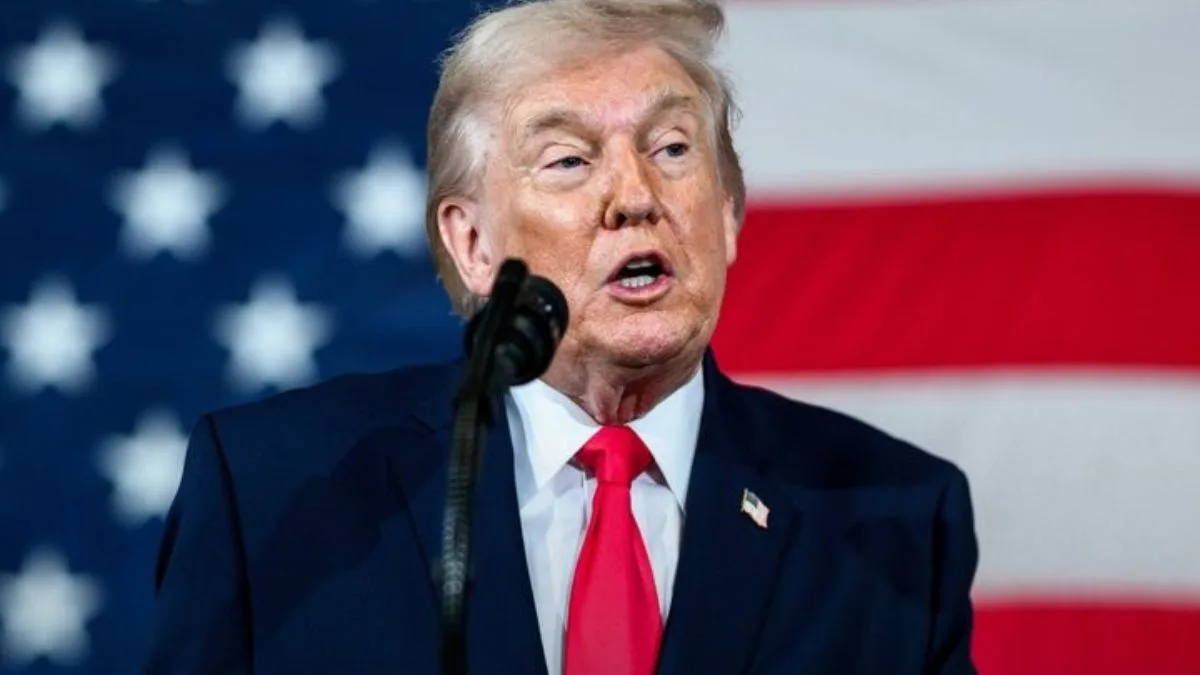
US President Donald Trump on Thursday warned that any attack on American troops by Iran could trigger a swift military response, even as he insisted that preventing Tehran from acquiring a nuclear weapon remains the central goal of ongoing negotiations between the two countries.

Speaking to reporters at the White House, Trump struck a combative tone on both diplomacy and military action, while also attacking members of the US House of Representatives who voted to restrict his authority to launch further military operations against Iran.

The remarks come at a sensitive moment in US-Iran relations, with diplomatic efforts continuing alongside political divisions in Washington over Trump’s handling of the conflict. A resolution passed by the House this week seeks to limit additional military action against Iran, setting up a fresh confrontation between Congress and the White House.

Asked whether the US would retaliate if Iran killed American troops, Trump left little room for ambiguity.

“If they kill US troops, I think I would do that very quickly,” he told reporters.

Trump also claimed that Iran’s military capabilities had been severely weakened by previous US actions.

“There is no navy, no air force, we have wiped out their leadership,” he said, while criticising media reports that suggested Iran had weathered the conflict better than expected.

Trump says Iran cannot be allowed to obtain nuclear weapons

The US President repeatedly stressed that any agreement with Tehran must permanently block its path to a nuclear weapon.

“We’re going to win one way or the other. We’re going to win on paper, or we’re going to win military,” Trump said when asked about the status of negotiations.

According to Trump, the most important condition of any future deal is non-negotiable.

“The main part of the deal is they can’t have a nuclear weapon,” he said.

He also contrasted a possible future agreement with the nuclear deal negotiated during former US president Barack Obama’s administration, arguing that the earlier arrangement would have eventually allowed Iran to obtain nuclear weapons.

“Our deal, if we make that deal, it’s the exact opposite. They will never have a nuclear weapon,” Trump said.

Trump defends strikes on Iranian nuclear sites

Trump used the opportunity to defend earlier US military operations targeting Iranian nuclear facilities, claiming they had caused extensive damage.

“We attacked their nuclear sites, and they were obliterated,” he said.

The President also dismissed reports questioning the effectiveness of those operations and maintained that the facilities remain under surveillance.

His comments come as international attention remains focused on Iran’s nuclear programme and the future of negotiations aimed at limiting Tehran’s nuclear capabilities.

House vote sparks fresh clash with Congress

Trump’s remarks also followed a significant vote in the House of Representatives, where lawmakers approved a resolution intended to prevent him from taking further military action against Iran without congressional authorisation.

The measure passed by a narrow margin of 215-208, with four Republican lawmakers joining Democrats in support. It will now move to the Senate, though it could eventually face a presidential veto.

In a post on Truth Social, Trump described the vote as “meaningless” and accused both Democrats and the Republicans who backed the resolution of undermining the country’s interests.

He said lawmakers supporting the measure were attempting to limit his war powers while negotiations with Iran were still underway.

The vote marks the first successful congressional challenge to Trump’s Iran policy since the United States and Israel jointly carried out military strikes against Iran earlier this year.

Even as he defended the possibility of military action, Trump signalled that diplomacy remained on the table. The US President said he was open to engaging with Iran’s leadership if ongoing negotiations produced a breakthrough, stressing that a deal was still his preferred outcome.

“I’d like to see if we make a deal,” Trump said.

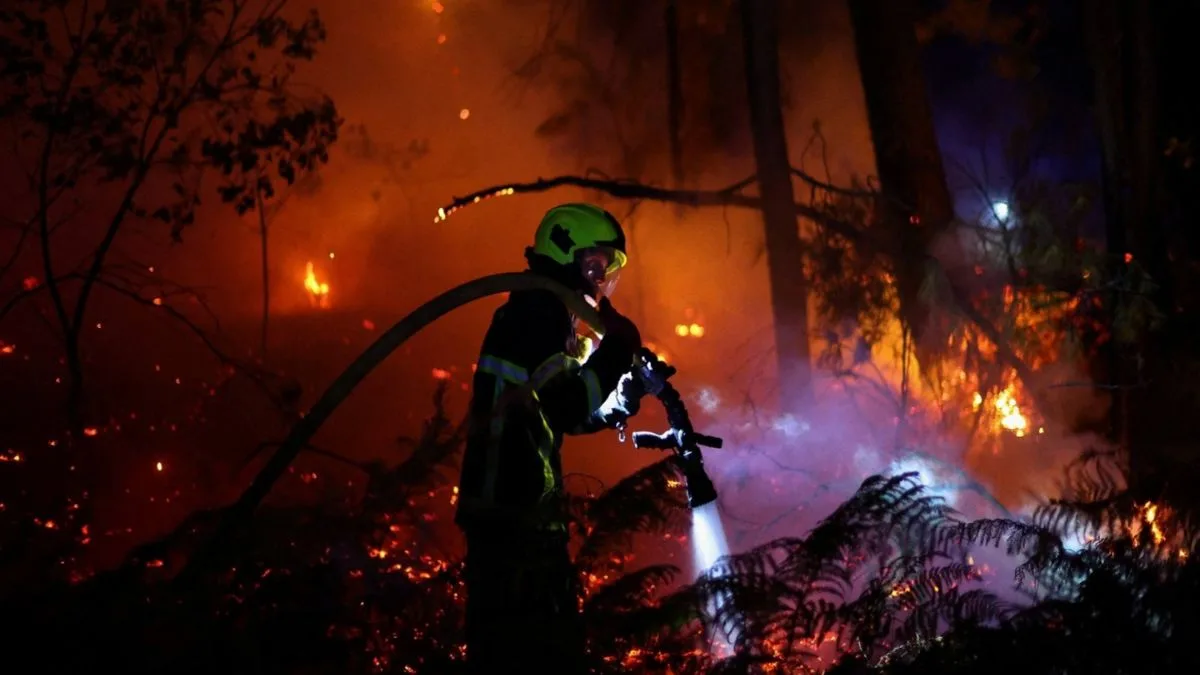
‘Building was completely sealed’: Delhi fire officer reveals design flaws in Malviya Nagar hotel tragedy

Authorities have ordered a citywide survey of similar buildings after the Malviya Nagar hotel fire, as investigators examine alleged safety and structural violations.

Statesman News Service | New Delhi |

The investigation into the devastating fire at a hotel in Delhi’s Malviya Nagar, which claimed 21 lives, is being carried out by Delhi Police under the Bharatiya Nyaya Sanhita (BNS), Chief Fire Officer AK Malik said on Thursday, while pointing to serious concerns about the building’s design and emergency exit arrangements.

The tragedy has triggered a wider review of similar commercial buildings across the national capital, with authorities constituting a high-powered committee to identify structures that may pose fire safety risks.

Speaking about the rescue operation, Malik said firefighters found it extremely difficult to access occupants because the building was effectively sealed from the outside. According to him, all windows had been permanently closed, leaving those trapped inside with little opportunity to escape once the fire broke out.

“We observed that the building was so designed that the occupants find it very difficult to escape,” Malik said, adding that people inside had only a few seconds or minutes to get out during an emergency.

He noted that the fire originated on the ground floor, cutting off a crucial escape route for those staying in the upper levels. Malik further said the building, which had a ground-plus-five structure, required two staircases under applicable building by-laws.

“We observed during the firefighting and search and rescue operation, which we conducted, the complete building is sealed. All the windows of the building are sealed properly and permanently… In such buildings, an occupant has very few seconds or minutes to escape from the building. One main reason is that the fire was on the ground floor. So they don’t get a chance to escape from the building… In this case, the building was ground plus five, and under the building by-law, it required two staircases…” he said.

High-powered committee to survey vulnerable buildings

Malik said Delhi Lieutenant Governor Taranjit Singh Sandhu took serious note of the tragedy and convened a high-level meeting soon after the incident.

Following the meeting, authorities decided to form a committee headed by the district magistrate concerned. The panel will also include officials from the Municipal Corporation of Delhi and Delhi Police.

The committee has been tasked with surveying similar buildings to assess compliance with safety norms and identify potential hazards.

“Delhi LG took cognisance of the incident, and he was very serious about it. A high-level meeting was called in the evening, and it was decided that a high-powered committee would be constituted, led by the DM of the district, having members including the DC of the MCD as well as the DCP of the Delhi police. This committee will carry out the survey of such buildings.”

Hotel owner remanded to police custody

Meanwhile, a Delhi court on Thursday remanded Lovkesh Bajaj, owner of Flourish Stays Hotel, to four days of police custody in connection with the fire.

Bajaj was produced before Judicial Magistrate First Class Bhanu Pratap Singh at Saket Courts after his arrest by Delhi Police.

Police have booked him under multiple provisions of the Bharatiya Nyaya Sanhita, including charges related to culpable homicide not amounting to murder, mischief by fire, damage to property, endangering life and personal safety, and negligent conduct involving fire.

The investigation is continuing as authorities examine whether violations of building and fire safety norms contributed to one of Delhi’s deadliest fire incidents in recent years.

‘We are making a lot of money with India’: Trump claims US has reversed trade equation; calls PM Modi ‘a good friend’

Trump expressed confidence about a future India-US trade agreement even as Washington unveiled fresh tariff measures affecting dozens of economies over forced labour concerns.

Statesman News Service | New Delhi |

Amid growing trade negotiations between Washington and New Delhi, US President Donald Trump on Thursday voiced optimism about reaching a trade agreement with India, while describing Prime Minister Narendra Modi as a close friend with whom he shares a strong working relationship.

Trump’s remarks come at a time when the United States has unveiled a new set of tariff measures affecting several economies, including India, over what it says are shortcomings in curbing imports of goods produced through forced labour. The development has added a fresh dimension to ongoing trade discussions between the two countries.

Speaking to reporters at the White House, Trump said India and the United States would eventually arrive at a mutually acceptable arrangement despite past trade disagreements.

“For years, India took advantage of the United States. They charged us tremendous tariffs and paid nothing. Now it is the exact reverse, and we are making a lot of money with India. But we will get to a deal because I like your Prime Minister (Narendra Modi) a lot; he is a good friend of mine, and we get along well. We have a good relationship,” Trump said.

New US tariff measures target over 50 economies

Earlier this week, the United States announced additional tariff measures under Section 301 of the Trade Act of 1974, citing concerns related to the import of goods allegedly produced through forced labour.

The Office of the United States Trade Representative (USTR) identified 54 economies, including India, claiming they had failed to impose and effectively enforce prohibitions on imports linked to forced labour.

Countries named in the list include India, Singapore, South Korea, Australia, Taiwan, Thailand, China, Russia, Saudi Arabia, the United Arab Emirates, Sri Lanka, Switzerland, Turkiye, Israel, Japan, Qatar, and the United Kingdom.

According to the USTR, economies that already have some form of forced labour import prohibition, or have committed to implementing such measures through trade agreements, could face an additional tariff of 10 per cent. Others may be subject to an extra duty of 12.5 per cent.

Textile imports may get limited tariff relief

The proposed action also includes a textile mechanism that would allow a specified volume of apparel and textile imports from certain economies to enter the US market at a reduced Section 301 tariff rate.

The USTR said the measures are aimed at addressing what it termed “unreasonable” policies and practices related to the failure to prohibit imports of goods produced with forced labour, arguing that such practices place a burden on US commerce.

Separately, the trade body flagged six economies for allegedly failing to effectively enforce existing prohibitions on the import of goods produced through forced labour. Those named include the European Union, Pakistan and Canada.

‘Top Gun: Maverick’ actor James Handy, 81, stabbed to death by girlfriend’s son in Los Angeles

The 911 call came in at 9:30 in the morning. The caller did not ask for help. He said he had just killed “the man of sin.” When officers arrived, they found James Handy, 81, stabbed in the front yard. He never made it out of the hospital.

Statesman News Service | New Delhi |

James Handy, a character actor with a career spanning nearly five decades, was fatally stabbed on Wednesday, June 4, 2026, in Los Angeles. He was 81.

Handy was killed in the Tarzana neighborhood of Los Angeles. According to the LAPD, West Valley area patrol officers responded around 9:30 am to a radio call of unknown trouble in the 19200 block of Erwin Street.

The first call to 911 set an unusual tone for the incident. The caller stated: “I am the son of man, I just killed the man of sin.”

Upon arrival, officers discovered Handy in the front yard of the residence, unconscious and suffering from a stab wound to his chest. He was transported to a local hospital by Los Angeles Fire Department paramedics, where he was pronounced deceased.

Also Read: Peabo Bryson dies at 75: The voice gave Disney songs its soul

The suspect

The suspect flagged down nearby responding officers and told them he was the one they were looking for.

He resides at the location with his mother, who was Handy’s girlfriend. He was identified as 44-year-old Michael Gledhill, who was arrested and booked at Van Nuys Jail for one count of murder with $2 million in bail.

The LAPD confirmed the case did not appear to be part of a broader threat. Detectives believe the incident was one of it’s kind and that there is no danger to the public.

His career in film

Handy had his first screen credit in 1977. Over the following decades, he built an extensive resume in both film and television.

His most recent notable role came in 2022’s “Top Gun: Maverick,” where he appeared as the bartender. He also played the same role in the original “Jumanji.”

In 2017’s “Logan,” Handy played the doctor who treated Hugh Jackman’s character. His earlier film appearances include roles in “The Rocketeer,” “Brighton Beach Memoirs,” “The Verdict,” and “K-9.”

In 1995’s “Jumanji,” Handy played the exterminator, while in “Arachnophobia,” he played Milton Briggs.

Television work

Handy was a familiar face on American television for years. He played Arthur Devlin in eight episodes of “Alias” and had recurring roles on “Melrose Place” and “NYPD Blue.”

Beyond those recurring parts, he accumulated guest appearances across dozens of other TV series throughout his career.

Background

Handy was born in New York. He was 81 at the time of his death. His career placed him in some of the most commercially successful and critically recognized productions of the last four decades, from action blockbusters to prestige dramas to network procedurals.

No additional details about his survivors have been out. The investigation is under the LAPD’s West Valley division.

Euphoria finale: 8.7 million views in three days, one of HBO’s biggest series finales ever

HBO spent four years, one time jump, and a fentanyl overdose to prove that prestige television can absolutely collapse its own mythology and still pull millions of viewers.

Statesman News Service | New Delhi |

‘Euphoria’ closed out its run on HBO and HBO Max with 8.7 million viewers across both platforms in its first three days. The figures come from live-plus-three-day viewership data released by Warner Bros. Discovery.

That is a slight uptick from the Season 3 premiere, which scored 8.5 million viewers in three days. The finale was not, however, the most-watched episode of the season. Warner Bros. Discovery did not release individual episode figures for every week of Season 3. The last time the company published mid-season data was after the second episode, which held steady with the premiere audience.

Season 3 episodes are now averaging 25 million viewers globally. That is a 17% increase over the average viewership Season 2 reached at the same point in its run. Season 2 was averaging approximately 21.5 million viewers at the equivalent stage.

Also Read: Every fan theory about the ‘Euphoria’ finale that was wrong, ranked by how confidently it was posted

Comparison to Season 2

The Season 3 premiere outpaced the Season 2 premiere by 44%. For context, the Season 2 finale scored 6.6 million live-plus-same-day viewers across all platforms, which was a series high at the time. The jump from that Season 2 finale benchmark to the 8.7 million posted by the series finale reflects how significantly the show’s audience grew between its second and third seasons.

How it compares on HBO

Another 2026 HBO drama, ‘The Pitt’, reached 9.7 million viewers with its Season 2 finale and crossed a 15.4 million viewer average for that season. However, those ‘Pitt’ numbers are U.S.-only. ‘Euphoria”s figures are measured globally, which makes a direct comparison between the two shows difficult. HBO has said ‘Euphoria’ is now one of the most-watched series in the network’s entire history.

The season and the time jump

Season 3 premiered on April 12, 2026, on HBO and HBO Max. It consists of eight episodes. A five-year time jump moved the story past the characters’ high school years. The official logline for Season 3 described the characters wrestling with questions of faith, redemption, and evil after the jump.

Production on the season wrapped in November 2025, after nine months of filming. The finale, titled “In God We Trust,” aired on May 31, 2026.

The finale and Rue’s fate

In the finale, Zendaya’s character Rue Bennett dies of a fentanyl overdose after relapsing on laced Percocet given to her by Alamo Brown, played by Adewale Akinnuoye-Agbaje. Creator Sam Levinson addressed the decision directly in a behind-the-scenes video released after the episode. Levinson said the honest ending for someone like Rue is that she does not survive. He cited wanting to tell a truthful story about addiction, grief, and the emotional turmoil it causes.

Levinson also noted the death mirrors how former cast member Angus Cloud, who played Fezco O’Neill, died in 2023, from complications related to substance use. Levinson said the ending was meant in part to honor Cloud. Archival footage of Cloud was used in the series finale.

Sam Levinson confirms the end

Levinson confirmed the show was over in an interview on the ‘New York Times” Popcast, speaking with hosts Joe Coscarelli and Jon Caramanica. HBO confirmed Levinson’s announcement separately to Variety.

Levinson made the confirmation on May 31, hours before the finale aired. The announcement did not come as a surprise. Series lead Zendaya had previously said in interviews she believed the show was ending after Season 3. A full four years passed between Seasons 2 and 3, during which Zendaya and several co-stars built careers in major film projects.

After seven years, three seasons, and 26 episodes, ‘Euphoria’ is officially over.

The cast

Alongside Zendaya, the cast for Season 3 included Hunter Schafer, Eric Dane, Jacob Elordi, Sydney Sweeney, Alexa Demie, Maude Apatow, Martha Kelly, Chloe Cherry, Adewale Akinnuoye-Agbaje, Toby Wallace, and Colman Domingo. The series was created, directed, and executive produced by Sam Levinson.

Critical reception vs. ratings

Despite strong viewership, the critical response to Season 3 was mixed. The season holds a 44% score on Rotten Tomatoes, with critics describing it as a fragmented collection of uneven storylines that left its cast with little to work with despite their individual talents. The first two seasons both earned Certified Fresh distinctions on Rotten Tomatoes. Season 3 did not.

Sydney Sweeney, who played Cassie Howard across all three seasons, received an Emmy nomination for Outstanding Supporting Actress in a Drama Series for her work in Season 2 in 2022.

Social media footprint

When the Season 3 premiere aired in April, ‘Euphoria’ trended on X for 12 consecutive hours in the United States, including six hours at No. 1. On TikTok, the hashtag #Euphoria reached 63 million views in the U.S. alone during the debut window, making it the No. 2 most-viewed Movies & TV hashtag on the platform during that period.

Where to watch

All three seasons of ‘Euphoria’ are currently streaming on HBO Max.

Lalit Modi confirms biopic is in the works, reveals Ranveer Singh expressed interest in playing him

Lalit Modi says he had never met Ranveer Singh before receiving a call saying the actor wanted to see him. Singh then travelled to London and the two met at Modi’s residence to discuss the biopic.

Statesman News Service | New Delhi |

Lalit Modi has never been short of drama. The man who built the IPL from scratch, got banned for life by the BCCI, fled to London, and somehow still managed to stay in every headline has now decided his life needs a film. Not a quiet documentary. A full Bollywood production.

Speaking in an interview with ANI, the former IPL commissioner confirmed that a biopic based on his life and the creation of the IPL is currently in development. The project is in the scripting stage, and Modi says he has already participated in “hundreds of hours” of interviews with scriptwriters to help shape the story.

Hundreds of hours. For a man with Lalit Modi’s life story, that might still not be enough.

Also Read: ‘Bigger than any Hollywood or Bollywood star’: Lalit Modi predicts superstardom for Vaibhav Sooryavanshi

A surprise call, a london meeting

The most talked-about part of the interview had nothing to do with cricket and everything to do with Bollywood. When asked who he would want to play his role in the biopic, Modi revealed that Ranveer Singh had personally reached out to meet him a few years ago.

“Ranveer wants to play me. He came and saw me. I would like him to play. But if he has the time, now he’s become so big. I didn’t know Ranveer. I knew Deepika very well. And I never met Ranveer. One day, I get a call saying Ranveer wants to see you. And he comes to London to see me.”

“It wasn’t me asking him”

Modi was keen to clarify that the interest came entirely from the actor’s side. “He said in his life, if there was one role he wanted to play, it would be Lalit Modi as commissioner. That’s how that role came up. It wasn’t me asking him,” he said.

That detail matters to Modi. He is not the one chasing Bollywood. Bollywood is chasing him. At least, that is how the story is being told from his London living room.

Modi acknowledged that he is not sure whether Ranveer is still interested, given how busy the actor has become. “Without doubt, he’s amazing. And what he has done with Dhurandhar is amazing. Whether he still wants to play me or not, I don’t know,” he said.

About Dhurandhar

For those who need catching up, Ranveer Singh’s recent film Dhurandhar has been one of the biggest commercial hits in recent memory. Directed by Aditya Dhar, the film stars Ranveer as an undercover agent spearheading a mission targeting a terror network in Lyari, Karachi. Inspired loosely by real events including the Parliament attack and IC-814 hijacking, the film grossed more than five times its original budget and holds an IMDb rating of 8.6 out of 10.

The biopic’s bigger vision

Modi described the scale of the proposed film as ambitious, saying the IPL story is not just an India story. “It’s a global story, it’s a business story, and it’s a humanity story,” he said.

The biopic is being developed with a full team under Sneha Rajani, who previously ran Sony. Modi confirmed that an extensive research and writing process is currently underway.

As if one production was not enough, Modi also revealed that a television series focusing on the history of the Modi family is in development. He described his family’s past as highly dramatic. “Ours is worse than Dynasty and Dallas put together,” he said.

Taylor Swift’s net worth is now $2 billion; here is exactly how she built it to be the richest woman musician

A small-town Pennsylvania girl started writing songs at age 14. Two decades, 12 albums, and one record-shattering world tour later, Forbes has done the math. The answer came out to $2 billion.

Statesman News Service | New Delhi |

Forbes published its ‘Iconoclast 50’ list on June 3, 2026. Taylor Swift made the cut. Her net worth now stands at $2 billion. That figure is double what it was when she first became a billionaire in October 2023. It is also up from $1.6 billion in October 2024.

The Iconoclast 50 list recognises leaders across finance, business, technology, media, entertainment, philanthropy. Swift appears alongside figures such as Elon Musk, Beyoncé, and Bad Bunny.

What makes up the $2 billion

Forbes breaks the fortune into three buckets.

Royalties and touring account for nearly $800 million. Her music catalog is estimated to be worth $600 million. Her real estate holdings add roughly $110 million.

Properties in Nashville, Los Angeles, New York, Watch Hill, Rhode Island make up real estate total.

Forbes previously declared Swift the first musician to reach billionaire status primarily through songs and performances, rather than outside ventures such as fashion lines or business deals.

Also Read: Weeks of billboards and countdowns led to this: Taylor Swift confirms ‘Toy Story 5’ song

The Eras Tour

The Eras Tour ran from March 2023 to December 2024. It spanned North America, Asia, Australia, and Europe. Total run time: 21 months, five continents.

The tour generated $2.2 billion in revenue. That makes it the highest-grossing concert tour in recorded history.

By the end of its first year alone, the Eras Tour had crossed $1 billion in revenue, becoming the first tour in history to do so. At one point, Bloomberg estimated the tour added $4.3 billion to America’s gross domestic product.

Swift used proceeds from the tour to buy back the masters to her first six albums for an estimated $360 million in May 2025. That acquisition means all future royalties from those recordings flow directly to her.

The re-recording strategy

In 2020, Swift began re-recording her first six albums. Goal was to reclaim control of her music after her original masters were sold to private equity firm, Shamrock Capital, without her consent.

The re-recordings released under “Taylor’s Version” branding kept royalties in her pocket instead of flowing to previous owners. Forbes credited this move as one of the key factors in her financial rise.

She also inspired other artists to consider re-recording their own work as a way to assert ownership.

New albums add fuel

Swift has released two albums since becoming a billionaire.

The Tortured Poets Department arrived in April 2024. It sold 2.61 million copies in its first week in the United States. That placed it second on the all-time list of biggest debut weeks in the country, behind only Adele’s 25.

The Life of a Showgirl followed on October 3, 2025. It is her 12th studio album. She recorded it in Sweden with producers Max Martin and Shellback during the European leg of the Eras Tour. The album spent 17 weeks atop the US Billboard 200. It sold over four million copies in its first week globally, setting a new record for the biggest opening week in music history.

A theatrical release event tied to the album, The Official Release Party of a Showgirl, screened at 3,700 theaters from October 3 to 5. Pre-sales hit $15 million on the first day.

Where she stands among musicians

Swift is the wealthiest woman musician in the world. She surpassed Rihanna when her net worth hit $1.6 billion in 2024.

At $2 billion, she also surpasses Kim Kardashian, whose net worth sits at $1.9 billion.

She is not, however, the richest musician overall. That title belongs to Jay-Z, whose net worth is listed at $2.8 billion by Forbes.

A historic milestone, built on music alone

Swift turned 36 in December 2025. She has sold over 200 million albums worldwide across a career that began with her self-titled debut in 2006.

Swift has won 14 Grammy Awards. She was the world’s highest-paid musician in 2016, 2019, 2021, and 2022.

Forbes noted in her Iconoclast 50 profile that Swift’s wealth doubled from its initial billionaire level to $2 billion by March 2026. Unlike many celebrity billionaires who diversify into fashion, beauty, or other industries, Swift built her fortune almost entirely on music.

Freelance editor who stole Vijay’s ‘Jana Nayagan’ triggered piracy chain that has now led to 16 arrests

Vijay’s final film never reached theatres. It reached Telegram first, then piracy sites, then a local cable channel in Coimbatore. The trail of arrests has not stopped since.

Statesman News Service | New Delhi |

The Tamil Nadu State Cyber Crime Wing has arrested six more persons in connection with the piracy and illegal circulation of the film ‘Jana Nayagan’, starring actor-politician Thalapathy Vijay. The arrests were made as part of the continuing investigation into the piracy and leak of the yet-to-be-released film. The six latest arrests bring total number of people held in this case to 16 since leak first surfaced in April 2026.

What the six did

Investigation revealed that the accused had obtained access to leaked copy of the film and subsequently shared, circulated, promoted content through various digital platforms, including social media accounts, cloud storage links, messaging applications.

Digital devices used in the commission of the offence have been seized for forensic examination. Further investigation is in progress to identify additional persons involved in the piracy network and to trace the complete chain of dissemination.

Also Read: ‘I don’t even have the courage to tell you the truth’: H Vinoth on why Vijay’s ‘Jana Nayagan’ is still in limbo

How the leak began

The main accused was working as a freelance assistant editor on a separate project. He allegedly accessed ‘Jana Nayagan’ footage at an editing studio without authorisation. Investigators suspect the individual copied the film’s reels, assembled the material into a complete version, and shared it with others, allowing it to spread quickly across piracy networks.

The controversy began late Thursday when brief clips from the film surfaced across social media platforms. Within hours, the situation escalated dramatically. By Friday morning, high-definition versions of entire film had reportedly made their way onto piracy websites. Earlier, only short clips ranging from five to ten minutes had appeared online.

Timeline of arrests

The police acted in phases after the leak broke on April 9.

The Cyber Crime Wing arrested six people on Sunday, April 12, for their alleged involvement in the illegal circulation of leaked content. Authorities also took down over 300 links from social media accounts.

A cable operator was separately arrested for illegally airing the film on a local television channel in Coimbatore. The unauthorised telecast came to light after a member of Vijay’s political party flagged the issue to the police. According to police officials, they arrested a 44-year-old cable operator for airing the film.

The Tamil Nadu Cyber Crime Wing then took three more individuals into custody, bringing the total at that point to nine. The primary suspect was a freelance assistant editor. He was officially onboard to work on a different film but used this position to gain unauthorised access to an editing studio. While inside, he accessed the raw footage of Jana Nayagan. He allegedly copied the files and processed the data into a complete version. The suspect then shared this finished cut with associates. It quickly spread across piracy networks in HD quality.

Three more arrests followed including main culprit who stole footage from editing studio. Total number of arrests rose to ten. The six new arrests reported on June 4, 2026, bring that total to 16.

Court orders and platform action

The Madras High Court issued an interim injunction directing internet service providers and cable operators not to stream or broadcast any unauthorised or uncertified versions of the film.

The Madras High Court also ordered internet providers and social media apps to quickly block all illegal links and stop sharing leaked movie clips.

Police issued public warnings stating that downloading, forwarding, sharing, circulating leaked content through social media or digital platforms could lead to legal action.

Editor suspended

The leak triggered professional consequences beyond the criminal investigation. The South Indian Film Editors Association suspended editor Pradeep E Raghav following an emergency meeting on April 17, attended by senior members and leading editors. During this period, all professional cooperation with Raghav was withheld, and other industry bodies were urged to support the action

Swarup Biswas arrested on extortion charges; complaint by make-up artist triggers police action

A make-up artist alleged she was denied work for two years and threatened when she sought employment through him. His arrest comes as Tollywood’s labour organisations undergo a sweeping overhaul.

Statesman News Service | New Delhi |

New Alipore police arrested Swarup Biswas on Thursday evening. He is the former president of the Federation of Cine Technicians and Workers of Eastern India. He is also the brother of former West Bengal minister Arup Biswas. The charges against him include extortion and criminal intimidation.

The complaint

A woman member of a make-up artists’ association in Tollygunge filed the complaint. She alleged that she was denied work for nearly two years. When she approached Biswas seeking employment, she was allegedly asked to pay money. She also claimed she was threatened.

Wider allegations

Police are examining the complaint but are looking beyond it. Investigators are probing allegations that Biswas extorted several lakh rupees from multiple individuals. He allegedly used threats and his influence within the industry to do so.

His role in Tollygunge

Biswas had been a dominant figure in Tollygunge’s film industry for years. As federation president, he held considerable sway over employment in the sector. Sections of technicians and workers had previously accused the federation of exercising undue control over who got work and who did not.

Industry overhaul underway

The arrest comes as the Bengali film industry’s labour organisations undergo major restructuring. BJP MLA Papiya Adhikari announced this week that the federation will cease operations in Tollygunge. Technicians and workers will now fall under the Eastern India Motion Pictures Confederation, a Delhi-based body.

Adhikari said the move is aimed at bringing greater transparency and rooting out corruption. Tollywood workers will now be affiliated with the confederation instead of the federation previously headed by Biswas.

Also Read: NIA raids ex-TMC MLA Saokat Molla’s residence in South Bamunia blast investigation

Nepal’s PM stirred a border row with India. Days later, is the Foreign Minister flying to Delhi to clean it up?

Nepal’s Foreign Minister Shisir Khanal heads to New Delhi on Friday with a packed agenda and familiar problems. The Pancheshwar dam remains unbuilt. The airports in Pokhara and Bhairahawa remain empty of Indian flights.

Statesman News Service | New Delhi |

Nepal’s Foreign Minister Shisir Khanal is set to visit New Delhi on a three-day official visit beginning June 6. The visit comes at the invitation of India’s External Affairs Minister S. Jaishankar. This is Khanal’s first official visit to India after being appointed Foreign Minister on April 27.

The Foreign Ministry of Nepal said Khanal will hold formal talks with Jaishankar in New Delhi. The two sides will discuss matters of mutual interest, with a focus on enhancing cooperation in trade, investment, connectivity, energy, and people-to-people ties. Sources in Kathmandu and New Delhi confirm Khanal will also hold meetings with Commerce Minister Piyush Goyal. The two foreign ministers are also expected to discuss the possibility of higher-level visits from both sides, including a potential Jaishankar visit to Kathmandu.

Minister Khanal is scheduled to return to Kathmandu on June 7.

Also Read: Explained: The Nepal-India border dispute that Balen Shah just made more complicated

Trip was postponed last month

Khanal’s visit comes after his planned trip to Delhi last month was postponed. India had deferred the International Big Cat Alliance Summit due to the rise in Ebola cases in Africa, which pushed back the visit.

Although Khanal had already held discussions with Jaishankar and other regional leaders during the Ninth Indian Ocean Conference in Mauritius in April, those were not considered an official bilateral visit.

Lamichhane set the stage this week

RSP President Rabi Lamichhane held a meeting with Indian Prime Minister Narendra Modi on Wednesday during his five-day visit to India. India’s National Security Advisor Ajit Doval and External Affairs Minister S. Jaishankar attended the meeting.

Lamichhane talked with Modi for over an hour in the presence of his wife Nekita Poudel Lamichhane, two party leaders Bipin Acharya and Deepak Bohora, and New Delhi-based Nepali diplomats. Jaishankar, NSA Doval, and Foreign Secretary Vikram Misri were present from the Indian side.

Lamichhane arrived in New Delhi on Monday at the invitation of the ruling Bharatiya Janata Party President Nitin Nabin. Since Tuesday, he had been busy with high-level meetings. He met top leaders including BJP President Nabin at the BJP headquarters. After that, he also met Jaishankar and Home Minister Amit Shah.

Lamichhane was also scheduled to visit the Ram Mandir in Ayodhya on Thursday.

“No Political Baggage”: Lamichhane to Modi

RSP chief Lamichhane and Prime Minister Modi agreed to chart a new course in Nepal-India relations in a changed political context.

According to the Kathmandu Post, Lamichhane told Modi that RSP carried no historical political baggage and sought to build a new framework for engagement with India. Modi, congratulating the party on its strong electoral performance, said India was ready to work closely with Nepal’s new leadership and support the country’s development priorities.

Modi told Lamichhane: “You first decide your priorities, we will provide all possible support in that.” He added that India is always with Nepal and willing to be a partner in Nepal’s development, economic progress, and prosperity.

After the meeting, Modi posted on X that he welcomed and fully shared Lamichhane’s desire to work closely together for a shared and prosperous future. “Nepal is a priority partner under our Neighbourhood First policy and we look forward to collaborating with the new government to elevate the special and multifaceted relationship between our two countries to greater heights,” Modi wrote.

Key projects on the agenda

Among the key issues on Khanal’s agenda will be the Pancheshwar multipurpose project, the proposed East-West Railway, plans for a rail link connecting Janakpur and Ayodhya, expanded petroleum pipeline infrastructure, and efforts to improve trade and transit arrangements.

Nepal is also seeking additional air entry routes from India to support operations at the country’s two newest international airports, in Pokhara and Bhairahawa, both of which have struggled to attract international traffic since opening.

A top Ministry official told IANS that bilateral talks are scheduled for June 6. “During the visit, there are plans to discuss enhancing connectivity between the two countries in line with the priorities highlighted during RSP President Lamichhane’s tour. Improving railway, road, air, and people-to-people connectivity will be a major focus of the bilateral discussions,” the official said.

Border dispute adds friction

There is friction in bilateral relations due to a boundary dispute. The issue flared after Prime Minister Balendra Shah made a statement in Parliament that Nepal had sought the UK’s help to settle the border dispute. India subsequently responded that the issue should be handled through established bilateral mechanisms, rejecting third-party mediation of the international border.

The two foreign ministers are expected to discuss ways to resolve the boundary dispute during Khanal’s visit.

Digital cooperation also on the table

As Lamichhane outlined possible cooperation in the digital sector during his Delhi trip, the two foreign ministers will also take up the digital agenda during Khanal’s visit.

Diplomatic sequence raises expectations

RSP lawmaker Deepak Bohora told BBC Nepali Service from New Delhi that as soon as Lamichhane returns, Minister Khanal will fly to India. He said that as Lamichhane has already opened the discussion, Khanal will represent the government in formal talks.

The Nepali side has already sent a request to the Indian side for a meeting between Khanal and Indian Prime Minister Modi.

Modi had described Nepal as a priority partner under India’s Neighbourhood First policy and expressed confidence that the special relationship between the two countries would continue to grow.

Nepal’s Foreign Ministry said the visit forms part of regular high-level engagement between the two countries and is expected to further consolidate the long-standing and multifaceted ties between the two neighbours.

KMC chairperson Mala Roy announces monthly meeting on 19 June

Putting efforts to end the impasse over monthly meetings of Kolkata Municipal Corporation (KMC), Chairperson of the civic body Mala Roy today announced 19 June as the date of the KMC House.

Statesman News Service | Kolkata |

Putting efforts to end the impasse over monthly meetings of Kolkata Municipal Corporation (KMC), Chairperson of the civic body Mala Roy today announced 19 June as the date of the KMC House.

The announcement comes after the court upheld that the chairperson of the civic body had the authority to convene councillors’ meetings further allowing her to call the monthly House meeting on 19 June as was proposed by her. The KMC chairperson had challenged the civic body secretary’s “unlawful” notice deferring the monthly session by filing a petition in the court.

Speaking to the reporters at a Press conference today, the South Kolkata Parliamentarian said: “Last month, there were efforts from the KMC to cancel the monthly meeting on 22 May. Whatever orders we give are done through the municipal secretary. Even in case of postponement, it is the authority of the chairperson to do so. However, the postponement letter to the public representatives was sent without our knowledge. We had approached the High Court on this matter and the division Bench has now made it clear that it is the power of the chairperson to announce and give a call for the monthly House meeting. On being asked we had informed that we want the House to be held on 19 June at 2 p.m. which has been granted. We have sent a letter to the municipal secretary accordingly and the court order would also reach the people concerned.”

With speculation on Mayor Firhad Hakim’s decision to step down, the chairperson informed that the resignation letter from him has not yet been received. The chairperson asserted that all the conduct would be as per the norms of the KMC Act 1980 only.

Last month, the crucial MMiC meeting was cancelled and later the monthly meeting was deferred a day before escalating the slugfest between the TMC majoritarian KMC and the commissioner. As the Main Chamber which is the venue of the monthly House meeting was closed, the meeting was held in the Councillors’ Club Room of the civic body’s headquarters.

India’s first underground coal gasification project set for commercial launch soon

The project, being implemented by Eastern Coalfields Limited (ECL), is expected to mark a significant milestone in India’s sustainable energy sector and attract further investment to the state.

Debajyoti Chakraborty | Kolkata |

In a major boost for the state government, the country’s first underground coal gasification (UCG) project at the Kasta West coal block in the Pandaveswar area of West Burdwan district is nearing commercial production. The final trial run, which is expected to continue for the next three months, is currently underway.

The project, being implemented by Eastern Coalfields Limited (ECL), is expected to mark a significant milestone in India’s sustainable energy sector and attract further investment to the state.

Speaking on the development, ECL Chairman-cum-Managing Director Satish Chandra Jha said: “Work has already started on the project and we hope that the trial phase will be completed within the next three months. Thereafter, we will be able to commence commercial production from the country’s first underground coal gasification project, which was allotted to ECL by the Central government.”

Managed by ECL, a subsidiary of Coal India Limited, the pilot project is a pioneering initiative that converts unmineable coal directly into valuable industrial gases while the coal remains underground.

Mr Jha also said that a surface coal gasification project at Sonepur Bazari in West Bengal is being planned by ECL, although it is expected to take another year before becoming operational. The Coal India Limited-GAIL joint venture project, which will produce synthetic natural gas (SNG), is being developed at an estimated cost of Rs 13,052.8 crore.

Mr Jha said ECL is poised to become a key player in the country’s transition towards cleaner energy once commercial production begins, which is expected around September this year. Although the Ministry of Coal has set a production target of 56 million tonnes for ECL this year, the company has fixed an internal target of 62 million tonnes. “Over the past month, following the change in the state government, illegal coal mining has almost completely stopped in ECL’s leasehold areas in West Bengal,” Mr Jha claimed.

BMC Mayor Krishna Chakraborty quits, says board has become ‘defunct’

Bidhannagar Municipal Corporation (BMC) Mayor Krishna Chakraborty resigned on Thursday, saying she was unable to provide services to the people in the present circumstances.

Statesman News Service | Kolkata |

Bidhannagar Municipal Corporation (BMC) Mayor Krishna Chakraborty resigned on Thursday, saying she was unable to provide services to the people in the present circumstances.

Though Chakraborty in her resignation letter cited “personal reasons” for her decision, she later told mediapersons that the board has “become defunct” after the change of regime in West Bengal.

“Councillors are not coming to the Poura Bhawan (BMC headquarters). I am sitting without work. The board meetings are not being held, MMiC meetings are not taking place. I’m unable to provide services to the people the way I am supposed to. I love to work. This state of affairs is not to my liking,” she said.

Chakraborty, a prominent Trinamul Congress leader and known for her proximity to party chief Mamata Banerjee, sidestepped a query about whether she had spoken to her leader before taking the decision. “I can only say I have spoken to everybody. However, I will not disclose specifically who I’ve spoken to”.

She rubbished a poser on whether she had taken the decision under duress. “Nobody has pressured me, nobody has intimidated me. And there is no reason for anybody to behave like this with me. Am I a thief? I have been working for the masses since I was very young.”

The veteran leader said she would be coming to Poura Bhavan as she would continue to work as Councillor (of Ward 29). “I hold no grudge against anybody. I’ll remain forever indebted to the people of Bidhannagar. They have showered a lot of love and affection on me.”

Asked about the functioning of the new BJP government, she said: “A new government will come up with its fresh policies. We have to keep our trust in it.”

The previous BMC polls were held in February 2022, when the Trinamul Congress retained the board by winning 39 of the 41 wards. Bidhannagar, a posh satellite town of Kolkata is situated on the eastern edge of the city.