Logo

US lawmakers clash over immigrant truck drivers

“Barring people with lawful work authorisation who have obtained their commercial driver’s licenses by completing the required training and passing the required tests will not make our roads safer,” Liu said.

IANS | New Delhi |

Washington, March 5 (IANS) The US lawmakers clashed during a congressional hearing over whether immigrants should be allowed to hold commercial driver’s licences, with Republicans warning of safety risks on highways and Democrats arguing the move could harm the economy and disrupt supply chains.

The House Homeland Security Subcommittee on Oversight, Investigations, and Accountability convened the hearing on Wednesday to examine what Chairman Rep. Josh Brecheen described as “the issuance of non-domiciled commercial driver’s licenses to illegal aliens unlawfully present in the United States.”

Brecheen said commercial truck drivers are vital to the American economy and transport essential goods across the country every day.

“Commercial truck drivers are the backbone of the American economy,” he said. “Every day they transport food, fuel, medicine, and other critical supplies all across the United States.”

But he argued that federal audits have exposed failures by some states to properly enforce licensing standards.

“Recent Department of Transportation audits have revealed alarming failures by many states to comply with these requirements,” Brecheen said.

He cited federal findings showing that in Illinois, “One in 5 non-domiciled CDLs failed to meet federal standards.” He also said the Department of Transportation found California had “illegally issued 17,000 non-domiciled CDLs,” while a 2025 audit concluded that “over 50 per cent of the non-domiciled CDLs issued by the State of New York were in Violation of federal law”.

Republican lawmakers repeatedly warned that heavy commercial vehicles can pose serious risks if driven by unqualified operators.

“You do not have to be a scholar to understand what a bad actor could do with a 40-ton tractor-trailer,” Brecheen said. “That vehicle is not just a truck, it’s a weapon capable of threatening public safety and national security.”

Law enforcement officials appearing before the panel described enforcement actions that uncovered drivers operating commercial vehicles while violating immigration rules.

Tim Tipton, commissioner of the Oklahoma Department of Public Safety, said joint operations between state troopers and federal immigration authorities had resulted in hundreds of arrests.

He said inspections had revealed broader concerns about licensing oversight.

“Many of these drivers struggle with even basic English language proficiency and likely received their licenses from an unscrupulous CDL mill,” Tipton told lawmakers.

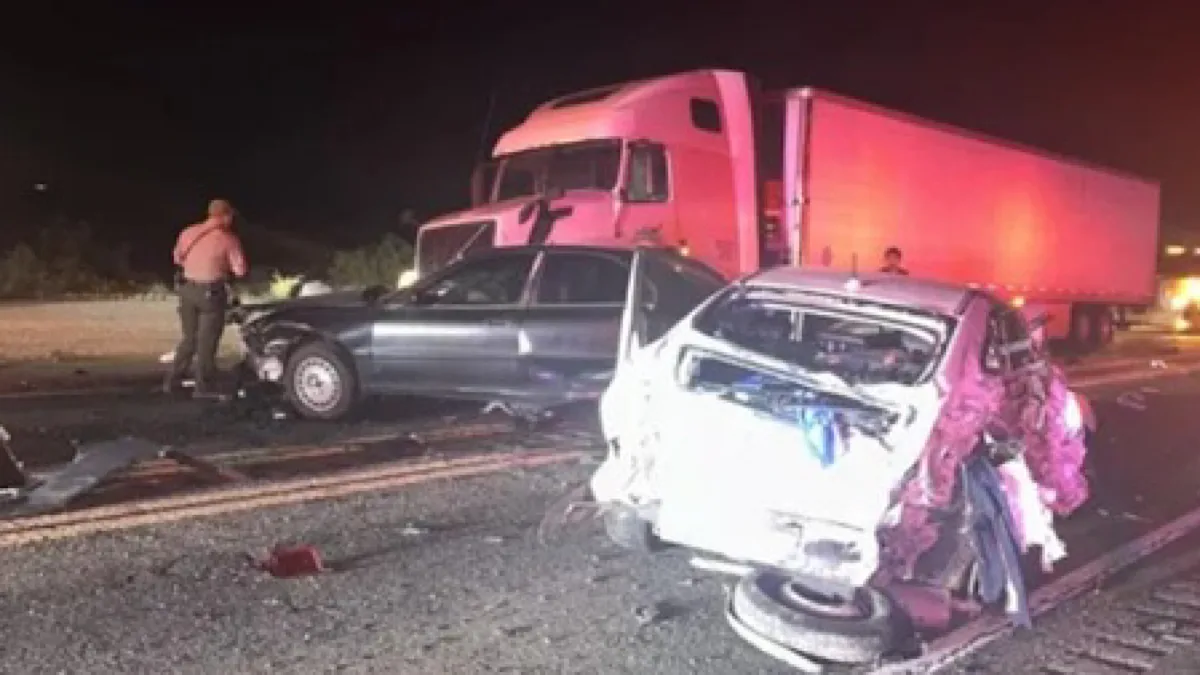
Sheriff Richard Del Toro of Saint Lucie County, Florida, described a fatal crash in his jurisdiction involving a commercial truck.

“Three innocent people in my county lost their lives in a catastrophic crash on the Florida Turnpike involving a commercial motor vehicle,” Del Toro said. “For the families of those victims, this is not a policy debate; it’s a permanent loss.”

Democrats on the panel rejected claims that immigrants holding commercial licences pose a safety threat and warned that restrictions could worsen a shortage of drivers in the trucking industry.

Indian American Congressman Shri Thanedar, the ranking member, said immigrants make up a significant share of the workforce.

“Nearly 20 per cent of truck drivers in the US are immigrants,” he said.

Wendy Liu, an attorney with Public Citizen Litigation Group, testified that banning immigrants with legal work authorisation from holding commercial driver’s licences would not improve road safety.

“Barring people with lawful work authorisation who have obtained their commercial driver’s licenses by completing the required training and passing the required tests will not make our roads safer,” Liu said.

She warned that the policy could remove thousands of experienced drivers from the industry.

“The Trump administration’s exclusion of documented immigrants from the truck driver workforce would force 2,00,000 experienced drivers out of the market,” Liu said.

“That will disrupt supply chains, delay the delivery of goods and materials and increase rates for freight operations.”

Lawmakers also referred to a fatal highway crash involving a truck driver who had previously entered the United States illegally and later obtained a commercial licence in another state, a case cited by Republicans as an example of regulatory gaps.
‘It’s good Dhankhar has reappeared, should now speak more’: Shiv Sena(UBT) in ‘Saamana’

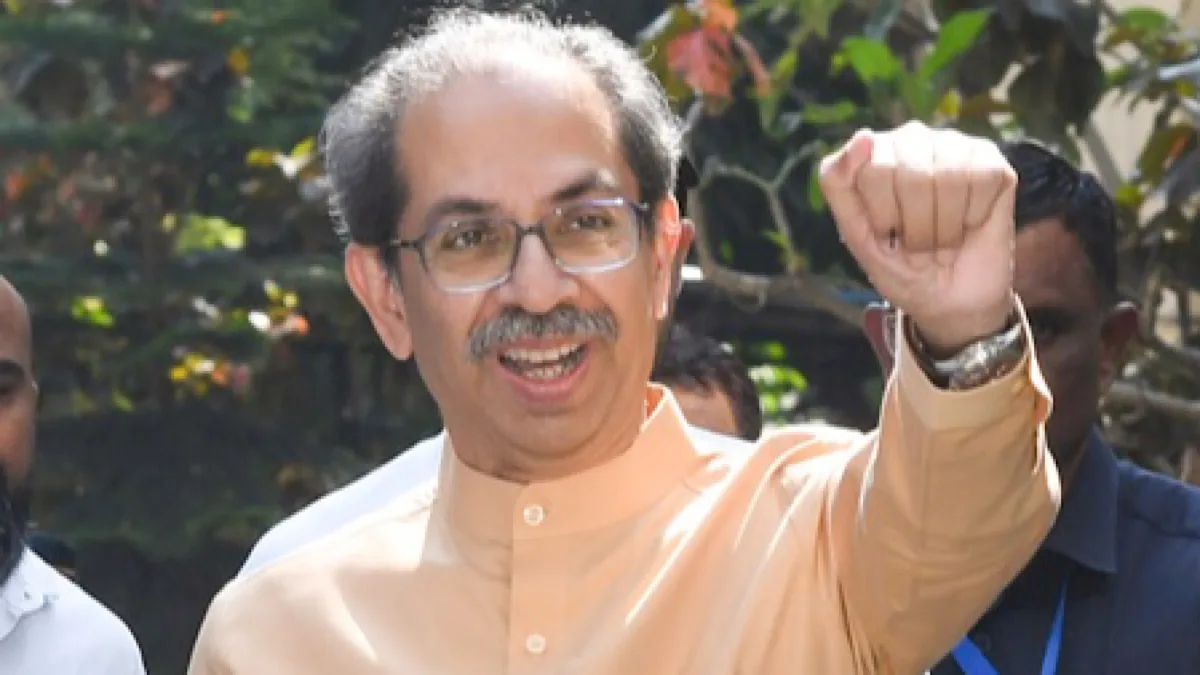
The Shiv Sena Uddhav Balasaheb Thackeray (UBT) on Thursday said former Vice President Jagdeep Dhankhar’s resignation, given abruptly, reflected a broader trend of undermining constitutional posts, and as he begins to speak again, the nation awaits further clarification on what truly transpired behind closed doors in Parliament on the day of his resignation.

IANS | New Delhi |

The Shiv Sena Uddhav Balasaheb Thackeray (UBT) on Thursday said former Vice President Jagdeep Dhankhar’s resignation, given abruptly, reflected a broader trend of undermining constitutional posts, and as he begins to speak again, the nation awaits further clarification on what truly transpired behind closed doors in Parliament on the day of his resignation.

“The former VP, who vanished from the public eye following his sudden resignation last year, in his recent speech in Rajasthan, claimed that he never stepped down due to health reasons, contradicting the government’s official narrative. Breaking his long silence at an event in Churu, Rajasthan, last week, Dhankhar appeared in good health and directly refuted the medical justification for his exit,” the Uddhav Thackeray’s party said in its mouthpiece ‘Saamana’

An editorial in Saamana quoted Dhankhar as saying, “A healthy body is the first source of happiness. I have never neglected my health. While resigning, I never said that I was ill. This revelation suggests that he may have signed the resignation letter under duress. The editorial said that the sudden move to oust Dhankhar may have been triggered by his private interactions with opposition parties. It alleged that accounts of ‘explosive exchanges’ from these meetings reached Prime Minister Modi and Home Minister Amit Shah, leading to the decision that the Vice President required “immediate rest”.

“Many in the country’s cabinet are not in good health. Yet, many of these individuals remain in the government. Despite being involved in various ‘scandals’, everyone is clinging to their positions. There is a visible trend of appointing pliable people of one’s choice to these posts, and throwing them out the moment they show a ‘stiff’ spine,” said the editorial.

The Uddhav Thackeray-led Shiv Sena said that the court rulings suggest that institutions like the CBI, which “illegally” arrested Kejriwal and his associates, are not in good mental health.

“Union Minister Puri’s name appeared in the ‘Epstein Files’, but the government hasn’t taken his resignation or sent him home yet. But Modi-Shah carried out the programme of sending Vice President Dhankhar home overnight. After the Pulwama and Pahalgam attacks, the Prime Minister and Home Minister had no moral right to remain in their posts, yet they remain. However, Dhankhar’s tenure as Vice President was cut short, and he was sent into exile. The government cited health reasons for this move,” it remarked.

According to the editorial, now that Dhankhar has recovered through self-treatment and reappeared, it is good. He must now provide the country with information about his health and his treatment over the last six months. He should also shed light on what happened behind the scenes and in his parliamentary office on July 25 last year when he resigned.

ECI flags inadequate election preparedness in two Bengal border districts

These two districts are South 24 Parganas in South Bengal and Cooch Behar in North Bengal.

IANS | New Delhi |

The progress in poll preparations in two Bangladesh-bordering districts in West Bengal for the forthcoming Assembly polls has not been satisfactory so far, the Election Commission of India (ECI) has communicated to the office of the Chief Electoral Officer (CEO).

These two districts are South 24 Parganas in South Bengal and Cooch Behar in North Bengal.

Sources in the CEO’s office said that last week, the ECI’s top brass at its headquarters in New Delhi had a virtual meeting with the electoral officers up to the district-level as well as with senior bureaucrats and police officers in the state and took inputs from them about the poll-preparedness in different districts in the state.

“After examining the inputs received last week, the ECI identified the prevailing lapses in poll-preparedness. Although Wednesday was a holiday because of the Holi festival, the deputy election commissioner, Gyanesh Bharati, had a brief virtual meeting with the electoral officers of West Bengal, including the district magistrates, who are also the district electoral officers, on Wednesday night. In that meeting, Bharati expressed dissatisfaction over the progress in poll preparedness in South 24 Parganas and Cooch Behar,” said a CEO’s office insider.

Bharati is likely to have another round of virtual meetings with the electoral officers, including the district electoral officers, on Thursday, and in that meeting, he is likely to give a briefing on the steps necessary to expedite the poll-preparedness process.

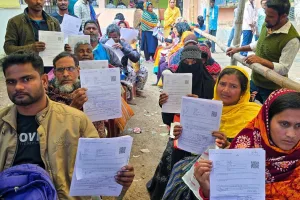
As per the schedule, the full bench of the Election Commission of India (ECI) will arrive in West Bengal on the night of March 8. For the next two days, that is on March 9 and March 10, the full bench will have several rounds of marathon meetings to review the ongoing judicial adjudication of the voters’ documents classified under the logical discrepancy category, and on the poll preparations.

Meanwhile, the CPI(M) leader and workers staged a night-long sit-in demonstration in front of the CEO’s office in central Kolkata since late Wednesday evening over the demand that the polling dates in West Bengal should not be announced by the Commission unless the process of judicial adjudication is completed and the retention of names of all genuine voters in the list is ensured.

The sit-in demonstration continued on Thursday morning, and the CPI(M) leaders said the protest will continue as long as the CEO of West Bengal, Manoj Kumar Agarwal, meets them.

The final voter’s list was published on February 28, minus those names which were referred for judicial adjudication. Supplementary lists will be published in due course as per the progress of the judicial adjudication.

Working tirelessly for farmers’ welfare: PM Modi greets Shivraj Singh Chouhan on his birthday

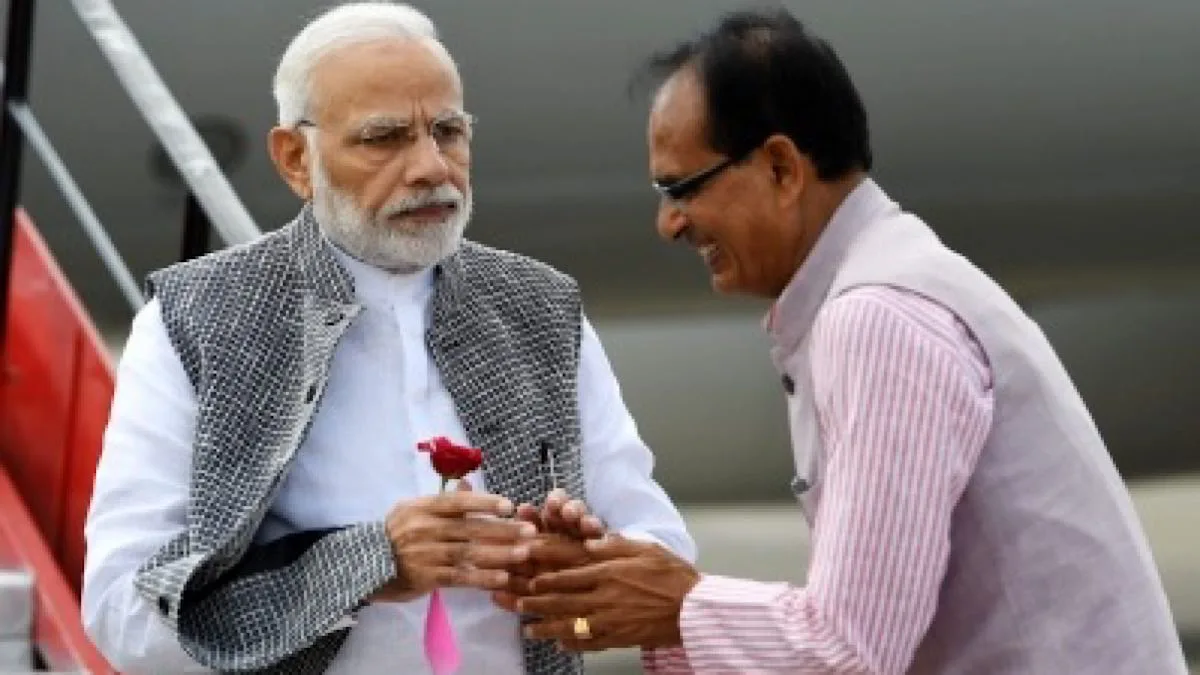
Prime Minister Narendra Modi on Thursday wished Union Minister Shivraj Singh Chouhan on his birthday and said that he has been working tirelessly for the welfare of farmers and the growth of the agriculture sector.

IANS | New Delhi |

Prime Minister Narendra Modi on Thursday wished Union Minister Shivraj Singh Chouhan on his birthday and said that he has been working tirelessly for the welfare of farmers and the growth of the agriculture sector.

PM Modi took to the social media platform X and said, “Best wishes to Union Minister Shri Shivraj Singh Chouhan Ji on his birthday. He is admired for his humble nature and connect with the people. He is working tirelessly for the welfare of our farmers and growth of the agriculture sector. Praying for his long and healthy life.”

The four-time Madhya Pradesh Chief Minister, Shivraj Singh Chouhan, was sworn in for the first time as a Union minister in Prime Minister Narendra Modi’s Union Cabinet in 2024.

Chouhan has remained the Chief Minister of Madhya Pradesh since November 2005. He was born on this day in 1959, at Jait village, Sehore, Madhya Pradesh. The son of Prem Singh Chouhan and Sundar Bai Chouhan, Shivraj Singh Chouhan has a long association with the RSS and the BJP’s student wings. He joined the Rashtriya Swayamsewak Sangh in 1972 at the age of 13 and is known for his proximity to its top leaders. He was a Convenor, General Secretary, and Member of the National Executive for the AVBP. He was also an office-bearer in the Bhartiya Janata Yuva Morcha and was its president in 1988.

Chouhan was the National President of Bharatiya Janata Yuva Morcha from 2000 to 2003. During this period, he was the President of the House Committee (Lok Sabha) and the National Secretary of the BJP.

The Union Minister was a member of the Consultative Committee of the Ministry of Communications from 2000 to 2004.

Shivraj Singh Chouhan was elected a member of the 14th Lok Sabha from Vidisha for the fifth time. In the year 2004, he became a member of the Joint Committee on Agriculture Committee, Offices of Profit, National General Secretary of BJP, Secretary of BJP Parliamentary Board, Secretary of Central Election Committee and a member of the Committee on Ethics and Chairman of Housing Committee of Lok Sabha.

He is known for his schemes and measures fighting elimination of female foeticide in the state since 2006.

He was an elected member of the Parliament for 1991, 1996, 1998, 1999 and 2004. He was a member of the Consultative Committee, Ministry of Communications, from 2000 to 2004. He was re-elected to the 14th Lok Sabha in 2004, with a margin of over 2,60,000 votes. He was a member of the Committee on Agriculture, a member of the Joint Committee on Offices of Profit, National General Secretary of the BJP, Secretary of the Parliamentary Board, and Secretary (Central Election Committee). He also headed the Housing Committee of the Lok Sabha and was a member of the Committee on Ethics.

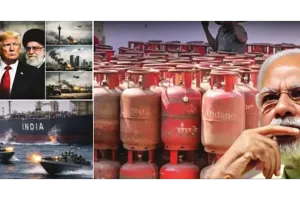
LIVE Updates US-Israel-Iran War: PM Modi speaks to Macron; India responded to IRIS Dena’s distress call, says Navy

The US President also asserted that Washington remains in a “very strong position” in the conflict, claiming that American operations have significantly weakened Iran’s military capabilities.

Statesman News Service | New Delhi |

The escalating conflict in the Middle East entered its sixth day on Thursday following the February 28 strikes by the United States and Israel on Iran that killed Iran’s Supreme Leader, Ayatollah Ali Khamenei, along with several other senior figures.

The attacks triggered a swift response from Tehran, which has launched retaliatory strikes targeting American military bases in Gulf countries and Israeli assets across the region, raising fears of a wider regional war.

Speaking during a roundtable discussion at the White House on Wednesday (local time), US President Donald Trump said the United States was performing “very well” in the ongoing military campaign Operation Epic Fury against Iran.

“We’re doing very well on the war front, to put it mildly. Somebody said on a scale of 10, where you would rate it? I said about a 15.”

The US President also asserted that Washington remains in a “very strong position” in the conflict, claiming that American operations have significantly weakened Iran’s military capabilities.

“We’re going to continue to do well. We have the greatest military in the world by far, and that was a tremendous threat to us for many years,” Trump said.

He further accused Iran of decades of violence against Americans and others globally, stating, “Forty-seven years they’ve been killing our people and killing people all over the world, and we have great support.”

The situation remains tense as military exchanges continue across the region, with international leaders urging restraint amid concerns that the conflict could further destabilise the Middle East.

Maximum temperature to rise in TN; light rain likely in Western Ghats, coastal districts

According to the weather department, a low-pressure circulation currently persists over the Gulf of Mannar and adjoining regions.

IANS | New Delhi |

The India Meteorological Department (IMD) has forecast a gradual rise in maximum temperatures across Tamil Nadu over the next two days, even as certain parts of the state may experience light rainfall later in the week due to prevailing atmospheric conditions.

According to the weather department, a low-pressure circulation currently persists over the Gulf of Mannar and adjoining regions.

Another low-level atmospheric circulation has formed over the central parts of the south Bay of Bengal and nearby areas of the Indian Ocean. These weather systems are likely to influence conditions across Tamil Nadu in the coming days.

Due to these developments, light rainfall is likely to occur in districts along the Western Ghats and the coastal districts of southern Tamil Nadu from the day after Friday until March 9. Meteorologists say that while widespread rainfall is not expected, isolated areas in these regions may receive brief showers during this period.

In addition, the department has indicated that a few places in Tamil Nadu and Puducherry could witness moderate rainfall on March 10. These showers may provide temporary relief in some pockets where temperatures are predicted to climb in the coming days.

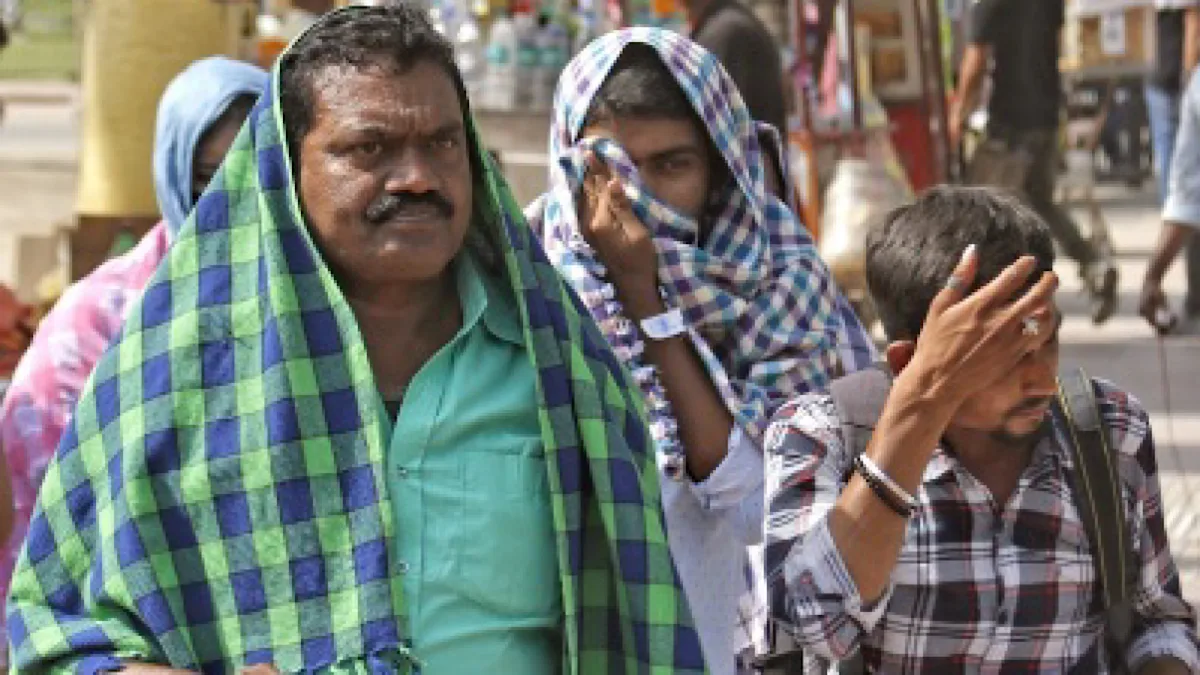
Meanwhile, the weather department has also warned that maximum temperatures across Tamil Nadu and Puducherry are likely to increase gradually. The rise in temperature is consistent with the seasonal transition toward the summer months, when heat levels typically begin to intensify across the region.

The IMD, in a statement, said that summer heat is likely to be stronger than usual in several parts of the country, including Tamil Nadu. The weather department advised the public to remain cautious and take necessary precautions as temperatures rise during the coming weeks.

The IMD also urged people to make use of the government’s MAUSAM mobile application, which provides real-time weather updates and early warnings about lightning strikes and other extreme weather events. The app, according to the weather department, can help people stay informed and take timely safety measures, particularly during periods of unstable weather.

Authorities have advised residents, especially farmers and outdoor workers, to keep track of official weather updates and plan their activities accordingly as temperatures increase and scattered rainfall is expected in parts of the state over the next several days.

US will ensure rogue Iranian regime’s terrorist proxies no longer destabilise region: WH

Amid escalating tensions in West Asia, the White House said that the “rogue Iranian terrorist” regime is being “absolutely crushed” under the Operation Epic Fury, as President Donald Trump has set clear objectives to raze Tehran’s missile industry and annihilate its navy.

ANI | New Delhi |

Amid escalating tensions in West Asia, the White House said that the “rogue Iranian terrorist” regime is being “absolutely crushed” under the Operation Epic Fury, as President Donald Trump has set clear objectives to raze Tehran’s missile industry and annihilate its navy.

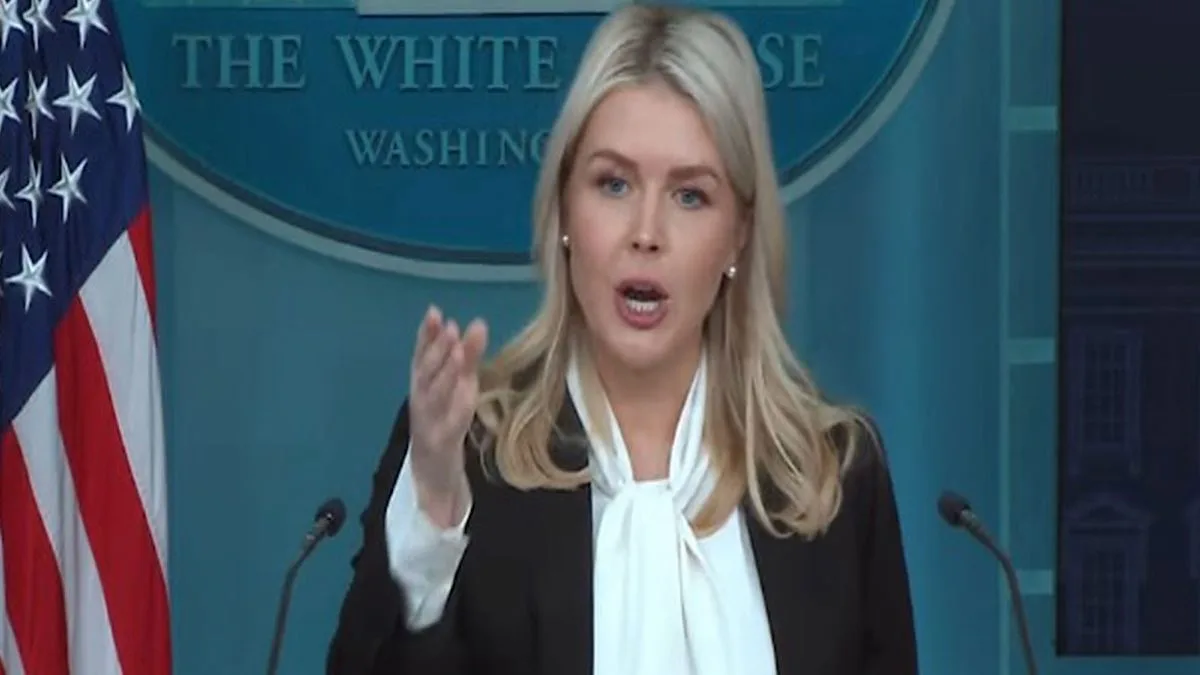
Addressing the reporters, White House Press Secretary Karoline Leavitt on Wednesday (local Time) said, “At the beginning of Operation Epic Fury, President Trump laid out clear objectives to the American people on what the US military seeks to accomplish through these major combat operations, which were to destroy the regime’s deadly ballistic missiles and completely raze their missile industry to the ground and annihilate the Iranian regime’s navy.”

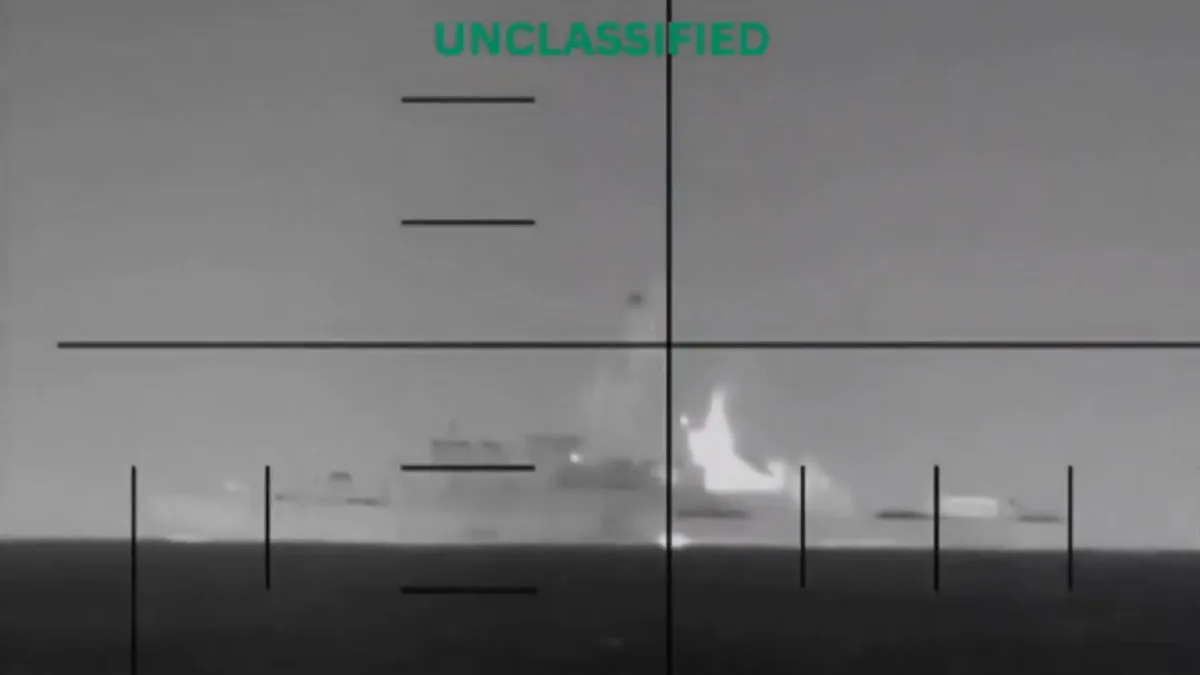
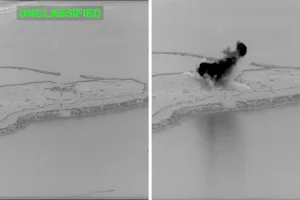
The White House Press Secretary said that the US destroyed more than 20 Iranian ships so far, including their top submarine, on Tuesday night.
“So far, we have destroyed more than 20 Iranian ships, including their top submarine last night, using a torpedo for the first time since World War II. There is not a single Iranian ship underway in the Arabian Gulf, Strait of Hormuz, or the Gulf of Oman. Operation Epic Fury will ensure the regime’s terrorist proxies in the region can no longer destabilise the region or the free world and attack our armed forces.
Leavitt further said that they expected to have total dominance over Iranian airspace in the coming hours.

“This mission will guarantee that Iran can never obtain a nuclear weapon. As the Department of War said this morning, we expect to have complete and total dominance over Iranian airspace in the coming hours, clearing the skies for our brave warriors,” she added.
“Under the leadership of President Donald J Trump, the rogue Iranian terrorist regime is being absolutely crushed. 47 years of tolerating and enabling the world’s leading state sponsor of terrorism are over… These terrorists seized our embassy and took 66 Americans hostage in Tehran,” she said, reminding of the 1979 seize of the US Embassy in Tehran in the aftermath of Iran’s Islamic revolution.

Criticising former US Presidents as “too weak” to address the Iran threat, she particularly slammed Barack Obama for “signing stupid and naive deals that put Iran on the path of developing nuclear bombs.”

“Prior leaders have been too weak and ineffective to address this threat. Some, like Barack Hussein Obama, even sent pallets of cash that ultimately financed this terrorist crusade against the United States and our people, while signing stupid and naive deals that put Iran on the path of developing nuclear bombs,” she claimed.
“President Trump is holding these monsters accountable and permanently extinguishing their nuclear ambitions…” the White House Press Secretary asserted.

Lauding President Trump’s decision-making, she said, “Trump had a good feeling that the Iranian regime was going to strike the United States’ assets and our personnel in the region–and the President was faced with a choice: Does the United States of America use our military and our capabilities to strike first, to take out this threat that has been threatening our country and our people for 47 years? Or is he going to, as Commander-in-Chief, sit back and watch as the rogue Iranian regime attacks our people in the region?… The second choice is unacceptable to Trump.”

Karoline Leavitt also expressed condolences to the families of the six US military service members who laid down their lives for the country in Operation Epic Fury.
“I want to also extend our prayers and condolences to the families of the six US military service members who have been lost in Operation Epic Fury. These heroes represent the very best among us… We will never forget their legacy or their sacrifice,” she added.
Providing an update on evacuations, Leavitt said, “Since the launch of Operation Epic Fury, more than 17,500 Americans have safely returned home from the Middle East, with over 8,500 American citizens returning home to the United States just yesterday alone. If you are a US citizen in the Middle East looking to return to the United States, Rubio asks that you please register with the State Department.”

She added, “Iran refused to say yes to peace, and their refusal made clear that their number one priority was building a nuclear weapon with which to threaten the United States of America again, the country they have been chanting death to for nearly 5 decades.”
When asked about oil prices and the economy, she said, “They remain stable today after Trump announced steps to ensure the stability in global energy markets. The economy continues to be very strong, it’s robust, and will be able to weather any of the temporary impacts of Operation Epic Fury.'”

On energy security, Leavitt stated, “Ultimately, the energy industry is going to benefit from the President’s actions with respect to Iran because Iran will no longer be controlling the Strait of Hormuz and restricting the free flow of energy, which controls 20 per cent of the world’s global oil supply.”

Amid escalating tensions in West Asia and growing concerns over disruptions to global oil supplies, President Donald Trump has announced that the United States would take “immediate steps to safeguard maritime trade” in the Gulf region, including offering political risk insurance and potentially deploying naval escorts through the Strait of Hormuz.
On Tuesday, in a post on Truth Social, Trump said he had directed the United States Development Finance Corporation (DFC) to provide political risk insurance and guarantees to ensure the financial security of all maritime trade, particularly energy shipments transiting through the Gulf.

Furthermore, Leavitt also highlighted travel advisories issued by the State Department, saying, “There were many signs put out by the State Department, and I wish that everyone in this room would report on them. Rubio issued Level 4 travel advisories dating back to January for many of these countries in the region. With respect to the Americans who are still in the region now, again, the State Department is asking that they register at the website so they can directly identify you and we are actively and rapidly working to charter flights.”

Leavitt said the Save America Act remains a priority of President Trump, adding, “The SAVE America Act is absolutely still a priority for this president. He’s very much continuing to focus on the issues that matter here at home…which is why you’ll see Trump in about an hour and a half at the Ratepayer Protection Pledge roundtable.”
Criticising sections of the media, she said, “I think Trump knows the country is smart enough to read past many of the Fake News headlines produced by people in this room, that this action was unjustifiable. This is a rogue terrorist regime that has been threatening the United States, our allies, and our people for 47 years, and the American people are smart enough to know that.”

The conflict in the Middle East has entered its sixth day following the February 28 US and Israeli strikes on Iran that killed Supreme Leader Ayatollah Khamenei, along with other key figures. In retaliation, Tehran has responded with counter-strikes targeting American military bases in Gulf nations and other Israeli assets across the region.

‘Few wars reward the power leading them’: How Gulf conflict turned into a windfall for US LNG exporters

QatarEnergy’s force majeure declaration and disrupted Middle Eastern exports are tightening global gas supplies, sending LNG prices higher and forcing Asian industries to cut fuel use.

Statesman News Service | New Delhi |

The ongoing conflict involving the United States, Israel, and Iran is beginning to reshape the global energy market, with rising gas prices and disrupted supplies giving American exporters a surprising advantage, according to strategic analyst Dr Brahma Chellaney.

With key energy routes and production centres in the Middle East under pressure, shipments of oil and liquefied natural gas (LNG) from the region have slowed or halted in places. Analysts say the disruption has pushed prices higher worldwide and strengthened the position of the United States, which is already the largest LNG exporter.

Dr Chellaney wrote on X that the war has turned into “a strategic windfall for the United States,” noting that global energy markets are tightening as supplies from the Middle East face uncertainty.

According to him, American exporters are benefiting because the country produces more oil than Saudi Arabia and Russia combined, and its shipments do not pass through the Strait of Hormuz, a chokepoint now seen as vulnerable during the conflict.

He said the situation has created a geopolitical paradox. “A war that destabilises Middle Eastern energy supplies is strengthening the global market position of the US,” he observed.

Dr Chellaney added: “Few wars so neatly reward the very power leading the armed conflict.”

Also Read: Secret to survival from US-pushed regime change: Possess nukes

QatarEnergy declares force majeure, contracts shaken

The shock to energy markets intensified after QatarEnergy declared force majeure, a legal term indicating that an unforeseen event has made it impossible for the company to meet supply commitments.

Analyst Shanaka Anslem Perera wrote on X that the declaration effectively voids affected supply contracts. “Three words that mean: we cannot deliver, and legally, we do not have to,” he said.

He explained that force majeure is not a temporary precaution but a formal legal step that releases a supplier from contractual obligations when circumstances are beyond its control.

The development has significant implications because 82 per cent of Qatar’s LNG exports are sent to Asia, making the region heavily dependent on those shipments.

Perera noted that several Asian economies rely on Qatari gas for a substantial portion of their imports, including India, China, Taiwan, South Korea, and Japan.

Asian LNG benchmark prices surged sharply after production stopped, rising 39 per cent in a single day, he said. European gas prices have also jumped, while spot prices in Asia have roughly doubled in recent weeks.

The disruption is already affecting the industry. Perera said some Indian companies have reduced gas supplies to factories by 10 to 30 per cent, forcing manufacturers to operate at lower capacity.

Restarting production may also take time. After a full shutdown, a liquefaction facility could need around two weeks to restart operations and another two weeks to reach full output, meaning supplies may remain constrained for at least a month even if conditions stabilise.

Perera warned that the impact may extend beyond the energy sector. “Every LNG contract in Asia just became a spot market problem. Every spot market problem just became an inflation problem. Every inflation problem just became a central bank problem.”

“This started as a war in the Middle East. It is now inside every factory, every power plant, and every gas bill across Asia. Price that chain,” he wrote.

Also Read: ‘Iran has no intent of negotiating with US, can continue war for as long as needed’: Top aide of late Ayatollah Khamenei

MEA denies US media reports of Indian ports being used for strikes on Iran

The denial came via a pointed social media post from the MEA’s official FactCheck handle, underscoring India’s commitment to neutrality and factual diplomacy in a volatile global landscape.

IANS | New Delhi |

In a swift rebuttal amid escalating geopolitical tensions in the Middle East, the Ministry of External Affairs (MEA) on Wednesday categorically denied sensational reports alleging that Indian ports are serving as bases for US Navy operations targeting Iran.

The denial came via a pointed social media post from the MEA’s official FactCheck handle, underscoring India’s commitment to neutrality and factual diplomacy in a volatile global landscape.

The controversy erupted earlier in the day when One America News (OAN), a conservative US-based television network known for its provocative coverage, aired claims suggesting that Indian naval facilities, particularly in the western ports of Mumbai and Kochi, were being utilised by American warships for staging attacks on Iranian assets.

OAN’s segment, viewed by millions, cited anonymous “military sources” and speculated that this covert cooperation was part of a broader Indo-US strategic pivot against Tehran’s influence in the Persian Gulf.

The report quickly went viral on platforms like X and Telegram, fuelling speculation and drawing sharp reactions from netizens across South Asia and the Middle East.

Responding with uncharacteristic firmness, the MEA FactCheck account stated: “Claims being made on OAN, a US-based channel, that Indian ports are being used by the US Navy are fake and false. We caution you against such baseless and fabricated comments.”

This stance aligns with Prime Minister Narendra Modi’s “multi-alignment” foreign policy, which balances ties with the US-India’s key defense partner — while nurturing relations with Iran, a vital energy supplier and Chabahar port collaborator.

As the US-Iran shadow war simmers — marked by recent drone strikes and cyber skirmishes — New Delhi’s clarification reinforces its role as a stabilising force.

The MEA urged the public to verify sources and report falsehoods, ending the post with a call for “responsible journalism in turbulent times”.

In the wake of the MEA’s firm rebuttal, India’s image as a non-aligned power broker, the swift fact-check also spotlights the need for enhanced media literacy campaigns domestically.

As disinformation campaigns proliferate, New Delhi’s proactive digital defenses could inspire similar efforts among Global South nations, fortifying collective resilience against any fake narrative.

US may escort tankers through Strait of Hormuz amid Iran war, says White House

The United States may deploy naval escorts for oil tankers passing through the Strait of Hormuz if necessary, the White House have said, as the conflict with Iran raises concerns about global energy supplies and shipping security in one of the world’s most critical maritime corridors.

IANS | New Delhi |

The United States may deploy naval escorts for oil tankers passing through the Strait of Hormuz if necessary, the White House have said, as the conflict with Iran raises concerns about global energy supplies and shipping security in one of the world’s most critical maritime corridors.

Speaking at a White House briefing on Wednesday (local time), Press Secretary Karoline Leavitt said that the administration was closely monitoring oil markets and maritime traffic as Operation Epic Fury continues against Iran.

She said President Donald Trump had already taken steps to stabilise energy markets and protect shipping in the Gulf region.

“Yesterday, President Trump announced the US Development Finance Corporation will provide political risk insurance at a very reasonable price for crude carriers and cargo ships operating in and around the Gulf,” Leavitt told reporters.

She added that the United States Navy could also intervene directly if shipping security deteriorates.

“As you pointed out, the president said if necessary and when appropriate, the US Navy will begin escorting tankers through the Strait of Hormuz,” she said.

The move is aimed at preventing disruptions to global oil flows as the conflict with Iran intensifies.

Leavitt noted that the waterway plays a central role in global energy markets.

“The Strait of Hormuz… controls 20 per cent of the world’s global oil supply,” she said.

The White House said the administration was working with its economic and energy teams to minimise the economic impact of the conflict.

“With respect to oil prices and the economy here at home, of course, this is something that (Treasury) Secretary (Scott) Bessent, (Energy) Secretary (Chris) Wright, the National Economic Council of Energy that is led by (Doug) Burgum has been long working on well in advance,” Leavitt said.

She added that US officials believed the economy could absorb temporary shocks from the conflict.

“It is the president’s belief and his economic team’s belief that the economy continues to be very strong. It’s robust and will be able to weather any of the temporary impacts of Operation Epic Fury,” she said.

The White House also stated that recent actions against Iran could ultimately improve the stability of global energy markets.

Leavitt argued that the conflict would reduce Tehran’s ability to influence shipping through the strategic waterway.

“I think it speaks to why this action was so necessary that ultimately the energy industry is going to benefit from the president’s actions with respect to Iran,” she said.

She added that Iran would no longer be able to threaten shipping through the region.

“Iran will no longer be controlling the Strait of Hormuz and restricting the free flow of energy,” she said.

Oil prices briefly rose after the conflict broke out, raising concerns about inflation and fuel costs in major importing countries.

However, the White House said markets had stabilised after the administration announced measures to secure maritime energy routes.

“Crude oil prices did fall yesterday. They remain stable today after the president announced steps to ensure the stability in global energy markets,” Leavitt said.

The Strait of Hormuz lies between Iran and Oman and connects the Persian Gulf to global sea lanes. It is widely regarded as the most important oil transit chokepoint in the world.

Nominations open today for 37 Rajya Sabha seats

The process for filing nominations for the biennial elections to the Council of States, Rajya Sabha, will begin on Thursday, with candidates set to contest 37 seats in the Upper House.

IANS | New Delhi |

The process for filing nominations for the biennial elections to the Council of States, Rajya Sabha, will begin on Thursday, with candidates set to contest 37 seats in the Upper House.

The Election Commission of India (ECI) had on February 18 announced the schedule for the biennial elections to fill 37 vacancies arising from 10 states. These seats are falling vacant as the terms of the incumbent members are scheduled to conclude in April 2026.

As per the notified schedule, polling will be held on March 16 between 9:00 a.m. and 4:00 p.m., with the counting of votes slated for 5:00 p.m. on the same day. The Commission has put in place a comprehensive timetable to facilitate the smooth conduct of the electoral process in view of the impending vacancies.

The scrutiny of nomination papers will take place on March 6, while March 9 has been fixed as the last date for withdrawal of candidatures.

In its guidelines, the Commission has specified that only integrated violet sketch pens of pre-determined specifications, to be supplied by the Returning Officer, will be permitted for marking preferences on the ballot papers. It has clarified that the use of any other writing instrument will not be allowed.

To ensure transparency and fairness, observers will be deployed to oversee the entire election process. The Commission has stressed strict adherence to all election-related instructions and underlined that the process will be completed within the stipulated timeline to maintain the integrity of the Rajya Sabha elections.

The members whose terms are coming to an end represent Maharashtra, Odisha, Tamil Nadu, West Bengal, Assam, Bihar, Chhattisgarh, Haryana, Himachal Pradesh and Telangana.

Meanwhile, political parties have stepped up their preparations for the contest. The BJP has announced candidates, including Nitin Nabin and Shivesh Kumar from Bihar; Terash Gowalla and Jogen Mohan from Assam; Laxmi Verma from Chhattisgarh; Sanjay Bhatia from Haryana; Manmohan Samal and Sujeet Kumar from Odisha; and Rahul Sinha from West Bengal.

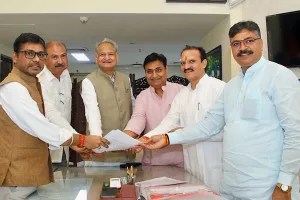
Following intense consultations, the Congress on Wednesday declared its support for NCP-SP chief and former Union Minister Sharad Pawar in the forthcoming Rajya Sabha polls.

The decision was announced at a press conference addressed by state Congress president Harshwardhan Sapkal, in the presence of NCP-SP working president Supriya Sule, Congress Legislature Party leader Vijay Wadettiwar and party legislator Satej Patil.

The BJP has also nominated Vinod Tawde, the party’s National General Secretary and in charge of Bihar, marking his return to parliamentary politics after remaining out of the legislative arena since 2019.

In addition, the party has renominated Ramdas Athawale, National President of the RPI (Athawale) and a sitting Union Minister of State. The other nominees include Maya Chintaman Ivnate, a tribal leader and former Mayor of the Nagpur Municipal Corporation, and Ramrao Wadkute, who belongs to the Dhangar community from Hingoli district.

Muslims killed in Bengal over last three years higher than any other state: BJP

The Bharatiya Janata Party (BJP) on Wednesday claimed that the number of Muslims killed in West Bengal during the last three years was higher than in any other Indian state.

IANS | Kolkata |

The Bharatiya Janata Party (BJP) on Wednesday claimed that the number of Muslims killed in West Bengal during the last three years was higher than in any other Indian state.

“I request people from the Muslim community to calculate the number of people from their community who have been killed in West Bengal during the last three years and compare that figure with those in other Indian states. Just compare that figure in West Bengal with that in BJP-ruled states such as Uttar Pradesh and Gujarat, among others. You will see that the figure for West Bengal on this count is much higher than in those BJP-ruled states,” BJP’s West Bengal unit president and Rajya Sabha member Samik Bhattacharya told media persons on Wednesday.

He also claimed that there have been several instances in West Bengal where Muslim Trinamool Congress activists were allegedly killed by fellow party workers from the same community, in incidents frequently reported in the media as “factional infighting” within the ruling Trinamool Congress.

Speaking on the occasion, Bhattacharya also criticised the CPI(M) over an FIR registered against Leader of the Opposition in the West Bengal Assembly Suvendu Adhikari at a police station in Kolkata.

The complaint was filed by a youth CPI(M) leader, accusing Adhikari of making communally sensitive remarks during the Dol Yatra festival on Tuesday.

“Though I am not here today to defend the Leader of the Opposition, all I can say is that he had been well within constitutional limits. As regards the CPI(M), the party has become totally irrelevant in West Bengal politics. So they are trying to keep themselves afloat by resorting to such gimmicks,” Bhattacharya said.

He also commented on the Election Commission of India’s (ECI) move to deploy Central Armed Police Forces (CAPF) personnel well ahead of the announcement of polling dates for the West Bengal Assembly elections scheduled later this year.

“The last time free and fair elections were conducted in West Bengal was in 2011, which marked the end of the 34-year Left Front regime and the beginning of the Trinamool Congress government. Since then, there has not been a single peaceful election in the state. But this time, it seems there will be totally peaceful polling,” Bhattacharya said.

One killed, several injured in fire incident in Bengal’s Madhyamgram

The identity of the deceased has not yet been established, police sources said, adding that efforts are underway to identify the victim.

IANS | Kolkata |

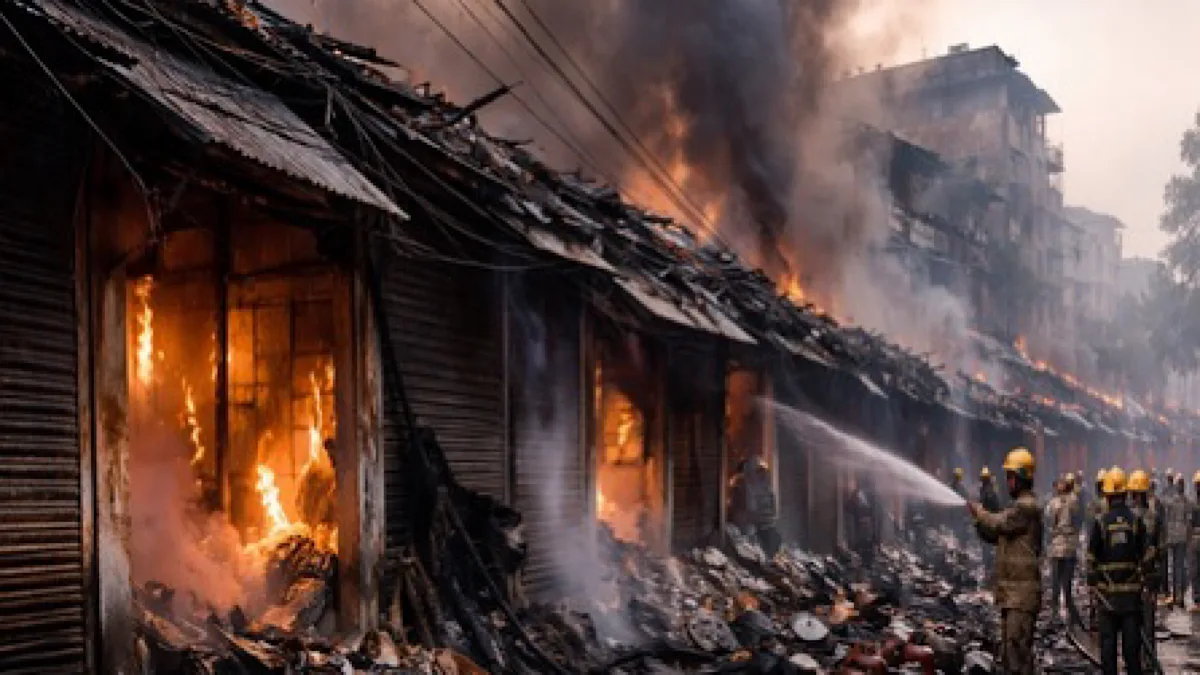
One person was killed and several others sustained burn injuries after a fire broke out in Madhyamgram in North 24 Parganas district on the day of Holi, police said on Wednesday.

The identity of the deceased has not yet been established, police sources said, adding that efforts are underway to identify the victim.

The injured persons have been rescued and taken to a local hospital, where they are currently undergoing treatment.

According to local sources, the fire broke out in a row of shops adjacent to Madhyamgram railway station, triggering panic in the area.

Witnesses reported hearing a series of cylinder explosions, after which the flames spread rapidly from one shop to another.

Four fire engines rushed to the spot to bring the situation under control, while officers from the Madhyamgram police station also reached the site.

According to the latest reports, the fire broke out along Madhyamgram Station Road, where a restaurant, a sweet shop and several other establishments were completely gutted.

The exact cause of the fire is yet to be determined. However, preliminary findings of the fire department suggest that a gas cylinder explosion might have triggered the blaze.

The flames later spread to nearby structures, making it difficult for firefighters to initially contain the fire in the densely populated locality.

After nearly an hour of firefighting operations, the blaze was brought under control.

Soon after the fire was doused, firefighters recovered a charred body from inside one of the gutted shops.
Barasat SDPO Vidyagar Ajinkya Ananta said, “As soon as the news of the fire was received, personnel from the fire department and the police reached the spot. Firefighters were trying to douse the flames on a war footing.

“A large number of people had gathered at the spot. As the crowd increased, the firefighting operation was being disrupted, and they had to be moved away from the vicinity.

“It is not yet possible to ascertain exactly how many shops were damaged, but initial indications suggest that four to five shops have been completely gutted.”

ECI gives initial clearance for registration of political party floated by Humayun Kabir

The new political outfit has been named the Aam Janata Unnyaan Party (AJUP). The party plans to field candidates in several Assembly constituencies in West Bengal in the crucial Assembly elections scheduled later this year.

IANS | Kolkata |

Humayun Kabir, the suspended Trinamool Congress legislator from the Bharatpur Assembly constituency in minority-dominated Murshidabad district of West Bengal, said on Wednesday evening that he had received communication from the Election Commission of India (ECI) granting initial clearance for the registration of a new political party floated by him.

The new political outfit has been named the Aam Janata Unnyaan Party (AJUP). The party plans to field candidates in several Assembly constituencies in West Bengal in the crucial Assembly elections scheduled later this year.

Initially, the name proposed by Kabir to the ECI was Janata Unnyaan Party (JUP). The office of the Chief Electoral Officer (CEO) in West Bengal had also forwarded a recommendation to the Commission’s headquarters in New Delhi for approval of the proposed name.

However, the Commission later advised Kabir to change the name of the party, noting that a political party with a similar name was already registered with it. Following this, Kabir renamed his party Aam Janata Unnyaan Party (AJUP).

Despite the initial clearance, the party will take some time to receive its final and official registration.

As part of the process, public notices will now have to be published in newspapers informing people about the proposed registration of the new political party.

If no objections are received within the stipulated period, the final registration will be granted.

A Commission insider said that if no complications arise, the final registration for AJUP could be granted within a fortnight.

Humayun Kabir was suspended from the Trinamool Congress soon after he announced a foundation stone-laying ceremony for a proposed mosque at Beldanga in Murshidabad district.

Kabir had said the mosque would be constructed along the architectural lines of the original Babri Masjid structure in Ayodhya, which was demolished on December 6, 1992.

Subsequently, on December 22, 2025, Kabir formally announced the formation of his new political party — then named Janata Unnayan Party — and also declared the names of key office-bearers of the organisation.

On the same occasion, he also announced the names of some prospective candidates who would contest the West Bengal Assembly elections scheduled later this year.

Kabir had also made a public appeal for alliances with political parties and groups opposed to both the BJP and the Trinamool Congress ahead of the elections.
However, apart from initial discussions with Asaduddin Owaisi’s All India Majlis-e-Ittehadul Muslimeen (AIMIM), his efforts to forge broader political alliances have not made significant progress so far, sources said.
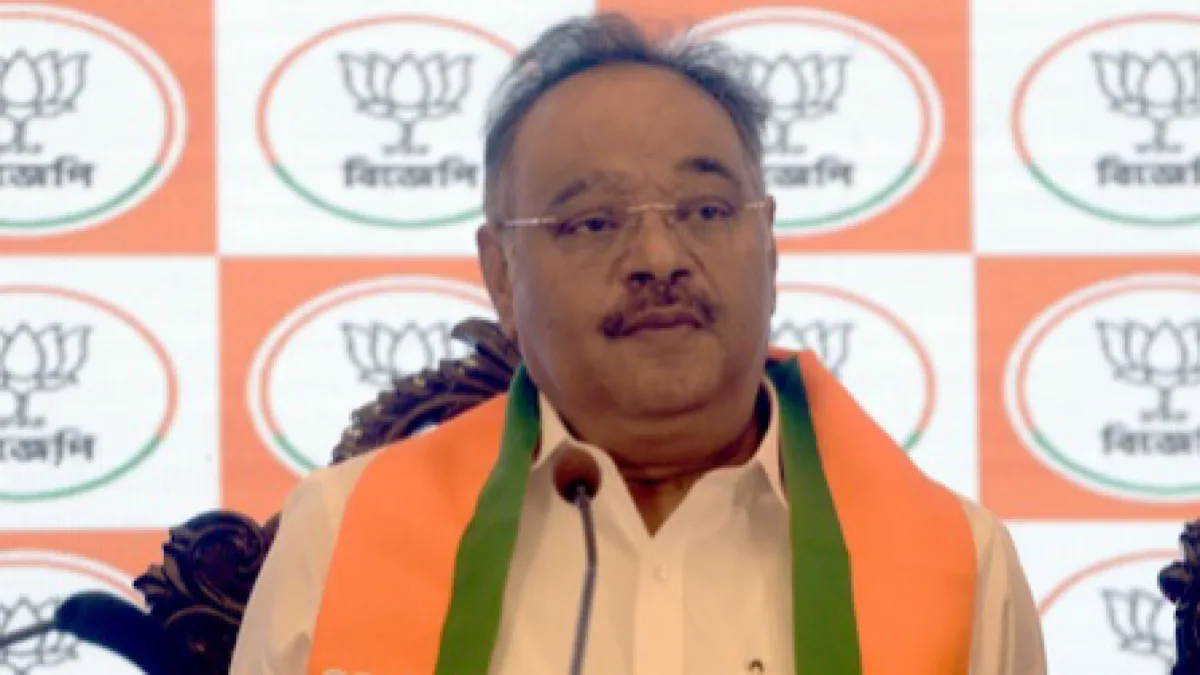
Kunal Ghosh says visits by BJP leaders from outside Bengal won’t impact voters

Reacting to the increasing visits of BJP leaders to West Bengal, Ghosh said such exercises were not new and had yielded little in the past.

IANS | Kolkata |

Trinamool Congress leader Kunal Ghosh on Wednesday criticised the Bharatiya Janata Party (BJP) over the increasing visits of its leaders from outside West Bengal ahead of the Assembly elections, describing them as “political tourists” and claiming such efforts would not influence the state’s electorate.

Reacting to the increasing visits of BJP leaders to West Bengal, Ghosh said such exercises were not new and had yielded little in the past.

“See, it happens all the time. They are political tourists; they are daily passengers. They have money, they have the capacity for hotel bookings, so they are doing it. They did it in 2021 saying ‘Abki Baar 200 Paar’, but they stopped at 77. Now they are reduced to 60. They lost the panchayat elections in 2023 and lost all the Zilla Parishads,” he said.

Ghosh alleged that the BJP’s campaign in the state was aimed more at optics than grassroots engagement.

“The wall writing for elections is just an attempt to click photos. Those writings that are written on the wall, they don’t even know how to read them. To defame Bengal, whatever is needed the BJP is doing,” he claimed.

He further accused the BJP of conspiring to delete names of genuine voters from electoral rolls.

“Now the genuine voters are being deleted through conspiracy,” he alleged.

On the issue of the Special Intensive Revision (SIR) of electoral rolls, Ghosh made serious allegations, claiming that the process had led to distress among both voters and officials.

“Again there has been death due to the SIR list. There is a series of deaths, and it is the responsibility of the Election Commission of India and BJP. On one hand, legal voters are being harassed, panicked, committing suicide or suffering heart attacks. On the other hand, BLOs are also facing such extreme pressure. A complete harassment is ongoing,” he said.

Targeting the CPI-M, Ghosh described the Left party as the BJP’s “B team” in the state.

“There is no policy of CPI-M. It is BJP’s B team. The percentage of votes that BJP gets here earlier belonged to the Left. The Left has been reduced, and BJP has increased a little. Trinamool has never been reduced,” he asserted.

Highlighting the leadership of Chief Minister Mamata Banerjee and party National General Secretary Abhishek Banerjee, Ghosh said the Trinamool Congress has consistently stood by the people of Bengal.

“Under the leadership of Mamata Didi and Abhishek Banerjee, the Trinamool Congress has been with the public from day one. The Left was sitting at home. They were never with the people,” he added.

JAO or FAO? DIN or No DIN?

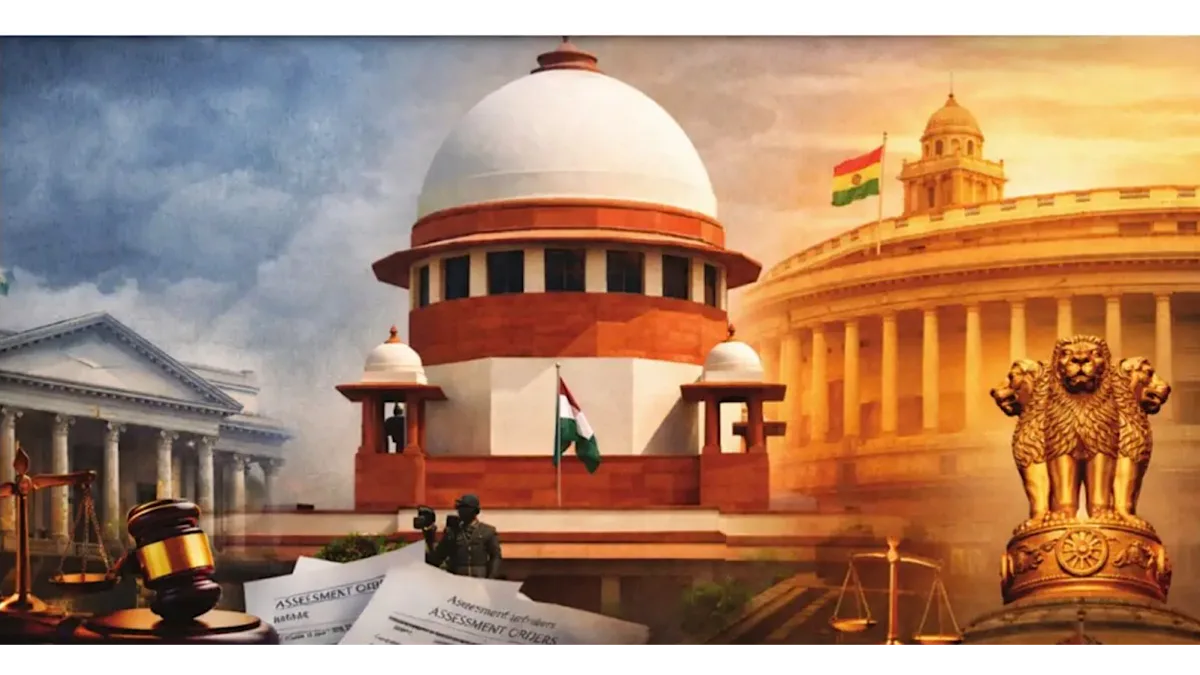
Changing the law with retrospective effect while an issue is pending before the Supreme Court of India raises serious institutional concerns.

Debarshi Chakraborty and Raj Maniyar | New Delhi |

Changing the law with retrospective effect while an issue is pending before the Supreme Court of India raises serious institutional concerns. The Finance Bill 2026 does precisely this in the context of income tax reassessment. It retrospectively validates reassessment notices issued by Jurisdictional Assessing Officers (JAOs) and cures defects in orders that did not carry the mandatory Document Identification Numbers (DIN).

This is being done when the Supreme Court is already examining the jurisdictional issue in Union of India v. Suryalakshmi Cotton Mills and connected matters. The controversy traces back to the 2021 shift to a “faceless” assessment regime under Section 151A of the Income Tax Act, 1961. Several High Courts, including those of Bombay, Telangana and Madras, held that once the National Faceless Assessment Centre became operational, reassessment notices under Section 148 had to be issued only by Faceless Assessing Officers (FAOs). According to these courts, actions by JAOs were without jurisdiction and therefore void.

The Bombay High Court in Hexaware v. ACIT (2022) reasoned that once the faceless framework was introduced, every function under the relevant chapter had to be routed through that system. The Delhi High Court, however, in TKS Builders v. ITO (2024), took a different view. It held that the faceless scheme was not exclusive and that the powers of JAOs continued to exist alongside it. This divergence created a situation where identical reassessment notices were upheld in some jurisdictions and struck down in others. A parallel dispute arose over DIN compliance.

The Central Board of Direct Taxes (CBDT), through a 2019 circular, mandated that every communication relating to assessment must carry a computer-generated DIN. The requirement was intended to ensure transparency and prevent back-dated or unauthorised orders. Many reassessment notices were challenged on the ground that they lacked a valid DIN, and several courts invalidated such proceedings. The Finance Bill now introduces two significant provisions. First, a new Section 147A, with effect from 1 April 2021, declares that for the purposes of Sections 148 and 148A, “Assessing Officer” shall be deemed always to have included the JAO, “notwithstanding” any scheme under Section 151A or any court judgment.

Second, new Section 292BA, with effect from 1 October 2021, provides that an assessment shall not be invalid merely due to any defect or omission in quoting DIN, so long as the communication can be traced or identified. This is not merely a procedural clarification; it is a retrospective legislative validation of actions that courts had already found to be without jurisdiction or procedurally defective. From a jurisprudential standpoint, such amendments draw upon Parliament’s recognised power to enact curative statutes that remove the legal basis of judicial decisions without formally overruling them, as affirmed in decisions including K.S. Paripoornan v. Kerala (1994).

However, the Supreme Court has consistently maintained that this power has limits. The legislature may amend the law retrospectively, but it cannot simply declare judicial outcomes ineffective or extinguish rights already crystallised through judicial determination. The use of deeming language and “notwithstanding any judgment” clauses, particularly when the very issue remains pending before the Supreme Court, raises the question whether the amendment merely cures a defect or seeks to predetermine adjudication. The immediate consequence is that reassessment notices earlier quashed on jurisdictional or DIN grounds stand retrospectively validated.

For the Revenue, this avoids large-scale annulments and possible refunds. It also removes the inconsistency created by conflicting High Court judgments. From an administrative standpoint, the amendment is presented as a clarification intended to protect completed or pending proceedings from being defeated on technical grounds. However, the method adopted raises constitutional questions. The power of Parliament to enact retrospective tax legislation is well recognised. At the same time, the Supreme Court has consistently held that while the legislature may cure the basis of a judicial decision, it cannot simply overrule or nullify a judgment by legislative declaration.

When a matter is already pending before the Supreme Court, a retrospective amendment that directly addresses the issue under consideration may be seen as influencing or predetermining the outcome. India has witnessed the consequences of retrospective tax amendments before. The amendment following the Supreme Court’s decision in Vodafone International Holding BV v. Union of India (2012) sought to override the Court’s interpretation of capital gains taxation in cross-border transactions. That amendment led to prolonged arbitration, adverse awards, and ultimately a policy reversal in 2021 after significant uncertainty and reputational cost. The present situation differs in subject-matter but raises a similar concern.

The DIN validation provision also merits scrutiny. The 2019 circular was designed to institutionalise accountability in tax administration. If compliance with DIN requirements can be regularised retrospectively, it may weaken the deterrent effect of procedural safeguards. Procedural discipline is not a mere technicality; it is a protection against arbitrariness. It is unlikely that the amendment will end litigation. Instead, the focus may shift from jurisdictional defects to constitutional validity. Taxpayers who obtained favourable judgments may challenge whether their accrued rights can be taken away by retrospective legislation.

The Supreme Court will eventually have to examine whether Sections 147A and 292BA amount to a permissible clarification or an impermissible legislative override. At a broader level, the episode highlights the importance of tax certainty. Frequent retrospective amendments, particularly when the issue is sub judice, create instability. Investors assess not only tax rates but also the predictability of legal outcomes. If the law changes after disputes arise, confidence in the system weakens.

[THE WRITERS ARE, RESPECTIVELY, AN ADVOCATE PRACTICING BEFORE DELHI HIGH COURT, AND A CHARTERED ACCOUNTANT BASED IN MUMBAI]

Right to Life, Right to Choice

The recent decision of the Supreme Court of India permitting the medical termination of a 30-week pregnancy represents a significant and carefully reasoned development in India’s constitutional abortion jurisprudence.

Sunil Garodia | New Delhi |

The recent decision of the Supreme Court of India permitting the medical termination of a 30-week pregnancy represents a significant and carefully reasoned development in India’s constitutional abortion jurisprudence. Delivered by a bench comprising Justices B V Nagarathna and Ujjal Bhuyan, the judgment overturned an earlier refusal by the Bombay High Court and reaffirmed a principle that has steadily gained constitutional recognition: the State cannot compel a woman to carry a pregnancy to term against her will.

The decision is notable not merely for the relief granted in the individual case, but for the clarity with which it confronts the unresolved tension between two competing constitutional concerns – the protection of potential life and the preservation of a woman’s fundamental rights. Justice Nagarathna’s observation that the matter involved difficult moral and legal questions is telling. It reflects an awareness that abortion adjudication cannot be reduced to mechanical statutory interpretation. Yet constitutional courts are required to decide precisely such difficult cases, where moral disagreement cannot be allowed to eclipse constitutional guarantees.

At the core of the controversy lies Article 21 of the Constitution, which guarantees the right to life and personal liberty. Over the decades, the Supreme Court has consistently expanded the scope of this provision, transforming it from a narrow guarantee against arbitrary deprivation of life into a broad source of substantive rights. Dignity, privacy, bodily integrity, and decisional autonomy have all been read into Article 21, giving it a dynamic and evolving character. Reproductive autonomy is one such recognised facet. In Suchita Srivastava v Chandigarh Administration, the Court unequivocally held that a woman’s right to make reproductive choices is an integral component of personal liberty under Article 21. The judgment acknowledged that reproductive rights include both the right to procreate and the right to abstain from procreation.

Importantly, the Court cautioned against treating women as mere instruments for achieving demographic or social objectives, underscoring that bodily autonomy cannot be subordinated to abstract notions of public interest. That constitutional position has since been reinforced and refined. In X v Principal Secretary, Health and Family Welfare Department, the Court adopted a purposive interpretation of the Medical Termination of Pregnancy Act, holding that its provisions must be read in light of constitutional values rather than in a restrictive or exclusionary manner. The judgment rejected distinctions based on marital status and emphasised that access to abortion is not a privilege contingent on social approval, but a legal entitlement grounded in personal liberty and dignity. The present case extends this jurisprudence into an area that has traditionally attracted greater judicial hesitation: late-term pregnancy.

Statutory limits under the MTP Act, particularly the 24-week threshold, are often treated as rigid barriers. However, the Supreme Court has repeatedly clarified that statutory provisions cannot be applied in a manner that results in the violation of fundamental rights. Where a statute comes into conflict with the Constitution, constitutional principles must prevail. This approach reflects a long-standing judicial understanding that the Constitution is not subservient to legislation. The MTP Act, while regulating the conditions under which termination may occur, does not exhaust the scope of constitutional protection. Its provisions must therefore be interpreted harmoniously with Article 21, rather than as absolute prohibitions.

Critically, the Court’s reasoning does not rest on a denial of foetal interests. The judgment does not suggest that foetal life is without value or moral significance. Instead, it recognises that Indian constitutional law does not accord the foetus an independent right to life that can override the decisional autonomy of the pregnant woman. The Constitution protects persons, and the bearer of enforceable fundamental rights in this context is the woman, not the foetus. This distinction is central to understanding the legal framework governing abortion in India. While the State may have a legitimate interest in protecting potential life, that interest is not absolute. It must be balanced against the woman’s rights to bodily integrity, privacy, and dignity.

Compelling childbirth, particularly against an individual’s will, constitutes a profound intrusion into these rights. The Court’s oral observations capture this constitutional dilemma succinctly. By questioning whether a woman can be forced to give birth simply because the foetus is also a life, the bench highlighted the inherent limits of State power. The Constitution does not permit the State to treat a woman’s body as a site for enforcing moral or social norms, regardless of how sincerely those norms are held. The age of the petitioner further sharpened the constitutional stakes. The woman was a minor at the time of conception, raising serious questions about consent, agency, and vulnerability. Indian constitutional jurisprudence has consistently held that heightened protection is owed to individuals in vulnerable positions.

To compel continuation of pregnancy in such circumstances would amount to a grave violation of bodily integrity and decisional autonomy, both of which lie at the heart of Article 21. Moreover, the Court has previously recognised that reproductive decisions have irreversible consequences. Unlike many other exercises of personal liberty, pregnancy and childbirth permanently alter the physical, psychological, and social trajectory of an individual’s life. Constitutional protection must therefore be particularly robust in this domain. From a legal standpoint, the judgment also clarifies an important point regarding judicial discretion in abortion cases. Courts are often criticised for engaging in ad hoc decision-making when permitting late-term terminations. However, the present ruling demonstrates that such discretion is not unguided. It is anchored in established constitutional doctrine, medical opinion, and a careful balancing of rights.

By allowing termination beyond the statutory limit, the Court has not diluted the sanctity of life. Rather, it has affirmed that the right to life under Article 21 is not confined to biological existence alone. It encompasses the right to live with dignity, autonomy, and control over one’s body. These elements cannot be suspended merely because pregnancy has progressed beyond a legislatively prescribed timeframe. The judgment also carries broader implications for constitutional governance. It reinforces the principle that the State’s regulatory power has limits, particularly in matters involving intimate personal choices. The role of the law is not to impose a singular moral vision, but to protect individual liberty within a framework of constitutional values.

In this sense, the decision is not an aberration, nor is it a concession made out of sympathy. It is a logical continuation of a constitutional trajectory that has increasingly centred dignity and autonomy as foundational principles. By refusing to compel motherhood, the Supreme Court has reaffirmed that reproductive choice lies at the intersection of liberty, privacy, and bodily integrity. Ultimately, the judgment serves as a reminder that constitutional rights are most meaningful when they protect individuals in moments of vulnerability and conflict. In recognising that the law cannot force a woman to give birth against her will, the Supreme Court has once again asserted the primacy of personal liberty over coercive state action. That assertion is not merely progressive; it is constitutionally sound.

(THE WRITER IS A COMMENTATOR ON LEGAL AFFAIRS.)