Logo

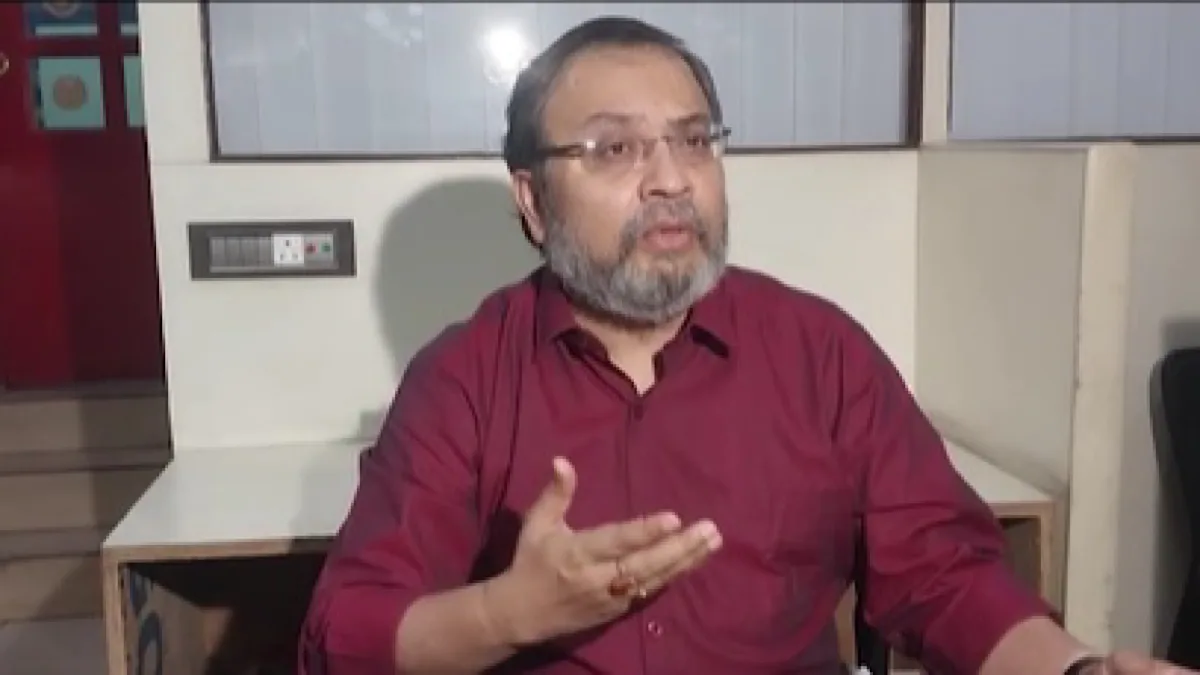
Kunal Ghosh says visits by BJP leaders from outside Bengal won’t impact voters

Reacting to the increasing visits of BJP leaders to West Bengal, Ghosh said such exercises were not new and had yielded little in the past.

IANS | Kolkata |

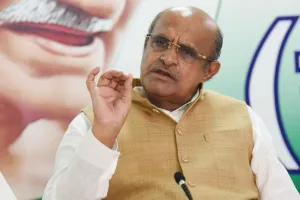
Trinamool Congress leader Kunal Ghosh on Wednesday criticised the Bharatiya Janata Party (BJP) over the increasing visits of its leaders from outside West Bengal ahead of the Assembly elections, describing them as “political tourists” and claiming such efforts would not influence the state’s electorate.

Reacting to the increasing visits of BJP leaders to West Bengal, Ghosh said such exercises were not new and had yielded little in the past.

“See, it happens all the time. They are political tourists; they are daily passengers. They have money, they have the capacity for hotel bookings, so they are doing it. They did it in 2021 saying ‘Abki Baar 200 Paar’, but they stopped at 77. Now they are reduced to 60. They lost the panchayat elections in 2023 and lost all the Zilla Parishads,” he said.

Ghosh alleged that the BJP’s campaign in the state was aimed more at optics than grassroots engagement.

“The wall writing for elections is just an attempt to click photos. Those writings that are written on the wall, they don’t even know how to read them. To defame Bengal, whatever is needed the BJP is doing,” he claimed.

He further accused the BJP of conspiring to delete names of genuine voters from electoral rolls.

“Now the genuine voters are being deleted through conspiracy,” he alleged.

On the issue of the Special Intensive Revision (SIR) of electoral rolls, Ghosh made serious allegations, claiming that the process had led to distress among both voters and officials.

“Again there has been death due to the SIR list. There is a series of deaths, and it is the responsibility of the Election Commission of India and BJP. On one hand, legal voters are being harassed, panicked, committing suicide or suffering heart attacks. On the other hand, BLOs are also facing such extreme pressure. A complete harassment is ongoing,” he said.

Targeting the CPI-M, Ghosh described the Left party as the BJP’s “B team” in the state.

“There is no policy of CPI-M. It is BJP’s B team. The percentage of votes that BJP gets here earlier belonged to the Left. The Left has been reduced, and BJP has increased a little. Trinamool has never been reduced,” he asserted.

Highlighting the leadership of Chief Minister Mamata Banerjee and party National General Secretary Abhishek Banerjee, Ghosh said the Trinamool Congress has consistently stood by the people of Bengal.

“Under the leadership of Mamata Didi and Abhishek Banerjee, the Trinamool Congress has been with the public from day one. The Left was sitting at home. They were never with the people,” he added.

JAO or FAO? DIN or No DIN?

Changing the law with retrospective effect while an issue is pending before the Supreme Court of India raises serious institutional concerns.

Debarshi Chakraborty and Raj Maniyar | New Delhi |

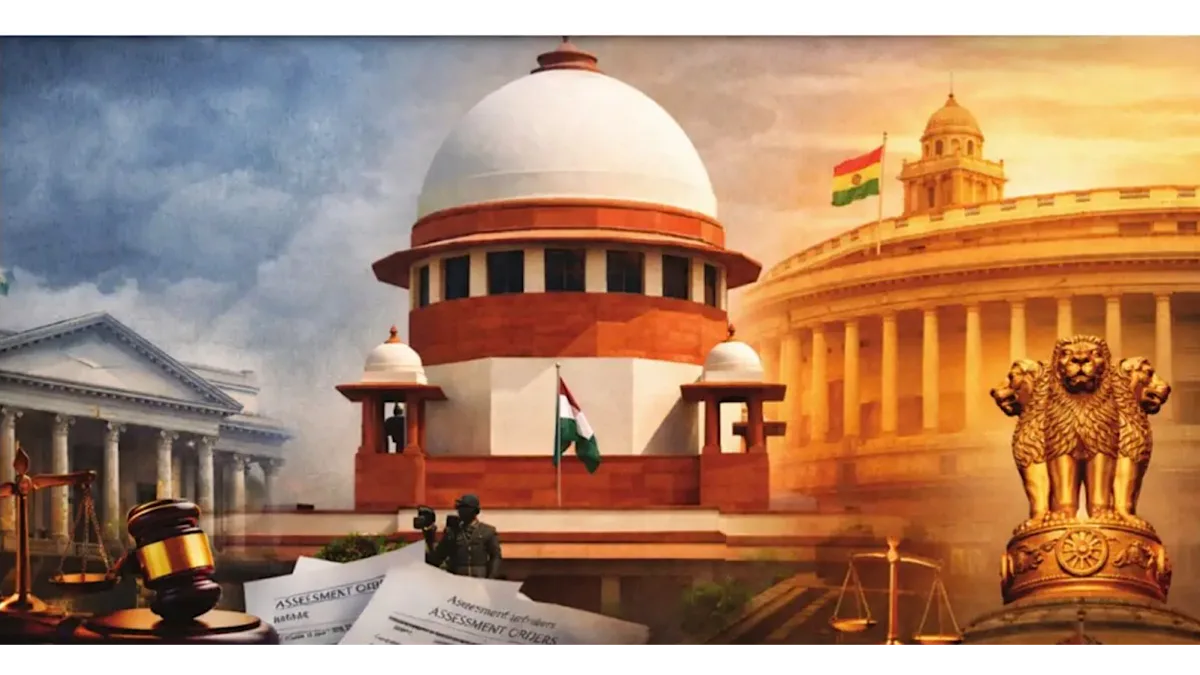
Changing the law with retrospective effect while an issue is pending before the Supreme Court of India raises serious institutional concerns. The Finance Bill 2026 does precisely this in the context of income tax reassessment. It retrospectively validates reassessment notices issued by Jurisdictional Assessing Officers (JAOs) and cures defects in orders that did not carry the mandatory Document Identification Numbers (DIN).

This is being done when the Supreme Court is already examining the jurisdictional issue in Union of India v. Suryalakshmi Cotton Mills and connected matters. The controversy traces back to the 2021 shift to a “faceless” assessment regime under Section 151A of the Income Tax Act, 1961. Several High Courts, including those of Bombay, Telangana and Madras, held that once the National Faceless Assessment Centre became operational, reassessment notices under Section 148 had to be issued only by Faceless Assessing Officers (FAOs). According to these courts, actions by JAOs were without jurisdiction and therefore void.

The Bombay High Court in Hexaware v. ACIT (2022) reasoned that once the faceless framework was introduced, every function under the relevant chapter had to be routed through that system. The Delhi High Court, however, in TKS Builders v. ITO (2024), took a different view. It held that the faceless scheme was not exclusive and that the powers of JAOs continued to exist alongside it. This divergence created a situation where identical reassessment notices were upheld in some jurisdictions and struck down in others. A parallel dispute arose over DIN compliance.

The Central Board of Direct Taxes (CBDT), through a 2019 circular, mandated that every communication relating to assessment must carry a computer-generated DIN. The requirement was intended to ensure transparency and prevent back-dated or unauthorised orders. Many reassessment notices were challenged on the ground that they lacked a valid DIN, and several courts invalidated such proceedings. The Finance Bill now introduces two significant provisions. First, a new Section 147A, with effect from 1 April 2021, declares that for the purposes of Sections 148 and 148A, “Assessing Officer” shall be deemed always to have included the JAO, “notwithstanding” any scheme under Section 151A or any court judgment.

Second, new Section 292BA, with effect from 1 October 2021, provides that an assessment shall not be invalid merely due to any defect or omission in quoting DIN, so long as the communication can be traced or identified. This is not merely a procedural clarification; it is a retrospective legislative validation of actions that courts had already found to be without jurisdiction or procedurally defective. From a jurisprudential standpoint, such amendments draw upon Parliament’s recognised power to enact curative statutes that remove the legal basis of judicial decisions without formally overruling them, as affirmed in decisions including K.S. Paripoornan v. Kerala (1994).

However, the Supreme Court has consistently maintained that this power has limits. The legislature may amend the law retrospectively, but it cannot simply declare judicial outcomes ineffective or extinguish rights already crystallised through judicial determination. The use of deeming language and “notwithstanding any judgment” clauses, particularly when the very issue remains pending before the Supreme Court, raises the question whether the amendment merely cures a defect or seeks to predetermine adjudication. The immediate consequence is that reassessment notices earlier quashed on jurisdictional or DIN grounds stand retrospectively validated.

For the Revenue, this avoids large-scale annulments and possible refunds. It also removes the inconsistency created by conflicting High Court judgments. From an administrative standpoint, the amendment is presented as a clarification intended to protect completed or pending proceedings from being defeated on technical grounds. However, the method adopted raises constitutional questions. The power of Parliament to enact retrospective tax legislation is well recognised. At the same time, the Supreme Court has consistently held that while the legislature may cure the basis of a judicial decision, it cannot simply overrule or nullify a judgment by legislative declaration.

When a matter is already pending before the Supreme Court, a retrospective amendment that directly addresses the issue under consideration may be seen as influencing or predetermining the outcome. India has witnessed the consequences of retrospective tax amendments before. The amendment following the Supreme Court’s decision in Vodafone International Holding BV v. Union of India (2012) sought to override the Court’s interpretation of capital gains taxation in cross-border transactions. That amendment led to prolonged arbitration, adverse awards, and ultimately a policy reversal in 2021 after significant uncertainty and reputational cost. The present situation differs in subject-matter but raises a similar concern.

The DIN validation provision also merits scrutiny. The 2019 circular was designed to institutionalise accountability in tax administration. If compliance with DIN requirements can be regularised retrospectively, it may weaken the deterrent effect of procedural safeguards. Procedural discipline is not a mere technicality; it is a protection against arbitrariness. It is unlikely that the amendment will end litigation. Instead, the focus may shift from jurisdictional defects to constitutional validity. Taxpayers who obtained favourable judgments may challenge whether their accrued rights can be taken away by retrospective legislation.

The Supreme Court will eventually have to examine whether Sections 147A and 292BA amount to a permissible clarification or an impermissible legislative override. At a broader level, the episode highlights the importance of tax certainty. Frequent retrospective amendments, particularly when the issue is sub judice, create instability. Investors assess not only tax rates but also the predictability of legal outcomes. If the law changes after disputes arise, confidence in the system weakens.

[THE WRITERS ARE, RESPECTIVELY, AN ADVOCATE PRACTICING BEFORE DELHI HIGH COURT, AND A CHARTERED ACCOUNTANT BASED IN MUMBAI]

Right to Life, Right to Choice

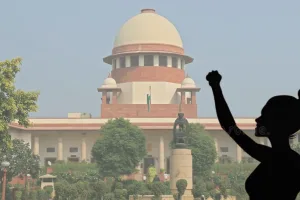
The recent decision of the Supreme Court of India permitting the medical termination of a 30-week pregnancy represents a significant and carefully reasoned development in India’s constitutional abortion jurisprudence.

Sunil Garodia | New Delhi |

The recent decision of the Supreme Court of India permitting the medical termination of a 30-week pregnancy represents a significant and carefully reasoned development in India’s constitutional abortion jurisprudence. Delivered by a bench comprising Justices B V Nagarathna and Ujjal Bhuyan, the judgment overturned an earlier refusal by the Bombay High Court and reaffirmed a principle that has steadily gained constitutional recognition: the State cannot compel a woman to carry a pregnancy to term against her will.

The decision is notable not merely for the relief granted in the individual case, but for the clarity with which it confronts the unresolved tension between two competing constitutional concerns – the protection of potential life and the preservation of a woman’s fundamental rights. Justice Nagarathna’s observation that the matter involved difficult moral and legal questions is telling. It reflects an awareness that abortion adjudication cannot be reduced to mechanical statutory interpretation. Yet constitutional courts are required to decide precisely such difficult cases, where moral disagreement cannot be allowed to eclipse constitutional guarantees.

At the core of the controversy lies Article 21 of the Constitution, which guarantees the right to life and personal liberty. Over the decades, the Supreme Court has consistently expanded the scope of this provision, transforming it from a narrow guarantee against arbitrary deprivation of life into a broad source of substantive rights. Dignity, privacy, bodily integrity, and decisional autonomy have all been read into Article 21, giving it a dynamic and evolving character. Reproductive autonomy is one such recognised facet. In Suchita Srivastava v Chandigarh Administration, the Court unequivocally held that a woman’s right to make reproductive choices is an integral component of personal liberty under Article 21. The judgment acknowledged that reproductive rights include both the right to procreate and the right to abstain from procreation.

Importantly, the Court cautioned against treating women as mere instruments for achieving demographic or social objectives, underscoring that bodily autonomy cannot be subordinated to abstract notions of public interest. That constitutional position has since been reinforced and refined. In X v Principal Secretary, Health and Family Welfare Department, the Court adopted a purposive interpretation of the Medical Termination of Pregnancy Act, holding that its provisions must be read in light of constitutional values rather than in a restrictive or exclusionary manner. The judgment rejected distinctions based on marital status and emphasised that access to abortion is not a privilege contingent on social approval, but a legal entitlement grounded in personal liberty and dignity. The present case extends this jurisprudence into an area that has traditionally attracted greater judicial hesitation: late-term pregnancy.

Statutory limits under the MTP Act, particularly the 24-week threshold, are often treated as rigid barriers. However, the Supreme Court has repeatedly clarified that statutory provisions cannot be applied in a manner that results in the violation of fundamental rights. Where a statute comes into conflict with the Constitution, constitutional principles must prevail. This approach reflects a long-standing judicial understanding that the Constitution is not subservient to legislation. The MTP Act, while regulating the conditions under which termination may occur, does not exhaust the scope of constitutional protection. Its provisions must therefore be interpreted harmoniously with Article 21, rather than as absolute prohibitions.

Critically, the Court’s reasoning does not rest on a denial of foetal interests. The judgment does not suggest that foetal life is without value or moral significance. Instead, it recognises that Indian constitutional law does not accord the foetus an independent right to life that can override the decisional autonomy of the pregnant woman. The Constitution protects persons, and the bearer of enforceable fundamental rights in this context is the woman, not the foetus. This distinction is central to understanding the legal framework governing abortion in India. While the State may have a legitimate interest in protecting potential life, that interest is not absolute. It must be balanced against the woman’s rights to bodily integrity, privacy, and dignity.

Compelling childbirth, particularly against an individual’s will, constitutes a profound intrusion into these rights. The Court’s oral observations capture this constitutional dilemma succinctly. By questioning whether a woman can be forced to give birth simply because the foetus is also a life, the bench highlighted the inherent limits of State power. The Constitution does not permit the State to treat a woman’s body as a site for enforcing moral or social norms, regardless of how sincerely those norms are held. The age of the petitioner further sharpened the constitutional stakes. The woman was a minor at the time of conception, raising serious questions about consent, agency, and vulnerability. Indian constitutional jurisprudence has consistently held that heightened protection is owed to individuals in vulnerable positions.

To compel continuation of pregnancy in such circumstances would amount to a grave violation of bodily integrity and decisional autonomy, both of which lie at the heart of Article 21. Moreover, the Court has previously recognised that reproductive decisions have irreversible consequences. Unlike many other exercises of personal liberty, pregnancy and childbirth permanently alter the physical, psychological, and social trajectory of an individual’s life. Constitutional protection must therefore be particularly robust in this domain. From a legal standpoint, the judgment also clarifies an important point regarding judicial discretion in abortion cases. Courts are often criticised for engaging in ad hoc decision-making when permitting late-term terminations. However, the present ruling demonstrates that such discretion is not unguided. It is anchored in established constitutional doctrine, medical opinion, and a careful balancing of rights.

By allowing termination beyond the statutory limit, the Court has not diluted the sanctity of life. Rather, it has affirmed that the right to life under Article 21 is not confined to biological existence alone. It encompasses the right to live with dignity, autonomy, and control over one’s body. These elements cannot be suspended merely because pregnancy has progressed beyond a legislatively prescribed timeframe. The judgment also carries broader implications for constitutional governance. It reinforces the principle that the State’s regulatory power has limits, particularly in matters involving intimate personal choices. The role of the law is not to impose a singular moral vision, but to protect individual liberty within a framework of constitutional values.

In this sense, the decision is not an aberration, nor is it a concession made out of sympathy. It is a logical continuation of a constitutional trajectory that has increasingly centred dignity and autonomy as foundational principles. By refusing to compel motherhood, the Supreme Court has reaffirmed that reproductive choice lies at the intersection of liberty, privacy, and bodily integrity. Ultimately, the judgment serves as a reminder that constitutional rights are most meaningful when they protect individuals in moments of vulnerability and conflict. In recognising that the law cannot force a woman to give birth against her will, the Supreme Court has once again asserted the primacy of personal liberty over coercive state action. That assertion is not merely progressive; it is constitutionally sound.

(THE WRITER IS A COMMENTATOR ON LEGAL AFFAIRS.)

Bridgerton Season 5 already locked and loaded, scripts done; here is what we know about cast & release date

Bridgerton fans, get ready! Showrunner Jess Brownell confirms that scripts for season 5 are complete and production is set to start soon. Sophie and Benedict’s love story will be honoured.

Statesman News Service | New Delhi |

Bridgerton Season 5: If you thought the drama was over with the end of Bridgerton season 4, think again! Netflix’s beloved period romance is already plotting its next twist, and fans are buzzing with excitement. The last season tied up the love story of Sophie Baek (played by Yerin Ha) and the ever-charming Benedict Bridgerton (Luke Thompson), leaving viewers swooning and slightly heartbroken. But now, the show is looking ahead, and gossip has it, the Bridgerton ball isn’t slowing down anytime soon.

Showrunner Spill: Season 5 already in motion

In a recent chat with Vanity Fair, showrunner Jess Brownell spilled the beans on where the series is headed. Taking over the reins in season 3 after series creator Chris Van Dusen stepped down, Brownell says the team is keen to honour the epic journey Sophie and Benedict have had so far.

Also Read: ‘Game of Thrones’ movie in the works at Warner Bros. but Paramount merger could kill it before Aegon conquers

“The writers room is done. We have drafts of all the episodes. We are starting production not too long from now,” Brownell revealed. “We’re definitely wanting to honor Luke and Yerin and all of their amazing hard work they’ve put into season four, take just a beat with that. But soon enough, we’ll be announcing where we’re going for season five.”

Translation? The scripts are ready, the ink has dried, and the Bridgerton family is preparing for another dazzling season of romance, scandal, and grand balls.

Who’s taking the lead next?

While Sophie and Benedict’s story is getting love and attention, fans are dying to know: who’s stepping into the spotlight next? Brownell teased that the new leads will be out soon, keeping the internet buzzing with speculation.

Could it be a familiar Bridgerton face, or a fresh character from the Julia Quinn novels? Only time will tell.

Returning favourites: Not just new faces

Season 4 reminded fans that Bridgerton loves to mix old and new. Jonathan Bailey returned as Lord Anthony Bridgerton for a couple of episodes, while Simone Ashley made a cameo as Lady Kathani Bridgerton.

This trend is likely to continue, with fan-favourite characters weaving in and out of the story, keeping the large ensemble alive and buzzing.

Writing ahead of schedule: A rare treat for fans

One of the biggest shocks? The writers have already completed drafts of all episodes. Historically, the series has taken a two-year break between seasons. Season 1 dropped in December 2020, season 2 in March 2022, and season 3 in May 2024. Season 4 arrived in January 2026, with the second half landing in late February.

By having scripts ready so early, fans may not have to wait as long for season 5, possibly as soon as 2027.

With Shonda Rhimes still at the helm as executive producer, the show’s signature mix of glitz, drama, and steamy romance is expected to continue. Ratings-wise, every season has dominated Netflix Top 10 lists.

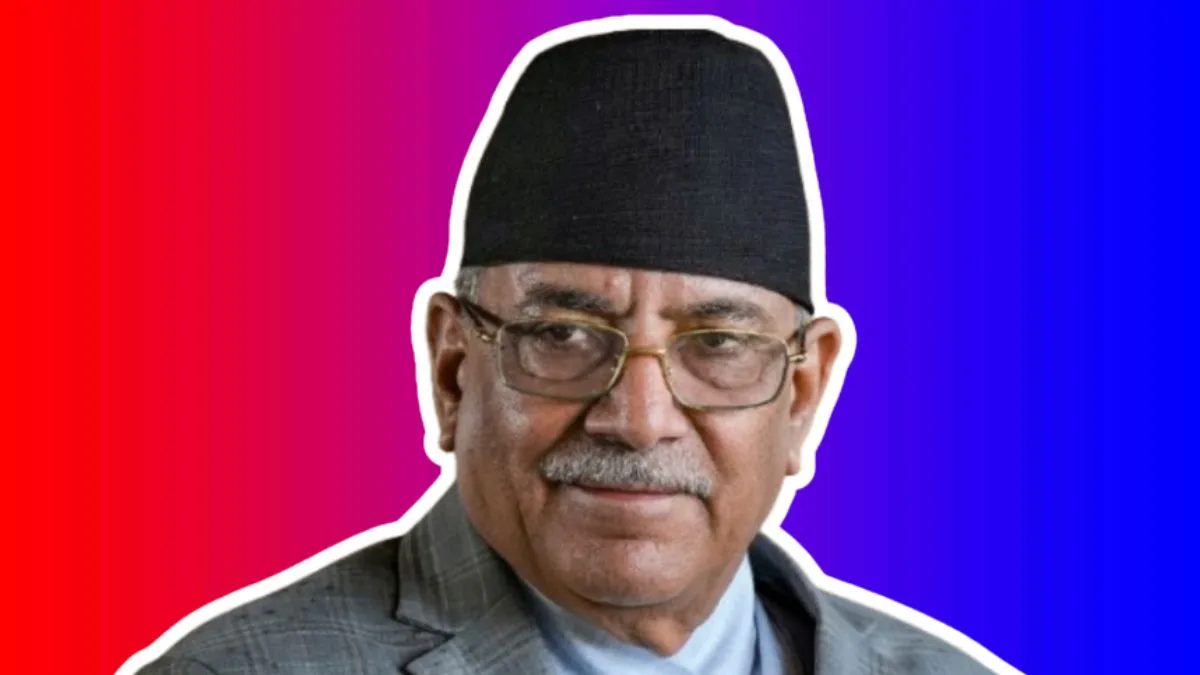
Nepal Election: Political titan or ageing nomad? Prachanda’s high-stakes bid to salvage Maoist legacy in Eastern Rukum

At 71, Prachanda returns to Rukum East, facing rivals, party splits, and questions over his revolutionary legacy. This campaign is a fight for survival as much as for a seat.

Bibhu Luitel | Kathmandu |

He has changed battlefields. He has changed ballots. And he has changed party names. And now, at 71, he has changed his election address again.

In Nepal’s noisy political bazaar, where leaders promise stability but practice survival, Pushpa Kamal Dahal, better known as Prachanda, remains the most restless player of all. Supporters call him dynamic. Critics call him unstable. He prefers one word: “movement.”

Also Read: Game of Thrones: Who will be the next Nepal PM; a controversial veteran, a media-hyped disruptor or an old party face?

By the time the 2026 election arrives, Prachanda will be fighting from his sixth different constituency: Rukum (Eastern part). From Rolpa to Kathmandu, Siraha to Chitwan, Gorkha to now Rukum’s rugged hills, his political journey reads like a travel diary.

His opponents say he cannot stay in one place. He says he goes where the people are.

A little bit about Prachanda

Prachanda was born in 1954 in Dhikurpokhari, Kaski. He entered politics in 1971 after taking membership in the Communist Party. But before the slogans, before the underground life, before the red flags, he was a teacher.

After completing a bachelor’s degree in agriculture, he taught science, mathematics, and English at Bhimodaya Secondary School in Arughat, Gorkha. Students remember him as strict but energetic. Villagers remember something else; he would teach them how to make compost manure and encourage toilet use in rural homes.

He was educating society in small ways. But inside, he wanted big change.

That chance came in 1986 after the ‘Sector Incident’ inside the then CPN (Mashal). Prachanda replaced Mohan Baidya in leadership. Since then, for 36 continuous years, the party key has remained in his hands.

He led the People’s War. He entered peace talks. And, he became Prime Minister. Not once, not twice, but three times.

Yet the man who once commanded fighters in forests now fights elections in hills.

A little bit about the Nepali Civil War

To understand Prachanda today, one must return to 1996.

On 4 February 1996, Baburam Bhattarai submitted 40 demands to the government led by Sher Bahadur Deuba of the Nepali Congress. The message was clear: meet these demands or face war.

The demands spoke about nationalism, democracy, livelihood. They demanded an end to foreign dominance in industries, cancellation of the 1950 Nepal-India Treaty, land reform for the landless.

When the demands were not met, the armed conflict began.

Until April 26, 2006, Prachanda directed military efforts of the Maoist movement, building control areas especially in the mountains and western Nepal.

But even revolutions have internal cracks.

Around 2004-2005, tensions grew between Prachanda and Baburam Bhattarai. Power sharing became a sensitive issue. At one point, Bhattarai was expelled from the party, only to be brought back later. The two men reconciled partially.

In November 2005, Prachanda and the Seven Party Alliance signed a twelve-point agreement. They declared the monarchy under Gyanendra as the main obstacle to Nepal’s progress. They committed to human rights, press freedom, and multi-party democracy.

After weeks of mass protests in April 2006, the King stepped back from direct rule. Parliament was restored. On April 26, 2006, the Maoists announced a 90-day ceasefire. Negotiations began.

The goal was clear: a new constitution, a constituent assembly, and a republic.

Nepal changed forever. But revolutions that promise equality often struggle with leadership questions.

Then comes a leader who never leaves the chair

Inside the Maoist movement, a debate once grew loud: “One leader, two terms.” Many wanted leadership rotation.

At the eighth general convention, this demand echoed strongly. But Prachanda managed to silence it. Even after merging his party with the Unified Socialist to form a new communist force under a new star symbol, he has not signaled leadership transfer.

He says he can lead for another 10 years.

Over the decades, many big names left him; Baburam Bhattarai, Mohan Baidya, CP Gajurel, and Netra Bikram Chand ‘Biplav’. Yet Prachanda survived each split, often by adjusting alliances and equations.

But this time, Bhattarai stands on the other side.

Rukum: Safe ground or final test?

Rukum East is considered a Maoist stronghold. Local election results in 2022 show Maoist votes higher than other parties. During his tenure as Prime Minister, budgets and infrastructure projects flowed toward Rukum and Rolpa.

Emotion runs deep here. These hills paid heavily during the war. Many families lost sons and daughters.

Prachanda knows this. He has returned to what was once called the “red zone.”

But there is a twist.

He no longer carries the old Maoist brand. Nor the familiar election symbol. He is contesting under a new party with a five-pointed star symbol.

And standing against him is Sandeep Pun, son of a Maoist martyr, supported by Baburam Bhattarai’s Progressive Democratic Party.

Pun’s campaign message is sharp: “The dream of martyrs has been sold.”

For Prachanda, this is not just an electoral challenge. It is moral. Families who once carried his fighters now question him.

Is Prachanda a new ‘Tourist candidate’?

There is another worry in Rukum’s tea shops. People whisper: “He wins and then leaves.”

Prachanda has changed constituencies almost every election.

In 2007, he won from Rolpa-2 and Kathmandu-10. In 2013, he lost Kathmandu-10 but won Siraha-5. Then in 2017, he won Chitwan-3. In 2022, he shifted to Gorkha-2 after feeling insecure in Chitwan, even though his daughter Renu Dahal was mayor there.

Now, he has left Gorkha too. This pattern makes voters uneasy. They ask: If he wins, will he stay?

Dynamic or declining?

Prachanda says he changes constituencies because he believes in dynamism. He says he connects with people everywhere.

But political observers see another story.

Returning to wartime geography for electoral safety may indicate shrinking national popularity. Once he was the face of radical transformation. Today he searches for secure seats.

He has changed his own name six times. He has reshaped his party seven times. Each change was explained as strategic necessity.

At 71, climbing Rukum’s hills is not only about one parliamentary seat. It is about protecting a fading revolutionary image.

And, the emotional card

His campaign carries strong emotional language: “final battle,” “return to base,” “unfinished revolution.”

For older voters who remember war days, this may still work.

For younger voters born after 2006, the appeal is weaker. They know Prachanda more as a Prime Minister than a rebel.

They ask about jobs, roads, education. Not revolution.

A movement in transition

The Maoist movement once promised land reform, dignity, republicanism. Nepal became a republic. The monarchy ended. A new constitution came.

But internal splits weakened the original structure.

Now Prachanda stands without Baburam’s support. The same Baburam who once wrote the 40 demands. The same Baburam who stood beside him in underground years.

Politics makes strange scenes.

Yesterday’s comrades become today’s challengers.

Now the final question

As Prachanda walks through Rukum’s narrow trails, greeting old fighters and new voters, one question hangs in the cold hill air: will Rukum see him as a returning son or as a visitor seeking shelter?

He calls his style “movement.” Critics call it instability. Voters will decide which word fits.

For now, the man who never stays still has found another temporary address in Nepal’s changing political map.

Whether it becomes permanent, or just another stop, depends on how Rukum reads his long, dramatic story.


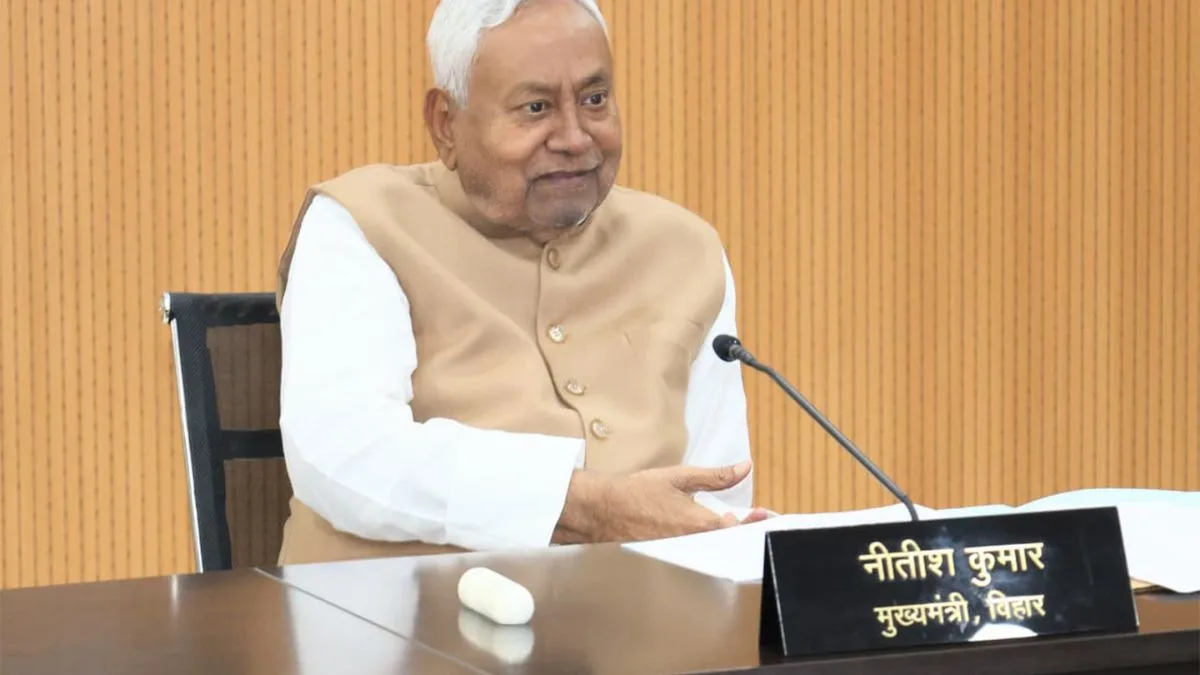
Bihar politics heats up after CM Nitish Kumar’s rumoured Rajya Sabha move

Bihar Chief Minister Nitish Kumar has sparked speculation about a possible move to the Rajya Sabha, potentially stepping down from his post.

ANI | New Delhi | Updated :

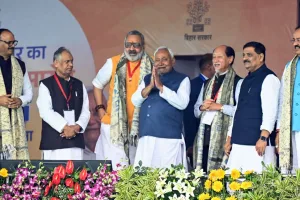
Janta Dal (United) youth workers on Wednesday gathered outside the residence of Bihar Chief Minister Nitish Kumar, following speculations that he might move to the Rajya Sabha, leaving the Chief Minister’s post.

A JD(U) youth party worker stated that the speculations have raised tension, as the decision will impact the future of Bihar.

“Speculation is rife that Chief Minister Nitish Kumar may be removed from his post. The entire state is concerned, as this issue relates to the future of Bihar. Reports of his possible removal have dampened Holi festival celebrations. If Nitish Kumar is removed, it could trigger a major agitation across Bihar,” he said.

This comes amid a meeting which is currently underway at the Bihar Chief Minister’s residence in Patna between Nitish Kumar, JD-U National Working President Sanjay Jha, and Bihar minister Vijay Kumar Chaudhary.

Earlier, sources from JD(U) stated that the veteran leader might transition to the Rajya Sabha of the Parliament days after the Election Commission of India (ECI) announced the polls for the upper house.

However, Union Minister Giriraj Singh refuted the speculations, suggesting that the Bihar CM might resign and file a nomination for the Rajya Sabha.

“Such jokes are common on Holi. Nitish Kumar ji is our Chief Minister,” Singh said.

Meanwhile, JD-U MLC Sanjay Gandhi said that it will be Nitish Kumar’s decision whether he wants to enter the Rajya Sabha or not.

“The Chief Minister will himself decide (whether he wants to go to the Rajya Sabha or not)… We had a meeting to strengthen the organisation in view of the polls,” he said.

The Election Commission of India (ECI) announced the schedule for the upcoming biennial elections to the Council of States (Rajya Sabha) to fill the 37 seats across 10 states, as the members are set to complete their term in April 2026, a press note stated.

According to the press note, the term of 37 members who were elected from Maharashtra, Odisha, Tamil Nadu, West Bengal, Assam, Bihar, Chhattisgarh, Haryana, Himachal Pradesh, and Telangana will conclude in the month of April, vacating the seats for new members to be elected.

The notification will be issued on February 26, commencing the election process. The last date of nominations is March 5, followed by scrutiny on March 6. The candidates can withdraw their nominations till March 9.

The polling is scheduled to take place on March 16, with the counting of votes on the same day at 5 pm.

US submarine sinks Iranian warship in first torpedo strike since World War II

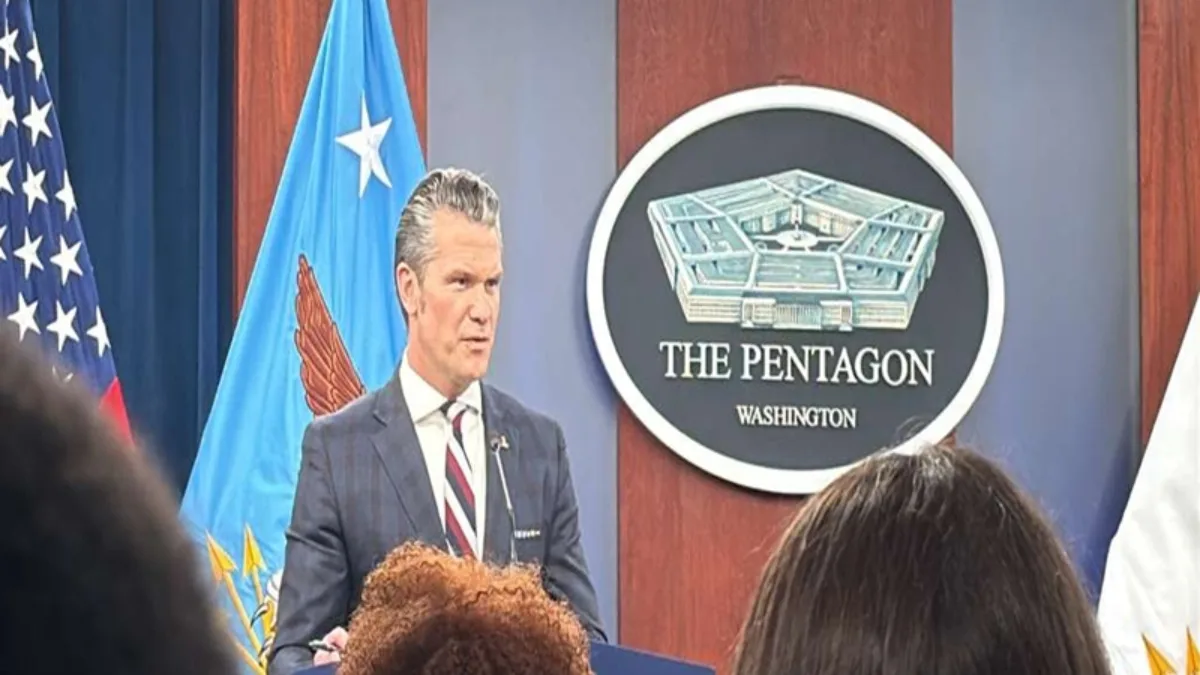
Speaking at the Pentagon during a briefing on “Operation Epic Fury,” US Secretary of War Pete Hegseth said the strike was carried out in international waters by an American submarine.

UNI | New Delhi |

A United States submarine has sunk an Iranian naval warship with a torpedo strike, marking the first time since World War II that an enemy vessel has been destroyed in this manner, Pete Hegseth said on Wednesday.

Speaking at the Pentagon during a briefing on “Operation Epic Fury”, US Secretary of War Pete Hegseth said the strike was carried out in international waters by an American submarine.

“An American submarine sunk an Iranian warship that thought it was safe in international waters,” Hegseth said. “Instead, it was sunk by a torpedo. Quiet death. The first sinking of an enemy ship by a torpedo since World War Two. We are fighting to win.”

But in 1982 during the Falklands War, British nuclear submarine sunk Argentina’s cruiser Belgrano.

Chairman of the Joint Chiefs of Staff Gen. Dan Caine said the Iranian vessel was “effectively neutralized” in a Navy fast attack using a single Mark 48 torpedo. He said the US Navy achieved “immediate effect,” sending the warship “to the bottom of the sea.”

During the briefing, Hegseth identified the vessel as the Soleimani, the flagship of the Iranian Navy, named after Qasem Soleimani, the former commander of Iran’s Islamic Revolutionary Guard Corps’ Quds Force who was killed in a US drone strike in January 2020.

“The Iranian Navy rests at the bottom of the Persian Gulf. Combat ineffective, decimated, destroyed, defeated,” Hegseth said. “Last night we sunk their prize ship, the Soleimani. Their navy is no more.”

In a separate statement posted on X, Adm. Brad Cooper, commander of United States Central Command (CENTCOM), said US forces have destroyed 17 Iranian warships so far, including a submarine, as part of ongoing operations.

“In simple terms, we’re focused on shooting all the things that can shoot at us,” Cooper said, describing what he called “uncontested surgical strikes” carried out by B-2 and B-1 bombers. “We are also sinking the Iranian navy — the entire navy. Thus far, we’ve destroyed 17 Iranian ships, including the most operational Iranian submarine that now has a hole in its side.”

Tehran has not confirmed the reported losses. If confirmed, the destruction would represent a significant blow to Iran’s naval capabilities.

Iran’s submarine fleet has been a central component of its asymmetric maritime strategy. The country operates a small number of larger diesel-electric submarines, including three Russian-built Kilo-class attack submarines, along with domestically produced vessels designed for operations in the Persian Gulf and surrounding waters.


Tusker on the rampage kills villager, injures 4 in Bankura before being quelled with darts

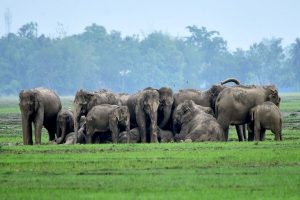
A wild tusker went on the rampage from early this morning in the Joypur forest range in Bankura’s Bishnupur area, entering several villages and even marauding into homes, killing one person and injuring four others before it was quelled through tranquiliser darts.

IANS | Kolkata | Updated :

A wild tusker went on the rampage from early this morning in the Joypur forest range in Bankura’s Bishnupur area, entering several villages and even marauding into homes, killing one person and injuring four others before it was quelled through tranquiliser darts.

According to the villagers, Vijay Koley (64), the deceased, was attacked unprovoked by the elephant at Routkhanda village in the Joypur range within the Panchet Forest Division in Bishnupur here. He was attacked on the village road by the plundering pachyderm when he had stepped out of his house. Vijay’s neighbour Ashis Ghosh said: “The tusker seemed agitated. It was running down the road, raising its trunk and trumpeting most of the way. It was behaving quite madly.”

Besides Routhkhanda, the elephant raided neighbouring Kalaboni and Jamdigri villages. Foresters were summoned and, on arrival, they observed that the tusker was behaving quite aggressively and seemed traumatised. It entered Routhkhanda early this morning and seemed to be in a destructive mood. It crashed into a number of residential houses, knocking down fencings and walls and attacked the inhabitants. According to Bulti Ruidas, an injured villager, “It invaded our house breaking the wall and attacked me and my elderly father before we could escape.”

The Additional Divisional Forest Officer, Panchet Division, Virendra Kumar Sharma, said: “The elephant could be pacified after two consecutive tranquiliser shots. We will shift it to Kuilapal in Purulia, where it will be kept under observation for some days.” He added that the family of the deceased would be given compensation from the forest & wildlife department as per the norms laid out for such situations.

A 12-member herd of elephants has been spotted in Bankura, of which 10 were roaming near Bhavanipur in Radhanagar Range of Panchet Division and two were near Sukhbandh village in Barjora Range of Bankura (North) Division.

End of an era for Babar Azam? Pakistan drop former captain for Bangladesh ODIs

Babar Azam’s omission follows mounting criticism from former cricketers after Pakistan’s early World Cup exit, with some suggesting he take a long-term break from white-ball cricket.

Statesman News Service | New Delhi |

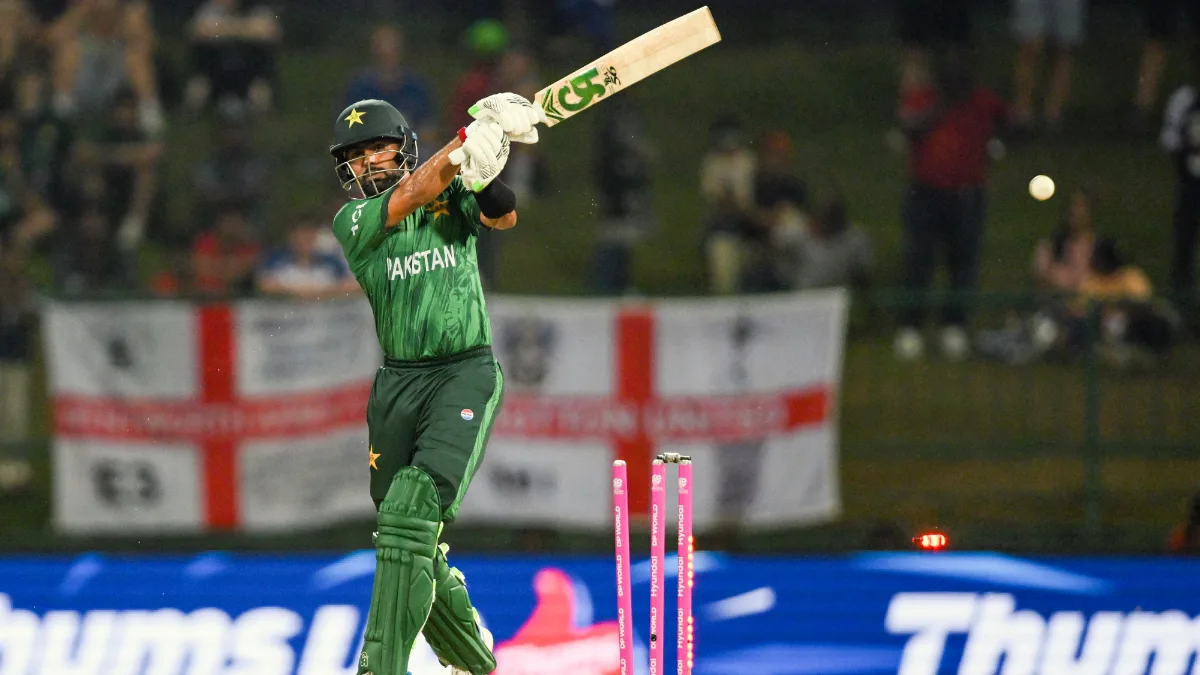
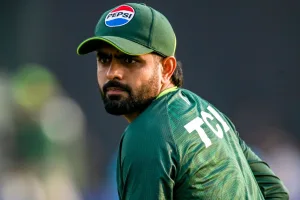
Pakistan have omitted former captain Babar Azam from the squad for the upcoming three-match ODI series against Bangladesh, starting March 11, following a disappointing ICC Men’s T20 World Cup 2026 campaign that ended at the Super 8 stage.

Babar featured in 17 ODIs in 2025, scoring 544 runs at a strike rate of 77.16. Although he registered a century in the previous ODI series against Sri Lanka, selectors opted to move in a new direction, citing concerns over recent form. The 31-year-old endured a modest T20 World Cup, managing just 91 runs in four innings.

His omission follows mounting criticism from former cricketers after Pakistan’s early World Cup exit, with some suggesting he take a long-term break from white-ball cricket.

The shake-up extends beyond Babar. Opener Fakhar Zaman, who scored a half-century in the last ODI and had a steady World Cup campaign, has also been left out, a clear signal of transition in Pakistan’s limited-overs setup.

Young batter Saim Ayub and pacer Naseem Shah are among other notable absentees. Saim struggled for consistency and was dropped during the World Cup, while Naseem misses out amid a broader squad reshuffle.

In contrast, Sahibzada Farhan has earned a recall after an impressive T20 World Cup campaign, where he struck two centuries and set a record for the most runs in a single edition for Pakistan.

Despite scrutiny, fast bowler Shaheen Shah Afridi will continue to captain the side for the Bangladesh series, with team management backing him to lead the transition phase. Wicketkeeper-batter Mohammad Rizwan, who was not part of the World Cup squad, also returns.

Pakistan have named six uncapped players in the 15-member squad, underlining a clear emphasis on building bench strength and long-term depth.

Pakistan Squad for Bangladesh ODIs

Shaheen Shah Afridi (captain), Abdul Samad, Abrar Ahmed, Faheem Ashraf, Faisal Akram, Haris Rauf, Hussain Talat, Maaz Sadaqat, Mohammad Rizwan (wk), Mohammad Wasim Jnr, Muhammad Ghazi Ghori (wk), Saad Masood, Sahibzada Farhan, Salman Ali Agha and Shamyl Hussain.

Bihar CM Nitish Kumar set to move to Rajya Sabha: JDU Sources

This comes amid a meeting which is currently underway at the Bihar Chief Minister’s residence in Patna between Nitish Kumar, JD-U National Working President Sanjay Jha, and Bihar minister Vijay Kumar Chaudhary.

ANI | New Delhi |

Amid mounting speculation over Nitish Kumar resigning from the post of Chief Minister of Bihar, sources from the Janata Dal (United) on Wednesday stated that the veteran leader might transition to the Rajya Sabha of the Parliament days after the Election Commission of India (ECI) announced the polls for the upper house.

This comes amid a meeting which is currently underway at the Bihar Chief Minister’s residence in Patna between Nitish Kumar, JD-U National Working President Sanjay Jha, and Bihar minister Vijay Kumar Chaudhary.

However, Union Minister Giriraj Singh refuted the speculations, suggesting that the Bihar CM might resign and file a nomination for the Rajya Sabha.

“Such jokes are common on Holi. Nitish Kumar ji is our Chief Minister,” Singh said.

Meanwhile, JD-U MLC Sanjay Gandhi said that it will be Nitish Kumar’s decision whether he wants to enter the Rajya Sabha or not.
“The Chief Minister will himself decide (whether he wants to go to the Rajya Sabha or not)… We had a meeting to strengthen the organisation in view of the polls,” he said.

The Election Commission of India (ECI) announced the schedule for the upcoming biennial elections to the Council of States (Rajya Sabha) to fill the 37 seats across 10 states, as the members are set to complete their term in April 2026, a press note stated.

According to the press note, the term of 37 members who were elected from Maharashtra, Odisha, Tamil Nadu, West Bengal, Assam, Bihar, Chhattisgarh, Haryana, Himachal Pradesh, and Telangana will conclude in the month of April, vacating the seats for new members to be elected.

The notification will be issued on February 26, commencing the election process. The last date of nominations is March 5, followed by scrutiny on March 6. The candidates can withdraw their nominations till March 9.

The polling is scheduled to take place on March 16, with the counting of votes on the same day at 5 pm.

Air India increases flights to Toronto, Frankfurt, and Paris to clear rush

“From 5 to 11 March, we’re operating 3 additional flights between Delhi and Toronto. From 7 to 10 March, we’ve added three flights between Delhi and Frankfurt, and one flight between Delhi and Paris (Charles de Gaulle),” Air India said in a statement.

IANS | New Delhi |

Air India announced on Wednesday that it is introducing more flights to Toronto, Frankfurt, and Paris “in response to the high demand” amid the ongoing Middle East crisis.

“From 5 to 11 March, we’re operating 3 additional flights between Delhi and Toronto. From 7 to 10 March, we’ve added three flights between Delhi and Frankfurt, and one flight between Delhi and Paris (Charles de Gaulle),” Air India said in a statement.

“These additional services will provide more flight options to travellers on these select routes with convenient connections beyond Delhi to destinations across Air India’s vast domestic India and Southeast Asia networks. We continue to closely assess the situation and will add flights on these select routes beyond 11 March,” the statement said.

Air India Express will also continue operating flights to and from Muscat on March 5, along with additional flights between Muscat and Delhi and Mumbai.

“We are also operating special flights from Ras Al Khaimah connecting Delhi, Kochi, and Mumbai until 7 March 2026,” Air India Express said in a statement.

Guests are advised to check their flight status and ensure their contact details are updated in their PNR. For changes or cancellations, visit http://airindiaexpress.com/manage-booking or #ChatWithTia on our website, app, or WhatsApp at +91 63600 12345, the statement added.

Meanwhile, the Ministry of Civil Aviation said on Wednesday that Indian airlines are set to operate 58 flights between India and the Gulf region to facilitate the movement of stranded passengers in West Asia due to the ongoing conflict. These include 30 flights by IndiGo and 23 by Air India and Air India Express.

The ministry said that it is continuously monitoring the evolving airspace situation in parts of West Asia and its impact on international flight operations. To date, 1,221 flights by Indian carriers and 388 flights by foreign carriers have been cancelled due to the ongoing situation. The Ministry further stated that Indian carriers have undertaken calibrated adjustments to their schedules, with long-haul and ultra-long-haul operations being progressively resumed through alternative routings that avoid restricted airspace.

The Ministry also said that it is in continuous touch with airlines and is closely monitoring airfares to ensure that there is no undue surge in ticket prices during this period. It added that all airlines have been advised to maintain transparent communication with passengers and ensure adherence to regulatory requirements concerning refunds, rescheduling, and passenger assistance. Passengers are advised to check the latest flight status directly with their respective airlines before proceeding to the airport and to rely only on official sources for updates.

Amid airstrikes in Iran, JKSA raises matter with EAM Jaishankar; seeks immediate evacuation of in Indian students

The Jammu & Kashmir Students Association (JKSA) on Wednesday raised serious concerns with External Affairs Minister S Jaishankar regarding the safety of Indian students stranded in different parts of Iran amid the ongoing airstrikes and escalating hostilities.

ANI | Jammu |

The Jammu & Kashmir Students Association (JKSA) on Wednesday raised serious concerns with External Affairs Minister S Jaishankar regarding the safety of Indian students stranded in different parts of Iran amid the ongoing airstrikes and escalating hostilities.

In a statement, JKSA National Convenor Nasir Khuehami conveyed to the External Affairs Minister that the Association has been receiving countless phone calls and messages from distressed parents of Kashmiri students whose wards are currently stranded in cities including Qom, Urmia, Arak and other regions.

The students are extremely panicked, frightened, and anxious due to the continuous airstrikes and missile attacks being reported from several parts of the country.

“Many students are residing in proximity to sensitive locations and have expressed deep fear for their safety. The intensity of the explosions reportedly shook the buildings, leaving many students frightened, anxious, and deeply distressed. The constant sound of explosions and fighter jets has created an atmosphere of uncertainty and psychological distress among them,” Khuehami said.

Their families back home are equally worried and are desperately seeking reassurance regarding the well-being of their children.

The Association has requested the External Affairs Minister to kindly intervene and facilitate the immediate evacuation of Indian students from Iran or relocate them to safer places until the situation stabilises. Such a step, the Association said, would greatly ease the anxiety of hundreds of families who are waiting for their children to be brought to safety.

The Association also acknowledged and expressed gratitude to the Ministry of External Affairs and the Embassy of India in Tehran for their prompt efforts in relocating several students from the worst-affected areas of Tehran to the comparatively safer city of Qom through special buses arranged for their transportation. “The timely intervention brought immense relief to many worried families.”

However, the Association noted with concern that soon after reaching Qom, some students reported hearing fresh explosions and airstrikes in nearby areas, which again triggered panic among them and further heightened their sense of insecurity.

Given the rapidly evolving security situation, the Association has urged the Government of India to closely monitor the ground situation and prepare contingency plans for the safe evacuation of Indian students at the earliest possible time, as the situation across several parts of Iran continues to deteriorate amid escalating hostilities.

Khuehami emphasised that swift and proactive action would not only ensure the safety of the students but also provide much-needed reassurance to their anxious families who are closely following developments from afar.

“The Association remains hopeful that the Ministry of External Affairs will continue to extend all possible support and take necessary steps to safeguard the lives and well-being of our students during this extremely difficult and uncertain situation,” he added.

First bust of Mahatma Gandhi unveiled in US’s Montana state

Montana Governor Greg Gianforte, along with the Consul General of India in Seattle, jointly unveiled the bust of the Mahatma in a gathering that was attended by leading officials from the state, including faculty and students of the University of Montana, as well as members of the Montana World Affairs Council.

IANS | New Delhi |

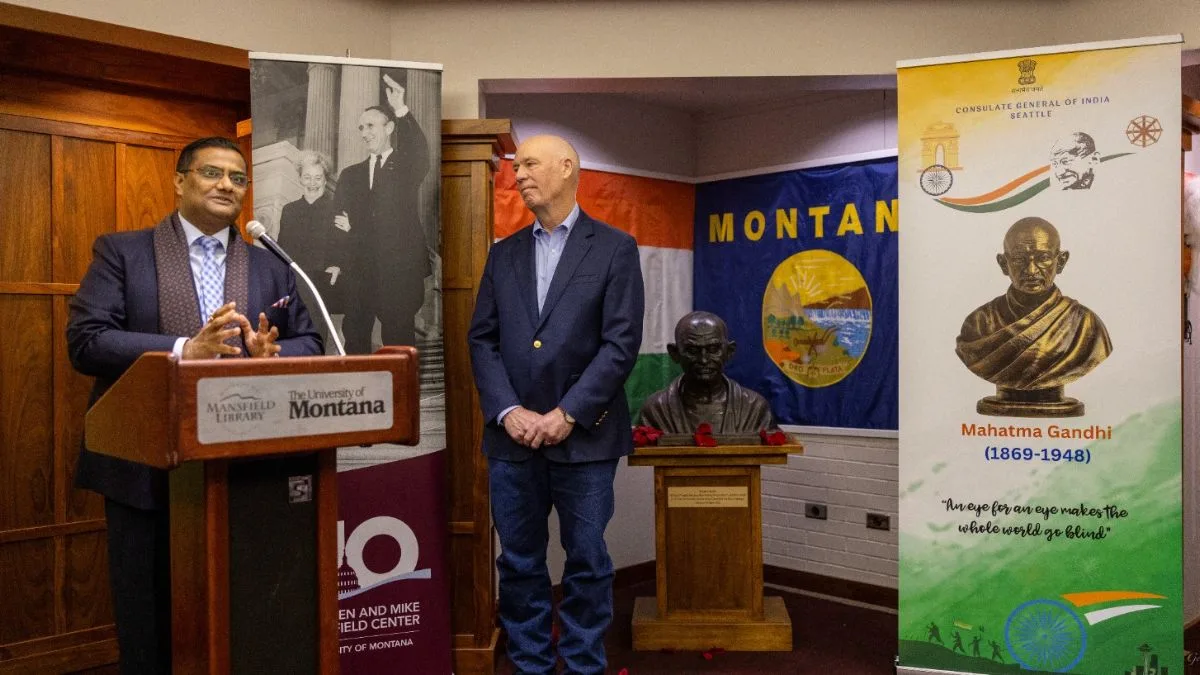
A bust of Mahatma Gandhi was installed at the prestigious Mike Mansfield Center of the University of Montana in Missoula, according to a statement by the Indian Consulate in Seattle.

Montana Governor Greg Gianforte, along with the Consul General of India in Seattle, jointly unveiled the bust of the Mahatma in a gathering that was attended by leading officials from the state, including faculty and students of the University of Montana, as well as members of the Montana World Affairs Council.

Addressing the gathering, Governor Gianforte thanked the Consulate for presenting the bust of Mahatma as a gift from the Indian government to the US state.

Acknowledging the strengthening ties between India and Montana, he praised the ideals of nonviolence that Mahatma Gandhi espoused as much-needed values in the world order today.

Founded by an Act of the US Congress in 1983, the Mansfield Centre at the University, where the bust of Mahatma is placed, aims to foster globally minded leaders of integrity and supports youth and communities through civic and international education guided by ethical leadership, civic responsibility and an unconditional commitment to public good.

Later in the evening, students at the University of Montana also participated in another unique event celebrating the Indian festival of colours – Holi.

The University’s Executive Director, Deena Mansour, welcomed the first Holi celebrations in Montana as marking “the arrival of spring and embracing unity”.

A large number of Montanans played Holi using organic Indian colours before attending the Indian Film Festival, where Bollywood movie “Zindagi Na Milegi Dobara” was screened for young Montanan students. Participants also savoured the special Holi sweet ‘gujiya’ during the celebrations.

Earlier in the day, nearly 400 Montanan students also attended a briefing session on Brand India, where they were introduced to the flavours of Indian coffee, including ARAKU, and briefed about India’s ODOP during the Academic World Quest Conference hosted by the Montana World Affairs Council.

Since the establishment of the new Indian Consulate in Seattle, bilateral ties between India and Montana have deepened significantly. In June 2025, a ten-member delegation of young high-school students visited India on a two-week cultural immersion programme. Subsequently, a fifty-member delegation from Montana, including business executives, educationists and technology experts, participated in the Second Edition of the Invest India Business Forum organised in Seattle on January 25.

The installation of the Gandhi bust and the celebration of the Holi Festival in Montana added further momentum to strengthening India-Montana cultural and people-to-people ties.

The Gandhi bust unveiled at the Mansfield Center is the 4th such to be installed in the US Pacific North West and follows three other statues installed by the Consulate earlier, including at the Base of Space Needle in Seattle (October 2024), at State Capitol in Lincoln, Nebraska (December 2024), and another earlier one at Bellevue Public Library (October 2009).

Telangana to complete Singur Dam safety works on a war footing

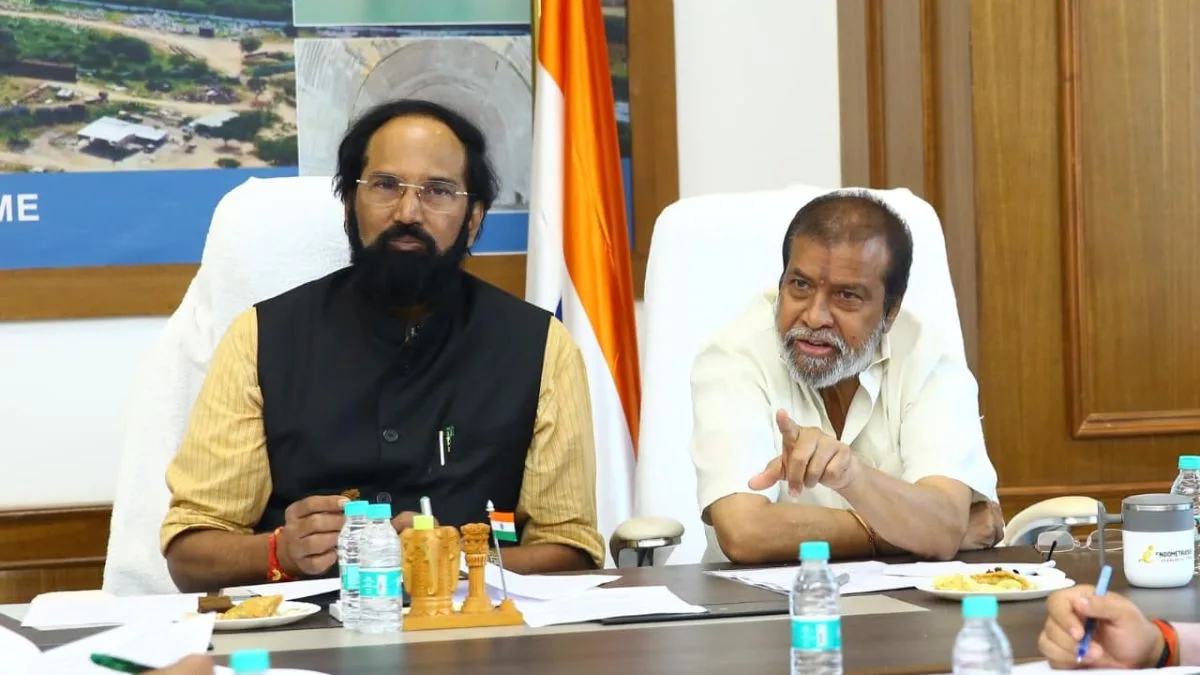
Along with Health Minister Damodar Raja Narsimha and Mining and Employment Generation Minister Vivek Venkataswamy, he reviewed the safety of the Singur Dam, a drinking water lifeline for Hyderabad.

IANS | Hyderabad |

Telangana’s Irrigation Minister Uttam Kumar Reddy on Wednesday directed officials to complete Singur Dam safety works on a war footing.

Along with Health Minister Damodar Raja Narsimha and Mining and Employment Generation Minister Vivek Venkataswamy, he reviewed the safety of the Singur Dam, a drinking water lifeline for Hyderabad.

Stating that the dam is very prestigious for the state, the ministers said that its safety is a top priority for the government.

The ministers instructed the Irrigation Department officials to protect the Singur Dam as per the rules formulated by the National Dam Safety Authority (NDSA).

They advised the irrigation officials to appoint a technical committee on the dam safety works.

The State Dam Safety Review Panel (DSRP), in its report last year, had warned that the Singur Dam may collapse anytime, with a very real and serious threat of its embankments getting breached, resulting in huge loss of life.

Designed to hold 29.91 tmc ft of water, and located upstream of the Manjira reservoir, the dam supplies around 6.96 tmc ft to meet the drinking water needs of Hyderabad.

The panel said Singur faced a serious threat of breaching unless urgent repairs were taken up. The DSPR, during its inspection, found that the entire earthen bund had developed several vertical cracks, which should be repaired immediately.

The state ministers directed the engineering officers of the Irrigation Department to complete the lining works of the Singur project canals by June 26.

Principal Secretary, Irrigation, E. Sridhar, key officers of the Irrigation Department, the Engineer-in-Chief and other officials attended the meeting.

The ministers directed the Irrigation Department officials to prepare the DPRs for the Peddareddy Lift Irrigation Scheme, which will provide irrigation water to 40,000 acres in Andol constituency, at the earliest and submit them to the government.

The foundation stone for the Peddareddy Lift Irrigation Scheme should be laid by Ugadi, the ministers added.

Army foils infiltration bid along LoC in Poonch sector

The enemy’s designs were effectively thwarted through coordinated ground action, the statement said.

IANS | Jammu |

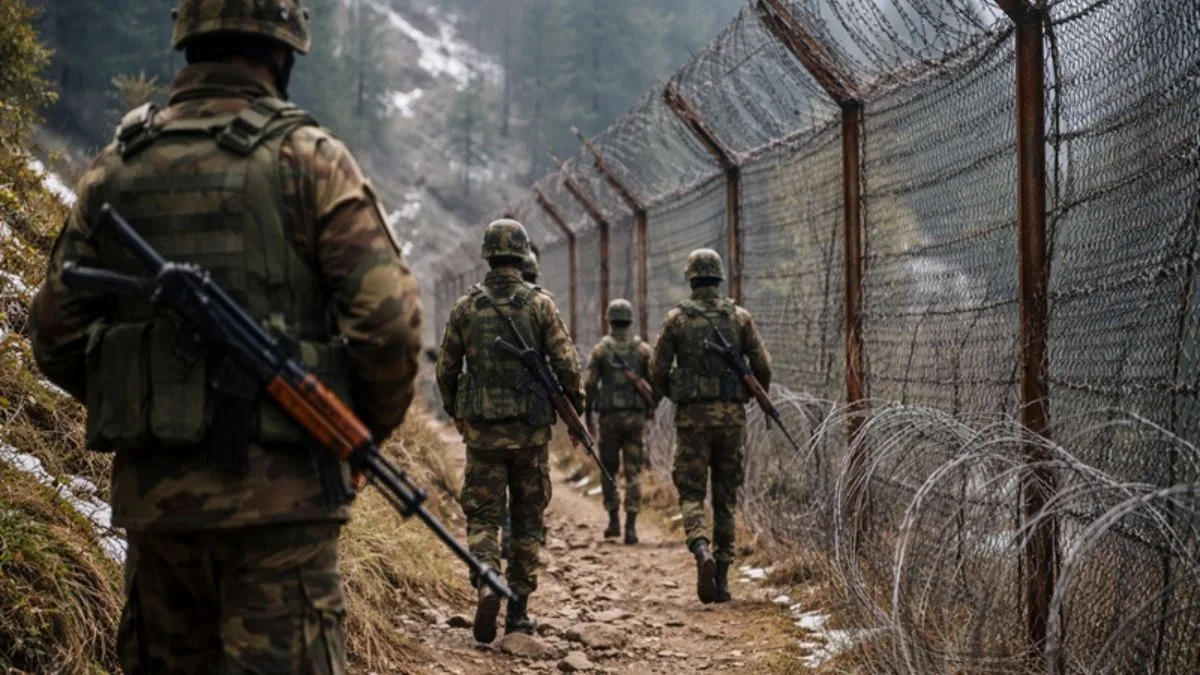
Alert Army troops foiled an infiltration bid on Wednesday along the Line of Control (LoC) in the Bhimber Gali sector of Jammu and Kashmir’s Poonch district.

The Nagrota-headquartered White Knight Corps of the Army said in a statement: “Acting on credible intelligence inputs and persistent surveillance, movement of terrorists was detected in the general area of Bhimber Gali along the Line of Control during the early hours of March 4, 2026. Responding with decisive force and showcasing superior tactical execution, alert troops of White Knight Corps engaged swiftly, foiling the infiltration attempt and denying any breach of the LoC.”

The enemy’s designs were effectively thwarted through coordinated ground action, the statement said.

“Own troops have been reoriented to ensure relentless domination of the area, supported by integrated ground and aerial surveillance. A robust operational posture and heightened alert remain in force across the sector. The wall stands vigilant — every infiltration bid will fail,” it read.

Jammu and Kashmir has a 740-km-long Line of Control (LoC) and a 240-km-long International Border.

The LoC runs through Baramulla, Kupwara and Bandipora districts in the Kashmir Valley and through Poonch, Rajouri and parts of Jammu district in the Jammu division.

The International Border lies in Jammu, Samba and Kathua districts of the Jammu division.

The Army guards the LoC, while the Border Security Force (BSF) guards the International Border in Jammu and Kashmir against infiltration, exfiltration, cross-border smuggling and drone activities originating from the Pakistan side.

In the past, drones have been used to drop consignments of arms, ammunition, drugs and cash for terrorists.

The Jammu and Kashmir Police and security forces regularly conduct operations against terrorists, their overground workers (OGWs) and sympathisers.

Drug smugglers, peddlers and those involved in hawala money rackets are also on the radar of security agencies. It is believed that funds generated through such illegal activities are used to sustain terrorism in Jammu and Kashmir.

“Dynastic”: CM Sarma slams Congress’ first candidate list for Assam Polls

He spoke at Barpeta Doul Mahotsav amid Holi festivities.

ANI | New Delhi |

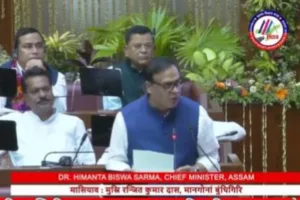
Assam Chief Minister Himanta Biswa Sarma on Wednesday slammed the Congress over its first list of candidates for the upcoming Assam Assembly Elections, calling it a “dynastic list,” while highlighting the BJP’s emphasis on grassroots workers.

He spoke at Barpeta Doul Mahotsav amid Holi festivities.

Speaking to reporters, CM Sarma said, “One may call it a list, but I would call it a dynastic list. In contrast, the BJP’s list would include grassroots workers. The party is fully prepared for the upcoming elections.”

This comes after the All India Congress Committee (AICC) on Tuesday announced its list of candidates for the upcoming Assam Legislative Assembly elections. A total of 42 candidates have been selected by the party’s Central Election Committee to contest various constituencies across the state.

According to an official release, the list includes Assam Congress president Gaurav Gogoi (Jorhat), Bitupan Saikia (Golaghat), Abdus Sobahan Ali Sarkar from Gauripur, Markline Marak from Goalpara West (ST), Girish Baruah from Bongaigaon, Mahananda Sarkar from Barpeta (SC), and Ramen Singh Rabha from Boko-Chaygaon (ST).

Other prominent names are Satyabrat Kalita (Kamalpur), Ripun Bora (Barchalla), Mira Borthakur Goswami (Dispur), Diganta Barman (Barkhetri), Uptal Gogoi (Sonari), Ajoy Kumar Gogoi (Demow), Debabrata Saikia (Nazira), and Ashok Kumar Sarma (Nalbari).

Several female leaders have also been fielded, including Nandita Das (Hajo-Sualkuchi SC), Pallabi Saikia Gogoi (Teok), and Suruchi Roy (Ram Krishana Nagar SC). The list features several candidates representing Scheduled Castes and Scheduled Tribes constituencies.

The announcement was signed by KC Venugopal, General Secretary of AICC, and officially released for publication, confirming the candidates’ nomination ahead of the crucial state polls.

Earlier, Assam Chief Minister Himanta Biswa Sarma on Tuesday laid the foundation stone of the Birangana Sati Sadhani Samannay Kshetra at Komargaon in Golaghat district.

The initiative has been taken to pay tribute to Birangana Sati Sadhani and preserve the rich legacy of the historic Chutia kingdom for posterity.

T20 World Cup Semifinal: Finn Allen’s 33-ball century powers New Zealand to 9-wicket win over South Africa

Just when South Africa appeared headed for a below-par total, Marco Jansen and Tristan Stubbs engineered a remarkable turnaround. The pair stitched together a vital 73-run stand for the sixth wicket to steady the innings and rebuild momentum.

Neha Buswal | New Delhi |

New Zealand produced one of the most dominant performances in T20 World Cup knockout history to crush South Africa by nine wickets in the first semi-final of the 2026 ICC Men’s T20 World Cup at Eden Gardens on Wednesday.

Chasing 170, the Black Caps stormed to 173/1 in just 12.5 overs, sealing victory with 43 balls to spare.


Earlier, after being put in to bat by Mitchell Santner, South Africa endured a nightmare start. Cole McConchie struck twice in the second over, removing Quinton de Kock and Ryan Rickelton in consecutive deliveries to leave the Proteas at 12/2. The collapse deepened as Rachin Ravindra dismissed Aiden Markram and David Miller, reducing South Africa to 77/5 and firmly putting New Zealand in control.

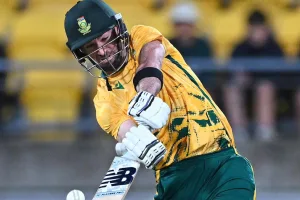
Just when the innings appeared to be unravelling, Marco Jansen and Tristan Stubbs mounted a counterattack. The pair added a crucial 73 runs for the sixth wicket to steady the ship. Stubbs made a composed 29 off 24 balls before falling to Lockie Ferguson, while Jansen carried the momentum through to the end.

Jansen smashed an unbeaten 55 off 30 balls, his highest T20I score, striking two fours and five sixes, including back-to-back maximums in the 19th over. However, Matt Henry ensured the late surge was contained, dismissing Corbin Bosch and Kagiso Rabada in successive deliveries in the final over as South Africa finished on 169/8.

If the first innings promised a contest, New Zealand’s reply erased any doubt within the powerplay. Finn Allen and Tim Seifert launched a breathtaking assault, racing to 84/0 in the first six overs – the highest powerplay total in a T20 World Cup knockout match. The opening pair put on a match-defining 117 runs in just 9.1 overs, effectively ending the semi-final before the halfway stage of the chase.

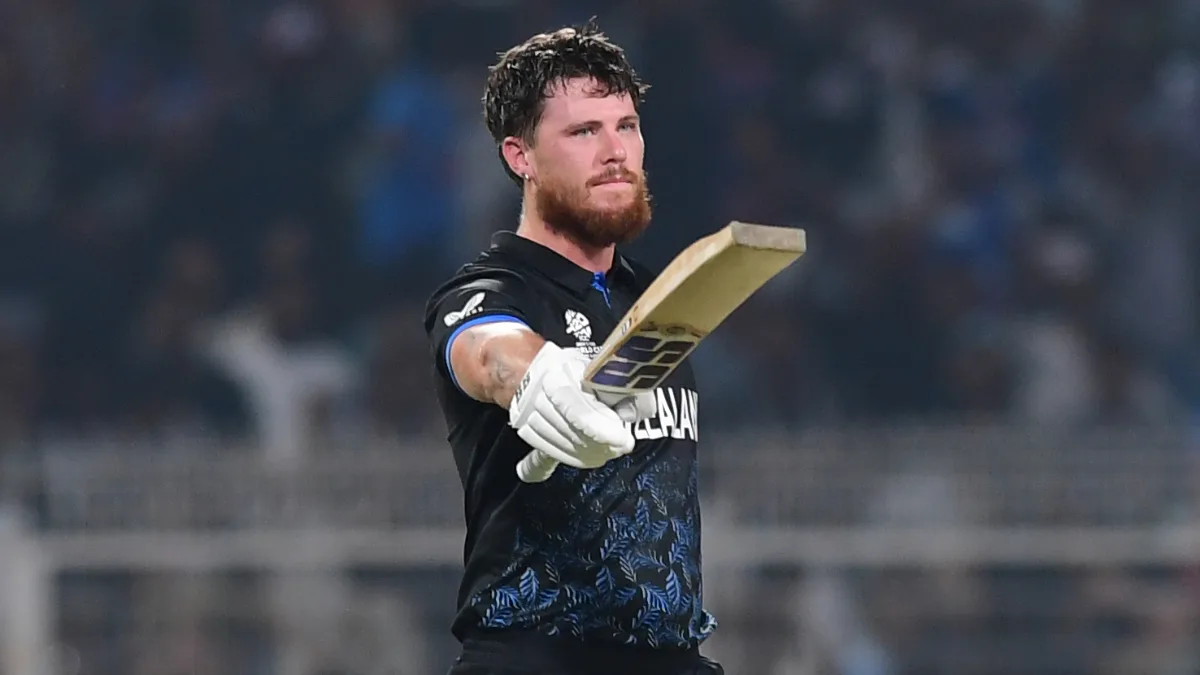
Allen delivered a knock for the ages, hammering an unbeaten 100 off just 33 balls at a staggering strike rate above 300. His innings included 10 fours and eight sixes, and he fittingly brought up his century on the final ball of the match to seal victory. The explosive opener was named Player of the Match for his extraordinary effort.
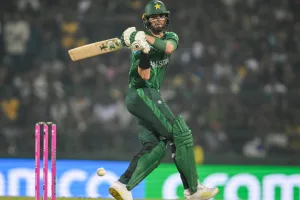

Seifert provided the perfect foil with a fluent 58 off 33 deliveries, reaching his half-century in 28 balls before being bowled by Kagiso Rabada. Rachin Ravindra then joined Allen to guide the team home comfortably, as South Africa’s bowlers had no answers to the relentless attack.

What began as a competitive semi-final turned into a statement performance from New Zealand, who now march into the final brimming with confidence after dismantling one of the tournament’s most consistent sides.

South Africa vs New Zealand T20 World Cup 2026 Semi-final: Playing XIs

New Zealand:
Tim Seifert (wk), Finn Allen, Rachin Ravindra, Glenn Phillips, Mark Chapman, Daryl Mitchell, James Neesham, Mitchell Santner (c), Cole McConchie, Matt Henry, Lockie Ferguson.

Change: One alteration for the Black Caps as Neesham replaces leg-spinner Ish Sodhi, adding extra batting depth and seam options.

South Africa:
Aiden Markram (c), Quinton de Kock (wk), Ryan Rickelton, Dewald Brevis, David Miller, Tristan Stubbs, Marco Jansen, Corbin Bosch, Kagiso Rabada, Keshav Maharaj, Lungi Ngidi.

Changes: Three key returns for the Proteas as Rabada, Jansen and Maharaj slot back into the XI, strengthening both pace and spin departments.