Logo

Cabinet nod to two multi-tracking railway projects covering 5 districts of West Bengal, Jharkhand

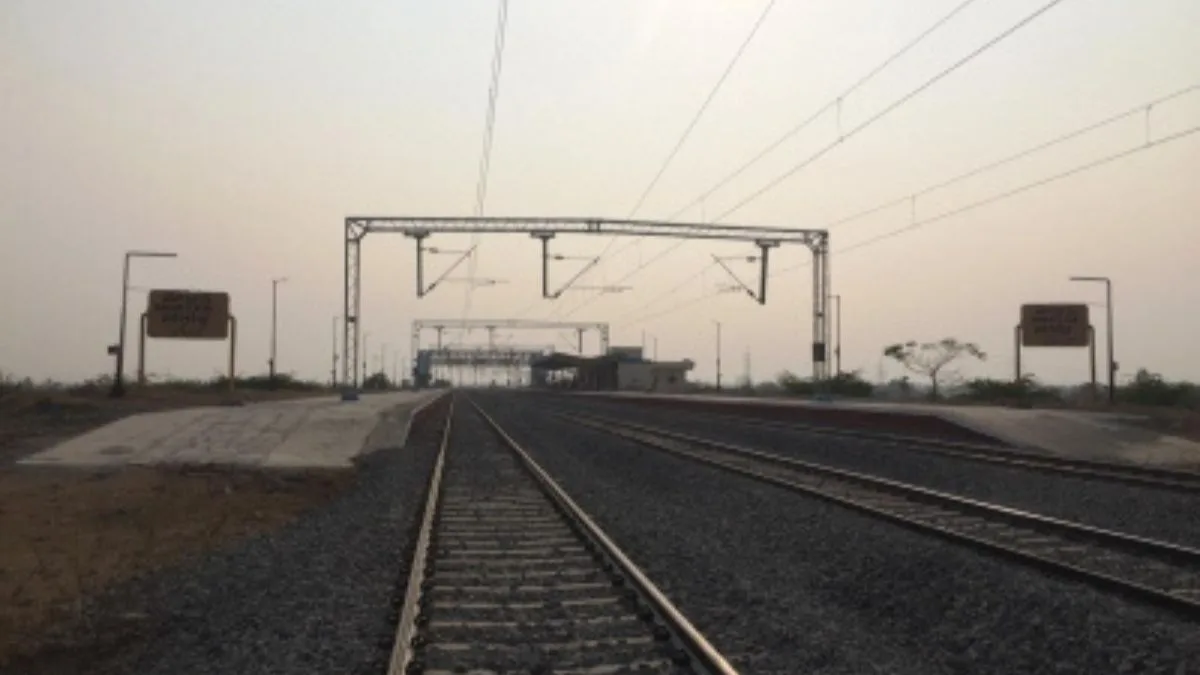
These projects include Sainthia–Pakur 4th line and Santragachi–Kharagpur 4th line. The total estimated cost of the projects is Rs 4,474 crore and will be completed up to 2030-31

Statesman News Service | New Delhi |

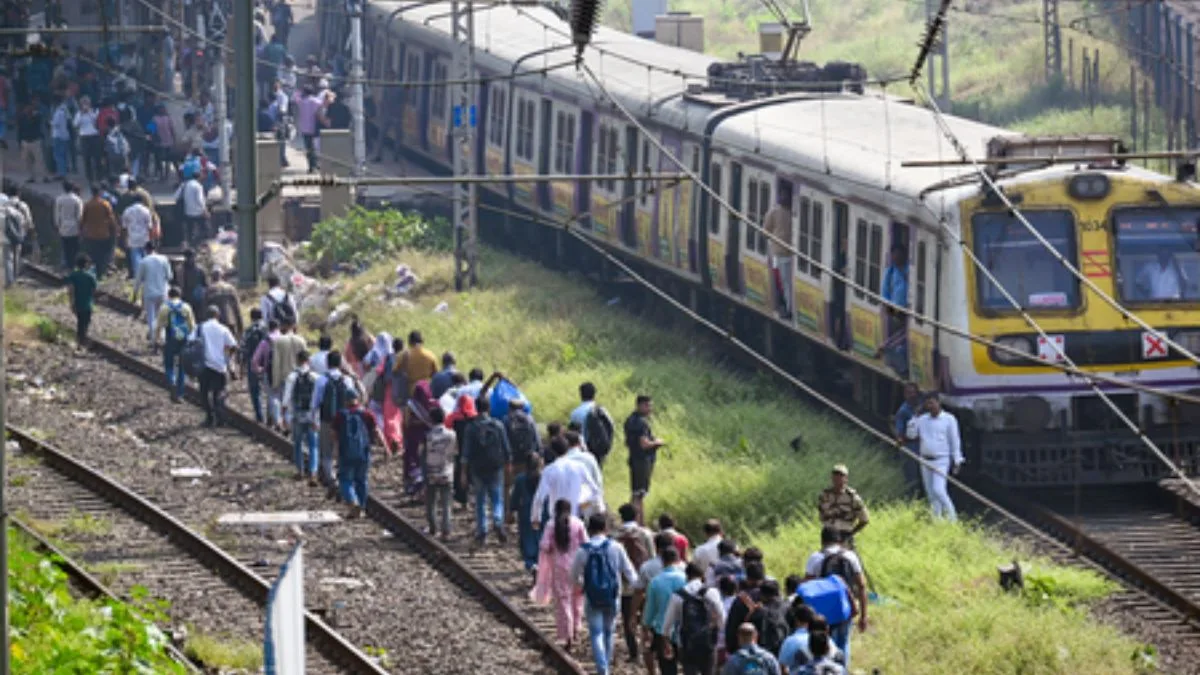
The Cabinet Committee on Economic Affairs, in a meeting chaired by Prime Minister Narendra Modi, on Tuesday approved two multi-tracking projects of the railways covering five districts of West Bengal and Jharkhand, increasing the existing network of Indian Railways by about 192 Kms.

These projects include Sainthia–Pakur 4th line and Santragachi–Kharagpur 4th line. The total estimated cost of the projects is Rs 4,474 crore and will be completed up to 2030-31

The increased line capacity will significantly enhance mobility, resulting in improved operational efficiency and service reliability for Indian Railways.

These multi-tracking proposals are poised to streamline operations and alleviate congestion.

The projects are in line with the Prime Minister’s vision of a New India which will make people of the region “Atmanirbhar” by way of comprehensive development in the area which will enhance their employment/ self-employment opportunities.

The projects are planned on PM-Gati Shakti National Master Plan with focus on enhancing multi-modal connectivity and logistic efficiency through integrated planning and stakeholder consultations. These projects will provide seamless connectivity for movement of people, goods, and services.

The approved multi-tracking project will enhance connectivity to approximately 5,652 villages, which have a population of about 147 lakhs.

The proposed capacity enhancement will improve rail connectivity to several prominent tourist destinations across the country, including Bolpur-Shantiniketan, Nandikeshwari Temple (Shaktipeeth), Tarapith (Shaktipeeth), Patachitra Gram, Dhadika Forest, Bhimbandh Wildlife Sanctuary, Rameshwar Kund, etc.

The approved projects are essential routes for transportation of commodities such as coal, stone, dolomite, cement, slag, gypsum, iron and steel, foodgrains, POL, container, etc.

The capacity augmentation works will result in additional freight traffic of magnitude 31 MTPA (Million Tonnes Per Annum).

The Railways being an environment friendly and energy efficient mode of transportation, will help both in achieving climate goals and minimizing logistics cost of the country, reduce oil import (6 crore litres) and lower CO2 emissions (28 crore Kg) which is equivalent to plantation of one crore trees.
Bomb threats to offices of 12 Rajasthan towns turns out hoax

A police spokesman said that the threats were conveyed through e-mails in the passport offices in Bhilwara, Sikar, Jodhpur, Churu, Pratapgarh, Dausa, Bikaner, Barmer, Kota, Ajmer, Hanumangarh and Sriganganagar.

Statesman News Service | Jaipur |

Bomb scare at the passport or the post offices in about a dozen towns of Rajasthan following threats of planting explosives on their premises on Tuesday turned out to be a hoax.

A police spokesman said that the threats were conveyed through e-mails in the passport offices in Bhilwara, Sikar, Jodhpur, Churu, Pratapgarh, Dausa, Bikaner, Barmer, Kota, Ajmer, Hanumangarh and Sriganganagar.

The passport office of Udaipur is situated in a Mall in a busy city area, on receiving the threat, the security personnel were forced to get evacuated people and shop owners for search operations.

Similarly, alerts on e-mail were also received by post offices in Ajmer, Bikaner, Bharatpur, Dholpur and Dausa. Some other government offices also reported receipt of such threats in Jaipur, Alwar and Sawai Madhopur.

These threats kept the security agencies busy in searching the explosive, evacuating people and personnel from many premises.
No explosive recovery was reported until late afternoon, the police said.

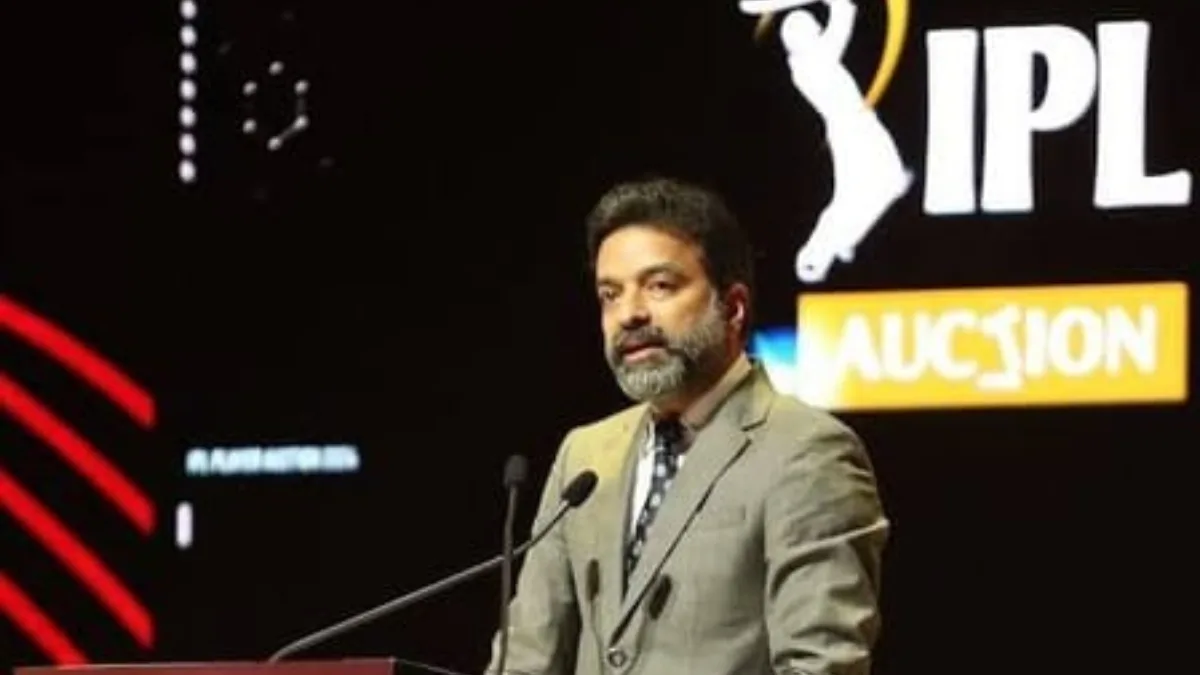
Will LPG cylinder shortage affect IPL 2026? IPL chairman Arun Dhumal says league monitoring situation

IPL chairman Arun Dhumal said the league is monitoring potential challenges around hospitality and travel logistics ahead of the 2026 season, though no formal concerns have yet been raised by hotels or other stakeholders.
Statesman News Service | New Delhi |

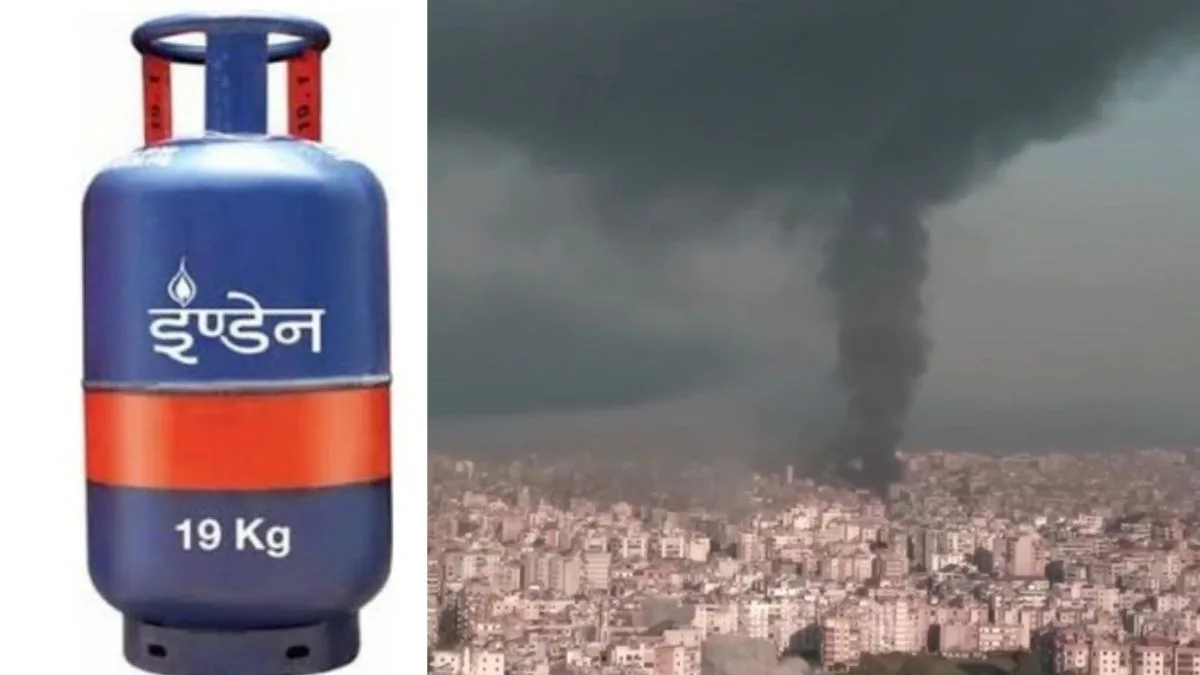
Amid rising concerns over a shortage of LPG cylinders due to international tensions, the issue has also reached the Indian Premier League (IPL). IPL chairman Arun Dhumal said the league is monitoring potential challenges around hospitality and travel logistics ahead of the 2026 season, though no formal concerns have yet been raised by hotels or other stakeholders.
The IPL 2026 season, which was initially scheduled to begin on March 26, will now start on March 28, with the schedule for the first 20 matches expected to be announced on March 12. The ten-team tournament will host top international players, coaches and broadcasters, making travel and hospitality logistics crucial to its smooth operation.

However, the ongoing US-Israel-Iran conflict has led to disruptions in LPG supply chains. The Ministry of Petroleum and Natural Gas recently said that cooking gas supply would be prioritised for households, raising concerns over a potential shortage of commercial LPG used by hotels and restaurants.

Several eateries in cities such as Mumbai, Bengaluru and Chennai have already indicated that they may be forced to halt operations due to the shortage of cooking gas.

Dhumal acknowledged that the situation could pose challenges but said the IPL has not yet received any official complaints.

“Definitely, it’s a challenge. But we haven’t received anything from hotels so far. If there is an issue and they inform us, then we will review it accordingly. If we had made bookings and there were concerns, they would have told us,” Dhumal told IANS on Tuesday.

“But they have to come back to us if this becomes a problem. Right now we are only hearing about it through the media, but we are reviewing the situation and will take a call if required,” he added.

Any broader disruption in the supply of commercial LPG could impact not only the IPL but also sectors such as hospitals, NGOs, educational institutions and other industries that rely heavily on bulk cooking gas.

The IPL season typically leads to a significant surge in food consumption, with restaurants and roadside vendors witnessing increased demand as fans gather to watch matches. Food delivery services also record a spike in orders as viewers prefer to watch games from home while ordering meals.

Apart from LPG concerns, travel logistics also remain under scrutiny following recent disruptions caused by geopolitical tensions. During the recently concluded Men’s T20 World Cup, teams such as Zimbabwe, West Indies and South Africa faced delays in returning home as flight routes were affected by the conflict.

With Dubai, a major transit hub, temporarily unavailable, Zimbabwe had to return home in three batches via Addis Ababa on Ethiopian Airlines. South Africa and the West Indies were also stranded in Kolkata before eventually departing on a charter flight via Johannesburg.

Although Australia and New Zealand’s airspaces remain unaffected, uncertainty remains over whether all overseas players, coaches and broadcasters, particularly from the West Indies, South Africa and England, will travel smoothly to India for IPL 2026, as many usually transit through Dubai.

Dhumal said the IPL is closely monitoring the situation regarding travel arrangements for foreign players.

“Right now, we are reviewing the situation. The IPL is still a few weeks away, so we will see how to proceed,” he said.

20,019 organ transplants performed in India in 2025: Govt

A total of 20,019 organ transplants were performed in India in 2025, the government informed the Parliament on Tuesday.

Statesman News Service | New Delhi |

A total of 20,019 organ transplants were performed in India in 2025, the government informed the Parliament on Tuesday.

The Government of India is implementing the National Organ Transplant Programme (NOTP), a Central Sector Scheme aimed at augmenting infrastructure and related services for organ transplantation and increasing awareness about organ donation in the country, Union Minister of State for Health and Family Welfare Prataprao Jadhav said in a written reply to a question in the Rajya Sabha.

He said under the programme, Regional Organ and Tissue Transplant Organisations (ROTTOs) and State Organ and Tissue Transplant Organisations (SOTTOs) have been established in the States/UTs of the Northern Region (except the UT of Ladakh), Eastern Region, and North-Eastern Region (except Manipur and Nagaland).

“As on 3rd March, 2026, according to the data reported by hospitals and transplant centres on the National Registry Portal of the National Organ and Tissue Transplant Organisation (NOTTO), the waitlist for major organs in the country stands at 89,839.

“During the year 2025, the number of organ transplants performed in the country was 20,019,” Jadhav said.

He said the registration of hospitals for performing organ transplantation is granted by the appropriate authority of the concerned States/UTs where the hospital is located.

“Against 804 registered hospitals performing organ transplantation, 217 hospitals failed to report data on the National Registry Portal during the year 2025,” the Minister said.

As per the provisions of the Transplantation of Human Organs and Tissues Act, 1994 (THOTA) and the Rules framed thereunder, regulatory action against such hospitals is to be taken by the State Governments concerned, he said.

“The National Organ and Tissue Transplant Registry Portal has been functional since 2015 and is accessible to authorised users, including hospitals and organisations, through the website of the National Organ and Tissue Transplant Organisation (www.notto.mohfw.gov.in),” Jadhav said.


Essential Commodities Act invoked as govt rejigs gas allocation amid supply disruption; LPG, CNG, piped cooking gas get top priority

According to a Gazette notification, the supply of natural gas to certain sectors shall be treated as priority allocation and shall be maintained (subject to operational availability) to 100 per cent of their past six-month average gas consumption.

Statesman News Service | New Delhi |

Amid the global energy crisis and supply disruptions due to the ongoing US-Iran war in the Middle East, the Centre on Tuesday invoked the Essential Commodities Act (EC Act) to ensure uninterrupted supply of domestic cooking gas, redirecting the domestically produced natural gas to units that use it to produce LPG.

Before the move, CNG and piped cooking gas were the two priority sectors to receive the natural gas. Now, the LPG production units have also been added to the list of priority sectors to receive natural gas.

According to a Gazette notification, the supply of natural gas to certain sectors shall be treated as priority allocation and shall be maintained (subject to operational availability) to 100 per cent of their past six-month average gas consumption.

The sectors that will receive priority natural gas supply include – Domestic Piped Natural Gas supply; Compressed Natural Gas for transport; LPG production including LPG shrinkage requirements; Pipeline compressor fuel and other essential pipeline operational requirements.

The order further stated that the supply of natural gas to the fertilizer plants shall ensure seventy per cent of their past six-month average gas consumption. This too shall be subject to operational availability.

Tea industries, manufacturing and other industrial consumers shall also receive gas supply at eighty per cent of their past six-month average.

Meanwhile, the government has ordered oil refining companies to absorb the impact of LNG supply disruption to the extent feasible by reducing gas allocation to refineries to approximately sixty-five per cent of the past six-month consumption.

The ongoing conflict in the Middle East has triggered an energy crisis across the world, with India also facing a gas shortage. The production and supply of energy products, including LPG, have been disrupted due to the US-Iran war.

The crisis has led to a shortage of commercial LPG in the country, with the hotel body warning that hotels in several cities could be forced to shut 50 per cent of their eateries in the next 48 hours.

India becomes world’s seventh-largest exporter of agri produce, with Rs 5 lakh crore exports: Piyush Goyal

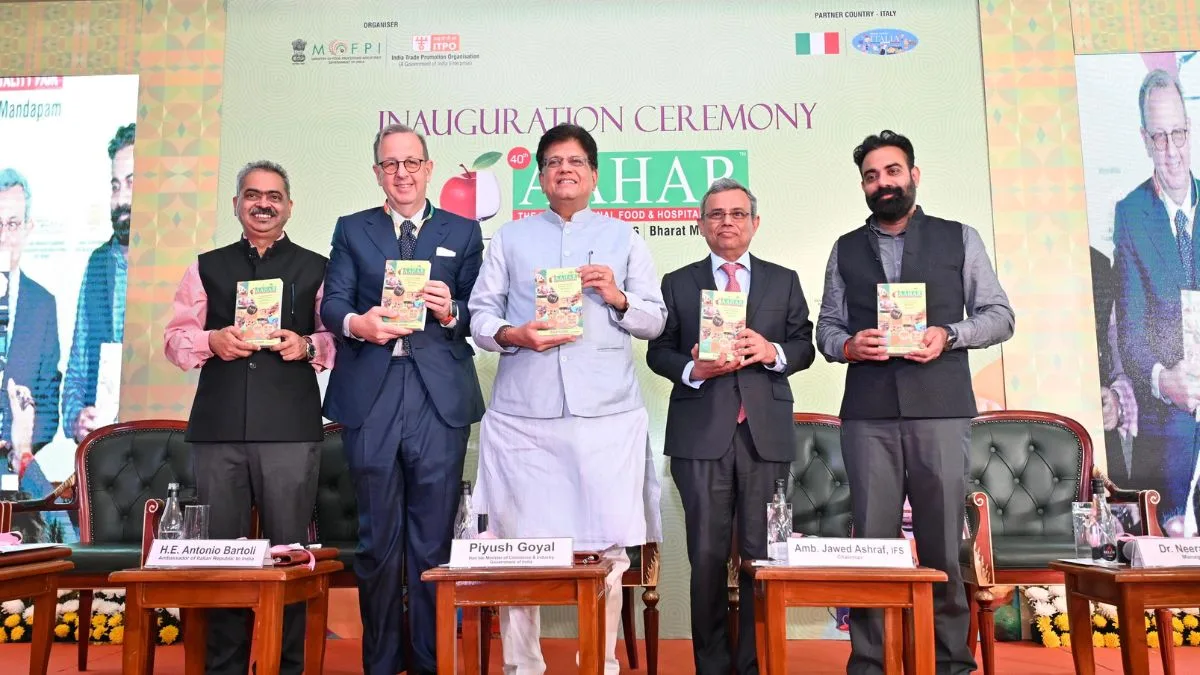
While addressing the gathering at the inauguration of the 40th edition of AAHAR – The International Food & Hospitality Fair, the minister noted that over the past eleven years, from 2014 to 2025, India’s agri and food exports have witnessed significant growth.

Statesman News Service | New Delhi |

India’s exports of food and agricultural products, including farm produce and fisheries, have reached nearly Rs 5 lakh crore (over USD 55 billion) annually, making the country the seventh-largest exporter of agricultural produce in the world,
Union Minister of Commerce & Industry Piyush Goyal said on Tuesday.

While addressing the gathering at the inauguration of the 40th edition of AAHAR – The International Food & Hospitality Fair, the minister noted that over the past eleven years, from 2014 to 2025, India’s agri and food exports have witnessed significant growth.

“Exports of processed foods have increased fourfold, fruit and pulses exports have tripled, processed vegetable exports have quadrupled, cocoa exports have tripled, and cereal exports have doubled. Rice exports alone have grown by 62% during this period,” he said.

Goyal said these achievements should inspire India to aspire for the top position globally in agricultural and processed food exports, and emphasised that the goal is achievable and aligns with the vision of Prime Minister Narendra Modi that India should become the “food basket of the world.”

He also encouraged farmers and entrepreneurs to take advantage of the Rs 1 lakh crore Agriculture Infrastructure Fund and focus on food processing and value addition, which can enable farmers to access higher-value global markets.

The minister noted that an increasing number of small enterprises are entering the food processing sector, creating new avenues for growth and employment.

The Minister highlighted that the nine Free Trade Agreements (FTAs) concluded by India over the past three and a half years have opened access to 38 developed and prosperous countries, providing vast market opportunities for Indian exporters.

He added that India today has preferential market access covering nearly two-thirds of global trade, which strengthens India’s position as an attractive investment destination and enables Indian businesses to integrate into global value chains.

Further, Goyal emphasised that while negotiating FTAs, the government has carefully safeguarded the interests of domestic stakeholders, particularly farmers, fishermen and MSMEs.

“India has protected sensitive sectors such as dairy, where no concessions have been given to foreign producers. Similarly, genetically modified (GM) products have not been granted duty concessions or market access,” he said.

He further clarified that key agricultural commodities such as rice, wheat, maize, soy meal and several varieties of pulses have been protected in trade negotiations. In the sugar sector, concessions have generally not been extended to prevent imports that could adversely affect India’s sugarcane farmers and domestic producers.

The Minister said these measures ensure that India’s domestic strengths remain protected while new global opportunities are created for Indian products. He urged stakeholders connected with industry and the business community to spread awareness at the grassroots level about how India’s FTAs safeguard national interests while expanding international trade opportunities.


MRP of DAP capped at Rs 1,350 per 50 kg bag despite global volatility

In a comprehensive update on the fertilizer sector, the Ministry of Chemicals and Fertilizers announced that the Maximum Retail Price (MRP) of Di-ammonium Phosphate (DAP) has been maintained at a stable Rs 1350 per 50 kg bag.

Statesman News Service | New Delhi |

The Union government on Tuesday reaffirmed its commitment to shielding Indian farmers from international market fluctuations by ensuring the availability of key fertilizers at affordable rates for the ongoing Rabi 2025-26 season.

In a comprehensive update on the fertilizer sector, the Ministry of Chemicals and Fertilizers announced that the Maximum Retail Price (MRP) of Di-ammonium Phosphate (DAP) has been maintained at a stable Rs 1350 per 50 kg bag.

“To achieve this price stability for DAP, the government has implemented special provisions of Rs 3500 per MT to cover other costs, including logistics from factory to farm gate, GST components, and a guaranteed 4 per cent reasonable return for manufacturers. This move ensures that despite shifts in global prices, the financial burden does not shift to the farmer,” said Anupriya Patel, Minister of State in the Ministry of Chemicals and Fertilizers, in a written reply to Rajya Sabha Unstarred Question on Tuesday.

Adequate Supplies and State-Wise Monitoring As of March 5, the availability of Phosphatic and Potassic (P&K) fertilizers has remained adequate across the country.

Nationwide data indicates:

DAP: Against a pro-rata requirement of 51.38 LMT, the availability stands at 71.89 LMT.

MOP: Availability is recorded at 18.17 LMT against a requirement of 14.18 LMT.

NPKS: A total of 108.39 LMT is available, significantly exceeding the pro-rata requirement of 76.48 LMT.

The Ministry utilises the integrated Fertilizer Management System (iFMS), an online web-based platform, to monitor the movement of all subsidized fertilizers in real-time.

This is supported by close coordination with the Ministry of Railways to prioritize rake movement and ensure timely evacuation of stocks to various states.

Promoting Balanced Nutrition Under the revised Nutrient Based Subsidy (NBS) framework, the government has incorporated additional fertilizer grades such as 10:26:26 and 12:32:16.

By providing subsidies based on the specific Nitrogen (N), Phosphorus (P), and Potash (K) content, the NBS policy empowers farmers to choose nutrients based on specific crop and soil requirements.

The average retail prices for other key grades (per 50 kg bag) for the 2025-26 period are:

NPK 10-26-26: Rs 1814.82
NPK 12-32-16: Rs 1711.87
Muriate of Potash (MOP): Rs 1710.54

This strategic framework not only facilitates balanced nutrient application but also aims to reduce the excessive reliance on urea, thereby preserving soil health.


Four bike-borne youths killed as car rams into their vehicle

According to the police, the mishap occurred on National Highway-43 near Jagatpur Umaria village.

Statesman News Service | Bhopal |

Four youths riding on one motorcycle were killed on the spot when a speeding car rammed into their bike head-on in the Katni district of Madhya Pradesh at around 12.15 am on Tuesday.

According to the police, the mishap occurred on National Highway-43 near Jagatpur Umaria village.

The four youths on the bike were travelling from Katni to Umaria. At the Chapahani bend, the car coming from Umaria hit the bike head-on.

All four bike-borne men were killed on the spot, while two persons in the car were also seriously injured. Local villagers rushed to the spot and informed the police. A police team from the Barwara police station reached the spot.

The bodies of the deceased were sent to the morgue as they could not be identified at night. The injured car occupants were sent to the Katni district hospital for treatment.

No anti-incumbency against my two-year regime: Rajasthan CM Sharma

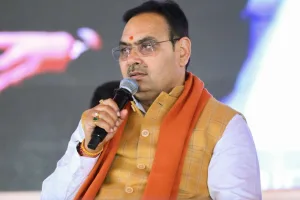
Rajasthan Chief Minister Bhajanlal Sharma said people of the state were happy with the good governance of the incumbent BJP-led government and that there has been no anti-incumbency at all against the two-year regime.

Statesman News Service | Jaipur |

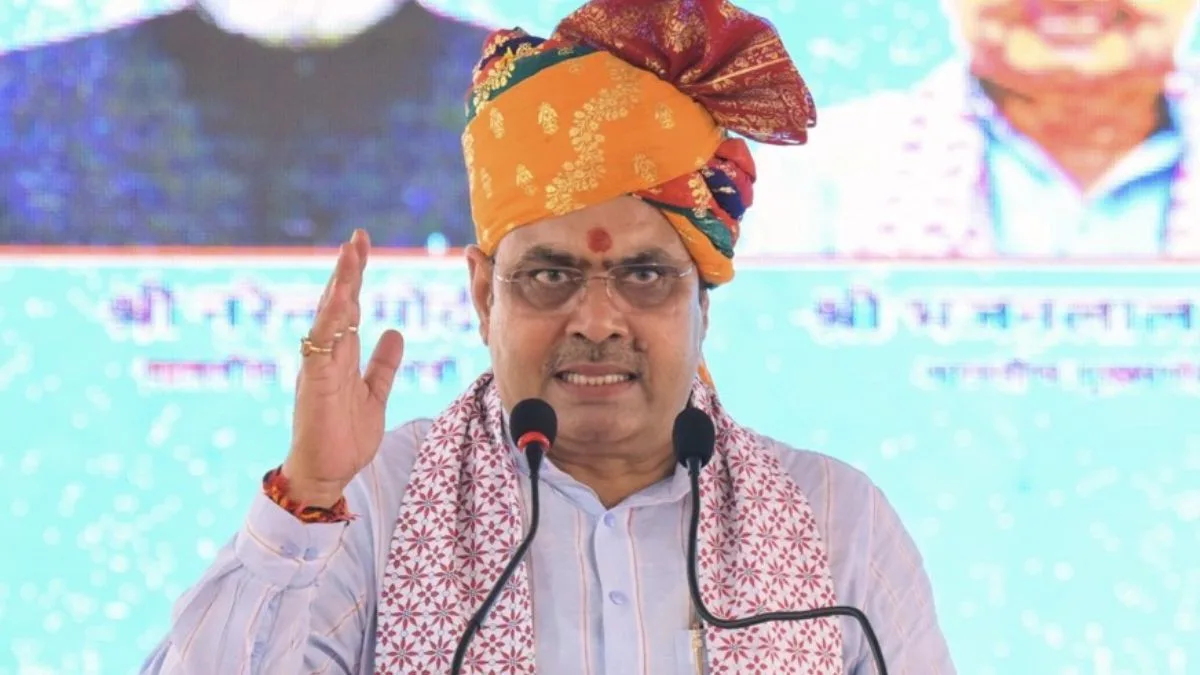
Rajasthan Chief Minister Bhajanlal Sharma said people of the state were happy with the good governance of the incumbent BJP-led government and that there has been no anti-incumbency at all against the two-year regime.

“It indeed gives pleasure to note that there is no anti-incumbency in the state against our government and it should be a collective responsibility of each one of us to keep intact the image of our government,” the CM exhorted the ruling party MLAs while speaking at the weekly meeting of BJP legislature party in the assembly lobby Tuesday morning.

Praising his party MLAs for their “overall good performance” on the floor of the state assembly during the monsoon session, he said, “We, particularly the ministers, have to reach out in every of the 200 assembly segments during our five-year term and ensure to fulfill voters’ aspirations and development needs.”

“I have given what you (all) asked for, to cater to the needs of your respective constituencies, now you all ought to stay out among people and work 8 to 10 hours a day,” he added.

Every MLA should act as an additional (third) eye for the government to keep a tab on fulfilment of governance – development related needs of people and their local areas.

He also shared views and programmes being finalised for the Rajasthan Day celebrations due to begin on March 30.

ICC fines Arshdeep Singh for Code of Conduct breach after throw hits Daryl Mitchell

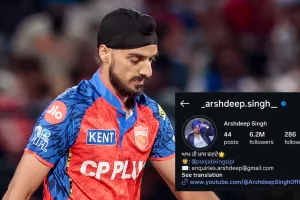
According to an ICC press release, Arshdeep Singh breached Article 2.9 of the ICC Code of Conduct for Players and Player Support Personnel.

Statesman News Service | New Delhi |

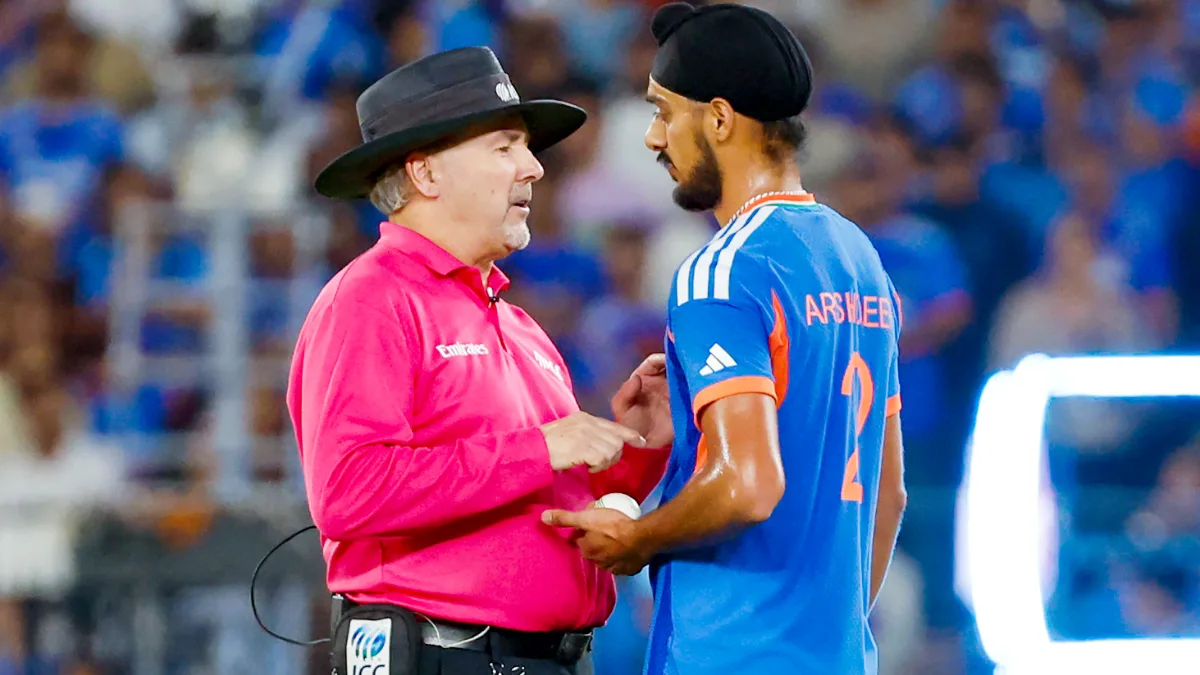
India’s leading pacer Arshdeep Singh has been fined 15 per cent of his match fee for breaching a Level 1 offence under the ICC Code of Conduct during the final against New Zealand at the Narendra Modi Stadium.

According to an ICC press release, the fast bowler breached Article 2.9 of the ICC Code of Conduct for Players and Player Support Personnel, which relates to “throwing a ball (or any other item of cricket equipment) at or near a player in an inappropriate and/or dangerous manner during an international match”.

In addition, one demerit point has been added to Arshdeep’s disciplinary record. It is his first offence in a 24-month period, the ICC said in a statement on Tuesday.

The incident occurred in the 11th over of New Zealand’s innings, when Arshdeep fielded the ball on his follow-through and threw it back aggressively, striking batter Daryl Mitchell on the pads.


Arshdeep accepted the sanction proposed by Andy Pycroft of the Emirates ICC Elite Panel of Match Referees, eliminating the need for a formal hearing.

The charge was levelled by on-field umpires Richard Illingworth and Alex Wharf, along with third umpire Allahuddien Paleker and fourth umpire Adrian Holdstock.

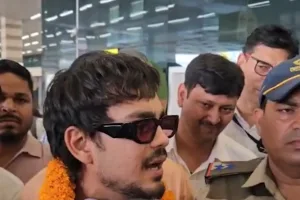
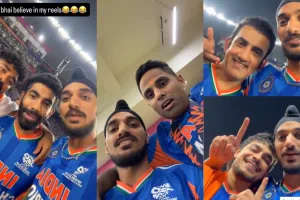
Also See: WATCH: Arshdeep Singh’s viral reel fest after T20 World Cup win has fans hooked

Level-1 breaches carry a minimum penalty of an official reprimand and can go up to 50 per cent of a player’s match fee, along with one or two demerit points.

If a player accumulates four or more demerit points within a 24-month period, they are converted into suspension points. Two suspension points result in a ban from one Test or two ODIs or two T20Is, whichever comes first.

Demerit points remain on a player’s disciplinary record for 24 months before being expunged.

Although tempers briefly flared during the incident, both players quickly moved past it. Arshdeep later apologised to Mitchell, and the two were seen sharing a light moment after the match.

Speaking after the game, Arshdeep clarified that the throw was unintentional.

“I went to say sorry to Mitchell. My throw reverse-swung a bit too much and it hit his body, so I told him that I didn’t hit him intentionally,” Arshdeep said during the post-match presentation.

Despite playing a key role in India’s bowling effort, the pacer admitted that the magnitude of the team’s achievement had not fully sunk in yet.

“I don’t really know what the emotion feels like right now. At the moment it feels good because we’re winning, but in two or three days we’ll know, when the emotions sink in, how it actually feels,” he added.

Also See: WATCH: Rohit Sharma’s ‘heated discussion’ with wife Ritika Sajdeh during the T20 WC final sparks meme fest

Vijay under fire: Divorce, alleged extramarital affair, dismissive remarks against wife spark backlash within his own party

Vijay’s attempt to downplay his divorce and alleged affair has backfired, drawing sharp criticism from his own party. TVK leader Ranjana Nachiyaar questioned his respect for women and warned of the negative message it sends to cadres and the public.

Statesman News Service | New Delhi |

It looks like Tamil actor and politician Vijay’s personal life is now making headline waves in the political arena, and not in a good way.

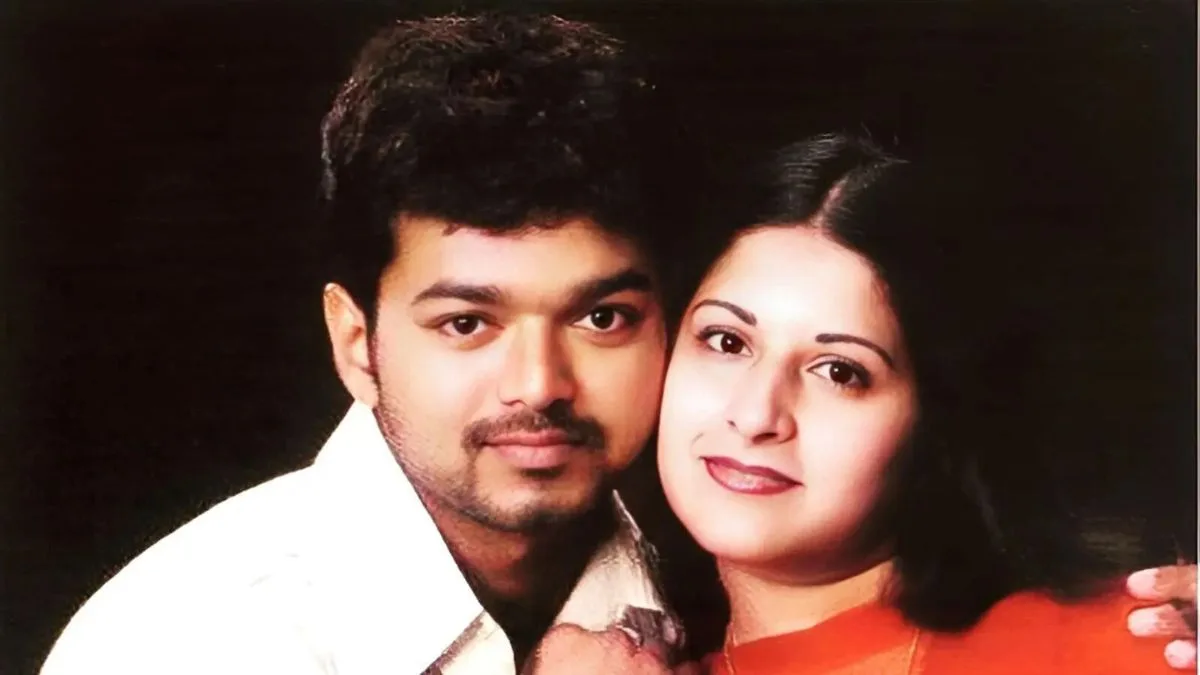
The story begins with Vijay’s wife, Sangeetha, filing for divorce after alleging that Vijay is involved in an extramarital affair. While the actor-politician attempted to downplay the drama, calling it “not worth bothering about” during a Women’s Day event with his party, Tamilaga Vettri Kazhagam (TVK), his words may have done more damage than good.

Also Read: Trisha Krishnan slams ‘stupid’ comment as photos with Vijay go viral after Sangeetha Sornalingam files for divorce

Vijay’s “not worth bothering” comment

During the Women’s Day celebration, Vijay addressed his party cadres indirectly about the ongoing media storm surrounding his personal life. “There are some issues running around in the recent past, isn’t it? I see all of you busy fighting those allegations and getting hurt in the process. In fact, I get hurt seeing you get hurt. I will take care of all that. Let’s focus only on people’s problems. Don’t get hurt about that problem. It’s not worth bothering about. Be confident. Only good things will happen,” he said.

TVK leader Ranjana Nachiyaar breaks silence

Ranjana Nachiyaar, a senior leader within TVK, didn’t mince words when speaking to ANI. She expressed concern that Vijay’s remarks during Women’s Day sounded disrespectful toward his wife.

“A leader should respect women… We all respect our leader Vijay, and we all hope that he will give a different party that will make a difference in Tamil Nadu and provide much more respect and equal space for women,” Ranjana said.

She emphasised that while Sangeetha’s divorce is a personal matter, Vijay’s public statement went viral and made many question his stance toward women.

“Is it his wife who’s not worth it?”

Ranjana didn’t stop there. She directly criticised the phrasing Vijay used, pointing out that saying “not worth it” opens a troubling debate. “It may be his wife or his marriage life… but the words ‘not worth it’ made many people question what he meant… Is it his wife who’s not worth it? Or his marriage?” she asked.

She further stressed that Vijay’s personal behaviour sends a message about how he may treat women within his party and the public at large. “He mentioned a lot of things in the election manifesto, particularly for women. But it is more important for him to protect his family first,” she added.

Respect for Sangeetha: 25 years of marriage

Ranjana reminded everyone that Sangeetha was not just a spouse but also the mother of Vijay’s two children. She argued that respecting his long-time partner should take precedence over any political role.

Her words also took aim at Vijay’s public appearances amid the controversy. “I always support Vijay. I hope he changes these things. He should solve his personal issues. Above all, he shouldn’t set a bad precedent for the younger generations. Taking another actress to a wedding sets a bad precedent,” she said clearly referencing Vijay’s outing with Trisha Krishnan at a wedding during the ongoing marital storm.

Ahead of new political push, Nitish Kumar recounts legacy, outlines NDA agenda

During the third phase of his “Samriddhi Yatra”, Nitish will tour the Seemanchal and Kosi regions till 14 March.

Imran Mojib | Patna |

Before starting a new political innings, Bihar Chief Minister Nitish Kumar embarked on his final major public outreach tour from Supaul on Tuesday and announced that 50 lakh youths have already received employment, and the next target is 1 crore.

During the third phase of his “Samriddhi Yatra”, Nitish will tour the Seemanchal and Kosi regions till 14 March.

Nitish Kumar inaugurated and laid the foundation stones for a total of 213 projects worth Rs 569 crore in Supaul. Among these, 84 projects worth Rs 435 crore were for foundation laying, while 129 projects worth Rs135 crore were inaugurated.

Addressing people in Supaul, the Chief Minister spoke about Bihar government’s development plans for the next five years. He said that five new expressways will be built in the state and rural roads will also be improved.

In addition, the government is introducing new policies to promote industries, under which investors will be offered free land and subsidies. There are also plans to restart old mills that are currently closed.

The Chief Minister said that special emphasis will be placed on promoting solar energy in the state to increase self-reliance in the energy sector. He added that the government’s goal over the next five years is to double employment and also double the per-capita income.

However, the speech largely focused on recounting his government’s legacy. Addressing a public gathering in Supaul, he said that his government has been continuously working for Bihar’s development for the past 20 years, and the National Democratic Alliance (NDA) government will continue efforts to take the state to new heights.

He also listed the development work carried out in the state. He said that since his government came to power in 2005, continuous development work has been undertaken and the rule of law has been established in Bihar.

According to him, before 2005 the situation in the state was quite bad. People were afraid to step out of their homes after evening, and incidents of crime and disputes were common in many areas.

He added that social conflicts and quarrels were also more frequent in those days, but now the atmosphere of fear and insecurity in Bihar has ended.

Indian Railways sanctions Rs 765-crore infrastructure, technology upgradation works

Indian Railways has also sanctioned Rs 318.07 crore for upgrading the electric traction system on the 106-km Duvvada–Visakhapatnam–Vizianagaram section of East Coast Railway.

Statesman News Service | New Delhi |

Indian Railways has sanctioned a series of key infrastructure and technology upgradation works totalling over Rs 765 crore to strengthen operations, expand line capacity, and modernise communication systems across critical sections of the network.

“The sanctioned projects cover upgradation of electric traction systems on two high-density freight and passenger corridors, and a major expansion of the optical fibre communication backbone across Vadodara and Mumbai Central Divisions of Western Railway,” the Ministry of Railways said on Tuesday.

Indian Railways has also sanctioned Rs 318.07 crore for upgrading the electric traction system on the 106-km Duvvada–Visakhapatnam–Vizianagaram section of East Coast Railway.

The section will be upgraded from the existing 1×25 kV system to a more advanced 2×25 kV system, enabling higher freight loading, improved speed potential, and enhanced reliability on this high-density corridor.

Located on the busy Howrah–Chennai route, this section plays a crucial role in transporting minerals and industrial goods from Odisha and Chhattisgarh to Visakhapatnam Port. The upgrade will strengthen power supply capacity, ensuring smoother freight movement and more efficient passenger train operations.

The project is part of a nationwide programme included in the 2024–25 Railway Budget aimed at modernising electric traction systems across Indian Railways.

Indian Railways has sanctioned Rs 259.39 crore for upgrading the electric traction system on the 126-km Raichur–Guntakal section spanning Karnataka and Andhra Pradesh under Guntakal Division of South Central Railway.

The section will be upgraded from the existing 1×25 kV system to a more advanced 2×25 kV system, enabling higher train loads, improved speed potential, and greater operational reliability on this high-density corridor.

Located on the busy Mumbai–Chennai route, the upgrade will strengthen power supply capacity, facilitating smoother freight movement and faster passenger services, including Vande Bharat trains. The project will contribute to Indian Railways’ mission of achieving 3,000 MT freight loading while enhancing overall network efficiency.

The work forms part of a nationwide programme included in the 2024–25 Railway Budget aimed at modernising electric traction systems across Indian Railways.

Indian Railways has sanctioned Rs 187.88 crore for strengthening the communication backbone in Vadodara and Mumbai Central Divisions of Western Railway.

The project provides for installation of a 4×48 core Optical Fibre Cable (OFC) backbone architecture, ensuring enhanced bandwidth, network redundancy, and reliable support for LTE-based Kavach and other critical railway communication systems. This upgrade will strengthen the digital infrastructure required for the implementation of Kavach, the indigenous train collision avoidance system.

Under this work, optical fibre cables will be laid over 1,000 route kilometres, including 692 km in Vadodara Division and 308 km in Mumbai Division.

The project is part of a larger nationwide programme included in the 2024–25 Railway Budget aimed at expanding Kavach and modernising railway communication systems across the network.

These sanctioned works will enhance the efficiency and reliability of railway operations by improving traction power systems, strengthening communication backbone infrastructure, and enabling higher freight loading capacity along major railway corridors.

The initiatives will also support the operation of modern trains, strengthen digital communication networks, and improve the overall performance of Indian Railways across key freight and passenger routes.


IPL 2026: BCCI secretary Devajit Saikia shares major update on schedule announcement

The 19th edition of the IPL will run from March 28 to May 31, slightly revised from the earlier proposed window of March 26 to May 30.

Statesman News Service | New Delhi |

With the ICC Men’s T20 World Cup now concluded, attention will soon shift to the upcoming Indian Premier League (IPL) 2026 season. The Board of Control for Cricket in India (BCCI) is set to release the schedule for the first 20 days of the tournament by March 12, secretary Devajit Saikia said on Tuesday.

The 19th edition of the IPL will run from March 28 to May 31, slightly revised from the earlier proposed window of March 26 to May 30.

“We plan to announce the IPL 2026 schedule by March 12. For now, we are going to release the schedule for the first 20 days,” Saikia told IANS.

The remainder of the tournament schedule will be announced later, as the BCCI aims to avoid a clash with upcoming assembly elections in West Bengal, Assam and Tamil Nadu.

Meanwhile, franchises have already begun their pre-season preparations ahead of the new campaign.

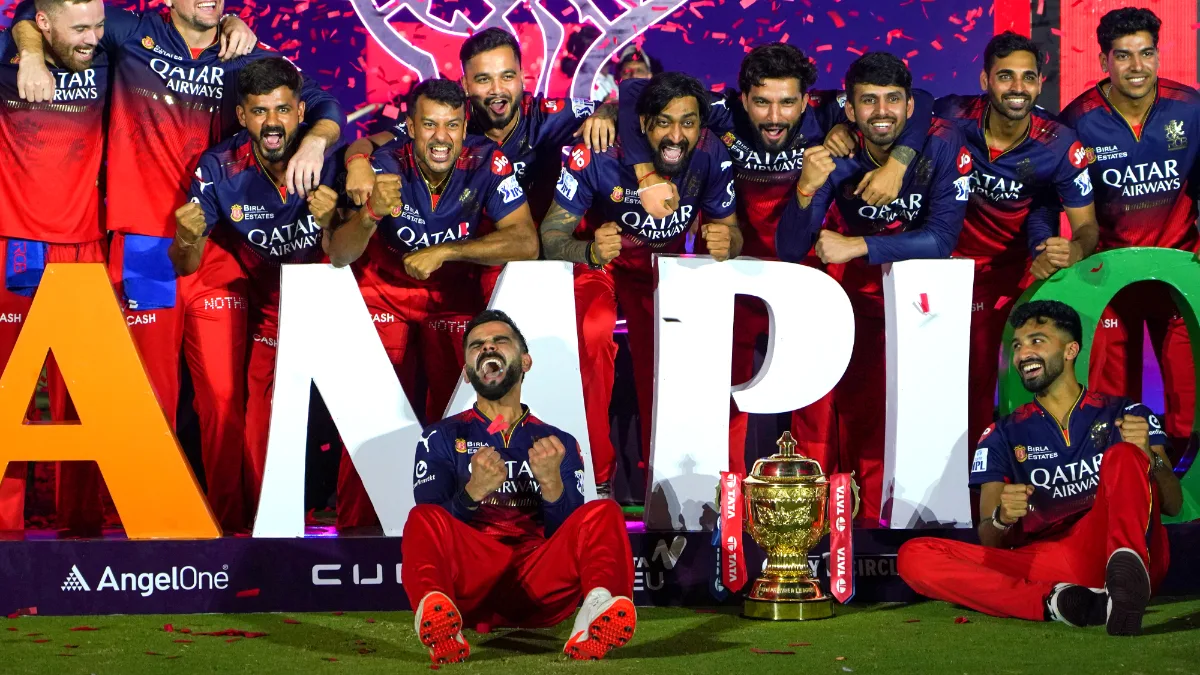
Five-time champions Chennai Super Kings started their training on March 1 at their High-Performance Centre in Navalur, with captain Ruturaj Gaikwad and veteran MS Dhoni among those in attendance.

Defending champions Royal Challengers Bengaluru held a preparation camp at the DY Patil Stadium in Navi Mumbai on February 10, while 2022 champions Gujarat Titans conducted practice sessions at the Miraj International Cricket Stadium in Nathdwara.

Punjab Kings trained in Abu Dhabi earlier in February and are currently holding a practice camp in Dharamsala, while 2016 champions Sunrisers Hyderabad began their camp on March 1 with their domestic players.

Five-time winners Mumbai Indians have also started training for the upcoming season.

Meanwhile, inaugural champions Rajasthan Royals are expected to assemble for a practice camp in Jaipur from March 15, while three-time champions Kolkata Knight Riders will begin their pre-season camp on March 18.

Delhi Capitals recently conducted a camp in Hyderabad and are expected to hold another in New Delhi, while Lucknow Super Giants earlier held a preparatory session in Lucknow.

‘Time to bring in Uniform Civil Code’: Supreme Court comes out in open support of UCC

The concept of a UCC envisions a single set of civil laws governing all citizens in matters such as marriage, divorce, inheritance, and adoption, regardless of religion.

Statesman News Service | New Delhi |

India’s long-running debate over the Uniform Civil Code (UCC) received fresh momentum today after observations made by the Supreme Court of India during a recent hearing. The Court indicated that the time may have come for the country to seriously consider a common civil law framework to address complexities arising from multiple personal law systems.

The remarks came while the court was hearing a petition related to alleged discrimination against Muslim women under existing personal laws.

Best to defer it to legislative wisdom: SC

A Bench comprising Chief Justice of India (CJI) Surya Kant, Justice Joymalya Bagchi, and Justice R Mahadevan observed that introducing a Uniform Civil Code could help resolve contradictions created by religion-based personal laws.

Justice Bagchi noted that simply striking down personal laws could create a legal vacuum. Instead, he suggested that it would be more appropriate for Parliament to frame a comprehensive law.

To declare personal laws void and create a vacuum … it is best to defer it to legislative wisdom so that the legislature brings about a law on uniform civil code. This court has already recommended uniform civil code. See, for a Muslim man, he can divorce unilaterally, by any procedure you follow. Can we declare all bigamous relations founded on personal law as invalid? No. So we have to defer to legislative power to bring fundamental duties, in effect,” Justice Bagchi said.

According to the bench, the judiciary cannot easily invalidate practices rooted in personal law without creating complications in family law matters such as marriage, divorce and inheritance.

CJI Surya Kant echoed this view during the hearing, indicating that a Uniform Civil Code may offer the most practical solution to address the issue.

Plea challenged Muslim Personal Law

The case before the Court involves a challenge to provisions of the Muslim Personal Law (Shariat) Application Act, 1937, which governs aspects of marriage, divorce and succession among Muslims in India.

Petitioners argued that certain provisions of the law discriminate against Muslim women, particularly in matters of inheritance and succession.

Senior advocate Prashant Bhushan, appearing for the petitioners, told the Court that under Sharia-based inheritance rules, women often receive a smaller share compared to men. He suggested that if the 1937 Act were declared unconstitutional, succession could instead be governed by the Indian Succession Act, 1925, which provides equal inheritance rights.

Court raises concern about legal vacuum

The bench, however, raised an important question: what legal framework would replace the existing one if the 1937 law were struck down?

CJI Surya Kant cautioned against judicial intervention that could unintentionally reduce existing rights available to Muslim women.

The Court observed that removing the current law without a ready alternative could create uncertainty about which legal provisions would govern succession and family matters.

Justice Bagchi also pointed out that personal laws might continue to apply through Article 372 of the Constitution of India, which allows pre-existing laws to remain in force unless specifically repealed.

UCC debate gains fresh momentum

The Supreme Court’s remarks have once again pushed the Uniform Civil Code into the national spotlight.

The concept of a UCC, which is mentioned in Article 44 of the Constitution, envisions a single set of civil laws governing all citizens in matters such as marriage, divorce, inheritance and adoption, regardless of religion.

Supporters argue that such a law would promote gender equality and legal uniformity, while critics caution that it must be implemented carefully to respect India’s cultural and religious diversity.


Welcome 4 confirmed! Uday bhai, Majnu bhai, Dr Ghungroo and jaw-dropping action gang back together

Fans can rejoice as ‘Welcome 4’ brings back Akshay Kumar, Nana Patekar, and Paresh Rawal for another wild ride. Expect over-the-top comedy, jaw-dropping action, and a global music extravaganza.

Statesman News Service | New Delhi |

The makers of ‘Welcome’ have confirmed that Welcome 4 is officially in the works. That’s right! Akshay Kumar, Nana Patekar, and Paresh Rawal fans can breathe easy because the gang is reuniting for another laughter-packed ride.

In a chat with Bombay Times, producer Firoz Nadiadwala gave fans a sneak peek. According to him, the script is already in the “advanced stages,” and more juicy details are on the way. But here’s the kicker; he teased big-scale action scenes and music numbers that promise to take the franchise to a whole new level.

Also Read: Akshay Kumar’s candid confession: ‘When a wife enters the house, everything changes; Lakshmi arrives too’

Even better, Nadiadwala hinted at a multicultural soundtrack, featuring music from the Middle East, Africa, the US, and China. So get ready to dance along to beats that are as global as the antics of our favourite gangsters!

Uday Bhai, Majnu Bhai, Dr Ghungroo and… more chaos

Wondering which characters will steal the show this time? Nadiadwala dropped some exciting hints. Expect Uday Bhai, Majnu Bhai, and Dr Ghungroo to be back, but that’s not all. The movie might feature more than one new antagonist. He described the upcoming chaos as something “like a 10 on the Richter scale.”

The team is reportedly finalising the cast while writing scenes tailored to specific actors.

The legacy of the ‘Welcome’ franchise

For those who need a quick refresher, the original ‘Welcome’, directed by Anees Bazmee, became a comedy classic with Akshay Kumar, Paresh Rawal, Anil Kapoor, and Nana Patekar. Its sequel ‘Welcome Back’ also helmed by Bazmee, brought the gang back and hit the right comedic notes.

The latest installment, ‘Welcome to the Jungle’, directed by Ahmed Khan, has already seen Akshay Kumar return with several other actors.

When will we see it?

While the exact release date is still under wraps, Nadiadwala promises updates soon. So buckle up, comedy lovers, the gang is coming back.

US-Iran war triggers commercial LPG shortage in India; hotel body warns 50 per cent eateries may shut in 2 days

Amid the crisis, the Hotel and Restaurant Association has raised the alarm, claiming that the shortage of commercial LPG could force around 50 per cent of hotels and restaurants across several cities to shut their operations in two days.

Statesman News Service | New Delhi |

The conflict in the Middle East has triggered an energy crisis across the world, and India too appears to be bearing the brunt, with reports of a commercial LPG shortage even as the government maintains it has sufficient stock.

The production and supply of energy products, including LPG, have been disrupted due to the ongoing war between the US and Iran.

The crisis has led to a shortage of commercial LPG in the country. In Rajasthan, oil marketing companies have directed distributors to halt new bookings for commercial LPG cylinders.

The supply of commercial LPG has also been disrupted in Karnataka, where several hotels, restaurants, and roadside food vendors are on the verge of shutting down their operations.

Amid the crisis, the Hotel and Restaurant Association has raised the alarm, claiming that the shortage of commercial LPG could force around 50 per cent of hotels and restaurants across several cities to shut their operations in two days.

“The shortage of commercial LPG has become extremely serious over the past week, with intermittent disruptions escalating into a near-complete halt in supply in several regions since yesterday,” said Pradeep Shetty, VP, FHRAI & Spokesperson, Hotel and Restaurant Association (Western India).

War in West Asia squeezes gas supply; Centre shields homes, slashes allocation to industry

Shetty said that the March 5 notification by the Ministry of Petroleum and Natural Gas led to considerable confusion among suppliers and distributors, many of whom have stopped supplying commercial LPG cylinders to hotels, restaurants and food service establishments.

“We are already receiving reports of severe shortages from cities including Mumbai, Pune, Aurangabad and Nagpur, while similar disruptions are being reported in states such as Delhi, Karnataka, Telangana and Andhra Pradesh. If the situation does not improve within the next two days, nearly 50 per cent of hotels and restaurants in Mumbai may be forced to temporarily shut operations depending on the stock of cylinders they currently have,” he stated.

The shortage, Shetty said, will affect international tourists who are already here and those who will be visiting the country. “Also, smaller and medium-sized eateries will be the first to be impacted, as they typically operate with limited reserves.”

Meanwhile, Karnataka CM Siddaramaiah has written to Union Petroleum Minister Hardeep Singh Puri, requesting his intervention to ensure adequate commercial LPG supply is made available to hotels, restaurants and commercial establishments and to give directions to the Oil Marketing Companies to address the current supply constraints.

Outcome of ‘Vishwaguru’s foreign policies’, says Congress leader Priyank Kharge

Amid reports of commercial LPG cylinder shortage, Karnataka Minister Priyank Kharge blamed the crisis on India’s foreign policy.

“It is the outcome of Vishwaguru’s foreign policies. In the previous Parliament session, Hardeep Singh Puri mentioned that we will be able to tolerate this onslaught for 75 days, and there is no problem with natural gas or crude oil… When the war started they said we have only 25 days’ worth of stock. Today the government of India issued the Essential Services Maintenance Act, and it is invoked when there is a crisis – for which the government of India is responsible,” Kharge said.