Demonetisation hits IPTL, no Federer, Serena this year
While Federer was not named in any side, he was expected to be part of the Indian Aces.
Representational Image (Photo: Facebook)
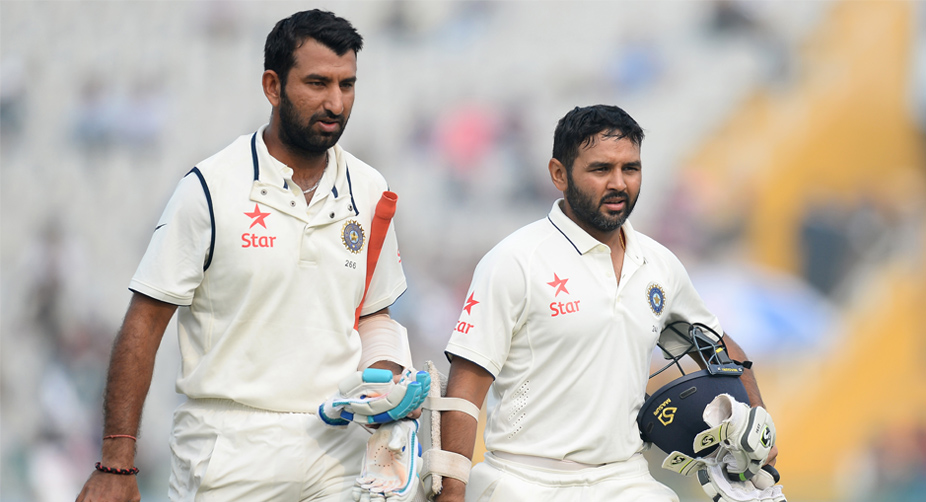
Parthiv Patel set to play in 4th Test, injured Saha rested
Delhi seamer Ishant Sharma, has been released for his wedding and will miss the Mumbai Test.
Cheteshwar Pujara (L) and Parthiv Patel (R) (Photo: AFP)
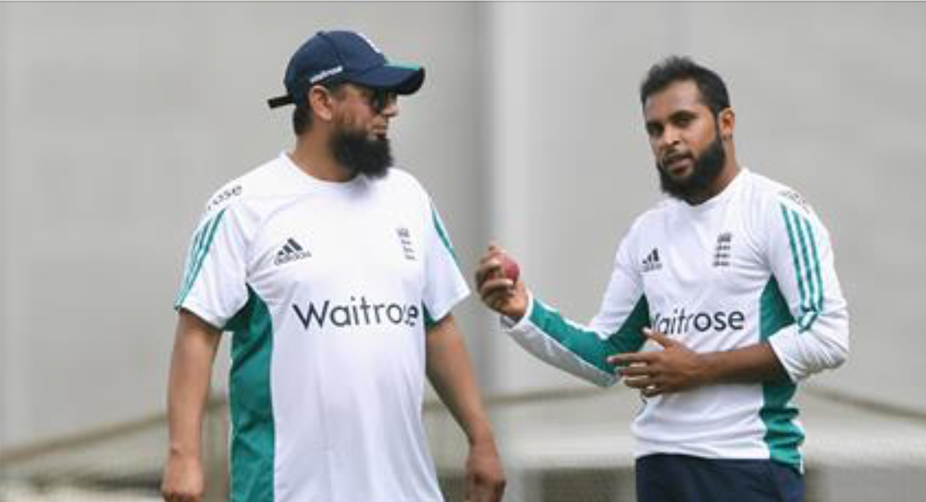
Saqlain to continue as England’s spin consultant in ODI series
Saqlain also expressed his desire to work with Pakistan cricket in the near future.
Saqlain Mushtaq (L) and Adil Rashid (R) (Photo: Facebook)
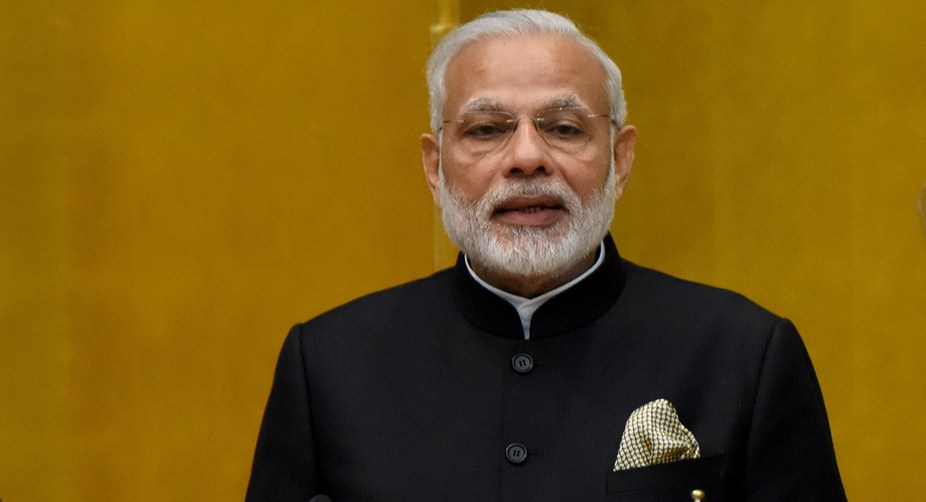
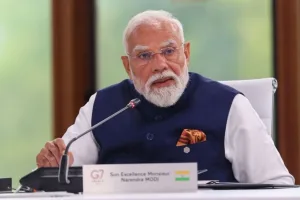
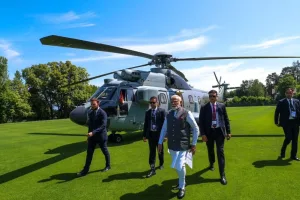
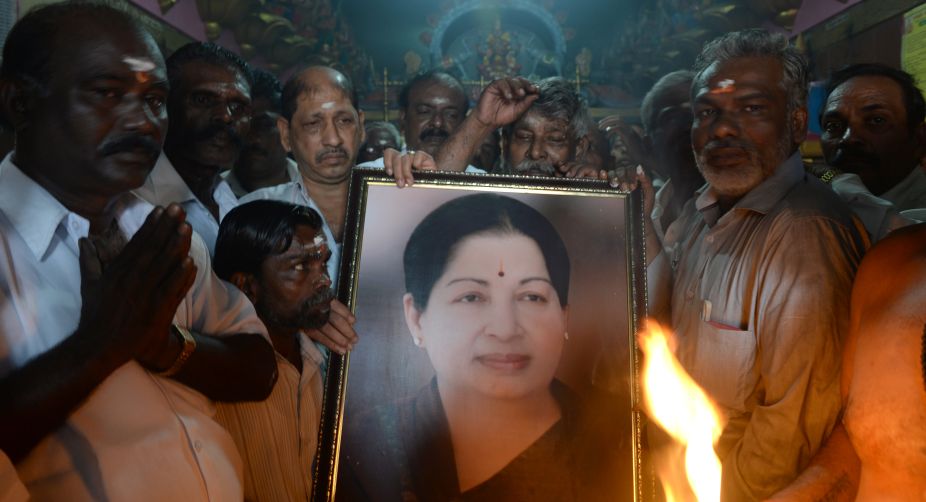
PM leaves for Chennai to pay tributes to Jayalalithaa
Narendra Modi (Photo: AFP)
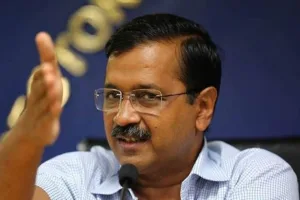
Kejriwal will visit Chennai to pay respect to Jayalalithaa
Arvind Kejriwal (Photo: Twitter)
CAS rejects ex-FIFA Prez Blatter’s appeal, confirms suspension
Blatter is still banned from taking part in any football-related activity for six years from October 8, 2015.
Sepp Blatter (Photo: AFP)
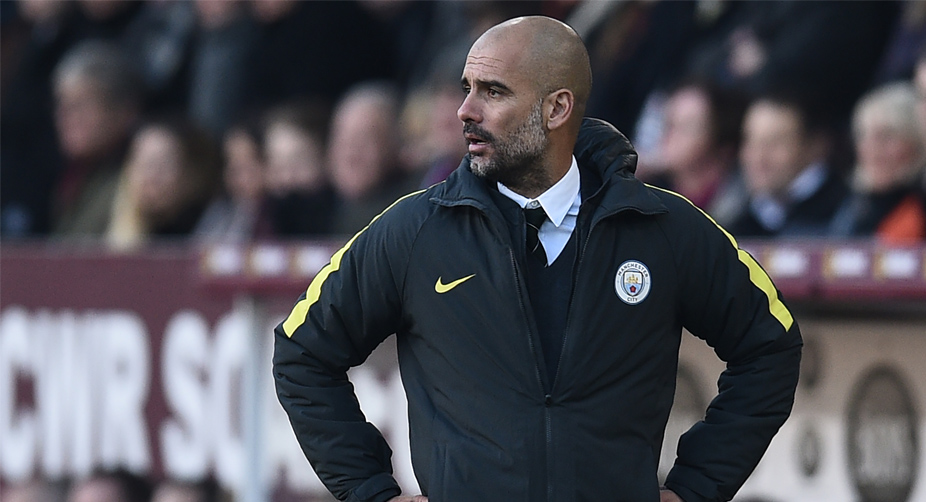
No contact with Alexis Sanchez: Pep Guardiola
The highly-rated Sanchez is currently in the midst of contract negotiations with Arsenal.
Pep Guardiola (Photo: AFP)
Sensex climbs 120 points ahead of RBI policy meet
Representational Image (Photo: Getty Images)
Centre announces one-day state mourning for Jayalalithaa
(Photo: Indranil Mukherjee/AFP)
Photo
MORE Photo STORIES
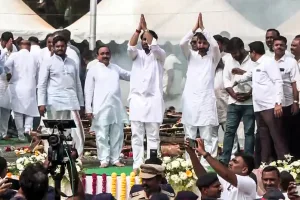
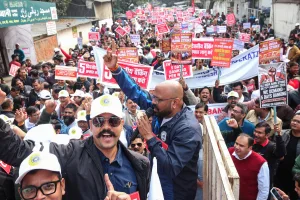
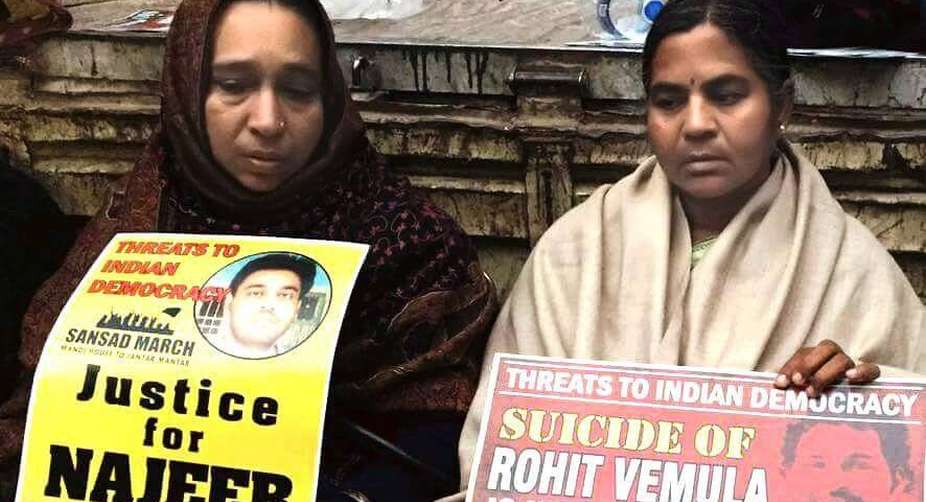
JNUSU stages protest over Najeeb Ahmed
The JNU Students Union (JNUSU) on Monday staged a protest against the varsity’s administration for failing to take action against the students who unleashed attack on Najeeb Ahmed.
(Photo: Facebook)
The JNU Students Union (JNUSU) on Monday staged a protest against the varsity’s administration for failing to take action against the students who unleashed attack on Najeeb Ahmed.
The student group on Monday held a demonstration outside the University Court Meeting on the campus asking the authorities for not taking action against the ABVP members who allegedly assaulted Najeeb. The JNUSU said that no enquiry on Proctor level has been initiated in this regard even after 51 days have passed since the missing of Najeeb.
The student body mocked at the administration for not finding Najeeb’s ‘assaulters.’ JNUSU claims that the Vice Chancellor reiterated his earlier stand, “The VC continues to give irresponsible response saying ‘Proctorial Enquiry’ on MahiMandavi issues has now been completed and action will be taken soon. This, he has been saying since days while no action has been taken against those perpetrators even after 51days,” said Satarupa Chakraborty, General Secretary, JNUSU.
“While the JNU administration is shamefully trying to curtail our basic democratic right to protest, debate and dissent and even pasting posters, we do not see any action against the ABVP goons who perpetrated violence on Najeeb,” alleged Satarupa. JNUSU reiterated that they will intensify their struggle till Najeeb is brought back to JNU safe and till justice is delivered in the case. The University Court Meeting is an annual meet to discuss annual reports, accounts, finances, and decisions taken by its Executive Council.
The meeting, chaired by the Chancellor of the University, was attended by the Vice Chancellor, faculty members, and a number of Parliament members, nominated exclusively for this purpose.
Oil market stabilised by output cut vital for India: OPEC
The 13-nation OPEC cartel said on Monday that a stable oil market, which will result from the recent move to cut output.
(Photo: Getty Images)
The 13-nation OPEC cartel said on Monday that a stable oil market, which will result from the recent move to cut output, is vital for India as it will guarantee assured supply for the country.
At a meeting in Vienna last week, the Organization of Petroleum Exporting Countries decided to reduce its production by 1.2 million barrels a day, beginning January 1.
“After six months, we will review the decision and we want an equilibrium price then, that will bring stability to the oil market. A stable oil market advantageous for countries like India as it can guarantee them future supply,” OPEC Secretary General Mohammed Sanusi Barkindo told reporters here on the sidelines of the Petrotech 2016 hydrocarbon event.
In India alone, oil demand is projected to rise to more than 10 million bpd by 2040 compared to 4.1 million bpd in 2015, he said.
“Such a substantial expansion in India and other fast growing economies in Asia will require supplies from all producing regions. Thankfully, OPEC member countries will play a crucial role in fuelling this dynamic growth. But for this to happen, continued investment in our member countries’ energy industries is required,” he said.
With non-OPEC countries also agreeing to a production cut of 0.6 million barrels per day, oil prices have regained the psychological $50 a barrel level.
OPEC will be meeting representatives from non-OPEC countries on December 10 in Vienna.
Barkindo said that among the non-OPEC countries, Russia has already guaranteed a production cut, which will cover 50 per cent of the expected share of non-OPEC nations in output reduction.
Meanwhile Indian Petroleum Minister Dharmendra Pradhan on Monday urged OPEC countries to consider striking a balance between the interest of producers and consumers when deciding on output cuts.
Inaugurating the 12th Petrotech conference, he said: “Consumption of petroleum products is price sensitive, as there is a genuine issue of affordability for a sizable population in India and other developing countries.
“Hence, while deciding the pricing aspect of crude oil, it should be factored in that the security of supply must, in turn, be matched by the security of demand.”
The Indian basket of crude oils closed trade on Friday at $51.46 a barrel, as per official data.
240 new HIV positive cases detected in Himachal
(Getty Images)
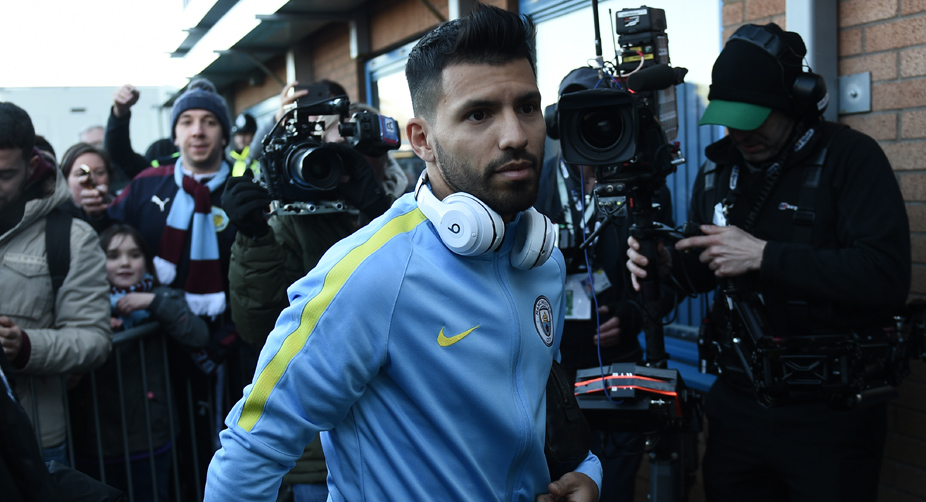
Man City striker Aguero suspended for four matches
Aguero’s team-mate Fernandinho has been banned for three matches by the FA.
Sergio Aguero (Photo: AFP)
Manchester City striker Sergio Aguero was on Monday banned for four games and his team-mate Fernandinho for three matches by the English Football Association (FA).
Aguero, who was retrospectively banned earlier in the season after a clash with West Ham's Winston Reid, was sent off against Chelsea in a 1-3 defeat on Saturday in a Premier League match, according to a FA statement.
Aguero will now miss the games against Leicester City, Watford, Arsenal and Hull City but will be available for Tuesday's Champions League game with Celtic and the New Year's Eve clash with Liverpool.
Fernandinho, who was also dismissed against Chelsea, has received a three-match domestic ban and will be available next for their trip to Hull on December 26.
City has decided to accept the verdicts and won't appeal against them.
Customised process
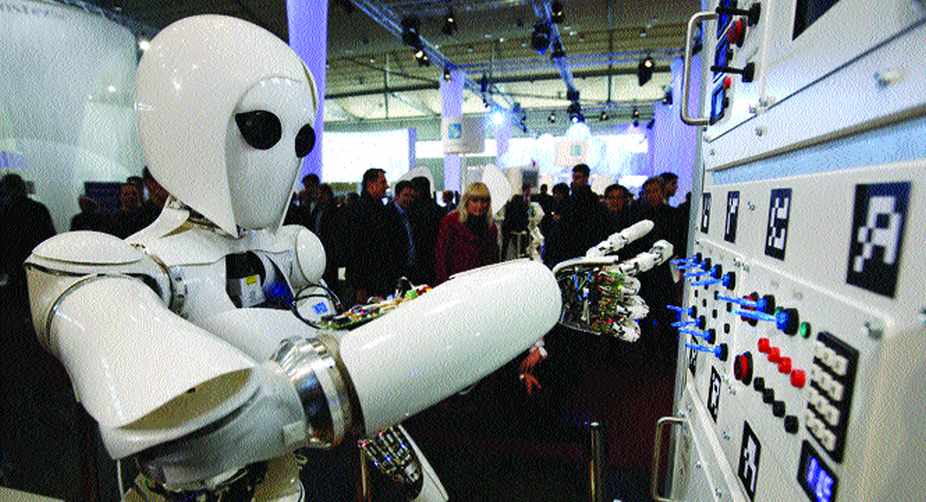
The advent of technology in our lives has already facilitated various experiences, and now, the focus is on the en-hancement of those experiences.
The advent of technology in our lives has already facilitated various experiences, and now, the focus is on the en-hancement of those experiences. Artificial intelligence, the instillation of human intelligence in machines, is the result of one such enhancement, which has pervaded all aspects of our life that makes adaptive learning a possibility. This provides a computer-mediated personalised learning solution to learners according to their unique needs.
Artificial intelligence, an offshoot of computer science, exhibits intelligence, usually associated with human beings, to solve problems. AI did not require much time to move on from the screens of sci-fi movies to our daily lives. From making car parking easy to strengthening security surveillance, it has successfully built its credibility. However, technology has made its inroads into education only in the recent years. In the 90s, technology was considered a costly affair and although educators toyed with new teaching methodologies, application of technology in education was still at a nascent stage. Digital classrooms and books are just a decade old in India.
Adaptive learning enables the computer to present content and reading materials as per the need. Every learner has their own individual needs, which non-adaptive methods have failed to address. Every student needs special tutoring. However, human tutoring is a costly affair and is not as effective as computer tutoring. Alternatively termed as intelligent tutoring, adaptive learning rescues students from the dreaded situation, where teachers fail to recognise learning styles and requirements of learners. AI tailors the information it attains into a personalised learning experience for kids, thus facilitating adaptive learning.
Next Education is one of the first edu-tech companies in India as well as in the world to adopt the adaptive learning method for the K–12 sector. To gain a better understanding of this methodology, let us look into the pattern of GRE and GMAT exams. First, the aspirants are asked a mid-level question and based on their performance on this question; the computer modifies the difficulty level of the next question and the subsequent ones. The computer asks questions based on the estimated ability of the candidate. The pattern test adapts itself based on the responses. The Item Response Theory is used for subjects such as math and science, while the more complex Testlet Response Theory is used for English and social studies.
Adaptive learning maximises learning in the minimum time possible. For instance, one concept is connected to the other via pathways. A learner needs to choose a linear path in a traditional teaching methodology, but adaptive might allow them to skip a few concepts. As opposed to sequential learners, who gain understanding linearly, global learners gain understanding almost randomly, suddenly establishing the connection and understanding the details. However, there are certain concepts which cannot be skipped. For example, one cannot miss addition before understanding multiplication, but learners can tread parallel pathways in their learning process. Furthermore, besides jumping concepts, learners can also tread parallel pathways in their learning process.
There are multiple tools such as textbooks, self-learning videos, simulation videos, YouTube videos, and digital classroom solutions, which enable students to move from one concept to another. Our goal is to figure out the optimal tool for each student to move from one concept to another. With its self-learning ability, AI does the job for us, and suggests learners with the best tool based on their learning progress.
Clustering algorithms creates students’ profiles based on their learning styles and preferences. Richard Felder has grouped learning styles into four dimensions as visual and verbal, intuitive and sensing, sequential and global, and active and reflexive. Lighting, sound and time also influence one’s learning process and experience. While one might read better in the morning, the other might grasp concepts better in the afternoon.
Artificial intelligence can make the whole learning experience a lot more engaging for learners, as it is adjusted to an individual’s learning abilities. The process makes them aware of their learning habits, encourages meta-learning, and thus, facilitates a holistic development.
(THE WRITER IS CHIEF EXECUTIVE OFFICER AND CO-FOUNDER, NEXT EDUCATION INDIA PRIVATE LIMITED)
Keep your concepts clear
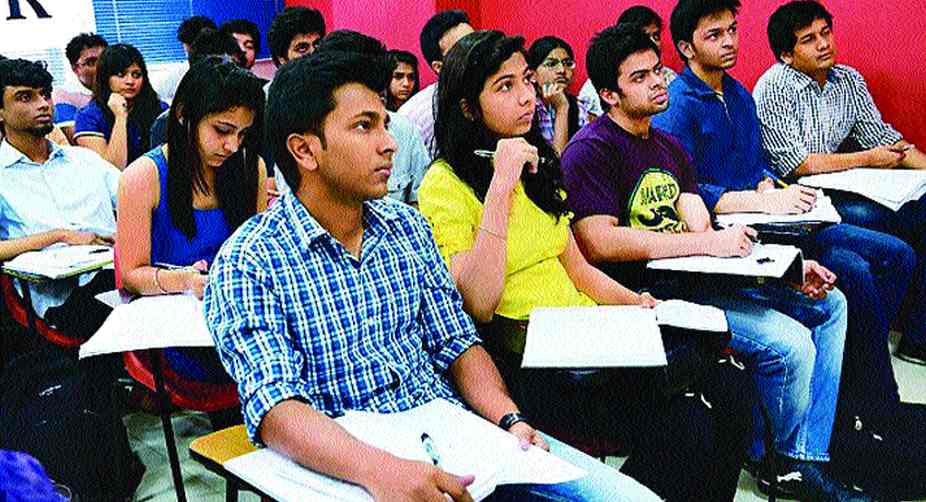
The board exams are around the corner and soon after they get over in March, many students of Class XII will be taking the Joint Entrance Examination (main) on 2 April 2017.
At this stage, students are anxious about simultaneously balancing the boards along with their IIT-JEE preparation. Though the syllabus remains same for both, the JEE requires in-depth knowledge of concepts whereas for the boards, a student needs to memorise those concepts at length to produce desirable results.
Here are some important and handy tips to help students optimise their performance in both the examinations.
* Prepare without losing tempo: While the students are preparing for two distinct examinations, the good thing is that the syllabi and paper-setting authorities are common — the JEE (main) as well as the CBSE paper are set by the CBSE. Sometimes, considering the proximity to the board, students tend to exclusively focus on board-type questions and start losing touch with the IIT-JEE variety. However, it must be understood that if one is preparing for the IIT-JEE, then he/she is automatically preparing for the boards — the focus should be on understanding concepts rather than mugging them up. And one should continue to take JEE-type mock tests even while preparing for the boards.
* Attempting mock tests to clarify doubts: There is an adage, which goes “If you want to succeed, double your failure rate”. The essence of the statement in the context of exams is that students should not be scared of trying new problems. The more problems we are exposed to before the actual exam, the more is the likelihood that we would get it right if a similar one were asked in the actual exam. Sometimes, students are scared of taking mock tests thinking that they might not do well and may start feeling less confident. But that shouldn't be the case. A mock test is the compass that tells one exactly what they need to focus on.
* Put special emphasis on board-type questions: There are certain sub-topics in various subjects, which are generally emphasised more in the boards as the questions are subjective.
There are also some topics that are part of the JEE (main) but not the JEE (advanced) exam. For example, in physics, the chapters on semiconductor devices, communications systems and electromagnetic waves are part of the JEE (main) and the board exam but not the advanced exam. Students should carefully study these chapters along with questions from the sample papers so that they can comfortably handle descriptive questions.
* Communicate clearly in the board exams: While the board exam as well as the JEE (main) paper, are set by CBSE, the approach required for attempting the exams is completely different.
The JEE is an objective type exam where it is not important to go through the steps of calculation — all that matters is that one ticks the right option. It does not matter, whether one does it by the elimination of other options, or uses any other trick.
In the boards, however, there is step marking and one’s working out of intermediate steps is as important as getting the final answer correct. Some extremely bright students tend to lose the marks in the boards not because of their lack of knowledge, but only because they skip steps or do them in their head.
* Take tips for the boards from the writing style of toppers: Previous years’ toppers’ answer sheets can be found on the Internet for all subjects by simply googling “best answer sheets”. In fact, after analysing some of the best evaluated answer sheets, we found that the student who secured the best marks displayed an extraordinary understanding of the subject. What is important is to write to the point and do neat and clean work. Try to visualise or put yourself in the position of a teacher who is assigned the task of evaluating hundreds of answer scripts. What happens when he/she comes across an answer script with neat and clean work? The first impression is that the student must be good and it does, in a way, influence the examiner’s evaluation.
In fact, some of the best evaluated answers sheets are written with double spacing; the final answer to all the numerical questions were put in a rectangular box (so that evaluator does not have to search for it); units are clearly mentioned along with any numerical physical data; all the diagrams are made with a sharp pencil, using a scale and compass (if needed); wherever algebraic symbols were used, they were explained; wherever there was an error it was neatly crossed with two lines without any ambiguity.
* Understand and get ready to dwell in the examination temperament: For the JEE examination, what really matters is not how much one knows, rather how much one is able to deliver in those three hours. Many students make the mistake of attempting the questions sequentially and finding that there is not enough time left to attempt the questions that they otherwise knew how to do.
One must remember that the JEE is a low scoring exam and getting even as low as 60 per cent will ensure an excellent rank. Rather than solving all the questions, the aim should be to attempt those, one is confident of getting right.
The best way to do that is to quickly scan the question paper and classify the questions into three categories. The ones that a student is sure of doing correctly, may be called “good questions” and the ones which seem too difficult/confusing may be marked “tough questions”. There may still be some left over, about which one may not be sure, those may be called “moderate questions”. First attempt only the “good questions” as that will take the time pressure off and one will be able to secure better marks despite attempting fewer questions. If one is able to finish those “good questions” well within time, they might like to try out some “moderate questions” and maybe recheck calculations for the “good questions”.
* Manage time well: Time management strategies can differ, however, on an average, the effective attention span of a JEE aspirant is about two hours, so it is a good idea to take a small break after every two hours of continuous study. Smaller study sessions should be avoided because every break means about 10 minutes being spent as warm up and about 10 minutes as cool down time.
(THE WRITER IS AN EXPERT, FIITJEE)
World must stop Myanmar abuse
Following the end of almost fifty years of military rule in Myanmar and the release of Nobel Laureate leader Aung San Suu Kyi in 2011.
Aung San Suu Kyi (Photo: Facebook)
Following the end of almost fifty years of military rule in Myanmar and the release of Nobel Laureate leader Aung San Suu Kyi in 2011, the world had looked at the country with much enthusiasm. The quasi-civilian new government brought some hope for the country to return to democracy as well as economic progress. Even with rich natural resources including land, forests, minerals, oil and gas, the country remained poor and could achieve a per capita income of only USD 1,197 in 2011.
So once freed from the military regime, with a view to modernise its economy, Myanmar embraced economic openness and initiated reforms in areas such as currency exchange rates, taxation, foreign investment laws and anti-corruption. Several countries, including those which isolated the nation through economic sanctions such as the US and the European Union, saw opportunities to rebuild economic ties with Myanmar.
Political leaders from the US, Europe, Japan, Australia, China, India, Thailand, Bangladesh and many other countries flew in, investors rushed and businessmen flocked into the country to explore its untapped resources. International endorsements revived the country’s confidence and growth prospects. Its GDP grew by more than 7 percent in the last couple of years.
The victory of Aung San Suu Kyi’s National League for Democracy in the election of November 2015 was considered to be another step towards re-establishment of the democratic process in the country. Unfortunately, this has not changed the political ideology of the country when it comes to dealing with the Rohingya minority.
Suu Kyi’s upper hand in Myanmar’s politics has not changed the old image of a nation violent against the Rohingya population. In recent times, unspeakable atrocities against the Rohingya population in the Rakhine state by the security forces of Myanmar have reinforced this image. Shockingly, while the world watches with horror as Myanmar’s army shoot innocent people, burn their houses and abuse women and children, Suu Kyi, the icon of democracy and human rights remains a quiet spectator of this brutality.
The Muslim Rohingya population has long been marginalised. They are the poorest community of Myanmar, with little or no health, education and other basic facilities. They are a stateless ethnic minority, as they are not even recognised officially. They are denied citizenship, even though they were born and have been living in Myanmar for generations. Tellingly, some Buddhist monks, who are generally perceived to be non-violent and do not support killing, also take part in this abuse of the Rohingyas. Had such a crime been committed by a majority Muslim community, they would have been immediately branded ‘terrorists’ or human rights abusers, and taken to task by the international community. The cruelty of Buddhist monks only reiterates that extremism has nothing to do with religion. It can take root in anyone with an extreme sense of nationalism and intolerance.
Bangladesh has a 193-km long border with Myanmar. Being its next door neighbour, Bangladesh bears the brunt of Myanmar’s brutality against Rohingyas. Thousands of Rohingyas have already entered Bangladesh. Several thousand others are waiting to cross to this side. From a humanitarian point of view, we cannot close our border.
But Bangladesh itself is a poor and populous country with limited capacity. It requires both financial and managerial capacity to deal with the pressure of such large inflows of Rohingya refugees. Repatriation of these refugees will require political and economic efforts. There are security issues as well.
From 1978-79 and 1992-94, Bangladesh had to deal with a similar situation. And the flow of Rohingyas into Bangladesh and their illegal residence here has continued. Desperation has led them to disguise their identity. Several Burmese are working in Saudi Arabia as Bangladeshi labourers, and thus Bangladesh runs the risk of being liable for any unwanted acts of those migrants.
Myanmar should not take Bangladesh’s magnanimity for granted, and continue to push Rohingyas here. If Myanmar wants to prosper and be part of regional and sub-regional initiatives, it has to change its perspective and make place for all its ethnic groups and treat them equally.
Bangladesh is also connected with Myanmar through various sub-regional cooperation initiatives. These include the Bay of Bengal Initiative for Multi-Sectoral Technical and Economic Cooperation (BIMSTEC) launched in 1997, and the Bangladesh, China, India, and Myanmar (BCIM) Economic Corridor initiative launched in 1999. Both these initiatives have high potential for economic advancement in the region through greater market access for goods and services, investment in infrastructure development, energy cooperation and higher connectivity.
The BIMSTEC region has a GDP of about USD 2.7 trillion and a population size of around 3.1 billion. The BCIM sub-region, with a population of about 2.8 billion, has potential for intra-regional trade equivalent to USD 125 billion.
Till now, none of these initiatives have taken off in a meaningful way due to lack of political commitment. With political relationships getting worse due to violence against Rohingyas, there is little hope of an improved situation. After all, regional economic cooperation cannot take place in a void. Peace and security are preconditions for regional success.
Two giant Asian economies, India and China, have active interest in both Bangladesh and Myanmar. It is time for them to play their role to uphold the spirit of humanity. For decades, Myanmar has either ignored or refused to sign various international treaties that protect human rights, such as the United Nations Convention against Torture, and thus, it has found a convenient excuse to get away with such humanitarian crimes. It is also therefore time for the international community to take actions to stop such barbarism against innocent Rohingyas.
(The Daily Star/ANN.)