Logo

MNDF announces names of 15 candidates for Manipur election

PTI | Imphal |

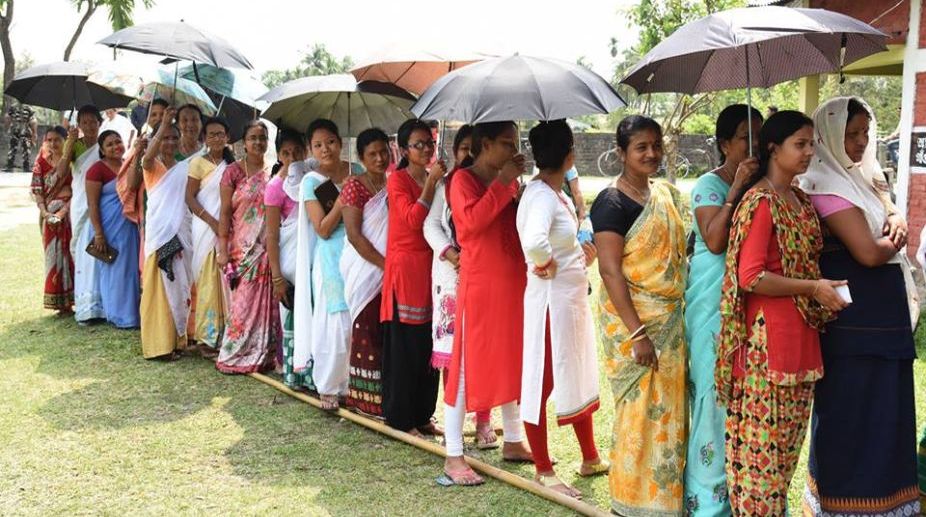
Manipur National Democratic Front (MNDF) on Sunday announced its list of 15 candidates for the Manipur Assembly polls to be held next month.

Announcing the list of the candidates, MNDF vice president Lien Gangte said that "the party will bring a change in Manipur."

The candidates are Th Nandakishor (Kshetrigao Assembly constituency), N Itomba Meitei (Keirao), K Ningthemjao (Andro), Y Romola Devi (Keishamthong), M Dinesh (Langthabal), S Achouba (Wangoi), L Thoiba (Oinam), W Bobbyjems (Kumbi), M A Zabar (Lilong), S Achoubi (Wangjing Tentha), Md Abdul Samad (Wabagai), Lien Gangte (Tengnoupal), Letjam Singson (Saikul), Hingba Thomas (Tadubi) and Mangcha Gangte (Henglep).

Elections will be held in 60 Assembly seats in the state. 

Watch out for Cupid’s arrow!

There's no better way to get up, close, personal and cosy to celebrate this month of romance with all mirth and glitter.

Pramita Bose |

Love looks not with the eyes but with the mind. And therefore is winged Cupid painted blind William Shakespeare Love is in the air and so is spring here.

There's no better way to get up, close, personal and cosy to celebrate this month of romance with all mirth and glitter. Wot say! Yes, it's already February and come Tuesday the 14th, the whole world commemorates Valentine's Day.

Yes, you heard it right the day of love to be more accurate. It's that time of the year to again take a leap of lifelong faith, make a pledge of promises to be never broken, whisper sweet nothings into each other's ears, exchange cutesy gifts, pop up pleasant surprises, share an inseparable bonding with your significant other and much more to boot.

The signs and symbols are galore and the consumerist urban establishments right from plush retail stores, confectionery goodies, swanky malls, multiplexes to restaurants, parks and hotels, all gear up to offer quality services, branded merchandise and complimentary freebies to love birds walking in for a whale of a fun-time.

Well, this maagh maash has begun with Bengalis' Valentine's Day i.e. Saraswati Puja and now we are moving onto the global version of the fiesta, popularised by the West.

We have already noticed a steady footfall of couples at our eatery and we are expecting no lesser crowd ahead this week, reveals the manager of a city food joint, catering authentic Bengali fare.

I'll be presenting my sweetheart with a CD of lovesongs and it's a combo of both our favourite numbers. I hope she likes it, says IT Sector techie Arijit Biswas with a smile, who recently got hitched to his girlfriend of seven years.

This would be our first Valentine after marriage and we'd definitely want to make it very special, chimes in his coy missus-cumcolleague Arohi Biswas.

Sharing a coconut drink with straws, biting off from the same cake or a fat burger, munching on the same fries or eating from the same thali are nothing new for intimate boyfriends and girlfriends.

They even exchange wardrobe items like jeans and T-shirts. So caring and sharing have always been the name of their game since time immemorial.

Tempting ice-creams only add to the list. For next-gen love-doves, an adventurous spark of romance always attracts their taste. Whether you wish to formalise your relationship with your soulmate or yearn to utter those three magical words to someone special Be My Valentine there's no harm to go on a shopping spree to pick up those neat n nice knickknacks for the D-Day.

You may also skim through your cupboards and the long forgotten corners of your drawers to pull out some old stuff that exudes a scent of heart-warming nostalgia from your high-school days.

For instance, sticky love notes and letters in colour papers, that brown-white fluffy teddy bear or a soft toy, a silver neck-chain with heart shaped pendant (or the one designed with the word cool in it reminding of typically actor Shah Rukh Khan's character Rahul in the superhit celluloid lovesaga, Kuchh Kuchh Hota Hai), coffee mugs embossed with heart-tugging messages and delightful doodles as well as pictorial images, negligees, red boxers, chocolates, aroma candles, flower vases, kitschy cushion covers, cosmetic kit, make-up boxes, photoframes, imported perfumes and what not! The flitting dalliances and flirty puppy love may lack enough depth and emerge fake in nature but in longdistance liaisons, the separating miles off farawayshores do make the heart grow ceaselessly fonder for one's better-half. The lovers and spouses across geographical borders may not be joined at their hips but the passion evoked from the core of their hearts is no less intense.

Memories of heart-to-heart pillow talks or connecting across oceans via telecalls, cellphone chats and webcams in this e-age have undoubtedly bridged the gap of a visible absence and estrangement to a great deal. My husband is a doctor in Toronto (Canada) and I stayed back in India to finish off my MBA course in the final year.

We badly miss each other but make up over long conversations on the weekends, confides Parul Gupta of Delhi's Vasant Vihar. Coming to season's beautiful floral showers, it's raining roses all over as the Rose Day, Propose Day, Chocolate Day, Teddy Day, Promise Day, Hug Day, Kiss Day rounded off by the Valentine's fall on the annual calendar consecutively, all in a week's time.

Besides this red variety, blue violets, white orchids, yellow-orange marigolds, fiery flame of the forest, lavender jasmine can be a few other options to garland your beloved with. Remember Bollywood diva Deepika Padukone wore a black gown with a big rose stitched on her right torso for an awards night of late?

That was dramatic yet classy, radiantly bright in look yet subtle in appeal. Spelling out a mushy fairytale romance from every inch of her outfit, the Hollywood-returned actress appeared to get her dearie man easily at her beck and call. Her princess avatar with a tight top-knot on the head reminded us of a clandestine romantic date under a starry, moonlit sky or a candlelight dinner at a cosy haunt or the best alternative was to hop to a ballroom dance floor with her knight in shining armour.

Other choices to bedazzle in would be a sexy LBD (little black dress) or a quintessentially glamorous lil red dress to impress your admiring onlookers with and being a perfect eye-candy amidst a select social gathering. And if your gaze is steered towards those vintage Victorian caskets, then opt for a veiled hat in sunshine or soothing shades, plus a white wavy, flowery gown in satins with laces.

For modern-day dames, petal prints, polka dots, geometric motifs, toffee designs and chiffons can cast the desirable effect.  With a slight cold nip still clinging onto the atmosphere, the weather seems to be favourably breezy and relaxing to hit the street in your wonderful outfit wearing that carefree attitude on your sleeve, dispenses designer Ritika Arya Jain whose label Montage has launched a Valentine collection called anew Romance this fiscal.  

Inspired by the fervour of amorous feelings, the draper weaves in a lot of detailing with a colourscheme that speaks of the current flavour of season love and only love.

Hues of flushed red and pretty pink dominate the sartorial array comprising cocktail gowns and dresses. Fabrics used are neoprene and chiffon satins with sleek and sharp ruffles. Aesthetically fashioned and graceful to glance at, the line is just the right plea for you to flaunt this Valentine's Day.  

For accessories, geometric printed scarves and crystal studded evening bags come as an ideal pair, while in the jewellery section, fuss-free classic solitaires or simple diamonds can do the needful.

On the footwear front, pieces from Valentino and Louboutin are your best bet. Doll up with a confidently careless hairdo like loose braids and messy buns.

Footwear specialist Aprajita Toor recommends to team up the Kolhapuris with a pair of jeans or an Indian outfit. Similarly, the peep toes or pointy ones can be worn with both western and Indian clothes.

The specimens are further embellished with small tiny beads to give them a delicately chic look. Being a bespoke manufacturing design house, her designer tag has customised a collection of shoes in honour of love with its everlasting tint of red this Valentine.

Borrowing inspiration from the idea of loving and pampering oneself, Toor has hatched the love yourself collection with much effort and pains. Oscar Wilde once wisely said that to love oneself is the beginning of a lifelong romance' and I completely abide by his statement. Designer Mayyur Girotra sheds light on how cool and romantic the dashing young males can go with their outfits in the wardrobe.

As Valentine is an occasion to rejoice with bold and classy colours, hence men can adhere to a bright palette with red, pink and yellow gaining supremacy.

As they have to look a bit more romantic and special on the day in question, so they may ditch the usual, everyday style of dressing and bring in an element of expression to their getups, he elaborates.

Excess of florals in bombers, semi-formal jackets or velvet suits in a diverse shade-card should welcome this spring with love, he prescribes men's apparels to match the season of amity, affection, adoration and tenderness.

To perk up their mood and lend a zest to their pallid canvas, men can certainly put on some nice jackets with statement love quotes and messages pregnant with deep meaning, he volunteers.

As this is an hour of ardor and ecstasy, hence happy, joyful colours are widely suggested. White is an immortal tone. Play it up with funny, quirky scribbles and love messages written on it. Also the first thing mostly noticeable in an appearance is the footwear.

So it would be really cool to accentuate your wardrobe with a funky pair of cool sneakers, he advises. The staunch saffron-fronts may create a loud brouhaha over this mass observance of love at different public places, citing hegemony of western culture but the fact of the matter is that the occasion has long been transformed into a transnational eventful activity for decades now.

Who knows, you could be the next target to get pierced with Cupid's arrows. So, watch out! Aparajita Toor CyanMagen.


FSSAI sets up panel to finalise food fortification laws

PTI | New Delhi |

Food regulator FSSAI has set up a scientific panel to frame final regulations on fortification of foods and prepare strategies to address malnutrition problem.

The Food Safety and Standards Authority of India (FSSAI) has issued the draft guidelines on fortification for five food items — salt, milk, wheat flour, rice and edible oil — to boost production and consumption of fortified foods.

The draft rules were operationalised in October even as FSSAI sought comments from stakeholders before finalising the final regulations 

Fortification means deliberately adding or increasing the content of essential micro nutrients in food items to improve quality.

Standards have been set for fortification of salt with iodine and iron; of vegetable oil and milk with vitamin A and D; wheat flour and rice with iron, folic acid, zinc, vitamin B12, vitamin A and some other micro nutrients 

"FSSAI has set up a new Scientific Panel on 'Food Fortification and Nutrition' to address issues related to fortification of food," the regulator said in a statement.

The panel has 11 experts and scientists — Ambrish Mithal from Medanta; CS Pandav and R K Marwaha (Retd) from AIIMS; Anura Kurpad from St John s Medical College; Yogeshwar Shukla from CSIR – Indian Institute of Toxicilogy Research, HPS Sachdev from Sita Ram Bharatia Institute of Science and Research; KM Nair from NIN; P Ramachandran from Nutrition Foundation of India; Sumit Arora from NDRI; Sirimavo Nair from the MS University, Baroda, and Harsulkar from Bharati Vidyapeeth.

Members from Scientific Panels dealing with food fortifying vehicles such as wheat flour, refined flour, rice, milk, edible oil and salt will also be a part of this committee.

The Panel will identify critical nutritional gaps in the Indian diet in general as well as in specific target groups based on diet surveys and credible scientific evidence.

It will define strategies to address nutritional needs of the general population and vulnerable groups, besides reviewing the standards for all suitable food fortifying vehicles.

The panel will also address regulatory and related technological issues, review proposals from industry using modern risk assessment methods, and prescribe standard sampling and test methods for effective monitoring, surveillance and enforcement of the relevant regulations.

FSSAI had earlier brought out Draft Regulations for fortified food — Food Safety and Standards (Fortification of Food) Regulations, 2016 which were operationalised in October, 2016.

"Based on the comments received on the draft Regulations, the Panel will finalise the Regulations," FSSAI said.

Apart from framing standards, FSSAI has launched the Food Fortification Resource Centre (FFRC) to promote large-scale fortification of food across India.

An online portal of FFRC to facilitate food businesses and bring fortified foods into government programmes was launched in November.

With an effective regulatory mechanism along with the continuous support of all the stakeholders, FSSAI expects that the problem of malnutrition in general and micronutrient malnutrition in particular would be overcome soon. FSSAI has also unveiled a Logo for fortified foods which may be used by food companies.

5 more MPs support Panneerselvam, total goes up to 10

PTI | Chennai |

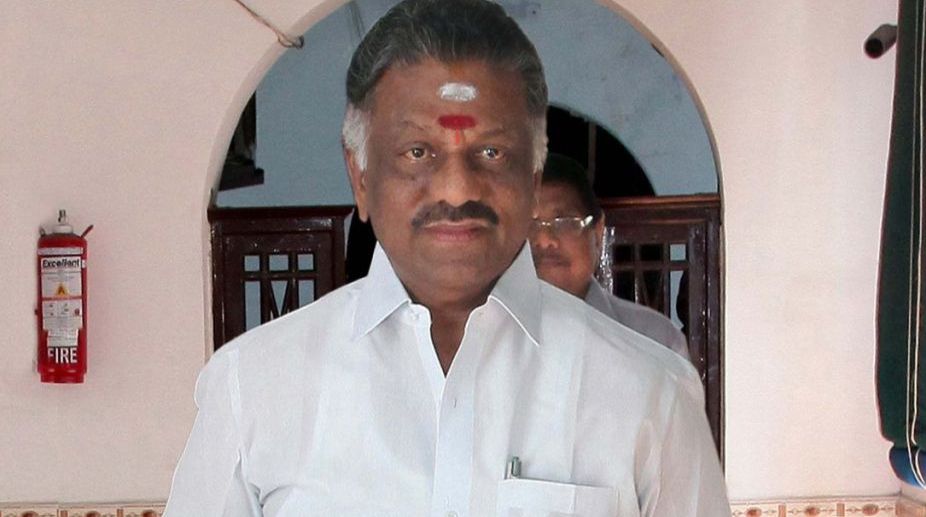
In growing support for Tamil Nadu Chief Minister O Panneerselvam, five more AIADMK MPs joined his camp on Sunday, taking the number of Parliamentarians in his favour to ten.

Four Lok Sabha MPs – Jaisingh Thiyagaraj Natterjee (Tuticorin), Senguttuvan (Vellore), R P Marutharaja (Perambalur) and S Rajendran (Villupuram) met Panneerselvam at his Greenways residence and extended support to him this morning.

Rajya Sabha MP R Lakshmanan also switched over to Panneerselvam camp, giving a morale boost to the Chief Minister who has raised a banner of revolt against AIADMK general secretary V K Sasikala.

AIADMK has 37 Lok Sabha MPs and 13 Rajya Sabha MPs.

Meanwhile, in a related development Sasikala "relieved" Lakshmanan from the post of district secretary Villupuram (North) and replaced him with Law Minister C Ve Shanmugam.

Following Panneerselvam's rebellion, AIADMK Rajya Sabha MP V Maitreyan was the first Parliamentarian to extend support to him.

AIADMK Lok Sabha MPs P R Sundaram, K Ashok Kumar, V Sathyabama and Vanaroja switched over to Panneerselvam's camp yesterday, pledging their support to him.

Panneerselvam also enjoys the support of six AIADMK MLAs, including himself.

The party has 135 MLAs in the 235-member Tamil Nadu Assembly including one nominated.

Former MLAs Bader Sayeed and Muthuselvi also extended their support to Panneerselvam today.

Meanwhile, actors and star campaigners, including staunch Jayalalithaa loyalists Ramarajan and Thiyagu besides actor-director and former MLA Arunpandian today joined the Panneerselvam camp.

They called on Panneerselvam at his residence and expressed solidarity with him.

Actor Ramarajan said though Panneerselvam is fondly called "OPS", it also refers to "Oyvillamal Poruppaga Sevai Seibavar" (a person who tirelessly works for the welfare of people).

HC dismisses PIL against foreign architects for Pragati Maidan

PTI | New Delhi |

The Delhi High Court has turned down a PIL against the in-principle approval granted by the government for engaging foreign architects to transform Pragati Maidan into a world-class convention centre.

A bench of Chief Justice G Rohini and Justice Sangita Dhingra Sehgal rejected two petitions of India Institute of Architects (IIA), saying the "scope of interference by this court in matters relating to tenders is very limited".

"The contention of the petitioner (IIA) that the National Building Construction Corporation (NBCC) should not have invited the bids from the engineering consultants is wholly misconceived and without any substance. The writ petition appears to be based on irrelevant and erroneous assumptions of facts and law," the bench said.

The court's order came on pleas challenging the in- principle nod granted by the Ministry of Home Affairs to the Indian Trade Promotion Organisation (ITPO) for engaging the services of foreign architects for Pragati Maidan's redevelopment.

IIA, registered in 1917 as a voluntary organisation of architects to encourage the study of architecture, said the approval was in violation of the provisions of the Architects Act as the approval can be granted only after a particular foreign architect or agency makes an application for a project while in the instant case, the government granted an open- ended approval to ITPO to hire foreign architects.

It had also challenged the notice issued by NBCC inviting e-tender for procurement of the "comprehensive architectural services" for re-development of Pragati Maidan complex into Integrated Exhibition-cum-Convention Centre.

The bench, however, was not convinced with IIA's stand and observed, "we found that in the letter dated February 26, 2014 (by which MHA granted in-principle approval to ITPO), it was made clear that the specific approval in terms of section 37(1)(b) of the Act would be accorded to the foreign architects as and when they are shortlisted by the ITPO and an application is made to the Central Government for prior permission".

"… the 'in-principle approval' that was conveyed to ITPO under the impugned letter, in our considered opinion, cannot be held to be in violation of the provisions of the Architects Act, 1972," the bench said.

HC dismisses PIL against foreign architects for Pragati Maidan

PTI | New Delhi |

The Delhi High Court has turned down a PIL against the in-principle approval granted by the government for engaging foreign architects to transform Pragati Maidan into a world-class convention centre.

A bench of Chief Justice G Rohini and Justice Sangita Dhingra Sehgal rejected two petitions of India Institute of Architects (IIA), saying the "scope of interference by this court in matters relating to tenders is very limited".

"The contention of the petitioner (IIA) that the National Building Construction Corporation (NBCC) should not have invited the bids from the engineering consultants is wholly misconceived and without any substance. The writ petition appears to be based on irrelevant and erroneous assumptions of facts and law," the bench said.

The court's order came on pleas challenging the in- principle nod granted by the Ministry of Home Affairs to the Indian Trade Promotion Organisation (ITPO) for engaging the services of foreign architects for Pragati Maidan's redevelopment.

IIA, registered in 1917 as a voluntary organisation of architects to encourage the study of architecture, said the approval was in violation of the provisions of the Architects Act as the approval can be granted only after a particular foreign architect or agency makes an application for a project while in the instant case, the government granted an open- ended approval to ITPO to hire foreign architects.

It had also challenged the notice issued by NBCC inviting e-tender for procurement of the "comprehensive architectural services" for re-development of Pragati Maidan complex into Integrated Exhibition-cum-Convention Centre.

The bench, however, was not convinced with IIA's stand and observed, "we found that in the letter dated February 26, 2014 (by which MHA granted in-principle approval to ITPO), it was made clear that the specific approval in terms of section 37(1)(b) of the Act would be accorded to the foreign architects as and when they are shortlisted by the ITPO and an application is made to the Central Government for prior permission".

"… the 'in-principle approval' that was conveyed to ITPO under the impugned letter, in our considered opinion, cannot be held to be in violation of the provisions of the Architects Act, 1972," the bench said.

Hyderabad Test, Day 4: India declare, set Bangladesh target of 459

India need 10 wickets to win the one-off Test.

SNS | New Delhi |

Despite losing both KL Rahul and Murali Vijay fairly early, India on Sunday declared their second innings at 159/4, setting a target of 459 for Bangladesh as they look to wrap up the one-off Test match without much fuss.

Earlier in the day, Bangladesh’s brave resistance had finally been silenced when their captain Mushfiqur Rahim fell on 127, to leave the Tigers someway short of India’s mammoth first-innings total of 687/6.

To make matters even better, Rahim was Ravichandran Ashwin’s 250th Test victim and he is now the fastest man to reach that milestone, eclipsing the great Dennis Lillee’s previously held record.

India had the option to enforce the follow-on, but skipper Virat Kohli chose to bat, as he probably felt if his batsmen got a quick few runs on the board, the noose would be uncomfortably tight around the visitors necks.

And that strategy seemed to have backfired initially as Taskin Ahmed sent openers Murali Vijay and Kl Rahul back to the pavilion fairly quickly. Cheteshwar Pujara and Kohli then steadied the rocking ship as the Tigers tried to apply the pressure on the host batsmen. While Kohli couldn't not build on a good start, as Shakib Al Hasan got rid of the in-form 28-year old at 38.
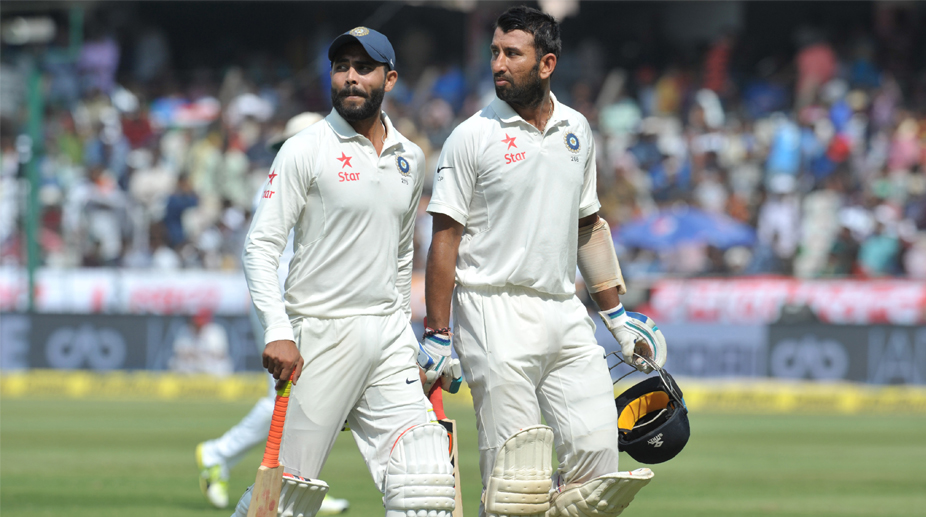
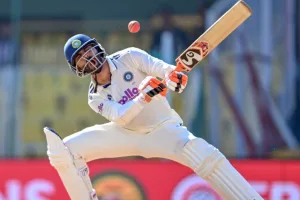
Pujara, however, stuck around, even hitting a six as the orders to the Indian batsmen seemed remarkably clear: Hit fast and hit big. His innings of 54 not out of 58 balls will probably be one of the rare times the Suarahstra batsman has had to up the tempo and with Ravindra Jadeja's (16*) pitching in with a late cameo, Kohli decided to declare at tea.

With little close to a day and a half remaining in the test, India require 10 wickets to win while Bangladesh have to chase an improbable target of 459 on a pitch which is expected to turn and twist on the final two days. The odds are very much in favour of India, who will probably be looking forward to the home series against Australia already.

Hyderabad Test, Day 4: India declare, set Bangladesh target of 459

India need 10 wickets to win the one-off Test.

SNS | New Delhi |

Despite losing both KL Rahul and Murali Vijay fairly early, India on Sunday declared their second innings at 159/4, setting a target of 459 for Bangladesh as they look to wrap up the one-off Test match without much fuss.

Earlier in the day, Bangladesh’s brave resistance had finally been silenced when their captain Mushfiqur Rahim fell on 127, to leave the Tigers someway short of India’s mammoth first-innings total of 687/6.

To make matters even better, Rahim was Ravichandran Ashwin’s 250th Test victim and he is now the fastest man to reach that milestone, eclipsing the great Dennis Lillee’s previously held record.

India had the option to enforce the follow-on, but skipper Virat Kohli chose to bat, as he probably felt if his batsmen got a quick few runs on the board, the noose would be uncomfortably tight around the visitors necks.

And that strategy seemed to have backfired initially as Taskin Ahmed sent openers Murali Vijay and Kl Rahul back to the pavilion fairly quickly. Cheteshwar Pujara and Kohli then steadied the rocking ship as the Tigers tried to apply the pressure on the host batsmen. While Kohli couldn't not build on a good start, as Shakib Al Hasan got rid of the in-form 28-year old at 38.

Pujara, however, stuck around, even hitting a six as the orders to the Indian batsmen seemed remarkably clear: Hit fast and hit big. His innings of 54 not out of 58 balls will probably be one of the rare times the Suarahstra batsman has had to up the tempo and with Ravindra Jadeja's (16*) pitching in with a late cameo, Kohli decided to declare at tea.

With little close to a day and a half remaining in the test, India require 10 wickets to win while Bangladesh have to chase an improbable target of 459 on a pitch which is expected to turn and twist on the final two days. The odds are very much in favour of India, who will probably be looking forward to the home series against Australia already.

Notification to protect Ganga flood plains issued: Govt to NGT

PTI | New Delhi |

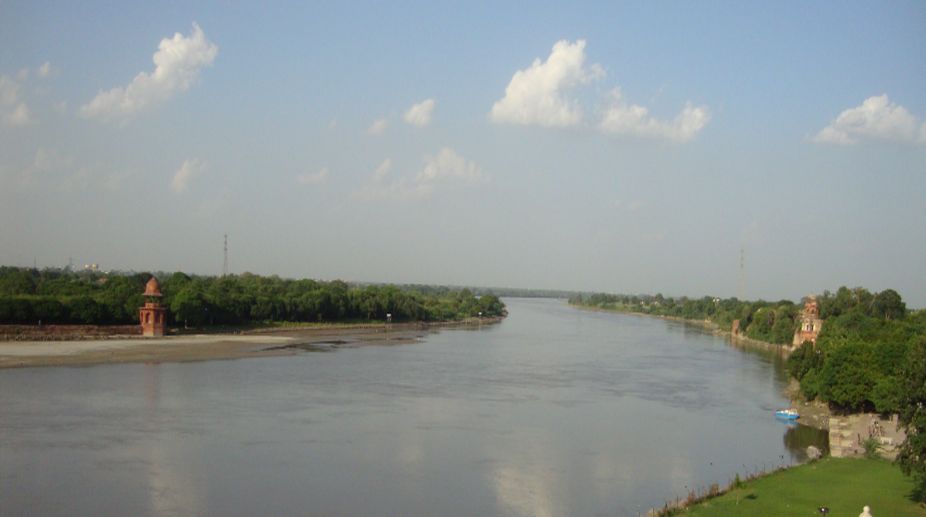
Government has informed the National Green Tribunal that it has issued a notification for regulating developmental activities on the floodplains of River Ganga and its tribuatries.

The Ministry of Environment and Forests (MoEF) told the green panel that the Ministry of Water Resources has issued a notification on October 7, 2016 which provides for protection of flood plain, its demarcation and activities which can be carried out in such eco-sensitive areas.

Taking note of the submissions, a bench headed by NGT chief Justice Swatanter Kumar disposed of a plea by an environment activist claiming that construction of concrete farmhouses, plots, colonies and commercial setups in the river bed damages natural environment and posed a grave hazard to human life.

"Counsel appearing for the Respondents, State and Ministry of Environment, Forest and Climate Change have brought to our notice that the Notification dated October 7, 2016 has been issued by the Ministry of Water Resources, River Development and Ganga Rejuvenation which provides for protection of flood plain, fixation thereof and the activity which can be carried out in the flood plain.

"In the light of the above, the present application has been rendered infructuous. The parties are free to take appropriate steps in furtherance thereof including, if anybody wishes to challenge the same in accordance with law. The States and Centres are free to act with the notification in accordance with law," the bench said.

Environmentalist Akash Vashishtha had contended in a plea that apart from obstructing the natural course of two rivers, the constructions exerted massive stress on the river's ecosystem due to discharge of huge amounts of waste.

According to the notification, the bank of river Ganga and its flood plain "shall be construction free zone to reduce pollution sources, pressures and to maintain its natural ground water recharge functions".

In cases where construction has been completed before the issuance of notification, "National Mission for Clean Ganga shall review such constructions to examine whether they caused interruption in the continuous flow of water or polluted the river or its tributaries, and if that be so, it shall cause for removing them."

"No person shall construct any structure, whether permanent or temporary for residential or commercial or industrial or any other purposes in the Ganga, bank of Ganga or its tributaries or active flood plain area of river Ganga or its tributaries," the notification said.

Notification to protect Ganga flood plains issued: Govt to NGT

PTI | New Delhi |

Government has informed the National Green Tribunal that it has issued a notification for regulating developmental activities on the floodplains of River Ganga and its tribuatries.

The Ministry of Environment and Forests (MoEF) told the green panel that the Ministry of Water Resources has issued a notification on October 7, 2016 which provides for protection of flood plain, its demarcation and activities which can be carried out in such eco-sensitive areas.

Taking note of the submissions, a bench headed by NGT chief Justice Swatanter Kumar disposed of a plea by an environment activist claiming that construction of concrete farmhouses, plots, colonies and commercial setups in the river bed damages natural environment and posed a grave hazard to human life.

"Counsel appearing for the Respondents, State and Ministry of Environment, Forest and Climate Change have brought to our notice that the Notification dated October 7, 2016 has been issued by the Ministry of Water Resources, River Development and Ganga Rejuvenation which provides for protection of flood plain, fixation thereof and the activity which can be carried out in the flood plain.

"In the light of the above, the present application has been rendered infructuous. The parties are free to take appropriate steps in furtherance thereof including, if anybody wishes to challenge the same in accordance with law. The States and Centres are free to act with the notification in accordance with law," the bench said.

Environmentalist Akash Vashishtha had contended in a plea that apart from obstructing the natural course of two rivers, the constructions exerted massive stress on the river's ecosystem due to discharge of huge amounts of waste.

According to the notification, the bank of river Ganga and its flood plain "shall be construction free zone to reduce pollution sources, pressures and to maintain its natural ground water recharge functions".

In cases where construction has been completed before the issuance of notification, "National Mission for Clean Ganga shall review such constructions to examine whether they caused interruption in the continuous flow of water or polluted the river or its tributaries, and if that be so, it shall cause for removing them."

"No person shall construct any structure, whether permanent or temporary for residential or commercial or industrial or any other purposes in the Ganga, bank of Ganga or its tributaries or active flood plain area of river Ganga or its tributaries," the notification said.

The Great Wall of Sindh

Ali Bhutto/Dawn/ANN |

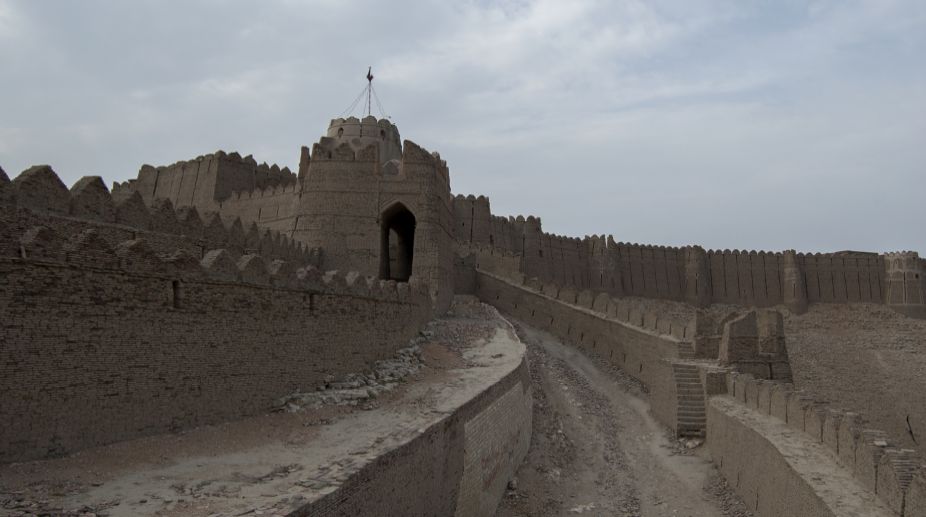
Sadiq Gabol, a former caretaker and resident of Rannikot Fort (also known as The Great Wall of Sindh) since 1981, tells me the two-and-a-half centuries-old story of his sword-bearing ancestor, Baagh Ali, and how he bravely defended himself from a chitos (leopard) in the Lakki Hills of the Kirthar Range where the 35-km long fort is located.

Ali lost an arm in the process but thereafter he became a local legend.

Taking turns to keep a watch out for leopards was part of the daily routine for those who dared the frontier life, explains Gabol.

The chitos have long been extinct in this area but for most residents of Rannikot, life continues as it has for centuries. As we turn west off the Indus Highway in Jamshoro district, away from the town of Sann, the silence grows deafening but the air feels cleaner.

It seems as if the clocks have wound backwards, transporting us to a realm frozen in time. There are about a thousand people currently residing in Rannikot, estimates Gabol.

According to him, the current residents of Rannikot Gabol tribesmen came to the Lakki Hills as part of the Arghun military early in the 16th century.

His ancestors first settled in a valley west of the fort, referred to by the locals as Mohan Patt, where they tended livestock.

The lives of the Gabols too are frozen in time. Their settlements have no electricity or gas, no schools and hospitals the closest facilities are 32 km away in Sann.

There is no mobile network or public transport and a singlelane metalled road links the fort to the outside world. Politically, the locals of this area are loyal to Syed Jalal Mehmood Shah who resides in Sann and is the grandson of GM Syed and president of the Sindh United Party.

Yet, according to Sadiq, the PPP always come to power because of the feudal allegiances that are part and parcel of waderki siasat (feudal system).

According to Shah, the fort has tremendous potential for tourism which could bring in some much needed revenue for the locals but the government has done little to promote tourism. It remains a historical enigma.

There has been much conjecture but little certainty about the origins of the fort which is mentioned only twice in historical records.

Rannikot appears to be very ancient, says Salman Rashid, travel writer and fellow of the Royal Geographical Society. In remote parts that have never been visited by the common tourist, there are signs of several layers of repair and upgrading of the fortification. He adds.

At one spot the ancient and earliest wall of clay and untreated rock rubble was evident. Above it were five layers of stonework each progressively finer than the one below.

It predates the usual claimants the Talpurs who certainly did some work on Sann Gate and the southern part of the fortification. What is known for certain is that the Talpurs built the citadel of Shergarh, which stands atop Karo Jabbal.

The picturesque aesthetic of the Lakki Hills has a darker underbelly. In this part of Sindh, wilderness is only a stone’s throw away. As Rannikot is part of Kirthar National Park, there is a spill-over of wildlife in the region. At night we hear the snarls of the gorpat, says Hatim Gabol, a local, about the honey badger, one of the most feared creatures to roam these parts. It digs up graves and feasts on freshly buried corpses.

Apparently, Sadiq was almost attacked by one when he dosed off at a bus stop for privately run lorries that cart dwellers of Mohan Patt and Rannikot to the Indus Highway at least once a week. We also find striped hyenas and Indian wolves [a subspecies of the grey wolf] here, Hatim tells me.

Sadiq later confirms that a few incidents of wild beast attacks have occurred on the western hill known as Opiyai. The steep climb up to Shergarh Fort is one of the more challenging hikes in Rannikot.

Hatim and I make our way up a trail frequented by local labourers heading to Shergarh to carry out conservation work funded by the Endowment Fund Trust.

A couple of goats and a variety of lizards that occasionally dart across are our companions. The uppermost watchtower of Shergarh provides a panoramic view of Mohan Patt the five-kilometre-wide valley to the west occupied largely by Gabols in comparison to which Rannikot appears quaint and familiar.

Towards the east, beyond Sann Gate, lie the Khosa settlements, while Karchat and Thano Bula Khan lie towards the south. Immediately north are uninhabited, barren peaks from where few invaders would dare to scale the ramparts of Shergarh.

Near the northwest boundary of Shergarh, a curiously angled cliff competes with the fort for elevation and majesty. Pointing to a cave, Hatim says, There are many climbers amongst us, but my uncle climbed all the way up to that cave. As it ran very deep, he couldn't reach its end. Upon descent, the bird's eye view gives way to detail and the absence of a school becomes a glaring reality.

Abdul Qadir, Sadiq's son and the current caretaker of Rannikot later tells me he worked as a teacher for a community public school but it was later shut down.

On our hike downhill, I ask 22- year-old Hatim who also works as a daily-wage labourer at Shergarh, whether he and his friends ever long for the vibrant environment a city can offer. It would be nice to live in a city, so we could go to a proper school, live in homes that have electricity and be less isolated from civilisation, he admits.

But people my age enjoy rearing livestock and farming their land and compete with one another, Hatim quickly adds. Rannikot's natural and manmade fortifications give it an endearing sandbox quality.

It has its own spring water and a little forest where a family of wild boars dwell. Each corner of the fort has its own distinct personality which is identified by the nearest hill or entry point.

As we approach the foothills, I realise that Rannikot's appeal is largely because it has yet been spared the environmental degradation that is a part and parcel of development in Pakistan.

Tourism in the area must enhance rather than disrupt pastoral lives of the locals and preserve the sanctity and ecological integrity of the area. Whether this is possible in Pakistan, remains to be seen. 


The Great Wall of Sindh

Ali Bhutto/Dawn/ANN |

Sadiq Gabol, a former caretaker and resident of Rannikot Fort (also known as The Great Wall of Sindh) since 1981, tells me the two-and-a-half centuries-old story of his sword-bearing ancestor, Baagh Ali, and how he bravely defended himself from a chitos (leopard) in the Lakki Hills of the Kirthar Range where the 35-km long fort is located.

Ali lost an arm in the process but thereafter he became a local legend.

Taking turns to keep a watch out for leopards was part of the daily routine for those who dared the frontier life, explains Gabol.

The chitos have long been extinct in this area but for most residents of Rannikot, life continues as it has for centuries. As we turn west off the Indus Highway in Jamshoro district, away from the town of Sann, the silence grows deafening but the air feels cleaner.

It seems as if the clocks have wound backwards, transporting us to a realm frozen in time. There are about a thousand people currently residing in Rannikot, estimates Gabol.

According to him, the current residents of Rannikot Gabol tribesmen came to the Lakki Hills as part of the Arghun military early in the 16th century.

His ancestors first settled in a valley west of the fort, referred to by the locals as Mohan Patt, where they tended livestock.

The lives of the Gabols too are frozen in time. Their settlements have no electricity or gas, no schools and hospitals the closest facilities are 32 km away in Sann.

There is no mobile network or public transport and a singlelane metalled road links the fort to the outside world. Politically, the locals of this area are loyal to Syed Jalal Mehmood Shah who resides in Sann and is the grandson of GM Syed and president of the Sindh United Party.

Yet, according to Sadiq, the PPP always come to power because of the feudal allegiances that are part and parcel of waderki siasat (feudal system).

According to Shah, the fort has tremendous potential for tourism which could bring in some much needed revenue for the locals but the government has done little to promote tourism. It remains a historical enigma.

There has been much conjecture but little certainty about the origins of the fort which is mentioned only twice in historical records.

Rannikot appears to be very ancient, says Salman Rashid, travel writer and fellow of the Royal Geographical Society. In remote parts that have never been visited by the common tourist, there are signs of several layers of repair and upgrading of the fortification. He adds.

At one spot the ancient and earliest wall of clay and untreated rock rubble was evident. Above it were five layers of stonework each progressively finer than the one below.

It predates the usual claimants the Talpurs who certainly did some work on Sann Gate and the southern part of the fortification. What is known for certain is that the Talpurs built the citadel of Shergarh, which stands atop Karo Jabbal.

The picturesque aesthetic of the Lakki Hills has a darker underbelly. In this part of Sindh, wilderness is only a stone’s throw away. As Rannikot is part of Kirthar National Park, there is a spill-over of wildlife in the region. At night we hear the snarls of the gorpat, says Hatim Gabol, a local, about the honey badger, one of the most feared creatures to roam these parts. It digs up graves and feasts on freshly buried corpses.

Apparently, Sadiq was almost attacked by one when he dosed off at a bus stop for privately run lorries that cart dwellers of Mohan Patt and Rannikot to the Indus Highway at least once a week. We also find striped hyenas and Indian wolves [a subspecies of the grey wolf] here, Hatim tells me.

Sadiq later confirms that a few incidents of wild beast attacks have occurred on the western hill known as Opiyai. The steep climb up to Shergarh Fort is one of the more challenging hikes in Rannikot.

Hatim and I make our way up a trail frequented by local labourers heading to Shergarh to carry out conservation work funded by the Endowment Fund Trust.

A couple of goats and a variety of lizards that occasionally dart across are our companions. The uppermost watchtower of Shergarh provides a panoramic view of Mohan Patt the five-kilometre-wide valley to the west occupied largely by Gabols in comparison to which Rannikot appears quaint and familiar.

Towards the east, beyond Sann Gate, lie the Khosa settlements, while Karchat and Thano Bula Khan lie towards the south. Immediately north are uninhabited, barren peaks from where few invaders would dare to scale the ramparts of Shergarh.

Near the northwest boundary of Shergarh, a curiously angled cliff competes with the fort for elevation and majesty. Pointing to a cave, Hatim says, There are many climbers amongst us, but my uncle climbed all the way up to that cave. As it ran very deep, he couldn't reach its end. Upon descent, the bird's eye view gives way to detail and the absence of a school becomes a glaring reality.

Abdul Qadir, Sadiq's son and the current caretaker of Rannikot later tells me he worked as a teacher for a community public school but it was later shut down.

On our hike downhill, I ask 22- year-old Hatim who also works as a daily-wage labourer at Shergarh, whether he and his friends ever long for the vibrant environment a city can offer. It would be nice to live in a city, so we could go to a proper school, live in homes that have electricity and be less isolated from civilisation, he admits.

But people my age enjoy rearing livestock and farming their land and compete with one another, Hatim quickly adds. Rannikot's natural and manmade fortifications give it an endearing sandbox quality.

It has its own spring water and a little forest where a family of wild boars dwell. Each corner of the fort has its own distinct personality which is identified by the nearest hill or entry point.

As we approach the foothills, I realise that Rannikot's appeal is largely because it has yet been spared the environmental degradation that is a part and parcel of development in Pakistan.

Tourism in the area must enhance rather than disrupt pastoral lives of the locals and preserve the sanctity and ecological integrity of the area. Whether this is possible in Pakistan, remains to be seen. 


Battle for UP: Stalwarts go missing from campaign trail

PTI | Lucknow |

Uttar Pradesh Assembly polls this time witnessed a generation shift with many bigwigs, including Samajwadi Party (SP) patron Mulayam Singh Yadav and Congress boss Sonia Gandhi missing the campaign trail in the first two phases.

Even as the first phase of Uttar Pradesh assembly polls are over and campaigning for the second phase is to end on Sunday, senior leaders synonymous with electoral politics in the state were nowhere to be seen. After the pre-poll alliance of Samajwadi Party and Congress, their leaders Akhilesh Yadav and Rahul Gandhi have bounced to the centrestage of campaigning.

While Mulayam has kept himself away in the first two phases, Sonia Gandhi has also not joined campaign due to health reasons. After family tussle, SP leader Shivpal Yadav also chose not to campaign for the party and remained confined to his constituency Jaswant Nagar (Etawah).

During his campaigning, Shivpal showed his displeasure over the things going on in the party and even announced his decision to form a new party after March 11, the day of results of the UP Assembly elections are out.

As a number of his supporters were denied tickets and his name was not included in the star campaigner list, Shivpal's absence might create problems for some SP candidates.

SP star campaigners in previous polls Amar Singh and Jaya Prada are also being missed in the campaigning this time as they are not "needed" by the party any longer, as an insider put it.

Amar, as per the January 1 SP convention here, has been expelled from the party by Akhilesh and that could have kept him and Jaya away from the political scene.

Another senior SP leader and Rajya Sabha member Beni Prasad Verma is not seen campaigning as his son Rakesh Verma has been denied ticket from Ram Nagar seat of Barabanki. He is confining himself to Barabanki and not preferring to campaign outside. In BJP camp, senior leaders like L K Advani too have not addressed even a single meeting. 

Bollywood star Shatrughan Sinha, who has campaigned in previous polls, is also missing from action. Former chief minister Kalyan Singh and former Assembly Speaker Kesri Nath Tripathi are nowhere in the political arena directly as they are holding gubernatorial post in Rajasthan and West Bengal respectively. Kalyan's grandson, Sandeep, is contesting from Atrauli (Aligarh).

Battle for UP: Stalwarts go missing from campaign trail

PTI | Lucknow |

Uttar Pradesh Assembly polls this time witnessed a generation shift with many bigwigs, including Samajwadi Party (SP) patron Mulayam Singh Yadav and Congress boss Sonia Gandhi missing the campaign trail in the first two phases.

Even as the first phase of Uttar Pradesh assembly polls are over and campaigning for the second phase is to end on Sunday, senior leaders synonymous with electoral politics in the state were nowhere to be seen. After the pre-poll alliance of Samajwadi Party and Congress, their leaders Akhilesh Yadav and Rahul Gandhi have bounced to the centrestage of campaigning.

While Mulayam has kept himself away in the first two phases, Sonia Gandhi has also not joined campaign due to health reasons. After family tussle, SP leader Shivpal Yadav also chose not to campaign for the party and remained confined to his constituency Jaswant Nagar (Etawah).

During his campaigning, Shivpal showed his displeasure over the things going on in the party and even announced his decision to form a new party after March 11, the day of results of the UP Assembly elections are out.

As a number of his supporters were denied tickets and his name was not included in the star campaigner list, Shivpal's absence might create problems for some SP candidates.

SP star campaigners in previous polls Amar Singh and Jaya Prada are also being missed in the campaigning this time as they are not "needed" by the party any longer, as an insider put it.

Amar, as per the January 1 SP convention here, has been expelled from the party by Akhilesh and that could have kept him and Jaya away from the political scene.

Another senior SP leader and Rajya Sabha member Beni Prasad Verma is not seen campaigning as his son Rakesh Verma has been denied ticket from Ram Nagar seat of Barabanki. He is confining himself to Barabanki and not preferring to campaign outside. In BJP camp, senior leaders like L K Advani too have not addressed even a single meeting. 

Bollywood star Shatrughan Sinha, who has campaigned in previous polls, is also missing from action. Former chief minister Kalyan Singh and former Assembly Speaker Kesri Nath Tripathi are nowhere in the political arena directly as they are holding gubernatorial post in Rajasthan and West Bengal respectively. Kalyan's grandson, Sandeep, is contesting from Atrauli (Aligarh).

BSP goes all out to woo Muslims in UP, gets backing of clerics

PTI | Lucknow |

Failing to revive its tested "social engineering" formula which saw it victorious in the 2007 Uttar Pradesh polls, BSP is going all out to woo Muslims through various clerics and organisations for regaining power.

In 2007, BSP had notched up the magic mark all by itself riding on social engineering which helped it garner support of other sections of society as well besides its core vote bank among the Dalits.

This time, however, in the wake of a stiff challenge posed by SP-Congress alliance, which has presented a viable alternative both to Muslims and backwards, and BJP which is banking on polarisation to gain support of Hindus, especially upper castes, BSP has come up with the plan to get Muslim leadership and clergy to extend support to woo minorities.

In the past couple of days, BSP leadership has been successful in roping in Rashtriya Ulema Council led by Maulana Aamir Rashadi Madani, Shahi Imam of Jama Masjid Maulana Ahmed Bukhari, noted Shia cleric and member of All India Muslim Personal Law Board Maulana Kalbe Jawwad and Ulema and Mashiakh Board of Maulana Syed Mohammad Ashraf Kichachauvi as well as AMU Students Union to extend support for sending a message among the Muslims.

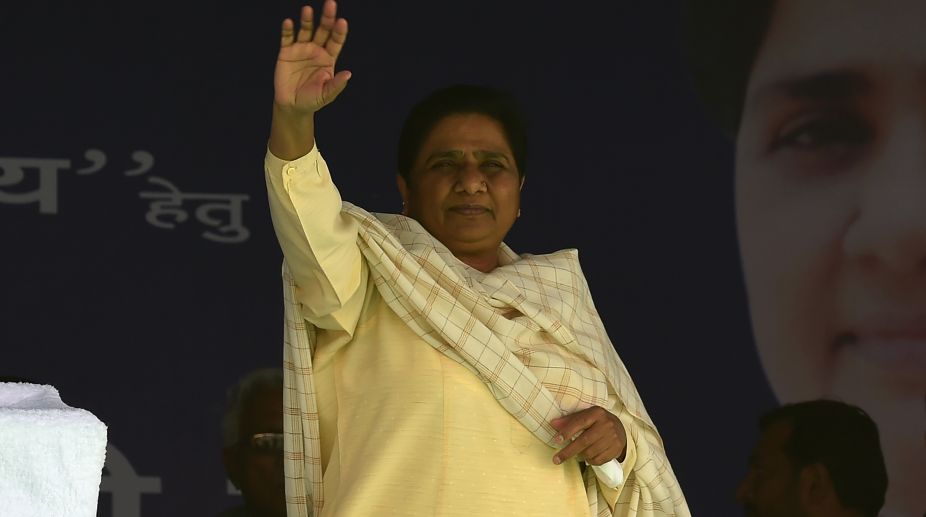
BSP chief Mayawati has been concertedly telling the minorities that voting for the SP-Congress alliance will go in vain and it will willy-nilly help BJP.

"BSP is the only viable alternative before Muslims as it alone can check BJP… SP is a divided house and both Akhilesh and Shivpal factions will harm each other in the polls and so voting for the SP-Congress alliance will only help BJP," has been her refrain during her campaign.

But since Muslims have a pattern of voting for the party which is strongest to defeat BJP, SP-Congress alliance has given hope to them much to the discomfiture of BSP.

After having fielded 99 Muslim candidates a record high for the party and basing its gameplan to a large extent on the Dalit-Muslim plank, BSP does not want to leave anything to chance and so it has been working overtime to win over Muslim leaders and clerics, analysts say.


Rashtriya Ulema Council had fielded 84 candidates for the polls, but withdrew them after extending support to BSP saying there was need to work together with it to defeat fascist forces.

Stressing that there had been continued atrocities on Muslims in the past five years, Jawwad appealed to Muslims to vote for BSP, describing it as the best option available before them under the prevailing circumstances.

Shahi Imam Bukhari, who has a record in extending support to political parties at poll time, has this time extended support to BSP.

"Muslims should look for a political alternative in UP and show exit route to the unjust SP that has gone back on its word," he said while declaring support to BSP.

Stressing that Muslims bore the brunt of deprivation, injustice and unemployment, Bukhari blamed the SP for some 400 bloody riots and failure to fulfil promises like reservation, implementation of Sachar Committee report, setting free innocent Muslim youth framed in terror charges and recruitment of Muslims in security forces.

The AMU Students' Union issued a statement expressing solidarity with BSP, while Ashraf Kichachauvi group too spoke in favour of Mayawati's party.

Realising shortage of Muslim faces in the party, BSP has been taking the help of new entrant Afzal Ansari, who merged his Quami Ekta Dal with BSP after being spurned by Samajwadi Party.

BSP national general secretary Naseemuddin Siddiqui has said his party will be using Madani for campaigning.

The dearth of Muslim leaders is a problem for the party.

Among the list of 40 star campaigners there are just three leaders from the community – Siddiqui, also the west UP in-charge; his son Afzal, and party coordinator for Aligarh and Agra divisions Shamsuddin Raeen.

BSP Rajya Sabha MP Munquad Ali, who hails from Meerut and was the party's in-charge for west UP till 2014, has not been named as star campaigner in the region.

He is believed to have confined himself to Allahabad, Varanasi and Mirzapur divisions in eastern UP, where he is the party's zonal coordinator.

According to election analysts, only 20 per cent Muslims voted for BSP in the 2012 Assembly elections.

BSP goes all out to woo Muslims in UP, gets backing of clerics

PTI | Lucknow |

Failing to revive its tested "social engineering" formula which saw it victorious in the 2007 Uttar Pradesh polls, BSP is going all out to woo Muslims through various clerics and organisations for regaining power.

In 2007, BSP had notched up the magic mark all by itself riding on social engineering which helped it garner support of other sections of society as well besides its core vote bank among the Dalits.

This time, however, in the wake of a stiff challenge posed by SP-Congress alliance, which has presented a viable alternative both to Muslims and backwards, and BJP which is banking on polarisation to gain support of Hindus, especially upper castes, BSP has come up with the plan to get Muslim leadership and clergy to extend support to woo minorities.

In the past couple of days, BSP leadership has been successful in roping in Rashtriya Ulema Council led by Maulana Aamir Rashadi Madani, Shahi Imam of Jama Masjid Maulana Ahmed Bukhari, noted Shia cleric and member of All India Muslim Personal Law Board Maulana Kalbe Jawwad and Ulema and Mashiakh Board of Maulana Syed Mohammad Ashraf Kichachauvi as well as AMU Students Union to extend support for sending a message among the Muslims.

BSP chief Mayawati has been concertedly telling the minorities that voting for the SP-Congress alliance will go in vain and it will willy-nilly help BJP.

"BSP is the only viable alternative before Muslims as it alone can check BJP… SP is a divided house and both Akhilesh and Shivpal factions will harm each other in the polls and so voting for the SP-Congress alliance will only help BJP," has been her refrain during her campaign.

But since Muslims have a pattern of voting for the party which is strongest to defeat BJP, SP-Congress alliance has given hope to them much to the discomfiture of BSP.

After having fielded 99 Muslim candidates a record high for the party and basing its gameplan to a large extent on the Dalit-Muslim plank, BSP does not want to leave anything to chance and so it has been working overtime to win over Muslim leaders and clerics, analysts say.


Rashtriya Ulema Council had fielded 84 candidates for the polls, but withdrew them after extending support to BSP saying there was need to work together with it to defeat fascist forces.

Stressing that there had been continued atrocities on Muslims in the past five years, Jawwad appealed to Muslims to vote for BSP, describing it as the best option available before them under the prevailing circumstances.

Shahi Imam Bukhari, who has a record in extending support to political parties at poll time, has this time extended support to BSP.

"Muslims should look for a political alternative in UP and show exit route to the unjust SP that has gone back on its word," he said while declaring support to BSP.

Stressing that Muslims bore the brunt of deprivation, injustice and unemployment, Bukhari blamed the SP for some 400 bloody riots and failure to fulfil promises like reservation, implementation of Sachar Committee report, setting free innocent Muslim youth framed in terror charges and recruitment of Muslims in security forces.

The AMU Students' Union issued a statement expressing solidarity with BSP, while Ashraf Kichachauvi group too spoke in favour of Mayawati's party.

Realising shortage of Muslim faces in the party, BSP has been taking the help of new entrant Afzal Ansari, who merged his Quami Ekta Dal with BSP after being spurned by Samajwadi Party.

BSP national general secretary Naseemuddin Siddiqui has said his party will be using Madani for campaigning.

The dearth of Muslim leaders is a problem for the party.

Among the list of 40 star campaigners there are just three leaders from the community – Siddiqui, also the west UP in-charge; his son Afzal, and party coordinator for Aligarh and Agra divisions Shamsuddin Raeen.

BSP Rajya Sabha MP Munquad Ali, who hails from Meerut and was the party's in-charge for west UP till 2014, has not been named as star campaigner in the region.

He is believed to have confined himself to Allahabad, Varanasi and Mirzapur divisions in eastern UP, where he is the party's zonal coordinator.

According to election analysts, only 20 per cent Muslims voted for BSP in the 2012 Assembly elections.

BSNL sets dateline to complete Northeast telecom project

PTI | New Delhi |

State-run BSNL is expecting to complete its portion of mobile network roll-out project, funded by the Universal Service Obligation Fund (USOF), in the Northeast by 2018 end.

"The project was approved in September 2014 but it came to BSNL in April 2016. BSNL is expecting to place execution order in April after which roll-out of the project will start in July and should be completed by December 2018," a source told PTI.

The project is part of the Comprehensive Telecom Development Plan for the North-Eastern Region (NER) which was approved by the Union Cabinet in September 2014 but is yet to be rolled out.

The project proposal entails an estimated expenditure of Rs 5,336.18 crore which is to be funded from the Universal Service Obligation Fund (USOF).

The project envisages providing 2G mobile coverage in identified uncovered areas and seamless mobile coverage along National Highways in the North-East region. Under this project 8,621 villages out of the 9,190 unconnected villages are to be covered by 6,673 towers.

The project has been divided into two parts where tough terrain, which includes two districts of Assam and Arunanchal Pradesh, has been given to state-run telecom firm BSNL for installing about 2,100 mobile towers and the rest was kept for private telecom operators.

Bharat Broadband Network opened tender for installing about 4,500 towers under the project after two years in 2016 but received no bids.

"BSNL received bids from five companies but has not been able to finalise it because of external influences which are delaying the project. There have been multiple exchange of letter between the Department of Telecom and BSNL in this regard," an industry source said.

A BSNL official, involved in the project, denied the allegation saying that the process is running smoothly and communications with DoT and USOF have taken place for clarifications and more transparency.

"Technical bids were conducted but after discussion it has been decided to retest telecom equipment to generate more competition. The government wants to assure that fair opportunities have been given to bidders in fray. Retesting will be completed in March after which execution order will be placed to successful bidders in April," the official said.