Logo

Alia’s big ‘no’ to questions on love life

PTI | Mumbai |

From Sidharth Malhotra to Varun Dhawan and even Arjun Kapoor, Alia Bhatt has been linked to most of her co-stars and the actress has now decided to stay mum on her love life.

The 23-year-old actress, who was present at the launch of remake version of song "Tamma Tamma," asked media to not throw questions related to "premi" on her.

Going by the lyrics of the song, "Tu premi, aaha, main premi, aaha," journalists started questioning Alia about her boyfriend, in reply to which the actress said, "So promise me you (journalists) will not ask me about premi. You will not ask." 

The new version of the song is part of Alia and Varun Dhawan's upcoming film "Badrinath Ki Dulhania".

The original song from "Thanedaar" featured Madhuri Dixit and Sanjay Dutt. Alia said the team didn't want recreate but pay tribute the to 1989 chartbuster.

"We all were nervous to do this song. But we wanted to pay a tribute not recreate the song," Alia said.

The makers have retained the voices of singers Bappi Lahiri and Anuradha Paudwal, who did playback in the original version.

"It's a throw back. Badshah has done rap for the remake version. It's a fusion of old and new. We got thumps up from Madhuri Dixit and Sanjay Dutt," Varun said.

Directed by Shashank Khaitan, "Badrinath Ki Dulhania" is the second film in the "Dulhania" franchise produced by Karan Johar.

The film is slated to release on March 10.

Salimi becomes first woman to head Oman’s police rescue dept

PTI | Dubai |

A female Omani officer has been appointed as the Director of the Police Rescue Department, becoming the first woman to hold the top position.

Lt Col Hanan Al Salimi has been appointed by The Royal Oman Police for the new position for which she felt proud.

"I feel happy and proud to hold this position, which shows the trust of the police command in Omani policewomen," she was quoted as saying by the Gulf news.

Omani policewomen can work side by side with their male counterparts to provide the best for the nation.

"Omani women are hardworking and ambitious. They occupy the top positions in the country, thanks to the support of Omani officials," she added.

"After the success of the Police Rescue department in Muscat governorate, it was expanded to all other governorates," Al Salimi said.

The Police Rescue Department also regulates traffic nationwide and patrols sites of events and festivals during national celebrations.

In January, the Royal Oman Police appointed an Omani female officer as the head of a police station for the first time, the report said.

Lt Colonel Shaikha Bint Ashour Al Hambasiyah, the new head of Watayah police station in the national capital Muscat, said that she was happy and proud to be the first Omani woman to head a police station.

Salimi becomes first woman to head Oman’s police rescue dept

PTI | Dubai |

A female Omani officer has been appointed as the Director of the Police Rescue Department, becoming the first woman to hold the top position.

Lt Col Hanan Al Salimi has been appointed by The Royal Oman Police for the new position for which she felt proud.

"I feel happy and proud to hold this position, which shows the trust of the police command in Omani policewomen," she was quoted as saying by the Gulf news.

Omani policewomen can work side by side with their male counterparts to provide the best for the nation.

"Omani women are hardworking and ambitious. They occupy the top positions in the country, thanks to the support of Omani officials," she added.

"After the success of the Police Rescue department in Muscat governorate, it was expanded to all other governorates," Al Salimi said.

The Police Rescue Department also regulates traffic nationwide and patrols sites of events and festivals during national celebrations.

In January, the Royal Oman Police appointed an Omani female officer as the head of a police station for the first time, the report said.

Lt Colonel Shaikha Bint Ashour Al Hambasiyah, the new head of Watayah police station in the national capital Muscat, said that she was happy and proud to be the first Omani woman to head a police station.

SRK deserved an Oscar for ‘My Name is Khan’: Paulo Coelho

PTI | Mumbai |

Celebrated author Paulo Coelho has said superstar Shah Rukh Khan deserved an Academy Award for his performance in the film "My Name is Khan", if Hollywood fraternity was not biased.

The 69-year-old novelist took to Twitter to praise the actor on the seventh anniversary of the Karan Johar-directed film.

"'My Name is Khan and I am not a terrorist'.

Congratulations @iamsrk for the 7th anniversary of this wonderful movie!" wrote Paulo.

'The Alchemist' author also posted a screenshot from his Facebook page, where he also wrote that the 2008 movie was only the time he had watched any of Shah Rukh's acts.

The image read, "His first (and only) movie that I watched (this year, even if it was released in 2008) was 'My Name is Khan'. And not only was the movie excellent, but SRK deserved an Oscar if Hollywood was not manipulated. He kindly offered to send the other titles – as you probably guess, it is not easy to find them in Switzerland." 

Shah Rukh too tweeted saying that it was sad that such films are "still relevant" and was grateful to the cast and crew for giving him such a great film.

"It's kinda sad too that 'My Name is Khan' is still relevant. But thanks Karan, Ravi, Kajol, SEL, Shibani, Niranjan, Deepa, Jimmy & all cast/crew for a special film," the 51-year-old star wrote.

Director Karan wrote on Twitter, alongwith a still from the movie, "Thank you Rizvan…. for spreading your love …your message….your innocence….. #7YearsOfMyNameIsKhan." 

He also thanked Paulo for his words of appreciation.

"So honoured you liked our film this much…" wrote Karan.

SRK deserved an Oscar for ‘My Name is Khan’: Paulo Coelho

PTI | Mumbai |

Celebrated author Paulo Coelho has said superstar Shah Rukh Khan deserved an Academy Award for his performance in the film "My Name is Khan", if Hollywood fraternity was not biased.

The 69-year-old novelist took to Twitter to praise the actor on the seventh anniversary of the Karan Johar-directed film.

"'My Name is Khan and I am not a terrorist'.

Congratulations @iamsrk for the 7th anniversary of this wonderful movie!" wrote Paulo.

'The Alchemist' author also posted a screenshot from his Facebook page, where he also wrote that the 2008 movie was only the time he had watched any of Shah Rukh's acts.

The image read, "His first (and only) movie that I watched (this year, even if it was released in 2008) was 'My Name is Khan'. And not only was the movie excellent, but SRK deserved an Oscar if Hollywood was not manipulated. He kindly offered to send the other titles – as you probably guess, it is not easy to find them in Switzerland." 

Shah Rukh too tweeted saying that it was sad that such films are "still relevant" and was grateful to the cast and crew for giving him such a great film.

"It's kinda sad too that 'My Name is Khan' is still relevant. But thanks Karan, Ravi, Kajol, SEL, Shibani, Niranjan, Deepa, Jimmy & all cast/crew for a special film," the 51-year-old star wrote.

Director Karan wrote on Twitter, alongwith a still from the movie, "Thank you Rizvan…. for spreading your love …your message….your innocence….. #7YearsOfMyNameIsKhan." 

He also thanked Paulo for his words of appreciation.

"So honoured you liked our film this much…" wrote Karan.

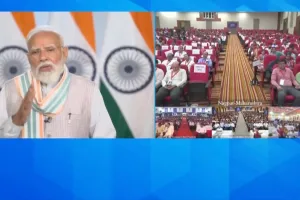
Shame on politicians who question valour of jawans: PM Modi

SNS | New Delhi/Shrinagar |

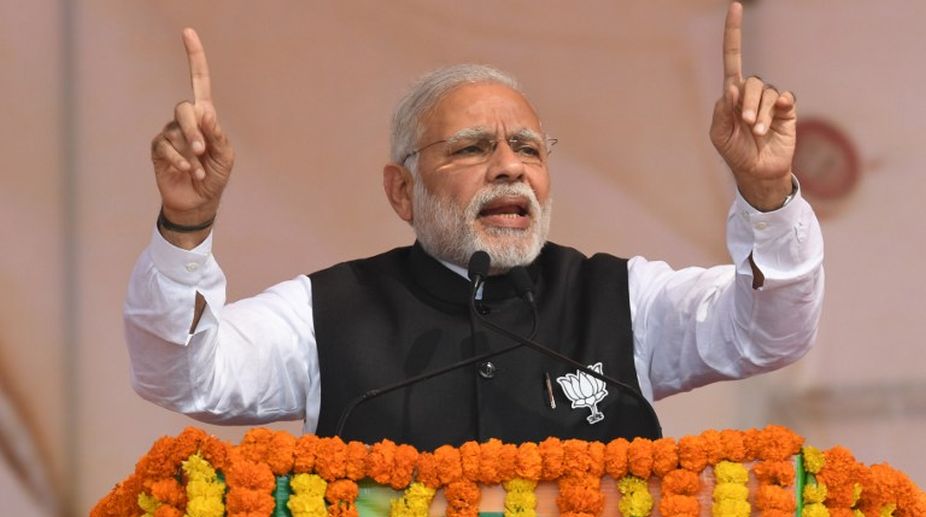
Prime Minister Narendra Modi on Sunday lashed out at the Congress party for seeking proof of surgical strikes.

"Shame on politicians who question valour of jawans and insult the forces," Modi said, addressing a poll rally in Uttarakhand's Pithoragarh.

"The Congress insulted the armed forces by earmarking a mere Rs.500 cr for OROP," he added.

Also accusing the Congress government in Uttarakhand of having no vision for growth though the state has great potential in tourism and allied sectors, Modi asked the people to vote out the ruling party and give the Bharatiya Janata Party (BJP) a chance to ensure new heights of development in the state in the next five years.

"Have you ever thought why despite having such great potential Uttarakhand has lagged behind Chattisgarh and Jharkhand which were created together by Atal Bihari Vajpayee? In spite of the Maoist problem, Chattisgargh with a BJP government has established itself among the fastest growing states," he said in his speech at the GITI Maidan rally.

Asking why Uttarakhand was lagging behind, Modi said that Jharkhand despite being a backward area has begun to attract investors under the BJP rule.

He then said that he has grand plans to tap the state's tourism potential and herbal wealth to bring visitors from all over the world to its doorsteps.

(With inputs from agencies)

Shared history

Haroon Khalid |

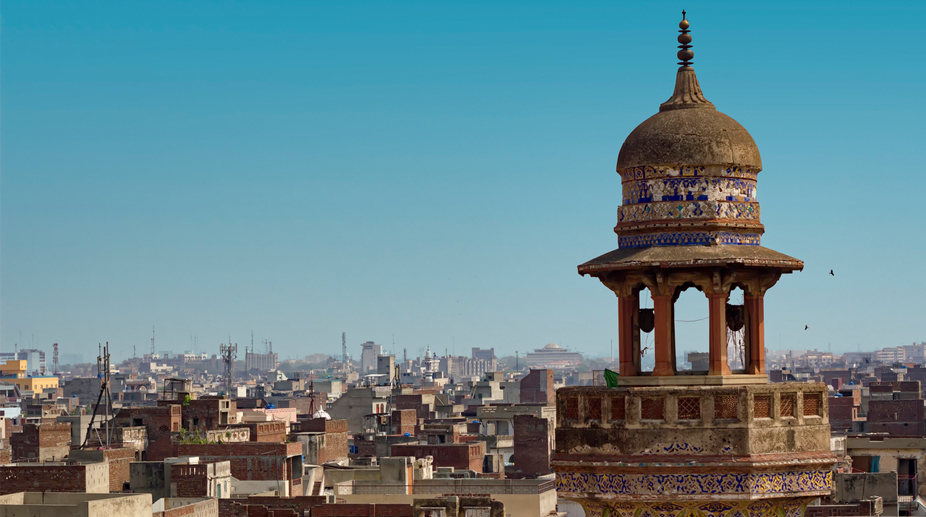
Ferozepur road, one of Lahore's arterial thoroughfares, evokes a lot of nostalgia. Starting from the Walled City, connecting several small ancient hamlets on the way, including Ichra, Mozang, Amar Sadhu and Kasur, it leads to Ferozepur in India. Or so it did. Somewhere along its path, a boundary fence has been constructed. Two of the largest armies in the world, armed to their teeth, stand guard on either side of this fence.

The cities of Lahore and Ferozepur were linked by an ancient bond that several ravages of history – Mongol and Afghan invasions, and British colonialism – could not cut. But this bond was finally ripped apart in 1947 when the two new nation states of India and Pakistan were formed. The Ferozepur road now forlornly runs through Lahore, hastily abandoning its destination at the first sight of armed soldiers, betraying the traveller.

Located on this road, facing a modern multi-storey building, is the Gulab Devi hospital, which sprawls over an area of 40 acres, an indulgent expanse of space in an increasingly congested city of old Lahore.

For a young citizen, who has only known Pakistan, this name is likely to stand out. After Partition, this name would have been lost, just like the others, when the multi-religious Lahore of the past, with its several temples, gurdwaras, churches, mosques and dargahs, made way for a homogenous city.

Old names, guilty by association with what was seen as an "impure" past were hurriedly jettisoned to keep afloat a new nationalist project. Gulab Devi survived because the hospital is run by a Trust, and one of its conditions is that the hospital’s name cannot be changed. Constructed in 1934, and inaugurated by M.K. Gandhi, the hospital is named after the mother of Lala Lajpat Rai, the prominent Indian National Congress leader and freedom fighter. 

Gulab Devi had died in Lahore due to tuberculosis. Lala Lajpat Rai formed the trust in 1927, and intended to build a hospital in his mother's memory. Unfortunately the following year, before he could see his dream come true, he died due to a blow to his head at the Lahore Railway Station where he was a leading a procession to protest against the Simon Commission. The protest and the death of Lala Lajpat Rai prompted the Indian National Congress to form a commission to propose constitutional reforms for India.

The Nehru Report of 1928, written by Motilal Nehru, the president of Congress at that time, was a step towards the Congress's demand for self-rule, or Purna Swaraj, from the British. The report demanded self-government under dominion status within the empire.

The Nehru Report was made possible because of Gandhi’s non-cooperation movement, which was launched in 1920 after his return from South Africa. As part of this movement, Lala Lajpat Rai founded the National College in Lahore to cater to the youth who were now boycotting British colonial institutes.

Located a few streets away from the office of the superintendent of police where freedom fighter Bhagat Singh and his comrades assassinated assistant superintendent of police John P Saunders to avenge the death of Lala Lajpat Rai, is the Bradlaugh Hall.

The red brick building is a beautiful amalgamation of colonial and indigenous architectural traditions, but is locked and has fallen into disrepair. This building used to house the National College that Lala Lajpat Rai set up. It is here that Bhagat Singh and his friends received their initial doses of nationalism. During Bhagat Singh's trial in Lahore, his parents used to receive visitors and sympathisers outside this hall.

Even though Bhagat Singh had parted ways with the Indian National Congress after being disillusioned by what he perceived to be their passive nationalism, the impact of his revolutionary fervour resonated with the younger cadre of the Congress.

Jawaharlal Nehru had been appointed president of the Congress to take over from his father, Motilal Nehru, at the annual session of the Congress in Lahore in December 1929. Riding through the streets of the Lahore on a white horse, Jawaharlal Nehru, who had turned 40 just the previous month, arrived at the historic Congress session to proclaim "purna swaraj' or complete independence, rejecting his father's proposal for a new dominion status constitution for India.

The All India Home Rule League and the All India Muslim League too had favoured a dominion status, but leaders like Bal Gangadhar Tilak, Aurobindo and Bipin Chandra Pal argued for a complete separation from British rule. Jawaharlal Nehru and Subhas Chandra Bose agreed with them.

It was in this session in 1929 at Lahore that the Congress voted for complete independence as against a dominion status for India and
passed a resolution fixing the last Sunday of January 1930 – which happened to be January 26 – as the Complete Independence Day.

On the midnight of 31 December 1929, on the eastern bank of the river Ravi, in the shadow of the Badshahi Masjid, Gurdwara Dera Sahib and the Lahore Fort, Jawaharlal Nehru raised the "swaraj" flag that was later adopted as the national flag of India. After Partition and Independence on 15 August 1947, Jawaharlal Nehru saw to it that India's new constitution took effect on 26 January 1950, thus ensuring that it would not remain just a date in history.

Not very far from where the Congress session took place, on the other end of the Ravi Road, is Iqbal Park, earlier known as Minto Park. At the centre of this historical park is a tall minaret, Minar-i-Pakistan. It commemorates the Lahore Resolution – that demanded provincial autonomy – which the Muslim League adopted here on 23 March 1940. 
Gradually, after the creation of Pakistan, the resolution was appropriated as a demand for Pakistan, renamed Pakistan Resolution and celebrates it as Pakistan Day on 23 March.

Every day, thousands of visitors descend upon Minari-Pakistan, paying homage to the founders of the country. In popular political discourse, politicians refer to the events of March 23 as a momentous moment in the history of Pakistan. Accolades are showered on Lahore, which is seen as the home of the movement that brought about Pakistan. 

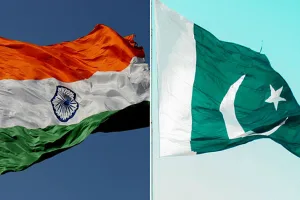
Perhaps consciously, or not, Nehru's declaration of independence, Lala Lajpat Rai's protest against the Simon Commission, and Bhagat Singh's sacrifice have now been forgotten in a city where these freedom fighters were warmly received once. As India recently celebrated its Republic Day on 26 January, the streets of Lahore carried on their business unaware of the role they once played in this shared history.

(Dawn/ANN)

Swiss vote on citizenship measure after anti-Muslim campaign

AFP | Geneva |

Switzerland began voting on Sunday on whether to make it easier for third generation immigrants to become citizens, after a campaign tainted by anti-Muslim messages and charges of religious prejudice.

This Sunday is one of four in the year reserved for direct voting on subjects affecting federal as well as local laws and institutions.

Voting ends at noon and the initial results are expected in the afternoon. Most people have already sent their votes by mail.

The government as well as most lawmakers and political parties support the proposal that would allow the grandchildren of immigrants to skip several steps in the lengthy process of securing a Swiss passport.

But the outcome of the referendum, the latest in Switzerland's direct democracy system, has been clouded by the far right nationalist Swiss People's Party (SVP), which put issues of Islam and national identity at the centre of the debate.

According to a migration department study, less than 25,000 people in the country of about eight million currently qualify as third generation immigrants, meaning they have at least one grandparent who was born here or acquired Swiss residency.

Nearly 60 per cent of that group are Italians, followed by those with origins in the Balkans and Turkish nationals.

Debate on the proposal had nothing to do with religion at the outset, said Sophie Guignard of the Institute of Political Science at the University of Bern.

It was the SVP, a party repeatedly accused of demonising Islam, that focused on the risks of more Muslims becoming citizens and the possible "loss of Swiss values", Guignard told AFP.

Central to that effort was a widely-distributed poster showing a woman staring out from a black niqab with a tagline urging voters to reject "uncontrolled citizenship".

The SVP is not officially responsible for the poster.

It was commissioned by the Committee Against Facilitated Citizenship, which has several SVP members including in leadership positions.

The co-chair of that committee and an SVP lawmaker, Jean-Luc Addor, urged people to vote "No" on grounds that in the coming years most third generation immigrants will not be of European origin.

"In one or two generations, who will these third generation foreigners be?" he wrote in an opinion piece on the SVP website.

"They will be born of the Arab Spring, they will be from sub-Saharan Africa, the Horn of Africa, Syria or Afghanistan," said Addor, who has defended the niqab poster.

Critics of the inflammatory campaign image have denounced it as a brazen appeal to those worried about more Muslims becoming Swiss.

Guignard said mainstream politicians and journalists view the poster as "a violent attack against Muslims".

Political initiatives that either directly or implicitly target Muslims may be on the rise in the West, notably including US President Donald Trump's travel ban against seven mainly Muslim countries, which was undone in court this week.

But in Switzerland such moves are nothing new.

The SVP in 2009 successfully persuaded Swiss voters to approve a ban on new mosque minaret construction, while religiously-charged messages have been a part of multiple referendums on immigration since.

The latest polls from the gfs.bern institute show 66 percent of people support easier citizenship for third-generation immigrants, with 31 percent against and three percent undecided.

Polls from the news company Tamedia have it closer, with 55 percent in favour and 44 percent against.

The "No" side has however gained about 10 points since polling opened, with analysts saying an upset can't be ruled out. 

150-year-old wedding dress found after social media appeal

PTI | London |

A 150-year-old hand-made antique wedding gown has been retrieved following a social media plea by a distressed bride in Scotland, months after it was lost.

The dress was a family heirloom from the 1870s, which had belonged to the great-great grandmother of Tess Newall from the town of Morham in the East Lothian region of Scotland.

It went missing when Kleen Cleaners in Edinburgh closed down permanently as a result of bankruptcy last year.

The 29-year-old wore the antique lace gown when she married husband Alfred Newall, 30, in June 2016 and gave it in for dry-cleaning later that year.

A recent Facebook post about the loss of her dress was shared more than 200,000 times across social media.

She posted an update this week saying the dress was found "in a crumpled heap" at the closed shop.

"My parents received a phone call this afternoon from the landlord of the property where the dry cleaners is, whose nephew had read about the dress," she told BBC.

"He really searched and he found a pile of old lace which he realised was what he thought was the dress. My parents went straight there and were just overjoyed and couldn't believe it was the dress, not cleaned, and still with its ticket," Newall added.

She said she still planned to have the dress cleaned, but probably at a lace specialist in London.

She added: "Somewhere where we can't let it out of our sight".

Pune metro rail to be operational by 2021

PTI | Mumbai |

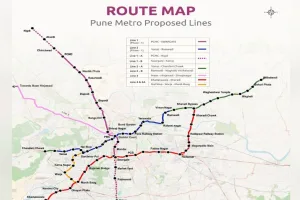
Maharashtra Metro Rail Corporation (Maha-Metro) has said its ambitious Rs.11,400 crore Pune Metro project will be operational by 2021.

"We have completed 35 per cent of topography survey and geo-tech investigation work and remaining job is expected to be completed over the next few months.

"We hope that first line of Pune Metro will be operational in 2020 and second line by 2021," Maha-Metro Managing Director Brijesh Dixit said.

The work on first 10 kms route between Pimpri Chinchwad Municipal Corporation (PCMC) to Shivaji Nagar will start by April this year, Dixit said.

"For funding, we have started negotiations with World Bank and Asian Infrastructure Investment Development Bank of China," he added.

Nagpur, being the transportation hub of the country, always had large roads. Soon, the city will also get its first Metro, which is expected to carry 3.5 lakh passengers by 2019.

Commenting on the progress of Nagpur Metro, Dixit said the 38-km project is estimated to cost Rs.8,600 crore.

The company has commenced work on 22 km route and 5.5 km section will be ready in the current year with target of completing the project by December 2019.

"We have already completed funding arrangement, under which Germany's KFW will provide Euro 500 million and AFD (French Development Agency) will provide Euro 130 million assistance for Nagpur Metro project.

"The funding will be utilised for procurement of rolling stock, cars, electricity supply, traction and other infrastructure facilities," Dixit said.

For a Metro rail project, funding and land acquisition are two most important elements, which the Maha-Metro team has managed to achieve through successful tie-ups.

Maha-Metro has developed the indigenous technology and the construction cost is estimated at Rs.200 crore per km. The company hopes to keep fares at a reasonable level, he added.

Maha-Metro is also considering setting up more metro projects in other cities having 20 lakh plus population as per government guidelines.

Maharashtra is the only state in the country where three metro rail projects – in Mumbai, Pune and Nagpur – are progressing simultaneously.

ITBP troops get snow scooters to patrol Chinese border

PTI | New Delhi |

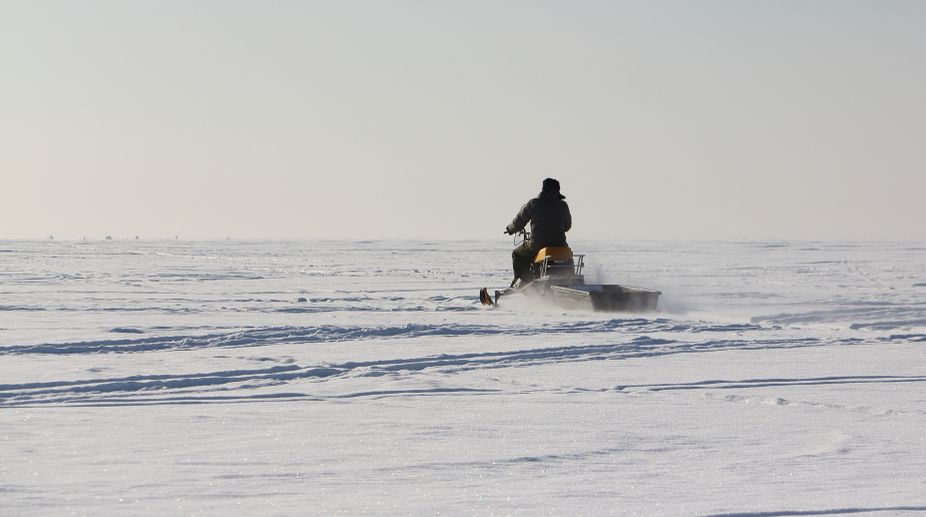
Expensive and sleek snow scooters, usually found at ice-capped tourist spots for adventure sport lovers, have for the first time being inducted for patrol by ITBP troops along the Sino-Indian frontier.

Five of these powerful scooters, procured from a US-based firm, have been deployed at high-altitude border locations of the Indo-Tibetan Border Police (ITBP) in Ladakh, Uttarakhand and Sikkim that overlook the Chinese PLA deployment on the other side.

Officials said the modern scooters, all costing around a crore, can seat two personnel (driver and pillion rider) with their rifle and ammunition in tow and can negotiate a 45 degree slope on the hills and are supported by chaincase belts to help the 278 kg machine glide smooth and cut through the ice.

The force, as part of bolstering its capabilities to effectively secure the 3,488km border, had last year procured over six dozen SUVs and sent them to far-flung border areas for patrol and transport.

This is the first time that such scooters, used for tourist purposes in the upper reaches of Jammu and Kashmir and Himachal Pradesh and by defence forces for training, have been procured and inducted for operational roles by Indian Security forces.

"These snow scooters have been procured as part of the modernisation of the force to better equip the personnel on ground in rendering their duties in the hard areas they serve.

These will act as force multipliers," ITBP spokesperson Deputy Commandant Vivek K Pandey told PTI.

The black and white scooters, 325 mm in length, are powered by hydraulic brakes for effective ground control and its carbureted ignition system can hold over 41 litres of fuel in one go and are one the most modern variants of such patrol vehicles produced in the world and used by global security forces who have icy terrains to guard. 

The ITBP has sent these five vehicles to its mountain training and skiing institute in Uttarakhand's Auli where a select contingent of troops are being trained in its operations after which they will be sent to locations in Ladakh and Uttarakhand (2 each) and one to a border post above 16,000 feet in Sikkim.

Officials said the performance of these scooters will be analysed over few months and once found okay, more of such snow-terrain vehicles will be procured for the ITBP, primarily tasked to secure the Chinese frontier.

"The idea is to enhance the mobility of the troops in areas deep into the border locations and at high-altitudes.

Once they are found to be useful, important locations on this border will be provided a cluster of these scooters for an entire patrol party to travel," they said.

Last year, undertaking a maiden initiative, the force had purchased and deployed expensive SUVs, usually found zipping across roads in urban locations, at its high-altitude border posts along the Sino-India border to transport troopers.

The 80,000 personnel strong force is tasked with guarding the 3,488 km Sino-India border.

Its posts are in some of the harshest areas at this border with locations ranging from 9,000 ft to 18,000 ft where mercury often plunges to minus 20-30 degree Celsius.


The luxury effect

Maneka Gandhi |

The rich have more of everything. And that includes insects as well!
A recent study done by entomologists, from the North Carolina Museum of Natural Sciences and North Carolina State University, on indoorarthropods (insects, spiders and crustaceans), sampled 50 randomly selected homes in Raleigh, North Carolina, that covered the regions economic spectrum. They collected 10,000 specimens. They discovered that the wealthier the household and its surroundings, the more types of insects it had.
The insect biodiversity within the house is part of ecological phenomenon known as the  “luxury effect” – the richer the area, the more bugs in the home. The team, led by California Academy of Sciences postdoctoral researcher Misha Leong, thought that arthropod biodiversity – the number of types of species found within a given dwelling – would increase, based on a homes square footage and the density and diversity of plants outside.
But another factor ended up being almost as predictive of a large number of bug species types: neighbourhood
income.
The signal was so strong that Leong ran the numbers again and again just to be sure. The data was analysed in every possible way, but the answers were the same. Even homes with relatively light ground cover outdoors had more diverse arthropods
inside when they were in wealthy neighbourhoods. In fact, now statistical models based on size of the house, local plant diversity, your
monthly income, average neighbourhood monthly income, can give you the number of insects/species you are likely to have. 
The luxury effect – the more affluent the area, the more diverse its animals. (Last year biologists found that the higher a households income, the higher the number of lizard species that could be found there.) While poorer homes had less than 50 species, the richer ones had over several hundred kinds of insects. This included different families of spiders, centipedes, ants, flies, beetles, booklice, moths, springtails, silverfish, gall midges, pill-bugs, scuttle-flies, dust-mites, aphids, slugs, crickets, ladybirds, wasps, bees and cockroaches. Cobweb spiders, carpet beetles, ants, gall midges and book lice were found in 100% of houses samples.
The ecologists identified 579 species, with anywhere between 32 and 211 different species, per household. The only insects that they did not find in rich homes were bed bugs and fleas (and much fewer cockroaches).
This increased diversity could be because outdoor species take a liking to the leafier suburbs and then move indoors. The word luxury effect was first used for urban houses, suggesting that bigger gardens and disposable income resulted in more diverse species of plants. Raleighs indoor insects is obviously a cascade effect in which increased greenery means more outdoor diversity, some of which finds its way indoors.
Higher income households have more access to gardens and indoor plants. And with these plants comes an entire
array of harmless insects, the ladybug, the praying mantis, lacewings, leaf-miners and spiders. Domestic gardens play a vital role in supporting urban insect biodiversity, despite their small size.
A paper assessing the abundance, diversity and distribution of insects in urban domestic gardens in the tropics, through a 2013 study in the city of Bangalore, was conducted. Fifty domestic gardens were studied. 2,185 insects from 10 orders, of which ants, bugs, beetles and flies were the most common, were recorded. The number of insect orders encountered was significantly related to the number of tree and herb/shrub species.
The common sense explanation is that every living being goes in search of its specialised food. The wealthy announce their prosperity by filling their houses with furniture, paintings, objects dart, carpets, toys, hangings, books etc. Each one of these provides food and shelter to different species. A carpet seen under a microscope has thousands of bugs of different species that chew on the fibre, the gum, the matting and each other. Books and glue bring book lice and silverfish especially when they are not dusted regularly. Fruit and food on kitchen counters bring ants and flies, and flies bring lizards. Paintings, high ceilings and the back of fridges attract spiders.
With each insect comes its predator. Beetles arrive. Centipedes are predators of silverfish, beetle larvae and cockroaches. Windowsills, the edges of floorboards, oil droplets in kitchens, the back of closets – all of these are rich veins for finding insects, both living and dead. No matter how much you seal off your house to the outdoors it is very easy for tiny things to find their way in.
Rich households have stocked pantries of cereal, flour and rice. These rations attract weevils and beetles and sugar ants. Rich family children, who study in boarding schools, bring home lice. Cupboards full of clothes attract moths and crickets. Most species are harmless doing our dirty work. Carpet beetles eat dead insects, spilled food even nail clippings.
Dust mites are tiny vacuum cleaners eating dead skin cells. Spiders are actually an effective predator in the garden and most of them are inoffensive. Lest you suddenly feel an urge to vacuum your home, to rid yourself of your invisible insect squatters, let me assure you that most species are completely harmless. A common misconception is that all insects in the house are pests in fact less than 2 per cent of the worlds insects are harmful.
My house must be the wealthiest in Delhi if one judges the number of insects and other creatures that share my home. My garden is now a mature forest ecosystem and so the insects come freely in and out. My desk has a small spider that nestles in the rising mound of papers but comes out when I sit down, just to say hello.
We don’t use any chemical cleaners in the mops. Mosquitoes stay out because I use gobar ka dhoop every evening. But they lay eggs in the pond outside, which the gambusia fish eat greedily. We have wasp hives, birds nests, pigeon homes, owl groves in the trees. I find centipedes, spiders, slugs and large ants in the bathroom, which we put back into the garden. Earthworms come out when it rains.
I have an endless number of tiny roommates which fascinate my granddaughter, who is learning from me not to step on ant nests and to examine how cunningly they hide their entrances with bits of chopped grass.
Ecologists spend most of their time studying far-off, exotic places, but rarely think about the wildlife inside our homes. We’re actually surrounded by wildlife when we’re indoors. You spend 90 per cent of your time indoors, but you know little about the ecology of the habitat you have created for yourselves. Even houses that look clean still have lots of insects.
There are only two beings I have zero tolerance for: ticks and termites. My books, letters and family photos, and at least four incomplete book manuscripts, have been eaten by them. At the moment my house is being broken down room by room to make it termite proof. As for ticks, I have seen too many dogs die of tick fever to know that these beings are even worse than mosquitoes, because they are not even in the food chain: no other insect will touch them.
There has always been a mistaken, and yet powerful, association between insect-free cleanliness and respectability. Now you are being judged by the insects. Are you rich enough for them to grace your house?

(To join the animal welfare movement contact Gandhim@nic.in, www.peopleforanimalsindia.org)

The Indian spy who fooled the Nazis

Kim Sengupta/The Independent |

The part played in Britain's wars by forces from the Empire, the sacrifices made, the countless honours won for gallantry, were airbrushed out for a long time from most accounts of history written in the UK.

It is only recently that there has been a degree of restitution with some recognition of the contributions made by these men and women.

There has, however, been very little chronicled about the espionage missions, which were undertaken by colonial subjects, often at great risk to themselves.

And it is only now that the tale has emerged internationally of a spy who led the most extraordinary life of intrigue and danger in the Second World War.

The agent, codenamed Silver, was recruited by Peter Fleming, then working for British military intelligence. Fleming's brother, Ian, was to draw on some of the experience of his glamorous and dashing sibling in creating James Bond.

Peter had a further role in the success of 007 it was he, an established author, who persuaded Jonathan Cape to publish the first of the series, Casino Royale.

The espionage in which Peter Fleming was engaged in the 1940s was very real based in Delhi, he played a key role in a deception programme against the Axis powers through the running of double agents.

It was in this post that he became the handler of a man calling himself Rahmat Khan, who was working in Afghanistan purportedly to counter the activities of the Germans and Italians on India's western borders. Unbeknown to him, Fleming had hired someone who was himself a master of deception.

In a new book, Silver: The Spy Who Fooled the Nazis, the prolific author and journalist Mihir Bose reveals how Khan, whose real name was Bhagat Ram Talwar, played off one side against the other in a dizzying mosaic of subterfuge.

There were a few double or even triple agents during the War, but Talwar was the only one who could claim to have spied for five, or one can say, even six sides.

The man behind the masks peeled back by Bose in this fascinating tale came from the landed gentry of what was then the North West Frontier.

In a space of five years he spied for Britain, Germany, Italy, Japan and Russia. His real loyalty, however, lay with the struggle for Indian independence, something his paymasters in London would have suspected if they had carried out a thorough enough background check.

Talwar's brother, in fact, had been hanged by the British for his part in the death of a policeman during an assassination attempt on the governor of Punjab.

Talwar made the journey into Afghanistan on foot through the Khyber Pass in an often hostile landscape then, as now, bristling with guns.

Fleming was, at times, worried about his safety, once imploring him not to make a trip because of the presence of a suspect who may have blown his cover.

But Silver insisted on going ahead, befriended the man and invited him for dinner in Kabul. He later described to Fleming that he has served a curry mixed with tiger's whiskers, the sharp bristles of which cause internal bleeding.

It was the last meal he ever ate, Silver commented later, words one could easily imagine Bond using in a report back to M about one of his adversaries.

The relationship between the agent and his handler was an intriguing one. Fleming Eton and Oxford was not only a journalist who had written highly acclaimed books of his adventures in remote places, he was also something of a society figure, married to acclaimed actress Celia Johnson, a prized guest on the country house circuit.

Silver/Talwar, on the other hand, had left school with the most rudimentary of educations and, unlike most middle-class Indians, spoke only broken English.

It was a shared love of deception, says Bose, which made the two men get on so well with each other. And, in this deception, Silver won hands down, managing to hide his loyalty to the communist movement in India to whom he sent much of the money which had been paid to him by his various foreign employers.

Talwar also carried out an outstanding coup against the Raj, smuggling the wanted nationalist leader, Subhash Chandra Bose, out of India. The original plan was for him to get to Moscow, but, when that failed, Silver organised that he got to Berlin where he met Hitler and other senior German officials.

Bose was to eventually get to Japan, raise an army from captured Indian prisoners of war to fight the British, and then die in an airplane crash.

The end of the War was followed by independence and the partition of the sub-continent by the British before they left.

In the dreadful communal violence that followed, Talwar and his Hindu family had to flee newly-created Pakistan to India.

Then in 1948, Silver/Khan/Talwar, the man of mystery, disappeared. Some British officials thought that he had been killed while trying to escape from Pakistan.

But then, just as suddenly, he reappeared a quarter of a century later, at an international seminar on Subhash Chandra Bose in Calcutta in 1966.

There is a photograph in the book of him from that time, dapper in a suit, with Dietrich Wizel, a senior German Abwehr agent he had sparred with and hoodwinked in Kabul.

Fleming had died two years earlier of a heart attack while shooting in Scotland. One imagines he would have rather enjoyed being at that meeting; smiling old spies reminiscing about secrets and lies of a deadly game all those years ago. 

ONGC’s $2.4bn Mozambique deal under Oil Min scanner

PTI | New Delhi |

ONGC's USD 2.475 billion purchase of Videocon Group's 10 per cent stake in a giant Mozambique gas field has come under the Oil Ministry's scanner following allegations that the PSU may have overpaid about USD 200 million, charges that the company vehemently denied.

ONGC Videsh Ltd, the overseas arm of state-owned Oil and Natural Gas Corp (ONGC), had in June 2013 bought 10 per cent stake in the Offshore Area 1 from Videocon Group for USD 2.475 billion. This stake was later divided between OVL and Oil India Ltd in 60:40 ratio.

The deal has now come under Oil Ministry's scanner following allegations that OVL might have overpaid Videocon.

Government officials said the ministry has over the past few months asked the company to provide several details of the deal including the basis of the valuation.

The inquest by the ministry was acknowledged by senior company officials, who said details have been provided on multiple occasions.

Sources said Videocon was in 2012 willing to sell its stake to OVL at a small premium to the price Thailand's PTT Exploration and Production paid for acquiring an 8.5 per cent stake in the same block from Cove Energy for 1.22 billion British pounds (USD 1.9 billion at exchange rate prevalent at that time).

The 10 per cent stake, they said, was available to OVL for about USD 2.3 billion or so but the company a year later paid USD 2.475 billion to Videocon.

An e-mail sent to ONGC Chairman Dinesh K Sarraf, who was Managing Director of OVL at the time of the deal, for comments received a response from the company stating: "There is no basis to this allegation and ONGC Videsh strongly refutes it." 

OVL had followed up the Videocon purchase by buying another 10 per cent stake in the same Offshore Area 1 of Mozambique from US energy major Anadarko Corp for USD 2.64 billion in 2014.

A year later, Anadarko in its annual filings with the US Securities and Exchange Commission said it made a "gain" of USD 1.5 billion or over 62 per cent of the purchase price, from the sale of 10 per cent interest in Offshore Area 1.

Woodlands, Texas based energy exploration company Anadarko continues to be the operator of the block, with its stake reduced to 26.5 per cent from 36.5 per cent after the deal.

Presently, OVL has 16 per cent stake in Offshore Area 1, which holds as much as 75 trillion cubic feet of gas reserves.

OIL has 4 per cent and a unit of Bharat Petroleum Corp Ltd (BPCL) another 10 per cent stake.

Other partners in Area 1 include Mitsui with 20 per cent stake, ENH (15 per cent) and PTTEP (8.5 per cent).

Gas from the block is to be converted into liquefied natural gas (LNG) for transportation by ships to markets like India.

Sleep deprived brain unable to form memories

PTI | Washington |

Sleep deprivation can interfere with the process that helps reinforce our memories, a new study has found.

Studying mice, researchers at Johns Hopkins University in the US, have fortified evidence that a key purpose of sleep is to recalibrate the brain cells responsible for learning and memory so the animals can 'solidify' lessons learned and use them when they awaken.

The researchers also report they have discovered several important molecules that govern the recalibration process, as well as evidence that sleep deprivation, sleep disorders and sleeping pills can interfere with the process.

"Our findings solidly advance the idea that the mouse and presumably the human brain can only store so much information before it needs to recalibrate," said Graham Diering from Johns Hopkins University.

"Without sleep and the recalibration that goes on during sleep, memories are in danger of being lost," said Diering.

Diering said that current scientific understanding of learning suggests that information is "contained" in synapses, the connections among neurons through which they communicate.

On the "sending side" of a synapse, signalling molecules called neurotransmitters are released by a brain cell as it "fires"; on the "receiving side," those molecules are captured by receptor proteins, which pass the "message" along.

If a cell receives enough input through its synapses, it fires off its own neurotransmitters.

More specifically, experiments in animals have shown that the synapses on the receiving neuron can be toggled by adding or removing receptor proteins, thereby strengthening or weakening them and allowing the receiving neuron to receive more or less input from nearby signalling neurons.

When neurons are "maxed out" and constantly firing, they lose their capacity to convey information, stymying learning and memory.

One possible reason that neurons do not usually max out is a process that has been well-studied in lab-grown neurons but not in living animals, asleep or awake.

Known as homeostatic scaling down, it is a process that uniformly weakens synapses in a neural network by a small percentage, leaving their relative strengths intact and allowing learning and memory formation to continue.

To find out if the process does occur in sleeping mammals, Diering focused on the areas of the mouse brain responsible for learning and memory: the hippocampus and the cortex.

He purified proteins from receiving synapses in sleeping and awake mice, looking for the same changes seen in lab-grown cells during scaling down.

Results showed a 20 per cent drop in receptor protein levels in sleeping mice, indicating an overall weakening of their synapses, compared to mice that were awake.

The study appears in the journal Science.

EC pitches for inclusion of electoral literacy in schools

PTI | New Delhi |

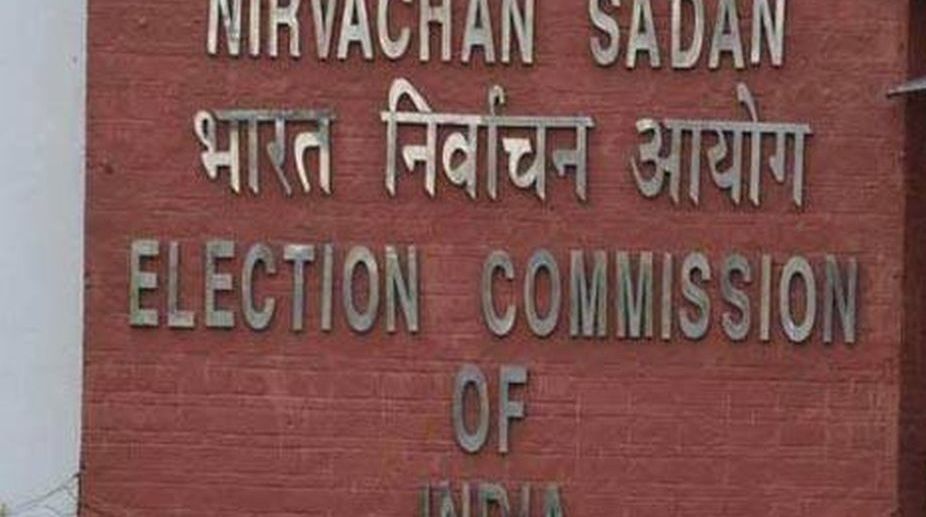
The Election Commission wants students to learn from the secondary school level how to become responsible voters.

In a bid to educate 15 to 17-year-old 'future voters', who would enrol as voters when they turn 18, the Election Commission has asked the Union HRD Ministry to introduce 'electoral literacy' in the curriculum at the secondary school level.

And till the time the subject becomes part of the curriculum, the Commission has asked the HRD Ministry to ask the NCERT to bring out a booklet on elections and electoral process "that may be included in the list of supplementary reading material for schools at appropriate level".

Last July, Chief Election Commissioner (CEC) Nasim Zaidi had written to HRD Minister Prakash Javadekar requesting him to include 'electoral literacy' in the curriculum.

"It is felt that introducing electoral literacy curriculum in a systematic manner will go a long way in strengthening electoral literacy. Therefore, EC proposes that the same may be included in the curricula and as co-curricular in schools at secondary level and if required even at higher levels," Zaidi wrote to Javadekar.

In August, Javadekar responded saying the poll panel's request was examined in consultation with NCERT which prepares the National School Curriculum Framework for the country.

"The current textbook materials of the NCERT are based on National Curriculum Framework, 2005. The suggestion of the Election Commission will be taken into account when NCERT takes up next revision of the curriculum. I would like to inform you that at present the ministry is engaged in the process of preparation of a New Education Policy," Javadekar said.

He also said existing Political Science textbooks prepared by the NCERT have many details about the electoral process.

Not willing to wait, Zaidi has now written again to the Union minister requesting him that as an interim measure, the NCERT can be asked by the government to come out with a booklet on election and electoral process.

The CEC also informed the minister that several democracies across the world have electoral literacy as part of their school curricula.

The poll panel launched a unique programme this January called 'interactive school engagement' under which close to 5,000 electoral registration officers, district election officers and the Chief Electoral Officers visited one school to interact with the students of Class IX to XII, in the age- group of 15-17 years, took question-answers, shared creative contents, distributed badges and administered pledges.

In India, over 62 million persons fall in the age group of 15 to 17 years and have been described as 'future voters' by the Election Commission.

"Every year, 20 million persons out of the future voters turn 18 to become first time voters. Future voters have generally not been in the focus of the Commission. Now, under Systematic Voter Education Programme, the Commission will lay special focus on this group in the year 2017 and onward. We hope that the first time and future voters will get encouraged to be part of electoral process," Zaidi had said at the National Voters Day on January 25.

About 2.83 lakh estimated central government jobs by 2018

PTI | New Delhi |

Nearly 2.83 lakh central government jobs are estimated to be generated by next year.

This projection has been made in the Union Budget for 2017-18 presented last week by Finance Minister Arun Jaitley.

As per the budget documents, the workforce of the central government establishments would be 35.67 lakh in 2018, about 2.83 lakh more than the actual head count of 32.84 lakh in 2016.

The Home Ministry will add 6,076 more personnel to take its strength to 24,778 in 2018. About 1.06 lakh more workforce will be added in police departments to take the total head count to 11,13,689 by next year.

The strength of police departments under the central government is 10,07,366, as per the 2016 data.

There will be an estimated increase of 2,109 persons in the External Affairs Ministry as against its actual strength of 9,294 in 2016, it said.

In newly created Ministry of Skill Development and Entrepreneurship, the government has estimated to add 2,027 jobs by 2018. Its actual strength in 2016 was 53 only.

When contacted, Minister of State for Personnel, Public Grievances and Pensions Jitendra Singh today said the additional workforce will help in providing more citizen-centric governance.

"The central government is trying to emphasise more on employability of our youths rather then employment. That is why the Skill Development Ministry has been started. It will train more youths to become entrepreneur and be job-ready in changing scenario.

"The projection of additional workforce will help in providing more citizen centric governance," he told PTI.

There would be an estimated 1,045 more staff in 2018 in the Ministry of Civil Aviation from its actual strength of 1,141 in 2016.

In the Department of Posts, there would be 20,442 more workforce from its strength of 4,48,840. The Ministry of Environment, Forest and Climate Change will add 2,165 more jobs in next year to take its strength to 5,094.

An estimated 91 people will be part of the workforce in the Minority Affairs Ministry in 2018, in addition to its actual strength of 169 in 2016.

The Mines Ministry will have 1,351 more jobs to take its strength to 9,481 and the Department of Space will have an estimated 17,894 personnel, 3,068 more than its strength of 14,826.

The Personnel Ministry will have 2,367 more personnel in 2018 than its actual strength of 8,443 in 2016. Whereas, the Ministry of Water Resources, River Development and Ganga Rejuvenation will have a workforce of 11,407 in 2018, 3,632 more than its actual strength of 7,775 in 2016.