Logo

Hyderabad Test: Ashwin, Jadeja keep Bangladesh under control on Day 4

Ashwin (2/34) and Jadeja (1/27) kept Bangladesh under control as they were 103/3 at stumps.

SNS | New Delhi |

The spin duo of Ravichandran Ashwin (2/34) and Ravindra Jadeja (1/27) kept Bangladesh under control as they were 103/3 at stumps on the fourth day of the one-off Test against India at the Rajiv Gandhi International Stadium, Hyderabad on Sunday.

At helm, star all-rounder Shakib Al Hasan (21*) and Mahmudullah (9*) were cruising for the minnows, keeping hopes to chase down the competitive target of 459.

Mahmudullah- Hasan put unbeaten 28 runs runs for the fourth wicket partnership, stablising the innings after early jolts. It was opener Tamim Iqbal (3), who was dismissed cheaply in the sixth over, followed by the dismissal of Soumya Sarkar (42) and Mominul Haque (27) in the 22nd and 25th over respectively.

Off-spinner Ashwin appeared daunting since the start of Bangladesh’s second innings and claimed two wickets in shape of Iqbal and Haque. Jadeja joined the party, dismissing Sarkar with a classical turner that took the edge of his bat and Ajinkya Rahane, positioned at slip, made no mistake. 
 

Reforms in health, education will be AAP’s legacy, says Satyendra Jain

IANS | New Delhi |

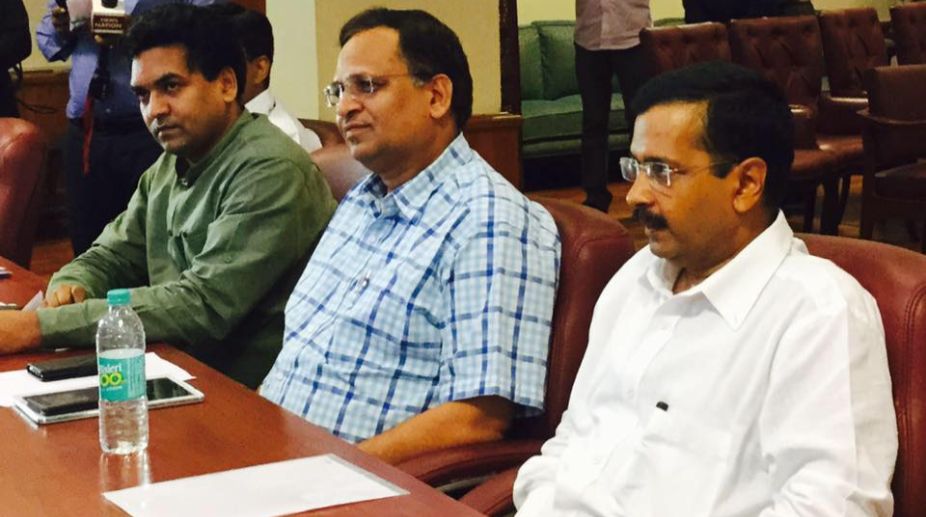
Reforms in health and education will be the legacy Delhi's AAP government will be known for, Health Minister Satyendra Jain says.

Jain, 49, said the Aam Aadmi Party's dominant focus on the two sectors will force a shift in the political discourse and make other parties talk more forcefully about them.

"This change will be a part of AAP's legacy," Jain said in an interview at his residence. He said the battle against corruption, despite the Delhi government's limited powers, was equally significant.

The AAP government led by Arvind Kejriwal will begin its third year in office on February 14.

It was on this day in 2015 that the AAP, for a second time, took power in the national capital after winning a sweeping 67 of the 70 assembly seats.

A Kejriwal confidant, Jain said the focus of the Delhi government was to provide the best possible school education and healthcare facilities free of cost to the people.

The government has set up over 100 Mohalla Clinics where medicines, medical tests and doctors' consultation are available for free. Most have come up in poorer areas though a handful are in middle class colonies.

The government had planned to build 1,000 such clinics by December 31. But that has not happened. The target now set is March 31 but it is unlikely all of them will be functional by then.

Besides these primary healthcare centres, the government also plans to set up 150 polyclinics.

Jain, an architect by profession and a founder-member of AAP, said the aim behind the clinics was to see that only those suffering from very serious ailments ended up going to the already clogged hospitals.

"The main difference between developed and underdeveloped countries is availability of quality health and educational facilities at affordable cost. Our aim is to provide free quality (school) education and healthcare to all, rich or poor," Jain said.

He said the government had taken several steps to improve standards in the normally looked-down-upon government schools by providing more classrooms, sending teachers abroad for training and providing modern amenities.

"If people of a country are healthy and well-educated, they will force the rulers to deliver on all other issues including governance."

Not surprisingly, the AAP showcased its achievements in health and education in Punjab and Goa where it contested the just-ended assembly elections.

"No political party has ever focused so much on these issues in election campaign," Jain said.

Dismissing reports in a section of the media that the AAP – India's youngest political party – would fare poorly in Punjab, Jain said it would win around 100 of the 117 seats.

But he said it was difficult to predict how many seats the AAP would win in Goa.

Asked about the party's future plans if it wins in Punjab or Goa, Jain said: "It will be a rare occasion a party from one state will take power in another state."

Only the Congress, the BJP and the CPI-M rule more than one state in the country.

Alluding to the BJP-led central government, Jain said if "political forces" had let the AAP government function in Delhi "without hurdles after hurdles", it may have never thought of contesting in Punjab.

"We were forced to go to Punjab. If they tell us now that they still won't let us work, then we will even go to Parliament," Jain said.

Reforms in health, education will be AAP’s legacy, says Satyendra Jain

IANS | New Delhi |

Reforms in health and education will be the legacy Delhi's AAP government will be known for, Health Minister Satyendra Jain says.

Jain, 49, said the Aam Aadmi Party's dominant focus on the two sectors will force a shift in the political discourse and make other parties talk more forcefully about them.

"This change will be a part of AAP's legacy," Jain said in an interview at his residence. He said the battle against corruption, despite the Delhi government's limited powers, was equally significant.

The AAP government led by Arvind Kejriwal will begin its third year in office on February 14.

It was on this day in 2015 that the AAP, for a second time, took power in the national capital after winning a sweeping 67 of the 70 assembly seats.

A Kejriwal confidant, Jain said the focus of the Delhi government was to provide the best possible school education and healthcare facilities free of cost to the people.

The government has set up over 100 Mohalla Clinics where medicines, medical tests and doctors' consultation are available for free. Most have come up in poorer areas though a handful are in middle class colonies.

The government had planned to build 1,000 such clinics by December 31. But that has not happened. The target now set is March 31 but it is unlikely all of them will be functional by then.

Besides these primary healthcare centres, the government also plans to set up 150 polyclinics.

Jain, an architect by profession and a founder-member of AAP, said the aim behind the clinics was to see that only those suffering from very serious ailments ended up going to the already clogged hospitals.

"The main difference between developed and underdeveloped countries is availability of quality health and educational facilities at affordable cost. Our aim is to provide free quality (school) education and healthcare to all, rich or poor," Jain said.

He said the government had taken several steps to improve standards in the normally looked-down-upon government schools by providing more classrooms, sending teachers abroad for training and providing modern amenities.

"If people of a country are healthy and well-educated, they will force the rulers to deliver on all other issues including governance."

Not surprisingly, the AAP showcased its achievements in health and education in Punjab and Goa where it contested the just-ended assembly elections.

"No political party has ever focused so much on these issues in election campaign," Jain said.

Dismissing reports in a section of the media that the AAP – India's youngest political party – would fare poorly in Punjab, Jain said it would win around 100 of the 117 seats.

But he said it was difficult to predict how many seats the AAP would win in Goa.

Asked about the party's future plans if it wins in Punjab or Goa, Jain said: "It will be a rare occasion a party from one state will take power in another state."

Only the Congress, the BJP and the CPI-M rule more than one state in the country.

Alluding to the BJP-led central government, Jain said if "political forces" had let the AAP government function in Delhi "without hurdles after hurdles", it may have never thought of contesting in Punjab.

"We were forced to go to Punjab. If they tell us now that they still won't let us work, then we will even go to Parliament," Jain said.

Very difficult for a woman to be in politics, says Sasikala

SNS | New Delhi/ Chennai |

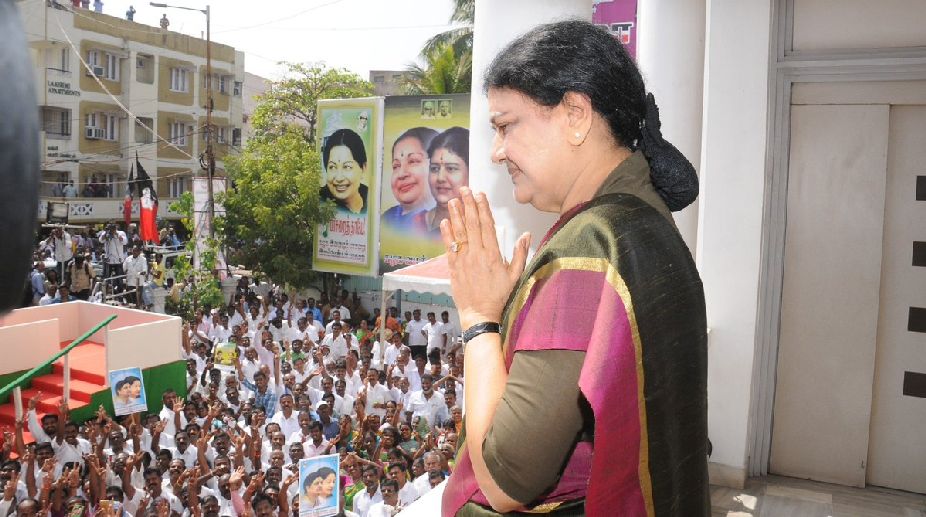
As several issues continue to rage against her, All India Anna Dravida Munnetra Kazhagam (AIADMK) chief Sasikala on Sunday said it is "very difficult" for a woman to be in politics.

"It is very difficult for a woman to be in politics. Have seen it during Jayalalithaa's time also," Sasikala said to media persons in Chennai before leaving her residence to meet party MLAs at a resort for the second day.

Sasikala also said that her party government will continue for the next four-and-half years.

"The AIADMK govt will continue for the next four-and-a-half years. I can say this as party General Secretary," she said.

Meanwhile, there has been a growing support for Tamil Nadu Chief Minister O Panneerselvam as five more AIADMK MPs on Sunday joined his camp, taking the number of parliamentarians in his favour to 10.

Very difficult for a woman to be in politics, says Sasikala

SNS | New Delhi/ Chennai |

As several issues continue to rage against her, All India Anna Dravida Munnetra Kazhagam (AIADMK) chief Sasikala on Sunday said it is "very difficult" for a woman to be in politics.

"It is very difficult for a woman to be in politics. Have seen it during Jayalalithaa's time also," Sasikala said to media persons in Chennai before leaving her residence to meet party MLAs at a resort for the second day.

Sasikala also said that her party government will continue for the next four-and-half years.

"The AIADMK govt will continue for the next four-and-a-half years. I can say this as party General Secretary," she said.

Meanwhile, there has been a growing support for Tamil Nadu Chief Minister O Panneerselvam as five more AIADMK MPs on Sunday joined his camp, taking the number of parliamentarians in his favour to 10.

Art of the matter

Anjana Basu |

The first adult colouring book I had ever seen came into my hands, borne by the first courier who demanded a digital signature.

He held it out to me with a flourish and I must confess my hand shook a little while the aged parent came to ask what it was that had been delivered. When I told him about the digital signature, he wanted to know who the courier was but I frankly had not spared a thought for that. Ripping past the sellotape I brought out a paperback that spanned my palm.

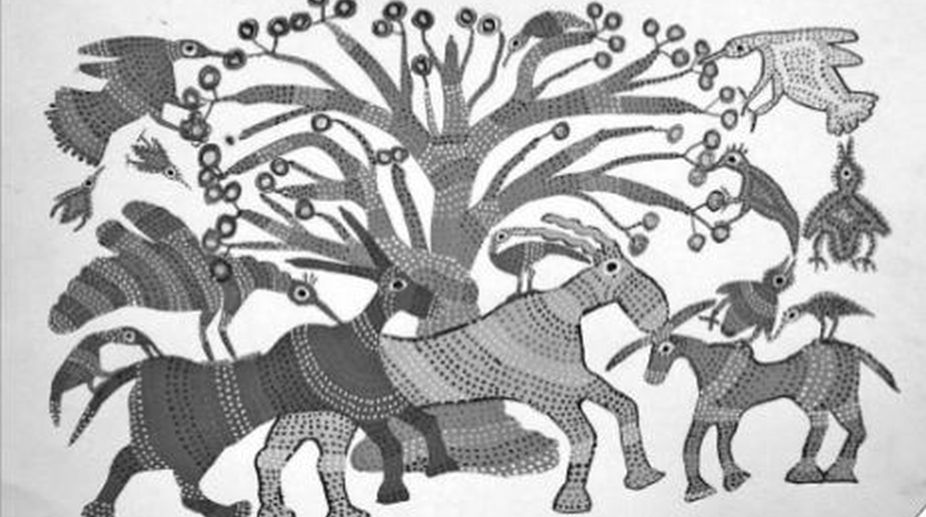
Gond Art on the cover and the outlines of Gond Art inside waiting to be brought to life with deft strokes of what? Certainly not a paintbrush! The book would have to be flipped inside out to allow the brush leeway and water colour would demand inexorable dexterity in filling in the feathers of a Chachan bird or the roots of a Kaheli tree. It would have to be a very fine brush indeed, made of squirrel's hair or camel's hair or some such exotic material worthy of the pages, which could be guaranteed not to drip blotches of colour on the page. No, I dismissed the brush and considered colour pencils  easier to control certainly and most probably. Faber Castell since those were the only ones I could think of offhand the nephews had some, which could be borrowed by way of experiment.

Adult colouring books had caught on like wildfire in the West because they were effective stress busters or so some psychologist had declared. Ladies in silks could trip down their garden paths, arrange their pearls around their necks, sip Orange Pekoe from a transparent bone china cup and then address themselves to the delicate task of colouring.

The book demanded a Victorian or Edwardian concentration something best left to the disciplined generations of aunts  or perhaps it was because of this concentration that the stress disappeared.

Settling down to it demanded a series of rituals that were neither digital nor new age. Perhaps one would put a note on social media… so and so is feeling blessed while stroking the wavy hide of a Gond bullock with a French pastel. No, French pastels were far too thick, perhaps the Japanese had something.

The pages were postcards meant to be coloured and delicately plucked like petals in a garden and then scattered with loving messages on the back. Ina Puri has a foreword in the book; she suggests that rather than colour one should lose oneself in the myths of adivasi art that inspired the Gond artist stories he had grown up with and reproduced in infinite detail with colours that caught his fancy. No, they were not intended for ladies in tea gowns to flutter over though a Japanese Ukiyo-e geisha might have caught the trick with a wild swig of sake letting the colours of her kimono bleed onto the page. If chanting a mantra is relaxation, filling in a page of tessellated lines can be meditation when done over and over again especially when you're not looking at a lit screen.

Seriously a pocket-sized adult painting book now? Yes adults have more coordination than children do but it depends on the age. Bi-focals on the nose and a steady hand are demanded. And then at the end of it you have to steel your heart and part with the pages that you have so painstakingly filled in  leaving nothing behind but the cover.

Someone else will like those works of art that you have laboured over unless you just decide to leave them where they are, some coloured, some not coloured but a complete book of art that will remain to bring magic to your soul as the title suggests.

The snakes can flash through your dreams in purple and pink zig-zag lightning and the maroon and yellow birds nest in the golden antlers of the deer. Morning will bring the black and white reality of the everyday  though the artist's lines will continue tomesmerise with their rhythms. After all, urban storiesare told in black andwhite. The colour comes from the imagination.

The reviewer is a freelance contributor
 

Art of the matter

Anjana Basu |

The first adult colouring book I had ever seen came into my hands, borne by the first courier who demanded a digital signature.

He held it out to me with a flourish and I must confess my hand shook a little while the aged parent came to ask what it was that had been delivered. When I told him about the digital signature, he wanted to know who the courier was but I frankly had not spared a thought for that. Ripping past the sellotape I brought out a paperback that spanned my palm.

Gond Art on the cover and the outlines of Gond Art inside waiting to be brought to life with deft strokes of what? Certainly not a paintbrush! The book would have to be flipped inside out to allow the brush leeway and water colour would demand inexorable dexterity in filling in the feathers of a Chachan bird or the roots of a Kaheli tree. It would have to be a very fine brush indeed, made of squirrel's hair or camel's hair or some such exotic material worthy of the pages, which could be guaranteed not to drip blotches of colour on the page. No, I dismissed the brush and considered colour pencils  easier to control certainly and most probably. Faber Castell since those were the only ones I could think of offhand the nephews had some, which could be borrowed by way of experiment.

Adult colouring books had caught on like wildfire in the West because they were effective stress busters or so some psychologist had declared. Ladies in silks could trip down their garden paths, arrange their pearls around their necks, sip Orange Pekoe from a transparent bone china cup and then address themselves to the delicate task of colouring.

The book demanded a Victorian or Edwardian concentration something best left to the disciplined generations of aunts  or perhaps it was because of this concentration that the stress disappeared.

Settling down to it demanded a series of rituals that were neither digital nor new age. Perhaps one would put a note on social media… so and so is feeling blessed while stroking the wavy hide of a Gond bullock with a French pastel. No, French pastels were far too thick, perhaps the Japanese had something.

The pages were postcards meant to be coloured and delicately plucked like petals in a garden and then scattered with loving messages on the back. Ina Puri has a foreword in the book; she suggests that rather than colour one should lose oneself in the myths of adivasi art that inspired the Gond artist stories he had grown up with and reproduced in infinite detail with colours that caught his fancy. No, they were not intended for ladies in tea gowns to flutter over though a Japanese Ukiyo-e geisha might have caught the trick with a wild swig of sake letting the colours of her kimono bleed onto the page. If chanting a mantra is relaxation, filling in a page of tessellated lines can be meditation when done over and over again especially when you're not looking at a lit screen.

Seriously a pocket-sized adult painting book now? Yes adults have more coordination than children do but it depends on the age. Bi-focals on the nose and a steady hand are demanded. And then at the end of it you have to steel your heart and part with the pages that you have so painstakingly filled in  leaving nothing behind but the cover.

Someone else will like those works of art that you have laboured over unless you just decide to leave them where they are, some coloured, some not coloured but a complete book of art that will remain to bring magic to your soul as the title suggests.

The snakes can flash through your dreams in purple and pink zig-zag lightning and the maroon and yellow birds nest in the golden antlers of the deer. Morning will bring the black and white reality of the everyday  though the artist's lines will continue tomesmerise with their rhythms. After all, urban storiesare told in black andwhite. The colour comes from the imagination.

The reviewer is a freelance contributor
 

More courts, hospital not an ideal situation for society: SC jugde

PTI | Hyderabad |

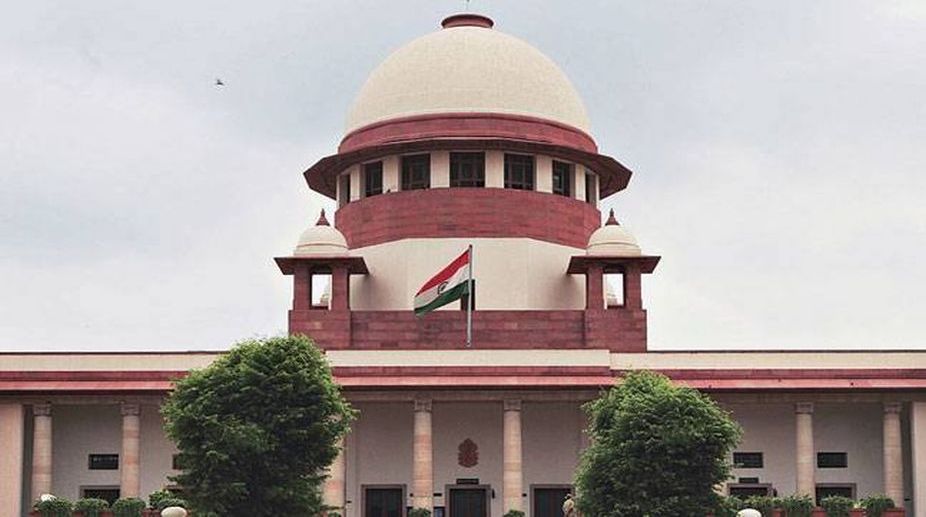
There is something wrong with a country or society which has more number of courts and hospitals as they indicate the bad state of affairs, Justice Chalameswar of Supreme Court said on Sunday.

"I was inaugurating a new court building. That time I said I do not know if it is a happy occasion but my opinion is more the number of courts and more the number of hospitals in a country, then there is something wrong with that society.

"It is obvious. It does not need great deal of intelligence to understand this. Why do we need courts? To resolve problems. The moment you say there is a problem obviously the society is not in an ideal state of affairs," he said during his speech at National Jurists Conference organised by Shanti Sarovar – a Brahma Kumaris organisation.

He said, recalling an event in which he inaugurated a new court building, the same principle applies to hospitals also.

According to him, learning about wars and cyclones would be interesting but facing them would need a great deal of courage.

He also spoke about the conduct of the advocates and the importance of being honest.

Justice Ramasubramanian of Hyderabad High Court also spoke during the event.

More courts, hospital not an ideal situation for society: SC jugde

PTI | Hyderabad |

There is something wrong with a country or society which has more number of courts and hospitals as they indicate the bad state of affairs, Justice Chalameswar of Supreme Court said on Sunday.

"I was inaugurating a new court building. That time I said I do not know if it is a happy occasion but my opinion is more the number of courts and more the number of hospitals in a country, then there is something wrong with that society.

"It is obvious. It does not need great deal of intelligence to understand this. Why do we need courts? To resolve problems. The moment you say there is a problem obviously the society is not in an ideal state of affairs," he said during his speech at National Jurists Conference organised by Shanti Sarovar – a Brahma Kumaris organisation.

He said, recalling an event in which he inaugurated a new court building, the same principle applies to hospitals also.

According to him, learning about wars and cyclones would be interesting but facing them would need a great deal of courage.

He also spoke about the conduct of the advocates and the importance of being honest.

Justice Ramasubramanian of Hyderabad High Court also spoke during the event.

Alia’s big ‘no’ to questions on love life

PTI | Mumbai |

From Sidharth Malhotra to Varun Dhawan and even Arjun Kapoor, Alia Bhatt has been linked to most of her co-stars and the actress has now decided to stay mum on her love life.

The 23-year-old actress, who was present at the launch of remake version of song "Tamma Tamma," asked media to not throw questions related to "premi" on her.

Going by the lyrics of the song, "Tu premi, aaha, main premi, aaha," journalists started questioning Alia about her boyfriend, in reply to which the actress said, "So promise me you (journalists) will not ask me about premi. You will not ask." 

The new version of the song is part of Alia and Varun Dhawan's upcoming film "Badrinath Ki Dulhania".

The original song from "Thanedaar" featured Madhuri Dixit and Sanjay Dutt. Alia said the team didn't want recreate but pay tribute the to 1989 chartbuster.

"We all were nervous to do this song. But we wanted to pay a tribute not recreate the song," Alia said.

The makers have retained the voices of singers Bappi Lahiri and Anuradha Paudwal, who did playback in the original version.

"It's a throw back. Badshah has done rap for the remake version. It's a fusion of old and new. We got thumps up from Madhuri Dixit and Sanjay Dutt," Varun said.

Directed by Shashank Khaitan, "Badrinath Ki Dulhania" is the second film in the "Dulhania" franchise produced by Karan Johar.

The film is slated to release on March 10.

Alia’s big ‘no’ to questions on love life

PTI | Mumbai |

From Sidharth Malhotra to Varun Dhawan and even Arjun Kapoor, Alia Bhatt has been linked to most of her co-stars and the actress has now decided to stay mum on her love life.

The 23-year-old actress, who was present at the launch of remake version of song "Tamma Tamma," asked media to not throw questions related to "premi" on her.

Going by the lyrics of the song, "Tu premi, aaha, main premi, aaha," journalists started questioning Alia about her boyfriend, in reply to which the actress said, "So promise me you (journalists) will not ask me about premi. You will not ask." 

The new version of the song is part of Alia and Varun Dhawan's upcoming film "Badrinath Ki Dulhania".

The original song from "Thanedaar" featured Madhuri Dixit and Sanjay Dutt. Alia said the team didn't want recreate but pay tribute the to 1989 chartbuster.

"We all were nervous to do this song. But we wanted to pay a tribute not recreate the song," Alia said.

The makers have retained the voices of singers Bappi Lahiri and Anuradha Paudwal, who did playback in the original version.

"It's a throw back. Badshah has done rap for the remake version. It's a fusion of old and new. We got thumps up from Madhuri Dixit and Sanjay Dutt," Varun said.

Directed by Shashank Khaitan, "Badrinath Ki Dulhania" is the second film in the "Dulhania" franchise produced by Karan Johar.

The film is slated to release on March 10.

Salimi becomes first woman to head Oman’s police rescue dept

PTI | Dubai |

A female Omani officer has been appointed as the Director of the Police Rescue Department, becoming the first woman to hold the top position.

Lt Col Hanan Al Salimi has been appointed by The Royal Oman Police for the new position for which she felt proud.

"I feel happy and proud to hold this position, which shows the trust of the police command in Omani policewomen," she was quoted as saying by the Gulf news.

Omani policewomen can work side by side with their male counterparts to provide the best for the nation.

"Omani women are hardworking and ambitious. They occupy the top positions in the country, thanks to the support of Omani officials," she added.

"After the success of the Police Rescue department in Muscat governorate, it was expanded to all other governorates," Al Salimi said.

The Police Rescue Department also regulates traffic nationwide and patrols sites of events and festivals during national celebrations.

In January, the Royal Oman Police appointed an Omani female officer as the head of a police station for the first time, the report said.

Lt Colonel Shaikha Bint Ashour Al Hambasiyah, the new head of Watayah police station in the national capital Muscat, said that she was happy and proud to be the first Omani woman to head a police station.

Salimi becomes first woman to head Oman’s police rescue dept

PTI | Dubai |

A female Omani officer has been appointed as the Director of the Police Rescue Department, becoming the first woman to hold the top position.

Lt Col Hanan Al Salimi has been appointed by The Royal Oman Police for the new position for which she felt proud.

"I feel happy and proud to hold this position, which shows the trust of the police command in Omani policewomen," she was quoted as saying by the Gulf news.

Omani policewomen can work side by side with their male counterparts to provide the best for the nation.

"Omani women are hardworking and ambitious. They occupy the top positions in the country, thanks to the support of Omani officials," she added.

"After the success of the Police Rescue department in Muscat governorate, it was expanded to all other governorates," Al Salimi said.

The Police Rescue Department also regulates traffic nationwide and patrols sites of events and festivals during national celebrations.

In January, the Royal Oman Police appointed an Omani female officer as the head of a police station for the first time, the report said.

Lt Colonel Shaikha Bint Ashour Al Hambasiyah, the new head of Watayah police station in the national capital Muscat, said that she was happy and proud to be the first Omani woman to head a police station.

SRK deserved an Oscar for ‘My Name is Khan’: Paulo Coelho

PTI | Mumbai |

Celebrated author Paulo Coelho has said superstar Shah Rukh Khan deserved an Academy Award for his performance in the film "My Name is Khan", if Hollywood fraternity was not biased.

The 69-year-old novelist took to Twitter to praise the actor on the seventh anniversary of the Karan Johar-directed film.

"'My Name is Khan and I am not a terrorist'.

Congratulations @iamsrk for the 7th anniversary of this wonderful movie!" wrote Paulo.

'The Alchemist' author also posted a screenshot from his Facebook page, where he also wrote that the 2008 movie was only the time he had watched any of Shah Rukh's acts.

The image read, "His first (and only) movie that I watched (this year, even if it was released in 2008) was 'My Name is Khan'. And not only was the movie excellent, but SRK deserved an Oscar if Hollywood was not manipulated. He kindly offered to send the other titles – as you probably guess, it is not easy to find them in Switzerland." 

Shah Rukh too tweeted saying that it was sad that such films are "still relevant" and was grateful to the cast and crew for giving him such a great film.

"It's kinda sad too that 'My Name is Khan' is still relevant. But thanks Karan, Ravi, Kajol, SEL, Shibani, Niranjan, Deepa, Jimmy & all cast/crew for a special film," the 51-year-old star wrote.

Director Karan wrote on Twitter, alongwith a still from the movie, "Thank you Rizvan…. for spreading your love …your message….your innocence….. #7YearsOfMyNameIsKhan." 

He also thanked Paulo for his words of appreciation.

"So honoured you liked our film this much…" wrote Karan.

SRK deserved an Oscar for ‘My Name is Khan’: Paulo Coelho

PTI | Mumbai |

Celebrated author Paulo Coelho has said superstar Shah Rukh Khan deserved an Academy Award for his performance in the film "My Name is Khan", if Hollywood fraternity was not biased.

The 69-year-old novelist took to Twitter to praise the actor on the seventh anniversary of the Karan Johar-directed film.

"'My Name is Khan and I am not a terrorist'.

Congratulations @iamsrk for the 7th anniversary of this wonderful movie!" wrote Paulo.

'The Alchemist' author also posted a screenshot from his Facebook page, where he also wrote that the 2008 movie was only the time he had watched any of Shah Rukh's acts.

The image read, "His first (and only) movie that I watched (this year, even if it was released in 2008) was 'My Name is Khan'. And not only was the movie excellent, but SRK deserved an Oscar if Hollywood was not manipulated. He kindly offered to send the other titles – as you probably guess, it is not easy to find them in Switzerland." 

Shah Rukh too tweeted saying that it was sad that such films are "still relevant" and was grateful to the cast and crew for giving him such a great film.

"It's kinda sad too that 'My Name is Khan' is still relevant. But thanks Karan, Ravi, Kajol, SEL, Shibani, Niranjan, Deepa, Jimmy & all cast/crew for a special film," the 51-year-old star wrote.

Director Karan wrote on Twitter, alongwith a still from the movie, "Thank you Rizvan…. for spreading your love …your message….your innocence….. #7YearsOfMyNameIsKhan." 

He also thanked Paulo for his words of appreciation.

"So honoured you liked our film this much…" wrote Karan.

Shame on politicians who question valour of jawans: PM Modi

SNS | New Delhi/Shrinagar |

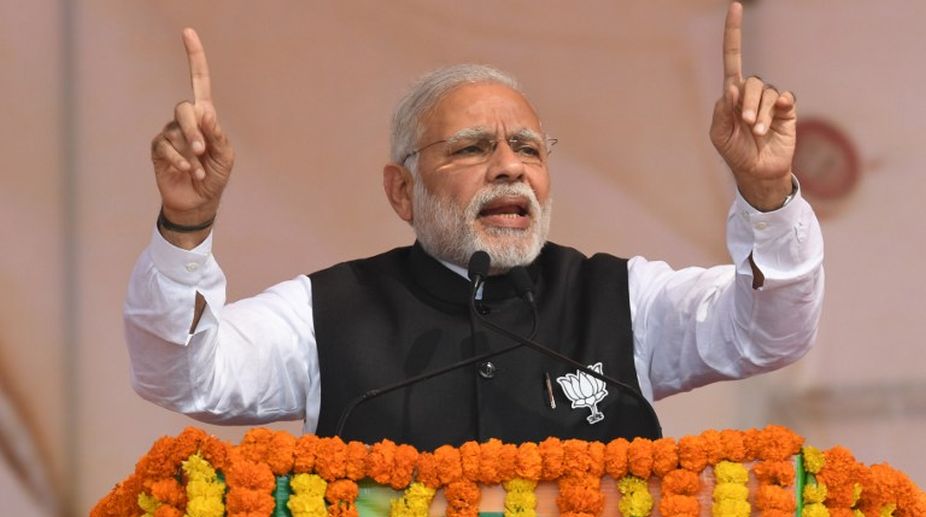
Prime Minister Narendra Modi on Sunday lashed out at the Congress party for seeking proof of surgical strikes.

"Shame on politicians who question valour of jawans and insult the forces," Modi said, addressing a poll rally in Uttarakhand's Pithoragarh.

"The Congress insulted the armed forces by earmarking a mere Rs.500 cr for OROP," he added.

Also accusing the Congress government in Uttarakhand of having no vision for growth though the state has great potential in tourism and allied sectors, Modi asked the people to vote out the ruling party and give the Bharatiya Janata Party (BJP) a chance to ensure new heights of development in the state in the next five years.

"Have you ever thought why despite having such great potential Uttarakhand has lagged behind Chattisgarh and Jharkhand which were created together by Atal Bihari Vajpayee? In spite of the Maoist problem, Chattisgargh with a BJP government has established itself among the fastest growing states," he said in his speech at the GITI Maidan rally.

Asking why Uttarakhand was lagging behind, Modi said that Jharkhand despite being a backward area has begun to attract investors under the BJP rule.

He then said that he has grand plans to tap the state's tourism potential and herbal wealth to bring visitors from all over the world to its doorsteps.

(With inputs from agencies)

Shared history

Haroon Khalid |

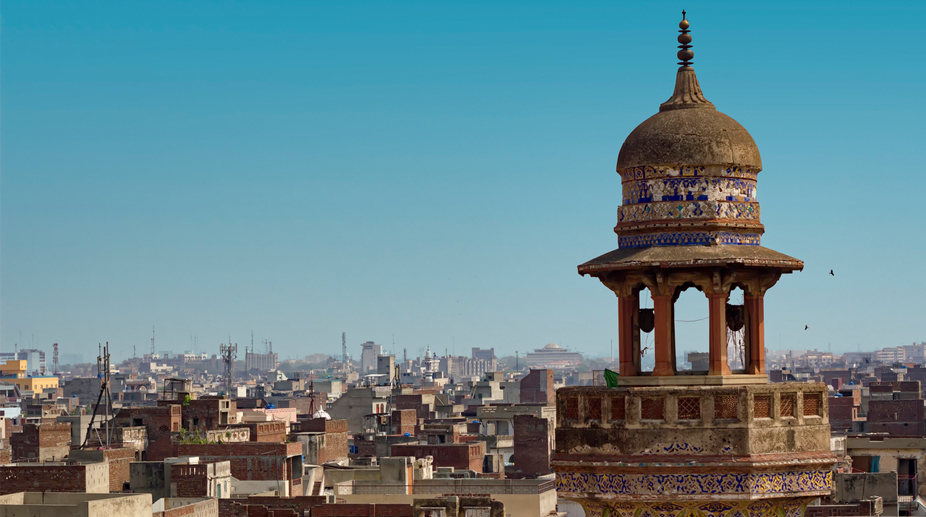
Ferozepur road, one of Lahore's arterial thoroughfares, evokes a lot of nostalgia. Starting from the Walled City, connecting several small ancient hamlets on the way, including Ichra, Mozang, Amar Sadhu and Kasur, it leads to Ferozepur in India. Or so it did. Somewhere along its path, a boundary fence has been constructed. Two of the largest armies in the world, armed to their teeth, stand guard on either side of this fence.

The cities of Lahore and Ferozepur were linked by an ancient bond that several ravages of history – Mongol and Afghan invasions, and British colonialism – could not cut. But this bond was finally ripped apart in 1947 when the two new nation states of India and Pakistan were formed. The Ferozepur road now forlornly runs through Lahore, hastily abandoning its destination at the first sight of armed soldiers, betraying the traveller.

Located on this road, facing a modern multi-storey building, is the Gulab Devi hospital, which sprawls over an area of 40 acres, an indulgent expanse of space in an increasingly congested city of old Lahore.

For a young citizen, who has only known Pakistan, this name is likely to stand out. After Partition, this name would have been lost, just like the others, when the multi-religious Lahore of the past, with its several temples, gurdwaras, churches, mosques and dargahs, made way for a homogenous city.

Old names, guilty by association with what was seen as an "impure" past were hurriedly jettisoned to keep afloat a new nationalist project. Gulab Devi survived because the hospital is run by a Trust, and one of its conditions is that the hospital’s name cannot be changed. Constructed in 1934, and inaugurated by M.K. Gandhi, the hospital is named after the mother of Lala Lajpat Rai, the prominent Indian National Congress leader and freedom fighter. 

Gulab Devi had died in Lahore due to tuberculosis. Lala Lajpat Rai formed the trust in 1927, and intended to build a hospital in his mother's memory. Unfortunately the following year, before he could see his dream come true, he died due to a blow to his head at the Lahore Railway Station where he was a leading a procession to protest against the Simon Commission. The protest and the death of Lala Lajpat Rai prompted the Indian National Congress to form a commission to propose constitutional reforms for India.

The Nehru Report of 1928, written by Motilal Nehru, the president of Congress at that time, was a step towards the Congress's demand for self-rule, or Purna Swaraj, from the British. The report demanded self-government under dominion status within the empire.

The Nehru Report was made possible because of Gandhi’s non-cooperation movement, which was launched in 1920 after his return from South Africa. As part of this movement, Lala Lajpat Rai founded the National College in Lahore to cater to the youth who were now boycotting British colonial institutes.

Located a few streets away from the office of the superintendent of police where freedom fighter Bhagat Singh and his comrades assassinated assistant superintendent of police John P Saunders to avenge the death of Lala Lajpat Rai, is the Bradlaugh Hall.

The red brick building is a beautiful amalgamation of colonial and indigenous architectural traditions, but is locked and has fallen into disrepair. This building used to house the National College that Lala Lajpat Rai set up. It is here that Bhagat Singh and his friends received their initial doses of nationalism. During Bhagat Singh's trial in Lahore, his parents used to receive visitors and sympathisers outside this hall.

Even though Bhagat Singh had parted ways with the Indian National Congress after being disillusioned by what he perceived to be their passive nationalism, the impact of his revolutionary fervour resonated with the younger cadre of the Congress.

Jawaharlal Nehru had been appointed president of the Congress to take over from his father, Motilal Nehru, at the annual session of the Congress in Lahore in December 1929. Riding through the streets of the Lahore on a white horse, Jawaharlal Nehru, who had turned 40 just the previous month, arrived at the historic Congress session to proclaim "purna swaraj' or complete independence, rejecting his father's proposal for a new dominion status constitution for India.

The All India Home Rule League and the All India Muslim League too had favoured a dominion status, but leaders like Bal Gangadhar Tilak, Aurobindo and Bipin Chandra Pal argued for a complete separation from British rule. Jawaharlal Nehru and Subhas Chandra Bose agreed with them.

It was in this session in 1929 at Lahore that the Congress voted for complete independence as against a dominion status for India and
passed a resolution fixing the last Sunday of January 1930 – which happened to be January 26 – as the Complete Independence Day.

On the midnight of 31 December 1929, on the eastern bank of the river Ravi, in the shadow of the Badshahi Masjid, Gurdwara Dera Sahib and the Lahore Fort, Jawaharlal Nehru raised the "swaraj" flag that was later adopted as the national flag of India. After Partition and Independence on 15 August 1947, Jawaharlal Nehru saw to it that India's new constitution took effect on 26 January 1950, thus ensuring that it would not remain just a date in history.

Not very far from where the Congress session took place, on the other end of the Ravi Road, is Iqbal Park, earlier known as Minto Park. At the centre of this historical park is a tall minaret, Minar-i-Pakistan. It commemorates the Lahore Resolution – that demanded provincial autonomy – which the Muslim League adopted here on 23 March 1940. 
Gradually, after the creation of Pakistan, the resolution was appropriated as a demand for Pakistan, renamed Pakistan Resolution and celebrates it as Pakistan Day on 23 March.

Every day, thousands of visitors descend upon Minari-Pakistan, paying homage to the founders of the country. In popular political discourse, politicians refer to the events of March 23 as a momentous moment in the history of Pakistan. Accolades are showered on Lahore, which is seen as the home of the movement that brought about Pakistan. 

Perhaps consciously, or not, Nehru's declaration of independence, Lala Lajpat Rai's protest against the Simon Commission, and Bhagat Singh's sacrifice have now been forgotten in a city where these freedom fighters were warmly received once. As India recently celebrated its Republic Day on 26 January, the streets of Lahore carried on their business unaware of the role they once played in this shared history.

(Dawn/ANN)