Logo

Pentagon sends White House plan to defeat IS

IANS | New York |

The Pentagon has sent the White House a preliminary plan to defeat the Islamic State (IS), a spokesman said without providing details about the plan.

Pentagon spokesman Jeff Davis on Monday was quoted by Xinhua news agency as saying that the plan is a framework for a broader plan to defeat the IS extremists, and the details of the draft are classified secret.

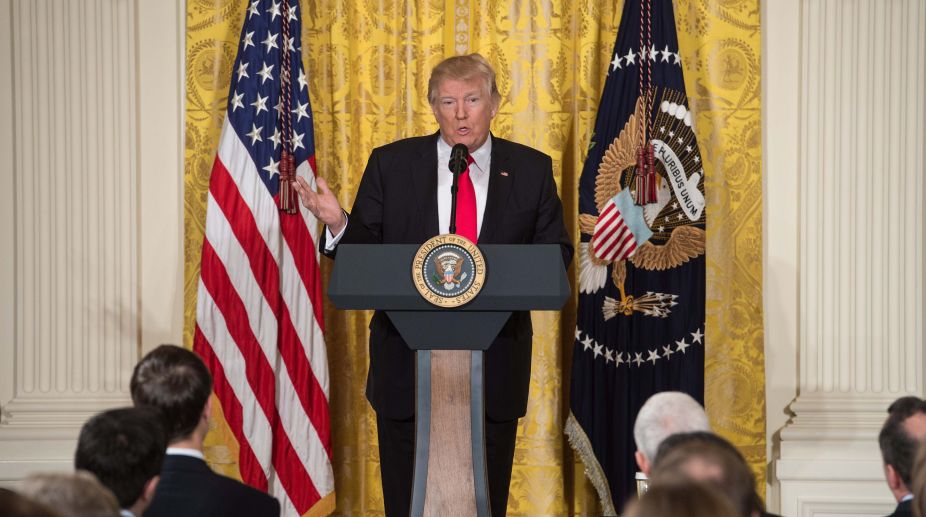
The draft plan came about a month after the US President Donald Trump ordered the Pentagon to come up with a plan to defeat the IS. He has repeatedly criticised the Obama administration for failing to stop the extremist group during last year's campaign.

On January 21 in his first official visit to the Central Intelligence Agency, Trump vowed that "radical Islamic terrorism" has to be eradicated "right now." 

Trump described "radical Islamic terrorism" as "evil" unseen before, adding that it should be "eradicated just off the face of the earth."

Premier League: Resurgent Leicester stun Liverpool

Vital three points for the relegation-threatened defending champions!

SNS | New Delhi |

Playing their first match after unceremoniously sacking coach Claudio Ranieri, Leicester City dismantled Liverpool 3-1 at the King Power Stadium in their English Premier League game on Monday night.

A well-taken brace from Jamie Jardy and a wonder strike from Danny Drinkwater had put the hosts three goals to the good before Philippe Coutinho managed to notch what was ultimately a consolation strike for Jurgen Klopp’s side.  

Under the watchful eyes of caretaker managers Craig Shakespeare and Mike Stowell, the Foxes went ahead in the 28th minute thanks to Vardy, with a classic counter-attacking goal reminiscent of their glorious 2015-16 season.

Marc Albrighton’s first-time pass went between Joel Matip and Lucas Leivaand once the striker was away, it was impossible for the duo to catch him and he cooly finished past Simone Mignolet to score, remarkably, Leicester’s first league goal of 2017.

The Foxes had been threatening Mignolet’s goal, with Shinji Okazaki and Vardy coming close to scoring but Liverpool seemed sluggish and refused to heed the warning.

And the home side doubled their lead 11 minutes later when James Milner’s headed clearance went straight to Drinkwater, who let it bounce once before unleashing an pile-driver of a shot which left Mignolet with no chance whatsoever.

Starting the second half where they left the first, Leicester were dominant in all areas of the pitch and looked dangerous every time they got the ball while Liverpool seemed content with controlling possession. 

The Reds paid for their insipid playing style when Chrstian Fuchs and Riyad Mahrez toyed with their markers on the left flank before the full-back sent in an inviting cross for Vardy to head home on the hour-mark.

The tie was over then and both teams knew it and even when Coutinho pulled one back for the Reds, a famous comeback never looked like it was on the cards.

The win comes at the best possible time for Leicester, who rise up to 15th in the table, two points above the drop zone. It does confirm rumours that Ranieri was the victim of a dressing-room revolt as such a dramatic turnaround can only mean that the Italian had lost the confidence of his players.
Speaking of confidence, the mood in the Liverpool camp must be low as they remain in 5th place, just one point ahead of arch-rivals Manchester United (who also have a game in hand) and are very much in danger of missing out on the Champions League spots if they continue to underperform like this.

Klopp’s tactics are clearly misfiring and he needs to steady the rocking ship fast as the Reds are close to imploding as the business end of the season nears.

Premier League: Resurgent Leicester stun Liverpool

Vital three points for the relegation-threatened defending champions!

SNS | New Delhi |

Playing their first match after unceremoniously sacking coach Claudio Ranieri, Leicester City dismantled Liverpool 3-1 at the King Power Stadium in their English Premier League game on Monday night.

A well-taken brace from Jamie Jardy and a wonder strike from Danny Drinkwater had put the hosts three goals to the good before Philippe Coutinho managed to notch what was ultimately a consolation strike for Jurgen Klopp’s side.  

Under the watchful eyes of caretaker managers Craig Shakespeare and Mike Stowell, the Foxes went ahead in the 28th minute thanks to Vardy, with a classic counter-attacking goal reminiscent of their glorious 2015-16 season.

Marc Albrighton’s first-time pass went between Joel Matip and Lucas Leivaand once the striker was away, it was impossible for the duo to catch him and he cooly finished past Simone Mignolet to score, remarkably, Leicester’s first league goal of 2017.

The Foxes had been threatening Mignolet’s goal, with Shinji Okazaki and Vardy coming close to scoring but Liverpool seemed sluggish and refused to heed the warning.

And the home side doubled their lead 11 minutes later when James Milner’s headed clearance went straight to Drinkwater, who let it bounce once before unleashing an pile-driver of a shot which left Mignolet with no chance whatsoever.

Starting the second half where they left the first, Leicester were dominant in all areas of the pitch and looked dangerous every time they got the ball while Liverpool seemed content with controlling possession. 

The Reds paid for their insipid playing style when Chrstian Fuchs and Riyad Mahrez toyed with their markers on the left flank before the full-back sent in an inviting cross for Vardy to head home on the hour-mark.

The tie was over then and both teams knew it and even when Coutinho pulled one back for the Reds, a famous comeback never looked like it was on the cards.

The win comes at the best possible time for Leicester, who rise up to 15th in the table, two points above the drop zone. It does confirm rumours that Ranieri was the victim of a dressing-room revolt as such a dramatic turnaround can only mean that the Italian had lost the confidence of his players.
Speaking of confidence, the mood in the Liverpool camp must be low as they remain in 5th place, just one point ahead of arch-rivals Manchester United (who also have a game in hand) and are very much in danger of missing out on the Champions League spots if they continue to underperform like this.

Klopp’s tactics are clearly misfiring and he needs to steady the rocking ship fast as the Reds are close to imploding as the business end of the season nears.

Trump blames Oscars fail on show’s political tone

AFP | Los Angeles |

US President Donald Trump said the chaos that erupted at the end of the Oscars was due to Hollywood obsessing about him rather than concentrating on running a smooth show.

In an Oval Office interview with conservative website Breitbart News, Trump said Oscars organizers had taken their eyes off the ball because they "were focused so hard on politics."

"It was a little sad. It took away from the glamour of the Oscars," he told the site, which was previously managed by Steve Bannon, who now serves as Trump's chief White House strategist.

"It didn't feel like a very glamorous evening. I've been to the Oscars. There was something very special missing, and then to end that way was sad."

Trump's comments came after Faye Dunaway and Warren Beatty mistakenly presented the best picture statuette at the climax of the ceremony to La La Land, when Moonlight was the real winner.

The mixup, which made for a chaotic end to ABC's telecast of the show, has been described as one of the most embarrassing moments in Oscars history.

With the dust settling on the controversy, the finger of blame has settled on PricewaterhouseCoopers partner Brian Cullinan, who was responsible, along with colleague Martha Ruiz, for ensuring that each awards presenter was handed the correct envelope.

Cullinan pulled the envelope that was supposed to be for best picture winner from the wrong pile, the company said.

"He is very upset about this mistake. And it is also my mistake, our mistake and we all feel very bad," said Tim Ryan, PwC's US chairman, according to trade magazine Variety.

Trump had been the target of light-hearted jokes and serious derision throughout the night as Oscar-winners railed against his immigration policies.

Host Jimmy Kimmel trolled the Republican via Twitter during the live broadcast and mocked the commander-in-chief's criticism of screen icon Meryl Streep.

Trump blames Oscars fail on show’s political tone

AFP | Los Angeles |

US President Donald Trump said the chaos that erupted at the end of the Oscars was due to Hollywood obsessing about him rather than concentrating on running a smooth show.

In an Oval Office interview with conservative website Breitbart News, Trump said Oscars organizers had taken their eyes off the ball because they "were focused so hard on politics."

"It was a little sad. It took away from the glamour of the Oscars," he told the site, which was previously managed by Steve Bannon, who now serves as Trump's chief White House strategist.

"It didn't feel like a very glamorous evening. I've been to the Oscars. There was something very special missing, and then to end that way was sad."

Trump's comments came after Faye Dunaway and Warren Beatty mistakenly presented the best picture statuette at the climax of the ceremony to La La Land, when Moonlight was the real winner.

The mixup, which made for a chaotic end to ABC's telecast of the show, has been described as one of the most embarrassing moments in Oscars history.

With the dust settling on the controversy, the finger of blame has settled on PricewaterhouseCoopers partner Brian Cullinan, who was responsible, along with colleague Martha Ruiz, for ensuring that each awards presenter was handed the correct envelope.

Cullinan pulled the envelope that was supposed to be for best picture winner from the wrong pile, the company said.

"He is very upset about this mistake. And it is also my mistake, our mistake and we all feel very bad," said Tim Ryan, PwC's US chairman, according to trade magazine Variety.

Trump had been the target of light-hearted jokes and serious derision throughout the night as Oscar-winners railed against his immigration policies.

Host Jimmy Kimmel trolled the Republican via Twitter during the live broadcast and mocked the commander-in-chief's criticism of screen icon Meryl Streep.

Two travellers around moon with SpaceX in 2018

IANS | Washington |

Two individuals will be on a week-long trip around the moon in 2018 on the Dragon spaceship as part of an initiative by US company SpaceX supported by NASA, a media report said.

The Elon Musk owned space transport services company said on Monday that the names of the two individuals, who came to the company expressing their interest, will be revealed once they pass the physical and medical examinations necessary for such trip.

The two would be the only Dragon crew to take off in 2018 from the historic Kennedy's Launch Complex 39A at Cape Canaveral in Florida, the same launch pad as the Apollo lunar missions, Efe news reported.

This program consisted of eleven manned flights between 1968 and 1972, including the trip that led Neil Armstrong and Buzz Aldrin to tread on the moon for the first time on July 20, 1969.

For California-based SpaceX this is one step on the way to their goal of transporting humans to Mars.

"This presents an opportunity for humans to return to deep space for the first time in 45 years and they will travel faster and further into the solar system than any before them," SpaceX said in a statement.

The company said the space shuttle Dragon was designed to carry humans and already has "a long flight heritage."

Musk's company said that these flights with private crew, who "have already paid a significant deposit," according to the statement, are encouraged by NASA and will help reduce long-term government costs and improve the reliability of these missions.

The trip to the moon would be followed by other flights that the company plans with National Aeronautics and Space Administration astronauts to the International Space Station (ISS) as part of NASA's Commercial Crew Program.

According to the company, there would be a flight later this year in automatic and unmanned mode as part of the program, with the launch of the Crew Dragon spacecraft (Dragon Version 2) to the ISS.

The subsequent crewed mission was expected to fly in the second quarter of 2018.

New deputy UN chief to be sworn in on Tuesday

IANS | United Nations |

Amina Mohammed, the new deputy UN secretary-general, will formally take office on Tuesday, UN spokesman Stephane Dujarric said.

"After that, she will speak at the (UN) Economic and Social Council in her first official engagement with that body, followed by a short encounter with the press," Xinhua news agency quoted Dujarric as saying.

Mohammed, who was appointed by Antonio Guterres on December 15, 2016 as his deputy, was supposed to assume office on January 1, when Guterres took office as the new UN secretary-general.

However, Nigerian President Muhammadu Buhari requested her to complete some ongoing responsibilities, as the Nigerian minister of environment, that she was handling at that time, thus leading to her delayed move to assume her new role at the United Nations.

The office of the UN deputy secretary-general was formally established by the UN General Assembly in 1997 to handle many of the administrative responsibilities of the secretary-general.

As the fifth deputy secretary-general, Mohammed will help to manage the UN Secretariat operations, and ensure inter-sectoral and inter-institutional coherence of activities and programmes.

She will also support the Secretary-General in elevating "the profile and leadership of the UN in the economic and social spheres, including further efforts to strengthen the UN as a leading centre for development policy and development assistance."

Amina served as UN under-secretary-general and special adviser to former UN Secretary-General Ban Ki-moon on Post-2015 Development Planning.

She was instrumental in bringing about the 2030 Agenda for Sustainable Development, including the Sustainable Development Goals (SDGs), which serves as the blueprint for the global development efforts for the years between 2015 and 2030.

Twitter turns battleground after Sehwag tweet mocks DU student

IANS | New Delhi |

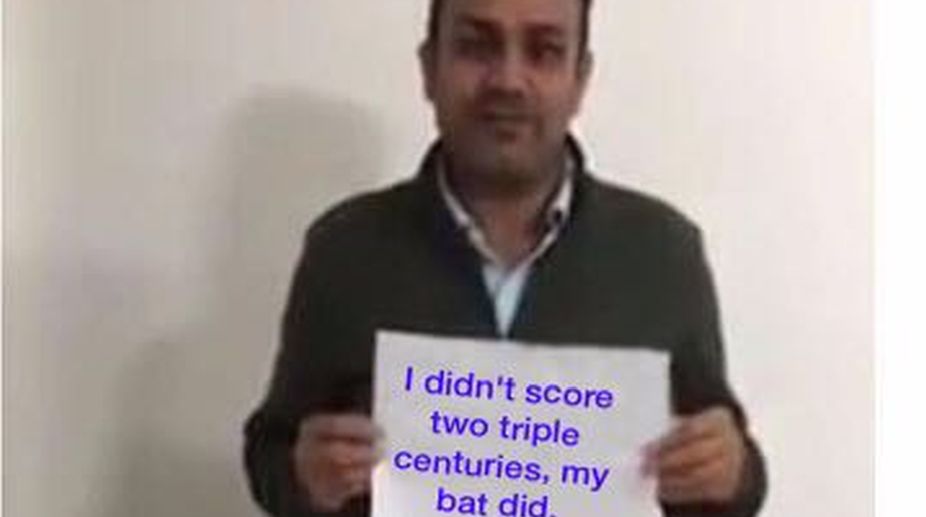
Social networking site Twitter on Monday turned into a battleground of words after cricketer Virendra Sehwag and actor Randeep Hooda apparently mocked Delhi University student Gurmehar Kaur who launched an online campaign against the ABVP after the February 22 violence in Delhi University's Ramjas College.

Former India opener Virender Sehwag on Sunday posted his image holding a placard which read "I did not score two triple centuries, my bat did," and said: "Bat me hai Dum! Bharat Jaisi Jagah Nahi (Bat has power! no place like India).

Actor Hooda also supported Sehwag and retweeted a tweet which apparently mocked Gurmehar.

Kaur, a student of Delhi's Lady Sri Ram College, and daughter of Captain Mandeep Singh who died in the Kargil war, made a Facebook post in the wake of the Ramjas violence, with the hashtag #studentsagainstABVP. 

She posted a picture of herself holding a placard that said, "I am a student from Delhi University. I am not afraid of ABVP. I am not alone. Every student of India is with me." The post went viral with hundreds of shares. She also held a poster, saying 'Pakistan did not kill my dad, war killed him'.

Sehwag's post was a reaction to the reference to the Kargil war.

Hooda said in a tweet: "It was just very witty of Viru to come with "Bat mein Dum". Can't you see the irony? Defuse the situation not add."

He also said that "She (Gurmehar) is being made a pawn."

Kaur, retorted with: "Really sweet of you to encourage the hate I've been receiving. Makes me feel happy that I adored your work 🙂 Pawn? I can think. I don't support violence perpetuated on students? Is that so wrong (sic)." 

Hooda, in a reply said, "I agree with you it's is absolutely wrong..have a feeling it's not limited to that in interpretation."

The twitter exchange saw many others jumping in. 

A twitter account WoCharLog said sarcastically that "Dawood Ibrahim's father was a CID Officer. Being born to a great man doesn't imply that you inherit his patriotism and values."

Concerned at the social media attacks on Kaur, one twitterati, Amrinder Singh, said: "It's very disappointing that Gurmehar Kaur is seeking support from us and she is not getting the deserved backing."

One, Siraj said in his tweet that "we are with you Gurmehar, people who oppose your views do not understand the basic idea of democratic India."

Salman Abdi defended Kaur in his tweet, saying: "Randeep Hooda is great actor. Virender Sehwag is my hero but Mehar tweets you're right. Any type of violence should not be supported."

In her last tweet, Kaur said: "Please consider this tweet as my request for leave of absence. Can't speak to anyone, anymore. Will speak up on Tuesday #FightBackDU."

After being trolled on Twitter and receiving rape threats, Kaur on Monday approached the Delhi Commission for Women and complained against the online threats she had been receiving ever since she stood up to the Akhil Bharatiya Vidyarthi Parishad (ABVP).


Uddhav takes dig at PM over Army paper leak

PTI | Mumbai |

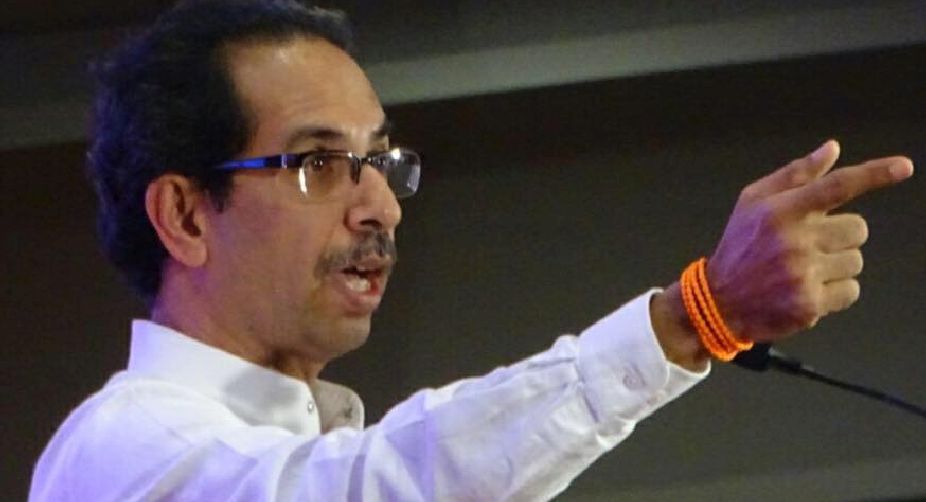
The Shiv Sena president Uddhav Thackeray on Monday took a dig at Prime Minister Narendra Modi and Maharashtra Chief Minister Devendra Fadnavis over the leak of the Army examination question paper.

"The Prime Minister and the Chief Minister are busy canvassing as they want to win the elections at any cost. But see what is happening. Question papers meant for the Army recruitment are leaked. When these people cannot keep the question papers safe, then what can be said about the country's security?" Thackeray questionned.

Thackeray's jibe came at a time when his party and former ally the BJP are locked in a fierce battle to control the cash-rich BMC, as both the parties fell short of numbers to capture power on their own.

The question paper for recruitment to some lower level posts in the army was allegedly leaked in Maharashtra and Goa, leading to cancellation of the examination conducted by the Army Recruitment Board yesterday. Thane police have so far arrested 21 accused in the case.

Thackeray was speaking on the occasion of the "Marathi Bhasha Diwas" which was celebrated today by the Sena, commemorating the birth anniversary of noted Marathi litterateur late V V Shirwadkar, popularly known as 'Kusumagraj'.

Attending a cultural event at Rang Sharda hall in suburban Bandra, he vowed to uphold the Marathi language and culture in the state.

Thackeray revealed the Brihanmumbai Municipal Corporation (BMC) has approved setting up the memorial of Sena founder Bal Thackeray at the Mayor's bungalow in Shivaji Park in Central Mumbai.

"Today is really a noble day for us. Our corporation has given its nod for (setting up) Bal Thackeray's memorial at the Mayor's bungalow. This is a good development for the Marathi pride," he said.

The BJP-led state government had already announced giving the Mayor's bungalow on a 30-year lease for the memorial.

The Mayor's new residence is likely to be shifted to Byculla in South Mumbai.

Earlier in the day, outgoing Sena corporators in the BMC accepted the proposal, pending due to the model code of conduct, of transferring the Mayor's bungalow for memorial.

The election for the BMC was held on February 21 and counting of votes was done on February 23. Sena has emerged as the single largest party in the city hall winning 84 seats, followed by the BJP at 82.

The Sena chief said Marathi language and culture would continue to thrive irrespective of few Marathi medium schools shutting down in Mumbai.

"Some reports have come to fore that Marathi schools are shutting down. But this is not the case. What is happening is Marathi people just want their progenies to speak fluent English.

"But speaking fluent English does not mean that people are forgetting Marathi. It can never be forgotten. It is going to live long, irrespective of whether Marathi schools remains functional or not," he said.

China arrests 800 in crackdown on underground banking

PTI | Beijing |

China's policy ministry says more than 800 people have been arrested in a crackdown on unlicensed banking operations as authorities try to stem outflows of money from the country.

The ministry said more than 380 underground banks that handled transactions totaling more than 900 billion yuan (USD 130 billion) were broken up in the crackdown launched last year.

Communist leaders allow informal finance to support entrepreneurs but try to stop activity they say threatens the state-run banking system, supports crime or helps people violate foreign exchange controls or other regulations.

Expectations the currency would decline in value prompted companies and small investors to move money out of China starting in late 2015. That prompted Beijing to tighten foreign exchange controls.

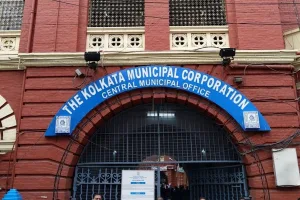
Fire in Kolkata’s Burrabazar market, no casualty

PTI | Kolkata |

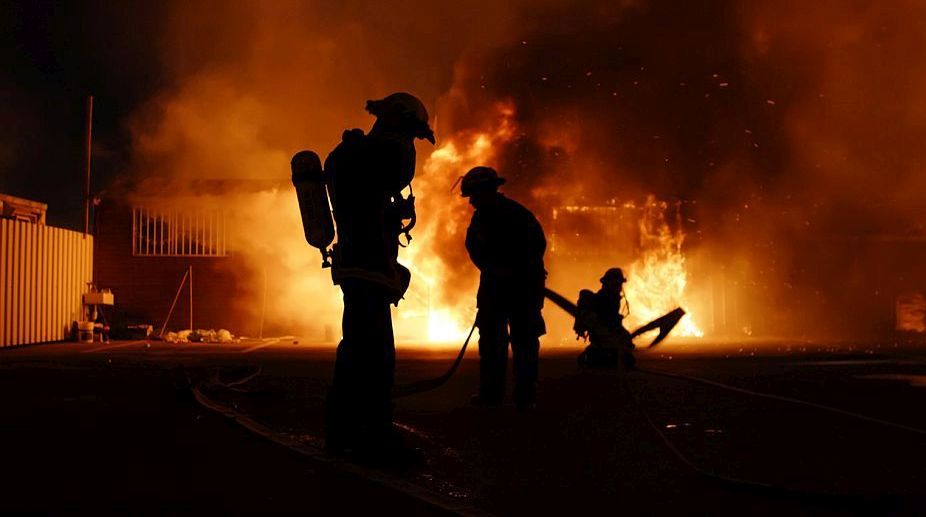
A major fire broke out on Monday at a multi-storey building housing several godowns in central Kolkata's Burrabazar, creating panic among the residents.

The fire broke out at around 10 PM near Bagri bazar area and 25 fire tenders were pressed into service. The fire intensified due to the presence of inflammable material, including gas cylinders in the godown, a senior official of the fire department said.

"There is no report of any casualty so far and few persons who were trapped inside the building have been rescued," the official said, adding people living in the adjacent buildings were also evacuated.

"It is a massive fire and we are trying to douse it, but the thick smoke is making it difficult for us to reach the spot since the building is located in a congested area behind Burrabazar police station. The blaze is also spreading fast due to the presence of inflammable materials," he said.

State Fire minister Sovan Chatterjee, who rushed to the spot, said, "We are trying hard to douse the fire. Our senior officers are here." 

Chatterjee, who is also the mayor of the city, supervised the fire fighting operations. Two to three cylinders were taken out during the evacuation in his presence, a fire department personnel said.

"The entire area has been cordoned off for the convenience of the fire fighters. Traffic at Rabindra Sarani has been stopped while the traffic in the MG road area was partially stopped," a police officer said.

Taking the lead

Sunny Shah | New Delhi |

As big data picks up the momentum— it’s helping to create big career opportunities for IT professionals if they have the right skills and qualifications. However, only one-third of these big data roles will be filled due to a skills shortage, according to Gartner Analyst. Companies are, and will continue to be, looking for employees with a complex set of skills in order to create the right set of talent for their available opportunities.
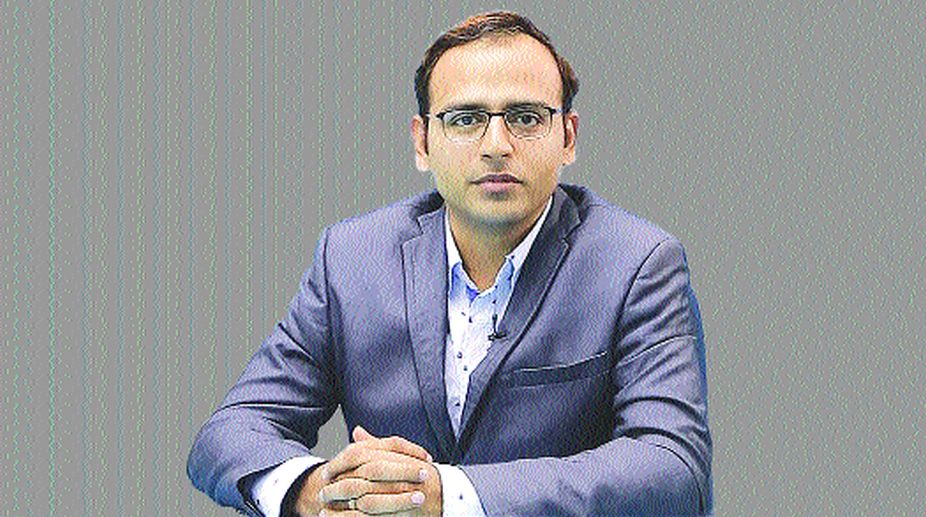
Collabera, a global IT staffing firm launched an online training academy for IT professionals as Technology Academy for Competency Training. This is an online training programme that trains shortlisted individuals in batch format on emerging technologies in IT areas. Sunny Shah, head, Technology Academy for Competency Training Collabera, shares on the services offered and importance of competency training in India.

What is TACT all about? How does it function?
Technology Academy for Competency Training (TACT) is an award winning training arm of Collabera, a US Based IT staffing company. It focuses on designing and conducting trainings on emerging technologies for corporates, universities and professionals. TACT provides trainings on high-end emerging technologies like big data, IoT, cloud computing, data science, python, etc and also provides trainings on business and leadership courses.

How has the hiring scenario changed over years in India, especially when it comes to IT industry?
It is moving towards latest technologies, and is looking to hire candidates who are relevant to the newer ones. Automation and up-skilling are two top priorities of most of the IT companies, hence, to get hired it is inevitable to be relevant and well versed in one of the emerging technologies.

What are the benefits of competency training in India?
This enables a professional to upgrade his/her skills and in turn helps eliminate the demand supply gap that exists in the market today. Competency training helps corporates upskill their existing workforce, and they help universities upgrade their students and make them more relevant to the industry demands.

Would you like to share any recent developments at TACT?
In 2016, TACT was awarded as the best training provider on emerging technologies. Our courses in are ranked number one in the market today. In total we received six awards for excellence in training. The company is currently working in developing its own cloud platform for IoT, data-security and machine learning.

What sets this service provider apart from its competitors?
TACT certification is recognised globally by top IT companies. We design and deliver courses to make them relevant for the industry, and keeping the industry needs in mind. We provide practical incubated projects that enable our trainees get hands on industry experience.

Traversing boundaries

Narendra Shyamshukha | New Delhi |

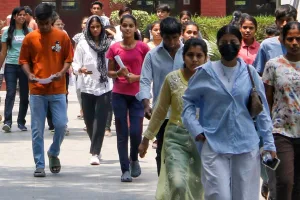
The growing disconnects between higher education and industry requirement in India is, today, a matter of grave concern. Even as many graduates pass out universities and aspire for a good job, their lack of requisite skills stands in the way of getting a good break. 
   With our over-emphasis on academic performance, universities and institutions are producing youngsters with degrees but not employability. One of the biggest challenges hiring manager’s face today is finding candidates with the right skill sets. Being educationally qualified is one thing, being job-ready quite another. 
    So how do we bridge the gap? Vocational and skill development training, if delivered in a balanced and well-defined manner, can help bring talent to industry. In this context, private vocational training institutes can play a major role in helping government with skill development, especially in the field of technology.
Recruiters test you on various parameters like knowledge of core subjects, reasoning aptitude, adaptability and soft skills and most importantly technology.  
It is the job of placement institutes to make students aware of the various and build on their employability skills. Internalise knowledge by assimilating contents designed with the aid of 3D technology, augmented reality and virtual ones. 
More scientific assessment aimed at finding and bridging knowledge gap and improving learning instead of filtering and ranking students. The assessment not only help in improving student quality but also saving time by automating the assessment process by latest image recognitions technology.
With the advent of technology we are seeing modern day classrooms only a reminiscence of the past.
Most of the classrooms are now turning into labs where focus is on learning by doing. There are also labs for language that is replacing traditional spoken English tutorials.
Government has taken awareness of the power of learning by doing at early stage of a student’s school years. With a vision to cultivate 1 million children in India as neoteric innovators, Atal Innovation Mission is establishing Atal Tinkering Laboratories in schools across India. 
The objective of this scheme is to foster curiosity, creativity and imagination in young minds and inculcate skills such as design mindset, computational thinking, adaptive learning, physical computing, etc. This will provide grant-in-aid that includes a one-time establishment and operational expenses for a maximum period of five years each.
Massive Open Online Courses and Learning Management System coupled with advances in smartphones will make learning personalised and flexible. Classroom based distance learning are popular among working professionals or graduate students.   
Although, we are witnessing exponential in changes in the way the education is delivered. One thing that has remained constant is the presence of a human educator. With evolution the role of this person has changed from an enforcer to enabler. 
Emerging economies carrying a colonial legacy of education system are still hesitant to adopt technology. At present, nearly 80 per cent of new entrants to the country’s workforce get little or no opportunity for skills education. Merely 2.5 per cent of our workforce is exposed to formal vocational training. Enrolling in such institute or hands-on skill training course can be of great help to candidates looking out for employment opportunities. 

THE WRITER IS FOUNDER CHAIRMAN OF ICA EDU SKILLS PVT LTD 

Beyond the learning curve

Jaideep Gupta | New Delhi |

With the turn of the century, technology has revolutionised the way we do things. What is interesting is that many don’t realise the potential they have access to, even though they use them regularly. It has paved its way into the education system rather seamlessly and is transforming enormously. Learning today, it’s not just about bookish knowledge, but more of how much one knows about the world around them. 
One of the most common ways in which students learn is by watching videos on social media. These are mostly designed to create awareness on issues that don’t have much of an impact on their lives. But do they consider using the same technology and take up online courses, to build their profiles and set up a strong foundation for their careers? Hardly. The truth of the matter is that although there are plenty of such offers, the assumption that online courses has “less quality” often gets the better of them. 
This isn’t actually true. Over the years, online courses have proved to be as good as, or even better than listening to a lecture in a university. First, you get to learn from experts that provide a platform for established professors of universities to reach larger crowds. This means that when students take up online courses, they get to listen to and learn from elite educationists.
This offers another benefit in the form of receiving certificates from top universities. 
Some examples of such courses are Time Management from Harvard University and Public Speaking from Columbia University. These courses, apart from developing skills, are also a value add to one’s profile. However with school, tuition, homework, exams and recreation there is hardly any time to take up additional courses. Although this is a valid point, students don’t have to attend classes at particular times when they take up online courses, thus, their daily routine doesn’t get affected. 
They offer flexibility that allows their users to spend time on their chosen course according to their availability. The benefits of online courses extend beyond the learning curve as they, apart from saving time, are more economical when compared to offline courses. The best thing about them is that they aren’t location bound and all that is needed is a good internet connection.
Universities/colleges have developed these programmes so that students can enhance their skills, understand their interests and take well informed decisions that would later result in a successful career. They do this, because during the time of admission, students who have the calibre to perform beyond the bare minimum need to be identified since they are the most sought-out candidates by all universities.
Therefore, good grades coupled with a strong profile are tantamount to a successful admission into a top college. Building a profile involves practical learning. Therefore, any course that enhances one’s understanding of a particular subject and helps him win achievements in the same contributes to building their profile. Students can take up co-curricular activities like summer programmes, debates, Olympiads, and various online courses. 
The journey for each student on building a strong profile, starts with identifying the course of their choice. This isn’t always easy as they have an information influx that clouds their judgment. As such, established career counsellors and psychometric tests are channels that students can use to determine their interests and strengths.
Once their interests are decided upon, they can progress towards categorising programmes that will help them gain achievements in the field of their choice. These programmes can be either online or offline and the achievements received add to their profile. 
One should consider taking up programmes not only for their obvious impact on student profile, but also for their subtle yet lasting impact on skills developed during the time. The best time to start building one’s profile is preferably from class IX. Doing so has many benefits starting with having enough time to plan and explore options with regards to course and country choice. 
Students need to pan out their programme choices systematically over a period of time. This will help them focus on their academics without affecting their profile building. The essence of building a profile lies in making oneself better in terms of thinking ability, problem solving and communication. 
It takes a holistic approach to overall growth. If students enhance themselves, it has a direct effect on the community. 

THE WRITER IS FOUNDER AND CHIEF EXECUTIVE OFFICER, UNIVARIETY 

Reports from Kansas ‘disturbing’: White House on US shooting

PTI | Washington |

The White House said on Monday that the early reports coming from Kansas, where an Indian engineer was shot dead and another injured in an apparent hate crime, were "disturbing".

The White House also condemned the alleged hate crimes against the Jewish community in the US.

White House Press Secretary Sean Spicer told reporters at his daily news conference that "early reports coming from Kansas are equally disturbing".

Srinivas Kuchibhotla, 32, was killed and Alok Madasani, of the same age, was injured in the shooting by 51-year-old US navy veteran Adam Purinton who screamed racial slurs and told them "get out of my country".

A 24-year-old American named Ian Grillot tried to intervene and received injuries in the firing in Austins Bar and Grill in Olathe, Kansas.

Spicer, during his briefing, also condemned the alleged hate crimes against the Jewish community and asserted that there is no space for violence based on religion and ethnicity.

His remarks came after vandals broke and overturned more than 500 gravestones at a Jewish cemetery in Philadelphia, the latest in a spate of recent bomb threats and attacks against sites for Jews across the United States.

The great game in Afghanistan

Harsha Kakar | New Delhi |

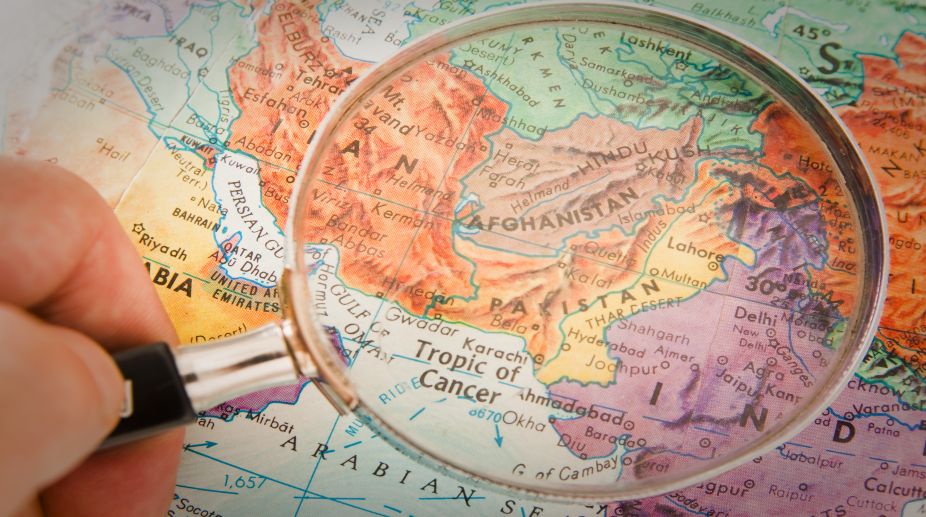
Afghanistan’s geo-strategic importance is well established. It borders nations of the Central Asian Republics (CAR), Iran, Pakistan and China. Iran and Turkmenistan (part of CAR) have the second and third largest reserves of natural gas, which the West seeks to tap. Afghanistan’s rugged terrain and fierce tribal loyalties ensured that it was never completely subdued by any power. Among those who tried were Alexander the Great, Britain, Russia and the US. Afghanistan thus gained the moniker ‘graveyard of empires’.
The US entered the country to avenge 9/11. The defeat of the Taliban under the aegis of a US-led offensive was thought to be a turning point for the country. However, it was not to be. The Taliban received support and sanctuary in Pakistan and continued to battle the US-led coalition. Despite having remained ensconced for over 15 years, the US still cannot claim victory and withdraw with honour. Unable to defeat the Taliban and knowing success is unlikely with financial costs burgeoning, it planned a tactical withdrawal. It presently maintains a force with a larger training element and limited operational role.
The US’ relationship with Pakistan since its entry into Afghanistan has witnessed ups and downs. Perceptions in the US vary from continuing to engage Pakistan in the hope that it would ultimately curb the Haqqani network and the Taliban, to employing economic and diplomatic leverage to compel it to act.
Pakistan on the other hand has always considered Afghanistan as its backyard and resented any Indian involvement there. Further, with an anti-Pak government in Kabul, its strategic leverage cannot exist. None of the US strategies have so far worked. Both terror groups still possess safe sanctuaries and get support from the ‘deep state’. Recently a group of US think tanks strongly recommended that the US administration be more firm with Pakistan, if it wishes to witness a sense of peace in the region.
The war in West Asia led to the expansion of the ISIS into Afghanistan. It began enhancing its cadre strength by inducting disgruntled members of the Pakistan Taliban (TTP) and nationals returning from Syria belonging to CAR and Russia. To further complicate the issue, Taliban declared war on the ISIS. This decision compelled powers in the region to change their perception and consider the Taliban as the lesser of the two evils, simply because it remains focused only on Afghanistan, without any territorial ambitions, and counters the ISIS. Individual national interests of major powers have begun to dominate the security situation in Afghanistan.
Russia, Pakistan and China, formed an alliance and held discussions on Afghanistan’s future, ignoring the nation itself and other stake holders. They preferred supporting the Taliban to the extent of even considering removing some of its leaders from the UN’s designated list of terrorists. Their latest conference in Moscow included India, Iran and Afghanistan, ignoring the US, which continues to operate in the country. The conference aimed at seeking options to counter the ISIS threat. Of the group of six, four (China, Russia, Pakistan and Iran) consider Taliban as the lesser evil and are in parleys with them. Such interference in Afghanistan has converted it into the latest international playground.
Afghanistan and the US have no option but to battle both Taliban and ISIS to ensure survival of the nation state. Pakistan, China, Russia and Iran are willing to let Taliban control part of the country or be a part of the government so long as it keeps ISIS at bay. For India, Taliban is the larger threat, as it has Pakistan’s support. Further, it would never permit India to play a dominant role in the country. India is presently secure from the ISIS threat with Pakistan remaining a buffer state.
For Russia, ISIS expansion in Afghanistan, if unchecked, would threaten it and CAR countries as there are Chechen, Uzbek, Tajik and Kazakh fighters operating as part of it. History is also known to repeat itself. Russia was compelled to withdraw from Afghanistan because of support provided to the Taliban and al Qaida by the US and Pakistan. Presently by supporting the Taliban, possibly even with weapons, it highlights a similar bleak future for the US.
China is concerned with the presence of East Turkestan Islamic Movement (ETIM) fighters in the ISIS, who could enhance the ongoing militancy in Xinjiang province. Thus, it is willing to support the Taliban, if it continues to oppose the presence of the ISIS. Iran has its own reasons for supporting the Taliban. It is insecure with an ISIS build up close to its borders and keen to counter US presence in the region. Playing a strategic game, it supports Kabul with development funds as also the Taliban, thus ensuring whichever government occupies the seat in Kabul, it would remain Iran friendly. Simplistically put, individual perceptions dominate the Afghan scenario.
The West, India and Afghanistan would never support this initiative as it goes against their principles. Europe is facing the brunt of Afghan refugees and adhering to this concept would only enhance their problems and increase internal differences. Therefore, the thinking of this grouping is doomed to fail in the international fora. However, nothing can prevent individual nations from continuing their parleys with the Taliban for securing their own national interests.
The sudden interference in internal matters of Afghanistan by powerful nations would only embolden Pakistan to continue with its support to the Haqqani network and the Taliban. It would also justify their policy of ‘good versus bad terror’ groups. Further, as the 2017 summer offensive of the Taliban is expected to get underway in coming months, it would be Pakistan’s population that would face the brunt.
It is now upto the Trump administration to adopt a firm policy towards Afghanistan and Pakistan as also reach an agreement with Russia to ensure the degradation of the Taliban first and ISIS later. It has been decades since the Afghan turmoil began and it is time for the nation to witness a semblance of peace and stability.

(The writer is a retired Major-General of the Indian Army.)

Globalisation in the Himalayas

Mahendra P Lama | New Delhi |

Globalisation is like boarding a flight. Once you board it, you cannot get off until you reach the designated destination. The only difference is that, when we board the flight, we know where we are headed. In the case of globalisation, we do not know the destination, its climate, its features, or its surroundings.
This is where the uncertainty and fear of globalisation stem from, and this is why it is an issue of debate. For us — the people of the Himalayas — the journey towards globalisation is replete with uncertainty and vulnerability.
The people in these mountainous regions have now started feeling the adverse effects of globalisation. With the steady disappearance of indigenous seeds, genetic diversity is eroding and food culture is steadily moving towards what is available in Delhi, Paris and Shanghai. Additionally, traditional dialects and folk languages are being used less and less. As the agents of globalisation infiltrate mountainous areas, the availability of natural resources and practices of sustainability that have prevailed for generations are being sidelined.
The popularity of folk music and traditional literature has been rendered negligible, and families and societies are getting fragmented. Time-honoured games and unique cultural activities that used to be undertaken for leisure are now being replaced by the internet, iPads and cellphones.
The younger generations have started to neglect the older generation who were once regarded as traditional keepers of wisdom, and wishes and aspirations have started boiling down to consumerism with increasing importance accorded to things like cars and concrete buildings, which were rare in the mountain regions 40 years ago. The negative impact of globalisation is felt at every step, yet we ignore it in the name of emulating the global world and going global.
Harnessing the opportunities created by globalisation is a challenge. One of the major opportunities is communication technology. Perhaps we can use this technology to generate knowledge and conserve traditional wisdom. This is an aspect of globalism that can be used to our advantage, in comparison to more debatable global products such as pizzas, Levis jeans, Samsung products and Coke.
In keeping with global trends, youth from these mountainous regions are also fashion conscious. They love to undertake fashion-related adventures, and they adore fashion-related goods and services. They know what is the latest in the world of fashion, whether it be in Harajuku in Japan, or Times Square in USA.
Yet one important question presents itself: How do these youths know about the latest fashion trends and how do they adopt it so efficiently and with so much pizzazz? What are the channels and instruments that transmit the essence of fashion from such distant places to the rugged hills of Nagaland, Arunachal Pradesh, Darjeeling and Pokhara?
Perhaps these same channels and instruments could be used to transfer and disseminate knowledge and education for the academic development of our youth. Could this transmission mechanism be adopted in classrooms and other public spaces? Should this means of diffusion be adopted, we could trigger the more welcome advent of global and academic knowledge as opposed to the current “cultural invasion” that is occurring as a result of globalisation.
The entire Himalayan region is a biodiversity hotspot. The fact that the world is agog with “herbal,” “organic” and “ethnic” products could be used to the advantage of those who live in the mountainous regions if they can process natural resources into herbal medicines. This will enhance and intensify the usage of these resources.
This could be done by bringing the traditional knowledge and native wisdom of faith healers such as Dhami, Jhankri, Phendengba, Bonbo of Nepali, Pow, Nejum of Bhutia and Bumthing in Lepcha communities to an institutionalized forum within the ambit of a well-designed scientific framework. Today all these people are scattered throughout the region. They lack confidence in bringing their traditional knowledge and intellectual resources to the public domain, and also fear pilferage and tampering by agencies for commercial use.
However, this rich intellectual heritage has been frittered away, either by petty agencies and multinational companies, or is badly diminished because of the death of these faith healers. Universities in the mountain areas have to provide critical space to faith healers so that they can propagate their practices at the national and global levels.
Another equally attractive venture would be to link holistic natural heath management with mountain tourism. A place like Hakone in Japan colorfully blends tradition with tourism through the promotion of “onsen” (hot water spring) as a part of holistic natural health. They generate income, make people aware about naturopathy, sell the Japanese traditional system globally, and conserve natural resources prudently.
Sikkim, Darjeeling, Bhutan and Nepal could do the same thing with traditional, locally available resources and utilize them in a big way. This would bring clean tourism to the mountain areas and transform the local resources into global goods.

(The Kathmandu Post/ANN.)