Logo

Tool to reduce risk of triggering manmade earthquakes

IANS | New York |

Two researchers at Stanford University have developed a software tool designed to reduce the risk of triggering manmade earthquakes where oil and gas production activities may trigger slip in nearby faults.

The software, known as Fault Slip Potential (FSP), will be available for free starting March 2, Xinhua news agency reported.

Acknowledging that "faults are everywhere in the Earth's crust, so you can't avoid them," said Mark Zoback, professor of geophysics at Stanford's School of Earth, Energy and Environmental Sciences, who worked with his graduate student Rall Walsh on the project. 

"Fortunately, the majority of them are not active and pose no hazard to the public. The trick is to identify which faults are likely to be problematic, and that's what our tool does," Zoback added.

Oil and gas operations can generate significant quantities of "produced water," or brackish water that needs to be disposed of through deep injection to protect drinking water. 

Energy companies also dispose of water that flows back after hydraulic fracturing in the same way. 

This process can increase pore pressure, namely the pressure of groundwater trapped within the tiny spaces inside rocks in the subsurface, which in turn increases the pressure on nearby faults, causing them to slip and release seismic energy in the form of earthquakes.

The FSP tool uses three key pieces of information to help determine the probability of a fault being pushed to slip: the first is how much wastewater injection will increase pore pressure at a site; the second is knowledge of the stresses acting in the earth; the third is knowledge of pre-existing faults in the area. 

Zoback and Walsh have started testing their FSP tool in Oklahoma, of mid-western US, which has experienced a sharp rise in the number of earthquakes since 2009, due largely to wastewater injection operations.

Their analysis suggests that some wastewater injection wells in Oklahoma were unwittingly placed near stressed faults already primed to slip.

The researchers believe regulators could use the tool to identify areas where proposed injection activities could prove problematic so that enhanced monitoring efforts can be implemented.

"Our tool provides a quantitative probabilistic approach for identifying at-risk faults so that they can be avoided," Walsh was quoted as saying in a news release on Monday.
 

DU girl Gurmehar Kaur withdraws from campaign against ABVP

IANS |

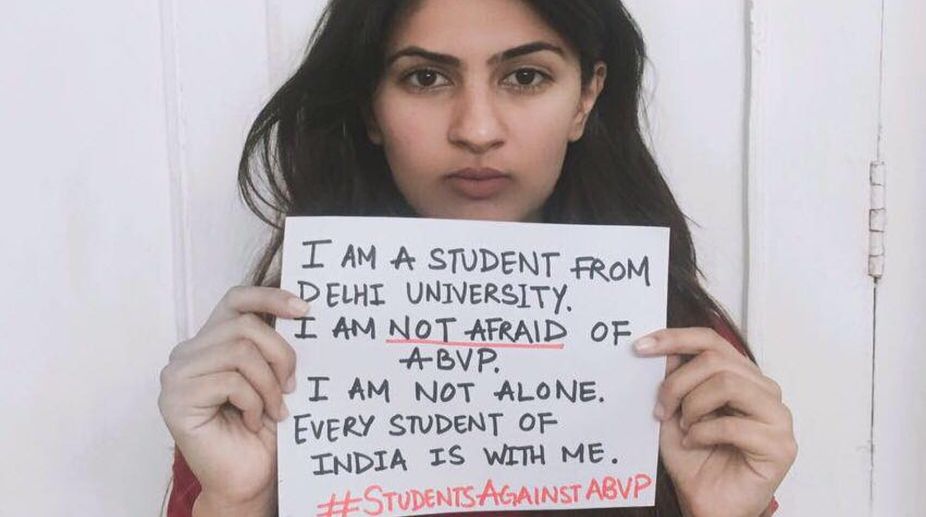
Delhi University student Gurmehar Kaur whose social media campaign against the Akhil Bharatiya Vidyarthi Parishad (ABVP) went viral, on Tuesday announced her withdrawal from the campaign.

"I'm withdrawing from the campaign. Congratulations everyone. I request to be left alone. I said what I had to say…" Kaur said in a tweet.

"I have been through a lot and this is all my 20 year self could take," said the student of Delhi's Lady Sri Ram College, and daughter of Captain Mandeep Singh who died in the Kargil war.

She, however, did ask students to join the march that was being held in the Delhi University on Tuesday.

"The campaign is about students and not about me. Please go to the March in huge numbers. Best of luck," she added.

"To anyone questioning my courage and bravery.. I've shown more than enough," she said.

Kaur launched a social media campaign against the Rashtriya Swayamsevak Sangh (RSS) students wing after a spate of violence in Ramjas College in Delhi.

She posted a video on Facebook with placards, one of them saying: "I am a student of Delhi University. I am not afraid of ABVP. I am not alone. Every student of India is with me."

She then received rape and life threats on the social media by some who called her "anti-national".

Clashes took place at Delhi University's Ramjas college on February 22, after the ABVP members forced the cancellation of a seminar and then disrupted a march.

Nifty consolidates below record highs; Telecom stocks shine

Statesman News Service | New Delhi |

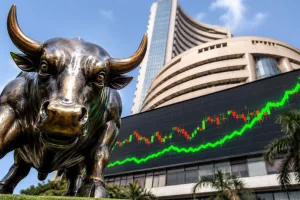
Indian stocks consolidated with an upward bias on Tuesday as they took cues from modest gains on Wall Street and a mild uptick across Asia. Stocks trade near 5-month highs and just a shade below the previous record as both local and overseas liquidity washes Dalal Street's shores.

Telecom stocks hogged the limelight in early deals as major developments continued to happen in the deal-making sector:

Tata Teleservices surged 6 per cent to 7.10 rupees on news that parent Tatas and partner Japan's DoCoMo were keen to arrive on a settlement in their long pending dispute worth $1.2 billion.

Bharti Airtel, India's largest mobile services provider, jumped 3.1 per cent to 366.75 rupees on news the company had taken steps to eliminate international roaming charges for its users and that it was making efforts to convince global peers to do the same.

Idea Cellular fell 3 per cent to 111 rupees as a large block deal hit the stock, which has appreciated more than 80 per cent in the past 2 months on expectations that it will merge with larger rival Vodafone Plc.

Meanwhile, here are the major events of the trading day:

* The Nifty rose 5 points to 8,901 points in the first 30 minutes of trade, retracing from an earlier high of 8,911 points. The index is trading at its highest level since early September and less than 2 per cent below its previous record high.

* Bharti Airtel, Bharti Infratel, Tech Mahindra, Zee Entertainment and GAIL rosel 1.1-3.1 per cent and were among 31 gainers on the Nifty.

* Idea Cellular, Coal India, ITC, Tata Motors and TCS lost between 0.3-3.1 per cent and were among 19 stocks to slip in early deals on the Nifty.

* Idea Cellular was the top traded counter by value with Rs 177 crore worth of shares changing hands in the first 40 minutes of trade. Reliance Industries and Jindal Steel & Power continued their uptrend on strong volumes and delivery-led purchases. A new entrant on the list was RBL Bank, up 3.4 per cent at 484 rupees. The private sector bank got listed late last year.

* JP Associates, Tata Teleservices and Reliance Communications were the other stocks on the list of most active shares.

* Broader markets inched up in trade with the Nifty 100, 200 and 500 benchmarks edging higher.

* All sectoral indexes posted gains, except the FMCG benchmark. The Media index was the top gainer, up 0.9 per cent. Banks were quiet.

* While indices failed to show the upward momentum, it was clearly visible in the broader market where 959 shares advanced compared to 540 that fell.

George W Bush breaks silence on Trump

IANS | Washington |

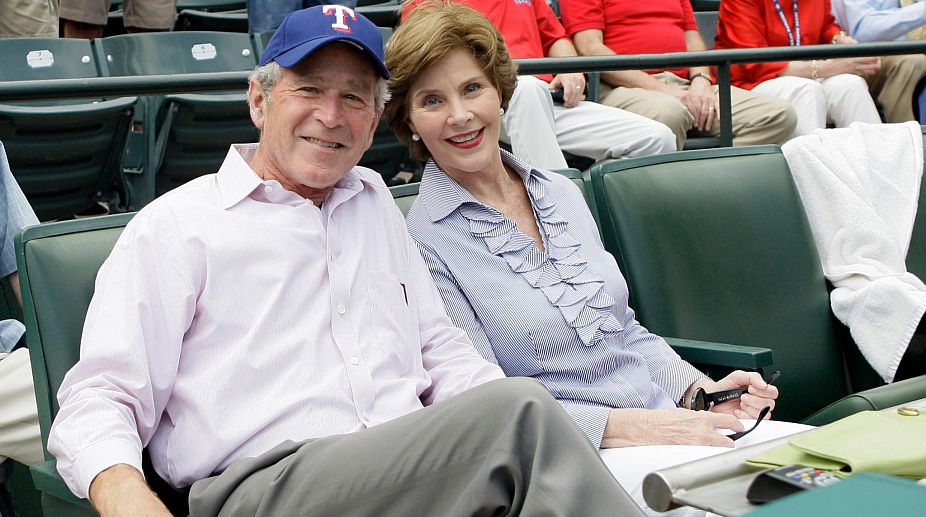
George W. Bush broke his silence on President Donald Trump's leadership, after refusing to criticise publicly those who succeeded him since he left the Oval Office eight years ago, a media report said on Monday.

"I don't like the racism and I don't like the name-calling and I don't like the people feeling alienated," Bush, 70, told People magazine in an interview.

"Nobody likes that".

The former President, joined by his wife Laura, spoke to the magazine in the painting studio of their Dallas home to launch his first art book, "Portraits of Courage: A Commander in Chief's Tribute to America's Warriors". 

The collection of portraits of the injured warriors of America's war on terror aims to raise awareness and funds for the post-9/11 veterans' health care and employment programmes of the George W. Bush Presidential Centre.

Talking about the Trump's January 20 inauguration, which was attended by both the former President and his wife, Bush said: "First of all, we were thrilled to be there. It's a beautiful ceremony, it really is. It's a peaceful transfer of power, which is very reassuring."

However, Bush called the political climate in Trump's Washington "pretty ugly", but said he was not feeling anxious about the direction of the country. 

"Not really. I'm optimistic about where we'll end up. … We've been through these periods before and we've always had a way to come out of it. I'm more optimistic than some."

Asked if he felt compelled to play a leadership role in these divisive times, Bush said: "No. When President (Brack) Obama got elected, friends would call and say 'You must speak out! You must do this, you must do that'. Turns out, other people are doing the same thing this time. I didn't feel like speaking out before because I didn't want to complicate the job and I'm not going to this time. However, at the Bush Centre we are speaking up."

A spokesman for the former President previously told People magazine that neither he nor the former first lady voted for Trump or for Democratic nominee Hillary Clinton in the November 8 election. 

The couple cast write-in votes for a candidate they did not reveal.

Mahershala Ali wants to spend time with his newborn daughter

PTI |

With the awards season finally over, Mahershala Ali has said he wants to spend quality time with his newborn daughter Bari Najma and wife Amatus Sami-Karin 

The 43-year-old actor, who took home the Oscar for best supporting actor, he is now ready to play a father to his daughter in real life, reported FemaleFirst.

"It's been remarkable. I know I really get to get into it tomorrow because awards season is done after tonight, but it's been remarkable. It's such a blessing to be a father," said Ali.

The actor also praised Amatus in his Academy Award acceptance speech for being so "tough" during her time of labour.

Ex-Test players to groom young Aussie talent

Their first assignment will be leading Australia's under-19 side in a home series against Sri Lanka.

AFP | Sydney |

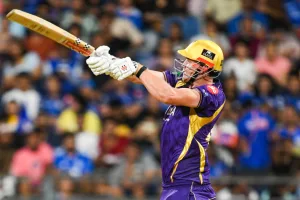
Former Test stars Ryan Harris and Matthew Elliott were on Tuesday appointed to nurture young Australian talent, with the pair's first assignment an under-19 series against Sri Lanka.

Fast bowler Harris and batsman Elliott beat off competition from 38 other applicants to be picked as high performance coaches at the National Cricket Centre, entrusted with developing the country's future stars.

"We have undertaken a thorough process to find the best coaches to mentor Australia's emerging talent and we are extremely excited to have both Matthew and Ryan joining," said Cricket Australia executive general manager Pat Howard.

"Both have come through the Cricket Australia coaching pathway … and have a strong understanding of the challenges that lie ahead in developing Australian cricketers to be ready for first-class and international cricket." 

Former high performance coach Graeme Hick has since been appointed as the Australia team batting coach, while the second coaching role is newly created.

The pair start work next week. Their first assignment will be leading Australia's under-19 side in a home series against Sri Lanka in April, with Elliott to coach the team and Harris his assistant.

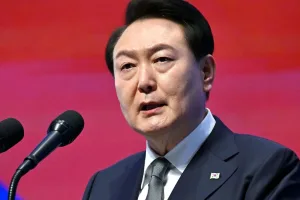
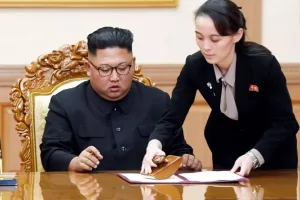
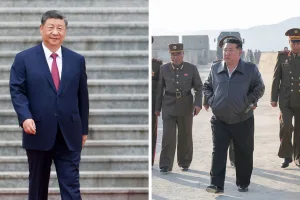
A tale of two Koreas

Irfan Husain | London |

The two Koreas seem to exist on different planets: prosperity and democracy in the South, and grinding poverty and repressive dictatorship in the North. These differences were highlighted in the recent assassination of Kim Jong Nam, half-brother of North Korea’s dictator, the murderous young Kim Jong Un. 

Since the two Koreas went their own paths over sixty years ago, the North has become ever more repressive and closed off, with mass starvation an ever-present threat. But at the same time, the country has forged ahead with its nuclear weapons and missile programmes despite tough international sanctions. Even China, its only friend, is getting increasingly fed up of its embarrassingly unpredictable ally. According to recent reports, it has refused to buy any more North Korean coal, thus bringing it in line with UN sanctions.

A friend who has visited North Korea regularly over the last few years as an EU consultant told me about the weird policies and the paranoia that hold the secretive communist country in thrall. Of course he was never allowed to speak to anybody without his official minder being present. But he saw the strict regimentation and the rampant poverty, especially in the countryside. Defectors from the North speak about the dreaded secret police and the concentration camps that hold thousands of those suspected of dissent. 

But despite the hardships his people go through, Kim Jong Un reportedly has access to imported goodies like caviar and cognac. So clearly, the sanctions and the stone-age agricultural practices and policies affect ordinary citizens, and not the party elites. And I’m sure that our own AQ Khan – the man accused of selling nuclear plans to North Korea – was well looked after on his frequent trips to Pyongyang. 

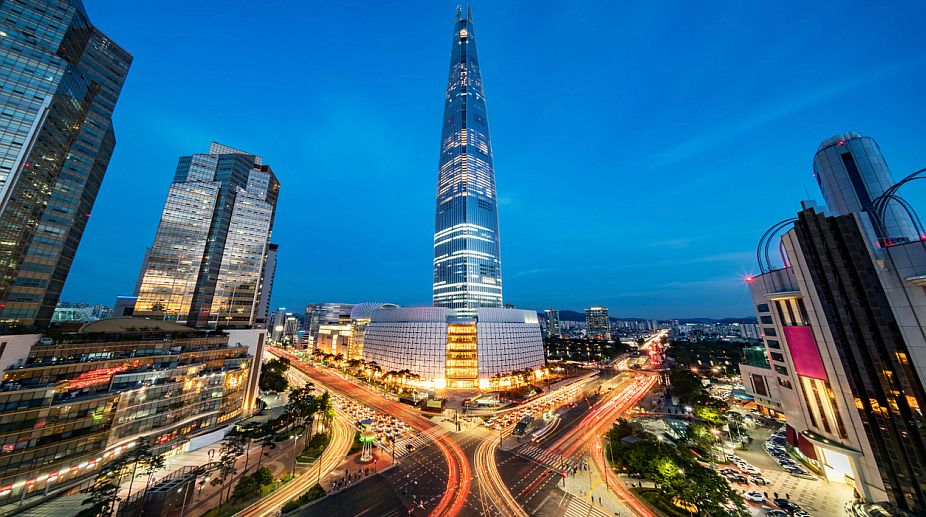
In its occasional coverage of South Korea, the North’s TV channel blurs the images of Seoul’s imposing skyscrapers so that its citizens don’t see their neighbour’s prosperity and progress. And since people have no access to the internet, and foreign radio and TV broadcasts are still forbidden for North Koreans, they are unaware that they have a per capita GDP of a mere US$583 versus US$34,300 for South Koreans. 

Constantly brainwashed about the existential US-led threat their country faces, they feel their sacrifices are worth the military strength they have achieved. And despite the presence of a powerful American army contingent in South Korea, the North presents a formidable threat to its southern neighbour. In fact, it is the danger it poses to Seoul – a mere 60 km from the heavily militarised border – that has prevented outside forces from mounting an armed incursion to prevent this dangerously volatile country from developing a full range of nuclear-armed missiles. 

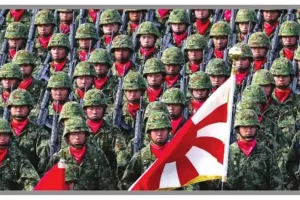
Despite the huge economic constraints the country’s military operates under it has mobilised a huge paramilitary force of nearly six million soldiers, or around 25 per cent of the population. And although its anti-aircraft batteries and missiles are now outdated, their numbers still present a formidable deterrent. The country’s poverty has not prevented its rulers from allocating some US$6 billion for defence annually. 

Thus far, China has resisted calls to rein in its maverick ally, and to force it to change its behaviour. It has long feared that an imploding North Korea would cause a flood of refugees to cross over. And China has also desired a buffer between its borders and South Korea, with its powerful army, strengthened by a strong American force. 

But now, by assassinating Kim Jong Nam, a member of the Kim dynasty under the protection of China, North Korea might finally have gone a step too far. While the reason for the killing by VX nerve agent at Kuala Lumpur airport is still unclear, the fact is that there had been an earlier attempt by North Korean agents. The current theory is that the North Korean dictator feared that his estranged half-brother might have been put up as an alternative to him by China one day. His elimination was thus a matter of survival for the paranoid Kim Jong Un.

The assassination has also strained relations with Malaysia which is furious that the very public killing took place on its soil. For its part, North Korea has denounced the fact that it has been accused of being behind the hit. Its agents had probably assumed that given the subtle nature of VX, its presence would not be detected, and Kim Jong Nam’s death would be assumed to have been caused by a heart attack. But CCTV cameras caught the swift action of the two women who carried out the actual hit while their North Korean minders watched from a safe distance before catching a flight to Pyongyang. 

Kim Jong Un is the third in line from the Kim dynasty to assume absolute control of the country. Kim Jong Nam fell out of favour of his father, Kim Jong-Il for attempting to enter Japan on a fake passport to visit Disneyland. Once his half-brother took over, he had feared for his life and lived in Macau under Chinese protection. His visit to Malaysia proved fatal as he was constantly under surveillance by the North Korean secret service.

North Korea is clearly an aberration in the 21st century with its secretive ways and its repressive rule. The half-baked socialist policies it follows has bankrupted the country, and yet it has continued on its prickly, paranoid path. The true reason its leaders refuse to relax their grip is to retain their position of power and privilege. Its people are prisoners in a vast gulag where to disobey or disagree is punishable by death. Among the annals of dictatorships, North Korea surely stands out as the worst of the lot.

(Dawn/ ANN)

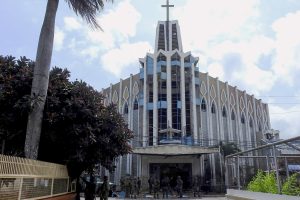
German Abu Sayyaf hostage last words: ‘Now he kill me’

ANN | Davao City, Philippines |

German hostage Jurgen Kantner was silent as the Abu Sayyaf prepared to execute him.

In a one-minute and 43-second video leaked from a chat group, the 70-year old Kantner was initially on the ground, wearing black shirt and pants and his hands tied to his back.

A bandit then helped him get up while talking in an uncertain dialect with his fellow bandits.

A man with a curved blade, similar to the ones used by sugarcane workers, then emerged and suddenly grabbed Kantner, who only managed to utter: “Now he kill me.”

Kantner was seen in the video struggling for his life as the unidentified bandit slashed his throat back and forth while chants of “Allahu Akbar” fill the background.

The executioner, who wore a full head garb obscuring his face, then held the severed German’s head into the air as the chanting continued.

The executioner then placed the head upside near Kantner’s neck before walking away.

Presidential Adviser on the Peace Process Jesus Dureza condemned the beheading of the German national as he confirmed the execution of the kidnap victim in Sulu.

“We grieve as we strongly condemn the barbaric beheading of yet another kidnap victim,” Dureza said in a statement.

“Up to the last moment, many sectors, including the Armed Forces of the Philippines exhausted all efforts to save his life. We all tried our best. But to no avail,” he added.

Dureza said terrorism has “no place in a country like ours and we as a people must confront violent extremism every time it rears its ugly head.”

“I was always in close contact with German authorities in our efforts. We condole with his family, friends and loved ones,” Dureza said.

Kantner and his wife Sabine Merz were sailing on Malaysian waters when they were kidnapped on November 5 last year. Merz was killed by the bandits.

Alex Hales earns England recall after rapid recovery

England are due to play a three match ODI series against the West Indies.

AFP | London |

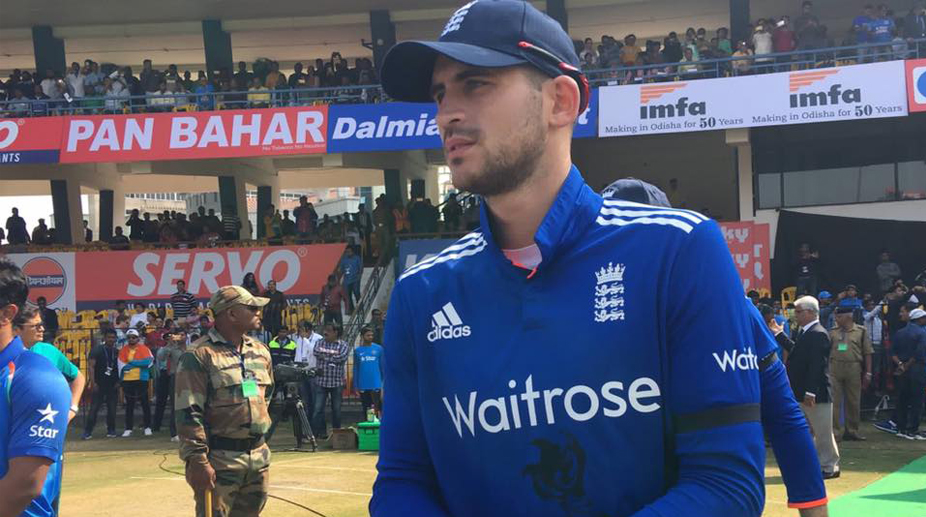
England opener Alex Hales should play a role after all in England's tour of the West Indies after earning a call-up only a month after he had been omitted because of a right hand fracture.

The 28-year-old Nottinghamshire batsman — who has 11 Tests and 40 One Day Internationals under his belt — suffered the injury during January's disastrous tour of India.

However, having been left out when the original squad was announced on January 27th he has been summoned after a scan confirmed he has sufficiently recovered although he will still have to undergo rehab when he gets to the West Indies to ensure he is fully fit.

Hales, who in 2016 made England's highest individual ODI score — 171 against Pakistan at his Trent Bridge home ground — will rejoin his international team-mates three days before the first match in Antigua on March 3.

Hales tweeted: "Antigua tomorrow. Can't wait to get back amongst it!" 

"Alex Hales arrives tomorrow evening local time," the ECB confirmed. "He will continue his rehab with us until the medical and coaching teams deem he is fit enough to join the squad officially." 

England are due to play a three match ODI series against the West Indians, two games in Antigua and one in Barbados.

How effective is media verification in stopping fake news?

The Jakarta Post/ANN | Jakarta |

The Indonesian authorities can take legal measures against fake news or libellous statements, which has the potential to foment social unrest, by using the already available regulations.

China is the only major nation to be able to impose strict internet control. With a strong censorship apparatus, including a reported 30,000 personnel policing the internet, China is the country with the harshest online control. Using its extensive internet control apparatus, China manages to crack down on online information deemed false or not in conformity with the country’s ideology, communism.

Stressing its desire to protect the public from the plague of fake news on social media, Indonesia’s Press Council recently announced the names of media companies listed as “verified”. It claims the verification process is aimed at creating a healthy media environment. Like it or not, such media verification has brought back dark memories of press control under former president Soeharto. The question is, can Indonesia curb the spread of fake news or false stories in this fast-growing digital media era unless it imposes strict internet control like in China?

Opposition to media verification continues to arise although it is actually not new. The Press Council says verification of media companies is stipulated in Article 15 of the 1999 Press Law, which states that the council is required to set up a data bank on press corporations. Verification is reportedly also a commitment of press communities as stated in the Palembang Charter of Feb. 9, 2010.

Elements of verification include the legality of a media corporation, the content of its news coverage, the existence of an editorial board, the company’s ability to pay its journalists properly and the availability of a journalism code of conduct.

Through such verification, the Press Council wants to ensure that a media corporation fulfils all the requirements needed to enable it to implement its full function as a free and responsible press. Verification is also seen as one way the council can maintain the credibility of Indonesia’s press, which has been impacted by irresponsible use of social media platforms.

The council believes verification will force news organizations and online publishers to apply a high standard of journalism and truthful reporting.

Yet the trauma of censorship under Soeharto’s authoritarian New Order, which never had clear guidelines, has left press organizations wary about the effectiveness of such verification in protecting the public from fake news. There is a widespread concern that such certification will become no more than censorship in a new guise. Furthermore, several parties in the media community have expressed concerns that in the face of libel threats the council may have its hands tied and may not be able to help them if their media has not been verified. The council therefore should explain to the press community its policies and measures in such cases.

At the same time, despite the ongoing verification process, fake news online continues to flourish, influencing people’s ways of thinking and attitudes.

During an event held by the Hanura Party in Bogor, West Java, on Feb. 22, President Joko “Jokowi” Widodo expressed his concern about the rampant spread of false stories, hoax or fake news and hate speech via social media, which he said would divide the nation if it was left unresolved. He highlighted an excess of democracy in various forms, including the politicization of different ethnic, religious, racial and social group (SARA) sentiments.

Tight internet censorship may sound promising in stopping fake news.

With its well-combined automated and human-controlled censorship apparatus, the Chinese government has been successful in blocking and filtering online information deemed false or unverified. But for Indonesia, imposing such a strong censorship may lead to a decline in democracy and undermine respect for fundamental freedoms that the country has long fought for.

Actually, it is possible for the Indonesian authorities to take legal measures against fake news, such as libellous statements or SARA incitement, which has the potential to foment social unrest, using already available regulations.

In July 2014, the Communications and Information Ministry issued Ministerial Decree (Permen) No. 19/2014 on the handling of negative internet content. This decree mandates the establishment of a panel that must deliver recommendations to the ministry about what sites it should put on TRUST+Positif, the government’s filtering system, for blocking.

Permen 19 is an implementing regulation of the 2008 Information and Electronic Transactions (ITE) Law, which punishes anyone who intentionally and without justification spreads information aimed at inciting hatred or hostility among individuals and/ or certain social groups by means of exploiting SARA issues.

With Indonesia’s increasingly mature democracy, website blocking should be used only as a last resort as it does more harm than good in terms of respect for and fulfilment of people’s rights. A society that is enlightened is one with an ingrained alert system, where people are not easily duped by unreliable sources.


Nationwide strike shuts down banking operations

IANS | Chennai |

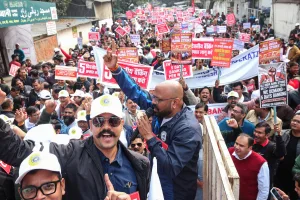
Banking operations across the country came to a halt on Tuesday as 10 lakh bankers staged a strike against the government's "anti-people banking reforms", said a bank union leader.

The strike was called by the United Forum of Bank Unions (UFBU), comprising nine unions.

They also pressed for compensation to employees for extra work done on account of demonetisation.

"Around 85,000 branches of commercial banks, 105,000 branches of co-operative bank and others are on strike," C.H. Venkatachalam, General Secretary, All India Bank Employees' Association (AIBEA) told IANS here.

He said clearance of 40 lakh cheques totalling around Rs 22,000 crore would be affected.

The strike covers employees and officers in all public sector banks, including State Bank of India, all old-generation private banks, foreign banks, regional rural banks and cooperative banks.

Venkatachalam said the shutdown comes after all attempts to find a solution to the demands raised by the unions yielded no results.

The conciliation meeting before the Chief Labour Commissioner on February 21, failed to break the deadlock as the bank management body — Indian Banks Association (IBA) — did not agree to the union demands.

Most state-run banks have informed customers that functioning of branches and offices would be hit if the strike was observed on Tuesday.

Top private lenders — ICICI Bank, HDFC Bank and Axis Bank — are not part of the union and would continue to function normally but cheque clearances would not take place.

Besides, cash transactions would also be hit and the ATMs are likely to be emptied early during the day.

"ATM operations are yet to normalise after the demonetisation of high value notes. It seems people have resigned to the situation of less cash," Venkatachalam added.
Nifty trades above 8,900 in morning trade

SNS | New Delhi |

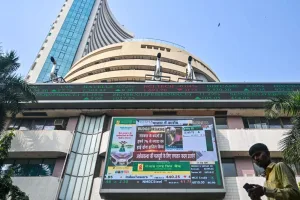
Tracking mixed Asian peers, Indian equity markets started Tuesday’s trading session on a flat note. At 9.50 am, the Sensex at the BSE was trading 16 points up at 28,829 and the Nifty at the NSE was trading five points higher at 8,901.

However, broader markets again outperformed the front liners. BSE Midcap and Smallcap indices jumped around 0.4 per cent each.

Among the BSE sectoral indices, Telecom index jumped the most, up 0.7 per cent, while Oil & Gas index became the top loser, down 0.4 per cent.

On Monday, the Sensex snapped six-session winning streak and closed 80 points down at 28,813. The broader Nifty closed 43 points lower at 8,897.

Top gainers in the Sensex-30 pack: Bharti Airtel (up 1.8 per cent), L&T (up 1 per cent), Cipla (up 1 per cent), Sun Pharma (up 0.8 per cent) and Adani Ports (up 0.8 per cent).

Top losers in the Sensex-30 pack: Coal India (down 1.4 per cent), HUL (down 0.8 per cent), ITC (down 0.5 per cent), Bajaj Auto (down 0.4 per cent), and ICICI Bank (down 0.3 per cent)

Meanwhile, the Rupee was trading eight paise down at 66.78 against the US Dollar.

Portuguese fisherman finds unexploded WWII bomb

IANS | London |

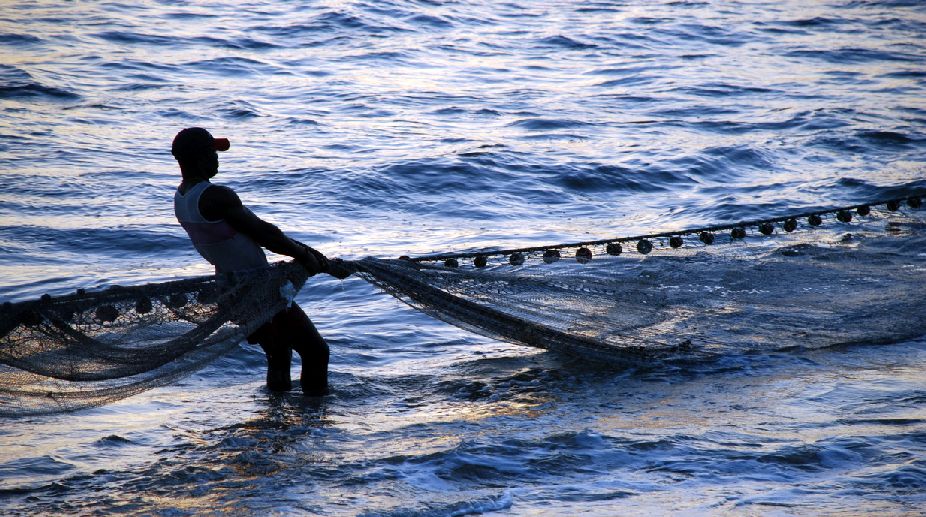
A Portuguese fisherman in Nazare, around 120 km north of Portuguese capital Lisbon, found an unexploded bomb, believed to be from World War II.

The bomb, equivalent to 600 kg of TNT, was detonated by Portuguese navy divers safely at sea on Monday afternoon, Xinhua news agency reported.

The detonation was carried out 25 meters under water and around 1,000 meters away from the coast.

An area with 300 perimeters was sealed off to ensure the safety of the detonation.

Bengal takes up 10 solid waste management projects

IANS | Kolkata |

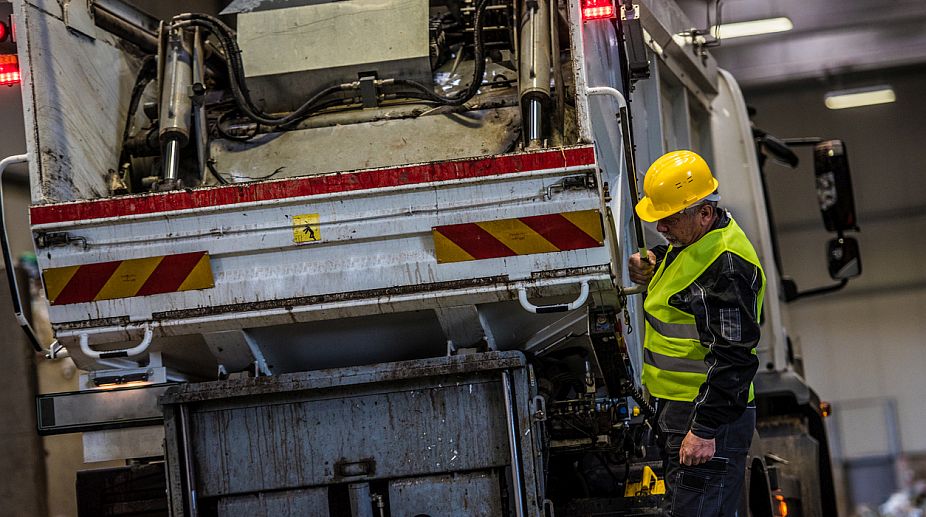
West Bengal's Mamata Banerjee government has taken up 10 integrated solid waste management projects for 14 urban local bodies, at a cost of Rs 421.69 crore, under Mission Nirmal Bangla, an official release said on Monday.

The urban local bodies are in Kolkata, Dum Dum, North and South Dum Dum, Baranagar, Bhatpara, Naihati, Ashoknagar-Kalyangarh and Habra, Asansol, Krishnanagar, Santipur, Nabadwip and Jalpaiguri.

"Tender process of these projects have been initiated and all the ULBs have been instructed to create massive awareness…," the release said.

Under the mission, four districts – Nadia, North 24 Parganas, Hooghly and East Midnapore and its 55 urban local bodies – achieved open defecation free status by completing the construction of more than one lakh individual household latrine.

The government said that another 21 urban local bodies of Burdwan, South 24 Parganas and Coochbehar districts aim to construct more than 1.5 lakh household latrines to achieve open defecation free status by March 2017.

The state government has provided Rs 452.17 lakh to all the 125 urban local bodies for public awareness generation and spaying larvicide oil to prevent vector borne diseases like malaria, dengue etc.

The government said this year, Rs 2,400 crore plan fund has already been spent by urban local bodies and Rs 695 crore has already been released to them from the from Finance Commission.

Bengal takes up 10 solid waste management projects

IANS | Kolkata |

West Bengal's Mamata Banerjee government has taken up 10 integrated solid waste management projects for 14 urban local bodies, at a cost of Rs 421.69 crore, under Mission Nirmal Bangla, an official release said on Monday.

The urban local bodies are in Kolkata, Dum Dum, North and South Dum Dum, Baranagar, Bhatpara, Naihati, Ashoknagar-Kalyangarh and Habra, Asansol, Krishnanagar, Santipur, Nabadwip and Jalpaiguri.

"Tender process of these projects have been initiated and all the ULBs have been instructed to create massive awareness…," the release said.

Under the mission, four districts – Nadia, North 24 Parganas, Hooghly and East Midnapore and its 55 urban local bodies – achieved open defecation free status by completing the construction of more than one lakh individual household latrine.

The government said that another 21 urban local bodies of Burdwan, South 24 Parganas and Coochbehar districts aim to construct more than 1.5 lakh household latrines to achieve open defecation free status by March 2017.

The state government has provided Rs 452.17 lakh to all the 125 urban local bodies for public awareness generation and spaying larvicide oil to prevent vector borne diseases like malaria, dengue etc.

The government said this year, Rs 2,400 crore plan fund has already been spent by urban local bodies and Rs 695 crore has already been released to them from the from Finance Commission.

Landslides close Jammu-Srinagar highway

IANS | Jammu |

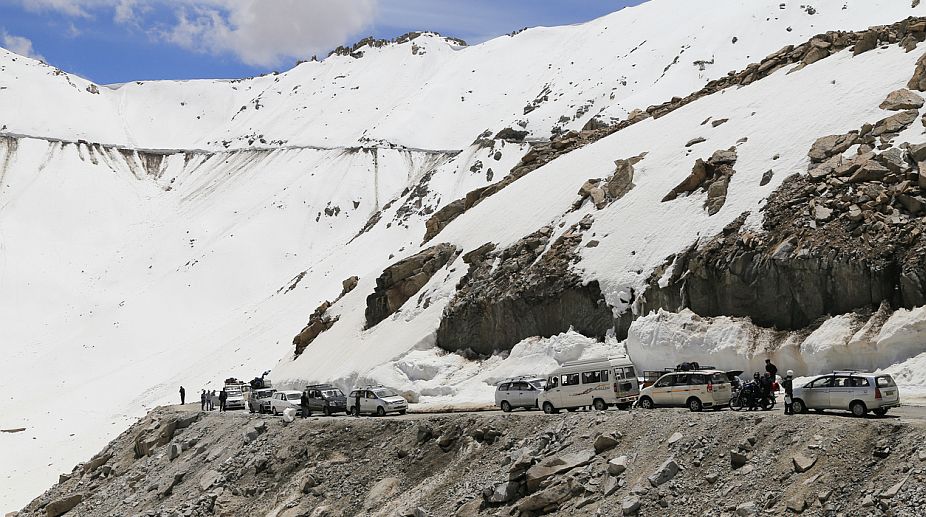
 Landslides on Tuesday forced closure of the Jammu-Srinagar national highway yet again stranding scores of vehicles carrying passengers and goods, a traffic department official said.

Fresh landslides in Mehar area of Ramban district led to the disruption of traffic on the strategic highway in Jammu and Kashmir.

No traffic would be allowed on the highway pending clearance, the official added. 

The clearing operations have started. Travellers were requested not to undertake any journey without contacting the traffic control rooms both in Jammu and Srinagar, the official said.

Scores of vehicles carrying passengers and goods were stranded in Jammu, Srinagar and various other places along the 300 km long road.

In the last two winter months supplies to the landlocked Valley was affected due to frequent closure of the highway following the landslides and snowfalls.

The state Human Rights Commission took cognizance of the fact that each time the highway was closed the air fares between the twin capitals of the state skyrocketed. 
 

Landslides close Jammu-Srinagar highway

IANS | Jammu |

 Landslides on Tuesday forced closure of the Jammu-Srinagar national highway yet again stranding scores of vehicles carrying passengers and goods, a traffic department official said.

Fresh landslides in Mehar area of Ramban district led to the disruption of traffic on the strategic highway in Jammu and Kashmir.

No traffic would be allowed on the highway pending clearance, the official added. 

The clearing operations have started. Travellers were requested not to undertake any journey without contacting the traffic control rooms both in Jammu and Srinagar, the official said.

Scores of vehicles carrying passengers and goods were stranded in Jammu, Srinagar and various other places along the 300 km long road.

In the last two winter months supplies to the landlocked Valley was affected due to frequent closure of the highway following the landslides and snowfalls.

The state Human Rights Commission took cognizance of the fact that each time the highway was closed the air fares between the twin capitals of the state skyrocketed.