Logo

Nifty crosses 9,200 for first time, Sensex climbs 239 pts

PTI | Mumbai |

Continuing its record-setting spree, the Nifty climbed over the 9,200-mark for the first time and the benchmark Sensex surged 239 points in early hours on Friday with foreign investors continuing to pump up money.

The broader NSE Nifty crossed the key 9,200-mark by surging 64.70 points, or 0.70 per cent, to trade at an all-time high of 9,218.40.

The 30-share index surged 238.77 points, or 0.80 per cent, to trade at 29,824.62.

The gauge had added 187.74 points in the previous session, tracking firm global markets after the prospects of a gradual approach to US rate hike removed a big uncertainty.

Sectoral indices led by FMCG, realty, metal and power were trading in the positive zone with gains up to 2.97 per cent.

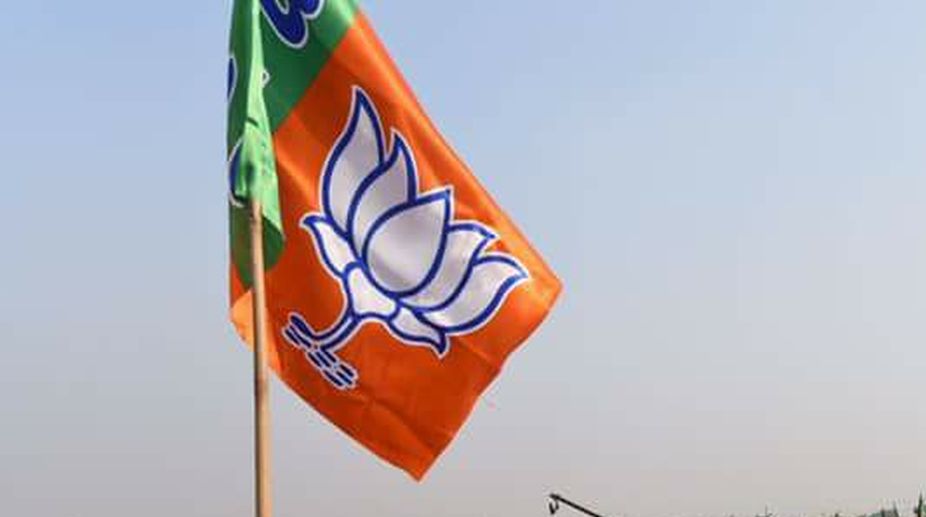
Sentiment was up on strong inflow of foreign capital in the Indian bourses and hopes that the government will accelerate its reform agenda following the BJP's huge win in UP and Uttarakhand assembly elections last week.

Hong Kong's Hang Seng was up by 0.32 per cent while Japan's Nikkei shed 0.34 per cent in early trade on Friday.

Shanghai Composite fell 0.17 per cent.

The US Dow Jones Industrial Average ended marginally lower by 0.07 per cent on March 17.


Guterres warns against abrupt funding cuts by US to UN

PTI | United Nations |

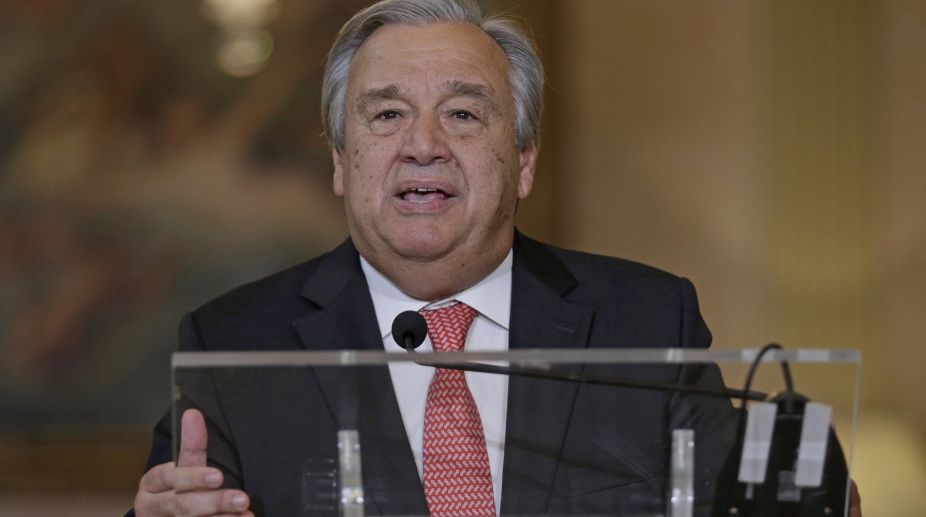
Secretary-General Antonio Guterres on warned against an abrupt cut to US funding for the UN, saying it will affect the world body's long term reform efforts.

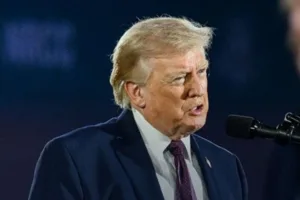
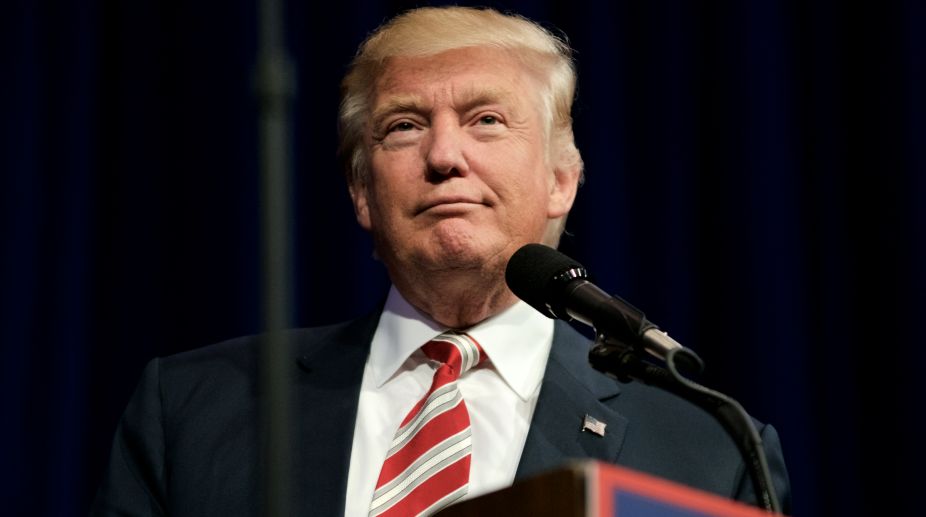
Guterres's comments came after US President Donald Trump proposed a budget cut for diplomacy and foreign aid.

Guterres's spokesperson Stephane Dujarric told reporters here yesterday the UN Chief has seen the blueprint of the 2018 budget released by the White House and stands ready to discuss with the US and any other Member State how best to create a more cost-effective Organisation to pursue shared goals and values.

"Abrupt funding cuts can force the adoption of ad hoc measures that will undermine the impact of longer-term reform efforts," Dujarric said.

Trump unveiled a 1.1 trillion dollar budget that proposes cutting foreign aid by 28 per cent. Military spending would increase by $ 54 billion, a 10 per cent rise, in 2018, in addition to a $30 billion increase in the current year.

Guterres also added that increasing military spending alone will not be enough to combat terrorism and countries will have to address the underlying reasons behind terrorism by investing in conflict resolution and countering violent extremism.

"The Secretary-General fully subscribes to the necessity to effectively combat terrorism, but believes that it requires more than military spending," Dujarric said.

"There is also a need to address the underlying drivers of terrorism through continuing investments in conflict prevention, conflict resolution, countering violent extremism, peacekeeping, peacebuilding, sustainable and inclusive development, enhancement and respect for human rights, and timely responses to humanitarian crises," Dujarric said.

The United States is the biggest contributor to the United Nations, paying 22 per cent of the $5.4 billion core budget and 28.5 per cent of the $7.9 billion peacekeeping budget.

Last year, Under-Secretary-General for Management Yukio Takasu had said the US owes the UN $1.3 billion for peacekeeping and $917 million towards the regular budget.

US Ambassador to UN Nikki Haley said in a statement that in many areas, the UN spends "more money than it should" and in many ways it places a much larger financial burden on the United States than on other countries.

She said she will work with Members of the US Congress to craft a budget that advances US interests at the UN while working with her UN colleagues to make the organisation more effective and efficient.

Rights group Human Rights Watch however expressed concern over the US government's proposed reduction in funding for UN peacekeeping and unspecified cuts for the rest of the UN, saying it sends a "disturbing message" about the Trump administration s commitment to human rights at a global level.

"While it is appropriate for the US to seek UN reforms, deep funding cuts would threaten UN institutions and programs that advance and promote human rights worldwide," UN Director at Human Rights Watch Louis Charbonneau said.

Swearing-in of new Uttarakhand CM on Saturday

IANS | Dehradun |

Hectic preparations are underway here for the swearing-in of the new government on Saturday, officials said.

While the name of the new Chief Minister and ministers is yet to be declared, state Bharatiya Janata Party (BJP) chief Ajay Bhatt has informed that the oath taking for the new ministers has been fixed for 3 p.m. on March 18 (Saturday).

All the 57 newly-elected legislators of the BJP have been asked to come to the state capital between Friday and Saturday to partake in the swearing-in which is likely to be a grand affair as the party has swept back to power after five years and that too with a landslide majority.

Prime Minister Narendra Modi and BJP president Amit Shah along with select ministers from the Union government and central office bearers are likely to be present at the oath taking ceremony. 

Security arrangements are being made at the Parade Grounds, keeping in mind the VVIPs who will attend the event, an official informed IANS. Senior police and district officials along with some BJP legislators have been visiting the venue to oversee arrangements for the Saturday event.

The newly elected lawmakers of the BJP are likely to meet later on Friday to elect their new leader who will also be the next Chief Minister of the state. BJP president Amit Shah has named two central observers – Saroj Pandey and Narendra Tomar, to oversee the election of the new legislature party leader.

BJP leaders Trivendra Singh Rawat and Prakash Pant are said to be front runners in the race to be the next Chief Minister of the state.

Donald Trump to appeal rulings on revised travel ban

IANS | Washington |

US President Donald Trump's administration will appeal rulings by two federal judges who blocked his second attempt to institute a travel ban, media reports said.

"We intend to appeal the flawed rulings," White House spokesman Sean Spicer said in his daily press briefing on Thursday, referring to temporary stays issued by federal judges in Hawaii and Maryland.

Spicer said Trump had the authority to impose a 90-day ban on the issuance of visas to people from six Muslim-majority countries…and halt the US refugee program for 120 days, Efe news reported.

"The danger (of terrorists entering the US) is real. And the law is clear," said the White House spokesman.

He added that the Trump administration was exploring all available options to vigorously defend the revised executive order.

Trump's original travel ban suspended US entry for all refugees as well as travellers from a group of Muslim-majority countries: Iran, Iraq, Libya, Somalia, Sudan, Syria and Yemen.

Imposed on January 27, the travel ban also was blocked by a federal judge.

Among the alterations made in the revised order were the removal of Iraq from the list of targeted nations and an exemption for lawful permanent residents and travellers who obtained US visas ahead of the January 27 announcement.

The revised order also does not indefinitely bar Syrian refugees from entering the US.

The federal judges who issued the latest stays found that Trump's order did not offer solid evidence of a terrorist threat and was unconstitutional because it discriminated against people on the basis of their religion.

Key Indian equity indices trade higher in early session

IANS | Mumbai |

Key Indian equity market indices opened in the green on Friday after the Council approved the Goods and Services Tax (GST) draft bills.

The 30-scrip Sensitive Index (Sensex) was trading 110.15 points or 0.37 per cent higher during the early session.

The wider 51-scrip Nifty of the National Stock Exchange (NSE) was also trading 36.95 points or 0.40 per cent higher at 9,190.65 points.

The BSE Sensex, which opened at 29,755.74 points, was trading at 29,696 points (at 9.17 a.m.) in the early session, higher 110.15 points or 0.37 per cent from the previous day's close at 29,585.85 points.

The Sensex touched a high of 29,824.62 points and a low of 29,693.05 points in the trade so far.

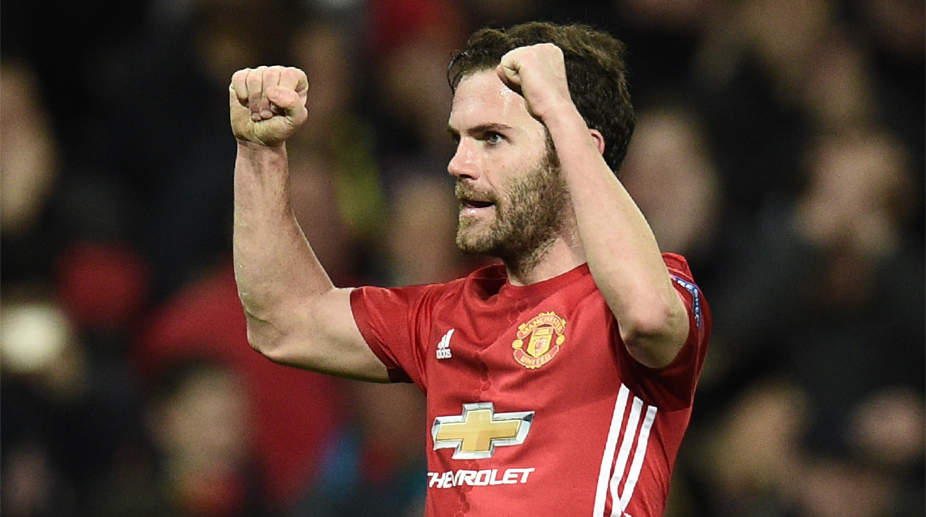
UEFA Europa League result: Manchester United edge FC Rostov thanks to Juan Mata

On a rare start, the diminutive Mata scored a priceless winner to take United into the quarterfinals!

SNS | New Delhi |

Manchester United beat FC Rostov 1-0 in the second leg of their UEFA Europa League round-of-16 tie on Thursday to progress to the quarterfinals 2-1 on aggregate, but the victory came at a steep price as two United players came off injured in the second half.

United manager Jose Mourinho is treating the second-tier continental competition very seriously and perhaps that is why, with the exception of goalkeeper David de Gea, the Red Devils trotted out in a very strong 3-4-3 formation.
The first leg had ended at 1-1 with United sluggish on the questionable FC Rostov pitch but at Old Trafford on Thursday, looked confident and dangerous from kick-off.

Moving the ball around without any trouble, the hosts first real chance came off a slick move but Henrikh Mkhitaryan’s chip over Rostov keeper Nikita Mdevedev was just wide a minute before the half-hour mark.

The Armenian winger was playing alongside Zlatan Ibrahimovic and Juan Mata with the likes of Paul Pogba and Ander Herrera for support from midfield. Antonio Valencia and Daley Blind were playing as wing-backs as United looked to bombard the visitors with a unrelenting wave of attacks.

Minutes after Mkhitaryan came close to breaking the deadlock, Ibrahimovic sent in a thundering shot which cannoned off the post with Medvedev well beaten. While the shot from inside the box was impressive, the Swede could have squared it for an unmarked Mkhitaryan at the far post but selfishly, chose to shoot.

United were desperate for a goal before the interval and Pogba went close in injury-time but his left-footed curler was well saved by Medvedev to ensure the teams went in at the break with nothing to separate them.

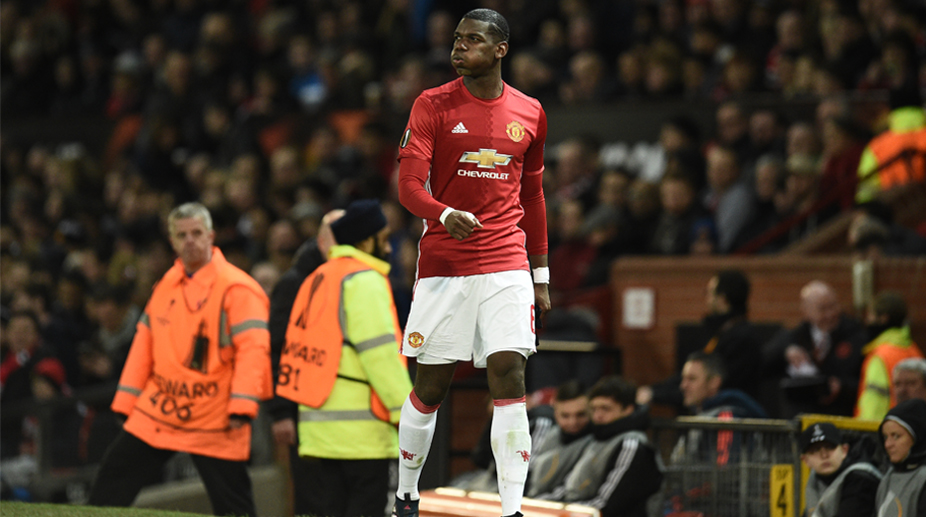
That shot turned out to be Pobga’s last contirbution of note to the game as minutes into the second half, he pulled his hamstring and had to be replaced by Maruoane Fellaini. Pobga, who has hardly been injured in his career so far, perhaps had not recovered from the FA Cup quarterfinal against Chelsea on Monday night.

As things stood, United would go through on the away goals rule but a warning shot was fired by the visitors in the 53rd minute when Rostov striker Sardar Azmoun beat Marcos Rojo on the edge of the box and let loose a powerful left-footed shot. United goalkeeper Sergio Romero justified his inclusion into the side with a brilliant flying stop to save United’s blushes.

As full-time approached, a goalless draw looked likely with United unable to test Medvedev and to make matters worse, Daley Blind suffered a head injury in the 64th minute and Phil Jones had to replace him.

United weren't to be denied, however, and as Juan Mata made a vital interception on the halfway line, the Red Devils surged forward. Mata played it to Ibrahimovic, who in turn released Mkhitaryan on the right wing. The Armenian winger sent in a low cross for the Swede but with the ball slightly behind the striker, he deftly back heeled the ball to Mata, who was waiting at the far post to score the winner with exactly twenty minutes left.

The goal seemed to deflate their Russian opponents and as United continued to dominate possession without looking extremely threatening in attack, they managed to hold on to their slender lead.

While the Europa League may pale in comparison when compared to it’s ‘big brother’, the UEFA Champions League, there is no denying the fact that United are strong contenders to win this year’s title.

Manchester United’s Paul Pogba suffers injury in UEFA Europa League win

Not the ideal birthday week for the 24-year-old Paul Pobga!

SNS | New Delhi |

A day after turning 24, Manchester United midfielder Paul Pogba got injured in Manchester United’s 1-0 win over FC Rostov on Thursday night and is expected to miss a few weeks at least, according to his manager Jose Mourinho.

Pogba had started in the FA Cup loss to Chelsea on Monday and perhaps playing another game in a span of few days took its toll as he had to be substituted for Marouane Fellaini barely two minutes into the second half.

Chasing an FC Rostov player, the Frenchman pulled up suddenly, clutching his hamstring and Mourinho told reporters in the post-match press conference “ "I don't know how long [he will be out] for sure. But there will be no Middlesbrough and no national team.” 

United travel to Middlesbrough on the weekend and to make matters worse, star striker Zlatan Ibrahimovic will also miss out as he is serving a domestic three-game suspension at the moment.

By national team the Portuguese manager of course means the two games France have to play, the first one a FIFA World Cup qualifier against Luxembourg on March 26 and the second an international friendly against Spain on March 29.

So if one goes by Mourinho’s comments, the world’s most expensive player could target an April 1 return, when Manchester United host West Bromwich Albion in the English Premier League.

While United managed to beat the Russians 1-0 on the night (2-1) on aggregate and qualify for the UEFA Europa League quarterfinals thanks to Juan Mata’s winner, they will need their midfield powerhouse back without much delay if they are to win any other trophies this season.

Mizoram government presents Rs 8,803-cr surplus, tax-free budget

IANS | Aizawl |

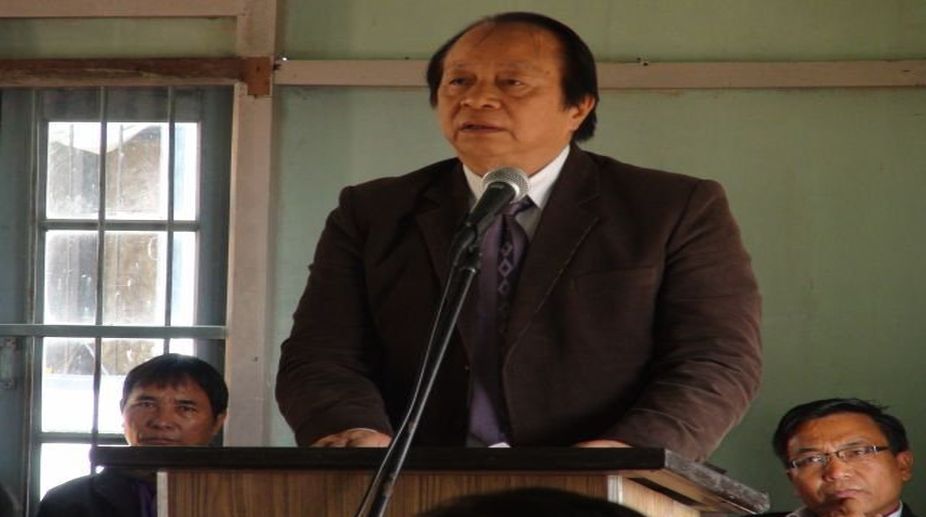
Mizoram Finance Minister Lalsawta on Thursday presented a Rs 8,803.10-crore tax-free surplus budget for the financial year 2017-18.

The minister tabling the budget said that the surplus of Rs 331.07 crore was possible with the revenue surplus of Rs 1,787.10 crore.

Lalsawta said: "Rs 750 crore were allocated for implementation of the New Economic Development Policy (NEDP) to boost the state's agriculture-based economy."

Mizoram Chief Minister Lal Thanhawla launched the NEDP in October last year to develop private-public partnerships for adding value to various agricultural, horticultural and other produce.

The Finance Minister said that Rs 239.50 crore were allocated for maintenance of roads while Rs 657.64 crore for construction of new highways to improve the connectivity between the rural, remote and urban areas of the bordering state.

"In the coming year's (2017-18) Budget, Rs 366.77 crore was also allotted as a matching share under the Externally Aided Projects (EAP) for development of roads and other infrastructure. The World Bank and the Asian Development Bank have also given funds to Mizoram for development of the state's highways and various other infrastructures," the minister said.

The Finance Minister told the house that the state government is optimistic that after the implementation of the GST (Goods and Services Tax) from July the state's revenue would be increased with rational amount.

"I did not make any proposals in the Budget increasing the rates of taxes or also did not impose any new tax as the GST would supersede the whole tax regime," he added.

The fortnight-long Budget Session of the 40-member Mizoram assembly began on Tuesday with the customary speech of the state Governor Lt. Gen. Nirbhay Sharma (Retd).

Three million Syrian refugees in Turkey

IANS | Ankara |

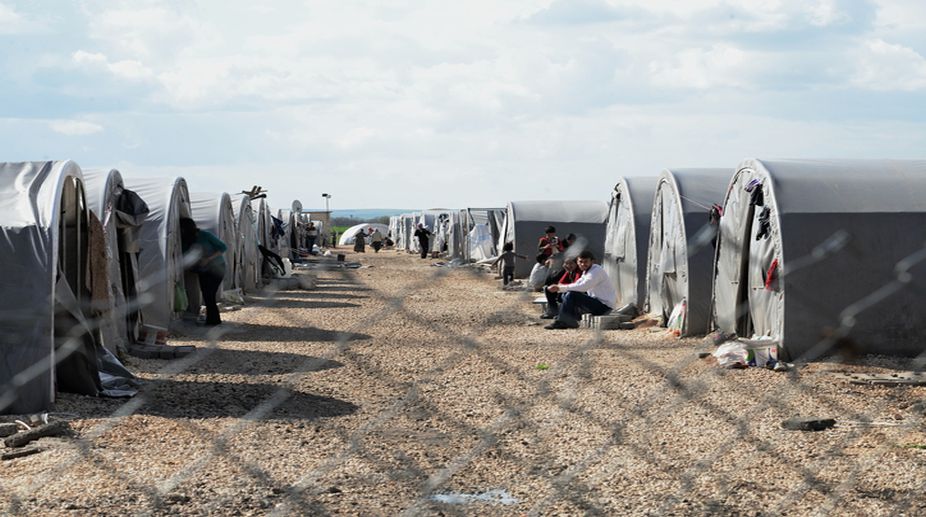
A total of 2,957,454 Syrians are currently registered in Turkey, media reports said.

Local daily Hurriyet, citing a tweet from the interior ministry's directorate general of migration management on Thursday, reported that he official figures included protection applications, irregular migrants and foreigners given residence permits.

There were more Syrian men (1,580,866) than women (1,367,588) registered. The majority of males was aged 19 and 24 and the biggest group of females was aged between five and nine, the directorate said.

Around 10 per cent of Syrian refugees were in refugee camps, according to official data cited last month by state news agency Anadolu. Most are living in urban areas and have the right to work.

Turkey was spending $25 billion on aid for Syrian refugees, Anadolu quoted interior minister Suleyman Soylu as saying on February 15.

After Lebanon, Turkey is the country hosting the most Syrian refugees.

Lebanon is sheltering over a million Syrians, Jordan 657,000, Iraq more than 230,000 and Egypt over 117,000 according to the United Nations refugee agency (UNHCR).

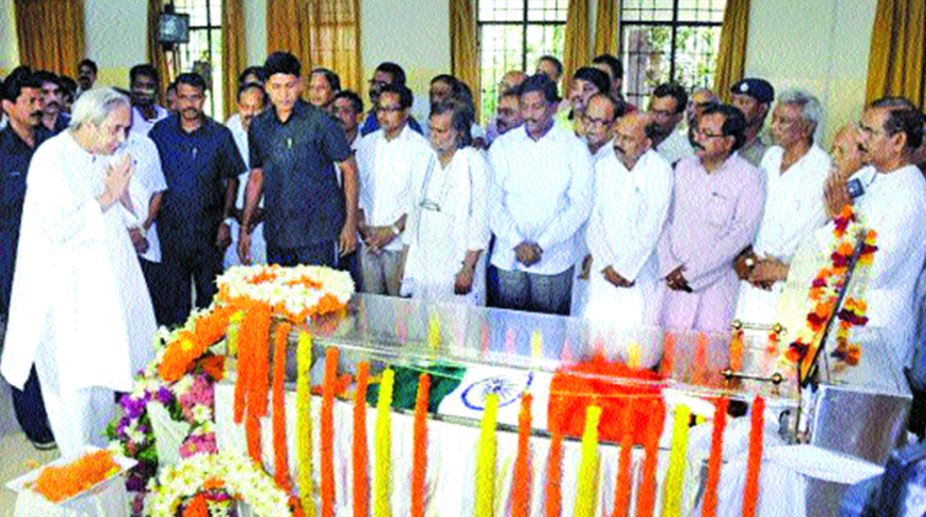
Rabi Ray: A socialist to the core

Devender Singh | New Delhi |

The mortal remains of Rabi Ray were consigned to the sacred fire in his village in Puri district of Odisha on 7 March. He was born in the same village on 26 November 1926. Ray was Speaker of the ninth Lok Sabha and although re-elected to the tenth Lok Sabha, he withdrew from contentious party politics following the tradition of great speakers and led the life of a reflective recluse.

As a young legislative officer in the Lok Sabha, I had the good fortune of working under his speakership. Rank did not matter to him as he was a socialist to the core, unaffected by trappings of official position. He was readily accessible and unassuming.

He enthused officers and staff by observing that “servicing Parliament must be construed a privilege, an ennobling enterprise”. His sagacious advice to officials was, “be faithful to conflicting shades of opinions, be observant, disinterested and objective”. He belonged to the great league of speakers like G. V. Mavalankar who propounded and upheld the principle that the secretariats of Parliament must be placed on an independent footing and be free from the control of the Executive, the cardinal principle of constitutionalism enshrined in Article 98.

Of course the article has virtually become a dead letter as senior-most positions in both the Secretariats have been given to a few cherry-picked officers of the executive debunking the constitutional directive of separation of powers.
As Speaker, Rabi Ray had perhaps the toughest call when he had to give a ruling on defection which had grave implications for the survival of the very government that was responsible for electing (though unanimously) him to the post. On 6 November 1990, a group of 58 MPs of Lok Sabha formed a breakaway group under the name of Janata Dal (S).

The precise question was about the timing of the split vis-a-vis the timing of expulsion in view of claims and counter claims from either side. Displaying his quintessential integrity and imperturbable judicial temperament and mindful of the consequences that the Government would be reduced to minority, he gave an impartial ruling which was widely acclaimed as bold and of far-reaching import and raised his stature as an independent and judicious Speaker.
He admitted the impeachment motion against Justice V. Ramaswami (on12 March 1991) and constituted a committee composed of Justice P B Sawant of the Supreme Court, Chief Justice P D Desai of the Bombay High Court and Justice O Chinnappa Reddy, retired judge of the Supreme Court to investigate the allegations.

The committee found Ramaswami guilty on 11 of 14 charges. His decision was challenged in the Supreme Court but was upheld. It is another matter that the motion for removal fell through as the ruling Congress and its allies abstained.
Another path-breaking decision taken by him was about regulation of Zero Hour. An avowed proponent of democratic pluralism, he convened a meeting of leaders of political parties and groups and evolved consensus so that members are able to articulate matters of urgent public importance during Zero Hour and the precious time of the House is saved. The innovation has stood the test of time.

He was also responsible for introducing the Subject Committees, paving the way for setting up of department-related standing committees. Transparency was an article of faith with him and he made earnest endeavours to see that the proceedings of Parliament were telecast live and for which purpose he took definitive initiative.
The Presidential Address was first telecast live on 20 December 1989 though the initiative to telecast  House proceedings fructified later.

His book, Parliamentary Diplomacy, has a ring of contemporary immediacy and contextual relevance. Clad in simple khadi-kurta and dhoti, he was an epitome of transparent simplicity and honesty and commanded respect and adoration of plebeians and parliamentarians alike. His stature rose further when he refused to sit in the Mercedes car, the official vehicle used by his predecessor, and preferred an Ambassador car for official engagements.

He was first elected to the Fourth Lok Sabha and later to the Rajya Sabha. He was Minister for Health and Family Welfare in the Morarji Desai Cabinet and also General Secretary of the Janata Party.

As student leader, he was arrested for unfurling the National Flag by the Britishers laying the foundation of his politics in Independent India. He was arrested during Emergency and jailed. His ideas and thoughts kick-started debates as he wrote with deep concern and conviction in Chaukhamba, a Hindi weekly of (the then) Socialist Party and Samata, an Oriya monthly.

He was a socialist to the core and a profound thinker of intellectual integrity. His speeches and writings were reflective, forthright and constructive. He had observed presciently long ago that  “the Congress of today has become the BJP of yesteryears and the BJP vice versa”.

Today, the way the leaders switch sides shows beyond doubt that there is hardly any ideological distinction between parties and such parties cannot claim to “be parties with a difference”. Rabi Ray exemplified the hallowed principle that the Speaker shuns party politics as he belongs to all sides of the House or to none. After completing his term as member of the Tenth Lok Sabha, he withdrew from active politics but continued to advance the cause of the poor and the marginalised through his outreach programmes of socio-economic reconstruction through voluntary organisations, conversations and writings despite indifferent health.

Much after he had renounced active politics and whenever he came to Delhi for medical aid, many senior leaders, cutting across political lines, made it a point to meet him and talked of his rehabilitation but he refused any gubernatorial assignment.

It is said that the office of the Speaker “does not demand rare qualities but it demands common qualities in rare degree”. Rabi Ray was endowed with those qualities in abundant measure. He brought transparency into a parliamentary administration that was still shackled by the ethos of Emergency. His calm disposition, patience, dignity of voice and bearing, impartiality and his contribution to the anti-defection law and parliamentary procedure secure for him a permanent place in our democratic pantheon.

The writer is former Additional Secretary, Lok Sabha and author of  The Indian Parliament – Beyond the seal and signature of democracy.

Erdogan should put brakes on himself

Shantanu Mukharji | New Delhi |

Ever since Turkish President Recep Tayyip Erdogan survived the July 2016 coup attempt, he appears to have lost his sense of diplomacy, his statecraft and arguably even his mental equilibrium. This is visible in ample measure in the insecure President’s body language and rhetoric in the wake of a diplomatic row snowballing into a major crisis before the referendum he is seeking from the Turks, both within and outside Turkey, for unbridled and sweeping powers to strengthen his Presidency. This also displays how desperate Erdogan is to derive more power .

Against this backdrop , the Netherlands refused (and perhaps rightly so) permission to Turkish foreign minister Mevlut Cavusoglo who was on his way to the European country to canvas for Erdogan ahead of the referendum. Erdogan, with his huge ego, couldn’t swallow the denial of entry to his foreign minister.  His impulsive anti-Netherlands remarks were unsavoury, intimidatory and fell well short of diplomatic niceties.

Matters got complicated when the Turkish minister Fatima Betul Kaya, who arrived at Rotterdam via land from Germany, insisted on holding  a rally in the port city. The Dutch, acting as any sovereign state, did not allow a rally to be held leading to huge protests by the local Turks which also saw use of force and violence. Finally, minister Fatima was escorted out of the Netherlands by land further infuriating the Turkish president. Erdogan labelled the Dutch as Nazis, vowed punitive action and threatened to teach them a lesson. Such undiplomatic remarks, punctuated with aggression and belligerence, speak of a head of state who is in a hurry to consolidate power and is not sure how to handle a smaller country like the Netherlands. 

The Netherlands has 400,000 Turks holding dual nationality and eligible to take part in the referendum. They look confused and sadly such acts of immaturity and tactlessness have put them into a state of dilemma. They hitherto thought of the Netherlands as their home. The latest imbroglio  has upset them and they may start nurturing anti-Dutch sentiments causing unpleasant problems. Dutch society now stands threatened with a division on religious lines – Islam vs the rest. 

This is dangerous as Erdogan is tainted with his excesses on the Kurds and  and his leaning towards Islamic fundamentalism. He perhaps thinks he has nothing to lose if Dutch society is Islamised. The Netherlands already has a vocal and active politician Geert Wilders who is pressurizing  Prime Minister Mark Rutte to act against Islamic activists to clear the country of extremism and terror.  He cites instances of Algerians, Tunisians and Moroccans causing terror-linked problems in Belgium and France.

The Netherlands too has refugees from Syria. Dutch intelligence is keeping a hawkish eye on them lest some of them align with other Islamic forces (now possibly Turkey included) to spark terror. The fresh Turko-Dutch tension is a bad sign and needs urgent redressal to calm down communal forces, ready to light fires and split the society. Possibly the new UN Secretary General and diplomats of the European Union ( EU) must brainstorm sooner rather than later. This is a moment to act and not react. In the meantime, the Dutch ambassador to Ankara, who is out on an assignment has been told by the Turks not to return. Anti-Dutch statements continue to flow incessantly. In a very recent statement Turkish Prime Minister Binali Yildrim has threatened the Netherlands that his country would respond in the harshest ways for this ‘unacceptable’ behaviour. Such fiery rhetoric may push things to a point of no return. This is all the more reason for restraint and a statesmanlike approach. Already ties between European nations and Turkey have been impacted. The first step for calming down passions and angst needs to be taken by Erdogan .

Erdogan must also remember that he has few friends on this planet. Putin is his newest ally yet he should not expect that Russia will get involved on this issue. Pakistan, another amongst  the few ‘friends’ of Turkey,  has been muted in its response. In the present day, the last thing a sovereign country can afford is to remain in isolation. Erdogan should be wise enough to refrain from falling into this situation.

The writer is a security analyst and columnist on matters of security. He is also the Senior Fellow with the India Police Foundation. The views expressed are personal.

Lanka’s broken promises

Sam Rajappa | New Delhi |

It has now become clear that Sri Lanka, by co-sponsoring with the USA the consensus Resolution 30/1 of the UN Human Rights Council in Geneva in 2015 hailed as an example of goodwill and cooperation and adopted unan mously, has compromised the credibility of the international organisation.

Contrary to promises made in Geneva that in the name of peace and reconciliation the Sri Lanka government would dismantle High Security Zones, close army cantonments and return lands seized from the people, the Northern and the Eastern Provinces, considered the Tamil homeland, continue to be occupied zones even eight years after the end of the Eelam war. The resolution called for international, including Commonwealth, judges and other foreign personnel to bring about justice and accountability for excesses committed, especially during the last phase of the war in which about 40,000 people were killed.

War crimes against humanity on discriminatory grounds can constitute genocide, according to international law. Domestic mechanisms do not work in the context of war crimes. The UN High Commissioner for Human Rights, Zeid Ra’ad al Hussein in his report had said, “The sheer number of allegations, their gravity, recurrence and the similarities in their modus operandi as well as the consistent pattern of conduct points towards ‘system crimes’ and that it was the Sri Lankan state that was the perpetrator of the international crimes.” It was for this reason that hybrid courts and tribunals, as in Cambodia, East Timor, Kosovo and Sierra Leone, were suggested.

In his report to the 34th session of the UNHRC on 3 March, Al Hussein demanded the Sri Lanka government institute legislation which will establish a hybrid court with international judges, defence lawyers, prosecutors and investigators to investigate violations and abuses of international human rights law and war crimes. The report of the office of the UN High Commissioner for Human Rights urged the Sri Lanka government to give the highest priority to the restitution of all private land that has been occupied by the military and to end the military involvement in commercial and other civilian activities. It wanted the government to issue unequivocal instructions to all branches of the military, intelligence and police forces that torture, sexual violence and other human rights violations are prohibited and will be investigated and punished. The government must order all security forces to end immediately all forms of surveillance and harassment of and reprisals against human rights defenders, victims and social actors.

The report also wanted the government to enact legislation criminalising genocide, enforced disappearances without statutes of limitation and modes of criminal liability, in particular command or superior responsibility. Al Hussein said Sri Lanka had made “worryingly slow” progress in addressing its wartime past and warned this could threaten lasting peace and stability. Acknowledging the government has made some advances on constitutional and legal reforms, limited land restitution and symbolic gestures towards reconciliation, he cautioned that the measures taken so far were inadequate, lacked coordination and a sense of urgency.

The High Commissioner’s demand to constitute special war crimes tribunals involving international judges and prosecutors was rejected by the Sri Lankan government in spite of it having co-authored the proposal. Prime Minister Ranil Wickremesinghe said a call for a hybrid court system was included in the resolution because the international community lacked faith in the judiciary of that time. During the last two years the government had restored independence of the judiciary and thereby made the demand redundant, he said.

Moreover, even if a constitutional amendment was moved to establish a hybrid court it will have to be passed be a two-thirds majority and approved by the people in a referendum which was not politically feasible. As long as the Sinhalese constitute a majority in the electorate and in Parliament, such a move will never be countenanced. Nor will they be a party to put the essentially Sinhalese military in the dock irrespective of the evidence of war crimes.

Maithripala Sirisena was voted President on the promise that he would restore the rule of law and work towards reconciliation with ethnic Tamils. He had the support of the dominant sections of the two largest political parties, the UNP and the SLFP, in the country as well as the minority communities. But he failed to tackle the ethnic crisis which threatened to divide the country. If he was serious about addressing Tamil oppression, he would have ended the military occupation of the Tamil areas and repealed the Prevention of Terrorism Act. Instead, he is seeking to get the 30/1 Resolution amended to wriggle out of inclusion of foreign judges failing which he will seek an extension of two years to do nothing in the hope the problem will disappear. Under no circumstances will he ever acquiesce to expose the military to impartial independent investigation. What is really needed now is for the UN Security Council to refer Sri Lanka to the International Criminal Court.

Even under the National Unity government of Sirisena and Wickremesinghe, police and military surveillance of public life in the Northern and the Eastern Provinces continues. Activists and civilians fear that if the political situation deteriorates, those who used the seeming appearance of normalcy to engage in activism may be targeted by government functionaries similar to the crackdown on activists following the collapse of the 2001-2003 peace process. A substantial number of political prisoners still languish in jail. Some who were released have been assigned for rehabilitation by the armed forces which include cruel torture and degrading treatment. The Office of Missing Persons with all its faults remains an institution only on paper. Wickremesinghe has said on more than one occasion that those who have disappeared are dead.

Evidence gathered by the Foundation for Human Rights in South Africa and the International Truth and Justice Project for submission to the truth commission in Sri Lanka, if it is ever established, will expose the violations perpetrated by the security forces, according to Yasmin Sooka, executive director of ITJP. In the former conflict areas, Tamil civilians live under a militarised and securitised system in which surveillance and intimidation constitute everyday life, she said in an interview. The violations and abuses are ongoing and include abductions, torture and sexual violence which the ITJP continues to document once the victims flee the country. This level of militarisation is unacceptable eight years after the war. It also demonstrated the security forces continued to operate with impunity. 

A set of ‘infographics’ prepared by the Sri Lanka Campaign for Peace and Justice exposes alarming facts about the military’s expansion in the North-East. The horrifying reality is that the military has no plans to leave but is there to stay, making the Tamil provinces a virtual army camp. 

Meanwhile, former President Mahinda Rajapaksa is making steady progress in his attempt to stage a comeback in the next election. He has the support of the Buddhist clergy and a sizeable section of the Sinhala masses. At least 50 of the SLFP MPs already owe their allegiance to the former President. Sirisena, on the other hand, is slow to act and Prime Minister Wickremesinghe is not always on the same page as the President. His promise to abolish the presidential form of government is yet to be implemented. Most of the promises the duo made at the time of the 2015 election are yet to be redeemed. Their attempt to re-write the Constitution has met with a roadblock.

The Tamils who played a major role in ousting Rajapaksa are running out of patience as the government has abandoned the UNHRC Resolution 30/1 for all practical purposes. Unless the government delivers, one could expect the re-emergence of the Rajapaksa regime in the not too distant future.

The writer is a veteran journalist and former Director of The Statesman Print Journalism School.

Deathly politics

Editorial | New Delhi |

The thunder and fury of the elections could so easily “black out” the implications of a recent development. One particular family may feel “deprived”, yet there is reason to commend the Lieutenant-Governor of Delhi for thwarting a bid to bake a political cake on the funeral pyre of a dejected army veteran. Saner elements in the ex-servicemen’s community ~ alas now getting increasingly entangled in despicable politics ~ would do well to try and explain to old soldiers the merits of Mr Anil Baijal’s decision not to approve chief minister Arvind Kejriwal’s “announcement “ of one crore rupees as compensation to a veteran who committed suicide at Jantar Mantar last year in protest against the implementation of the OROP regime. Without intending disrespect of any kind to the memory of Subedar Ram Kishen Grewal of Haryana, it was shameful and disturbing to note the manner in which Opposition parties had exploited his suicide to flay the NDA government for its OROP botch-up. True that the Delhi Police, under the previous Lieutenant Governor, had displayed crass insensitivity to make bad things even worse, but the unseemly drama at a city hospital and the “procession” to his village for the funeral marked a new low in political cross-fire ~ almost as “sick” as the manner in which the Modi government has been exploiting tactical strikes across the LOC in a jingoistic display of “muscle”, and claiming Pakistan was paying for backing terrorist action in Kashmir. Unfortunately, only in our netas’ lexicon do two “wrongs” add up to one “right”.

That distasteful politics continues is confirmed by Arvind Kejriwal’s tweet alleging that “Narendra Modi is anti-soldier”, and his minions regurgitating the charge. They have promised Grewal’s family “other ways” of making the money available. Significantly, there has been no attack on Raj Niwas ~ possibly because Kejriwal & Co are wary of re-stoking the fire that dissipated after Najeeb Jung quit as LG, and their party has failed to live up to its pre-poll ragging.  The order of the present LG was sympathetic towards Grewal’s family, but categorical: “This specific case does not fall within the parameters of the scheme for grant of ex-gratia payment: that is death occurring in the discharge of official duty.” The order also pointed out that Grewal had no Delhi connections. A query that must be asked is if the generous compensation to Grewal was not unfair to families of other, genuine, military martyrs? And if Kejriwal was sincere about the problems of defence pensioners he could set an example to other states by making additional money available to Delhi-based veterans, or re-energise the local ex-servicemen’s welfare agency. Thus his “generosity” in the Grewal affair was dubiously motivated.

Two-way exit!

Editorial | New Delhi |

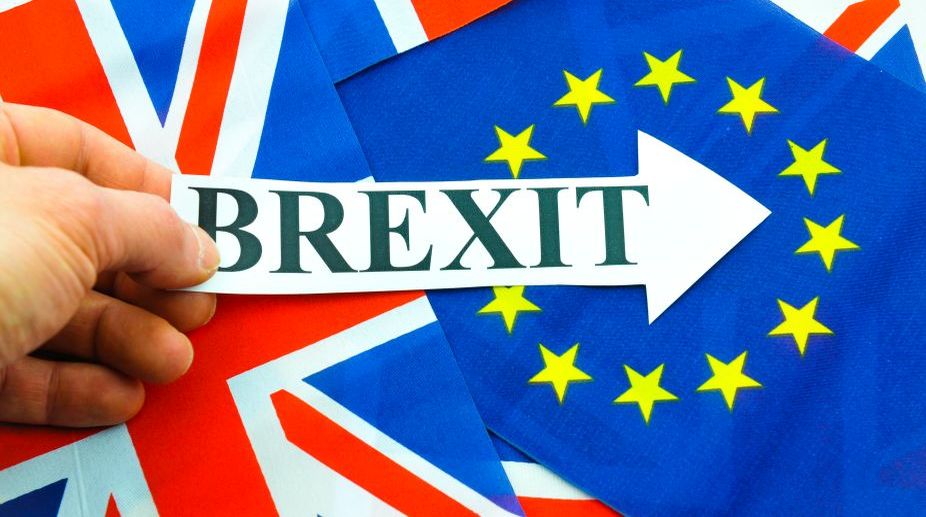
The paradox in the United Kingdom’s generally eventful constitutional history could scarcely have been sharper. In the span of 24 hours, Theresa May’s Brexit bill surmounted hurdles in both Houses of Parliament, a development that clears the way for the Prime Minister  to trigger Article 50 by the end of March. While this affords a shot in the arm after occasional uncertainties, she will in parallel have to countenance the renewed bout of jingoism in Scotland with its First Minister, Nicola Sturgeon, shrilling for a referendum on Scottish independence as early as next year. The government has achieved its ambition of passing a “straightforward” two-line bill that is confined to the question of whether ministers can trigger Article 50 and start the formal Brexit process. In legislative terms, the House of Lords has accepted the supremacy of the Commons after MPs overturned amendments aimed at guaranteeing the rights of EU citizens in the UK and giving Parliament a “meaningful vote” on the final Brexit deal. Not that the decision was unanimous; there was a certain yo-yo during the proceedings as the momentous legislation oscillated between the two Houses, a reflection of the inherent disagreement. In the context of the peers agreeing  to allow the passage of the bill unamended, Britain gets posited on what the  Brexit secretary, David Davis, has called “the threshold of the most important negotiation for our country in a generation”. With the trigger on Article 50, the Conservative government is in a position to  forge new trade links. While further comment must await developments  in the intervening fortnight ~ till the end of March ~  the government cannot but  be unnerved by Ms Sturgeon flagging the demand for a second vote of Scottish independence… after voters in Scotland had opposed Brexit on June 23 last year.
Monday night’s forward movement for Ms May gets neutralised by her immediate criticism of the fresh initiative of the Scottish National Party (SNP) ~ “The party had a tunnel vision on breaking  away from the UK. This is deeply regrettable. Politics is not a game. The Scottish government should focus on delivering good government for the people of Scotland.”  Arguably, there could be substance in Ms Sturgeon’s cavil that London had failed to address Scotland’s desire to remain in the single market after Britain leaves. Though the compulsions are different, the economic factor is the common grouse against the European Union and UK… of both Britain and Scotland.  The country’s First Minister has been no less robust in her counter-criticism, saying that “our efforts at compromise have been met with a brick wall of intransigence”.  Politically, it may not be easy for Ms May to refuse another Scottish referendum for which the two Parliaments ~ in Britain and  Scotland ~ will have to extend their approval. Virtual certainty over Brexit has been balanced by the renewed uncertainty over Scotland.

Creating adaptability

Sudeep Goenka | New Delhi |

There is no shortage of remarkable ideas. What’s missing is who executes them, was rightly said by Seth Godin. Our past has witnessed the development of digital age, our present is living the transformation and our future will be to live in a completely different era of technology to which will compel us to transform the way we work, lead, think and execute. 

We are living in the times when email replaced letters and postcards, smartphones have completely taken over the business of camera, calculator, and wrist watches. 

Our communication travels faster than us. Social media like Facebook, Instagram, Twitter, LinkedIn and many have transformed our lives where we can be absolute vulnerable and exposed to the mass and class.

Furthermore with instruments and applications like Skype, Whatsapp, Google maps, online portals have transformed the way we communicate, travel and shop. Now with Watson introduced by IBM, it is like a personal virtual private assistant. 

The most important person in organisations has shifted from being chief finance officer to the chief information officer. In today’s digital age it feels normal to sit in your cabin and witness all premises over the big screens in front of you and graphs flowing with images to give clear picture of organisation on real time basis. The world has not stopped and as said that the digital age has just begun. 

The need of constant update with surroundings and development in the digital age is the need of the hour. Developing trust and bonding with the peers is required today than ever before. The challenge to be addressed is that we are talking to machines more than among ourselves.

To cope up with the speed of change we need to manage our time, resources in the most efficient manner. Creating the culture of adaptability to new ideas and technology will not only help to know the developments around us but also make us leap ahead of competition. 

The development in the present defines that the need of a good value system is required more than ever. Gone are the days when communication can be barred between individuals. 

As a leader in organisations, in society, we need to promote the use of digital means but on the same side determine the true essence of right value system. The very human who is made to feel, touch and love and respect should not be taken over by digital means. 

As an example the skill of right communication, effective presentation and use of appropriate images to make our true values visible has become a significant aspect. Because of technology we are virtually visible to anyone anytime at a touch of a keypad. 

The writer is Member- Entrepreneurs' Organisation, Uttar Pradesh.

Creating adaptability

Sudeep Goenka | New Delhi |

There is no shortage of remarkable ideas. What’s missing is who executes them, was rightly said by Seth Godin. Our past has witnessed the development of digital age, our present is living the transformation and our future will be to live in a completely different era of technology to which will compel us to transform the way we work, lead, think and execute. 

We are living in the times when email replaced letters and postcards, smartphones have completely taken over the business of camera, calculator, and wrist watches. 

Our communication travels faster than us. Social media like Facebook, Instagram, Twitter, LinkedIn and many have transformed our lives where we can be absolute vulnerable and exposed to the mass and class.

Furthermore with instruments and applications like Skype, Whatsapp, Google maps, online portals have transformed the way we communicate, travel and shop. Now with Watson introduced by IBM, it is like a personal virtual private assistant. 

The most important person in organisations has shifted from being chief finance officer to the chief information officer. In today’s digital age it feels normal to sit in your cabin and witness all premises over the big screens in front of you and graphs flowing with images to give clear picture of organisation on real time basis. The world has not stopped and as said that the digital age has just begun. 

The need of constant update with surroundings and development in the digital age is the need of the hour. Developing trust and bonding with the peers is required today than ever before. The challenge to be addressed is that we are talking to machines more than among ourselves.

To cope up with the speed of change we need to manage our time, resources in the most efficient manner. Creating the culture of adaptability to new ideas and technology will not only help to know the developments around us but also make us leap ahead of competition. 

The development in the present defines that the need of a good value system is required more than ever. Gone are the days when communication can be barred between individuals. 

As a leader in organisations, in society, we need to promote the use of digital means but on the same side determine the true essence of right value system. The very human who is made to feel, touch and love and respect should not be taken over by digital means. 

As an example the skill of right communication, effective presentation and use of appropriate images to make our true values visible has become a significant aspect. Because of technology we are virtually visible to anyone anytime at a touch of a keypad. 

The writer is Member- Entrepreneurs' Organisation, Uttar Pradesh.

Phenomenal Fusion

Abhishek Agarwal | New Delhi |

When a synergy develops by the amalgamation of various technologies it always benefits the businesses, but when it synchronises with their needs, they earn optimum profits. Thanks to the technological inventions that gave birth to the digital marketing and a big applause to the pioneers in SMAC. Yes, Smart Marketers Adopt Change, they embrace Social, Mobile, Analytics, and Cloud to get maximum returns on marketing investments. 

The integration of social media, mobile technology, data analytics and cloud computing makes the fusion stronger, scalable, striking and more successful than their implementation in segregation. Marketers are availing SMAC’s worldwide revenue and expected to reach as high as $ 200 billion by the end of 2020. Moreover, at 30 per cent CAG, the value of SMAC driven market will be $1 trillion (approx) by the end of the current decade.

The reach of social media, the connectivity of mobile technology, the accuracy of analytics, and the network of cloud computing are strikingly responsible for the 360 degree B2B and B2C communications. 

That’s why brands which have been promoted using SMAC are getting better response of their customers and prospects. On the other hand, firms that are smart in strategising SMAC driven marketing plans are more efficient to curtail their advertising cost and saving the organisation’s resources. Another significant benefit is measuring the return from each campaign/activity due to its highly accurate analytical tools, because analytics is an integral part of this revolutionary technology. Verily, it is boosting the growth of the businesses— a growth that spontaneously creates a better market scenario and leads to greater entrepreneurial initiatives.

As every technological innovation brings some fresh job opportunities in the market, SMAC is the gateway to success for people planning to make a career in this relatively new field. Opportunities are in abundance, but there is a big shortage of skilled professionals to meet the present and future demands of the industry.  That’s why many universities and institutes have introduced specialised programmes and others have started following them. 

And, in the era of online education, those who can’t follow the classroom curriculum may take admission in the online courses to acquire skills as well as certificates. But, beyond eligibility, one should be familiar with all the updates and advancements in all the four pillars of social media, mobile technology, data analytics, and cloud computing.
SMAC doesn’t mean only business growth –the growth of corporates and the growth of SMEs. It is also a token of countless job opportunities for millennials.

In fact, even a fresher can easily grab a package of Rs 7 to 8 lakh per annum in India, and those with a fair amount of experience can expect remuneration not less than Rs 10 lakh per annum. As SMAC is flourishing globally, so, a dynamic candidate can explore a lucrative opportunity anywhere around the globe.  

The writer is senior Vice-President, The Judge Group.