Logo

Lakhs gather at Gangasagar Mela as devotees take holy dip ahead of Makar Sankranti

The confluence of the holy River Ganges and the Bay of Bengal is known as Gangasagar, one of the most revered pilgrimage sites in Hinduism.

IANS | New Delhi |

Devotees in large numbers are arriving at the Gangasagar Mela and taking a holy dip at the sacred confluence of the River Ganga and the Bay of Bengal, offering prayers to the Sun God ahead of Makar Sankranti.

The confluence of the holy River Ganges and the Bay of Bengal is known as Gangasagar, one of the most revered pilgrimage sites in Hinduism.

The religious fair is held every year on the occasion of Makar Sankranti at Kapil Muni’s ashram in West Bengal’s Gangasagar.

The Gangasagar Mela is regarded as the second-largest Hindu religious fair after the Kumbh Mela. Devotees from across the country travel here annually to take a sacred bath on Makar Sankranti.

The atmosphere at the mela site is filled with religious chants and deep spirituality, as people from different parts of the country have gathered, chanting devotional hymns and songs.

A devotee, Kurma Chaitanya Das, said that he was extremely happy and excited to attend the fair this year.

Speaking to IANS, Das said, “The chanting of the holy names in this age is the means of purifying our consciousness, so that we may become happy and connected with Krishna. The holy names of Krishna and Krishna Himself are non-different. Just as a dirty place can be purified by the sun, our consciousness can also be purified through association with Krishna by chanting His holy names.”

The South 24 Parganas district administration is making extensive arrangements to ensure the health, safety, and smooth movement of pilgrims during the mela.

Another devotee, Acharya Manoj Panday, expressed gratitude towards the administration for the arrangements made for the holy fair.

Speaking to IANS, Panday said, “On this sacred spiritual occasion at Kapil Muni Ashram, we warmly welcome all devotees who have arrived from across the country and different states. This marks the third year of the grand Ganga Aarti being performed here.”

Pilgrims were also seen offering prayers at Kapil Muni’s Temple and seeking blessings.

Millions of pilgrims from across the globe visit the Gangasagar Mela during the chilly hours of Makar Sankranti in the belief that a holy dip here leads to ‘moksha’.

It is believed that bathing in the sacred waters washes away sins and sorrows. With this faith, devotees arrive at the ashram chanting the hymn, ‘Sab Tirth Bar Bar Ganga Sagar Ekbar’.

Gangasagar is not just a pilgrimage site but a unique confluence of emotion, culture, faith, and belief, symbolising a celebration of life and spiritual devotion.

Hema Malini reveals why she hasn’t watched late husband Dharmendra’s last film ‘Ikkis’ so far

Dharmendra passed away on November 24 last year at his Mumbai residence at the age of 89 after a brief health scare. He was cremated in Mumbai on November 25. His last film ‘Ikkis’ is still playing in theatres.

Statesman News Service | New Delhi |

The curtains may have fallen on a cinema legend, but for Hema Malini, some doors are still too heavy to open. Hema Malini is not ready for this goodbye yet for Dharmendra.

It has been quite some time since Bollywood bade farewell to Dharmendra, the man fans lovingly called the “He-Man” of Hindi cinema. His final film ‘Ikkis’ is already out there for the world to see.

But at home, the screen remains dark. His wife, actor and MP Hema Malini, says she is not yet brave enough to press play. Some emotions, she admits, are still too raw.

In a recent interview with Screen, Hema spoke with honesty, pain, and quiet strength choosing healing over headlines.

“It will be too overwhelming right now”

When asked if she has watched Dharmendra-starrer ‘Ikkis’, Hema Malini answered softly but firmly. The answer was no.

She shared that she was in Mathura when the film was released, busy with her responsibilities. But more than work, it was her heart that stopped her. Watching Dharmendra on screen again, she said, would be too much to handle right now.

“It will be too overwhelming,” Hema explained, adding that even her daughters feel the same. The family believes some time is needed. Maybe later, when the wounds begin to heal, she will finally watch the film.

For now, the memories are still too close, too fresh.

About ‘Ikkis’

Directed by Sriram Raghavan and produced by Dinesh Vijan under Maddock Films, ‘Ikkis’ is a tribute to Second Lieutenant Arun Khetpal, the youngest soldier to receive the Param Vir Chakra.

The film stars Agastya Nanda as Arun Khetpal, along with Simar Bhatia and Jaideep Ahlawat. Dharmendra appears in a key role making this his final on-screen performance.

Clearing the air on family feud rumours

After Dharmendra’s death, gossip quickly followed grief. Two separate prayer meets were held; one by Sunny Deol and another by Hema Malini. This led to whispers of a family rift.

Hema dismissed these rumours.

She said the family has always been close and cordial. According to her, people love creating stories, especially during painful times. She questioned why anyone should explain personal grief to outsiders.

“People use other’s grief to write a few articles,” she said, calling it sad.

Remembering Dharmendra

Dharmendra passed away on November 24 last year at his Mumbai residence. He was 89. Earlier in the month, he had been discharged from Breach Candy Hospital after a health scare and was recovering at home.

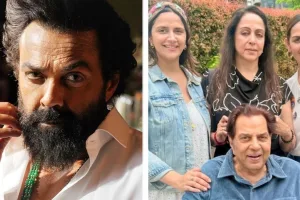
His last rites were held on November 25 in Mumbai. A prayer meet organised by sons Sunny and Bobby Deol on November 27 saw many film personalities attend. Hema Malini and daughters Esha and Ahana held a separate prayer meet at their home the same day.

No Mayor in Mumbai without Congress

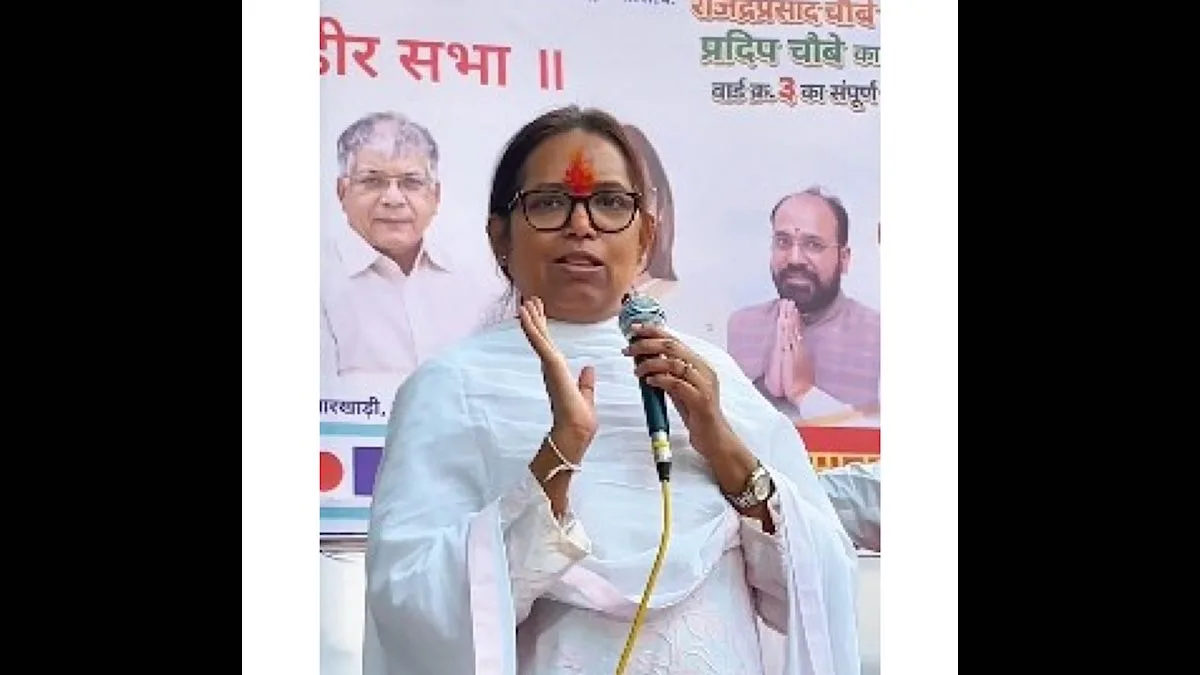
As the battle for the Brihanmumbai Municipal Corporation (BMC) intensifies, Mumbai Regional Congress Committee (MRCC) President and MP Varsha Gaikwad has made a bold claim regarding the post of the city’s Mayor.

IANS | New Delhi |

As the battle for the Brihanmumbai Municipal Corporation (BMC) intensifies, Mumbai Regional Congress Committee (MRCC) President and MP Varsha Gaikwad has made a bold claim regarding the post of the city’s Mayor.

Speaking on the current political landscape, Gaikwad on Tuesday asserted that the Congress party will hold the “key” to the municipal corporation and that no party will be able to appoint a Mayor without their support.

Gaikwad dismissed claims that the Congress has been sidelined in the Mumbai civic polls. “The political arithmetic of Mumbai is changing. We are confident that the Congress will win a significantly higher number of seats this time. In the post-election scenario, no one will be able to install a Mayor in the BMC without the Congress’ involvement,” she stated.

The Congress MP also took a swipe at the ongoing “Marathi vs Hindutva” narrative being pushed by the Mahayuti (BJP-Shinde Sena) and the Thackeray-led MNS/Sena factions. She emphasised that the Congress’ agenda is strictly focused on the city’s infrastructure and the daily struggles of Mumbaikars.

“While others are fighting over religion, caste, and language, our priority is development. Mumbai is facing severe issues with traffic, water supply, waste management, and air pollution. We want a Mayor who works on the ground for the people, not one who operates solely from the Mantralaya,” Gaikwad remarked.

“Congress has teamed up with the Vanchit Bahujan Aghadi (VBA), Rashtriya Samaj Paksha (RSP), and the RPI (Gavai faction). This alliance aims to consolidate the Dalit, Muslim, and minority votes, and it will significantly boost Congress’ seat tally compared to previous elections,” noted Gaikwad.

Launching a scathing attack on the state government, Gaikwad accused the ruling Mahayuti of neglecting Mumbai’s interests and “selling off” land for various projects. She claimed that the Congress has a long-standing record of developing Mumbai’s landmarks, including the Sea Link and major highways, and promised that the party would fight to keep Mumbai’s resources for its own residents.

With the BMC elections scheduled for January 15, Gaikwad’s statement signals the Congress’ intent to position itself as a decisive power player in the country’s richest municipal body.

US Congressman introduces bill for ‘Annexation and Statehood’ of Greenland

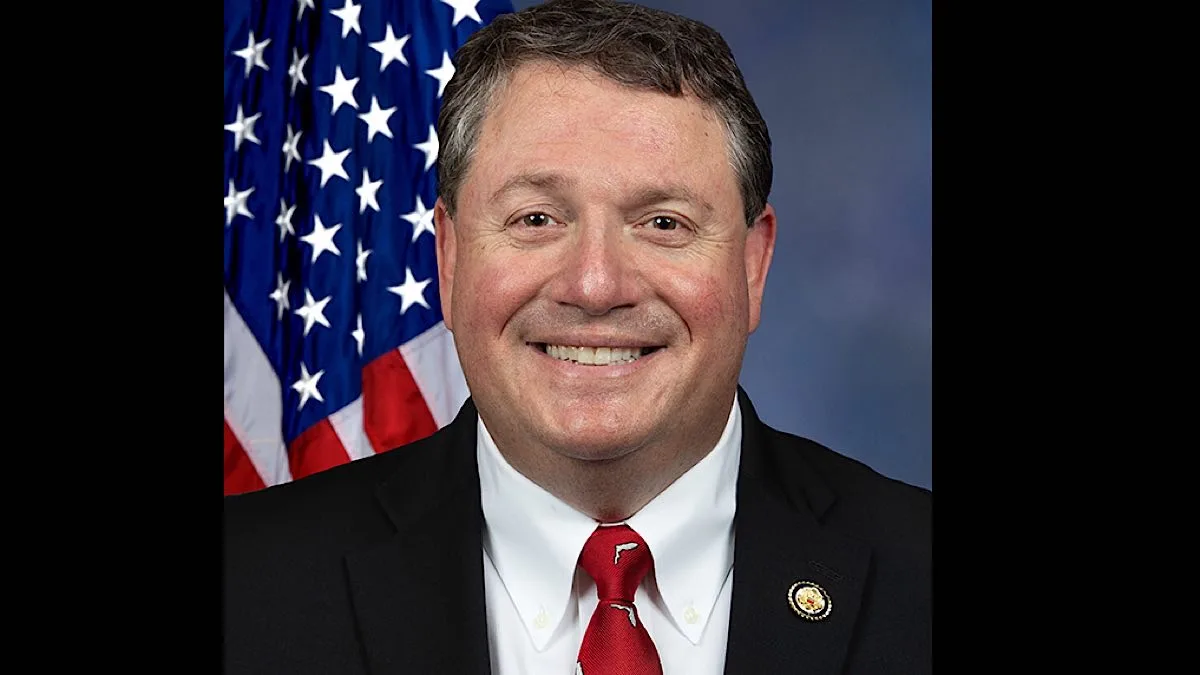
US Congressman Randy Fine has introduced a bill to make Greenland the 51st state of the United States, giving further momentum to President Trump’s long-standing push to acquire the Danish territory.

UNI | New Delhi |

US Congressman Randy Fine has introduced a bill to make Greenland the 51st state of the United States, giving further momentum to President Trump’s long-standing push to acquire the Danish territory.

The “Greenland Annexation and Statehood Act” was introduced Monday by the Florida Republican, according to a statement from his office. The bill’s stated goals include enabling “the annexation and subsequent admission to statehood of Greenland.”

In a post on X, Fine said, “Today, I am proud to introduce the Greenland Annexation and Statehood Act, a bill that allows the President to find the means necessary to bring Greenland into the Union.”

“Let me be clear: our adversaries are trying to establish a foothold in the Arctic, and we can’t let that happen,” Fine added. “By acquiring Greenland, we would prevent our adversaries from controlling the Arctic region and secure our northern flank from Russia and China.”

“Greenland is not a distant outpost we can afford to ignore, it is a vital national security asset,” Fine said in the press release. “Whoever controls Greenland controls key Arctic shipping lanes and the security architecture protecting the United States.”

“America cannot leave that future in the hands of regimes that despise our values and seek to undermine our security,” he added.

The bill states that President Trump “is authorized to take such steps as may be necessary, including by seeking to enter into negotiations with the Kingdom of Denmark, to annex or otherwise acquire Greenland as a territory of the United States.”

After the US acquires Greenland, the bill would require Trump to submit a report to Congress outlining possible federal law changes “as the President may determine necessary to admit the newly acquired territory as a State.”

White House Press Secretary Karoline Leavitt said Monday that there is no specific timeline for the U.S. to take over Greenland.

“President Trump has not set a timeline, but it’s definitely a priority for him,” Leavitt told reporters.

“I think the president was very clear last night,” she continued. “He said that he wants to see the United States acquire Greenland because he feels that if we do not, it will eventually be acquired, or even perhaps taken over hostilely, by either China or Russia.”

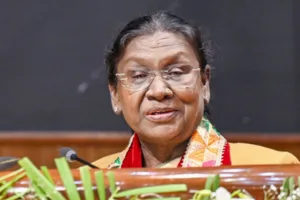
President Murmu extends Lohri, Makar Sankranti, Pongal, Magh Bihu greetings

President Droupadi Murmu on Tuesday extended greetings for Lohri, Makar Sankranti, Pongal, and Magh Bihu, asserting that the festivals are symbols of India’s rich agricultural traditions and national unity.

ANI | New Delhi |

President Droupadi Murmu on Tuesday extended greetings for Lohri, Makar Sankranti, Pongal, and Magh Bihu, asserting that the festivals are symbols of India’s rich agricultural traditions and national unity.

President Murmu also expressed gratitude to nature and thanked the farmer benefactors.
“Heartfelt greetings to all Indians living in the country and abroad on the occasion of Lohri, Makar Sankranti, Pongal, and Magh Bihu. These festivals are symbols of India’s rich agricultural traditions and national unity. On this occasion, we also express our gratitude towards nature. Through these festivals, we convey our thanks to the farmer benefactors. My best wishes are that these festivals bring happiness and prosperity into everyone’s lives,” the ‘X’ post said.

Union Home Minister Amit Shah also extended wishes on Lohri and prayed for the happiness and prosperity of the citizens
“Heartfelt greetings on the festival of ‘Lohri’, a symbol of enthusiasm, zeal, and new energy. May this festival be a means of happiness and prosperity for all,” the ‘X’ post said.

Congress president Mallikarjun Kharge also extended wishes on Lohri, calling it a festival of joy and celebration that brings boundless happiness and prosperity to citizens.
“Heartiest greetings to all of you on the occasion of Lohri. On this auspicious occasion of Lohri, heartfelt congratulations to everyone. May this festival of joy and celebration bring boundless happiness and prosperity into your lives,” Kharge wrote on ‘X’.
Magh Bihu, a major harvest festival of Assam, marks the end of the harvest season in Magh and is celebrated with community feasts.

Along with Lohri, Pongal, Sankranti, and Uttarayan, it represents the diverse ways harvest festivals are celebrated across India.
Lohri celebrations, particularly in northern India, are marked by bonfires, traditional foods, and folk songs, adding warmth and joy to the festive season.

China pushes back on India’s Shaksgam Valley claim, defends CPEC activity

China has rejected India’s claim on the Shaksgam Valley, defending CPEC projects, while New Delhi says the region is its territory and the activity is illegal.Chin

Statesman News Service | Mumbai |

China on Monday dismissed India’s assertion over the Shaksgam Valley in Jammu and Kashmir, saying the area belongs to China and that it has the right to carry out infrastructure work there. The remarks underline the fresh diplomatic friction between New Delhi and Beijing over territory and connectivity projects in the region.

Speaking at a regular briefing in Beijing, Chinese Foreign Ministry spokesperson Mao Ning said China’s activities in the area were legitimate. “The territory you mentioned belongs to China. It’s fully justified for China to conduct infrastructure construction on its own territory,” she said when asked about border issues and the China-Pakistan Economic Corridor (CPEC).

The response comes days after India objected strongly to China-backed projects in the Shaksgam Valley, calling them illegal.

China cites 1960s border pact, calls CPEC a development project

Mao said China and Pakistan had signed a boundary agreement in the 1960s, with borders demarcated as an exercise of the rights of two sovereign nations. Referring to CPEC, she described it as an economic cooperation initiative aimed at boosting local development and improving livelihoods.

According to a Global Times report, Mao stressed that neither the China-Pakistan border agreement nor CPEC alters China’s stated position on the Kashmir issue. She added that Beijing’s stand on Kashmir remains unchanged.

The Shaksgam Valley lies north of Jammu and Kashmir. It borders China’s Xinjiang region to the north and the Siachen Glacier region to the east.

India reiterates Shaksgam Valley is its territory

Earlier this month, India rejected China’s infrastructure activity in the Shaksgam Valley, calling it “illegal and invalid” and asserting that the region is an integral part of the country.

At a weekly briefing on January 9, Ministry of External Affairs spokesperson Randhir Jaiswal said New Delhi has never recognised the 1963 China-Pakistan boundary agreement or the China-Pakistan Economic Corridor.

“Shaksgam Valley is an Indian territory. We have never recognised the so-called China-Pakistan boundary agreement of 1963. We have consistently maintained that the agreement is illegal and invalid. We do not recognise the so-called China-Pakistan Economic Corridor either, which passes through Indian territory, which is under forcible and illegal occupation of Pakistan,” Jaiswal said.

He added that the Union Territories of Jammu and Kashmir and Ladakh are an integral part of India. He said New Delhi has repeatedly conveyed this position to both China and Pakistan and has protested against attempts to change the situation on the ground in the Shaksgam Valley.

“We further reserve the right to take necessary measures to safeguard our interests,” the MEA spokesperson said.

Why Paramount Skydance is suing Warner Bros. Discovery over its Netflix deal | Explained

Paramount Skydance has taken Warner Bros. Discovery to court, challenging the company’s massive Netflix deal and its board’s rejection of a $30-per-share cash offer. Here’s a simple breakdown of the lawsuit, the takeover battle, and what it all means for WBD shareholders.

Statesman News Service | New Delhi |

Lights, camera… lawsuits. Hollywood woke up this week to fresh boardroom drama, and this one has all the ingredients of a blockbuster: billionaire families, bruised egos, secret numbers, and a very angry open letter. Earlier it looked like a quiet corporate standoff. But now, it has exploded into an all-out legal and proxy war between Paramount Skydance and Warner Bros. Discovery (WBD).

At the centre of the storm is David Ellison, the boss of Paramount Skydance and son of tech titan Larry Ellison. After being told “no” again and again, Ellison has decided he is done waiting politely. He has taken WBD to court, demanding answers about its massive Netflix deal, and warning shareholders that something just doesn’t add up.

Also Read: Netflix acquires Warner Bros: Will this $72 billion deal save or shatter Hollywood?

How a hostile takeover turns ugly

Paramount Skydance’s attempt to buy Warner Bros. Discovery has never been friendly, but it has now officially turned hostile.

On Monday, Paramount Skydance filed a lawsuit against WBD in the Delaware Chancery Court. The goal, according to Ellison, is simple: force WBD to disclose detailed financial information about its $83 billion transaction with Netflix.

Paramount argues that WBD shareholders are being kept in the dark about how valuable or risky that deal really is.

At the same time, Paramount confirmed it will launch a proxy fight. In plain terms, that means it plans to challenge WBD’s current board by nominating its own set of directors. These new directors, Paramount says, would actually sit down and negotiate with Paramount instead of shutting the door.

Hollywood doesn’t see fights like this every day, and investors are watching closely.

The $30-a-share offer that keeps getting rejected

This legal battle didn’t come out of nowhere. It follows WBD’s rejection of Paramount’s latest all-cash offer: $30 per share. This was not Ellison’s first try. It was his eighth offer, backed by serious money and serious ambition.

WBD’s board rejected the bid completely. No counter. No negotiation. And, no discussion.

That silence clearly struck a nerve.

In an open letter to WBD shareholders, Ellison accused the company of refusing to explain why its Netflix deal is supposedly better than Paramount’s real, cash-on-the-table offer.

“What we don’t understand,” Ellison wrote, “is why WBD never tried to negotiate or even respond.”

“Show us the numbers,” says Paramount

At the heart of the lawsuit is one big demand: transparency.

Paramount says WBD has failed to properly explain how it valued different parts of the Netflix deal. According to Ellison, shareholders have not been told how WBD valued its Global Networks business, how the Netflix deal itself was priced, how debt reductions were calculated, and what WBD means by “risk adjustments” when comparing offers.

Without these details, Paramount argues, shareholders cannot make an informed decision about whether to accept Paramount’s tender offer.

The lawsuit names WBD CEO David Zaslav and the entire WBD board as defendants. Paramount accuses them of breaching their disclosure duties by not providing full and truthful information.

WBD fires back: “Meritless”

Warner Bros. Discovery is not impressed.

In a brief response, WBD dismissed Paramount’s lawsuit as “meritless.” The company also took a swipe at Ellison by pointing out that Paramount has not raised its offer above $30 per share.

Translation: if Paramount really wants the company, it should bring more money, not more lawyers.

Still, the fight is far from over.

The Netflix deal under the microscope

So why is Paramount so upset about the Netflix agreement?

Under the deal, Netflix would pay $27.75 per share for Warner Bros.’ film and TV studios, HBO, HBO Max, and the games division. This would happen after WBD spins off its Global Networks business in the third quarter of 2026.

Also Read: Netflix letter to 300 million subscribers: Will your membership stay the same after Warner Bros deal?

That spun-off company, called Discovery Global, would include CNN, TBS, HGTV, Food Network, Discovery+, and other cable brands.

Here’s the shocker. Paramount claims that under WBD’s own math, Discovery Global shares could end up being worth nothing.

If that is true, Paramount says, then the Netflix deal is clearly worse for shareholders than a straight $30-per-share cash offer.

A proxy war is coming

Paramount is not stopping at court filings.

Ahead of WBD’s 2026 shareholder meeting, Paramount plans to nominate its own candidates to the WBD board. It will also propose changes to WBD’s bylaws that would require shareholder approval for any separation of Global Networks.

If WBD tries to rush through a special meeting to approve the Netflix deal, Paramount has warned it will actively campaign against it.

This is shaping up to be a long, noisy, very public battle.

Despite the aggressive tone, Ellison insists he still wants a deal. In his letter, he said Paramount did not take these steps lightly and remains open to “constructive discussions” with WBD’s board. But his patience appears to be gone.

Ellison also made one thing very clear: WBD has never said because, in his view, it cannot that the Netflix deal is financially better than Paramount’s actual offer.

For now, Hollywood’s biggest drama isn’t on screen. It’s in courtrooms, boardrooms, and shareholder meetings. The ending is still a long way off.


The Mummy teaser drops: A mummified corpse, ancient chants, and a nightmare unleashed

Lee Cronin’s ‘The Mummy’ unveils a chilling first teaser that hints at an ancient evil awakening after a mysterious discovery in the desert. What begins as a family reunion soon spirals into a terrifying nightmare in this dark reimagining of the classic horror tale.

Statesman News Service | New Delhi |

The desert is whispering again… and this time, it sounds dangerous. Just when horror fans thought mummies were safely locked away in dusty museums, Lee Cronin’s ‘The Mummy’ has crawled back into the spotlight with a brand-new teaser.

Dropped on Monday, the first look promises an audacious and twisted retelling of one of cinema’s oldest monsters.

And yes, it is creepy, unsettling, and clearly not here to play nice.

About ‘The Mummy’ teaser

The teaser opens quietly, almost politely. A mysterious body, completely wrapped, is discovered. Cameras flash. Photographers crowd around, doing what humans in horror films always do best; getting way too close to something they don’t understand.

There’s a cold, museum-like feeling at first. But it doesn’t last.

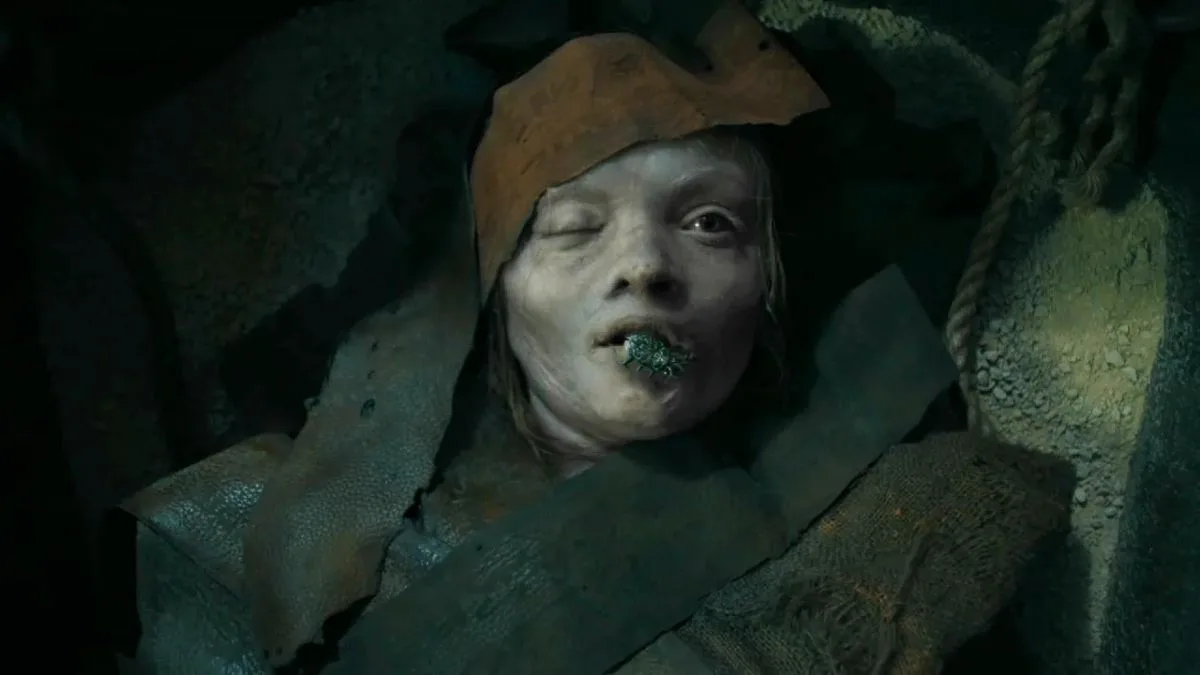
As the teaser moves ahead, things turn dark fast. Flickering images hint that something ancient and very evil has been disturbed. An ominous chant hums in the background, growing louder and more threatening. And then comes the image that sticks: a mummified corpse that looks like it’s coming back to life.

If you thought that was the worst part, think again.

Also Read: Mark Ruffalo, Avengers’ Hulk, hints at joining politics, criticises US parties, cheers Zohran Mamdani

Just before the teaser ends, it delivers a final shiver. A spider slowly crawls out of the corpse. No jump scare. No loud noise. Just pure discomfort.

It’s the kind of ending that makes you lean back and say, “Nope.” Mission accomplished.

The official story behind the horror adds an emotional punch. According to the film’s logline, ‘The Mummy’ follows a journalist’s family shattered by loss. Their young daughter disappears into the desert without a trace. Eight years pass.

Then, shockingly, she returns.

What should be a joyful reunion quickly becomes something terrifying. The girl is back, but something is very wrong. And that’s where the nightmare truly begins.

A fresh take from a horror specialist

Written and directed by Lee Cronin, known for his sharp and unsettling horror style, this version of ‘The Mummy’ is clearly aiming to be darker and more personal than past adaptations.

The cast includes Jack Reynor, Laia Costa, May Calamawy, Natalie Grace, and Veronica Falcón.

The film is produced by James Wan, Jason Blum, and John Keville, under the banners of New Line Cinema, Atomic Monster, and Blumhouse.

‘The Mummy’ release dates locked in

‘The Mummy’ will hit theatres and IMAX in North America on April 17, 2026, with an international release on April 15, 2026.

The original ‘The Mummy’ debuted in 1932, telling the story of an ancient Egyptian priest resurrected to unleash a deadly curse. The tale was revived for a new generation in 1999, with Brendan Fraser and Rachel Weisz, launching a hugely popular franchise.

Union government notifies National Sports Governance Rules, 2026

One of the key provisions mandates the inclusion of at least four sportspersons of outstanding merit in the General Body of every National Sports Body.

Statesman News Service | New Delhi |

The Union Government has notified the National Sports Governance (National Sports Bodies) Rules, 2026, under the National Sports Governance Act, 2025, marking a significant step for sports administration in India.

According to an official release from the Union Ministry of Youth Affairs and Sports, the rules lay down a comprehensive framework governing the composition of General Bodies and Executive Committees, inclusion of sportspersons of outstanding merit (SOMs), election procedures, and disqualification criteria for members of National Sports Bodies (NSBs) and Regional Sports Federations.

The rules also detail procedures for the registration and periodic updating of affiliated units with the National Sports Board and outline provisions relating to the National Sports Election Panel.

One of the key provisions mandates the inclusion of at least four sportspersons of outstanding merit in the General Body of every National Sports Body. To ensure gender representation, 50 per cent of these SOMs must be women. Additionally, NSBs may reserve specific positions for women in their Executive Committees through their respective bye-laws.

The rules prescribe a ten-tier classification system for selecting athletes as SOM representatives in the General Body and Executive Committee. Applicants must be at least 25 years of age, retired from their respective sport, and should not have participated in any competitive event at the district, state or national level for at least one year prior to the date of application.

The tiered criteria are based on the level of sporting achievements attained by Indian athletes across disciplines. The highest tier includes sportspersons who have won gold, silver or bronze medals at the Olympic Games, Paralympic Games or Winter Olympics, while the lowest tier covers medal winners at the National Games or National Championships. Keeping the diversity of sports disciplines in mind, the criteria have been framed broadly.

The rules also provide detailed election procedures, including fixed timelines for each stage, ranging from submission of SOM applications to the issuance of election notices, publication of the final electoral roll and invitation of nominations.

Clear disqualification norms have been outlined for membership of the General Body, Executive Committee or any other committee of a National Sports Body. Individuals convicted by a court of law and sentenced to imprisonment are barred from being members or contesting elections to the Executive Committee or the Athletes’ Committee.

Further, the National Sports Election Panel must consist of at least 20 qualified members at all times, in accordance with the National Sports Governance Act, 2025.

With the notification of these rules, every National Sports Body is required to amend its bye-laws within six months to align with the provisions of the Act. The fee of the Electoral Officer, selected from the Election Panel, will be determined through mutual agreement with the concerned National Sports Body, subject to a maximum cap of ₹5 lakh, along with a mutually agreed fee for any assistant appointed.

The notification of the National Sports Governance (National Sports Bodies) Rules, 2026, marks a key milestone in the transition to a structured and transparent sports governance framework, following the enactment of the National Sports Governance Act, 2025.

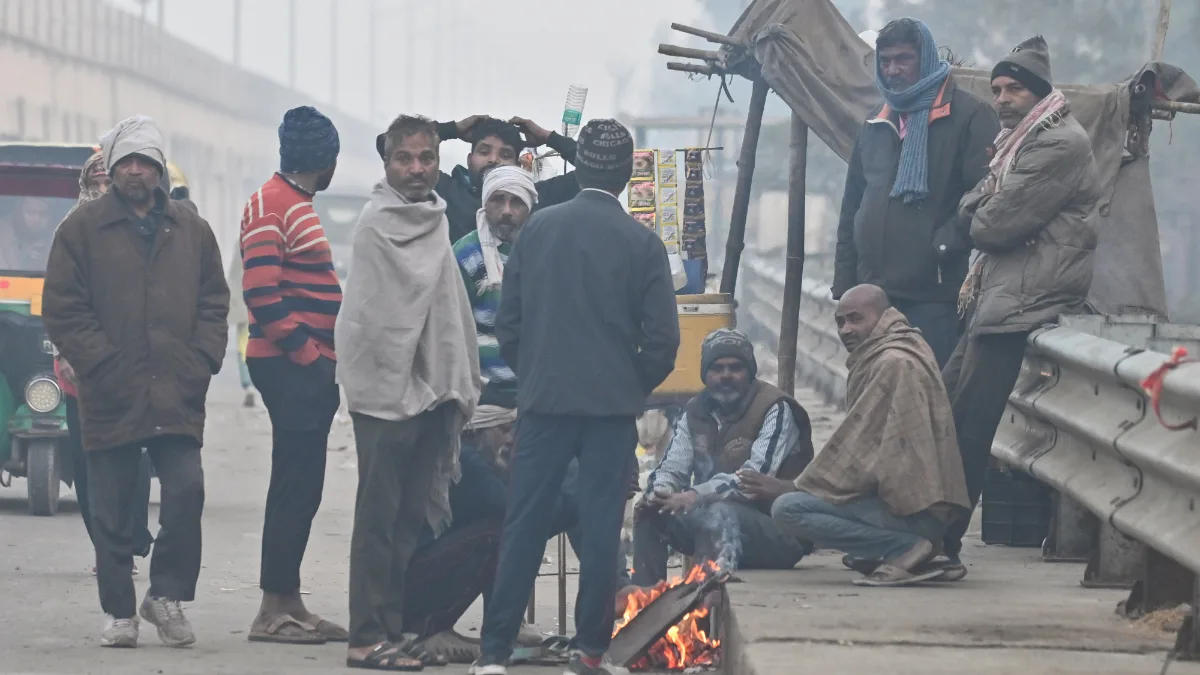
Bone-chilling cold grips Gurugram, temperature dips to 0.6°C

The lowest temperature recorded in Gurugram has hit a new low. The minimum temperature dipped sharply to 0.6 degrees Celsius this morning.

Statesman News Service | New Delhi |

While the national capital region continues to reel under an intense cold spell, the chill was particularly freezing in the district of Gurugram. The lowest temperature recorded in Gurugram has hit a new low. The minimum temperature dipped sharply to 0.6 degrees Celsius this morning.

Meanwhile, the cold wave continues to grip Delhi as the minimum temperatures plunged to 4 degrees Celsius in the early hours today. The city was engulfed in a thin layer of haze amid intense cold weather conditions.

The India Meteorological Department has issued a ‘Severe Cold Wave, Very Dense Fog’ warning for Haryana and Delhi.

The outskirts of NCR also witnessed ground frost, which further added to the harsh, dry cold conditions. As per the weather department, temperatures further dropped last night.

IMD forecast suggests that severe cold and dense fog conditions will persist across the region in the coming days.

AQI remains ‘very poor’

Simultaneously, Delhi NCR people are facing air quality issues as the Air Quality Index continues to be in the ‘very poor’ category. According to the Central Pollution Control Board (CPCB), the overall AQI of the national capital stood at 337, as of 8 am today.

AQI levels recorded at different locations in Delhi were as follows: Nehru Nagar at 358, Jahangirpuri at 357, Anand Vihar at 411, Patparganj at 366, RK Puram at 365, Wazirpur 375 and Vivek Vihar 366.

India, not Pakistan, is US’ long-term strategic partner: American lawmakers

US lawmakers say India, not Pakistan, remains Washington’s long-term strategic partner, citing economic ties, shared values, and India’s central role in Indo-Pacific strategy.

Statesman News Service | Mumbai |

Senior US lawmakers have underlined that India, not Pakistan, sits at the heart of Washington’s long-term strategic thinking, particularly in the Indo-Pacific region.

Speaking in Washington, they said recent diplomatic engagement with Pakistan should not be mistaken for a shift in America’s strategic priorities. India, they stressed, continues to be the United States’ key partner across administrations and sectors.

US outreach to Pakistan is not a strategic shift

At a discussion hosted by the Center for Strategic and International Studies (CSIS), Congressman Ami Bera addressed concerns raised in New Delhi over recent political signals from Washington.

“We’re not creating a strategic partnership with Pakistan,” Bera said, pushing back against perceptions created by recent political rhetoric.

He acknowledged that comments from US leaders can sometimes cause unease in India. Referring to a recent diplomatic phase, he said, “The President made some comments about Pakistan, had invited Pakistani leaders into the Oval Office.”

Bera, however, said such engagement should be seen in context and not as a change in long-term alignment.

Why Washington sees India as central to its global strategy

Bera pointed to economic reality as a clear indicator of where US priorities lie. “You don’t see American companies making multibillion-dollar investments in Pakistan. That’s all happening in India,” he said.

He added that Washington is focused on the long term. “We’re playing the long game,” Bera said, noting that global business communities understand where US strategic engagement is headed.

Congressman Rich McCormick echoed that view, describing India as essential to future global stability.

“There is no more important friend that we’re going to need for the future of not just the United States and India, but for the entire stability of the world, than India,” McCormick said.

The lawmakers said Pakistan does not figure prominently in Washington’s long-term Indo-Pacific framework, which increasingly prioritises democratic partners, economic integration, and shared values.

Bera noted that India’s role has remained consistent over decades. “If you go back to the Clinton administration, through the Bush administration, through Obama, to Trump 1.0, to Biden, India’s been very key to our whole Indo-Pacific strategy,” he said.

McCormick also highlighted shared values as the foundation of the partnership. “The commonality we have in the way we look at economics and freedom and advancement of a people,” he said.

While acknowledging India’s independent foreign policy choices, McCormick said Washington recognises New Delhi’s domestic priorities. “He’s doing it for the best interest of his country,” he said, referring to India’s approach to energy security and economic growth.

US revokes over 100,000 visas in under a year as post-entry monitoring tightens

The US has cancelled more than 100,000 visas in under a year, marking a record rise as authorities step up monitoring and enforcement on security and public safety grounds.

Statesman News Service | Mumbai |

The United States has cancelled more than 100,000 visas issued to foreign nationals in less than a year, marking the highest number of revocations on record. The move is part of a broader push by the administration of Donald Trump to tighten border controls and strengthen internal security, according to the US State Department.

Officials said the scale of action represents a sharp rise compared to previous years and reflects tougher monitoring of visa holders already inside the country.

“The Trump administration has no higher priority than protecting American citizens and upholding American sovereignty,” said Tommy Pigott, Principal Deputy Spokesperson at the US State Department, in a statement released on Monday.

Sharp rise in visa cancellations since 2024

Pigott said the numbers show a significant escalation in enforcement.

“In less than one year, the State Department revoked over 100,000 visas from foreign nationals, marking a new record and more than a 150% increase in revocations since 2024,” he said.

According to the department, the cancelled visas involved individuals accused or convicted of a range of criminal offences. These included assault, theft and driving under the influence.

“The State Department revoked visas from thousands of foreign nationals charged or convicted with crimes, including assault, theft, and driving under the influence,” Pigott said.

Continuous Vetting Center driving enforcement

The administration attributed the rise in revocations to new screening and monitoring systems introduced during President Trump’s tenure.

“The State Department’s recently-launched Continuous Vetting Center works to ensure that all foreign nationals on American soil comply with our laws — and that the visas of those who pose a threat to American citizens are swiftly revoked,” Pigott said.

Unlike earlier systems that focused mainly on checks at the time of visa application or entry, the Continuous Vetting Center tracks visa holders after they arrive in the United States. Officials say this allows quicker action when individuals are charged with or convicted of crimes.

Pigott said the policy is part of a wider national security strategy.

“The Trump administration will continue to put America first and protect our nation from foreign nationals who pose a risk to public safety or national security,” he said.

The State Department did not release details on which countries were most affected, nor did it clarify how many of the revoked visas belonged to tourists, students or long-term residents.

The announcement comes amid ongoing debate in the US over immigration enforcement, border security and how to balance national security concerns with legal immigration pathways. Visa policy has become a central issue in both domestic and foreign policy discussions.

Visa revocation powers allow US authorities to cancel previously issued visas if holders are found ineligible or are considered a threat to public safety or national security.

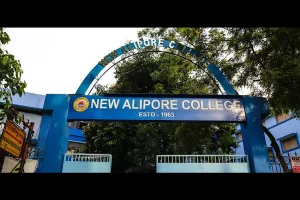
New Alipore College adopts CCF learning

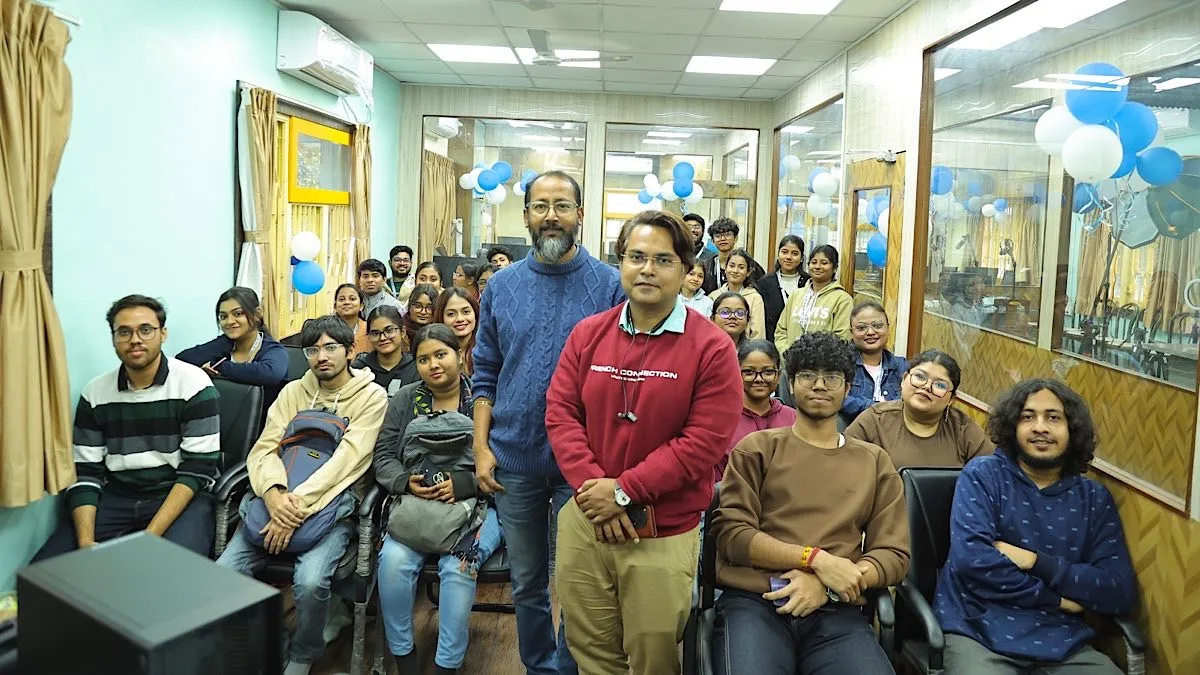
The Department of Journalism and Mass Communication, New Alipore College, organised a special lecture and interactive discussion on Saturday to help students understand the practical side of the new CCF course module, which the University of Calcutta introduced.

Statesman News Service | Kolkata |

The Department of Journalism and Mass Communication, New Alipore College, organised a special lecture and interactive discussion on Saturday to help students understand the practical side of the new CCF course module, which the University of Calcutta introduced. The programme focused on experiential learning and how it can prepare students for real-world media work.

Biswajit Das, Head of the Department of Journalism and Mass Communication at Manindra Chandra College, conducted the session. He is also an eminent radio jockey and a well-known media personality. From his professional experience, He spoke about how important it is to learn beyond textbooks. Moreover, he motivated students to engage with the field from an early stage.

Students from different seminars attended the programme with great interest. A major highlight was the hands-on training sessions on field research, storytelling and scripting. With the help of practical exercises and interactive discussions, students received a clear understanding of how theoretical concepts are used in media practice.

Speaking on the occasion, Amartya Saha, Head of the Department of Journalism and Mass Communication, New Alipore College, said, “Such workshops are beneficial to help students and understand the scope of course modules and boost the skills in practical experiential learning.” The programme turned out to be informative as well as inspiring for the students.

The programme helped students better understand how classroom learning connects with real media work. It motivated them to learn with practical experience and feel more confident about the new curriculum.

Irrelevance of AI-detection plagiarism tools in a world dominated by AI

In a world dominated by Chatbots, every student of the present generation is trained in AI tools, and most have even forgotten how to write in their own words.

Biju Dharmapalan | Kolkata |

In a world dominated by Chatbots, every student of the present generation is trained in AI tools, and most have even forgotten how to write in their own words. Even an English literature student finds it difficult to understand grammar without the help of tools like Grammarly or Quillbot. But when it comes to higher education, especially for doctoral students, universities are particularly strict about plagiarism and the use of AI. Many companies are exploring their business in the field, which runs into lakhs annually per purchase. It’s like you develop a tool that corrupts the system, then, as a solution, develop another tool to mitigate the impact.

The real question is, do we really need AI-detection plagiarism tools in a world where AI is already a common way to express yourself? These products are increasingly like the old antivirus software from the early 2000s: they are heavily advertised, don’t always work as promised, and can’t keep up with the systems they claim to protect. Their prolonged existence seems to be less about academic integrity and more about protecting an industry that depends on institutional unease.

AI-detection systems promise to be sure in a field where being sure is impossible. Today, the distance between a bot and a human is so narrow that it’s challenging to find the difference. There are instances of journals rejecting genuine research papers for perceived similarity to AI-generated content. A paragraph that was produced after a lot of thought is called ‘95 per cent AI,’ whereas a piece that was made by a machine might be called ‘mostly human.’ The findings are all over the place—when the exact text is examined across multiple systems, they can range from 0 per cent to 100 per cent AI. When diagnostic discrepancies become the norm, it raises an uncomfortable but essential question about legitimacy.

The issue lies in how AI detectors are built. Statistical signatures, such as patterns, phrase uniformity, predictability indices, and probability distributions, are used by these tools. But people have quite different ways of writing. The generation that grew up with tools like Grammarly has unknowingly imbibed the writing style these tools promote. Some people write with clear, predictable patterns, while some robots write in ways that are hard to predict. As huge language models get better, their outputs now seem so much like human writing that it’s hard to tell them apart. It’s like asking a speed radar to distinguish between two similar cars travelling at the same speed.

Also, the widespread usage of generative AI has transformed what it means to be an author. AI tools are becoming part of our daily writing habits, whether we’re writing an email, organising a report, fixing grammar, or brainstorming ideas. If it’s usual to use AI, where does ‘AI writing’ start and ‘human writing’ end? Detection tools work on a binary model that is no longer true. They are trying to enforce a boundary that no longer exists.

This is when their business plan becomes clear. AI-detection services, like antivirus firms that sell perpetual fear of invisible threats, make money by making teachers, publishers, and institutions worried about a technological change they don’t completely grasp. Many schools and colleges don’t want to reconsider how they test students, so they hire detection software to do it for them. The illusion of control is good for business. But it doesn’t signify anything.

The unintended results are awful. Students who make their own work are falsely accused. Writers have to change their natural style to ‘sound less like AI,’ as if creativity has to fit with what algorithms demand. Researchers are afraid to employ fundamental digital tools because they might get in trouble. Detection technologies don’t help develop a culture of trust and literacy; instead, they make people suspicious. They punish real people while not catching those who misuse things.

Instead of spending money on detection systems that don’t work, academic and professional ecosystems need to focus on objective assessment, process-based evaluation, and critical thinking abilities. Tell pupils to turn in drafts, notes, reflections, or spoken explanations. Instead of making an impossible prohibition, push for openness about how AI tools are utilised. Instead of keeping an eye on AI’s tracks, teach people about AI ethics.

Adding AI to writing is not just a passing trend; it is a change in the way things are done. AI will revolutionise the way we write, think, and learn, much like calculators changed how we study maths and search engines changed how we find information. We should adapt to the situation, not police it. AI-detection plagiarism techniques may still be sold as commercial solutions, although they are becoming less and less useful. Their existence is based on an old idea of authorship, and they are not reliable enough to be used as tools for judgment.

In a world dominated by AI, the goal is not to detect it. The goal is to understand it, integrate it, and use it to elevate human learning. The future of academic integrity does not depend on software that scares people, but on innovative teaching, smart policies, and a fresh respect for human creativity that is helped, not threatened, by innovative technology.

(The writer is the Dean -Academic Affairs, Garden City University, Bangalore and an adjunct faculty at the National Institute of Advanced Studies, Bangalore.)

7 hiring trends that will shape the IT talent market in 2026

The IT talent landscape has stepped into 2026 with significant influence from the rapid adoption of Artificial Intelligence (AI) and IT talent needs. Widespread adoption of AI and increasing digital integration across Indian businesses and consumers will drive significant growth in the Indian technology ecosystem.

Balbir Singh | Kolkata |

The IT talent landscape has stepped into 2026 with significant influence from the rapid adoption of Artificial Intelligence (AI) and IT talent needs. Widespread adoption of AI and increasing digital integration across Indian businesses and consumers will drive significant growth in the Indian technology ecosystem. Additionally, effective regulatory policies and consistent corporate investment will ensure that India remains a competitive leader, holding the edge in the global market in both the IT and IT-eS industries. 

The IT industry outlook: 

Amid global uncertainties, hiring rates of reskilled employees in India’s IT sector are expected to increase.  

One of the drivers that is propelling this trajectory is that AI is transitioning from the pilot phase to the mainstream acceptance and adoption phase. Organisations will prioritise AI-skilled talents over tech specialists alone. Moreover, technological capabilities will be further developed in India through Global Capability Centres. IT Hiring will transition toward high-impact positions in 2026, including AI, cloud engineering, cybersecurity, and data science and analytics.

Hiring trends in the IT industry 

Here are 7 trends in IT hiring that are disrupting traditional talent playbooks, and every leader should prepare for:

  1. AI fluency will be a baseline competency 

The recent Voice of CHROs on Artificial Intelligence study shows that 91 per cent CHROs in India believe AI will reduce manual and repetitive tasks, and 81 per cent believe AI will increase operational efficiency and productivity. Some roles will be automated in the coming days. Knowledge and application of AI in everyday jobs will be a basic requirement assessed by hiring managers in 2026. Organisations are also investing heavily in promoting employees’ understanding of the effective and responsible use of AI through upskilling training programs.

  1. Domain expertise complementing AI skills 

Among AI specialists, those with domain expertise will be in higher demand. In 2026, companies will hire tech engineers and other professionals who can leverage AI for specific tasks such as service delivery, sales, customer service, and operations, making domain expertise with AI skills hiring the predominant approach. Companies are increasingly hiring talent with AI skill sets to solve business problems.

  1. Learning quotient and innovation opportunities 

With constant developments and disruptions, IT talent is constantly at risk of obsolescence without continuous learning. IT hiring in 2026 will assess learning quotient as much as existing skill set to ensure talent keeps updating. Such talent not only stays relevant but also drives business growth, and thereby making learning and curiosity a deciding factor during IT hiring. Innovation Velocity Ratio (IVR) highlights how prepared IT firms are to adapt to disruption, now the industry’s biggest competitive advantage. A report found that the IT sector’s IVR has improved from 7:2 to 8:2 this year, meaning that for every two employees who do not experience innovation opportunities, eight are ready to innovate. Our study also shows that when employees report having meaningful opportunities to innovate, they are 89 per cent more likely to be excited about using AI. The culture of innovation is a key driver of successful AI adoption across IT delivery, platforms, and operations.


  1. Retention becomes a strategic risk in IT talent markets 

Hiring alone cannot solve capability gaps if retention remains fragile. While recruitment has slowed in the technology sector, attrition remains high: 19 per cent of IT workers report they intend to leave their organisations soon. Employees of companies that have not adopted AI technology are 46 per cent more likely to express an intent to leave their company than employees at companies that have adopted AI technology. Therefore, the ability to mature in the AI technology space will keep employees engaged and retained.

  1. Hybrid model onboarding will scale 

IT hiring is no longer restricted to talent in metro cities and is readily onboarding skilled employees across the nation and beyond. While the IT industry is at a crossroads between return-to-office and remote work, the hybrid model seems to be winning. This shift expands the talent pool and makes flexibility a critical factor in hiring decisions. Organisations can invest in virtual onboarding processes, tools, and culture. 

  1. Improving Employee Value Proposition (EVP) to attract tech talent 

With IT hiring slowing, tech talent is increasingly moving into core industries such as BFSI, pharma, e-commerce, and others. In the long run, IT organisations must prepare to compete for this critical skill set through a compelling Employee Value Proposition (EVP). Beyond pay, IT firms must offer opportunities for innovation, continuous learning, global exposure, and career growth to attract and retain top talent. 

  1. AI-hiring to ease screening and reduce bias 

We can already see AI tools handling candidate screening and selection, helping in managing volumes. The AI-led hiring process can help eliminate human bias and discrimination through masked resumes and creating customised shortlists, given that the model is trained accurately. AI is helping streamline hiring processes and reduce hiring time. 

Rather than relying solely on technical expertise, the way that organisations will hire in the IT Industry in 2026 will be influenced by factors like AI augmentation of existing jobs, learning agility, and work models. Organisations combining an AI vision that is CEO-led, an emphasis on continuous reskilling, and a commitment to human-centric leadership will attract and keep the most highly sought-after IT professionals.

The writer is CEO, Great Place To Work® India

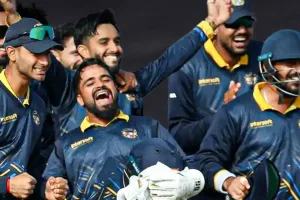
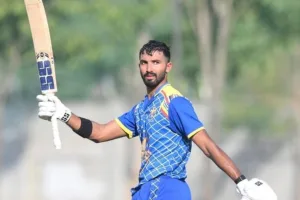
Vijay Hazare Trophy Quarter-Finals: Punjab face MP, Delhi take on Vidarbha in Bengaluru

Madhya Pradesh come into the contest on the back of a confidence-boosting win over Karnataka in their final group-stage fixture.

Neha Buswal | New Delhi |

As the Vijay Hazare Trophy enters the knockout phase, two quarter-final clashes are scheduled for today in Bengaluru, both to be played at the BCCI Centre of Excellence.

Punjab will face Madhya Pradesh at Ground 1, while Delhi take on Vidarbha at Ground 2, with four teams battling for a place in the semi-finals.

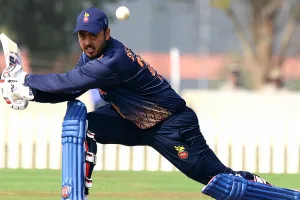
Madhya Pradesh come into the contest on the back of a confidence-boosting win over Karnataka in their final group-stage fixture. Led by IPL 2025-winning captain Rajat Patidar, the side will once again bank on the all-round brilliance of Venkatesh Iyer, who has been in top form throughout the tournament.

Punjab, meanwhile, enter the quarter-final with strong momentum of their own. The team will rely heavily on Prabhsimran Singh to provide a quick start, as Abhishek Sharma will miss the match to start his preparation for the India vs New Zealand T20I that is scheduled to start on 21 January.  

In the second quarter-final, Delhi will be without skipper Rishabh Pant, who will not take the field. He was ruled out of the India vs. New Zealand first ODI due to a side strain injury. 

Despite his absence, Delhi still boasts a strong batting core featuring Priyansh Arya, Nitish Rana, and Yash Dhull, giving them enough firepower to challenge Vidarbha. The team will be without Ayush Badoni, as he received his maiden international call-up for the ODI series against New Zealand after Washington Sunder was ruled out of the remaining two matches. 

Vidarbha, on the other hand, will look to continue their impressive run in the competition, built around disciplined and clinical bowling performances that have consistently put opposition batters under pressure.

Vijay Hazare Trophy: Toss Update

Delhi skipper Ishant Sharma won the toss and elected to bowl first against Vidarbha.

Madhya Pradesh captain Venkatesh Iyer won the toss and opted to field first against Punjab.

Vijay Hazare Trophy Quarter-Finals: Playing XIs

Punjab vs. Madhya Pradesh

Punjab: Prabhsimran Singh(w/c), Harnoor Singh, Anmolpreet Singh, Naman Dhir, Nehal Wadhera, Ramandeep Singh, Sanvir Singh, Krish Bhagat, Sukhdeep Bajwa, Mayank Markande, Gurnoor Brar

Madhya Pradesh: Yash Dubey, Himanshu Mantri(w), Venkatesh Iyer(c), Rajat Patidar, Akshat Raghuwanshi, Tripuresh Singh, Shubham Sharma, Saransh Jain, Kumar Kartikeya, Aryan Pandey, Kuldeep Sen

Delhi vs. Vidarbha

Delhi: Vaibhav Kandpal, Priyansh Arya, Nitish Rana, Anuj Rawat(w), Mayank Gusain, Tejasvi Dahiya, Harsh Tyagi, Hrithik Shokeen, Prince Yadav, Navdeep Saini, Ishant Sharma(c)

Vidarbha: Atharva Taide, Aman Mokhade, Dhruv Shorey, Ravikumar Samarth, Yash Rathod, Rohit Binkar(w), Harsh Dubey(c), Yash Kadam, Nachiket Bhute, Yash Thakur, Praful Hinge

Swamiji and India’s independence movement

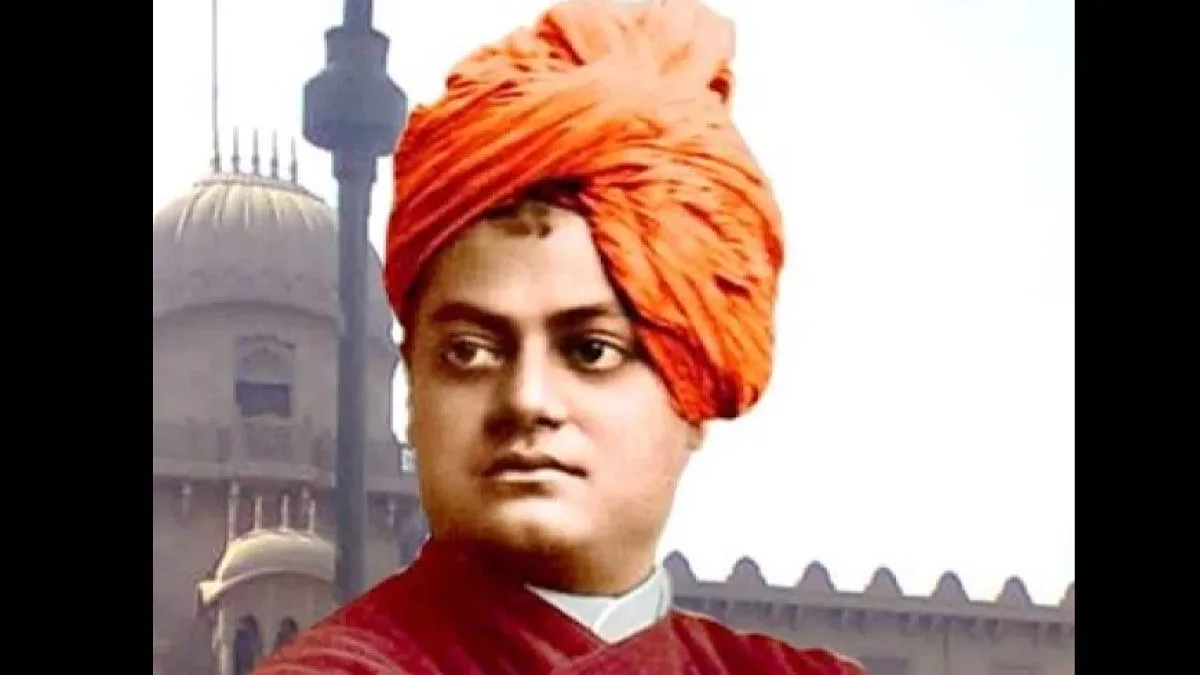
Swami Vivekananda (1863-1902) was born on 12 January 1863, 163 years ago. He left at the age of 39, on 4 July 1902. By then he had spread spiritual fire in Chicago, America, at the World’s Parliament of Religions, on 11 September 1893.

BISHWAJIT BHATTACHARYYA | New Delhi |

Swami Vivekananda (1863-1902) was born on 12 January 1863, 163 years ago. He left at the age of 39, on 4 July 1902. By then he had spread spiritual fire in Chicago, America, at the World’s Parliament of Religions, on 11 September 1893. That fire continues to spread and is unextinguishable.

Though Swami Vivekananda (referred to hereinafter as “Swamiji”) has been one of the greatest spiritual leaders of the world, it is not widely known that he had contributed significantly towards India’s independence, possibly because he left 45 years before India achieved her independence. India’s independence movement received a massive fillip from Swamiji. The Father of the Nation, Mahatma Gandhi (1869-1948), acknowledged that Swamiji’s teachings intensified his spiritualism, patriotism, self-reliance and the right means to achieve ends. Even the world poet Rabindranath Tagore (1861-1941), who was a freedom fighter through his writings, reverentially said: “If you want to know India, study Vivekananda”. Tagore had deep respect for Swamiji. Tagore was also greatly influenced by Swamiji’s philosophy and ideals of life.

Netaji Subhas Chandra Bose called Swamiji his “guru” and the “maker of modern India”. Netaji felt Swamiji’s teachings shaped his life and India’s freedom movement. Bal Gangadhar Tilak (1856-1920), had deep respect for Swamiji, and called him the “second Shankaracharya”. In 1892, Swamiji stayed at Tilak’s home in Pune and both jointly decided to work towards India’s glory. Sri Aurobindo (1872-1950), while in Alipore jail Kolkata (1908-1909), acknowledged that Swamiji’s spirit visited him in jail. While in jail for a year, on a charge of sedition slapped by the British Crown, Sri Aurobindo imbibed spiritualism from Swamiji’s teachings. He relinquished politics thereafter and became a great spiritual leader.

Bhagat Singh (1907-1931) was also deeply influenced by Swamiji. Singh imbibed fearlessness, self-sacrifice and duty to humanity from Swamiji. He acknowledged having learnt from Swamiji’s teachings on inner strength and national pride. Swamiji further influenced Hemchandra Ghosh (1884-1980), a freedom fighter, and advised him that India’s freedom was the only dharma needed then. Swamiji advocated that India’s youth should rise against British rule and spiritual strength must yield political liberation. He told Ghosh categorically: “Strike down the looters with all your strength”. This was in 1901, months before Swamiji cast off his body like a worn-out garment in Belur Math, West Bengal. Thus, Swamiji’s contribution towards India’s quest for freedom was pre cious.

His overriding considerations have always been nation building, love, affection, compassion, and strength of character. Swamiji preached that it is character which cleaves its way through the adamantine wall of all difficulties. Today, across the world, amid sectarianism, bigotry, fanaticism leading to blood baths and destruction, Swamiji’s teachings, particularly on Vedanta Philosophy, assume critical importance. Swamiji championed Vedanta Philosophy. He summed it up thus: each soul is potentially divine. The goal is to manifest the divinity within by controlling nature, external and internal. This can be done by work or worship, psychic control, or philosophy and by being free. Mark the words: “be free” – freedom! This is the whole of religion. Doctrine or dogmas or rituals or books or temples or forms are only secondary details.

The first Vedanta Society outside India was established by Swami Vivekananda in New York in 1894. Its San Francisco Centre was founded in 1900. Swami Nikhilananda (1895-1973), a noted Hindu monk, and a direct disciple of Sri Sri Sarada Devi, acknowledged America’s contribution towards Swamiji’s achievements in these glowing terms: “it is one of the outstanding traits of Americans to draw out the latent greatness of other people. America discovered Vivekananda and made a gift of him to India and the world.” Alas, the USA’s recent actions bely Swamiji’s teachings. What a fall from 1893 to 2026! Not only the USA, the entire world today is undergoing a metamorphosed degeneration of bigotry. No one is prepared to give freedom to others.

Netaji’s freedom slogan: “give me blood I’ll give you freedom” is haunting us today. Swami Vivekananda said: “All our struggle is for freedom. We seek neither misery nor happiness but freedom, freedom alone”. How profound! An ideal soul is one who gives freedom to others! This is also the surest path towards achieving eternal freedom, Nirvana, the ultimate goal of Vedanta Philosophy, was taught by Swamiji Vivekananda. (The writer is Senior Advocate, Supreme Court of India and ex-Additional Solicitor General of India.)