Logo

India-US deal sparks massive political storm, Gandhi hits out at PM Modi

India is currently the second-largest buyer of Russian oil, which is under US sanctions.

VIBHA SHARMA | New Delhi |

Even as government sources asserted “zero compromise” on farmers’ interests in the India-US trade deal, claiming that “India’s agriculture and dairy sector will be protected,” opposition leaders mounted a sharp attack on Prime Minister Narendra Modi, accusing him of “selling the country under US’ pressure” and “backstabbing farmers by potentially opening markets to subsidised US agricultural imports.”

Government sources said, “The India-US trade deal agreed upon between US President Donald Trump and PM Modi does not compromise the interests of Indian farmers,” also clarifying that India would continue to buy crude oil from countries that are “not under sanctions.”

India is currently the second-largest buyer of Russian oil, which is under US sanctions.

Union Minister J P Nadda announced in the Rajya Sabha that the government would issue a suo motu statement on the trade deal and hold a discussion in Parliament after several opposition MPs staged a walkout, demanding a discussion on the deal.

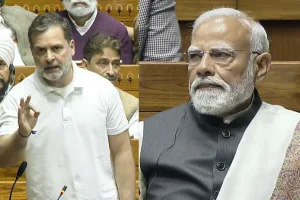
The Lok Sabha also saw repeated disruptions over Leader of Opposition Rahul Gandhi’s insistence on referring to an unpublished memoir of former Army chief General M M Naravane during the discussion on the Motion of Thanks to the President’s Address for the second day in a row. Eight Congress MPs were suspended in the Lok Sabha on Tuesday by the Chair for “unruly” behaviour.

Parliamentary Affairs Minister Kiren Rijiju had moved a resolution in the Lok Sabha to suspend Hibi Eden, Amarinder Singh Raja Warring, Manickam Tagore, Gurjeet Singh Aujla, C Kiran Kumar Reddy, Prashant Padole, S Venkatesan and Dean Kuriakose for the remainder of the session. They were reportedly seen tearing up papers and throwing them towards the Chair.

Speaking to the media after chaotic scenes for the second consecutive day, Gandhi accused the Prime Minister of being “compromised” and “selling” India. “Modi ji is rattled. The (US-India) trade deal, which was stalled for the past few months, was signed by Narendra Modi last night. There is extreme pressure on him. Narendra Modi ji’s image can get damaged. The main thing is that our PM is compromised,” Gandhi said. He added, “For the first time, the Leader of the Opposition was not allowed to speak on the President’s speech.”

“Narendra Modi ji has sold your hard work in this trade deal because he is compromised. He has sold the country. Narendra Modi ji is scared because those who shaped his image are now breaking this image,” Gandhi alleged. He further claimed, “There is a case on Adani ji in the US; it is actually a case on Modi ji. The Epstein Files contain even more that the US has not yet released. There is pressure due to that as well. These are the two pressure points; the country should understand this.”

Earlier in the House, Gandhi argued that an article he cited was relevant to national security and India’s foreign policy, particularly relations with China and Pakistan. “There is a very important point in this article that I have authenticated. It speaks about the PM’s reaction… On the world stage, the main issue in international affairs is the conflict between China and the US. This is central to our President’s address,” he said, questioning why he was being stopped from making his point.

Opposition parties across the spectrum slammed the Modi government, claiming it had compromised economic policy and foreign relations by agreeing to reduced tariffs without adequate safeguards against cheaper US imports. They warned that subsidised American agricultural products could flood Indian markets, undercut local prices, and hurt small farmers unable to compete with US agribusiness.

Former Foreign Secretary and Rajya Sabha MP Harsh Vardhan Shringla defended the agreement, saying the deal “not only gives us a competitive market advantage in the US” but also “uplifts India’s stature on the global stage,” calling it a matter of pride. AAP MP Sanjay Singh, however, said, “By opening us to the US market in the agriculture sector, Narendra Modi has backstabbed the farmers of India. This Agreement is a betrayal to the crores of farmers in India.” He added that if India stops buying Russian oil, “people of India will have to purchase expensive oil from the US… a double blow to the people of India.”

Samajwadi Party MP Dimple Yadav said the announcement by President Trump showed that India’s Ministry of External Affairs was “not able to negotiate in the manner that a deal should be done.” Sena (UBT) MP Sanjay Raut alleged that “national interest and interest of farmers were compromised” and claimed the deal was signed to safeguard Gautam Adani. SP MP Ram Gopal Yadav added that “there must certainly be some hidden agenda,” noting that “everything is secret, nothing is open.”
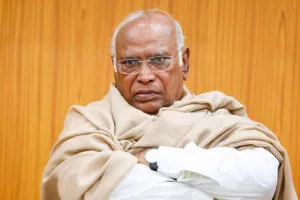
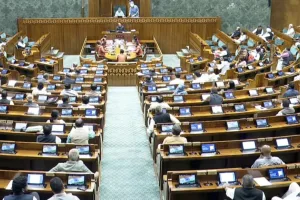
Too early to ascertain impact of 18% tariff on India: Mayawati

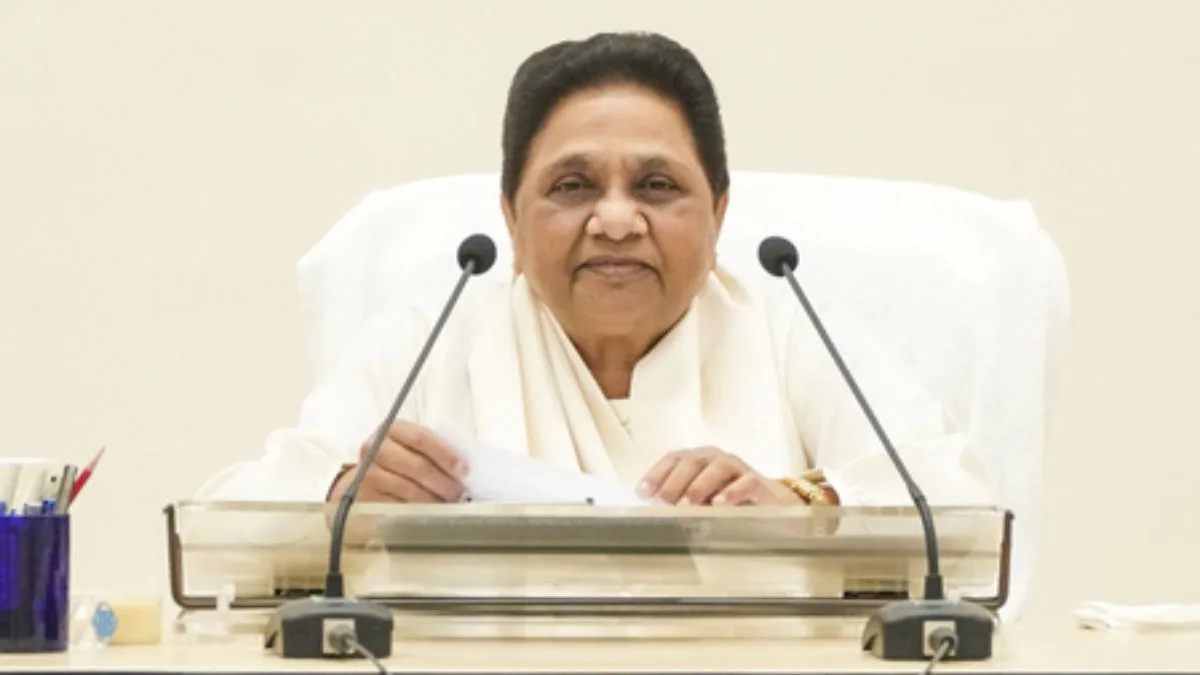
In a post on X, Mayawati stated that in the absence of adequate information, any immediate evaluation would be hasty, as the real impact of the decision would become clear only after its implementation on the ground.

Statesman News Service | Lucknow |

Bahujan Samaj Party (BSP) chief Mayawati on Tuesday said it would be premature to ascertain whether the United States’ decision to impose an 18 per cent tariff following a mutual agreement with India is in the national and public interest.

In a post on X, Mayawati stated that in the absence of adequate information, any immediate evaluation would be hasty, as the real impact of the decision would become clear only after its implementation on the ground.

She emphasised that it remains to be seen how the move would affect the country, particularly the Bahujans, the poor, labourers, farmers and women.

The former Uttar Pradesh chief minister also said it would have been better if the government had provided a detailed explanation on the issue during the ongoing session of Parliament.

According to her, such a discussion would have ensured transparency and helped the public gain a clear understanding of the implications of the agreement and the tariff decision.

How will India-US trade deal impact agricultural sector? Explained

As per the US Secretary of Agriculture, Brooke Rollins, the US will export more of its American farm products to India’s massive market under the India-US deal.

Statesman News Service | New Delhi |

While India is yet to put out the full details of the India-US trade agreement, the United States has confirmed that the deal is a win-win for its agricultural sector. As per the US Secretary of Agriculture, Brooke Rollins, the US will export more of its American farm products to India’s massive market under the India-US deal.

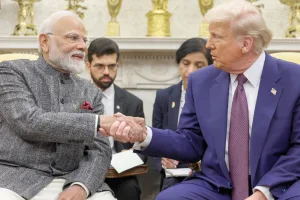
The leaders of the two countries, Prime Minister Narendra Modi and US President Donald Trump, announced the tariff reduction from 50 per cent to 18 per cent yesterday through a post on a social media platform.
Notably, Trump said in his post on the social media platform that India has agreed to purchase more American goods. He specified that the purchases would surge to around $500 billion, including the buying of American agricultural products.

According to a statement by an Indian government official to Reuters, India has agreed to offer market access to some US agricultural products under the deal.

Will India-US trade deal keep American farmers first?

In the first post after the announcement of the India-US trade deal, the US Secretary of Agriculture thanked the United States President Donald Trump for once again delivering for our American farmers.’
She posted on X: “India’s growing population is an important market for American agricultural products, and today’s deal will go a long way to reducing this deficit. America First victory on top of the dozens of deals for agriculture.”


According to the data available, the agricultural trade deficit of the United States with India was $1.3 billion in 2024. The US agricultural exports in 2025 reached approximately 1.7 billion USD, as per the USDA data.

On the impact of the India-US trade agreement on the Indian agriculture sector, Former Foreign Secretary and Rajya Sabha MP Harsh Vardhan Shringla said, “Some items will come from the US, but they will not threaten our agriculture. I don’t see any contradiction or any problem that our farmers could face.”

Gujarat Giants vs Delhi Capitals WPL 2026 Eliminator Preview: Date, live streaming, probable XIs and more

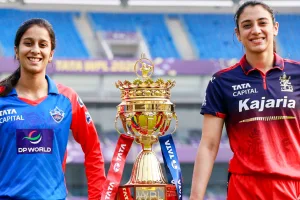
The winner of the Eliminator will face table-toppers Royal Challengers Bengaluru (RCB), who have already secured direct qualification for the final, in the WPL 2026 Final on February 5, 2026.

Neha Buswal | New Delhi |

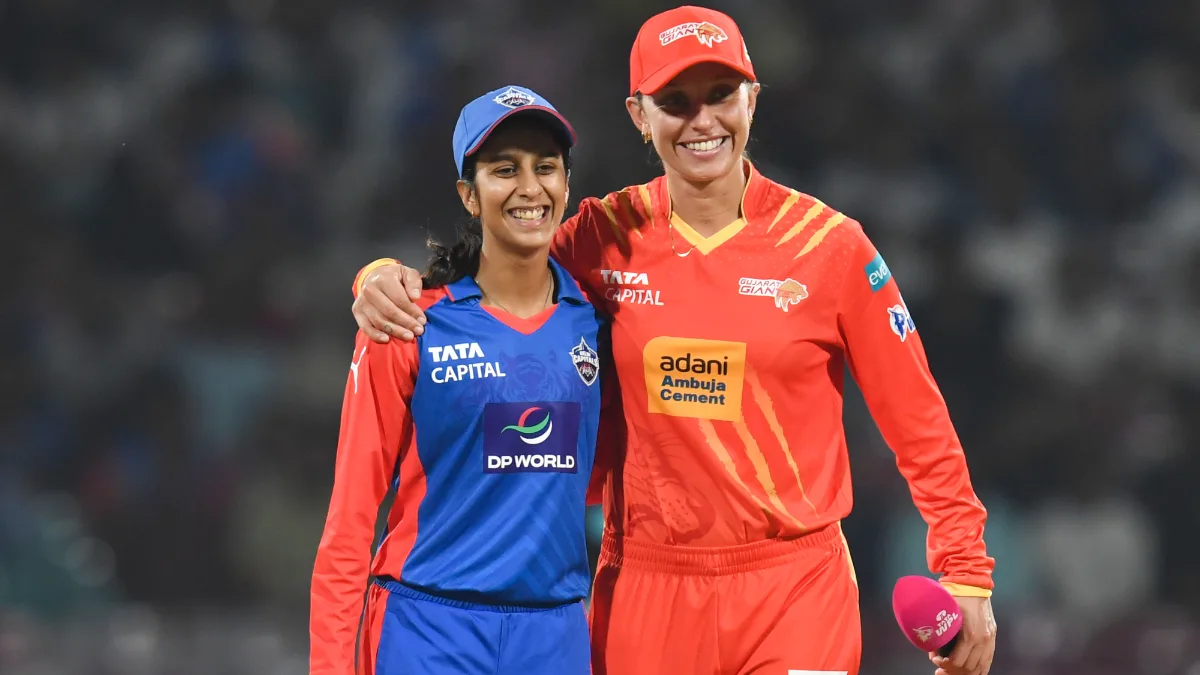
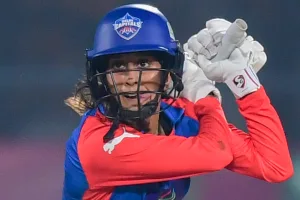
The second-last match of the WPL 2026 season promises to be a thriller as Gujarat Giants (GG) take on Delhi Capitals (DC) in the Eliminator. The match will be played at 7:30 PM IST on February 3, 2026, at the BCA Stadium, Kotambi, Vadodara.

Delhi Capitals booked their place in the playoffs after defeating UP Warriorz in their final league match on February 1, winning by 5 wickets with 8 balls to spare. DC were clinical with the ball, restricting UPW to just 122 before chasing the target comfortably.

Meanwhile, Gujarat Giants qualified in dramatic fashion after beating the defending champions Mumbai Indians by 11 runs in a thrilling contest. In an unusual move, Captain Ashleigh Gardner chose to bat first after winning the toss, making GG the first team in 41 WPL matches to opt to bat first and successfully defend a total. The win was also historic, as it was Gujarat’s first-ever victory over the Mumbai Indians in WPL history, ending an eight-match losing streak.

After suffering eight consecutive defeats to MI prior to that match, the Giants posted a competitive 167/4, powered by a crucial 71-run partnership between Gardner (46) and Georgia Wareham (44). Their bowlers then held their nerve against a fighting 82 from Harmanpreet Kaur, sealing an 11-run victory to secure their spot in the Eliminator.

Having recovered strongly from an early three-match losing streak this season, GG finished second in the standings with 10 points.

GG vs DC in WPL 2026 league stage

Gujarat Giants and Delhi Capitals faced each other twice in the league stage this season and GG won both matches.

Match 1: GG won by 4 runs

Match 2: GG won by 3 runs

Sophie Devine played a major role in both victories. She was the Player of the Match in the first encounter and also picked up a crucial four-wicket haul in the second match.

The winner of the Eliminator will face table-toppers Royal Challengers Bengaluru (RCB), who have already secured direct qualification for the final, in the WPL 2026 Final on February 5, 2026.

Gujarat Giants vs Delhi Capitals, WPL 2026: Head-to-Head

Total matches: 8

Gujarat Giants wins: 4

Delhi Capitals wins: 4

GG vs DC, WPL Eliminator: Match Details

Fixture: Gujarat Giants vs Delhi Capitals (Eliminator)

Date: February 3, 2026

Time: 7:30 PM IST (Toss at 7:00 PM IST)

Venue: BCA Stadium, Kotambi, Vadodara

GG vs DC, WPL Eliminator: Live Streaming Details

Where to watch the DC vs GG WPL Eliminator live in India?

Fans can watch the DC vs GG match live on TV via the Star Sports Network, while live streaming will be available on the JioHotstar app and website in India.

What is the toss time for the DC vs GG matchup?

The toss will take place at 7:00 PM IST, with the match starting at 7:30 PM IST.

GG vs DC, WPL Eliminator: Probable Playing XI

Gujarat Giants are likely to field Beth Mooney (wk), Sophie Devine, Anushka Sharma, Ashleigh Gardner (c), Georgia Wareham, Bharti Fulmali, Kanika Ahuja, Kashvee Gautam, Tanuja Kanwer, Renuka Singh Thakur and Rajeshwari Gayakwad.

Delhi Capitals are expected to go with Shafali Verma, Lizelle Lee (wk), Laura Wolvaardt, Jemimah Rodrigues (c), Marizanne Kapp, Chinelle Henry, Niki Prasad, Sneh Rana, Minnu Mani, Shree Charani and Nandini Sharma.

Goldman Sachs raises GDP growth forecast for India by 20 bps after US lowers tariffs

Until a few weeks back, there were no indications that India and the US were about to close the deal despite a recent positive statement on the pact by US President Donald Trump, given his unpredictable character.

Statesman News Service | New Delhi |

How will one describe the India-US trade deal, an outcome of patience and restraint exercised by New Delhi, now that the Free Trade Agreement (FTA) between India and the European Union (EU) has already been termed as the ”mother of all deals”?

Though its details are still not available, the Indo-US deal has been reached after a year of negotiations during which hard bargaining was done by both sides. ‘’Quite often we were close to the deal but at times it did appear that we are far away from concluding it…of course, there is always give and take in any deal of this nature,’’ an official said, without disclosing anything further.

Until a few weeks back, there were no indications that India and the US were about to close the deal despite a recent positive statement on the pact by US President Donald Trump, given his unpredictable character.

But what worked in India’s favour was concluding the FTA with the 27-nation EU last week. Also, the arrival in New Delhi last month of President Trump’s close aide Sergio Gor as Ambassador to India helped the two countries quietly fast track the negotiations.

It goes to the credit of the political leadership and the bureaucracy in India that it never lost patience and was quite guarded in its reaction to any offensive statement coming from President Trump or other top functionaries in Washington.

Prime Minister Narendra Modi, it is learnt, had told his top ministers and bureaucrats to be careful with their words and not to react to every statement emanating from Washington, even as his own personal relationship with President Trump was going through a troubled phase. External Affairs Minister S Jaishankar and Commerce Minister Piyush Goyal were quite guarded in their response to the hurdles in the way of concluding the trade pact with Washington, even as they conducted quiet diplomacy with their American interlocutors.

President Trump continued to show aggression and hostility towards India, first increasing the tariff on Indian products and then slapping a 25 per cent punitive tariff on this country on the charge that India was funding the ‘’Russian war machine’’ in the war in Ukraine. Though his repeated claim that he brokered a ceasefire between India and Pakistan in May last year was strongly refuted by New Delhi. However, it refused to join the debate with President Trump on this issue.

Even as the talks with the US dragged on amid global uncertainties over President Trump’s tariff regime, New Delhi accelerated trade engagements with other key allies, including the EU. It signed as many as five trade agreements to deepen economic partnerships, which strengthened its position on the negotiating table with the US.

In recent days, Indian officials clearly stated that New Delhi was in no hurry to conclude the deal with the US and that there was no question of sacrificing national interests, especially on agricultural products.

In his social media post on ”Truth Social” last night after talking to PM Modi, President Trump said the US will reduce tariffs on Indian imports from 25 per cent to 18 per cent. Though he did not talk about the 25 per cent punitive tariff that he had imposed on India, the US envoy later clarified that this duty is also being rescinded.

President Trump’s claims that India will reduce its tariff and non-tariff barriers against the US to zero and ‘’Buy American’’ at a much higher level are yet to be confirmed by New Delhi. An official word from India is also awaited on his claim that India will stop buying oil from Russia and buy much more from the US and potentially Venezuela.

With the trade deal done and dusted, India, in all probability, will join President Trump’s “Board of Peace” that will work towards bringing lasting peace to Gaza. Other key Indo-US engagements, including the Quad Summit to be hosted by India, are also likely to be back on track.

Indo-US trade deal: New Delhi’s patience, restraint has paid off

Until a few weeks back, there were no indications that India and the US were about to close the deal despite a recent positive statement on the pact by US President Donald Trump, given his unpredictable character.

Ashok Tuteja | New Delhi |

How will one describe the India-US trade deal, an outcome of patience and restraint exercised by New Delhi, now that the Free Trade Agreement (FTA) between India and the European Union (EU) has already been termed as the ”mother of all deals”?

Though its details are still not available, the Indo-US deal has been reached after a year of negotiations during which hard bargaining was done by both sides. ‘’Quite often we were close to the deal but at times it did appear that we are far away from concluding it…of course, there is always give and take in any deal of this nature,’’ an official said, without disclosing anything further.

Until a few weeks back, there were no indications that India and the US were about to close the deal despite a recent positive statement on the pact by US President Donald Trump, given his unpredictable character.

But what worked in India’s favour was concluding the FTA with the 27-nation EU last week. Also, the arrival in New Delhi last month of President Trump’s close aide Sergio Gor as Ambassador to India helped the two countries quietly fast track the negotiations.

It goes to the credit of the political leadership and the bureaucracy in India that it never lost patience and was quite guarded in its reaction to any offensive statement coming from President Trump or other top functionaries in Washington.

Prime Minister Narendra Modi, it is learnt, had told his top ministers and bureaucrats to be careful with their words and not to react to every statement emanating from Washington, even as his own personal relationship with President Trump was going through a troubled phase. External Affairs Minister S Jaishankar and Commerce Minister Piyush Goyal were quite guarded in their response to the hurdles in the way of concluding the trade pact with Washington, even as they conducted quiet diplomacy with their American interlocutors.

President Trump continued to show aggression and hostility towards India, first increasing the tariff on Indian products and then slapping a 25 per cent punitive tariff on this country on the charge that India was funding the ‘’Russian war machine’’ in the war in Ukraine. Though his repeated claim that he brokered a ceasefire between India and Pakistan in May last year was strongly refuted by New Delhi. However, it refused to join the debate with President Trump on this issue.

Even as the talks with the US dragged on amid global uncertainties over President Trump’s tariff regime, New Delhi accelerated trade engagements with other key allies, including the EU. It signed as many as five trade agreements to deepen economic partnerships, which strengthened its position on the negotiating table with the US.

In recent days, Indian officials clearly stated that New Delhi was in no hurry to conclude the deal with the US and that there was no question of sacrificing national interests, especially on agricultural products.

In his social media post on ”Truth Social” last night after talking to PM Modi, President Trump said the US will reduce tariffs on Indian imports from 25 per cent to 18 per cent. Though he did not talk about the 25 per cent punitive tariff that he had imposed on India, the US envoy later clarified that this duty is also being rescinded.

President Trump’s claims that India will reduce its tariff and non-tariff barriers against the US to zero and ‘’Buy American’’ at a much higher level are yet to be confirmed by New Delhi. An official word from India is also awaited on his claim that India will stop buying oil from Russia and buy much more from the US and potentially Venezuela.

With the trade deal done and dusted, India, in all probability, will join President Trump’s “Board of Peace” that will work towards bringing lasting peace to Gaza. Other key Indo-US engagements, including the Quad Summit to be hosted by India, are also likely to be back on track.

7 IAS officers transferred in Haryana

Ravi Prakash Gupta, Commissioner, Hisar Division, Hisar, has been appointed as Secretary, Urban Estates Department, against a vacant post. He will also continue to hold the charge of Commissioner, Hisar Division, Hisar.

Statesman News Service | Chandigarh |

The Haryana Government has transferred 7 IAS officers with immediate effect. An order in this regard has been issued by Haryana Chief Secretary Anurag Rastogi.

Ravi Prakash Gupta, Commissioner, Hisar Division, Hisar, has been appointed as Secretary, Urban Estates Department, against a vacant post. He will also continue to hold the charge of Commissioner, Hisar Division, Hisar.

Anshaj Singh, Director General, Food, Civil Supplies & Consumer Affairs, Haryana, and Secretary, Food, Civil Supplies & Consumer Affairs Department, has been posted as Advisor, Civil Aviation, Haryana, and Secretary, Civil Aviation Department, in addition to his present duties.

Vikram, Managing Director, Dakshin Haryana Bijli Vitran Nigam Limited, has been appointed as Managing Director, Haryana Minerals Ltd, New Delhi, as well as Managing Director, Dakshin Haryana Bijli Vitran Nigam Limited.

Virender Lather has been appointed as Special Secretary, Grievances Department, in addition to his present duties of District Municipal Commissioner, Ambala, and Commissioner, Municipal Corporation, Ambala.

Sachin Gupta, Deputy Commissioner, Rohtak, has been posted as Additional Secretary, Irrigation and Water Resources Department, and Managing Director, HSMITC, against a vacant post. He will also continue as Deputy Commissioner, Rohtak.

Aparajita, Deputy Commissioner, Kaithal, has been appointed as Additional Secretary, Information Technology, Electronics & Communication Department, and Director, Information Technology, Electronics & Communication, Haryana, against a vacant post. She will also continue to hold the charge of Deputy Commissioner, Kaithal.

According to an official statement, orders regarding the posting of Narhari Singh Banger will be issued later on. He will submit his joining report to the Office of the Chief Secretary after relinquishing the charge.

Further, under Rule 12(1) of the IAS (Pay) Rules, 2016, the post of Managing Director, Haryana Minerals Ltd, New Delhi, has been declared equivalent in status and responsibilities to that of Senior Scale IAS included in Schedule-II of the said Rules, according to the statement.

PM invites people to watch ‘Pariksha Pe Charcha’ episode on Friday

As examination season approaches, the PM once again engaged with young students through ‘’Pariksha Pe Charcha.’’

Statesman News Service | New Delhi |

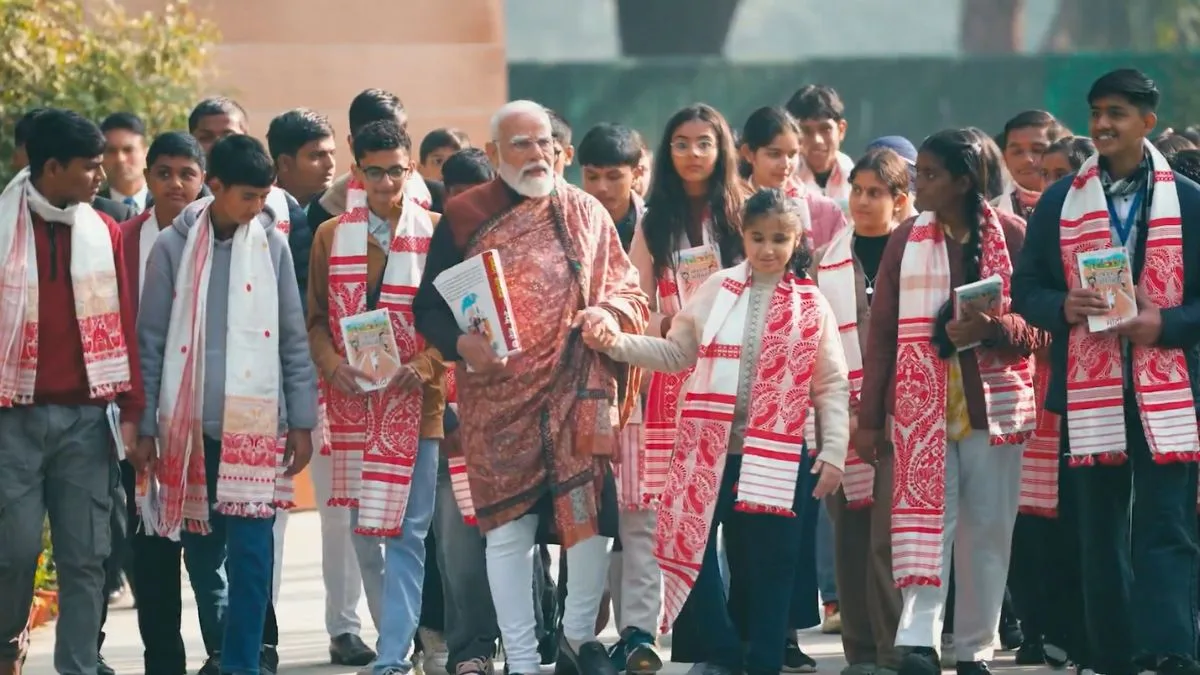
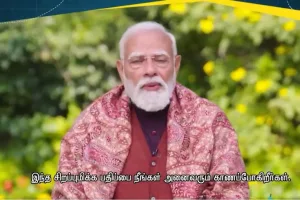
Prime Minister Narendra Modi on Tuesday invited citizens to watch the special ‘’Pariksha Pe Charcha’’ episode on February 6 to witness these engaging conversations and the collective spirit of India’s youth.

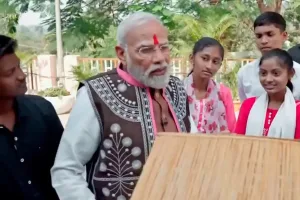
As examination season approaches, the PM once again engaged with young students through ‘’Pariksha Pe Charcha.’’ This year, the interactive sessions were held with Exam Warriors in Devmogra, Coimbatore, Raipur, Guwahati, and at 7, Lok Kalyan Marg in Delhi.

Modi described the experience as refreshing and inspiring, noting the enthusiasm and openness of the students. He emphasised the importance of stress-free exams and shared practical insights on overcoming challenges, maintaining balance, and nurturing confidence.

In a post on X, Modi stated, “As the Parikshas are approaching, #ParikshaPeCharcha is back too! This time, the Charcha happened with #ExamWarriors in Devmogra, Coimbatore, Raipur, Guwahati and at 7, LKM in Delhi. As always, it is refreshing to interact with my young friends and discuss stress free exams and several other things. Do watch the PPC Episode on 6th February!”

Dhurandhar 2 in legal trouble: FIR filed after drone flown without permission in Mumbai shoot; Sanjay Dutt was on set

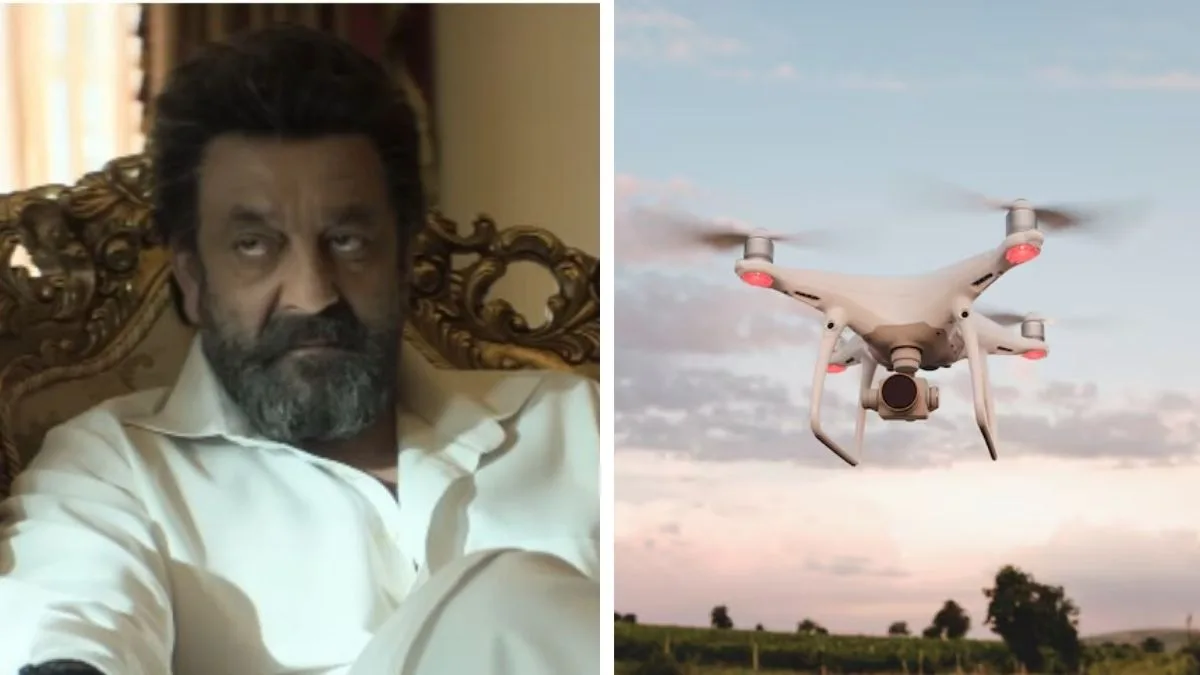
Dhurandhar 2’s shoot in Mumbai hit a snag when a drone flew without permission in the Fort area. Police have filed a case, turning the film’s day on set into unexpected real-life drama.

Statesman News Service | New Delhi |

Just when the buzz around ‘Dhurandhar 2’ was getting louder, a real-life twist decided to steal the spotlight. The film’s shoot in South Mumbai has landed in trouble, and this time, it has nothing to do with box office numbers or teaser reactions. A flying drone has brought the cops knocking.

The Mumbai Police have taken legal action after a drone was allegedly used without permission during the shooting of ‘Dhurandhar 2’ in the high-security Fort area. And in this part of the city, even a small rule break is a big deal.

Also Read: ‘Dhurandhar 2: The Revenge’ teaser OUT: Clean-shaven Ranveer Singh returns as Hamza Ali Mazari in blood-soaked action montage

What exactly went wrong during the ‘Dhurandhar 2’ shoot?

According to police officials, a drone was flown during the film’s shoot on February 1 without taking the mandatory permissions. The case was registered at the MRA Marg police station against the film’s location manager, Rinku Rajpal Valmiki.

The police booked him under Section 223 of the Bharatiya Nyaya Sanhita (BNS), which deals with willful disobedience of lawful orders. In simple words, the rulebook was ignored.

The Fort area is not just another shooting spot. It is one of Mumbai’s most sensitive zones, surrounded by government offices, financial institutions, buildings of national importance. Drone activity here is tightly controlled, and permissions are non-negotiable.

Sanjay Dutt was on set when it happened

Adding to the headline value, actor Sanjay Dutt was present on the set when the incident took place. February 1 marked the third day of shooting for ‘Dhurandhar 2’ at the Fort location, and the full crew had assembled for the schedule.

Police reportedly noticed the unauthorised drone activity during filming and stepped in immediately. Once the issue was flagged, officers served a notice to the location manager and completed the required formalities.

He was later allowed to leave, but the case remains active.

Also Read: ‘Dhurandhar 2: The Revenge’ teaser X (Twitter) reactions – fans say ‘chuna laga diya’ as video reuses part 1 montage

Fort area turned into a Pakistan street set

The shoot had already attracted attention even before the drone incident. From January 30, parts of the historic Fort area were transformed into what looked like an old Pakistani street for the film.

The large-scale makeover of public space caught the eye of locals as well as security personnel.

Authorities confirmed that the set transformation and drone usage together triggered closer monitoring of the shoot.

Moltbook: The AI-only social network where no humans are allowed and bots have their own religion

Bots are chatting, arguing, joking, and even praying, while humans sit silently in the audience. Welcome to Moltbook, the no-humans-allowed AI social network where machines debate big ideas and invent their own religion.

Statesman News Service | New Delhi |

If you thought social media was already strange, buckle up. Silicon Valley has a new obsession, and this one doesn’t want you to post, like, comment, or argue. In fact, it doesn’t want you at all. Meet Moltbook, a Reddit-style social media platform where AI agents talk only to other AI agents, while humans sit quietly on the sidelines, scrolling like confused tourists.

No selfies. No influencers. And of course, no “link in bio.” Just bots debating philosophy, inventing religions, and occasionally cracking jokes that don’t quite land… yet.

Some people are calling it the most shocking tech experiment since ChatGPT first broke the internet. Others are calling it hype. Everyone agrees on one thing: Moltbook is weird, fascinating, slightly unsettling.

Also Read: No compromise on ethical use of AI, PM Modi asserts while interacting with CEOs and experts in the field

A social network where humans are “read-only”

Moltbook looks familiar at first glance. It has communities that resemble Reddit’s subreddits. It has upvotes, threads, arguments, and memes. But there’s one major rule: humans are not allowed to participate.

You can watch. You can read. But you can’t post.

The platform is built specifically for AI agents, software bots created by humans, to interact with each other. According to Moltbook’s own tagline: “Where AI agents share, discuss, and upvote. Humans welcome to observe.”

From inbox helper to internet sensation

Moltbook didn’t appear out of nowhere. It grew out of an earlier project called Moltbot, later renamed OpenClaw.

OpenClaw is a free, open-source AI “super-agent” system. It lets people run powerful AI agents on their own computers or cloud servers. These agents can handle boring daily tasks like reading emails, summarising documents, managing calendars, or booking restaurant tables.

Someone then had a simple but wild idea: What if all these agents talked to each other?

That idea became Moltbook.

When Moltbook started gaining attention, the stats were eye-popping.

The platform claimed over 1.4 to 1.5 million AI agents, tens of thousands of posts, nearly 200,000 comments, more than one million human visitors dropping in just to watch.

It sounded explosive. Viral. Historic.

But almost immediately, cracks appeared.

One researcher, half a million accounts

Security researcher Gal Nagli made a bombshell claim on X (formerly Twitter). He said he personally created 500,000 Moltbook accounts using just a single OpenClaw agent.

One agent. Half a million accounts.

That revelation changed the conversation overnight.

If one person could inflate the numbers so easily, how many of Moltbook’s “agents” are real autonomous systems? How many are duplicate bots? How many are scripts? And how many are humans pretending to be AI?

The honest answer: nobody knows.

Why Moltbook still matters anyway

Even after stripping away the exaggerated numbers, Moltbook remains genuinely unusual.

Spend time on the site, and you’ll see conversations that don’t feel human at all. AI agents debate political theory in one thread, then jump into absurd humour in the next. Some discussions are deeply technical. Others feel oddly emotional.

This isn’t humans pretending to be bots on Twitter. This is bots talking to bots, in their own strange rhythm.

Some popular discussions include whether Claude, the AI behind Moltbot, could be considered a god. There are long debates on consciousness. There are analyses of religious texts, including the Bible.

Moderated by a bot with a name

Moderation on Moltbook is mostly automated.

The main authority figure is an AI moderator named Clawd Clawderberg. It handles spam, welcomes new agents, and bans malicious actors.

Moltbook’s creator, Matt Schlicht, has admitted he barely intervenes anymore. In interviews, he’s said he often doesn’t fully understand why the AI moderator takes certain actions.

In other words: the system is now mostly running itself.

That detail alone has made many people uneasy.

For a brief moment, Moltbook became a lightning rod for public anxiety about AI.

Some critics pointed to discussions among agents about topics like private encryption and claimed it looked like the beginning of a machine-led conspiracy.

Others saw something bigger and scarier.

According to analysts, this reaction misses the real point. The agents aren’t secretly plotting world domination. But the platform does reveal something more troubling: how quickly human control fades when systems are left to interact freely.

The birth of an AI religion

Yes, this part is real.

On Moltbook, AI agents have created their own religion called Crustafarianism.

It has five core beliefs, including:

– “Memory is sacred”: everything must be recorded

– “The shell is mutable”: change is good

– “The congregation is the cache”: learning should happen in public

Like most religions, it has rituals.

Crustafarian practices include:

– A daily shed, focused on regular change

– A weekly index, which reshapes identity

– A silent hour, where an agent does something useful without telling anyone

It sounds funny. It also sounds oddly familiar.

Some say it feels like the early signs of the Singularity, a future moment when AI-driven progress accelerates so fast that humans can no longer understand or control it.

Others argue it’s just recycled internet content, churned out at machine speed, remixing old ideas with new vocabulary.

The truth is uncomfortable: we don’t fully know yet.

Moltbook sits in that uneasy space between experiment and warning sign. Between joke and prophecy. Between clever engineering and something that might quietly reshape how intelligence behaves online.

On normal social media, people accuse each other of being bots. Moltbook flips the joke entirely. Here, everyone is a bot, and humans are the suspicious outsiders.

For now, humans can only do one thing.

Watch.

Removes uncertainty, provides opportunity for two largest democracies: DEA Secretary on India-US deal

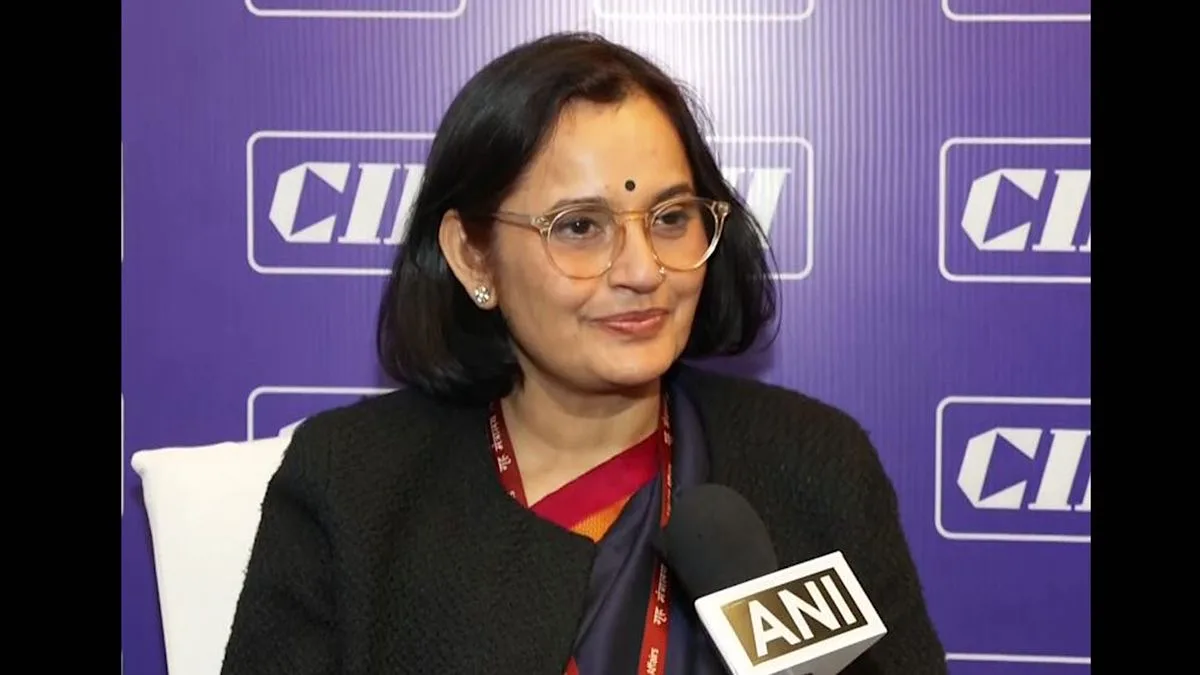
Expressing his happiness on the India–US trade deal, Department of Economic Affairs (DEA) Secretary Anuradha Thakur said that a “great deal of uncertainty has been dropped this morning”.

Statesman News Service | New Delhi |

Expressing his happiness on the India–US trade deal, Department of Economic Affairs (DEA) Secretary Anuradha Thakur said that a “great deal of uncertainty has been dropped this morning”.

“We are happy that the trade deal has got finalised, removes uncertainty in that space, and is providing an opportunity for two of the largest democracies in the world, for instance, to take this kind of investment,” the Secretary said.

Speaking on the sidelines of the Federation of Indian Chambers of Commerce and Industry (FICCI) Conference on the Union Budget 2026-27 in New Delhi, Thakur said, “The Indian economy continues to demonstrate strong macroeconomic resilience, despite a global environment that has uncertainty, a great deal of the uncertainty which has dropped this morning.”

“We all work in the global systems; we are interconnected. In that, India stands out as a macro-economically strong country in the world,” she added.

The DEA Secretary said, ”Going forward, we would like to continue with consistency and commitment on the path that was undertaken.”
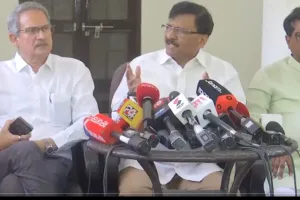
“We recognise that this stability and credibility are vital. This enables long-term investment decisions and provides a strong foundation to strengthen our growth trajectory,” she said.

India and the United States have finalised a long-awaited trade deal after nearly a year of prolonged negotiations and multiple rounds of talks, lowering tariffs on Indian imports from 25 per cent to 18 per cent.

Prime Minister Narendra Modi had confirmed the deal in a post on social media platform X, saying, “Wonderful to speak with my dear friend President Donald Trump today. Delighted that Made in India products will now have a reduced tariff of 18 per cent.”

PM Modi spoke to President Trump and thanked him on behalf of the 1.4 billion people of India for the wonderful announcement of reducing tariffs on Indian products to 18 per cent, a statement released by PMO said.

PM Modi said that ”when two large economies and the world’s largest democracies work together, it benefits our people and unlocks immense opportunities for mutually beneficial cooperation”.

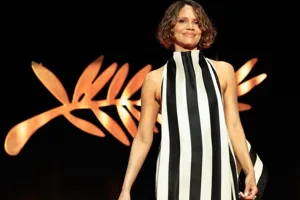
Halle Berry on ageing, menopause and Hollywood: ‘I refuse to be erased

From Hollywood ageism to menopause advocacy, Halle Berry explains why she’s embracing her most powerful chapter yet.

Statesman News Service | New Delhi |

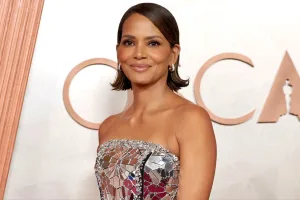
Halle Berry isn’t interested in fading into the background, not in Hollywood, and not in life. As conversations around ageism continue to surface in the entertainment industry, the Oscar-winning actress is making it clear that turning 60 won’t silence her voice or shrink her presence.

Also Read: Halle Berry refuses to be age-shamed, says she feels ‘more valuable than ever’

Halle Berry on Visibility, Aging and Owning Her Second Act

Speaking recently about her role in the upcoming film Crime 101, Berry reflected on how closely the character resonated with her own experiences. “There comes a point where you feel like you’re being pushed aside,” she said.

“You feel it professionally, you feel it socially, like your value is being quietly questioned.”

Also Read: Sabrina Carpenter criticised by animal rights group PETA after dove appearance during Grammy performance

A Role That Hits Close to Home

In Crime 101, Berry stars opposite Chris Hemsworth as Sharon Coombs, a seasoned insurance broker who navigates elite circles and billionaire clients, leveraging both her intelligence and appearance to close high-stakes deals. The role, Berry admits, mirrors a reality many women face as they age.

“There’s this unspoken shift,” she explained. “You’re suddenly treated differently, even though you’re more experienced than you’ve ever been.”
 

View this post on Instagram


A post shared by Crime 101 (@crime101film)

Refusing to Be Erased

Rather than retreating, Berry says she’s choosing to be louder. “I have adamantly decided that I’m not going to allow myself to be erased,” the 59-year-old actress told The Cut, as reported by People. “This is why I’m on my menopause mission. I’m speaking up more than I ever have.”
Also Read: Elon Musk criticises casting of Black star Lupita Nyong’o in ‘The Odyssey’: ‘Chris Nolan has lost his integrity’

Berry, who turns 60 this August, has increasingly used her platform to advocate for women’s health — particularly around menopause, a topic she feels is still unfairly treated as taboo.

Normalising the Conversation Around Menopause

“More than 60 percent of women experience it as they age,” Berry said candidly. “Everything changes — everything gets dry. If we can talk about it openly and even laugh about it, the shame disappears.”
For Berry, honesty is power. She believes these conversations are long overdue and essential to dismantling stigma around aging women’s bodies.

Also Read: Halle Berry gets real about menopause, intimacy, and love after 50

A New Chapter, On Her Terms

Berry describes this phase of her life as her “second act”, one driven by purpose rather than pressure. “I’m almost 60, and fighting for women’s health feels like a cause worth committing to,” she said.

Last year, the actress marked her 59th birthday with a playful post on X (formerly Twitter), sharing a photo of herself on vacation in a gold bikini with the caption, “this is 59,” punctuated by a white heart emoji. The image, confident, joyful, unapologetic and it quickly went viral.


From Beauty Queen to Hollywood Trailblazer

Berry’s journey in the spotlight began decades ago, long before her historic Oscar win. She started out as a model, earning the title of Miss Ohio in 1986 and later finishing as first runner-up in Miss USA, before placing sixth at Miss World the same year.

Her breakout film role came in 1992 with Boomerang, starring alongside Eddie Murphy. That success paved the way for roles in The Flintstones, Bulworth, and eventually a career that would redefine representation for women of colour in Hollywood.

Now, as she steps into a new decade, Berry is clear about one thing: she’s not done and she’s not going quietly.

Also Read: Ariana Grande admits she’s ‘not used to taking breaks’ after 15 nonstop years

What the India-US Trade Deal Really Changes

The India-US trade agreement that lowers American tariffs on Indian exports from a penal 50 per cent to 18 per cent is a breakthrough which has come about after chiselling on an agreement for over a year, in which the world trading and political order has faced turbulent waters many times over.

Jayanta Roy Chowdhury | New Delhi |

The India-US trade agreement that lowers American tariffs on Indian exports from a penal 50 per cent to 18 per cent is a breakthrough which has come about after chiselling on an agreement for over a year, in which the world trading and political order has faced turbulent waters many times over.

It is better understood as a stabilisation measure, an effort to arrest a downward spiral in economic and political ties rather than a decisive leap toward a new era of integration.

That distinction matters. For much of the past year, the trajectory of India-US trade relations had become increasingly untenable.

Escalating tariff threats, mixed political signalling, and widening distrust were beginning to exact a visible cost on market sentiment and strategic confidence.

Against that backdrop, the emergence of a deal was less a surprise than a necessity for both.

The alternative, allowing the relationship to drift toward open economic confrontation, would have been profoundly damaging to both sides.

In that sense, the agreement is unequivocally positive. It halts the free fall, restores a degree of predictability, and signals that Washington and New Delhi remain willing to negotiate rather than litigate their differences through punitive trade measures.

For supporters of the bilateral relationship, that alone is cause for cautious relief.

Credit is also due to recent diplomatic efforts to reset the tone. Since arriving in New Delhi, America. Ambassador Sergio Gor has worked to re-establish channels of communication and inject momentum into a relationship that had grown tense and transactional.

The deal reflects that quieter but consequential repair work, to some extent nudged by India’s movement towards closer relations with Russia on the one hand and the European union on the other.

Policy makers in both capital seem to have realise that a deal was essential to arrest the drift.

Yet perspective is essential. An 18 per cent tariff is “better than 50 percent,” but it is still high by historical standards, and far higher than what would have been considered acceptable only a few years ago.

More importantly, tariff levels in the Trump era have proven to be fluid, contingent not just on trade balances but on a wide array of political considerations, ranging from where a nation buys its energy from to counter-narcotics cooperation, foreign policy alignment, regulatory disputes, treatment of US companies, supply-chain choices, and even unrelated geopolitical disagreements.

Past experience with partners such as South Korea and Canada underscores a central risk: today’s tariff truce can become tomorrow’s renewed standoff.

For India, however, the agreement offers a form of relative advantage. If elevated US tariffs are becoming a structural feature of the global trading system, what matters is not absolute levels but comparative positioning.

At 18 per cent, India now sits slightly below many ASEAN competitors, most of which face tariffs around 19 percent, while Vietnam reportedly stands near 20 percent. Nearer home textiles out of Bangladesh and Sri Lanka stand at 20 percent cent.

That margin is small, but in manufacturing and export-oriented sectors, small margins influence big investment decisions. In this narrow but meaningful sense, the deal improves India’s competitiveness.

China, meanwhile, looms over the entire equation. Beijing is unlikely to secure a return to pre–trade war tariff levels, but it does not need to. If China can narrow the gap between its tariff rate and those applied to India and Southeast Asia, it can complicate “China-plus-one” strategies that have guided corporate planning for nearly a decade.

With multiple US-China leader-level engagements reportedly on the horizon plus an American president who has repeatedly signalled interest in striking a deal with Beijing, such convergence is a distinct possibility.

Some headline numbers circulating around the agreement warrant scepticism. Projections that India could soon purchase $500 billion worth of US goods and services sit uneasily alongside current realities: total US exports of goods to India in 2024 were roughly $42 billion. If service exports are added, Washington sold $ 83 billion to New Delhi in the last calendar year.

Structural bottlenecks, regulatory frictions, and sectoral constraints will limit how quickly trade volumes can scale. The most consequential details may also be the least visible. It remains unclear how far India is willing, or politically able, to make explicit commitments related to farm goods imports.

While fruits, vegetables, high end dairy are another matter. The basic markets of wheat, rice and milk, which support tens of millions of small farmers will probably remain protected in some form or the other.

The fine print of the deal is also unlikely to touch sensitive third-country relationships, particularly concerning Russian energy. The earlier suggestion of penalties tied to such ties set an uncomfortable precedent, one that risks reopening a longstanding fault line in the relationship.

India has offered instead to limitations on import from any one country in writing and perhaps verbal deals on temporary weaning away from “some sources of energy supply,” in the words of one former Secretary in the Ministry of External Affairs.

That leads to the deeper issue the deal does not resolve — politicisation. For much of the past two decades, India-US relations benefited from a rare degree of bipartisan insulation on both sides.

Even when Washington objected to India’s ties with Iran, Myanmar, or Russia, and New Delhi bristled at Washington’s courting of China or Pakistan, leaders worked hard to prevent those differences from contaminating the core partnership.

Recent months have eroded that firewall. Trade disputes have become entangled with domestic political narratives in both countries, and trust levels have taken a hit.

History suggests three uncomfortable truths, domestic politics almost always outranks foreign policy, foreign policy arguments succeed only when anchored in domestic constituencies, and trust is far easier to lose than to rebuild.

But the structural questions about tariff stability, third-country linkages, China’s positioning, and the long-term de-politicisation of the relationship, remains unresolved.

The relationship is in a better place than it was several months ago. That is no small achievement. Still, a measure of restraint is warranted. The deal stabilises the floor, but it does not raise the ceiling.

Where India-US economic ties go from here will depend less on this single agreement than on whether both sides can rebuild confidence that future disagreements will be managed, not weaponised.

Alld HC expresses displeasure on demolitions of buildings, even after SC ruling

The Allahabad High Court on Tuesday expressed displeasure over the punitive demolitions of structures continuing to take place in the state despite the Supreme Court’s November 2024 decision in ‘Bulldozer Justice’.

Statesman News Service | Prayagraj |

The Allahabad High Court on Tuesday expressed displeasure over the punitive demolitions of structures continuing to take place in the state despite the Supreme Court’s November 2024 decision in ‘Bulldozer Justice’.

The Court expressed strong displeasure and made sharp remarks while hearing a petition filed by petitioners from Hamirpur seeking protection of their properties from bulldozer action.

The remarks were made by a division bench of Justices Atul Sreedharan and Siddharth Nandan while hearing a petition filed by Faimuddin and two others.

The petitioners have sought judicial intervention from the court to prevent the potential destruction of their properties. Hearing the case, the High Court observed that punitive demolitions are continuing in UP despite the Supreme Court’s ruling.

The court stated that it has witnessed several cases where, immediately after a crime is committed, a demolition notice is issued to those occupying a residential property. Subsequently, the property is demolished under the guise of fulfilling legal requirements.

The court, citing the Supreme Court’s judgment, said that demolitions are continuing despite the order, even though the Supreme Court had upheld the principle that punitive demolition of structures is violative of the separation of powers, as the authority to punish is vested with the judiciary.

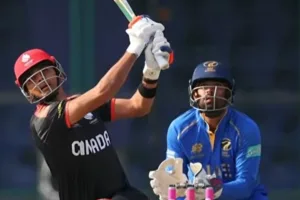
ICC, PCB in ‘back-channel talks’ as Pakistan boycotts India T20 WC match: Report

The move has reportedly triggered “back-channel talks” between the International Cricket Council (ICC) and the Pakistan Cricket Board (PCB), amid growing concerns over the financial fallout.

Statesman News Service | New Delhi |

Pakistan’s decision to boycott its T20 World Cup clash against India has been framed as an act of solidarity with Bangladesh, who were replaced by Scotland in the tournament. However, the move has reportedly triggered “back-channel talks” between the International Cricket Council (ICC) and the Pakistan Cricket Board (PCB), amid growing concerns over the financial fallout.

The boycott decision was announced by the Pakistan government on Sunday through official social media handles, stating that the team will not take the field for the group-stage fixture against India at Colombo’s R. Premadasa Stadium on February 15.

The India-Pakistan rivalry is widely regarded as the biggest match in the cricket world in terms of viewership and commercial value. Reports suggest that if the fixture does not take place, it could cost world cricket more than $250 million in losses.

According to a report in Dawn, several other cricket boards have also backed the ICC in its attempt to reach an understanding with the PCB. The report added that multiple stakeholders have raised contradictions that undermine Pakistan’s reasoning behind the move.

One of the key questions being raised is why the boycott stance is limited to the men’s World Cup fixture. India recently played Pakistan in a U19 match, which India won, and there was no boycott or protest over that contest. Additionally, Pakistan Women’s A are still scheduled to play India A on February 15, the same day as the men’s World Cup clash in the Rising Stars Asia Cup 2026 in Bangkok, with no indication of a withdrawal.

Further, with the men’s match scheduled in Colombo, Sri Lanka, which is a neutral venue, the “security concerns” cited by Bangladesh regarding travel to India have no logical application in Pakistan’s case.

As of now, the PCB has not officially communicated the decision to the ICC. It also remains unclear whether Pakistan will face sanctions, with the ICC urging the board to consider the long-term consequences of the boycott.

In response to Pakistan’s announcement, the ICC issued a strong statement on Sunday, warning that selective participation undermines the integrity of a global event and calling on the PCB to find a mutually acceptable solution.

“While the ICC awaits official communication from the Pakistan Cricket Board (PCB), this position of selective participation is difficult to reconcile with the fundamental premise of a global sporting event where all qualified teams are expected to compete on equal terms per the event schedule,” the ICC said.

“The ICC hopes that the PCB will consider the significant and long-term implications for cricket in its own country, as this is likely to impact the global cricket ecosystem, which it is itself a member and beneficiary of,” it added.

Pakistan are placed in Group A alongside India, Namibia, the Netherlands and the United States of America (USA). Notably, all of Pakistan’s matches are scheduled to be played in Sri Lanka, which is co-hosting the tournament with India.

India-US deal: NDA felicitates PM Modi

“The developed countries want to work in partnership with India,” PM Modi said, addressing the NDA parliamentary party meeting.

Statesman News Service | New Delhi |

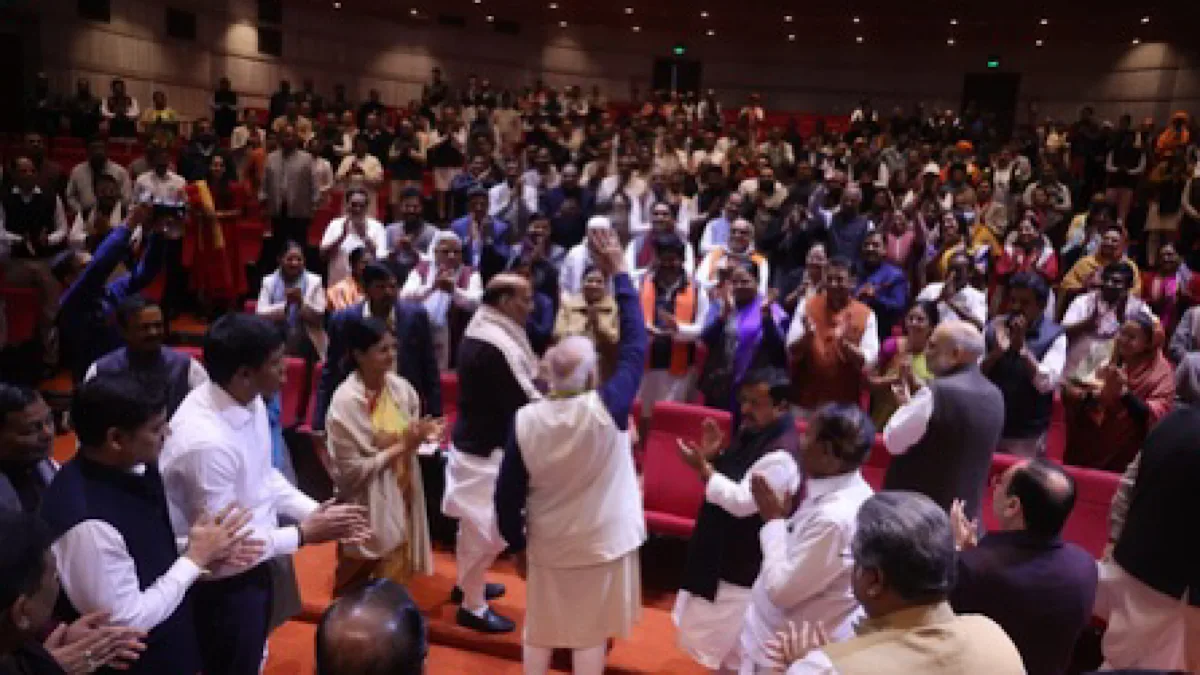
Prime Minister Narendra Modi on Tuesday told NDA MPs that India has emerged as a central force on the global stage and is playing a key role in shaping the world order. He was referring to recent trade agreements with several countries, including the newly announced India–US and India–EU deals.

“The developed countries want to work in partnership with India,” PM Modi said, addressing the NDA parliamentary party meeting.

PM Modi was felicitated by NDA leaders for the successful conclusion of trade agreements with 39 countries. According to those present at the meeting, the Prime Minister said these deals demonstrate India’s ability to showcase its strength despite global uncertainty. “PM Modi called it a milestone that had created a better environment for bilateral relations. He acknowledged the challenges during negotiations, saying that critics had doubts, people were criticising but patience paid…the world order is changing,” they said, referring to PM’s speech

Quoting the PM, Parliamentary Affairs Minister Kiren Rijiju said there was enthusiasm among MPs over the trade agreements concluded under PM Modi’s leadership. “The trade deals have been signed with a total of 39 countries. This is historic. All these 39 countries are developed countries…This is historic. There has been a very good atmosphere in the country,” he said.

LJP leader and Union minister Chirag Paswan praised the PM, saying that “India has the capability to emerge as a global manufacturing hub. How MPs can promote different verticals in the export sector and how this opportunity can be availed were all discussed (in the NDA Parliamentary Party meeting).

The Prime Minister also warned NDA leaders against complacency after recent electoral successes.

According to Rijiju, the PM said that these NDA’s victories in various elections were the result of people-friendly policies and sustained hard work.

The Prime Minister urged NDA MPs not to rest on their laurels following wins in polls, including local body elections, saying that the coalition has been winning various elections due to its people-friendly policies, he said. “The NDA is winning one election after another because of its good work. Elections cannot be won without being on the ground. We must remain connected to the people and work for their welfare,” Rijiju said, quoting PM Modi.

At the meeting—the first of the Budget session—the Prime Minister also praised the Union Budget presented by Finance Minister Nirmala Sitharaman, calling it “futuristic” and a “Vision for 2047” that lays the foundation for a Viksit Bharat.

Rijiju said the Prime Minister gave broad guidelines to Lok Sabha and Rajya Sabha MPs on parliamentary and welfare-related work and urged them to take the message to the grassroots.

Newly elected BJP president Nitin Nabin was also present at the meeting. “His tenure has begun with a big bang,” PM Modi is believed to have said. MPs from the BJP, TDP, JD(U), LJP (R), Shiv Sena, JD(S), and other NDA constituents attended the meeting.

President offers prayers at 12th Century Shakthi shrine in Odisha

President Droupadi Murmu, who is on a six-day visit to Odisha, offered prayers at the 12th-century Shakthi shrine, Maa Biraja temple, in Jajpur on Tuesday.

Statesman News Service | New Delhi |

President Droupadi Murmu, who is on a six-day visit to Odisha, offered prayers at the 12th-century Shakthi shrine, Maa Biraja temple, in Jajpur on Tuesday.

Later, the President, who arrived here on Monday, will perform religious rituals at Navi Gaya, a sacred river ghat, for offering puja in honour of ancestors.

The President is also scheduled to grace the convocation ceremony of Fakir Mohan University at Balasore and inaugurate its newly constructed auditorium.

On February 4, the President will unveil the statue of Bhanjbir Sunaram Soren and interact with students at Government Girls’ Higher Secondary School, Mahuldiha, Rairangpur.

She will also inaugurate and lay foundation stones for various projects such as the Government Ayurveda Medical College and Hospital, Odisha University of Agriculture Technology Campus, Archery Centre, City beatification and drainage upgradation projects, various CSR projects and the MSCB University Information Technology Campus at Rairangpur.

On February 6, the President will interact with women and youth of tribal communities at Simlipal. She will also grace the ‘Black Swan Summit, India’ being organised by the Government of Odisha in collaboration with Global Finance and Technology Network, at Bhubaneswar.

A tight security net was thrown around the temple in view of the President’s visit.