Logo

India-US trade deal: US agriculture secretary’s post triggers fears in Indian farming sector

‘US Secretary’s reaction on US-India deal expressed that US agricultural products will get free access to Indian market in the interest farmers and rural economy of USA,’ say agriculture experts

VIBHA SHARMA | New Delhi |

Even as government sources asserted “zero compromise” on farmers’ interests in the just-inked India–US trade deal, insisting that “India’s agriculture and dairy sector will be protected,” the development sparked massive political backlash, with the opposition mounting a sharp attack on Prime Minister Narendra Modi. The allegations ranged from “selling the country under US’ pressure” to “backstabbing farmers by opening markets to subsidised US agricultural imports.”

At the centre of the controversy was a social media post by US Agriculture Secretary Brooke Rollins, thanking President Donald Trump for “delivering” for American farmers through the India–US trade deal. After Trump slashed tariffs on India from 50 per cent to 18 per cent under the agreement, Rollins said the trade deal would improve access for American farm products to “India’s massive market.”

Coming amid farmers’ concerns over a possible surge in imports into India of US farm products—especially when Washington is considered one of the world’s largest agricultural subsidisers—Rollen’s reaction was seen as indicating “free access to the Indian market in the interest of farmers and rural economy of USA,” according to agriculture expert Professor Sudhir Panwar. “It would be difficult for Indian farmers to compete with cheap imports from the US, specifically heavily subsidised corn, soya beans, cotton, milk and dairy, nuts and other processed food items,” he added.

“Thank you @POTUS for ONCE AGAIN delivering for our American farmers. New US-India deal will export more American farm products to India’s massive market, lifting prices, and pumping cash into rural America.

“In 2024, America’s agricultural trade deficit with India was $1.3 billion. India’s growing population is an important market for American agricultural products and today’s deal will go a long way to reducing this deficit,” the US agriculture secretary wrote.

According to Panwar, “US Secretary’s reaction to the US-India deal expressed that US agriculture products will get free access to the Indian market in the interest of farmers and the rural economy of the USA.”

He also called “silence” on the part of the Modi government was “baffling” because of the potential impact of the deal on nearly 50 per cent of India’s population engaged in agriculture.

“The Modi government has been systematically withdrawing subsidies on farm inputs such as diesel, fertiliser and power, and that the 2026–27 Budget slashed agriculture budget share, farm subsidies, allocations for agricultural research, and the price stabilisation fund,” Panwar said, warning “tax-free agricultural imports from the US could severely damage Indian farmers’ incomes.”

Opposition leaders across parties slammed the Centre, claiming that the deal “compromised economic policy and foreign relations by agreeing to reduced tariffs without fully protecting Indian farmers from cheaper US imports.” They warned that subsidised American agricultural products could flood Indian markets, undercut local prices, and hurt small farmers unable to compete with US agribusiness.

Kremlin reacts to Trump’s ‘Modi agreed to stop buying Russian oil’ claim

The Kremlin’s response came hours after US President Trump announced a trade deal with India and reduced the tariffs on Indian goods from 50 per cent to 18 per cent.

Statesman News Service | NEW DELHI |

Russia on Tuesday said it respects the bilateral relationship between the US and India, but it has not received any communication from New Delhi regarding US President Donald Trump’s claim that Prime Minister Narendra Modi has agreed to stop purchasing Russian oil.

“So far, we haven’t heard any statements from New Delhi on this matter,” AFP quoted Kremlin spokesman Dmitry Peskov as saying.

Peskov reaffirmed the importance of the strategic partnership between Russia and India.

“We respect bilateral US-Indian relations. But we attach no less importance to the development of an advanced strategic partnership between Russia and India. This is the most important thing for us, and we intend to further develop our bilateral relations with Delhi,” he said.

The Kremlin’s response came hours after US President Trump announced a trade deal with India and reduced the tariffs on Indian goods from 50 per cent to 18 per cent.

Trump also claimed that PM Modi has assured him that India will stop buying Russian oil and purchase more from the US and Venezuela.

India-US deal sparks massive political storm, Gandhi hits out at PM Modi

“He agreed to stop buying Russian Oil, and to buy much more from the United States and, potentially, Venezuela. This will help END THE WAR in Ukraine, which is taking place right now, with thousands of people dying each and every week!” he said.

Trump stated that they have agreed to a trade deal between the United States and India, following which the US will charge a reduced Reciprocal Tariff, lowering it from 25 per cent to 18 per cent.

The White House separately confirmed that the additional 25 per cent penalty for purchasing Russian oil will also be dropped.

This will reduce the total US tariffs on Indian goods entering the American territory from 50 per cent to 18 per cent.

PM Modi confirmed the development and thanked President Trump for the announcement.

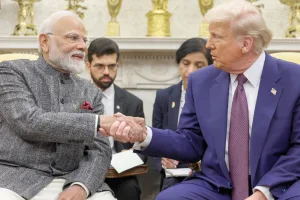
“Wonderful to speak with my dear friend President Trump today. Delighted that Made in India products will now have a reduced tariff of 18%. Big thanks to President Trump on behalf of the 1.4 billion people of India for this wonderful announcement,” Modi said.

The Prime Minister said that India and the US working together will benefit the people of the two countries and unlock the “immense opportunities for mutually beneficial cooperation.”

Photo

  • img
  • img
  • img
  • img
  • img
  • img
  • img
  • img
  • img
  • img

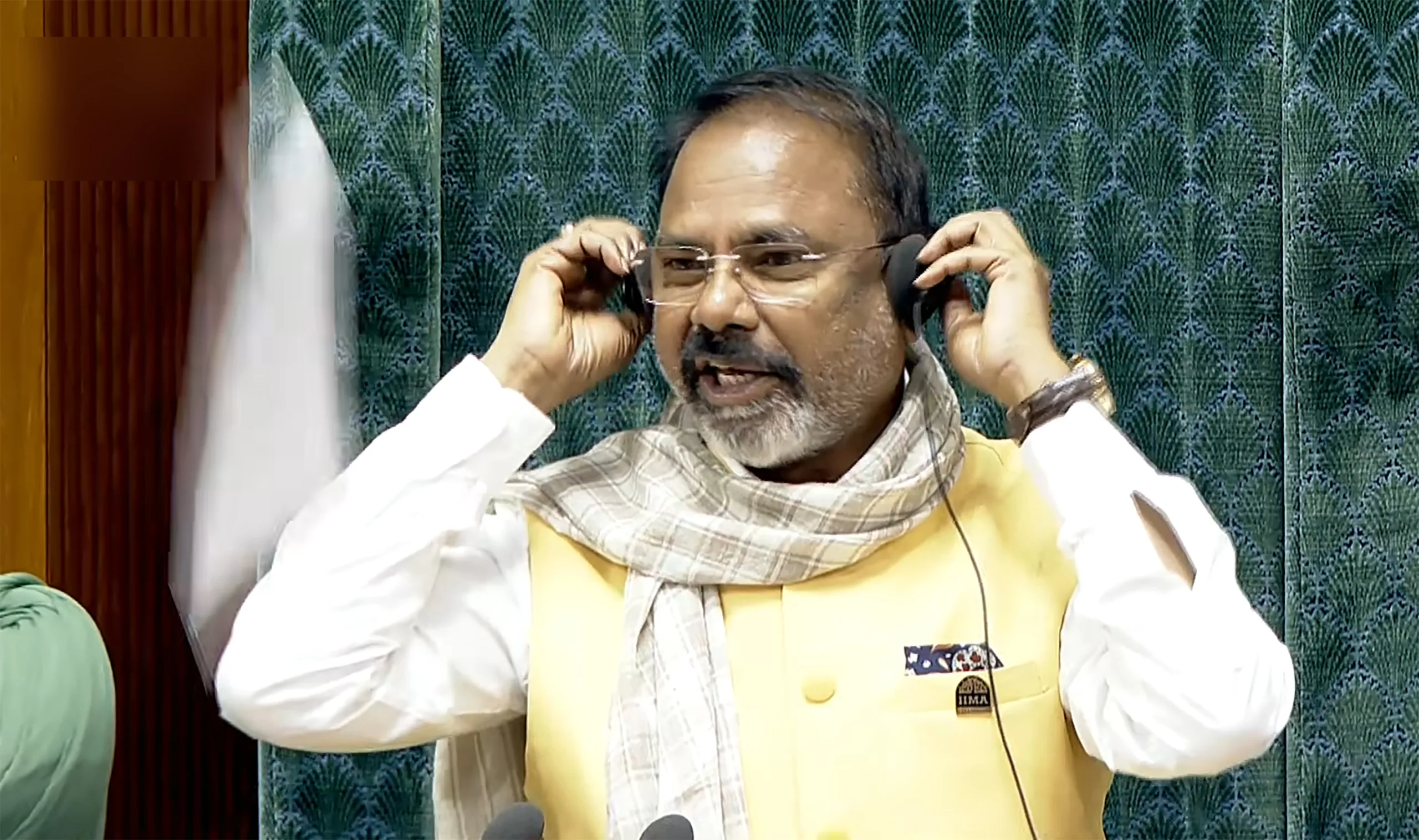
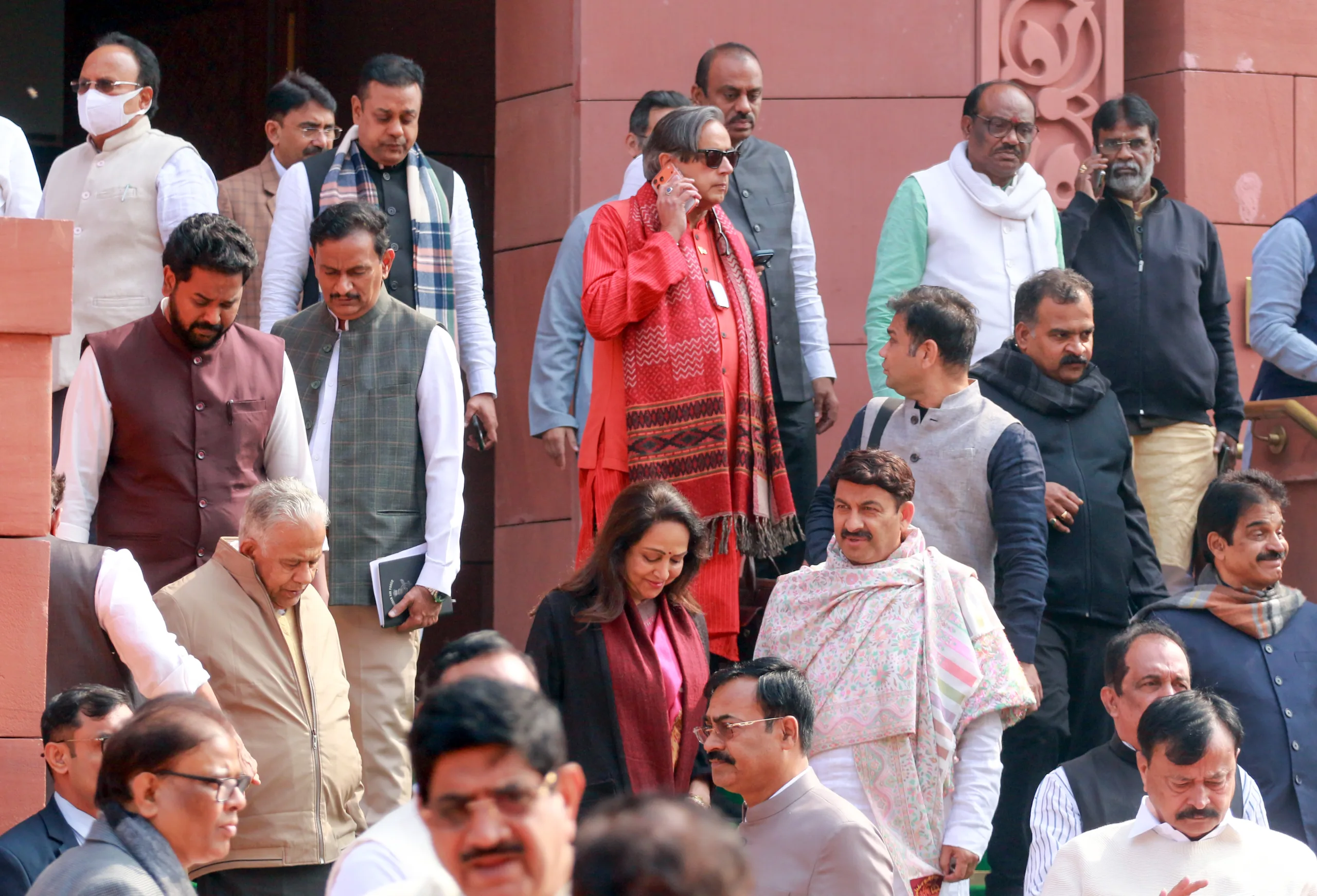
Ruckus in Lok Sabha Leads to Suspension of Eight Congress MPs

Ruckus in Lok Sabha Leads to Suspension of Eight Congress MPs

MORE Photo STORIES

Centre holds key meet on mgt of zoos in the country

Significant decisions taken at the meeting included the constitution of a sub-committee to examine and report on the potential of Corporate Social Responsibility (CSR) contributions for zoos and an enhanced frequency of CZA meetings henceforth, in line with the meetings of the Standing Committee of the National Board for Wildlife.

Statesman News Service | New Delhi |

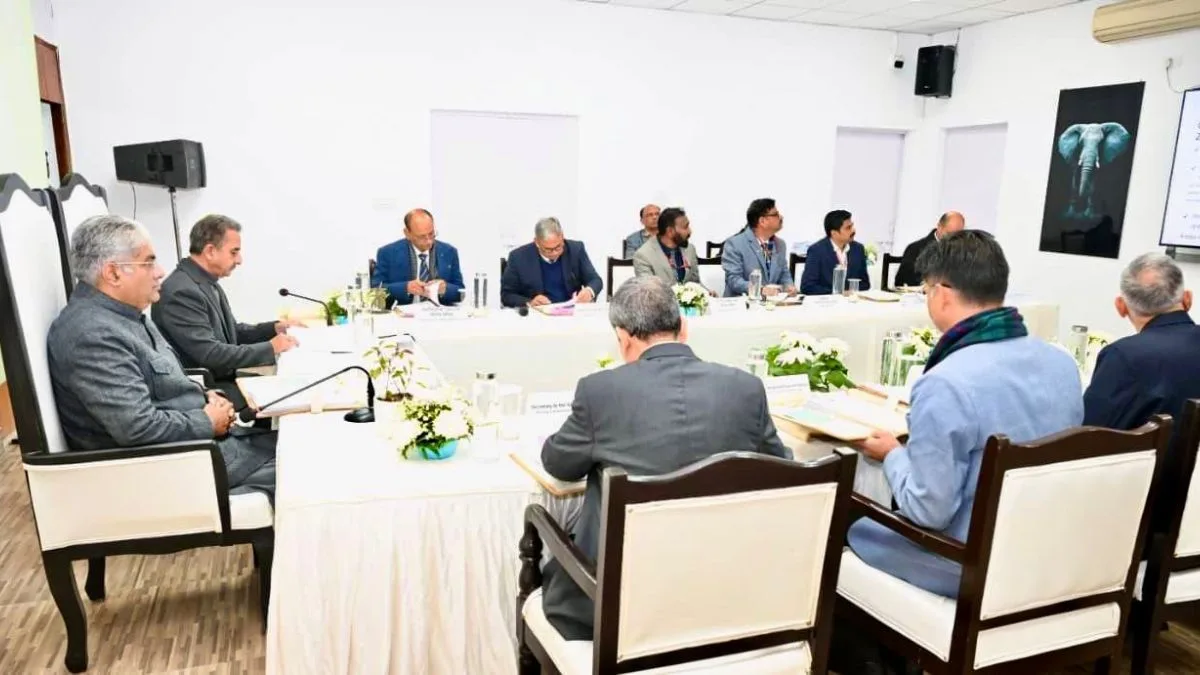
Union Minister for Environment, Forest and Climate Change Bhupender Yadav on Tuesday chaired the 43rd meeting of the Central Zoo Authority (CZA) at the National Zoological Park, New Delhi.

In a social media post on ‘X’, the minister informed that issues related to ex-situ conservation and the management of zoos across the country were deliberated in detail during the meeting. He said that directions were also issued to complete the second round of Management Effectiveness Evaluation (MEE) of zoos across the country.

Significant decisions taken at the meeting included the constitution of a sub-committee to examine and report on the potential of Corporate Social Responsibility (CSR) contributions for zoos and an enhanced frequency of CZA meetings henceforth, in line with the meetings of the Standing Committee of the National Board for Wildlife.

Yadav also highlighted in the meeting that the MEE of zoos is an evidence-based, comprehensive, holistic and independent exercise that encourages the maintenance of the highest standards in zoos across the country.

It was noted that one of the objectives envisaged in the National Policy on Zoos is to inspire empathy for wild animals among zoo visitors and to promote understanding and awareness about the need for conservation of natural resources and maintenance of ecological balance. To achieve this, it was emphasised that outreach activities of zoos should be enhanced through the preparation of an annual calendar and action plan for the observance of important days, along with species-wise assignment of roles to zoos in this regard.

The Central Zoo Authority, a statutory body under the Ministry of Environment, Forest and Climate Change, also celebrated its 34th Foundation Day on Tuesday at the National Zoological Park, New Delhi. The event coincided with the Chief Wildlife Warden and Zoo Directors’ Conference, providing a common platform for discussions related to zoo management and wildlife conservation.

During the Inaugural Session of the event, Union Minister of State for Environment, Forest and Climate Change Kirti Vardhan Singh said that a zoo is not just a display centre where people come to see animals. It is also a major opportunity for researchers and scientists to learn more about animal behaviour, animal care and to evolve better medical care methods. “We are taking care of poor, defenceless animals here, and we really need to be very sensitive to what all can be done,” he said.

The day-long conference brought together perspectives from policy, practice, science, and administration. The sessions scheduled during the day focused on contemporary issues and opportunities, including modern zoo management, conservation breeding, veterinary care, animal nutrition, sustainability, and the One Health approach. The deliberations highlighted the interconnected well-being of animals, ecosystems and human communities, reinforcing the importance of coordinated and informed action in wildlife conservation.

Bank of Baroda renovates Delhi Cantonment branch to enhance customer experience

The renovation reflects the bank’s continued commitment to enhancing customer experience through modern infrastructure and improved banking facilities.

Statesman News Service | New Delhi |

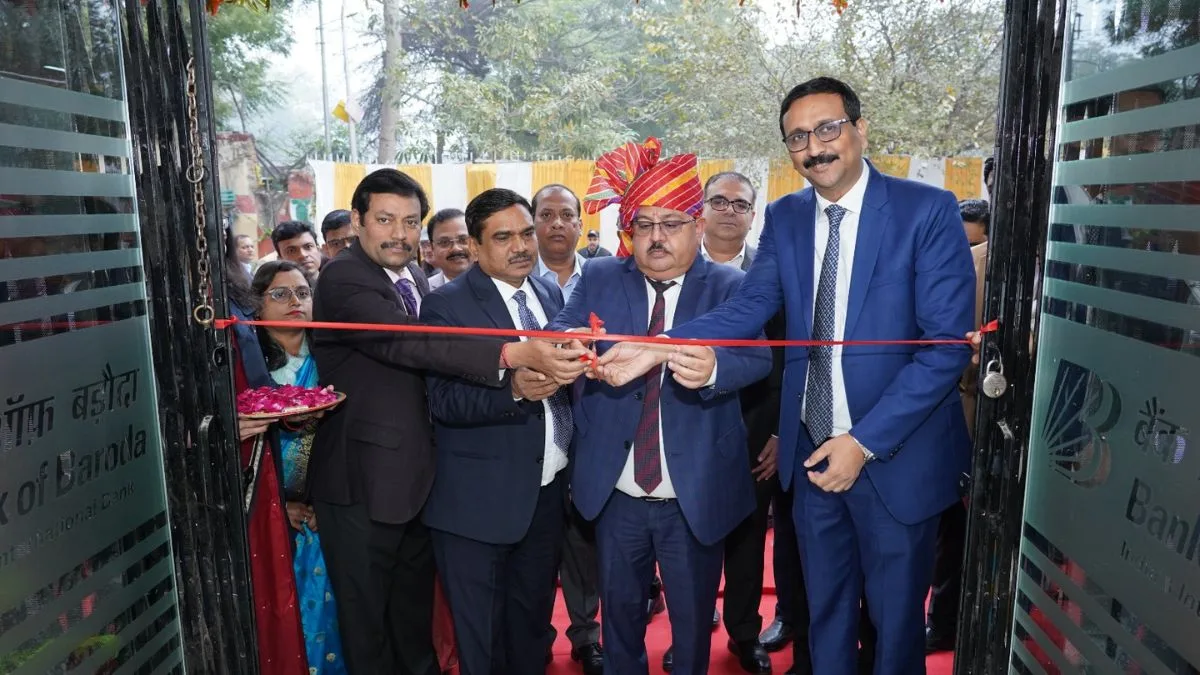
Bank of Baroda has strengthened its customer experience with the inauguration of its renovated Delhi Cantonment Branch.

The renovation reflects the bank’s continued commitment to enhancing customer experience through modern infrastructure and improved banking facilities.

As of 31st December 2025, the South Delhi region comprises 47 branches out of a total of 290 branches in the New Delhi Zone and accounts for a business volume of Rs 43,170 crore out of the zone’s total business of Rs 1,19,148 crore.

On Monday, the renovated Delhi Cantonment Branch of the South Delhi Region, New Delhi Zone, was inaugurated by the Bank’s Executive Director, Lal Singh, in the presence of M. V. S. Sudhakar, General Manager & Zonal Head, Dilip Mansingh, Deputy General Manager – Compliance & Assurance; Arvind Kumar Pandey, Deputy General Manager – Business Development; Samir Ojha, Deputy General Manager & Regional Head, South Delhi Region and Regional Heads of other regions of the New Delhi Zone.

Founded on 20th July, 1908 by Maharaja Sayajirao Gaekwad III, Bank of Baroda is one of the leading commercial banks in India. At 63.97% stake, it is majorly owned by the Government of India.

Omar welcomes US tariff cut on Indian goods, calls it big gain for exporters

He said the “hiked tariffs were very heavy for us. We know very well why the tariff was imposed. The US President was not happy that we were buying oil from Russia”.

Statesman News Service | Jammu |

Jammu and Kashmir Chief Minister Omar Abdullah on Tuesday welcomed the reduction of tariffs on Indian goods by the United States, saying the move is expected to significantly benefit many exporters from the region and across the country.

Omar told reporters, “With the reduction of tariffs our exports will benefit. This is a good step because many of our exporters were facing a lot of difficulties. Some of them were apprehensive whether they would be in a position to continue their businesses. Now that the tariffs have been reduced, it is hoped that their business will flourish again”.

He said the “hiked tariffs were very heavy for us. We know very well why the tariff was imposed. The US President was not happy that we were buying oil from Russia”.

He linked the reduction of the US tariffs to the announcement of US President Donald Trump that India has stopped buying oil from Russia. However, the government of India has so far not issued a formal statement on the issue, he said.

Omar said, “If we have stopped buying oil from Russia where will we now buy oil from? Will buying oil from the US increase the price of petrol and diesel? We will have to wait and watch”.

Commenting on Pakistan’s announcement of not playing a cricket match with India, Omar said that the media should not present the India-Pakistan matches as a war. “When there is a match between India and Pakistan, you present it as a war. You never cover it like a normal sport. When we play against other countries, you don’t take notice of it. When we play against Pakistan, it is presented in a big way”.

“I have always said that when we combine sports and politics, this is what happens. We have stopped differentiating between sports and politics”, he added.

SAKSHAM-2026 push for fuel conservation in line with global energy sustainability goals

The inaugural programme of SAKSHAM-2026 was held at Rani Laxmi Bai Bhawan in Chandigarh, marking the beginning of coordinated awareness activities from February 1 to February 15, 2026.

Statesman News Service | Chandigarh |

At a time when nations across the world are grappling with rising energy demand, climate change, and dependence on fossil fuel imports, India has reinforced its commitment to sustainable energy use with the launch of SAKSHAM-2026, a fortnight-long fuel conservation campaign.

The inaugural programme of SAKSHAM-2026 was held at Rani Laxmi Bai Bhawan in Chandigarh, marking the beginning of coordinated awareness activities from February 1 to February 15, 2026. The campaign aims to promote responsible consumption of petroleum products and natural gas, aligning India’s domestic efforts with global calls for energy efficiency and environmental responsibility.

Diprava Lakra, IAS, Finance Secretary-cum-Secretary Transport, Chandigarh Administration, was present at the event. The campaign will be implemented across Punjab and the Union Territory of Chandigarh, reaching diverse sections of society, including students, households, transport operators, farmers and industrial stakeholders.

SAKSHAM-2026 is being jointly organised by the State Level Coordinators of Oil Industry from Punjab and Chandigarh. Key coordinators include Ashutosh Gupta of Indian Oil Corporation Limited (IOCL), Sushant Goyal of Hindustan Petroleum Corporation Limited (HPCL), Akash Bhawan of Gas Authority of India Limited (GAIL) and Ramlal of Bharat Petroleum Corporation Limited (BPCL).

During the programme, the message of the Governor of Punjab and Administrator of UT Chandigarh was read out to the audience. The Governor said that petroleum and natural gas are invaluable national assets and that their conservation is vital for both economic stability and environmental sustainability. He stressed that judicious energy use is central to achieving long-term growth while addressing global climate challenges.

Addressing the gathering, Diprava Lakra highlighted the strategic importance of reducing fuel consumption in a country that imports a significant portion of its energy needs. He called upon students and citizens to adopt fuel-efficient habits, noting that conservation directly contributes to reducing import dependence and preserving foreign exchange, an issue of growing relevance amid global economic uncertainties.

Ashutosh Gupta also appealed to school children, media professionals and the general public to become ambassadors of fuel conservation. The programme included a collective pledge to conserve oil and petroleum, reinforcing the campaign’s people-centric approach. A street play was staged to creatively communicate the message of fuel efficiency, while a mobile awareness van bearing conservation slogans was flagged off to spread the message at the grassroots level.

The strong participation of students and citizens underscored a growing public awareness that energy conservation is not just a national priority but a global responsibility. By encouraging mindful consumption of petroleum resources, SAKSHAM-2026 seeks to contribute to energy security, environmental protection, and economic resilience, goals that resonate far beyond India’s borders in an increasingly interconnected world.

Uttar Pradesh set to emerge as global pharma manufacturing hub: Nadda

In a video message delivered at the Pharma Conclave here, Nadda said Uttar Pradesh is playing a crucial role in the entrepreneurship- and innovation-driven economy that India is building under the leadership of Prime Minister Narendra Modi.

Statesman News Service | Lucknow |

Union Minister for Health and Family Welfare J P Nadda on Tuesday said that Uttar Pradesh is rapidly emerging as a major global manufacturing hub in the pharmaceutical sector, strengthening India’s leadership position in pharma and healthcare.

In a video message delivered at the Pharma Conclave here, Nadda said Uttar Pradesh is playing a crucial role in the entrepreneurship- and innovation-driven economy that India is building under the leadership of Prime Minister Narendra Modi.

Highlighting the state’s growing industrial ecosystem, the Union Minister said several key initiatives are laying a strong foundation for pharmaceutical manufacturing in Uttar Pradesh.

“The Bulk Drug Pharma Park being developed in Lalitpur, the Medical Device Park in the Yamuna Expressway region, and the state’s Pharmaceutical Policy-2023 are collectively establishing Uttar Pradesh as a reliable and competitive manufacturing destination,” he said.

Nadda noted that improved connectivity, robust physical and digital infrastructure, availability of skilled human resources, and an investor-friendly policy environment have made Uttar Pradesh a preferred destination for pharmaceutical investments. These factors, he said, are attracting both domestic and global companies to set up manufacturing and research facilities in the state.

He further said that the central government’s long-term policy vision, combined with the proactive efforts of the Uttar Pradesh government at the ground level, is accelerating the state’s transformation into a global centre for pharma and biopharma manufacturing. According to him, this coordinated approach is not only boosting industrial growth but also creating employment opportunities and strengthening healthcare supply chains.

The Union Minister emphasised that India’s pharmaceutical sector has gained global recognition for quality, affordability and reliability, and states like Uttar Pradesh are now becoming key contributors to this success story. “With sustained policy support and industry participation, Uttar Pradesh has the potential to become a global benchmark in pharmaceutical manufacturing,” he added.

The Pharma Conclave brought together industry leaders, policymakers and stakeholders to discuss investment opportunities, innovation, and the future roadmap for the pharmaceutical and healthcare sectors in the state.

Orissa HC directs state govt to provide financial assistance to Covid warrior’s widow

The husband of the petitioner — Surendar Kumar Kandi — was serving as an Assistant Teacher in Osalanga Primary School under Kakatpur Block of the Puri district.

Statesman News Service | BHUBANESWAR |

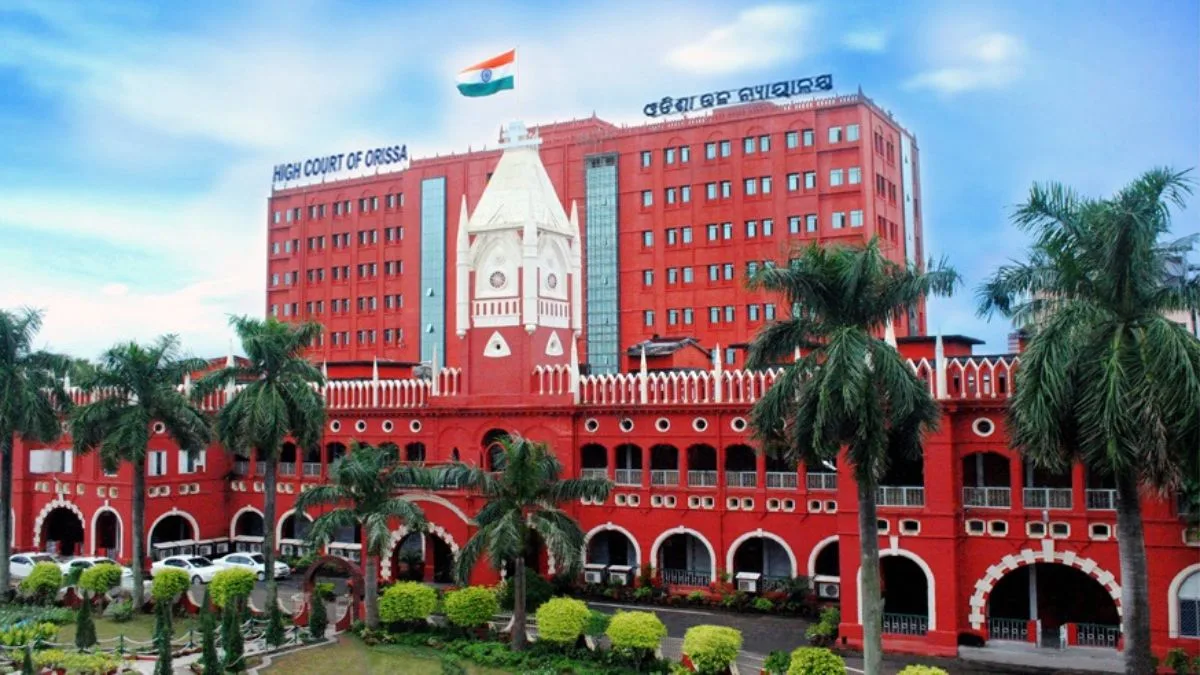
Coming to the rescue of a widow whose spouse, a schoolteacher who died of Covid-19 pandemic while on coronavirus containment duty, the Orissa High Court has directed the state government to declare the deceased as a covid warrior and provide financial assistance to the widow in accordance with notification issued six years back

Justice A.C.Behera in a ruling directed the Opposite Parties including Collector and District Magistrate, Puri and Block Development Officer, Kakatpur block are to declare to the deceased husband of the petitioner as a Covid-19 Warrior and to provide financial assistance to the petitioner as the spouse of the deceased within one month.

The husband of the petitioner — Surendar Kumar Kandi — was serving as an Assistant Teacher in Osalanga Primary School under Kakatpur Block of the Puri district. Kandi was assigned with Covid-19 duty in Covid-19 Treatment Center at DRC Dighal High School, Nimapara for the period from 9 July 2020 to 29 September 2020. On the basis of the order, he was engaged in Covid-19 duties in the Covid-19 Treatment Center. During the course of Covid-19 duty, he contracted the deadly virus and died of Covid-19 on 26 October, 2020.

The Government of Odisha, Health and Family Welfare Department made a declaration issuing guidelines for providing financial assistance to spouse/next of Kin of persons, who succumb to COVID-19, while in Active Line of Duty clarifying that, “if he/she is tested/detected COVID-19 positive within 30 days from his/her last day of active COVID-19 related duty(the 30 days count is from the last day of COVID-19 duty to the date of swab collection)

The Collector, however, rejected the Covid warrior’s widow claim stating that “there is gap of 63 days between the last day of COVID19 duty, i.e., date 29.07.2020 to the date of swab collection, i.e., date 1.10.2020.”

However, the Court overruled the Collector’s act of rejecting the claim on the ground of discrepancies in reports filed by his subordinates.

Governor to lead 4-day padyatra across border districts of Punjab to strengthen fight against drug abuse

The padyatra, scheduled to commence on February 9 will culminate on February 12, covering Tarn Taran, Ferozepur, Fazilka and Abohar, with the objective of mobilising public participation and reinforcing the collective resolve to make Punjab drug-free.

Statesman News Service | Chandigarh |

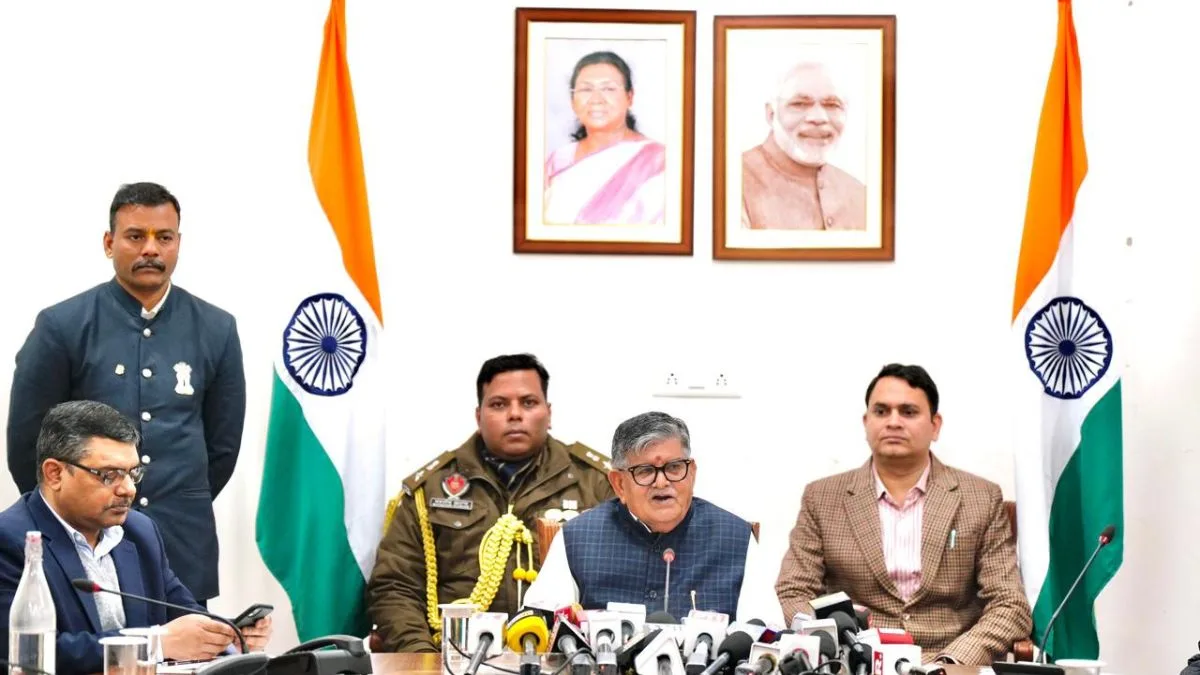
In a renewed push to combat the menace of drug abuse, Governor of Punjab and Administrator of Chandigarh Gulab Chand Kataria on Tuesday announced a four-day anti-drug awareness padyatra across key border districts of the state.

The padyatra, scheduled to commence on February 9 will culminate on February 12, covering Tarn Taran, Ferozepur, Fazilka and Abohar, with the objective of mobilising public participation and reinforcing the collective resolve to make Punjab drug-free.

Addressing a press conference at Punjab Lok Bhavan on Tuesday, the Governor described drug abuse as one of the most serious social challenges facing the state. He said the proposed padyatra is not a mere symbolic walk, but an effort to directly connect with people, especially those living in the border areas who have been particularly vulnerable to the problem of drugs.

Kataria informed that the campaign being undertaken with the support of the Punjab Red Cross Society focuses on spreading awareness about the harmful effects of drug abuse while encouraging community involvement. He stressed that enforcement alone cannot solve the issue and that rehabilitation and employment generation must remain central to any long-term solution.

“Making Punjab drug-free requires a holistic approach. Along with strict enforcement of the law, we must ensure rehabilitation of affected individuals and provide them with dignified employment opportunities so that they can be reintegrated into society,” the Governor said, making an appeal to people from all walks of life to join the padyatra and help turn the fight against drugs into a true people’s movement.

Sharing a detailed schedule, Kataria said the the padyatra would begin on February 9, 2026, at 11:30 am from Tarn Taran, starting from Shri Guru Arjan Dev School and proceeding to Police Lines via Police Guards. On February 10, the walk will be held in Ferozepur from Saragarhi Memorial to the Government School of Eminence, Ferozepur City, starting at 11:30 am.

The padyatra will continue on February 11 in Fazilka, beginning at 12 noon from Sanjeev Cinema and concluding at the Clock Tower. On the final day, February 12, the awareness walk will take place in Abohar, starting at 11:30 am from the Municipal Corporation Office and ending at DAV College, Abohar.

Interacting with the media, the Governor underlined that drug abuse is not confined to Punjab or even India, but is a global problem that demands sustained and collective efforts. He emphasised that border districts, due to their strategic location, require special attention and strong community vigilance.

Kataria called upon social, religious, political, and educational institutions, as well as non-governmental organisations and voluntary groups, to actively participate in the campaign. He said their involvement is crucial in spreading awareness, supporting rehabilitation initiatives and discouraging youth from falling into the trap of substance abuse.

“The fight against drugs must be continuous and sincere. Sporadic efforts will not bring lasting change,” the Governor said, adding that only through persistent community engagement and coordinated action can the desired results be achieved.

He said that meaningful and lasting change is possible only when society comes together with compassion and determination. By focusing on rehabilitation, employment and social acceptance, the campaign aims to restore hope and dignity to affected individuals and move Punjab steadily towards the goal of becoming a drug-free state, said Kataria.

Framed Women: Power, choice, and the art of being seen

They preserve a record of how societies have chosen to frame women across time, what has been emphasised, what softened, and what quietly left out.

Jayati Ghose | London |

Portraiture is never neutral. Whether painted or photographed, it encases a visible likeness within a frame for public view, a process shaped by what is shown, what is withheld, and what is permitted to stand in for a life.

Portrait galleries, therefore, offer more than faces and names. They preserve a record of how societies have chosen to frame women across time, what has been emphasised, what softened, and what quietly left out.

At London’s National Portrait Gallery, this dynamic becomes especially pronounced. Portraiture here is not merely about likeness, but about calculation: how a woman was seen by her society, how she may have understood herself, and how she chose — or was compelled — to be portrayed by others.

This essay focuses on women because their relationship to visibility has historically been narrower, more conditional, and more closely policed.

One of the clearest illustrations is Ada Lovelace. Celebrated today as a foundational figure in computing, she was painted in 1836 as society then knew how to recognise her: draped in silk, elegant and composed, without a single object to suggest intellectual labour.

Her most significant contribution came years later. In 1843, in notes appended to her translation of Luigi Menabrea’s paper on Charles Babbage’s Analytical Engine, Lovelace described a method for calculating Bernoulli numbers — what Encyclopaedia Britannica describes as the first computer program, an algorithm designed to be carried out by a machine.

The irony is not that her brilliance was ignored, but that the visual record of her life was fixed before her work could become legible. The frame was set early, unable to anticipate the mind history would later discover.

To read these portraits only as evidence of limitation, however, would be incomplete. Within narrow frames, many women made precise, knowing decisions about portrayal — sometimes by working within convention, sometimes by rejecting it altogether.

That intention sharpens in the work of Lee Miller.

Known first as a fashion model, she refused to remain the object of the gaze. During the Second World War, she became a war correspondent for British Vogue and documented the liberation of Paris and the concentration camps at Dachau and Buchenwald.

Where traditional portraiture asked women to be legible, Miller made legibility her instrument. She stepped behind the lens and kept it there.
This shift in power is concentrated in a single photograph: Jam Session at the Local, taken by Miller and published in Vogue in August 1944.
Its centre belongs to the cartoonist Carl Giles, laughing at a piano among American troops. But the eye drifts to the edge, where his wife, Sylvia Joan Clarke, stands watching — included but not centred, visible but not addressed.

Clarke appears within the frame yet remains peripheral. Miller disappears from view because she controls it. The difference is not between subject and observer, but between accommodation and authorship.

Respectability, in portraits, often emerges not merely as constraint but as strategy — one of the few tools women could wield without penalty.
Few understood the economics of visibility more sharply than Kitty Fisher, courtesan and muse in 18th-century Britain, whose social position depended on being seen.

Portraits were expensive and uncommon for women of Fisher’s background, yet she sat for several — including works by Sir Joshua Reynolds — ensuring her image circulated among elite social circles.

The significance of Fisher’s portrait lies in control. She did not merely occupy the frame; she commissioned it, curated it, and multiplied it. What might have been fleeting was made durable.

Some women went further, refusing to treat the frame as fate.

Lady Colin Campbell offers a different kind of negotiation: not the quiet calculus of survival, but the deliberate acceptance of consequence.
In late 19th-century Britain, she became infamous through one of the most sensational divorce trials of the era — a public spectacle in a society that demanded female silence as the price of belonging.

Her portrait does not read as defeat. It reads as a refusal. She took the frame she was given and rattled it until it rang.

Read this way, portraiture becomes more than a historical ledger of power. It becomes a record of women thinking ahead — about influence, legibility, and legacy.

Their freedoms were uneven, their risks unequal, and the costs of defiance rarely predictable. Yet across centuries, portraits reveal a recurring intelligence: a clear-eyed understanding of how visibility works, and when to comply, redirect, or resist its terms.

In the end, the question is not whether a woman was framed accurately, but whether the frame carried her intention — or erased it.

(Jayati Ghose is an entrepreneur and former journalist. The views expressed are personal.)

Soundarya Rajinikanth’s ‘With Love’ gets U certificate, set for February release

Soundarya Rajinikanth’s upcoming romantic film ‘With Love’ has been cleared by the CBFC with a U certificate and is set for a February 6 release.

Statesman News Service | New Delhi |

‘With Love’ directed by Madhan, the upcoming romantic entertainer  has received clearance from the Central Board of Film Certification (CBFC) with a clean ‘U’ certificate, paving the way for its theatrical release. The makers confirmed the development on Tuesday by unveiling a new poster announcing the certification.

Also Read: Halle Berry on ageing, menopause and Hollywood: ‘I refuse to be erased

Soundarya Rajinikanth backs the film

The film has been generating steady buzz as it is produced by Soundarya Rajinikanth, daughter of Superstar Rajinikanth, along with producer Magesh Raj Pasilian. Backed by the prestigious banner, With Love is positioned as a wholesome, family-friendly romance aimed at a wide audience.

Also Read: Dhurandhar 2 in legal trouble: FIR filed after drone flown without permission in Mumbai shoot; Sanjay Dutt was on set

Cast, crew and release date

The film stars Abishan Jeevinth and Anaswara Rajan in the lead roles. Earlier this year, Soundarya Rajinikanth had taken to X (formerly Twitter) to announce that the film would hit theatres worldwide on February 6.

She wrote, “A new year brings a new feeling… and new love. #WithLove arrives in cinemas worldwide from Feb 06.”

Rajinikanth unveils title teaser

Adding to the excitement, the film’s title teaser was released by Rajinikanth himself, who wished the team success. Soundarya responded with an emotional message, calling the moment her “biggest blessing.”

Also Read: Sabrina Carpenter criticised by animal rights group PETA after dove appearance during Grammy performance

A notable acting debut

With Love is particularly significant as it marks the acting debut of Abishan Jeevinth, who earlier made waves as the director of the sleeper hit ‘Tourist Family’.

The film, released last year, exceeded expectations by collecting over ₹90 crore at the box office, earning both critical acclaim and audience love.

Strong technical team

Shot entirely across Chennai and Trichy, the film boasts an impressive technical crew. Music is composed by Sean Roldan, cinematography is handled by Shreyaas Krishna, and editing is by Suresh Kumar. Art direction is led by Raj Kamal, while costumes have been designed by Priya Ravi.

With a clean censor certificate, a promising cast, and strong backing, With Love is shaping up to be a feel-good romantic release this February.

Also Read: Elon Musk criticises casting of Black star Lupita Nyong’o in ‘The Odyssey’: ‘Chris Nolan has lost his integrity’

India-US deal sparks massive political storm, Gandhi hits out at PM Modi

India is currently the second-largest buyer of Russian oil, which is under US sanctions.

VIBHA SHARMA | New Delhi |

Even as government sources asserted “zero compromise” on farmers’ interests in the India-US trade deal, claiming that “India’s agriculture and dairy sector will be protected,” opposition leaders mounted a sharp attack on Prime Minister Narendra Modi, accusing him of “selling the country under US’ pressure” and “backstabbing farmers by potentially opening markets to subsidised US agricultural imports.”

Government sources said, “The India-US trade deal agreed upon between US President Donald Trump and PM Modi does not compromise the interests of Indian farmers,” also clarifying that India would continue to buy crude oil from countries that are “not under sanctions.”

India is currently the second-largest buyer of Russian oil, which is under US sanctions.

Union Minister J P Nadda announced in the Rajya Sabha that the government would issue a suo motu statement on the trade deal and hold a discussion in Parliament after several opposition MPs staged a walkout, demanding a discussion on the deal.

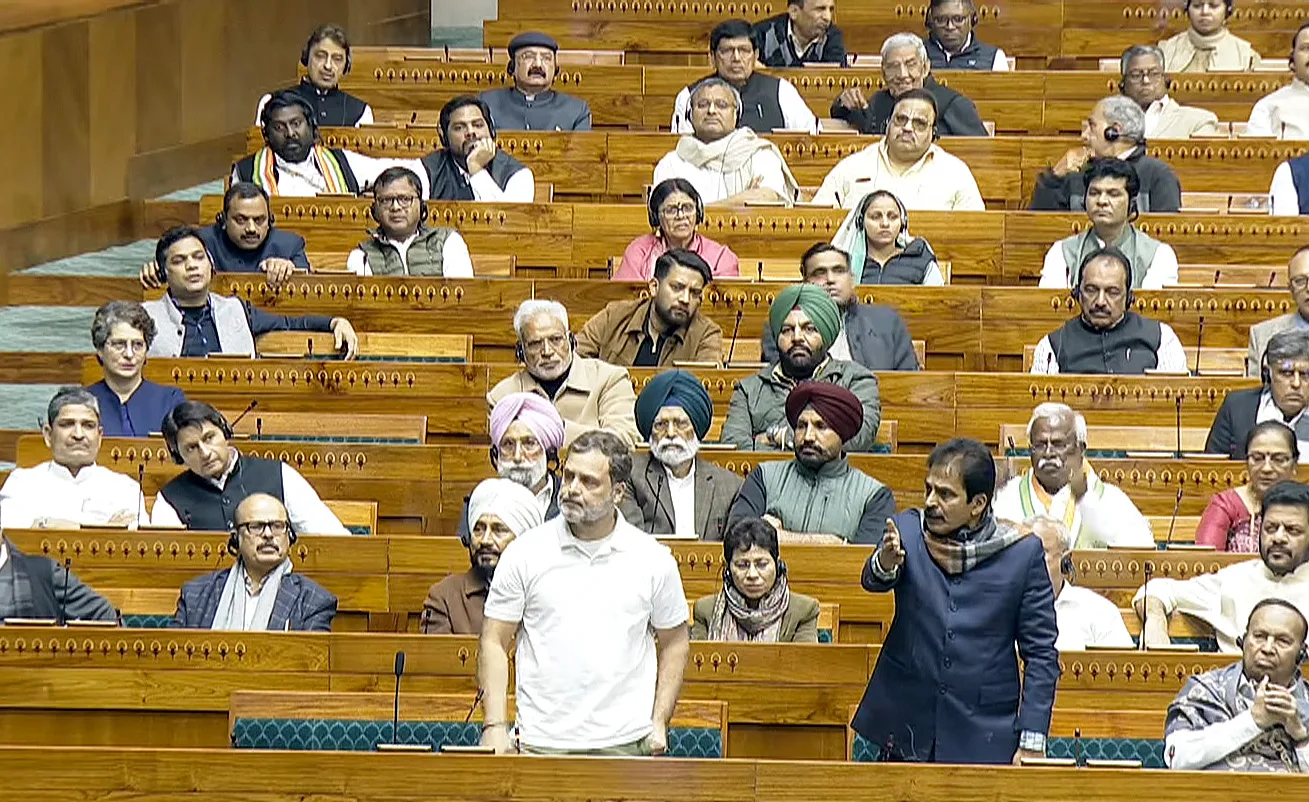
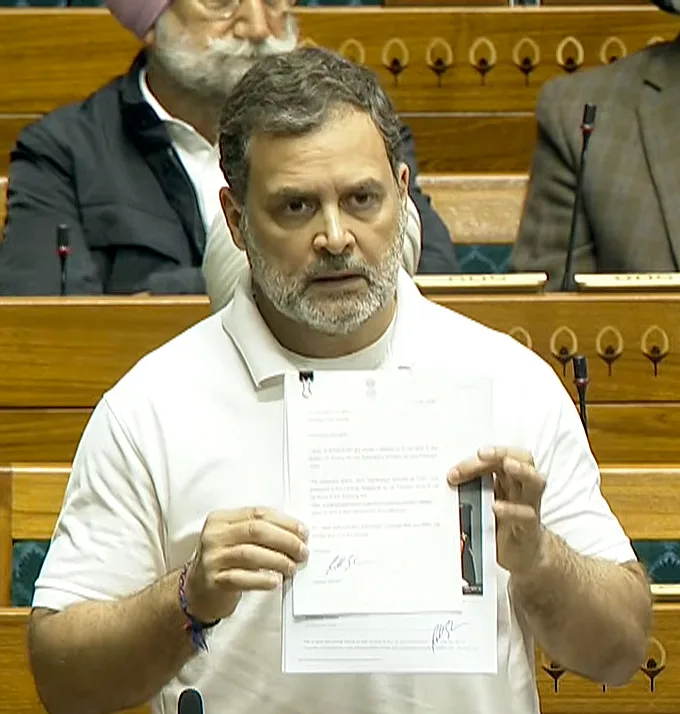
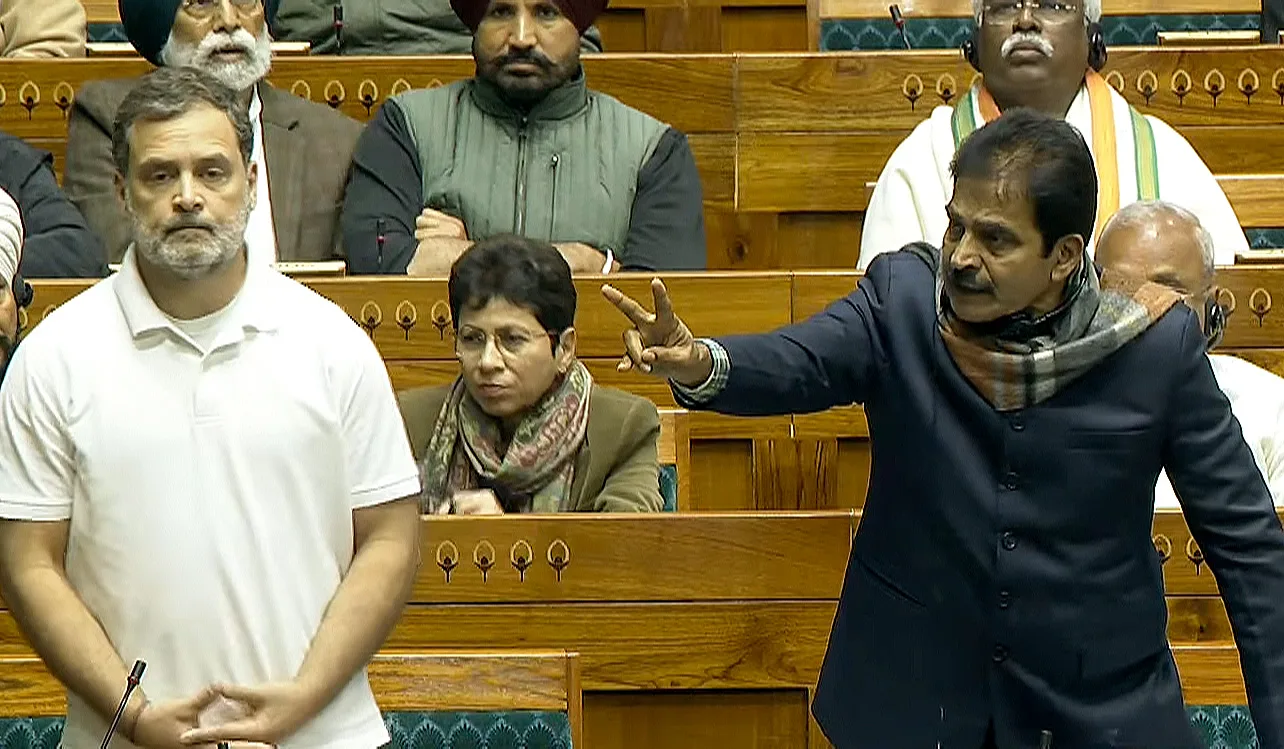
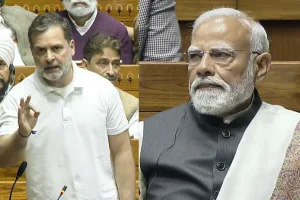
The Lok Sabha also saw repeated disruptions over Leader of Opposition Rahul Gandhi’s insistence on referring to an unpublished memoir of former Army chief General M M Naravane during the discussion on the Motion of Thanks to the President’s Address for the second day in a row. Eight Congress MPs were suspended in the Lok Sabha on Tuesday by the Chair for “unruly” behaviour.

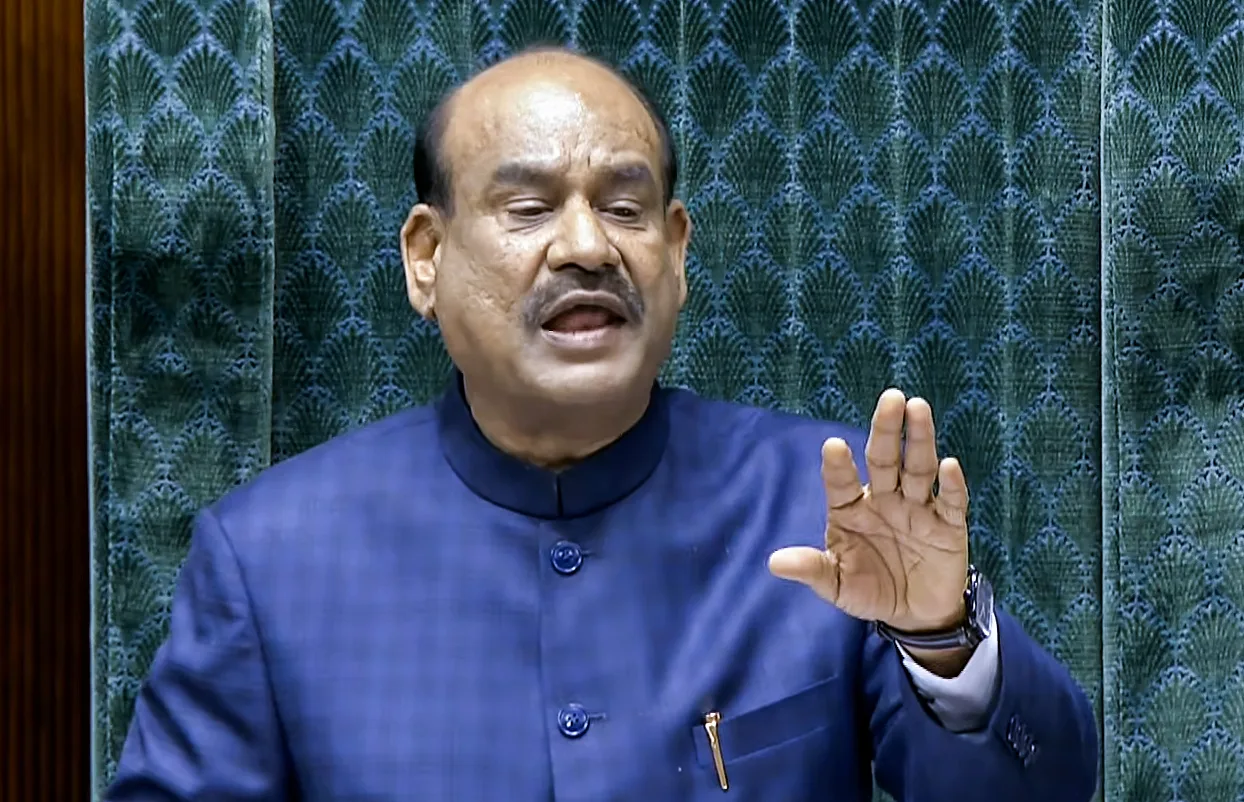
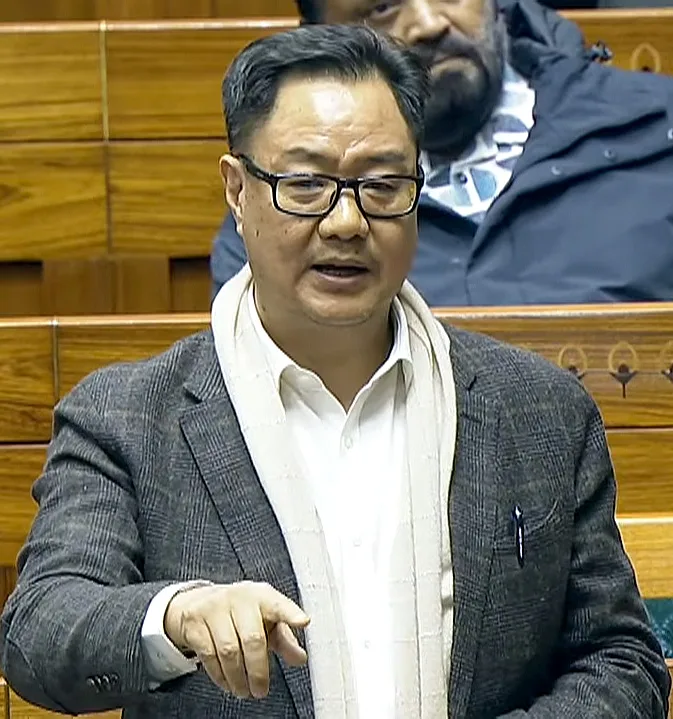
Parliamentary Affairs Minister Kiren Rijiju had moved a resolution in the Lok Sabha to suspend Hibi Eden, Amarinder Singh Raja Warring, Manickam Tagore, Gurjeet Singh Aujla, C Kiran Kumar Reddy, Prashant Padole, S Venkatesan and Dean Kuriakose for the remainder of the session. They were reportedly seen tearing up papers and throwing them towards the Chair.

Speaking to the media after chaotic scenes for the second consecutive day, Gandhi accused the Prime Minister of being “compromised” and “selling” India. “Modi ji is rattled. The (US-India) trade deal, which was stalled for the past few months, was signed by Narendra Modi last night. There is extreme pressure on him. Narendra Modi ji’s image can get damaged. The main thing is that our PM is compromised,” Gandhi said. He added, “For the first time, the Leader of the Opposition was not allowed to speak on the President’s speech.”

“Narendra Modi ji has sold your hard work in this trade deal because he is compromised. He has sold the country. Narendra Modi ji is scared because those who shaped his image are now breaking this image,” Gandhi alleged. He further claimed, “There is a case on Adani ji in the US; it is actually a case on Modi ji. The Epstein Files contain even more that the US has not yet released. There is pressure due to that as well. These are the two pressure points; the country should understand this.”

Earlier in the House, Gandhi argued that an article he cited was relevant to national security and India’s foreign policy, particularly relations with China and Pakistan. “There is a very important point in this article that I have authenticated. It speaks about the PM’s reaction… On the world stage, the main issue in international affairs is the conflict between China and the US. This is central to our President’s address,” he said, questioning why he was being stopped from making his point.

Opposition parties across the spectrum slammed the Modi government, claiming it had compromised economic policy and foreign relations by agreeing to reduced tariffs without adequate safeguards against cheaper US imports. They warned that subsidised American agricultural products could flood Indian markets, undercut local prices, and hurt small farmers unable to compete with US agribusiness.
Former Foreign Secretary and Rajya Sabha MP Harsh Vardhan Shringla defended the agreement, saying the deal “not only gives us a competitive market advantage in the US” but also “uplifts India’s stature on the global stage,” calling it a matter of pride. AAP MP Sanjay Singh, however, said, “By opening us to the US market in the agriculture sector, Narendra Modi has backstabbed the farmers of India. This Agreement is a betrayal to the crores of farmers in India.” He added that if India stops buying Russian oil, “people of India will have to purchase expensive oil from the US… a double blow to the people of India.”

Samajwadi Party MP Dimple Yadav said the announcement by President Trump showed that India’s Ministry of External Affairs was “not able to negotiate in the manner that a deal should be done.” Sena (UBT) MP Sanjay Raut alleged that “national interest and interest of farmers were compromised” and claimed the deal was signed to safeguard Gautam Adani. SP MP Ram Gopal Yadav added that “there must certainly be some hidden agenda,” noting that “everything is secret, nothing is open.”

Too early to ascertain impact of 18% tariff on India: Mayawati

In a post on X, Mayawati stated that in the absence of adequate information, any immediate evaluation would be hasty, as the real impact of the decision would become clear only after its implementation on the ground.

Statesman News Service | Lucknow |

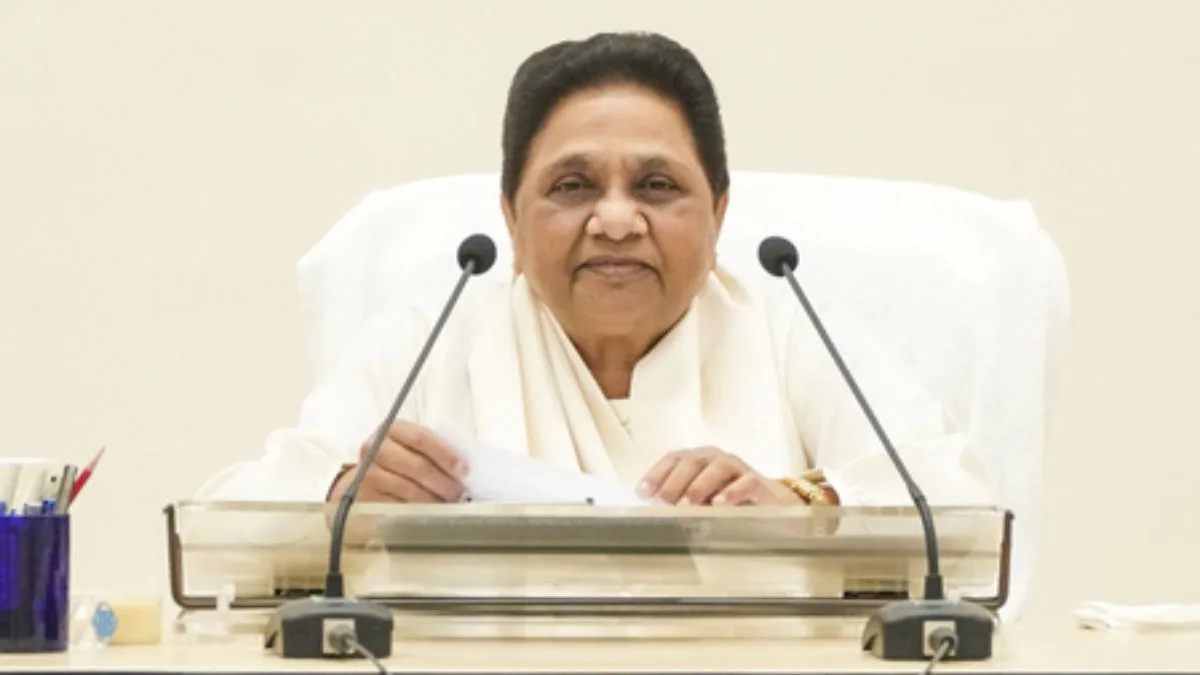
Bahujan Samaj Party (BSP) chief Mayawati on Tuesday said it would be premature to ascertain whether the United States’ decision to impose an 18 per cent tariff following a mutual agreement with India is in the national and public interest.

In a post on X, Mayawati stated that in the absence of adequate information, any immediate evaluation would be hasty, as the real impact of the decision would become clear only after its implementation on the ground.

She emphasised that it remains to be seen how the move would affect the country, particularly the Bahujans, the poor, labourers, farmers and women.

The former Uttar Pradesh chief minister also said it would have been better if the government had provided a detailed explanation on the issue during the ongoing session of Parliament.

According to her, such a discussion would have ensured transparency and helped the public gain a clear understanding of the implications of the agreement and the tariff decision.

How will India-US trade deal impact agricultural sector? Explained

As per the US Secretary of Agriculture, Brooke Rollins, the US will export more of its American farm products to India’s massive market under the India-US deal.

Statesman News Service | New Delhi |

While India is yet to put out the full details of the India-US trade agreement, the United States has confirmed that the deal is a win-win for its agricultural sector. As per the US Secretary of Agriculture, Brooke Rollins, the US will export more of its American farm products to India’s massive market under the India-US deal.

The leaders of the two countries, Prime Minister Narendra Modi and US President Donald Trump, announced the tariff reduction from 50 per cent to 18 per cent yesterday through a post on a social media platform.
Notably, Trump said in his post on the social media platform that India has agreed to purchase more American goods. He specified that the purchases would surge to around $500 billion, including the buying of American agricultural products.

According to a statement by an Indian government official to Reuters, India has agreed to offer market access to some US agricultural products under the deal.

Will India-US trade deal keep American farmers first?

In the first post after the announcement of the India-US trade deal, the US Secretary of Agriculture thanked the United States President Donald Trump for once again delivering for our American farmers.’
She posted on X: “India’s growing population is an important market for American agricultural products, and today’s deal will go a long way to reducing this deficit. America First victory on top of the dozens of deals for agriculture.”


According to the data available, the agricultural trade deficit of the United States with India was $1.3 billion in 2024. The US agricultural exports in 2025 reached approximately 1.7 billion USD, as per the USDA data.

On the impact of the India-US trade agreement on the Indian agriculture sector, Former Foreign Secretary and Rajya Sabha MP Harsh Vardhan Shringla said, “Some items will come from the US, but they will not threaten our agriculture. I don’t see any contradiction or any problem that our farmers could face.”

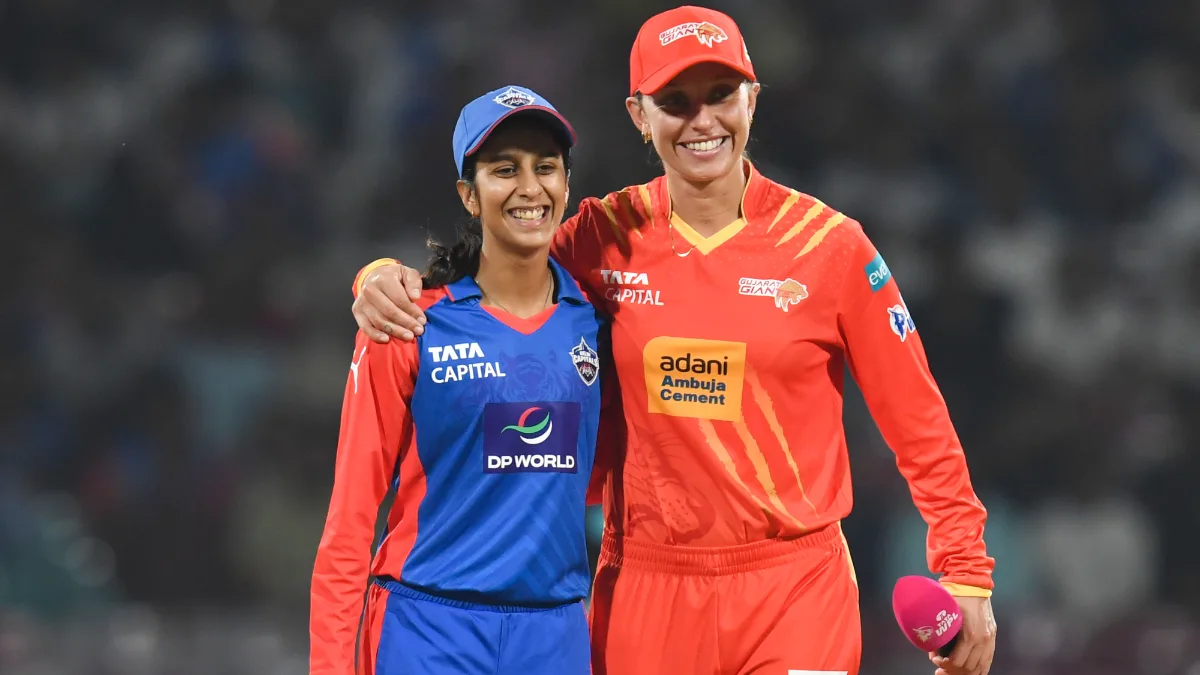
Gujarat Giants vs Delhi Capitals WPL 2026 Eliminator Preview: Date, live streaming, probable XIs and more

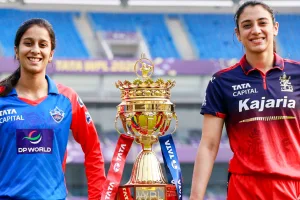
The winner of the Eliminator will face table-toppers Royal Challengers Bengaluru (RCB), who have already secured direct qualification for the final, in the WPL 2026 Final on February 5, 2026.

Neha Buswal | New Delhi |

The second-last match of the WPL 2026 season promises to be a thriller as Gujarat Giants (GG) take on Delhi Capitals (DC) in the Eliminator. The match will be played at 7:30 PM IST on February 3, 2026, at the BCA Stadium, Kotambi, Vadodara.

Delhi Capitals booked their place in the playoffs after defeating UP Warriorz in their final league match on February 1, winning by 5 wickets with 8 balls to spare. DC were clinical with the ball, restricting UPW to just 122 before chasing the target comfortably.

Meanwhile, Gujarat Giants qualified in dramatic fashion after beating the defending champions Mumbai Indians by 11 runs in a thrilling contest. In an unusual move, Captain Ashleigh Gardner chose to bat first after winning the toss, making GG the first team in 41 WPL matches to opt to bat first and successfully defend a total. The win was also historic, as it was Gujarat’s first-ever victory over the Mumbai Indians in WPL history, ending an eight-match losing streak.

After suffering eight consecutive defeats to MI prior to that match, the Giants posted a competitive 167/4, powered by a crucial 71-run partnership between Gardner (46) and Georgia Wareham (44). Their bowlers then held their nerve against a fighting 82 from Harmanpreet Kaur, sealing an 11-run victory to secure their spot in the Eliminator.

Having recovered strongly from an early three-match losing streak this season, GG finished second in the standings with 10 points.

GG vs DC in WPL 2026 league stage

Gujarat Giants and Delhi Capitals faced each other twice in the league stage this season and GG won both matches.

Match 1: GG won by 4 runs

Match 2: GG won by 3 runs

Sophie Devine played a major role in both victories. She was the Player of the Match in the first encounter and also picked up a crucial four-wicket haul in the second match.

The winner of the Eliminator will face table-toppers Royal Challengers Bengaluru (RCB), who have already secured direct qualification for the final, in the WPL 2026 Final on February 5, 2026.

Gujarat Giants vs Delhi Capitals, WPL 2026: Head-to-Head

Total matches: 8

Gujarat Giants wins: 4

Delhi Capitals wins: 4

GG vs DC, WPL Eliminator: Match Details

Fixture: Gujarat Giants vs Delhi Capitals (Eliminator)

Date: February 3, 2026

Time: 7:30 PM IST (Toss at 7:00 PM IST)

Venue: BCA Stadium, Kotambi, Vadodara

GG vs DC, WPL Eliminator: Live Streaming Details

Where to watch the DC vs GG WPL Eliminator live in India?

Fans can watch the DC vs GG match live on TV via the Star Sports Network, while live streaming will be available on the JioHotstar app and website in India.

What is the toss time for the DC vs GG matchup?

The toss will take place at 7:00 PM IST, with the match starting at 7:30 PM IST.

GG vs DC, WPL Eliminator: Probable Playing XI

Gujarat Giants are likely to field Beth Mooney (wk), Sophie Devine, Anushka Sharma, Ashleigh Gardner (c), Georgia Wareham, Bharti Fulmali, Kanika Ahuja, Kashvee Gautam, Tanuja Kanwer, Renuka Singh Thakur and Rajeshwari Gayakwad.

Delhi Capitals are expected to go with Shafali Verma, Lizelle Lee (wk), Laura Wolvaardt, Jemimah Rodrigues (c), Marizanne Kapp, Chinelle Henry, Niki Prasad, Sneh Rana, Minnu Mani, Shree Charani and Nandini Sharma.

Goldman Sachs raises GDP growth forecast for India by 20 bps after US lowers tariffs

Until a few weeks back, there were no indications that India and the US were about to close the deal despite a recent positive statement on the pact by US President Donald Trump, given his unpredictable character.

Statesman News Service | New Delhi |

How will one describe the India-US trade deal, an outcome of patience and restraint exercised by New Delhi, now that the Free Trade Agreement (FTA) between India and the European Union (EU) has already been termed as the ”mother of all deals”?

Though its details are still not available, the Indo-US deal has been reached after a year of negotiations during which hard bargaining was done by both sides. ‘’Quite often we were close to the deal but at times it did appear that we are far away from concluding it…of course, there is always give and take in any deal of this nature,’’ an official said, without disclosing anything further.

Until a few weeks back, there were no indications that India and the US were about to close the deal despite a recent positive statement on the pact by US President Donald Trump, given his unpredictable character.

But what worked in India’s favour was concluding the FTA with the 27-nation EU last week. Also, the arrival in New Delhi last month of President Trump’s close aide Sergio Gor as Ambassador to India helped the two countries quietly fast track the negotiations.

It goes to the credit of the political leadership and the bureaucracy in India that it never lost patience and was quite guarded in its reaction to any offensive statement coming from President Trump or other top functionaries in Washington.

Prime Minister Narendra Modi, it is learnt, had told his top ministers and bureaucrats to be careful with their words and not to react to every statement emanating from Washington, even as his own personal relationship with President Trump was going through a troubled phase. External Affairs Minister S Jaishankar and Commerce Minister Piyush Goyal were quite guarded in their response to the hurdles in the way of concluding the trade pact with Washington, even as they conducted quiet diplomacy with their American interlocutors.

President Trump continued to show aggression and hostility towards India, first increasing the tariff on Indian products and then slapping a 25 per cent punitive tariff on this country on the charge that India was funding the ‘’Russian war machine’’ in the war in Ukraine. Though his repeated claim that he brokered a ceasefire between India and Pakistan in May last year was strongly refuted by New Delhi. However, it refused to join the debate with President Trump on this issue.

Even as the talks with the US dragged on amid global uncertainties over President Trump’s tariff regime, New Delhi accelerated trade engagements with other key allies, including the EU. It signed as many as five trade agreements to deepen economic partnerships, which strengthened its position on the negotiating table with the US.

In recent days, Indian officials clearly stated that New Delhi was in no hurry to conclude the deal with the US and that there was no question of sacrificing national interests, especially on agricultural products.

In his social media post on ”Truth Social” last night after talking to PM Modi, President Trump said the US will reduce tariffs on Indian imports from 25 per cent to 18 per cent. Though he did not talk about the 25 per cent punitive tariff that he had imposed on India, the US envoy later clarified that this duty is also being rescinded.

President Trump’s claims that India will reduce its tariff and non-tariff barriers against the US to zero and ‘’Buy American’’ at a much higher level are yet to be confirmed by New Delhi. An official word from India is also awaited on his claim that India will stop buying oil from Russia and buy much more from the US and potentially Venezuela.

With the trade deal done and dusted, India, in all probability, will join President Trump’s “Board of Peace” that will work towards bringing lasting peace to Gaza. Other key Indo-US engagements, including the Quad Summit to be hosted by India, are also likely to be back on track.