Logo

Pakistan, Bangladesh seek higher revenue in ICC talks; India-match boycott decision due Monday: Report

Bangladesh has also sought greater financial compensation and hosting rights for a global event, likely the 2028 Under-19 World Cup, according to sources cited in the report.

Statesman News Service | New Delhi |

Pakistan has indicated it may reconsider its decision to boycott its ICC Men’s T20 World Cup match against India, but only after seeking major concessions from the International Cricket Council (ICC), according to a report by Telecom Asia Sport on Sunday.

The report said Pakistan Cricket Board (PCB) officials held high-level talks with ICC Deputy Chairman Imran Khawaja and Associate Members’ representative Mubashir Usmani in Lahore, where the ICC delegation warned of sanctions and financial penalties if Pakistan failed to comply with the Members Participation Agreement, which obligates teams to participate in all ICC events.

During the meeting, PCB chairman Mohsin Naqvi reportedly presented a list of demands, including increased annual funding, pressure on the BCCI and the Indian government to revive bilateral cricket, and assurances regarding player interactions during India-Pakistan matches.

The ICC officials assured the PCB that the demands would be placed before the ICC Board at its next meeting.

Bangladesh has also sought greater financial compensation and hosting rights for a global event, likely the 2028 Under-19 World Cup, according to sources cited in the report.

The final decision on Pakistan’s participation is expected to be taken by Prime Minister Shehbaz Sharif, with Naqvi informing the ICC delegation that he would consult the prime minister, who could decide as early as Monday.

Bangladesh Cricket Board president Aminul Islam also arrived in Lahore for discussions with Naqvi as both boards look to coordinate their response to possible ICC actions.

The report said Aminul and Naqvi have previously aligned on key regional cricket governance issues, including relocating Bangladesh’s T20 World Cup matches and regional ACC meetings.

Despite the talks, Pakistani media reports suggested the ICC remains under pressure, with Pakistan still publicly maintaining its boycott stance.

Behind-the-scenes negotiations involving senior ICC powerbrokers have helped bring stakeholders back to the negotiating table, with the next 48 hours seen as crucial in determining Pakistan’s final position and the ICC’s response.

Italy vs Scotland T20 World Cup 2026 Preview: A historic debut and redemption battle

The encounter is being billed as a “date with destiny” for the Azzurri, who are making their maiden appearance in a Men’s World Cup of any format and are the 25th team to debut in the T20 World Cup.

Neha Buswal | New Delhi |

Italy will play their first-ever match in a Men’s Cricket World Cup when they face Scotland in a historic Group C clash at the ICC Men’s T20 World Cup 2026 on Monday, February 9, at Eden Gardens, Kolkata.

The encounter is being billed as a “date with destiny” for the Azzurri, who are making their maiden appearance in a Men’s World Cup of any format and are the 25th team to debut in the T20 World Cup. Italy secured their World Cup qualification by defeating Scotland in the European Regional Final in 2025, and meeting the same rivals on the global stage completes a remarkable full-circle journey.

Dubbed the “Miracolo Italiano”, Italy’s qualification has been hailed as a watershed moment for a nation traditionally associated with football. The match is widely viewed as the beginning of a new era for Italian cricket, a sport with roots dating back to 1793 but which has never previously reached this global platform.

For Scotland, the fixture carries redemption value after they suffered a loss to the West Indies in their tournament opener. Their participation itself came at short notice, having replaced Bangladesh just days before the tournament, adding to the pressure to make an immediate impact.

Both Italy and Scotland are placed in Group C alongside two-time champions West Indies, England, and Nepal, making this clash crucial in shaping the early group dynamics.

Italy vs Scotland T20 World Cup 2026: Match Details

Date: Monday, February 9, 2026
Time: 11:00 AM IST (5:30 AM GMT)
Venue: Eden Gardens, Kolkata

What time will the toss happen for the Italy vs Scotland T20 World Cup match?

The toss for the Italy vs Scotland T20 World Cup match will happen at 10:30 AM IST (5:00 AM GMT).

Italy vs Scotland T20 World Cup match 2026: Live Streaming Details

Where to watch the Italy vs Scotland T20 World Cup match on TV?

The Italy vs Scotland T20 World Cup 2026 match will be broadcast live on the Star Sports Network in India.

Where to watch the Italy vs Scotland T20 World Cup match on live streaming?

The match will be available for live streaming on the JioHotstar app and website in India.

For global audiences, the match can also be streamed on ICC.tv, subject to regional availability.

Italy vs Scotland T20 World Cup match 2026: Head-to-Head Record

Italy and Scotland have met twice in T20Is, with the rivalry evenly poised at 1–1.

2023: Scotland won by 155 runs (Europe Qualifier)

2025: Italy won by 12 runs (Europe Regional Final)

Italy vs Scotland T20 World Cup match 2026: Players to Watch

Italy:

JJ Smuts: Explosive middle-order batter and handy left-arm spinner.

Harry Manenti: Match-winner with the ball; took a five-wicket haul in their last meeting vs Scotland.

Scotland:

George Munsey: Aggressive opener with 179 runs in his last five T20Is.

Mark Watt: Key left-arm spinner expected to exploit Eden Gardens’ conditions.

Italy vs Scotland T20 World Cup match 2026: Pitch & Weather Conditions

Pitch: Eden Gardens is expected to offer early assistance to pacers, with spinners coming into play as the match progresses. Teams batting first have won around 60% of T20Is here since 2022.

Weather: Sunny conditions with temperatures around 27°C and no rain forecast.

Italy vs Scotland T20 World Cup match 2026: Squads

Scotland: Richie Berrington (c), Tom Bruce, Matthew Cross, Bradley Currie, Oliver Davidson, Chris Greaves, Zainullah Ihsan, Michael Jones, Michael Leask, Finlay McCreath, Brandon McMullen, George Munsey, Safyaan Sharif, Mark Watt, Brad Wheal.

Italy: Wayne Madsen (c), Marcus Campopiano, Gian Piero Meade, Zain Ali, Ali Hasan, Crishan Jorge, Harry Manenti, Anthony Mosca, Justin Mosca, Syed Naqvi, Ben Manenti, Jaspreet Singh, JJ Smuts, Grant Stewart, Thomas Draca.

Japanese PM Sanae Takaichi’s party secures ‘landmark victory’ in snap elections; PM Modi congratulates her

The ruling party under Japanese Prime Minister Sanae Takaichi went past 233 seats mark and was headed towards a supermajority of up to two-thirds of the 465 seats in the lower house of the National Diet.

Statesman News Service | New Delhi |

Prime Minister Narendra Modi on Sunday congratulated Japanese PM Sanae Takaichi after the ruling Liberal Democratic Party (LDP) registered a ‘landmark victory’ in the country’s snap election in the lower house, the House of Representatives.

“Congratulations Sanae Takaichi on your landmark victory in the elections to the House of Representatives! Our Special Strategic and Global Partnership plays a vital role in enhancing global peace, stability and prosperity. I am confident that under your able leadership, we will continue to take the India-Japan friendship to greater heights,” PM Modi said on X.

The ruling party under Japanese Prime Minister Sanae Takaichi went past 233 seats mark and was headed towards a supermajority of up to two-thirds of the 465 seats in the lower house of the National Diet.

Hours after the crucial elections, Exit Polls predicted that the ruling bloc may secure at least 261seats in the powerful lower house.

According to NHK projections, the LDP could also secure 366 of the 465 seats in the House of Representatives.

This would mean that the ruling bloc may surpass the threshold required to chair all standing committees and outnumbering the opposition in key panels, which would help push through its legislative agenda.

The main opposition, the newly formed Centrist Reform Alliance, which brings together lower house members of the Constitutional Democratic Party of Japan (CDPJ) and Komeito, was distant second.

Meanwhile, the populist Sanseito party, known for its “Japanese First” slogan, is expected to make substantial gains, while Team Mirai, advocating the use of digital technologies to boost political participation, is set to secure its first seat in the chamber.

From gas to glow: How ayurveda and Patanjali products can rescue your gut health

Your gut isn’t just digesting food. It’s running the show for your mood, immunity, and overall health. Discover how simple Ayurvedic tips and Patanjali products can keep your digestive system happy and thriving.

Statesman News Service | New Delhi |

Ever notice how when you feel off, it usually starts somewhere in your belly? Like a little drama brewing inside you? Turns out, your gut health isn’t just quietly digesting food. It’s throwing a full-on party or protest that can affect your whole body.

Experts now agree: gut health is the unsung star of your overall well-being. From your energy levels to your mood swings, your gut is basically celebrity behind the scenes, deciding if the show goes smoothly or crashes spectacularly.

Today let’s spill the tea on gut health, how Ayurveda swoops in like wellness fairy godmother, and which Patanjali products can help your tummy stay happy.

Also Read: Persistent coughs in winter? Here’s why they happen and how ayurveda and Patanjali can help

Why gut health is a big deal

Think of your gut as a bustling city filled with tiny citizens called microbes. These microbes aren’t just freeloaders. They manage everything from digestion and immunity to your skin glow, heart health, weight, and even your brain vibes.

Good gut microbes act like a security team, keeping harmful bacteria and toxins in check. They help your body absorb nutrients, power up immune cells, and keep metabolism humming along.

Hormones that tell you when to stop eating? Yep, your gut is whispering those cues. Chronic issues like skin breakouts, joint aches, or heart troubles often trace back to an unhappy gut.

Even your mood owes a lot to your tummy. Healthy microbes boost serotonin, the “feel-good” hormone, keeping anxiety and low moods in check, while also helping you sleep like a baby. A messy gut can trigger immune overreactions, making allergies flare up.

Ayurveda sums it up neatly: Agni, or digestive fire, is the foundation of all health. If Agni falters, toxins called Ama start piling up. That’s where the magic of Ayurvedic wisdom comes in.

Eat like your gut is watching

Food isn’t just fuel. It’s gossip for your gut microbes. Warm, cooked meals keep Agni lively, while vegetables, fruits, millets, and grains give your microbes the VIP treatment. Probiotic-rich foods; think buttermilk, bananas, garlic, onions, and fermented goodies are like sending thank-you notes to your gut. And yes, ghee is not the villain; it oils your digestive highway beautifully.

Simple habits matter too. Chew carefully, avoid screen distractions, eat on schedule, and have your last meal at least three hours before hitting the pillow. A glass of warm water aids digestion and keeps the party flowing smoothly.

Want to upgrade your kitchen? Patanjali Organic Swarna Bajri is your new gut BFF. Use it to make rotis or khichdi; Ayurveda praises it for aiding digestion.

Spice up your life, and your gut

Ayurveda loves a good spice drama, and your digestive system does too. Coriander, hing (asafoetida), and cumin are like backstage passes for better digestion and toxin control. Raw or brewed in tea, these spices keep things lively.

Some herbal heroes to know:

Triphala: Detoxifier, bowel-movement regulator, microbe booster.

Amla: Packed with antioxidants and vitamin C, helps Agni and nutrient absorption.

Ginger: Gas and bloating? Consider them gone.

Fennel: Calms your tummy like a lullaby.

Turmeric: Anti-inflammatory superstar.

Tulsi: Stress-related gut issues? Tulsi says “I got you.”

Mulethi: Soothes gut lining and acidity.

If convenience is key, Patanjali Pachak Hing Peda blends hing, anardana, amchur, coriander, black pepper, fennel, and other Ayurvedic spices into one delicious digestive treat. It’s like a spa day for your belly.

Lifestyle choices that gut loves

Gut health isn’t all about what you eat. It’s about how you live. Overeating and constant snacking? Your gut hates that drama. Stick to meal timing, avoid random nibbling, and let your digestive system breathe.

Exercise is non-negotiable. Brisk walks, Yoga, and Pranayam get your digestive juices moving like a well-directed Bollywood dance number. Sleep is your gut’s backstage reset; skip it, and the digestive drama spills into your day.
Snack smart: Patanjali Ragi Cookies Digestive (200 Gms) are crunchy, delicious, and packed with the digestive goodness of ragi. Perfect for when cravings strike without sabotaging your gut.

Gut health: The celebrity of your body

Here’s the takeaway: your gut is not just a background player. It’s a star, a director, and occasionally, a gossip columnist writing reviews on how your body feels. Understanding what fuels it, supporting it with Ayurvedic wisdom, adding a sprinkle of Patanjali products can keep your digestive system and by extension your mood, immunity, overall health, on top form.

So the next time your tummy whispers or yells, listen closely. It might just be telling you that it’s time for some Swarna Bajri khichdi, Pachak Hing Peda, or Ragi cookies, along with a dash of mindful eating, herbal love. Because in the grand show of life, a happy gut means a happy you.
Delhi Traffic Police joins The Statesman VCCR to promote road safety awareness

Delhi Police’s traffic unit riders joined the 59th edition of The Statesman Vintage and Classic Car Rally (VCCR) on Sunday, spreading awareness about road safety measures and the importance of following traffic rules.

Statesman News Service | New Delhi |

Delhi Police’s traffic unit riders joined the 59th edition of The Statesman Vintage and Classic Car Rally (VCCR) on Sunday, spreading awareness about road safety measures and the importance of following traffic rules.

The police riders accompanied the vintage and classic cars as the rally was flagged off from Statesman House on Barakhamba Road and also joined them at Major Dhyan Chand National Stadium after the cars completed the course.

Personnel from the Delhi Traffic Police interacted with spectators who had gathered to witness the rally and educated them about road safety and traffic regulations, promoting safe driving and responsible traffic behaviour.

The police also stationed a communication van at the venue, which showcased informative videos highlighting the importance of adhering to traffic rules and ensuring road safety.

Speaking to The Statesman, a youngster who had come to watch the vintage cars said he also viewed the awareness videos played on the police communication van.

He added that such initiatives not only spread awareness about traffic rules but also inspire people to drive responsibly, as they are highly informative and encourage safe driving habits.

Persistent coughs in winter? Here’s why they happen and how ayurveda and Patanjali can help

Winter brings cozy vibes but also persistent coughs that just won’t quit. Discover why they happen, Ayurvedic tips to calm your throat, and Patanjali products that can help.

Statesman News Service | New Delhi |

Ah, winter! Hot chocolate, cozy blankets, and… a cough that just won’t quit! If your throat feels like it’s auditioning for a horror movie every morning, you’re not alone. Persistent coughs tend to sneak in when the cold winds blow, pollution rises, and your immunity is slightly on vacation. But before you panic and stockpile cough syrups, Ayurveda, and yes, some clever Patanjali products might just be the backstage pass your throat needs.

Also Read: Raw bananas are more than a kitchen staple, Acharya Balkrishna reveals their hidden healing magic

Why your cough just won’t leave

Ayurveda has a term for it: Kasa Roga, a condition caused by an imbalance of Vata and Kapha Doshas. Translation: your body is sending an urgent “fix me” signal. Winter doesn’t help. Smog and fine particles in the air irritate your lungs, while the cold air dries out your throat. Even indoor pollution like dust or heater smoke can fan the cough flames.

Your digestive fire, or Agni, also takes a hit in winter. When digestion slows, toxins called Ama accumulate in the body, sometimes showing up as that relentless chest cough. And don’t even get us started on oily, heavy foods, they rile up Kapha, create phlegm, and give chronic coughs a VIP pass.

Spice it up: Herbs that whisper “Shh, no more cough”

Ayurveda believes in herbs and spices as natural warriors for your throat. Here’s what works:

  • Ginger & Honey – Anti-inflammatory, chest-clearing, tastes like heaven.
  • Tulsi (Holy Basil) – Tea or kadha, it calms irritation and battles infections.
  • Mulethi (Licorice) – Chew or boil it to loosen mucus and soothe throat.
  • Cinnamon & Cloves – Fight irritants like tiny ninjas.
  • Turmeric Milk – Antibacterial, anti-inflammatory, and cozy for winter nights.

And here’s the Patanjali magic: Divya Kanthamrit Chewable Tablets combine mulethi, clove, baheda, and black pepper to calm your throat and curb the cough. Think of it as herbal therapy in bite-sized form.

Eat right, not heavy

Winter comfort foods are tempting, but Ayurveda nudges you toward light, warm, and digestible meals. Go for khichdi, vegetable soups, and steamed veggies. Avoid cold desserts, excessive dairy, and super spicy fare.

Patanjali has your back here too:

  • Unpolished Moong Dal Chilka – High in protein, easy to digest, perfect for khichdi.
  • Sona Masoori Rice – Medium-grain, soft, nutrient-rich to go down without throat drama.

Together, they make a gentle, nutritious duo that keeps Kapha calm and digestion happy.

Breath like a yogi, stay strong

Yes, coughs aren’t just about what you eat. They’re also about how you breathe. Pranayama exercises like Anulom Vilom and Kapalabhati help clear your lungs, strengthen your respiratory system, flush out toxins.

Want an Ayurvedic bonus? Patanjali Special Chyawanprash is your immunity wingman. Packed with amla, saffron, giloy, cinnamon, it boosts energy, fights infections, and keeps your respiratory system battle-ready.

Lifestyle tweaks that quiet your throat

Little things make a big difference:

  • Sip warm water or herbal teas to keep your throat hydrated.
  • Wear a mask while cleaning or stepping out in pollution-heavy areas.
  • Keep rooms humid to avoid dryness-triggered coughs.
  • Try steam inhalation with Divya Dhara. A few drops of peppermint, ajwain, and camphor in hot water open up your airways and soothe congestion.

Think of these tweaks as giving your throat a mini spa treatment. Your cough might even start wondering why it ever came along.

The Ayurvedic winter survival kit

This winter, skip the endless cough syrups and embrace Ayurveda. Understanding why persistent coughs happen, making small diet and lifestyle changes, practicing breathing exercises, and using Patanjali products can help you fight coughs like a pro.

From ginger and tulsi to Divya Kanthamrit, Chyawanprash, and Unpolished Moong Dal, you have a whole lineup of herbal helpers. Add a warm, humid home and mindful breathing, and your throat might just thank you with sweet silence.

Punjab Police launch 72-hour ‘Operation Prahaar-2’ to intensify crackdown on gangsters

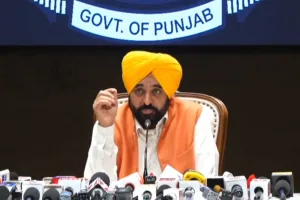
Further intensifying the ongoing “Gangstran Te Vaar” campaign to make Punjab a gangster-free state, as per the directions of Chief Minister Bhagwant Singh Mann, Director General of Police (DGP) Punjab Gaurav Yadav on Sunday announced the launch of a 72-hour-long “Operation Prahaar-2,” with a focus on nabbing wanted criminals.

Statesman News Service | Chandigarh |

Further intensifying the ongoing “Gangstran Te Vaar” campaign to make Punjab a gangster-free state, as per the directions of Chief Minister Bhagwant Singh Mann, Director General of Police (DGP) Punjab Gaurav Yadav on Sunday announced the launch of a 72-hour-long “Operation Prahaar-2,” with a focus on nabbing wanted criminals.

The DGP, accompanied by Special DGP (Law and Order) Arpit Shukla, ADGP Anti-Narcotics Task Force (ANTF) Nilabh Kishore and Intelligence Chief Dr Sukhchain Singh Gill, was addressing a press conference following a high-level meeting with all Commissioners of Police (CPs)/Senior Superintendents of Police (SSPs) and Range IGPs/DIGs to review the progress of the “Yudh Nashian Virudh” and “Gangstran Te Vaar” campaigns.

The development came days after the huge success of “Operation Prahaar”, which resulted in the arrest of 3,256 individuals within 72 hours, besides the recovery of 69 weapons from their possession.

The DGP said that “Operation Prahaar-2” will be conducted from Monday to Wednesday, and senior officers from Punjab Police Headquarters have been deputed for effective supervision of the operation.

Sharing the outcomes of 20 days of the “Gangstran Te Vaar” campaign, DGP Gaurav Yadav said that police teams have arrested 5,290 individuals, including gangsters and criminals associated with them, and recovered 128 weapons from their possession after conducting 17,603 raids across the state.

Apart from this, preventive action has been initiated against 2,973 persons, while 5,413 persons were verified and released after questioning. He added that 344 proclaimed offenders (POs) were also arrested.

Defying all fake narratives, he clarified that this is a lawful operation and the police will arrest only those persons who are wanted in criminal cases.

For effective supervision across police districts, Special DGP, ADGP, IGP and DIG-rank officers have been allocated specific police districts to oversee the work, with clear directions that accountability will be fixed for any lapses found.

To enhance visible police presence and strengthen the crime response mechanism across the state, the DGP said that Standard Operating Procedures (SOPs) on operational preparedness have also been issued to all CPs/SSPs and Range IGPs/DIGs.

He said that CPs/SSPs have been directed to personally visit all important crime scenes to supervise investigations and ensure the tracing of heinous offences. As part of confidence-building measures, all district chiefs have also been directed to personally conduct field visits in high-footfall and hotspot areas.

DGP Gaurav Yadav informed that the state’s police force is being significantly augmented by auditing and mobilising manpower from non-core duties to strengthen round-the-clock high-tech nakas and city sealing points.

Following reports that many vehicles without registration numbers are being used in crimes, operational directions have also been issued to intensify vehicle checking, with a specific focus on challaning and impounding vehicles—especially two-wheelers—moving without number plates.

Stressing the need to make maximum use of wireless sets and walkie-talkies, the DGP said it would be the responsibility of the concerned CPs/SSPs/Range IGPs/DIGs to ensure a prompt police response immediately after an incident is reported.

“To ensure rapid response after any crime incident is reported, a comprehensive sealing plan must be implemented immediately to intercept perpetrators through intensive checking of escape routes and exit points,” he said.

Highlighting the state’s relentless fight against drugs under the “Yudh Nashian Virudh” campaign launched on March 1, 2025, DGP Gaurav Yadav said that Punjab Police have registered 33,779 FIRs and made 48,167 arrests, resulting in the recovery of 2,149 kg of heroin, 29 kg of ICE, 649 kg of opium, 28,527 kg of poppy husk, 48.31 lakh intoxicant pills/capsules, and Rs 15.91 crore in drug money.

Meanwhile, people can anonymously share information related to wanted criminals and gangsters, as well as tips on crime and criminal activity, through the Anti-Gangster Helpline number 93946-93946.

India-US trade deal: ‘Zero tariffs on several Indian agri products in US, no concession for American items’

American liquid milk, powder, cream, yogurt, buttermilk, butter, ghee, butter oil, paneer and cheese will not get entry into India.

Statesman News Service | New Delhi |

Union Agriculture Minister Shivraj Singh Chouhan has claimed that several agricultural products of Indian farmers will now be exported to the United States with zero tariffs and that American items will not receive this concession in the Indian market.

Amid concerns among Indian farmers after US Agriculture Secretary Brooke Rollins claimed that more American farm products will be exported to India’s market, Chouhan stressed that India’s interests in agriculture and dairy are fully protected.

He claimed that the US has significantly reduced tariffs on many agricultural products. “These include spices, tea, coffee, coconut, coconut oil, betel nut, cashew, vegetable wax, avocado, banana, guava, mango, kiwi, papaya, pineapple, mushrooms, and some grains as well.”

He further stated that in 2024-25, India’s agricultural exports reached USD 4.45 billion. There has been an 88 per cent increase in spice exports.

Following this trade deal, he said, “Our spices will also gain a new and large market in the US.”

“No compromise has been made on the interests of Indian farmers, and no product that could harm farmers has been included in the agreement. All sensitive items have been kept outside the agreement,” he reiterated.

He reiterated that no tariff concessions of any kind have been given on products such as soybean, corn, rice, wheat, sugar, coarse grains, poultry, dairy, banana, strawberry, cherry, citrus fruits, green peas, chickpeas, mung beans, oilseeds, ethanol, and tobacco.

“The greatest worry was that our major grains must remain secure, and I can proudly say that all of them have been kept completely secure. No doors have been opened for the US for major grains, major fruits, and dairy products,” the Union Minister said.

“Many American agricultural products will not be able to enter the Indian market. Hulled grains, flour, wheat, corn, rice, millet, potato, onion, peas, beans, cucumber, mushrooms, pulses, frozen vegetables, oranges, grapes, lemons, strawberries, and mixed canned vegetables will not come to India,” he added.

As far as the dairy products are concerned, the Union Minister said that American liquid milk, powder, cream, yogurt, buttermilk, butter, ghee, butter oil, paneer and cheese will not get entry into India.

India will also not import black pepper, cloves, dry green chilies, cinnamon, coriander, cumin, asafoetida, ginger, turmeric, carom seeds, fenugreek, cassia, mustard, mustard seeds, husks, and other powdered spices from the US.

“The meaning is clear: our spices and our farmers are completely secure,” Union Minister Chouhan added.

Caste exists for political purposes and selfish interests: Bhagwat

Flags declining birth rate, advocates three-child family

Vibha Sharma | New Delhi |

RSS chief Mohan Bhagwat on Sunday identified religious conversion, infiltration and a declining birth rate as the three main causes of what he described as a population imbalance in the country and advocated a three-child family for long-term social balance.

Speaking in Mumbai at the RSS lecture series “100 Years of Sangh Journey: New Horizons,” Bhagwat said that while having three children would help maintain demographic balance, it ultimately remained a matter of personal choice.

During the interactive session, Bhagwat made a series of remarks on a range of issues, including caste, religion, population, demographics and the situation of Hindus in neighbouring Bangladesh.

He condemned the use of force, inducement or deception to convert people in order to increase the numbers of a particular sect, asserting that “ghar wapsi” was the appropriate path for those wishing to return to their original faith.

On caste, Bhagwat said it now exists largely for “selfish interests and political purposes” as its traditional occupational basis has eroded. Calling for sensitivity in addressing caste-based conflicts, he said politicians continue to seek votes in the name of caste because caste identities remain deeply entrenched in society.

Bhagwat also rejected the view that the Rashtriya Swayamsevak Sangh controls the Central government. The sarsanghchalak said the organisation does not engage in backseat driving and that governments are run by those in power.

He added that the Sangh relies on contributions from its workers rather than corporate funding, and that leadership positions within the organisation are open to individuals from all castes.

Reflecting on his own tenure, Bhagwat said that upon turning 75, he had expressed a desire to step down, but RSS workers insisted that he continue. “I am here; this is not my wish. If I am not here, that is also not my option; it is the option of the Sangh,” he was quoted as saying.

Referring to Hindus in Bangladesh, Bhagwat said unity would enable them to influence local politics. “There are about 1.25 crore Hindus in Bangladesh. If they decide to stay and fight, Hindus here and across the world will do everything we can for them. I can give you that guarantee,” he said.

Outlining the causes of population imbalance, Bhagwat said the first was religious conversion carried out through force, inducement or deception, which he described as condemnable, even as freedom of faith is guaranteed under the Constitution.

The second cause, he said, was infiltration, for which the government needed to take extensive measures.

Referring to the Special Intensive Revision (SIR) exercise, Bhagwat said it helps identify non-citizens and remove them from electoral rolls. He added that RSS workers assist by identifying suspected infiltrators based on language and reporting them to authorities.

Bhagwat also stressed that Indian citizens, including Muslims, should be prioritised in employment, while calling for continued vigilance. “We do not want to take away anyone’s jobs, but our people should get jobs first,” he said.

The third cause, he said, was the declining birth rate. Warning that fertility rates below 2.3 pose risks to population stability, Bhagwat said India was nearing 2.1 and remained dependent on states such as Bihar.

Citing doctors and population scientists, he reiterated that three children per family would help ensure demographic balance, while emphasising that it should remain a personal choice.

Marriage, he said, was not merely a physical relationship but an institution meant to create families that together form society.

Sabarimala gold heist: SIT to collect samples of gold-plated layers again

Although the final results of the sample test conducted by the Vikram Sarabhai Space Centre (VSSC) have come out, there is no definitive answer to the question over whether the gold-plated copper sheets were smuggled out in their entirety and new layers were installed.

Statesman News Service | Thiruvananthapuram |

The investigation into the alleged theft of gold-plated panels from the Sabarimala temple, specifically involving the Dwarapalaka (door guardian) idols and sanctum sanctorum doors, has raised significant doubts over whether the gold-plated layers taken from the temple were replaced with new ones, selling the original ones to international smuggling gangs.

Although the final results of the sample test conducted by the Vikram Sarabhai Space Centre (VSSC) have come out, there is no definitive answer to the question over whether the gold-plated copper sheets were smuggled out in their entirety and new layers were installed.

To clear the confusion, samples of the gold-plated sheets from Sabarimala will be collected again and tested in another lab with better facilities. The investigation team will submit a report to the High Court on Monday, clarifying the approximate amount of gold lost and the need for further testing.

Meanwhile, former Devaswom Minister Kadakampally Surendran’s claim that he had gone to the house of the prime accused Unnikrishnan Potty only once has proved wrong with more photos showing the prime accused with him have surfaced.

Earlier, Kadakampally had said he visited Potty’s residence only once, claiming it was in response to an invitation for a function. A photograph of the visit had also emerged at the time. However, a local later claimed that Kadakampally had visited Potty’s house in Pulimath on multiple occasions, a claim the former minister denied. The latest image now suggests that Surendran visited Potty’s residence more than once.

In this connection, more images have surfaced showing UDF convener and Attingal MP Adoor Prakash standing with Unnikrishnan Potty, the prime accused in the Sabarimala gold theft case, and his friend.

India–AI Impact Summit 2026 to be first global AI summit to be hosted in Global South

The India–AI Impact Summit 2026 is slated to take place in New Delhi from 16–20 February, and will be the first-ever global AI summit to be hosted in the Global South, the government said on Sunday.

Statesman News Service | New Delhi |

The India–AI Impact Summit 2026 is slated to take place in New Delhi from 16–20 February, and will be the first-ever global AI summit to be hosted in the Global South, the government said on Sunday.

India is at a pivotal stage in its development journey, with Artificial Intelligence (AI) emerging as a key enabler. For India, AI functions as a strategic national tool to drive the democratisation of technology, ensuring access, inclusion, and equity at scale.

This technological revolution has opened vast opportunities for advancements across every domain of human endeavour. India’s role in global technology and governance forums continues to expand, reflecting its growing engagement in shaping international policy discourse on emerging technologies.

The Summit will serve as an impact-focused global platform, shaping AI into measurable outcomes across economies, aligning with the national vision of Welfare for All, Happiness of All and global principle of AI for Humanity. It will bring together global leaders, policymakers, innovators, and experts to showcase applications and define AI pathways across governance, innovation, and sustainable development.

The India–AI Impact Summit 2026 strengthens India’s role as a key platform for shaping the global AI agenda. Anchored in the Seven Chakras and the Three Sutras of People, Planet, and Progress, the Summit advances a development-oriented framework for artificial intelligence.

By linking policy with implementation and innovation with public purpose, the Summit establishes a structured approach to responsible AI deployment. It aligns technological advancement with inclusive growth and sustainable development.

The Summit positions India as a convenor and partner in global AI cooperation, supporting shared standards, collaborative frameworks, and scalable solutions for the public good. It marks a transition from dialogue to delivery, reinforcing India’s commitment to responsible, inclusive, and development-focused AI pathways.

The India–AI Impact Summit 2026 is guided by three foundational pillars, referred to as Sutras, which articulate the core principles guiding global cooperation on AI.

People: Promoting human-centric AI that safeguards rights, enhances access to services, builds trust, and ensures equitable benefits across societies.

Planet: Advancing environmentally sustainable AI by encouraging energy-efficient systems, responsible resource use, and applications that support climate action and environmental resilience.

Progress: Enabling inclusive economic and technological advancement through innovation, capacity building, and the use of AI to drive productivity, growth, and development outcomes.

The India-AI Impact Summit 2026 has attracted significant high-level engagement, with 15–20 Heads of Government, over 50 international ministers, and more than 40 global and Indian CEOs expected to participate.

The Summit’s deliberations are organised through Chakras or Working Groups structured around seven interconnected thematic areas. Each Chakra focuses on a core area of AI impact and translates the Sutras into concrete areas of action across policy and real-world applications.

Over 100 countries worldwide have engaged through these Working Groups to shape a future of responsible and inclusive AI.

UP BJP MLA proposes 20-Yr integrated traffic management roadmap for Lucknow

In a major step toward addressing the growing traffic and mobility challenges of Uttar Pradesh’s capital Lucknow, Sarojini Nagar BJP MLA Dr Rajeshwar Singh has submitted a 20-year Integrated Traffic Management and Urban Mobility Roadmap to Chief Minister Yogi Adityanath.

Statesman News Service | Lucknow |

In a major step toward addressing the growing traffic and mobility challenges of Uttar Pradesh’s capital Lucknow, Sarojini Nagar BJP MLA Dr Rajeshwar Singh has submitted a 20-year Integrated Traffic Management and Urban Mobility Roadmap to Chief Minister Yogi Adityanath. He has proposed a long-term, technology-driven, and multi-departmental strategy to manage the city’s future traffic needs.

Describing the plan as a blueprint to transform Lucknow into a safe, well-organised, and seamlessly accessible metropolis, Dr Singh emphasised that traffic management must move beyond short-term enforcement measures and be developed as a coordinated, data-based public policy framework suited to the city’s rapid expansion.

Referring to VAHAN data, the proposal highlights that by 2025, Lucknow is expected to have around 3.18 million registered vehicles, with nearly 1.2 to 1.5 lakh new vehicles being added every year. This sharp rise, the proposal notes, has significantly increased traffic congestion, parking pressure, and the risk of road accidents, making long-term systemic planning essential.

A central recommendation of the roadmap is the formation of a Multi-Department Traffic Management Task Force, stressing that traffic governance should not remain limited to policing alone.

The proposed body would bring together the Traffic Police, Urban Development Department, Lucknow Development Authority, Municipal Corporation, Public Works Department, Transport Department, Metro authorities, and the Smart City Cell to ensure institutional coordination and faster execution of plans.

The proposal also calls for mandatory monthly review meetings of the task force to ensure decisions are data-driven, time-bound, and accountable, preventing projects from remaining confined to files and ensuring continuous monitoring and implementation.

The long-term roadmap prioritises the expansion of Metro and BRT networks, AI-based smart traffic signal systems, scientifically planned vending zones, permanent removal of illegal encroachments, pedestrian-friendly infrastructure, and the promotion of electric mobility and green transport as key pillars of modern urban mobility.

Speaking on the initiative, the former ED Joint Director on Sunday said that reactive measures are no longer sufficient given the rapid increase in vehicles, and that transforming Lucknow into a modern, disciplined, and traffic-ready capital requires integrated planning and multi-department coordination, which he described as essential for sustainable solutions and the city’s future readiness.

59th VCCR: Iconic Statesman House in CP dazzles with a striking light show

The iconic Statesman House building located in the heart of the city, Connaught Place, dazzled with a striking light show catching eyeballs on Sunday evening, that depicted the history of The Statesman Vintage and Classic Car Rally on the occasion of its 59th edition.

Statesman News Service | New Delhi |

The iconic Statesman House building located in the heart of the city, Connaught Place, dazzled with a striking light show catching eyeballs on Sunday evening, that depicted the history of The Statesman Vintage and Classic Car Rally on the occasion of its 59th edition.

The building, one of the popular landmarks of central Delhi, became a delight to watch for the people who had come to the area, with vibrant visuals on the building showcased by the multi-coloured lights, creating visual delight, and several people stopped by to click pictures.

The rally, an annual event, draws crowds, especially the automobile enthusiasts, also became an interesting event for the young generation, as several youngsters also arrived during the flag-off on a bright Sunday morning and witnessed the vintage and classic wheels that ruled the roads back in the day.

The amazing light show has been taking place for a week at the Statesman House, showcasing historic moments of the iconic rally which has been taking place since 1964.

Notably, the setting created a perfect photo moment, while several visitors came forward to take selfies.

Meanwhile, the 59th edition of The Statesman VCCR was flagged off by Delhi’s Lieutenant Governor Vinai Kumar Saxena on Sunday morning from The Statesman House.

Saxena appreciated the rally, calling it a beautiful program, and added that more such events should take place in the city, as the people are very passionate, and have taken part with full enthusiasm.

He congratulated The Statesman and its team for organizing the event.

Celebrating history on wheels: 59th Edition of The Statesman Vintage & Classic Car Rally held in Delhi

The air was thick with the rich aroma of aged metal and the rhythmic thrum of historic engines as the 59th Edition of The Statesman Vintage and Classic Car Rally rolled through the heart of the city on Sunday morning.

NIKHIL VYAS/RAMESH BHAN | New Delhi |

The air was thick with the rich aroma of aged metal and the rhythmic thrum of historic engines as the 59th Edition of The Statesman Vintage and Classic Car Rally rolled through the heart of the city on Sunday morning.

Delhi Lieutenant Governor V K Saxena flagged off the Car Rally that commenced at the Statesman House in the heart of Delhi.

“The Maharanis of Yesteryears’” were flagged off from The Statesman House at Barakhamba Road in Delhi at a glittering ceremony in presence of The Statesman Ltd Chairman R P Gupta, Editor & Managing Director Ravindra Kumar, and Director Vineet Gupta.

Before flagging off the car rally, the dignitaries, accompanied by Mr R P Gupta, had a look at the classic beauties and posed for photographs with their proud owners.

Congratulating The Statesman and its entire team for organising “such a beautiful event”, the Delhi Lieutenant Governor said, “I believe more such programmes should be held in Delhi. The people here are very passionate, and you can see how enthusiastically they are participating.”

Over 100 vehicles participated in The Statesman Vintage and Classic Car Rally. The major attractions of the event were an assembly of vintage and classic cars, followed by a drive-through-the-city where cars were assessed for originality and performance on the road section, a grand parade, and live music.

From a stunning 1906 Renault to the 1938 Mercedes and Adler — also of 1938 — the iconic vintage and classic cars that took part in the rally included 1936 Rolls Royce, 1926 Studebaker Erskine, 1935 Rytecraft, 1937 Wolseley, 1932 Baby Austin, 1937 Dodge, 1929 Austin 7 Tourer, 1919 Citroen Torpedo, 1913 Stoewer, 1912 Standard Coventry and many others.

Rolls Royce, Bentley, the 1914 John Morris fire engine, owned by the Rail Museum, smaller vintage and classic cars, and outstation cars were the highlights of this year’s event. The vintage legends gleamed as people watched the timeless elegance of the machines with nostalgia.

The event transformed the streets into a vibrant living museum as crowds gathered to witness the gleaming chrome accents and meticulously restored craft work and maintenance of the beauties. The sight of rare rolling sculptures was a treat for vintage car enthusiasts. Every drive in these classics is an adventure filled with fairy tales.

The participating vintage and classic cars followed by a drive-through-the-city reached the Major Dhyan Chand National Stadium near India Gate at 12:30 pm.

The prize distribution ceremony was held at the Major Dhyan Chand National Stadium at 3 pm.

At the stadium, along with the car enthusiasts, people of all age groups, including women, children, and elders, were seen taking pictures and selfies and made their Sunday a memorable one.

The rally culminated at the Major Dhyan Chand Stadium in the evening leaving behind memories of a bygone era of unparalleled craftsmanship and timeless style.

The Statesman Vintage and Classic Car Rally is an annual event that takes place in Delhi and Kolkata. It is one of the oldest continuously running events in India and the sub-continent.

Commenced in 1964 in Delhi, the rally started in Kolkata in 1968.

Owners of the vehicles eagerly await The Statesman rally every year as it gives them a unique opportunity to drive their machines of the bygone era on modern roads. It opens a window for the people of the National Capital to have a glimpse of an enchanting era through vintage automobiles.

These vehicles are categorised as vintage, classic, post-war, and others.

People of Delhi witnessed the four-wheel engineering marvels displaying their graceful grandeur while cruising along the roads of the city and its suburbs. The timeless machines were not just old steel beauties but rolling sculptures, transporting one back in time. It was a day to celebrate not just the metal but also nostalgia.

Puri puts to rest rumours of shifting ONGC headquarters from Dehradun to Delhi

Union Minister for Petroleum and Natural Gas Hardeep Singh Puri has said that the Centre has no plans to relocate the Oil and Natural Gas Corporation (ONGC) from Dehradum, as claimed by certain quarters.

PRITHVIRAJ SINGH | DEHRADUN |

Union Minister for Petroleum and Natural Gas Hardeep Singh Puri has said that the Centre has no plans to relocate the Oil and Natural Gas Corporation (ONGC) from Dehradum, as claimed by certain quarters. Puri said this when he was informed that ONGC authorities had tried to shift the corporation’s PAN from Dehradun to Delhi in 2018.

During his visit to Dehradun on Saturday, Puri clarified that the ONGC headquarters in Dehradun will not be shifted to Delhi or elsewhere. He also dismissed reports that an attempt had been made by the government-owned petroleum company to transfer its Permanent Account Number (PAN) from Dehradun to Delhi.

It is notable that in 2018, ONGC wrote to the Chief Commissioner of Income Tax in Uttarakhand seeking to shift its PAN to Delhi. However, the company backed off after massive protests by employees and the unions.

The ONGC headquarters in Dehradun is a major contributor to the state’s economy, depositing more than ₹8,500 crore annually as income tax on behalf of its employees. This represents the largest share of income tax contribution from Uttarakhand. As rumours about shifting the ONGC headquarters to Delhi had been circulating for several years, the Union Petroleum Minister, speaking to a media group, put the speculation to rest, stating, “There is no such plan by the Centre.”

Besides putting an end to speculation over ONGC’s relocation, Puri said the feasibility of Metro projects in the Himalayan state was remote. Responding to a question on the long-delayed proposals for Metro rail and Neo Metro in Dehradun, he acknowledged that road congestion has increased alongside the growing population in the state capital.

He cautioned about the financial viability of Metro projects, saying they are highly expensive. The Union minister added that barring one or two cities, most Metro systems are currently running at a loss.

Puri, however, suggested that a light Metro could be a viable option in the future, depending on the requirements of the people in the state capital.

Notably, a full section of the Uttarakhand government-run Metro rail project has remained non-functional for more than a decade, rendering the effort futile and incurring a huge cost to the state exchequer.

Responding to a query, the Union Minister further stated that it is geographically difficult to extend PNG and CNG pipelines to remote and rugged mountainous areas.

ED should probe assets of CPM leaders in Munnar: Former CPM MLA

Former Devikulam MLA S. Rajendran, who recently joined the BJP after snapping his four-decade-long association with the CPM, on Sunday alleged that several CPM leaders in Munnar had amassed wealth through multiple means.

Statesman News Service | Thiruvananthapuram |

Former Devikulam MLA S. Rajendran, who recently joined the BJP after snapping his four-decade-long association with the CPM, on Sunday alleged that several CPM leaders in Munnar had amassed wealth through multiple means.

Speaking at a reception meeting organised by the BJP in Munnar for leaders, including Rajendran, who had switched over to the party, the former MLA demanded that the Enforcement Directorate (ED) probe the assets of CPM leaders in the region.

He alleged that CPM leaders in Munnar were travelling in luxury cars using money belonging to plantation workers.

“I have not achieved anything in my 40 years of public life. The ED should examine the assets of CPM leaders in Munnar. I am ready for a social audit. My decision to join the BJP is not for personal benefit,” he said.

Rajendran stated that his shift to the BJP was driven by the development needs of Idukki district and the welfare of plantation workers, rather than any personal gain. This was his first major party event since he officially accepted BJP membership on January 18.

He further alleged that he was prevented from functioning effectively during his five-year term as an MLA, claiming that CPM leaders blocked initiatives that could have benefited the people.

Ahead of the reception, Rajendran inaugurated a new branch of a BJP-controlled cooperative society in Munnar aimed at supporting plantation workers.

The reception was inaugurated by BJP Kerala president Rajeev Chandrasekhar, who arrived at the venue in an open jeep to a rousing welcome from party workers. In his inaugural address, Chandrasekhar urged the people to ensure the victory of the NDA candidate in the upcoming Assembly elections to realise the vision of a “developed Munnar.”

Earlier, BJP workers took out a rally from Chattamunnar to the Munnar Panchayat ground, highlighting support for the new political alignment in the region. The reception marks the BJP’s efforts to challenge the CPM’s stronghold in Idukki district.

‘We are among the first in the world to launch future-ready ‘National Quantum Mission’: Jitendra Singh

Describing quantum technology as a strategic necessity rather than an option, the Union minister for science & technology, and Earth Sciences said India has no choice but to lead in this domain if it seeks to secure its communication systems, defence architecture, healthcare innovation, and global technological standing in the coming decades.

Statesman News Service | New Delhi |

Describing quantum technology as a strategic necessity rather than an option, the Union minister for science & technology, and Earth Sciences said India has no choice but to lead in this domain if it seeks to secure its communication systems, defence architecture, healthcare innovation, and global technological standing in the coming decades.

The foundation stone for India’s first Quantum Valley was laid in Amaravati, Andhra Pradesh on Sunday.

”Today, we are among the first in the world to launch the future-ready “National Quantum Mission” #NQM and among the first to plan indigenous Quantum Centres. This promises for India a global role with enhanced geo-political positioning,” he said in his post on X.

”This is not merely the foundation stone of a building, but the foundation stone of India’s quantum future,” he stated.

Dr Jitendra Singh expressed deep appreciation for the leadership of Chief Minister N Chandrababu Naidu, describing him as a leader who ”lives in tomorrow and dreams of the day after tomorrow”.

The Union Minister noted that India today stands among a select group of nations with a dedicated National Quantum Mission. With an allocation of approximately Rs 6,000 crore, the Mission spans 43 institutions across 17 States and 2 Union Territories, organised through four thematic hubs focusing on Quantum Computing, Quantum Communication, Quantum Sensing and Metrology, and Quantum Materials and Devices.

Addressing students present at the event, the Minister stated that conventional computing and cybersecurity systems would remain vulnerable in a world where adversaries possess quantum computing capabilities.

Quantum encryption, he explained, would make data virtually impossible to breach, potentially requiring astronomical timeframes to decode. In defence and cybersecurity, this offers unprecedented strategic protection.

The national objectives include developing quantum computers with up to 1,000 physical qubits within eight years, establishing secure ground-to-ground quantum communication networks, enabling long-distance quantum communication, and achieving inter-city Quantum Key Distribution across 2,000 kilometres.

The Foundation Ceremony of Amaravati Quantum Valley was attended by the Andhra Pradesh Chief Minister and State Minister for IT, Electronics and Education Nara Lokesh, among others.