Logo

Rain lashes Rajasthan parts, weather alerts issued by MeT Department

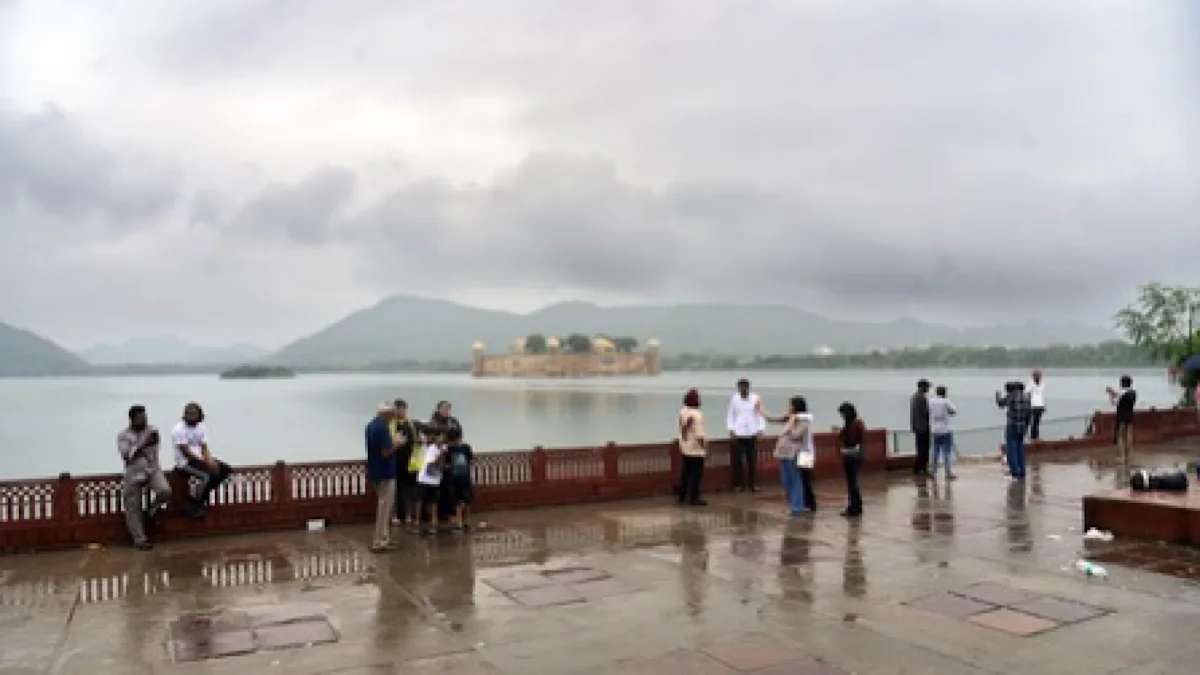
The weather took a dramatic turn on Monday morning across several districts of Rajasthan, including Jaipur, Alwar, Dausa, and Didwana, as rain lashed here, bringing down the temperatures and causing a chill.

IANS | New Delhi |

The weather took a dramatic turn on Monday morning across several districts of Rajasthan, including Jaipur, Alwar, Dausa, and Didwana, as rain lashed here, bringing down the temperatures and causing a chill.

Skies remained heavily overcast as rain, accompanied by thunder and lightning, swept through these regions. The Meteorological (MeT) Department has sounded a yellow and orange alert for rain in parts of the state for the day.
In Jaipur, rainfall began around 8.00 a.m., with thunder and lightning reducing visibility significantly. Vehicles were seen moving with headlights on due to the cloud cover and rain. Dausa also witnessed light rain starting around 7.30 a.m. The weather change occurred under the Western Disturbance influence, said the weather department.

The minimum temperature dropped to 15 degrees Celsius, while the maximum is expected to hover near 30 degrees.

The district has been experiencing fluctuating weather over the past few days, with rainfall recorded on March 20 and 21 as well.

In Alwar, also light rain began around 8 a.m. after dense clouds covered the city early in the morning. The weather has since turned cool and pleasant in the city.

The ongoing spell of rain and storms across Rajasthan is being driven by successive Western Disturbances.

On Sunday, most districts in the Jodhpur and Bikaner divisions witnessed cloudy skies. Areas in Jaisalmer and Phalodi also experienced light rain accompanied by strong winds.

The Meteorological Centre in Jaipur has predicted dry weather across the state on Tuesday. However, a new, weak weather system is expected to become active on March 25 and 26. Under its influence, alerts have been issued for thunderstorms and rain in around 15 districts.

In Balotra district’s Samdari area, heavy hailstorms lashed the region late Sunday night, adding to the sudden weather shift. On Sunday, districts such as Barmer, Jalore, Bikaner, Sri Ganganagar, and Jodhpur saw a mix of clouds and sunshine, leading to a slight rise in maximum temperatures.

According to the weather department, a yellow alert is the lowest level of warning, used to keep people informed about potential weather-related inconveniences, and an orange alert is a more serious warning, indicating a higher potential for damage and severe weather.

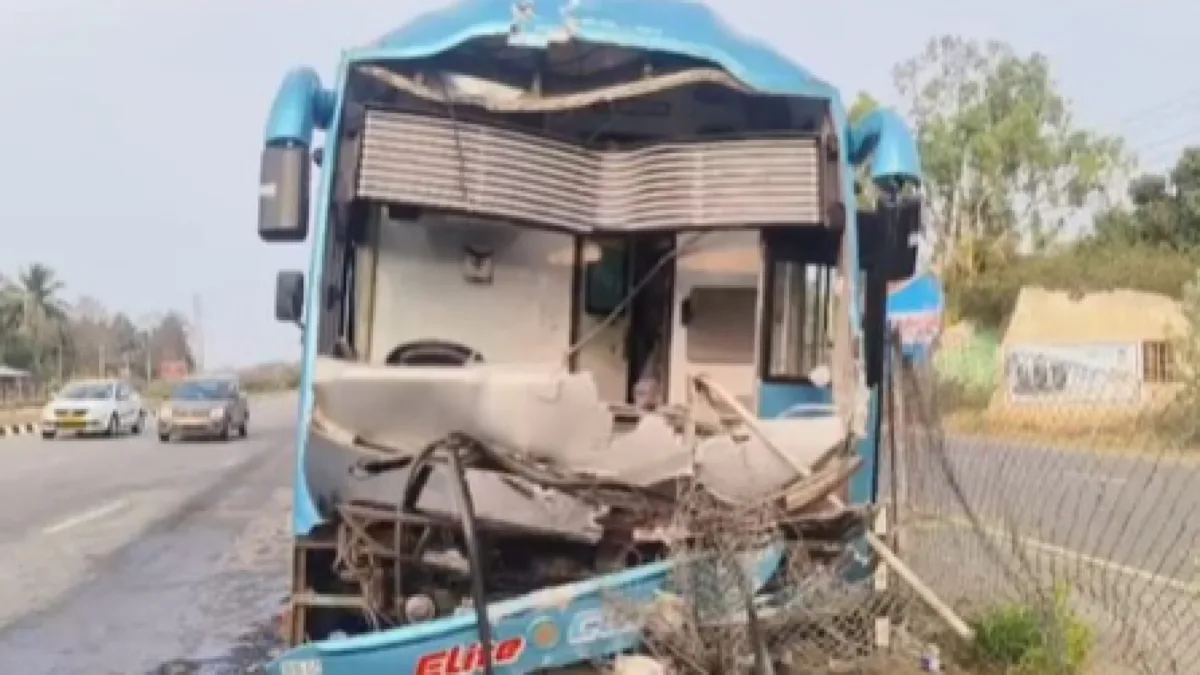
Four killed as Calicut-Bengaluru bus crashes on expressway in K’taka’s Ramanagara

Four people were killed on the spot in a tragic road accident on the Bengaluru-Mysuru Expressway near Sankalagere village in Channapatna taluk of Karnataka’s Ramanagara district on Monday.

IANS | New Delhi |

Four people were killed on the spot in a tragic road accident on the Bengaluru-Mysuru Expressway near Sankalagere village in Channapatna taluk of Karnataka’s Ramanagara district on Monday.

The deceased have been identified as 22-year-old Mohammed Farhan and 45-year-old Sulfi from Kozhikode in Kerala, and 45-year-old Rasheed, a resident of Kalasipalya in Bengaluru, along with Saker from Annepalya in Adugodi.

According to police, a private bus operated by PK Travels, which was travelling from Calicut in Kerala to Bengaluru, lost control and crashed into roadside fencing around 4.10 a.m. Preliminary investigation suggests that the driver may have dozed off, leading to the accident.

The impact of the collision was severe, killing four passengers instantly.

Two others, identified as Abdul and Allen from Kannur in Kerala, sustained injuries and have been admitted to the hospital for treatment.

Police said the bus departed from Calicut late Sunday night and was carrying a total of 42 passengers at the time of the incident. The force of the crash was such that the bus continued moving for nearly 100 metres even after hitting the fencing.

Officials noted that the absence of a crash barrier could have led to even greater loss of life, but a major tragedy was narrowly averted.

Channapatna traffic police rushed to the spot, conducted an inspection, and registered a case. The driver, identified as Riyaz, has been taken into custody for questioning.

The bodies of the deceased and the injured have been shifted to the Channapatna Government Hospital. Further investigation is underway.

On December 25, 2025, in a major tragedy on Christmas Day, at least six persons, including a five-year-old girl, were burnt alive, and 21 others were injured after a sleeper coach caught fire following a collision with a container truck on National Highway 48, at Javanagondanahalli in Chitradurga district.

A total of 32 persons, including the driver and conductor, were travelling in the bus. Of these 28 had booked tickets in advance, while two passengers boarded the bus after the journey began. Several passengers managed to escape from the bus after it caught fire.

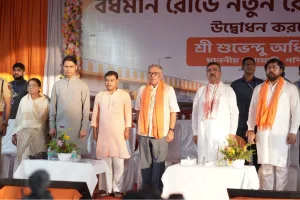
PM Modi likely in north Bengal next week as BJP goes all-in with ‘200-plus’ push

The BJP is stepping up its campaign in Bengal, with a likely visit by the Prime Minister and a renewed push to strengthen its organisational presence ahead of the polls.

Statesman News Service | Mumbai |

With West Bengal turning into a high-stakes battleground, the BJP is stepping up its campaign as Prime Minister Narendra Modi is likely to visit north Bengal next week.

News agency UNI mentioned party sources as saying that the visit is likely around April 7 or 8, and could see a roadshow in Siliguri along with a public rally. The party is also planning a few more events in the region as it looks to step up its campaign.

North Bengal is a key focus area for the BJP, and groundwork for the visit has already begun.

Focus on organisation, not just rallies

Senior leaders have been actively working on the ground. BJP national general secretary Sunil Bansal and Union Minister Bhupender Yadav recently held meetings in Siliguri with local leaders to finalise logistics and strategy.

At the same time, the party is also looking to tighten its organisational grip. BJP president Nitin Nabin is expected to visit the state later this week, with a focus on internal meetings across key zones.

‘200-plus’ target sharpens political battle

The BJP has set an ambitious target of crossing 200 seats in the Assembly polls, a number its top leadership has repeatedly pushed in recent weeks.

Union Home Minister Amit Shah had earlier flagged the goal while launching the ‘Parivartan Yatra’, calling for a two-thirds majority in the state.

The party’s strategy includes aggressive campaigning, organisational expansion and candidate selection aimed at energising workers on the ground.

TMC pushes back

The Trinamool Congress has dismissed the BJP’s target, with Chief Minister Mamata Banerjee setting a counter goal of 226 seats.

The contest is expected to intensify further, especially with Leader of Opposition Suvendu Adhikari challenging Banerjee in Bhabanipur, apart from contesting from his stronghold in Nandigram.

Vedanta vs Adani: Anil Agarwal-led group moves NCLAT to challenge acquisition of Jaypee group’s flagship firm, hearing today

JAL was admitted to the Corporate Insolvency Resolution Process (CIRP) in June 2024 after defaulting on loans worth over Rs. 57,000 crores.

Statesman News Service | New Delhi |

In a fresh escalation of the insolvency battle, Anil Agarwal-led Vedanta Group has moved the National Company Law Appellate Tribunal (NCLAT) to contest the approval granted to Adani Enterprises Ltd for the acquisition of Jaiprakash Associates Ltd (JAL) for Rs 14,535 crore. The appeal is scheduled to be heard today.

The challenge comes after the National Company Law Tribunal (NCLT), Allahabad bench, approved Adani Enterprises’ Rs. 14,535-crore bid on March 17 under the corporate insolvency process.

The tribunal’s nod followed the earlier decision of a Committee of Creditors (CoC)to back Gautam Adani’s proposal as the winning resolution plan, in November last year.

The resolution process for JAL saw strong competition among major corporate players. Adani Enterprises emerged as the frontrunner after securing around 89% of the Committee of Creditors’ (CoC) votes. It outbid rival contenders, including Vedanta and Dalmia Bharat.

JAL, in a regulatory filing, said the tribunal had orally pronounced its order approving the plan submitted by Adani Enterprises.

Vedanta has now approached the appellate tribunal seeking to overturn the NCLT order. The matter will be taken up by a two-member bench headed by Chairperson Justice Ashok Bhushan and Member (Technical) Barun Mitra.

Diverse asset base of JAL

Jaiprakash Associates has a wide-ranging portfolio across real estate, cement, hospitality, power, and engineering. Its key projects include the Jaypee Greens developments in Noida and Greater Noida, as well as the Jaypee International Sports City near the upcoming Jewar airport.

The company also owns commercial office assets in Delhi-NCR, operates hotels across multiple cities, and runs cement plants in Madhya Pradesh and Uttar Pradesh, supported by leased limestone mines.

It also has investments in subsidiaries, including Jaiprakash Power Ventures Ltd, Yamuna Expressway Tolling Ltd, Jaypee Infrastructure Development Ltd, and several other companies.

JAL was admitted to the Corporate Insolvency Resolution Process (CIRP) in June 2024 after defaulting on loans worth over Rs. 57,000 crores.

The NCLAT’s ruling will be crucial in determining whether Adani’s acquisition proceeds smoothly or faces fresh legal roadblocks.

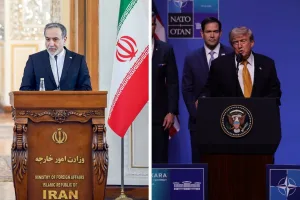
‘We will never forget your kindness and humanity’: Iran thanks India for support

The Iranian Embassy in India on Saturday thanked the “kindness” and “humanity” of Indians for donating money and jewellery to rebuild Iran.

ANI | New Delhi |

The Iranian Embassy in India on Saturday thanked the “kindness” and “humanity” of Indians for donating money and jewellery to rebuild Iran.
The Embassy said they will remember India’s kindness forever.
“We will never forget your kindness and humanity. Thank you, India,” the embassy said.

“With hearts full of gratitude, we sincerely thank the kind people of Kashmir for standing with the people of Iran through their humanitarian support and heartfelt solidarity; this kindness will never be forgotten. Thank you, India,” it further said.

The embassy also noted the sacrifice of a woman who donated the momento of her husband, who passed away 28 years ago.
“A respected sister from Kashmir donated the gold kept as a memento of her husband, who passed away 28 years ago, with a heart full of love and solidarity for the people of Iran. Your tears and pure emotions are the greatest source of comfort for the people of Iran and will never be forgotten. Thank you, Kashmir. Thank you, India.”

“Even Kashmiri children are offering their piggy banks as gifts to Iran. God bless you,” the embassy said.

Locals in Budgam have donated gold, silver, and cash to support Iran in the wake of the Gulf War crisis, showing their solidarity with the country.
Speaking to ANI, Mohsin Ali from Budgam said a stall has been set up at Masjid Imam Zaman with the sincere purpose of collecting donations.
“At Masjid Imam Zaman, we have set up a stall with the sincere purpose of collecting donations. Our mothers and sisters are contributing jewellery, copper, and cash so that we can support Iran in its current situation,” Mohsin Ali said.
He said that since they cannot go to Iran to support, they can at least provide financial aid to support Iran and to serve humanity.

War jitters hit Dalal Street as US-Iran tensions flare; markets tumble in early trade

Rising geopolitical tensions and a spike in oil prices triggered a sharp sell-off in early trade, with investors turning cautious amid growing global uncertainty.

Statesman News Service | Mumbai |

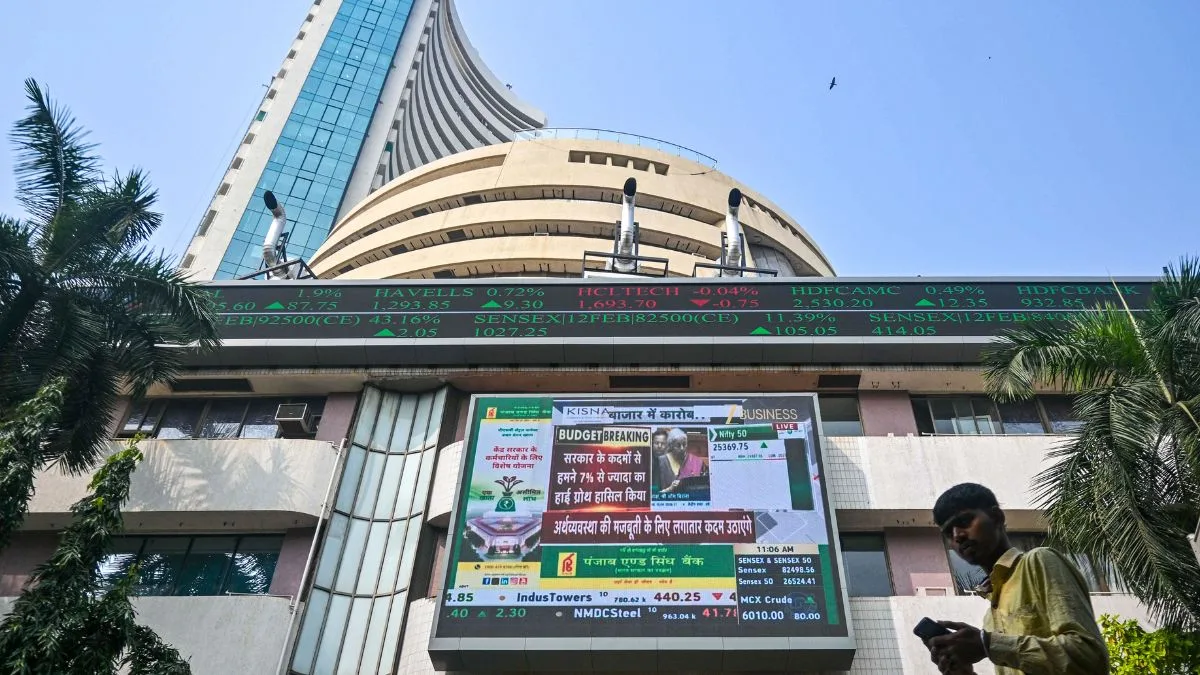
The stock market opened the week on a sharply weak note on Monday, with investors turning cautious as tensions in West Asia showed no signs of easing.

The sell-off deepened quickly after the opening bell. The Sensex slipped over 1,500 points in early trade, while the Nifty dropped more than 2 per cent, as selling spread across sectors.

The trigger was clear. Fresh escalation fears in the ongoing US-Iran conflict, now stretching into its fourth week, have pushed investors into a risk-off mode globally.

Broad-based sell-off across sectors

There was hardly any pocket of strength. Metal, PSU bank and auto stocks led the fall, with several heavyweights trading in the red. Stocks such as Tata Steel, Hindalco Industries, HDFC Bank, JSW Steel and Bajaj Finance were among the major laggards.

Analysts said the market mood remains fragile, with global cues firmly negative.

Oil spike adds to worries

Crude prices have moved higher again, with Brent trading close to $113 per barrel and US crude also gaining. The rise has added to concerns over inflation and potential pressure on economic growth.

What’s happening around the Strait of Hormuz, a key oil lifeline, has added to the anxiety, with reports of movement being restricted for some vessels.

Risk-off mood, FII selling weigh

Market participants say investors are moving away from riskier assets amid rising uncertainty.

Foreign institutional investors continued to remain net sellers, offloading equities worth over ₹5,500 crore in the previous session, adding to the pressure on domestic markets.

Experts say the current phase is being driven by both geopolitical risks and weak global signals.

Global markets mirror weakness

The weakness wasn’t limited to India. Asian markets saw sharp declines, with Japan’s Nikkei falling around 5 per cent, Hong Kong’s Hang Seng dropping over 3 per cent, and South Korea’s Kospi plunging nearly 6 per cent.

US markets had also ended lower in the previous session, setting a weak tone for the week.

For now, traders say markets are likely to remain volatile, with global developments, particularly in West Asia, expected to dictate the near-term direction.


Bengal polls: ECI to publish 1st supplementary list of judicial adjudication cases today

The first supplementary list for judicial adjudication of voters classified under the “logical discrepancy category” will be published later on Monday.

IANS | Kolkata |

The first supplementary list for judicial adjudication of voters classified under the “logical discrepancy category” will be published later on Monday.

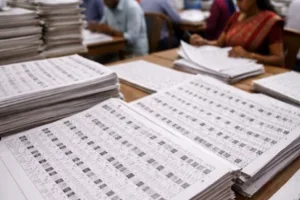
As per statistics available from the office of the Chief Electoral Officer (CEO), West Bengal, till Sunday night, the judicial adjudication process had been completed for 28,06,000 cases, and all these cases will be mentioned in the first supplementary under the “approved” and “rejected” categories.

An insider from the CEO’s office said that roughly 34 per cent of cases whose judicial adjudication process has been completed have been found excludable. However, the voters whose names will be found excludable would have the liberty to challenge that in 19 Appellate Tribunals, especially constituted for that purpose.

To recall, the final voters’ list in West Bengal, minus those 60 lakh odd names which were referred for judicial adjudication, was published on February 28. As per the order of the Supreme Court, supplementary lists will be published periodically on the basis of the progress of the judicial adjudication, the first of which will be published on Monday.

It is learnt that the list will reach the district magistrates, as well as the district election officers, by afternoon. Voters will be able to see the additional list by going online to the Election Commission of India (ECI)’s website from this evening. The additional list will be displayed at the booths, BDO, SDO offices, and DM offices.

Already, the state police administration, as per the instruction of the ECI, has taken all possible security measures to prevent instances of tension or violence over grievances following the publication of the first supplementary list.

A security-related meeting was held on Sunday at the office. The CEO of West Bengal, Manoj Kumar Agarwal, met with the Joint Force Deployment Committee on this count. The meeting discussed the deployment of Central forces in the upcoming Assembly elections.

The CEO’s office insiders said that a plan was made on where and how many forces personnel will be deployed, as well as how the units will operate. The meeting was attended by state police nodal officer Anand Kumar, special police observer N.K. Mishra, central force nodal officers Shalav Mathur and Gaurav Sharma.

Meanwhile, the ECI’s top brass at the Commission’s headquarters in New Delhi will hold a high-level virtual meeting with the district magistrates, district police superintendents, and the commissioners of different police commissariats in the afternoon.

Polling for the West Bengal Assembly elections will be held in two phases on April 23 and April 29. Voting will take place in 152 constituencies in the first phase and in the remaining 142 constituencies in the second phase.

CM Mamata asks Trinamool workers to stay alert in Bhabanipur; flags concerns over poll process

Trinamool Congress supremo and West Bengal Chief Minister Mamata Banerjee on Sunday asked party workers to remain vigilant in the Bhabanipur Assembly constituency, expressing concerns over the conduct of the poll process and urging them to stay alert even after voting concludes.

IANS | Kolkata |

Trinamool Congress supremo and West Bengal Chief Minister Mamata Banerjee on Sunday asked party workers to remain vigilant in the Bhabanipur Assembly constituency, expressing concerns over the conduct of the poll process and urging them to stay alert even after voting concludes.

CM Banerjee made the remarks while addressing a meeting with party leaders and workers at Chetla in south Kolkata ahead of the upcoming Assembly elections. Special focus was laid on Bhabanipur, from where she is contesting, in what the party sees as a key electoral battle.

According to a Trinamool Congress leader present at the meeting, Banerjee cautioned workers about possible irregularities and asked them to remain watchful throughout the polling and counting process.

The Chief Minister was quoted as saying that several officials had been removed following the announcement of the poll schedule, which, she suggested, has limited the state administration’s role during the election period.

She also asked party workers to remain present and vigilant after polling hours, stressing the need to monitor strong rooms where Electronic Voting Machines (EVMs) are kept. She referred to concerns such as possible disruptions, including power outages, and urged workers not to leave immediately after voting ends.

CM Banerjee also spoke about the broader political roadmap of the party, saying that after the Assembly elections in West Bengal, the focus would shift to national politics. She added that the party would extend legal support to voters facing issues such as deletion of names from electoral rolls.

At the same meeting, Trinamool Congress national General Secretary Abhishek Banerjee called on party workers to aim for a higher victory margin in Bhabanipur and avoid complacency.

Referring to past electoral performance in the constituency, he said the party should look to improve its booth-level results and increase its vote margin. He urged workers to strengthen outreach efforts and ensure higher voter support across all areas.

For the upcoming election, the BJP has fielded Suvendu Adhikari against Mamata Banerjee in Bhabanipur. The two leaders had earlier faced each other in Nandigram in the 2021 Assembly elections, where Adhikari won by a narrow margin. Banerjee later contested the Bhabanipur by-election the same year and secured a decisive victory.

Senior party leaders, including Firhad Hakim and Subrata Bakshi, were also present at Sunday’s meeting.

ECI steps up action against unauthorised political ads in Bengal

The Election Commission of India (ECI) has stepped up action against unauthorised political advertisements across West Bengal ahead of the two-phase Assembly elections scheduled next month.

IANS | Kolkata |

The Election Commission of India (ECI) has stepped up action against unauthorised political advertisements across West Bengal ahead of the two-phase Assembly elections scheduled next month.

In a statement issued on Sunday night, the ECI said a total of 3,58,986 such advertisements had been removed across the state so far.

Of these, 3,11,829 cases were related to defacement of public property, while 19,901 involved defacement of private property.

According to the ECI, Cooch Behar district in north Bengal recorded the highest number of removals at 33,491. Of these, 29,474 cases pertained to public property defacement and 4,017 to private property.

North 24 Parganas district reported the second-highest number of removals at 31,920, including 31,789 cases of public property defacement and 105 involving private property.

Kalimpong district recorded the lowest number of removals at 593, all of which were related to public property defacement.

Meanwhile, the first supplementary list of cases referred for judicial adjudication under the “logical discrepancy” category is scheduled to be published on Monday. Officials said necessary security arrangements are being put in place to prevent any law and order issues following its publication.

Polling for the West Bengal Assembly elections will be held in two phases on April 23 and April 29. Voting will take place in 152 constituencies in the first phase and in the remaining 142 constituencies in the second phase.

Earlier on Sunday, Kolkata Police Commissioner Ajay Nand asserted that incidents of booth jamming, vote rigging, or booth capturing will not be tolerated under any circumstances during the Assembly elections in the city.

The directive was issued after Nand paid an inspection visit to Bhangar Police Station on the southern outskirts of Kolkata.

The Election Commission is maintaining strict vigilance over election preparations and security arrangements. In compliance with the Commission’s directives, senior police officials visited police stations across the state on Sunday. Accordingly, the Kolkata Police Commissioner visited Bhangar Police Station in the morning.

During a meeting with police personnel, he stressed that all officials must strictly adhere to the guidelines laid down by the Election Commission. Ajay Nand also reiterated that any complaints regarding booth jamming, vote rigging, or booth capturing would not be tolerated in any form.

Later, addressing a press conference, he said the Kolkata Police is fully prepared to ensure a peaceful election. “Checkpoints and search operations are currently underway across various areas. Patrolling is also being conducted in coordination with Central forces,” he said.

US shuts the door tighter: Indians among hardest hit in 2025 visa squeeze

Stricter US immigration rules and processing delays have led to a sharp fall in visa approvals, with Indian and Chinese applicants among the most affected this year.

Statesman News Service | New Delhi |

Fewer people got US visas in 2025, and Indians were among those hit the hardest. A Washington Post report says the drop was sharp during the first eight months of last year, with China also seeing a significant impact.

This comes at a time when the Trump administration has tightened immigration rules, even as processing in many categories has slowed down.

Between January and August, around 2.5 lakh fewer visas were issued compared to the same stretch in 2024. Overall approvals, including both temporary visas and green cards, were down by around 11 per cent.

The fall is visible across categories. Student visas took a big hit, dropping by over 30 per cent. Exchange visitor visas were down too. Work and family-linked visas had also slowed.

India and China saw some of the sharpest declines, with around 84,000 fewer visas issued to their nationals during this period.

Officials and analysts say there isn’t just one reason behind this. A mix of stricter rules and administrative issues appears to be at play.

There have been new vetting requirements, including checks of social media accounts. Student visa interviews were paused for a period. There is also a travel ban covering 19 countries.

At the same time, staffing cuts at the State Department have meant fewer appointments and longer wait times in many places.

The US government has defended the move.

“A visa is a privilege, not a right,” State Department spokesperson Tommy Pigott said, adding that security concerns remain a priority.

The White House has also said the policy reflects President Donald Trump’s focus on putting American citizens first.

But critics warn that the impact could go beyond immigration numbers.

Economist Jason Furman said restricting immigration could hurt long-term growth, affecting both the labour market and innovation.

Others point out that demand may also be playing a role, though it is difficult to separate that from policy effects.

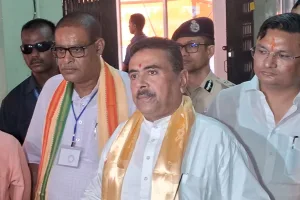
Firearm with expired licence, live cartridges seized from ex-Cong MLA’s vehicle in Bengal

The arrested persons were produced before the Malda District Court on Sunday, where they were remanded to judicial custody for 14 days.

IANS | Kolkata |

Ahead of the Assembly elections, a firearm with an expired licence and live cartridges were recovered from the vehicle of a former Congress MLA in West Bengal’s Malda district. Police arrested six individuals in connection with the incident.

The arrested persons were produced before the Malda District Court on Sunday, where they were remanded to judicial custody for 14 days.

With the Assembly election schedule announced and the Model Code of Conduct in force, surveillance teams and checkpoint inspections are being intensified across the district. As part of routine checks, police were conducting inspections at Chechumore in Old Malda on Saturday morning.

At around 11 a.m., a four-wheeler bearing a Congress party flag was intercepted and searched. A 7 mm pistol, a magazine, and eight rounds of live ammunition were recovered from the dashboard compartment of the vehicle.

During preliminary interrogation, police found that the firearm was a licensed weapon belonging to former Congress MLA from Manikchak constituency, Md. Mottakin Alam. A photocopy of the licence was also produced. However, police ascertained that the licence had expired on September 20, 2022.

Since the firearm was not registered in the name of any of the occupants present in the vehicle, six persons were arrested.

The arrested individuals were identified as Hanjala Sheikh, Mohammad Asif Iqbal, Mohammad Nurul, Mohammad Tasem Ali, Wasim Akhtar, and Rabiul Islam. All are residents of the Kamalabari area in English Bazar. A case has been registered under the Arms Act.

District Congress leader Mantu Ghosh said: “We received information about the incident on Saturday. A firearm was recovered from a vehicle belonging to Mottakin Alam, Vice-President of the Malda District Congress and former MLA from Manikchak constituency. The recovered weapon is a licensed firearm belonging to him.”

Mottakin Alam told a section of media persons: “That is my licensed firearm. I carry it with me every day. The day before yesterday, after returning home, I forgot to remove the weapon from the car. The following day, on the occasion of Eid, my family members took the car out for a drive. It was during this time that the police recovered the firearm during a checkpoint inspection.”

An official from Malda Police said: “On Saturday, a firearm was recovered from a vehicle during a routine checkpoint inspection. Six individuals have been arrested in connection with the incident. An investigation is underway.”

Air Force staffer arrested for spying, sharing sensitive infomation to Pakistan

In a major operation, Rajasthan Police have arrested a civilian employee on Sunday at the Chabua Air Force Station in Assam for allegedly spying for Pakistan.

Statesman News Service | New Delhi |

In a major operation, Rajasthan Police have arrested a civilian employee on Sunday at the Chabua Air Force Station in Assam for allegedly spying for Pakistan.

The accused was allegedly transmitting sensitive Air Force intelligence to handlers, exposing a wider espionage network linked to foreign intelligence agencies.
Prafulla Kumar, Additional Director General of Police (Intelligence), stated that the entire case originated in January with the arrest of Jhabararam, a resident of Jaisalmer. During his interrogation and the subsequent investigation, the name of another suspect, Sumit Kumar, surfaced; he was found to be in constant contact with Pakistani intelligence agencies, as per the release.

The investigation revealed that the accused, Sumit Kumar (36), was currently employed as an MTS (Multi-Tasking Staff) at the Air Force Station in Chabua, Dibrugarh, Assam. Abusing his official position, he would gather confidential information related to the Air Force Station and transmit it to Pakistani handlers via social media.

Acting in a joint operation with Air Force Intelligence, New Delhi, a team from Rajasthan Intelligence detained the accused in Chabua and brought him to the Central Interrogation Centre in Jaipur. During a joint interrogation conducted by various intelligence agencies at this facility, it was revealed that the accused had been in contact with a Pakistani intelligence agency since 2023 and was sharing sensitive information in exchange for monetary payments.

The interrogation further revealed that the accused had shared critical information pertaining not only to the Air Force Station in Chabua but also to other military installations, including the Air Force Station in Nal (Bikaner district). This information included details regarding the locations of fighter aircraft, missile systems, and confidential data concerning officers and personnel, the release noted.

Furthermore, the accused assisted Pakistani handlers in creating social media accounts using mobile numbers registered in his own name. In connection with this serious matter, the accused was arrested on March 22 at the Special Police Station, Jaipur (Rajasthan), in a case registered under various sections of the Official Secrets Act, 1923, and the BNS, 2023. This operation has led to a major exposure of a Pakistan-backed espionage network active within the country, and further investigations are underway.

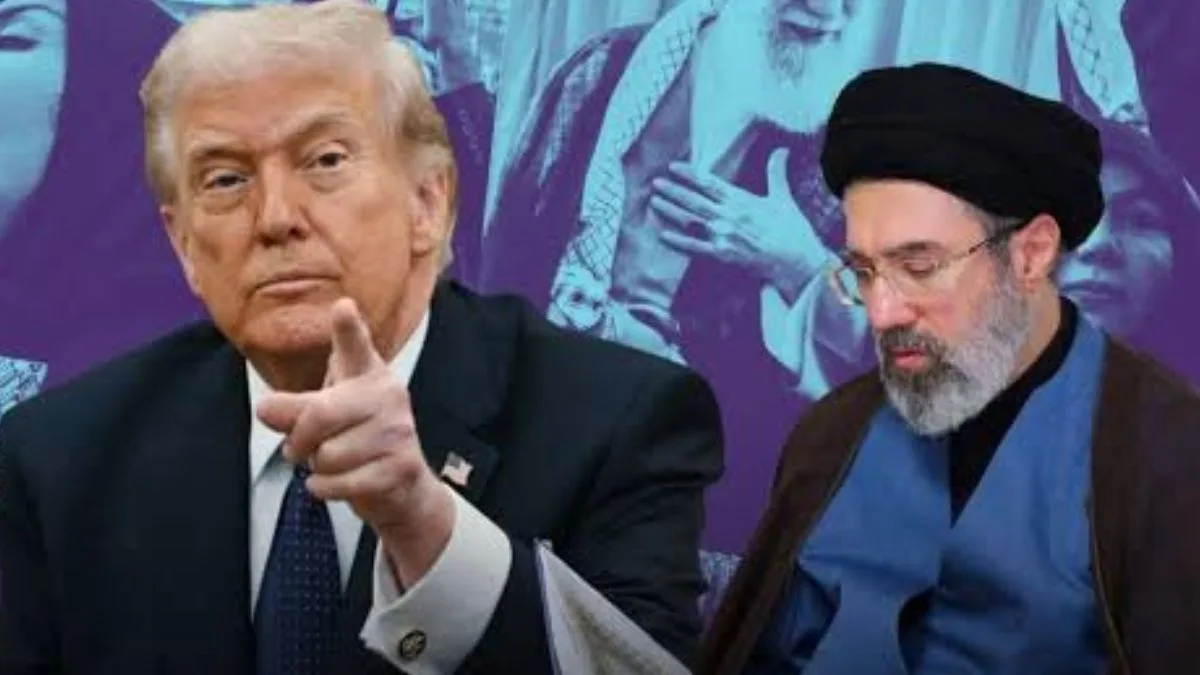
US-Israel-Iran War: Iran has ‘one more chance at peace’, says Trump as Tehran calls talks claim oil market manipulation ploy

From a US strike claim in Qom to fresh warnings over Hormuz and a sharp crude rally, the Iran conflict is now hitting diplomacy, energy markets and regional security together.

Statesman News Service | Mumbai |

The US-Israel-Iran conflict entered its fourth week on Monday with the war widening far beyond direct strikes. Fresh battlefield claims, warnings over the Strait of Hormuz, rising oil prices, and diplomatic outreach from Europe and the Gulf all point to a crisis that is now hitting energy markets, regional security, and global nerves at the same time.

The latest flashpoint came after the US said it had destroyed a turbine engine production plant in Iran’s Qom, describing it as a facility linked to attack drones and aircraft components used by the Islamic Revolutionary Guard Corps. Even as Washington projected strength, pressure also mounted for restraint, with France, Spain, and other countries calling for navigation through Hormuz to be restored and for attacks on energy infrastructure to stop.

US-Israel-Iran War UPDATES

Gelephu – a ‘mindfulness city’ coming up next door

As Prime Minister Narendra Modi laid the foundation for various development works for western Assam, including a new rail network connecting neighbouring Bhutan with Kokrajhar on 13 March, a new dream materialised.

NAVA THAKURIA | Kolkata |

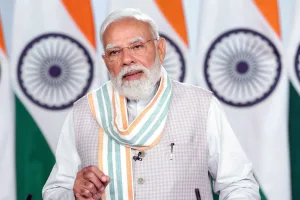
As Prime Minister Narendra Modi laid the foundation for various development works for western Assam, including a new rail network connecting neighbouring Bhutan with Kokrajhar on 13 March, a new dream materialised. Addressing a huge gathering virtually at Guwahati, PM Modi also dedicated a number of railway infrastructure projects, including the Kokrajhar-Gelephu (south Bhutan) rail link, which will be the first railway connection between India and Bhutan.

The project, with a proposed budget of Rs 1,000 crore, aims to boost trade, tourism and connectivity, and will connect the administrative headquarters of Bodoland Territorial Region in Assam with Gelephu. The 69.04 kilometre railway corridor is expected to be commissioned by 2029. Railway minister Ashwini Vaishnaw, in September last year, announced another railway line connecting an industrial town in Bhutan with Banarhat in Jalpaiguri district of West Bengal. The 20-km Banarhat-Samtse route, with a planned outlay of Rs 577 crore, will facilitate Bhutanese nationals in using the massive Indian railway network for various purposes in the coming days.

While unveiling various development projects worth Rs 4,570 crore in Kokrajhar during his latest visit to Assam, Mr Modi observed that the upcoming rail links with Bhutan as well as modernisation of various railway stations would turn the region into a logistics hub. To this end, the Union government in Delhi has already committed a financial support of Rs 10,000 crores to Bhutan in the 13th five-year (2024 to 2029) plan. The Kokrajhar-Gelephu rail link will be the first-ever railway line in the landlocked Himalayan kingdom of 800,000 people. More importantly, the rail line will connect a projected “mindfulness city” in Gelephu in the Sarpang region of Bhutan, which borders Chirang district of Assam.

Kokrajhar will later connect Bongaigaon, an industrial hub, with a new 70-km railway track, and thus Gelephu will be connected to all major Indian cities, including Guwahati, Siliguri, Kolkata, among others. Additionally, an upgraded four-lane road is on the cards, connecting Gelephu with Guwahati. These activities focus on the Gelephu Mindfulness City (GMC), a proposed city with a difference, where material developments will be strictly aligned with environmental concerns and cultural heritage. Envisaged by the Bhutan king, Jigme Khesar Namgyel Wangchuck, the pioneering project was brought to light by the young monarch himself while addressing the nation on 17 December, 2023.

On the occasion of the 116th National Day in Thimphu, the visionary Wangchuck dynasty scion declared a special administrative region in Gelephu, following a royal charter granting it an executive, legislative and judicial autonomy. Enhancing the philosophy of Gross National Happiness, which the Land of the Thunder Dragon practices over material growth (Gross Domestic Product), the GMC portrays new ways of developing a world-class city amidst nature and social harmony. The planned administrative region aims to attract global tourists, talents and also investments keeping the Bhutanese flag flying under a holistic urban development initiative.

GMC prescribes a bridge between Bhutan’s spiritual past and digital future. It will house an international airport, global standard educational institutions and specialised healthcare facilities in a natural landscape. Work on the airport has already begun and may become operational by 2029 to emerge as the second aviation infrastructure after Paro international airport. Proposed as a carbon negative region, GMC will use 100% renewable energy generated from hydropower plants along with solar, wind and geothermal sources. Promising at least 60 per cent of its land area under forest cover, GMC pledges to enhance biodiversity, improve water quality, and also mitigate the risk of floods.

Covering over 2,600 sq km, the world’s first mindfulness city will cater an initial population of 1,00,000, which will be increased up to one million residents by 2065. A modern Buddhist oasis, GMC poses to be a hub of knowledge, technology and finance, and will belong to every Bhutanese national, according to what the Bhutan king said recently. The employment generated by the economic activities will help reduce the outflow of talented Bhutanese youth to foreign lands in search of jobs. A large number of them often prefer to go abroad for higher studies and also subsequent work with an aim to achieve a better economic opportunity.

Australia is the most sought after destination in the recent past, with over 25,000 youths having migrated to the country till 2024. Besides the GMC, the Royal government in Thimphu has taken a number of initiatives to counter the exodus of the working-age population. Meanwhile, Adani Group chairman Gautam Adani has joined the GMC as a founding member, which was recently revealed by the concerned authorities, saying his ‘association reflects a shared alignment with Bhutan’s value-based development philosophy’.

With decades of experience in large-scale infrastructure across energy, logistics and connectivity, and leadership in renewable and sustainable systems, Adani’s expertise complements the GMC’s ambition to build future-ready infrastructure while safeguarding natural and human capital. Adani termed the GMC as a visionary initiative of Bhutan monarch Jigme Khesar, reflecting the Buddhist majority nation’s enduring commitment to mindful and sustainable development. The Group has already signed an official agreement for generating 5,000 megawatt hydropower in Bhutan. Bhutan shares nearly 700 km border with Sikkim, West Bengal, Arunachal Pradesh and Assam.

Two years back, Assam Chief Minister Himanta Biswa Sarma visited Thimphu following a royal invitation to grace the 117th National Day celebrations in the picturesque capital city. The sacred occasion to pay tribute to all the visionary monarchs for their sacrifices in building the nation and also reaffirm the commitment to strengthen the unity, peace and sovereignty of Bhutan, paved the way for Sarma to propagate a strong diplomatic, historic and cultural bond, empowering bilateral ties in power generation, irrigation and trade between the two regions. Now the GMC is expected to be a flag bearer of all kinds of bilateral activities in the coming days.

(THE WRITER IS A GUWAHATI-BASED SPECIAL REPRESENTATIVE OF THE STATESMAN)

Maldives speedboat accident: Who is Hari Singh, the rally champion on board with Gautam Singhania

The Maldives boat accident has put focus on two well-known names, a motorsport icon and a business leader, and the events surrounding the incident.

Statesman News Service | Mumbai |

Uncertainty continues around the fate of veteran rally driver Hari Singh, days after a speedboat accident in the Maldives that also involved industrialist Gautam Singhania.

While some reports have begun suggesting Singh may not have survived, there has been no official confirmation so far.

The incident has left India’s motorsport community on edge.

Who is Hari Singh? A pioneer of Indian rallying

Hari Singh is widely regarded as one of India’s most accomplished rally drivers. A multiple-time national champion and winner of the first Asia Zone Rally Championship, he made his mark in the 1990s with his aggressive yet precise driving style.

He picked up multiple national titles and also won the first Asia Zone Rally Championship, but those who followed the sport remember him just as much for how he drove as for what he won. Behind the wheel of the Maruti Gypsy, he earned the nickname “Gypsy King”.

Singh later worked with JK Tyre Motorsport. He also worked as chief instructor with Mercedes-Benz India, guiding younger drivers and sharing what he had learnt the hard way. Many in the circuit say a lot of today’s talent carries a bit of his influence.

Originally from Chandigarh, he spent years honing his skills in the hills of Himachal Pradesh. The tough terrain became his training ground and, in many ways, defined his style.

Who is Gautam Singhania?

Gautam Singhania is best known as the Chairman and Managing Director of the Raymond Group, one of India’s oldest and most recognisable textile companies, with brands like Park Avenue, ColorPlus, Parx, and Ethnix.

But outside the boardroom, he has long been associated with fast machines – cars, planes, even yachts. He founded the Super Car Club of India and is often seen as someone who lives that high-performance lifestyle, not just talks about it.

Singhania was among those on board the speedboat that capsized near Fulidhoo in the Maldives. He sustained minor injuries and has since returned to Mumbai, where he is recovering.

What we know about the accident so far

The speedboat carrying seven people, including Indian nationals and foreign tourists, overturned in rough conditions off the Maldives coast on March 19.

Two people, including Hari Singh and the boat’s captain Mahesh Ramchandran, remain missing. Search teams have been scanning the area, with concerns that they may be trapped near coral formations underwater.

Officials have not ruled out any possibility, but no final confirmation has been issued.

Assam’s Verdict in the Making: Why BJP’s Return Looks Inevitable

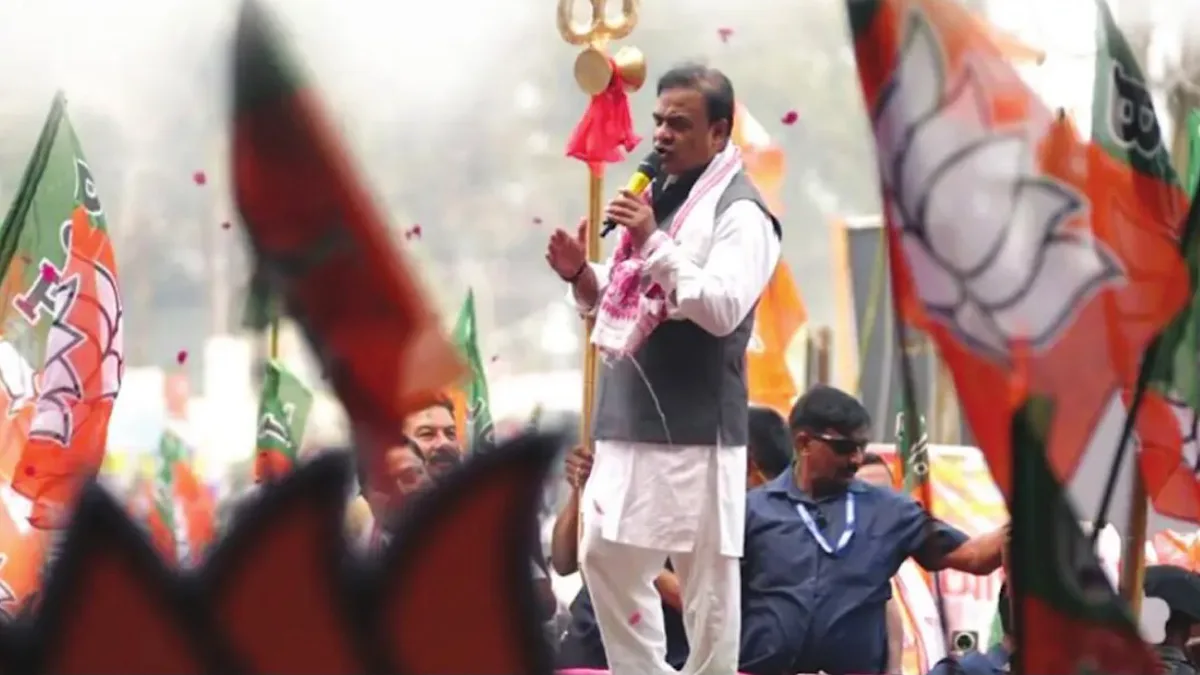
Governance, cultural assertion, and a fractured Opposition give Himanta Biswa Sarma a decisive edge ahead of the Assembly elections, due on 9 April The political landscape of Assam appears to be settling into a familiar pattern, one that strongly favours continuity under the Bharatiya Janata Party.

PROSENJIT NATH | Kolkata |

Governance, cultural assertion, and a fractured Opposition give Himanta Biswa Sarma a decisive edge ahead of the Assembly elections, due on 9 April The political landscape of Assam appears to be settling into a familiar pattern, one that strongly favours continuity under the Bharatiya Janata Party. The latest IANS-Matrize Opinion Poll, projecting a comfortable majority for the ruling party, is not merely a statistical forecast; it is a reflection of deeper socio-political currents that have been reshaping the state over the past decade. With projections suggesting that the BJP could secure between 96 and 98 seats in the 140-member Assembly, alongside a robust vote share of 43-44 per cent, the message is clear: Assam’s electorate is not inclined toward disruption.

Instead, it appears to favour stability, assertive governance, and a political vision that aligns with broader national currents. At the center of this consolidation is Chief Minister Himanta Biswa Sarma, whose leadership style has significantly altered the state’s administrative and political trajectory. Unlike the more cautious governance of previous regimes, Sarma has projected an image of decisiveness whether in tackling insurgency remnants, accelerating infrastructure projects, or taking firm positions on issues of identity and illegal immigration. For a state long plagued by instability and slow development, this shift has resonated strongly with voters.

The BJP’s governance model in Assam has combined welfare delivery with a strong ideological narrative rooted in nationalism and cultural identity – an approach that mirrors the broader strategy of Narendra Modi at the national level. One of the key reasons behind the BJP’s projected dominance is its success in neutralising anti-incumbency. Traditionally, Indian politics has in most states been marked by cyclical dissatisfaction with ruling governments. However, in Assam, the BJP appears to have bucked this trend.

Welfare schemes, improved road connectivity, and a visible push toward industrialisation have created a perception of forward momentum. Equally significant is the party’s handling of sensitive issues such as illegal immigration and demographic change – topics that have historically shaped Assamese politics. By taking a firm stance, the BJP has consolidated support among indigenous communities who view these issues as existential concerns. This has allowed the party to build a broad coalition that cuts across caste, tribe, and region.

In contrast, the Opposition primarily led by the Indian National Congress appears fragmented and strategically adrift. While the opinion poll suggests that the Congress could improve its vote share to around 39-40 per cent, translating into 26-28 seats, this incremental gain is unlikely to alter the electoral equation. The leadership of Gaurav Gogoi has yet to inspire the kind of statewide momentum required to challenge the BJP’s dominance. Moreover, the Congress continues to grapple with internal dissent and an erosion of organisational strength. The recent exit of senior leaders, including Bhupen Borah, underscores a deeper crisis within the party, one that goes beyond electoral arithmetic. This organisational weakness is compounded by a lack of ideological clarity.

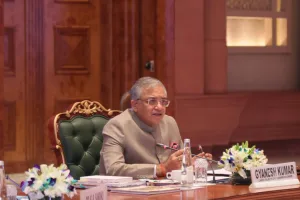
In a political environment increasingly defined by strong narratives, the Congress has struggled to articulate a compelling alternative vision for Assam. Its attempts to counter the BJP often appear reactive rather than proactive, further reinforcing the perception of a party out of sync with ground realities. The timing of the elections, announced by Gyanesh Kumar, adds another layer of significance to the contest. With polling scheduled for 9 April and results on 4 May, the campaign period is expected to witness intense political mobilisation. However, the BJP enters this phase with a clear advantage, both in terms of narrative and organisational machinery. Sarma’s invocation of “Yato dharmastato jayah” following the announcement is emblematic of the BJP’s broader ideological positioning. It signals a campaign that will not merely focus on governance metrics but also on civilisational and cultural themes, areas where the party has consistently outperformed its rivals.

From a right-wing perspective, the BJP’s rise in Assam represents more than just electoral success; it signifies the consolidation of a political philosophy that prioritises national integration, cultural preservation, and strong governance. The North-east, once considered a peripheral region in India’s political imagination, has increasingly become central to this vision. Initiatives under the Act East Policy, improved connectivity, and strategic engagement with neighbouring countries have elevated Assam’s importance within the national framework. Critics may argue that the BJP’s dominance risks marginalising dissenting voices. However, supporters contend that a stable and decisive government is essential for a state that has historically struggled with fragmentation and uncertainty.

In this view, the BJP’s continued rule offers the best chance for sustained development and integration. As the election approaches, the contours of the contest are becoming clearer. The BJP, backed by a strong leadership, cohesive organisation, and a resonant ideological narrative, appears well-positioned to retain power. The Congress, despite potential gains and historical laurels, faces an uphill battle to convert its vote share into a credible challenge. Ultimately, the IANS-Matrize Opinion Poll captures a moment in Assam’s evolving political journey, one where the electorate seems poised to endorse continuity over change. Whether this projection holds will be known on 4 May. But for now, the signs point toward a decisive verdict in favor of the BJP, reaffirming its dominance in one of India’s most strategically significant states.

(THE WRITER IS A TECHNOCRAT AND POLITICAL ANALYST FROM ASSAM, AND HOLDS A DOCTORATE IN HEALTH CARE MANAGEMENT & TECHNOLOGY ADOPTION)

Need for balance between technology and needs

The 21st century has ushered in an era of Artificial Intelligence (AI), drones, robots, and advanced missile systems.

DR O. PRASADA RAO | New Delhi |

The 21st century has ushered in an era of Artificial Intelligence (AI), drones, robots, and advanced missile systems. These technologies are not only transforming civilian life but also reshaping military strategies and global security. Their present status reflects rapid innovation, while their future consists of unprecedented opportunities and several ethical challenges. Artificial Intelligence today is the backbone of modern technological progress. In the military domain, AI is used for surveillance, logistics, and decision-support systems.

Programmes such as the U.S. Department of Defence’s Project Maven employ AI to analyse vast amounts of imagery, reducing the time needed to identify potential targets. AI supports predictive maintenance, a more advanced and data-driven activity with the help of sensors, and machine learning to monitor equipment in real time, thereby ensuring that complex machinery operates efficiently and safely. In civilian life, AI is integrated into healthcare diagnostics, agriculture monitoring, and financial systems. The future of AI points toward greater autonomy, with systems capable of making independent decisions in real time. However, this raises ethical concerns, particularly the use of AI in lethal autonomous (self-governed) weapons. Scholars and policymakers emphasise on international regulation to prevent misuse of AI and ensure accountability. Drones are being used in both civilian and military sectors.

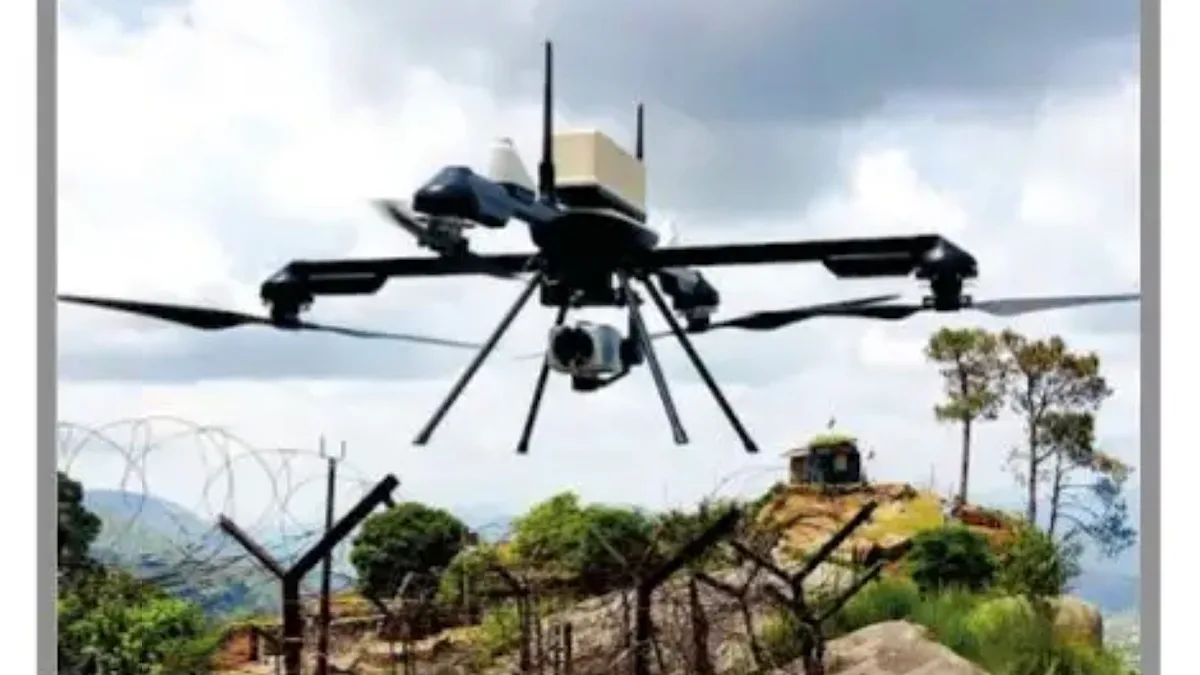
Militaries worldwide deploy drones for exploring, observing, surveillance, and precision strikes. For example, FPV (First-Person View) drones are increasingly used in modern conflicts to attack armoured targets with remarkable accuracy. They are reshaping battlefield tactics by offering real-time situational awareness and precision engagement. In civilian applications, drones deliver packages, monitor crops, and assist in disaster relief operations. Their ability to access difficult terrains makes them invaluable in emergencies. Looking ahead, drone swarms (a large group of drones flying together in a coordinated manner, much like a flock of birds) powered by AI could revolutionise warfare through coordinated attacks. In civilian sectors, drones may become integral to urban logistics, delivering goods across cities with speed and efficiency.

But the proliferation of drones also raises concerns about privacy, security, and regulation. Robots are deployed for explosive ordnance disposal, logistics, and medical support with autonomous ground vehicles transporting supplies in hostile zones, reducing risks to soldiers. In industry, robots collaborate with humans in factories, performing precise and dangerous tasks that enhance productivity and safety. In healthcare, robotic systems assist in surgeries with unparalleled accuracy. The future of robotics envisions humanoid robots capable of supporting combat operations, disaster relief, and even companionship in civilian life. Integration with AI will allow robots to adapt to complex environments and make decisions independently. However, ethical debates about replacing human soldiers with machines and the potential loss of jobs in civilian sectors remain pressing issues. Missile technology has also undergone a dramatic transformation.

Modern missiles are equipped with AI-enhanced guidance systems that allow precision strikes with minimal human input. Hypersonic missiles, currently under development by major powers such as the United States, Russia, and China, can travel at speeds exceeding Mach 5, making them nearly impossible to intercept with traditional defence systems. These weapons are designed to adjust their trajectory during flight, evading detection and countermeasures. The future of missile technology points toward even greater autonomy, with systems capable of adjusting their trajectories in real time based on battlefield conditions. While such advancements enhance military capabilities, they also pose significant risks, including the potential for destabilization and escalation of conflicts. Global arms control agreements will be critical to managing these threats.

The convergence of artificial intelligence, drones, robots, and missiles is reshaping both civilian life and military strategy. On the positive side, these technologies can be harnessed for humanitarian purposes: drones delivering medical supplies to remote areas, robots assisting in disaster relief, and AI improving logistics and efficiency across industries. In defence, AI-guided systems promise greater precision, potentially reducing collateral damage when used responsibly. However, the risks are equally significant. Autonomous weapons, often called “killer robots,” raise ethical concerns as they can select and attack targets without human oversight. Civilian privacy is threatened by surveillance drones, and the militarization of robotics could destabilize global security.

The convergence of AI, drones, robots, and missiles presents both opportunities and challenges. On one hand, these technologies promise efficiency, precision, and reduced human risk. On the other, they raise profound ethical questions about autonomy, accountability, and the potential for misuse. Civilian misuse of drones and robots could lead to security risks, while AI bias and errors in military systems could cause unintended escalation. Countries leading in the use of these technologies include the United States, China, Russia, and several European states, all investing heavily in AI-driven defence systems.

The danger escalates if such tools fall into the hands of terrorists. Extremist groups could weaponise drones for precision attacks, use AI for propaganda and recruitment, or exploit robotics to carry out remote assaults. This would lower the barrier for small groups to inflict large-scale harm. Ultimately, while the convergence of these technologies offers immense potential, it demands strict international regulation to prevent misuse and safeguard humanity. In conclusion, the era of artificial intelligence, drones, robots, and missiles is already upon us. These technologies are transforming the way societies function and how militaries operate.

Their future promises greater autonomy, integration, and efficiency, but also demands careful consideration of ethical dilemmas and regulatory challenges. The balance between innovation and control will determine whether humanity harnesses these technologies for progress or faces destruction from their misuse. The coming decades will be defined not only technological breakthroughs but also by the strategy with which societies choose to use them.

(The writer is a retired Scientist, Council of Scientific & Industrial Research.)