Logo

Kerala people expressed faith in politics of development, good governance: Sachdeva

Welcoming the councilors from Kerala, BJP workers celebrated the moment, expressing joy over the party’s performance in the recent local body polls in the state.

Statesman News Service | New Delhi |

Delhi BJP chief Virendra Sachdeva, party leader OP Dhankhar, and MCD Mayor Sardar Raja Iqbal Singh on Wednesday welcomed newly-elected municipal councillors and other office-bearers from Kerala at the New Delhi Railway Station upon their arrival here.
Thiruvananthapuram Mayor VV Rajesh, Deputy Mayor GS Asha Nath, and other representatives elected in the Kerala municipal body elections were part of a delegation from the state.

Welcoming the councilors from Kerala, BJP workers celebrated the moment, expressing joy over the party’s performance in the recent local body polls in the state.

Addressing the gathering, Sachdeva said the party’s performance is a clear testament to the fact that people of Kerala are placing their trust in development, good governance, and the leadership of Prime Minister Narendra Modi. Hitting out at the Left and the Congress, he stated that after years of suffering under their policies, this time the people of Kerala voted for change in these municipal elections. “People have clearly conveyed that politics of appeasement, corruption, and hollow promises will no longer be accepted,” he said.

The Delhi BJP chief further said that the results of the Kerala municipal elections also indicate that the ideology and development model of the BJP have now firmly established themselves in the southern part of the country as well.
The public support received by the BJP in local bodies will play a decisive role in shaping the future direction of Kerala’s politics, the BJP leader added.

Congratulating party workers and office-bearers in Kerala for the success, he said that the party would strive to live up to the expectations of the people and will give priority to transparency, accountability, and development.

On the occasion, Delhi Mayor said that the victory reflects people’s faith in development, adding that when the councillors from Kerala will meet the national leadership, they will be very happy, as they will have much to learn.

Thiruvananthapuram Mayor V V Rajesh said their visit to the national capital would serve as a valuable learning opportunity for the councillors from Kerala, and the experiences gained from meeting the national leadership would significantly contribute to their state’s development.

In the recent municipal polls in December 2025, the BJP performed unexpectedly well winning 50 seats in Kerala’s capital Thiruvananthapuram.

Vistadome coach adds charm to Katra–Vaishno Devi rail journey

The travel between the Kashmir valley and Jammu region’s Katra by the train (04688/04687) has turned the journey into a panoramic spectacle.

Statesman News Service | Jammu |

In a move set to delight pilgrims and tourists alike, the Jammu Division of Northern Railway has added a vistadome coach in the special train running on the Budgam-Banihal route that has been extended to pilgrimage destination of Shri Mata Vaishnodevi Katra, railway officials said on Wednesday.

The travel between the Kashmir valley and Jammu region’s Katra by the train (04688/04687) has turned the journey into a panoramic spectacle.

On its very first day, more than 600 passengers boarded the train and were treated to breathtaking views through the coach’s glass roof and wide transparent windows.

As the train wound its way through the mountains, passengers soaked in uninterrupted vistas of valleys, rivers, and tunnels. The journey also offered a rare glimpse of two engineering marvels — the world’s highest railway bridge over the Chenab River and the iconic Anji Khad cable-stayed bridge.

Passengers, including locals and visiting tourists, expressed gratitude to the Railways for what they described as a “historic step” that significantly improves connectivity from Banihal to Katra while adding a unique travel experience.

Senior Divisional Commercial Manager Uchit Singhal said the initiative is aimed at enhancing passenger experience through scenic travel while simultaneously promoting tourism in Kashmir. The enthusiastic response from passengers on day one, he noted, reflected the success of the initiative.

Kerala HC asks TDB to explain irregularities found in audited accounts of Global Ayyappa Sangamam

The Kerala High Court on Wednesday sought an explanation from the Travancore Devaswom Board (TDB) about the alleged inconsistencies in the conduct of Global Ayyappa Sangamam that was held at Sabarimala in September 2025.

Statesman News Service | Kochi |

The Kerala High Court on Wednesday sought an explanation from the Travancore Devaswom Board (TDB) about the alleged inconsistencies in the conduct of Global Ayyappa Sangamam that was held at Sabarimala in September 2025.

A division bench comprising Justice Raja Vijayaraghavan V and Justice K V Jayakumar on Wednesday noted that there were several issues and serious inconsistencies in the audit report of the Global Ayyappa Sangamam held last year and directed the TDB to explain the reasons for the same. The court also sought inputs from the Kerala State Audit department in this regard.

An independent auditor report said the TDB was responsible for the preparation and presentation of the financial statements relating to the event. The report highlighted certain inconsistencies the TDB ought to explain before the court, the bench observed

“In the auditor’s statement, certain issues have been highlighted for which it is for the Travancore Devaswom Board to explain before us the reasons for the arising of such issues… Having gone through the auditor’s statement, which is prepared in pursuance to the directions of this Court, we are of the view that certain inputs can be received from the Kerala State Audit as well as the Travancore Devaswom Board so that appropriate directions can be issued,” the bench said.

The court on Wednesday perused the auditor’s report, which had noted certain irregularities in the accounts for the event. It recorded that as per the audit report, the execution of the work was entrusted to the Indian Institute of Infrastructure and Construction (IIIC) without following any tender or competitive bidding procedure. Further, it was also noted that with respect to items and assets, which were procured out of lump sum, no supporting document evidencing transfer was made available to the auditor.

Further, it was noted that with respect to items and assets, which were procured out of lump sum, no supporting document evidencing transfer was made available to the auditor.

“It is further seen that from the Board’s stock, items such as 4100 units of Aravana, 4100 packets of Appam, 4100 packets of Vibhuti, 4100 packets of Manjal, Kumkumam, 4100 units of Adhishistam ghee, and 1 kg of sandalwood were issued for distribution to the participants of the Sangamam and devotees. It is said that the monetary value of the said items has not been accounted for in the books of account,” the court remarked.

The court, after noting the irregularities, asked the State Audit Department and the Devaswom Board for its inputs. The case is posted after 10 days.

Former CM Jagan attends AP assembly briefly after a year

Later, the Business Advisory Committee decided that the state Budget would be placed before the House on 14 February.

Statesman News Service | Hyderabad |

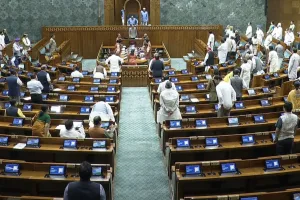
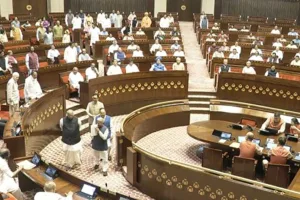
After a prolonged absence of a year, former Andhra Pradesh chief minister YS Jagan Mohan Reddy briefly attended the Legislative Assembly on Wednesday before the YSRCP MLAs staged a walkout in protest against Governor Abdul Nazeer’s address at the beginning of the Budget session. The Opposition MLAs repeatedly interrupted his speech by resorting to sloganeering and calling the NDA government “a band of thieves.”

Later, the Business Advisory Committee decided that the state Budget would be placed before the House on 14 February.

YSRCP chief YS Jagan Mohan returned to the Assembly after a year. As the governor began to address the members of the Assembly and Legislative Council during its joint sitting, the Opposition MLAs started interrupting him repeatedly, raising slogans. At 10:10, just ten minutes after the address began, the MLAs led by Reddy staged a walkout.

The former chief minister has not been attending the Assembly after the ruling party denied him the status of leader of the Opposition after YSRCP won only 11 seats in the Assembly. The YSRCP also dismissed the governor’s speech as a compilation of reports of the “yellow media”, a reference to those media houses considered to be close to the ruling TDP.

The governor, in his speech, blamed the previous YSRCP government for slowing down the progress of the state between 2019 and 2024, particularly in key sectors such as infrastructure, power and irrigation. He said they left behind a financial and administrative mess. Amaravati was being rebuilt with renewed momentum with support from the central government. “In a significant step towards long-term certainty, the Union government has initiated the process to introduce legislation to accord statutory status to Amaravati as the permanent capital of Andhra Pradesh,” he added.

The governor further stated, “As per the First Advance estimates for 2025-26, AP’s GSDP has increased to Rs17.62 lakh crore from Rs15.91 lakh crore in the previous year, recording a nominal growth of 10.75 per cent. Per capita income has risen to Rs2.95 lakh compared to Rs2.66 lakh last year. The growth has been driven by strong performance in agriculture and allied sectors at 7.83 per cent, industry sector at 9.53 per cent and services sector at 12.94 per cent.”

UP Budget betrays public expectations: Sanjay Singh

He said that this budget does not offer any concrete solutions to inflation, unemployment, and farmers’ problems, but is limited to mere statistical manipulation.

Statesman News Service | Lucknow |

Aam Aadmi Party (AAP) Uttar Pradesh in-charge and Rajya Sabha MP Sanjay Singh, termed the budget presented by the Uttar Pradesh government as a “betrayal of public expectations.”

He said that this budget does not offer any concrete solutions to inflation, unemployment, and farmers’ problems, but is limited to mere statistical manipulation.

Sanjay Singh, in a statement here on Wednesday, said that the state’s youth are struggling with unemployment. Educated youth are unable to find permanent employment, yet the budget does not provide a clear roadmap for creating new jobs. “The people of Uttar Pradesh need a budget of action, not rhetoric,” he said.

On the issue of farmers, he alleged that despite claims of doubling income, adequate provisions have not been made for the agricultural sector. The government’s silence on pending payments to sugarcane farmers, legal guarantee of MSP, and irrigation facilities is worrying.

He also raised questions about the government’s health and education. He stated that the condition of government hospitals is poor and there is a severe shortage of teachers in schools, but the budget lacks a concrete plan to strengthen these basic sectors.

Singh stated that inflation is at its peak—the prices of electricity, water, cooking gas, and daily use items are constantly rising, yet no direct provisions have been made to provide relief to the common man.

He demanded that the government announce an employment guarantee scheme for youth, a statutory Minimum Support Price (MSP) for farmers, and major investments in education and health. He stated that the Aam Aadmi Party will continue its struggle on issues of transparency and accountability.

SC questions NIA over labelling Beldanga violence as terrorist act without perusing case papers

Expressing reservations over the agency’s approach, a Bench of Chief Justice Surya Kant and Justice Joymalya Bagchi directed the West Bengal government to approach the Calcutta High Court for reconsideration of its January 20 order.

Parmod Kumar | New Delhi |

The Supreme Court on Wednesday questioned the National Investigation Agency (NIA) for invoking Section 15 of the Unlawful Activities (Prevention) Act, 1968 (UAPA) in connection with the Beldanga violence in the Murshidabad district of West Bengal, without examining the case records.

Expressing reservations over the agency’s approach, a Bench of Chief Justice Surya Kant and Justice Joymalya Bagchi directed the West Bengal government to approach the Calcutta High Court for reconsideration of its January 20 order.

The Court also asked the NIA to submit a report on its investigation to the High Court in a sealed cover for independent evaluation.

“Go back to the High Court and make a plea for reconsideration,” Justice Bagchi told the senior counsel appearing for the West Bengal government.

In its order, the Court said, “Since there are passing observations in the High Court order (January 20 order) without any documentary evidence, we request the High Court to consider the NIA report independently and issue consequent decisions…It is clarified that we have not expressed any observation on the merits of the case. It is further directed that the plea by West Bengal shall be heard by a Division Bench headed by the Chief Justice of the High Court, before whom the earlier plea is pending.”

During the hearing, the Bench pulled up the NIA for terming the January violence a terrorist act threatening the country’s economic security without having the case diary or relevant materials before it.

“Without looking into documents, you have said Section 15 UAPA is justified. The case diary was not placed before you…this is a pre-decisional conclusion arrived at…Every emotional outburst cannot be packaged as a threat to economic security!” Justice Bagchi told Additional Solicitor General S V Raju, appearing for the NIA.

The Court noted that the West Bengal Police had registered four FIRs in connection with the violence but had not handed over the case files to the NIA.

Section 15 of the Unlawful Activities (Prevention) Act, 1968, defines a “terrorist act” as any act committed with the intention of threatening India’s unity, integrity, security, economic security, or sovereignty, or with the intent to strike terror among people in India or in any foreign country. Such acts are punishable in accordance with the sentences prescribed under Section 16 of the UAPA.

Referring to similar incidents in April 2025, Justice Bagchi remarked, “In April 2025, we saw this kind of violence, and the State government also agreed (to the NIA probe). The High Court division bench asked the NIA to see if a probe can be conducted. But then NIA slept over it!”

The apparent reference was to the violence that occurred in Murshidabad district in April 2025 during protests against the Waqf (Amendment) Act, 2025.

The matter today arose from two petitions filed by the West Bengal government challenging the High Court’s January 20 order and the Union Home Ministry’s decision directing the NIA to probe the Beldanga incident.

‘Willing to work with states’: Sitharaman dismisses allegations that some states got fewer funds in Budget 2026

Sitharaman also stated that the Centre is planning to set up mega textile parks and welcomed states to enter the industrial textiles sector.

Statesman News Service | NEW DELHI |

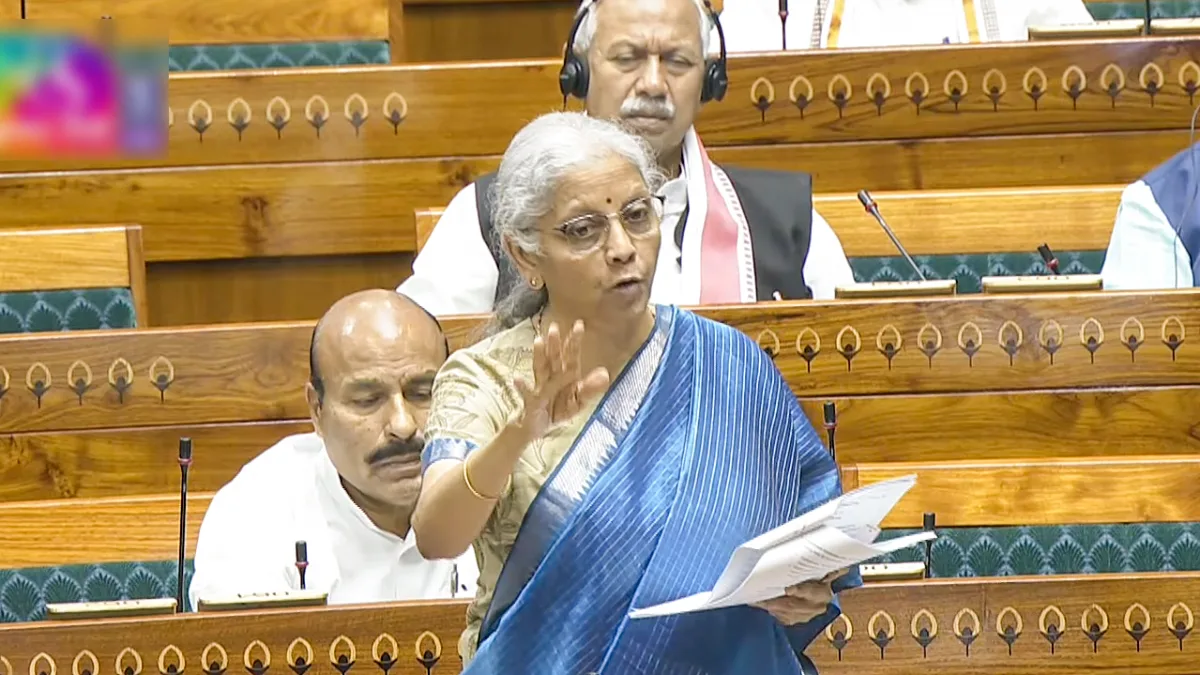
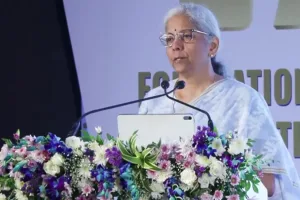
Finance Minister Nirmala Sitharaman on Wednesday dismissed allegations that some states have not been allocated enough funds in the Union Budget 2026. Speaking in the Lok Sabha during the debate on the Union Budget 2026, Sitharaman said that the Centre is “willing to work with the states”.

Referring to the 16th Finance Commission report, the finance minister asserted that the recommendations of the 16th Finance Commission have been met. She further stated that the central government is willing to work with states to set up higher education centres.

“We have said that instead of waiting to qualify and finishing your education and coming out and seeking where should they go for acquiring skills, the skilling element can be brought into education itself and at the end of the day when they come out, students can say I can become entrepreneur and this kind of a mega centre can be kept next to any industrial cluster that any state has.

“So, these mega entrepreneurship building centres as education hubs can also come up from any state. We are willing to work with states so that this mammoth higher education centre can be propped up and therefore students can go there and come out as entrepreneurs…,” she said.

Sitharaman also stated that the Centre is planning to set up mega textile parks and welcomed states to enter the industrial textiles sector.

“Whether it’s car cushions, which are completely made of industrial textiles…so these new age textiles requirements can also be fulfilled. I welcome any state that wants to enter this area. The Centre is willing to collaborate with them,” she said.

According to Sitharaman, the Budget 2026 has increased public capex from Rs 11.2 lakh crore in BE 2025-26 to Rs 12.2 lakh crore in FY2026-27. She further added that, taken together with the provisions for states and Union Territories, the effective capital expenditure is Rs 17.1 lakh crore.

Odisha govt is laying emphasis on women-led development: Dy CM Parida

The 33rd Foundation Day of the Odisha State Commission for Women was celebrated at the Convention Centre, Lok Seva Bhavan, Bhubaneswar, reaffirming the state’s commitment to strengthening women’s rights and empowerment.

Statesman News Service | BHUBANESWAR |

The 33rd Foundation Day of the Odisha State Commission for Women was celebrated at the Convention Centre, Lok Seva Bhavan, Bhubaneswar, reaffirming the state’s commitment to strengthening women’s rights and empowerment.

The programme was inaugurated by Deputy Chief Minister of Odisha Pravati Parida. Dignitaries present on the occasion included Mukesh Mahaling, Minister for Health & Family Welfare, Parliamentary Affairs, Electronics & Information Technology; Sampad Chandra Swain, Minister for Industries, Skill Development & Technical Education; and Shobhona Mohanty, Chairperson of the Odisha State Commission for Women.

On the occasion, the Deputy Chief Minister released the Commission’s Annual Report, the newsletter “Bijayini,” the publication “Passport to Women Empowerment,” the newly-launched official website of the Commission, and a compilation titled “Punarmilan,” featuring stories of successful reconciliation of couples. Individuals who have achieved distinction in various fields were felicitated.

The state government believes not merely in women’s development but in “women-led development, Deputy Chief Minister Paida emphasized while addressing the gathering.

She reiterated the government’s resolve to eliminate violence, crime, and gender-based discrimination against women and to ensure timely justice.

She appreciated the Commission’s initiative of replacing traditional bouquets with fruit baskets during the celebration, describing it as a creative and meaningful gesture.

Recalling her appeal to distribute fruits at Anganwadi Centres to combat malnutrition at the grassroots level, she underscored that proper nutrition is a shared responsibility.

She commended the Commission’s dedicated efforts and encouraged women to move forward with confidence and self-reliance, assuring continued support through various empowerment initiatives.

Health Minister Mahaling stated that the foundation of a healthy nation begins with a healthy state, which can be achieved by safeguarding the well-being of women.

He highlighted key government initiatives such as the “Khushi” scheme, under which free sanitary napkins are provided to adolescent girls.

Referring to the State’s deworming campaign, he informed that medicines are being distributed to children aged 1–19 years and women of reproductive age (20–24 years).

The Minister of Industries Swain highlighted the Government’s initiatives aimed at enhancing skill development among girls. He noted that through training at the World Skill Centre, girls from Odisha have demonstrated their capabilities at international platforms, bringing pride to the State. He called for collective efforts to build a healthy, safe, and empowered society.

Odisha State Commission for Women chairperson Sovana Mohanty elaborated on the Commission’s achievements in addressing gender-based violence and crimes against women.

She stated that cases relating to domestic violence, matrimonial disputes, dowry harassment and dowry deaths, suicides, and sexual harassment at personal and workplace levels are being addressed through a structured grievance redressal mechanism.

It is noteworthy that during the financial year 2024–25, the Commission resolved 1,879 cases through hearings, reflecting its sustained commitment to protecting women’s rights and ensuring justice. To make justice affordable and accessible at the doorstep of victims, district-level court camps have been organized in coordination with district administrations.

In 2024–25, district-level court camps were conducted in Bolangir and Gajapati districts, where 14 cases, seven in each district, were resolved.


Haryana approves ₹2.39 crore medical equipment procurement to boost public healthcare infrastructure

The decision was taken at a meeting of the Special Standing Purchase Committee (Higher), chaired by Dr Sumita Misra, Additional Chief Secretary, Health & Family Welfare Department.

Statesman News Service | Chandigarh |

The Haryana government has cleared the procurement of critical medical equipment worth ₹2.39 crore to strengthen healthcare services and improve patient care across the state’s public health institutions. The approved equipment include 25 slit lamps, 140 radiant warmers, 60 LED phototherapy units and 1,575 plastic moulded pallets. These will be distributed to civil hospitals, neonatal care units and state-run warehouses to enhance diagnostic capabilities, treatment facilities, and storage systems.

The decision was taken at a meeting of the Special Standing Purchase Committee (Higher), chaired by Dr Sumita Misra, Additional Chief Secretary, Health & Family Welfare Department. The procurement will be executed under a two-year rate contract that includes comprehensive maintenance support, ensuring uninterrupted and efficient functioning of the equipment.

Providing details, Dr Misra stated that 25 slit lamps, valued at approximately ₹74 lakh, will be installed in the ophthalmology departments of civil hospitals. These advanced diagnostic devices will significantly strengthen eye care services by facilitating early detection and timely treatment of vision-related disorders.

To improve neonatal care services, 140 radiant warmers costing around ₹82 lakh will be deployed in healthcare facilities. These devices are essential for maintaining optimal body temperature in newborns immediately after birth, thereby reducing the risk of complications. In addition, 60 LED phototherapy units worth nearly ₹32 lakh will be used for the treatment of neonatal jaundice, a common yet potentially serious condition in newborns if left untreated.

The government has also approved the procurement of 1,575 plastic moulded pallets valued at approximately ₹51 lakh for Haryana Medical Services Corporation Limited (HMSCL) warehouses. These pallets will enhance logistics management by improving inventory handling and ensuring safe, organized storage of medicines and medical supplies.

Dr Misra emphasized that the initiative represents a significant step toward upgrading Haryana’s public healthcare infrastructure. By strengthening neonatal services, enhancing eye care diagnostics, and improving supply chain efficiency, the procurement is expected to directly benefit patients across the state, particularly newborns and individuals requiring specialized ophthalmic care.


RBI Deputy Governor calls for transparency, teamwork in modern banking

Speaking at the Axis Champions Awards held at Axis House in Mumbai, the Deputy Governor said that while banks often celebrate performance, true institutional strength lies in how results are achieved.

Statesman News Service | New Delhi |

Reserve Bank of India (RBI) Deputy Governor Swaminathan J on Wednesday underscored the importance of organisational culture, ethics, and ownership in building resilient financial institutions.

Speaking at the Axis Champions Awards held at Axis House in Mumbai, the Deputy Governor said that while banks often celebrate performance, true institutional strength lies in how results are achieved.

“Being recognised as a Champion today is not just about what you achieved, but how you achieved it,” he said, emphasising that “means matter” as much as ends.

Highlighting the theme of the awards, he noted that institutions meet rising expectations not only through strategy but also through culture.

He outlined five core values underpinning the recognition of customer centricity, ethics, teamwork, transparency, and ownership, describing them as “practical guides for daily behaviour” rather than abstract ideals.

On customer centricity, the Deputy Governor stressed that effective service is rooted in getting the basics right. Clear communication, accuracy in execution, fairness in dealings and timely resolution are what matter most in banking, he said. The best service, he added, is often “quiet and consistent,” built on clarity, care and responsiveness.

Calling ethics a “working discipline,” he cautioned against treating it as a soft theme. Ethical conduct, he said, prevents small compromises from turning into major problems and is critical in handling grey areas and correcting mistakes fairly and quickly.

Regulatory discipline, he added, should not be seen as a box-ticking exercise but as central to long-term credibility.

Addressing the complexity of modern banking risks, he observed that challenges often cut across departmental boundaries and require coordinated teamwork. Effective collaboration reduces blind spots and improves response times, he said.

On transparency, he emphasised the need for clear communication with customers, particularly in digital journeys, ensuring that terms, charges and consent are unambiguous.

Transparency, he noted, is also inward-facing—encouraging employees to raise concerns and flag errors without fear.
The Deputy Governor described ownership as the difference between viewing something as “my task” and “my responsibility”. Champions, he said, not only deliver results but also set standards that others emulate.

While Axis Bank recognised 100 Champions at the event, he reminded the gathering that institutional strength ultimately rests on the collective conduct of thousands of employees.

“In the long run, it is values, not just strategies, that determine credibility and longevity,” he said, congratulating the awardees and wishing the Axis Bank family continued success rooted in strong governance and ethics.

Mayawati slams UP Budget 2026–27, calls for focus on employment and social justice

In a statement issued after the budget was presented in the Uttar Pradesh Assembly, Mayawati said that while several announcements and assurances have been made, their value will depend entirely on time-bound and effective implementation.

Statesman News Service | Lucknow |

Bahujan Samaj Party (BSP) chief Mayawati on Wednesday criticised the Uttar Pradesh Budget for the financial year 2026–27, describing it as “more populist than practical” and lacking a concrete roadmap for the real upliftment of the people and balanced development across all sections of society.

In a statement issued after the budget was presented in the Uttar Pradesh Assembly, Mayawati said that while several announcements and assurances have been made, their value will depend entirely on time-bound and effective implementation.

“The schemes and promises should not remain confined to paper. The government must ensure their proper execution within a fixed timeline,” she said.

The former UP Chief Minister also expressed concern that the budget speech did not present adequate and transparent data on the ground-level implementation of last year’s budgetary allocations. She said providing such data would have made the budget exercise more credible and meaningful. According to her, the current budget appears to be aimed more at grabbing headlines than addressing the pressing needs of the people.

Mayawati emphasised that the people of Uttar Pradesh are still waiting for stable and permanent employment opportunities. She urged the government to act with seriousness and urgency to create sustainable sources of income for the youth.

She further called for special attention to issues related to SC, ST and OBC reservations, stressing that backlog vacancies must be filled at the earliest. “Ensuring proper implementation of reservation policies and clearing pending recruitments is essential for social justice,” she stated.

Referring to the BSP’s governance record, Mayawati said that if the BJP government sincerely follows the constitutional principle of “Sarvajan Hitay, Sarvajan Sukhay” (welfare of all), as practised during the BSP’s four tenures in Uttar Pradesh, it would serve the interests of the nation and the people. She added that the budget should not favour specific classes or regions, nor be anti-poor or anti-farmer, but instead function as a tool for improving the lives of crores of poor people and farmers.

Meanwhile, as part of the ongoing nationwide organisational activities, Mayawati chaired meetings with senior office-bearers from Rajasthan and two other states. Separate meetings were held to review the political situation in each state and assess the progress made in implementing directives issued during the previous meeting in New Delhi.

She urged party leaders to strengthen the organisation at the grassroots level and expand the BSP’s support base among all sections of society. Mayawati called upon party workers to inspire people in these states to work towards bringing the BSP to power, similar to Uttar Pradesh.

Highlighting the legacy of Dr BR Ambedkar, she said that the constitutional rights, including reservation, secured through his struggle were meant to ensure dignity and self-respect for the Bahujan community. She asserted that during the BSP’s four governments in Uttar Pradesh, these sections experienced the true benefits of those rights for the first time.

The BSP chief reiterated that the party remains committed to safeguarding constitutional values and strengthening its presence across the country.

CM reviews preparations for Progressive Punjab Investment Summit, eyes major industrial push

He described the upcoming event as a decisive step toward accelerating industrial growth and positioning Punjab as a leading global investment destination.

Statesman News Service | Chandigarh |

Punjab Chief Minister Bhagwant Singh Mann on Wednesday chaired a high-level meeting to review arrangements for the Progressive Punjab Investment Summit, scheduled to be held from March 13 to 15 in Mohali.

He described the upcoming event as a decisive step toward accelerating industrial growth and positioning Punjab as a leading global investment destination.

Addressing senior officials, the Chief Minister said the summit would serve as a catalyst to further strengthen the state’s industrial base.

“The Progressive Punjab Investment Summit will give a major boost to industrial development in the state, which has already emerged as a preferred investment destination globally,” he said, adding that the event would provide a strong platform to reshape Punjab’s economic trajectory.

Emphasising the importance of collective deliberations, Mann said that extensive discussions with leading domestic and international industrial players would help evolve a consensus-driven, pro-industry action plan.

“After marathon discussions with global industry leaders, we will chart a comprehensive roadmap for sustained industrial growth in Punjab,” he stated.

Praising the entrepreneurial spirit of Punjabis, he remarked that their resilience and determination have enabled them to excel worldwide.

Highlighting the theme of the summit – “Punjab Means Business: Policy to Practice,” the Chief Minister said the government has undertaken extensive outreach efforts to attract investors. Roadshows have already been organised in Gurugram, New Delhi, Bengaluru, Hyderabad, Chennai and Mumbai, as well as in countries such as Japan and South Korea. The summit will feature inaugural and valedictory sessions, country-specific sessions, plenary discussions and sector-focused interactions.

Terming the event a significant opportunity for investors, Mann said the summit would showcase Punjab’s competitive advantages and investor-friendly policies, including some of the most attractive incentives in the country. He noted that the government has received an encouraging response from leading industrial houses in India and abroad.

Reiterating his government’s vision, the Chief Minister said Punjab’s agriculture sector, while historically strong, has reached a plateau, making large-scale industrialisation essential for revitalising the state’s economy.

“Massive industrial growth is the key to rejuvenating the stagnated economy and creating employment opportunities for our youth,” he asserted.

Mann said the state government has introduced several path-breaking initiatives to transform Punjab into the most preferred investment destination. So far, investment proposals worth ₹1.50 lakh crore have been secured, which are expected to generate around 5.20 lakh jobs.

Leading companies, including Tata Steel and Sanatan Textiles, are among those showing keen interest in investing in the state.

On reforms, the Chief Minister highlighted the introduction of green stamp paper for the registration of sale deeds, aimed at ensuring faster and smoother regulatory clearances for industrial projects. He said Punjab offers a congenial industrial climate supported by a skilled workforce capable of meeting the demands of modern industry.

Underscoring the importance of energy security, Mann said power is the engine of growth and that the state has taken significant steps to become power surplus, thereby ensuring uninterrupted supply for industries. He further noted that top industrial leaders from across India and abroad are expected to participate in the summit to finalise investment plans.


Jitendra Singh: Nuke sector reforms & Shanti Act will accelerate rare earth development

He said policy initiatives taken in recent years have opened new opportunities in mining and processing of rare earth minerals, including participation of the private sector in areas not containing uranium and thorium, thereby strengthening India’s strategic and industrial capabilities.

Statesman News Service | New Delhi |

Union Minister Jitendra Singh said the recent nuclear sector reforms, including measures under the Sustainable Harnessing and Advancement of Nuclear Energy for Transforming India (Shanti) Act, will accelerate the development of Rare Earth Elements (REE) in the country.

He said policy initiatives taken in recent years have opened new opportunities in mining and processing of rare earth minerals, including participation of the private sector in areas not containing uranium and thorium, thereby strengthening India’s strategic and industrial capabilities.

Responding to a question raised during Question Hour in the Lok Sabha, the minister shared details regarding the potential availability of rare earth minerals in Bihar.

Jitendra Singh informed the House that exploration activities are already underway in parts of Bihar, particularly in and around Koderma district. With regard to Sheikhpura and other areas mentioned, he stated that studies to assess future possibilities can be undertaken.

He added that the Atomic Minerals Directorate for Exploration and Research (AMD), which operates through seven centres across the country, is conducting reconnaissance radiometric surveys and G4 stage geological mapping in the Nawada region. The current phase of exploration in the referred areas is expected to be completed within five to six months, likely by September or October 2026.

The minister said that the importance of rare earth elements has grown significantly in view of their applications in electric mobility, semiconductors, defence equipment, and emerging technologies. He stated that in the Union Budget this year, four dedicated rare earth corridors have been announced in Odisha, Tamil Nadu, Andhra Pradesh, and Kerala. In addition, customs duty concessions have been provided for the import of equipment required for nuclear power plants, and reforms have been undertaken to expand the role of private players in the mining of rare earth minerals that do not contain uranium and thorium.

Jitendra Singh also referred to the commissioning of India’s first rare earth permanent magnet plant in Visakhapatnam, inaugurated by the Prime Minister in 2023 after a gap of several decades. The plant is expected to support strategic sectors, including defence and high-technology manufacturing.

DKNY launches 2026 watch collection in India, expands premium retail presence

Developed in collaboration with watchmaker TMS Group, the new collection blends contemporary New York-inspired design with reliable Japanese movement technology.

UNI | New Delhi |

American fashion brand DKNY on Wednesday launched their 2026 watch collection in India, marking a strategic expansion in what it describes as a priority growth market.

Developed in collaboration with watchmaker TMS Group, the new collection blends contemporary New York-inspired design with reliable Japanese movement technology.

The watches are water-resistant and positioned at accessible price points, targeting aspirational and style-conscious Indian consumers seeking global fashion trends combined with functionality.

Bizotico, DKNY’s appointed national distributor, will exclusively distribute the collection in India.

It will be available across major metropolitan markets, including Mumbai, Delhi NCR, Bengaluru, Hyderabad, Pune, Chennai, and Kolkata. Retail availability spans premium watch outlets such as Just in Time, Kamal Watch Co., and Zimson Watches, along with leading department stores including Shoppers Stop.

Consumers can also purchase the collection through online platforms such as Amazon, Tata CLiQ Luxury, and Myntra Luxe.

Addressing the event, Martina Zonta, APAC Head at Time Management Services (TMS), said India’s expanding premium retail ecosystem and growing appetite for global brands make it a key focus market. “DKNY aims to scale through a strong omnichannel strategy integrating offline retail and leading e-commerce platforms,” she added.

Akshay Gopal, Director of Bizotico, said the partnership seeks to strengthen DKNY’s footprint across lifestyle and fashion destinations in India, positioning it as a leading yet accessible premium fashion-watch brand.

Founded in 1989, DKNY is known for its New York-inspired aesthetic. The latest collection reinforces the brand’s focus on combining urban energy with practical, contemporary design for a global audience.

Farmers’ interests are fully protected in Indo-US trade deal: J&K LG Manoj Sinha

Lieutenant Governor Manoj Sinha on Wednesday said that the government of India is implementing robust safeguards to ensure farmers and their production remains unharmed while finalising the Indo-US trade deal.

Statesman News Service | Jammu |

Lieutenant Governor Manoj Sinha on Wednesday said that the government of India is implementing robust safeguards to ensure farmers and their production remains unharmed while finalising the Indo-US trade deal.

Seeking to dispell the “misinformation” being spread around the agreement while speaking at the inaugural ceremony of the Three-day Agriculture Summit and Kisan Mela organised by the Sher-i-Kashmir University of Agriculture Science & Technology (SKUAST), Jammu, the LG said, “The government of India is resolved to safeguard farmers’ interests in the trade deal.”

He called for building farmer-centric AI tools that boost yields 15-30%, cut input costs by 50%, and deliver real-time soil, crop health, and nutrient data to small and marginal farmers. “AI-technology will revolutionize agriculture and allied sectors. We need viable, affordable, high-impact solutions designed for small and marginal farmers in J&K UT,” the Lieutenant Governor said.

Dweling on the transformative impact of ‘AI-Powered Advanced Agriculture’, he called for making the technology tools affordable and accessible which can predict output using weather, soil, and crop data so small and marginal farmers can plan their crops strategically. “Technology and Agriculture Development must go hand in hand. Technological progress births new startups, industries and unicorns and fields birth life itself. Technology creates opportunities; agriculture and allied sectors create survival. Strong agriculture means a strong nation. Strong agriculture sector is the foundation of national resilience, advanced economy and human prosperity,” the Lieutenant Governor said.

“Despite relentless tests by challenges — from climate change to economic uncertainty — one truth emerges unscathed that agriculture and allied sectors will keep us stable and our citizens prosperous,” he said.

“Prime Minister Narendra Modi has envisioned a future where every plate in the world features at least one Indian dish. The day this milestone is achieved, the agricultural sector will emerge as the largest contributor to a Viksit Bharat,” he said.

The Lieutenant Governor stated that Union Home Minister Amit Shah, while chairing a high-level review meeting, during his recent visit to the UT has also reiterated the Government of India’s commitment to boosting the J&K’s dairy sector by prioritizing the 2 lakh litres per day milk processing capacity through the National Dairy Development Board (NDDB).

He also directed the officials and SKUAST to establish village-level seed banks stocked with climate-resilient local varieties. “Scientists and officers must realise that civilization’s fate hangs on every seed sowed in the soil. Agriculture is one of the key sectors that locks in both national advancement and human welfare. It will continue to guarantee progress regardless of global turbulence,” he said.

“Continued focus should be on building processing facilities in all 20 districts and we must connect FPOs directly to consumers for value-added products to capture margins for farmers which is often lost to middlemen,” he further said.

Five elusive Maoist leaders hold the key as March 31 deadline nears

Those still on the run include CPI (Maoist) general secretary Thippiri Tirupati alias Devji, former general secretary Muppalla Lakshman Rao alias Ganapathy, Politburo member Misir Besra, Central Committee leader Malla Raji Reddy alias Sangram, and South Zonal commander Paparao alias Mongu, believed to be operating in parts of Chhattisgarh.

Shishir Roy Chowdhury | Raipur |

Five senior Maoist leaders remain at large even as the Centre’s deadline to eliminate Left Wing Extremism moves into its final stretch. Security officials concede that without neutralising or capturing this core leadership, a formal declaration of victory will remain premature.

Those still on the run include CPI (Maoist) general secretary Thippiri Tirupati alias Devji, former general secretary Muppalla Lakshman Rao alias Ganapathy, Politburo member Misir Besra, Central Committee leader Malla Raji Reddy alias Sangram, and South Zonal commander Paparao alias Mongu, believed to be operating in parts of Chhattisgarh.

Union Home Minister Amit Shah said on his recent visit to Chhattisgarh that Maoists had been reduced to a “handful” nationwide. Chhattisgarh Home Minister Vijay Sharma echoed the assessment, claiming that barely ten per cent of the Maoist network now remains active in the state.

Field assessments, however, suggest that resistance, though weakened, has not disappeared. Senior Bastar-based journalist Manish Gupta said Maoist presence is now largely confined to Bijapur and Sukma districts. He identified Paparao as the most operationally active commander. In January 2025, an IED attack led by his unit on the Kutru–Bedre road killed eight security personnel and a civilian driver. While several members of his squad have since been eliminated, Paparao has repeatedly escaped cordons.

Misir Besra remains one of the most wanted Maoist leaders in eastern India. Jharkhand, Odisha and West Bengal together have announced bounties totalling ₹3 crore on him. Ganapathy, despite his age, continues to evade intelligence agencies.

A major turning point came with the capture of Karreguttalu Hill in the Bijapur district. The 21-day operation in April–May 2025 involved over 10,000 personnel working in extreme heat. Thirty-one Maoists were killed. Eighteen security personnel were injured but later recovered.

Security forces recovered 450 IEDs, 35 weapons and more than 12,000 kg of supplies from the area. Three permanent camps were later established on the hill. The national flag was hoisted there for the first time on January 26. Officials said that security expansion enabled the tricolour to be unfurled at 70 new locations across the state this year.

Official records show that since 2024, Bijapur alone has seen 35 new security camps. During this period, 918 Maoists surrendered, 1,163 were arrested, and 232 were killed in encounters. Statewide figures indicate 256 Maoists were killed, 1,562 surrendered, 884 arrested, and 875 IEDs recovered. Twenty-three security personnel were killed, while 46 civilians lost their lives in Maoist violence.

Speaking on condition of anonymity, a senior official revealed that several remaining cadres have begun shifting from traditional forest bases to urban and semi-urban networks. Security estimates suggest that around 400 Maoists remain active across Chhattisgarh, Odisha, Maharashtra, Telangana and Andhra Pradesh, while another 100 are believed to be operating in Jharkhand, Bihar and adjoining regions.

Bastar Range Inspector General P. Sundarraj said operations across Maoist-affected states were being conducted in close coordination. “Our mandate is search and domination. We do not go into forests to kill. Encounters happen only when forces come under fire,” he said, responding to queries on whether these leaders would be arrested or eliminated.

On persistent speculation about the death of Malla Raji Reddy, who carries a bounty of ₹1 crore, the IG said there was no confirmed intelligence. Images and videos that circulated in 2023 could not be verified, he added.
Senior Bastar-based journalist Manish Gupta observed that although the Maoist organisation has significantly weakened, its core leadership structure remains intact. “Until that leadership collapses, the threat cannot be considered fully neutralised,” he said.

With only weeks left before the March 31 deadline, security experts view the coming phase as critical. The sustained pressure of recent operations, he noted, must now translate into lasting peace, potentially drawing to a close a conflict that has shaped Chhattisgarh’s internal security landscape for decades.

One billion citizens to be equipped with 5G connectivity by 2030: Scindia

He stated that under the Modi government, India is no longer a follower of technology but has emerged as a global digital leader.

Statesman News Service | New Delhi |

Union Minister for Communications and Development of North Eastern Region Jyotiraditya M Scindia, while responding to questions in the Lok Sabha on Wednesday, highlighted India’s rapidly transforming digital landscape and future roadmap.

He stated that under the Modi government, India is no longer a follower of technology but has emerged as a global digital leader. He emphasised that the communications revolution is no longer confined to metropolitan cities but is reaching villages across the country, reshaping citizens’ lives, education, healthcare, and livelihoods.

Scindia informed that India has rolled out 5G at the fastest pace in the world. Within just 22 months, 5G services have been launched in 99.9 per cent of the country’s districts, setting a global benchmark. Telecom service providers have invested nearly Rs 4 lakh crore for this expansion, with over 5 lakh BTS (Base Transceiver Stations) installed nationwide.

Currently, 400 million citizens are benefiting from 5G services, and this number is expected to rise to 1 billion by 2030. Outlining India’s forward-looking vision, he stated, “India followed the world in 4G, marched with the world in 5G, and will lead the world in 6G.”

Highlighting efforts to extend digital connectivity to the last mile, Scindia said the expansion of Wi-Fi networks is ushering in a new revolution in rural India. He noted that Maharashtra ranks amongst the top states in the country in terms of Wi-Fi hotspot deployments.

He further underlined that broadband connectivity in India has surged from 60 million connections a decade ago to 1 billion today. By 2030, the government aims to further strengthen and deepen this digital infrastructure.