Logo

James Neesham laments ‘subpar finish’ as South Africa seal 3-2 series win over New Zealand

South Africa staged a strong comeback from 2-1 down to beat New Zealand 3-2 in the T20I series, with a 33-run win in the final.

Statesman News Service | New Delhi |

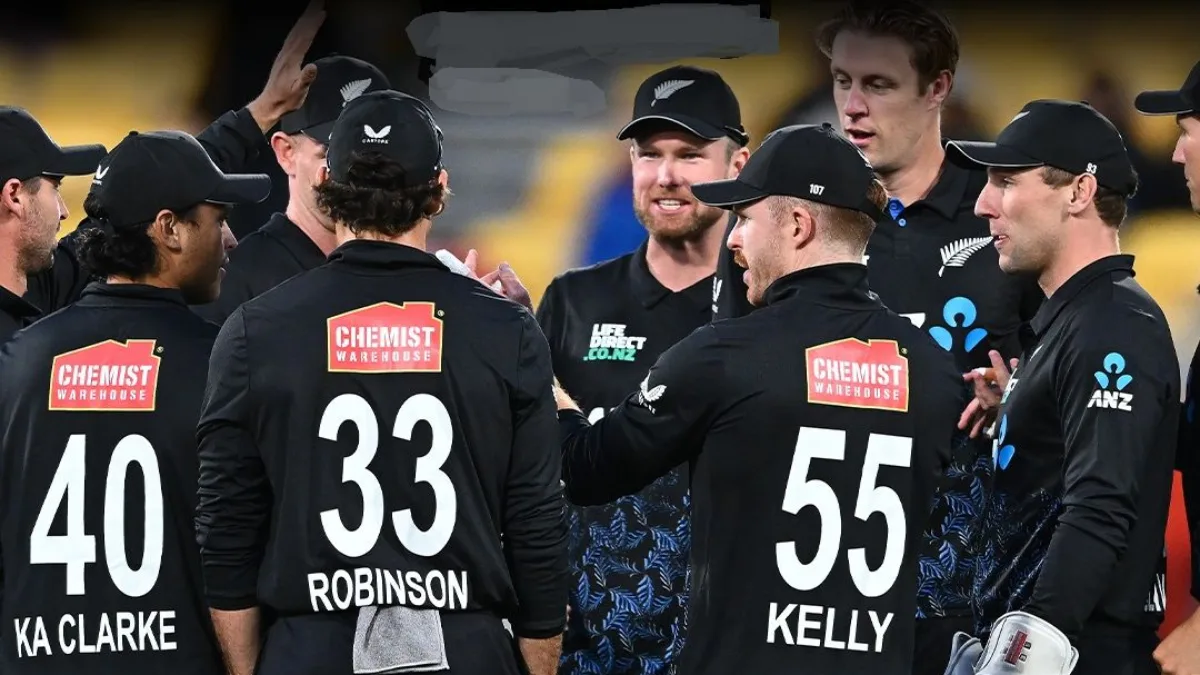
Stand-in skipper James Neesham expressed disappointment over New Zealand’s inability to close out the series, as South Africa staged a strong comeback to clinch a 3-2 T20I series victory with a 33-run win in the decider at Hagley Oval on Wednesday.

Chasing 188, New Zealand were restricted to 154/8, falling short despite brief resistance in the middle overs.

Reflecting on the series, Neesham admitted that New Zealand’s performances dipped at crucial moments.
“It was obviously a tough start, and then we fought back in games two and three to go 2-1 up. But a couple of subpar performances at the back end are disappointing,” he said.

He also pointed to a hectic international schedule, with players featuring continuously since October.
“It’s been a long summer… that’s the nature of scheduling these days; there’s cricket all year round,” Neesham added.

With several senior players unavailable, Neesham highlighted the positives of giving opportunities to younger players, saying the experience would help them grow despite the loss. However, he admitted fielding lapses, particularly in the final, proved costly.

“We batted and bowled okay, but the fielding was below par, especially tonight. That’s an area we can improve,” he noted, while also crediting South Africa’s bowling attack for testing his side.

Keshav Maharaj Praises Proteas’ Comeback

South Africa skipper Keshav Maharaj hailed his team’s resilience after bouncing back from 2-1 down to win the series.

Batting first, South Africa posted 187/4, with Esterhuizen leading the charge, before bundling New Zealand out for 154.

“To come back from 2-1 and clinch the series is super special,” Maharaj said. “Not many gave us a chance with a young side, but the hunger and desire shown by the players was outstanding.”

He emphasised the importance of the experience gained by the young squad, especially with several debutants stepping in after senior players were rested following the ICC Men’s T20 World Cup 2026.

“We don’t have the experience here, but the way the guys performed showed how smoothly they can transition into international cricket,” he added.

South Africa’s comeback win not only sealed the series but also underlined the depth in their squad, while New Zealand were left to reflect on missed opportunities after leading the contest midway.

Haryana CM reviews centrally sponsored schemes, stresses timely fund utilisation

Haryana Chief Minister Nayab Singh Saini on Wednesday chaired a high-level meeting to review the progress of centrally sponsored schemes being implemented across various departments with grants received from the Central Government.

Statesman News Service | Chandigarh |

Haryana Chief Minister Nayab Singh Saini on Wednesday chaired a high-level meeting to review the progress of centrally sponsored schemes being implemented across various departments with grants received from the Central Government.

During the meeting, a comprehensive review was undertaken of fund utilisation, implementation status, and pending works under different schemes. Emphasising outcome-oriented governance, the Chief Minister directed officers to ensure timely and effective utilisation of sanctioned funds so that citizens can derive maximum benefit from these schemes.

Highlighting the importance of fiscal discipline and accountability, Sh. Nayab Singh Saini said that the optimal and transparent use of Central grants is crucial for accelerating the state’s development.

He further directed departments to submit Utilisation Certificates (UCs) within stipulated timelines to avoid delays in the release of subsequent instalments.

While reviewing schemes with slower progress, the Chief Minister directed the officers concerned to expedite implementation and resolve bottlenecks on a priority basis. He stressed the need to strengthen inter-departmental coordination and monitoring mechanisms for more efficient execution.

To ensure seamless coordination between the Centre and the State, the Chief Minister directed all administrative departments to designate nodal officers who will maintain regular liaison with concerned Central Ministries and departments. This, he said, will help prevent delays in approvals and the release of funds.

Reiterating the government’s commitment to transparency and good governance, Nayab Singh Saini directed officers to ensure accountability in implementation and make maximum use of technology-driven monitoring systems for real-time tracking of progress.

ECI steps up preparedness for 2026 assembly polls in West Bengal and Assam with extensive training and review exercises

‎In a major push to strengthen electoral preparedness ahead of upcoming state assembly elections, the Election Commission of India (ECI) has conducted extensive training and review exercises for election officials in West Bengal and Assam, underscoring its focus on ensuring violence-free, transparent and technology-enabled polling processes, the poll panel said in a press note on Wednesday.

Statesman News Service | New Delhi |

‎In a major push to strengthen electoral preparedness ahead of upcoming state assembly elections, the Election Commission of India (ECI) has conducted extensive training and review exercises for election officials in West Bengal and Assam, underscoring its focus on ensuring violence-free, transparent and technology-enabled polling processes, the poll panel said in a press note on Wednesday.

‎For the West Bengal Legislative Assembly elections scheduled for 2026, the ECI organised a comprehensive training programme for all 294 Returning Officers (ROs) across divisional headquarters in Jalpaiguri, Malda, Presidency, Burdwan and Medinipur. The Commission reiterated its commitment to conducting elections “in a violence-free, intimidation-free and inducement-free manner so that every elector can vote without fear or favour,” a principle earlier emphasised by Chief Election Commissioner Gyanesh Kumar during his review visit to the state on March 9.

‎The training sessions, conducted by National Level Master Trainers and senior ECI officials, covered the full spectrum of electoral processes, including nomination filing, scrutiny of nominations, disqualification rules, Model Code of Conduct compliance, withdrawal of candidature, symbol allocation, polling-day arrangements and counting procedures. Officials were also briefed on statutory responsibilities under the Representation of the People Act, 1951, which defines the legal framework governing Returning Officers.

‎A key focus of the programme was enhancing transparency at the polling station level. The Commission directed that Presiding Officers must mandatorily share signed copies of Form 17C, which records the account of votes cast, with all polling agents present at the close of polling, strengthening accountability and confidence in the process.

‎The ECI also introduced expanded digital monitoring through the ECINET platform. Presiding Officers were instructed to upload voter turnout data every two hours, as well as at the end of polling, using a dedicated app module. This data will be automatically compiled at the Returning Officer level to generate near real-time voting trends, improving monitoring and administrative responsiveness on polling day.

‎The Commission said this structured training programme complements ongoing capacity-building initiatives being undertaken by the Chief Electoral Officer of West Bengal, ensuring uniform standards and preparedness across all constituencies ahead of the elections.

‎Meanwhile, in Assam — where assembly elections are scheduled for April 9, 2026 — the ECI conducted an online review and training session for District Election Officers (DEOs), Superintendents of Police (SPs), Senior Superintendents of Police (SSPs) and Commissioners of Police. The review focused on both administrative readiness and law-and-order preparedness, with senior officials assessing ground-level arrangements across districts.

‎Reiterating its core directive, the Commission said elections must be conducted in a “violence-free, intimidation-free and inducement-free manner so that every elector can vote without fear or favour in a festive atmosphere,” recalling earlier instructions issued during the Chief Election Commissioner’s visit to Assam on February 18, 2026.

During the review, officials examined multiple aspects of preparedness, including Assured Minimum Facilities (AMF) at polling stations, EVM logistics, training of election personnel, seizure management, voter awareness drives and outreach programmes aimed at improving participation.

‎Special emphasis was placed on polling-day procedures and digital transparency. Presiding Officers were again instructed to ensure distribution of signed Form 17C copies to polling agents at the close of voting and to upload voter turnout data on the ECINET platform at regular intervals and after polling concludes, enabling real-time monitoring of turnout trends.

‎District Election Officers in Assam were directed to ensure distribution of Voter Information Slips (VIS) to all electors at least five days before polling, along with voter guides to every household. The Chief Electoral Officer of Assam also announced that Braille-enabled VIS materials will be issued for visually impaired voters, reinforcing inclusive participation.

‎In addition, DEOs were instructed to process permissions for campaign-related activities submitted through the Suvidha module of ECINET within 24 hours on a first-come, first-served basis, ensuring impartial and timely clearance of election-related requests.

‎Given Assam’s challenging geography, particularly riverine and remote areas, officials were also directed to strengthen safety arrangements and ensure adequate rescue and emergency response measures at vulnerable polling stations.

‎Together, the training and review initiatives reflect the ECI’s broader strategy of combining legal compliance, administrative preparedness and digital monitoring systems to reinforce electoral integrity and efficiency ahead of the 2026 assembly elections.


‘Monitoring US moves in region; do not test our resolve,’ says Iranian Parliament Speaker amid reports of American troop deployment

“What the generals have broken, the soldiers can’t fix; instead, they will fall victim to Netanyahu’s delusions,” the Iranian Parliament Speaker said.

Statesman News Service | New Delhi |

Amid reports of US deployment of paratroopers in the Middle East, Iranian Parliament Speaker Mohammad Bagher Ghalibaf on Wednesday said that Tehran is closely monitoring American activities in the region.

“We are closely monitoring all US movements in the region, especially troop deployments,” Ghalibaf said in a post on X.

He further asserted that the American troops are being misled by the leadership and will suffer the consequences.

“What the generals have broken, the soldiers can’t fix; instead, they will fall victim to Netanyahu’s delusions,” he said, implying that Israel may be influencing the decision-making of the Donald Trump Administration.

The Iranian Parliament Speaker warned the United States against testing Tehran’s patience. “Do not test our resolve to defend our land,” he added.


His remarks came after reports claimed that the United States is poised to deploy airborne troops to the Middle East despite Donald Trump’s claims of “very good and productive” talks with Iran to end the war.

According to the Wall Street Journal, the US is sending a combat team of up to 3,000 paratroopers from the Army’s elite 82nd Airborne Division to the Middle East.

The move appears to signal Trump’s strategy to deploy boots on the ground in Iran to take control of the Strait of Hormuz, a key shipping route blocked by Iran in response to US and Israeli attacks.

The troop deployment is also seen by many as an attempt to put pressure on Iran during the ongoing ceasefire negotiations. Some believe it could be Trump’s Plan B in case ceasefire talks derail.
The US has reportedly handed over a 15-point proposal to Iran to end the conflict. While Iran has denied having been engaged in negotiations with the US, reports have claimed that Trump’s envoys are speaking to the leadership in Iran through intermediaries.

JSERC raises power tariff in Jharkhand from April 1

JSERC chairman Navneet Kumar said urban domestic consumers will now pay Rs 7.40 per unit against Rs 6.85, while rural domestic consumers will pay Rs 7.20 per unit against Rs 6.70.

Statesman News Service | Ranchi |

Jharkhand electricity consumers will pay higher power tariffs from April 1 after the Jharkhand State Electricity Regulatory Commission (JSERC) approved revised rates for domestic and commercial categories for 2026-27.

JSERC chairman Navneet Kumar said urban domestic consumers will now pay Rs 7.40 per unit against Rs 6.85, while rural domestic consumers will pay Rs 7.20 per unit against Rs 6.70.

The hike works out to 55 paise per unit for urban households and 50 paise per unit for rural households.

For commercial consumers with load above 5 kW, the tariff has been revised to Rs 6.70 per unit from Rs 6.20 in rural areas and to Rs 7.30 per unit from Rs 6.70 in urban areas.

The commission has also fixed a new tariff of Rs 8 per unit for certain urban commercial establishments, including malls, shops and hospitals.

No increase has been made in tariff for agricultural consumers.

JSERC has approved a green energy tariff of Rs 0.95 per unit, a 2 per cent rebate for bill payment within five days, and a 3 per cent rebate on energy charges for consumers shifting to prepaid meters.

The commission said no meter rent will be charged from any category of consumers. It also approved Rs 4.16 per unit for gross metering and Rs 3.80 per unit for net metering for rooftop solar PV projects.

Jharkhand Bijli Vitran Nigam Limited (JBVNL) had sought a 59 per cent tariff hike, but the commission approved an overall increase of 6.12 per cent.
JSERC approved an Annual Revenue Requirement (ARR) of Rs 7,894.55 crore for 2024-25 against JBVNL’s claim of Rs 10,725.26 crore.

For 2025-26 and 2026-27, the commission approved ARR of Rs 8,261.21 crore and Rs 10,832.70 crore respectively, against JBVNL claims of Rs 11,411.08 crore and Rs 12,678.17 crore.

The commission also approved a 13 per cent distribution loss for JBVNL.

No LPG shortage in Delhi, don’t panic: Minister Sirsa

Delhi’s Food and Supplies Minister Manjinder Sirsa on Wednesday assured that there is no shortage of Liquefied Petroleum Gas (LPG) cylinders in the national capital, adding that rumour-mongering in this regard should not be encouraged.

Statesman News Service | New Delhi |

Delhi’s Food and Supplies Minister Manjinder Sirsa on Wednesday assured that there is no shortage of Liquefied Petroleum Gas (LPG) cylinders in the national capital, adding that rumour-mongering in this regard should not be encouraged.

Addressing the House during the ongoing Budget session, Sirsa said, “I would like to inform citizens and the entire House that rumours regarding LPG distribution in Delhi should not be encouraged. The department is working with full vigilance to curb black marketing and ensure smooth supply.”

Sirsa clarified that the situation has remained completely normal over the past 22–25 days, with no signs of overbooking or shortage.

He said that domestic as well as commercial LPG cylinders are being supplied on a priority basis in accordance with the Central Government’s policy, ensuring that essential services, including hospitals, receive uninterrupted supply.

The minister said, “With the festive season approaching, I want to assure the entire House that there will not be any shortage anywhere, even for a single day or hour.”

Sirsa further assured that any complaint received would be acted upon immediately by his office. He added that the Delhi government continues strict monitoring of the situation and is taking firm action against rumours regarding LPG availability.

Earlier, the Central Government had also assured that the country has sufficient stocks of petrol and diesel, and that domestic production of LPG has been stepped up, with top priority being accorded to domestic LPG and PNG supply.

Truck driver’s son Mangesh Yadav hopes to make the most of opportunity at RCB

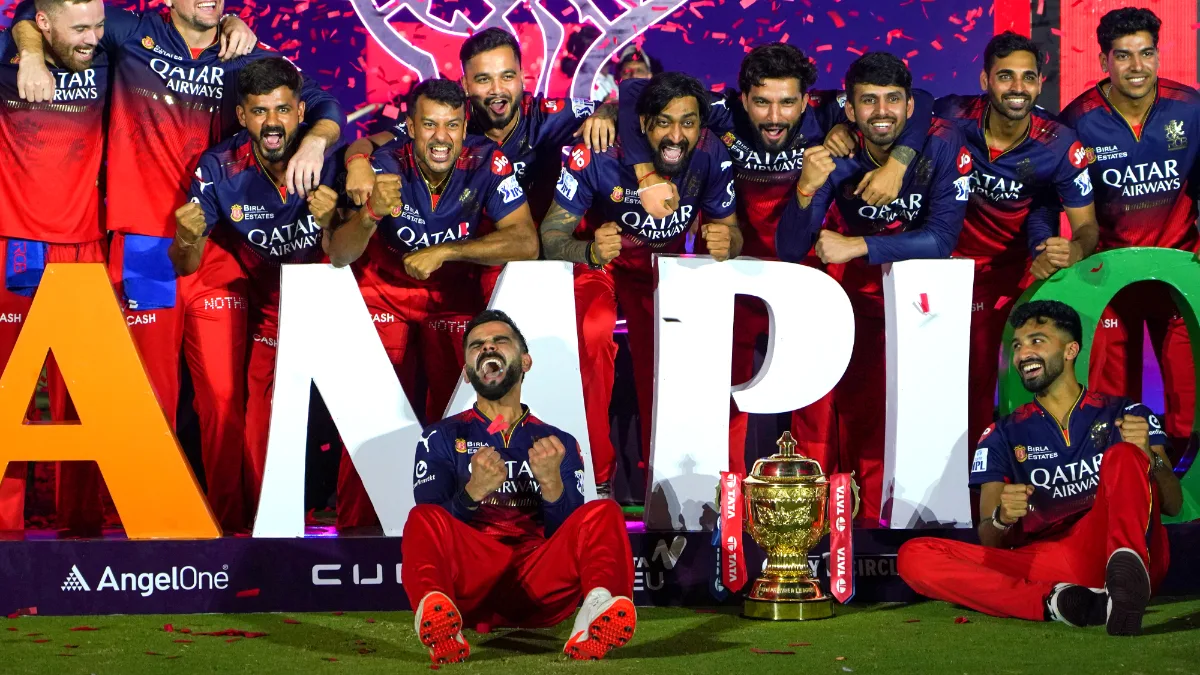
For Ramavadh Yadav, a truck driver from Madhya Pradesh, funding his son’s cricket dream often meant sleepless nights and borrowed money. That gamble has paid off with young Mangesh Yadav eventually landing a Rs 5.2 crore contract with defending champions Royal Challengers Bengaluru.

Statesman News Service | New Delhi |

For Ramavadh Yadav, a truck driver from Madhya Pradesh, funding his son’s cricket dream often meant sleepless nights and borrowed money. That gamble has paid off with young Mangesh Yadav eventually landing a Rs 5.2 crore contract with defending champions Royal Challengers Bengaluru.

Before Mangesh ever bowled a ball in professional cricket, his father had already invested everything he could into his son’s ambition. Now 23, Mangesh first played the game in a small courtyard at home with his mother, long before his journey took him to bigger stages.

Reflecting on the struggles the family endured to keep the dream alive, Ramavadh said, “I had to struggle a lot for money. Sometimes I couldn’t sleep at night, thinking about how I would raise money for him. The life of a truck driver is no life at all. You don’t have time to eat or bathe. When the truck is full, you worry about offloading, and when it’s empty, you have to worry about filling it up.”

The 23-year-old from Borgaon in Madhya Pradesh’s Chhindwara district grew up playing cricket in modest surroundings. It was his uncle who first noticed his ability during local tennis-ball tournaments and encouraged him to travel to Delhi to train under coach Phool Chand Sharma.

The youngster credits his coach for shaping his career. “If I am playing cricket today it is because of Phool Chand sir.”
Moving to Delhi came with its own challenges. “When I went to Delhi, my father had given me Rs 24,000 with great difficulty. I don’t even know how that money got over in the first month.”

During those early days, his father often had to rely on help from friends and acquaintances to cover the costs of Mangesh’s training and living expenses.

Phool Chand Sharma recalled how difficult the situation was when he first met the young bowler. “Mangesh was staying with someone in Delhi. I saw that he was a good bowler, but he didn’t even have enough to eat. I told him to come and stay at the hostel. That’s where his journey really began. I don’t care if someone has money or not. If the player is good, he can come, eat, stay, and practice.”

Like many young cricketers chasing a dream, Mangesh also went through a phase where he briefly lost focus. “I had started becoming lazy. One day sir called me and told me to pack my bag and go home. After some time, I apologised and told him it wouldn’t happen again. Then I realised what I was missing and what I had. I looked at my family and thought, Dad is working so hard. Everyone is so dedicated for me.”

Determined not to waste the opportunity, the pacer threw himself back into hard work. He played in the DDCA league, participated in local tournaments, and even attended the UP Under-19 camp. Despite the effort, the next big step remained frustratingly out of reach.

His father remembered those difficult moments vividly. “There were times he would go all the way to a selection camp, and he would be told his name had been called by mistake. Those were the days I felt helpless, like I had made a grave mistake by giving my son this dream.”

The breakthrough eventually came in the Madhya Pradesh T20 League, where Mangesh picked up 14 wickets in just six matches at an impressive average of 12.00. His performances earned him opportunities in domestic cricket for Madhya Pradesh, where he also shared the dressing room with RCB captain Rajat Patidar.

Soon after, the long-awaited call arrived from Royal Challengers Bengaluru.

At the franchise trials, his ability to bowl in different match situations caught the attention of the team management. “At the trials, DK [Dinesh Karthik] sir came up to me and said, ‘You are bowling well. Now show me this ball.’ He made me bowl in different situations; with the new ball, the fifth over, the tenth over, the fourteenth over, and even the eighteenth and twentieth overs. It was surprising for me to see how a player at that level thinks.”

After being picked at the auction, Mangesh’s first thought was to thank the coach who had stood by him through the toughest phases of his career. “When I came back to the club, I just wanted to meet him and touch his feet, thank him for trusting me and investing so much.”

For the Yadav family, the moment was deeply emotional. Years of sacrifice and faith had finally borne fruit. “When my father supported me in cricket, my extended family and society thought he was a fool, that I would be ruined. I am just happy. That’s what makes me emotional, my father can now walk with pride.”

His father echoed the sentiment with quiet pride. “I never thought a truck driver could get so much respect. Mangesh has done more for me than I could ever ask him.”

Parliament clears Transgender Bill amid Opposition protests, demands to send it to Select Committee

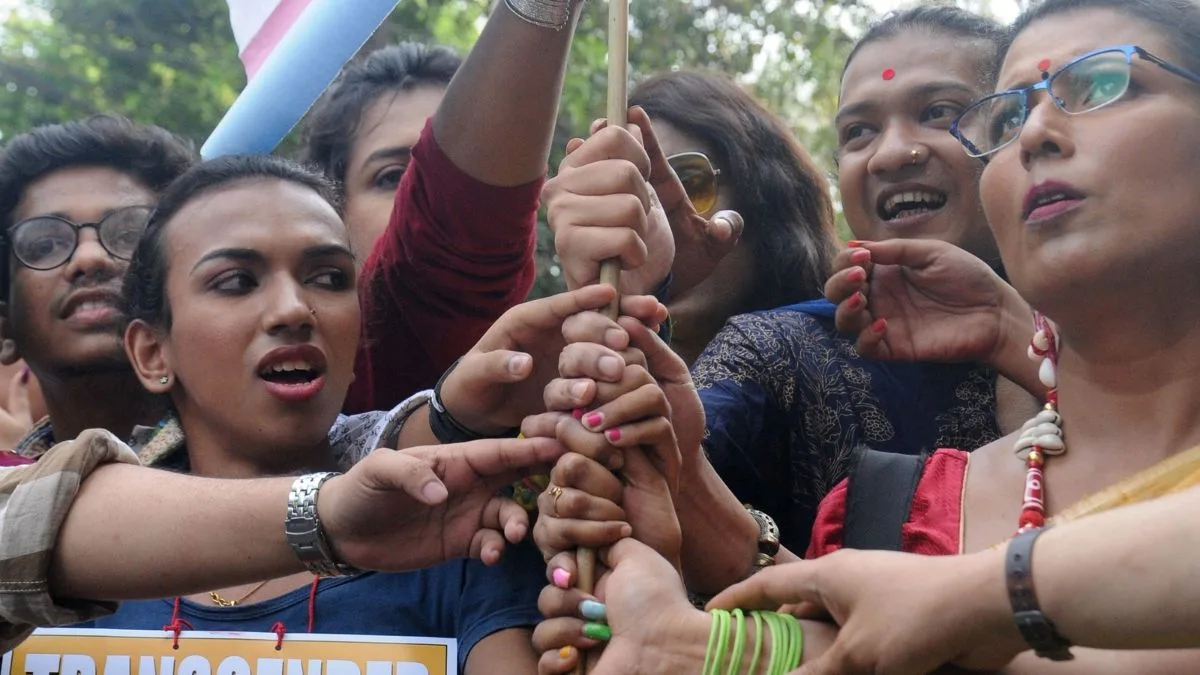
Calling it a “black day” for the transgender community, the Opposition criticised the BJP-led Centre for “rushing” the legislation through without adequate consultation or scrutiny, and demanded that it be referred to a Select Committee.

VIBHA SHARMA | New Delhi |

A day after its passage in the Lok Sabha, the Rajya Sabha on Wednesday cleared the controversial Transgender Persons (Protection of Rights) Amendment Bill, 2026, by voice vote, paving the way for a more precise definition of “transgender person”, removing provisions recognising self-perceived gender identity, and mandating certification through a medical board.

Calling it a “black day” for the transgender community, the Opposition criticised the BJP-led Centre for “rushing” the legislation through without adequate consultation or scrutiny, and demanded that it be referred to a Select Committee.

Opposition parties, including the Congress, DMK, SP, AAP, BJD and AITC, said the Bill violates the principles of dignity and equality laid down in the Supreme Court’s landmark NALSA judgment in 2014 that officially recognised transgender people as the “third gender,” and affirmed their fundamental rights.

While trans-rights activists termed the Bill “regressive” and “anti-transgender”, warning of continued protests, it is learnt that a Supreme Court-constituted advisory committee, headed by former Delhi High Court judge Justice Asha Menon, also sent a resolution to the government requesting it to withdraw the bill, flagging that the proposal to “deny self-identification” of gender contravenes the Supreme Court’s 2014 NALSA v Union of India verdict.

Backing the changes, the Treasury benches, however, argued that unrestricted self-identification risks misuse of benefits and reservations, if introduced in the future.

Empowerment Minister Virendra Kumar said the changes were aimed at ensuring targeted protection and welfare, and that a clear definition was necessary so that those at the margins could access benefits. Emphasising the work done by the Narendra Modi government for the welfare of the community, the minister said the changes focus on individuals who face social exclusion due to biological factors. They ensure dignity, legal recognition and safeguards, Kumar said, also pointing to enhanced penalties for offences against transgender persons.

Amending the Transgender Persons (Protection of Rights) Act, 2019, and seeking to remove “certain doubts and difficulties” regarding the scope of the definition of transgender persons, the legislation specifies that a transgender person “shall not include” individuals with different sexual orientations or self-perceived gender identities. It defines transgender persons as those belonging to recognised socio-cultural identities such as kinner, hijra, aravani, and jogta, as well as eunuchs, persons with intersex variations, or individuals with congenital variations in sex characteristics.

The Bill also provides for the designation of an “authority” to assist in identification, which may seek expert advice where required.

However, arguing that it removes the right to self-perceived identity and restricts recognition to those with specific biological traits or within certain traditional communities, activists point that many individuals identify as transgender across a broader spectrum, including gender queer and female-to-male identities, which may now fall outside the law’s protection.

Stoinis, Connolly join Punjab Kings camp ahead of IPL 2026

Last season’s runners-up Punjab Kings’ preparations for the 2026 Indian Premier League received a lift with Australian duo Marcus Stoinis and Cooper Connolly joining the squad in Mohali ahead of the new season.

Statesman News Service | New Delhi |

Last season’s runners-up Punjab Kings’ preparations for the 2026 Indian Premier League received a lift with Australian duo Marcus Stoinis and Cooper Connolly joining the squad in Mohali ahead of the new season.

Punjab Kings received a timely boost ahead of the Indian Premier League 2026 season, with Australian all-rounders Marcus Stoinis and Cooper Connolly joining the squad in Mohali.

The duo linked up with their teammates at the Maharaja Yadavindra Singh International Cricket Stadium, where they were warmly welcomed by the franchise. Both players appeared relaxed and in high spirits as they settled into the camp and began integrating with the squad.

Their arrival adds valuable depth to the Punjab lineup, bringing together Stoinis’ proven international experience and Connolly’s emerging talent as the team sharpens its preparations for the new season. PBKS, who finished runners-up in the previous edition, have been training intensively in recent weeks and are now entering the final phase of their build-up.

Led by captain Shreyas Iyer, the side heads into the new campaign determined to improve on last year’s second-place finish in the 2025 season. The team will play 14 league matches and is scheduled to begin its campaign against Gujarat Titans on March 31.

“Expectations are high, which is fun. I love the challenge. But the important thing is that whenever we step in, we have to win. My eye is on the trophy,” Iyer had said while speaking at the team’s jersey unveiling event.

Earlier in the build-up, head coach Ricky Ponting set the tone during the team’s first training session, urging players to stay focused on preparation and trust the process. Addressing the squad at the start of the camp, the former Australia national cricket team captain emphasised the importance of clarity in roles, discipline in preparation and confidence in the team’s approach.

Ponting also stressed that the current phase is about building the right foundations rather than worrying about immediate results, encouraging players to embrace mistakes while staying committed to the process as they prepare for the upcoming season.

Cabinet approves updated NDC, India raises climate targets for 2035

Announcing the decision, Minister of Information and Broadcasting Ashwini Vaishnaw said the revised targets are closely aligned with India’s broader development vision.

Statesman News Service | New Delhi |

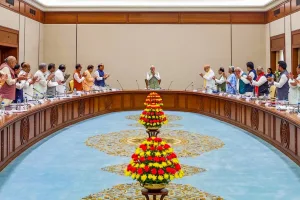
The Union Cabinet on Wednesday approved India’s updated Nationally Determined Contribution (NDC) for the period 2031–2035, significantly enhancing the country’s climate commitments under the United Nations Framework Convention on Climate Change and the Paris Agreement, while reaffirming its long-term goal of achieving net-zero emissions by 2070.

Announcing the decision, Minister of Information and Broadcasting Ashwini Vaishnaw said the revised targets are closely aligned with India’s broader development vision.

“India’s NDC for 2031–35 is guided by the vision of Viksit Bharat, which is not just a goal for 2047, but a commitment to act today to build a prosperous and climate-resilient Bharat for future generations,” he told reporters.

Under the updated commitments, India has pledged to reduce the emissions intensity of its GDP by 47 per cent by 2035 compared to 2005 levels, marking a significant step up from earlier targets.

The country will also aim to achieve 60 per cent of its installed electric power capacity from non-fossil fuel sources by 2035. Additionally, India has committed to creating a carbon sink of 3.5 to 4 billion tonnes of CO₂ equivalent through expanded forest and tree cover.

The new targets build on India’s earlier climate commitments submitted in 2015, which laid the foundation for emissions reduction and a transition to cleaner energy.

Government data show that India has already reduced emissions intensity by 36 per cent between 2005 and 2020, while surpassing 52 per cent non-fossil fuel capacity in installed electricity generation by early 2026—achievements that came well ahead of schedule.

Officials said the updated NDC underscores India’s consistent performance in meeting climate goals and signals a readiness to scale up ambition further.

“India’s successive climate targets build upon earlier commitments, many of which have already been achieved ahead of schedule,” Vaishnaw said, adding that the new goals are both “ambitious and achievable.”

The government also emphasised that its climate strategy balances emission reduction with adaptation efforts, particularly in vulnerable regions. Initiatives such as mangrove restoration along coastlines, early warning systems for extreme weather events, glacier monitoring in Himalayan areas, and heat action plans across states form a critical part of this approach.
India’s broader climate framework is being implemented through the National Action Plan on Climate Change and state-level plans, alongside major initiatives in renewable energy, green hydrogen, and sustainable agriculture.

International partnerships, including the International Solar Alliance and the Coalition for Disaster Resilient Infrastructure, continue to support its global engagement on climate issues.

The revised NDC also highlights a people-centric approach through programmes like “Lifestyle for Environment (LiFE),” aimed at promoting sustainable consumption habits. The government said the transition to a low-carbon economy is expected to create new opportunities, especially for youth and women.

Developed through extensive consultations led by NITI Aayog, the updated targets are grounded in the principle of equity and “common but differentiated responsibilities.” The process brought together ministries, industry stakeholders, and civil society groups to ensure that climate action remains aligned with national priorities such as energy security, economic growth, and livelihood protection.

The Cabinet’s decision marks a significant milestone in India’s climate policy, reinforcing its role as a key player in global efforts to tackle climate change while maintaining a balance between environmental responsibility and developmental needs.

Delhi Speaker Vijender Gupta stresses youth’s engagement with democratic institutions

Delhi Assembly Speaker Vijender Gupta said the presence of 110 young participants from Jammu and Kashmir in the House marks a meaningful initiative to connect the country’s youth with the functioning of democratic institutions.
Statesman News Service | New Delhi |

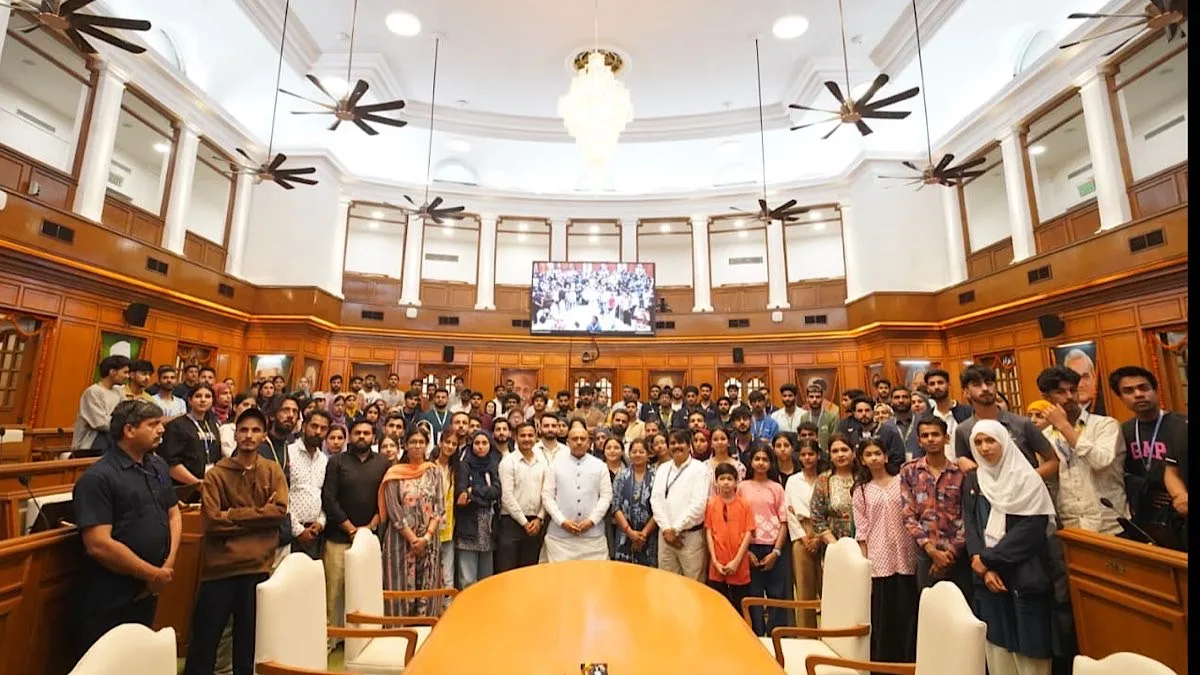
Delhi Assembly Speaker Vijender Gupta said the presence of 110 young participants from Jammu and Kashmir in the House marks a meaningful initiative to connect the country’s youth with the functioning of democratic institutions.
The young Kashmiri delegation was on a visit to the Delhi assembly on Wednesday under the Kashmir Youth Exchange Programme.

In his address to the house, Gupta said it serves as a reminder that as members, they need to uphold dignity, discipline, and a sense of responsibility in their conduct.
The Delhi Assembly welcomed the students from Anantnag, Budgam, Baramulla, Kupwara, Bandipora, Srinagar, and Pulwama districts under the KYEP 2025-26, an initiative of the Union Ministry of Youth Affairs and Sports in collaboration with MY Bharat.

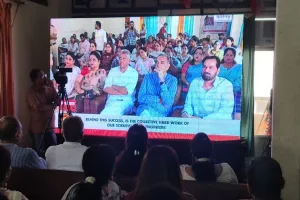
A documentary film on Veer Vitthal Bhai Patel, featuring a voiceover by renowned actor Anupam Kher, was screened in the House, offering the visiting students a nuanced understanding of his enduring contribution to India’s parliamentary legacy.
Addressing the students, the Speaker aapprised them of the functioning, history, and institutional significance of the Delhi Vidhan Sabha and engaged with them in a thoughtful interaction over democratic processes and legislative responsibilities. He observed that such initiatives deepen the connection between institutions and young citizens by allowing them to experience governance.
The Speaker contended that early exposure to legislative processes fosters informed participation and also instills a lasting sense of constitutional responsibility in them.

Centre launches modified UDAN scheme with an outlay of Rs 28,840 crore

The Union Cabinet on Wednesday approved the launch of the Modified UDAN (Ude Desh Ka Aam Nagrik) Scheme for a period of 10 years (FY 2026–27 to FY 2035–36).

Statesman News Service | New Delhi |

The Union Cabinet on Wednesday approved the launch of the Modified UDAN (Ude Desh Ka Aam Nagrik) Scheme for a period of 10 years (FY 2026–27 to FY 2035–36). The scheme will be implemented with a total outlay of Rs 28,840 crore, backed by budgetary support from the Government of India.

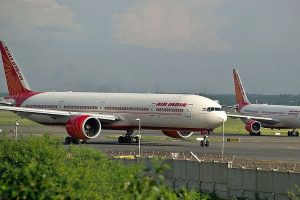
The revamped regional connectivity scheme aims to significantly expand India’s aviation network, especially in underserved and unserved regions, while making air travel more affordable for the common citizen.

Under the modified scheme, the government expects to enhance regional air connectivity, particularly in Tier-2 and Tier-3 cities, while boosting economic growth, trade, and tourism. It is also expected to improve emergency response and healthcare access in remote and hilly areas.

Additionally, the initiative seeks to ensure better viability for regional airports and airlines, while promoting indigenous aerospace manufacturing under the Atmanirbhar Bharat initiative. The scheme aligns with India’s long-term Viksit Bharat 2047 vision.

The scheme proposes the development of 100 airports from currently unserved airstrips, with a capital expenditure of Rs 12,159 crore over the next eight years. This is aimed at strengthening infrastructure and expanding the country’s aviation footprint.

To address high operational costs and limited revenue at smaller airports, the government will provide O&M support for three years. The support is capped at Rs 3.06 crore annually per airport and Rs 0.90 crore per heliport or water aerodrome, with a total estimated allocation of Rs 2,577 crore covering around 441 facilities.

To improve last-mile connectivity in difficult terrains such as hilly, remote, and island regions, the scheme includes the construction of 200 modern helipads at a total cost of Rs 3,661 crore over eight years. These will primarily target aspirational and priority districts.

Airline operators will continue to receive financial support through VGF to operate regional routes. The government has allocated Rs 10,043 crore over 10 years to ensure sustained operations and route viability.

To address the shortage of small aircraft in remote areas, the scheme proposes procuring two HAL Dhruv helicopters for Pawan Hans and two HAL Dornier aircraft for Alliance Air, thereby boosting domestic manufacturing capabilities.

The UDAN scheme was launched in October 2016 with the objective of making air travel affordable and improving connectivity to smaller cities. Over the past nine years, the scheme has operationalised 663 routes across 95 airports, heliports, and water aerodromes (as of February 28, 2026), as per the government data.

During this period, more than 3.41 lakh flights have been operated, carrying over 162.47 lakh passengers. The initiative has played a crucial role in connecting remote and underserved regions, while supporting the growth of regional airlines and diversified fleet operations.

Delhi Capitals suffer early blow as Duckett opts out of IPL 2026

Delhi Capitals have suffered a major setback ahead of the upcoming season of the Indian Premier League after England opener Ben Duckett withdrew from the tournament in a bid to rediscover form before a crucial international summer.

TRIDIB BAPARNASH | New Delhi |

Delhi Capitals have suffered a major setback ahead of the upcoming season of the Indian Premier League after England opener Ben Duckett withdrew from the tournament in a bid to rediscover form before a crucial international summer.

“I have given this a lot of thought, and it has not been an easy choice,” Duckett said.

The 31-year-old left-hander has opted to prioritise red-ball cricket with his county side Nottinghamshire, aiming to spend more time in the middle as England prepare for a packed schedule across formats.

England are set to host New Zealand and Pakistan in two three-match Test series as part of the ICC World Test Championship cycle. They will also play white-ball series at home against India and Sri Lanka over the next six months.

The decision comes as a blow for the Capitals, who had signed Duckett ahead of the 2026 season in an attempt to strengthen their long-standing concerns around the opening combination. Alongside Duckett, the franchise had also brought in top-order batters such as Pathum Nissanka and Nitish Rana as they look to mount a serious challenge for their maiden IPL title.

Duckett’s withdrawal, just days before the start of the tournament, is now expected to force the Capitals to reassess their plans at the top of the order.

The England opener endured a difficult run during the recent Ashes in Australia, where he scored 202 runs across 10 innings. Hoping to regain the form that previously made him a key member of England’s Test set-up, Duckett has chosen to return to county cricket in search of rhythm and confidence.

“It felt like the best thing for me to do to be ready to play for England is to be here right now, at home, refreshing my mind and body. (I want to) play some four-day cricket for Notts, and try to find that form I had (early on) last summer,” he added.

Duckett’s struggles with the bat continued after the Ashes, as he found it difficult to produce consistent performances during a white-ball series in Sri Lanka leading up to the ICC Men’s T20 World Cup.

Although he was included in England’s squad for the tournament, Duckett did not feature in any matches and watched from the sidelines as England were knocked out by eventual champions India in the semi-finals.

A reunion with former England coach Peter Moores at Nottinghamshire also played a role in the decision, with Duckett keen to work again with a mentor who understands his game closely.

“I want to work with Peter Moores, who knows my game inside out. It’ll be so refreshing and good for my game to go back to him. He’s a big part of where I am today,” Duckett said.

“He knows where I’ve come from and will be a massive help for me. He might spot some nuggets that I’m doing differently from a year ago. (I will) just keep everything open and relaxed, go back to the drawing board, and see if there’s anything to refine.

“This is a decision I hope I will look back on in 10 years and see as a pivotal moment in my career, and the right decision,” he added to The Daily Telegraph.

Mandaviya felicitates Indian lacrosse teams after Asian Games gold

During the ceremony, he urged the athletes to continue working hard and aim to script history by qualifying for the 2028 Summer Olympics in Los Angeles.

Statesman News Service | New Delhi |

Union Sports Minister Mansukh Mandaviya on Wednesday felicitated the Indian men’s and women’s lacrosse teams for their gold medal-winning performances at the Asian Lacrosse Games 2026 in Riyadh.

During the ceremony, he urged the athletes to continue working hard and aim to script history by qualifying for the 2028 Summer Olympics in Los Angeles.

Addressing the players, Mandaviya emphasised that determination, exposure, and consistent effort are key to the growth of emerging sports like lacrosse in India.

“Lacrosse is an emerging sport in India. This was your first major international exposure, and you have already brought home medals. Now the focus should be on working harder, gaining more exposure, and making the country proud by aiming to qualify for LA 2028,” Mandaviya said.

Sharing a video of the felicitation ceremony on social media, he wrote, “Felicitated our lacrosse teams for their commendable performance at the Asian Lacrosse Games 2026 in Riyadh. Under the leadership of PM Shri @narendramodi ji, Bharat’s steady rise in emerging sports is a matter of immense pride, reflecting the expanding depth and strength of our sporting ecosystem.”

Mandaviya added that the government would continue supporting athletes through initiatives such as Khelo India, while stressing that passion and perseverance remain crucial for sustained success.

India produced a commanding display at the Asian Lacrosse Games in Riyadh earlier this February, clinching gold medals in both the men’s and women’s Sixes events. The Indian men’s team defeated Iraq in the final, while the women’s side overcame Pakistan to secure the title.

The achievement is particularly significant as the Indian women’s lacrosse team made its international debut only in 2024, followed by the men’s team in 2025.

India’s success also reflects the sport’s growing reach across the country, with athletes representing several states, including Rajasthan, Maharashtra, Haryana, Gujarat, Tamil Nadu, Odisha, Assam, Jammu and Kashmir, Andhra Pradesh, Telangana, and Uttar Pradesh.

The Asian Lacrosse Games, organised by the Asia-Pacific Lacrosse Union, are part of a broader push to strengthen competitive opportunities in the region ahead of lacrosse’s inclusion in the 2028 Summer Olympics.

Looking ahead, India will next compete at the 3rd Asian Lacrosse Games in Chengdu, China, in April, followed by the Asia-Pacific Sixes Lacrosse Championships in Australia this October. Both tournaments will serve as key qualification pathways for the Los Angeles 2028 Olympics.

Akhilesh Yadav intensifies attack on BJP over ‘PDA’ politics, cites fear of electoral backlash

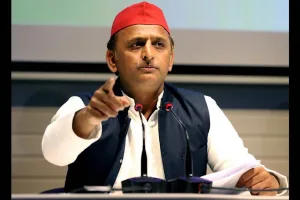
Samajwadi Party chief Akhilesh Yadav on Wednesday, stepping up his criticism of the BJP, accused the saffron party’s leadership of being “gripped by fear and frustration” following recent electoral setbacks and the growing prominence of the “PDA” political narrative in Uttar Pradesh.

Statesman News Service | New Delhi |

Samajwadi Party chief Akhilesh Yadav on Wednesday, stepping up his criticism of the BJP, accused the saffron party’s leadership of being “gripped by fear and frustration” following recent electoral setbacks and the growing prominence of the “PDA” political narrative in Uttar Pradesh.

‎In a message posted on his WhatsApp channel, Yadav said BJP leaders appear unable to escape references to the term. “BJP members seem to see only ‘PDA’ whether they are asleep or awake, and they hear only ‘PDA’ everywhere,” he wrote, suggesting that the ruling party is unsettled by its rising resonance in political discourse.

Linking the alleged unease to electoral outcomes, Yadav said that the BJP’s recent performance has triggered internal anxiety about future contests. “Frustrated by their defeat in the Lok Sabha elections and fearing the prospects of being ousted from power in the upcoming assembly elections — and then having to face punishment for their misdeeds — they have started trembling at the very mention of PDA,” he said.

The Samajwadi Party leader also accused the BJP of targeting marginalised communities and pursuing divisive politics. “Those who are uncomfortable even with the shadow of PDA must find it difficult to even utter the term,” he said. “Those who order bulldozers to be run over the huts of PDA communities, who attack people’s dignity in the name of divisive politics, and who engage in acts of humiliation should remain silent on public platforms.”

In another pointed remark, Yadav appeared to allude to perceived internal discipline within the BJP. “Let us see whether, two days from now, they are even given a chance to speak on a big stage, or whether they are punished for not showing proper deference and made to sit far away on a plastic chair,” he said.

‎The term “PDA,” used by the Samajwadi Party, refers to a political coalition of backward classes, Dalits and minorities, which the party has been actively promoting as part of its electoral strategy in Uttar Pradesh. The BJP has previously rejected such formulations, arguing these are attempts at consolidating caste-based vote banks.

Yadav further emphasised what he described as the relationship between intent and expression. “There is a deep connection between one’s thoughts and one’s speech. A person with ill intent in their mind will inevitably speak ill as well,” he said.

‎The exchange adds to increasingly sharp political rhetoric between the two parties as they gear up for upcoming electoral battles, with identity politics and governance narratives continuing to dominate the debate in Uttar Pradesh.

End of Maoist insurgency in Chhattisgarh; Maoist commander Papa Rao surrenders, walks out of jungle with 17 armed insurgents

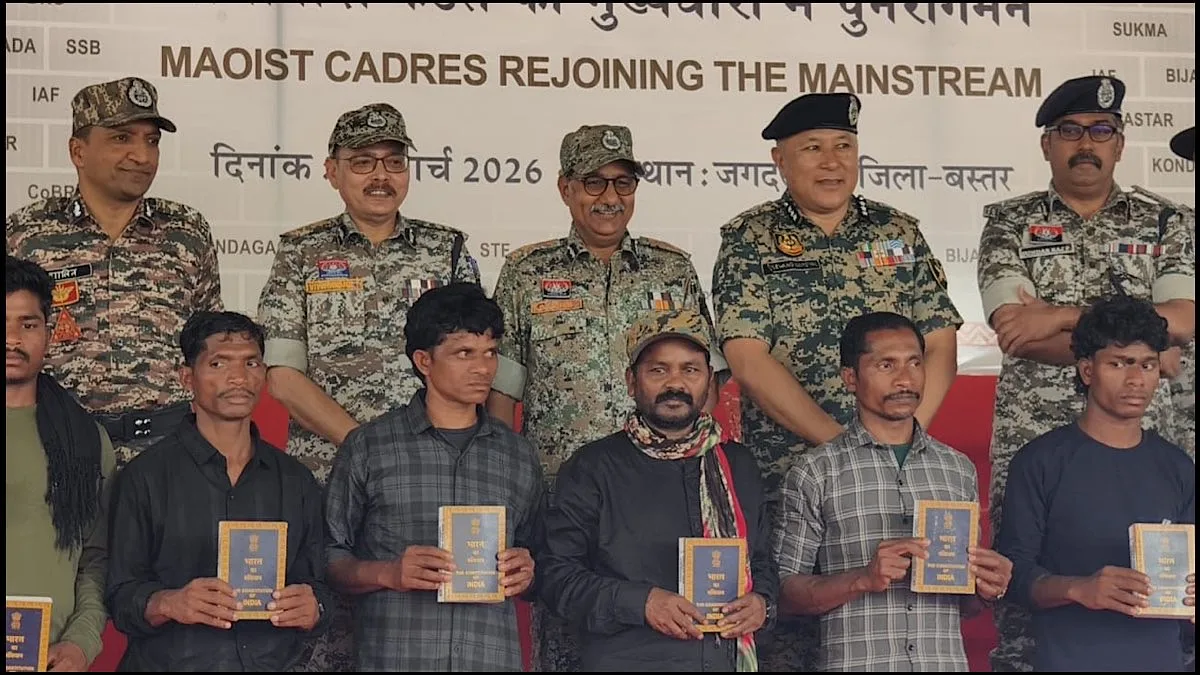
Papa Rao, one of the most wanted Maoist leaders with a bounty of ₹25 lakh on his head, surrendered before security forces in Jagdalpur along with 17 armed insurgents, including two other senior cadres identified as DVCM Prakash Madvi and DVCM Anil Tati.

SHISHIR ROY CHOWDHURY | RAIPUR/JAGDALPUR |

Papa Rao, one of the most wanted Maoist leaders with a bounty of ₹25 lakh on his head, surrendered before security forces in Jagdalpur along with 17 armed insurgents, including two other senior cadres identified as DVCM Prakash Madvi and DVCM Anil Tati. Papa Rao and his associates handed over a substantial cache of weapons, including AK-47s, SLRs, INSAS rifles, .303 rifles, and BGL launchers. Chhattisgarh Home Minister Vijay Sharma described the moment as the end of the armed Maoist insurgency in the state.

The surrender came after days of back-channel negotiations with the Maoist insurgents. Earlier, on March 24, ADG (Naxal Operations) Vivekanand Sinha had confirmed that Papa Rao was in contact with the police. By late that evening, Bastar Range IG P. Sundarraj released photographs and videos showing the wanted commander and his men walking through forest paths with their weapons, heading towards the waiting security forces.

On Wednesday, a formal ceremony titled ‘Puna Maragem: From Rehabilitation to Rejuvenation’ was held at Shaurya Bhawan in Jagdalpur, where Papa Rao, along with 17 other insurgents, was inducted into the mainstream. The insurgents laid down their weapons before Chhattisgarh Home Minister Vijay Sharma, police officials, senior citizens, and central security force officers.

Chhattisgarh Home Minister Vijay Sharma personally kept a close watch on the negotiations. He described the moment as the end of the armed Maoist insurgency in Chhattisgarh. ‘There is no active member left in the Dandakaranya Special Zonal Committee in the state. Area committee members and party cadres have given up their uniforms and weapons. In this sense, armed Maoism in the state has come to an end,’ Sharma said.

Sharma also revealed that the remaining cadres would surrender within the next seven days. He said that the March 31 deadline set by the Union Home Minister for eradicating Maoist insurgency from Chhattisgarh would be achieved.

Papa Rao is a native of Nimmalguda village in southern Chhattisgarh’s Sukma district. He joined the Maoist movement as a teenager in the 1990s, drawn by the songs of the ‘Chetna Natya Mandali’ and the growing insurgency around him. He started as a member of the Bal Sangham and rose steadily through the ranks, becoming one of the few local Bastar tribals to reach the top leadership.

His name ‘Papa Rao’ was given to him by Maoist commander Ramanna alias Ravalu Srinivas when he was inducted into his team. Over the years, he became a key member of the Dandakaranya Special Zonal Committee (DKSZC). DKSZC is the most powerful Maoist unit operating across southern Chhattisgarh, Telangana, Maharashtra and Odisha. Papa Rao also led the National Park Area Committee and served as secretary of the West Bastar Division.

Papa Rao had a chilling record. Security agencies hold him responsible for leading some of the deadliest Maoist attacks in history. The 2010 Tadmetla ambush, in which 76 CRPF personnel were killed, is believed to have been masterminded by him. He is also believed to be a key conspirator in the Chingavaram bus blast on the Dantewada-Sukma route that claimed 32 lives. More recently, in January 2025, the IED blast on the Kutru-Bedre road in Bijapur that killed eight security personnel was attributed to him.

Over the years, Papa Rao became something of a ghost-like figure. At least three times, rumours of his death spread. In July 2016, word went around that he had died of a snakebite. During the Covid pandemic in 2020, reports surfaced that he succumbed to kidney failure. In January 2025, after an encounter in Bijapur’s National Park area, where four of his associates were killed, whispers again circulated that he too had been eliminated. But each time, Papa Rao resurfaced.

His first wife, Urmila, was also a Naxalite and served as secretary of the Pamed Area Committee. She was killed in an encounter with security forces in Bijapur in November 2025. A few months later, Papa Rao married again, and his second wife is also believed to be a Maoist cadre.

The combination of sustained pressure from security forces and a growing sense of distrust within the organisation’s top leadership finally pushed the elusive commander to surrender. It is noteworthy that Home Minister Vijay Sharma had hinted at the development during an interview on the morning of March 24, saying the Rs 25 lakh bounty Maoist was about to return to the mainstream.

For nearly 25 years, Papa Rao’s name was whispered in fear across the forests of Bastar. Sunnam Chandreya, who was known as Papa Rao in the Dandakaranya region, was the man security forces could never quite catch. He was believed to be the mastermind behind some of the bloodiest attacks the region had ever seen. On Wednesday, he walked out of the jungle for good.

Mehbooba seeks review of hardline separatist Asiya Andrabi’s life sentence

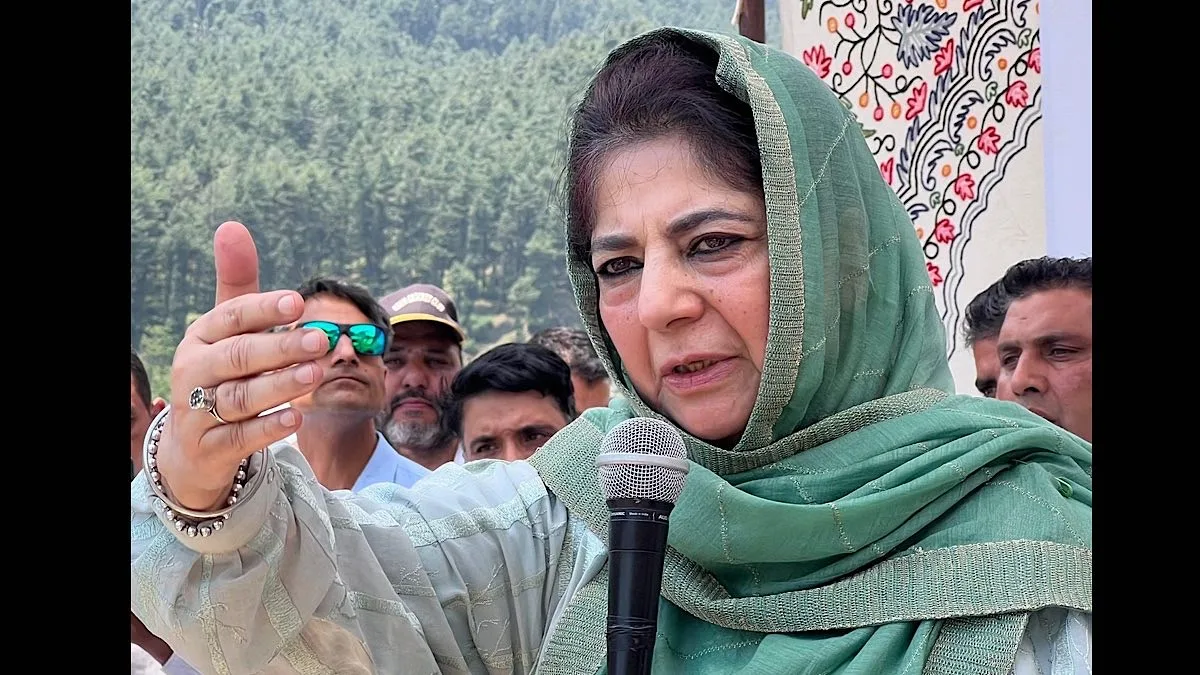
In the wake of a recent verdict by a special NIA court sentencing pro-Pakistan separatist leader Asiya Andrabi to life imprisonment, Peoples’ Democratic Party (PDP) chief Mehbooba Mufti on Wednesday called for a review of the punishment, urging that it be reduced to the earlier norm of a 14-year term.

Statesman News Service | Jammu |

In the wake of a recent verdict by a special NIA court sentencing pro-Pakistan separatist leader Asiya Andrabi to life imprisonment, Peoples’ Democratic Party (PDP) chief Mehbooba Mufti on Wednesday called for a review of the punishment, urging that it be reduced to the earlier norm of a 14-year term.

Speaking to reporters in Srinagar, Mehbooba advocated a broader reconsideration of life sentences across the country, while also appealing for Andrabi’s release on humanitarian grounds, citing her age and prolonged incarceration. “This life imprisonment till the person is alive should be abolished in the whole country. It should be 14 years like it used to be before,” she demanded.

A special NIA court on Tuesday sentenced Asiya Andrabi to life imprisonment for conspiring to wage war against India, observing that any leniency for the Dukhtaran-e-Millat chief would only “infuse fresh vigour” into her efforts to secede Kashmir.

Mehbooba also called for reconsidering the life term given to Andrabi on humanitarian grounds. “We have differences with her ideology and her way of doing things, but humanity requires that, as she is an aged woman who has already spent several years in jail, her sentence should be reconsidered,” she said.

The PDP president said Andrabi should be released on parole. “I appeal that her sentence should be reconsidered. The Government of India has already released many people on parole. She should also be released on parole, even if it is conditional, and her conviction should be reviewed on humanitarian grounds,” she said.

Earlier, planting trees in the party headquarters, Mehbooba said, “Islam teaches us that protecting nature is a responsibility entrusted on us. This plantation drive reflects our duty towards preserving the environment for future generations.”

The drive was the beginning of an ambitious initiative to plant one lakh trees across J&K, she said.